Up to 37% in savings when you subscribe to hi-fi+
hifi-logo-footer

Begin typing your search above and press return to search. Press Esc to cancel.

Hi-Fi+ Awards: Earphones and CIEMs

Cost-no-object earphone/CIEM

JH Audio Lola

JH Audio is the brainchild of Jerry Harvey, who began his career at Westone, went on to co-found Ultimate Ears, and now creates some of the world’s finest custom-fit in-ear monitors and universal-fit earphones from the company that bears his initials. The Lola – part of JH Audio’s top-tier Siren range – is a technically complex design that leverages no less than six patents (and one patent pending concept) held by Harvey for the three-way, eight driver, custom-fit in-ear monitor design.

Harvey’s best CIEM designs invariably emphasise three things: evenly balanced frequency response, proper time alignment and linear phase response, and expansive dynamics, and in his review of the Lola Hi-Fi+ Publisher Chris Martens found the CIEMs hit those targets perfectly. He concluded that, “JH Audio’s Lola is a world-class CIEM, pure and simple, and I can count on the fingers of one hand the other in-ear transducers that I think are legitimate competitors.”

See: hifiplus.com/articles/jh-audio-lola-hybrid-custom-fit-in-ear-monitor/

Noble Audio Kaiser Encore

Toward the end of last year, Noble Audio phased out its hugely popular Kaiser 10 design, to replace it with an updated model called the Kaiser Encore—a model that would feature its own set of 10 purpose-build proprietary balanced-armature Noble/Knowles drivers. This is a bold move for any earphone/CIEM company, as most prefer to use combinations of off-the-shelf drive units instead of committing to unique specification driver designs.

In his review, Hi-Fi+ Publisher Chris Martens said, “When I first plugged in the Kaiser Encores, and in light of Noble’s press release, I was expecting to hear something that sounded much like the original K10, but with enhanced midrange response and better soundstaging. However, what I actually heard was something very different and—to my way of thinking—very much better.” In short, he said, “the Kaiser Encore has been transformed to become arguably the most neutral sounding, most accurately balanced, and most revealing of all Noble earphones I have yet heard.”

See: hifiplus.com/articles/noble-audio-kaiser-encore-universal-fit-earphones/

High-end earphone/CIEM

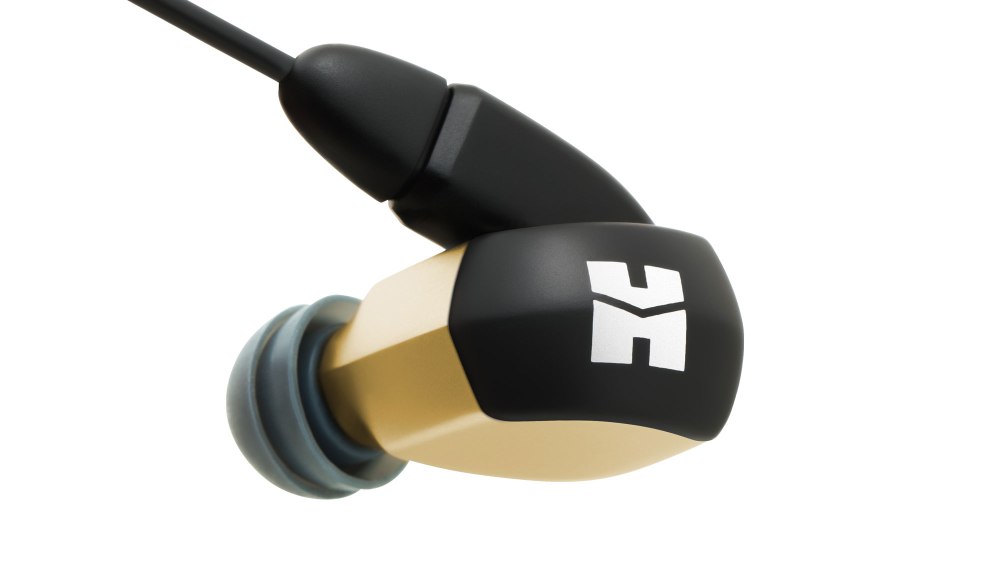
HiFiMAN RE2000

Although HiFiMAN today is best known for its full-sized headphones, amplifiers, and DAPs, some of the company’s earliest products were high-performance, earphones. With the launch of the high-end £1,699 RE2000, HiFiMAN returns to its roots, using the nanotechology experience of HiFiMAN founder and chief designer Dr Fang Bian. Unlike balanced armature designs, the RE2000 features a single 9.2mm dynamic driver with a nanoparticle coating applied in distinct geometric patterns to its surface to create a custom topology designed to lower distortion across key regions of the overall frequency response.

Set against multiple driver designs at the same price point, the idea of a single dynamic driver in the RE2000 would have seemed impractical only a few years ago, but there has been something of a renaissance in the understanding of just what goes into a high-end dynamic driver design, and the HiFiMAN RE2000 might just push that envelope further. Early listening suggests this to be the case, with performance that goes far, far beyond the capabilities of HiFiMAN classics such as the giant-killing RE262 from 2010. Watch this space!

Review pending

High-value earphone/CIEM

1MORE Quad-Driver

A four-driver earphone built to the standard of the 1MORE Quad-Driver and costing £199.99 fits the company’s acknowledged mission to build technically advanced and sonically accomplished personal audio products that sell at what one company spokesman has described as “disruptive prices”. The aluminium bodied Quad-Driver sports a new dynamic mid-bass driver equipped with a PET diaphragm overlaid with a Diamond-like Carbon Film layer. Completing the array is a set of three balanced armature-type drivers, where two of the drivers handle high frequencies while the third acts as ‘super-tweeter’ for ultra-high frequencies.

In our test, Hi-Fi+ Publisher Chris Martens found “the Quad-Driver raises the performance bar in substantial ways that place it in an altogether higher performance category. For those who want a big taste of what expensive upper-tier universal-fit earphones can do, yet without having to pay those eye-popping premium prices, 1MORE’s Quad-Driver stands as a delightful solution.”

See: hifiplus.com/articles/1more-quad-driver-universal-fit-earphones/

Final E3000

You aren’t going to get more value for money anywhere in audio than you get with the Final E3000. These £49 earphones look, feel, and sound far more expensive than that! Part of the reason for the low price is the tact that Final’s CEO, Mitsuru Hosoo, set up an in-house factory to control and implement direct feedback from their design and development team. The E3000 sports a single 6.4mm dynamic driver held in an elegant bright-finished aluminium barrel chassis, and a specially-shaped sound outlet tube with matching E-type ear tips that together provide what the company calls a ‘swing-fit earpiece mechanism.’

Low cost doesn’t mean major compromises in sound quality, either. When Hi-Fi+ reviewer Buzz Hughes heard the Final E3000 earphones, although he noted a “lack a noteworthy driving bass element” he also said the, “level of detail provided by the E3000s brought me closer to the music and enabled me to engage with it on a level that I was unaccustomed to in an earphone of this price point.”

See: hifiplus.com/articles/final-e3000-earphones/

Hi-Fi+ Awards: Headphones

Cost no object headphone

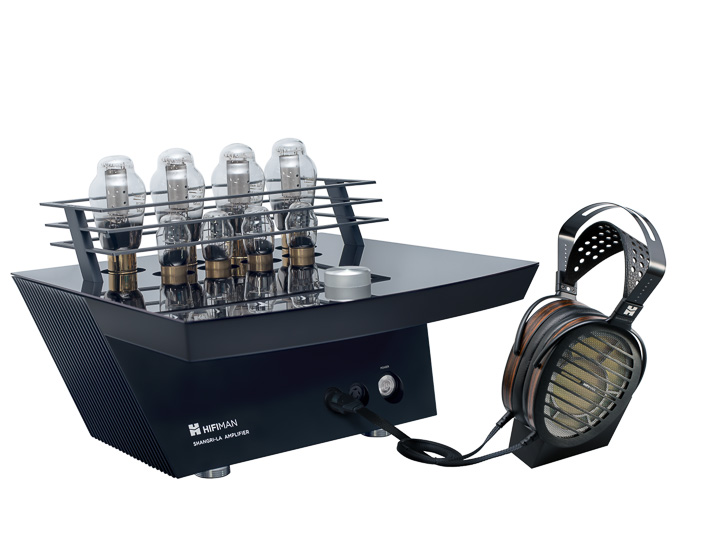
HiFiMAN Shangri-La

HiFiMAN’s Shangri-La system is an all-out, cost-no-object assault on the pinnacle in headphone performance. The system consists of a set of Shangri‑La electrostatic headphones with a ‘Nanotech’ driver whose Nano-material diaphragm is just 0.001mm thick, a matching Shangri-La valve-powered electrostatic headphone amplifier, plus various necessary accessories such as a high-quality power cord and a desktop cradle for the headphones. Each Shangri-La is built to order, taking around 120 days to build, and a HiFiMAN representative will install and set-up the Shangri-La at the customer’s home. 

In our test, Hi-Fi+ Publisher Chris Martens felt that the system helps “bring your favourite music alive in eye-opening ways: namely, extraordinary levels of transparency coupled with also extraordinary levels of dynamic expressiveness,” and that they produce a “neutral tonal balance and remarkable freedom from the ‘highs-covered-in-plastic-wrap’ colourations to which some electrostatic headphones are prone.” He concluded by saying “The Shangri-La electrostatic headphone system is one of the two most transparent, revealing, complete, and accomplished music systems I’ve every heard.”

See: hifiplus.com/articles/hifiman-shangri-la-electrostatic-headphone-system/

High-end headphones

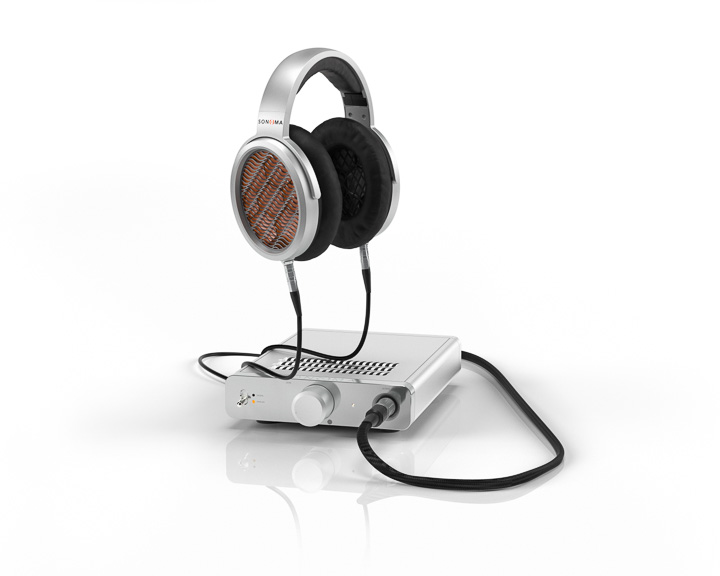
Warwick Acoustics Model One

A few yers ago, Sonoma Acoustics – a Colorado-based firm led by a group of the same technical visionaries who originally helped launch the high-resolution SACD disc format and its corresponding DSD digital audio file format – began working with a team of boffins working at Warwick Audio Technologies, itself a spin-off from the University of Warwick in Coventry. Using WAT’s High-Precision Electrostatic Laminate, Sonoma developed a new electrostatic headphone system and the result is the £4,595 Sonoma Acoustics Model One.

Allthough he raised concerns about ultimate loudness and fastpaced deep bass, in our test, Hi-Fi+ Publisher Chris Martens found himself won over by “the Model One system’s deliberate ‘modified pseudo-diffuse field’ frequency response curve.” He also thought that “Some headphone systems are ones you admire as reference components, while others are ones you want to spend time with purely for the joy of hearing your favourite music reproduced with power, detail, expressiveness, and nuance. Quite frankly, the Sonoma Acoustics Model One system is both,” and concluded that, “to hear Sonoma’s Model One system in action is to want one!”

See: https://hifiplus.com/articles/sonoma-acoustics-model-one-electrostatic-headphone/

Abyss AB-1266 Phi

We liked Joe Skubinski’s distinctive Abyss headphone designs from the first moment the original AB-1266 was clamped to our ears. The sonic performance – especially when used with a suitably excellent headphone amplifier set new levels in personal audio, and the latest Phi model looks set to do exactly the same.

The high-end planar magnetic design with its distinctive, yet surprisingly comfortable, squared off headband is all down to the ideas and concepts of the father-and-son design team at Abyss, and the use of JPS cables is understandable given this is Joe’s other brand. Abyss set its standards high, aiming for the performance of no less than the Stax SR-009 electrostatic headphone. The ‘bolted in’ feel soon becomes second nature because it’s extremely comfortable in use. Most importantly, the AB-1266 Phi takes significant sonic steps forward from the original AB-1266–in terms of resolution, focus, and tonal neutrality, becoming fully world-class once more..

Review pending


High-value headphones

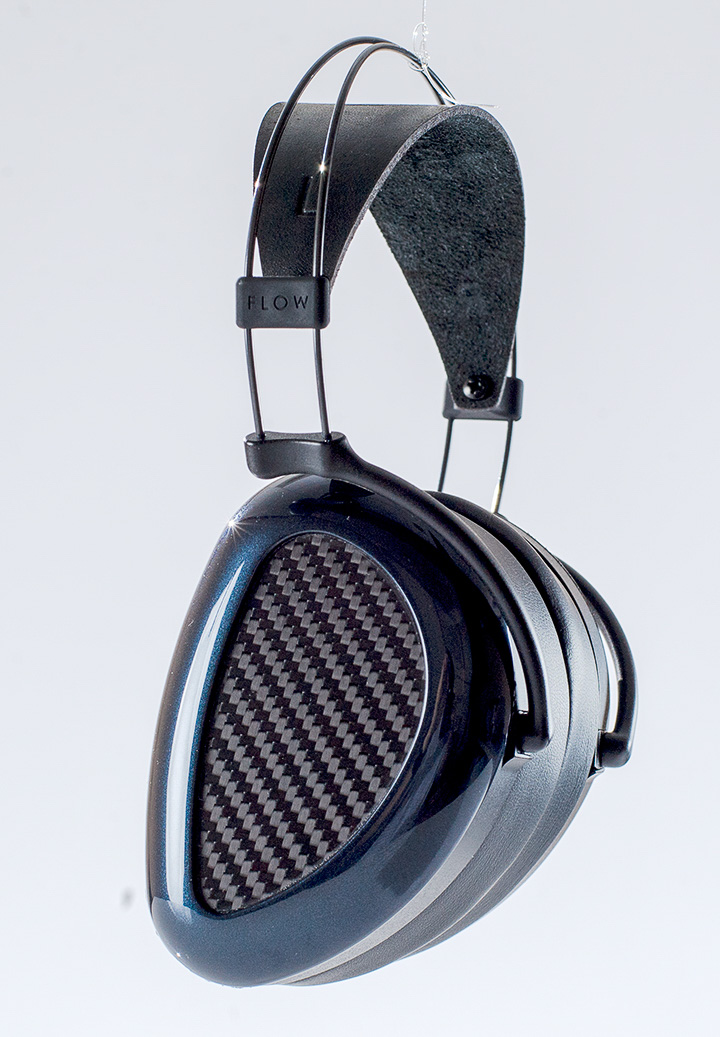
MrSpeakers ÆON Flow/ÆON Flow Open

MrSpeakers ÆON is said to use most of the technologies and to offer much of the performance of the bigger ETHER headphones at the much more domestically-chummy cost of just £799.99, which goes some way to explain MrSpeakers’ marketing tag-line for the model: “No Compromise Sound & Comfort; Affordable Price” The closed-back planar magnetic ÆON Flow has recently been joined by the open-backed ÆON Flow Open (review pending).

In his review of the ÆON Flow, Hi-Fi+ Publisher Chris Martens said, “Perhaps the first thing that captures the listeners’ ears about the ÆON is its articulate, transparent, and emotionally communicative midrange and upper midrange response. In those regions, the ÆON frankly does not sound like any sub-£800 headphone I have yet heard; instead, it sounds as if it really should be carrying a four-figure price tag.” He concluded that, “The MrSpeakers ÆON takes listeners very far up the ladder of high-end headphone performance and does so for a tick under £800. More importantly, it’s an affordable transducer that honours the music in all the ways that matter most. For this reason and many more, I encourage you to place the ÆON on your ‘must audition’ list.”

ÆON Flow, See: hifiplus.com/articles/mrspeakers-on-planar-magnetic-headphones/

ÆON Flow Open review pending

Hi-Fi+ Awards: Analogue Audio

Turntable

VPI Prime Signature

With the Prime series, VPI has really hit something of a modern-day sweet-spot for turntable users. The products have that right combination of authoritative sound quality coupled with great modern style, and good value. The original Prime was the first out of the gates and picked up last year’s Turntable award, and the Prime Signature offers more of the same without too high a price hike.  

The main differences between the Prime and Signature are increased aluminium stiffening in the plinth, better isolation for feet and motor, a heavier platter and better materials used in the arm bearing. This adds up to a lot more turntable, whether lifting it, or playing it! In his test, Hi-Fi+ Editor Alan Sircom thought that “The Prime Signature always has its feet on the ground, and presents a sound that is solid and stentorian in its depth and range, but also possessed of a sense of musical structure and remarkable midrange openness and, although it sounds almost paradoxical following the use of words like ‘solid’, filigree beauty at the top.” He also believed “the Prime Signature retains that elusive property that VPI got so right on the Prime, and the Classic before that, for that matter. It makes music enjoyable.”

See: hifiplus.com/articles/vpi-industries-prime-signature-turntable/

Tonearm

Kuzma 4Point9

We love the Kuzma 4Point and especially love the Kuzma 4Point 14 tonearms, but they make imposing demands on the turntable. The size and weight involved put them beyond most suspended designs, and possibly even some smaller solid plinth models. They are also, by their very nature, uncompromising designs in terms of set-up and are ultimately made for the kind of person who might choose to adjust the VTA between each record… because they can, and often because they must. What the high-end world needs is an arm with the performance of the 4Point for the rest of us: an arm with all of the strengths of the 4Point, but in a slightly more convenient package for a wider audience.  

The 4Point 9, nine-inch tonearm perfectly fits that bill, making for a smaller footprint, a lighter arm, and a more flexible design. In the process, the tonearm foregoes the on-the-fly adjustment of its older brothers, but this seems to help make the arm more readily accessible to a wider range of turntables, even including Kuzma’s own Stabi S and SD entry-level decks, and even fit on suspended turntables. Best of all, sonically speaking, it retains much of what makes the 4Point so vaunted among turntable enthusiasts the world over.

Review to follow

Cartridge

Transfiguration Proteus

There is a process of continuous development and improvement taking place at Transfiguration. Legendary designer Seiji Yoshioka keeps improving the performance of all the models in the line, but especially the flagship Proteus moving coil cartridge. While the Proteus still features an aluminium body, solid boron cantilever with PA diamond stylus, neodymium magnets, and an internal impedance of just one Ohm, the principle changes are fewer coil windings, and the use of higher purity silver in those coils. The damper compound has also been changed, but Transfiguration keeps the chemical composition of its dampers a deep secret.   

Hi-Fi+ expert and Transfiguration aficionado Jason Kennedy was impressed the latest Proteus’, “even greater realism and musical engagement in the context of remarkable image depth and scale” adding that, “I love the way that the Proteus can present such rich detail without any tendency to sound analytical.”

See: hifiplus.com/articles/transfiguration-proteus-cartridge-again/

Phonostage

Vertere PHONO-1

Reviewed in partnership with the Vertere MG-1 turntable and SG-1 tonearm (both strong contenders for turntable and tonearm of the year in their own rights), the Vertere Phono-1 impressed us for its ability to cope with ridiculously difficult cartridge loads quietly and enthusiastically. This one-input, single output, solid-state MM/MC stage is designed to have maximum flexibility in cartridge loading. It has two sets of DIP switches flanking the shielded central RIAA and preamplifier stages. It’s use with less ‘impossible’ cartridges is almost completely noiseless and yet effortlessly dynamic and detailed.  

In testing the PHONO-1 Hi-Fi+ Editor Alan Sircom felt that “the PHONO-1 is one of the most naturally sounding phono stages I’ve heard in a long time,” and even when used with a cartridge with an output of just 0.1mV “the only limitation it presented was the phono stage didn’t go quite as loud as possible.” This is clearly a top-notch phono stage in a small package, with a £999 price tag that utterly belies its actual performance. Think of the PHONO-1 as a truly high-end phono stage that forgot to get too expensive!

See: hifiplus.com/articles/vertere-acoustics-mg-1-turntable-sg-1-arm-and-phono-1-phono-stage/

North West Audio Show 2018

9th January 2018: The dates for the fifth annual North West Audio Show have been announced as Saturday 23rd and Sunday 24th June. The venue will once again be the prestigious and beautiful surroundings of the De Vere Cranage Hall Estate, Holmes Chapel, Cheshire.

Previous shows have seen visitor numbers increase year on year and the North West Audio Show is now widely regarded as one of the most popular in the audio calendar with music and audio lovers traveling the length and breadth of the UK to attend.

This year’s event promises to be bigger and better than ever with organiser Kris Sawiski commenting “We are aiming high to put on a festival of sound that will delight not only the traditional audiophile audience, but also everyone and anyone interested in enjoying music in the home or on the move.”

The show will have more than fifty exhibitors demonstrating the pinnacle of what is achievable in music playback in the home and employing systems that represent the very best of what is available on the market today.

But there is more! As well as the fabulous state of the art sound systems that visitors are free to enjoy, there will also be informative lectures, new and used records for sale, in-car entertainment demonstrations, live music and a whole lot more.

Kris added “The North West Audio Show is a friendly event that we hope will be enjoyed by all the family, and if previous years’ shows are anything to go by we will see more than  a thousand visitors over the weekend.”

The De Vere Cranage Hall Estate is truly a fabulous venue with the show taking it over for the full weekend. Visitors can enjoy ample free parking and the event is free for all to enter.

The North West Audio Show is supported by the UKs favourite online Hi-Fi magazine Hifi Pig.

Contact:

[email protected]

Telephone: +447840183485

Website: http://audioshow.co.uk/

Notes for Editors:

What: The North West Audio Show

Where: The De Vere Cranage Hall Estate, Holmes Chapel, Cheshire

When: June 23rd and 24th  2018

CanJam NYC 2018 Show Report from Ultimate Headphone Guide: Part Four

This is the last of four illustrated descriptions of the new and exciting products seen at CanJam NYC 2018.

Part One: hifiplus.com/articles/canjam-nyc-2018-show-report-from-ultimate-headphone-guide-part-one-1/

Part Two: hifiplus.com/articles/canjam-nyc-2018-show-report-from-ultimate-headphone-guide-part-two/

Part Three: hifiplus.com/articles/canjam-nyc-2018-show-report-from-ultimate-headphone-guide-part-three/

NAD

NAD is the sister brand to PSB, so with the advent of a new PSB flagship headphone—namely the M4U8 model described below—it was inevitable that there would also be a new NAD sibling model: the HP70 ($399). It’s tempting to think that NAD’s HP70 is essentially a PSB M4U8 in different livery, but that isn’t strictly the case. According to designer Paul Barton, the NAD model offers very slightly different voicing to the M4U8, with the PSB headphone offering dead neutral voicing and the NAD offering an extremely subtle hint of added top-end ‘sparkle’. One other difference is that the HP70 and M4U8 use different automatic noise cancellation devices and schema, though both are quite effective.

oBravo

The Taiwanese headphone and earphone specialist oBravo introduced a slew of new models at CanJam NYC. Among these were four variants on the firm’s exotic hybrid eamt-O (“Ra”) earphones: models included the Ra A ($6,400), the Ra W ($6,600), the Ra C ($6,800), and the Ra Cu ($10,000). There will also be a Ra Ti model. The Ra models share certain design features in common, including an exceedingly tiny 8mm Heil AMT-type driver (the smallest Heil driver we have ever seen) used in concert with a 16mm dynamic driver. Impedance ratings for the Ra models are 182 Ohms while sensitivity is specified at 105dB. Differences between the Ra models involve materials used in the earpiece housings themselves, with the more difficult-to-machine materials commanding higher prices.

Alongside these exotic and costly earphones, oBravo also announced new versions of its original HAMT-series headphones, starting with an updated HAMT-1 Mk II headphone ($1,900) and the even higher performance HAMT-Plus ($3,900). At the to of the range is a new HAMT Signature model (56 Ohms, 105dB sensitivity, 40mm Heil AMT-type driver, 57mm dynamic driver, $6000).

Periodic Audio

The up-and-coming earphone manufacturer Periodic Audio showed a prototype of its upcoming Nickel portable headphone amplifier (projected price $299), which provides 250mW @ 32Ohms of power output, playing time of 10-12 hours, and very quick 20-minute recharge time.

Periodic also showed running changes to its Be (Beryllium), Ti (Titanium), and Mg (Magnesium) series earphones. Individually, the changes might seem small, but taken collectively they make a good set of products significantly better. Specifically, the earphones use etched stainless steel earpiece enclosures, a new channel colour-coding scheme applied through electrophoretic deposition, all-new tangle resistant signal cables, and improved packaging.

PSB

The Canadian firm PSB had shown its impressive new M4U8 headphone in pre-production forms at past shows, but CanJam NYC marked the first showing of the full production release M4U8 ($399). In essence, the M4U8 is a substantially updated version of the critically acclaimed M4U2, but with greatly increase functionality. Specifically, the M4U8 is, like the original M4U4, capable of being driven as a passive headphone or as an active self-powered headphone, but the M4U8 adds Bluetooth functionality and is equipped with an all-new, switch selectable automatic noise cancellation (ANC) system. While the core sound of the M4U8 is similar (though I would say somewhat better than) to that of the original M4U2, the new model’s amplifier sounds even clearer, its Bluetooth capabilities are exemplary, and—perhaps the biggest surprise of all—its ANC system, an analogue design implemented through an AMS device, is one of the very best I’ve ever heard. As a finishing touch, the M4U8 incorporates switch selectable room mics, so that users can suspend music listening temporarily, to participate in in-room conversations or to hear announcements in airports or train stations. In short, the M4U8 is better than the original M4U2, but sells for the exact same price.


Sennheiser

The legendary German headphone manufacturer showed two new headphone models at CanJam NYC: one, the HD660S, that is already released and the other, the upcoming HD820, that is slated to go into full product release later in the year.

The HD660s ($499) is the successor to the HD650 and the latest in a long line of high performance headphones that began years ago with the debut of the then-ground breaking HD580. What is particularly significant about the HD660s is that it represents a serious attempt on Sennheiser’s part to create a medium-priced high-end headphone that captures much of the sonic essence of the much higher-priced HD800/HD800s-series models. Based on a too-brief listening session, I would say Sennheiser is well on the way toward this goal, which makes the HD660s an extremely attractive option in its price class.

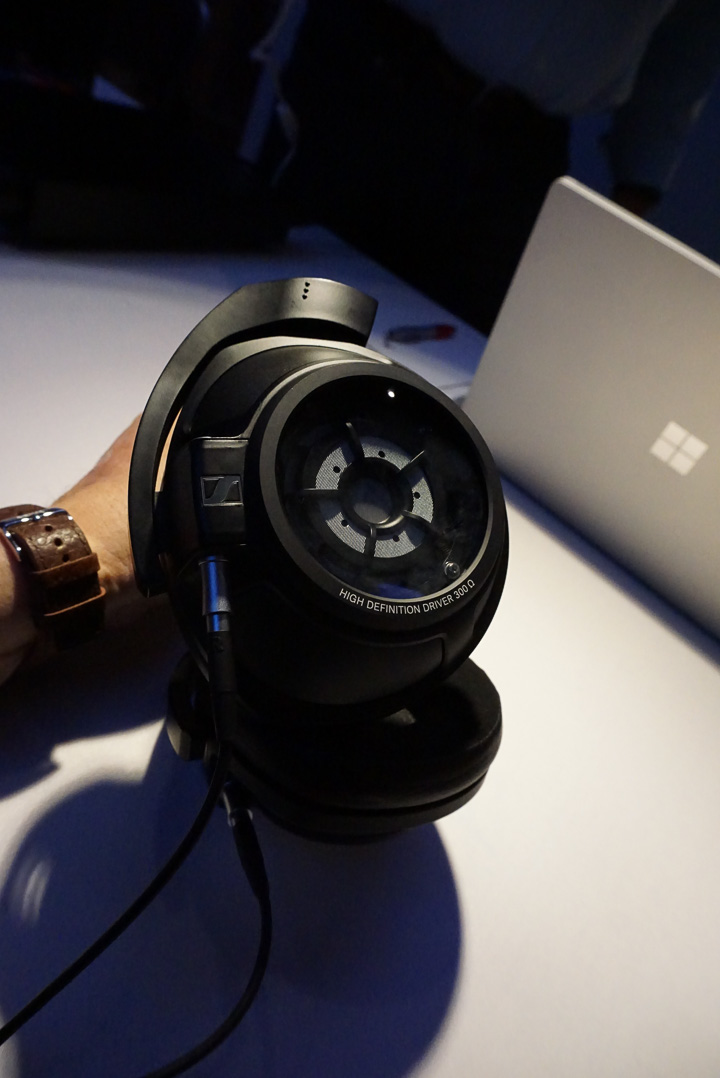
The HD820 (projected price $2,399) will be Sennheiser’s entry into the ultra high-performance closed back headphone market segment and as such the HD820 does everything it can to channel the sonic goodness of the open-back HD800 and HD800s models. Astute readers will note that the HD820 is significantly higher priced than either the HD800 or HD800s. When I inquired about the price differential a Sennheiser spokesman indicated that the HD820 has higher build costs from a material perspective and is also more labour intensive to build than the open back models are. One very cool design touch is that the HD820 ear cups feature Gorilla-glass driver viewing windows on their back surfaces so you can see the technology within on display.

The sound of the HD820 is similar, but not identical, to the HD800s, but with—of course—far less intrusion from room noises, which are most blocked out by the closed back design.

Shure

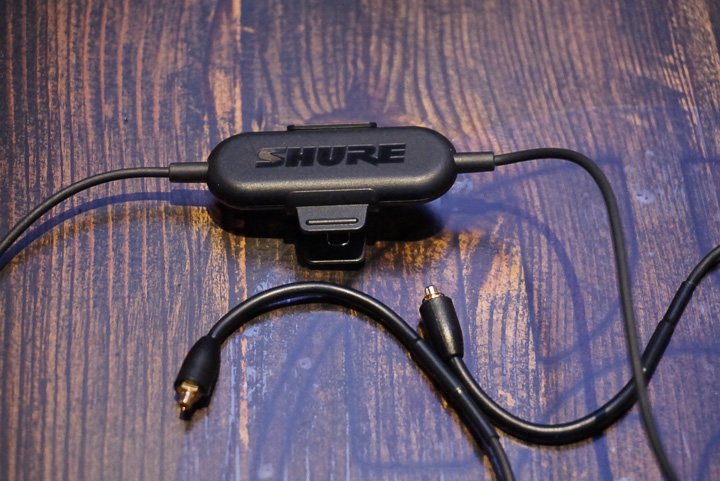
Shure was not showing new earphone or headphone models at CanJam NYC, but what it did display was a greatly expanded range of option earphone cables (fitted with MMCX-type connectors on the earphone ends) including: a Lightning signal cable, a USB Type C signal cable, a self-powered Bluetooth cable, and a cable with an inline headphone amp/DAC module.

SPL

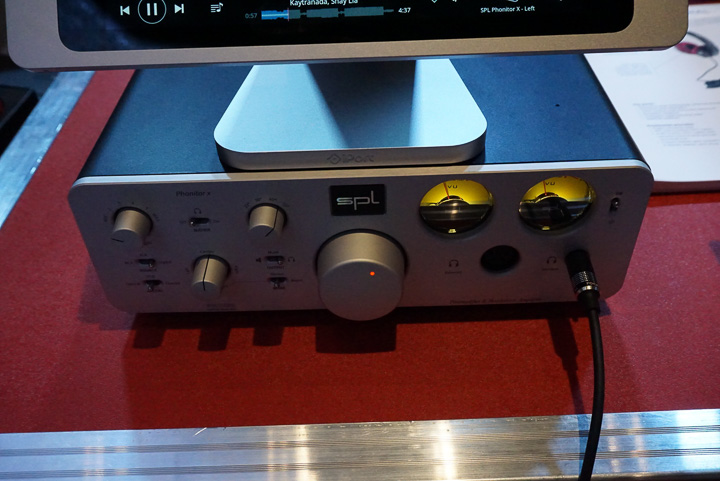
The German headphone amplifier specialist SPL showed its very full-featured Phonitor X balanced headphone amp/DAC ($2,799) with special crossfeed and lateral imaging control functions. SPL comes from the pro sound world and its products have the purposeful and well-built look and feel that is so much a part of the pro audio world.

Clearing up a possible point of confusion, an SPL spokesperson indicated that the simpler and lower priced SPL Phonitor E headphone amp can indeed be ordered with a built-in DAC, as can the Phonitor X (the Phonitor E was not on display and CanJam NYC, but several enthusiasts had asked me to check on the availability of the Phonitor E with a built-in DAC—a question to which the answer is “yes”.

Stereo Pravda

The Russian firm Stereo Pravda showed the latest and least costly new member of its essentially hand made SB-series earphone. The newest model is called the SB-5 and it features five drivers plus a new signal cable and will sell for $2,000. Having heard various Stereo Pravda SB-series earphones over time, I think the design has great sonic promise, but my one complaint is the SB ear tips, which are quite unconventional and don’t necessarily work well for all listeners. My thought is that if the ear tip issue could be sorted out, the SB models might win much wider acceptance.


Trafomatic Audio

The Serbian firm Trafomatic demonstrated three very promising headphone amplifiers, including the Experience Head One ($1,800), the Head Two ($3,000), and the extremely exotic looking and valve-powered Trafomatic Primavera dual-mono headphone amplifier ($15,000), which is based on Svetlana 811.10 direct heated triode valves.

Helping the Trafomatic amps to sound their best was a wonderful Vermeer Two fully balanced LAN-equipped preamp/DAC ($30,000).

A brief listen to the Vermeer/Primavera combination driving a set of Final D8000 planar magnetic headphones convinced me that the big Trafomatic amp has a very firm grasp on sonic excellence.

Viva Audio

The Latvian headphone amplifier specialist Viva showed two very impressive new amplifiers—one targeted toward electrostatic headphone users and the other intended for enthusiasts favouring high-end dynamic type headphones.

For electrostatic headphone devotees, and Stax headphone users in particular, the Viva Egoista STX stands as a statement class amplifier that is typically configured with dual 2A3 output valves, but that can be configured with 300B output valves instead. US pricing for the Egoista STX has not been firmly established, but is expected to at <$10,000.

For dynamic headphone users, the Egoista 845 is likewise a statement class amplifier that is beautiful to look at and even more lovely to hear. The amp provided dual single-ended 6.35mm headphone output jacks, dual 4-pin XLR stereo headphone output jacks, and a pair of XLR mono output jacks. The Egoista 845 is so named because it uses dual 845 output valves. The Egoista 845 is priced at $12,800.

Westone

Westone’s newest offering for CanJam NYC was its lovely entry-level WX1 earphone ($149), which sports a single balanced armature-type driver and an MMCX connector equipped Bluetooth cable.

CanJam NYC 2018 Show Report from Ultimate Headphone Guide: Part Three

This is the third of four illustrated descriptions of the new and exciting products seen at CanJam NYC 2018.

Part One: hifiplus.com/articles/canjam-nyc-2018-show-report-from-ultimate-headphone-guide-part-one-1/

Part Two: hifiplus.com/articles/canjam-nyc-2018-show-report-from-ultimate-headphone-guide-part-two/

Part Four: hifiplus.com/articles/canjam-nyc-2018-show-report-from-ultimate-headphone-guide-part-four/

HeadAmp

The wheels of change turn slowly at Headlamp, but for CanJam NYC the firm introduced its all-new Gilmore Late Mk2 headphone amplifier/preamp ($499), which was wowing show attendees and fellow exhibitors alike with the sheer level of performance per dollar it offers. The Gilmore Lite Mk 2 is an update of the classic Gilmore Dynamic Amp (this is contrast to Gilmore-designed electrostatic amps) and features discrete Class A circuitry, an outboard linear power supply, and switchable preamp outputs. This amp had many of the veteran headphonistas in attendance buzzing over the fact that a manufacturer had finally succeeded in creating a truly serious high-end headphone amp/preamp that managed to slide-in just below the magic $500 price point.

HiFiMAN

The Chinese firm had two (or perhaps three) major announcements for CanJam NYC: first, the production launch of the firm’s exceptional and value-priced Sundara open-back planar magnetic headphone ($499); second, the introduction of a comparatively cost-reduced Shangri-La Jr. electrostatic headphone system (that is, an electrostatic amp and headphone offered as a bundle at $8000); and third, the quiet but highly significant announcement that HiFiMAN would consider bundling the Shangri-La Jr. amplifier with the full-fledged Shangri-La headphone(that is, the headphone from its $50,000 Shangri-La system) for the approximate price of $15,000.

The Sundara, which will replace HiFiMAN’s well-regarded HE-400-series models, looks to be a sure-fire value-for-money winner.  The headphones sports all new drivers with diaphragms said to be 80% thinner than those used in the HE-400 models. Accordingly, the Sundara offers an exceptionally rich, nuanced, and expressive sound relative to most competitors in its price class. The Sundara also offers a revised headphone frame/headband system that—when properly adjusted—is extremely comfortable.

The $8000 Shangri-La Jr. electrostatic headphone system will come as a breath of fresh air for those still experiencing ‘sticker shock’ over the price of HiFiMAN’s flagship Shangri-La system, which sells for wallet-bursting $50,000. As you might expect, the Shangri-La Jr. system features a simplified and more compact valve-powered electrostatic headphone amplifier and an also simplified electrostatic headphone. Together, the ‘Junior-series’ components give a substantial taste of what the big Shangri-La rig is like, but for less that 1/5th the price.

However, I inquired as to whether the firm might also consider pairing the full-fledged Shangri-La electrostatic headphone with the Shangri-La Junior amplifier and received “yes” for an answer. I briefly tried the Shangri-La headphone with the Shangri-La Junior amplifier and found the resulting system sound to be very impressive—surprisingly close to the sound of the big Shangri-La rig, but at a much more manageable $15,000 price. Why the jump up from $8,000 to $15,000? The short answer is that the Shangri-La headphone is more labour-intensive and expensive to build than the Shangri-La Junior headphone. While $15,000 is an awful lot to spend on a headphone system, it’s not an insane price to pay for a system that offers near state-of-the-art performance.

iBasso Audio

The Chinese firm iBasso is perhaps best known for its very high quality portable high-res digital audio players and other personal audio-related electronics, although of late it has been garnering acclaim for it affordable, high performance earphones.

Reflecting these priorities iBasso’s CanJam NYC demonstrations centred on the firm’s flagship DX200 DAP ($869 – $899, depending on the amplifier module chosen) and on the IT01 ($99) and IT04 ($499) earphones.

The DX200 is not a brand new product, but it does arguably stand as the firm’s best sounding and most versatile DAP ever.  The DX200 features dual ESS ES9028 Pro DAC devices, uses an ARM Cortex A53 8-core 64-bit processor, runs under Android 6.0, features 2GB of LPDDR3 RAM, 64GB of eMMC memory, uses dual Accusilicone femtosecond oscillators for low jitter, and high quality, low-noise parts throughout. Perhaps the most distinctive feature of the DX200, though, is its ability to accommodate a wide range of optional iBasso amp modules. The AMP 1 module is the default offering and provides one single-ended and one balanced output, plus a line out jack. Other options include the AMP 3 balanced output amp modules with a 2.5mm TRRS balanced jack and a line out jack, the AMP 4 balanced output module with Pentaconn connectors, and the AMP 5 single-ended only output module with 3.5mm and 6.35mm headphone outputs and a line out jack. Additional amp modules are sold separately for $199/each.

iBasso’s value-minded earphone offerings are led by the IT01 ($99), which is fitted with a dynamic driver equipped with a graphene diaphragm. In turn, the model IT04 earphone ($499) uses a hybrid driver array consisting of three balanced armature-type drivers plus the same dynamic driver as used in the IT01. After a brief listening session with the IT04 I came away with the impression that it is a very evenly balanced earphone.

iFi Audio

The British firm iFi Audio had two major announcements for CanJam NYC. The first was the launch of the firm’s most ambitious DAC/headphone amplifier to date: the Pro iDSD ($2,499). The Pro iDSD is an exceptionally full-feature DAC that can play DSD files at levels up to a mind-bending DSD1024, can handle PCM/DXD files at rates up to 32/768, that is fully MQA compatible, and that offers both networking and wireless Bluetooth connectivity. The Pro iDSD features a fully balanced circuit from end-to-end, and incorporates a good headphone amplifier as well (although iFi naturally hopes that end-users will pair the Pro iDSD with its excellent Pro iCAN headphone amplifier/preamp).

In addition to the rollout of the Pro iDSD, iFi also showed the first model in what will become an entire new range of ‘x-Series’ compact components, starting with the impressive new xDSD (projected price ~$400). The xDSD can be seen as a massively upgraded and functionality enhanced version of the iFi Nana iDSD Black label as recently reviewed in Hi-Fi+. Accordingly, the portable, wireless, aptX Bluetooth and AAC-enabled xDSD features essentially the same DAC as iFi’s larger and more costly Micro iDSD Black Label, offering decoding capabilities for DSD files to DSD512, PCM and DXD files up to 32/768, and full MQA compatibilities (something even the Micro iDSD Black Label did not provide). What is more, though, the xDSD uses that same proprietary iFi ‘S-Balanced’ circuit topology as found in the Nano iDSD Black Label, but with an impressive 500mW power output—more than double that of the Nano iDSD Black Label. We can’t wait to hear the xDSD in action and look forward to seeing what other x-models iFi will release over time.


JBL

JBL exhibited a brace of new headphones and earphones, most targeting the keenly contested sub-$200 market segment. Among these models were the JBL Free Wireless earphones ($149.95) with Bluetooth electronics embedded within the earpiece housings them selves, the JBL/Under Armour Sport Wireless Flex earphones with neckband-style BT module/amplifier ($129.95), the JBL Reflect Fit wireless earphones with neckband-style BT module/amplifier and built-in heart rate monitoring capabilities ($149.95), and JBL T450 BT children’s Bluetooth headphones ($59.95).

JH Audio

JH Audio did not have any new earphone of CIEM designs to show at CanJam NYC, but what it did have were an extraordinary range of Signature Series custom finishes that can be ordered on any of the firm’s CIEMs. Finishes include Luthier (Bocote wood shell and logo with titanium faceplate, $1000), Mosaic (black shell and logo with light blue and white pearloid faceplate top and sides, $600), Spotlight Red (black shell with red pearloid faceplate and black pearloid logo with chrome trim, $525), Spotlight Blue (black shell with blue pearloid faceplate with black pearloid logo with chrome trim, $525), Galaxy (swirled colour shell and logo with black faceplate and chrome trim, $525), The Founder (black shell and logo with abalone faceplate and trim rings, $525), Copper top (black shell and faceplate with copper trim rings and logo outline trim, $525), The President (blue pearl shell with zebra wood faceplate and inlaid abalone logo, $375), Rose (rose gold shell with brushed copper faceplate and chrome trim, $375), and Sunburst (black shell with sunburst-colour wood faceplate, $325). As a matter of personal taste, I was very fond of the Sunburst treatment, whose appearance is highly reminiscent of vintage sunburst-colour Fender guitars.

Klipsch

Klipsch has released to production its most ambitious full-size headphone to date: the Heritage HP-3 ($1,199), which is offered with the buyer’s choice of solid walnut, ebony, or oak ear cups. The HP-3 is a semi-open-back or “rear vented” design that features 52mm dynamic drivers fitted with “free-edge biodynamic” diaphragms and a magnet assembly delivering more that one tesla of magnetic flux density per ear cup. Not surprisingly, the HP-3 is very easy to drive with rated sensitivity of 98dB. Many would say the HP-3 mimics the sound of higher quality Klipsch loudspeakers, meaning that it offers a highly expressive and dynamic sound with powerful bass and just a hint of emphasis in the ‘presence’ region, which serves to enhance the perceived clarity and articulacy of the headphone. The headphone features sheepskin-covered ear pads and a cowhide headband pad/cover; apparent build quality is very, very high.

M&O Electronics
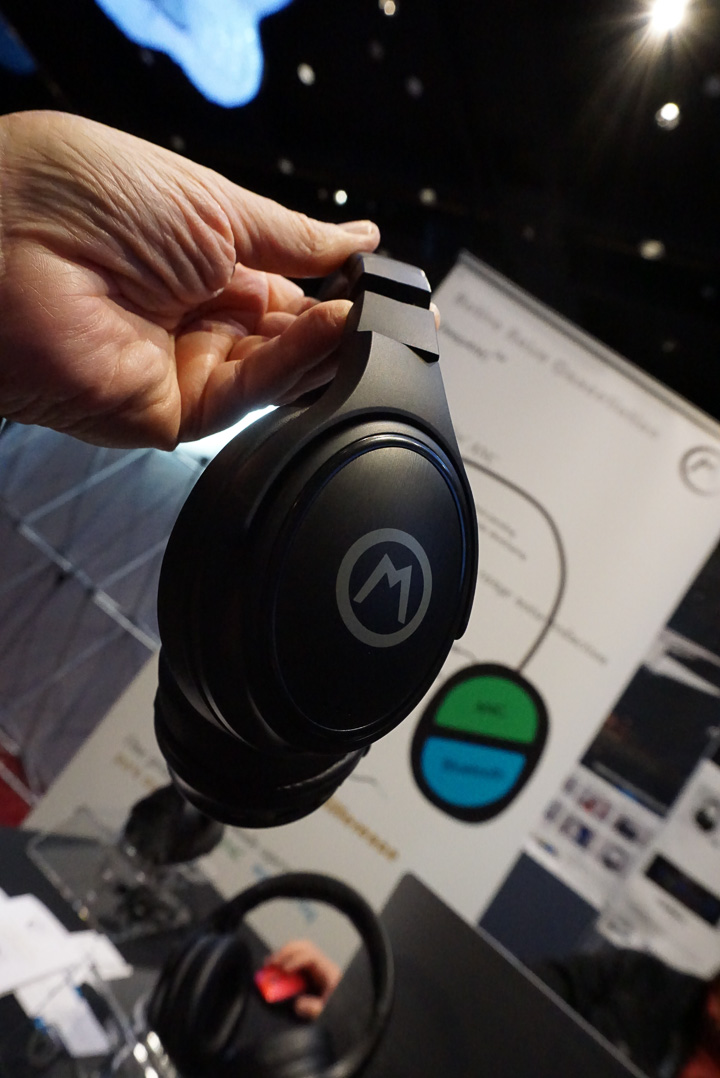
The San Jose, California-based firm M&O Electronics is a headphone technology development company with one product, called the MOOH-BE00BT Beryllium Acoustic headphone ($129), in completed form and another called the Deep ANC (projected price ~$200) under development.

In simple terms the MOOH-BE00BT Beryllium Acoustic is an affordably priced, but also very high-tech aptX Bluetooth-capable headphone that is fitted with dynamic drivers using Beryllium diaphragms. For travel convenience, the Beryllium Acoustic headphone features ear cups that can fold flat, plus a useful range of accessory cables and a hard shell carrying case. It’s an uncommonly sophisticated design for its price class.

The Deep ANC, in turn, introduces a whole new concept in automatic noise cancellation in that it is really two devices in one. On one level, the Deep ANC is a pure, noise cancellation device that is worn like a conventional headphone, but whose sole purpose is to provide a stonking 45dB (!) of wide range noise reduction. However, within the ear cups of the Deep ANC device are two chambers: an “Anti-Noise” chamber and a “Music Driver” chamber that provides a built-in Bluetooth-enabled amplifier and connection sockets where listeners can plug in conventional earphones for purposes of listening to music. M&O’s plans call for the Deep ANC to be supplied with a good basic set of earphones at the asking price of about $200, but in principal the Deep ANC device could be used to create ultra-quiet backgrounds for use with whatever high quality earphones or CIEM’s the listener might choose.


Meze

The Romanian headphone specialists at Meze are perhaps best known for their high value/high performance Classic 99 headphones, but for CanJam NYC the firm pulled out all the stops to introduce a new cost-no-object flagship planar-magnetic headphone called the Empyrean (final pricing has not yet been determined, but is projected to fall in the mid-$3,000 range). The Empyrean uses a very distinctive and somewhat unorthodox planar magnetic driver developed by Rinaro Isodynamics—a firm headed by Paulo Shymanovych.

The Rinaro driver features a light but rigid diaphragm that is roughly teardrop-shaped, with a circular concentration of voice coil traces at the apex of the tear drop and with semi-circular curved segments of voice coil traces fanning out toward the broader end of the teardrop. According to Shymanovych the portion of the diaphragm with nearly circular voice coil traces acts as a mid/high frequency radiator that is directly aligned with and offers the shortest possible path to the wearer’s ear canal. The portion the diaphragm that has broader semi-circular curved traces has a larger amount of surface area and acts a bass/mid driver.  Shymanovich adds that the upper frequency limit of the Rinaro driver is an astonishing 110kHz (!) and that the driver produces less the 0.1% distortion over the entire audio spectrum.

A brief listen to the Empyrean through the excellent Cayin HA-300 amplifier left me thoroughly impressed with the headphone’s natural presentation and unforced expressiveness and nuance. We look forward to the full production release of the Empyrean headphone and anticipate reviewing it in the future.

MrSpeakers

One of the standout highlights of CanJam NYC had to be MrSpeaker’s new Voce electrostatic headphone ($3,000)—a model that had previously been shown in various prototype iterations under the working title of ETHER ES. Happily, the Voce is now in full production and I feel confident in saying that it not only seems more robust than the pre-production prototypes did, but also sounds markedly better as well. I won’t attempt a ‘mini-review’ on the basis of a brief listen, but suffice it to say that the Voce sounds extremely open, revealing, and expressive, but with virtually none of the drawbacks and artefacts that sometimes affect other electrostatic headphones. Specifically, the Voce offers robust bass plus remarkable freedom from the hints of artificial treble “sheen” that some electrostats exhibit. The Voce is so good that it immediately inspired debates among veteran listeners as to whether it was or wasn’t superior to the iconic (and significantly more costly) Stax SR-009 electrostatic headphone. I won’t try to answer that question here, but will say the Voce offers the sonic potential to be near the top of the top-tier class. We look forward to reviewing the Voce; without a doubt it delivered some of the finest sounds to be heard at CanJam NYC.

Mytek

With headquarters in Brooklyn, NY and manufacturing facilities in Poland, Mytek is a truly international company that specialises in high performance headphone amplifier/DAC/preamps, several of which were on demonstration at CanJam NYC. As a starting point the firm showed its MQA/DSD/PCM-capable portable Bluetooth-enabled Clef headphone amp/DAC, which sells for $300 and looks extremely cool in an almost sci-fi sort of way (as in “Is it DAC/amp or a miniature spaceship).

Next up in the range is the all-new Liberty DAC ($999), which draw heavily from the design of Mytek’s original Brooklyn DAC, but is configured as a 1/3rd rack-width component that stands as a “baby Brooklyn” of sorts. The Liberty DAC is based on an ESS ES9018 DAC device and can handle PCM/DXD files to 32/384 levels, offers native DSD decoding up to DSD 256, and provides a certified MQA hardware decoder. The Liberty incorporates a 300mA/3W headphone amplifier and provides single-ended outputs only.

Standing as an updated and upgraded version of the original Brooklyn DAC is the new Brooklyn DAC+ ($2,200), which is a ½ rack-width, very full function headphone amp/DAC/preamp/phonostage in one neat package.  The Brooklyn DAC+ is based on an ESS Sabre9028Pro DAC device and can handle PCM/DXD files to 32/384 levels, offers native DSD decoding up to DSD 256, and provides a certified MQA hardware decoder. The Brooklyn DAC+ features a 0.82ps ‘Mytek Femtoclock Generator™’ for extremely low jitter and provides both single-ended and balanced analogue outputs as well as a set of single-ended analogue inputs in addition to a wide array of digital inputs. The Brooklyn DAC+ incorporates a 500mA/6W headphone amplifier, plus a very high quality MM/MC phonostage as standard.

Finally, at the top of pyramid is the Manhattan II headphone amp/DAC/preamp ($5,555), which is based on the ESS ES9038 DAC device and features a 500mA/6W headphone amplifier with optional balanced headphone adapter. Like the Liberty DA and Brooklyn DAC+ the Mannhattan II can handle PCM/DXD files to 32/384 levels, offers native DSD decoding up to DSD 256, and provides a certified MQA hardware decoder. The preamp section of the Manhattan II provides two single-ended and one balanced set of stereo analogue inputs and one pair each of single-ended and balanced analogue outputs.

The Manhattan II is offered with an optional MM/MC phonostage board ($1,495) that provides switch-selectable and tuneable nickel-core step-up transformers and provisions for selecting input impedances, transformer ratios, RIAA curves, and gain levels. Additionally, the Manhattan II can be turned into a network streamer with an optional Roon-ready network board ($995) that is compatible with Roon, Airplay, DLNA/UpnP, Spotify Connect, IOS, and Android.

CanJam NYC 2018 Show Report from Ultimate Headphone Guide: Part Two

This is the second of four illustrated descriptions of the new and exciting products seen at CanJam NYC 2018.

Part One: hifiplus.com/articles/canjam-nyc-2018-show-report-from-ultimate-headphone-guide-part-one-1/

Part Three: hifiplus.com/articles/canjam-nyc-2018-show-report-from-ultimate-headphone-guide-part-three/

Part Four: hifiplus.com/articles/canjam-nyc-2018-show-report-from-ultimate-headphone-guide-part-four/

Campfire Audio

Campfire Audio has earned a reputation for manufacturing some of the most finely crafted and sonically accomplished high performance earphones presently available (watch for the upcoming Hi-Fi+ review of Campfires Polaris and Andromeda earphones for more details). However, for CanJam NYC the firm broke new ground with its first-ever full-size headphone, called the Cascade ($799).

The Cascade is a closed-back, dynamic driver-equipped headphone fitted with 42mm dynamic drivers sporting Beryllium-PVD diaphragms. Other key construction details include and all-metal frame and metal ear cups, with a clever magnetic ear pad attachment system. The sound of the headphone (in terms of voicing) plainly shows the influence of Campfire’s excellent earphones, which are known for their uncanny smoothness and spaciousness, with generous amounts of resolution.

Caprice Audio

The new firm Caprice Audio showed its impressive new Mosaic Wave Stream Hybrid Technology passive noise filter ($1,499), which made for one of the more eye-opening demonstrations I heard at CanJam. Looking back over that last sentence it occurs to me that a more apt descriptor would be to call the Mosaic a “passive noise floor reducer.”

Caprice’s demonstration featured a Questyle CM600i reference amp/DAC driving two sets of high-end headphones, with a pair of Mosaic devices waiting in the wings to be connected to the system. Caprice played sets of highly three-dimensional test tracks through the system, first with no Mosaic device in use (to establish a baseline) and then through a Mosaic connected via a copper conductor-based Caprice connection cable and then through a Mosaic connected via a silver conductor-based cable. I found that in both cases the Mosaic device helped lower the system noise floor, with concomitant increases in low-level detail, perceived transient acuity, and overall three-dimensionality.

The question of whether the copper- or silver-based connection cable was better is open to interpretation, depending on which headphone(s) were in use. Either way, the Mosaic device offered plainly audible benefits. I think it would also be interesting to hear what the Mosaic device could do in a conventional loudspeaker-based system.
Cardas

The justly famous Oregon-based audio cable manufacturer Cardas showed its new top-of-the-range headphone cable, called—logically enough—the Clear headphone cable, which is patterned after the firm’s very successful Clear family of high performance cables for traditional loudspeaker-based systems. Typical pricing for a set of Clear headphone cables would be ~$600/1.5m set. Cardas can build the cables with a wide range of terminations to suit specific headphones and/or amplifier configurations.

Also on display at the Cardas stand was the new 30th Anniversary edition of the firm’s elegant little A8 earphones, as reviewed in the upcoming Hi-Fi+ issue 157.


Cayin

The Chinese firm Cayin has earned a reputation for building high-end audio electronics components that offer sophisticated and nuance sound at remarkably cost effective prices. For CanJam NYC, though, Cayin really outdid itself with its stunning new HA 300 headphone amplifiers, which uses an outboard power supply featuring a quartet of rectifier valves to feed a main amplifier chassis that uses dual 6SN7 driver valves and dual 300B output valves. As a rule 300B-powered amplifiers are costly to build and typically rise to the highest end of pricing spectrum, but the HA 300 proves the exception to the rule with a price of $4000. (Don’t get me wrong; $4000 is a whole lot of money in anyone’s book. But, I think it is also a bargain in light of the self-evident build quality and sonic sophistication this amplifier offers.)

The HA 300 is beautiful to look at with design cues reminiscent some of the lovely (but decidedly premium-priced) products from firms such as Airtight. But the real draw of this amplifier involves its sound quality, which I think could go toe-to-toe in comparison with most any top-tier offering regardless of price. I very much look forward to reviewing this amplifier, if only to see and hear what it can do with my collection of top-tier reference headphones. ‘One Cayin’s best efforts, ever.

Chord Electronics

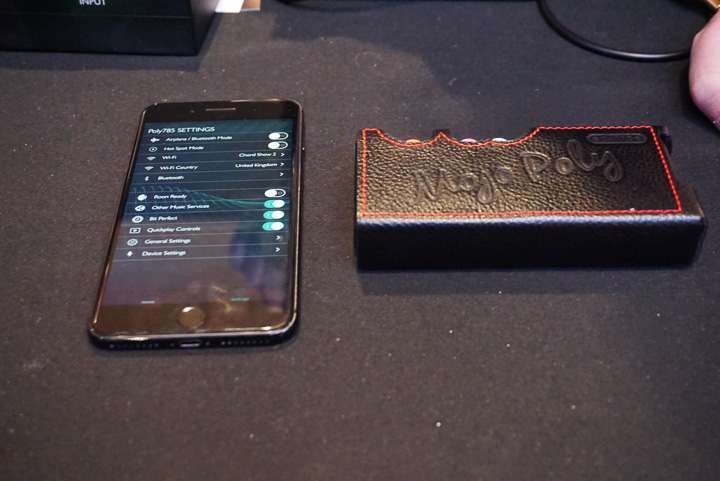
The British firm Chord Electronics highlighted two products at CanJam NYC: the new Qutest DAC (£1,200, US price TBD) and the long-awaited GoFigure configuration app for use with the Mojo portable amp/DAC and it companion Poly Wi-Fi streamer (as recently review in Hi-Fi+).

In essence, the Qutest DAC is the DAC section of the superb Hugo II portable headphone amp/DAC, but repurposed for use in traditional headphone systems.

The GoFigure app is the eagerly anticipated and heretofore missing piece that promises to tie together all the capabilities of the Mojo+Poly combo, which dramatically simplifying (and in part automating) Poly set-up tasks. Officially, the Chord team told me, the GoFigure app would not launch until the Bristol Show held on February 24-25, so we refrained from publishing this report (and its photo of the GoFigure app in use) until after the Bristol event had taken place. If you own a Mojo+Poly combo, you’ll want this app, ASAP. If you don’t own a Mojo+Poly combo, seeing the app in use might make you want to own one.

Cleer

In the “almost there” department we have Cleer’s very promising looking Next headphone, which will feature a dynamic driver fitted with a Magnesium diaphragm and whose projected price will be $699. This headphone has gone through an unusually long gestation period, which we hope means that most of the typical ‘bugs’ and ‘kinks’ will have been worked out before the headphone arrives on the market in April of this year.

Dekoni

The headphone/earphone accessory manufacturer Dekoni outdid itself for CanJam NYC by releasing its new Dekoni Blue headphone ($299), plus a slew of new ear pad options for the Sennheiser HD600-family headphones, Sennheiser HD800-series headphones, as well as Elite-series ear pads offer in sizes/shapes to fit select AKG, Audio-Technica, Beyerdynamic, Fostex, and Sony headphones.

The Dekoni Blue headphone is a modified Fostex T50RP MkIII planar magnetic headphone that was—get this—developed through collaboration between Dekoni and Fostex. In practice, this means the Dekoni Blue is the only modified Fostex headphone that is sold with the full authorisation and blessing of Fostex. Dekoni says the Blue is “a better version of the original by being less fatiguing and smoother all around with an extended bass response.”

Dekoni ear pads use YM80 memory foam and are available with sheepskin, fenestrated sheepskin, velour, and hybrid sheepskin/velour covers, with prices ranging from $59.99 – $109.99/pair. Dekoni pads are said to improve comfort as well as sound quality.


EarSonics

The French earphone and CIEM specialist EarSonics debuted a demonstration-only universal-fit version of its new flagship EM10 CIEM. The EM10 uses ten balanced armature-type drivers per earpiece, grouped as two low frequency driver, four midrange drivers, and four high frequency drivers. In a very brief listening session with the EM10 demonstrator I felt the new flagship model showed great promise and will bear further investigation.

Fiio

Fiio showed a pair of new value-priced portable digital audio players (DAPs) including the flagship X7 Mk II ($650) and the X5 Gen 3 ($ 350), which draws upon the design of the X7 in many respects.

The X7 Mk II is a Wi-Fi enabled, Bluetooth 4.1 and aptX-compatible, Android 5.1-based DAP that features the ESS ES9028PRO DAC device, with support for PCM/DXD files up to 32/384 and DSD files to DSD128. The versatile X7 MkII provides 2GB of RAM, 64GB of ROM storage, and supports two MicroSD cards with total capacity of up to 512GB. What is more, the X7 MkII supports a variety of optional plug-in amplifier modules and also supports major quick charge protocols.

The X5 Gen 3 is a Bluetooth 4.0 and aptX-compatible, Android 5.1-based DAP that features dual AKM AK4490 DAC devices (one each for the left and right channels), with support for PCM/DXD files up to 32/384 and DSD files to DSD128. The X5 Gen 3 provides 1GB of RAM, 32GB of ROM storage, and—like the X7—supports two MicroSD cards with total capacity of up to 512GB.

Finally, Fiio showed its most ambitious earphone to date: the F9 Pro, which sells for $139. The F9 Pro features one dynamic driver and two balanced armature-type drivers source from Knowles.

Final

Final’s big release for CanJam NYC was its spectacular new D8000 planar magnetic headphone with proprietary air film damping system ($3,799), as reviewed in the next issue of Hi-Fi+. The D8000 is, quite simply, one of the most expressive yet also beautifully controlled planar magnetic headphones we have ever heard regardless of price. Several pairs of D8000s found their way to CanJam NYC and various manufacturers of high-performance headphone amplifiers were vying amongst themselves for opportunities to use the D8000 at their demonstration stations (and yes, the headphone really is worth vying for).

Focal Pro

A not necessarily well-known fact is that Focal North America handles most of the French firm’s consumer orientated headphones such as the famous Utopia, Clear, and Elear models, while the Focal Pro division, whose products re distributed in North America by Audio Plus Services, represents a different and more studio-orientated range of Focal headphones. For CanJam NYC, though, it became apparent that there is at least some overlap between the ranges as Focal Pro now gets its own version of the recently released Focal Clear headphone—in this case a version called the Focal Clear Pro. Internally the Clear and Clear Pro are identical, but externally the Pro version offers a very attractive matt red and black colour scheme. The Clear Pro comes with two sets of perforated microfibre fabric-covered ear pad and with two signal cables, including a beefy-looking coiled cable that appears ready to stand up to the rigours of frequent studio use. The Clear Pro model also comes with a rugged hardshell carry case. The price for the Clear Pro is very slightly higher than that of the standard Clear headphone, at $1,699.

CanJam NYC 2018 Show Report from Ultimate Headphone Guide: Part One

Ultimate Headphone Guide is a new bi-annual publication that represents a joint venture between The Absolute Sound magazine and its sister publication Hi-Fi+.  My name is Chris Martens and I have the privilege of serving as the Editor-in-Chief of Ultimate Headphone Guide and one of my first official tasks in that new role was to attend and report on the CanJam NYC event held this past weekend (17-18 February, 2018) at the Times Square Marriott Marquis hotel in New York City.

CanJam NYC is a vibrant event that attracts headphone enthusiasts of all descriptions, ranging from those looking for affordable but high-quality alternatives to the ‘plain vanilla’ earphones that come with many smartphones all the way up to those who own ultra high-performance, multi-thousand dollar/pound/euro headphone systems that deliver astonishingly fine sound. Accordingly, CanJam events offer a welcoming and egalitarian vibe where the common denominator is that everyone in attendance cares deeply about music and sound quality and is seeking exposure to the latest in high-performance headphone/personal audio products that span a wide range of price points.

Unlike the sort of painfully upper crust, nose-in-the-air ethos that can sometimes spoil traditional high-end audio shows, CanJam events have a much more inviting, discovery-orientated ‘feel’ where attendees typically share a “we’re all participants in this sport” mind set. This also means CanJam events tend to attract a comparatively broad range of enthusiasts, comprising music lovers young and old, male and female, newbies and veterans, well-heeled and not-so-well-heeled—all looking to find better-sounding ways to enjoy the music they love best.

What follows is the first of four illustrated descriptions of some of the finest product discoveries I made at CanJam NYC 2018.

Let me acknowledge in advance that I was not able to visit all vendors at the show, for which I apologize. If your firm happens to be one I’ve left out, please know that no slights are intended by my omissions. The simple fact is that CanJam events have got so big that just one journalist cannot cover them, which means we may have to expand our coverage plans as we move forward. Further, where events are as well attended as CanJam NYC was, it sometimes can be tricky even to gain access to vendors’ demonstration tables, where there can be deep queues of attendees eagerly awaiting their turn to hear new products.

Part Two: hifiplus.com/articles/canjam-nyc-2018-show-report-from-ultimate-headphone-guide-part-two/

Part Three: hifiplus.com/articles/canjam-nyc-2018-show-report-from-ultimate-headphone-guide-part-three/

Part Four: hifiplus.com/articles/canjam-nyc-2018-show-report-from-ultimate-headphone-guide-part-four/

1MORE

The value-minded firm 1MORE informed us that its newest model is its Triple-Driver over ear headphone ($249), a review sample of which will be headed our way soon. The Triple-Driver headphone features a 40mm dynamic driver with an exotic graphene diaphragm, a supplementary bass driver, which 1MORE terms a “bass reflector”, and a ceramic tweeter. Anyway you look at it, the Triple Driver is a lot of headphone for the money.

XIAudio (‘Eleven’ Audio)

The Chinese firm XIAudio showed one new headphone amplifier and one expansion option for an existing headphone amplifier at CanJam NYC. The new model is called the Broadway ($2,299), which is a fully balanced, 1Wpc, pure Class A headphone amplifier that is—get this—battery powered.

Then, as an option for the firm’s 2Wpc, pure Class A Formula S headphone amplifier ($3,499), XIAudio now offers a beefy outboard add-on power supply that sells for $2,000. XI Audio products are distributed in the US by JPS Labs/Abyss headphones and Abyss designer Joe Skubinski speaks very highly of the power supply-enhanced Formula S amp.

64 Audio

Over the past year and a half, 64 Audio has been developing new earphone designs that leverage the firm’s proprietary ‘tia’ (Tubeless In-Ear Audio) technology, which feature a new type of so-called ‘open balanced armature driver’ that do not use the fully enclosed canister-like enclosure or output bore tubes common to conventional balanced armature drivers. The result, says 64 Audio, are drivers that offer superior resolution and transparency while minimising unwanted vibration and resonance.

The firm’s first two ‘tia’ models were the flagship tia Fourté earphone ($3,599 and featuring three tia-type drivers and one dynamic driver) and the U18t earphone ($2,999 and featuring tia-type high and high-mid drivers, plus eight balanced armature mid-drivers and another eight balanced armature low drivers).

The tia Fourté and U18t were on demonstration at CanJam NYC as were two new tia-family models: the tia Trió ($2,299) and the U12t ($1,999). The tia Trió features one tia-type high frequency driver, one high-mid driver, and one dynamic driver, while the U12t features one tia-type high frequency driver, one high-mid driver, six balanced armature midrange drivers, and four balanced armature low drivers.

Abyss Headphones

Abyss is best known for its excellent but also unorthodox flagship AB-1266 Phi Edition planar magnetic headphones, which sound terrific but whose angular frame design is controversial.  To address objections to the AB-1266 Phi Edition model, Abyss has been working to create a lighter, more conventional looking, yet still very high performance headphone called the Diana. At CanJam NYC, Abyss announced the full production release of the Diana ($2995), which has received a number of critical design changes along the way. As a result, the production Diana not only sounds better than early-generation prototypes did, but also is markedly more comfortable and fits a wider range of head sizes than before. ‘Nicely done, Abyss.


Advanced (ADVSOUND, Inc.)

Following last summer’s CanJam London 2017 event, Hi-Fi+ Editor Alan Sircom commented favourably on headphones from a new company called Advanced (ADVSOUND Inc.), which specializes in development of high-value/high-performance planar magnetic headphones and hybrid balanced-armature/dynamic driver-equipped earphones. A fine case in point would be the now-released-for production Advanced Alpha open-back planar magnetic headphones, which sell for a moderate $499. The Alphas sport single-sided planar magnetic drivers with 96mm diaphragms made of a silicone composite and come with a useful set of accessories included dual sets of ear pads and signal cables. Frankly, everything about the Alphas—sound, ergonomics, and self-evident build quality—suggests they might cost more than they actually do. Hence, the Advanced Alpha should be a very strong candidate for top honours in the keenly contested $400 – $500 headphone class.

Two other promising products from Advanced were the still-under-development GT-R planar magnetic headphones (projected price $399), plus the new M5 earphone family consisting of three different though related models: a single dynamic driver version ($399), a hybrid four balanced-armature + single dynamic driver version ($599), and an 11 balanced armature version ($699). Brief listening sessions with the GT-R and the M5 4BA + 1DYN model both proved promising.

AKG

Not so very long ago the Austrian firm AKG wowed listeners with its very impressive (and very expensive) K3003 universal-fit earphone and now the company has replaced its venerable flagship with a new model: the N5005 earphone that will sell for $999. Unlike the original K3003, the N5005 is a Bluetooth capable earphone that uses the combination of four balanced armature-type drivers plus a single dynamic driver. Like the K3003, however, the N5005 comes with a downright sumptuous collection of accessories, as the accompanying photos will show.


Audeze

Full-size planar magnetic headphones are the devices that put the California-based firm Audeze on the audio map, but of later it’s the firm’s ingenious and arguably revolutionary iSINE-series earphones that have been garnering the lion’s share of attention—and for all the right reasons. One small ‘catch’, though, is that until now even the least expensive iSINE model (the iSINE 10) carried an MSRP of about $399: not an astronomical sum for the quality on offer, but still a price too high to be welcoming to newcomers. All that has changed, however, with the advent of Audeze’s new iSINE LX planar magnetic earphone, which sells for $199. Suddenly, the entry price to access planar magnetic sound quality has reached a manageable new point that should fit a very, very wide range of budgets. One point worth noting is that the iSINE LX—unlike Audeze’s iSINE 10, iSINE 20, and LCDi4—is not being offered with an optional Cipher cable with an inline, self-powered amp/DAC/DSP module.

Audio-Technica

For CanJam NYC the Japanese firm Audio-Technica showed its most ambitious and unequivocally audiophile-orientated headphone to date: namely, the ATH-ADX5000 priced at $1,999. The ATH-ADX5000 is an open-back, dynamic driver-equipped headphone whose 58mm drive unit features a distinctive Tungsten-coated diaphragm. Moreover, the ATH-ADX5000 features an all-new frame design that is considerably different to the traditional ‘wing-support’ frames Audio-Technica has used in the past. Finally, the headphone’s signal cable features new A2DC connectors, which are rapidly gaining acceptance in the headphone marketplace.

Auris Audio

The Serbian firm Auris Audio showed two very impressive headphone amplifiers, both of which were being demonstrated with HiFiMAN’s superb but very difficult to drive Susvara planar magnetic headphones. At the top of the range was Auris’ Headonia 2A3, which uses—no surprise here, 2A3-type output valves. The Headonia 2A3 puts out >3Wpc and features separate impedance selectors for each of its two output taps. Hence, users could conceivably run high impedance headphones (e.g., the 300-Ohm Sennheiser HD800) on one output jack and low impedance headphones (e.g., the 35-Ohm HiFiMAN HE1000v2) on the other output jack—both at the same time. In a brief listen, I was thorough impressed by the Headonia’s delicate yet high authoritative sound as it drove the HiFiMAN Susvara headphones on demonstration.

Also on demonstration from Auris was the HA2 SE headphone amplifier ($2000), which sports one ECC82 and four EL95 (or PL95) valves and that is capable of 1Wpc output. Unlike the Headonia, the HA2 SE offers only one headphone output jack, but nevertheless offers an output impedance selector optimised for 50/150/300/600-Ohm headphone loads. To my great surprise, the HA2 SE did a fine job with the HiFiMAN Susvara planar magnetic headphones, which is saying a mouthful when you consider how difficult the Susvara is to drive. In fact, I would say the HA2 SE is one of very few headphone amplifiers in its price class that can do a truly credible job with the Susvara (and presumably with other hard-to-drive headphones).

Bang & Olufsen (B&O Play)

B&O Play headphones are distributed through Lenbrook (PSB, NAD, Blusound) in the US and accordingly the Lenbrook display featured not only headphones and earphones from PSB and NAD, but also two models from B7O Play: the H8i ($399) and the H4 ($299). The H8i is a Bluetooth enabled and automatic noise-cancelling equipped on-ear headphone, while the H4 is a wireless Bluetooth over the ear headphone.

Beyerdynamic

Beyerdynamic’s newest model as shown at CanJam NYC is the Amiron Wireless Bluetooth headphone with the firm’s signature MIY (Make-It-Yours) app, priced at $799. The MIY app, which can be used with a variety of other Beyerdynamic models is simply ingenious in that allows users to give themselves an app-driven hearing test through the headphones they plan to use, the result of which is the app preparing a customised, compensatory EQ curve unique to the user and headphone in question. Some manufacturers (for example, Even) have tried a similar approach, but with the test/EQ system built into the headphone. The beauty of the Beyerdynamic approach, however, is that it can be used by a number of different users and across a number of Beyerdynamic headphone and earphone models.

Monitor Audio Launches New Studio Loudspeaker

The Monitor Audio design team was given the brief to create a powerful yet elegant premium loudspeaker that would grace any setting. The new Studio is the result of this brief and it delivers an exceptional audio performance from its beautifully constructed cabinet. With a sleek silhouette, unique design features, and featuring technologies from Monitor Audio’s flagship Platinum II series, the new Studio sets a fresh benchmark.

Studio is a high-end loudspeaker offering absolute performance from a strikingly compact cabinet. The shape and configuration has been designed with the sole intention of delivering the most faithful sound reproduction possible.

The grille-less design ensures the speaker’s voice is clear and true and lets the drivers become an eye-catching focal point. The two metallic-silver RDT II speaker cones deliver an optimum high-end performance that will delight audiophiles. The honeycomb tweeter cover adds a contemporary edge to the speaker’s form and the bespoke solid-metal logo at the cabinet’s base gives a stylish design touch.

Handcrafted and available in a sleek satin black, white or grey finish, Studio is a stunning addition to any room. To ensure a superlative performance an optional bespoke floor stand is available.


Driver design

The dual 4” drivers are those used in the flagship Platinum PL500 II speaker and they have been modified to produce bass, as well as mid-range detail. The RDT II cones from Platinum II are housed in a bespoke cast polymer chassis which improves rigidity and damping characteristics. As with Platinum II, the drivers are designed to be incredibly low in distortion and use the same magnetic design principles, as well as material choice. An MPD (Micro Pleated Diaphragm) high frequency transducer has been designed to provide incredible articulation due to the low mass diaphragm. MPD transducers work like a super-fast accordion by rapidly squeezing the pleats to produce a smooth, wide, naturally fast response way into the ultra-sonic band. As a result, the sound is more lifelike, releasing the high harmonic spectrum of every note without the distortion that blurs definition.

Mechanical and visual design

The super slim cabinet is tuned using two rear mounted HiVe II slot ports mounted at the top and bottom of the cabinet. This positioning ensures the pressure inside the cabinet is balance symmetrically. The large port surface area prevents turbulence and subsequent air noise, which can be a problem in small size cabinets. HiVe II technology ensures air moves in and out much quicker than a conventional port, resulting in fast, powerful bass coupled with superior transient response. Hi-grade Polypropylene film capacitors, air-core and laminated steel-core inductors have been selected to preserve the best possible signal integrity. The purist electrical chain is complemented by a pair of precisely machined terminals developed for the Platinum II Series. These have been Rhodium plated to provide the lowest contact resistance and long-term consistency. The drivers are surrounded and clamped by a rigid die-cast aluminium sub-baffle, to provide rigidity.

The mechanical structure is enhanced further using Monitor Audio’s bolt-through driver technology to provide the ultimate cabinet bracing.


Key Features

• Delivers detailed and accurate audio performance

• Ultra-slim, compact cabinet profile

• 2 x 4” RDT II drivers with C-CAM technology and featuring rigid cast polymer chassis

• MPD (Micro Pleated Diaphragm) high frequency transducer, designed in-house for Monitor Audio’s flagship Platinum II speakers

• HiVe II (High Velocity) reflex slot configuration ports

• Rigid die-cast aluminium sub-baffle to mount and clamp drivers securely

• Precision machined, rhodium plated speaker terminals

• Bolt through driver technology: clearer sound and cleaner aesthetics

• Contemporary satin finish in black, white or grey

• Optional dedicated floor stand (STAND)

Finishes

Satin white, grey or black

Monitor Audio is a wholly British owned and managed loudspeaker designer and manufacturer.

Since 1972 it has been at the leading edge of loudspeaker design and technology, perfecting the implementation of metal drivers. It is renowned for exemplary speaker cabinet construction and finish.

For more information email [email protected] 

Additional technical details on Studio will be available at www.monitoraudio.com

Monitor Audio Ltd

24 Brook Road,

Rayleigh, Essex,

SS6 7XJ England

T. + 44 (0)1268 740580

F. + 44 (0)1268 740589

E. [email protected]

Hi-Fi+ Awards: Digital Audio

Disc Player/Transport

PS Audio DirectStream Memory Player

In the world of streaming audio, many think that spinning disc players must either move with the times or fade away. PS Audio’s DirectStream Memory Player is very much a ‘move with the times’ design. As the name suggests, rather than outputting data read directly from discs, the DirectStream outputs data from a very low-jitter buffer system that PS Audio calls a “Digital Lens”. And it does this with all manner of digital audio files pulled from a range of discs, including HDCDs, SACDs, DVD-Audio discs, HRx discs, Blu-ray audio discs, and even user-created CD-R/RW, DVD±R/RW, DVD±R DL, and BD-R/RE discs.  In addition to discs, the Memory Player can also play files directly from USB thumb drives via a convenient front panel-mounted USB port. On the rear panel of the DirectStream Memory Player users will find an AES/EBU and three sets each of coaxial S/PDIF and 12S digital outputs, making it the perfect partner for PS Audio’s own highly-prized range of DirectStream digital converters.  

In his test of the DirectStream Memory Player, Hi-Fi+ Publisher Chris Martens found it “offered consistently superior low-frequency pitch definition and clarity,” and that it had “a notable edge in terms of capturing transient sounds of all kinds”, as well as delivering “both harmonic and reverberant information in the music.” Chris concluded by saying, “If you’ve bought into streaming source components in a big way, you may find PS Audio’s DirectStream Memory Player will force you—in the nicest, gentlest, and most rewarding way—to reconsider the sonic merits of disc-based music playback.”

See: hifiplus.com/articles/ps-audio-directstream-memory-player/

Digital-to-Analogue Converter

Brinkmann Audio Nyquist

Old meets the newest of the new in the Brinkmann Audio Nyquist. Although it did make a DAC 30 years ago, Brinkmann is best known for its analogue turntables, tonearms, phono stages, and amplifiers. This is perhaps why Brinkmann classes it’s Nyquist DAC as an ‘Analogue D/A converter’. The Nyquist itself combines a swappable digital module (to accommodate future developments in digital audio) with an output stage and headphone amplifier more in line with a valve preamp than a digital device, and an external linear power supply as befits its distinctly analogue heritage.  

The Brinkmann Nyquist is one of the first high-end designs to adopt the new MQA digital format (alongside PCM and DSD), but irrespective of the kind of digital format or music genres you play through this £12,995 DAC, Hi-Fi+ Editor Alan Sircom felt that  “The performance of this device is so effortless, so natural, and so bloody enjoyable sounding, you are drawn ever deeper into your music.” He concluded by saying “The way the Nyquist handles music is with a dancer’s touch rather than an engineer’s. This is particularly true of MQA, but it applies universally to everything the Nyquist processes. Lovely!”

See: hifiplus.com/articles/brinkmann-audio-nyquist-digital-to-analogue-converter/

Streamer/Network Player

dCS Network Bridge

The dCS Network Bridge exists to provide a connection between digital files and a DAC. This can be in the form of network attached storage, USB sticks or drives, and online services such as TIDAL and Spotify. The output is bit-perfect and is several steps better than playing music from a laptop or PC, due to the dedicated nature of the device. The Bridge can play files sampled at rates up to 24-bit, 384kHz, supporting all major lossless codecs, plus DSD/64 or DSD/128 in native or DoP formats , as well as downampling those files for ‘legacy’ users. Ideally intended for owners of older dCS products wishing to integrate them with the latest digital formats, the £3,250 Network Bridge has grown to be popular with a very wide audience.  

Resident Hi-Fi+ expert Rafael Todes felt that “what comes out via the Bridge is absolutely superb,”  and that it “really does sound like being in the presence of a live orchestra, in the way I don’t often hear with digital kit.“ He concluded that this is perhaps the best way to access networked and online streamed sounds made today!

See: hifiplus.com/articles/dcs-network-bridge/

Server

Merging+Player

Although showing almost no external signs of upgrade from the original – and excellent – Merging+NADAC, the £12,750 Merging+Player system has become a one-stop instant music server. Using the music business RAVENNA networking standard gives this server a robustness that few domestic devices can hope hope to achieve, while allowing its built-in shielded RoonCore system to perfectly serve and convert music stored anywhere on your system.  

More a file serving computer than a storage solution per se, the Merging+Player’s strengths are that it builds upon that excellent sound of the NADAC and adds effortless access and serving of files stored on the same network, as if both Roon and Merging were made for one another. The DAC section retains all the absolute fidelity and musical precision of the standalone NADAC, too. In his test, Hi-Fi+ Editor Alan Sircom concluded that, “It not only shows what Roon can do, but lets the Merging design show what it can do in even sharper relief.“

See: hifiplus.com/articles/merging-player-server/

Hi-Fi+ Awards: Loudspeakers

Cost-no-object loudspeaker

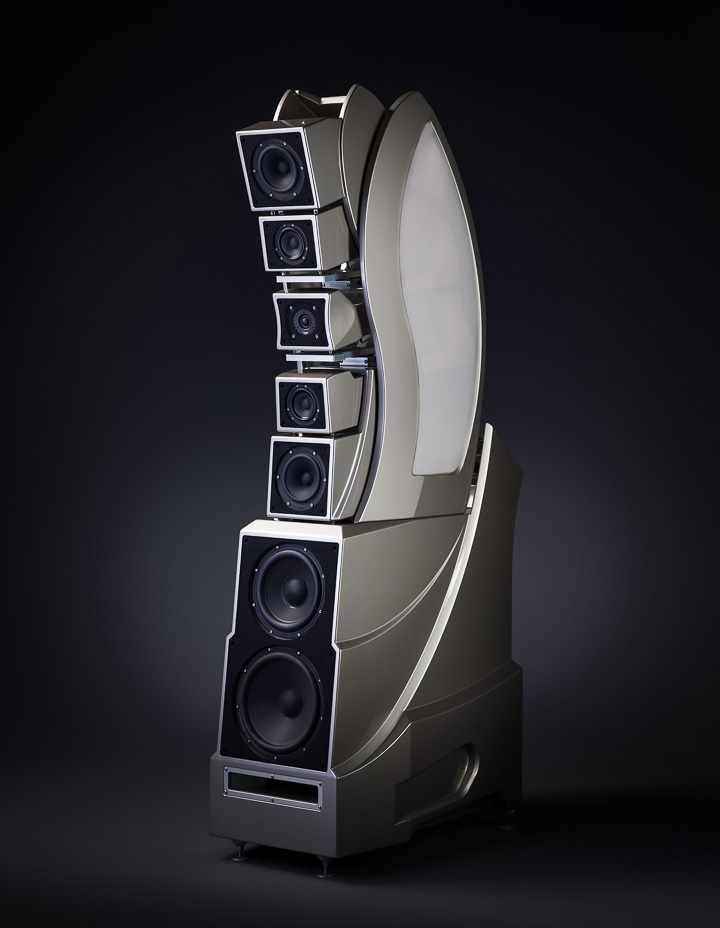
Wilson WAMM Master Chronosonic

Dave Wilson’s first commercial loudspeaker venture was the Wilson Audio Modular Monitor. As the name suggests, this loudspeaker used a series of modular cabinets for bass, midrange, and treble , designed to be custom made for the well-heeled audiophile listener of the 1980s. The WAMM Master Chronosonic is the WAMM story brought up to date, and a mark of passing the baton from father to son: Daryl Wilson is now at the head of the Wilson Audio brand, and this loudspeaker is very much his own statement of intent.

A true cost-no-object design the almost infinitely adjustable, seven-driver, six cabinet, £670,000 loudspeaker, “challenges all your perceptions of what you thought possible from an audio system,” according to Hi-Fi+ Editor Alan Sircom, “even those of us used to really high-grade audio and exceptional loudspeakers will find themselves wondering precisely how the WAMM is extracting that much musical information from even the most humble CD recordings. This isn’t a subtle, nuanced difference. Music played through these loudspeakers just has that ‘right’ sound that is more like real music and less like there are electronics involved in the signal chain.”

See: hifiplus.com/articles/wilson-audio-wamm-master-chronosonic-loudspeaker/

YG Acoustics Sonja XV

The YG Acoustics range allows a significant amount of modularity to allow a loudspeaker to grow with the listener. The flagship Sonja is a perfect example of that modularity, as it can be configured in five different ways, and even includes an upgrade path for owners of its Anat predecessor. The top of the tree, however, is the mighty Sonja XV (short for ‘eXtreme Version’), a four-tower, six module per channel, £250,000 celebration of the company’s first 15 years.

Using heroic amounts of aircraft-grade aluminium right down to the milling (yes, milling) of the drive units, the Sonja XV is the best expression of YG founder Yoav Geva’s concepts in loudspeaker design. This 210kg per tower, loudspeaker might be the ultimate in non-resonant designs, but the sound resonated deeply with Hi-Fi+ Publisher Chris Martens, who felt the XV’s, “perfectly capture the attack, bloom, and decay of notes from individual instruments in a holistic way that lets you hear and feel how the entire ensemble interacts with the performance space.” He concluded by saying, “If your budget and listening space permit, the Sonja XV will serve you as a mighty musical force for good and one that will not easily be equalled, let alone surpassed.”

See: hifiplus.com/articles/yg-acoustics-sonja-xv-multi-cabinet-loudspeaker-system/

High-end loudspeaker

Magico S1 Mk II

We have auditioned a great many Magico designs – from the smallest to (almost) the largest – and they have never, ever ceased to command the greatest respect, from both a technical and a musical standing. In a very real way, however, the true measure of a loudspeaker manufacturer is not just in the production of its cost-no-object designs (although these do show what a company can do when the stakes are raised to extraordinary levels). It’s often those more attainable loudspeakers that show the designer’s true mettle.

The Magico S1 Mk II is the perfect example of a design concept that works throughout. The two-way, sealed aluminium enclosure floorstander has received ‘trickle down’ improvements that began with the epic M-Pro loudspeaker – including a beryllium/diamond tweeter and graphene mid-bass driver – as well as changes to the cabinet and its base that have filtered through the entire S-series. ”The loudspeaker is fundamentally honest and accurate sounding from its highest frequencies to its lowest,” said Hi-Fi+ Editor Alan Sircom, and concluded, “The Magico S1 Mk II is a product of superlatives… if you like loudspeakers that are neutral, you are a fan.”

See: hifiplus.com/articles/magico-s1-mk-ii-floorstanding-loudspeaker/

Standmount loudspeaker

Dynaudio Special Forty

Dynaudio has long held a commanding reputation for the quality of its drive units and has made many a good loudspeaker in its time, but the £2,500 Special Forty is something out of the ordinary for the brand. It manages to combine the kind of performance normally found in the company’s top-tier and strictly limited-edition models (in fact, Dynaudio consider this loudspeaker to be something of an homage to models like the Special One, Special Twenty-Five, and the Crafft), but in an affordable, domestically-friendly package that is going to be around for several years. Dynaudio’s new two-way standmount speaker is easy to drive, easy to install, and easy to love.

Using a variation on Dynaudio’s legendary 28mm Esotar soft-dome tweeter and a 170mm MSP (Magnesium Silicate Polymer) mid-bass unit – considered by the Dynaudio team to be the best the company has ever made, the loudspeaker uses a simple but phase-coherent first-order crossover and a thin-play birch laminate cabinet, finished in sumptuous translucent red or grey. The rear-ported loudspeaker delivered class-leading bass performance, exceptional soundstage properties, and tremendous dynamic range for such a loudspeaker. Hi-Fi+ Publisher Chris Martens felt that “On good recordings perceived soundstages frequently extended well beyond the side and back walls of my listening room, while dynamic shifts both large and small were consistently realistic in scale—even on big, fast-rising swells that might overwhelm many small monitors.” He also suggested that, “the Special Forty’s deftly revealed the myriad ways in which the ensemble’s instruments each interacted with the acoustics of the recording space, with reverberant details yielding an uncanny sense of place (and placement),” also noting that, “the Special Forty’s proved capable of delivering what many reviewers have termed a realistic sense of ‘palpable presence’ — where instruments and vocalists sound so real and believable.”

See: hifiplus.com/articles/dynaudio-special-forty-standmount-loudspeaker/

High-value loudspeaker

Magnepan .7

Magnepan has long achieved that elusive sweet spot in loudspeaker design; a loudspeaker that delivers true high-end performance, but generally without the kind of high-end price tag that makes the brand the preserve of audio’s elite. And in the Magnepan .7, the company’s latest compact floorstanding design, the cost:performance ratio makes it almost irresistable.

As with all planar-magnetic quasi-ribbon designs from the brand, the panel size dictates the amount of bass, and Magnepan speakers in general have specific requirements on room size, dimensions, and the choice of power amplifier, but if these aspects are addressed, the results can be awesome. And the .7 is the most room/amp-friendly Magnepan to date. Resident Hi-Fi+ expert Eric Neff felt that “The crisp and authoritative bass was nearly perfect in my smaller listening room. In addition, I was enjoying an almost holographic listening experience as the famous Magnepan dimensionality appeared right in front of me.” He also felt that, “small home owners need never look with wistfulness on their friends’ ‘Audiophile’ system again. This is not a compromise at any level. It is music.”

See: hifiplus.com/articles/magnepan-magneplanar-7-floorstanding-loudspeakers/

Monitor Audio Silver 300

English audiophiles are very used to the Monitor Audio brand, but that didn’t prepare Hi-Fi+ Editor Alan Sircom for the level of musical enjoyment he extracted from these well-built, extremely high value floorstanding loudspeakers from the brand. A rear ported design in the latest version of the ever-popular Silver series, the C-CAM gold-anodised dome tweeter and aluminium/magnesium midrange and bass units manage to deliver the perfect combination of light, yet rigid diaphragm material for an extremely fast, surprisingly dynamic, and accurate loudspeaker. Couple this with an extraordinarily rigid, well-made cabinet, and the whole package looks more expensive than its £1,250 price tag suggests.

It sounds more expensive, too. The combination of that speed of delivery, detail, and dynamic range, coupled with a fine sense of musicality, meant that Alan Sircom couldn’t help but enjoy himself. He felt that, “the point of high-end shouldn’t just be about the price tag or how heavy the loudspeaker is. It should be about the sound, and it’s in the sound quality department where the Silver 300 scores so highly.”

See: hifiplus.com/articles/monitor-audio-silver-300-floorstanding-loudspeaker/

Hi-Fi+ Awards: Amplifiers

Power amplifier

Vitus Audio SS-103

Replacing the awesome Vitus Audio SS-102 power amplifier, the SS-103 now stands at top of the company’s Signature series. This £30,000 stereo power amplifier is an imposing 90kg beast, and sports one of the largest UI-cored transformers in the busniess within its immaculately constructed enclosure. And yet, for all its size, weight, and price, the SS-103 delivers just 50W in Class A or 150W in Class AB.

Regardless, the Vitus SS-103 is one of the most uncannily resolving amplifiers ever made, in every sonic aspect. Whether it’s the creamy-sounding Class A mode or the heft of Class AB, Hi-Fi+ expert Chris Thomas was deeply impressed by the performance of the amplifier. Chris likened the sound to “a great book that you simply can’t put down because you are so intrigued and don’t want to miss what comes next.” Chris also felt that, “the amplifier can utilise its considerable assets to full rhythmic effect whether the tempo itself is high and percussive, gentle and slow, or anywhere between. “

See: hifiplus.com/articles/vitus-audio-ss-103-power-amplifier/

Preamplifier

Jeff Rowland Design Group Capri S2

Living by E.F. Schumacher’s famous ‘Small is Beautiful’ maxim, the Jeff Rowland Design Group Capri S2 is a diminutive, beautifully built, full-function line-and-phono or optional line-and-DAC preamplifier (complete with four inputs and a home theatre by-pass) that comes with extensive transformer coupling throughout. The Capri S2 manages to keep its small footprint thanks to use of a switch-mode power supply, something that has long been a significant aspect of Jeff Rowland amplifier designs, and in the process the company has managed to make switch-mode sound better than many of its rivals.

Best used as a balanced preamplifier, Hi-Fi+ expert Jason Kennedy considered the Capri S2’s strength to be that, “The emphasis is more on detail resolution, which makes it easy to listen right into a piece of music and understand what each instrument or voice is contributing.” He concluded that, “the Jeff Rowland Capri S2 is not only superbly built, finished, and thought out, but its sound quality has a similarly deep sheen.”

See: hifiplus.com/articles/jeff-rowland-design-group-capri-s2-preamplifier/

Integrated amp or amp/DAC

Hegel Audio Systems H90

It is a mark of just how rapidly the audio market is changing that the concept of an integrated amplifier without digital audio or network streaming capacity seems as out-of-step as steam-powered radio with today’s amplifier buyers. So when the Hegel H80 was scheduled for upgrade, it was perhaps logical to look to the ground-breaking Røst from the company, to form the basis of the new entry-level amplifier from the Norwegian electronics experts.

The new H90 takes much from its predecessor and the Røst, and in the process manages to squeeze a lot of sophisticated improvements and an even better sound into a remarkably familiar affordable design. It also retains Hegel’s ‘giant killer’ status, despite its on-paper humble 60W power output. As Hi-Fi+ Editor Alan Sircom said in his review, “the joy of the H90 is that it can do this to far more exotic loudspeakers than you might ever imagine a £1,500 amplifier doing. And with loudspeakers more in line with the price, the combination sounds excellent. Ultimately, this is an amplifier with staying power.”

See: hifiplus.com/articles/hegel-h90-integrated-amplifier/

Naim Audio Uniti Nova

Naim Audio’s replacements to the popular Uniti range were a long time coming. First announced at the end of Summer 2016 and expected later that year, many of the products were delayed for several months. However, if the top of that range – the Uniti Nova – is anything to go by, it was more than worth the wait, and Naim’s network streaming system just made a huge jump in performance and ease-of-use.

Replacing the ever-popular SuperUniti, the 80W Nova is a very different design inside and out. The amplifier uses a wholly new amplifier circuit and digital engine, which gives the new Uniti platform enough ‘horsepower’ to be made a Roon end-point. Best used with the new Uniti Core media server from the same brand, the Uniti Nova “is the coming together of the best version of the Naim streaming platform with an amplifier that seems to think itself a miniaturised version of the Statement,” according to Hi-Fi+ Editor Alan Sircom. Wow!

See: hifiplus.com/articles/naim-audio-uniti-nova-integrated-streaming-amplifier-and-uniti-core-music-server/