Up to 37% in savings when you subscribe to hi-fi+
hifi-logo-footer

Begin typing your search above and press return to search. Press Esc to cancel.

Monitor Audio Launches New Studio Loudspeaker

The Monitor Audio design team was given the brief to create a powerful yet elegant premium loudspeaker that would grace any setting. The new Studio is the result of this brief and it delivers an exceptional audio performance from its beautifully constructed cabinet. With a sleek silhouette, unique design features, and featuring technologies from Monitor Audio’s flagship Platinum II series, the new Studio sets a fresh benchmark.

Studio is a high-end loudspeaker offering absolute performance from a strikingly compact cabinet. The shape and configuration has been designed with the sole intention of delivering the most faithful sound reproduction possible.

The grille-less design ensures the speaker’s voice is clear and true and lets the drivers become an eye-catching focal point. The two metallic-silver RDT II speaker cones deliver an optimum high-end performance that will delight audiophiles. The honeycomb tweeter cover adds a contemporary edge to the speaker’s form and the bespoke solid-metal logo at the cabinet’s base gives a stylish design touch.

Handcrafted and available in a sleek satin black, white or grey finish, Studio is a stunning addition to any room. To ensure a superlative performance an optional bespoke floor stand is available.


Driver design

The dual 4” drivers are those used in the flagship Platinum PL500 II speaker and they have been modified to produce bass, as well as mid-range detail. The RDT II cones from Platinum II are housed in a bespoke cast polymer chassis which improves rigidity and damping characteristics. As with Platinum II, the drivers are designed to be incredibly low in distortion and use the same magnetic design principles, as well as material choice. An MPD (Micro Pleated Diaphragm) high frequency transducer has been designed to provide incredible articulation due to the low mass diaphragm. MPD transducers work like a super-fast accordion by rapidly squeezing the pleats to produce a smooth, wide, naturally fast response way into the ultra-sonic band. As a result, the sound is more lifelike, releasing the high harmonic spectrum of every note without the distortion that blurs definition.

Mechanical and visual design

The super slim cabinet is tuned using two rear mounted HiVe II slot ports mounted at the top and bottom of the cabinet. This positioning ensures the pressure inside the cabinet is balance symmetrically. The large port surface area prevents turbulence and subsequent air noise, which can be a problem in small size cabinets. HiVe II technology ensures air moves in and out much quicker than a conventional port, resulting in fast, powerful bass coupled with superior transient response. Hi-grade Polypropylene film capacitors, air-core and laminated steel-core inductors have been selected to preserve the best possible signal integrity. The purist electrical chain is complemented by a pair of precisely machined terminals developed for the Platinum II Series. These have been Rhodium plated to provide the lowest contact resistance and long-term consistency. The drivers are surrounded and clamped by a rigid die-cast aluminium sub-baffle, to provide rigidity.

The mechanical structure is enhanced further using Monitor Audio’s bolt-through driver technology to provide the ultimate cabinet bracing.


Key Features

• Delivers detailed and accurate audio performance

• Ultra-slim, compact cabinet profile

• 2 x 4” RDT II drivers with C-CAM technology and featuring rigid cast polymer chassis

• MPD (Micro Pleated Diaphragm) high frequency transducer, designed in-house for Monitor Audio’s flagship Platinum II speakers

• HiVe II (High Velocity) reflex slot configuration ports

• Rigid die-cast aluminium sub-baffle to mount and clamp drivers securely

• Precision machined, rhodium plated speaker terminals

• Bolt through driver technology: clearer sound and cleaner aesthetics

• Contemporary satin finish in black, white or grey

• Optional dedicated floor stand (STAND)

Finishes

Satin white, grey or black

Monitor Audio is a wholly British owned and managed loudspeaker designer and manufacturer.

Since 1972 it has been at the leading edge of loudspeaker design and technology, perfecting the implementation of metal drivers. It is renowned for exemplary speaker cabinet construction and finish.

For more information email [email protected] 

Additional technical details on Studio will be available at www.monitoraudio.com

Monitor Audio Ltd

24 Brook Road,

Rayleigh, Essex,

SS6 7XJ England

T. + 44 (0)1268 740580

F. + 44 (0)1268 740589

E. [email protected]

Hi-Fi+ Awards: Digital Audio

Disc Player/Transport

PS Audio DirectStream Memory Player

In the world of streaming audio, many think that spinning disc players must either move with the times or fade away. PS Audio’s DirectStream Memory Player is very much a ‘move with the times’ design. As the name suggests, rather than outputting data read directly from discs, the DirectStream outputs data from a very low-jitter buffer system that PS Audio calls a “Digital Lens”. And it does this with all manner of digital audio files pulled from a range of discs, including HDCDs, SACDs, DVD-Audio discs, HRx discs, Blu-ray audio discs, and even user-created CD-R/RW, DVD±R/RW, DVD±R DL, and BD-R/RE discs.  In addition to discs, the Memory Player can also play files directly from USB thumb drives via a convenient front panel-mounted USB port. On the rear panel of the DirectStream Memory Player users will find an AES/EBU and three sets each of coaxial S/PDIF and 12S digital outputs, making it the perfect partner for PS Audio’s own highly-prized range of DirectStream digital converters.  

In his test of the DirectStream Memory Player, Hi-Fi+ Publisher Chris Martens found it “offered consistently superior low-frequency pitch definition and clarity,” and that it had “a notable edge in terms of capturing transient sounds of all kinds”, as well as delivering “both harmonic and reverberant information in the music.” Chris concluded by saying, “If you’ve bought into streaming source components in a big way, you may find PS Audio’s DirectStream Memory Player will force you—in the nicest, gentlest, and most rewarding way—to reconsider the sonic merits of disc-based music playback.”

See: hifiplus.com/articles/ps-audio-directstream-memory-player/

Digital-to-Analogue Converter

Brinkmann Audio Nyquist

Old meets the newest of the new in the Brinkmann Audio Nyquist. Although it did make a DAC 30 years ago, Brinkmann is best known for its analogue turntables, tonearms, phono stages, and amplifiers. This is perhaps why Brinkmann classes it’s Nyquist DAC as an ‘Analogue D/A converter’. The Nyquist itself combines a swappable digital module (to accommodate future developments in digital audio) with an output stage and headphone amplifier more in line with a valve preamp than a digital device, and an external linear power supply as befits its distinctly analogue heritage.  

The Brinkmann Nyquist is one of the first high-end designs to adopt the new MQA digital format (alongside PCM and DSD), but irrespective of the kind of digital format or music genres you play through this £12,995 DAC, Hi-Fi+ Editor Alan Sircom felt that  “The performance of this device is so effortless, so natural, and so bloody enjoyable sounding, you are drawn ever deeper into your music.” He concluded by saying “The way the Nyquist handles music is with a dancer’s touch rather than an engineer’s. This is particularly true of MQA, but it applies universally to everything the Nyquist processes. Lovely!”

See: hifiplus.com/articles/brinkmann-audio-nyquist-digital-to-analogue-converter/

Streamer/Network Player

dCS Network Bridge

The dCS Network Bridge exists to provide a connection between digital files and a DAC. This can be in the form of network attached storage, USB sticks or drives, and online services such as TIDAL and Spotify. The output is bit-perfect and is several steps better than playing music from a laptop or PC, due to the dedicated nature of the device. The Bridge can play files sampled at rates up to 24-bit, 384kHz, supporting all major lossless codecs, plus DSD/64 or DSD/128 in native or DoP formats , as well as downampling those files for ‘legacy’ users. Ideally intended for owners of older dCS products wishing to integrate them with the latest digital formats, the £3,250 Network Bridge has grown to be popular with a very wide audience.  

Resident Hi-Fi+ expert Rafael Todes felt that “what comes out via the Bridge is absolutely superb,”  and that it “really does sound like being in the presence of a live orchestra, in the way I don’t often hear with digital kit.“ He concluded that this is perhaps the best way to access networked and online streamed sounds made today!

See: hifiplus.com/articles/dcs-network-bridge/

Server

Merging+Player

Although showing almost no external signs of upgrade from the original – and excellent – Merging+NADAC, the £12,750 Merging+Player system has become a one-stop instant music server. Using the music business RAVENNA networking standard gives this server a robustness that few domestic devices can hope hope to achieve, while allowing its built-in shielded RoonCore system to perfectly serve and convert music stored anywhere on your system.  

More a file serving computer than a storage solution per se, the Merging+Player’s strengths are that it builds upon that excellent sound of the NADAC and adds effortless access and serving of files stored on the same network, as if both Roon and Merging were made for one another. The DAC section retains all the absolute fidelity and musical precision of the standalone NADAC, too. In his test, Hi-Fi+ Editor Alan Sircom concluded that, “It not only shows what Roon can do, but lets the Merging design show what it can do in even sharper relief.“

See: hifiplus.com/articles/merging-player-server/

Hi-Fi+ Awards: Loudspeakers

Cost-no-object loudspeaker

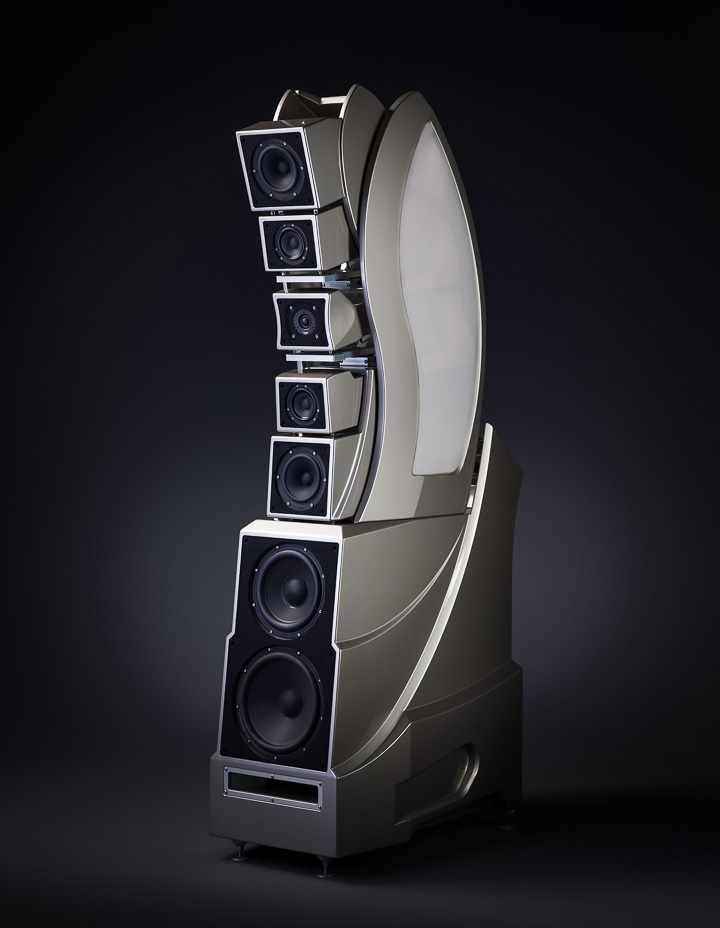
Wilson WAMM Master Chronosonic

Dave Wilson’s first commercial loudspeaker venture was the Wilson Audio Modular Monitor. As the name suggests, this loudspeaker used a series of modular cabinets for bass, midrange, and treble , designed to be custom made for the well-heeled audiophile listener of the 1980s. The WAMM Master Chronosonic is the WAMM story brought up to date, and a mark of passing the baton from father to son: Daryl Wilson is now at the head of the Wilson Audio brand, and this loudspeaker is very much his own statement of intent.

A true cost-no-object design the almost infinitely adjustable, seven-driver, six cabinet, £670,000 loudspeaker, “challenges all your perceptions of what you thought possible from an audio system,” according to Hi-Fi+ Editor Alan Sircom, “even those of us used to really high-grade audio and exceptional loudspeakers will find themselves wondering precisely how the WAMM is extracting that much musical information from even the most humble CD recordings. This isn’t a subtle, nuanced difference. Music played through these loudspeakers just has that ‘right’ sound that is more like real music and less like there are electronics involved in the signal chain.”

See: hifiplus.com/articles/wilson-audio-wamm-master-chronosonic-loudspeaker/

YG Acoustics Sonja XV

The YG Acoustics range allows a significant amount of modularity to allow a loudspeaker to grow with the listener. The flagship Sonja is a perfect example of that modularity, as it can be configured in five different ways, and even includes an upgrade path for owners of its Anat predecessor. The top of the tree, however, is the mighty Sonja XV (short for ‘eXtreme Version’), a four-tower, six module per channel, £250,000 celebration of the company’s first 15 years.

Using heroic amounts of aircraft-grade aluminium right down to the milling (yes, milling) of the drive units, the Sonja XV is the best expression of YG founder Yoav Geva’s concepts in loudspeaker design. This 210kg per tower, loudspeaker might be the ultimate in non-resonant designs, but the sound resonated deeply with Hi-Fi+ Publisher Chris Martens, who felt the XV’s, “perfectly capture the attack, bloom, and decay of notes from individual instruments in a holistic way that lets you hear and feel how the entire ensemble interacts with the performance space.” He concluded by saying, “If your budget and listening space permit, the Sonja XV will serve you as a mighty musical force for good and one that will not easily be equalled, let alone surpassed.”

See: hifiplus.com/articles/yg-acoustics-sonja-xv-multi-cabinet-loudspeaker-system/

High-end loudspeaker

Magico S1 Mk II

We have auditioned a great many Magico designs – from the smallest to (almost) the largest – and they have never, ever ceased to command the greatest respect, from both a technical and a musical standing. In a very real way, however, the true measure of a loudspeaker manufacturer is not just in the production of its cost-no-object designs (although these do show what a company can do when the stakes are raised to extraordinary levels). It’s often those more attainable loudspeakers that show the designer’s true mettle.

The Magico S1 Mk II is the perfect example of a design concept that works throughout. The two-way, sealed aluminium enclosure floorstander has received ‘trickle down’ improvements that began with the epic M-Pro loudspeaker – including a beryllium/diamond tweeter and graphene mid-bass driver – as well as changes to the cabinet and its base that have filtered through the entire S-series. ”The loudspeaker is fundamentally honest and accurate sounding from its highest frequencies to its lowest,” said Hi-Fi+ Editor Alan Sircom, and concluded, “The Magico S1 Mk II is a product of superlatives… if you like loudspeakers that are neutral, you are a fan.”

See: hifiplus.com/articles/magico-s1-mk-ii-floorstanding-loudspeaker/

Standmount loudspeaker

Dynaudio Special Forty

Dynaudio has long held a commanding reputation for the quality of its drive units and has made many a good loudspeaker in its time, but the £2,500 Special Forty is something out of the ordinary for the brand. It manages to combine the kind of performance normally found in the company’s top-tier and strictly limited-edition models (in fact, Dynaudio consider this loudspeaker to be something of an homage to models like the Special One, Special Twenty-Five, and the Crafft), but in an affordable, domestically-friendly package that is going to be around for several years. Dynaudio’s new two-way standmount speaker is easy to drive, easy to install, and easy to love.

Using a variation on Dynaudio’s legendary 28mm Esotar soft-dome tweeter and a 170mm MSP (Magnesium Silicate Polymer) mid-bass unit – considered by the Dynaudio team to be the best the company has ever made, the loudspeaker uses a simple but phase-coherent first-order crossover and a thin-play birch laminate cabinet, finished in sumptuous translucent red or grey. The rear-ported loudspeaker delivered class-leading bass performance, exceptional soundstage properties, and tremendous dynamic range for such a loudspeaker. Hi-Fi+ Publisher Chris Martens felt that “On good recordings perceived soundstages frequently extended well beyond the side and back walls of my listening room, while dynamic shifts both large and small were consistently realistic in scale—even on big, fast-rising swells that might overwhelm many small monitors.” He also suggested that, “the Special Forty’s deftly revealed the myriad ways in which the ensemble’s instruments each interacted with the acoustics of the recording space, with reverberant details yielding an uncanny sense of place (and placement),” also noting that, “the Special Forty’s proved capable of delivering what many reviewers have termed a realistic sense of ‘palpable presence’ — where instruments and vocalists sound so real and believable.”

See: hifiplus.com/articles/dynaudio-special-forty-standmount-loudspeaker/

High-value loudspeaker

Magnepan .7

Magnepan has long achieved that elusive sweet spot in loudspeaker design; a loudspeaker that delivers true high-end performance, but generally without the kind of high-end price tag that makes the brand the preserve of audio’s elite. And in the Magnepan .7, the company’s latest compact floorstanding design, the cost:performance ratio makes it almost irresistable.

As with all planar-magnetic quasi-ribbon designs from the brand, the panel size dictates the amount of bass, and Magnepan speakers in general have specific requirements on room size, dimensions, and the choice of power amplifier, but if these aspects are addressed, the results can be awesome. And the .7 is the most room/amp-friendly Magnepan to date. Resident Hi-Fi+ expert Eric Neff felt that “The crisp and authoritative bass was nearly perfect in my smaller listening room. In addition, I was enjoying an almost holographic listening experience as the famous Magnepan dimensionality appeared right in front of me.” He also felt that, “small home owners need never look with wistfulness on their friends’ ‘Audiophile’ system again. This is not a compromise at any level. It is music.”

See: hifiplus.com/articles/magnepan-magneplanar-7-floorstanding-loudspeakers/

Monitor Audio Silver 300

English audiophiles are very used to the Monitor Audio brand, but that didn’t prepare Hi-Fi+ Editor Alan Sircom for the level of musical enjoyment he extracted from these well-built, extremely high value floorstanding loudspeakers from the brand. A rear ported design in the latest version of the ever-popular Silver series, the C-CAM gold-anodised dome tweeter and aluminium/magnesium midrange and bass units manage to deliver the perfect combination of light, yet rigid diaphragm material for an extremely fast, surprisingly dynamic, and accurate loudspeaker. Couple this with an extraordinarily rigid, well-made cabinet, and the whole package looks more expensive than its £1,250 price tag suggests.

It sounds more expensive, too. The combination of that speed of delivery, detail, and dynamic range, coupled with a fine sense of musicality, meant that Alan Sircom couldn’t help but enjoy himself. He felt that, “the point of high-end shouldn’t just be about the price tag or how heavy the loudspeaker is. It should be about the sound, and it’s in the sound quality department where the Silver 300 scores so highly.”

See: hifiplus.com/articles/monitor-audio-silver-300-floorstanding-loudspeaker/

Hi-Fi+ Awards: Amplifiers

Power amplifier

Vitus Audio SS-103

Replacing the awesome Vitus Audio SS-102 power amplifier, the SS-103 now stands at top of the company’s Signature series. This £30,000 stereo power amplifier is an imposing 90kg beast, and sports one of the largest UI-cored transformers in the busniess within its immaculately constructed enclosure. And yet, for all its size, weight, and price, the SS-103 delivers just 50W in Class A or 150W in Class AB.

Regardless, the Vitus SS-103 is one of the most uncannily resolving amplifiers ever made, in every sonic aspect. Whether it’s the creamy-sounding Class A mode or the heft of Class AB, Hi-Fi+ expert Chris Thomas was deeply impressed by the performance of the amplifier. Chris likened the sound to “a great book that you simply can’t put down because you are so intrigued and don’t want to miss what comes next.” Chris also felt that, “the amplifier can utilise its considerable assets to full rhythmic effect whether the tempo itself is high and percussive, gentle and slow, or anywhere between. “

See: hifiplus.com/articles/vitus-audio-ss-103-power-amplifier/

Preamplifier

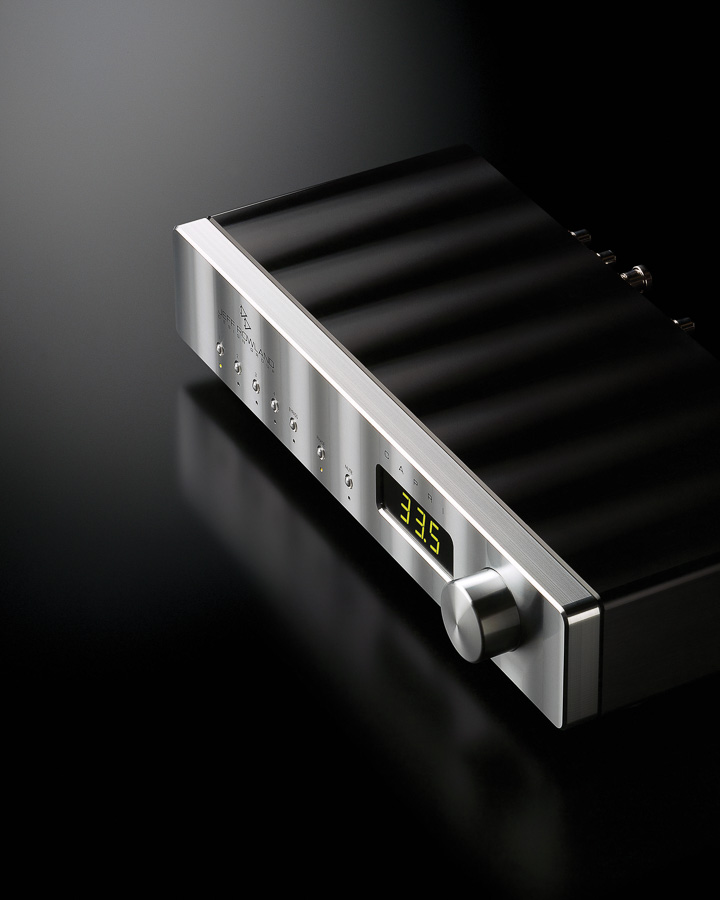
Jeff Rowland Design Group Capri S2

Living by E.F. Schumacher’s famous ‘Small is Beautiful’ maxim, the Jeff Rowland Design Group Capri S2 is a diminutive, beautifully built, full-function line-and-phono or optional line-and-DAC preamplifier (complete with four inputs and a home theatre by-pass) that comes with extensive transformer coupling throughout. The Capri S2 manages to keep its small footprint thanks to use of a switch-mode power supply, something that has long been a significant aspect of Jeff Rowland amplifier designs, and in the process the company has managed to make switch-mode sound better than many of its rivals.

Best used as a balanced preamplifier, Hi-Fi+ expert Jason Kennedy considered the Capri S2’s strength to be that, “The emphasis is more on detail resolution, which makes it easy to listen right into a piece of music and understand what each instrument or voice is contributing.” He concluded that, “the Jeff Rowland Capri S2 is not only superbly built, finished, and thought out, but its sound quality has a similarly deep sheen.”

See: hifiplus.com/articles/jeff-rowland-design-group-capri-s2-preamplifier/

Integrated amp or amp/DAC

Hegel Audio Systems H90

It is a mark of just how rapidly the audio market is changing that the concept of an integrated amplifier without digital audio or network streaming capacity seems as out-of-step as steam-powered radio with today’s amplifier buyers. So when the Hegel H80 was scheduled for upgrade, it was perhaps logical to look to the ground-breaking Røst from the company, to form the basis of the new entry-level amplifier from the Norwegian electronics experts.

The new H90 takes much from its predecessor and the Røst, and in the process manages to squeeze a lot of sophisticated improvements and an even better sound into a remarkably familiar affordable design. It also retains Hegel’s ‘giant killer’ status, despite its on-paper humble 60W power output. As Hi-Fi+ Editor Alan Sircom said in his review, “the joy of the H90 is that it can do this to far more exotic loudspeakers than you might ever imagine a £1,500 amplifier doing. And with loudspeakers more in line with the price, the combination sounds excellent. Ultimately, this is an amplifier with staying power.”

See: hifiplus.com/articles/hegel-h90-integrated-amplifier/

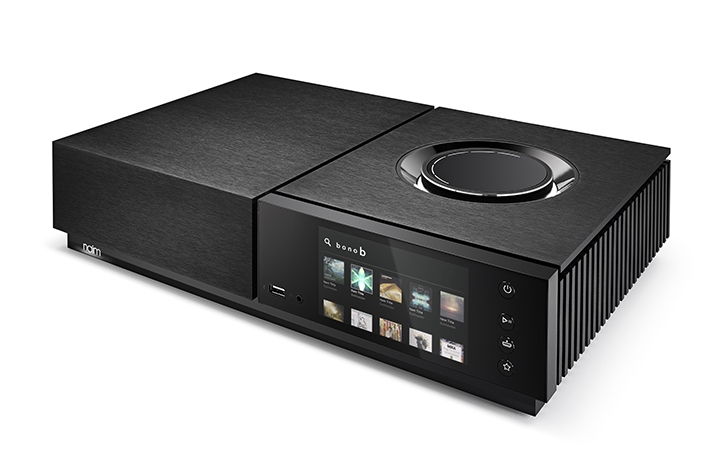
Naim Audio Uniti Nova

Naim Audio’s replacements to the popular Uniti range were a long time coming. First announced at the end of Summer 2016 and expected later that year, many of the products were delayed for several months. However, if the top of that range – the Uniti Nova – is anything to go by, it was more than worth the wait, and Naim’s network streaming system just made a huge jump in performance and ease-of-use.

Replacing the ever-popular SuperUniti, the 80W Nova is a very different design inside and out. The amplifier uses a wholly new amplifier circuit and digital engine, which gives the new Uniti platform enough ‘horsepower’ to be made a Roon end-point. Best used with the new Uniti Core media server from the same brand, the Uniti Nova “is the coming together of the best version of the Naim streaming platform with an amplifier that seems to think itself a miniaturised version of the Statement,” according to Hi-Fi+ Editor Alan Sircom. Wow!

See: hifiplus.com/articles/naim-audio-uniti-nova-integrated-streaming-amplifier-and-uniti-core-music-server/

Hi-Fi+ Awards: Introduction

It’s that time again. Our annual awards – bigger and better than ever – have come to be an important part of the Hi-Fi+ calendar. Every year, we listen to hundreds of fine products in a range of categories, from the smallest earphone or cartridge up to the largest, multi-box floorstanding loudspeaker, from the affordable to the astronomical. And every year, a handful of those products stand out as exceptional examples of their breed.

The audio market is exceptionally mature (alongside the camera and the automobile, recording and replaying sound was one of the first truly modern consumer technologies first developed in the 19th Century, and playing records even predates mass electrification of homes), but is not stagnant. Change is constant, and our Awards have to reflect that change. Every year, we evaluate each individual award category for its relevance, adding or removing categories as a result. This results in a lot of award categories, but that is the result of an increasingly diverse and fluid audio market. This diversity is very much at odds with some of the more stagnant tomes in audio development, where we could have called upon the same basic categories year in, year out. Speaking personally, I’m happier to live in a more dynamic market with annual change, because it speaks of major improvements in audio performance.

Those major improvements are across the board. In fact, although there are significant changes to audio equipment at all price points, the most exciting changes seem to be happening at the more value-driven end of the audio world. We have seen inexpensive audio electronics, loudspeakers, cables, and in the full spread of personal audio products that provide a degree of performance that would have been impossible to achieve at almost any level a few years ago. Naturally, when you move from audio’s ‘good’ to ‘great’ what you get in the process is more; more bandwidth, more bass, more volume headroom, more dynamic range, and so on. This has always been the case, but – by accepting some compromise in those areas (often forced upon us by the size and shape of the room itself), you can get truly exceptional performance from high-quality, affordable audio. And in the case of personal audio, you can get astonishingly good, truly high-end performance from a system that is both affordable and doesn’t weigh as much as a car engine.

Careful system matching and providing a good foundation for a fine audio system still holds, of course, and putting together a system made up of random Award-winning products is no guarantee of fantastic performance. But in today’s audio world even the most affordable award-winning product is capable of so much that it’s worth making the effort in extracting the most out of any system in today’s golden age of audio.

A part of this golden age is the diversity of ways in which you can access that good sound today. LP is still very much in fashion, and the pressing plants can’t make records quick enough to satisfy demand. The decline in CD sales has slowed and there are still tens of millions of CDs sold every year. Music streaming goes from strength to strength, both in terms of availability and resolution, and is presently outstripping music downloads, which appear to be in fairly steep decline. The one seeming exception to that decline in owning rather than leasing online music is in the high-resolution field – people are still willing to buy a high-quality online version of an album, so long as it sounds good and ‘comes with all the trimmings’ (the 21st century equivalent of high-quality cover art and liner notes). The change is significant; the tail end of the last decade was defined by a ‘good enough’ culture that traded quality for availability. Now that storage and bandwidth are effectively non-issues, the need to make that trade has evaporated and people are waking up to the notion of quality and quantity. And that extends way beyond the audiophile field.

Our round-up is primarily regarding products we have seen during 2017, but that is a semi-permeable barrier. We review somewhere between 120 and 140 products per year in all categories, and sometimes we have products lined up for review that don’t make it into that year but are deserving of an award all the same. These are included in the awards, before their respective reviews, with the promise that the review will follow in an upcoming issue.

There is also the interesting question of 2016 reviews in 2017. Just because a product receives an award this year does not invalidate the product that received an award last year. We live in a world where the relatively languid pace of development in audio electronics (where a product could stay in production for years or even decades) are being forgotten as we all march to the beat of the smartphone, but it is worth reiterating that good audio is designed for the long game, and a product made today will likely be every bit as relevant years from now. Of course, this holds at the high-end, but increasingly the best of breed at any level will outperform many products across the board for years to come.

Where that might not hold is in the realm of digital audio. Just as a few years ago, the DSD numbers game came to dominate the nature of DAC performance (irrespective of how many DSD files the listener actually owned), the must-have three-letter-acronym of the moment is shaping up to be MQA. I suspect this year will be the crucial year; by the time it comes to next year’s awards, MQA support will either be ‘useful’ or its absence will be ‘a deal-breaker’ – and that largely comes down to DAC buyers around the world.

So, here it is. We think these are some of the best products to date, in a world already brimming over with outstanding products in all aspects of audio performance. Enjoy, and keep listening! 

Bowers & Wilkins 702 S2 floorstanding loudspeaker

At £3,300 per pair the 702 S2 is a very clever loudspeaker indeed. On the one hand, it replaces the top model from the CM-series. On the other, it trickles down much of technology from the seriously upmarket (£22,500 per pair!) 800 D3. In truth the rather less costly £16,500 per pair 802 D3 are a more realistic inspiration, as they have similar midrange and top end features yet (like the 702 S2) are more compromised at low frequencies. Indeed, the substantially tighter and more open bass was the audible advantage that the 800 D3 had over the 802 D3 when I reviewed the two models back in 2017, and I suspect that a similar degree of compromise will affect this 702 S2.

The new 700 S2-series consists of some six stereo pairs – three stand-mounts and three floorstanders – plus a couple of centre front models and a subwoofer. This 702 S2 is the top model – end of story? (Not quite!) This floorstander shares the ‘tweeter on top’ feature with just the top 705 S2 stand-mount model. Those (such as my son’s better half, I suspect) who find the ‘tweeter on top’ feature aesthetically, er, ‘challenging’ could save substantial sums by opting for the 703 S2 or 704 S2 models. Both feature a very similar tweeter mounted within the box, but also reduce the bass drive significantly: the 703 S2 has just two 165mm bass units; the 704 S2 uses two smaller 130mm bass drivers (perhaps indicating it may be a better match for smaller rooms).

The 702 is a full three-way design, employing a similar ‘surroundless’ (FST) driver as that used in the 800-series, albeit without the latter’s aluminium ‘turbine head’ enclosure. That means of course that the dynamic range will not be as great as that of the 800-series models, but most of the other benefits of an FST driver are fully in evidence.

Crucially, this 150mm cone version replaces the original Kevlar cone material – long a staple of B&W engineering – with a softer woven material called Continuum. The sound quality and the in-room far-field measurements both attest to the superiority of the new material, which apparently spent some ten years in development. One advantage of using a woven material is that its stiffness varies according to whether this is measured along the warp and weft or across the diagonals between them. Because of this variation, the outer edge of the cone starts to cancel and the source therefore effectively reduces in diameter as frequency rises, smoothing the breakup and substantially retaining the distribution. Other innovations in the midband include an aluminium chassis that has been optimised through finite element analysis (FEA), a tuned central ‘bung’ to damp any remaining resonances, and a new, more effective and less costly means of decoupling the unit from the box.


The tweeter here is a new development, partly because the diamond dome used in the 800 D series is simply too costly for use in the 700-series. Instead we have a metal dome that has extra reinforcement from a 30µm thick vapour-deposited carbon ‘skin’ on the front, and a 300µm thick carbon ring on the rear. This combination apparently extends the first breakup mode point to 47kHz, which is well short of the 70kHz claimed for the 800 D3’s diamond dome but still comfortably above the 38kHz used by the double aluminium dome in the 600 series, or the widely accepted 20kHz top end of the audio band. A bonus found only in the two ‘tweeter on top’ models is that said tweeter is mounted in a hewn-from-solid aluminium billet that weighs a full 1kg.

There’s innovation in the (three) bass drivers too, as each of the 165mm units uses an aerofoil-section cone that varies in thickness in order to maintain stiffness with good damping. This is made of paper skins surrounding EPS damping in the case of the 702, saving costs over the carbon-fibre-over-foam used by the current 800-series models.

The net result of this rather extensive range of innovations is a loudspeaker that gets remarkably close to an 802 D3 soundwise, yet costs only a fraction of the price. It’s a very impressive allround package considering the reasonable enough price-tag, helped by mass production at a new factory that B&W has built in Zhuhai, China.

Measurements only tend to confirm the impressive performance, with an in-room frequency balance that’s held within tight limits across most of the audio band – roughly ±2.5dB from 60Hz to 15kHz. The Continuum cone shows some reduction in the presence band suckout that Kevlar used to demonstrate. And the top end remains well maintained, even though it appears to lack the smoothness of the diamond dome (dipping a little at around 4kHz). Output is actually a little strong below 60Hz, though it’s also quite even and well extended.

Sensitivity is a generous 91-92dB, though this is rather heavily compromised by an impedance that drops to around 3ohms at around 110Hz. Although the bass end is ported, the port itself is tuned to a very low c.22Hz, so its effect on music is likely to be marginal.

The dimensions part of the specifications refer to plinths that weren’t actually included with our review pair. In fact an earlier B&W model did include just such a plinth, which had been included to satisfy European ‘tilt test’ requirements, and I suspect that it’s unlikely to affect performance in any way. In practice I merely fitted spikes to the 702 S2 in the normal way, and then mounted each on a spring-suspended Townshend platform to decouple the speaker from the suspended wooden floor. This arrangement seemed to work very well.

The 702 S2 comes in three alternative finishes: gloss black, satin white, and rosenut; the latter now has rather more grain structure than earlier examples. Brass strips are used to link the bi-wire crossover network.

Soundwise the 702 S2 was thoroughly impressive. Indeed, it was quite difficult to tell the sound quality difference between the 702 S2 and the 802 D3, despite the considerable price differential. Reason does point to the 802 D3 having a wider dynamic range, which is probably true, and a younger pair of ears at the initial listening session did find the top end a little sweeter when the diamond dome tweeter was doing its thing.

However, conversely, in strict comparison terms I actually found the imaging of the 702 S2 marginally superior to the 800 D3, as it seemed to have a slightly tighter midband focus, though both are very good in this regard.

Above all, I simply slotted the 702 S2s into the locations from which I’d removed the 800 D3s, and although the bottom end somewhat lacked the grip and purposefulness of the senior model, its midband seemed very much on a par, and the top end seemed fine (to these ears anyway!).

A major strength of this speaker is undoubtedly its very even overall balance that ensures fine tonal neutrality at all times. There’s no denying that the Continuum FST unit is a worthwhile improvement over its Kevlar predecessor, largely because the lack of presence band aggressiveness has been well controlled alongside a more open sound balance.


During the time I spent listening to the 702 S2, some visitors from Rega came over to install a Naiad turntable. I contemplated changing the speakers as the Naiad costs some ten times that of the 702 S2s, but actually didn’t bother as the speakers seemed perfectly able to distinguish between the turntables and indeed the phono stages we had available.

This is a particularly fine loudspeaker, especially considering that it costs so much less than the 800-series models, yet offers a standard of performance that can certainly give the 802 D3 a run for its money. The latter will manage to beat this upstart over the long haul, but the sonic difference between them is nowhere near as large as the pricetag differential might suggest.

TECHNICAL SPECIFICATIONS

  • Drive Units: 1x25mm (1 in) Carbon Dome tweeter: 1× ø150mm (6 in) Continuum cone FST midrange: 3×165mm (6.5 in) Aerofoil Profile bass
  • Bandwidth: -6dB at 28Hz and 33kHz
  • Frequency response: 45Hz – 28kHz ±3dB
  • Sensitivity: 90dB spl (2.83VRMS, 1m)
    Distortion 2nd and 3rd harmonics (90dB, 1m) <1% 86Hz – 28kHz, <0.5% 110Hz – 20kHz
  • Power Handling: 30W–300W
  • Finishes: Gloss black, white, Rosenut
  • Size (W×H×D): 200 × 994 × 337mm
  • Weight: 29.5kg
  • Price: £3,300 per pair

Manufactured by: Bowers & Wilkins

URL: bowers-wilkins.co.uk

Tel: 0800 232 1513 (UK only)

Back to reviews

Read more Bowers & Wilkins reviews here

CAAS Elysian preamplifier and mono power amplifiers

It works like this: you get into hi-fi in your teens/twenties, toil away at a decent job for twenty or thirty years, and then realise that life is finite and that if you’re ever going to do what you really want to, now is the time. So you start building audio components and slowly people buy them, and with luck you have a business that is actually satisfying, even if the yacht and the swimming pool are becoming less and less likely to arrive. This may entirely not be the case with Carl and Neil Broomfield who founded CAAS (Class A Audio Systems) in 2006, but I suspect it’s near the truth. These brothers from Yorkshire have useful backgrounds when it comes to audio electronics, as Carl is an engineer specialising in high frequency microwave technology while Neil is a software engineer, and looking at their photos I’d guess they didn’t leave it much more than twenty years before they followed their dream.

CAAS make ‘three/four’ products: the Elysian Pre-amplifier seen here (with a version with built in ladder DAC and network streamer) a standalone DAC/streamer, and the Elysian mono power amplifiers. A fairly typical product range until you realise that pretty much all of it was developed by the company from scratch, which is presumably why it took 10 years to bring the products to the wider market. As the pictures hopefully reveal, build quality is of a very high standard indeed. The machined-from-billet aluminium casework on the Elysian preamp is in the premier league, and this is serious audio engineering even on the outside. Under the skin things get even more extreme; this is a fully balanced line stage with no fewer than 12 discrete regulated power supplies following triple transformer isolation. I was confused by the presence of seven digital power supplies given that this is an analogue preamp, but it turns out that it uses digital control software for the motor drive for the volume pot and resistor relays.

The circuit is DC coupled from input to output. CAAS is keen to point out that there are no capacitors in the signal path, while the buffer stage is a zero feedback, Class A JFET type with DC servo technology to minimise distortion. The volume control is a 128-step relay-based device with fixed resistors for each step, a feature rarely seen in any product with a sub-megabucks asking price. Those 128 steps come in very handy when you want to make small changes to level, both manually and through the remote handset.


Connections are a mix of RCA and XLR sockets, with the latter taking the lion’s share of the inputs. Things are a little cramped on the back panel, but the left/right split makes it fairly easy to connect up. Inputs are numbered to correspond with illuminated dots on the front panel, and you can select between them with a button on the preamp or with the remote control. The handset matches the machined nature of the amplifiers and is a lot more solid than many even at this price; the buttons are rubber and appealingly tactile and you don’t need to be too accurate with your pointing to get the IR signal to its destination. The only foible is that when you press mute there’s no indication of this on the preamp, but it does get very quiet so you can figure it out.

The Elysian mono power amp delivers the first – and most critical – 20 Watts in Class A then switches over to Class A/B up to 100 plus Watts depending on impedance. This output is specified to double into a four Ohm load. Unusually for a powerful amplifier, CAAS does not use feedback, neither locally nor globally, and like the preamp, it is DC coupled throughout and has dual transformer supplies for maximum circuit isolation. There are a lot of other features listed on the site should you need more technical depth, but what really struck me is that the power amps are surprisingly small and easy to manoeuvre for such powerful amplifiers. Connections extend to balanced and single ended inputs with a switch to select either and the usual binding posts for speaker cables. The only other connection is for CAAS’s bus system that allows the preamp to turn the power amps on and off remotely.

I spent quite a while using the Elysian power amps with a Townshend Allegri preamp and have to say that the experience was very gratifying indeed. This is an unusually musical and revealing power amplifier and one which makes you just want to play more music. It has excellent separation of voices and instruments, which makes it easy to hear right into the production, while an apparent absence of overhang or ringing means that timing is nigh on perfect. High frequencies clearly benefit from the Class A aspect, whether it’s cymbals, violins, or soprano voices, there is always lots of clean, open extension with no hint of grain. It’s not easy to produce treble that has both body and ‘air’, but these power amps did so with ease when playing through PMC Fact.8 and B&W 802 D3 speakers, both of which can be very revealing in that region.

The other end of the spectrum, the bass, is equally impressive. It’s extremely well controlled, but there are no sharp edges where they shouldn’t be, so bass notes start and stop precisely when they should, with no sense of an amplifier exerting control over the process. Some power amps have tremendous grip, which gives very muscular bass, but you can hear the exertion of that grip in a subtle edginess to notes and it gets in the way of the music. These CAAS amps can really punch too, but do so with so little effort that it’s not fatiguing. Instead, the sound is tactile and shapely; acoustic bass notes in particular have a roundness and depth to them that’s beautiful. You can also tell that this is a very quiet amplifier by the degree of resolution they provide for quieter, low level sounds. This is why you can hear so much – it’s not covering up the fine details with the noise floor. What you get is the reverberant and textural detail that is masked with lesser amplifiers. This much was obvious with Charles Mingus’ Newport Rebels [Candid] on vinyl, which, thanks in part to an Audio Technica ART1000 moving coil on the Rega RP10, had a magical realism that was truly transporting and possessed of immaculate imaging solidity. Esperanza Spalding’s ‘Ebony and Ivy’ [Emily’s D+Evolution, Concord] isn’t quite such a good recording, but there was plenty of fine detail revealed by this amplifier – the snare work and the backing vocals both sounded clearer, but remained in proportion to the overall mix. There’s also always lots going on at the periphery of the image, which extends way beyond the outsides of the speakers and helps to form a highly coherent picture of the musical event. Did I mention the bass? Play Deadmau5’s ‘Seeya’ [while(1<2), Astralwerks] and you’ll know what I mean: punch, tiny details and lumps of rock rumbling in the background. This track can be punishing: here it remained musical without any loss of intensity.


Bringing the Elysian preamplifier into the system was initially a bit disappointing. It doesn’t have as much openness as it could and image depth seems curtailed, but further listening made it apparent that the image is projected in front of the speakers to a far higher degree than usual. And, more importantly, once you get used to the presentation it becomes clear that the CAAS trio is one of the most musically engaging and resolving amplification systems around. As a combo, it is unusually even-handed, revealing oodles of detail in a highly coherent fashion. Some will prefer a more overtly ‘open’ presentation, but the CAAS combo makes that approach sound a little exposed, especially at higher volumes. The 802 D3 speakers in particular have rarely sounded better and certainly never timed so well. They are a surprisingly challenging load, so you need power and that usually undermines timing and finesse, but not here. This is a genuine ‘cake and eat it’ amplifier combo of the sort you can forget about and revel in the music without a care. The preamp is relaxed yet focussed, and has bass power that other preamps struggle to match. It is clearly more resolving in real terms than most and reveals detail that only the best alternatives can compete with. I tried it with a different pair of monoblocks, the P6 from Longdog Audio, which produced a lot more ‘air’ but kept the imaging up front at all times. This showed the CAAS to be consistent, and did not undermine the performance of the system, really filling the room with sound in the process.

Carl and Neil are to be congratulated. This pre/mono power combo is not only built to the highest standards, but makes high-resolution music with an effortless musicality that’s very hard to turn off. Audition if you dare.

TECHNICAL SPECIFICATIONS

Elysian Pre-amplifier

  • Type: Class A line-stage preamplifier with fully complementary circuitry
  • Analogue inputs: Three pairs of XLR balanced connectors, two pairs of RCA single-ended inputs
  • Analogue outputs: One pair of XLR balanced outputs, one pair of RCA single-ended outputs
  • Input impedance: >27kohm
  • Output impedance: 60ohm
  • Bandwidth: <1Hz to >100kHz (-3dB)
  • Distortion: < 0.01% @ 1kHz (0dB level, 2V RMS)
  • Signal to Noise Ratio: ~100dB (A-WTD, 2V RMS)
  • Dimensions (H×W×D): 80 × 350 × 330mm
  • Weight: 8.6kg
  • Price: £7,200

Elysian Mono power amplifier

  • Type: Solid state DC coupled mono power amplifier
  • Analogue inputs: One pair of XLR balanced outputs, one pair of RCA single-ended outputs
  • Analogue outputs: One pair of speaker taps (via 5-way binding posts)
  • Power output: 100W @ 8 Ohms, 200W @ 4 Ohms, 20W Class A @ 8 Ohms
  • Bandwidth: 0.8Hz to >300kHz (-3dB)
  • Distortion: 0.01% @ 1kHz (1W into 8ohm)
    <1% @ 1kHz (100W into 8ohm)
  • Signal to Noise Ratio: ~90dB at 0dBW output into 8 ohm (A-WTD)
  • Dimensions (H×W×D): 140 × 260 × 340mm
  • Weight: 11kg
  • Price: £4,500 each

Manufacturer: CAAS Audio Ltd

URL: caasaudio.com

Distributor: Auden Distribution

Tel: 44(0)7917 685 759

URL: audendistribution.co.uk

Back to reviews

Read more CAAS Audio reviews here

Questyle Audio QP2R high‑resolution portable digital audio player

Serious headphone enthusiasts are by nature an inquisitive lot and so it happens that at industry gatherings such as the CanJam event held each year at the Rocky Mountain Audio Fest we do a lot of behind the scenes comparing of notes.

“What do you consider to be the best sounding DAP (digital audio player) you’ve heard thus far?” asked a trusted colleague from the Head-Fi world.

“I’ll tell you my favourite DAP if you’ll tell me yours,” I replied. “Deal?”

My colleague nodded his ascent and at the count of three we both said, more or less in unison, “the Questyle QP1R.” A big smile broke over my colleague’s face as he offered me a traditional fist-bump to celebrate our shared appreciation for a fine product. Now, however, Questyle Audio has released an identically sized but dramatically revamped new player called the QP2R (£1,299 or $1,299 US), which promises even higher performance.

For those unfamiliar with Questyle Audio, the firm is a specialty high-end audio electronics manufacturer based in China and that is led by the gifted engineer Wang Fengshuo (or ‘Jason Wang’ in anglicised form). Wang is perhaps best known for his work in developing practical, very high performance current mode amplifiers. While some designers have used current mode amplification for individual low-level stages embedded within more traditional circuit designs, Wang Fengshuo has taken the concept much further to create products where current mode amplifiers can actually drive real-world earphone and headphone loads.

Is current mode amplification a big deal? Much as with pure Class A amplifiers, there is a certain sonic je nais sais quoi that adheres to current mode amplifiers enabling them to sound at once masterful and muscular beyond all proportion to their claimed power output. What is more, current mode amps seem largely unfazed by ‘tricky’ loads that can give lesser amps and DAPs fits.

The QP2R improves on the original QP1R in several key respects. First, it provides an all-discrete, fully balanced, pure Class A current mode amplifier and therefore offers both single-ended and balanced headphone outputs. Very high quality parts are used throughout, such as F95 tantalum and low-loss Panasonic thin-film audio capacitors. Like its predecessor, the QP2R provides user selectable low, medium, and high master gain settings while also providing a pure Class A bias control that let users choose standard or high bias settings, depending on the loads being driven. One further detail touch is a user programmable ‘DSD Gain compensation’ control that lets users apply a pre-determined amount of gain boost for DSD tracks, many of which are mastered at lower levels than their PCM counterparts. Unlike the QP1R, the new QP2R will be available with a soon-to-be-released, optional desktop docking station and associated remote control—items that together allow the QP2R to serve as compact, standalone front end for purposes of driving power amplifiers or active loudspeakers.


The DAC section of the QP2R takes big steps forward from the QP1R and is based on the well-regarded AKM AK4490 DAC chip. Accordingly, the QP2R can handle PCM files captured at 32kHz – 384kHz rates with 16/24/32-bit word depths; it can also handle DSD files at DSD64, DSD128, or DSD256 resolution levels (DSD64 files are handled with DSD native decoding).

At the foot of the unit is a USB Type-C port that provides both charging and data transfer functions, plus a card slot for installing an external Micro SD memory card with maximum capacity of up to 200GB. Some might lament the fact that the QP2R now supports only one Micro SD card whereas the QP1R supported two, but that is the price to be paid for the QP2Rs fully balanced amplifiers, which take up extra space. Happily, internal storage for the QP2R is a generous 64GB (twice the capacity of the QP1R).

I/O and control options for the QP2R are blessedly simple. Up top, the QP2R sports a combo 3.5mm single-ended headphone output/3.5mm optical output jack, a 2.5mm balanced headphone output jack, and a well-protected volume control knob. The left side of the unit features three control buttons providing track forward, track backward, and play/pause functions, while the right side incorporates a master on/off switch and a tiny indicator lamp to show when high bias is selected.

The QP2R chassis is made of CNC-machined, bead-blasted, anodised aluminium with impact-resistant Gorilla Glass front and back panels. Behind that front panel is a colour IPS 2.4-inch Sharp LCM screen with, four touch-sensitive controls surrounding a centrally positioned multi-function metal touch-button and a matching, hyper-precise control wheel whose indexed mechanism is the subject of multiple patents. Together, the controls respond to users’ inputs in a crisp, surefooted, but also quite luxurious way.

Powering the QP2R is a 3,100mAh 3.7V lithium-polymer battery yielding about 10 hours of playing time (depending on gain and bias settings chosen). Questyle says the QP2R features a “1GHz, high performance and low power processor,” running under Linux OS, which Questyle claims has “inherent advantages on performance and stability over Android.” The setup and control menu for the QP2R is more flexible yet sufficiently intuitive that tech-savvy enthusiasts might master it without reading the manual.

I should mention that the QP2R is, like most of Questyle components, built by Foxconn—a rigorously quality-minded firm best known as the builder of Apple’s iPhones. That same Apple-like sense of deep attention paid to even the smallest details of fit and finish helps give the QP2R an aura of refinement few competitors can match.

For my listening tests I used the QP2R to drive a range of earphones and headphones including Westone ES60 CIEMs and W80 universal fit earphones, plus MrSpeakers ETHER Flow and ETHER C planar magnetic headphones. Two of the most important questions were whether the QP2R sounds different to the QP1R and if so, in what ways.

From the outset, the QP2R exhibited a far more finely resolved and sharply focused presentation than the QP1R, while preserving the at once sophisticated and yet pleasingly muscular and organic sound for which Questyle current mode amplifiers are known. Where the QP1R sounds like a very well executed portable digital audio player, the QP2R instead sounds like something more, with a sound reminiscent of Questyle’s larger and more costly full-size tabletop units such as the CMA600i or CMA880i headphone amp/DACs.

To appreciate what I mean by this, just listen to Miles Davis’ ‘Right Off’ from A Tribute to Jack Johnson [Columbia, DSD64]. In particular, note how the QP2R captures the almost fiercely textured snarl of the electric bass, the propulsive energy of the ride cymbal (and other percussion instruments), the wild and deliberately oversaturated sound of the electric guitar and keyboards, and of course the smouldering glow of Davis’ horn. You just don’t get such an intense and vivid presentation with most DAPs, but the QP2R really delivers the goods.


Three sonic treats not to be missed are the sonic effects of the QP2R’s gain and bias control switches and of its balanced outputs. Together, these features allow users to fine-tune the QP2R for a more authoritative and sharply defined presentation. For example, I set the QP2R in high gain mode and switched between standard and high bias settings while driving the MrSpeakers ETHER Flows and found the high bias setting unlocked welcome additional layers of harmonic richness and three-dimensionality. Likewise, I ran the QP2R in low gain mode, with high bias engaged, and with balanced outputs driving my Westone W80 earphones and was rewarded with perhaps the most open, airy, and articulate sound I’ve yet heard from those earphones. A little experimentation can pay substantial sonic dividends.

The QP2R is a winner, pure and simple. While it is not quite powerful enough to drive the latest generation of low-sensitivity planar magnetics, it can drive most everything else with telling results. It offers sound quality competitive with many premium desktop headphone amp/DACs, but at a lower price point and in a compact, pocket-sized package. Enthusiastically recommended.

TECHNICAL SPECIFICATIONS

  • Type: High-res portable digital audio player/DAC
  • Inputs: Built-in 64GB music library. One Micro SD memory card slot (supports cards up to 200GB)
  • Outputs: Combo 3.5mm single-ended headphone and optical digital output jack, 2.5mm balanced headphone output jack
  • Firmware: Updates via Questyle-supplied downloads
  • DAC: AKM AK4490
  • Supported Formats: WAV, FLAC, WMA, MP3, OGG, AAC, ALAC,AIFF, DFF, DSF, APE(Normal/High/Fast). Undocumented feature: Demonstrably plays ISO files.
  • Sample Rates: PCM: 32–384kHz, 16/24/32-bits, DSD: DSD64, DSD128, DSD256 (native support for DSD64)
  • User Interface: IPS 2.4-inch Sharp LCM colour screen, combination of touch-sensitive controls, pushbuttons, and a precision control wheel.
  • Frequency Response: 20 Hz–20KHz, ± 0.1dB
  • Output Levels:
    Unbalanced: 1.6 V RMS
    Balanced: 3.2 V RMS
  • Power Output:
    Unbalanced: 38mW @ 32 Ohms, 9mW @ 300 Ohms
    Balanced: 70mW @ 32 Ohms, 38mW @ 300 Ohms
  • THD + N:
    Unbalanced: 0.0006%
    Balanced: 0.0005%
  • Battery: 3,100mAh, Li-Polymer battery
  • Playing time: ~10 hours
  • Dimensions (H×W×D): 134mm × 65mm × 14.5mm
  • Weight: Not specified
  • Price: £1,299 (UK) or $1,299 (US)

Manufacturer Information: Questyle Audio

URL: questyleaudio.com

UK Distributor: SCV Distribution

Tel: +44 (0) 3301 222 500

URL: scvdistribution.co.uk 

US Distributor: Questyle North America, Inc.

Tel: +1 702-751-9978

URL: [email protected]

Back to reviews

Read more Questyle Audio reviews here

Ecosse Master Reference DCT interconnect cables

Our cable benchmarks are easily destroyed by working for Hi-Fi+. You begin by having the same sense of wonder at performance and shock when it comes to the prices, but pretty soon that all goes out of the window. Someone delivers a little box with some cables in it and says it costs ‘about three and a half’ and you are stumped. £3.50? £3,500? £3.5m? There is no way of telling in many cases, and you develop a blasé look and an ability to not scream ‘How Much!!!’

OK, so being unable to work out the price of a cable based on its outward appearance is a bit of a First World Problem, but this time it stood me in good stead when dealing with the Ecosse Master Reference DCT cables. They arrived like a good pair of shoes… in a nice felt bag with gold lettering and held together with a drawstring. Inside the bag were two reasonably thick silver-coloured cables with decent and very shiny RCA plugs. So far, so good. Without checking Dr Internet, these could be in the hundreds or the tens of thousands. DCT means cryo treated of course, and the more we dig, the better it gets.

This is a monocrystal cable design, with a rope-lay twisted pair conductor construction, which is then triple-screened. The cable construction is packed with cotton fibre filler to ensure the lay remains consistent and then housed in the silver PVC jacket for uniformity. This is then given the -200°C treatment.

Somewhere in the process, the cables manage to lose that plasticiser smell that blights so many PVC jackets. This doesn’t smell of cheap 1960s rain hats. If anything, it almost smells of leather, but mostly it doesn’t give off any plasticky aromas. This is not as trivial as it sounds, as I seem to be particularly sensitive to these plasticisers and find the smell of many cables obnoxious. Whether it’s the DCT treatment, the little velvet bag or some other property that gives these cables no strong pong, it’s greatly appreciated.


I used the Ecosse Master Reference DCT in place of some good, solid Nordost Blue Heaven as a good comparison. Both being monocrystal designs and both being  reasonably similarly priced. Nordost Blue Heaven has a good reputation and has garnered some excellent reviews. The rest of the system was also wired with Nordost Blue Heaven, so the Ecosse faced something of an ordeal by fire. Or, at least, ordeal by Leif.

I actually expected not to be mentioning the ‘all Nordost’ thing primarily because it does seem to stack the deck against the Ecosse cable. But if that was the case, then the Ecosse is playing a smarter game than most, because it performed brilliantly!

The first big thing you hear from this cable is what you don’t hear. It’s incredibly good at countering low-level noise, even in an already pretty noise-free environment. Not just the obvious sounds of phones polling, but that kind of absence of background hash that makes music sound so much better after midnight. The Ecosse cable is like a late night filter, and helps drown out the ingress of a million iPhones being used during the evening.

Depending on where you live and when you listen, this could be the Ecosse cable’s biggest winning argument. If it isn’t, then what might win you over is the sheer amount of midrange detail it has to offer the listener. This cable is extremely open sounding across the midrange; not just for the price but in absolute terms. While it has the treble detail to go toe-to-toe with Blue Heaven, it also has a natural and enjoyable midrange that has none of that typical ‘zingy’ sound you can sometimes get at this price level. That makes for a maturity of sound that’s all too rare to find these days, especially in the more attainable end of audio.

Where this is perhaps most noticeable is in playing Spem In Alium by Thomas Tallis [Tallis Scholars, Gimell]. This is something of a bellwether for me, because if it is full of midrange detail (as it is here) it sounds like Tudor-era polyphony of the finest degree, but when it lacks that same clarity it sounds like incidental music for some dreary period romance-drama. It’s part of the reason why I like Blue Heaven, although the top-end can get a little scratchy. That doesn’t happen here, and instead the music soars and extends to the heavens.

I found the cable worked best between source and preamplifier, but in part that is because it was a bit too long a stretch between pre and power and by the time I moved them closer, there was too much downtime. I’d be happy in using them anywhere.

I am impressed by Ecosse Master Reference DCT’s ability to follow the Hippocratic Oath. It’s a ‘first, do no harm’ cable through-and-through. There are no nasty brightness or brashness, no dull spots or drab midrange moments, no excess bass and yet no obvious thinness either. In terms of presenting the soundstage for the listener, it does precisely what the system and the music presents, with few if any attenuations or alterations to the sound. This is how a good cable should behave, and so few do. Or rather, most cables that purport to do no harm end up ruining the sound by trying to play it too safe. Ecosse never does this and I could happily play the sort of Albert Ayler-style free jazz that I occasionally unleash. This passes the ‘Ghosts’ test [Spiritual Unity, ESP].

For giggles, I went into extreme-fi mode, and tried it next to some very expensive cables from the likes of Crystal. Ecosse gave a good account of itself, but when you are looking at spending more than 30x as much on a length of wire, there is a lot more sophistication and finesse behind the sound to be had. Ecosse has poise like a debutante (showing my age here), but the best of breed have the poise of a prima ballerina assoluta. But that is not to discredit Ecosse at all. If anything, it stands up against these top-tier models surprisingly well given the massive price differential involved. And also, unless you are likely to use the very best equipment in an optimised room, the differences between good, better, and best begin to close up. The Ecosse cable might just be at the optimum point where performance and price meet.


I was pleasantly surprised by Ecosse’s Master Reference DCT twice over. The first time because I thought it cost 10x as much as it did, and the second time because it came close to making a sound that lived up to that rookie error. Highly recommended!

Price and Contact Details

Price: £340/1m pair RCA-RCA as tested

Manufactured by: Ecosse Reference Cables

URL: ecossecables.co.uk

Tel: +44(0)7580 691803

Back to reviews

Read more Ecosse reviews here

Hi-Fi+ Announces Major Staff Reorganisation

15 February 2018 (Sandleheath, Hampshire, UK) – Hi-Fi+ magazine, a leading international high-end audio publication, today announced a major reorganisation of its senior staff.


Effective immediately, Pete Collingwood-Trewin, formerly Associate Publisher of Hi-Fi+, has been promoted to the role of Publisher of the magazine. Collingwood-Trewin is an industry veteran with 10 years of experience with Hi-Fi+ and has full familiarity with all operational aspects of the magazine. Of his new position Collingwood-Trewin has this to say, “I am thrilled and excited to accept the role as Publisher of Hi-Fi+.  I thank Chris Martens for his hard work and look forward to continue to work with him in the future.  Hi-Fi+ has an excellent core team, and I know that we will continue to grow and to continue to secure our place as one of the most respected international Hi-Fi magazines.  In addition I am delighted to take on the role of UK & European Publisher of Ultimate Headphone Guide.


Chris Martens, former Publisher of Hi-Fi+, is taking on two new roles, first as Editorial Director of Hi-Fi+ and second as Editor-in-Chief of a new bi-annual publication called Ultimate Headphone Guide, which is a joint venture between Hi-Fi+ and its sister publication The Absolute Sound magazine. Looking back, Martens says, “I am proud of the advancements Hi-Fi+ has seen over the past several years, including its shift to become a monthly publication, the launch of its popular website, www.hifiplus.com, and the development of both product-themed issues and digital buyers guides. These are changes I have worked on in concert with Pete Collingwood-Trewin and it is time now to hand the reins over to him.”


Looking ahead, Martens adds, “I am thrilled that Pete Collingwood-Trewin is taking over as Publisher of Hi-Fi+; I think he is ideally qualified for the job and I look forward to seeing the steps forward he will take with the magazine. At the same time, I am delighted that my new role in Hi-Fi+ will enable me to continue my close collaboration with Hi-Fi+ Editor Alan Sircom in setting the editorial direction for the magazine. I am also keen to take up my new role as Editor-in-Chief of Ultimate Headphone Guide, which allows me to leverage both my experience with and sincere passion for all things relating to high-performance personal audio.”

Exclusive First Listen – Magico A3

Magico is one of those brands that helps redefine the shape and scope of the high-end loudspeaker world. Although it has made some products that fit into the ‘attainable’ end of that market (such as the S1 Mk II), the company’s attentions have long been focused on the more uncompromising end of the market. The company makes products that deliver what Magico and its customers feel is the best loudspeaker you can buy at the price, but that performance would never be sacrificed in favour of a cheaper price tag. But, what the rest of us would want is a loudspeaker that has the same uncompromising stance but does bring the price of Magico to a wider audience. That’s a big ask.

Of course, alongside that uncompromising engineering stance, there’s one other heady wine supped by designers… they love a challenge!

That’s the impetus for the new Magico A3: trying to shoe-horn the technologies and standards of loudspeakers often costing hundreds of thousands into a package that costs a shade under £12,000 in the UK, but without sacrifice or compromise. Frankly, most of us who know what Magico stands for thought it wouldn’t be possible. The A3 would have to be compromised, somewhere.

Alon Wolf of Magico is currently on a bit of a world tour with the new A3. Last week, it was the UK’s turn, and a select group of journalists fell upon KJ West One in the heart of London’s West End to see if the loudspeaker would live up to its potential.

The A3 itself retains a surprising amount of Magico DNA. Like its bigger brothers, the new three-way, four driver design features a fully-braced, sealed, anodised enclosure that is made of aircraft-grade 6061 T6 aluminium. The crossover still features Magico’s ‘Elliptical’ design, an enhanced variation on the 24dB/octave Linkwitz-Riley network, which bristles with high-end components, too. This feeds carbon nanographene cones with neodymium magnets for the 152mm midrange and two 177mm bass drivers, and the 28mm dome tweeter. Here, the tweeter uses a diaphragm of pure beryllium instead of diamond-coated-beryllium. Something of a first for Magico; the drive units are replaceable in the field, rather than necessitating a return to the San Francisco factory, and the 50kg, 112cm tall loudspeakers are shipped in boxes rather than crates.

The blurb from Magico described the A3 as a “simplified Q Series design” (in terms of the enclosure at least) but this didn’t accurately describe how close these come to their bigger brothers in performance. This is a smaller loudspeaker than something like the S3 Mk II (probably the closest product to the A3 in the existing range), but in the context of the sort of listening room a £12,000 reasonable sized tower loudspeaker might wind up being used in, the A3 might just be well-nigh perfect.

It was an all-too-brief listening session, about 20 minutes all up, so deeper impressions of the loudspeaker should be tempered by that, but even in 20 minutes you can hear where something fits on ‘The Good, The Bad, And The Ugly’ continuum, and this was clearly on the side of the Good. It had all those Magico properties of precision and accuracy of stage, focus, detail, and micro-dynamic resolution, just in a package designed for more real-world listening use. On first listen at least, this window into the music could have easily passed for a much bigger, much more expensive loudspeaker. On first listen, I want a pair!

Putting a scoop of audio journalists in the same room is like herding cats but getting them to agree on something is practically impossible. But for once, there was consensus. The technocrat loved the engineering. The rhythm-kings loved the way the sound ‘timed’. The penny-pincher loved the idea of getting a £28,000 sound in a £11,998 package. The Magico fans found their new entry-level to high-performance audio. Even the curmudgeonly tech scribe who doesn’t normally deal with high-end audio was impressed.

This is an important loudspeaker for Magico, as it puts the brand in front of a new audience who hitherto could only aspire to the company’s products. But perhaps more importantly, it’s an important loudspeaker for high-end in general. Yes, we heard it on the end of some extremely high-end equipment (dCS, D’Agostino, Transparent, and Artesania) but it is designed to be used with more affordable partners (Alon mentioned Hegel’s big H360 integrated amplifier more than once, suggesting it had been used as part of the test platform). That means Magico is looking to the A3 as part of a system costing the right side of £17,000, with all the performance that loudspeaker brings to the table. OK, for many that’s still a lot of money, but I honestly can’t think of a system that will deliver more for less.

Gutwire Perfect Ground grounding cable

OK, I need to admit to some deep bias against this product from the outset. Try as I might, I just can’t get my head around the concept of something with a 13A mains plug at one end and a phono socket at the other. I know its not live and I am slightly more likely to be hit by lightning than I am to be electrocuted by the RCA socket at the end of the Gutwire Perfect or Ultimate Ground, but that doesn’t stop me from approaching this with some degree of trepidation.

The Canadian company Gutwire figured that the shortest path to signal ground on the circuit board of an amplifier is taking a direct tap from that circuit board to the earth itself. It was only a short jump from there to taking an output from the circuit board (say, a spare RCA socket hard-wired to the PCB) and hooking that to a grounding block. And it’s here where people put two and two together and make five.

The Grounding cable connects the PCB to the grounding block (the bulge in the cable itself) and the grounding block is then connected to the 13A mains earth, because floating earth systems saturate after a few months and the power connection drains that saturation. So, although there’s the primal fear of RCA plug at one end, 13A at the other, these are two completely isolated circuits. Gutwire recommends a couple of days of music playing for the cable to come to full strength, recommends starting with the source and working through the system from there, and suggests they should not be used with a filtered distribution block or power conditioner. Perfect Ground is designed to be used with most systems, but for those needing the best in grounding cable, the Ultimate Ground is recommended. This uses a copper/rare earth mix and more Japanese oak charcoal in the larger earthing capsule.

The Perfect Ground cable works on a sliding scale. On affordable, reasonably priced equipment, it is a subtle performer and the difference between Perfect and Ultimate is nuanced at best. The further up the audio food chain you go, however, and the more the Gutwire cables work, and the wider the gap between the two. Using a spare conector on a great DAC or good CD source, Perfect does the background noise floor lowering and soundstage widening you might expect from grounding blocks, but Ultimate adds more of a sense of pace and order to the sound. The overall performance is more graceful and refined with Gutwire’s Ultimate than without. Strongly recommended for top systems!

Product information

  • Gutwire Perfect Ground: £300 (6’, UK or Schuko plug)
  • Gutwire Ultimate Ground: £699 (6’ Furutech Gold UK plug)
  • Manufactured by GutWire

URL: gutwire.com

Distributed by Epicurean Audio

Tel: +44(0)780 556 7630

URL: epicureanaudio.com

Back to reviews

Read more GutWire reviews here