Up to 37% in savings when you subscribe to hi-fi+
hifi-logo-footer

Begin typing your search above and press return to search. Press Esc to cancel.

Davone Reference Three

Charles and Ray Eames may have popularised bent ply with their Lounge Chair, but the Scandinavians were producing furniture in that style decades earlier, with Alvar Aalto’s 60 Stool, designed in 1933, being a notable example. Danish brand Davone also clearly appreciates the appeal of bent plywood, as all its products feature this elegant material.

Davone was founded in 2007 by Paul Schenkel, who caught the bug at the tender age of 14 and then wrote software to achieve more accurate speaker measurements while studying those audiophile staples, aeronautics and physics. His first speaker was the Davone Rithm (reviewed in Issue 76), a very distinctive curved speaker that from the side resembles the Star Trek logo. Since then, he has developed a range of superb-looking speakers, including the tulip-like Meander (reviewed in Issue 208) with upward-firing drivers and optional Wi-Fi operation, and the substantial Grande, which features a convex baffle and a four-legged base, and looks so much like an Eames chair that it’s almost uncanny. 

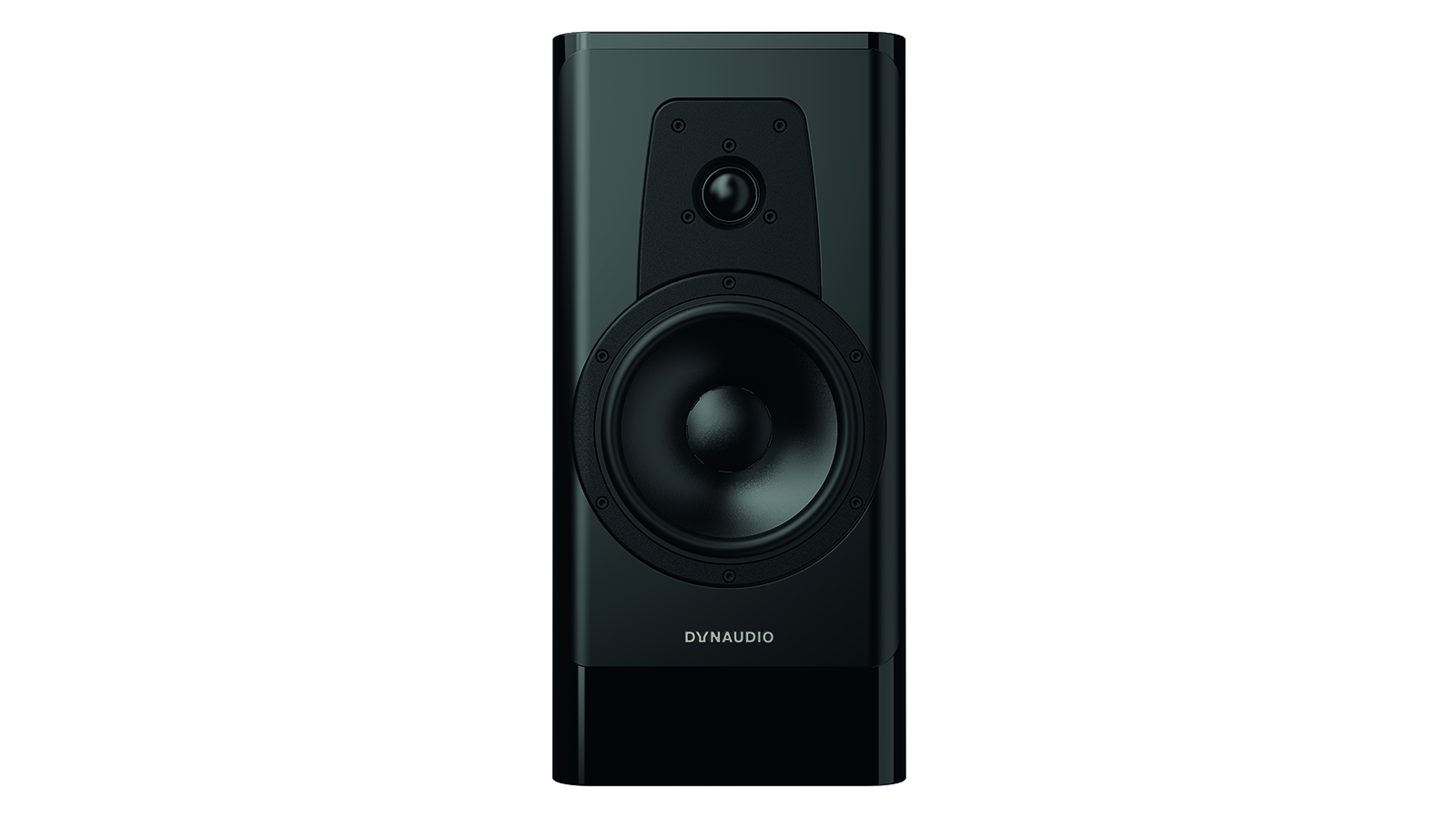
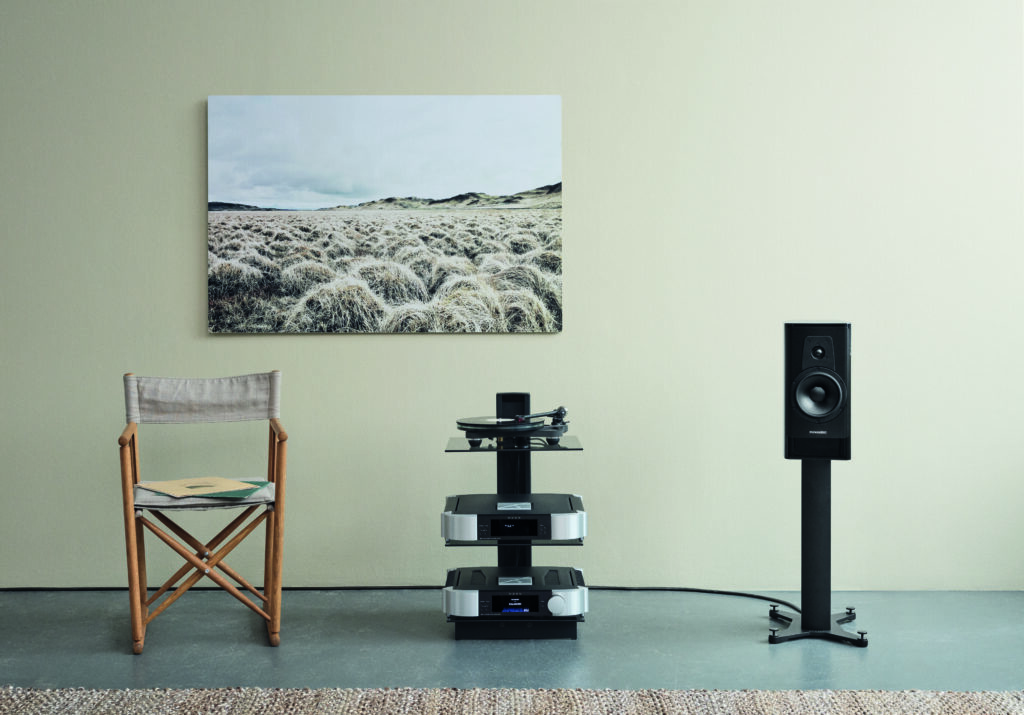
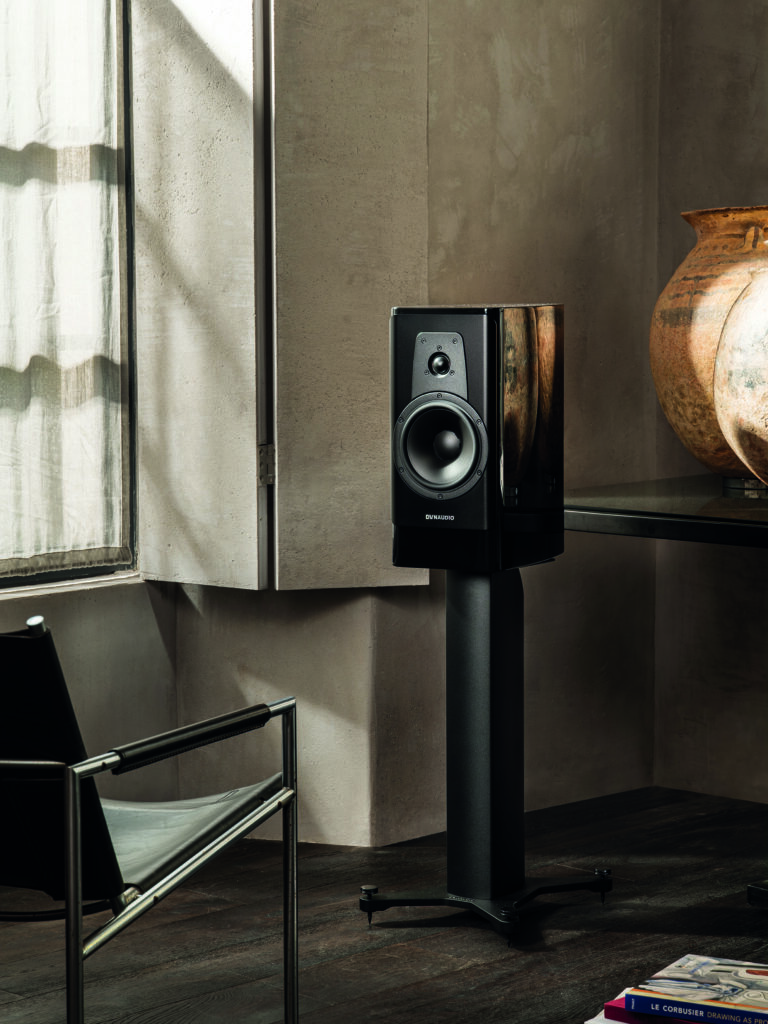
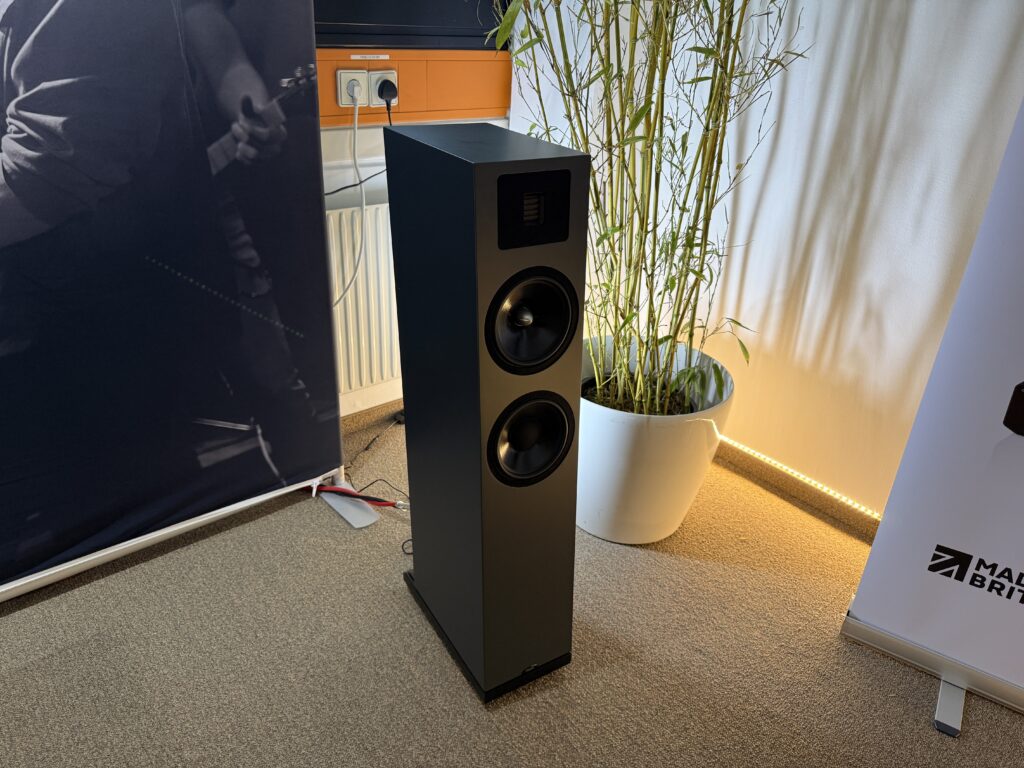
Today, Davone offers six speakers in its range, with the Reference Three being the latest and positioned two places below the top model, the Reference One (reviewed in Issue 223). The Reference Three is a very simply designed loudspeaker, featuring a bent plywood wrap around the front baffle and sides, which end in a flat rear panel. From the side, it almost appears as though a speaker has been cut in half vertically, with a slightly backward tilt cabinet that is balanced by a metal plinth protruding at the bottom.

Natural fibres

The driver array features a beryllium tweeter and a cellulose glass composite woofer. While Davone manufactures its cabinets in-house, they do not disclose the source of the drivers, but they are clearly very fond of the tweeter, whose “incredible rigidity represents the ultimate material for a tweeter dome.” Focal shares this view about the material: a metal that is toxic if inhaled during machining but possesses exceptional strength-to-weight properties, making it ideal for applications such as a high-frequency driver dome. Davone uses this tweeter in all its reference models but does not specify where it crosses over to the woofer.


The cone on the seven-inch mid/bass driver combines cellulose, the main component of plant cell walls, with glass fibre. The cellulose provides damping and gives the driver a “warm, natural tone”, while the glass fibre adds stiffness so that the entire cone can be controlled. This composite is then coated for enhanced stability and consistency, and powered by a balanced drive motor structure that is said to maintain symmetrical voice coil motion. Davone claims that this results in a driver “that is both musical and precise”, an entirely laudable aim.

Considering that the cabinet is what sets Davone speakers apart from others, I was surprised not to find more information beyond the fact that the Reference Three features a bass reflex design with a port on the rear positioned close to the woofer. Davone states that the construction includes a 25mm form-pressed plywood baffle and a tuned absorber. The low-frequency resonances are suppressed using a Helmholtz absorber, reducing the need for excessive damping material. These techniques – which originated in the Reference Two – lead to an efficient low-frequency performance with minimal unwanted resonances across the woofer’s operating range. This model is predominantly constructed from plywood rather than veneered MDF.

Hook up

The cable terminals are singular, so there’s no option to bi-wire or amp, but I don’t think that’s a bad thing. These terminals are good quality, possibly WBT, but I didn’t see the brand. The entire speaker sits on a metal base that accepts a set of conical spikes supplied in the box.


Placement-wise, I found that the Reference Three worked at a point between 50 and 60cm from the wall and toed in, but not on axis. Results will, of course, vary with room and taste, but I suspect that in most cases, you’ll need a bit of space behind them. I connected the mighty Moor Amps Angel 6 with its 150 Class AB watts using William Eikos speaker cables and played a few tracks from Qobuz, via their Connect system rather than my usual streaming app, because the sound was notably better. I was immediately struck by how much body and weight these unusually attractive speakers produce. They look like an aesthetic design exercise but are also remarkably capable of delivering a well-timed, tonally rich, and three-dimensional soundstage.

The reverb on Daisy Rickman’s deep voice is especially well captured and surprisingly natural once you move past the various effects. The bass line on ‘In My House’ (Kendra Morris) is very melodic, and it soon becomes obvious that the Reference Threes are detail monsters of the subtle kind – you can hear into every part of the music and understand exactly what’s happening, yet the focus remains on musical engagement. The dual nature of the Reference Three undoubtedly aids this, but combining it with such relaxed transparency makes for a very appealing quality.

Clean beats

With the more substantial antics of Chase and Status’ ‘Baddadan’, I was able to enjoy the powerful beats in a muscular and well-extended form, without the discomfort that many speakers impose on heavy material of this kind. In other words, the Reference Threes are unusually clear-sounding speakers that don’t falter under pressure, remaining coherent and uncolored with evident ease. Tone is also exceptionally well-rendered; this was evident across all kinds of material, including hardanger fiddle, piano, guitar, and voice, which always seemed to shine regardless of its timbre. The Davones share some similarities with the Dali Epikore 9s I have been enjoying this year; they are relaxed yet highly revealing, forgiving yet informative.

Switching to a different amplifier revealed that much of what I was hearing was directly related to the partnering electronics. With a Bonawatt Triton tube/Class D integrated amplifier, they became distinctly vivid, with an electric sense of presence that was not short on thrill power.

Fizzed

Now the music fizzed with atmosphere and kept me on the edge of my seat; the Reference Threes no longer sounded laid back but had energy reserves that were previously unnoticed. Keith Jarrett’s ‘It’s Easy to Remember’ from At the Deer Head Inn was beautiful, revealing how much affection he had for this standard and the atmosphere of the intimate setting. This amp’s broad dynamic range, which the Davone lapped up, was displayed in aural form, giving great recordings like this a rare sense of being there.

Once again, I experienced how the Reference Threes can deliver power effortlessly, with the pairing with this amplifier encouraging a considerable level across a broad range of musical styles. The control offered by the 250W amplifier meant that there was no overhang or blurring of the transitions between notes, which contributed to powerful realism with good live recordings like Bill Frisell’s East West. Here, you get the muscularity of electric guitar, bass, and drums with clarity that immerses you in the moment. It’s quite a thrill.

Punching up

The last amp I tested came from the other end of the price spectrum, a Rega Elex-R integrated, although only its power amplifier section was in use, with preamp duties handled by a Townshend Allegri Reference. This setup allowed the Davone speakers to showcase their emotional intelligence, or at least to make that aspect of the music more noticeable. The Rega isn’t the smoothest amplifier I use, but it’s arguably the most musical, and this became evident with the Reference Three speakers, which highlighted the amp’s qualities and delivered a highly engaging musical experience. They appear to soften the edge of harder-sounding instruments like the saxophone without sacrificing energy or the groove’s power. The suggestion being that many other speakers might actually enhance the hardness of such instruments and overemphasise the attack.

I have to admit that when the Davone Reference Threes arrived, I initially thought that nothing so simple and attractive could be a serious loudspeaker. Now that I have spent a few weeks with them, I realise how mistaken I was; they prove that good looks are no barrier to great sound and that what seems simple is often more sophisticated than it appears. This two-way model punches well above its weight. 


Find out more about what went into the Reference Three here

Technical specifications

  • Type: 2-way, floorstanding speaker with reflex loaded enclosure.
  • Driver complement: One 25mm beryllium dome tweeter; one 7 inch coated cellulose fibre blend mid/bass.
  • Crossover frequencies: not specified.
  • Frequency response: 38Hz – 30kHz, -3dB
  • Impedance: 4Ω
  • Sensitivity: 86dB/2.83V/m
  • Dimensions (HxWxD): 900 x 310 x 240mm
  • Weight: 20kg/each
  • Finish: Quarter-cut walnut.
  • Price: £6,400, €7,200, $8,400 per pair

Manufacturer

Davone

davoneaudio.com

+45 23 88 71 72

More from Davone

Back to Reviews

EMM Labs DA2i

It is always exciting to review a product for a company for the first time. I have admired EMM Labs kit at shows for many years, but it was at this last AXPONA (2025) in Chicago that an opportunity arose to spend time with one of their pieces. And what a piece to start; with its flagship DAC, the just-unveiled DA2i!

What is so remarkable about that? It has to do with the history of D-to-A converters and Ed Meitner, founder of EMM Labs, and his team’s association with that technology. EMM Labs was one of the pioneers of D-to-A technology, dating back to its early association with Sony and Philips in the 1980s. Based on some of Ed’s earlier studio equipment development, Sony and Philips contacted him to assist with their new disc project.

Fast forward to today, almost every SACD player available features EMM Labs technology to manage the D-to-A conversion. This is not just a DAC review; it is the flagship of one of the founders of the process. Daunting to say the least, but very exciting.

Flagship updates

The DA2i is the latest version of their flagship DAC. In fact, EMM has updated its entire flagship line, with its new flagship monoblock amplifiers being shown at Capital Audiofest in Washington, D.C. as we went to press—no resting on laurels for EMM Labs.

Upon receiving the unit, the unboxing process was straightforward. Packed in a double box with ample foam, the DA2i comes with the usual array of accessories, including a substantial remote and a high-end power cord from Kimber Kable. The power cord was a nice touch for a flagship product.

I disconnected my Cary Audio DMS-700 DAC/Streamer from the system and installed the DA2i. The Cary piece has been at the centre of my system for a few years now, and I still love it. Its dual AKM AK4499EQ chips are a sonic favourite of mine. So naturally, one of my first questions about the unit was “Whose chip are you using?” Foolish me. “It is a converter of our own design that has been updated and refined for decades.”

Of course it is! I should have expected this answer. Reminds me of the time I asked Ralph Karsten of Atma-Sphere, whose Class D modules he used, and he informed me that as an engineer, he could design his own and did, to significant effect. Similarly, the EMM Labs D to A converter, more accurately described as a next-generation, proprietary, discrete, Dual Differential 16xDSD/DSD1024 DAC with new Class A outputs, is a knockout, as I will explain in the listening section.

Such diverse elements

The DA2i offers a diverse range of expected inputs, complemented by its proprietary EMM OptiLink, which enables direct connection of CD/SACD data to the DA2i DAC for conversion.

EMM Labs has also been at the forefront of reclocking for anti-jitter for decades. The DA2i features EMM Labs’ latest MCLK3 proprietary master clock, included in a single-chassis unit. Other design choices I appreciate are the aerospace-grade ceramic circuit boards and the multi-generation in-house designed power supply. This unit is a master class in managing both iterative and intentionally innovative updates, drawing on decades of research and development.

For all its technical expertise, you don’t have to be an engineer to use it. In fact, compared to many top and mid-tier DACs, the DA2i is almost plug-and-play. There is no library of filters to sort through. The inputs other than the OptiLink are all that you would expect and need for today’s flagship systems.

Digital, three ways

In my system, I have three total cables going into the DA2i. First, the Ethernet cable allows the DA2i to be your streamer, supporting Tidal, Qobuz, Deezer, vTuner Internet Radio, and Spotify. You can also stream from the cloud via Dropbox or OneDrive, and access local files via a portable drive connected via USB or through DLNA/UPnP. The DA2i is also a Roon endpoint, allowing Roon subscribers to control it via Roon. Roon instantly recognised the DA2i in my system. I used Roon for most of this review as my source via an Ethernet connection.

My second cable was an AudioQuest Water COAX cable, coming from my D.BOB Digital Breakout Box, which connects to my Oppo 205 player for CDs, SACDs, and other shiny discs. This configuration allowed me to bypass the 205’s ESS 9039 Pro chips for the DA2i’s converter. It’s my homespun version of their OptiLink.

Finally, I used the included Kimber Kable power cord, plugged into my dedicated 20-amp circuit. Only 15 is needed, but why not use my best outlet if I can?

Handsome

The handsome industrial look of the DA2i’s front features a four-inch white-on-black screen with five touch-position buttons to manage input selection and scroll through each input’s menu options, very to the point. No album art is displayed, as anyone using any of the streaming services mentioned via either the mConnect app or Roon will have all the album information at their fingertips through the app. Removing a screen also eliminates a source of noise or interference within the unit. You may also update the firmware for the DA2i via mConnect. The DAC notified me of an update during review, and the process was quick and straightforward. 

A further word about updates: one of the issues regarding flagship DACs is the speed at which this audio category evolves. Expensive DACs need a valid upgrade path to retain their flagship performance for many years. Amplifiers and Preamplifiers can go decades and still be top of the line in performance. With the DA2i, besides the routinely available firmware updates, there will be, over time, hardware upgrades available as well. Hardware changes will likely involve a trip to your dealer for installation. I am always a fan of upgrade planning from manufacturers to offer these additional paths to maintain top performance as the industry evolves. No surprise to see EMM Labs accounting for this in the DA2i. The DA2i manual does an excellent job of describing its software and app flexibility. It would take a unique system setup for the DA2i not to accommodate a user’s preferred source material.

For a deeper dive into the unit’s capabilities, please visit the emmlabs.com website to review the well-written support documentation.

Arsenal of speakers

Beginning the listening of the DA2i, I had in-house a couple of review speakers, the Kharma DB9 Diamonds and the Magnepan LRS+’s, as well as my reference DeVore Fidelity O/93’s. All cables were AudioQuest, connected to my Atma-Sphere Class D monos, Sanders Sound Magtech Class AB amp, and my Cary Audio Class A CAD-300SEI Integrated amp. Preamp is Pass Labs. First up through the DB9 Diamonds was Aaron Copland’s Fanfare for the Common Man, London Symphony (1968 Columbia). One of the visceral joys of a large floorstanding speaker like the Kharma DB9 Diamonds is its ability to project powerful music presentations with impact.

What really made this listening session shine was the unparalleled depth and detail presented through them by the DA2i. Powered by the Sanders Magtech’s 900wpc into 4 Ohms, the soundstage was wide and deep with the added detail of each section of the orchestra unveiled to, for my system, an unprecedented clarity. You could separate each musician in each row. Remarkable. Bear in mind that this was also recorded at standard Redbook 16/44.1, not high-resolution. The lineage of EMM Labs was showing its worth from the start!

Next up was another Redbook recording. ‘Holding Back the Years’ by Simply Red from their Picture Book album (1985 Rhino – Elektra). Mastered by Bernie Grundman, I have enjoyed this track for forty years. I thought I knew it well until I listened through the DA2i. The sense of space and the feel of the recording studio were, by far, the most three-dimensional I have ever heard. It was a small club concert ticket rather than an evening of stereo. The location of the other members of the band was spot on, and all were there in nearly physical form.

Move to Maggies

Playing through the Magnepan LRS+ speakers with the Atma-Sphere Class D Mono, the detail was extraordinary. The brassy quality of Tim Kellett’s muted trumpet had as lifelike a tone as I have ever heard in a recording. As a French horn player myself, I greatly appreciate a recording that conveys brass accurately. Well done, EMM Labs! Mick Hucknall’s beautiful voice centred the song with a natural timbre that had me in the room with him and the band. This is the experience we all chase as audio fans. 

Led Zeppelin’s ‘Ramble On’ was next up [Led Zeppelin II, Atlantic]. This remastered version, in 96kHz/24-bit, was clean and fun. Robert Plant’s vocals had an echo, and the band enveloped him with succinct and present instrumentation. Once again, the word that kept coming to my mind was clarity. The distinct space between notes and instruments was very cool, as it highlighted each band member and showcased them individually, even when playing together. Yet it did not distract from the overall song. It was a pleasant trip to Mordor with the band, no ring required. 

Finally, I pulled up Donald Fagen’s solo album Sunken Condos (2012 Reprise). Miss Marlene is a fun tune with a driving beat that features John Herington on guitar. The timbre and tone of his playing really shine through on this 88.2kHz 24 Bit track. The EMM delivers Fagen’s impeccable production aesthetic as precisely as I have heard through any system. The DA2i’s ability to provide more detail, depth, and clarity is unmatched in my listening experience—quite an audible adventure.

Toward the mountaintop

When the opportunity arises to review a flagship piece of gear, you always begin wondering how you will express that company’s mountaintop experience. In the case of the EMM Labs DA2i, you enjoy two separate mountaintops. The first is the experience of, for me, the single best DAC I have ever had the privilege of listening to. For its price, it should perform to a high standard. There are DACs out there that cost ten times what this one does. However, I have never experienced this level of sonic satisfaction from other higher-priced DACs.

The DA2i delivers a completeness that many audiophiles ascribe to vinyl. To my ear, the music is all there. No thought of “something is missing” or harshness from edginess. This is music. It is musical. It is natural, and while you will pay well for the privilege, it is a worthwhile investment. I encourage the listener to reacquaint themselves with 16/44.1, as you may not need to go higher. The second mountaintop is Ed Meitner and his longtime team at EMM Labs, who know what information is there for you, as well as any team in the industry with the “From the start” pedigree to show for it, and they will put it all in your listening room. I’d give it the highest recommendation! 


Technical specifications

  • Type: Digital to Analogue converter
  • Inputs: EMM: EMM Optilink input. Proprietary EMM Labs ST glass optical connection to an EMM Labs CD/SACD transport or player, e.g. TX2, TSDX, XDS1, etc. 
  • USB: USB Audio connection supports up to 24bit 192kHz PCM, DXD 352 and 384kHz, DSD64 and DSD128 (2xDSD) and MQA® using USB 2.0 cables 
  • NET: Network (RJ45) connection supports up to 24bit 192kHz PCM, DXD 352 and 384kHz, DSD64 and DSD128 (2xDSD) and MQA®. 
  • AES: Balanced digital interface supports up to 24-bit 192kHz PCM and DSD via XLR 110Ω digital cables 
  • COAX: COAX S/PDIF interface which supports up to 24-bit 192kHz PCM and DSD via RCA 75Ω digital cables 
  • TOS: TOSLINK optical interface supports up to 24-bit 192kHz PCM and DSD via TOSLINK optical interface
  • System Control: Infrared remote
  • RS-232 serial port 
  • Power & Accessories:
  • Features: Ed Meitner’s next generation proprietary discrete Dual Differential 16xDSD/DSD1024 DACs along with its new class A analogue outputs
  • Latest generation 16xDSD Meitner Digital Audio Translator (MDAT2™) DSP
  • Updated enhanced MFAST™ signal acquisition and jitter-free performance
  • Latest generation MCLK3™ proprietary master clock 
  • Updated source and power isolation for both USB and Network interface
  • 2xDSD, DXD (352/384kHz), MQA® and ROON over USB and Network
  • Exclusive aerospace-grade ceramic circuit boards
  • Latest generation EMM Labs proprietary power supply system
  • RS232 port for future software upgrades
  • Dimensions (W x D x H, per amplifier): 43.8 x 40 x 16.1cm
  • Weight: 17kg
  • Price: £34,995, €37,500, $35,000

Manufacturer

EMM Labs

UK distributor

AV Technology Solutions

av-techsolutions.co.uk

+44(0)1924 781011

More from EMM Labs

Back to Reviews


Audio Show Deluxe 2026

The annual Audio Show Deluxe, a collaboration between the organisers of the popular North-West Audio Show in Chester and online publication Hi-Fi Pig, sets the standard for a high-end audio event. Held at Whittlebury Park (formerly known as Whittlebury Hall) near Silverstone in the heart of England, the venue is as central as it gets. It is intentionally kept small, with the organisers prioritising quality over quantity. This allows the team to provide excellent facilities for visitors and exhibitors alike. Everyone who enters the event receives a free programme, a bag, and their choice of a glass of prosecco or orange juice. This creates a relaxed and welcoming atmosphere throughout the show.

It’s not just about audio equipment. There were gigs on both Saturday (King Brasstards) and Sunday (Antonio Forcione), with regular events and lectures happening throughout the day.

Although it is relatively small, several new product launches were observed at Audio Show Deluxe 2026. We have focused on these but will also highlight some of the best sounds at the event.

Audio Group Denmark

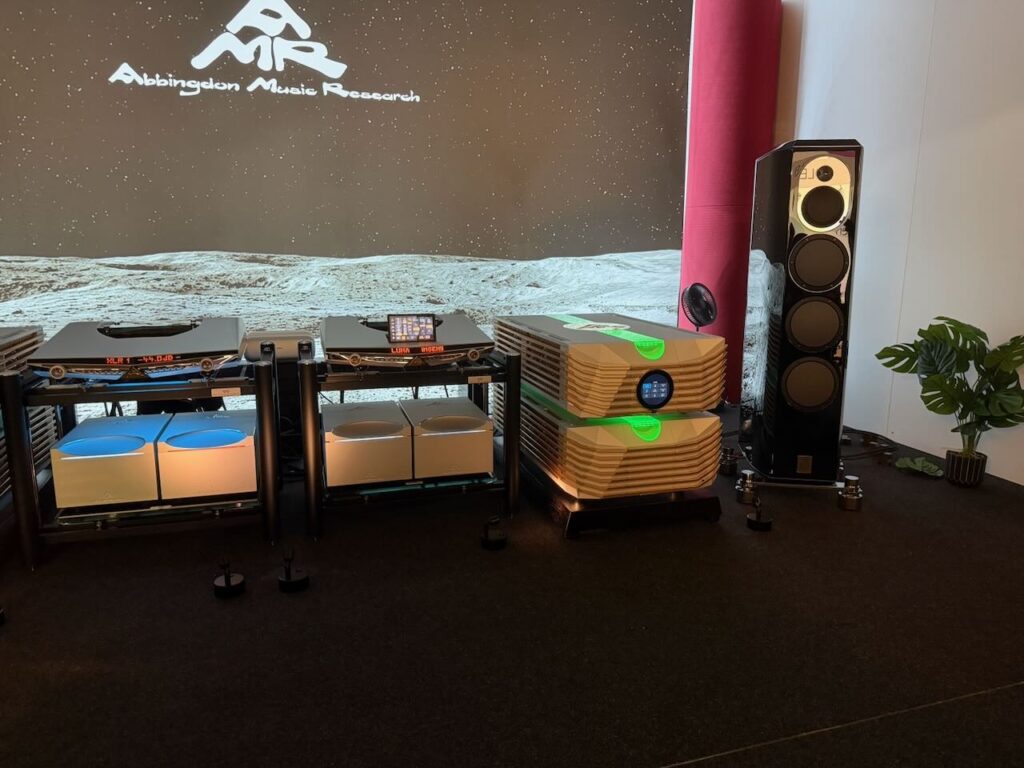
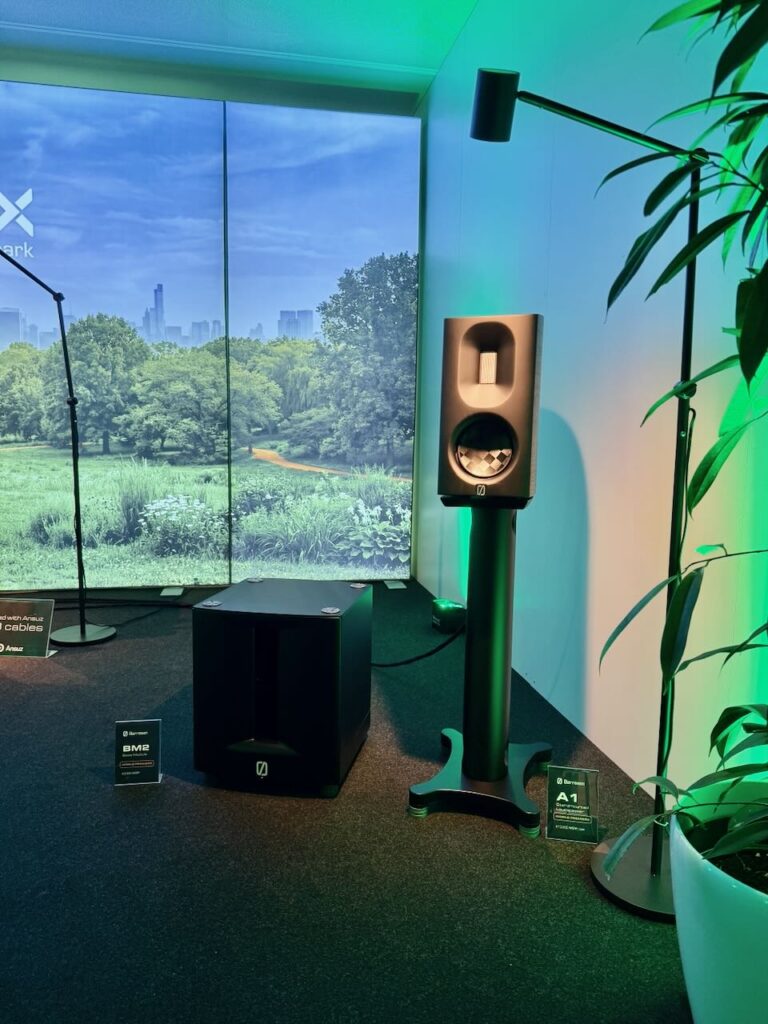
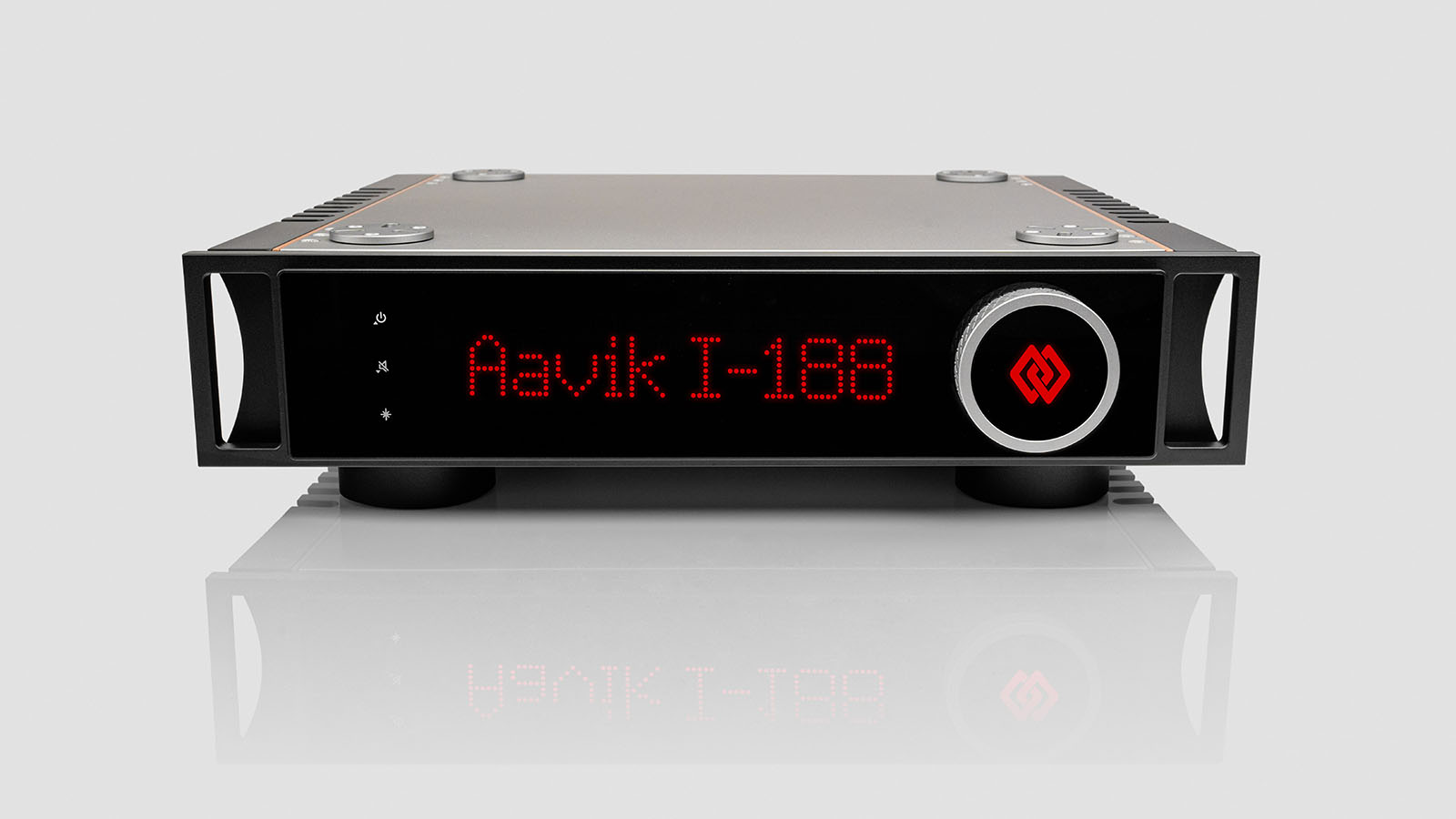
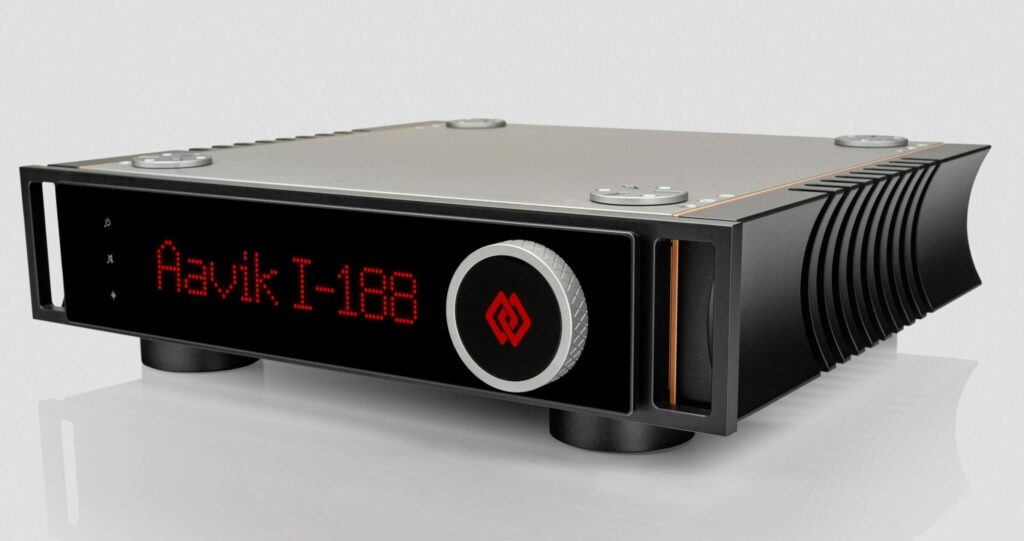
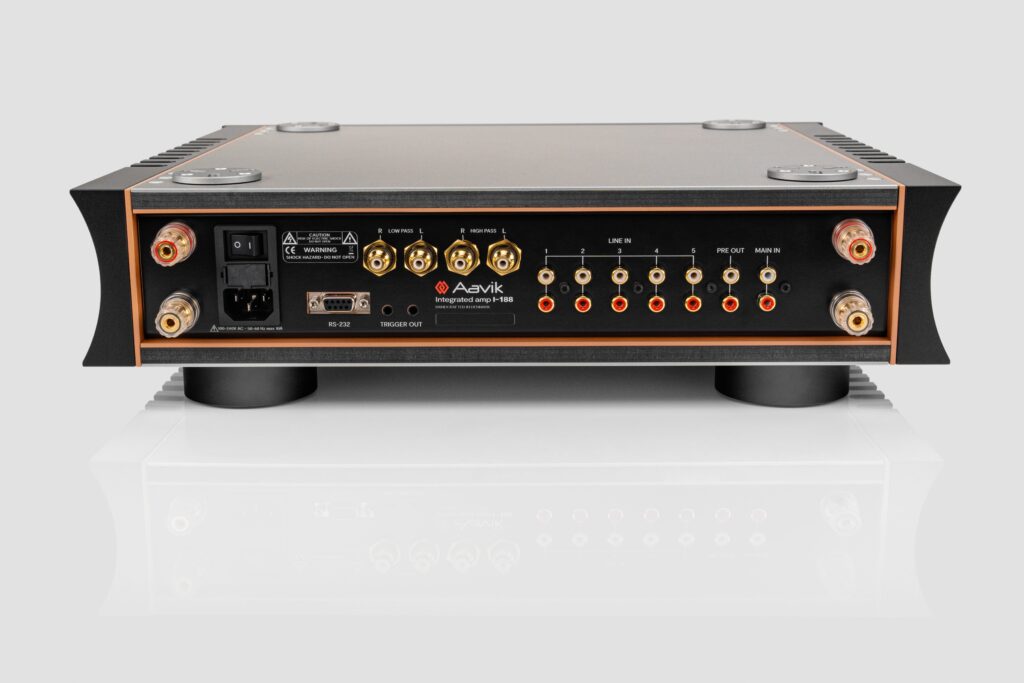
Aavik, Ansuz, Axxess and Børresen – the four pillars of Audio Group Denmark – are regular fixtures at Audio Show Deluxe. This was the first UK outing for the R-588 phono stage, equipped with an input for DS Audio optical cartridges.

Audio Note

Where the rest of the world revels in miniaturisation, Audio Note takes a different path. This was the first UK public outing of the Izvor DAC, first seen at T.H.E. New York, 2025. Playing in a DAC 4.1 Balanced, this dozen-year-long development discrete ladder DAC attempts to recreate and improve upon the performance of the beloved – and no longer available – Analog Devices AD1865 R2R DAC chip (bottom right).

Blackwood

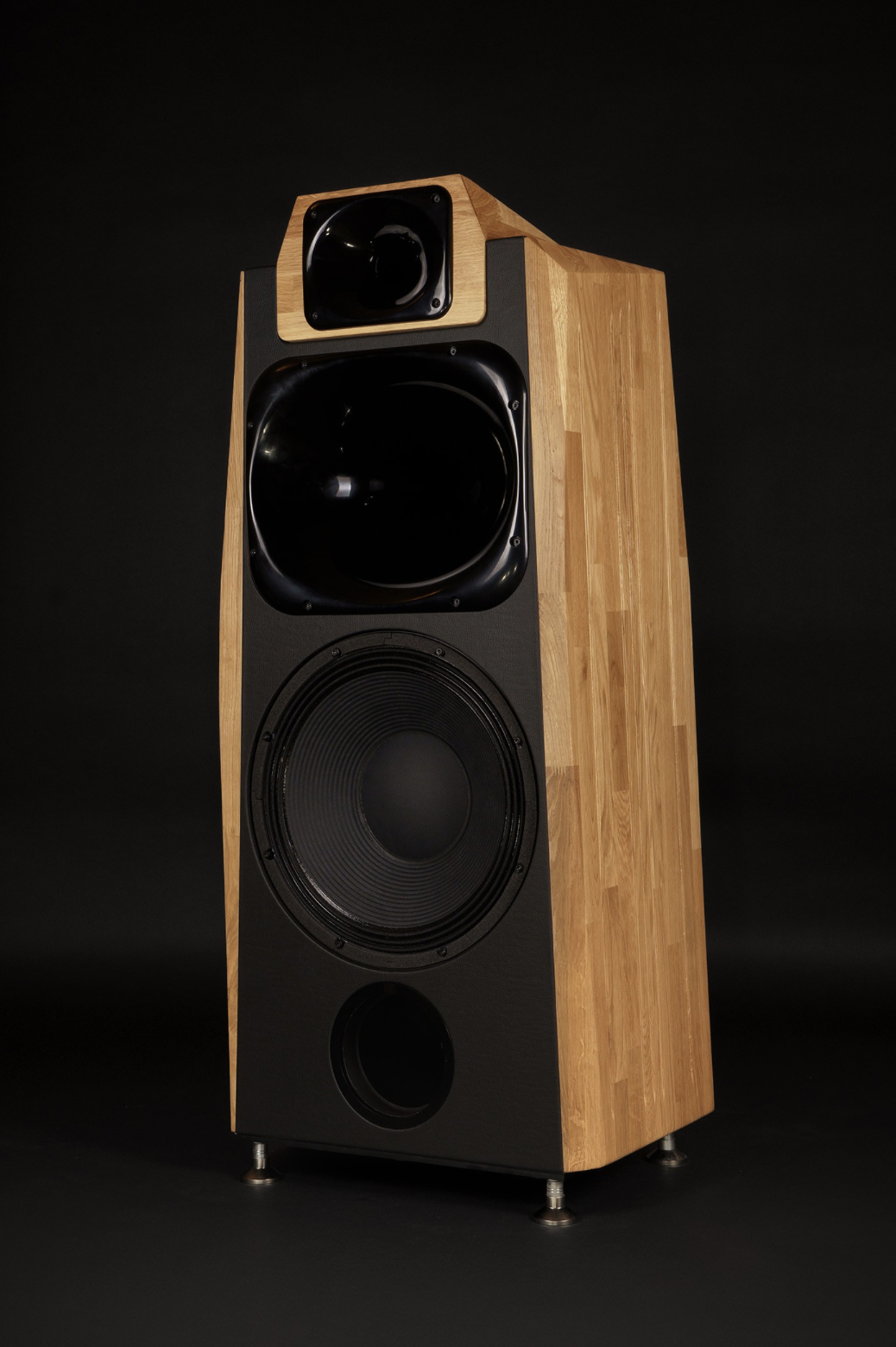
Croatian company Blackwood showed its new Hyperion open-baffle loudspeaker, driven by its own Solaris integrated amplifier, which was fed by a Hi-Fi Rose streamer. With two 18” bass units flanking a coaxial driver, where the tweeter sits behind the acoustically transparent dust-cap of the midrange, this large loudspeaker demands a big room, but was one of the most sonically transparent experiences of the show.

Boyer

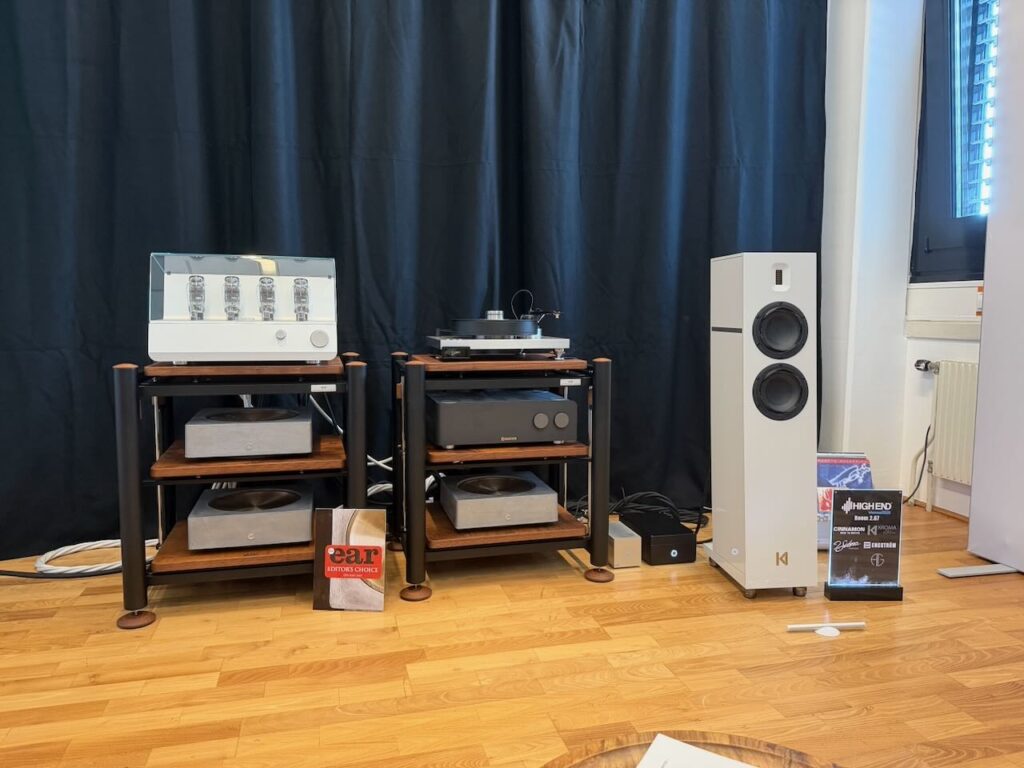
Celebrating its first decade, high-end distributor Boyer once more took the prize for making some of the best sounds at the show. That it did so in both its larger and smaller rooms suggests the company’s getting things right. The consistent elements in both rooms were Kroma Atelier loudspeakers, Bassocontinuo equipment support and a lot of Shunyata Research power, grounding, and cable system.

But whether it was the smaller room (with Engstrøm’s Arne amplifier and the new Cinnamon Galle DAC) or the larger (with a three-box Wadax Studio Player, clock and power supply and Orpheus Lab H Two preamp and H Three mono power amps), both showed what ten years of careful system design can deliver!

Brinkmann

The Brinkmann Nyquist has been a fixture in the digital audio firmament since its launch nine years ago. The model received a retrofittable Mk II upgrade a couple of years later, but the Nyquist ONE represents a major change to the analogue and power-supply circuitry. The Ethernet- and USB-equipped Nyquist ONE is fully compatible with digital modules used in the original Brinkmann Nyquist models. This means that, while owners of older Nyquist models cannot upgrade to the Nyquist ONE, any future digital modules designed for that model will also be compatible with existing Nyquists. So, no-one is left behind.

Chord Electronics

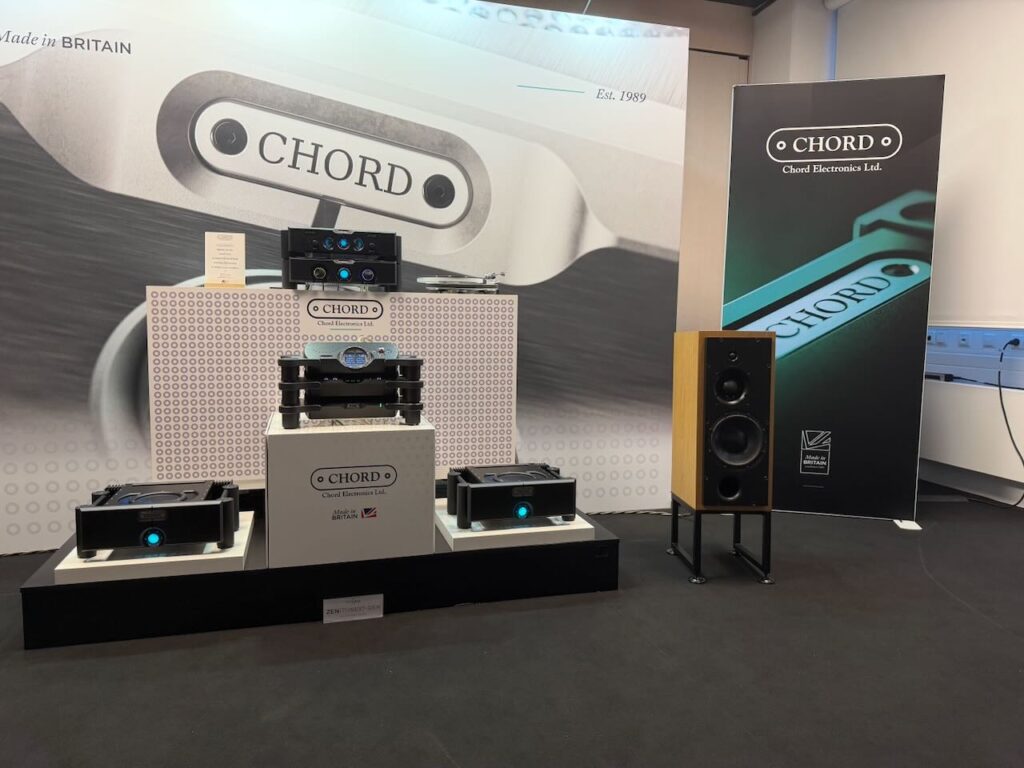
At Audio Show Deluxe, the Ultima phono stage (seen at Munich 2025 and Bristol 2026 and still having its finishing touches applied) was joined by a wholly new Upscaler for the Quartet series. Designed to match the mighty DAVE DAC from Chord Electronics, the new device adds even more performance than the popular Hugo M scaler. Both look set to deliver the sort of absolute top-notch sound quality expected from Chord Electronics, if the sound in the Chord Electronics room is anything to go by.

Dan D’Agostino Master Systems

This is the first public outing of the new Momentum Z power amplifiers from Dan D’Agostino Master Systems, in one of three Absolute Sounds rooms. The Momentum Z represents the pinnacle of the original Momentum power amplifier design (the M400 MxV mono amps remain in production). The dual-transformer, fully-balanced design is the first model in D’Agostino’s line-up to feature cascaded JFET input stages, Kinetic Drive Regulation, and an Ethernet port for monitoring. Meanwhile, the Dual Domain Meter Display replaces the conventional power meter with an LCD display, which can display messages, while still retaining the distinctive D’Agostino appearance.

Decent Audio

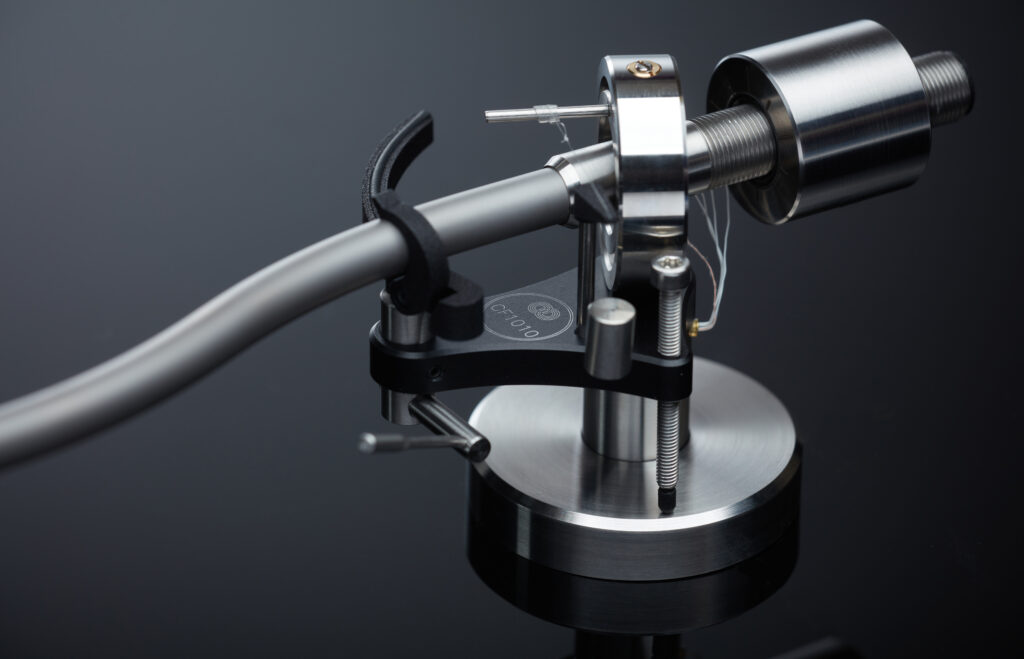
Having showcased a lot of Advance Paris at the Bristol Hi-Fi Show 2026, for the Audio Show Deluxe, the company focused on the German audio electronics brand SPL. Once again, with the upcoming Dual CS 718Q direct-drive turntable – this time fitted with a vdH Frog moving coil cartridge – it was powering the new SPL Phonos Duo phono stage and Diamond DAC, into an Elector preamp and two Performer m1000 mono amps, driving a pair of Scansonic MB8B loudspeakers. The distributor was also showing the AIM range of Ethernet cables that we are so very fond of here at Hi-Fi+. Decent had a ‘play anything’ rule in place, showing that the system is extremely flexible… and sounded decent too.

Definitive Audio

Definitive Audio, distributor for Kuzma Audio, was playing two turntables, into Consolidated Audio transformers, SJS electronics and Living Voice R80 OBX loudspeakers, fed by an Audes power supply and using DH Labs cables. The big hitter of the show was the Kuzma XL Air with the SAFIR 9 tonearm and the stunning CAR70 cartridge. Not far behind was the Kuzma Stabi RM fitted with a 4Point 14 arm and CAR50 cartridge. This white turntable is essentially the same as the original Stabi R but with a high mass M bearing and M platter. As ever, Definitive Audio’s musical tastes are eclectic, and the soundtrack

EAT


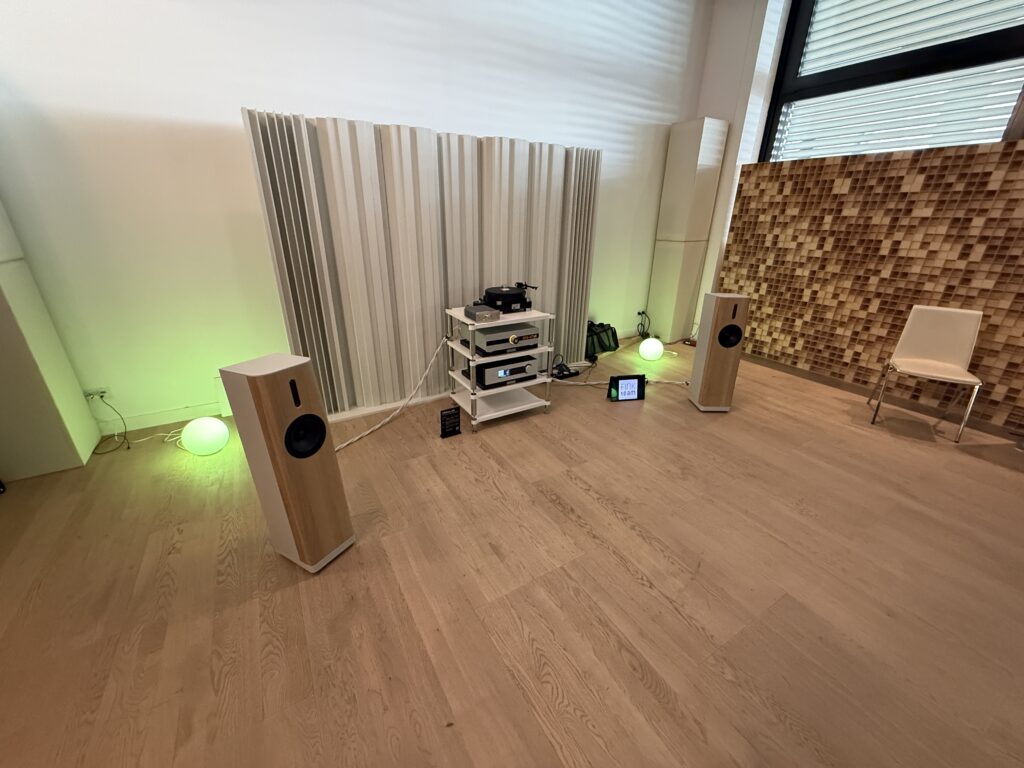
This was the first public UK outing of the new F-Dur (F-Major) turntable by EAT, complete with F-Note tonearm and LPS2 power supply, fed by an Ortofon Verismo cartridge and a Musical Fidelity NuVista Vinyl S phono stage (also new), and a Musical Fidelity 600.2 integrated amplifier. This, and a second Hi-Fi Rose/Rotel Michi system, were both using the new MW Stands (see below) and both ended in a pair Piega Coax 611 tower speakers in the Henley room. This is a difficult room to fill with sound, but Henley aced it!

Esoteric/Kerr

Symphony Distribution teamed up with Kerr Acoustics to deliver a power-house system. This was the first UK showing of the Esoteric Grandioso N1T Network Audio Transport and the first official reveal of the Kerr K400 floorstanding loudspeakers. Between the two were a Grandioso K1X SE CD/SACD player, a Grandioso C1X linestage, Grandioso S1X stereo power amplifier from Esoteric, and cables and tables by Montaudio.

Sound Design Distribution

The new Halcro Equinox preamplifier is a two-box line-level preamplifier that features dual switch-mode power supplies, drawing on the company’s Eclipse power amplifiers for its technology and topology. This newcomer was playing a full Sound Design Distribution system, including analogue from an Onkk Q-SDD slotless direct drive turntable and Scribe 304 tonearm with a Charisma Signature YYZ cartridge to a Grimm Audio PW1 phono stage, and digital from a Grimm’s MU2 streamer DAC, all into a Halcro Eclipse Stereo and Vivid Giya G4 loudspeakers.

Innuos

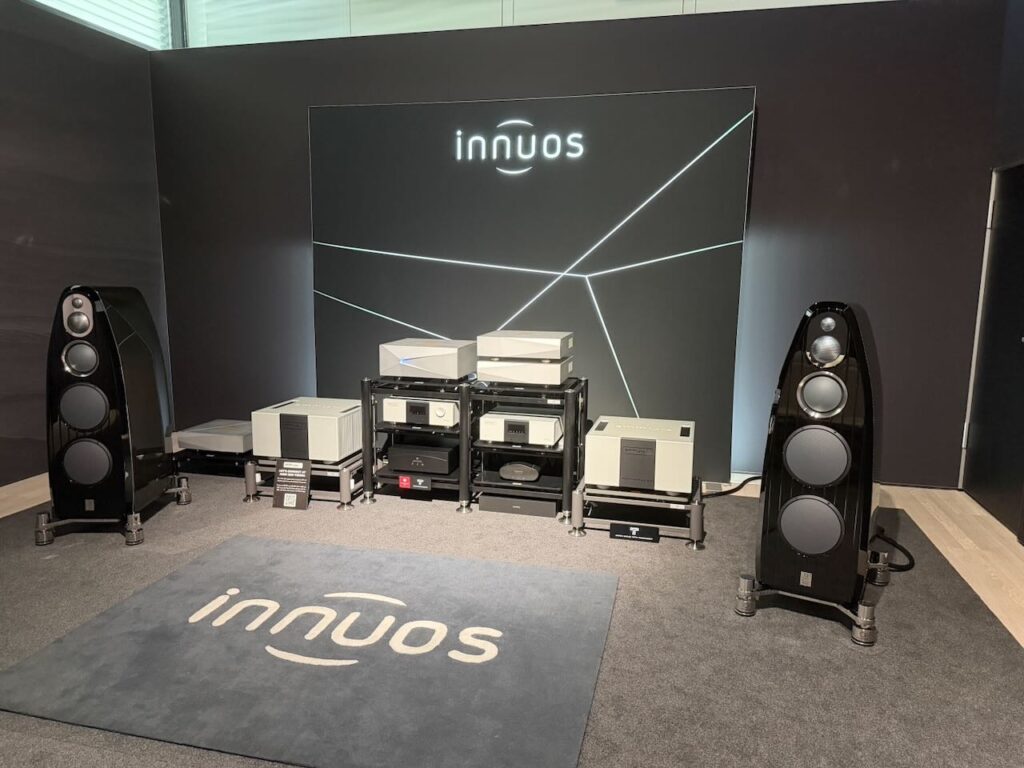
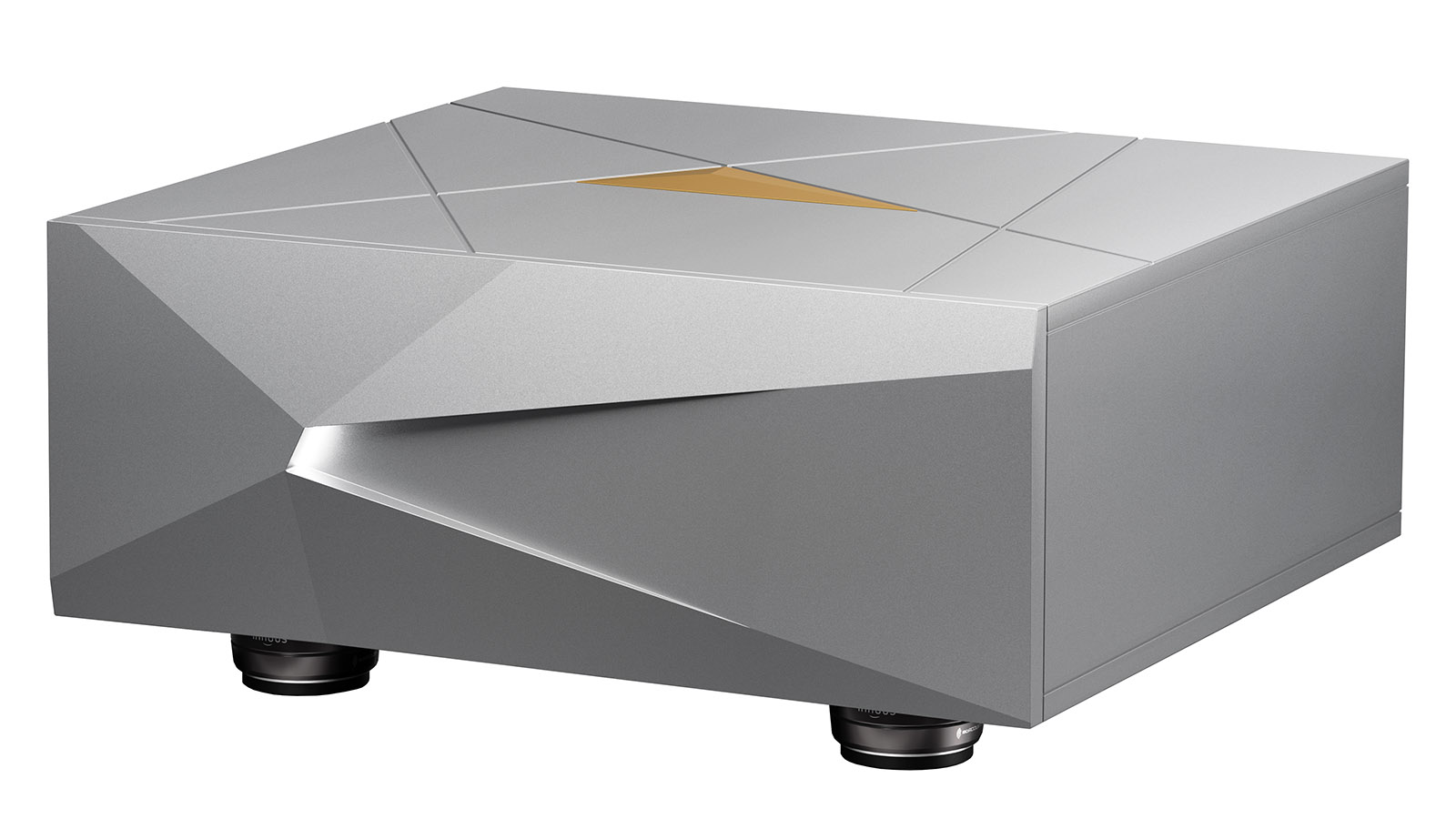
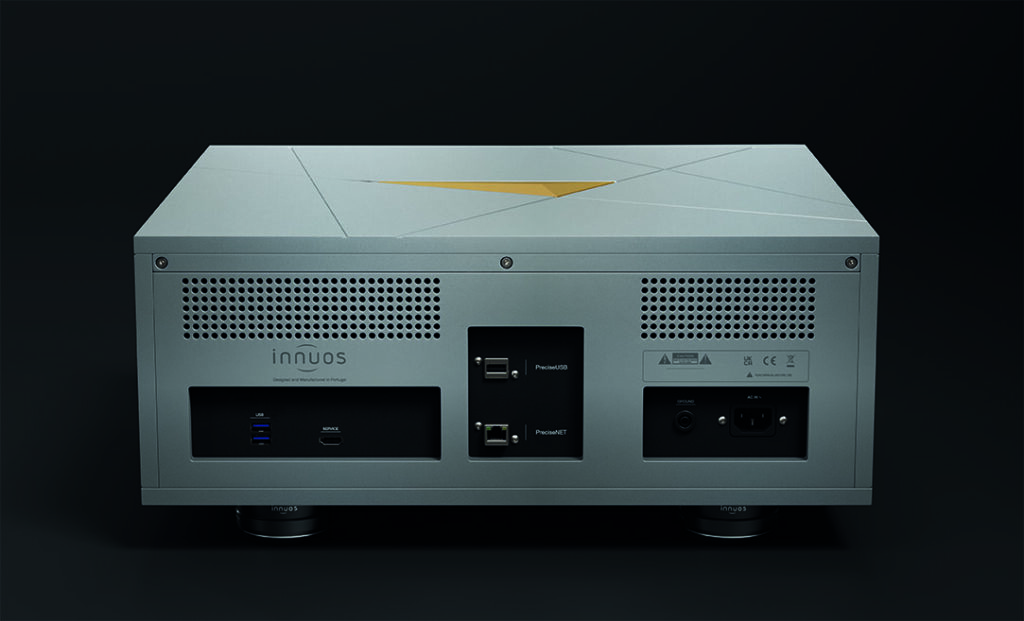
Since showing the prototype of its Nazaré at Munich last year, Innuos has been taking its new flagship server on the road. This was its first ‘show’ showing, in comparison to the former flagship Statement server. Playing into MSB digital audio, Gryphon amplification and Marten loudspeakers, it’s clear the new server plays well amongst exalted company.

Kii

HEA Distribution were showing the newly uprated Kii Seven loudspeakers. Not only have the Sevens received significant DSP and firmware updates recently (including wireless 24bit/192kHz streaming between loudspeakers), they are now available in the stunning Fine Touch Titanium finish.

Kog Audio

High-End distributor Kog Audio ran two systems in the same large room. Firing across the room was a full T+A system, comprising MP3100HV G3 CD/SACD/Media player (powered by a Taiko Audio Extreme server), a PA3100HV amplifier and a pair of Solitaire S530 speakers. The other system (playing when I visited) showed the latest v2 versions of Soulnote’s D-2 DAC, an E-2v2 phono stage (fed by a Transrotor turntable) and A-2v2 integrated amplifier. This was fed – via Tellurium Q cables) to a UK newcomer: Joseph Audio, and the company’s Perspective 2 Graphene floorstanding loudspeakers. We hope to look at many of these products soon.

Luxman

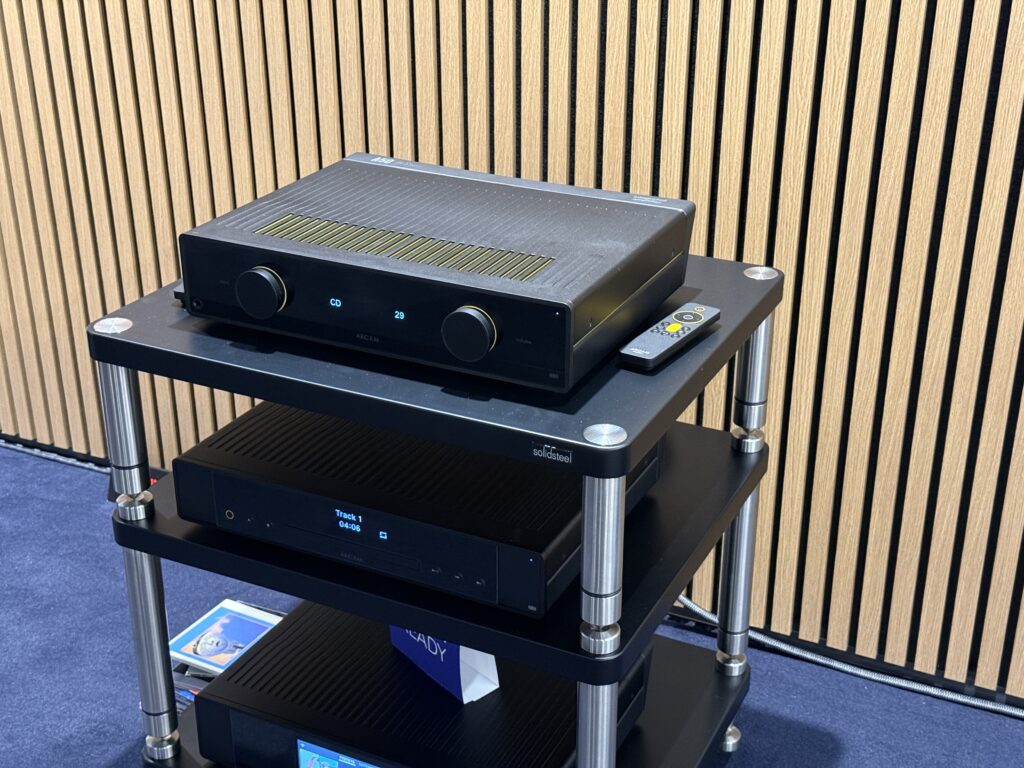
To celebrate the company’s centenary, Luxman has introduced a new Class A integrated amplifier, the L-100C. Delivering 20W into an eight-ohm load and 40W into four ohms, the amplifier delivered a wonderful performance played through a pair of DALI EPIKORE 9 loudspeakers and Chord Company Music cables, with the audio electronics resting on MW Stands Cyntaf stands.

Moor Amps

The Angel-4 stereo power amplifier from UK electronics experts Moor Amps is a 75W/8Ω unit that has recently undergone a radical change. Externally identical to the original, the Angel-4 Mk II now features a similar three-island power supply to the company’s flagship Angel-6. This has effectively tripled the capacitance in the Angel-4 power supply, lowering impedance in the process. This also requires changing the power supply routing and PCB track lengths. The result is a significantly better power amplifier. Existing Angel-4 users can factory-upgrade to the new Angel-4 Mk II.

MW Stands

‘Cyntaf’ is the Welsh word for ‘first’, and this being the first – and possibly, ‘only’ – stand by bespoke stand-maker MW Stands.MW Stands director Michael Wall hand-builds each stand – a careful combination of hard maple and Welsh slate, using constrained layer damping throughout and the sort of joinery that is the stuff of hand-made furniture. Audio Show Deluxe 2026 was a soft launch for the company, with more details to follow at High-End Vienna 2026. Watch this space…

Nagra

The first product in Nagra’s new Series II range that sits between the HD Line and the Classic models, the Preamp II-S draws from the company’s JAZZ tube preamplifier and marks the return of the much-loved Modulometer derived from the iconic IV-S open-reel recorder. This was the centrepiece in the Absolute Sounds room that featured both dCS and Döhmann Audio front ends, with Nagra HD power amps, Ikagai cables and culminated in Magico loudspeakers.

Node ATOM

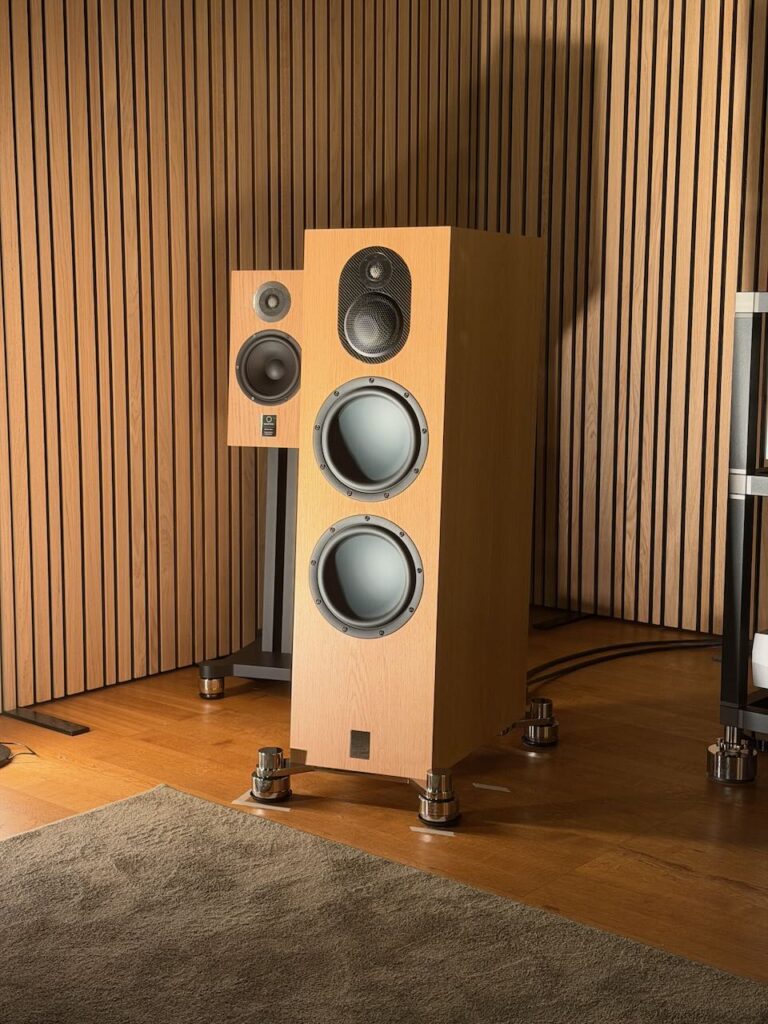
Best known for its Hylixa spherical speaker, the new ATOM range appears more conventional. However, with its monocell damping enclosure and up-firing helical transmission line, Node proves that looks can be deceiving. A 525 three-way stand-mount and the ATOM 650 three-way floorstander are expected soon.

Peak

Peak’s return to form shows no sign of letting up. The three-way, floorstanding Sinfonia draws from the company’s top Dragon Legacy, but in a more room-friendly, slightly more financially attainable form. These loudspeakers were singing in a large room with a system comprising Accuphase electronics, Audiomica cables and MusicWorks power and supports.

Stratton Acoustics

Stratton Acoustics introduced the two new speakers in its Element series, first seen at AXPONA 2025. The Element 6 is a two-way stand-mount featuring a 1.2” waveguide-loaded soft dome tweeter and a 6” carbon-fibre mid-bass driver. The Element 8 has the same tweeter with an 8” carbon-fibre bass unit. Both have a reflex-loaded cabinet made of an acrylic-silica reinforced polymer matrix and aluminium front and rear baffles, and are best used on their dedicated aluminium decoupling stands. They are designed taking cues from watchmaking rather than cabinetmaking and deliver an impressive look and sound.

Technics

The dust has barely settled on the SL-1200GME turntable, but Technics showed the excellent new SL-1500CS for the first time. Updating the popular SL-1500C direct drive turntable, the main change is the inclusion of the excellent vibration-reducing, hyper-accurate ∆˚∑ Drive system first seen in the SL-1200GR2. As with the previous model, it includes a built-in phono stage and comes shipped with an Ortofon 2M Red moving magnet cartridge.

Vinni Rossi

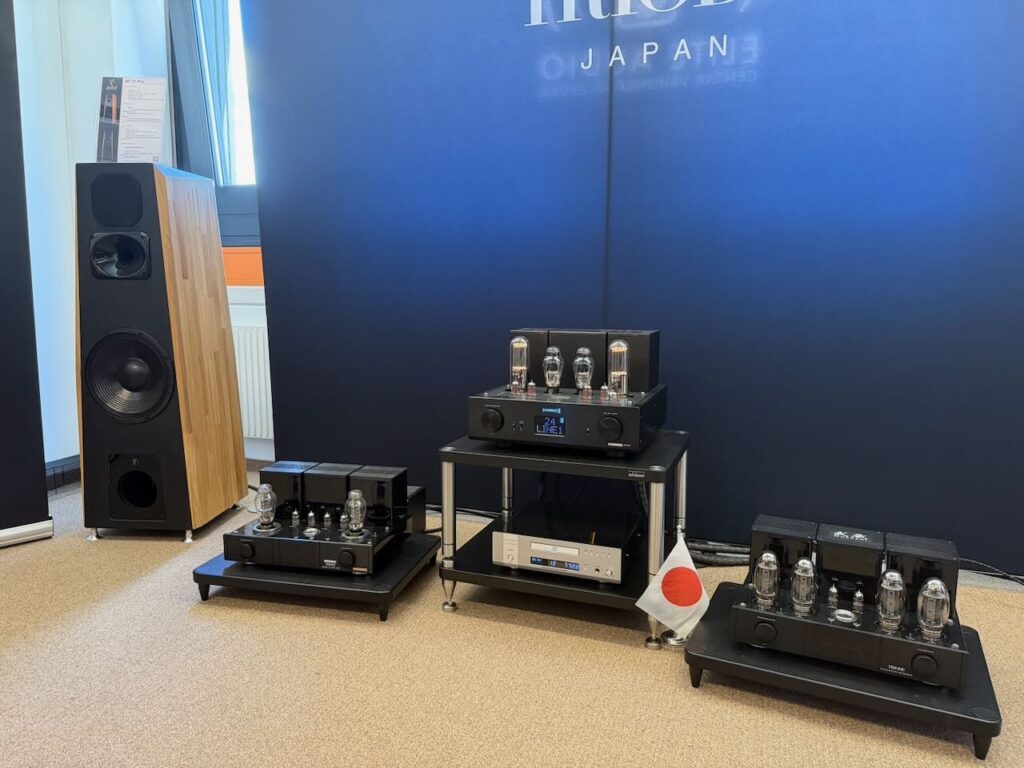
A name well-known in US circles but less recognised on this side of the pond, Cambridge Acoustic Sciences has added Vinni Rossi to its portfolio alongside brands like Aurender, AVID, Bel Canto, Boulder, Cardas, and YG Acoustics. The company’s new Brama range, including preamplifiers, mono power amplifiers, and an integrated amplifier, was showcased and demonstrated. The balanced only, 200W integrated amplifier uniquely employs 300B power tubes in the preamplifier stage and MOSFETs for the power section. Build quality, looks, and feel are off the charts!

Wellbeing Strategist

It’s not just about electronics. Sound therapy practitioner Kasia Richter uses the resonant frequencies of gongs to help listeners shift their brainwaves into slower alpha and theta states. The gong baths are a regular feature at Audio Show Deluxe, and many find them intensely relaxing and report thinking more clearly after a session.

Wilson Benesch

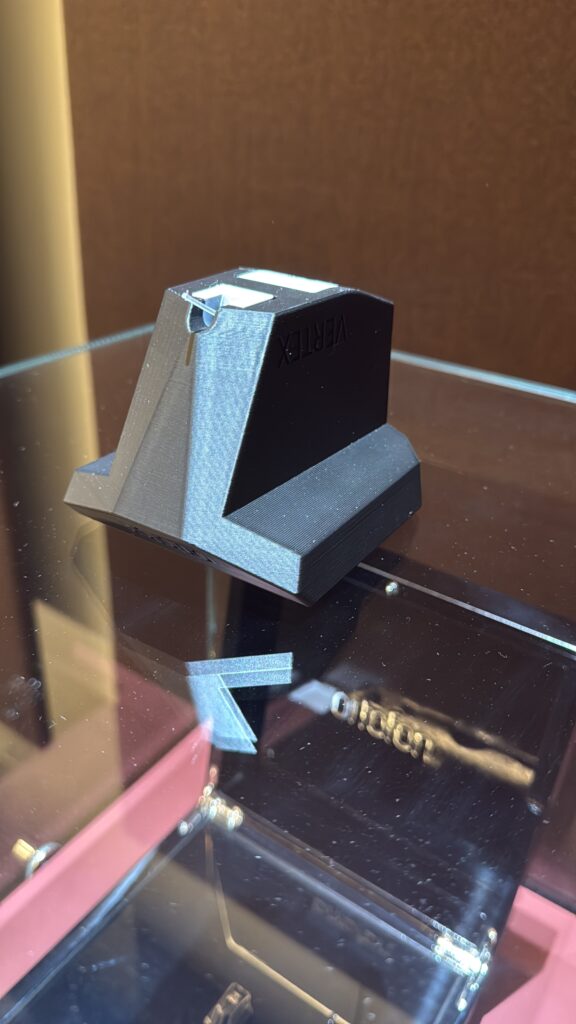
Wilson Benesch launched its ‘entry-level’ turntable, arm and cartridge combination at Audio Show Deluxe 2026. The new Greenwich turntable uses the core drive and mechanical architectural basis of the company’s GMT One, and allows listeners to upgrade from the Greenwich to the GMT One in stages, using the Graviton Ti tonearm and Tesselate Ti cartridge (this time, the Sapphire version; diamond and boron versions are also available). This sat in Wilson Benesch’s R1 Carbon Rack alongside the HSE Masterline 7 phono preamplifier, Trilogy’s 915R preamplifer and 995R mono power amplifiers (as well as an Innuos ZEN NG server and CAD 1543 MK III DAC bringing up the digital side) into a pair of Resolution 3Zero loudspeakers and IGx Infrasonic Generator.

Zellaton

After a long absence, Munich-based Zellaton is back in the UK. Audio Video Technology Solutions showcased a pair of Plural Evo three-way floorstanders featuring Zellaton’s distinctive three-layer rigid foam membranes, which have been in production for over three generations. This was driven by a full EMM Labs system, connected with Schnerzinger cabling and Giga Cancelling interference suppression products. The room also included an extensive array of Nihon Onkyo Engineering Acoustic Grove System diffusors.


Back to Homepage

Introducing SKYE: A new floorstanding loudspeaker from British HiFi loudspeaker manufacturer Ophidian

26 March 2026: Precision engineering, premium components, and elegant craftsmanship come together in a striking new floorstanding loudspeaker.

Today marks the official launch of SKYE, a meticulously engineered floorstanding loudspeaker that combines classic styling with cutting-edge acoustics. Designed and assembled in the UK, SKYE aims to deliver a refined listening experience that balances power, clarity, and musicality in equal measure.

Standing around a metre tall, SKYE is capable of delivering serious impact yet is proportioned for modern living spaces. Each cabinet is finished in a choice of real wood veneer—oak or walnut—offering a timeless aesthetic that complements its high-performance pedigree.

Engineered for Deep, Controlled Bass

At the heart of SKYE’s design are dual 7-inch (180mm) alloy bass drivers, delivering deep, controlled low frequencies with exceptional articulation. The junction between the cone and surround is indexed to provide a smoother transition and an equally smooth response in the critical vocal region.

The dual bass drivers are coupled to Ophidian’s signature Aeroflex bass system, which maximises bass dynamics and speed while reducing distortion in the lowest registers. The port system also helps to further brace the cabinet and reduce unwanted resonance.

Premium Tweeter and Optimised Driver Layout

The tweeter is supplied by SEAS of Norway, a name synonymous with world-class driver design and sonic excellence. Featuring a wide roll surround that allows high power handling while maintaining excellent directivity characteristics, the one-piece diaphragm and surround is coated with Sonolex for superior damping.

The driver layout comprises an M-T-M setup, with woofers above and below the tweeter. The crossover circuit has been carefully optimised for this arrangement to provide a smooth off-axis response.

Mundorf Components Throughout the Crossover

SKYE’s crossover network features premium components including air-cored coils, polypropylene capacitors, and non-inductive metal oxide resistors, all sourced exclusively from renowned German manufacturer Mundorf. These critical components ensure signal purity and tonal accuracy throughout the frequency range.

Every aspect of SKYE has been developed with dedicated attention to detail, from the acoustically optimised cabinet construction to the carefully selected components.

Joining Ophidian’s Mid-Priced S-Series

SKYE joins the similarly specified SEREN standmount as a new entry in Ophidian’s mid-priced S-series.

Pricing in the UK is £3,995 inc. VAT for either oak or walnut veneer finishes.

Cadence Distribution Appointed UK Distributor for Revox

London, 18 March 2026Cadence Distribution is pleased to announce that they have been appointed as the official UK distributor for Revox, the iconic Swiss audio brand known for its studio analogue and digital engineering.

As part of this launch, Cadence Distribution confirms that Audio Lounge London and The Music Room will be the exclusive UK retailers for the new Revox B77 MKIII reel-to-reel tape recorder.

Revox: Heritage Engineered for the Present

Founded on professional broadcast and studio equipment, Revox now combines deep analogue heritage and knowledge with modern software-driven innovation. During a recent visit to Revox World and the company’s manufacturing facilities in Zurich and Villingen-Schwenningen, it was confirmed that approximately 85% of all historic Revox and Studer machines in that room remain operational, with Revox still capable of refurbishing almost every reel-to-reel machine it has ever produced. Decades long history of sound and music.

This commitment to longevity comes with forward thinking design. The new B77 MKIII represents a significant technical advancement over the original B77, while remaining faithful to the mechanical and sonic principles. All parts for the B77 MKIII are manufactured in Europe, reinforcing Revox’s focus on quality control, sustainability, and long-term serviceability.

A Modern Revox

Beyond analogue machines, Revox continues to invest heavily in digital and software development, with over a decade dedicated to proprietary platforms and multi-user audio solutions. Rather than relying on off-the-shelf components, Revox has full control of its digital development, ensuring performance consistency and future-proofing across the product range. From in-wall speakers and single wireless solutions to reel to reel and cassettes, they have created an ethos.

Revox has also expanded through the acquisition of Horch House, enabling the production of new master tapes and tape reproductions using newly commissioned, machinery. Partnerships with artists including Alice Cooper and Yello underscore the brand’s active role in sustaining and growing the global reel-to-reel and tape community.

UK Availability

Under Cadence Distribution, Revox products will receive UK support. The B77 MKIII will be available exclusively via Audio Lounge London and The Music Room Glasgow, ensuring specialist demonstration, installation, and long-term customer support.

2026 Awards – Interconnect Cables Under £1k

Welcome to a very special hi-fi+ Awards. Fate (and producing a dozen issues a year) has colluded to make this issue a combination of our 250th edition and our annual Awards special edition. We have scoured the last 12 months of issues to find the best products we’ve seen across a range of categories.

In the past, we had very fixed categories for our annual awards, but that doesn’t fully reflect the current shape of the audio industry. While some categories remain constant, others change and branch out into new avenues. For example, a few years ago, there were so few streaming integrated amplifiers that the category did not need to exist. Now, we have enough to make them distinctly different from integrated amplifiers, without the need for a streamer or DAC. It’s not that one has eclipsed the other; it’s not that one is obsolete and the other state-of-the-art. These are now two divergent lines of ‘integrated amplifier’ that demand their own Awards. To lump them all together as ‘integrated amplifiers’ does the reader no favours, as it adds to confusion rather than pointing out the best we’ve tested.

Similarly, we have sometimes found categories where new products were commonplace a few years ago have reached a zenith. Thus, the category hasn’t received as many new products this year. Portable Audio DACs are a fine example. There are doubtless new models coming soon, but there aren’t enough yet for us to choose an example this year.

Each year we say this, but it’s worth repeating. The best in each category may or may not combine to build the best systems. There have been many cases over the years of people buying an Award-winning source, amplifier, and loudspeakers only to find the pairing a sonic mismatch. Our view of our awards is that they are a finger pointing the way. That finger often points to a good dealer who can assemble a system around that component, blending it with other devices like a master cocktail mixologist.

This is also why we include Highly Commended products. Not everyone likes the same things, and not every component works beautifully with every other. Our Highly Commended products are the result of the audio world being so good at its job, picking the very best from the already excellent is sometimes a very nuanced decision. By including Highly Commended products, we introduce a wider selection of outstanding devices to your next shortlist.

Awards and celebrations

Combining this Awards issue with our 250th also means we get to think about past masters in audio. There’s an interesting question surrounding the best of the past with today’s finest products. How do they compare? I think in many respects, the outstanding products this year are as good as we can get at the moment. They hold no comparison with even the finest past glories of 26 years ago; things have moved so far forward.

Sonically speaking, the very best in digital audio today leaves everything from even five years ago in the dust, so looking back to the last century is almost not worth it. And while things might seem less clear-cut in other aspects of audio design, I still maintain that today’s audio outperforms nearly everything from the 1990s, and today’s best is the best you’ll ever hear. Hopefully, that trend continues, and the sound of good audio in five or ten years keeps getting better.

We’re still a long way from achieving sonic realism in the home, and even the best audio systems cannot fully replicate the whole live experience. But they get ever closer; the top-end has the drama, scale, detail and dynamics to take your breath away, but even the most affordable audio gets closer than ever now!

One thing is sure: your next hi-fi product is on the following pages of this magazine! I hope you enjoy the search for the best as much as we did.

2026 Awards – Valve Integrated Amplifier

Welcome to a very special hi-fi+ Awards. Fate (and producing a dozen issues a year) has colluded to make this issue a combination of our 250th edition and our annual Awards special edition. We have scoured the last 12 months of issues to find the best products we’ve seen across a range of categories.

In the past, we had very fixed categories for our annual awards, but that doesn’t fully reflect the current shape of the audio industry. While some categories remain constant, others change and branch out into new avenues. For example, a few years ago, there were so few streaming integrated amplifiers that the category did not need to exist. Now, we have enough to make them distinctly different from integrated amplifiers, without the need for a streamer or DAC. It’s not that one has eclipsed the other; it’s not that one is obsolete and the other state-of-the-art. These are now two divergent lines of ‘integrated amplifier’ that demand their own Awards. To lump them all together as ‘integrated amplifiers’ does the reader no favours, as it adds to confusion rather than pointing out the best we’ve tested.

Similarly, we have sometimes found categories where new products were commonplace a few years ago have reached a zenith. Thus, the category hasn’t received as many new products this year. Portable Audio DACs are a fine example. There are doubtless new models coming soon, but there aren’t enough yet for us to choose an example this year.

Each year we say this, but it’s worth repeating. The best in each category may or may not combine to build the best systems. There have been many cases over the years of people buying an Award-winning source, amplifier, and loudspeakers only to find the pairing a sonic mismatch. Our view of our awards is that they are a finger pointing the way. That finger often points to a good dealer who can assemble a system around that component, blending it with other devices like a master cocktail mixologist.

This is also why we include Highly Commended products. Not everyone likes the same things, and not every component works beautifully with every other. Our Highly Commended products are the result of the audio world being so good at its job, picking the very best from the already excellent is sometimes a very nuanced decision. By including Highly Commended products, we introduce a wider selection of outstanding devices to your next shortlist.

Awards and celebrations

Combining this Awards issue with our 250th also means we get to think about past masters in audio. There’s an interesting question surrounding the best of the past with today’s finest products. How do they compare? I think in many respects, the outstanding products this year are as good as we can get at the moment. They hold no comparison with even the finest past glories of 26 years ago; things have moved so far forward.

Sonically speaking, the very best in digital audio today leaves everything from even five years ago in the dust, so looking back to the last century is almost not worth it. And while things might seem less clear-cut in other aspects of audio design, I still maintain that today’s audio outperforms nearly everything from the 1990s, and today’s best is the best you’ll ever hear. Hopefully, that trend continues, and the sound of good audio in five or ten years keeps getting better.

We’re still a long way from achieving sonic realism in the home, and even the best audio systems cannot fully replicate the whole live experience. But they get ever closer; the top-end has the drama, scale, detail and dynamics to take your breath away, but even the most affordable audio gets closer than ever now!

One thing is sure: your next hi-fi product is on the following pages of this magazine! I hope you enjoy the search for the best as much as we did.

2026 Awards – Personal Audio: Headphones

Welcome to a very special hi-fi+ Awards. Fate (and producing a dozen issues a year) has colluded to make this issue a combination of our 250th edition and our annual Awards special edition. We have scoured the last 12 months of issues to find the best products we’ve seen across a range of categories.

In the past, we had very fixed categories for our annual awards, but that doesn’t fully reflect the current shape of the audio industry. While some categories remain constant, others change and branch out into new avenues. For example, a few years ago, there were so few streaming integrated amplifiers that the category did not need to exist. Now, we have enough to make them distinctly different from integrated amplifiers, without the need for a streamer or DAC. It’s not that one has eclipsed the other; it’s not that one is obsolete and the other state-of-the-art. These are now two divergent lines of ‘integrated amplifier’ that demand their own Awards. To lump them all together as ‘integrated amplifiers’ does the reader no favours, as it adds to confusion rather than pointing out the best we’ve tested.

Similarly, we have sometimes found categories where new products were commonplace a few years ago have reached a zenith. Thus, the category hasn’t received as many new products this year. Portable Audio DACs are a fine example. There are doubtless new models coming soon, but there aren’t enough yet for us to choose an example this year.

Each year we say this, but it’s worth repeating. The best in each category may or may not combine to build the best systems. There have been many cases over the years of people buying an Award-winning source, amplifier, and loudspeakers only to find the pairing a sonic mismatch. Our view of our awards is that they are a finger pointing the way. That finger often points to a good dealer who can assemble a system around that component, blending it with other devices like a master cocktail mixologist.

This is also why we include Highly Commended products. Not everyone likes the same things, and not every component works beautifully with every other. Our Highly Commended products are the result of the audio world being so good at its job, picking the very best from the already excellent is sometimes a very nuanced decision. By including Highly Commended products, we introduce a wider selection of outstanding devices to your next shortlist.

Awards and celebrations

Combining this Awards issue with our 250th also means we get to think about past masters in audio. There’s an interesting question surrounding the best of the past with today’s finest products. How do they compare? I think in many respects, the outstanding products this year are as good as we can get at the moment. They hold no comparison with even the finest past glories of 26 years ago; things have moved so far forward.

Sonically speaking, the very best in digital audio today leaves everything from even five years ago in the dust, so looking back to the last century is almost not worth it. And while things might seem less clear-cut in other aspects of audio design, I still maintain that today’s audio outperforms nearly everything from the 1990s, and today’s best is the best you’ll ever hear. Hopefully, that trend continues, and the sound of good audio in five or ten years keeps getting better.

We’re still a long way from achieving sonic realism in the home, and even the best audio systems cannot fully replicate the whole live experience. But they get ever closer; the top-end has the drama, scale, detail and dynamics to take your breath away, but even the most affordable audio gets closer than ever now!

One thing is sure: your next hi-fi product is on the following pages of this magazine! I hope you enjoy the search for the best as much as we did.

Meridian Audio Ellipse

When faced with the Meridian Audio Ellipse, it’s not unreasonable to ask its creators, ‘What took you so long?‘ Wireless speakers of this nature rely heavily on DSP to function. Moreover, the arrival of Meridian Audio – a company that has been experimenting with DSP in audio since the late eighties- feels entirely appropriate. It does, however, feel slightly overdue. 

The Ellipse also reflects Meridian’s general disinterest in adhering to any form of group consensus. It borrows components and concepts from existing Meridian models. Furthermore, it utilises hardware and design principles that Meridian has employed for some time. The Ellipse is constructed around three drivers in a pseudo-stereo configuration. Each stereo channel features a 90mm polypropylene wide-range driver. These drivers are also utilised in the company’s DSP320 on-wall speaker. They are responsible for everything the Ellipse does from 180Hz upwards. 

Racetrack

Below this, both channels are summed and sent to a 150mm x 100mm polypropylene long-throw ‘racetrack’ type driver that sits between the 90mm drivers. This may not sound like a recipe for gut-wobbling low end. However, Meridian quotes a surprising 40Hz to 20kHz at a 65% volume setting. Each 90mm driver receives a 25-watt amp. Meanwhile, the bass driver gets 30-watts. The 80-watt total output is considerably less than some rivals muster. Still, it doesn’t seem to leave the Ellipse feeling underpowered.

Meridian’s expertise is most evident when you connect via the provided app and explore its available adjustments. It typically starts with bass and treble. Next, it transitions to image focus, which acts as dispersion control. You can modify phase and placement before moving on to the ‘Bass & Space’ and ‘Image Elevation’ options. The former functions as an advanced loudness control, offering three levels of application above the default. Meanwhile, the latter allows you to adjust the presentation according to the height difference from your listening position. 

The power of ‘off’

The most notable thing you can do with these functions is turn each one of them off; something no other competitor allows. This means you can start with a clean slate tailored to your needs, rather than depending on a manufacturer’s idea of what you require. It represents a very different approach compared to anything else in the category.

The Meridian’s network hardware is fairly comprehensive, if not class-leading. It connects over wired and wireless and can stream PCM to 192kHz. Tidal and Spotify Connect are supported, along with Google Cast, AirPlay, Bluetooth, Roon, and various third-party apps to access a local library. This is backed up by USB audio input. In addition, it has a combined optical and analogue input on a 3.5mm socket connection. The lack of HDMI ARC is mystifying. Almost all products the Meridian competes against are so equipped. 

Visually, the Meridian is subtle, almost to the point of dullness. However, the more time you spend with it, the more you appreciate the care and attention that have gone into it. It’s fastidiously made, and the control panel on the top of the unit is very nicely implemented. There is no arguing that £1,900 is a lot of money, though. 

Justification

The Ellipse goes a long way in justifying the price tag once you start listening. The most impressive demonstration of its capabilities occurs when you select a piece of music you know well and start with every DSP setting turned off or otherwise disengaged. I chose Coldcut’s Sound Mirrors [Ninja Tune] as an intriguing mix of electronic heft and well-crafted vocals. To begin with, ‘Walk A Mile In My Shoes’ feels constrained and a bit flat. The bass is limited, and the sound seems as if it’s being beamed at you. Nevertheless, the tonality and overall cohesion of what you hear are notable.

Start turning on the bells and whistles. In my case, the bass and treble remain flat, but the image focus is adjusted wider by two points. Bass & Space is set to Medium. Even though I’m at the same height as the Ellipse when seated, the Min Image Elevation setting was also applied. This leads to dramatic improvements. Without any perceived increase in processing, the Meridian sounds bigger, more spacious, and much more potent. Those watts truly go a long way. The company’s confidence in its software is well-founded. 

This ability is consistently effective across lossless and high-resolution streaming, including Spotify and using the Meridian with the BBC Sounds app via Google Cast. It will clearly indicate when the signal being sent is somewhat lacking. However, it does so in such a gentle manner that the result is always listenable. This makes it an exceptionally capable all-rounder that responds brilliantly to nearly any signal you send it. Aside from an initial hiccup in getting my iPad to communicate via AirPlay, which required a restart, it has also been unconditionally stable.

Spread wider

This range of capabilities would be even broader if the Meridian weren’t such a hassle to use with a TV. The Ellipse requires the app to be open in order to select the optical input and control the volume. Otherwise, you have to resort to the control panel on top. An optional IR remote is available, but at a price of no less than £300, I doubt many people will bother. HDMI ARC would elevate the Ellipse to a true multifunction device, but that doesn’t appear to be in the works. It’s disappointing because the sonic performance with a Philips OLED was genuinely outstanding.  

Aside from the fumble, there is a lot to appreciate here. Meridian’s well-developed expertise results in the most sonically capable single-chassis wireless speaker I believe I have ever tested. If you don’t require the Ellipse to work with a flatscreen, I can’t think of anything in this form factor that comes close to it. There are frustrations in that it could still be improved. However, Meridian’s entry into the wireless speaker market is quite impressive. 


Technical specifications

  • Inputs: Internal streaming source, 1 x USB-C supporting sampling rates up to 192kHz @ 24-bit, 1 x mini-TOSLINK optical supporting sampling rates up to 96kHz @ 24 bit, Stereo analogue with 88kHz/24bit A/D conversion (Optical and analogue share dual-purpose 3.5mm minijack socket)
  • Control: Illuminated touch controls, Meridian Control app via Wi-Fi or Ethernet connection, IR receiver eye (MSR2 remote control available separately), automation interface via Wi-Fi or Ethernet connection
  • SPL: 100dB@1m (pink noise source)
  • Frequency response in room within 3dB: 40Hz – 20kHz (volume setting 65)
  • Amplification: 2 x 25W for full-range drivers, 1 x 30W for subwoofer driver
  • Drivers: 2 x 90mm polypropylene wide-range drivers, 1 x 150mm x 100mm polypropylene long-throw “racetrack” subwoofer driver
  • Crossover frequency: 180Hz
  • Wi-Fi: Dual band – 2.4GHz and 5GHz compatible
  • Dimensions (WxDxH): 41.2×22.3×17.1cm
  • Weight: 3.9kg
  • Price: £1,900, $3,000, €2,199

Manufacturer

Meridian Audio

meridian-audio.com

+44(0)1480 445678

More from Meridian Audio

Back to Reviews

Amphion Argon3X

Just under five years ago, I reviewed the understatedly excellent Amphion Argon3S stand-mounters for Issue 195. Then, a little over a year ago, I took on their mighty Krypton3X floorstanders for Issue 237. Both loudspeakers impressed me greatly, but in some respects the smaller loudspeakers are the more significant. Why? Because they will find their way into rather more homes than the Kryptons. That’s the joy of the Amphion Argon3X.  

The Argon3X is the latest iteration of the Argon3 models and replaces the Argon3S. It is the larger of two stand-mounters in a four-model line-up. The Argon3X sits above the Argon1 and below the Argon3LX and Argon 7LX, both floorstanders. It is by no means a large loudspeaker, though it is somewhat deeper than you might expect from the front baffle size. This means the cabinet volume is greater than in many designs with a similar visual footprint. Amphion’s subtly chalky black or white finishes (in reality, a dark charcoal grey and a soft white) also help it recede into the background visually. So, it looks smaller than it is. It’s also a little bit heavier than you might expect – there’s clearly plenty going on beneath the surface.

Series crossover

There’s no doubt that Amphion’s flagship design, the Krypton3X, is a very special loudspeaker, and in my opinion, a significant part of its specialness derives from Amphion’s decision to use a series crossover design rather than the usual parallel crossover configuration. The other key aspect is its quite extraordinary tweeter. The series crossover, by its nature, provides better control and damping of a driver outside its operating range. By not splitting the signal into low- and high-frequency components at the outset, it offers the potential for better integration and cohesion; a parallel crossover divides the signal into sections, which the crossover implementation with its drivers then has the job of re-integrating, acoustically. The series crossover mitigates that issue somewhat, by the nature of its design. A secondary, but still valuable, benefit is that the impedance varies much less across the frequency range, giving amplifiers an easier load to drive.

The Argon3S was already a very good loudspeaker – for me, one of the few genuinely benchmark loudspeakers at its price – but the Amphion Argon3X has moved the game on a bit. Well, quite a lot, actually.  Interestingly, while a parallel crossover is the more conventional configuration, the series crossover was not a new concept for Amphion. They tell me the outgoing Argon3S also uses one. It was noteworthy in the Krypton3X because it is considerably more difficult to implement a series crossover successfully in a three-way design. So it’s perhaps best not to attribute too much of the change in performance to the series crossover in the Argon3X; that said, the crossover has undergone substantial revisions.

New tweeter

That’s been necessary because there’s also a new tweeter; still titanium, still time-aligned in its clever waveguide, but with much higher performance, as its quoted frequency range makes clear. It is essentially the same unit used for the £18,000 Krypton3X. Consider its upper rolloff point, raised from 25kHz in the Argon3S to an extraordinary 55kHz in the Amphion Argon3X. Amphion literature quotes 38Hz-55kHz at -6dB; in reality, the upper extension doesn’t change much for the more usual -3dB measurement, but the bass goes a little deeper at the -6dB point (no doubt a nod to the degree of in-room reinforcement many listeners may enjoy). The crossover point remains a low 1600Hz, the same as for the -3S, aligned with Amphion’s determination to keep the critical crossover region below the human ear’s most sensitive range. 

Visually, the loudspeaker is almost identical to its predecessor, with the same physical dimensions, similar weight, and the same choice of finishes, although the walnut finish is now a no-cost option. It’s still a sealed-box design using a rear-mounted aluminium passive radiator rather than the much more common reflex port. This helps greatly with both bass control and quality, and also with placement, as the Amphions are much more tolerant of near-wall (or indeed wall-mounting) locations than many of their reflex-ported peers.

Well-damped

The Amphion sound has always felt well-damped, not in the sluggish, lifeless sense that many speakers using heavily damped cabinets can, so the benefits of the series crossover may explain some of the thoughts I’d not previously articulated. 

Compared with its peers, the Argon3X is operating on a higher plane, against more expensive competitors than before: the -3X retails for £3,400, whereas the outgoing -3S retailed at £2,800, and I’m aware there’s been some comment online about this price jump. Frankly, given the quality of the new tweeter, keeping the price increase to ‘only’ £600 is a remarkable achievement. All I shall say is that it seems to me that those making critical comments cannot have heard the Argon3X in action, because doubts about questions of value are likely to evaporate almost the first moment you hear them. 

Performance

Listening to Leonard Bernstein’s account of Mahler Symphony No. 1 with the Concertgebouw [DG], the depth of the soundstage and the ‘walk-round’ holographic imaging are striking; the orchestra is resolved almost to the level of individual instruments. The Amphion Argon3X is so lucid that it makes it easy to follow the structure, line and arc of the music; how the various parts are interwoven by the composer and performed by the musicians; how musical fragments are passed around the parts, played in ‘call and response’, or repeated quietly by one section while the rest of the band has moved on; how the different themes are introduced or interact; and how this all combines to produce the work we experience.

This level of discrimination between the parts is something I have rarely experienced in loudspeakers, at this price or considerably more. These are the sort of insights we hope to get from live performances, but many loudspeakers, especially sub-£5k loudspeakers, tend to subsume the subtler elements, most particularly during the busier passages. 

More than a party trick

It’s more than a party trick, too. I’ve long been in the ‘detail is a nice-to-have rather than a must-have’ camp, partly because some systems that present micro-detail do so analytically, deconstructing the sound rather than reconstructing the music. But there’s no denying that this degree of cohesion, intelligibility and insight into the structural bones of the work helps us listeners make more of the music. The Mahler is dripping with emotional impact, which Bernstein draws out sensitively and subtly, and the Argon3X allows all this communication to happen without inserting itself conspicuously into the work.

Couple that extraordinary level of structural insight with a soupçon of tonal honesty, expressive dynamics, and nicely judged control without over-damping, and the overall effect is that the musical intent is communicated clearly and without significant extraneous distractions. Which is reviewer-ese for ‘these loudspeakers really show you what’s great about the music you’re listening to’. Laura Jurd’s title track from Landing Ground [Chaos Collective] is urgent, vital, tight and together; Jurd’s trumpet is fluid, the string quartet is sinewy, the percussion is fast, complex and nuanced; all the musicians are clearly at the top of their game and having a blast, and it’s easy to get carried along by the infectious energy in the room.

Similarly, listening to ‘Almost Sophia’ from Learning to Wave [Antilles], you’re more aware that this is complex, layered music: the tabla is fast, tactile and solid, and the interplay between Andy Sheppard’s sax and John Paricelli’s guitar is subtle, fluid yet firmly and securely rooted. This is all extremely accomplished jazz, but above all, it’s just great music, performed by great musicians. 

Small big ‘un

The Argon3X remains a smallish stand-mounter, not a full-range design, so it won’t deliver scale and mass like a big ‘un can, but it does everything else so well that it hardly matters. This new tweeter seems instrumental in elevating the Argon3X’s capabilities; its ability to maintain the integrity of a complex, layered, highly dynamic signal is truly remarkable. So often a shiny new tweeter just adds a bit of polish to the upper ranges, or deals with a bit of sibilance or harshness. When that’s all it achieves, it’s an opportunity missed.

Amphion has seized the initiative, however, and I suspect the series crossover plays its part. It brings organisation and composure in the face of complexity, and allows that mega-tweeter full expression. I’m not sure about operating on a higher plane against more expensive peers; I’ve met very few loudspeakers at this price that deliver what the Amphion Argon3X can. 

Technical specifications

  • Type: Two-way, stand-mount loudspeaker
  • Driver complement: 1 x 1” titanium tweeter; 1 x 6.5” aluminium woofer; rear-mounted 6.5” aluminium passive bass radiator
  • Crossover frequencies: 1600 Hz
  • Frequency response: 38 Hz – 55,000 Hz (-6dB); 45Hz – 55,000Hz (-3dB)
  • Impedance: 8Ω
  • Sensitivity: 87dB
  • Power handling: 50-250 W (recommended)
  • Dimensions (HxWxD): 380 x 190 x 305 mm
  • Weight: 10Kg
  • Finishes: white (accent colour options available for driver grilles); black; walnut
  • Price: £3,400, €3,750, $5,398 (all finishes)

Manufacturer

Amphion Loudspeakers Ltd

Homepage – https://amphion.fi/

Product – https://amphion.fi/products/argon3x/

Where to buy – https://amphion.fi/where-to-buy/

UK distributor

Auden Distribution

audendistribution.co.uk

+44(0)7917 685759

More from Amphion

Back to Reviews

WK Audio TheRAY

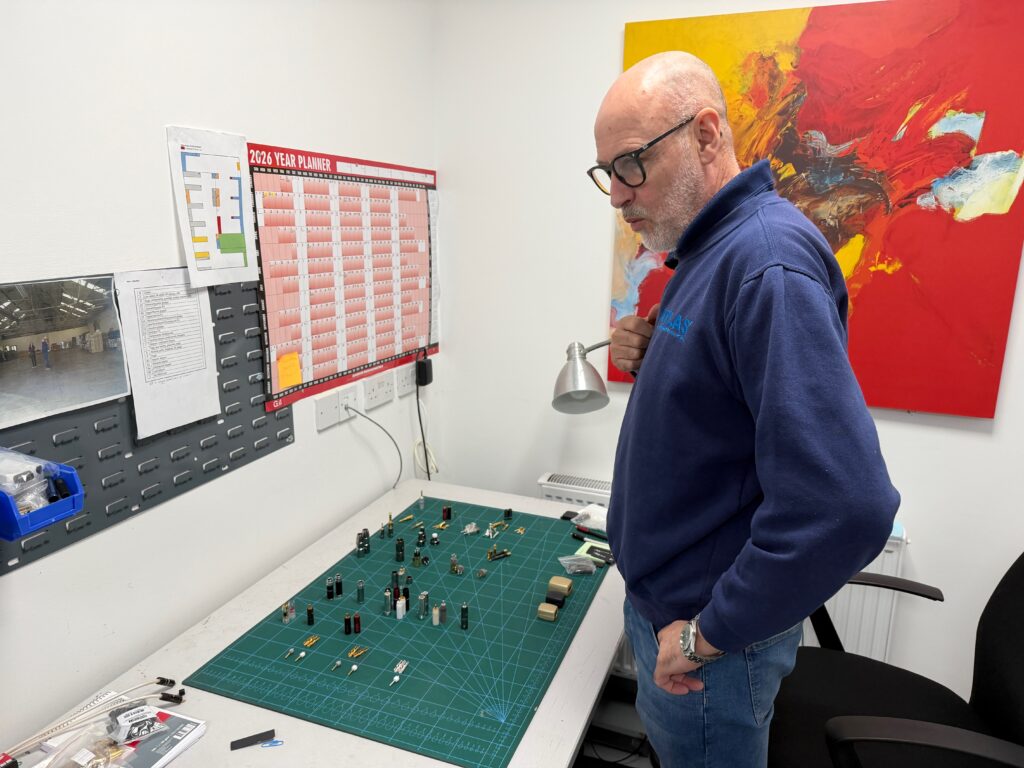
One of the best-kept secrets in audio, Polish cable brand WK Audio has three cable lines: the top-end TheRED, the entry-level TheONE and TheRAY in the middle. We’ve been big fans of TheRED since trying the power cord back in Issue 221. And our first foray into TheRAY – once again, a power cord – was so well received that we gave it an award in our 250th Issue. Now, it’s the interconnect’s turn.

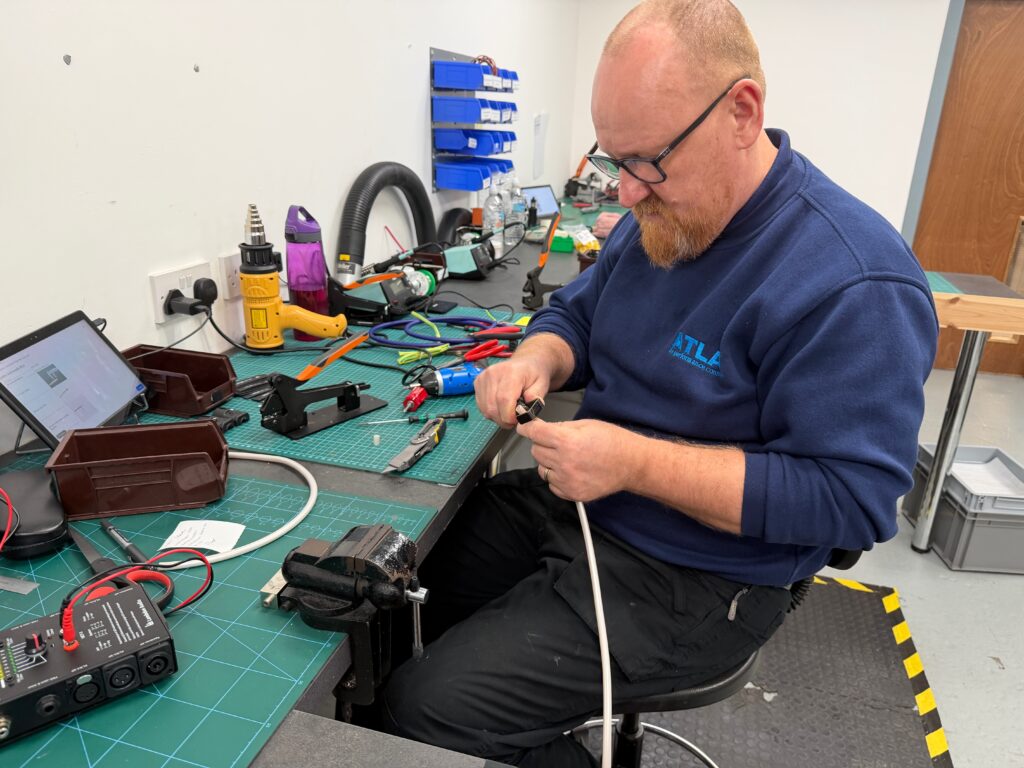
As with the power cord, TheRAY XLR is half the cost of TheRED, uses the special sauce developed for that high-end design by Witold Kamin´ski (the architect behind WK Audio), and is similarly hand-built. It uses a combination of pure silver, silver-plated copper, and pure copper in its conductor design. The outer sleeve is made of the finest braided blue. 

Red Wunz Go Fasta

If this all sounds a little vague, that’s a conscious choice. Like Kubala-Sosna (also featured in this issue) and Tellurium Q, WK Audio prefers not to disclose too much about its cable design. This is not about hiding from the competition or masking a weak design; it’s about countering the ‘Da Red Wunz Go Fasta’ mindset so prevalent in audio. Just as people form fixed ideas about the sound of a DAC based on its processor chip or make sweeping generalisations about an amplifier based on whether it’s Class A or Class D, so in audio cables, silver conductors – for example – do not necessarily sound bright. Judge the cable on its actual performance, not on the perception of its performance based on the choice of conductor.

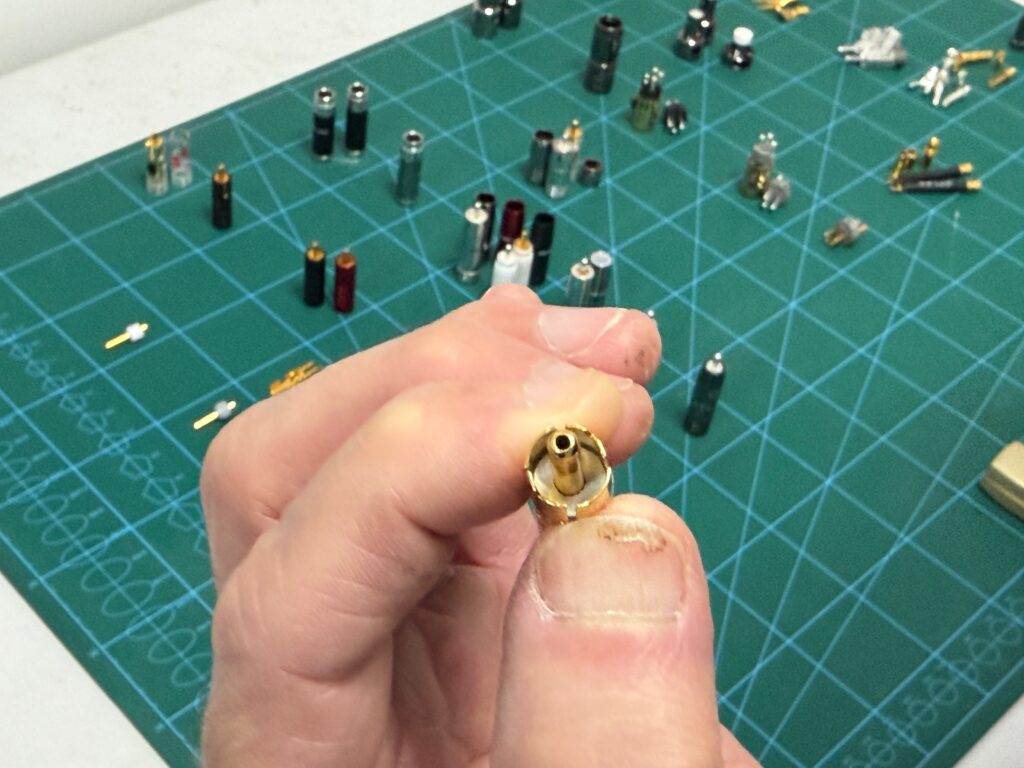
There is a choice of terminators, however. TheRAY, in standard guise (as tested), comes with Furutech FP-601M R XLRs. The upmarket version replaces these with Furutech’s CF-601 M R XLR plugs, featuring its proprietary NCF (or Nano Crystal Formula) technology. The cables are otherwise identical.

This is a lovely-sounding cable, extremely refined and elegant. It shares many of the properties of TheRED XLR (tested in Issue 237), such as a fine sense of even-handedness. In TheRED line, the key is the balance among the three cables. The power cord brings the dynamics, the speaker cable the excitement, and the XLR acts as a diplomat. Compared with TheRED, TheRAY performs similarly in and out of a WK Audio cable system. It’s a natural-born diplomat.

Midrange out

I’ve often said that a good system works from the midrange out, and if a product gets the combination of fluidity, articulation and dynamics right in this vital section, the rest follows suit. And it’s here that TheRAY shines. That midrange is wonderfully coherent, giving each instrument its own physical and tonal ‘shape’. That’s not simply about the soundstaging but also about pure resolution terms. 

If I were to sum up TheRAY in a single term, it would be ‘poise’. With good soundstaging and excellent top-to-bottom coherence, the cable is perfectly balanced and especially good with well-recorded music. However, where TheRAY shines is in not masking lesser tracks. Put on something harsh and angular, and TheRAY won’t smooth over the edginess or forwardness of the recording. But, unlike many intrinsically honest-sounding cables, it neither lays the music bare.

WK Audio’s TheRAY is arguably easier to use than TheRED. The top cable opens the window wider, making it more demanding of the components it sits between. If you want a taste of what WK Audio’s high-end cables can do, look no further than TheRAY. The best-kept secret in audio cables just keeps getting better. 


Price and Contact details

  • TheRAY XLR Basic: €3,000/1.5m

Manufacturer

WK Audio

wkaudio.com

More from WK Audio

Back to Reviews


Buchardt Audio Announces the S400 MK3

17 March 2026: Buchardt Audio has announced the S400 MK3, the latest generation of one of the company’s most established loudspeakers. First shown as a prototype in 2016, the S400 quickly became a cornerstone of the Buchardt lineup and has since built a reputation as one of the most widely recommended stand-mount speakers in its category.
With the S400 MK3, Buchardt describes the design as a complete overhaul. The new model introduces a larger cabinet along with an all-new tweeter and woofer, aimed at improving dynamics and headroom while preserving the balanced and natural presentation that has defined the S400 series since the beginning. According to the company, only a single component has been carried over from the previous generation.
One of the most notable changes is the move to a 7.5-inch SB Acoustics Satori Papyrus Woofer. Buchardt states that the driver offers 65.5 percent greater displacement headroom compared with the S400 MK2, allowing for increased dynamic capability, stronger bass authority, and greater physical impact, while the cabinet size itself has grown by only 18 percent.
The tweeter has also been redesigned. The S400 MK3 uses a custom 26 mm aluminum dome unit paired with a newly developed waveguide. According to Buchardt, the goal was not to increase brightness but to improve refinement, with higher perceived clarity and resolution while maintaining the smooth, fatigue-free character the S400 series is known for.
The company continues its collaboration with Jantzen Audio on the crossover, using premium components throughout the signal path. The crossover topology is described as somewhat simpler than that of the MK2, employing 1st-order filters, though Buchardt says its focus on high-quality components remains unchanged.
The S400 MK3 will initially be available through a limited pre-order campaign, with 75 pairs offered per finish at the introductory price. Estimated delivery is currently listed as late summer 2026.
More details can be found on the S400 MK3 product page.