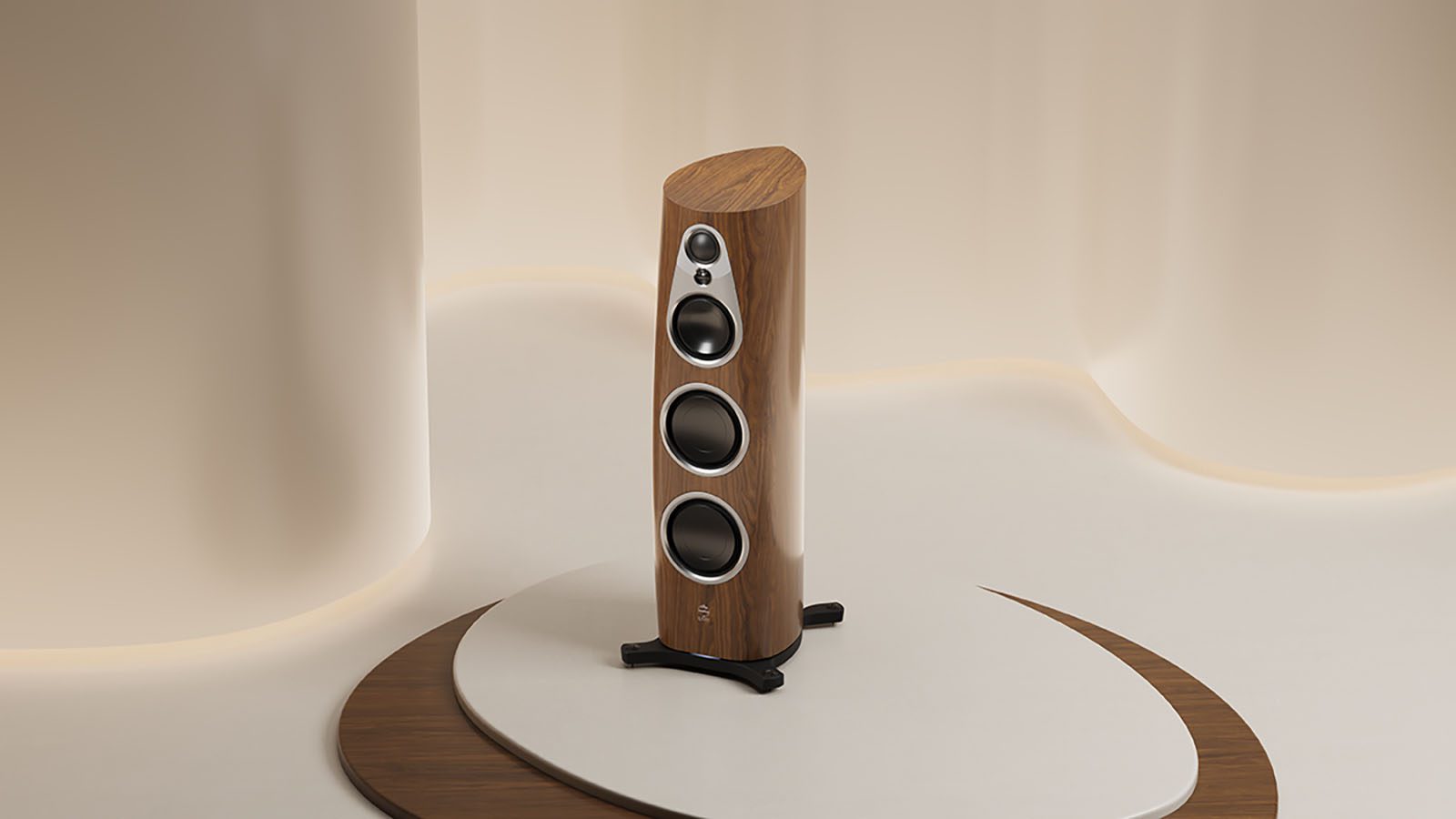
The Linn 360 loudspeaker is already a known quantity round these parts. https://hifiplus.com/articles/linn-360-floorstanding-loudspeaker-2/ Whether in full Exakt active mode or used as a passive loudspeaker with an active bass component, it’s Linn’s shot across the high-end bows. But, like any loudspeaker, it’s hobbled by the nature of the drive units used in most loudspeaker systems. That all changes with the launch of the Pistonik motor system. These are replacements to the 6” upper bass and 8” woofer units in the 360. They will be available as standard to all 360 models from today. In addition, existing 360 users can get them as an upgrade.
In fairness, this hobbling isn’t the fault of most drive units. It’s a combination of things coming together to make the drivers a bottleneck in most systems. Most drivers are off the shelf designs, even if modified to suit a specific need. That means the characteristics of the driver is designed to cover the greatest number of installations. In addition, as a passive system, the drive unit maker needs to be extremely conservative. This is because the upstream amplifiers are unpredictable.
While car analogies are massively overused, it fits here. Most drivers are a little like a production saloon. They are perfectly good and designed for a wide range of drivers. A suspension and drivetrain that comes with a sneeze test. You can take your eyes off the wheel long enough to sneeze and not find yourself in a ditch. Compare this to the British Touring Car Championship, or NASCAR. Now, you have a car with a suspension and drivetrain that reacts to every twitch and movement of the person behind the wheel.
The gloves are off
Linn’s 360 is different. It’s full of known qualities. The Exakt active system or active bass system in passive operation means the way the drivers are driven is entirely controlled. There are no speaker-blowing low-powered valve amps or voice-coil melting ultra-powerful amplifiers. In addition, when you design loudspeaker drivers for a specific loudspeaker enclosure, you get the potential to make a drive unit with the gloves off.
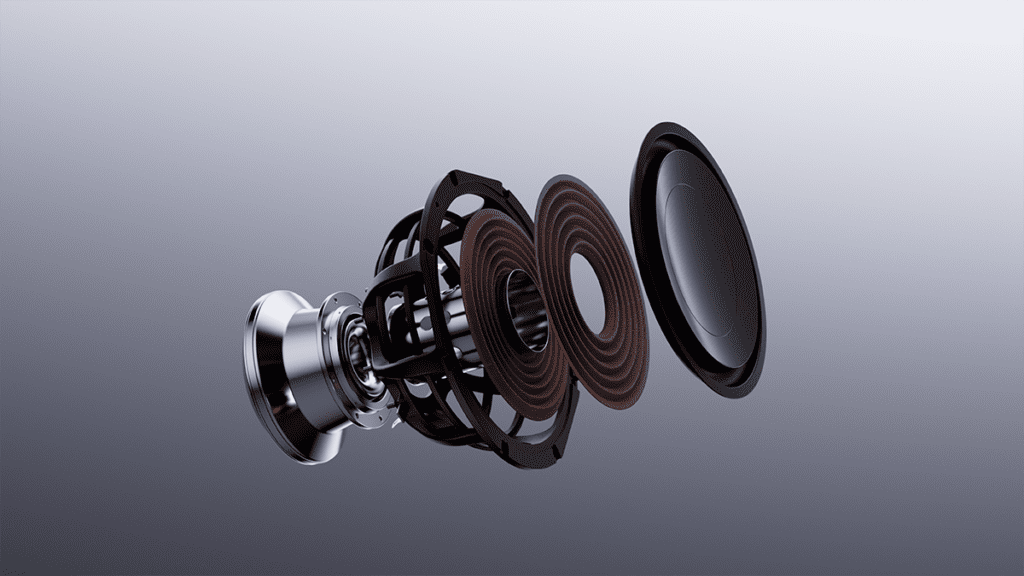
Of course, whether that’s a freedom for a manufacturer or a chance to just make in-house drivers largely depends on how innovative that company’s R&D team is willing to go. And in Linn’s case, they go deep! Rather than take an existing design, Linn went all in and rethought the loudspeaker driver motor. This is the part where the voice coil passes through the magnet. They created a very long-stroke travel through the magnet thanks to a significantly extended magnetic gap. That gives the voice coil an order of magnitude longer travel.
That new motor requires a re-invented suspension system. In the 8” driver, for example, the unit uses two spiders in place of just one in the basket of the speaker. Meanwhile, the drive unit material itself is hard aluminium, to reduce cone break up while retaining low mass.
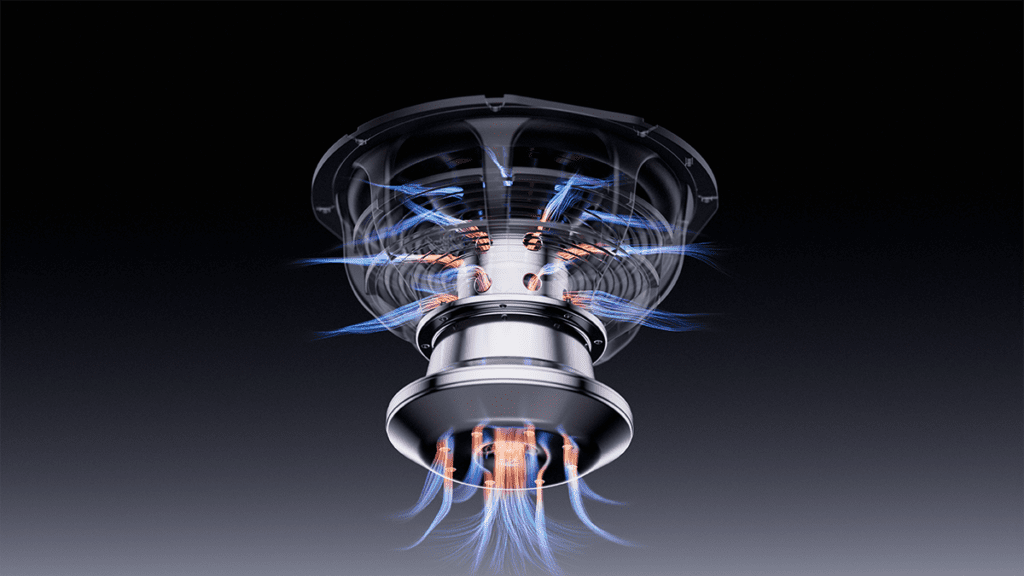
Such driver tech isn’t just thought up in a dream. It takes a lot of physics. Linn is one of the few companies who use the COMSOL multi-physics modelling program.
Coming soon…
We’re not going to go into too much depth here; for that, read our review in Issue 256 out in early June. But it’s a big change. Playing some traditional ‘fat lady sings’ opera, in the already very good 360, she sounds angry; with the new drivers, she sounds furious! It wasn’t a magnifier on the sound, just laser focused on the music. More importantly, that focus means nothing is off the table. Pick some music not known for its audiophile quality – ‘Know How’ by Young MC for example. That’s old school rap from 1989, complete with janky 80s-era samples. That’s not the kind of thing that ever gets played in audio shows or demonstrations, because it rarely sounds good. Here, it rocks! You have the pumping backbeat reproduced in all its glory.
I moved from Beethoven piano to ‘Rumble’ by Skrillex and everything in between, and in all cases the drivers start and stop with blistering speed, powerful depth and excellent dynamics. It’s fast when you need it, full and rich when you don’t. But, breaking the music down into its audiophile components seems wrong; it’s all about playing music more.
That’s the point, here. The science doesn’t need some granular overview of how the music sounds; it just sounds better. Yes, given that bass drivers are the change, bass is tauter and faster… but more importantly the space and clarity of the midrange and treble get cleaner and more detailed thanks to those bass units.
No debate
If you are reading this while staring at a pair of existing 360s, there’s no debate. This is your next upgrade. Spend ten minutes comparing the two, and you spend two minutes comparing the two and eight minutes arranging and paying for the upgrade. Fortunately, it’s a two-hour dealer fit rather than a Return To Manufacturer upgrade. For new buyers, the 360 is a little more expensive and a lot better… and now with a real-walnut finish. Eather way, once you hear it, you won’t want to be separated from your speakers for too long.
Price and Contact details
- Prices: 360 Exakt Integrated loudspeakers: £99,500
- 360 Passive with Active Bass (PWAB) loudspeakers: £67,000
- Drive Unit Upgrade for 360: £16,500
Manufacturer
Linn
+44(0)141 307 7777
Trending Articles
See all
Acoustic Energy Corinium floorstanding loudspeaker
- Dec 23, 2024
Trending Articles

By Alan Sircom
More articles from this author

Read Next From Review
See all
Reiki Audio SuperSwitch X/Pro X PSU
- Oct 06, 2026
Audiobyte SuperVOX
- Oct 06, 2026
Unitra WSH-805
- Sep 29, 2026
Wilson Audio Sabrina V
- Sep 29, 2026