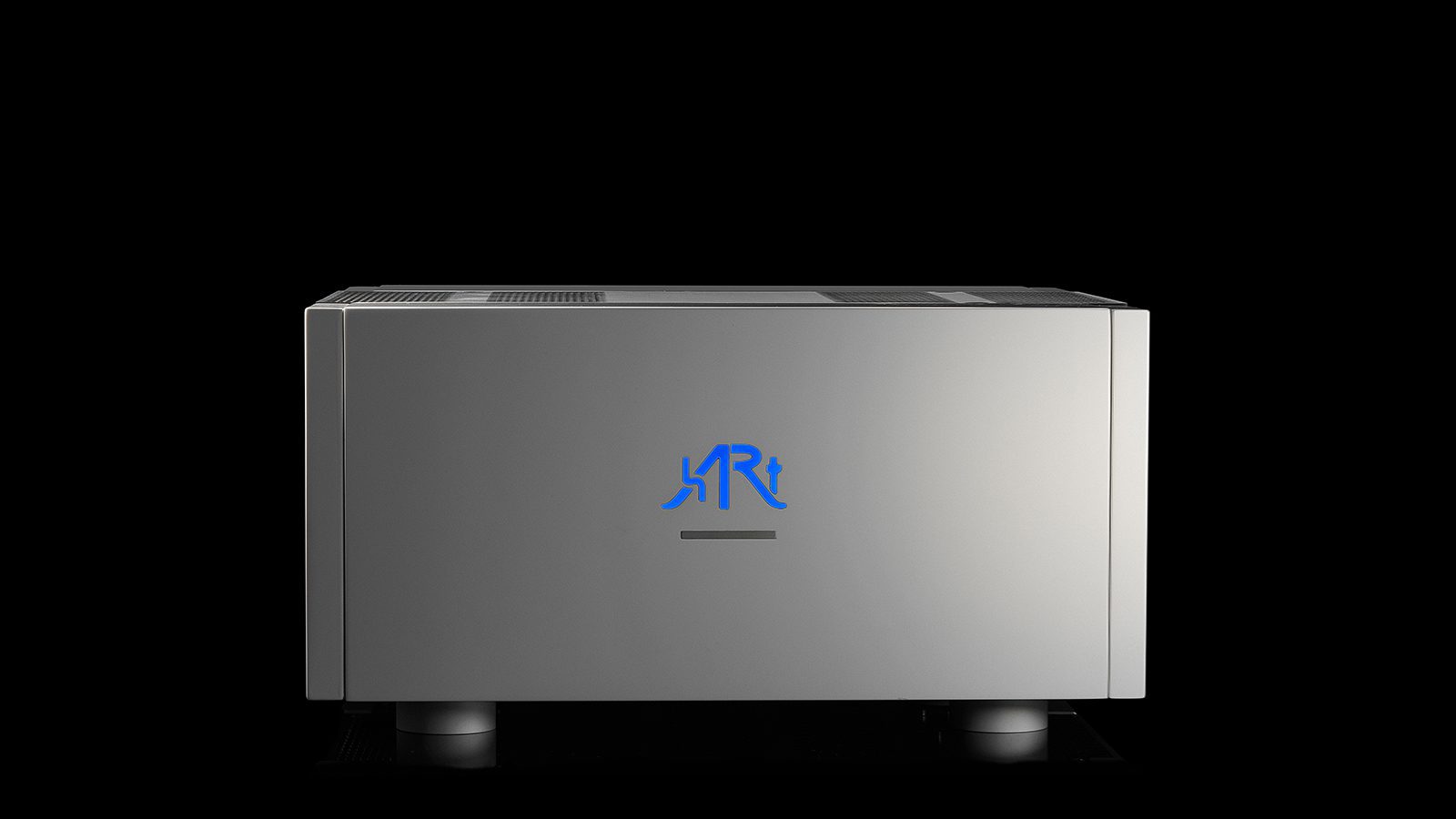
There are some curious patterns in reviewing. Having gone years without looking at a hybrid power amplifier, no sooner was the PrimaLuna Evo 300 back in its packaging that I was tapped up for another take on the same principle. While they might share a basic theme, the hARt Lab Tune Three is a somewhat different beast compared to the PrimaLuna and, indeed, almost anything else.
hARt Lab is based in Chalandri, Greece, and focuses exclusively on building amplifiers: pre, power, and integrated. The preamps are all valve-based designs, but the power amplifiers (and the solitary integrated) mix valves and MOSFETs to secure the best characteristics of both. The Tune Three takes this basic concept and adds many unusual or downright unique design features to it.
Unique construction
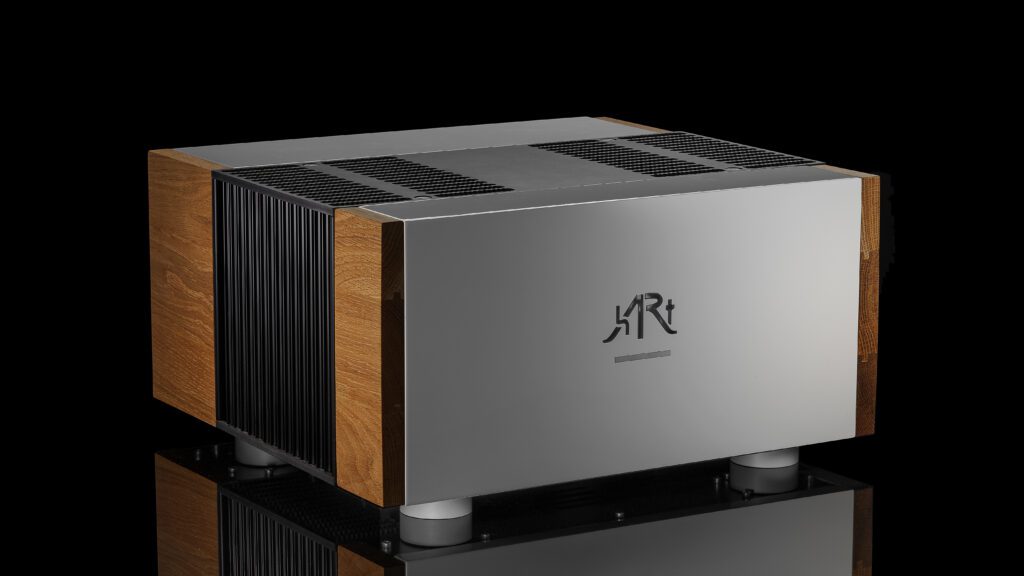
The unique aspect concerns how the Tune Three is constructed. Where most power amplifiers at this sort of price employ metal in their construction, generally resulting in something with the density of a neutron star, the hARt Lab instead employs amorphous wooden fiberboard in such a way as to be rigid in the ways that hARt Lab wants it to be but flexible in others which they claim dampens unwanted vibrations and mechanical noise feedback, resulting in lower noise floor and eliminating crosstalk. The company also puts its money where best needed; in the circuit. The base also incorporates ‘FloatO’ integrated anti-resonance feet to assist this further.
The rest of the chassis also uses fibreboard with the same intentions. These panels receive the MICoat luxury painting procedure for a genuinely impressive finish. The side panels can also be removed and swapped for ones in different colours and finishes to suit.
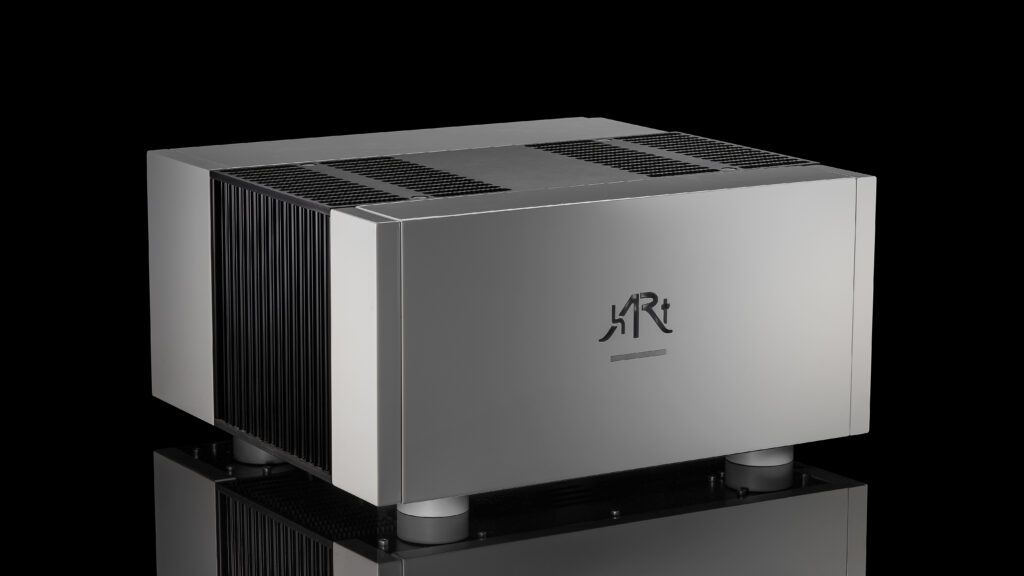
The amplifier housed in this chassis features a dual mono design that employs one CV181 (commonly known as a 6SN7) valve operating in a zero feedback driver stage, paired with a MOSFET output stage. The 80mm height of the CV181 accounts for the relatively tall overall height of the hARt Lab, as there is ample clearance between the valve’s top and the top cover. Power is rated at 165 watts into eight ohms, increasing to 275 watts into four, figures that should provide considerable freedom in speaker selection. The power supply responsible for this is a VAcc battery emulator with custom-wound mains transformers. hARt Lab asserts that the outcome is unaffected by external power fluctuations. The entire amplifier is then wired with a single grounding point.
No impedance difference
You’ll find a single pair of RCA inputs and two sets of speaker outputs at the back. These do not differ in impedance like an all-valve amp and don’t switch independently, so they seem designed to assist with cabling choices rather than anything else.
hARt Lab equips the Tune Three with IR triggers, allowing it to power on and off with a compatible preamp, and it should hopefully be intelligible to other devices as well.
The resulting amplifier looks, and I think more importantly, feels unlike anything else I can remember testing. The clever aspect for me is that while the Tune Three is lighter than most other amplifiers in this price range, it doesn’t feel insubstantial. You can tell that a significant amount of time and energy has gone into its construction, and it has a very distinct character of its own. The blue LEDs glowing inside are used as low-noise reference diodes in the cathode bias circuit, making them a lot more than a mere design features.
Fifteen colours
The illuminated logo on the front panel can be adjusted to one of 15 colours to better match other displays, which is another fascinating detail. The Tune Three undeniably feels different from other amplifiers at this elevated price point, but it possesses a clearly defined character that will appeal to those for whom climbing the pricing ladder doesn’t necessarily mean an increase in mass.
I connected the hARt Lab to my resident Chord Electronics Hugo MScaler and TT2 DAC, with the latter serving effectively as a preamp. It then outputted to the resident Kudos Titan 505 speakers, a design that can realistically be classified as slightly ‘valve unfriendly.’ Before any music was played, the hARt Lab did commendable things for anything containing valves. It is utterly silent at idle and powers both up and down without any unwanted noises. Aside from a slightly lengthy start-up sequence, it’s as easy to live with as a well-sorted solid-state amp.
The sound of silence
This is interesting because once you stop listening to the sound of its silence and instead focus on its actual sound, the hARt Lab’s character becomes more reminiscent of a pure valve device. Listen to The Phosphorescent Blues by The Punch Brothers [Nonesuch], an album that is catnip to vacuum tubes, and the hARt Lab responds in a way that suggests there is nothing but those CV181s in there. Chris Thile’s delicate vocals offer a presence and sheer realism that surprised me, even though I’ve used this album as test material since its release.
Keep listening, and this impression solidifies, but with some interesting and largely beneficial caveats. The hARt Lab has a truly fabulous midrange, as you might expect, but it isn’t emphasised over the rest of the frequency response. The top end, in particular, is energetic and detailed while being enormously refined at the same time.
Not so seismic
The bass available isn’t as seismic as that of some purely solid-state devices, but the same definition found in the upper registers provides a clarity and presence that is convincing. In terms of bandwidth, the hARt Lab’s MOSFETs certainly make their presence felt.
The solid-state aspect of the Tune Three truly shines- besides the fact that I can listen to the Titans at volume levels that are decidedly un-valvelike- in how the hARt Lab performs like a solid-state amp. Enjoying the seventies-tinged ‘Outta Sight’ by The Sheepdogs [Self Released] on the hARt Lab is a genuine pleasure. It brings all those swaggering seventies details to the forefront of the mix, sounding rich and utterly believable. It also grips every time signature with a confidence that transforms this album into an absolute riot. ‘Scarborough Street Fight’ becomes something completely rhythm-driven; a track you simply cannot sit still to. This amplifier is perfectly capable of having fun when it desires to.
Genuine audiophile
Of course, when you provide the hARt Lab with a genuinely audiophile recording, it responds magnificently. Stanley Jordan’s unique cover of ‘Eleanor Rigby’ from his Magic Touch album [Blue Note] is ideal for the hARt Lab. Jordan’s distinctive style enables him to effectively play two melodies simultaneously on the same guitar, which can sometimes sound somewhat confusing. Given the amount of information being conveyed, one might overlook just how remarkable his performance is. In this case, the clarity and three-dimensionality available allow you to appreciate the complexity of one man and a guitar, enhancing the magic of the performance rather than diminishing it. This isn’t a soulless disassembly; it’s more like a glimpse behind the curtain to understand how things work.
This effortless ability to make sense of what you listen to means that the hARt Lab’s true capabilities only come into focus after a few hours. At some point, you realise you are somewhere between five and fifteen albums in, and the amplifier itself hasn’t crossed your mind once, but you’ve enjoyed everything that has come from it without hesitation. It’s the electronics equivalent of soft power, and the hARt Lab excels at it.
Talent
Of course, at this price point, there is no shortage of exceptionally talented rivals, many of whom, by virtue of using casework that could double as a convincing blast shield, appear and feel more spectacular than the Tune Three. hARt Lab has taken a gamble that the Tune Three’s unique appearance is enough to entice you to sit down in front of it and have a listen. From there it stands on much more solid ground because this singular amplifier does an incredible amount right. This is realistically the best hybrid I’ve had the pleasure of listening to, and it is likely to win many admirers.
Technical specifications
- Type: Hybrid dual-mono stereo power amplifier
- Rated Power: 2x 165W(rms) into 8Ω load, 2x 275W(rms) into 4Ω load
- Sensitivity: (for Max. Power) 3.4 V(rms)
- Frequency response: 5 Hz – 100 kHz
- Power consumption: 2 W standby, 200 W idle
- Dimensions: (HxWxD): 20 x 43 x 41 cm (incl. jacks)
- Weight: 32 kg
- Price: £26,500, €30,000
Manufacturer
hARt Lab
UK distributor
AirT Audio
+44(0)1223 344053
Trending Articles
See all
hi-fi+ issue 250: the Awards
- Dec 02, 2025
Linn Klimax Solo 500
- Oct 28, 2025
Accustic Arts TUBE PREAMP V and AMP IV
- Jul 28, 2025


By Ed Selley
More articles from this author
Read Next From Review
See all
Piega Premium 301 Gen2
- May 26, 2026

Doshi Audio Evolution
- May 26, 2026

Synergistic Research PowerCell SX
- May 26, 2026
PMC prophecy7
- May 19, 2026