If you are still hanging on to that outdated, stereotypical notion that the only things to come out of Switzerland are cuckoo clocks and cheese, think again. Did someone mention Rolex, Tag Heuer, Breitling and Patek Philippe? Moreover, Switzerland has an enviable reputation for world-class precision engineering in watches.
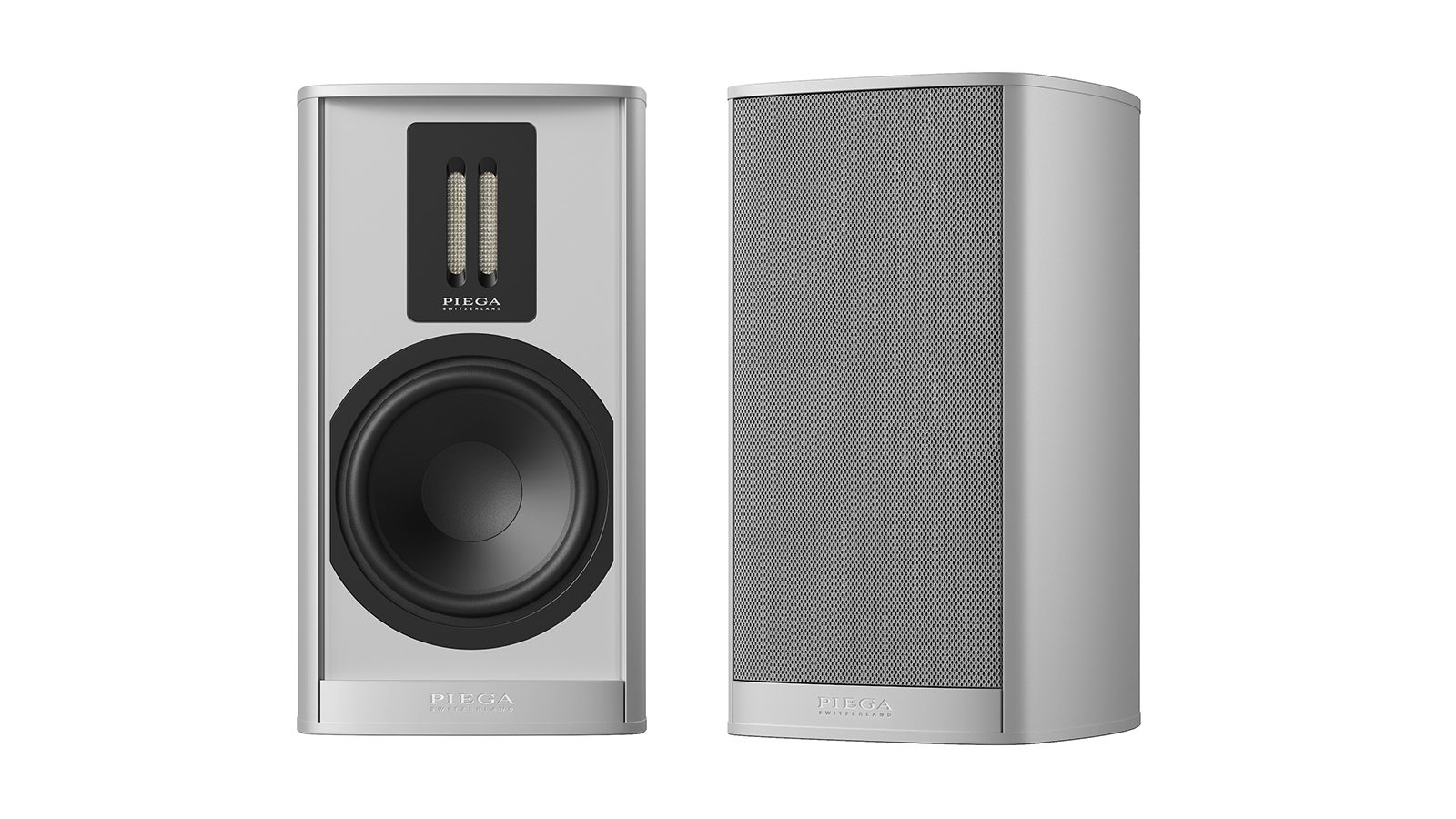
But did you know it is also home to many well-respected and high-quality hi-fi brands? Think Nagra – a byword in quality studio recording equipment and now making its own high-end h-fi products – Goldmund, Boenicke, Weiss and Soulution. Among those, we can also count loudspeaker manufacturer Piega. The Premium 301 Gen2 two-way stand-mount speaker is the subject of this review.
Lake Zurich
Its name may sound Italian or Spanish, but Piega’s manufacturing base is in Horgen on the shores of Lake Zurich. It traces its roots back to 1986. That year, Kurt Scheuch and industrial designer Leo Greiner took their first steps into the hi-fi arena. Furthermore, Greiner’s two sons, Manuel and Alexander, have been running the company since 2018.
Designed by Stefan Hürlemann, the Premium Gen 2 range was launched in February 2025 and comprises two models – the two-way stand-mount Premium 301 Gen 2 reviewed here (£2,500 in silver, £2,750 in black or white), and the 701 Gen 2 floorstander (£5,600). The 701 Gen 2 is a three-way floorstander sharing the same ribbon tweeter but with two bass/midrange coned drivers as opposed to the 301’s one. It also has an extruded aluminium cabinet. Indeed, the ribbon tweeter and curved aluminium cabinets are a common element in all Piega speakers. This is true from the entry-level Ace 30 at £1,100 to the flagship Coax 811 at £26,400. Additionally, its ranges include active wireless designs with built-in amplifiers.
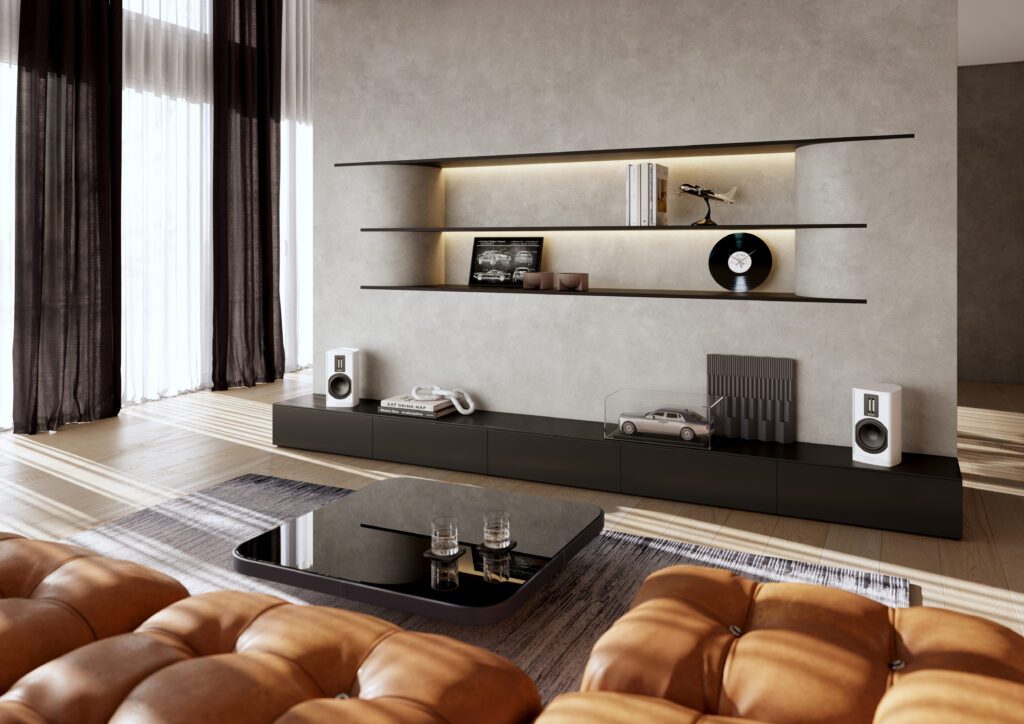
All of Piega’s speakers are handcrafted in its Swiss factory. I have been aware of the Piega name for some time. However, the Premium 301 Gen 2 is the first of its speakers that I have reviewed. And I have to say I was very impressed with their build quality and finish. They were weighty and solid. The gently curving sandblasted black extruded aluminium cabinets were impeccably finished and looked very classy.
Magnetostatic
The magnetostatic ribbon tweeter in the two Premium models is the brand new RM 01-24. The RM honours its two inventors, Roger Kessler and Mario Ballabio.
Many speakers these days use AMT (air motion transformer) tweeters, which feature a larger folded-foil transducer rather than a true ribbon like the Piega. The advantage a true ribbon driver has is its lightness. Piega says the foil ribbon in the RM 01-24 weighs around 50 times less than a typical dome tweeter. Consequently, this gives it a fast response and good dynamics. It also boasts an innovative magnet arrangement in front of and behind the ribbon. This is said to minimise distortion.
It has to be said that not all the attempts I have heard of to marry AMT and ribbon drivers to a dynamic driver have been entirely successful or seamless. Therefore, it will be very interesting to see how successful Piega has been in doing so with the 301 Gen2. So read on…
The new ribbon tweeter in the 301 Gen2 is joined by a new FSD-M 140mm cone bass/mid driver in a curved extruded aluminium cabinet. This cabinet borrows Piega’s own exclusive internal damping material and the wooden matrix from its more expensive Coax series siblings. All of which are intended to improve rigidity and reduce internal reflections and standing waves.
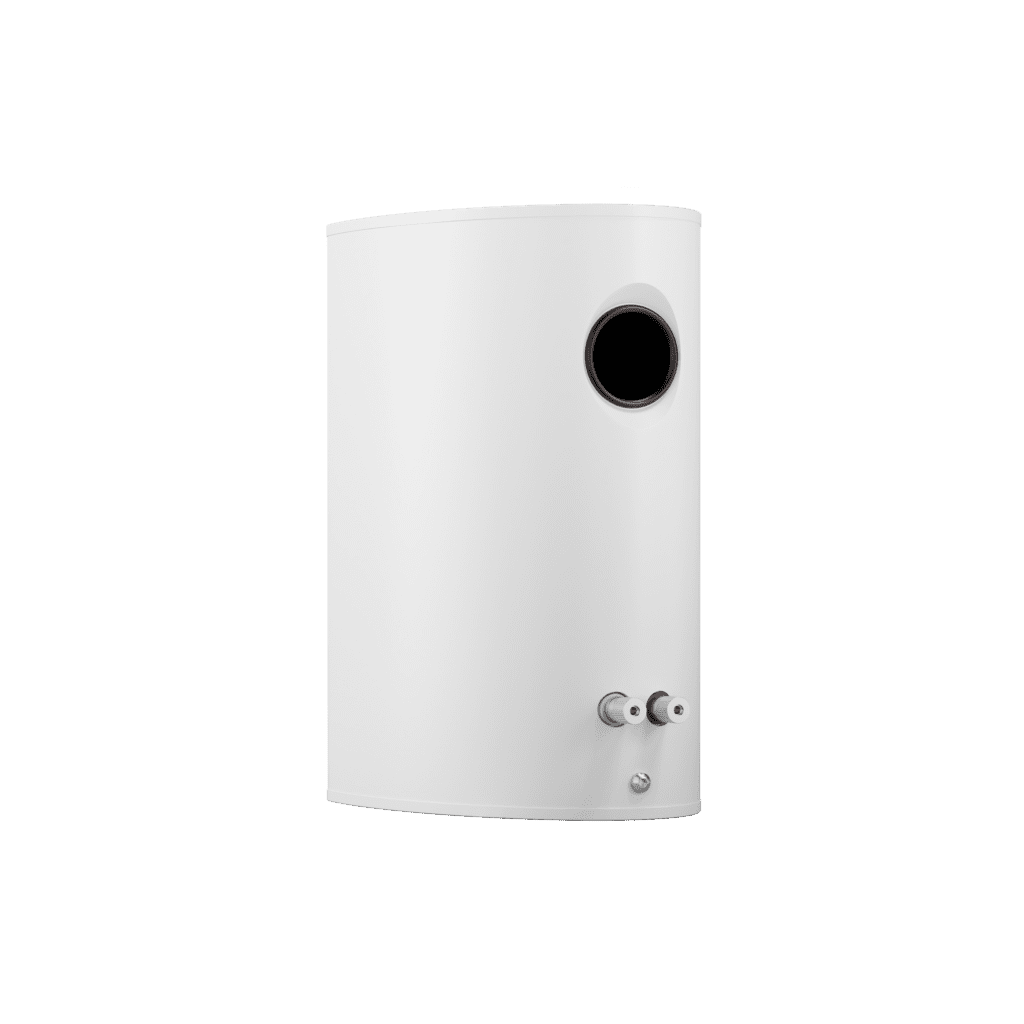
The 301 Gen 2 is reflex-loaded through a rearward-facing port, and the cabinet sits on four slightly compliant pads that hold it in place when placed on the metal top plate of your speaker stand.
Stand and deliver
To audition the Piega Premium 301 Gen2 I placed them on a stout pair of Kudos stands that are 24in tall – ideal for a speaker this size. Naturally, you should always experiment to find the ideal position for your room and system. Try varying the distance apart, from the rear and side walls and the amount of toe-in. I always find that a small amount of toe-in helps deliver a good soundstage and central image in my room.
Most standmount speakers of this size that I have tried in my 19ft x 12ft listening room have worked best when placed around 12in from the rear (sold brick) wall and 16in from the side walls, and that is where I placed the Piegas to begin with.
Bass heavy
I was rather surprised, however, to find that the bass was too heavy with them in that position, so I moved them further out into the room, around 18 in from the rear wall and slightly toed in. There was no doubt in my mind that they worked much better there. So that’s where I left them. I also tried the Piega with their grilles on and off. They sounded much better without them. This may be owing to the fact that behind the fabric of the grille is a full-size perforated metal plate. That did not have a good effect on the music – to my ears, anyway.
With a sensitivity of 89dB, the Piega should suit a wide variety of amplifiers. I tried it with both my Audio Note Meishu Tonmeister 300B single-ended integrated valve amp (circa 10W) and a Chord Electronics Ultima integrated amplifier (125W). Sources were the Audio Note CDT-Five CD transport and DAC 5 Special. I also used that company’s TT3 turntable with PSU3 power supply, Arm Two and Io1 cartridge through the AN-S9 transformer. Speaker cables were the QED Supremus Zr.
Well integrated
I normally have a relaxed three- or four-track ‘getting-to-know-you’ session before getting down to details. I was immediately impressed by the even balance of the Piega from top to bottom. The sound was detailed and integrated. Furthermore, they seemed to weave a coherent, seamless overall picture without any undue emphasis in any part of the frequency spectrum.
From the first few bars of ‘Shine a Light on Me’ from Ben Sidran’s Enivré d’Amour CD (which sometimes appears as Too Hot to Touch), the Piega sounded smooth, detailed and dynamic. His voice was articulate and expressive, while drums and cymbals were dynamic and syncopated with no hint of fizz or harshness. Moreover, the sinuous bass line that really drives the track along came across with a weight and solidity that is unusual in a speaker of this modest size. And yet, it was also well controlled, tight and tuneful.
Change of mood
For a complete change of mood, I next played John Mellencamp’s ‘Cherry Bomb’ from his Best That I Can Do CD. Straight away, the drums were super tight and punchy without being harsh. His vocals were clean and expressive. I could follow the violin and accordion parts well. The track’s distinctive staccato rhythm was well conveyed.
Switching to guitarist Peter White, I played his version of the Johnny Nash classic ‘I Can See Clearly Now’ from his Groovin’ CD. White’s guitar was clean, well-voiced, and the Piegas provided good insights into how each note was shaped and played. The reggae-style bass line that pumps the track along was also weighty and agile on the Piegas.
Switching to a jazz fusion groove, I played the track ‘Galaxia’ from the superb Heartfelt album by Fourplay (Bob James, Larry Carlton, Nathan East and Harvey Mason). This track relies on the skilful and mesmerising interplay between these four legends of jazz fusion. The Piegas captured that well. The bass line was deep and articulate, drums were syncopated and rhythmically sharp, while Bob James’s piano was clear, clean and easy to follow. Carlton’s guitar was also well voiced and presented. In addition, the quirky rhythm of the track came over well, and I enjoyed being able to listen to each musician’s contribution to the whole.
Class act
The Piega Premium 301 Gen2 is an excellent speaker. It is detailed, dynamic, clean, and very well balanced. The ribbon tweeter is well integrated to produce a coherent, seamless sound. It also delivers the kind of bass you’d normally expect from a bigger box.
The 301 Gen2 strikes a sweet balance, free from any nasties. Yet, it delivers complex musical arrangements with poise and control, whether it’s John Mellencamp or Miles Davis.
They offer outstanding performance for the money, and you’d be well advised to have them on your shortlist if you’re in the market for a speaker at this price.
Technical specifications
- Type: Two-way stand-mount loudspeaker.
- Drive units:
- Bass: 1 x 140mm FSD-M bass/midrange driver
- Tweeter: 1 x Piega’s own RM 01-24 ribbon tweeter
- Frequency response: 39Hz – 50kHz
- Sensitivity: 89dB (1W, 1m)
- Nominal impedance: 4 ohms nominal
- Recommended power: 20-200 watts
- Cabinet: Curved, extruded aluminium cabinet, reflex loaded
- Finishes: Silver or black sandblasted aluminium, white varnished aluminium
- Dimensions (HxWxD): 310mm x 170mm x 228mm
- Weight: 6.1kg each
- Price: From £2,500, €2,682, $3,995 per pair
Manufacturer
Piega SA
UK distributor
Henley Audio
+44(0)1235 51166
Trending Articles
See all
Xavian Unica
- Apr 07, 2026
Trending Articles

By Chris Frankland
More articles from this author

Read Next From Review
See all
Reiki Audio SuperSwitch X/Pro X PSU
- Oct 06, 2026
Audiobyte SuperVOX
- Oct 06, 2026
Unitra WSH-805
- Sep 29, 2026
Wilson Audio Sabrina V
- Sep 29, 2026