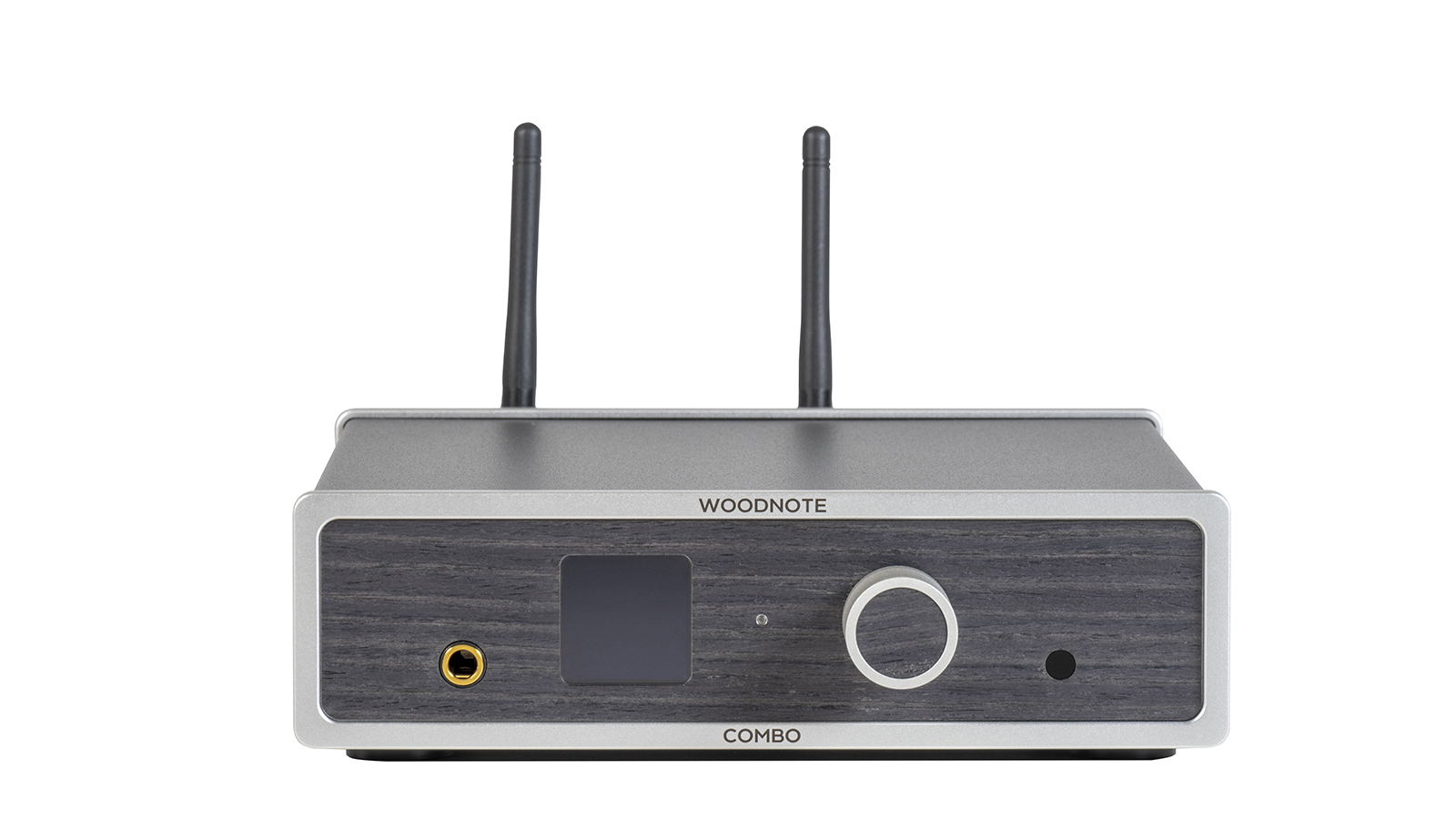
One of the most notable aspects of the modern audio scene is that many devices no longer fit into traditional product categories that we once regarded as clear-cut. The shift away from physical media has allowed companies to blend functions. This creates devices that serve as a bridge between conventional products. Such devices provide exactly what you need—even if you’re not fully aware of it yet. The Lindemann Woodnote COMBO exemplifies this.
The COMBO is one of two Woodnote products. COMBO builds on the features of the other model in the range, the Woodnote SOLO. It is a relatively conventional streaming DAC and integrated amp. This is something many companies have moved beyond in favour of creating line-level streamers. The COMBO uses the same functionality and decoding hardware but omits the balanced analogue output. Instead, it uses the extra space to accommodate an internal amplifier.
Digital all-in-one
The result resembles an all-in-one system, but one that operates exclusively in the digital domain. Lindemann has also retained both the digital and RCA outputs of the SOLO. This means the COMBO can still function as a preamp or transport if needed. This combination of features is something I don’t recall seeing before. It makes a lot of sense given how many people access and listen to music.
In hardware terms, the Woodnote COMBO follows the standard Lindemann approach of combining some off-the-shelf components with carefully selected bespoke hardware. The amplifier is a Class D unit that delivers 30 watts into an eight-ohm load and 50 watts into a four-ohm load. Lindemann does not specify the origin of this module. However, it neither claims it as anything other than an existing device. From this point, the Woodnote COMBO becomes more interesting. Signal paths are kept short, and the number of components in each path is minimised to ensure the highest quality available.
The digital decoding is where the Lindemann DNA comes into play. The DAC is a two-part device that converts all incoming audio into DSD before any decoding occurs. Notably, Lindemann claims that all volume adjustments are made at this stage as well. Adjusting the volume of an undecoded DSD signal is a complex task. It is rarely done at any price point, not least because the alternative of converting to PCM and padding the signal to provide more information for attenuation is often preferred.
Entirely reliable
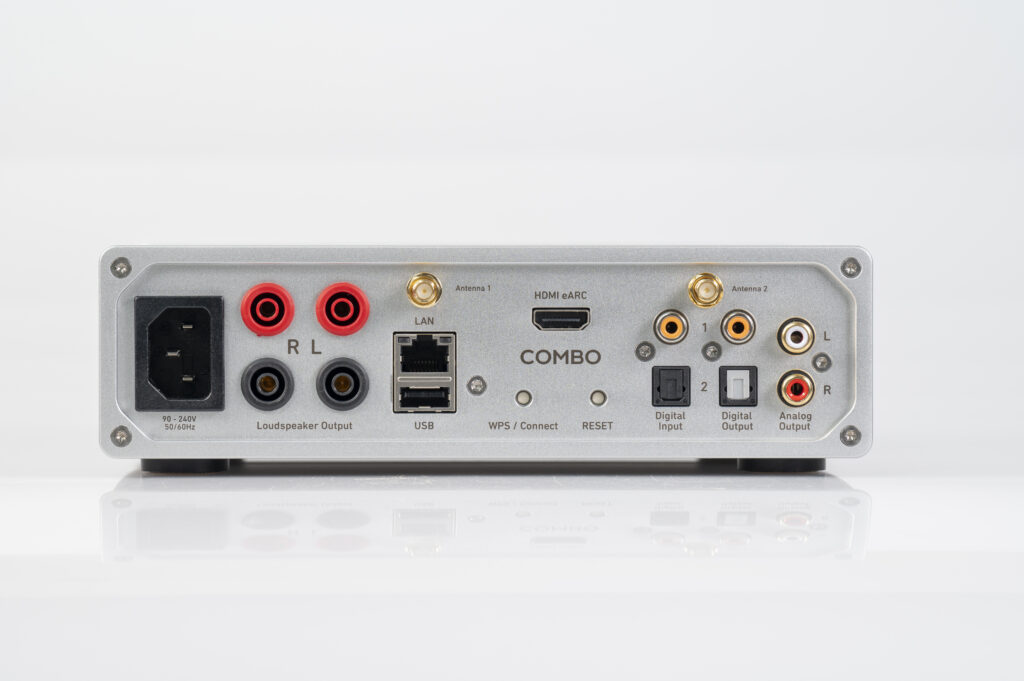
This DAC offers both coaxial and optical connections, as well as an HDMI ARC connection. It has proven to be entirely reliable during testing. However, it intentionally lacks the ability to auto-start and auto-power down the Lindemann in sync with a TV. This means it misses out on a key benefit of the connection. Its main feature is a network streaming module, primarily developed by Lindemann. This can handle PCM up to 384 kHz and DSD up to 256 (although these figures are lower over Wi-Fi). It supports most common streaming services. The control app is well-designed and stable. Roon functionality is promised, but is not yet available.
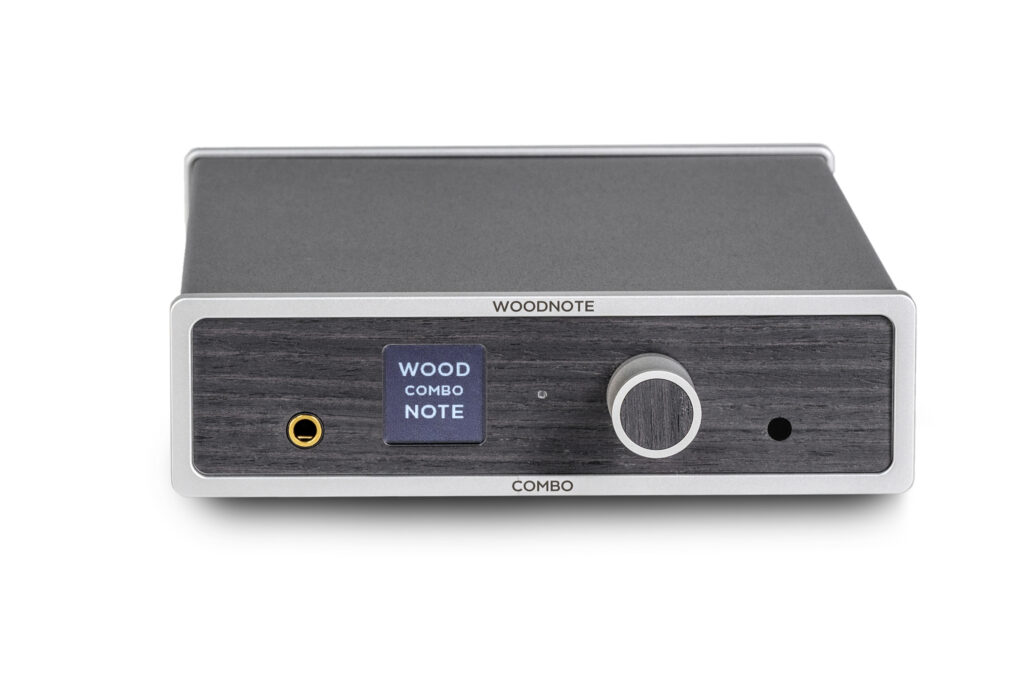
All of this is housed inside a small but well-finished box. The Lindemann can be roughly described as having a half-width, and it’s straightforward to the point of being minimalist. The name proves Germans often know more about English than the English; the term ‘woodnote’ means ‘the wild, spontaneous song of the forest’ (it says so on the box). The COMBO also features wood as an inlay on the front panel.
More than grey?
It looks charming, although I think Lindemann has missed a trick by offering this wood section only in grey. A small display shows input and some network information, and volume is controlled via a small but tactile knob. At the back, the connections are logically laid out and easy to access. The speaker terminals require the use of 4mm plugs, but this is hardly a big issue.
Another thing that becomes clear after spending some time with the Woodnote is that a lot of care has been taken with the user experience. It connects to Wi-Fi via WPS, a process that usually leaves me feeling a little disheartened. However, the Lindemann connected effortlessly, remained connected, and has been completely stable and intuitive since I tested it.
All-rounder?
The only real concern I have with the Woodnote is that its specifications are comprehensive, but perhaps not broad enough to classify it as a true all-rounder. The absence of an analogue input, whether through an analogue circuit or via analogue-to-digital conversion like NAD’s approach with the Bluesound Node ICON, means that the Woodnote has limited connectivity options, making an already niche product even more specialised.
This sense of care and attention to detail helps to offset this, though, especially when you start listening. The 30-watt output of the Lindemann isn’t huge, but when paired with a pair of Neat Petite Classic stand-mounts, it is quite sufficient. Additionally, the relationship it builds with the Lindemann DAC gives the Woodnote a presentation that is subtly different from most other things on the market. The first impression is that the balance is tonally warm. The bleak yet beautiful The National by Boxer [Beggars Banquet] is given an almost luxurious fullness and body by Lindemann, which can make you feel as though all the rough edges have been smoothed out.
Reality is different
The reality is somewhat different, though. As the opening Fake Empires gives way to the more aggressive Mistaken for Strangers, the Lindemann ensures that the opening blizzard of percussion still packs the punch it should. This ability to refine without softening appears to be ingrained in the Woodnote’s sonic identity, giving it a highly forgiving edge with less-than-perfect material, which I have found greatly appealing.
If you provide the Lindemann with a sound recording, it can perform some genuinely impressive feats. Playing it alongside Yazz Ahmed’s La Saboteuse makes the stunning, Middle Eastern-inspired tracks almost holographic in their immersive quality. The tonality is very convincing as well. There is a richness and decay to the lead trumpet that subtly draws your focus and makes it utterly believable. There are certain limitations in bass extension and dynamics that reflect its modest power output, but a larger, more sensitive speaker than the Neat could likely improve upon them.
What also becomes clear from spending time with the Lindemann is that it is extremely easy to handle, mainly because of the way it decodes. It has been some time since I last tested it, but re-reading my notes on the original Limetree Network streamer suggests that the same ability to excel when the material warrants attention. It gently smoothes out the worst excesses of material that doesn’t merit such treatment. This is something that COMBO never seems to be caught out by.
Charming experience
Where this applies to the Woodnote, unlike any previous Lindemann device I have tested, is the HDMI ARC connection. Put simply, the Woodnote has made TV viewing a delightful experience. The DAC’s ability to produce a gently warm and forgiving sound signature while retaining the same levels of detail and bite is well-suited to TV use. It is highly effective at keeping dialogue clear and easy to follow. To the best of my knowledge, this is the only HDMI ARC input on the market that is converted to DSD. The result is intriguingly different from pretty much any other connection of this type I have tested.
The Lindemann Woodnote COMBO is undeniably quirky. However, it also boasts enough sonic quality and attention to detail in its construction to win over many, both by what it does and how it does it. The latter aspect is just as important. While some devices may claim to perform similar functions on paper, they cannot match the audio quality offered here. This isn’t merely a case of audio evolving into a different niche. It’s a masterfully executed demonstration of what Lindemann does so effectively, and the result is likely to satisfy many listeners.
Technical specifications
- Network player
- Ethernet: 100 Mbps.
- Wi-Fi: Dual-band 802.11a/b/g/n/ac, WPS support.
- Bluetooth: 4.2, A2DP, SBC/AAC codecs.
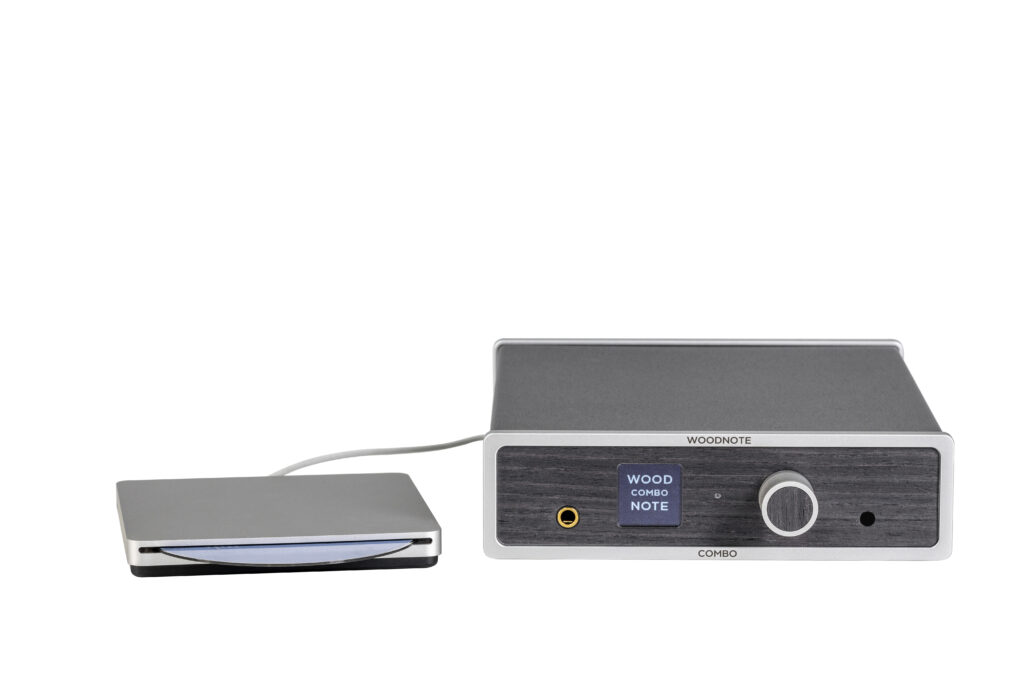
- USB: High-speed host interface for hard drives, USB flash drives, and CD-ROM drives, maximum output current 1A.
- Supported codecs: WAV, FLAC, AIFF, ALAC, MP3, AAC,
Ogg Vorbis, WMA, native DSD. - Network standards: UPnP and DLNA.
- PCM resolution: 44.1 kHz to 384 kHz, 24-bit (Wi-Fi up to
192 kHz). - DSD resolution: DSD 64 to DSD 256 (Wi-Fi up to DSD 128).
- Streaming services: TIDAL (Connect), Qobuz (Connect), Deezer, HighResAudio, Spotify (Connect), Internet radio,
and podcasts. - Roon Ready: Yes
- Resolution: 384 kHz/24 bit and DSD 256 native
- Dynamic range: > 120 dB
- THD & Noise: < 0.002 % (@ 0 dB FS)
- Master clock: Ultra-low jitter MEMS femto clock
- Re-sampling: with 180 dB dynamic range and 32-bit resolution, bit-perfect or DSD
- Jitter attenuation of the resampling: > 60 dB
- Volume control range: 0 to 60 in 1 dB steps.
- Balance control: + / – 6 dB in 1 dB steps.
- Frequency response: 1 – 50 kHz (-3 dB).
- Inputs: two digital inputs (RCA and TOS), LAN, USB,
and HDMI eARC. - Outputs: two digital outputs (RCA and TOS), one volume-controlled line output (RCA).
- Speaker output: 4mm banana plugs, 2 x 50W @ 4 ohms,
2 x 30W @ 8 ohms. - Headphone output: 6.35 mm jack plug, recommended impedance 30 – 200 ohms, recommended sensitivity >100 dB/mW.
- Dimensions: 207 x 250 x 62 mm (W x D x H)
- Weight: 1.7 kg
- Price: £2,250, €2,250, Currently not available in US
Manufacturer
Lindemann Audio
UK distributor
Elite Audio
+44(0)800 464 7274
Tags: INTEGRATED STREAMING AMPLIFIER LINDEMANN WOODNOTE COMBO
Trending Articles
See all
By Ed Selley
More articles from this author


Read Next From Review
See all
Reiki Audio SuperSwitch X/Pro X PSU
- Oct 06, 2026
Audiobyte SuperVOX
- Oct 06, 2026
Unitra WSH-805
- Sep 29, 2026

Wilson Audio Sabrina V
- Sep 29, 2026