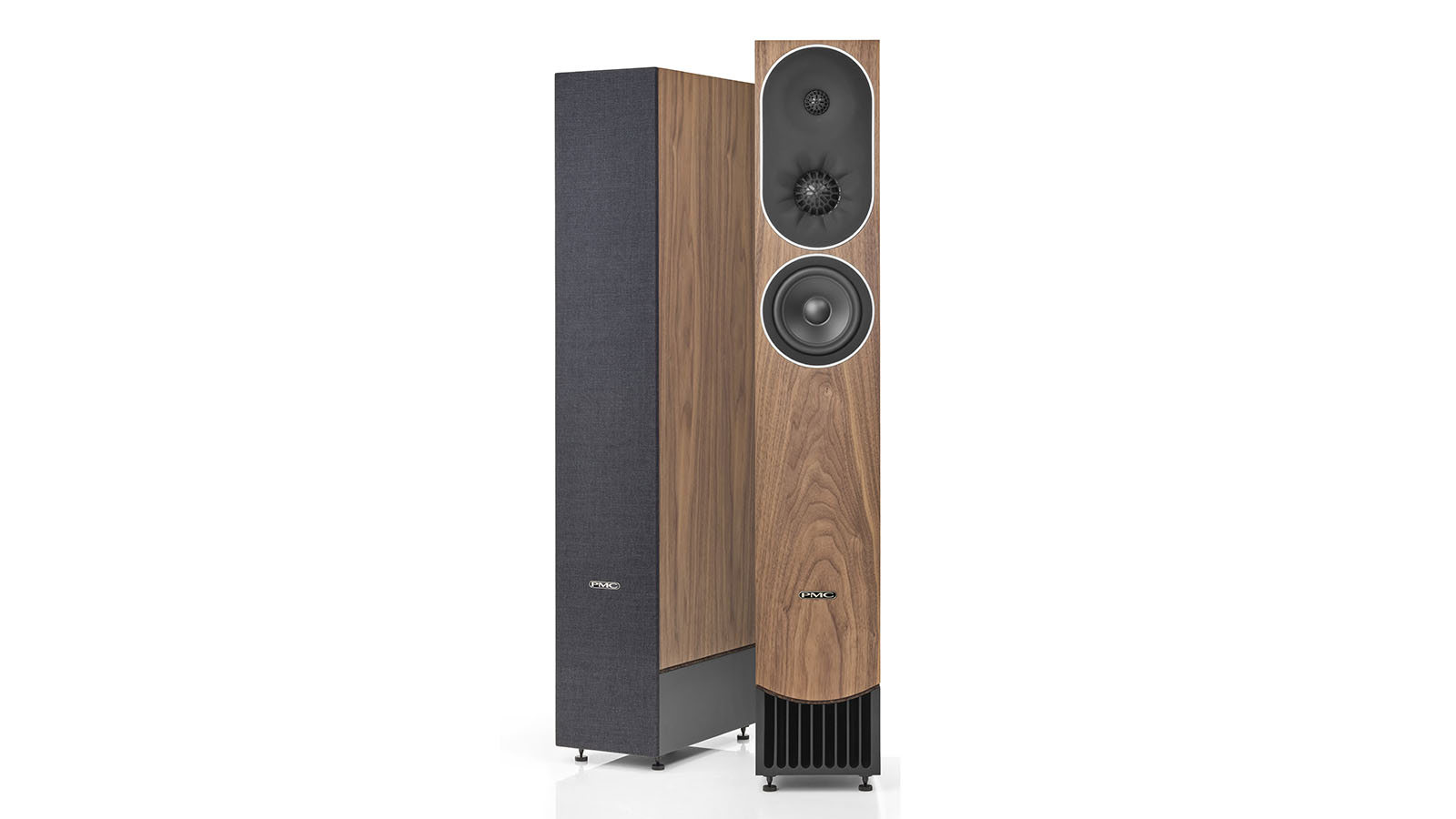
On the cover of the PMC prophecy brochure, which is a deluxe production as you might expect, they have put the legend ‘hear the future’. This is essentially marketing spiel, but judging by the PMC prophecy7 there might be an ounce of truth in it. Good quality speakers are capable of transporting the listener through time. They can take you to the moment and place where a great concert occurred and put you in the audience. Naturally, a degree of disbelief suspension is required. But, really all it takes is closing your eyes and focusing on the performance to get you there.
The less colored the loudspeaker, the more authentic the experience can be. Whether you will hear music from the future is, however, open to debate. The prophecy range is slimmer and more elegant than the twenty5i range that it replaces. This range is at the core of PMC’s offering. Each of the four models (five if the centre channel prophecyC is counted) features the same 125mm (5 inch) mid/bass and bass units. As a rule, the larger the speaker, the more drive units are employed. The PMC prophecy7 sits in the middle of three floorstanders and replaces the twenty5.24i from the previous range. However, it ups the ante by including a midrange dome alongside that model’s two-way driver array. The fact that they have managed to achieve this without raising the price is impressive in a loudspeaker that does not appear to make many compromises.
X dynamics
The biggest difference between prophecy models and their predecessors lies in the vent arrangement for the advanced transmission line that typifies PMC loudspeakers. Previously, the vent was cut into the front baffle at the bottom of the cabinet. In the most recent models, aerodynamic fins have been inserted to reduce turbulence. This is where the compressed air from the line interacts with the outside world.
For prophecy, PMC has created an aluminium plinth called Laminair X. This provides the final segment of the transmission line. It incorporates fins that create a laminar airflow. The mass of this component also brings the added benefit of enhancing stability. That means it negates the need for the stainless steel plinth bars used in the twenty5i range to pass tilt tests. However, the isolation provided by grommets in that system has been removed. This has been replaced by a natural cork gasket between the cabinet and the plinth. The prophecy plinth is tapped to accept spikes directly.
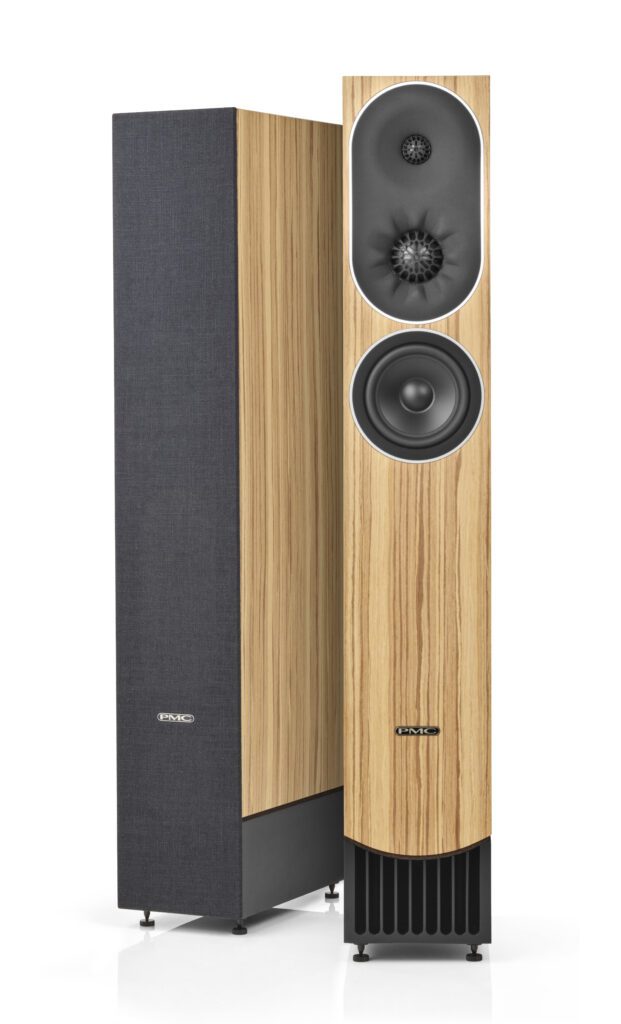
Laminair X is said to be superior at producing the desired laminar airflow compared to the previous system. Now the fins are as deep as the plinth (31cm) rather than being 5cm deep in the twenty5i models. The result is cleaner bass, as air compressed behind the bass cone can flow more freely out of the line. The driver array on the PMC prophecy7 consists of a 27mm soft dome tweeter based on a pro series design and covered by a grille that not only protects it but also extends the highest frequencies to produce a flatter response. PMC have also placed the tweeter in a waveguide that increases sensitivity and allows for smoother integration with the midrange dome.
Encompassing design
That dome is a 55mm unit featuring a performance-enhancing grille and sits within a more intricate waveguide that PMC has dubbed n-compass (geddit). Its function mirrors that of the tweeter, aiming to improve dispersion and integration with its companion drivers. The midrange waveguide merges two profiles: a shallow exponential guide and a steep hyperbolic one, intending to leverage the low-frequency loading and sensitivity advantages of the hyperbolic while controlling off-axis dispersion with the exponential. Dispersion is reportedly enhanced by the manner in which this waveguide diffracts and reradiates high frequencies. Both domes’ waveguides are derived, like the drivers themselves, from PMC’s professional designs, assuring that they will perform well at high volume, if nothing else.
The bass driver on the PMC prophecy7 appears fairly normal but was specifically developed for the Laminair X loading found in the new range. The goal is to deliver high power, wide bandwidth, and high speed with low coloration, which is quite demanding for a five-inch driver. PMC used an ultralight, mica-filled cone material in a cast alloy chassis with a ferrite magnet to achieve this, and the results suggest that they have experienced some success.
Timeless
Powered largely by a Moor Amps Angle 6 150W amplifier, the PMC prophecy7 turned out to be somewhat of a grower. It sounded good to begin with, but by the end of the far too short review period during which they were here, I had become quite attached to their remarkably low distortion and high transparency, coupled with fabulous timing.
I played a great deal of music on the PMC prophecy7s in that time and heard new detail in much of it; John Abercrombie’s Timeless sounded superb, the harmonic minutiae being resolved so well thanks to the quietness of speakers that, while they don’t inhabit fancy cabinets, have been constructed in such a way as to avoid interfering with the sound, thus allowing me to hear more of the music and less of the box.
Narrow baffle
I suppose the narrow baffle helps here, as does the solidity provided by the lump of aluminium at the bottom. With a remarkable record like this, you get oodles of atmosphere and excellent imaging, even off-axis. I am somewhat inclined to sit in the hot seat when alone, but when someone is sharing the sofa, I end up to one side, which usually compromises imaging quite evidently, but not so much here. There may indeed be something to this wide dispersion approach after all.
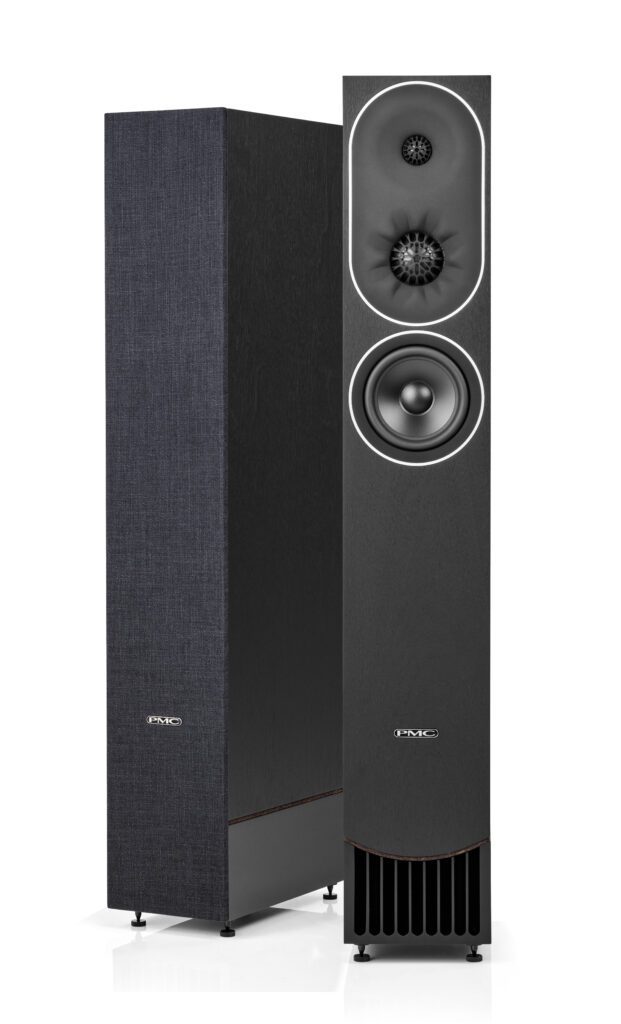
Tonally, the prophecy seems very accurate as well. The balance is slight by some standards but makes others sound bright and forward. I suspect this indicates they are extremely neutral. It makes ‘Message in a Bottle’ (yes The Police, play it on vinyl, you may be surprised) sound like it needs a bit of fattening up. However, remember that this album was made to sound jagged and lively for the post-punk market. In practice, it sounds glorious; the drumming is prog in disguise, as is the guitar. It’s only Mr Sting’s ravings that make it poptastic. It’s a blast either way when you have this much speed and control available in the loudspeakers.
End game
The PMC prophecy7 is also highly revealing of variations in image scale. One tune fills the room and the next one is presented in a tightly focused, three-dimensional form between the speakers. The cleaner the production, the smoother the sound; of course. The Johan Lindvall Trio album End (reviewed in the June 2025 issue) is presented on a relatively small scale. However, the playing is utterly beguiling, and its inherent beauty truly draws you in. With Jeff Parker’s The Way Out of Easy live recording, the image is almost as strong outside the prophecy7s as it is between them. There’s so much character in the sound, with each instrument having its own distinct timbre and acoustic. However, the band as a whole is presented as a completely cohesive unit.
You can hear this speaker’s pro heritage in its monitor-like ability to resolve details such as compression, reverb, and effects in everything played. The PMC prophecy7 doesn’t possess a typical monitor character, but it does exhibit the transparency to nuance offered by such designs. Perhaps this comes down to dispersion as well. The way the speaker interacts with the room is entirely dependent on dispersion. That makes it a key factor in the sound we perceive.
Speed and immediacy
I revelled in the speed and immediacy that the PMC prophecy7 brought to the party. It did so without sounding bright or forward. Especially at higher levels, it tends to play hard, as I did with them in the system, because the perceived distortion is so low. I became quite carried away with a variety of tracks, including ‘A Frozen Western’ by The God in Hackney. This was another example where the sound completely surrounded the speakers and gave the impression that they were not there when my eyes were closed.
I have been using PMC twenty5.26i speakers on and off since their launch five years ago. They possess the same three-way driver array with a midrange dome. However, despite being larger and more expensive, I would gladly swap them for the prophecy7s. These speakers are clearly superior in nearly every aspect, except for absolute bass extension. Considering they are distinctly more affordable, is quite an achievement. The combination of elements in the PMC prophecy7 has resulted in a design that performs well above its price point. Don’t let their slim good looks deceive you; this is a fantastic speaker.
Technical specifications
- Type: 3-way, three-driver, floorstanding speaker with PMC ATL (Advanced Transmission Line) enclosure.
- Driver complement: One 27mm; one PMC 55mm soft dome midrange driver; one PMC 125mm mineral cone bass driver.
- Crossover frequencies: 600Hz, 3.1kHz
- Frequency response: 40Hz – 20kHz (-3dB)
- Impedance: 6 Ohms
- Sensitivity: 88dB/W/m
- Dimensions (HxWxD): 965 x 165 x 310mm (+23mm with terminals)
- Weight: 23.7kg/each
- Finishes: Natural walnut, Mediterranean oak, Blackened walnut.
- Price: £6,575, €7,999, $9,499/pair
Manufacturer
Professional Monitor Company
+44(0)1767 686300
Trending Articles
See all
hi-fi+ issue 250: the Awards
- Dec 02, 2025
Audiovector R 5
- May 13, 2026
Wilson Audio Autobiography preview
- Apr 28, 2026


By Jason Kennedy
More articles from this author

Read Next From Review
See all
Piega Premium 301 Gen2
- May 26, 2026

Doshi Audio Evolution
- May 26, 2026

Synergistic Research PowerCell SX
- May 26, 2026
Soulution Audio 331
- May 19, 2026