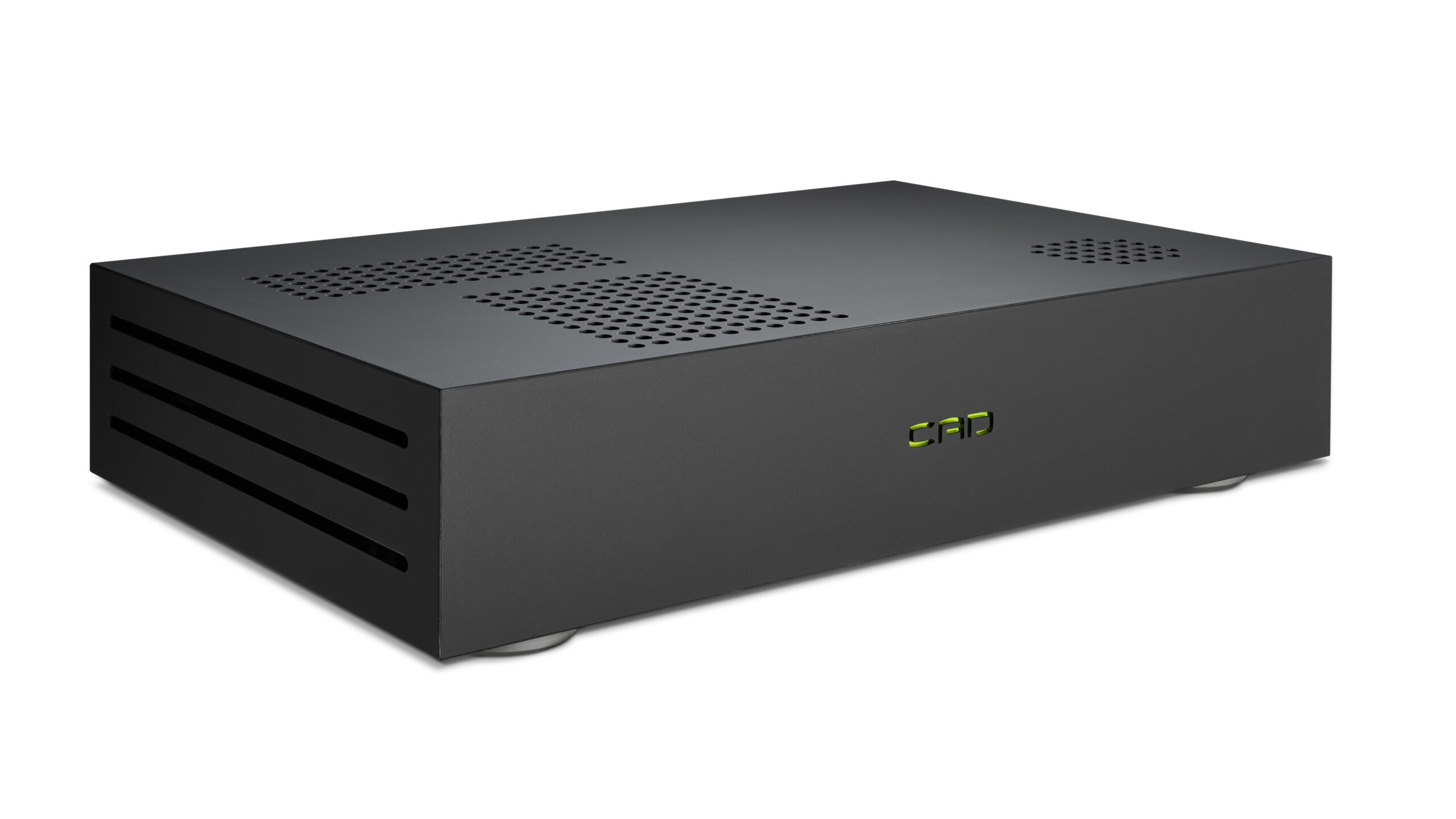
I have reviewed a CAD 1543 DAC in all three versions. At first glance, it looks very similar to the first example, which I tested back in Issue 95 in 2012. Like its predecessors, the CAD 1543 MkIII is a purist streaming digital-to-analogue converter with a single input and one pair of single-ended outputs. CAD stands for ‘Computer Audio Design’, but it might as well be ‘Compromise Avoidance Design.’
While computers remain a popular source for file streaming, there has been a revolution in the audioverse over the last dozen years, with all manner of music platforms coming into existence, followed by a wide variety of hardware. None of these developments changes CAD or the way it makes converters.
Maximum performance
Scott Berry is the man behind CAD. He is passionate about getting the best sound possible from digital audio, maximising the performance from a USB signal. He is also committed to the Philips TDA 1543 multibit chipset, an example of 1990s technology that limits sample frequency to 176.4kHz (4x CD’s 44.1kHz). It can convert 192kHz with some sources, but that is not a given across the board, and it is not compatible with DSD. CAD recommends that the server convert 192 kHz and DSD files to 176.4 kHz or lower.
In 2016, I wrote about the 1543 MkII, which was an evolution of the original converter with the same captive power lead and matte acrylic case. During the intervening period, Scott started working on grounding devices and created the Ground Control GC1, which has spawned larger and smaller versions. There is a USB Ground Control and another for Ethernet; these are inline filters that reduce noise in digital audio connections, and, like the GC1 and its follow-up, GC1.1, they work very well.
Extra chips
The CAD 1543 MkIII incorporates some significant changes for this purist design. Where the original had 16 TDA 1543 ladder DACs, it now has 20, which is apparently the most that would fit in the chassis. The extra chips provide two benefits: they increase the DAC’s output current, and they have no output stage as such, just a Duelund Coherent Audio capacitor on each channel to block DC. They also improve signal-to-noise and drop output impedance.
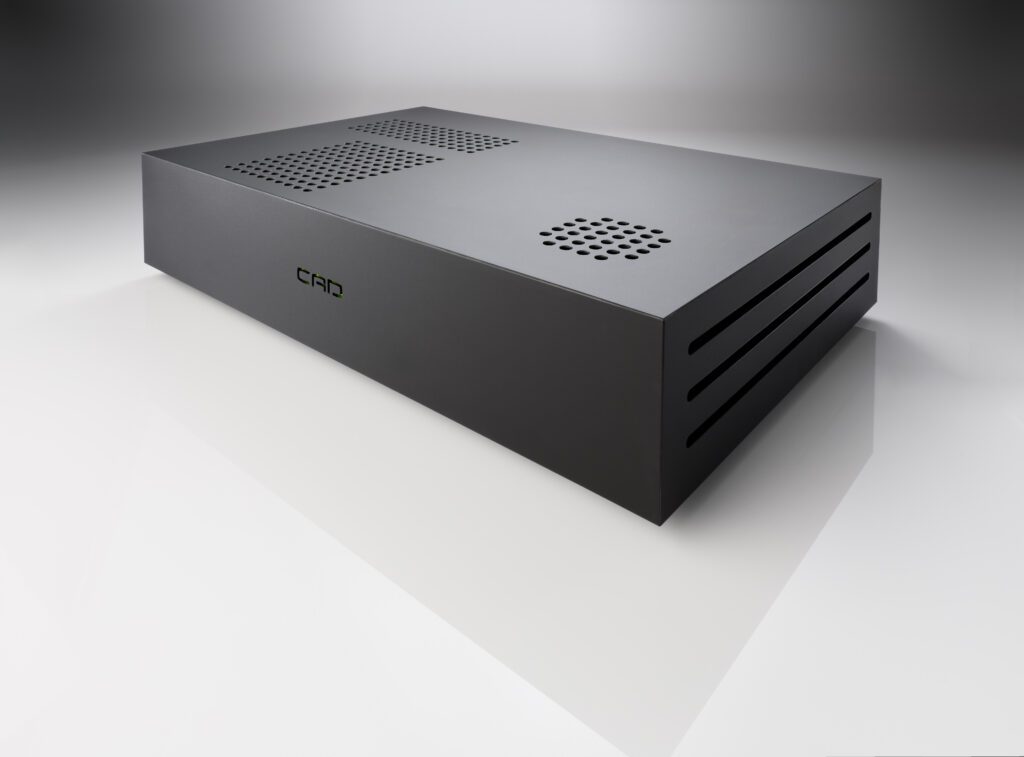
The CAD’s five power transformers are no longer toroidal but custom EI types, chosen for sound quality reasons and as an indication of Berry’s interest in tube amplifier design. Audio Note Japan, Trilogy, and others use them. The new DAC also uses choke power filtration, seen chiefly in amps that glow, and custom Japanese capacitors for reservoir filtering.
Asynchronous
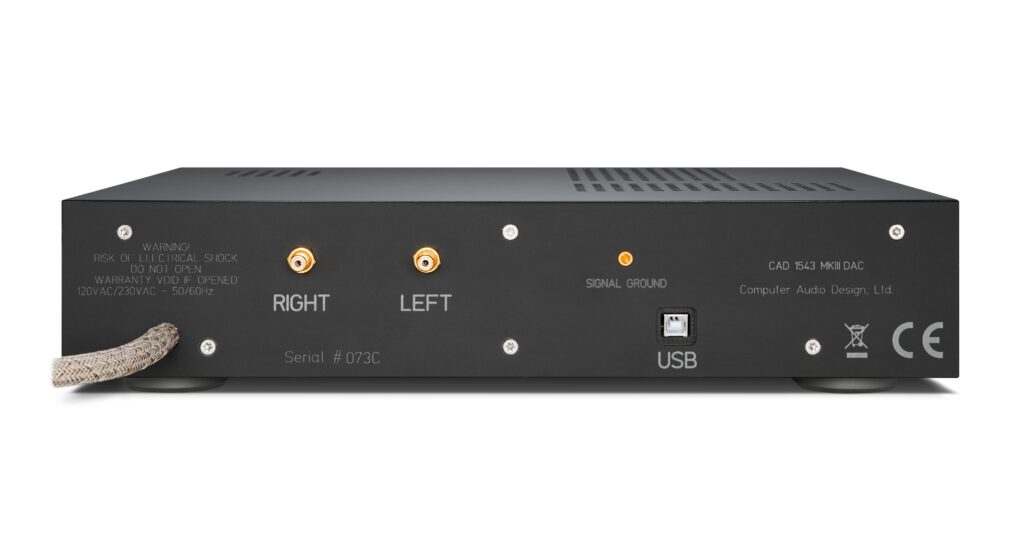
On the digital input front, CAD continues to use an asynchronous USB interface, which was among the first to implement the feature in 2012. Asynchronous operation is now a near-universal approach that operates on the DAC clock rather than on the source clock. This interface is compatible with almost all Linux-based audio servers, including Innuos, Auralic, Aurender, Antipodes, Roon, Melco and Fidata. To complete the list, CAD is currently working with Lumin and Xact to have them add the CAD USB Driver to their servers.
The USB input has lower phase-noise oscillators than its predecessor and new galvanic isolation circuitry. An anomaly of the 1543 MkIII is its captive power lead, which is generally unheard of in audio today but was considered extinct in the high end. CAD use a high-quality cable and a very decent mains plug, but this does prevent upgrades and getting the DAC in and out of the rack is a little bit of a faff. The only real external change is in the footwear department; the last 1543 I had featured separate feet in a rubbery honeycomb form; now it’s wearing Krion composite feet, which feature in CAD’s biggest ground control unit, the GC-R. Krion is a mineral polymer material and, thus, a completely different approach to that found in the earlier CAD DACs.
Devices
As I couldn’t get the CAD to play nice with my Lumin U2 Mini streamer, I hooked it directly into the Melco N10 server/streamer, where I store my music files. As a rule, the Lumin improves on the USB output from the Melco, but CAD brought along a couple of devices to help with this. There was already a USB Control in the back of the Melco, but an Ethernet Control and a GC1.1 joined the party, substantially improving the sound quality from the DAC. These devices reduce nsystem noise by delivering higher resolution, more open soundstaging, and even better timing. A lower noise floor is always beneficial for audio, especially digital systems. I hooked up the 1543 MkIII to CAD’s USB II-R cable at the input and to Atlas Arran Ultra RCA Grun interconnects.
An extremely relaxed and natural balance typified the last two generations of this DAC. They had an effortlessly clean yet organic presentation that was very easy to enjoy. Berry has decided to liven things up with the MkIII, which is more upbeat and exciting than its predecessors. The CAD 1543 MkIII is still a beautifully relaxed and refined DAC, making much of the competition sound grainy and forced. However, it has more spring in its step, which is great for timing and appears to have no drawbacks, even for someone who loves relaxed sound.
Energy without hardness
It proves that you can have energy without digital hardness by sounding more natural than other converters at the same price. I bought the Bricasti M11 Classic, which I reviewed a couple of months ago (another ladder DAC), but it isn’t as good as this CAD, even via its most effortless LAN input. However, the £7,649 price difference is not insignificant, and the Bricasti is a more versatile tool for reviewing. Nonetheless, I revelled in the CAD’s ability to make sense of the most complex and challenging pieces of music; it never loses its composure regardless of how much it is processing.
The CAD 1543 MkIII also reveals qualities in the music that other converters fail to convey; Sultan Stevenson’s latest album, El Roi, proved better than I thought it would be, the DAC making more sense of the brass elements in the mix and revealing what a talented pianist this young Brit is.
I also revelled in Dweezil Zappa’s renditions of his father’s work on Return of the Son of…, even with heavy tracks like the ‘Deathless Horsie’, the shredding remained coherent and easy to enjoy. The CAD presents the density of the guitar playing in all its glory. This live album is a little compressed, but the CAD opened it sufficiently so that I could enjoy what was going on, with weighty, tuneful bass and a bit of thickener on the guitar, making it more powerful. Zappa senior could play just as well, but didn’t have the quality recording gear available to his son.
Imaging strength
Imaging is also a strong point; the CAD 1543 MkIII can draw immense depth from a variety of recordings and presents voices and instruments in all their three-dimensional beauty, pulling out mountains of reverb on Marc Johnson’s Bass Desires as well as Bugge Wesseltoft’s latest release, Am Are. The latter has superb timing, and the groove on the piano trio piece ‘Bag’ is particularly gratifying thanks to an intense double bass line and nimble drum work. The tone is probably where the CAD is at its strongest.
However, it sounds so authentic and honest that you feel it is telling the unvarnished truth. Many DACs have a very even tonal response, but few match the fine detail that this one brings to the picture; low-level characteristics of each note that give them a genuinely analogue feel. There is no polish or apparent enhancement to the delivery, and it feels as if you are hearing what they heard in the studio, assuming they had decent monitors, that is!
More than aesthetics
This performance isn’t just an aesthetic thing; it’s also what makes the CAD 1543 MkIII so engaging and coherent; it’s a sign that noise no longer interferes with the result. We’re talking about electrical noise, of course. You never hear it as noise, but it’s audible as a mask on the sound, which gets between you and the music. This CAD DAC does a better job removing that mask than most of the competition, even at its elevated price. This musical transparency is worth paying the small convenience price; the sample rate limit is an impediment only to those obsessed with hi-res files. Those looking for musical truth would do well to seek out the CAD 1543 MkIII; it’s a real treat.
Technical specifications
- Type: Solid-state high-resolution USB digital-to-analogue converter
- Digital Inputs: Asynchronous USB
- Analogue Outputs: Stereo single-ended (via RCA jacks)
- DAC Resolution/Supported Digital Formats: All PCM from 44.1KHz to 176.4KHz with word lengths up to 32 bits
- Frequency Response: Not specified
- Distortion Not specified
- Output Voltage: 1.75Vrms
- User Interface: N/A
- Dimensions (HxWxD): 85 x 430 x 280mm
- Weight: 9.7kg
- Price: £18,000, $19,500, €21,500
Manufacturer
Computer Audio Design
+44(0)203 397 0334/ +1 541 728 3199
Trending Articles
See all
By Editor
More articles from this author
Read Next From Review
See all
Eversolo T8
- Oct 13, 2026
Acoustic Energy AE Active
- Oct 13, 2026
Reiki Audio SuperSwitch X/Pro X PSU
- Oct 06, 2026
Audiobyte SuperVOX
- Oct 06, 2026