Up to 37% in savings when you subscribe to hi-fi+
hifi-logo-footer

Begin typing your search above and press return to search. Press Esc to cancel.

Ultrafide Audio launches ENSO – the “music first” integrated amplifier

11 Feb 2026: Ultrafide Audio is taking its pro-sound-to-home revolution further with the launch of its debut integrated amplifier, the ENSO (INT-125). 

Flexible, scalable and musical, the ENSO is designed to be the centre of your sound. Its name is inspired by the Japanese enso circle, symbolising completeness, unity and balance – reflected in both its sonic character and minimalist aesthetic. 

The ENSO delivers 125 watts per channel into 8 ohms, or 2 × 250 watts into 4 ohms, based on Ultrafide’s trademark UltraSigma output topology. Features include pre-amplifier controls, tone adjustments, an OLED display, a stereo Class AB headphone amplifier, high quality adjustable MM phono stage, and full remote control functionality. 

The ENSO (INT-125) launches today (11 February 2026) and will be unveiled publicly for the first time at the Bristol Hi-Fi Show 2026, taking place 20–22 February in Room 314. 

Designed to give listeners complete control 

The team behind the pioneering British brand – the Hi-Fi arm of MC² Audio and XTA Electronics – firmly believes the ENSO INT-125 lets you focus on and enjoy your music, your way. 

Retailing at £3,500 (inc. VAT), the ENSO features a linear toroidal power supply and draws on technology previously showcased in Ultrafide’s widely acclaimed U500DC and SP500 power amplifiers. The result is superior audio performance with a clear focus on sonic purity, headroom and musicality. 

The preamplifier section includes an OLED screen with remote control – as found on Ultrafide’s U4PRE – alongside ±8dB bass and treble controls designed by Pro Audio industry EQ legend Alex Cooper, the mastermind behind all Ultrafide product development. 

One of the ENSO’s standout features is its send/return pre-out & power-in, making the amplifier highly scalable. Users can operate the unit as standard, with passively driven loudspeakers or switch to a multi-amp / fully active system with external equalisation if desired, offering complete flexibility to enjoy music their way. 

Housed in Ultrafide’s customary elegant, minimalist chassis, the ENSO is a standard 17” (42 cm) width, making it easy to integrate into any Hi-Fi setup. 

Mark Bailey, product specialist at Ultrafide Audio and MC2, said: 


“The ENSO (INT-125) is a huge moment for the Ultrafide brand. It’s a flexible and powerful integrated amplifier that lets you focus on the music. Having been asked for this by many customers since our inception, we are pleased to offer a competitive price point – driven by our mission to make exceptional audio accessible. 

 “The ENSO INT-125 is also all about giving listeners flexibility and control, whether they’re running loudspeakers passively, or using external equalisation – ENSO gives the ability to do things your way. Plus, the range will be expanding with complimentary products, so watch this space! 

 “ENSO makes use of the best technology from our U500DC and SP500 power amplifiers, as well as our U4PRE preamplifier – offering a single, complete and unified solution for the home, with everything connecting harmoniously as one. 

 “We can’t wait to formally unveil the INT-125 at this year’s Bristol Hi-Fi Show. Make sure you come to Room 314 and hear it for yourself – we’ll be taking music requests so you can test it with your favourite tracks. 

 “Remember: pro sound is homebound!” 


Ultrafide stands for Ultra-Fidelity Audio. Building on parent company MC²’s three decades of pioneering work in live and studio sound, the brand is now laser-focused on the domestic Hi-Fi market. 

 With no application constraints, logistical hurdles or compromises, Ultrafide applies the very best engineering, design and components to deliver the finest possible sound for the home. 

 Lead product designer, audio engineer and pro-audio legend Alex Cooper was given a blank canvas for Ultrafide products, with freedom to over-engineer purely in pursuit of audio quality, sonic purity and unrivalled stereo imaging. The result is exceptional headroom, high-end definition and authoritative low-frequency performance. 

 The ENSO’s unveiling follows a stellar 2025 for Ultrafide Audio, including the launch of the DIAS high-power amplifier and the more accessible SP500, leading to exports to over 20 countries from the company’s UK base, where all products are designed and manufactured. 

 Ultrafide will be exhibiting in Room 314 at the 2026 Bristol Hi-Fi Show (20–22 February), where the ENSO will be showcased alongside Kudos Titan 505 loudspeakers. 

 For more information, please visit https://ultrafideaudio.co.uk 

ARENDAL INTRODUCES 1610 SERIES SPEAKERS

Arendal, Norway 10 Feb 2026: Norwegian speaker specialist Arendal Sound today unveils the 1610 Series, a new speaker line-up created in direct response to customer demand for high-end performance in a design that suits a broader range of rooms, listening distances, and real-world use. 

That real-world focus shapes the 1610 Series. Designed around how systems are actually used, it accounts for imperfect rooms, compromised placement, and everyday listening. Music remains the primary reference, but movie performance is treated as equally essential, delivering a balanced, coherent experience whatever the entertainment choice. 

“Since we launched 1528, many of our customers have asked us for the same confidence, build quality, and sound philosophy in a more approachable system,” says 

Jan Ove Lassesen, Founder of Arendal Sound. “With 1610, we’re deliberately moving the reference point. This is high-end sound built for customers who expect real value for their money – not inflated pricing justified by marketing narratives or tradition.” 

 Positioned below the flagship 1528 Series, the 1610 Series features four models, each available in Arendal Sound’s signature Basalt and Polar finishes. Prices start from £1800/$2100/€2300. 

  • 1610 Tower 8 – a floorstanding three-way loudspeaker designed for full-range performance in a wide variety of rooms  
  • 1610 Bookshelf 8 – a compact three-way loudspeaker designed to deliver full-range performance in smaller and medium-sized rooms.  
  • 1610 Slim 8 (– a slimline three-way loudspeaker designed for on-wall or close-to-wall installation.  
  • 1610 Center 8– a three-way centre-channel design. 

Every model in the 1610 Series shares the same acoustic intent and voicing, allowing systems to be built or expanded over time without changing character or balance. This system-first approach ensures long-term performance continuity – not just at purchase, but years into ownership. 

At its core, the 1610 Series is designed to reduce uncertainty. It is for customers who want to feel safe in their decision – confident that what they are buying makes sense for their space, their listening habits, and the value they expect in return for their hard-earned money. 

Built on Arendal’s Core Design Principles 

The 1610 Series shares notable DNA from the flagship 1528 Series. This includes the RØST Essence architecture, Time-Aligned Design for coherent wave propagation, controlled dispersion through carefully shaped waveguides, and rigid HDF cabinet construction for predictable acoustic behaviour. These choices are not about novelty, but about consistency, ensuring stable, balanced performance in practical listening environments. 

Pricing & Availability 

The Arendal Sound 1610 Series is available to order directly from Arendal Sound  starting today, February 10: https://arendalsound.com/series/1610-series/ 

 As with all Arendal Sound products, each 1610 model comes with:  

  • 60-day home audition
  • Free returns (USA and EU mainland)
  • 10-year warranty
  • Direct support from the Arendal Sound team.


Deliveries are expected to begin in early March, with regional timing varying slightly between Europe and the United States. Orders will ship directly from Arendal Sound’s regional warehouses once inventory is available.  Orders placed at launch will receive priority allocation and dispatch from the first available production batches. 

Why 1610? 

All Arendal Sound speaker series are named after key dates in local Norwegian history. Having been founded in 1528 (latterly the name of Arendal Sound’s flagship speaker range),  Arendal earned international trading rights in 1610 – expanding from recognition to independence. From foundation to aspiration.  

The 1610 Series reflects that evolution. It takes the lessons learned at the top of the Arendal Sound lineup and refines them into a more accessible form – meaning more people around the world can experience Norwegian engineering excellence. 

2026 Awards – Network Streamer

Welcome to a very special hi-fi+ Awards. Fate (and producing a dozen issues a year) has colluded to make this issue a combination of our 250th edition and our annual Awards special edition. We have scoured the last 12 months of issues to find the best products we’ve seen across a range of categories.

In the past, we had very fixed categories for our annual awards, but that doesn’t fully reflect the current shape of the audio industry. While some categories remain constant, others change and branch out into new avenues. For example, a few years ago, there were so few streaming integrated amplifiers that the category did not need to exist. Now, we have enough to make them distinctly different from integrated amplifiers, without the need for a streamer or DAC. It’s not that one has eclipsed the other; it’s not that one is obsolete and the other state-of-the-art. These are now two divergent lines of ‘integrated amplifier’ that demand their own Awards. To lump them all together as ‘integrated amplifiers’ does the reader no favours, as it adds to confusion rather than pointing out the best we’ve tested.

Similarly, we have sometimes found categories where new products were commonplace a few years ago have reached a zenith. Thus, the category hasn’t received as many new products this year. Portable Audio DACs are a fine example. There are doubtless new models coming soon, but there aren’t enough yet for us to choose an example this year.

Each year we say this, but it’s worth repeating. The best in each category may or may not combine to build the best systems. There have been many cases over the years of people buying an Award-winning source, amplifier, and loudspeakers only to find the pairing a sonic mismatch. Our view of our awards is that they are a finger pointing the way. That finger often points to a good dealer who can assemble a system around that component, blending it with other devices like a master cocktail mixologist.

This is also why we include Highly Commended products. Not everyone likes the same things, and not every component works beautifully with every other. Our Highly Commended products are the result of the audio world being so good at its job, picking the very best from the already excellent is sometimes a very nuanced decision. By including Highly Commended products, we introduce a wider selection of outstanding devices to your next shortlist.

Awards and celebrations

Combining this Awards issue with our 250th also means we get to think about past masters in audio. There’s an interesting question surrounding the best of the past with today’s finest products. How do they compare? I think in many respects, the outstanding products this year are as good as we can get at the moment. They hold no comparison with even the finest past glories of 26 years ago; things have moved so far forward.

Sonically speaking, the very best in digital audio today leaves everything from even five years ago in the dust, so looking back to the last century is almost not worth it. And while things might seem less clear-cut in other aspects of audio design, I still maintain that today’s audio outperforms nearly everything from the 1990s, and today’s best is the best you’ll ever hear. Hopefully, that trend continues, and the sound of good audio in five or ten years keeps getting better.

We’re still a long way from achieving sonic realism in the home, and even the best audio systems cannot fully replicate the whole live experience. But they get ever closer; the top-end has the drama, scale, detail and dynamics to take your breath away, but even the most affordable audio gets closer than ever now!

One thing is sure: your next hi-fi product is on the following pages of this magazine! I hope you enjoy the search for the best as much as we did.

JMF Audio PRS 1.5 and HQS 6002

JMF Audio’s PRS 1.5 preamplifier and HQS 6002 power amplifier raise a simple question. What’s your motivation for buying high-end audio? The obvious answer is ‘to get better sound’. Many will also add something along the lines of ‘for exemplary mechanical construction’. But if all of that is the case, why isn’t JMF Audio as well-known as the ‘big names’ in high-end amplification?

This hand-made French brand has a small but exceptionally well-curated portfolio of audio electronics. It comprises a single-line preamplifier, two phono preamps, a stereo and two mono power amplifiers, and two power filter/conditioners. All of them are built to an extremely high standard and deliver outstanding performance, putting them amongst the very best. The products are subject to ongoing refinement, but JMF Audio doesn’t change models every year or two. Maybe that’s why the brand flies under the radar: they don’t exist on the second-hand market. Almost everyone who buys a JMF Audio amplifier keeps it!

Not our first rodeo

This is not the first time JMF Audio has appeared in the pages of hi-fi+. In fact, it’s not even the first outing for the PRS 1.5 line preamplifier; we covered it alongside the top-of-the-line HQS 9001 mono power amplifiers back in Issue 217. So, we won’t go into too much detail about the three-balanced, three single-ended input design with its digitally controlled CSV stepped attenuator volume control. Suffice it to say, it’s exceptionally well built, very well engineered, and sounds extremely good.


However, since then, the PRS 1.5 preamplifier has undergone significant improvements. It’s now at Version G. Fortunately, for owners of existing PRS 1.5s, JMF Audio offers an upgrade path to keep their preamps current. However, this does require your amplifier to be shipped back to its birthplace in Anould, in north-eastern France. The change is too extensive to be performed by a dealer or distributor.

So, what’s changed? At its core is a new linear power supply module, which JMF Audio calls ‘PLS’. It uses technology previously found in the company’s power amplifiers, featuring tried-and-tested toroidal transformers. The ‘tried-and-tested’ part isn’t just fluff; JMF Audio claims that 14 prototypes were put through listening tests until the right balance of functionality and musicality was achieved. This PLS system includes a product-specific AC filter and sophisticated DC regulation in the supply path.

In improving the power supply, JMF Audio also updated the power distribution circuitry to match, enabling new audio boards in the preamplifier’s output stage and providing 10dB more gain than its predecessor. There are a host of other changes, but these are the headline changes that make their mark on sound quality.

Rolls-Royce

The HQS 6002 is the smallest amplifier in the JMF Audio range. It’s also the only stereo (well, dual-mono) power amplifier the company makes. Technically, that makes it the company’s ‘entry-level’, but the build quality, performance, and price make that term absurdly redundant. Instead, the HQS 6002 is ‘sufficient’ for those not requiring large mono power amplifiers to drive exceptionally difficult loudspeaker loads. That said, the 220W amplifier can deliver almost 550W per channel into a 2Ω load, so ‘sufficient’ is used in the Rolls-Royce sense (Rolls-Royce famously never discussed engine performance in its cars, simply stating the power was ‘sufficient’ to convey its owners around in quiet luxury).

Power amplifiers were the brand’s launch pad, with founder Jean-Marie Fusilier producing highly respected studio electronics from 1985. These sit in some of the finest studios worldwide. While the baton passed from father to sons, and the amps moved from studio to home, the same performance and reliability criteria were carried forward in the line. The HQS concept means, in essence, high-voltage circuits with high current output and high energy reserves. 

First among equals

Once again, what applies in the HQS 9001 applies equally to the HQS 6002. It uses proprietary hand-soldered, multi-layer 24-ct gold boards, with the company’s LDA mono linear driver boards, essentially a refined version of that original circuit from more than 40 years ago. It features a servo-controlled coupling system (known as ‘DCS’… no relation) and this, with the ‘DPO’ direct output circuit, makes the signal path between stages a zero inductance, capacitorless link. 

This meets a multiple-transistor block known as ‘MTP’, in which each selected transistor in the output stage has its own biasing and thermal compensation circuit. That’s as close to fail-safe as it gets in audio, extending the long-term life expectancy of the amplifier and speaker. However, this isn’t just about robustness; independently calibrated transistor biasing delivers more (and improved) Class A output.

Like the preamplifier, the balanced-only power amplifier is also upgradable, with models dating back to Version B able to be upgraded to the latest Version G architecture. As with the preamplifier, the amplifier’s version is indicated on a small panel on the rear of the chassis. In the HQS 6002, Version G includes new high- and low-voltage power supplies for the driver boards. In addition, the power supplies offer greater isolation, with a new mechanical assembly for the power transformer. There are new passive components in the output stage and new transistors in the driver stage. Finally, the internal wiring has been completely revised. While not point-to-point, the HQS 6002 does feature many hand-wired interconnections, so this last change is extensive.

Beyond ‘built like a tank’

Often, audio reviewers describe products as being ‘built like a tank.’ That doesn’t seem quite right here. Tanks aren’t as well-built as JMF Audio amplifiers. The company never forgot its studio roots and builds amplifiers with a ‘belt and braces’ approach. Externally, they have thick cabinets that exude a sense of solidity, and this is matched by an internal architecture that borders on the obsessive. These are unfeasibly well-made amplifiers, the kind of amplifiers that last lifetimes. 

In the spirit of the Entente Cordiale, these French amps would get the seal of approval of that most British of engineers, Isambard Kingdom Brunel. The Victorian civil and mechanical engineer built the Clifton Suspension Bridge, Paddington Station, the Great Western Railway and more. Brunel built things to last, and if he were alive today, he’d likely be a JMF Audio customer (and be celebrating his 220th birthday).

I can’t speak of the run-in time for these amplifiers, as they were the UK distributor’s personal demonstration samples. But that ties in with the ‘unfeasibly well-made’ aspect of these amplifiers; had the distributor not mentioned they were ‘demo stock’, I would have thought they were new. OK, so no distributor is going to have these products picking up dents and scratches by bouncing around in the back of a car, but few products look this good fresh out of the box.

Remember reality

It takes a few minutes for your ears to acclimatise to the JMF Audio sound. More accurately, it takes a few minutes for your ears to remember what real music sounds like, after you’ve been listening through systems with the brightness turned up! From a foundation of deep, powerful bass, you swiftly notice subtle musical cues and spatial elements that place this amplifier combination in the top tier.

Everything sounds so ‘right’ and so ‘real’ that it highlights how many amplifiers… don’t. There is no edgy forwardness or mellifluous warmth, no ‘bwompy’ accented beats or ‘more piano than a piano’ exaggeration. And that absence is beguiling; it means that when you play something with a piano – or a ‘bwompy’ beat – that’s what you hear, with as little as possible added or taken away. While this is a supposed goal of good audio, the JMF Audio amplifiers highlight that it is a goal “more honoured in the breach than the observance.”

Pretentious use of Hamlet

Stepping back from the pretentious use of Hamlet in a review, listening to the JMF Audio combination once more draws you into the music, without exaggeration or emphasis. That’s a bit of a double-edged sword for an artist; Taylor Swift’s ‘exile’ from folklore [Republic] was a clever, well-recorded way around the COVID-19 lockdowns, with Bon Iver’s Justin Vernon adding vocals from the other side of the continent. Given the strictures of the time, the sound is three-dimensional and detailed, with excellent piano, slightly close-mic’d vocals and plenty of detail. It also highlights just how thin Swift’s voice can be. The JMF Audio sound doesn’t emphasise that, but neither does it hide it. What came as a bit of a surprise is that it adds a sense of vulnerability, which was intended but often lost.

Moving around the record collection, there’s always a pervasive sense of realism to the JMF Audio sound. That’s a performance that stays with you long after you turn the music off. The power is always there, and there’s never a sense of the tank running dry, but the dynamic shading is not brightly lit. Pianist Alexander Toradze is perhaps the best way to explain this. His powerful, big-handed playing style is often portrayed as all dynamics (in fact, you often come away from his playing of something like Prokofiev’s Piano Sonata No 7 feeling sorry for the piano), yet the metered approach is full of subtlety and nuance, with something approaching ‘micro-crescendos’. 

Impressive, not onslaught

His playing still has the breathtaking intensity and force, but where it so easily sounds like ‘onslaught’ on some systems, here you get Prokofiev’s jazz influences coming through. It’s an impressive performance, but on the JMF Audio pairing, it’s the pianist, not the system, that does the impressing.

From memory (and careful checking of the listening notes), the difference between the HQS 6002 and HQS 9001 is minor unless used with big, powerful speakers playing big, powerful music. I played the same Mogwai track (‘I’m Jim Morrison, I’m dead’ from The Hawk is Howling [Wall of Sound, appropriately enough] and it had the same range, power and intensity. It was maybe closer to ‘musical suntan’ than the ‘musical sunburn’ of the HQS 9001, but the teeth-loosening glory of that track is still extremely well preserved. 

However, all of these descriptions of sonic performance expressed through tracks played is an almost perfect expression of how the JMF Audio PRS 1.5 and HQS 6002 don’t work. This isn’t about running through a set of ‘best of audiophile’ tracks or highlights of musical performance. These amps play the long game. You listen to whole albums for musical enjoyment. Or, to commemorate the 10th anniversary of Bowie’s death, you play Hunky Dory, from beginning to end, then play ‘The Bewlay Brothers’ again because it’s such a great track. You don’t feel the need to spend hours playing the entire David Bowie catalogue (although the non-fatiguing nature of the amps means you can do just that), but the listening experience is so thoroughly satisfying, there’s no need for musical gluttony.

No more churning

Last time, my sole criticism of the JMF Audio models was ‘the absence of bragging rights’. This time, it’s no different. But I’ll add one other, related observation. I think there are many audiophiles who prefer the journey to the destination. Seeking out the best-sounding audio is a never-ending churn through high-end audio brands, so whenever someone talks about ‘Preamp X’ or ‘Power Amp Y’, you can speak about it with confidence. Having a system you can live with for the rest of your days isn’t a goal; it means you no longer have a chip in the game. But if you want to stop searching and stay listening, JMF Audio’s amplifiers are the answer.

JMF Audio’s PRS 1.5 preamplifier and HQS 6002 power amplifier are hand-built for the client. They aren’t bespoke products, but neither is there a warehouse full of amps waiting to be dispatched. As a result, it might take three months or more for your amps to be built. It’s worth the wait, as what you receive at the end is world-class audio, at the absolute cutting edge of what you can do with audio amplification… and built to last into the next millennium. So, answering the question at the top of this feature, if what you really want from your high-end amplifier is outstanding performance and a lifetime of listening, why aren’t you putting your name down with JMF Audio? 

Technical specifications

PRS 1.5

  • Type: solid-state line preamplifier
  • Inputs: 3× XLR balanced, 3× RCA unbalanced
  • Outputs: 2× XLR balanced, 1× RCA unbalanced
  • Input impedance: >10kΩ (XLR and RCA)
  • Output impedance: 50Ω
  • Max Input level: 9V (XLR)/4V (RCA)
  • Maximum output level: 10V into 10kΩ load
  • Frequency Response: 1Hz-150k (intentionally limited for RF immunity) 20Hz–20kHz (±0.0dB)
  • Signal to noise ratio: 120dBA (+22dBu)
  • THD+N: 0.0002% typ. (+22dBu, 1kHz)
  • Channel separation: >100dB
  • Finish: Black or Silver
  • Dimensions (W×D×H): 48.2 × 32.6 × 10.6cm
  • Weight: 14kg
  • Price: £36,000, €34,900, $39,000

HQS 6002 

  • Type: solid-state stereo amplifier
  • Input: XLR
  • Outputs: 6mm loudspeaker terminals, WBT for spades/4mm
  • Power output: 220W/8Ω, 400W/4Ω, 550W/2Ω
  • Frequency response: 3Hz–20kHz ±0.1dB at 250W/4Ω, 100kHz ±1dB
  • THD+N: < 0.01% at 1kHz a 250W/4Ω, 100Hz ±1dB
  • Signal to noise ratio: 110dB, 20Hz-20kHz unweighted
  • Finish: Black or Silver
  • Dimensions (W×D×H): 48.2 × 53.9 × 14.9cm
  • Weight: 34kg 
  • Price: £42,500, €42,550, $45,000

Manufacturer

JMF Audio

Homepage –  https://www.jmf-audio.com

Products – https://www.jmf-audio.com/amphqs6002 and https://www.jmf-audio.com/prehome

Contact  – https://www.jmf-audio.com/contact

Distributor

Audioskies

audioskies.com

UK dealer

Lotus Hi-Fi

lotushifi.co.uk

+44(0)788 785 2513

More JMF Audio reviews

Back to Reviews

Pro-Ject VC-S3

If you’re passionate about vinyl, you should invest in a record cleaning machine (RCM) sooner rather than later. Anyone buying used vinyl that is dusty, dirty, or marked with fingerprints must wet-clean their pre-owned LPs. Pro-Ject’s VC-S3 is an excellent and reasonably priced option. Constructed from aluminium-composite panels, it is very sturdy, measures 41.5 x 32.5 x 27.2 cm, and weighs 8kg. Washing records on the VC-S3 is entirely a manual process; it is not automatic. 

Pro-Ject provides a brush and cleaning fluid with the VC-S3. However, what primarily distinguishes various record cleaning machines is how the record is dried after wet cleaning. You can either allow a wet, freshly cleaned record to dry naturally or use a blower fan to expedite the process. 

Sucking doesn’t suck

However, using a suction pump to vacuum off the liquid is most effective. It removes dirt and debris from the grooves. The VC-S3’s suction head vacuums the entire surface dry in three or four revolutions—approximately four to eight seconds. That’s about as fast as it gets. 

The VC-S3 is user-friendly and hassle-free. Simply place an LP on the turntable, apply cleaning fluid, and use the brush to spread the liquid evenly over the surface. A magnetic clamp securely holds the disc in position without needing any tightening.

For the vast majority of records, wetting the grooves should be sufficient. However, very dirty LPs will require a more rigorous pre-wash. Once washing is complete, move the vacuum head into position and start the suction motor (with the platter rotating). 

You have a choice of clockwise or anti-clockwise rotation. The suction is powerful, so the fluid will be removed within three to four full revolutions. Repeat the process for side two. The vacuum head has a thin velvet pad surrounding the air slot to prevent marking LP surfaces. 

At some point, this pad will wear out and need replacement. Fortunately, a spare pad is included, along with an acrylic template to help you align it accurately. This is the only maintenance required by the user, aside from possibly needing to empty the used water tank occasionally. 

Fan power

The total power consumption is approximately 815W. The turntable motor consumes about 15W, while the powerful suction fan uses 800W. The fan generates considerable noise—around 69dB when measured at a distance of 1m. In contrast, the (considerably more expensive) Degritter ultrasonic cleaner typically produces noise around 49 dB. 

The VC-S3’s fan noise is not only 20dB louder, but it also sounds sharper. On the positive side, you’ll only need to endure the fan noise for about four to eight seconds. In contrast, the drying process with a Degritter takes much longer, ranging from four to ten minutes, depending on fan strength. 

Letting your LPs dry naturally in free air might take 15 to 20 minutes or longer. My Keith Monks (KMAL) Pro RCM had a motorised suction arm that took 52 seconds to traverse an LP side from label to edge. The cheaper KMAL Prodigy also has a motorised arm, but it is slower, taking around two minutes and 40 seconds per side. 

Simply wetting the record is usually enough to remove around 70% of the dust and dirt from the grooves. However, those looking to give their discs a thorough pre-wash should consider a cleaning bath, like Spin-Clean or Knosti’s Disco-Antistat. An ultrasonic bath is even more effective.  

Longer washing times should improve sound quality, particularly if an ultrasonic bath is included in the process. LPs with many ticks and pops may need longer washing or soaking times to soften the deposits – much like dirty dishes with burnt-on food.  

However, surface noise can sometimes result from groove damage, and no amount of cleaning can fix this. I attempted to deep clean an old, dirty, worn copy of Van Morrison’s Astral Weeks as thoroughly as possible. Unfortunately, despite my best efforts, much surface noise remained… 

Nevertheless, after cleaning, the album sounded far more listenable. Subjectively, the surface ticks and pops were less irksome, and the music seemed to stand out from the noise with greater clarity and solidity. 

All LPs benefit from cleaning

Even new or relatively recent LPs benefit from a wash. After wet cleaning, the sound typically becomes fresher, offering improved low-level detail and greater clarity. Once you experience this for yourself, you’ll likely want to clean almost every LP you own, whether it’s new or old.

After washing an LP, I always place a small round sticky label in the top left corner of the sleeve to indicate that it has been cleaned. I use one sticker for regular wet cleaning and two stickers for LPs that have been ultrasonically cleaned. 

Inevitably, extending the pre-clean process takes more time and risks turning the entire washing procedure into somewhat of a hassle. However, for very dirty LPs and/or musically important albums, the extra effort is well worth it. You’ll hear the difference…

It’s a great advantage to quickly wash an LP just before listening. Imagine sitting down to enjoy an LP, only to play it for a few seconds and realise it needs cleaning. With many wet-clean systems, the full washing and drying process can easily take 8 to 15 minutes, or even longer. 

That’s quite a delay before you can finally listen. However, with a VC-S3, you can clean both sides in under four minutes. Of course, you can also batch-clean a selection of LPs in advance. The choice is yours. 

The operation is straightforward, but first, I practise cleaning and drying an unimportant LP to get the hang of it. To avoid leaving a faint radial line of water after drying, I switch off the vacuum pump while the record is still spinning and then lift the suction arm a second or two later. 

Closer to the edge

If the KMAL RCM had a weakness, it was its ability to dry the outer edge of an LP. The suction nozzle on the KMAL worked better on LPs with a flat edge compared to those with a raised one. The VC-S3 is more effective at drying the edge but is not as efficient in the central area near the label. You can’t win!

Once the drying cycle is complete, if a few droplets remain in the area near the label, gently buff the surface dry using a soft cotton cloth. If you notice a few slightly misty patches, leave the record out to air dry for a few minutes before placing it in its sleeve. 

Wet cleaning eliminates dust and debris while also removing the mould release agent. This agent aids in the manufacturing process by helping the stamper separate more easily from the newly pressed vinyl LP. Washing away any residue leaves the grooves feeling smoother and reduces friction. 

I’m convinced that playing wet-cleaned LPs helps extend the lifespan of your pickup cartridge. With less ‘pull’ on the stylus, music reproduction sounds more relaxed and effortless. You’ll notice improved left/right channel separation and cleaner results toward the edges. 

Unfortunately, ‘peak level’ cleanliness isn’t permanent. Vinyl ‘sweats’ over time, causing the grooves to gradually become slightly grungy again. I’ve particularly noticed this with LPs I’ve cleaned very thoroughly; they tend to lose their pristine cleanliness after about a year.

So, even if you always handle your LPs with care, avoid touching the surfaces, and don’t leave discs out to gather dust, freshly washed vinyl will not remain 100% perfect forever. However, this is quite specific; these discs will still be exceptionally clean by most standards… 

Both sides now…

Based on my experience, I suggest playing both sides of an LP immediately after cleaning rather than placing it directly into its sleeve. Playing an LP right after washing is likely to dislodge any dirt or debris still trapped in the grooves before it can become too firmly embedded. This physical cleaning with the stylus is most effective with pickups that track at 1.8g to 2g or higher. 

In retrospect, the ‘noisy LP surfaces’ that troubled many enthusiasts in the ‘60s and ‘70s were largely caused by phono cartridges that tracked at ultra-low downforces. Playing at less than 1g left the stylus very vulnerable to dust and debris…   

Incidentally, Pro-Ject cautions that the VC-S3 is intended for home use only; it’s not meant for record shops cleaning perhaps 50 or more albums daily. Nevertheless, the unit itself feels sturdy and well-constructed, even if it isn’t designed for rigorous professional use.

Having mentioned the KMAL professional RCM, I’m saddened to report that mine finally died in early 2024; the motor used for suction stopped working. It was at least 50 years old, and I had owned it for over 35 years, so I got plenty of use from it…

Unfortunately, the large motor (engine!) is no longer available, so I worry that it can’t be repaired. I need a replacement machine, but the Pro KMAL RCM is a tough act to follow. Therefore, I can pay the Pro-Ject VC-S3 no higher compliment when I say it has stepped into some pretty big shoes and filled them.

Simply put, the Pro-Ject VC-S3 is an exceptional record cleaning machine that meets all requirements. Priced at just £429, it offers great value, is quick and easy to use, and produces excellent results. For the price, you won’t find a better option… 

Technical specifications

  • Cleaning speed: 30 RPM
  • Included accessories: Brush, Vacuum Arm, Self-Adhesive Arm Strip, Magnetic clamp, Wash it 2 (100ml), Power cable
  • Power connection: 110/120 or 230/240 Volt; 50 or 60 Hz
  • Dimensions (W x H x D): 41.5×32.5×27.2cm
  • Weight: 8kg  
  • Price: £429, $799, €699

Manufacturer

Pro-Ject Audio Systems

project-audio.com

UK distributor

Henley Audio

henleyaudio.co.uk

+44(0)1235 511166

More Pro-Ject reviews

Back to Reviews
2026 Awards – Stand-mount Loudspeaker £5k – £10k

Welcome to a very special hi-fi+ Awards. Fate (and producing a dozen issues a year) has colluded to make this issue a combination of our 250th edition and our annual Awards special edition. We have scoured the last 12 months of issues to find the best products we’ve seen across a range of categories.

In the past, we had very fixed categories for our annual awards, but that doesn’t fully reflect the current shape of the audio industry. While some categories remain constant, others change and branch out into new avenues. For example, a few years ago, there were so few streaming integrated amplifiers that the category did not need to exist. Now, we have enough to make them distinctly different from integrated amplifiers, without the need for a streamer or DAC. It’s not that one has eclipsed the other; it’s not that one is obsolete and the other state-of-the-art. These are now two divergent lines of ‘integrated amplifier’ that demand their own Awards. To lump them all together as ‘integrated amplifiers’ does the reader no favours, as it adds to confusion rather than pointing out the best we’ve tested.

Similarly, we have sometimes found categories where new products were commonplace a few years ago have reached a zenith. Thus, the category hasn’t received as many new products this year. Portable Audio DACs are a fine example. There are doubtless new models coming soon, but there aren’t enough yet for us to choose an example this year.

Each year we say this, but it’s worth repeating. The best in each category may or may not combine to build the best systems. There have been many cases over the years of people buying an Award-winning source, amplifier, and loudspeakers only to find the pairing a sonic mismatch. Our view of our awards is that they are a finger pointing the way. That finger often points to a good dealer who can assemble a system around that component, blending it with other devices like a master cocktail mixologist.

This is also why we include Highly Commended products. Not everyone likes the same things, and not every component works beautifully with every other. Our Highly Commended products are the result of the audio world being so good at its job, picking the very best from the already excellent is sometimes a very nuanced decision. By including Highly Commended products, we introduce a wider selection of outstanding devices to your next shortlist.

Awards and celebrations

Combining this Awards issue with our 250th also means we get to think about past masters in audio. There’s an interesting question surrounding the best of the past with today’s finest products. How do they compare? I think in many respects, the outstanding products this year are as good as we can get at the moment. They hold no comparison with even the finest past glories of 26 years ago; things have moved so far forward.

Sonically speaking, the very best in digital audio today leaves everything from even five years ago in the dust, so looking back to the last century is almost not worth it. And while things might seem less clear-cut in other aspects of audio design, I still maintain that today’s audio outperforms nearly everything from the 1990s, and today’s best is the best you’ll ever hear. Hopefully, that trend continues, and the sound of good audio in five or ten years keeps getting better.

We’re still a long way from achieving sonic realism in the home, and even the best audio systems cannot fully replicate the whole live experience. But they get ever closer; the top-end has the drama, scale, detail and dynamics to take your breath away, but even the most affordable audio gets closer than ever now!

One thing is sure: your next hi-fi product is on the following pages of this magazine! I hope you enjoy the search for the best as much as we did.

2026 Awards – Floorstanding Loudspeaker £50k – £100k

Welcome to a very special hi-fi+ Awards. Fate (and producing a dozen issues a year) has colluded to make this issue a combination of our 250th edition and our annual Awards special edition. We have scoured the last 12 months of issues to find the best products we’ve seen across a range of categories.

In the past, we had very fixed categories for our annual awards, but that doesn’t fully reflect the current shape of the audio industry. While some categories remain constant, others change and branch out into new avenues. For example, a few years ago, there were so few streaming integrated amplifiers that the category did not need to exist. Now, we have enough to make them distinctly different from integrated amplifiers, without the need for a streamer or DAC. It’s not that one has eclipsed the other; it’s not that one is obsolete and the other state-of-the-art. These are now two divergent lines of ‘integrated amplifier’ that demand their own Awards. To lump them all together as ‘integrated amplifiers’ does the reader no favours, as it adds to confusion rather than pointing out the best we’ve tested.

Similarly, we have sometimes found categories where new products were commonplace a few years ago have reached a zenith. Thus, the category hasn’t received as many new products this year. Portable Audio DACs are a fine example. There are doubtless new models coming soon, but there aren’t enough yet for us to choose an example this year.

Each year we say this, but it’s worth repeating. The best in each category may or may not combine to build the best systems. There have been many cases over the years of people buying an Award-winning source, amplifier, and loudspeakers only to find the pairing a sonic mismatch. Our view of our awards is that they are a finger pointing the way. That finger often points to a good dealer who can assemble a system around that component, blending it with other devices like a master cocktail mixologist.

This is also why we include Highly Commended products. Not everyone likes the same things, and not every component works beautifully with every other. Our Highly Commended products are the result of the audio world being so good at its job, picking the very best from the already excellent is sometimes a very nuanced decision. By including Highly Commended products, we introduce a wider selection of outstanding devices to your next shortlist.

Awards and celebrations

Combining this Awards issue with our 250th also means we get to think about past masters in audio. There’s an interesting question surrounding the best of the past with today’s finest products. How do they compare? I think in many respects, the outstanding products this year are as good as we can get at the moment. They hold no comparison with even the finest past glories of 26 years ago; things have moved so far forward.

Sonically speaking, the very best in digital audio today leaves everything from even five years ago in the dust, so looking back to the last century is almost not worth it. And while things might seem less clear-cut in other aspects of audio design, I still maintain that today’s audio outperforms nearly everything from the 1990s, and today’s best is the best you’ll ever hear. Hopefully, that trend continues, and the sound of good audio in five or ten years keeps getting better.

We’re still a long way from achieving sonic realism in the home, and even the best audio systems cannot fully replicate the whole live experience. But they get ever closer; the top-end has the drama, scale, detail and dynamics to take your breath away, but even the most affordable audio gets closer than ever now!

One thing is sure: your next hi-fi product is on the following pages of this magazine! I hope you enjoy the search for the best as much as we did.

2026 Awards – Phono Stage over £5k

Welcome to a very special hi-fi+ Awards. Fate (and producing a dozen issues a year) has colluded to make this issue a combination of our 250th edition and our annual Awards special edition. We have scoured the last 12 months of issues to find the best products we’ve seen across a range of categories.

In the past, we had very fixed categories for our annual awards, but that doesn’t fully reflect the current shape of the audio industry. While some categories remain constant, others change and branch out into new avenues. For example, a few years ago, there were so few streaming integrated amplifiers that the category did not need to exist. Now, we have enough to make them distinctly different from integrated amplifiers, without the need for a streamer or DAC. It’s not that one has eclipsed the other; it’s not that one is obsolete and the other state-of-the-art. These are now two divergent lines of ‘integrated amplifier’ that demand their own Awards. To lump them all together as ‘integrated amplifiers’ does the reader no favours, as it adds to confusion rather than pointing out the best we’ve tested.

Similarly, we have sometimes found categories where new products were commonplace a few years ago have reached a zenith. Thus, the category hasn’t received as many new products this year. Portable Audio DACs are a fine example. There are doubtless new models coming soon, but there aren’t enough yet for us to choose an example this year.

Each year we say this, but it’s worth repeating. The best in each category may or may not combine to build the best systems. There have been many cases over the years of people buying an Award-winning source, amplifier, and loudspeakers only to find the pairing a sonic mismatch. Our view of our awards is that they are a finger pointing the way. That finger often points to a good dealer who can assemble a system around that component, blending it with other devices like a master cocktail mixologist.

This is also why we include Highly Commended products. Not everyone likes the same things, and not every component works beautifully with every other. Our Highly Commended products are the result of the audio world being so good at its job, picking the very best from the already excellent is sometimes a very nuanced decision. By including Highly Commended products, we introduce a wider selection of outstanding devices to your next shortlist.

Awards and celebrations

Combining this Awards issue with our 250th also means we get to think about past masters in audio. There’s an interesting question surrounding the best of the past with today’s finest products. How do they compare? I think in many respects, the outstanding products this year are as good as we can get at the moment. They hold no comparison with even the finest past glories of 26 years ago; things have moved so far forward.

Sonically speaking, the very best in digital audio today leaves everything from even five years ago in the dust, so looking back to the last century is almost not worth it. And while things might seem less clear-cut in other aspects of audio design, I still maintain that today’s audio outperforms nearly everything from the 1990s, and today’s best is the best you’ll ever hear. Hopefully, that trend continues, and the sound of good audio in five or ten years keeps getting better.

We’re still a long way from achieving sonic realism in the home, and even the best audio systems cannot fully replicate the whole live experience. But they get ever closer; the top-end has the drama, scale, detail and dynamics to take your breath away, but even the most affordable audio gets closer than ever now!

One thing is sure: your next hi-fi product is on the following pages of this magazine! I hope you enjoy the search for the best as much as we did.

2026 Awards – Integrated Amplifier £5k-£14k

Welcome to a very special hi-fi+ Awards. Fate (and producing a dozen issues a year) has colluded to make this issue a combination of our 250th edition and our annual Awards special edition. We have scoured the last 12 months of issues to find the best products we’ve seen across a range of categories.

In the past, we had very fixed categories for our annual awards, but that doesn’t fully reflect the current shape of the audio industry. While some categories remain constant, others change and branch out into new avenues. For example, a few years ago, there were so few streaming integrated amplifiers that the category did not need to exist. Now, we have enough to make them distinctly different from integrated amplifiers, without the need for a streamer or DAC. It’s not that one has eclipsed the other; it’s not that one is obsolete and the other state-of-the-art. These are now two divergent lines of ‘integrated amplifier’ that demand their own Awards. To lump them all together as ‘integrated amplifiers’ does the reader no favours, as it adds to confusion rather than pointing out the best we’ve tested.

Similarly, we have sometimes found categories where new products were commonplace a few years ago have reached a zenith. Thus, the category hasn’t received as many new products this year. Portable Audio DACs are a fine example. There are doubtless new models coming soon, but there aren’t enough yet for us to choose an example this year.

Each year we say this, but it’s worth repeating. The best in each category may or may not combine to build the best systems. There have been many cases over the years of people buying an Award-winning source, amplifier, and loudspeakers only to find the pairing a sonic mismatch. Our view of our awards is that they are a finger pointing the way. That finger often points to a good dealer who can assemble a system around that component, blending it with other devices like a master cocktail mixologist.

This is also why we include Highly Commended products. Not everyone likes the same things, and not every component works beautifully with every other. Our Highly Commended products are the result of the audio world being so good at its job, picking the very best from the already excellent is sometimes a very nuanced decision. By including Highly Commended products, we introduce a wider selection of outstanding devices to your next shortlist.

Awards and celebrations

Combining this Awards issue with our 250th also means we get to think about past masters in audio. There’s an interesting question surrounding the best of the past with today’s finest products. How do they compare? I think in many respects, the outstanding products this year are as good as we can get at the moment. They hold no comparison with even the finest past glories of 26 years ago; things have moved so far forward.

Sonically speaking, the very best in digital audio today leaves everything from even five years ago in the dust, so looking back to the last century is almost not worth it. And while things might seem less clear-cut in other aspects of audio design, I still maintain that today’s audio outperforms nearly everything from the 1990s, and today’s best is the best you’ll ever hear. Hopefully, that trend continues, and the sound of good audio in five or ten years keeps getting better.

We’re still a long way from achieving sonic realism in the home, and even the best audio systems cannot fully replicate the whole live experience. But they get ever closer; the top-end has the drama, scale, detail and dynamics to take your breath away, but even the most affordable audio gets closer than ever now!

One thing is sure: your next hi-fi product is on the following pages of this magazine! I hope you enjoy the search for the best as much as we did.

2026 Awards – Server Under £15k

Welcome to a very special hi-fi+ Awards. Fate (and producing a dozen issues a year) has colluded to make this issue a combination of our 250th edition and our annual Awards special edition. We have scoured the last 12 months of issues to find the best products we’ve seen across a range of categories.

In the past, we had very fixed categories for our annual awards, but that doesn’t fully reflect the current shape of the audio industry. While some categories remain constant, others change and branch out into new avenues. For example, a few years ago, there were so few streaming integrated amplifiers that the category did not need to exist. Now, we have enough to make them distinctly different from integrated amplifiers, without the need for a streamer or DAC. It’s not that one has eclipsed the other; it’s not that one is obsolete and the other state-of-the-art. These are now two divergent lines of ‘integrated amplifier’ that demand their own Awards. To lump them all together as ‘integrated amplifiers’ does the reader no favours, as it adds to confusion rather than pointing out the best we’ve tested.

Similarly, we have sometimes found categories where new products were commonplace a few years ago have reached a zenith. Thus, the category hasn’t received as many new products this year. Portable Audio DACs are a fine example. There are doubtless new models coming soon, but there aren’t enough yet for us to choose an example this year.

Each year we say this, but it’s worth repeating. The best in each category may or may not combine to build the best systems. There have been many cases over the years of people buying an Award-winning source, amplifier, and loudspeakers only to find the pairing a sonic mismatch. Our view of our awards is that they are a finger pointing the way. That finger often points to a good dealer who can assemble a system around that component, blending it with other devices like a master cocktail mixologist.

This is also why we include Highly Commended products. Not everyone likes the same things, and not every component works beautifully with every other. Our Highly Commended products are the result of the audio world being so good at its job, picking the very best from the already excellent is sometimes a very nuanced decision. By including Highly Commended products, we introduce a wider selection of outstanding devices to your next shortlist.

Awards and celebrations

Combining this Awards issue with our 250th also means we get to think about past masters in audio. There’s an interesting question surrounding the best of the past with today’s finest products. How do they compare? I think in many respects, the outstanding products this year are as good as we can get at the moment. They hold no comparison with even the finest past glories of 26 years ago; things have moved so far forward.

Sonically speaking, the very best in digital audio today leaves everything from even five years ago in the dust, so looking back to the last century is almost not worth it. And while things might seem less clear-cut in other aspects of audio design, I still maintain that today’s audio outperforms nearly everything from the 1990s, and today’s best is the best you’ll ever hear. Hopefully, that trend continues, and the sound of good audio in five or ten years keeps getting better.

We’re still a long way from achieving sonic realism in the home, and even the best audio systems cannot fully replicate the whole live experience. But they get ever closer; the top-end has the drama, scale, detail and dynamics to take your breath away, but even the most affordable audio gets closer than ever now!

One thing is sure: your next hi-fi product is on the following pages of this magazine! I hope you enjoy the search for the best as much as we did.

Chord Electronics to UK-debut the revolutionary Quartet upscaler and ULTIMA PHONOSTAGE at the Bristol Hi-Fi Show

2 February 2026, Kent, England: British amplification and digital audio expert, Chord Electronics, is set to host the UK premieres of two highly anticipated flagship products: the Quartet digital upscaler and the ULTIMA PHONOSTAGE. The newcomers will be joined by the acclaimed ULTIMA PRE 3 and ULTIMA 3 (monoblocks) in a unique playback system. 

Both new products will be showcased in the Kent company’s premium ground floor demonstration space, the SS Great Britain 1 Suite, offering attendees the chance to hear the latest generation of Chord Electronics’ proprietary digital and analogue engineering. 

Quartet: a new benchmark in digital audio  

Eight years in development, the Quartet is Chord Electronics’ most ambitious digital audio project to date. A highly advanced two-box FPGA-based upscaler, the Quartet boasts an incredible five times the computing power of the partnering DAVE DAC. 

The Quartet’s unrivalled processing power centres around 5x 200T FPGAs with over two million lines of bespoke code; the Quartet redefines what is possible with transient timing reconstruction for unparalleled transparency, realism and fidelity.  

A dedicated external power supply features the Kent company’s most sophisticated RF filtering so far, ensuring total isolation from mains noise and partnering electronics. 

True lossless EQ customisation is offered from the device’s bespoke 108-bit, 705.6/768kHz lossless EQ technology which provides a 10-band shelf adjustment, delivering tonal flexibility across genre, format and recording quality, without the phase distortion typical of conventional equalisers.  

(Full details and images will follow when the device is formally launched later in 2026.) 

ULTIMA PHONOSTAGE: Chord Electronics’ most advanced phono stage in almost 40 years 

On the analogue side, the ULTIMA PHONOSTAGE distils decades of know-how from Chord Electronics’ founder and chief designer John Franks. It adapts the company’s acclaimed ULTIMA amplifier topology for vinyl replay, creating a new reference point for owners of high-performance turntables. 

The dual-mono design supports up to three tonearms or turntables simultaneously. Each input is independently configurable, with settings retained in memory after power-down. 

An innovative automatic gain reduction system protects speakers and prevents clipping by detecting signal spikes, such as accidental arm drops, adjusting gain instantly. 

Two locations at the Bristol Hi-Fi Show 

In addition to the main demonstration room, Chord Electronics will also occupy a further space in the Bristol Suite (Ground Floor) where visitors can experience the latest mobile and desktop solutions, including the latest-version Mojo 2, featuring the new 4.4 mm output and USB-C charging, the Hugo TT 2 desktop DAC/preamp and headphone amplifier, plus models from the highly versatile Qutest range.  

The playback system in the SS Great Britain 1 Suite will also feature Wilson Audio Sabrina loudspeakers, the latest Michell Gyro turntable, cables by fellow Brits Chord Company, plus a packed Innous music server. 

There will also be special show-only offers on the Mojo 2 (v1), Qutest and Hugo 2 DACs.

SDD INTROS THE OSSETRA MONO POWER AMP

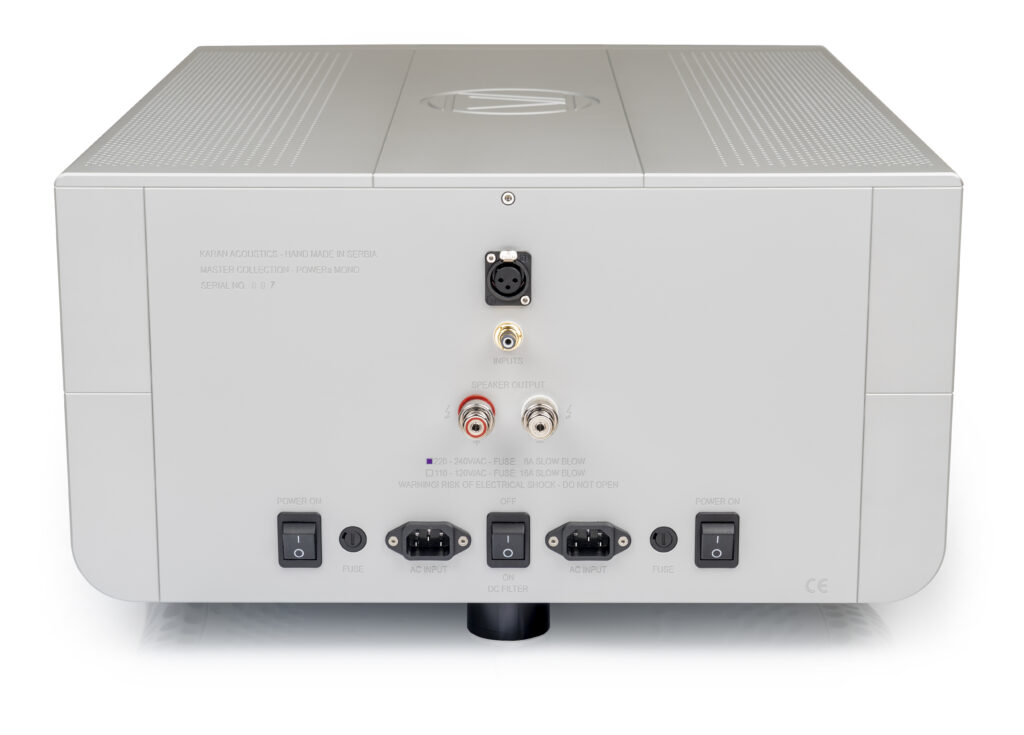
28 January 2026: High-end audio distributor Sound Design Distribution is delighted to be introducing the Ossetra mono power amp to UK audiophiles. Marking a significant upgrade in Mola Mola’s proprietary Trajectum class D amplifier technology, the Ossetra is a 350W/8 Ohm fully-bridged mono power amplifier in the brand’s signature wave-shaped half-size chassis. 

Its design, which is fully balanced from input to output, features a newly engineered power supply, a new discrete class A input stage and all new discrete class A gain stages.  

The uprated power supply has allowed Mola Mola’s engineers to realise a significant reduction in noise while improving both dynamic and continuous output power, together with vastly increased current capabilities in a fully-bridged output stage, creating an amplifier which is able to drive practically any load. 

The new discrete class A, DC coupled input stage, similar to that deployed by the Mola Mola Makua preamplifier, delivers a high impedance input for the source or preamp, addsgain and ensures that no DC or other signal unrelated noise enters the power stage. In addition, shunt regulators draw from the power supply the current required to dynamically meet load demands across the entire audio band while achieving superior levels of noise rejection.  

Input stage distortion at approximately -150dB (~0,000003%) provides for an exemplary power stage performance involving new discrete class “A” gain stages, which generate the gain needed for the Ossetra’s high feedback amplifier design but with significantly reduced noise and distortion. An amplifier bandwidth of over 100kHz keeps the frequency response ruler flat within the audio band.  


Brief specifications: 

Output power: 350W @ 8Ω, 700W @ 4Ω, 900W @ 2Ω 

Gain: 22dB or 28dB (switchable) 

Unweighted Signal/Noise Ratio: 130dB 

Distortion (THD, IMD): <0.003 % (all frequencies and power levels) 

Input Impedance: 200kΩ 

Output Impedance: <0.002Ω (DF>4000), all frequencies 

Bandwidth: >100kHz 

I/O: Balanced and unbalanced input, selectable by a switch; 2 pairs of Furutech binding posts biwired directly to the amplifier PCB using Kubala-Sosna cable; Trigger input (3.5mm jack) 

Dimensions: 200mm (W) x 110mm (H) x 355mm (D including speaker terminals); Weight: 7 kg 


Mola Mola Ossetra Mono Amplifier typical UK retail price (inc VAT): £7,999.00 

Availability: January 2026