Up to 37% in savings when you subscribe to hi-fi+
hifi-logo-footer

Begin typing your search above and press return to search. Press Esc to cancel.

IsoAcoustics Gaia III Neo

Not so long ago, the notion of isolating loudspeakers by decoupling them from the floor was anathema to the hi-fi fraternity. In the 1980s, we were told in very clear terms that the only way to get the best out of our loudspeakers was to fit them with spikes and push those spikes well into the floor, often through a carpet. This was also referred to as isolation. It’s to our shame that we accepted it as such for so long.

Nothing about nailing the speaker to the floor is isolating. Instead, it does the exact opposite, making a strong connection between the floor and the speaker. This changes the sound for sure. It allows energy to travel from the speaker to the floor and back. In fact, energy produced by one speaker travels to the other and back again. Depending on the floor’s material and rigidity, the energy’s frequency varies. Still, even the hardest floors transmit vibration.

Three parts

IsoAcoustics Gaia III isolators consist of three parts: a top isolator, a bottom isolator, and a connector. Their performance stems from how these components work together, as well as the shape and characteristics of the materials used. Important factors include: durometer (hardness), viscoelastic properties, material thickness, and geometry.

 The top isolator attaches to the bottom of the speaker using threaded adapters, while the bottom isolator connects to the supporting surface. A slight concave shape on the bottom creates a gentle suction effect on smooth surfaces. As a result, there is a secure and stable connection. The isolators are made from a resilient elastomer that leaves no residue and maintains consistent performance over time. These isolators are finished in a choice of ‘Dark Chrome’ (pictured at the top of the page) or semi-matt ‘ElectroBlack’ (below).

 IsoAcoustics isolators are tuned with a bias in the on-axis direction and stiffened laterally to maintain focus. Unlike uniform materials or springs that allow movement in multiple directions, the Gaia isolators control energy flow to remain on-axis.

Universal appeal

The benefits of speaker isolation are easy to hear, and many enlightened enthusiasts have ditched spikes in favour of it. Even though the systems that provide real isolation are often unattractive and can be expensive, IsoAcoustics has been tackling these issues for some time now with their Gaia feet. Now, they have a new or Neo version that looks very smart in dark chrome or black. It also aims to provide better isolation. The clever thing about the IsoAcoustics feet is that they can be screwed into any loudspeaker and only raise it slightly more than the spikes they usually replace. Furthermore, they look good and don’t cost a fortune.

IsoAcoustics Gaia feet are sold for specific weight ranges, as isolation is possible only when the spring is balanced against the weight it is trying to isolate. If the spring is too stiff for the weight, it will transmit energy. The number in the name Gaia III Neo indicates that it suits speakers weighing 32kg or less. This is the lightest range available. Performance only drops off when the weight level is exceeded. So using the Gaia III with lighter loudspeakers doesn’t undermine performance. The Gaia II Neo is for speakers up to 55kg. Lastly, the I Neo takes this up to 100kg.

Alignment

The Neo feet allow height adjustment of up to 8.5mm to cope with uneven floors. You align the feet so the branding is at the front to ensure the lateral resistance is most effective. They are supplied with cups that allow a speaker to be easily moved around on either hard or soft floors.

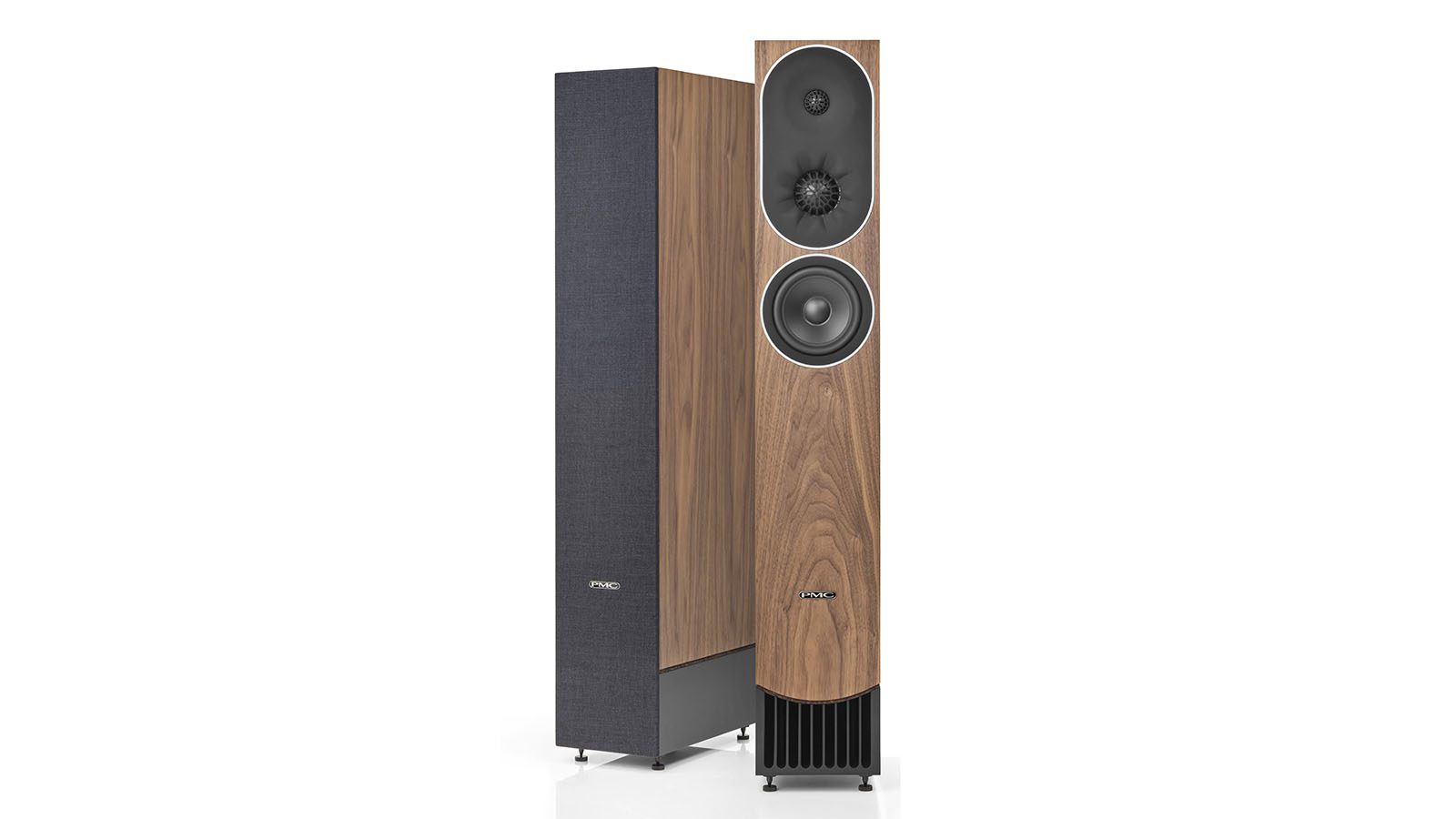
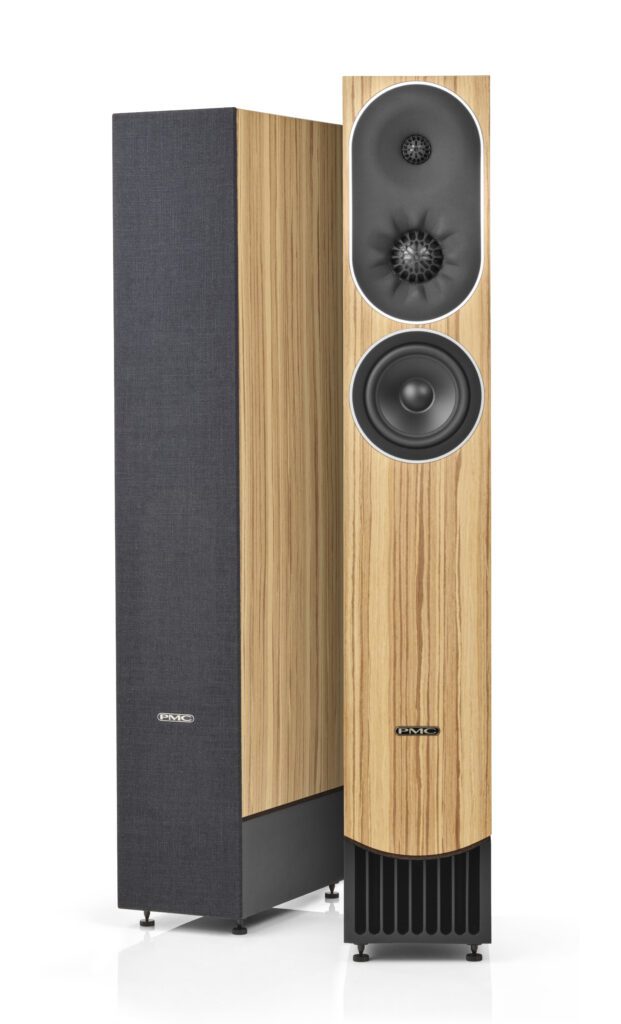
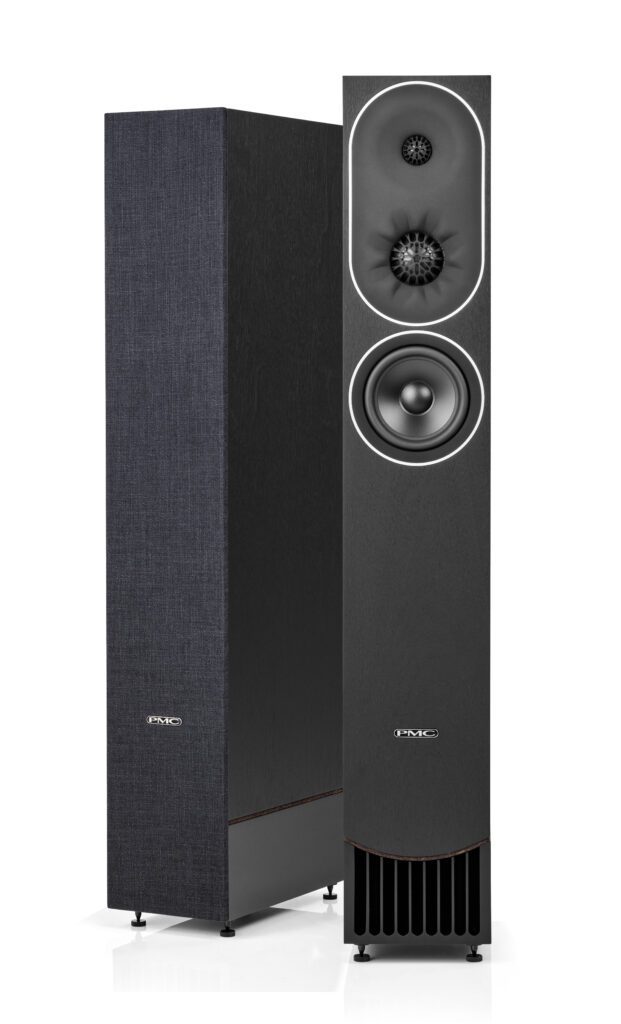
Fitting the Neo feet is a fairly straightforward process. You fix a stud to the base of the speaker or stand, then screw the foot onto it. This allows IsoAcoustics to provide several insert thread sizes in each set of four feet. It is a bit like including mains plug alternatives with wall-wart supplies. It took me about ten minutes to fit them to a pair of PMC prophecy9 speakers, making it fairly easy to do an A/B comparison of the Neo feet. I don’t use spikes for the reasons mentioned earlier. However, I have conical plastic feet on threaded studs that allow easy movement and raise the speakers by 20mm. The Gaia Neo III raises them twice as high. This will have a small bearing on the bass response. However, as many rooms have problems with excess bass, that is unlikely to be an issue for most users.

Not subtle

The effect these feet had on the prophecies was not subtle. The sound became more relaxed, and there was clearly more detail coming through, with aspects of reverb and harmonic clues that didn’t seem to be there with the regular feet. The Gaia III Neos provide enough isolation for the drive units to deliver finer detail, as cabinet vibration is reduced, if that’s the right term. A firmer foot will allow energy to travel into and out of the box. So isolation means that any vibration the drivers induce in the cabinet is less able to escape through the floor. But the benefit in overall resolution suggests that what the isolation is keeping out is more significant in the scheme of things. Therefore, it is worth avoiding if possible. 

I found that these feet made the sound easier and perhaps slightly softer. This could be because the tweeter was raised by another 20mm. However, I am inclined to think that it’s the removal of energy around the driver itself that allows it to operate in a more linear fashion. As a result, it sounds less hard-edged. Overall, the smoother presentation does not undermine timing nor perceived bass power, which can only be a good thing.

As a firm advocate of component isolation, I can only laud what IsoAcoustics have done with the Gaia III Neo feet. They let you hear more of what’s going on in the recording, yet don’t undermine impulse response. That is, the timing remains as good as it was. Add to this the high quality and finish of these feet, for a very good price. I’d say we have a winner. 

Technical specifications

  • Type: Loudspeaker isolation feet
  • Material: Metal alloy with chrome-plated finish plus proprietary materials
  • Thread options: ¼”-20, M6-1.0, M8-1.25
  • Speaker weight range: up to 32kg.
  • Includes: felt pads, floor sliders, compression washers, Allen key
  • Height adjustment: 8.5mm
  • Dimensions (Height x Diameter): 4.5 x 5.6cm
  • Price: £299, €299, $299.99 set of four

Manufacturer

IsoAcoustics Inc

Home Page: isoacoustics.com

Gaia Neo: isoacoustics.com/home-audio-isolation-products/gaia-series/

Where to buy: isoacoustics.com/where-to-buy-international-home-audio

UK distributor

Sound Service U.K. Limited

soundservice.uk

+44(0)3301 222500

More from IsoAcoustics

Back to Reviews


Meze Audio introduces ASTRU: new flagship IEM, delivering top-of-the-line performance from a single dynamic driver

6 March 2026: Meze Audio introduces ASTRU, its new top-of-the-line single dynamic driver in-ear monitor, created for listeners who demand true high-end performance without crossing into flagship pricing territory. ASTRU embodies a focused philosophy: one driver, delivering a visceral, full-bodied sound that rivals the layering, imaging, and resolution typically associated with multi-driver designs. 

Driver Technology 

At the core of ASTRU is an advanced multilayer composite dynamic driver diaphragm, engineered to balance speed, control, and musical weight. The diaphragm dome features over 80 ultra-thin layers of gold, applied during a 48-hour physical vacuum DC magnetron sputtering process, then bonded to a titanium layer and finally mounted on a PEEK base. This carefully tuned structure delivers fast transient response, smooth and extended treble, and the natural warmth and physical impact that dynamic drivers are celebrated for. 

Design 

ASTRU’s housing reflects Meze Audio’s commitment to comfort and craftsmanship. ASTRU’s shell geometry has been painstakingly refined for improved long-term comfort. Each shell is CNC-machined from a single block of pure titanium, then refined through a multi-stage electroplating process to achieve a smooth satin finish. Each matched pair of shells requires up to seven days of precision processing, underscoring the attention to detail behind every unit. 

Accessories 

The IEM is delivered as a complete, ready-to-use system, designed for high-end portable listening. It includes a premium balanced cable that features CNC-anodized aluminum hardware and a gold-plated 4.4 mm balanced termination. This ensures low resistance, signal purity, and long-term durability. A 4.4 mm to 3.5 mm adapter, five sizes of ear tips (XS–XL), and two carry solutions – a protective pouch and a soft PU leather envelope – make ASTRU equally suitable for portable use or dedicated listening setups. 

Sound 

With ASTRU, Meze Audio redefines what a single dynamic driver IEM can achieve: rich, detailed, and immersive sound, crafted with uncompromising materials and thoughtful engineering, at a price point designed to remain accessible to serious listeners. 

Pricing and availability 

ASTRU will make its first public appearance at CanJam New York, from March 7th. 

ASTRU will be available for purchase starting March 20, 2026, on mezeaudio.com, mezeaudio.eu and in selected retailers worldwide, with a suggested retail price of £819/$899/€899 

Meze Audio POET

Ultimately, every product reviewed in the pages of this esteemed magazine reflects a variation on a theme. New ground is in short supply, after all, and it can only be broken once. However, the variations I’m referring to often stem from someone else’s theme. That’s not the route Meze Audio seems to follow, though. Meze Audio appears perfectly content to create variations on its own theme if it chooses.

Consider, not entirely coincidentally, these POET hard-wired, open-backed, over-ear planar-magnetic headphones. Meze Audio does not shy away from hard-wired, over-ear, planar magnetic headphones. I have personally reviewed at least three different pairs for hi-fi+ over the past few years. Some have been open-backed, while others have been closed-back. However, they have all shared plenty in common: input from Ukraine specialist Rinaro Isodynamics, some gleefully overwrought design features, and substantial price tags among the chief attributes.

POETry in motion

You’ve already seen images of the POET, so I won’t elaborate on design features. There’s also the £1,899/$2,000/€2,000 price. I can confirm that Rinaro Isodynamics created the planar magnetic drivers that do the audio business here.

As is customary in the Ukrainian specialist’s standard operating practice, the planar magnetic drivers fitted to the POET are uncompromising and uncompromised. The hybrid array driver here is called MZ6. It is a refinement and amalgamation of the MZ4 and MZ3SE drivers fitted to Meze Audio’s Liric 2 and Elite models. Measuring 92 x 63mm with an active area of 3507mm², the driver is relatively compact by prevailing Rinaro Isodynamics standards. However, at 0.06g and with the firm’s customary dual-driven voice-coil system in place, it remains high-end business as usual. 

The upper section of the driver features a switchback coil optimised for low-frequency reproduction, while a spiral coil beneath it is positioned directly over the listener’s ear canal. The latter is designed to deliver midrange and high frequencies, and its position helps it overcome any issues that might otherwise arise from soundwaves shorter than the earpad they’re trying to exit.

Parus diaphragm

This diaphragm, referred to by Rinaro Isodynamics as ‘Parus’, is positioned between a symmetrical array of neodymium magnets that provide consistent activation across the entire diaphragm’s surface. This setup is housed in a reinforced polymer casing that is a) capable of handling the significant load produced by the magnet array and b) equipped with Acoustic Metamaterial Tuning System technology to reduce high-frequency peaks. According to Meze Audio, this entire configuration produces a lightweight (73g total) driver assembly that can achieve an astonishing peak of 96kHz at one end and an equally remarkable 4Hz at the other, while maintaining an extremely low total harmonic distortion (under 0.05%) throughout the entire frequency range.

The design is distinctly Meze Audio, which means that – at least to my eyes – it’s a bit overly ornate. There’s no doubt about the quality of the materials Meze Audio has used; between the titanium alloy headband that sits outside the suede leather ‘headrest’ (as the company describes the strip of material that serves as a contact point) and the magnesium that comprises most of the chassis, it’s quite an indulgent and tactile product.

Intricately patterned

The intricately patterned open earcups are made of steel, and the magnetically attached earpads are crafted from memory foam covered by faux leather. 

As with every pair of Meze Audio headphones I’ve tried, the hanger arrangement and clamping force are well-calibrated; so even though the POET weighs 405g (without its cable), it remains comfortable and easy to wear for extended periods. The quality of construction and finish is more than sufficient at the asking price, too. However, as with every pair of Meze Audio headphones I’ve experienced, the slightly awkward ‘friction pole’ adjustment mechanism needs to be at its smallest setting when I’m using the POET – Meze Audio does not design headphones for those of us with smaller heads.

Hand-braided

The cable is 1.8m long and made of hand-braided, TPE-covered, oxygen-free copper. Each earcup needs to be wired, so at one end, the cable splits into a couple of 3.5mm terminations; at the other end, it features a 6.3mm unbalanced connection. It’s been a while coming, but finally, here’s a false note: at this price point, it doesn’t seem unreasonable to expect a choice of cables, ideally one that features a balanced connection.

Still, at least the term ‘false note’ doesn’t truly apply to the sound of the POET. While its 6.3mm connections may limit high-end source options, when connected to an iFi iDSD Diablo 2 headphone amp/DAC, which in turn is connected to an Apple MacBook Pro (loaded with Colibri software to properly play hi-res digital audio files) via USB-C, the sonic results are overwhelmingly good. Whether it’s the primitive collage of Mike Oldfield’s Tubular Bells [Virgin] as a DSD64 file,  a 24bit/44.1kHz FLAC file of Doechii’s iconoclastic Denial is a River [Top Dawg Entertainment], or a standard 320kbps MP3 file of Dead Meadow’s Get Up On Down [Matador], the Meze Audio POET delivers a balanced, detailed and remarkably positive sound. 

They seem capable of grasping the fundamentals of a recording without prevaricating. The soundstage they create is expansive and persuasive in its layout; even if a recording is filled with individual elements, there is always enough space for each one to stretch its wings, at least a little. The gaps between them are emphasised appropriately, and there is a sense of singularity and unity in the way Meze Audio presents a recording that imparts a tangible sense of togetherness.  

Smooth

Some of this stems from the extraordinarily smooth nature of the frequency response here. Yes, the POET digs very deep at one end and reaches very high at the other, but it transitions from one point to the other in an even-handed way. No part of the frequency range is unduly emphasised, and no part is understated – every area receives appropriate prominence and weighting. Some of it is explained by the very carefully neutral tonality these headphones maintain – there’s never any suggestion that they’re interfering with the specific sound of a recording to any significant degree. What goes in is what comes out, for better or for worse.

Detail levels are very high, and the Meze Audio has no apparent difficulty identifying and contextualising even the most fleeting, deeply buried events in a recording. This ability serves only the overall presentation, though – there’s nothing showy or analytical about the way the POET seizes on the finest details. They do so simply to create the most complete picture possible, making the sound as articulate as possible.

This is especially noticeable in the midrange, where these headphones communicate almost immoderately. Every aspect of a vocal performance, from the nuances of tone and texture to the transient details of character and attitude, is translated, and voices have all their motivation and emotion made plain as a result. The way the POET treats midrange information is direct, making every listen an event.

Confidence

Dynamic variations are handled with just as much confidence – the POET can identify significant shifts in volume, attack, or intensity, but they can’t quite measure the distance between the extremes as they should. They can do more than merely allude to the dynamic upheavals in a recording, but other designs – some from within Meze Audio itself – perform a more complete and assertive job. This may partly be because these headphones have a knack for sounding quite loud even when they’re playing fairly quietly.   

Still, it’s a fair indication that a pair of headphones has much to recommend it when the ‘demerit’ column includes some minor complaints about a slight hint of dynamic inhibition and the note that those with smaller heads might find them uncomfortable. Meze Audio is not breaking new ground with the POET, it’s true – but when the ground it’s retreading is so lovely and picturesque in the first place, it’s extremely difficult to complain too stridently. 

Technical specifications

  • Type: Circumaural; open-back; over-ear
  • Drivers: MZ6 Isodynamic Hybrid Array
  • Frequency response: 4Hz – 96kHz
  • Impedance: 55 Ohms
  • Sensitivity:  101 dB SPL @ 1 kHz, 1 V
  • Distortion: <0.15% @ 1 kHz, 1 V
  • Accessories: Case: hard EVA pouch with foam lining; 1.8m soft TPE cable with 6.3 unbalanced termination
  • Weight: 405g (without cable)
  • Price: £1,899, £2,000, €2,000

Manufacturer

Meze Audio

mezeaudio.com

UK distributor

HEA Distribution

headistribution.com

More from Meze Audio

Back to Reviews

APL DSD-WR

The last piece of kit I reviewed from Bulgarian high-end digital specialist APL Hi-Fi was a streamer. It was based on an AURALiC engine. With the recent passing of that brand, this streamer is no longer in the APL catalogue. Instead, there is a range of significantly more impressive-looking digital components. These sit alongside some amplifiers and even a loudspeaker. For the most part, these are ‘coming soon’. From the analogue product offerings, only the PRE-GR tube preamplifier is in production thus far.

The APL DSD-WR (World Reference, great name) is the company’s reference all-solid-state digital-to-analogue converter. APL also makes an even more ambitious DAC in the DSD-GR (Galactic Reference, even greater name). This is a transformer-coupled tube output stage, at around three times the £19,000 asking price of the DSD-WR. Both inhabit the same superbly finished casework and sit on three decoupled non-magnetic stainless-steel feet. At 12 kilos, this feels like a serious bit of kit.

The presence of DSD in the name gives a strong clue to its operational inclinations. The DSD-WR converts PCM signals to a one-bit format using a 64-bit PCM-to-DSD converter module. The final DAC can receive files as DSD128 or DSD256 files. That means two- or four-times upsampled. APL’s Alex Peychev is clearly a DSD devotee, as there are no other types of DAC in the range. Peychev says it’s “inspired by vinyl sound quality. It provides a comparable natural, rich and spacious sonic character.”

No stone unturned

The USB input module accepts PCM at up to 384kHz/32-bit and native DSD256, and converts the DSD signal to analogue. It uses parallel DAC chips operating in DSD-only mode. This features two DACs per channel in balanced mode, in a proprietary Class A configuration. The DSD-WR employs ultra-low-noise femto master clocks and offers variable output with 0.5dB steps, via non-decimating attenuation. The output stage is Class A, transformer-coupled, using Lundahl transformers with amorphous cores and OFC windings. This is naturally a negative-feedback-free stage, created discretely without op-amps or mechanical relays/switches, and the wiring is oxygen-free copper throughout.

The linear power supply features a custom R-core balanced transformer, also wound with OFC wire. With specially selected components and solid OFC copper wiring throughout, Alex appears to have left no stone unturned in his quest to build a reference-grade DAC. The display is an FLD type, available in red, blue or green. However, as is usually the case, sound quality is likely to benefit if the display is turned off when the DAC is in use. 

At the back of the precision-machined enclosure, the DSD-WR offers high-quality sockets for the usual array of in- and outputs, alongside an RJ45 connection for APL’s proprietary DTR connection. This allows I2S signals to be received from the company’s digital sources. That should say source, as at present there is only the NSP-GR server/streamer available. The only other unusual connection is a grounding point, an increasingly popular feature on components whose makers appreciate the benefits of connecting it to an appropriate device. I hooked it up to a CAD GC1.1 Ground Control box.

300 hours

Most of the controls you require are on the front panel, but the button-festooned remote is much easier to use and lets you control volume from your seat. This handset is just as nicely made and finished as the machine itself and allows changes to filter settings for PCM signals, with three options: non-oversampling, slow roll-off and sharp roll-off. These are detailed in the manual, alongside a note that the DSD-WR requires 200-300 hours of break-in to fully settle, which is a lot. Fortunately, distributor Definitive Audio had been using this sample for a while and put in the necessary hours.

I am not the biggest DSD fan in the audio omniverse. To me, the format has always sounded tremendously clear and revealing, but lacking in timing. I much preferred the short-lived DVD-Audio format to DSD-based SACD. But it is a very popular digital carrier among many enthusiasts, and this APL made the best case for it that I have yet heard. In fact, it pretty well swung my opinion. 

Before I started listening in earnest, I asked Rob Osbourn of Network Acoustics, who uses a DSD-WR, and Kevin Scott of Definitive Audio what their preferred filter settings were. Rob recommended the Zero option (no oversampling), and Kevin said he liked the Normal setting, which provides a sharp roll-off. So I listened to both and was blown away by the incredible transparency and high-frequency extension. This enabled large-scale, precise imaging with three-dimensional depth that was off the scale of decent recordings. It also meant loads of detail. You need more information to present this level of imaging, and this APL has it in spades. 

Higher highs

Voices and instruments really shine, too. Again, it’s down to data. APL has clearly managed to extract more fine detail from digital files than most in the DSD-WR, and this is clearly related to the one-bit nature of DSD. The benefits are most obvious in the high frequencies, which seem to extend that much higher and in a more solid, clean way than is usual for digital sources. The highs are where digital generally falls down. They never have the depth or presence that a good analogue can achieve and are prone to graininess, which makes the treble sound unnatural. This is clearly not the case here. This APL is the most open and transparent-sounding DAC I have used in a long, long time. 

I used it mostly with PCM music files and some of my small collection of DSD albums too. Of these, only a very few are original DSD recordings, and these did sound excellent, not so much as to convert me to the format, but they did reveal why so many love it. Eric Bibb’s ‘Where the Green Grass Grows’, from an Opus3 compilation, proved more emotionally powerful than expected, thanks to the depth with which his and the gospel backing singers’ voices were resolved. Another Opus3 release of Zappa covers by the Omnibus Wind Ensemble produced an extremely natural, effortless result that seemed a bit out of keeping with the originally filthy-sounding ‘Peaches en Regalia’, but it sounded very realistic.

In truth, the result with PCM files was very similar. I wasn’t able to compare the same music in both formats, but I got the same massive resolution, incredibly low noise and a wide dynamic range. Clearly, the conversion from one format to the other is done with minimal losses.

Body and mind

But does it time well? Does it engage the body and the mind? Not with the Zero and Normal filters.  However, the Slow roll-off filter I tried last (of course!) can do this. It trades a little transparency for significantly better coherence, and once I had found it, my leg rarely sat still when any rhythmic music was played. Here was proof that DSD can ‘time’ really well when appropriately filtered. By this point, I was connecting the balanced outputs directly to the power amp and using the onboard level control and its tiny half-decibel increments. Preamps, eh? Who needs ‘em? 

Now, romps like Salika, Molika (Erland Apneseth Trio and Frode Halti) became living, breathing balls of sonic energy, with dynamics that kept on building. The volume had to be reined in more than once. Bugge Wesseltoft’s solo piano sounded more beautiful and touching than I have previously encountered. In the past, his It’s Still Snowing on My Piano Live has seemed worthy and genuine. Now, it had emotional heft thanks to the feeling in its playing.

It’s safe to say that, for me, the APL DSD-WR has removed any reservations I had about DSD. Now, it’s no longer a format for those more interested in beautiful tonal balance than in musical engagement. Filtering clearly plays a part, as it always has, in a format that extends significantly further than PCM. Regardless, APL DSD-WR manages to combine immense detail resolution with superb timing and a huge dynamic range. It allows the musical message to flow in a way that approaches the best that analogue can offer. 


Technical specifications

  • Type: Solid-state high-resolution PCM, DXD, and DSD-capable digital-to-analogue converter
  • Digital Inputs: One AES/EBU, two Coaxial, one USB, one DTR proprietary I2S
  • Analogue Outputs: One stereo single-ended (via RCA jacks), one balanced (via XLR connectors). Both outputs have variable level operation 
  • DAC Resolution/Supported Digital Formats: All PCM from 44.1KS/s to 384KS/s with word lengths up to 32-bit, Native DSD from DSD64 to DSD256
  • Frequency Response: 20Hz to 20kHz at ±0.5dB
  • Distortion (THD + Noise): Not specified
  • Output Voltage: 2.1Vrms at RCA and 2.1+2.1Vrms at XLR 
  • User Interface: Remote handset, FLD display
  • Dimensions (HxWxD): 8 x 45 x 28cm
  • Weight: 12kg
  • Price: £19,000, €22,950, $25,500

Manufacturer

APL Hi-Fi

Homepage – aplhifi.com

Product – aplhifi.com/products/dsd-wr/

Distributors  – aplhifi.com/distributors/

UK distributor

Definitive Audio 

definitiveaudio.co.uk

+44(0)115 9733222

More from APL

Back to Reviews

Ramar Tina

In a vinyl world where obsessiveness is the norm, the humble record brush was rarely much more than an afterthought. Until Rangel Vasev of the Berlin-based Ramar introduced Tina and her six counterparts. These are record brushes as art, but beyond that, they work damn well.

The differences between the seven brushes are the finish of the wooden case, while premium-priced models are wrapped in metal. ‘Premium’ for the metal versions is the wrong term, as Tina is beautifully finished. Each brush features a two-piece case milled from a single walnut blank, with the bristle cover finished in chemically-plated Nickel.

Magnets

The oiled-wood case snaps shut thanks to eight magnets, strong enough to keep the brush in place, not so strong as to trap your fingers. However, the magnets repel if you try to put Tina the wrong way round. This ensures the grain on the box matches perfectly. In addition, the CNC-milled lower-case ‘ramar’ logo is always in the right place. There’s also a magnet in the lower box for the supplied stylus brush (called Angus), which is held in place by four magnets and available separately. And beneath that stylus brush is Tina’s serial number. Seriously, it has a serial number.

That serial number is not just for ownership brownie points; it allows Ramar to track the fibres used in your brush should it ever need repair. I’m not sure the six dual rows of carbon fibre hairs coupled to two rows of goat hair will ever wear out, but it’s nice to know that a brush this costly can be restored. Day-to-day cleaning of the brush is provided by a cork-backed felt disc, supplied at the top of the tube in which Tina arrives. You can buy replacements. 

The packing tube also includes a six-card manual, bolted together, and QR codes linking to videos showing how to operate Ramar’s brushes. Before you start sniggering and pointing to the decades of record-brush use already under your belt, Ramar recommend an arcing backwards-to-forwards motion as opposed to the more commonplace ‘slide the brush to the edge of the record’ action. You then remove dust from the brush by wiping it tangentially across the felt disc. Afterwards, you repeat the process if necessary.

On to something

There are two points to this. First, Ramar is onto something with this cleaning method. I tried it with my old Decca record brush, which I’ve had since the late Jurassic Era. It improved its cleaning properties. The combination of the arcing motion and ‘cleaning the cleaner’ with a felt pad made me a little bit embarrassed that I’d been doing record cleaning wrong for all this time. Oops!

The second point is that the Ramar Tina is better than any brush I’ve used, by a significant margin. None seems to get as much dust off the disc as Tina does. Also, none are so willing to deposit dust onto that felt pad. Records are quieter and more vibrant, as if you rolled away a few years of play. What’s surprising about the Ramar Tina is that it works well on seemingly clean – or even recently cleaned – records. It’s surprising just how much dust sits on the grooves within seconds of taking that album out of its sleeve. Moreover, the combination of very gentle cleaning and Tina’s inherent antistatic properties makes even recently cleaned records sound more detailed and fresher. 

Angus the stylus cleaner is excellent, too, although it faces stiffer competition. I’ve been using a long-discontinued Audio-Technica AT-637, and I’ve never found anything to better it. This gets close, though. Close enough that if that ultrasonic cleaner finally gives up the ghost, Angus lies waiting.

360 room elephants

Let’s face the elephant in the room. Three hundred and sixty elephants, to be exact. From the outside, £360 looks like a lot to pay for a record brush. However, the Ranar Tina delivers the goods and looks great while doing so. In fact, if you take your records seriously enough to invest in a top-notch turntable, arm, and cartridge, the Ranar Tina is a must-have! 

Price and contact details

  • Record Brush Tina, Joni, Red, Amy: £360, €360, $360
  • Record Brush Christo, Tara, Noir: £582, €582, $582

Manufacturer

Ramar 

www.ramar.berlin

Back to Reviews

2026 Awards – Network Switch

Welcome to a very special hi-fi+ Awards. Fate (and producing a dozen issues a year) has colluded to make this issue a combination of our 250th edition and our annual Awards special edition. We have scoured the last 12 months of issues to find the best products we’ve seen across a range of categories.

In the past, we had very fixed categories for our annual awards, but that doesn’t fully reflect the current shape of the audio industry. While some categories remain constant, others change and branch out into new avenues. For example, a few years ago, there were so few streaming integrated amplifiers that the category did not need to exist. Now, we have enough to make them distinctly different from integrated amplifiers, without the need for a streamer or DAC. It’s not that one has eclipsed the other; it’s not that one is obsolete and the other state-of-the-art. These are now two divergent lines of ‘integrated amplifier’ that demand their own Awards. To lump them all together as ‘integrated amplifiers’ does the reader no favours, as it adds to confusion rather than pointing out the best we’ve tested.

Similarly, we have sometimes found categories where new products were commonplace a few years ago have reached a zenith. Thus, the category hasn’t received as many new products this year. Portable Audio DACs are a fine example. There are doubtless new models coming soon, but there aren’t enough yet for us to choose an example this year.

Each year we say this, but it’s worth repeating. The best in each category may or may not combine to build the best systems. There have been many cases over the years of people buying an Award-winning source, amplifier, and loudspeakers only to find the pairing a sonic mismatch. Our view of our awards is that they are a finger pointing the way. That finger often points to a good dealer who can assemble a system around that component, blending it with other devices like a master cocktail mixologist.

This is also why we include Highly Commended products. Not everyone likes the same things, and not every component works beautifully with every other. Our Highly Commended products are the result of the audio world being so good at its job, picking the very best from the already excellent is sometimes a very nuanced decision. By including Highly Commended products, we introduce a wider selection of outstanding devices to your next shortlist.

Awards and celebrations

Combining this Awards issue with our 250th also means we get to think about past masters in audio. There’s an interesting question surrounding the best of the past with today’s finest products. How do they compare? I think in many respects, the outstanding products this year are as good as we can get at the moment. They hold no comparison with even the finest past glories of 26 years ago; things have moved so far forward.

Sonically speaking, the very best in digital audio today leaves everything from even five years ago in the dust, so looking back to the last century is almost not worth it. And while things might seem less clear-cut in other aspects of audio design, I still maintain that today’s audio outperforms nearly everything from the 1990s, and today’s best is the best you’ll ever hear. Hopefully, that trend continues, and the sound of good audio in five or ten years keeps getting better.

We’re still a long way from achieving sonic realism in the home, and even the best audio systems cannot fully replicate the whole live experience. But they get ever closer; the top-end has the drama, scale, detail and dynamics to take your breath away, but even the most affordable audio gets closer than ever now!

One thing is sure: your next hi-fi product is on the following pages of this magazine! I hope you enjoy the search for the best as much as we did.

2026 Awards – Network Streamer

Welcome to a very special hi-fi+ Awards. Fate (and producing a dozen issues a year) has colluded to make this issue a combination of our 250th edition and our annual Awards special edition. We have scoured the last 12 months of issues to find the best products we’ve seen across a range of categories.

In the past, we had very fixed categories for our annual awards, but that doesn’t fully reflect the current shape of the audio industry. While some categories remain constant, others change and branch out into new avenues. For example, a few years ago, there were so few streaming integrated amplifiers that the category did not need to exist. Now, we have enough to make them distinctly different from integrated amplifiers, without the need for a streamer or DAC. It’s not that one has eclipsed the other; it’s not that one is obsolete and the other state-of-the-art. These are now two divergent lines of ‘integrated amplifier’ that demand their own Awards. To lump them all together as ‘integrated amplifiers’ does the reader no favours, as it adds to confusion rather than pointing out the best we’ve tested.

Similarly, we have sometimes found categories where new products were commonplace a few years ago have reached a zenith. Thus, the category hasn’t received as many new products this year. Portable Audio DACs are a fine example. There are doubtless new models coming soon, but there aren’t enough yet for us to choose an example this year.

Each year we say this, but it’s worth repeating. The best in each category may or may not combine to build the best systems. There have been many cases over the years of people buying an Award-winning source, amplifier, and loudspeakers only to find the pairing a sonic mismatch. Our view of our awards is that they are a finger pointing the way. That finger often points to a good dealer who can assemble a system around that component, blending it with other devices like a master cocktail mixologist.

This is also why we include Highly Commended products. Not everyone likes the same things, and not every component works beautifully with every other. Our Highly Commended products are the result of the audio world being so good at its job, picking the very best from the already excellent is sometimes a very nuanced decision. By including Highly Commended products, we introduce a wider selection of outstanding devices to your next shortlist.

Awards and celebrations

Combining this Awards issue with our 250th also means we get to think about past masters in audio. There’s an interesting question surrounding the best of the past with today’s finest products. How do they compare? I think in many respects, the outstanding products this year are as good as we can get at the moment. They hold no comparison with even the finest past glories of 26 years ago; things have moved so far forward.

Sonically speaking, the very best in digital audio today leaves everything from even five years ago in the dust, so looking back to the last century is almost not worth it. And while things might seem less clear-cut in other aspects of audio design, I still maintain that today’s audio outperforms nearly everything from the 1990s, and today’s best is the best you’ll ever hear. Hopefully, that trend continues, and the sound of good audio in five or ten years keeps getting better.

We’re still a long way from achieving sonic realism in the home, and even the best audio systems cannot fully replicate the whole live experience. But they get ever closer; the top-end has the drama, scale, detail and dynamics to take your breath away, but even the most affordable audio gets closer than ever now!

One thing is sure: your next hi-fi product is on the following pages of this magazine! I hope you enjoy the search for the best as much as we did.

HIFISTAY MYTHOLOGY X-1 RACK Your High-Fidelity System Mythology

25 Feb 2026: Introducing the HIFISTAY MYTHOLOGY X-1 Rack — the keystone of your music and the perfect solution to complete your high-fidelity system. Designed as the foundation of uncompromising audio performance, the X-1 Rack represents the pinnacle of precision design and engineering, delivering an experience free of unwanted interference.

The MYTHOLOGY X-1 Rack stands as the pinnacle of our precision design and engineering, created to eliminate unwanted interference and preserve the integrity of your system. Every element has been engineered to ensure the purest possible performance, allowing your components to operate exactly as intended.

At the core of the X-1 Rack is advanced anti-vibration technology, perfectly controlling both internal and external vibrations. This precise isolation protects sensitive audio components from performance-degrading resonance and environmental disturbances.

Fully integrated with multiple layers of Swing technology, the MYTHOLOGY X-1 Rack delivers superior mechanical stability and vibration management. This multi-layered system ensures optimal performance for your most critical audio components, unlocking their full sonic potential.

The MYTHOLOGY X-1 Rack is designed for a wide range of applications, including CD transports and DACs, turntables, amplifiers, network devices, and any audio components requiring uncompromising stability and support.

Specifications and configurations include:

3-Tier Rack

Application: CD Transport & DAC, Turntable, Amplifier, Network Device, Any Audio Devices
Height: 797 mm (300 / 250 mm)
Depth: 670 mm
Width: 617 mm
Weight: 38 kg
Board Size: 20 × 550 × 500 mm
Maximum Load: 150 kg per level / 300 kg per rack
Column Color (X-Frame): Silver, Black (Black)
Type: Anti-Vibration Technology Audio Rack

2-Tier Rack

Application: Amplifier, Any Audio Devices
Height: 478 mm (300 / 250 mm)
Depth: 670 mm
Width: 617 mm
Weight: 24.6 kg

1-Tier Rack

Application: Amplifier, Any Audio Devices
Height: 110 mm
Depth: 670 mm
Width: 617 mm
Weight: 11.1 kg

The MYTHOLOGY X-1 Rack is more than a component stand — it is the essential keystone of your music system, designed to elevate performance, preserve sonic purity, and complete your high-fidelity mythology.

2026 Awards – Cable System

Welcome to a very special hi-fi+ Awards. Fate (and producing a dozen issues a year) has colluded to make this issue a combination of our 250th edition and our annual Awards special edition. We have scoured the last 12 months of issues to find the best products we’ve seen across a range of categories.

In the past, we had very fixed categories for our annual awards, but that doesn’t fully reflect the current shape of the audio industry. While some categories remain constant, others change and branch out into new avenues. For example, a few years ago, there were so few streaming integrated amplifiers that the category did not need to exist. Now, we have enough to make them distinctly different from integrated amplifiers, without the need for a streamer or DAC. It’s not that one has eclipsed the other; it’s not that one is obsolete and the other state-of-the-art. These are now two divergent lines of ‘integrated amplifier’ that demand their own Awards. To lump them all together as ‘integrated amplifiers’ does the reader no favours, as it adds to confusion rather than pointing out the best we’ve tested.

Similarly, we have sometimes found categories where new products were commonplace a few years ago have reached a zenith. Thus, the category hasn’t received as many new products this year. Portable Audio DACs are a fine example. There are doubtless new models coming soon, but there aren’t enough yet for us to choose an example this year.

Each year we say this, but it’s worth repeating. The best in each category may or may not combine to build the best systems. There have been many cases over the years of people buying an Award-winning source, amplifier, and loudspeakers only to find the pairing a sonic mismatch. Our view of our awards is that they are a finger pointing the way. That finger often points to a good dealer who can assemble a system around that component, blending it with other devices like a master cocktail mixologist.

This is also why we include Highly Commended products. Not everyone likes the same things, and not every component works beautifully with every other. Our Highly Commended products are the result of the audio world being so good at its job, picking the very best from the already excellent is sometimes a very nuanced decision. By including Highly Commended products, we introduce a wider selection of outstanding devices to your next shortlist.

Awards and celebrations

Combining this Awards issue with our 250th also means we get to think about past masters in audio. There’s an interesting question surrounding the best of the past with today’s finest products. How do they compare? I think in many respects, the outstanding products this year are as good as we can get at the moment. They hold no comparison with even the finest past glories of 26 years ago; things have moved so far forward.

Sonically speaking, the very best in digital audio today leaves everything from even five years ago in the dust, so looking back to the last century is almost not worth it. And while things might seem less clear-cut in other aspects of audio design, I still maintain that today’s audio outperforms nearly everything from the 1990s, and today’s best is the best you’ll ever hear. Hopefully, that trend continues, and the sound of good audio in five or ten years keeps getting better.

We’re still a long way from achieving sonic realism in the home, and even the best audio systems cannot fully replicate the whole live experience. But they get ever closer; the top-end has the drama, scale, detail and dynamics to take your breath away, but even the most affordable audio gets closer than ever now!

One thing is sure: your next hi-fi product is on the following pages of this magazine! I hope you enjoy the search for the best as much as we did.

2026 Awards – Active Loudspeakers

Welcome to a very special hi-fi+ Awards. Fate (and producing a dozen issues a year) has colluded to make this issue a combination of our 250th edition and our annual Awards special edition. We have scoured the last 12 months of issues to find the best products we’ve seen across a range of categories.

In the past, we had very fixed categories for our annual awards, but that doesn’t fully reflect the current shape of the audio industry. While some categories remain constant, others change and branch out into new avenues. For example, a few years ago, there were so few streaming integrated amplifiers that the category did not need to exist. Now, we have enough to make them distinctly different from integrated amplifiers, without the need for a streamer or DAC. It’s not that one has eclipsed the other; it’s not that one is obsolete and the other state-of-the-art. These are now two divergent lines of ‘integrated amplifier’ that demand their own Awards. To lump them all together as ‘integrated amplifiers’ does the reader no favours, as it adds to confusion rather than pointing out the best we’ve tested.

Similarly, we have sometimes found categories where new products were commonplace a few years ago have reached a zenith. Thus, the category hasn’t received as many new products this year. Portable Audio DACs are a fine example. There are doubtless new models coming soon, but there aren’t enough yet for us to choose an example this year.

Each year we say this, but it’s worth repeating. The best in each category may or may not combine to build the best systems. There have been many cases over the years of people buying an Award-winning source, amplifier, and loudspeakers only to find the pairing a sonic mismatch. Our view of our awards is that they are a finger pointing the way. That finger often points to a good dealer who can assemble a system around that component, blending it with other devices like a master cocktail mixologist.

This is also why we include Highly Commended products. Not everyone likes the same things, and not every component works beautifully with every other. Our Highly Commended products are the result of the audio world being so good at its job, picking the very best from the already excellent is sometimes a very nuanced decision. By including Highly Commended products, we introduce a wider selection of outstanding devices to your next shortlist.

Awards and celebrations

Combining this Awards issue with our 250th also means we get to think about past masters in audio. There’s an interesting question surrounding the best of the past with today’s finest products. How do they compare? I think in many respects, the outstanding products this year are as good as we can get at the moment. They hold no comparison with even the finest past glories of 26 years ago; things have moved so far forward.

Sonically speaking, the very best in digital audio today leaves everything from even five years ago in the dust, so looking back to the last century is almost not worth it. And while things might seem less clear-cut in other aspects of audio design, I still maintain that today’s audio outperforms nearly everything from the 1990s, and today’s best is the best you’ll ever hear. Hopefully, that trend continues, and the sound of good audio in five or ten years keeps getting better.

We’re still a long way from achieving sonic realism in the home, and even the best audio systems cannot fully replicate the whole live experience. But they get ever closer; the top-end has the drama, scale, detail and dynamics to take your breath away, but even the most affordable audio gets closer than ever now!

One thing is sure: your next hi-fi product is on the following pages of this magazine! I hope you enjoy the search for the best as much as we did.

2026 Awards – Integrated Amplifier Over £15K

Welcome to a very special hi-fi+ Awards. Fate (and producing a dozen issues a year) has colluded to make this issue a combination of our 250th edition and our annual Awards special edition. We have scoured the last 12 months of issues to find the best products we’ve seen across a range of categories.

In the past, we had very fixed categories for our annual awards, but that doesn’t fully reflect the current shape of the audio industry. While some categories remain constant, others change and branch out into new avenues. For example, a few years ago, there were so few streaming integrated amplifiers that the category did not need to exist. Now, we have enough to make them distinctly different from integrated amplifiers, without the need for a streamer or DAC. It’s not that one has eclipsed the other; it’s not that one is obsolete and the other state-of-the-art. These are now two divergent lines of ‘integrated amplifier’ that demand their own Awards. To lump them all together as ‘integrated amplifiers’ does the reader no favours, as it adds to confusion rather than pointing out the best we’ve tested.

Similarly, we have sometimes found categories where new products were commonplace a few years ago have reached a zenith. Thus, the category hasn’t received as many new products this year. Portable Audio DACs are a fine example. There are doubtless new models coming soon, but there aren’t enough yet for us to choose an example this year.

Each year we say this, but it’s worth repeating. The best in each category may or may not combine to build the best systems. There have been many cases over the years of people buying an Award-winning source, amplifier, and loudspeakers only to find the pairing a sonic mismatch. Our view of our awards is that they are a finger pointing the way. That finger often points to a good dealer who can assemble a system around that component, blending it with other devices like a master cocktail mixologist.

This is also why we include Highly Commended products. Not everyone likes the same things, and not every component works beautifully with every other. Our Highly Commended products are the result of the audio world being so good at its job, picking the very best from the already excellent is sometimes a very nuanced decision. By including Highly Commended products, we introduce a wider selection of outstanding devices to your next shortlist.

Awards and celebrations

Combining this Awards issue with our 250th also means we get to think about past masters in audio. There’s an interesting question surrounding the best of the past with today’s finest products. How do they compare? I think in many respects, the outstanding products this year are as good as we can get at the moment. They hold no comparison with even the finest past glories of 26 years ago; things have moved so far forward.

Sonically speaking, the very best in digital audio today leaves everything from even five years ago in the dust, so looking back to the last century is almost not worth it. And while things might seem less clear-cut in other aspects of audio design, I still maintain that today’s audio outperforms nearly everything from the 1990s, and today’s best is the best you’ll ever hear. Hopefully, that trend continues, and the sound of good audio in five or ten years keeps getting better.

We’re still a long way from achieving sonic realism in the home, and even the best audio systems cannot fully replicate the whole live experience. But they get ever closer; the top-end has the drama, scale, detail and dynamics to take your breath away, but even the most affordable audio gets closer than ever now!

One thing is sure: your next hi-fi product is on the following pages of this magazine! I hope you enjoy the search for the best as much as we did.

Reiki Audio JundoStream Reference

Albeit slowly, the high-end audio world often comes around to the notion that things make a difference. For example, when it came to power, it took a while for enthusiasts to realise that everything matters. From the Consumer Unit and cable in the walls, through to the power sockets, the terminations and cables… handled with due care and attention, they make a fundamental change to the performance of good audio. The same reluctant realisation is happening with networked audio now. Reiki Audio’s JundoStream Reference is at the forefront of this musical epiphany.

Being at this inflection point, we’re seeing a range of opinions about the ‘back office’ side of networked audio. These components connect the router or cable modem to the streamer, such as Ethernet switches and cables. Those opinions range from ‘this is nonsense on stilts’ to ‘my system is transformed’. JundoStream arguably garners more ‘flak’ than most because of its radical looks and layout. But that cable’s physical structure is the very thing that makes JundoStream so different and why it performs so well. 

JundoStream is designed as the last link in the network chain, sitting between the switch and the streamer or DAC. You could use one before the switch, but it’s not essential. That’s useful because its design prevents it from being used in places where regular Ethernet cables can go.

Audiophile-chummy

Every other Cat-compliant bi-directional Ethernet cable or directional audiophile-chummy Network cable uses four adjacent foil-wrapped twisted pairs of conductors, with a braided shield around the whole cable. Inside such a cable, there’s a trade-off between RFI noise rejection and crosstalk. The higher the twist rate of a pair of conductors, the greater the noise rejection. However, conductor pairs must use different twist rates to prevent excessive contact between adjacent pairs which would lead to crosstalk ie. actual data corruption. That also means only one of the twisted pairs ‘wins’ in the game of RFI rejection.

Reiki Audio takes a radically different approach. Each twisted pair of cables has the highest possible twist rate that delivers RFI rejection performance above that of Cat 8 cable, yet is physically separated from the other pairs to reduce crosstalk. This requires three air-filled silicone spacer tubes and a large, flat layout unlike any other cable. It can only be assembled by hand. As a result, JundoStream is significantly more expensive than other high-end designs to date for an Ethernet cable. 

Each of the four conductors uses silver-coated copper wires in a PTFE dielectric. Each twisted pair also includes a ground wire. All three are then shielded with a 100% coverage aluminium foil shield, a protective polymer layer, a second shield of copper braid with 95% coverage, an anti-vibration silk braid, and an outer PET anti-abrasion braid. The four conductors and three spacer tubes are laid side by side in a flat cable. They are held in place by strategically placed acrylic ‘combs’ to maintain the correct spacing. This terminates in a custom-made seven-into-one plug. Then it connects to an RJ45 connector.


It’s big!

The cable’s physicality is the sole source of criticism of the Reiki Audio JundoStream. It’s big! Necessarily so, but its funnel-shaped cowl may make access a bit tight for those with tightly packed rear panels. You should also leave a few centimetres of JundoStream straight at both ends. This helps reduce strain on the cable or the terminator. 

JundoStream serves as a ‘proof of concept’ for a wider Reiki Audio network system, but there’s a caveat. While JundoStream represents a significant step forward in audiophile network audio connectivity, it’s not a panacea. So this shouldn’t be the first step beyond off-the-shelf generic network infrastructure. It’s more for someone who has already explored the improvements that can be made with more carefully aligned networking components. They might want a glimpse of the ultimate. 

If anything, JundoStream should be the icing on the cake for the Reiki Audio network. In the real world, many will be drawn to that distinctive-looking cable, even over the more foundational SuperSwitches (which we looked at in Issue 222). In other words, Reiki Audio’s JundoStream is not your first network audio rodeo. Regardless, we predominantly (but not exclusively) used Reiki Audio’s JundoStream with an Innuos ZENith Next-Gen (reviewed in Issue 247).

Alarm clock!

I mentioned the audio world waking up to network infrastructure for a reason; this is the audio world’s alarm clock! If you are sitting on the fence about how big a difference such cables can make, a few minutes with Reiki Audio’s JundoStream in the mix will convince all but the most resolute naysayers. There’s usually a difference between stored and streamed music, and many still feel there’s an even bigger difference between music played through a network and that played directly from a CD or SACD. JundoStream helps level the playing field. It narrows the gap between physical discs and streamed or networked music. It also makes online and ‘locally grown’ sound closer. 

There’s a sense of musical expressiveness and passion that is so easily lost in the networked environment, and it is brought to the forefront here. That grey flatness of streamed music gives way to a physical ‘thereness’ of sound, usually the domain of a well-put-together disc-replay system. The musicians play more cohesively and sound less like they are ‘phoning it in’. It really doesn’t matter whether you are playing Mahler, Miles Davis or Metallica; that feeling of being closer to the musicians, and of musicianship being more prevalent, comes across perfectly with JundoStream. Yes, you can break this down into audiophile terms (there’s a more expansive soundstage, improved articulation across the board, and enhanced dynamic range), but ultimately, it’s a closer connection between you and the music. 

I’ve heard CD holdouts criticise networked audio, saying it sounds like the difference between the band and a tribute act. With Reiki Audio’s JundoStream as the last link in the chain, you’re sitting in front of the real deal once more. Imagine what a whole Reiki Audio network system can do… but that’s the subject of a later test. 

Price and availability

  • Reiki Audio JundoStream Reference: from £3,900, €4,650, $4,350/
    1m cable
  • Available in black or white 

Manufacturer

Homepage –  https://www.reikiaudio.com
Product –  https://www.reikiaudio.com/explore/p/jundostream-reference-network-cable
Contact  –  https://www.reikiaudio.com/contact
More from Reiki Audio
Back to Reviews