Ultimately, every product reviewed in the pages of this esteemed magazine reflects a variation on a theme. New ground is in short supply, after all, and it can only be broken once. However, the variations I’m referring to often stem from someone else’s theme. That’s not the route Meze Audio seems to follow, though. Meze Audio appears perfectly content to create variations on its own theme if it chooses.
Consider, not entirely coincidentally, these POET hard-wired, open-backed, over-ear planar-magnetic headphones. Meze Audio does not shy away from hard-wired, over-ear, planar magnetic headphones. I have personally reviewed at least three different pairs for hi-fi+ over the past few years. Some have been open-backed, while others have been closed-back. However, they have all shared plenty in common: input from Ukraine specialist Rinaro Isodynamics, some gleefully overwrought design features, and substantial price tags among the chief attributes.
POETry in motion
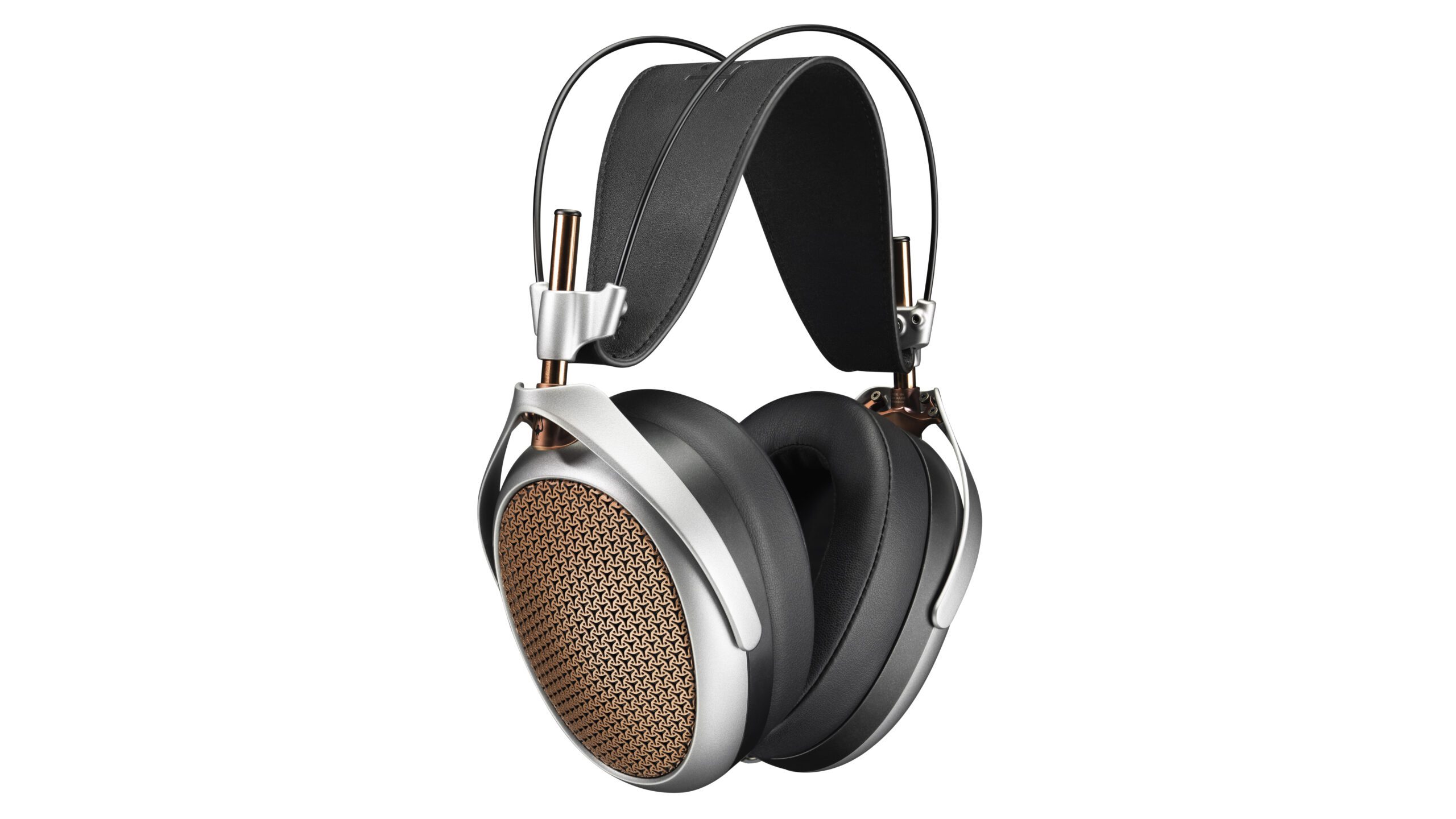
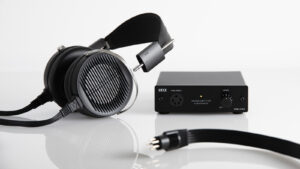
You’ve already seen images of the POET, so I won’t elaborate on design features. There’s also the £1,899/$2,000/€2,000 price. I can confirm that Rinaro Isodynamics created the planar magnetic drivers that do the audio business here.
As is customary in the Ukrainian specialist’s standard operating practice, the planar magnetic drivers fitted to the POET are uncompromising and uncompromised. The hybrid array driver here is called MZ6. It is a refinement and amalgamation of the MZ4 and MZ3SE drivers fitted to Meze Audio’s Liric 2 and Elite models. Measuring 92 x 63mm with an active area of 3507mm², the driver is relatively compact by prevailing Rinaro Isodynamics standards. However, at 0.06g and with the firm’s customary dual-driven voice-coil system in place, it remains high-end business as usual.
The upper section of the driver features a switchback coil optimised for low-frequency reproduction, while a spiral coil beneath it is positioned directly over the listener’s ear canal. The latter is designed to deliver midrange and high frequencies, and its position helps it overcome any issues that might otherwise arise from soundwaves shorter than the earpad they’re trying to exit.
Parus diaphragm
This diaphragm, referred to by Rinaro Isodynamics as ‘Parus’, is positioned between a symmetrical array of neodymium magnets that provide consistent activation across the entire diaphragm’s surface. This setup is housed in a reinforced polymer casing that is a) capable of handling the significant load produced by the magnet array and b) equipped with Acoustic Metamaterial Tuning System technology to reduce high-frequency peaks. According to Meze Audio, this entire configuration produces a lightweight (73g total) driver assembly that can achieve an astonishing peak of 96kHz at one end and an equally remarkable 4Hz at the other, while maintaining an extremely low total harmonic distortion (under 0.05%) throughout the entire frequency range.
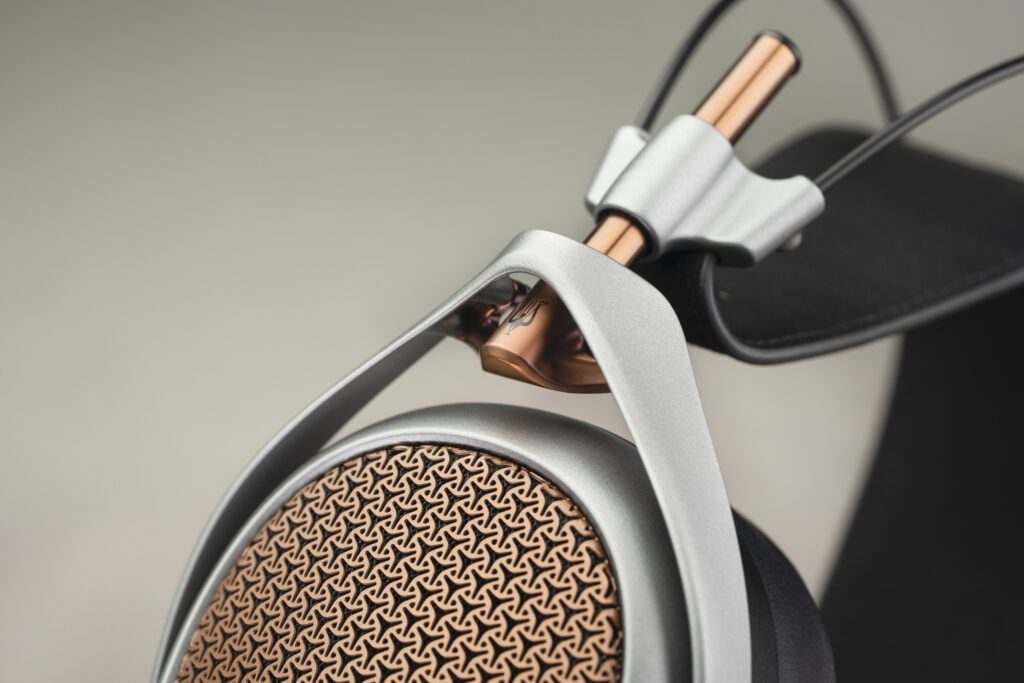
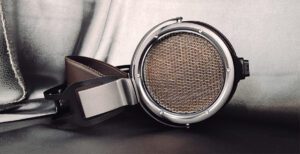
The design is distinctly Meze Audio, which means that – at least to my eyes – it’s a bit overly ornate. There’s no doubt about the quality of the materials Meze Audio has used; between the titanium alloy headband that sits outside the suede leather ‘headrest’ (as the company describes the strip of material that serves as a contact point) and the magnesium that comprises most of the chassis, it’s quite an indulgent and tactile product.
Intricately patterned
The intricately patterned open earcups are made of steel, and the magnetically attached earpads are crafted from memory foam covered by faux leather.
As with every pair of Meze Audio headphones I’ve tried, the hanger arrangement and clamping force are well-calibrated; so even though the POET weighs 405g (without its cable), it remains comfortable and easy to wear for extended periods. The quality of construction and finish is more than sufficient at the asking price, too. However, as with every pair of Meze Audio headphones I’ve experienced, the slightly awkward ‘friction pole’ adjustment mechanism needs to be at its smallest setting when I’m using the POET – Meze Audio does not design headphones for those of us with smaller heads.
Hand-braided
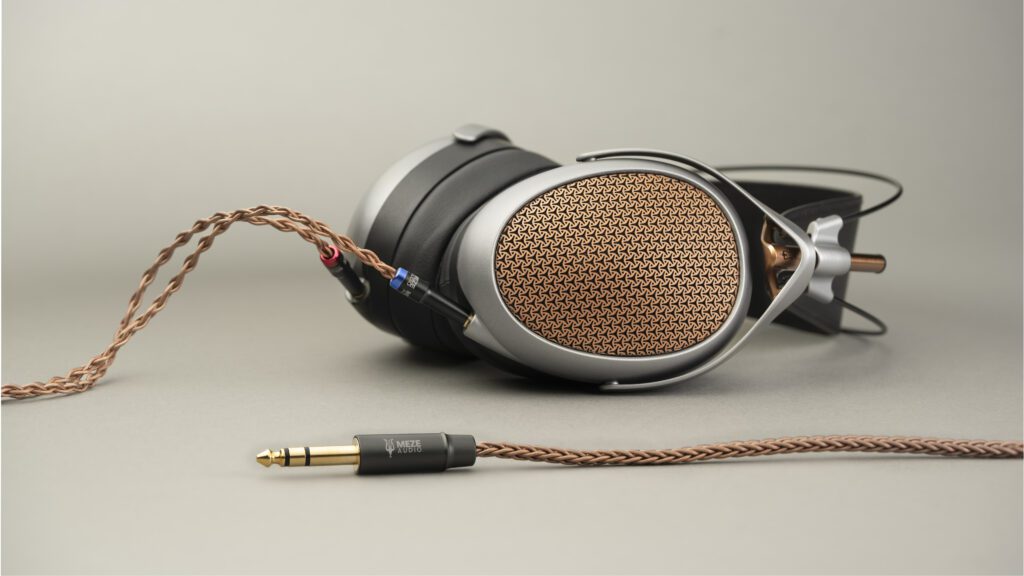
The cable is 1.8m long and made of hand-braided, TPE-covered, oxygen-free copper. Each earcup needs to be wired, so at one end, the cable splits into a couple of 3.5mm terminations; at the other end, it features a 6.3mm unbalanced connection. It’s been a while coming, but finally, here’s a false note: at this price point, it doesn’t seem unreasonable to expect a choice of cables, ideally one that features a balanced connection.
Still, at least the term ‘false note’ doesn’t truly apply to the sound of the POET. While its 6.3mm connections may limit high-end source options, when connected to an iFi iDSD Diablo 2 headphone amp/DAC, which in turn is connected to an Apple MacBook Pro (loaded with Colibri software to properly play hi-res digital audio files) via USB-C, the sonic results are overwhelmingly good. Whether it’s the primitive collage of Mike Oldfield’s Tubular Bells [Virgin] as a DSD64 file, a 24bit/44.1kHz FLAC file of Doechii’s iconoclastic Denial is a River [Top Dawg Entertainment], or a standard 320kbps MP3 file of Dead Meadow’s Get Up On Down [Matador], the Meze Audio POET delivers a balanced, detailed and remarkably positive sound.
They seem capable of grasping the fundamentals of a recording without prevaricating. The soundstage they create is expansive and persuasive in its layout; even if a recording is filled with individual elements, there is always enough space for each one to stretch its wings, at least a little. The gaps between them are emphasised appropriately, and there is a sense of singularity and unity in the way Meze Audio presents a recording that imparts a tangible sense of togetherness.
Smooth
Some of this stems from the extraordinarily smooth nature of the frequency response here. Yes, the POET digs very deep at one end and reaches very high at the other, but it transitions from one point to the other in an even-handed way. No part of the frequency range is unduly emphasised, and no part is understated – every area receives appropriate prominence and weighting. Some of it is explained by the very carefully neutral tonality these headphones maintain – there’s never any suggestion that they’re interfering with the specific sound of a recording to any significant degree. What goes in is what comes out, for better or for worse.
Detail levels are very high, and the Meze Audio has no apparent difficulty identifying and contextualising even the most fleeting, deeply buried events in a recording. This ability serves only the overall presentation, though – there’s nothing showy or analytical about the way the POET seizes on the finest details. They do so simply to create the most complete picture possible, making the sound as articulate as possible.
This is especially noticeable in the midrange, where these headphones communicate almost immoderately. Every aspect of a vocal performance, from the nuances of tone and texture to the transient details of character and attitude, is translated, and voices have all their motivation and emotion made plain as a result. The way the POET treats midrange information is direct, making every listen an event.
Confidence
Dynamic variations are handled with just as much confidence – the POET can identify significant shifts in volume, attack, or intensity, but they can’t quite measure the distance between the extremes as they should. They can do more than merely allude to the dynamic upheavals in a recording, but other designs – some from within Meze Audio itself – perform a more complete and assertive job. This may partly be because these headphones have a knack for sounding quite loud even when they’re playing fairly quietly.
Still, it’s a fair indication that a pair of headphones has much to recommend it when the ‘demerit’ column includes some minor complaints about a slight hint of dynamic inhibition and the note that those with smaller heads might find them uncomfortable. Meze Audio is not breaking new ground with the POET, it’s true – but when the ground it’s retreading is so lovely and picturesque in the first place, it’s extremely difficult to complain too stridently.
Technical specifications
- Type: Circumaural; open-back; over-ear
- Drivers: MZ6 Isodynamic Hybrid Array
- Frequency response: 4Hz – 96kHz
- Impedance: 55 Ohms
- Sensitivity: 101 dB SPL @ 1 kHz, 1 V
- Distortion: <0.15% @ 1 kHz, 1 V
- Accessories: Case: hard EVA pouch with foam lining; 1.8m soft TPE cable with 6.3 unbalanced termination
- Weight: 405g (without cable)
- Price: £1,899, £2,000, €2,000
Manufacturer
Meze Audio
UK distributor
HEA Distribution
Trending Articles
See all


By Simon Lucas
More articles from this author

Read Next From Review
See all
REL S/850
- Aug 25, 2026
Rotel DX-5
- Aug 25, 2026
Magico S2
- Aug 25, 2026
Synergistic Research PowerCell 8 SX
- Aug 25, 2026