One must count one’s blessings. Over the past few years, I have enjoyed personal listening through Focal’s iconic £ 3,500 Utopia headphones. They are among the finest devices ever created by humans for converting wavy electronic signals into the soundwaves they represent. These no-expense-spared designs are both revealing and musical. Much of this can be attributed to their use of beryllium. You will find this rare metal in the driver’s diaphragms, the flat surfaces that, thanks to the interaction between the affixed signal-carrying voice coils and the powerful magnetic field surrounding them, shift air to produce that incredibly exquisite sound. Beryllium is ideal for the task, as it is both rigid and lightweight. This allows the diaphragm to respond swiftly without physical distortion, ensuring that musical transients are accurately conveyed.
Focal wasn’t the first company to harness the metal’s hi-fi potential. Yamaha fitted beryllium tweeters to its famous NS1000 speakers half a century ago. But the French firm has arguably been its key proponent since 2002. Just before those ultra-high-end phones were introduced, Focal launched their speaker equivalent – the flagship (£120,000) Utopia EM floorstanders. Their inverted-dome tweeters employ the wonder metal. It’s no surprise that others in the hi-fi game, from inexpensive OEMs in China to serious speaker manufacturers like Sweden’s Marten and Paradigm in Canada, have also seen the light.
Paradise Lost
One early summer’s day, that particular blessing alas vanished. Settling back in my chair with a new album to enjoy, sound flowed only into my right ear. I checked my source, the headphone amp and associated wiring. A simple continuity check revealed that Utopia’s left-channel driver had failed open-circuit. Disaster! Although Focal assured me that “an underlying issue” was not to blame. Open-circuit drivers are not uncommon with earlier-production Utopias – as a quick Google search will confirm. Fortunately, Focal has extended and made the Utopia warranty transferable.
Without wasting any more time, I picked up the phone and arranged for mine to be repaired. While on the call, I politely inquired about any new models that Focal might have in the works. “Funny you should ask,” I was told. The charming young PR lady on the other end, a proud hi-fi enthusiast herself, spoke enthusiastically about two circumaural headphones fresh from Focal’s St. Étienne factory. These were the £499 Azurys and £599 Hadenys. “Would you like to try a pair? We’ll also send you a loan pair of Utopias to tide you over while yours are being repaired.” How could I refuse…
House style
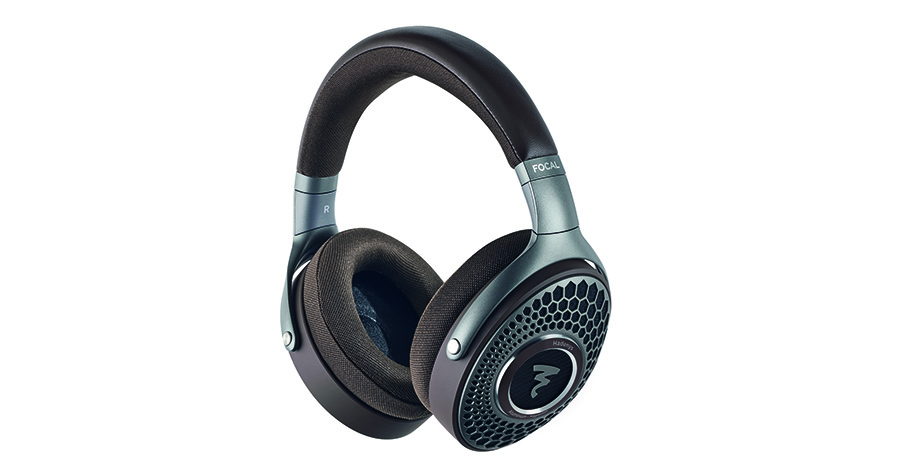
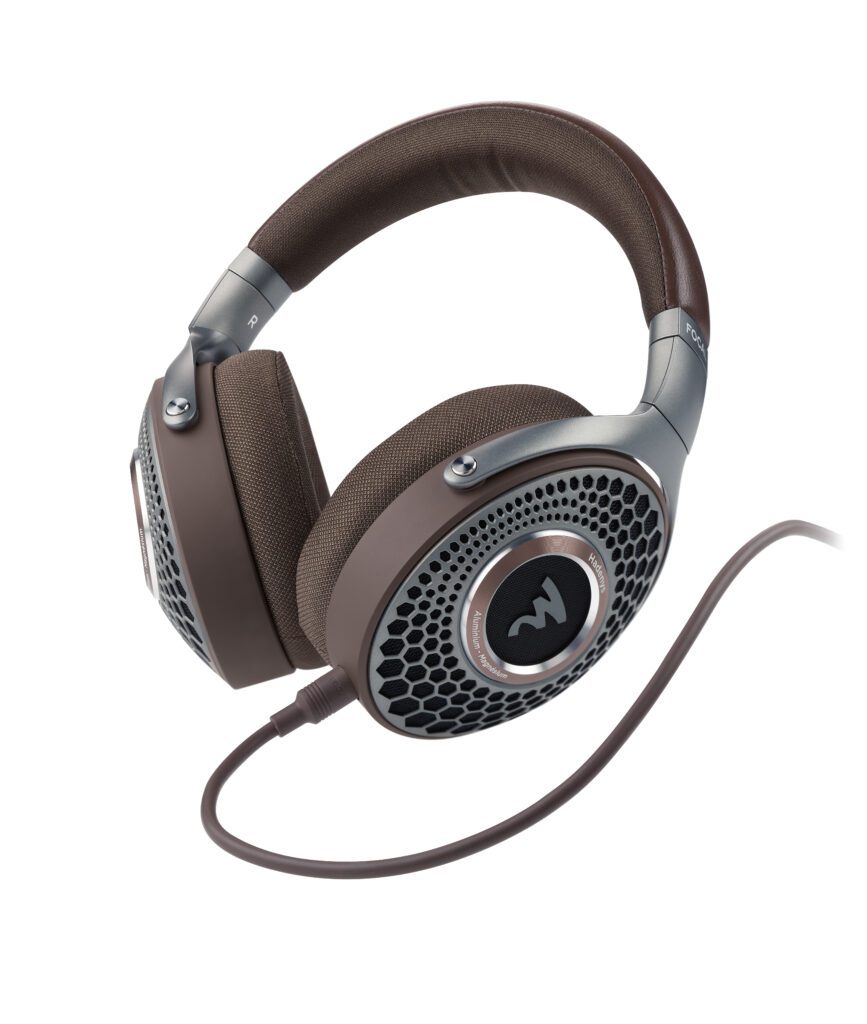
Finished in the distinctive Focal ‘house style’, these products appear pretty similar. Subtle variations in hue (characterised to me as ‘timeless’) superficially set them apart. However, beneath those elegant exteriors, the Azurys and Hadenys – named after a copper-rich mineral and the earliest period of Earth’s history, respectively – are very different entities. The first features a closed-back design, while the latter has an open-back design. Open-back headphones generally sound more natural and spacious than their closed counterparts, but they sacrifice some isolation.
Therefore, closed headphones like the Azurys are better suited for outdoor use. Being able to identify imminent hazards would, however, be a distinctly ‘open’ advantage. They are also ideal for situations where nothing should come between you and the audio, such as gaming and music production.
Open Isolation
The comparatively poor isolation characteristics of open-back headphones work both ways. Not only does ambient sound intrude on your listening experience, but your musical tastes will also be audible to those in your immediate vicinity. They are therefore not the best choice for considerate public transport users! As the Utopias belong to the ‘open’ category, I chose to try the Hadenys. How close—at just under a sixth of the price—could they come to their legendary counterparts? Open-back headphones, such as the Hadenys (and Utopia), should be suitable for quiet listening rooms. They also shine during those late-night sessions when neighbours might not appreciate the somewhat higher leakage potential of large speakers. According to Focal, the Hadenys are a “key” proposition, offering audiophiles “more affordable open-back headphones…without compromising sound quality, lightness, or comfort.”
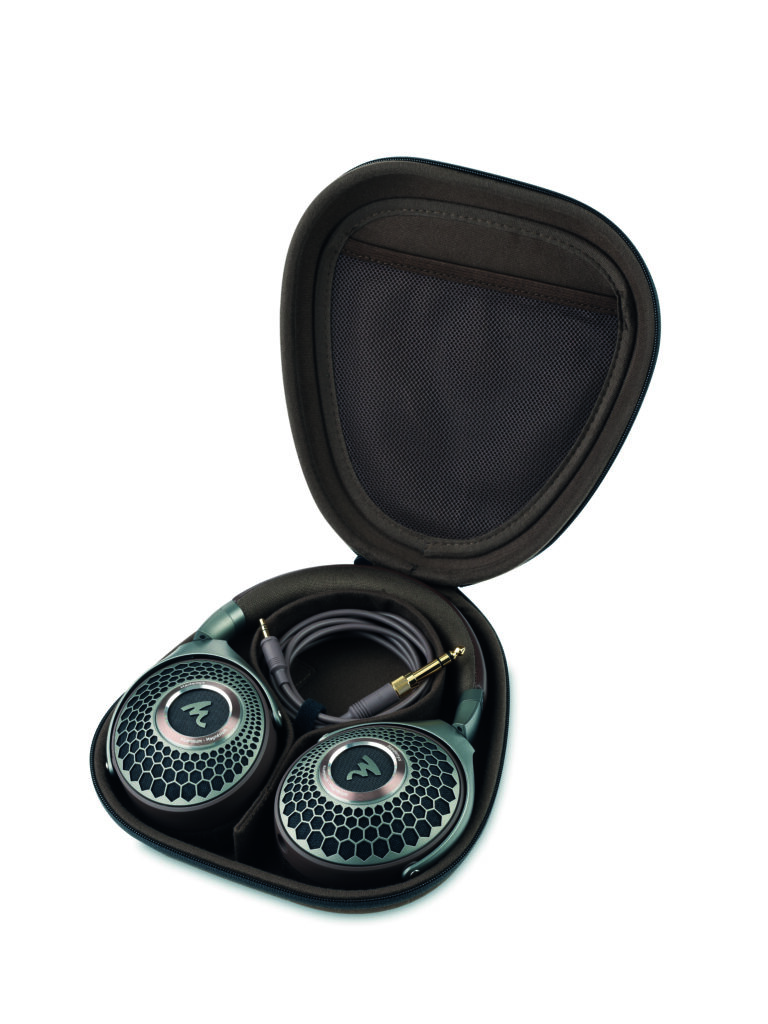
As one might expect, given their lower cost, the Hadenys ‘package isn’t as luxurious as that of the Utopia. However, you do receive a neatly colour-coordinated zip-up carrying case. Thist accommodates the headphones and, with a pocket, the interconnecting cable. Only one such cable is supplied. At 1.8m long, it terminates in a user-friendly 3.5mm stereo plug. However, a ‘screw-on’ 6.3mm adaptor for conventional hi-fi is included. At the other end, the lead connects to a 3.5mm socket on the base of the left Hadenys ‘cup’ through another moulded 3.5mm stereo (‘tip-ring-sleeve’, or TRS) plug. This is non-locking, unlike the costly Lemo locking connectors of the Utopias. From a practical standpoint, this is no disadvantage. The plug will detach from the headphones without damage if the cable is inadvertently stressed.
Balanced connectivity
Balanced headphone connectivity can offer audible benefits, including enhanced dynamics and a wider soundstage. Focal’s PR assured me that, much like the Utopias, the Hadenys can be connected to devices equipped with a balanced audio output if the correct cable is used. The company mentioned that “since the connector on the headphone is a standard 3.5mm, it should be straightforward to find aftermarket cables.” However, given that the plug at the Hadenys’ end of the cable is a TRS (i.e. three-connection) rather than a TRRS (four-connection), the two channels must share a ‘common’ return. Balanced operation won’t be feasible if the Hadenys socket is also TRS.
Subsequently, Focal confirmed that a TRS jack is indeed fitted to the Hadenys. Unfortunately, this means balanced operation is not feasible (certainly without modifications that would invalidate the warranty). “Azurys and Hadenys are only compatible with a stereo jack, and a balanced connection cannot be employed.” Therefore, it appears that Focal has restricted the flexibility of these headphones for the trivial difference in cost between a TRS jack and a TRRS jack! It’s quite a shame. In contrast, a pair of £299 (“budget”) audiophile headphones I have on hand – HiFiMAN’s excellent Sundara – can easily be adapted for balanced use, with the audible benefits clearly noticeable.
Confidence Inspiring
When considering construction, the Hadenys inspires confidence. Its robust magnesium yokes (the pivots on which the earcups are mounted), honeycomb-grille magnesium rear cups, and easily adjustable leather-covered headband are outstanding. However, Utopia’s luxurious earpads, featuring lambskin leather surfaces, have been replaced with fabric-covered alternatives on the Hadenys. The pads themselves are made of memory foam to ensure a snug fit around your ears.
Behind the earpads are the drivers, which, as Focal is eager to highlight, are manufactured in France using “patented technology.” Their domed 40mm diaphragms feature the signature Focal ‘M’ cross-section for a larger surface area and resistance to ‘breakup’ at elevated listening levels. However, they do not utilise Utopia’s premium beryllium. Instead, Focal has opted for a magnesium-aluminium alloy, which is claimed to deliver similar performance while being somewhat cheaper to produce. These diaphragms are paired with voice coils that have an impedance of 26 ohms, ensuring compatibility with practically any device!
Commendable
Interestingly, Focal claims a sensitivity of 100dB/1mW (1kHz) for the Hadenys. This is a commendable figure, albeit not quite reaching the 104dB/1mW of Utopia’s lavish 80 ohm drivers. However, in one significant respect, the Hadenys surpasses the pricier model. Weighing in at 294g per pair, it is half the weight of the Utopias. As a result, it’s more comfortable for prolonged wear. Furthermore, the stepped headband adjustment, which follows a traditional design, ensures that the Hadenys delivers a snug yet comfy fit.
The cloth earpads are less susceptible to sweat than those made from animal skin (real or otherwise). They can be unclipped from the cups for replacement or cleaning. Once the pads are removed, it becomes apparent that the transducers are slightly ‘toed in’. Overall, the Hadenys rank among the most comfortable headphones I’ve experienced in quite some time. I’ve worn them for several hours at a stretch with no adverse effects whatsoever.
Sensible Balance
Focal’s sensible balance between sensitivity and impedance makes the Hadenys easy to drive—even with the modest headphone amplifier built into a Sony Xperia 10 smartphone (yes, this is quite an old model—analogue headphone sockets have all but disappeared from smart devices, now that Bluetooth has reached a decent standard). With a selection of lossless music played through the excellent VLC app, I could achieve decent sound levels with little sign of strain, even though the overall result fell short of audiophile expectations.
In contrast, the less sensitive (94dB/1mW) Sundaras sounded gritty and congested. Moving slightly up the audiophile scale, the Hadenys did not stress the headphone amps built into budget hi-fi systems, either. Indeed, while listening to some old tapes on a cassette deck made by the Xperia’s Japanese creator more than three decades earlier, I found myself wishing that Sony had included an output-level control. The sound levels produced by the Hadenys were so high that correctly recorded cassettes could easily become overwhelming!
Unstressed amps
Users of high-quality portables will genuinely benefit from these properties. Not only will the headphone amplifier remain unstressed, thereby avoiding detrimental effects on sound quality, but battery life should also improve as a result. I tested the Hadenys with three high-quality portables: a Sony Walkman Pro, FiiO X3, and Astell & Kern SR25 Mk. I encountered no compatibility issues whatsoever. The same was true for the more stationary equipment available to me; this included an ANT Audio headphone amplifier (with an Arcam CD player handling line-level duties), and headphone DACs with the 2.5mm socket that the SR25 also provides. Each performed well, even the portable units yielding decent results from Prism (Callia) and Chord (Hugo TT), fed coaxially from a Cambridge Audio CXN hi-res digital music player.
The headphone sockets of each were connected via the standard 3.5mm plug-terminated cable and screw-on 6.3mm adaptor; unfortunately, I wasn’t able to experience balanced operation with listening levels that had ample headroom to spare. I found that the Hadenys played to the strengths of whatever was connected—the considerable resolving power of the Callia and the more organic presentation of the Hugo TT. Focal recommends a minimum of 24 hours of ‘burn-in’ at a relatively high volume level (the pink noise of an off-station FM tuner is ideal for this, in my experience) for the Hadenys to reach their full performance.
The Fall’s Quality
Working through a collection (A-Sides 1978-2016) of singles by that unique British institution, The Fall, the overall improvement in production and recording quality over time is evident, even with the remastering process (did you know that some of the songs – including ‘Mr. Pharmacist’ and The Fall’s Top 30 cover of ‘There’s A Ghost in My House’ – were recorded at no less a facility than Abbey Road?). Even the band’s early output, captured in long-forgotten studios scattered across the UK, remains enjoyable despite the variable sound quality.
In other words, Hayden’s analytical detail does not come at the expense of musicality. Throbbing basslines, angular guitars, and the occasional quirky keyboard jostle for position against a furious rhythmic backdrop – but at the constant heart of the music, performed by an ever-changing lineup, is, of course, Mark E. Smith, whose much-imitated (but never equalled) vocal style and lyric writing always emerge with appropriate intelligibility. Basslines are deep, tuneful and articulate – a far cry from the lumpy ‘one-note’ presentation that afflicts some rather expensive headphones aimed at the mass market.
Coloration free
Headphones offer a musical experience free from the colouration issues that room acoustics can introduce in traditional speaker-based listening. The intimacy found in certain types of music—such as chamber pieces and closely miked female vocals—can be absolutely breathtaking. In larger classical works, like the dynamic 2012 LSO/Noseda recording of Britten’s War Requiem (24/48), you can locate instrumental groups and even individual choristers within the soundstage.
They may have quite similar characteristics to the beryllium drivers of Utopia. Still, those fitted to the Hadenys can deliver an ‘attack’ that deftly accommodates music ranging from the urgent dynamic swings of the War Requiem to the percussion of fast house music (note that lightweight 40mm diaphragms will always be more responsive than larger and heavier speaker cones – that’s just physics). On this subject, the vast majority of dance and rock tracks are artificial studio creations, with elements panned into position using the mixing desk (or, these days, workstation software).
Occasional Holes
This can sometimes create a ‘hole in the middle’ effect, even affecting high-quality transducers like the Utopia and Hadenys. Some headphone amplifiers, including my Hugo TT, feature a ‘cross-feed’ function (which Chord refers to as ‘X-PHD’) that subtly blends the two channels. The effect is minimal (Chord’s model offers three selectable levels) and simulates, through proprietary electronic methods, what a listening room’s acoustics achieve with speakers. The notion of ‘playing around’ with music in this manner might deter purists—but believe me, it works!
However, one listening scenario that should not involve cross-feed is binaural recordings, which are specifically designed for headphones using ‘dummy-head’ microphones (or advanced workstation spatial-audio plugins during the mixdown phase). When played through speakers, binaural recordings can sound unnatural; at times, they can be disconcerting. When listened to through headphones as intended, they provide a completely different experience.
Up, down, front, back
Indeed, there are limitations regarding up/down and front/back localisation. These are performance areas where modern speaker-based surround sound technologies, such as Dolby Atmos, truly excel. In contrast to headphones, however, such systems are far from compact or portable. Despite these limitations, the subjective sense of realism offered by binaural audio can be overwhelming with headphones of the Hadenys’ calibre. I had access to some remarkable binaural music (including a BBC session featuring Lucy Rose) and drama (a radio adaptation of Nigel Kneale’s The Stone Tape). Still, the most convincing examples were ‘ambient’ recordings.
Among these was a 1976 BBC documentary about life on an oil rig, a stroll through New York City, and some binaural recordings I made myself fifteen years ago. Cars move in and out, drills roar to life between your ears, and human hubbub seems so realistic that you’ll think someone’s in the room with you. So effective were the latter that I retrieved my homebrew mics and ‘updated’ them for the present day! While we’re on the subject, speech is natural and uncoloured… more so than most conventional loudspeakers I’ve heard.
Conclusion
A direct comparison between the two models reveals how closely the Hadenys approximates the Utopia. In particular, it gets close in terms of tonality, punchiness, and detail resolution. However, the Utopia maintains a degree of ‘airiness’ that the Hadenys cannot fully replicate. Also, some of the finer details of high-resolution recordings – revealed by my somewhat analytical Prism Callia – are not as readily apparent.
Overall, the Hadenys performs admirably, especially considering it is just under three grand cheaper. Its open, detailed, and tonally neutral presentation does justice to every genre of music. If you take headphone listening seriously and have £ 600 to spare, the Hadenys should undoubtedly be on your list of models to audition. Regarding the reliability issue, Focal has assured me that the Utopia problem has been fully resolved. The Hadenys, which benefits from a six-year warranty and is entirely different internally, should last a lifetime.
Technical specifications
- Design: Open-back, circumaural
- Impedance: 26 ohms
- Sensitivity: 100dB/1mW (1kHz)
- Maximum SPL: 105dB (peak @1m)
- THD: <0.2% (1kHz, 100dB SPL)
- Frequency response: 20Hz – 22kHz (+/- 3dB)
- Transducers: 40mm, aluminium/magnesium ‘M’-shaped dome
- Weight: 294g
- Connection: 3.5mm TRS, unbalanced.
- Supplied cable: 1.8m (terminated in 3.5mm jack; 6.3mm adaptor supplied)
- Price: £599, $699, $699
Manufacturer
Focal
Tags: FOCAL HADENYS HEADPHONES
Trending Articles
See all
By Martin Pipe
More articles from this author

Read Next From Review
See all
Reiki Audio SuperSwitch X/Pro X PSU
- Oct 06, 2026

Audiobyte SuperVOX
- Oct 06, 2026
Unitra WSH-805
- Sep 29, 2026

Wilson Audio Sabrina V
- Sep 29, 2026