Up to 37% in savings when you subscribe to hi-fi+
hifi-logo-footer

Begin typing your search above and press return to search. Press Esc to cancel.

Quiescent Apex 40 coupler and Peak loudspeaker module

Products that aim to mitigate the sonic damage being done to audio reproduction by electromagnetic and radio frequency interference are common. Not least because the latter is a higher frequency version of the former. However, there is a third corrupting influence that is less frequently addressed. It is microphony. Quiescent is one of the few brands attempting to reduce EMI, RFI and microphony.

If we leave aside micro-tremors from the earth’s crust and from traffic, microphony in our audio systems has the same primary source; the speakers. The acoustic energy from them modulates ambient air pressure against our eardrums, but it also vibrates our audio system too. Inside most speaker cabinets, the crossover is bombarded by energy from the rear of the speaker drivers. Meanwhile circuit boards in system components such as amplifiers are effectively palpated by the modulated air in the room.

Energy conversion

Those who paid attention at school will recall that physical energy applied to a conducting material is converted to electrical energy. During normal playback, our systems are processing not just the musical signal that we want to hear but, electrical artefacts that we don’t want to hear. These travel back down the speaker cables to the amplifier, and propagate from discrete components such as capacitors in system separates. They become particularly audible when contending fundamentals or harmonics beat against each other to produce intermodulation distortion, typically heard as ringing.

Even if our audio system is powered through a filter or regenerator, and even if we turn off everything electrical in the house and listen through headphones, we still cannot escape radiated electrical energy and microphony. Audio separates, in particular digital devices, and some discrete components too, are themselves active emitters even when simply passing an audio signal. Once EMI, RFI and microphony have entered the signal chain our costly wires simply perform as conduits for the unwanted noise.

Quiescent has been ploughing something of a lone furrow in its focus on EMI, RFI and microphony mitigation, and in particular on both prevention and removal. The company’s approach is two-part: speaker, interconnect and mains cable designs that resist mechanical excitation and which absorb EMI/RFI, plus passive devices — the company calls them Couplers and Modules — that drain microphony, EMI and RFI. Quiescent is patenting globally the technology used in a new generation of Couplers and Modules, and invited this publication to be the first to try them.

The Apex Speaker Module is a block of black anodised aluminium, machined from billet, with no parallel faces and an acoustically disruptive milled pattern on the outside. It is about the size of a house brick, but weighs rather more at some 4.5 kg. Two continuous lengths of solid silver conductor wire run internally, starting at a pair of silver WBT binding posts and emerging at the other end as a length of captive speaker cable terminated in silver WBT bananas or spades. The first generation Module clamps the naked conductors between two halves of a multi-directional, multi-length labyrinth formed of ceramic. Designed to present a virtual black hole to acoustic energy, the labyrinth prevents transmission either from the speaker to the amplifier or vice versa. The module also contains a passive electrical network to burn off radiated RFI.

Sceptical in the extreme

I tried this early version of the Module in 2018, sceptical in the extreme, but in my system, with two types of amplification and three different speakers, the noise floor was lowered, tonal density and timing cues were enhanced, dynamic energy increased and sound-staging improved. I bought the review pair and for over two years they were a key element in my system, allowing me to hear more deeply into recordings, and to discern more clearly how review kit performed.

Quiescent’s revised Peak Speaker Module has the same form-factor and operational principle as before, but the labyrinth is now made from a composite of granite, ceramic and a high-carbon polymer, the latter material being the subject of the in-process patenting. The company is opaque about the ratios of the three elements, and over what bandwidth the new Module works, except to assert that it is effective on microphony over a wider range than before, and that the carbon polymer increases the bandwidth over which unwanted electro-magnetic energy is absorbed.

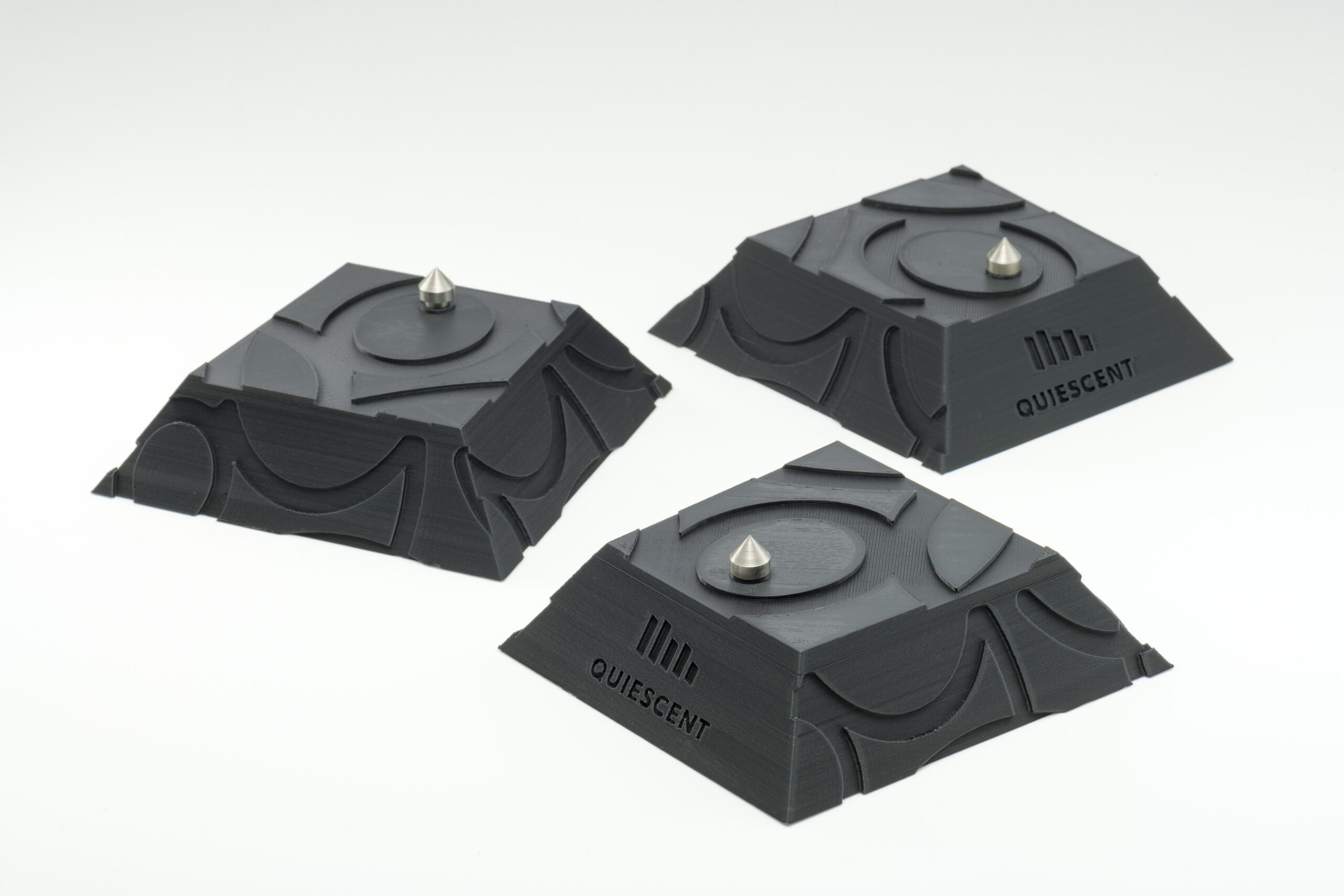
The new Apex 40 Couplers are not footers or supports as we might understand the terms, but 3D printed shallow boxes, overall a little less than the size of two packets of playing cards laid side by side. Like the Modules their exterior is irregular with a deep acoustically disruptive pattern. They contain the same tri-material and a passive RFI absorbing network. A sharply pointed electrode on top allows the Couplers to drain acoustic vibration that would otherwise cause microphony, and to terminate radiated electrical energy.
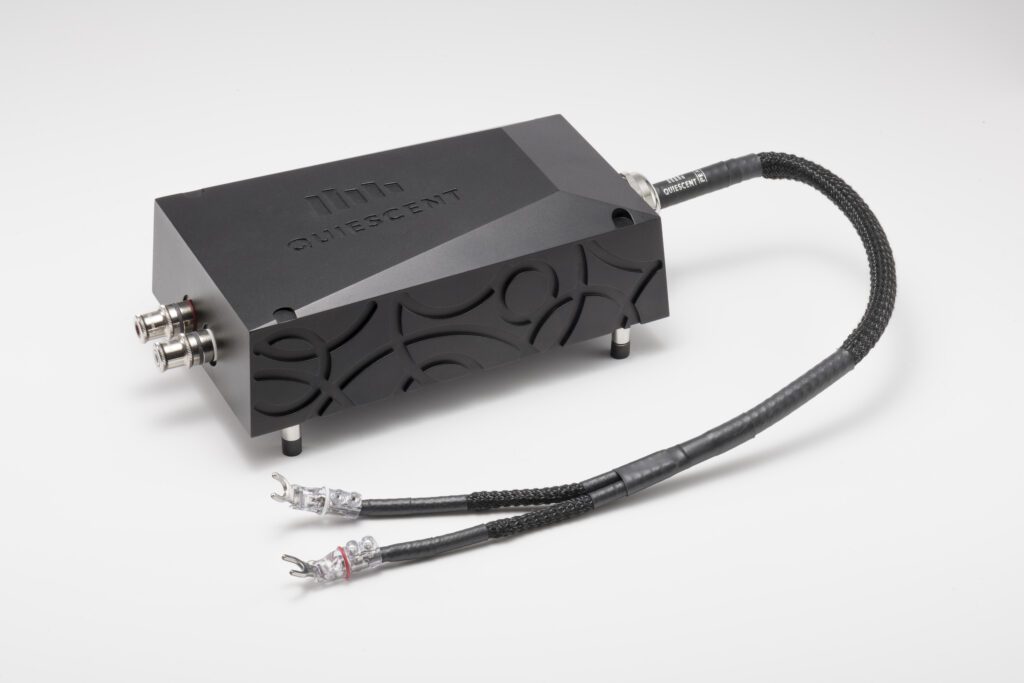
Quiescent Peak Speaker Module

Meanwhile, the Peak Speaker Modules were compared back-to-back with the previous model in my review system, placed between a Bryston 4B Cubed stereo amplifier and PMC MB2se speakers. They brought a far-from-subtle further lowering of the noise floor, the increase in dynamic headroom partnered by greater tonal density, and better focused spatial detail. Improved intermodulation suppression tamed piano recordings that had previously been teetering on the edge of offensively bright and ringy, while excessively sibilant voices were calmed. Bass weight and definition also increased – a finding that Quiescent says results from even more unwanted artefacts being stripped from the signal chain leaving the amplification with less work to do.

The company says the Apex Couplers should be placed under a component either side of the power supply with the third opposing, like a tripod. A firm press from above on the review system DAC enabled the Couplers to make electrical contact with the chassis, and there was an immediate reduction in background hash, stridency and hissy sibilance.

More. Better.

Further sets of Couplers were then added in turn under other components. The sonic gains were cumulative, particularly striking with the CD transport, DAC, pre-amplifier and phono stage, slightly less so, but still very worthwhile, with the power amplifier and turntable power supply.

Fully equipped with Couplers and the Speaker Modules, the review system, no slouch before, was transformed in every dimension, delivering greater dynamic agility and power, tonal density and timing cues; in all posting a quite remarkable cumulative uplift in performance that most listeners familiar with the system put in the order of 50%.

Improvements in perceived timing were particularly noted, there being a greater immediacy and drive that made complex, multilayered and polyrhythmic programme easier to listen to and appreciate. It reminded me of my ‘yikes, this is closer to live’ epiphany on first hearing a pair of Kii Three speakers, phase-correct right across the audio band and thus able to deliver more of the you-are-there experience. There’s no suggestion of equivalence here; but by doing what they do do, the Modules and Couplers brought about a very obvious reduction in the degree of damage being done to phase by the review system’s non-DSP disk-to-speaker audio chain.

The elephant in the room is of course cost. Using the Quiescent products in even a simple system is not for the faint of heart or shallow of wallet. It would take particular bravery to put a pair of £4,500 Modules with £1,000 floor standing speakers. Would the result be at least £5,500 worth of sonic value?

Cost/benefit

However, in the context of the total RRP of the review system, the cost/benefit ratio of the Quiescent products can, in my view, be easily be justified; does it need to be said that a 50% gain in sonic quality is not trivial?

The most likely explanation for Quiescent’s shyness over measurements is not that it hasn’t done any — come on, of course it has — but, probably correctly, the company understands that expensive products like these are not bought by customers on the basis of metrics, but of audition. And that is the market model that Quiescent is now returning to after a three year dalliance with direct selling. Dealers who will carry demo stock and facilitate no-risk in-home evaluation are being appointed across the UK.

Price and Contact details

  • Apex 40 Couplers
  • Price: £740 a set of three
  • Peak Speaker Modules
  • Price: from £4,673 a pair

Manufacturer:

Quiescent

URL: quiescent.co.uk
Read more Quiescent reviews here

Back to Reviews

Audeze MM-500 now shipping

Audeze MM-500 headphones are now shipping.

*From the Audeze news release

Now’s the time to hear the headphone that audio professionals around the world are buzzing about, the Audeze MM-500.

Every week, more top pros are discovering how the accuracy of the MM-500 makes their workflows more efficient.

Created in collaboration with 11-time Grammy-winner Manny Marroquin, the MM-500 is built to deliver studio-quality sound wherever you work.

Engineered and made in California to the highest levels of fit and finish, the MM-500 offers quality and comfort that will last. Order yours today.

For more information, click here.

Back to homepage

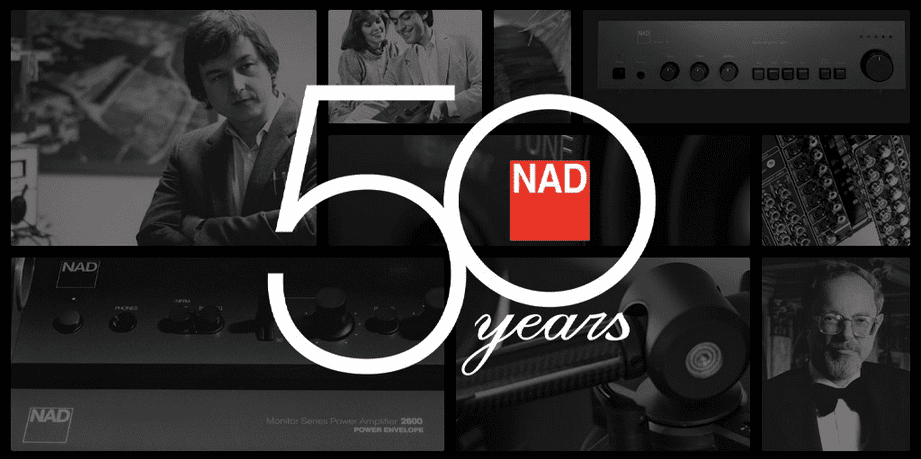
NAD Electronics Celebrates 50 Years of Truth in Power

NAD Electronics, the iconic hi-fi audio brand, commemorates its founding in 1972 with a limited-edition product and virtual and in-person events through the remainder of 2022 and into 2023

*From the NAD Electronics news release

OCTOBER 18, 2022, PICKERING, CANADA – NAD Electronics, the highly regarded manufacturer of high-value, high-performance audio components, is celebrating the 50th anniversary of its founding in 1972. The brand will mark the milestone with a series of virtual and in-person events, as well as the launch of a vintage-inspired limited edition integrated amplifier, starting in October 2022 and rounding off around the Munich Hi-Fi Show in May 2023.

Over the past 50 years, NAD Electronics has been celebrated for its commitment to producing award-winning and future-oriented and high-performance electronic components that include amplifiers, source products such as turntables, CD and cassette players and more recently, streamers and A/V receivers – all while bringing music lovers and hi-fi enthusiasts enormous value and truth in their specifications. The brand became a household name in hi-fi with the success of the 3020 integrated amplifier, which over time became the highest-selling budget amplifier in history, achieving the feat by astounding hi-fi enthusiasts with its dynamic power despite its modest 20 watts per channel rating, and exciting music lovers with its detail and clarity at an affordable price point. In so doing, NAD ushered in a completely new generation of hi-fi customers and drove the creation of a strong foundation for the continued growth of the industry.

In the decades since, the brand has pioneered many amplification technologies, including its ground-breaking work to perfect class A/B and class G amplification, class D digital and hybrid digital amplification, and the introduction of early protocols for network streaming for audio. Throughout, NAD Electronics has championed truth in specifications, creating its own Full Disclosure Power standard that rates amplifier power based on real-world listening scenarios versus laboratory conditions, which sometimes put it at a “disadvantage” on the retail floor versus competitors who did not share that same commitment to transparency in measurements.

“Rating power at one frequency, one volume level, using a simplified test load is fine for submitting documentation to regulators but in reality, music impacts our emotions by being complex and dynamic,” says Greg Stidsen, Chief Technology Officer of Lenbrook International, the parent company of NAD Electronics. “It’s easy to create an amplifier that performs well in narrow conditions, but we are music lovers designing products for music lovers, so we rate our amplifiers across the whole frequency band and dynamic range to give our consumers a realistic expectation of amplifier performance for all the music they enjoy. That often meant the power rating on paper of NAD’s products were lower than what our competitors would publish, but our ratings better reflect the full and rich sound that great recordings contain.”

This principled way of designing products comes from deep within the core values of the brand, which include value for money, performance, simplicity, and innovation, and were present from the very beginning with Founder, Marty Borish, and legendary amplifier genius, Bjorn Erik Edvardsen. Both have since passed away – Borish in 2017 and Edvardsen in 2018 – but not before they mentored a global team who now carry on Borish’s market development work and Edvardsen’s innovative approach to technology development. Today, the brand remains one of the most respected and award-winning brands in the hi-fi industry.

nad-electronics-marty-borish-bjorn-erik-edvardsen

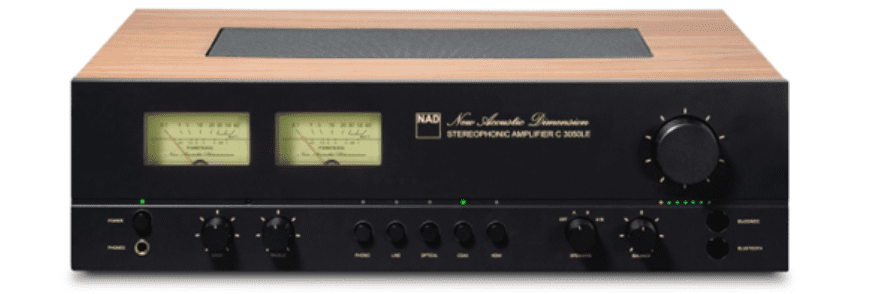
The brand kicks off the North American portion of its anniversary activities at Toronto Audio Fest the weekend of October 21-23, 2022, and the European portion at the Paris Audio-Video Show the weekend of November 4-6, 2022. At these shows, NAD will debut a limited-edition anniversary product, the C 3050 LE Stereophonic Amplifier. With only 1972 being manufactured, the retro-look integrated amplifier harkens back to the heyday of hi-fi and incorporates LED illuminated left and right VU metres, as well as a satin walnut veneer wooden case that conceals fully modern features like hi-res multi-room streaming, ability to decode MQA studio master recordings, and Dirac Room Correction via the included BluOS-D MDC2 module, as well as AirPlay 2, two-way aptX HD Bluetooth, and HDMI eARC. Other inputs and outputs include a phono stage and dedicated headphone amplifier. It is powered by the latest version of NAD’s HybridDigital amplifier rated at 100 watts per channel of Full Disclosure Power and features a high-resolution audiophile-grade DAC.

nad-electronics-c-3050

The NAD C 3050 LE will have a suggested retail price of USD $1972, and each unit is uniquely numbered from 1 through 1972 and will come with a certificate of authenticity. These very special and very limited amplifiers will be available at select NAD Electronics retailers around the world starting mid-November, 2022.

“The C 3050 LE is based on a 1974 industrial design of the original 3030 stereophonic amplifier, which in its day, produced 30 watts per channel using a class A/B design and offered audiophiles and music lovers an affordable performance-oriented amplifier option versus its contemporaries,” says Cas Oostvogel, Product Manager for NAD Electronics. “The original 3030 had a matching companion tuner but the C 3050 LE modernizes it as a ‘just add speakers’ product that comes equipped with BluOS, a hi-res multi-room streaming platform, giving music lovers access to thousands of internet radio stations, as well as over 20 music streaming services.”

Also in mid-November, the company will premiere a documentary titled NAD Electronics: 50 Years of Truth in Power, which covers the early days of the brand and its evolution to its position today as a hi-fi innovator. Mixing archival footage and materials with interviews with key personalities associated with the brand, the film takes viewers from its founding through to the launch of the legendary 3020 and the subsequent growing pains brought on by its outstanding growth and success. Its story arc concludes with the brand’s journey as a principled defender of truth in specifications with its Full Disclosure Power standards and staunch belief in ultimate value-for-money for consumers with its Modular Design Construction concept. Produced by 1Project, a Toronto-based media production company, the film runs around 30 minutes and features expert pacing and beautiful cinematography.

“Anything less than a documentary feature film would have short-sold the brand of its influential history, and its fans of key pieces of the story,” says June Ip, Vice President of Marketing for Lenbrook International. “More importantly, it was the only way we could adequately pay tribute to the foundations laid down by Marty Borish and Bjorn Erik Edvardsen, and their passion project that was NAD, and the impact they had on the hi-fi industry over five decades.”

Stretching into 2023, the brand will continue its celebrations in March with the launch of the NAD C 3050 integrated amplifier, the more widely available version of its “LE” sibling. Offered at a lower suggested price point than the limited-edition version, the C 3050 will retail for USD $1299, allowing consumers the choice to upgrade the unit to include BluOS and Dirac via its MDC2 feature for an additional USD $549. The C 3050 LE will be available at all NAD Electronics retailers worldwide. Rated at 100 watts per channel, the C 3050 includes line inputs, HDMI eARC, two-way aptX HD Bluetooth, phono stage, and a dedicated headphone amplifier.

The arrival of the C 3050 will be accompanied by a series of global retail events jointly sponsored by NAD Electronics and its dedicated network of distributors and retailers, kicking off the weekend of March 3-5, 2023, and concluding the weekend of May 18-21, 2023, at the Munich High End Show, where the idea to create NAD Electronics first germinated back in 1972. During this period, NAD retailers around the world will throw open their doors and welcome consumers for unique listening events, as well as exclusive promotional offers, all in celebration of the brand’s 50th anniversary.

“NAD’s success is a result of the dedication to the values the brand was founded on, that Marty & Erik led and mentored us with, and that we have maintained throughout our 50-year history,” says Gordon Simmonds, President and Chief Executive Officer of Lenbrook International. “The mutually profound relationships amongst our present-day team and our global industry partners, together accounts for many hundreds of years of NAD experience, and that means that the multiple generations of hi-fi enthusiasts that form NAD’s fan base continue to benefit from excellent value for performance, without sacrificing the modern conveniences of music enjoyment. This is something few remaining brands can claim and something we are very proud to be able to claim.”

As the various activities for the anniversary are launched, fans of the brand can keep up to date with the details by visiting https://NADelectronics.com/50years.

ABOUT NAD ELECTRONICS

Founded in 1972 and now sold in over 80 countries, NAD Electronics is renowned for its award-winning line of high-quality components for audio, home theatre and custom installation applications. Since the beginning, NAD’s commitment to four core values – innovation, innovation, simplicity, performance, and value – have earned it a cult-like following that catapulted it to becoming a household name amongst audiophiles and music lovers alike. To this day, the brand continues to design and manufacture some of the most acclaimed and affordable hi-fi components that include modern features and technologies meant to appeal to a new generation of audiophiles.

Back to homepage

Poland Audio Video show preview: 170 rooms in 3 locations

Poland Audio Video Show takes place this weekend.

Hi-fi+ Editor Alan Sircom sits down for a chat with Adam Mokrzycki, who quite literally runs the show: the second largest high end audio show in all of Europe.

Mokrzycki previews the Audio Video Show happening in Warsaw, Poland this weekend.

For more information about the show, follow the link below:
https://audioshow.pl

You can see this video and more on the Hi-Fi+ YouTube Channel, such as Tea Time with Alan and Pete.

Hi-Fi+ Editor Alan Sircom and Publisher Pete Collingwood-Trewin talk about what’s happening in the high-end audio world.

Tea Time with Alan and Pete is just one of several new series on the Hi-Fi+ YouTube channel designed for audiophiles of all levels.

Another series is History of Audio, which aims to teach viewers a little about the History of Audio, which might be a trip down memory lane for many. It also hopes those who watch will learn from the varying experiences of other audiophiles through their trials and tribulations with different equipment.

While you’re on our YouTube channel, be sure to check out our Audio Basics series. So far, this series has covered what makes a great stereo system and how to find a great stereo system.

Soon, you can find reports from manufacturers at audio shows from around the world. You can see the likes of Aurender, Focal Naim, AudioThesis, Schiit Audio, and Magnepan, just to name a few. Right now, you can see what debuted at AXPONA 2022 and a bit from the Texas Audio Roundup, including background on the Magnepan LRS+. You can also see videos from Pacific Audio Fest in Seattle, and soon you can catch videos from CEDIA 2022 in Dallas.

You can also see additional product reviews as well as more from CEDIA Expo 2022 in Dallas on the hi-fi+ YouTube channel coming soon.

Be sure to subscribe to the YouTube channel so you don’t miss any episodes!

Click to go back to homepage.

Electrocompaniet AW800M: New, flagship power amplifier launched

Electrocompaniet AW800M launched as company’s new, flagship power amplifier.

*From the Electrocompaniet news release

Electrocompaniet, the Norwegian manufacturer of HiFi equipment entirely produced in their own factory in Norway, are launching their new flagship power amplifier.

Coinciding with their 50-year anniversary and the 25-year jubilee since the legendary AW600 NEMO was first launched, the new AW800M is set to have a big impact in the marketplace.

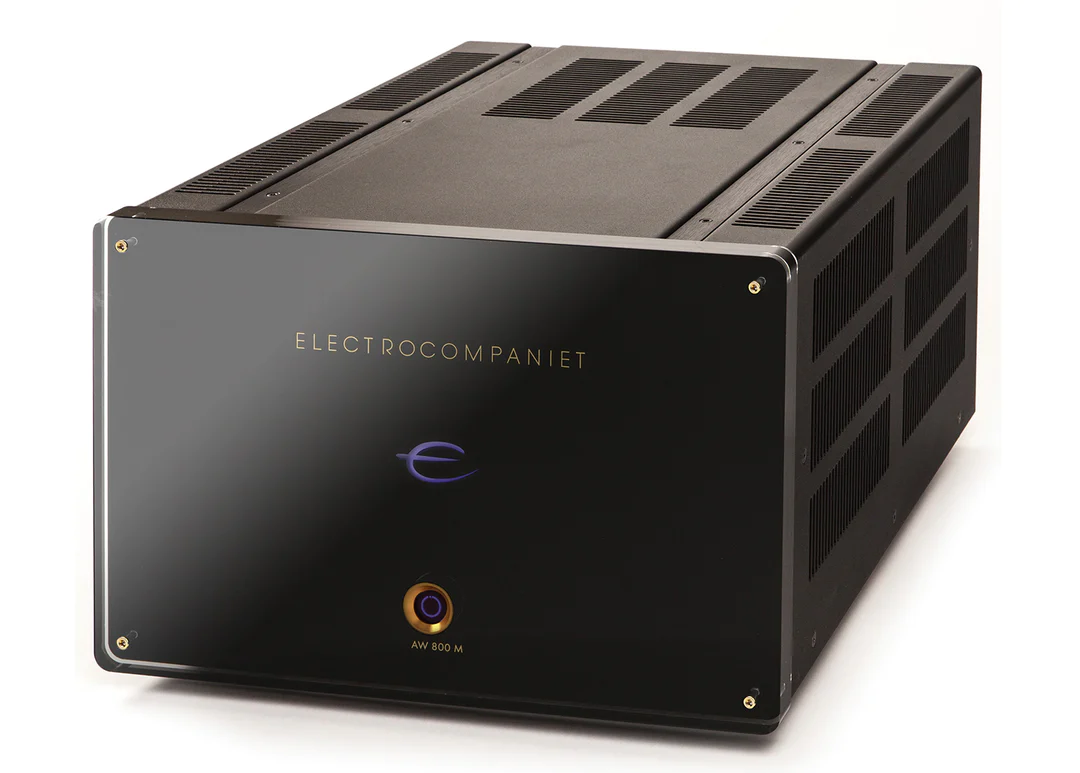
The AW800M is Electrocompaniet’s brand new, from the ground up re-engineered flagship power amplifier. The AW800M is an 800 watt into 8 ohms monoblock amplifier, that can also be run in stereo mode, as well as bi-amping mode with the flick of a switch at the back.

The amplifier showcases an updated, yet unmistakable and distinctive Electrocompaniet design that is a perfect match for all current and legacy Electrocompaniet products. With all the changes and improvements made in the AW800M, one thing that has not changed is the unique Electrocompaniet design philosophy and sound signature. The AW800M encompasses the Electrocompaniet direct coupled high open loop bandwidth topology, further enhanced with high slew-rate and very high bandwidth amplifier stages.

In addition, a brand-new output stage is designed that heavily shields the input and driver stages from the load and makes the output extremely stiff and unaffected by the connected load. This has the added benefit of significantly simplifying the workload of the already gently working feedback system and thus provides vanishingly low distortion figures. The output stage incorporates a total of 32 high bandwidth, high current bipolar output transistors that unstrained can deliver very high currents to the load.

To feed the output stage the power supply is heavily updated and now has a total of 210000 uF supply filtering. Mains power input is DC and RF filtered ahead of the wire gauge upgraded, twin toroidal transformers that are magnetically and electrostatically shielded to keep any noise from intruding. The internal ground reference has been vastly over dimensioned and kept fully free of rectifying and output currents. The result is a very clean, noise free output signal regardless of output power, providing a very stable sound stage with the blackest background possible at any sound level.

An intriguing new attribute of the AW800M is the ability to switch between mono, stereo and bi-amping operating modes, enabling you to upgrade your system or change your configuration while retaining your initial investment.

Comfort upgrades are on/off switchable auto power down and switchable feature lighting, as well as trigger input-ouput.

We are confident that from the first note of any familiar recording, you will be captivated by the AW800M and by the musical enjoyment it will give you.

Back to homepage


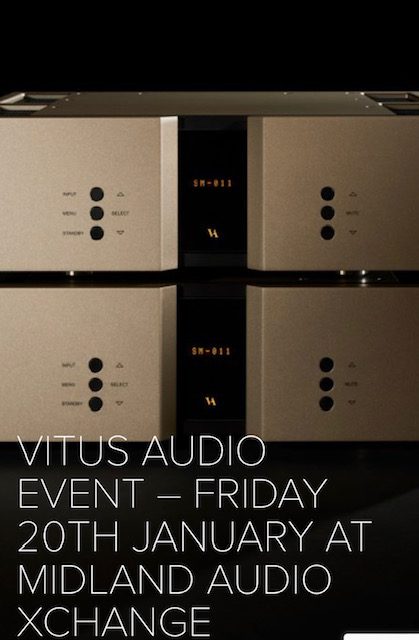
Vitus Audio Event coming in January 2023

The Vitus Audio Event will be happening in January of next year.

The event takes place on Friday 20th January 2023 at Midland Audio xChange, The Old Chapel, Forge Lane, Belbroughton, DY9 9TD.

Those who want to attend will need to book their places soon.

You can do so by contacting John Roberts from Midland Audio xChange on 01562 731100 or by email to [email protected].

Experts will be present at the event to answer all questions.

This will be a rare opportunity to hear incredible components in a fantastic setting.


PrimaLuna EVO 300 Hybrid

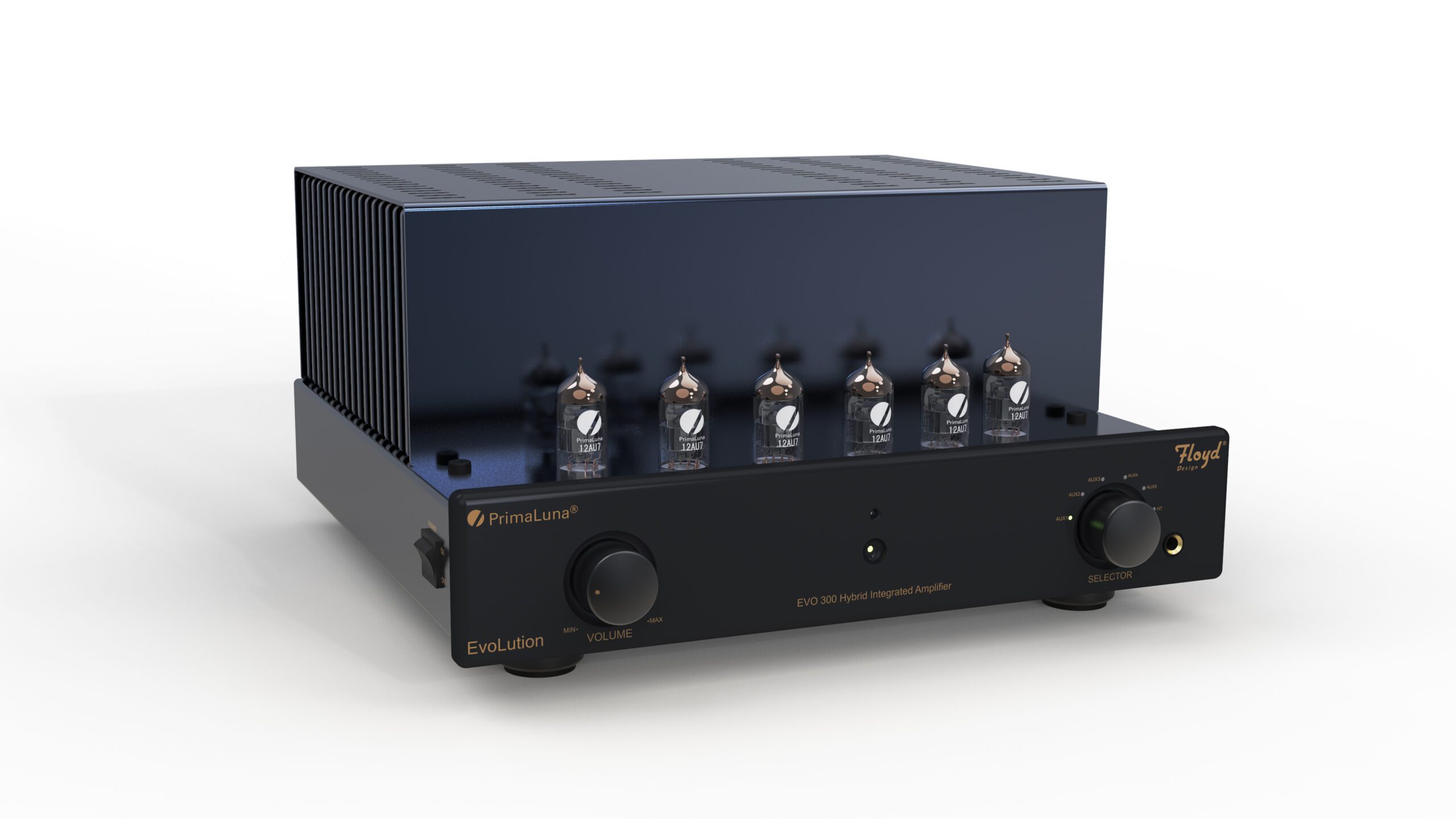
PrimaLuna’s mission to deliver high-end valves without the high-end price tag continues unabated, but when it came to hybrid designs, the company was famously silent on the subject. Not any more… with the EVO 300 Hybrid integrated amplifier, PrimaLuna hasn’t just grasped the hybrid nettle, it’s pulled up the nettle and brewed up a delicious concoction as a result.

But why go hybrid at all? While all-valve designs are frequently wonderful, sometimes more power is more, er,  wonderful-er. It’s possible to make high-power all-valve designs, but generally it’s extremely difficult to produce such products without a lot of transformer iron and a plethora of output valves. That makes them expensive, and even more expensive to do properly. This puts high-power, all-valve designs outside of PrimaLuna’s core ethos. The problem then becomes how to do hybrid ‘right’ and while there are many hybrid successes there are many examples of hybrid designs falling short in one or more aspect of performance.

Floyd makes an entrance

The ‘Floyd Design’ on the PrimaLuna EVO 300 Hybrid’s front panel isn’t just there as a sop to audio’s obsession with Dark Side of the Moon; Floyd Design is an independent company run by ex-Sphinx engineer Jan de Groot. In the background, de Groot has been PrimaLuna’s go-to solid-state engineer for its digital devices for the last 20 years, so he knows the PrimaLuna sound well. Recently, de Groot has teamed up with tube-amp virtuoso Marcel Croese (formerly of Goldmund fame), Kevin Deal of Durob Audio and PrimaLuna’s Herman van de Dungen to create a handy brains-trust/listening team in order to build a device that leverages Jan de Groot’s expertise with JFET power amplifiers without sacrificing what PrimaLuna stands for and how it sounds.

PrimaLuna EVO 300 Hybrid

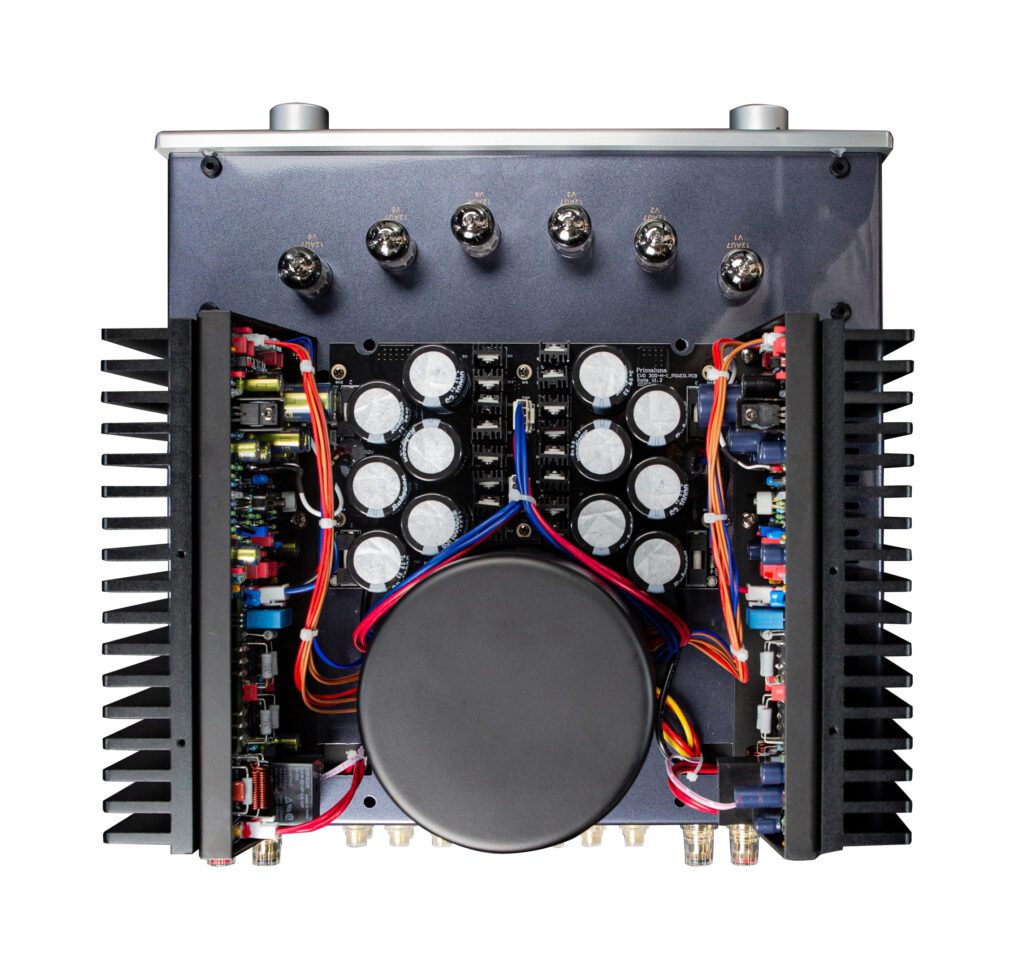
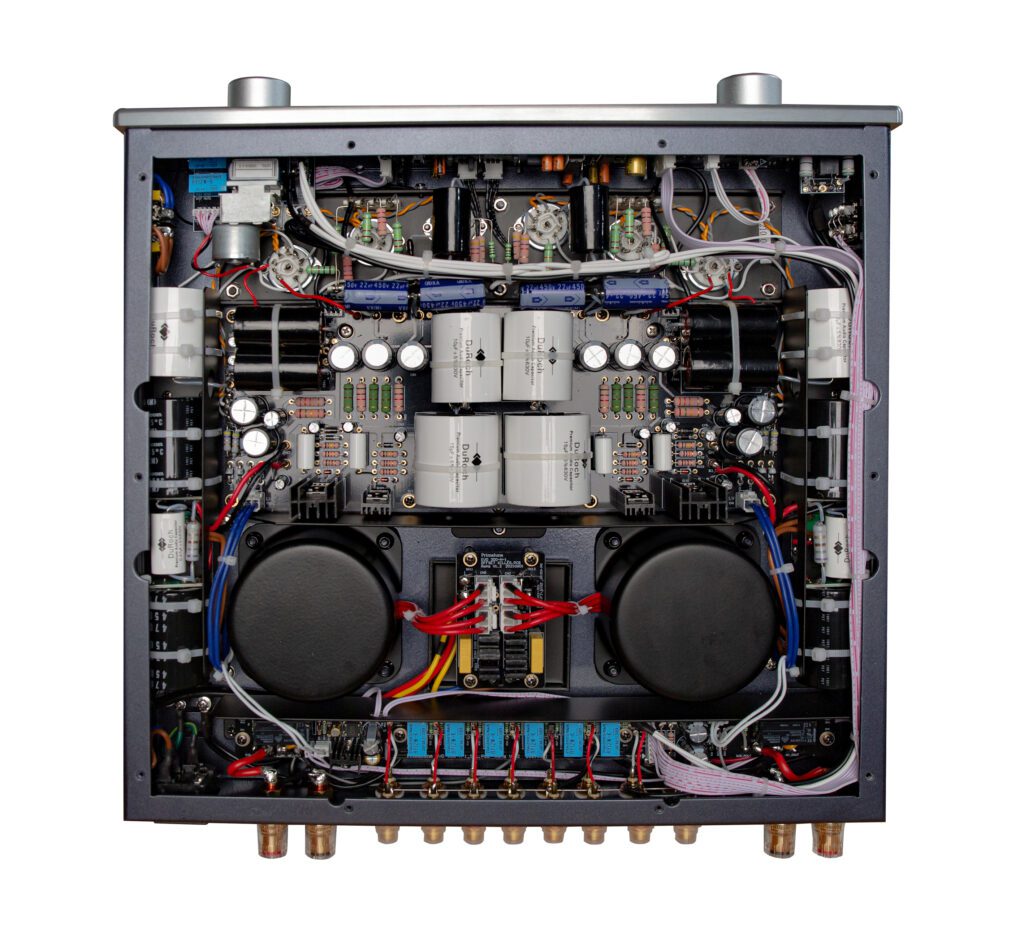
Looking past the ‘Hybrid’ part of the name gives you some clues about the amp itself. The ‘EVO 300’ part is there because this is effectively almost all of an all-valve EVO 300 preamplifier that has grown into an integrated design by virtue of a JFET/MOSFET power amplifier capable of delivering a healthy 100W per channel into eight ohms and 150W per channel into four ohms. To mix these two amplifiers into one chassis, the EVO 300 preamplifier stage loses its valve rectification and choke-regulated power supply, but it retains its sextet of selected, double-triode 12AU7 valves, with two valves used for driver, cathode-follower and gain stages. These then meet high-performance Linear Systems JFETs and custom-built MOSFETs in a dual-mono Class AB power amp layout.

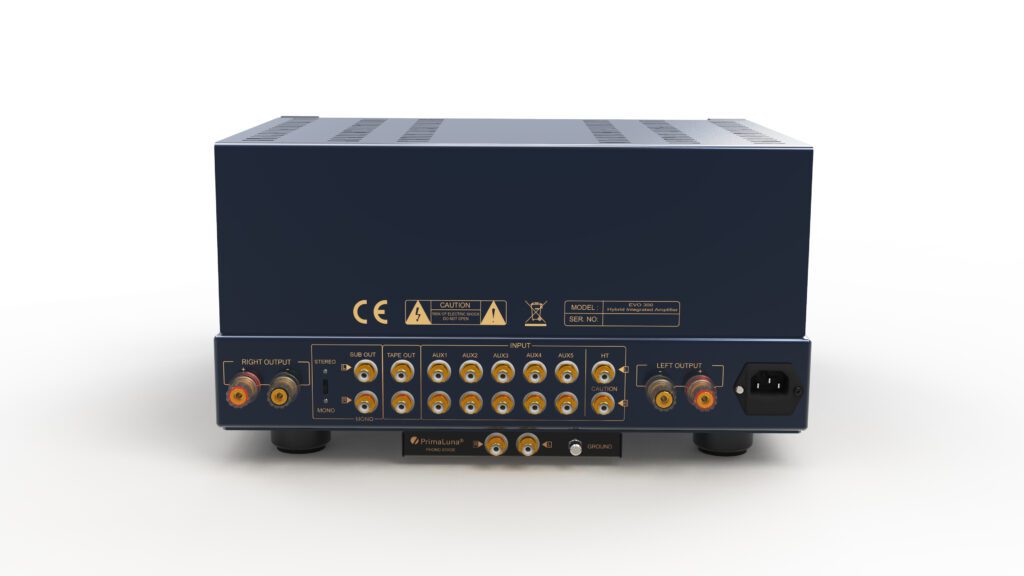
From the exterior, however, you could be forgiven for mistaking the Floyd as one of PrimaLuna’s preamplifiers. The classic PrimaLuna rolled valve cage and basic two dial layout (complete with 6.35mm headphone jack) remains the same. It’s only the absence of bigger power valves beneath the cage and the presence of two pairs of decent WBT terminals at the rear suggest anything out of the ordinary. Oh, and the weight; knocking in at a healthy 31kg, this matches the EL34 powered EVO 400 power amp in the heavy lifting category.

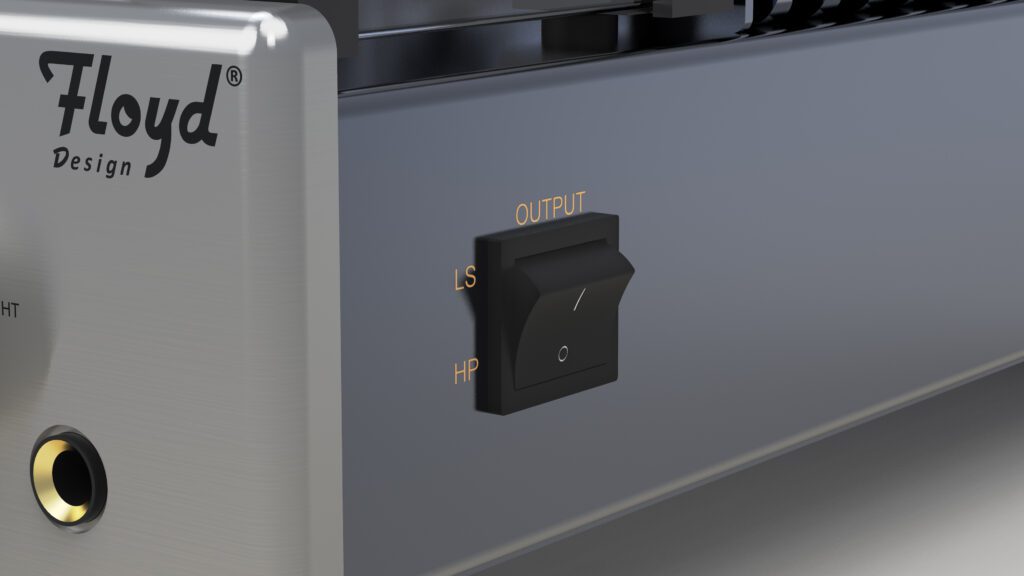
In all other areas this is classic PrimaLuna fare and one of the nice touches from the EVO range shared here is that switched headphone socket; where most autodetect the presence of a headphone jack inserted to the socket, PrimaLuna has a switch on the side that moves its operation from loudspeakers to headphones. This is because the PrimaLuna doesn’t just use a standard headphone amp circuit and believes in sonic purity to such an extent that the inclusion of that detection circuit is something else to undermine the sound of an amp. While this may cause a few ‘choice’ words if that switch is thrown without your knowledge, I think this is a good way of making a great sounding amplifier, both in loudspeaker and headphone terms.

Sound Quality

This amplifier did take a little while to come on song; as it bedded in, the soundstage seemed to increase its width and depth slightly every day and then suddenly grew some height information. Around the same time, the treble – already well integrated with the mid and bass – just suddenly shifted gears and became the perfect partner for the rest of the tonal range. It just ties together better after a few days of settling down.

PrimaLuna EVO 300 Hybrid

Like most reviewers, I have my go-to recordings that are used to pick out aspects of performance, but they quickly came and went. I was enjoying what I heard from them and so much more. I will point to one new inclusion in the roster, there for a specific reason; ‘Rejection’ from Lady In Gold by Blues Pills [Nuclear Blast]. This album is almost a perfect inversion of an ‘audiophile’ recording because it tends to sound worse the better the system; lively yet warm like a pastiche of an early 70s rock album on cheaper equipment, the better the system, the more ‘lively yet warm’ gets pushed to the back while ‘pastiche’ becomes uppermost. Here, however, it achieves a fine balance; the album is still shut in and sibilant sounding, but not so flat and uninspiring as it so often sounds on good equipment. Given what the PrimaLuna EVO 300 Hybrid was doing elsewhere with other recordings, it was the amplifiers clarity and grain-free detail that shone through.

Like other PrimaLuna amplifiers, the EVO 300 Hybrid isn’t ‘tubey’; it’s not overly lush or warm sounding. There is a spot of warmth to the sound, but the overall performance is one that’s clean, detailed, dynamic and musically insightful. I couldn’t resist playing some Pink Floyd through an amplifier from ‘Floyd Design’, but I managed to hold it in check enough to make it ‘Money’ from The Flaming Lips and Stardeath and White Dwarfs with Henry Rollins and Peaches Doing Dark Side of the Moon [Warner Brothers]… and ‘Comfortably Numb’ from Pink Floyd’s The Wall [Harvest]. The Floyd took on all the malevolent angry whispered vocals and slightly crazed sounds of the former with aplomb, and gave all the size, space, and shape needed to play the latter beautifully. In fact, ‘Money’ said more about the Floyd’s (the amp, not the band) sound; the shift from 7/8 time to 4/4 time is deliberately buried in this version, but is easy to detect, thanks to the amp’s unswerving dedication to timing, soundstage spacing and good top-end detail without harshness (other amps will never get past the robotic spring-reverb noises).

Under-described

I think one of the most under-described parts of a good sounding amplifier is how it can affect you beyond the strictly audible. Listen to something emotive and you get goosebumps or even get misty eyed. Play something soulful and you feel compelled to tap your feet. Play the soundtrack to The Wicker Man and you’ll start sacrificing Scottish policemen to the corn gods. That kind of thing. The PrimaLuna EVO 300 Hybrid excels at putting your autonomous nervous system on notice. When you get goosebumps listening to ‘Hurricane’ by Bob Dylan [Desire, CBS] or ‘Kashmir’ by Led Zeppelin [Physical Graffiti, Swan Song] – despite playing those tracks for the millionth time – you know this amp is doing something special. A lot of that ‘special’ is down to the Floyd’s soundstaging, the detail without brash and harsh edges, its richness of tone, overall balance and control over the bass, that is at once deep and rhythmically enjoyable. Yet, that also sums up many amplifiers, and the PrimaLuna EVO 300 Hybrid has something more up its sleeve.

PrimaLuna EVO 300 Hybrid

Neologisms are often ugly little beasts, and my newly minted one is no different; punchifinement. It’s a portmanteau word describing that rare ability the PrimaLuna EVO 300 Hybrid has of combining dynamic ‘punch’ with a satisfying sense of extraordinary ‘refinement’ and I feel this both defines the sound of this amplifier and is its most unique feature. It’s unique because it reads like a contradiction in terms; something described in terms best used for boxing isn’t necessarily a good match with terms found in discussing lace. But it works; not like Ali’s poetry outside the ring, but when he really did ‘float like a butterfly, sting like a bee’.

Rachmaninov’s Symphonic Dances [Zinman, Telarc] are a perfect example of this neologism in action: the music has energy, dynamism and ‘punch’ and to undermine this turns this powerful piece into something flat and pallid, but it’s also refined and at times mannered and to undermine that refinement turns the piece into something with nothing more than fireworks. To portray both at once asks much of the system, and typically leaves it sounding a little wanting. The PrimaLuna EVO 300 Hybrid takes this difficult track in its stride, never once pulling back from the visceral sound it requires but always portraying that gutsy performance with all the legato filigree detail refined and intact. And once you unlock that combination in your head, you discover just how rare it is outside of the stereo stratosphere.

Low-level joy

There’s another little joy to this amplifier; it sounds great at low levels. I need to temper this slightly by saying the volume control can get extremely sensitive at these lower points on the volume dial, so you need to be a bit of a safe-cracker in setting the perfect volume setting, but you are rewarded with the same tonal balance and combination of richness, speed, dynamics and punchiness the Floyd does so well. Interestingly, and I’m not sure why this happens, it sounds perceptually ‘louder’ than most amps when played quietly for late-night listening. This is not actually ‘more volume’, just that its dynamic range is so uncompromised at those lower volume levels, it seems like you are playing louder… but the tried and trusted combination of test protocols (checking with an SPL meter and detecting no whining sounds from a unfreshly awakened wife) confirmed that it was the same volume range.

Even the headphone amplifier – which is so often a bit of an afterthought in high-end amplifier circles – sounds great. It’s got the same broad characteristics as the amplifier driving a pair of loudspeakers (although the soundstaging isn’t quite as broad, but this is more down to the nature of headphone listening than the amp per se), and had that aforementioned ‘punchifinement’ I heard throughout to a similar degree.

PrimaLuna EVO 300 Hybrid

The PrimaLuna EVO 300 Hybrid isn’t beyond criticism, but those criticisms are minor in the extreme. Sure, if you are using the EVO 300 Hybrid with a truly amp-crushing loudspeaker at ear-bending levels, you are going to need something even more powerful. And more powerful integrated amplifiers that also sound good do exist, albeit generally at a price above that of the EVO 300 Hybrid, and the Krell K-300i springs to mind. Staying with that integrated amp also shows two other observations; the absence of a built-in DAC or balanced inputs. In truth, I’d rather not have either of these included just to tick a couple of boxes and I’d rather a sweet-singing single-ended design like the Floyd than an amp that sounded less good but came with built-in DAC and included some XLRs. But to get an amp that covers all these minor downsides and sounds as good as the PrimaLuna EVO 300 Hybrid, you are talking a major uptick in pricing. Often, you’ll pay more and get less… that’s long been the beauty of PrimaLuna products in general and it certainly is the case here.

Conclusion

I’d love to take claim for this, but the news is already out about how damn good the PrimaLuna EVO 300 Hybrid sounds. I was supposed to get one of these amps at the tail end of 2021, but the first batch sold out as they were being made. And so did the second, and it looks as if that trend is set to continue. It’s not hard to see why though; a lot of those EVO 300 Hybrids go to distributors, dealers, and everyone else who gets to listen to them before they make it to the public. Everyone’s trying on a few new excuses not to give the amp back once heard and I’m going with distractions and subject changes. I’ve even tried a few old homework excuses, but no one believes that I left the amp on the back seat of the bus. I don’t know how long that will last but I am really reluctant to part company with this excellent sounding amplifier.

Technical specifications

  • Type Integrated hybrid amplifier
  • Inputs 5× RCA stereo pairs, 1× home theatre pass through RCA stereo pair
  • Outputs 1× RCA stereo pair tape outputs, 2× subwoofer outputs RCA (stereo or dual mono), 6.35mm headphone jack, loudspeaker terminals
  • Power output >100W per channel (typically 115W) into 8Ω, >150W per channel (typically 170W) into 4Ω
  • Tube Complement 6× 12AU7
  • Frequency Response 10Hz–80kHz ±3dB
  • Damping factor 160 (1kHz)
  • THD <0.2% 100W @ 8Ω
  • S/N Ratio -105dB (A weighted)
  • Input impedance 30kΩ
  • Input sensitivity 415mV
  • Total Gain (Pre+Power amp) 37.2dB (7dB+30.2db)
  • Finish Black, brushed aluminium
  • Dimension (L×W×H) 40.5 × 38.5 × 20.5cm
  • Weight 31kg
  • Price £6,498

Manufacturer

PrimaLuna

URL: primaluna.nl

UK Distributor

Absolute Sounds

Tel: +44(0)20 8971 3909

URL: absolutesounds.com

Read more Absolute Sounds reviews here

Back to Reviews

Dynaudio Emit 20

There are hundreds of loudspeaker companies now, but few have the clout of Dynaudio. The company is one of the big names in audio design for a reason; unlike many brands that are bound by the strictures of other people’s drive units, Dynaudio has long made its own drivers. This makes a profound difference to the performance of its higher end models, but can it really make a difference to the more down to earth Emit 20 stand‑mount loudspeaker? Two words… hell yes!

The Emit series is Dynaudio’s entry level range and the Emit 20 is the larger of two stand-mount models that sits alongside two pairs of floorstanders and a centre channel with prices starting at just over £600.

The Emit 20 replaces the Emit M20, which makes use of a 140mm main driver; the newcomer offers a long throw, 180mm drive unit that affords the new model deeper bass and greater power handling. Dynaudio uses magnesium silicate polymer drivers, which are bonded to the voice coil for maximum stiffness; that’s not a dust cap in the centre, but an intrinsic part of the driver. The company also uses aluminium wire for voice coils and winds them onto two-layer glass fibre formers; the idea being to keep weight down and thus allow maximum control.

Dynaudio Emit 20

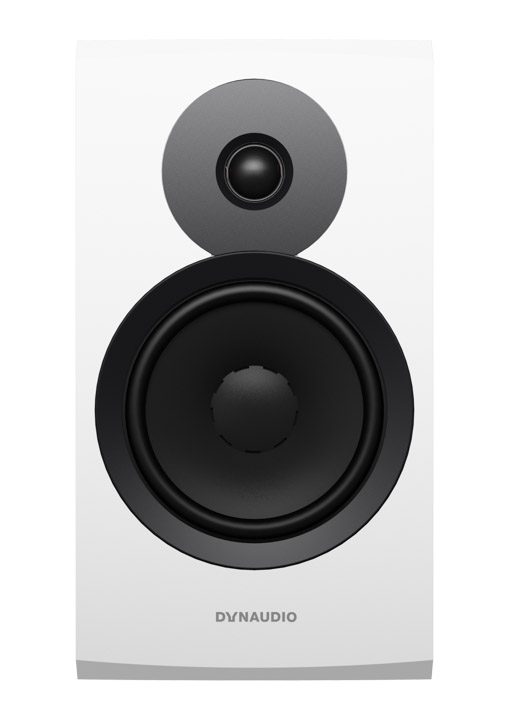
The tweeter is what Dynaudio call a Cerotar type; it’s a 28mm soft dome that is derived from the HF unit found in the decidedly up-market Confidence range and incorporates a Hexis device, which sounds like a Star Trek McGuffin but was in fact conceived to smooth the response and reduce unwanted resonance. It’s a 3D printed plastic latticework dome that sits beneath the fabric dome and therefore effects the airflow and looks like a relatively inexpensive yet cunning piece of technology.

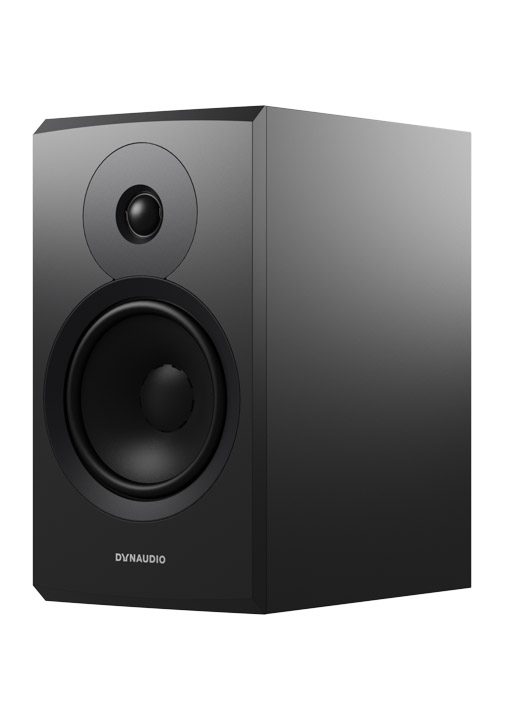
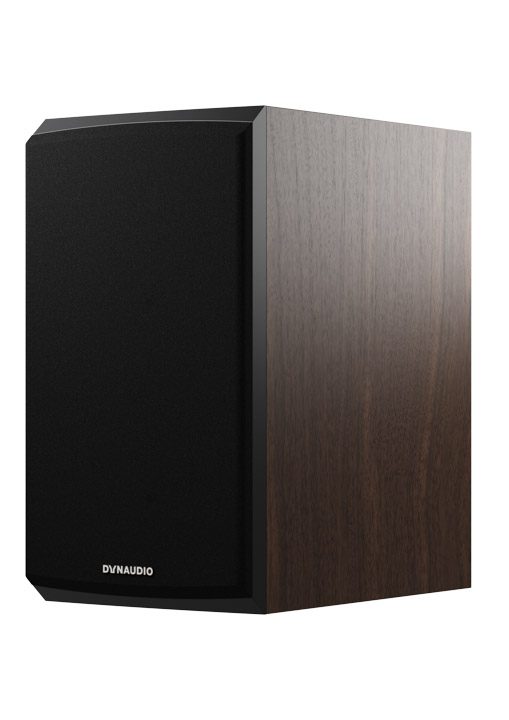
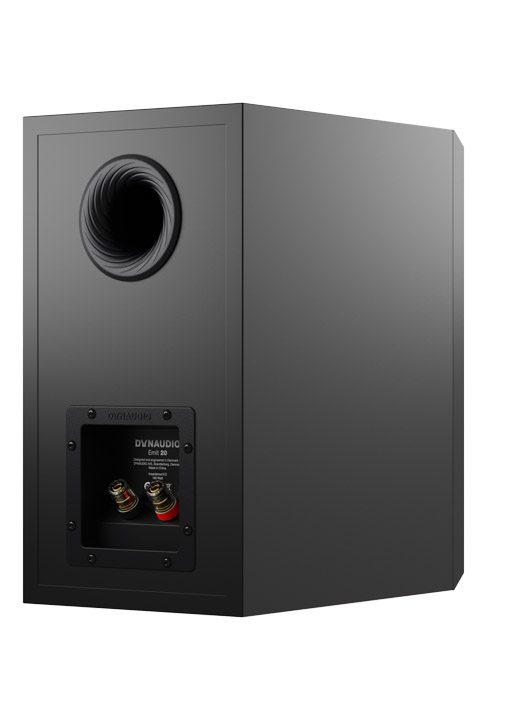
Emit 20’s cabinet has that Danish simplicity of design that looks so right when it’s done well but – as other brands may have noticed – is difficult to achieve in an entry level product. Its cabinet has a thick front baffle with profiled top and bottom edges and driver fixings hidden beneath trims. The main wrap is not real wood but a good imitation thereof in the walnut version sent for review. On the back are single wire terminals in an inset tray and a reflex port with spiral sculpting on the flared exit, which both looks good and is a method for keeping output from the port smooth. The Emit 20s are supplied with robust magnetic protectors for the tweeters in transit, which is both laudable and unusual at this end of the market. There’s also pair of foam bungs and these can be used to partially block the reflex port in situations where the speakers have to be placed near to room boundaries that might otherwise exaggerate the bass. Port bungs do not generally enhance dynamics, however, so don’t use them if you don’t need to.

Set course for Jupiter!

Ask any loudspeaker designer and they will (sometimes reluctantly) admit that an affordable two-way stand-mount is very easy to design and very hard to design well. One of the ways Dynaudio achieves this task is by not cutting any corners in the development… of course having access to the company’s Jupiter free-field measuring facility in its Danish HQ helps! To the handful of speaker builders who know what that means, their interpretation might be a couple of long poles in a quiet field, but Dynaudio has a 13m cubed space with a device for placing a loudspeaker at its centre, as far away from boundaries as possible. I asked Dynaudio’s senior acoustics engineer Stephen Entwistle how this works; “Jupiter uses a microphone arm which has 31 microphones mounted on a 3m radius and then time window out the reflections, we do the same for the low frequency reflections. These combined with a corner measurement (referenced to measurements made in true anechoic half-space conditions, outside at the local football club) allow us to measure a ‘simulated free-field’ response on-axis from 10 Hz–96 kHz and a full sphere around the loudspeaker with a 6° angular resolution up to 20 kHz in approximately 30 mins. The on-axis microphone has an extended high frequency response beyond 100 kHz, but the maximum sample rate we run is 128 kHz.

Dynaudio Emit 20

“Using Jupiter allows us more freedom in the room, but the most notable reason is the use of the large microphone arm which allows us to capture the full sphere in a reasonably short period of time.” In other words, Dynaudio’s approach is both highly accurate and fast, which is what you want when developing any product. Of course, having a large body of work to draw upon and some very high end designs that can trickle down into more attainable and affordable models all help, but the Dynaudio ethos begins and ends with extensive research and development in its product creation. And this shows in the loudspeakers Dynaudio produces, seemingly irrespective of price point.

I found that the Emit 20s needed more space than usual for their size; a gap of 40cm between them and the wall giving a good tonal balance when 60cm stands were used. Other speakers of this variety can often be placed much closer in my relatively lean sounding room. Initially I hooked them up to a Moor Amps Angel 6 power amplifier which is a bit of a beast for such affordable speakers but they certainly didn’t mind, in fact the more I experimented with the Dynaudios the more it became apparent that they are extremely revealing of partnering equipment. They are more neutral than many loudspeakers at their price; if a speaker’s balance changes with source and amplifier to the degree that this one does it must be pretty revealing and have minimal character of its own.

Unusually refined

The Emit 20s are also unusually refined for their price; the work that Dynaudio has done on the tweeter – and for that matter the crossover and main driver – has resulted in a degree of sophistication that is uncommon for a sub-£1,000 loudspeaker. This might need some care in the selection of matching entry-level electronics; where coarse-sounding electronics might be able to ‘hide’ behind a woolly sounding loudspeaker, that lack of high-frequency finesse has no safe harbour here. That being said, ‘reports from the front line’ suggest many good pairings with entry level electronics. Regardless, with my reference Angel 6, all was rather good with the sound being articulate and open right from the off; the sound being crisp, rhythmically coherent and unhurried. These first two qualities can be found in a range of competing speakers but the last is an indication of the sophistication on offer from this one alone . It allows the plushness of Steely Dan’s ‘Babylon Sisters’ [Gaucho, MCA] to flood through with no addition of grain or edginess. This track also highlights how little run-in these loudspeakers need, but how much they gain from the process; it sounded a little restrained at first, but a week down the line this quality had all but vanished.

Dynaudio Emit 20

I found the best balance was with the Emit 20s directly on axis but this is a taste and room thing and it’s always a good idea to experiment with orientation and placement with any speaker. The bass isn’t ‘prodigious’ but it’s clean and well extended and this is a good thing; it’s common for ported stand-mount speakers to be designed with ‘impressive’ bass that sounds great on first exposure in the demonstration room but can be fatiguing in the long term because it’s ultimately quite distorted. Dynaudio has clearly gone for a more sensible balance that allows these speakers to deliver bass you can feel but also bass that remains controlled and is thus tuneful. It doesn’t mask what’s going on in the midrange either; lyrics are clear and there’s plenty of detail too. Radiohead’s ‘Decks Dark’ [A Moon Shaped Pool, XL] washes over you in a more fluent fashion than is often the case; some pricier speakers present stronger imaging on this track but I like the way that the music comes before the sonic effects in the Emit 20s presentation.

A different class

I tried another amplifier in the form of Aavik’s I-180, which is a Class D design with a very different sound to most of the Class A/B options I used in the review. This worked rather well delivering a distinctly open sound with impressively natural highs and precise bass, and once again the Dynaudio’s ability to track those changes in amplifier are indicative of its class. The timing wasn’t as strong through this amp, but it still had the power to engage especially with more intense pieces of music like Binker and Moses’ latest album Feeding the Machine [Gearbox]; here the sax and drum duo lay down some blistering tunes that many similarly priced alternatives would struggle to deliver with such calm clarity. I rarely find affordable speakers that can do saxophone well, especially when that sax is played with vigour, but these delivered the power without any added glare.

Dynaudio are to be congratulated on the Emit 20. This is the sort of loudspeaker that will grow with a system, revealing the benefits of upgrades to source and amplifier. It’s a very grown-up speaker in its own right; don’t let the real-world pricing fool you, this is the real deal.

Technical specifications

  • Type Two-way, two-driver stand-mount monitor with rear-ported bass reflex enclosure
  • Driver complement One 28mm soft dome tweeter, one 180mm MSP mid-bass driver
  • Frequency response 53Hz–25kHz +/-3dB
  • Crossover frequency 3.8kHz
  • Impedance 6 Ohms
  • Sensitivity 86dB/W/m
  • Dimensions (H×W×D) 370 × 205 × 311.5mm
  • Weight 10.3kg/each
  • Finishes Walnut , Black, White
  • Price £825 per pair

Manufacturer

Dynaudio A/S

Distributor

Dynaudio UK

Tel: +44(0)7852 867661

URL: dynaudio.com

Back to Reviews

NXEars Opera

NXEars is one of many newcomers in the personal audio space, but it comes with a lot of back-story and all of it is good. The brand was founded in California and builds in China; its founder was one of the brains behind NuForce and a former Knowles engineer, which gives the company a unique insight into what a pair of IEMs will be used with, and the construction of drivers used in most earphones, custom and universal in-ears.

NXEars may be comparatively new, but its three-strong range has already caught the attention of the personal audio cognoscenti and the Sonata, Basso and the flagship three-way, eight-driver Opera we’re testing here. Two distinct technologies unique to the brand have been noticed in a very contended world.

NXEars Opera

All three IEMs use NXEar’s unique Aperiodic Ground Loading (AGL) system, which manages to retain the core of a good IEM (shutting out the world outside) while reducing the pressure build-up that comes from pushing a mostly rigid structure into your ear. AGL restores the balance of natural pressure that occurs in the ear canal. In addition, the Opera uses NXEars’ own ‘Linear Phase Crossover’ system that corrects the irregular phasing that is an unfortunate function of multi-driver setups; even the eight Knowles balanced armature drivers, tuned and used in the Opera.

All eight drive units would occupy the same physical space in an ideal world, but this is impossible. Those different driver positions and a range of bandwidths from each driver means phase issues, even frequency cancellations. These problems go away by adding time and phase alignment to the crossover.

Opera storage

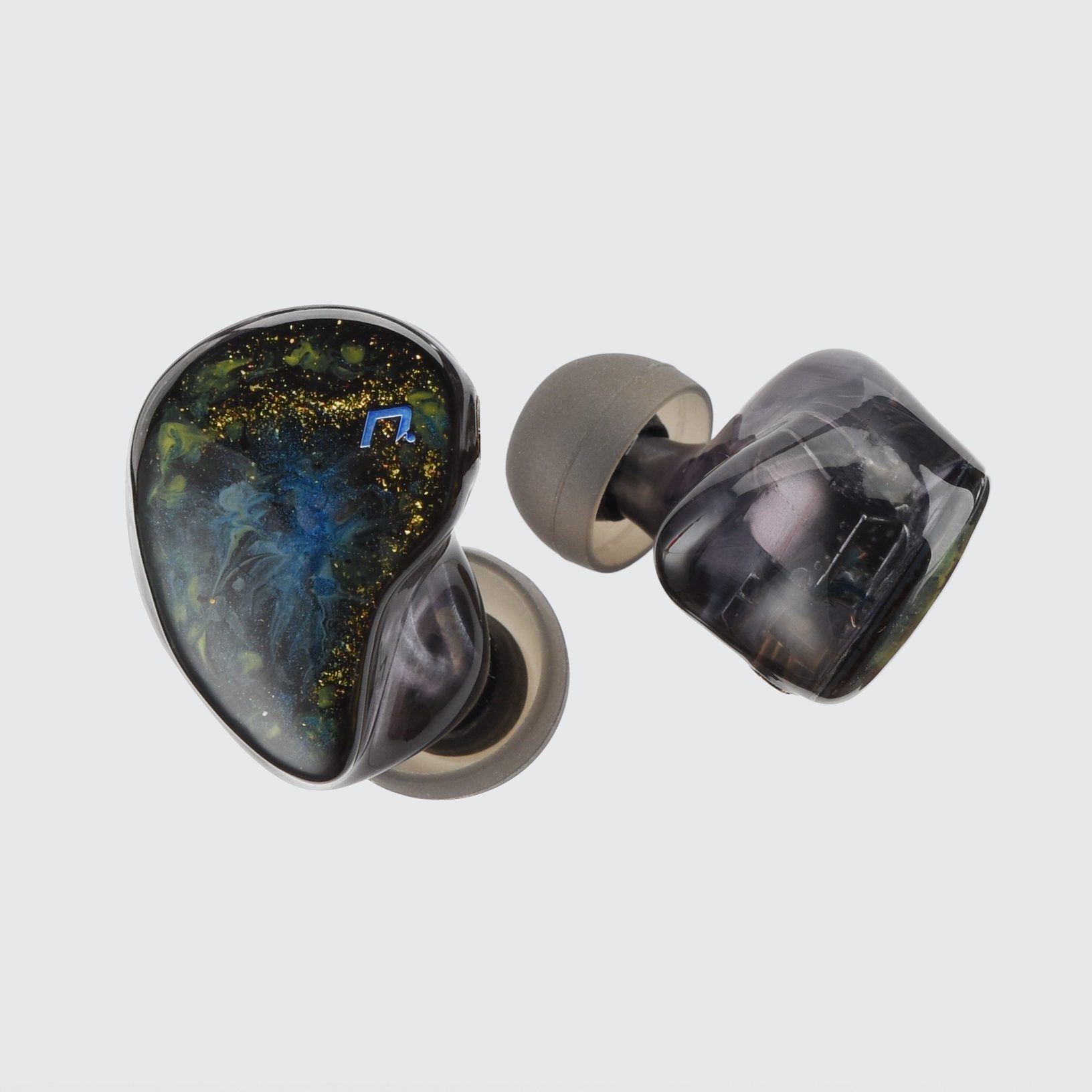
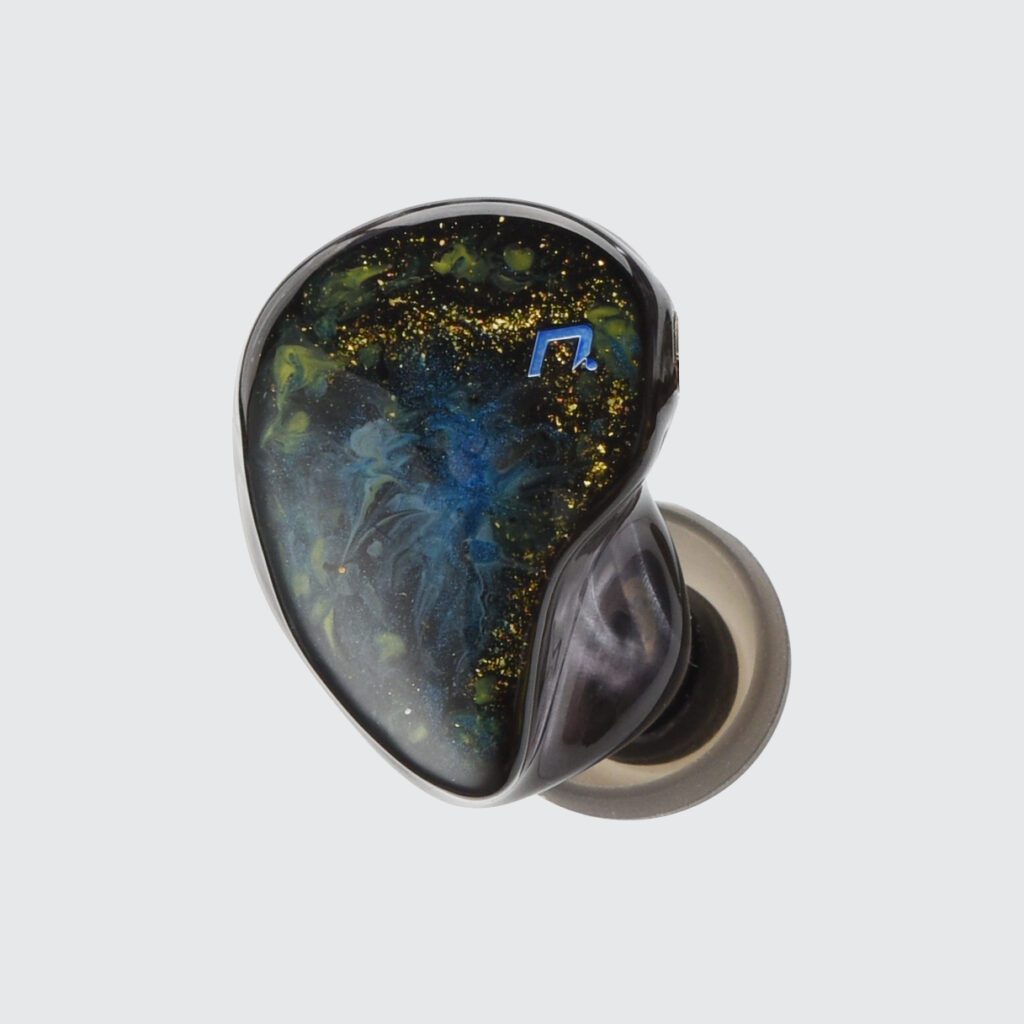
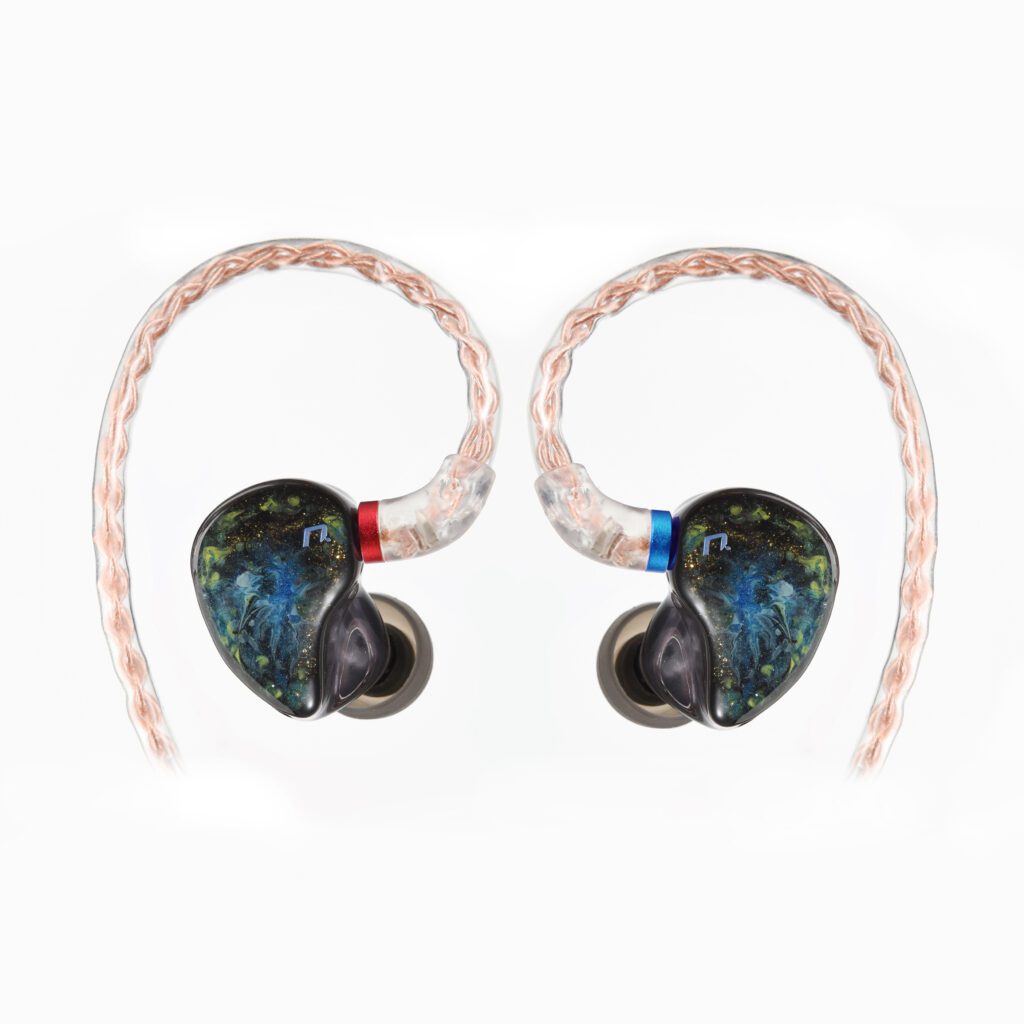
Opera comes in a black storage case in a nice white box with an NXEars on the outside. Inside are the Operas themselves, with a good Mono-crystal 6N copper, eight-conductor braided 3.5mm cable, four pairs of silicone and two pairs of foam ear tips, some clips, a smaller pocketable case, a cleaning tool and some documentation case candy. The 3D-printed earpieces are made of semi-transparent dark blue with a distinctive Stardust Blue design on the outer facing.

Each model’s outer facing is unique, and the logo is etched into this front face. The small logo is ‘subtle’, to the point of almost complete invisibility. As with most Custom and Universal-Fit IEMs, the Opera ‘screws’ into your ear, making a complete seal, then the cable has a curved strain relief that hooks over the top of your ear.

NXEars Opera

The Opera IEM has a standard MMCX connector and nozzle length to allow aftermarket cables and ear-tips. While the cable is good enough not to need an upgrade (although upgrades do improve the performance), this is a good plan because the choice of ear-tip is vital. As the AGL system relieves pressure build-up in the ear canal, the performance of the Opera is strongly contingent on making a good seal with the ear-tip itself.

However, unless they are a dreadful fit for your ears, I would recommend using the medium silicone tips fitted as supplied for the first 50 hours of listening to let the Opera’s drivers loosen up, then find the best fit knowing the Opera’s tonal balance is as good as it’s ever going to get.

Single driver over balanced armatures

Of late, I’ve found myself more drawn to single-driver IEMs rather than models with multiple balanced armatures. This is because many such models trade ‘long-term listening’ for ‘short-term excitement’; multiple drivers often sound exciting initially but ultimately wearing. The Opera is a delightful exception; the sound is detailed but not aggressively so, with a more natural and traditional loudspeaker-like presentation in all the ways that count (as in ‘refinement’ rather than ‘box coloration’ of course). It has the insight and drive of good IEMs but without the overtly exuberant or hyper-energetic sound commonly associated with the breed. There’s rich, chocolatey darkness to the sound that is more beguiling than muddy, which is truly excellent.

That richness extends down into the midrange, with a valve-like warmth and naturalness to the sound. Perhaps more significantly, there’s a seamless coherence to the sound across the frequency range that gives the Opera a sort of analogue-like openness and musical integrity often lost on multi-way IEMs. This, coupled with a surprisingly large and delateralised (perceived to be way outside of the listener’s head) soundstage, make the Operas a model of refinement in the true high-end audio sense.

It’s not all rosy, however. Or perhaps the point is it is a little too rosy at times. While I like the Opera very much for not making a bright, forward, and uneven presentation, by the same token, this can work against the Opera when playing more laid-back music, especially older, slightly rolled-off treble sounds. This can end up sounding too soft and saccharine sounding at times. But this is a trade-off I’d happily make compared to the sharp stinging treble of many IEMs.

Where the Opera shows itself to be a true star, though is in the lower regions. Bass is at once fast and warm and quite ‘meaty’ sounding. But perhaps what attracts me to the NXEars Opera sound is the way it doesn’t dissect the music in the way many IEMs can. It’s still an extremely analytical sound and gives you excellent insight into what’s going on with the music played, however, and instead focuses on the whole musical presentation. That suggests a more mature, sophisticated musical ear behind the voicing of the Opera and highlights how its tuning has paid off.

The pressure’s off

Finally, a word on that AGL system that reduces pressure in the ear canal, and that word is ‘wow!’. It works and delivers effortless long-term listening without that uncomfortable ‘underwater’ pressure build-up.

The NXEars Operas are at once easy to drive, easy to wear, and easy to listen to. They need a long run-in, and you must use the right ear-tips to get the most out of them, but it’s worth the effort if you crave refinement!

TECHNICAL SPECIFICATIONS

  • Type: Balanced-armature, universal-fit in-ears
  • Impedance: 18 ohms
  • Sensitivity: 100dB
  • Price: $799

Manufacturer:

NXEars

URL: nxears.com

Back to Reviews

Interview: The Boo Radleys

The last time I spoke to Simon ‘Sice’ Rowbottom, frontman/guitarist with The Boo Radleys, was almost 25 years ago – before a gig in Portsmouth, Hampshire.

“Oh my God – that’s mad!” he exclaims, talking to me over Zoom from his home in Oxfordshire, in late November 2021.

Since our initial meeting, in 1997, the ‘90s shoegazers-turned-experimental-pop-pioneers, who were signed to Alan McGee’s Creation Records, have disbanded – they split up in 1999 – and got back together, albeit without chief songwriter, Martin Carr.

Last year, the three remaining members, Rowbottom, bassist Tim Brown and drummer Rob Cieka, announced they were reforming and put out a single, ‘A Full Syringe And Memories Of You’ – the breeziest and catchiest song about euthanasia that you’ll ever hear.

They followed it up with ‘I’ve Had Enough I’m Out’ – another infectious guitar pop tune, with soaring strings and harmonies, which tackled organised religion, and the melancholy, synth-led, New Order-esque ‘You And Me.’

All three songs feature on their new album, Keep On With Falling, which is out in March.

It’s a strong record – full of great melodies, cinematic arrangements and nods to ‘80s pop, like Duran Duran and The Human League, as well as some of the slightly more offbeat Boo Radleys influences of old, like dub, although it isn’t as out there as some of their previous material.

During our interview, Rowbottom hints that their more adventurous side may come out further down the line, as there are at least two more albums planned after this one…

SH: Why did you decide to reform?

SR: It started a couple of years ago, with me and Tim talking about it. He came to my fiftieth birthday party, and we started chatting. Our kids were getting older and going to university, which meant we were finding time to do more music again. We were both writing, so we swapped stuff – that’s how it started. I was also doing some gigs – I’d always said no to it for ages, but I got the bug again. I was going out with an acoustic guitar and playing some of my Eggman [solo project] stuff – Tim came to see one of those gigs and that kicked it off. Then we got Rob in on drums.

You’ve played some comeback gigs. How were they?

They were unbelievable – absolutely fantastic. They were very much a celebration – it was really lovely. We played new and old stuff. It was nice to go out and play to people. There were some people who’d got into us after we’d split up – they never thought they would get the chance to see us.

How is it being back in the band and making music without Martin?

That was kind of an afterthought… Tim’s a really good guitarist – he essentially taught Martin how to play guitar – so, he did some of the guitars and also left on some of the guitar stuff that I’d done. We ended up with the record being pretty finished, so then we were like: ‘What are we going to do with it?’

For a while we toyed with it being released as my solo stuff, but then I did a gig which was advertised as ‘Sice doing The Boo Radleys’ which it shouldn’t have been. Martin got in touch and said: ‘Don’t call yourself that – just call yourself The Boo Radleys.’

So, he gave you his blessing?

Yes, but blessing is a strange word… He’s resigned to it, but I don’t think he was particularly happy about it.

The problem is that it wasn’t the way The Boo Radleys used to work – Martin used to write all the songs, we would work out our parts and then we could come together in the studio. So, when I went to him and said, ‘Look – we’ve done this – do you want to be a part of it?’, I think that’s why he said no.

In his mind, if we were going to do a different way of working, it wouldn’t have been the same. He’s been a solo artist for 20 years – he’s so used to doing his own thing. Stepping out of that, back into a collaborative thing, probably wasn’t his bag, really.

Let’s talk about the new album, Keep On With Falling. Did Covid impact on you making it? How did it affect the record?

It slowed it down, and pushed back the live stuff, but in some ways, it didn’t make a lot of difference with the conception and the recording of the album.

The fact we were able to do it digitally [and remotely] made it all possible – Tim lives in Northern Ireland and Rob lives in Manchester.

If we’d have had to get together physically it wouldn’t have happened – most of the stuff, apart from a couple of days doing live drums and vocals, was done by sending files back and forth. It’s an incredible way to make music.

And very different from how you made the previous Boo Radleys albums…

The whole process of being in a studio was expensive and soul-destroying – we used to get knackered.

We had six weeks or two months and it was a very unproductive way of working.

You had to get it done and then it had to be mixed, but you couldn’t change anything – now, it’s brilliant. You can sit and listen to tracks, leave them for a while and come back to them. You can think of a brilliant harmony or a brilliant guitar line and then add it.

We produced the album ourselves. All three of us are involved in the songwriting process, but it usually starts off with a lyric or a melody from me or Tim. He is far more musical and capable on the production side, so when I get his stuff it’s usually a lot further along. I give him and Rob carte blanche with the stuff I’ve recorded.

Tim uses Logic [music software] – he’s a music technology teacher. I do stuff with GarageBand and send him WAV files – he’s got a hell of a lot of insight and equipment.

How do you write songs?

I write on piano and acoustic guitar – I’m not one of those people who has the song and then has to go and find the backing. I feel my way through a song as I’m going – lyrically as well as musically.

I love the fact that you’ve reunited as a band after more than 20 years apart and the first song on the new record is called ‘I’ve Had Enough I’m Out…’

[Laughs].

It’s a song about organised religion, isn’t it?

Yeah – it’s my ‘growing up as a Catholic’ song and recognising the power and the sway that it has. I’ve become very anti-religious the older I’ve got. I was brought up a Catholic – I was really indoctrinated with it, and I was an altar boy.

The song is about looking back at that and seeing how much of an influence it has on a young mind and the way it controls how you see the world and how you conceptualise everything. It took a long time for me to come out of that.

The song isn’t just about Catholicism – it’s about what I see as the downside of religion.

I love the melody and the string arrangement…

When I wrote the song it was originally very sparse – almost like something off Nick Drake’s Pink Moon – but Tim got hold of it and ran with it. When it came back, I thought, ‘wow – this works brilliantly.’

A lot of the songs on the album are poppy and melodic – there are strings, horns, synths and harmonies – but with a dark, melancholy undercurrent. That’s always been a Boo Radleys trademark, hasn’t it? Even your biggest hit, ‘Wake Up Boo!’ had an element of sadness to it…

I think that’s our personalities. We’ve always been like that – we had sadness, depression and melancholy, but we also had elements to our personalities where we were quite fun-loving and party animals – we would, and still do, laugh a lot.

We love melody and harmonies so much, but you run the risk of being over-saccharine, so we’re always looking for that counterbalance. I’ve always been drawn to that – when you hear a song like ‘Eleanor Rigby’, with a dark side, it really hits home.

The title track is another great pop song, with some lovely Beach Boys-style harmonies on it…

That’s one of my songs – it’s about continuing to fail and making mistakes as part of the learning process. It started out as a piano-drone thing – almost a chant – but Tim built it up, with loads of harmonies. Tim’s quite big on The Beach Boys, but they’ve always been a bit saccharine for me.

That surprises me. I would have thought you were more ‘Beatles’ than ‘The Beach Boys’ in terms of influences?

Definitely, but we went through a huge period of discovering The Beach Boys and Brian Wilson…

I thought if you were signed to Creation, it was written into your contract that you had to like The Beach Boys, as well as Big Star, The Byrds and Neil Young…

[Laughs]. Yeah – it was in the welcome pack.

As well as the downside of religion, other themes in the new songs include euthanasia and alcoholism. You haven’t approached this comeback lightly, have you?

[Laughs].

The new album is less experimental than some of your other records. Was Martin the one who brought the weirder side to the band?

I think so – that’s a fair summation. Martin always liked novelty – he always wanted something new.

His tastes are very eclectic – I’m more in love with classic songs than he is. He was a great filter – he’d bring stuff to the band that we hadn’t heard and say, ‘you’ve got to listen to this.’

I’d think, ‘yeah – that’s absolutely brilliant, but it’s not us’, whereas Martin would want us to incorporate it.

The three of us would have to work out how it would happen – that was our task.

We haven’t got that adventurous yet – we’re still a little tentative about it, so we’re coming back with what we know, which is songs. It’s a fine balance – sometimes Martin’s adventurousness didn’t do him any favours. It’s knowing when to rein it in.

There’s a slight dub feel to a couple of the new songs – ‘I Say A Lot Of Things’ and ‘Here She Comes Again’ – while ‘Call Your Name’ is very cinematic…

‘Call Your Name’ is one of Tim’s – it feels a bit Duran Duran to me. When I listen to the album, I think it has a lot of ‘80s pop sensibilities, like The Human League, New Order and Duran Duran. That’s what we grew up with.

I can hear that. ‘You And Me’ reminds me of early New Order…

Yeah – Tim’s a huge New Order fan. One of the first covers we did was ‘True Faith’ – it was for a Peel session and we called it Boo! Faith. I love that song.

So, are you pleased with the new album?

Boo Radleys album

Yeah, but weirdly I’m more pleased about what’s coming after it.

Since we’ve started doing it again, we’ve banged out 30 songs – we’ve got another album and one after that’s already halfway there.

It’s one of the difficult things with bands –we’ve lived with the new album for so long, we’re almost past it and we’re thinking about the next stuff, but it’s a really good record.

There was always a narrative that Martin was the ‘genius’ behind The Boo Radleys. It never bothered me, but it always felt very unfair on Tim and Rob because they were a huge part of the band.

Not to take anything away from Martin, but we needed to redress the balance and say ‘Actually – that narrative wasn’t quite correct.’ If that comes out, then great.

Keep On With Falling is out now on Boostr Records.

thebooradleys.com

Back to Music

Enjoy the Music Toronto Audiofest happening soon

(October 12, 2022) Enjoy the Music.com, high-end audio’s celebrated online site for over 26 years and a leader in providing industry news, hardware reviews, and show reports, is pleased to announce that we’re sponsoring the Toronto Audiofest 2022 Exhibitor / Press Party. Show exhibitors and members of the press are invited to join us Saturday night at 6:30pm for good friends, delicious drinks, and magical music!

Toronto Audio Fest 2022 celebrates the fourth edition of its popular annual meeting from October 21st through 23rd at the Westin Airport Hotel. Located a footstep away from the Pearson Airport, the hotel will once again be transformed into a multitude of listening rooms to accommodate thousands of audio enthusiasts and hundreds of brands from the world of high-fidelity luxury audio. Visitors will hear, see, and touch many brands of audio products all under one roof.

enjoy the music toronto audiofest flyer

Toronto Audiofest is a fast-growing get-together of luxury premium audio/video manufacturers and retailers in Canada where an abundance of World Premieres is happening again this year. Come meet over 80 exhibitors, all eager to share their passion for music with you, by demonstrating some of the world’s best sound systems from $5000 to $1,000,000.

Live Performances
Set to perform live during the Toronto Audio Fest 2022 are pianist jazz singer Anne Bisson, harpist Isabelle Corriveau, cellist Vincent Bélanger, indie duo Caroline St-Louis & Stephan Ritch (Give Band). Which will all perform individually at different moments every day. Fun musical events will be enjoyed by all Toronto show attendees.

enjoy the music toronto audiofest

Vinyl Fair
For the fourth year, Toronto Audio Fest allows you to find the vinyl that you have been dreaming about! Sellers are waiting for you with their crates filled with music treasures.

enjoy the music toronto audiofest

“Enjoy the Music.com and its media partners are true leaders in uniting the industry and recognizing the importance of regional shows to bond the industry with the public,” said Sarah Tremblay of Toronto Audiofest. “We are very proud of their trust in us, and the Toronto Audiofest shares their vision that we can’t win alone. The work of the media is crucial to the development of our industry, and sponsoring our event proves that they believe in the mission of audio shows. Thank you for your generosity; we will take great care of your guests.”

“It is our shared passion for music that brings us together during luxury audio shows,” said Enjoy the Music.com’s Creative Director Steven R. Rochlin. “We’re honored to be working with Sarah Tremblay and Michel Plante of Toronto Audiofest, an enthusiastic duo who have years of experience in producing successful luxury events. Whether you’re a curious observer, novice, or seasoned audiophile expert, this incredible high-fidelity audio and video show will be showcasing everything from entry-level gear to the ultimate in top luxury high-end exotic amplification to the latest in streaming music and digital audio technology… and dare we mention room-filling loudspeakers!”

enjoy the music toronto audiofest

“Enjoy the Music.com’s sponsorship of Toronto Audiofest’s Saturday night exhibitor / press party showcases our continued support for the luxury consumer electronics premium audio industry,” said Steven R. Rochlin. “We look forward to seeing you there! As always, in the end what really matters is that you… enjoy the music.”

You can see Enjoy the Music.com’s Toronto Audiofest 2022 show report at this link.

Better Cables Blue Truth/Blue Truth Ultra

It’s easy to get really carried away with audio cable, especially in a high-end title like Hi-Fi+, where we’ve come across a significant amount of super high-end cable designs that cost as much as a new car. So, it’s refreshing to come across a brand that delivers the goods without a price tag that can frighten people at 20 paces. And Better Cables is that brand; it makes a range of solid, low-noise, low‑BS cables with very good connectors under its Blue Truth line. We looked at the Blue Truth loudspeaker cables in Issue 188 and were so impressed we wanted to try some more in the series. A Blue Truth Ultra XLR cable and Blue Truth USB cable were duly dispatched, and they do exactly what the loudspeaker cable did; offer great bang for the buck.

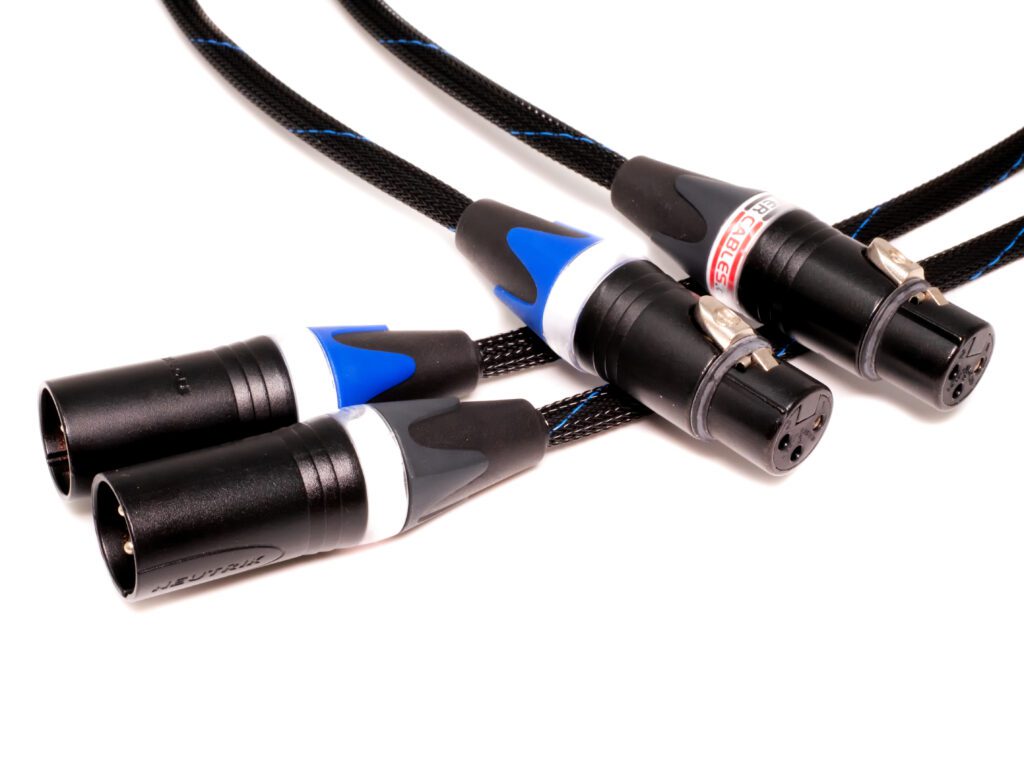
For affordable cables, the Blue Truth Ultra has some pretty high specifications. The XLR, for example, uses top-end Neutrik plugs throughout. Inside its woven outer shell (black with a subtle blue thread running through it), Blue Truth Ultra uses a dual conductor, twisted pair configuration. It features 99.999% pure silver-coated copper solid core conductors with a silver-coated 100% coverage shield of similar purity and foamed FEP Teflon dielectric. These are rated at 110Ω, making them notionally ideal for both analogue and AES/EBU digital connections.

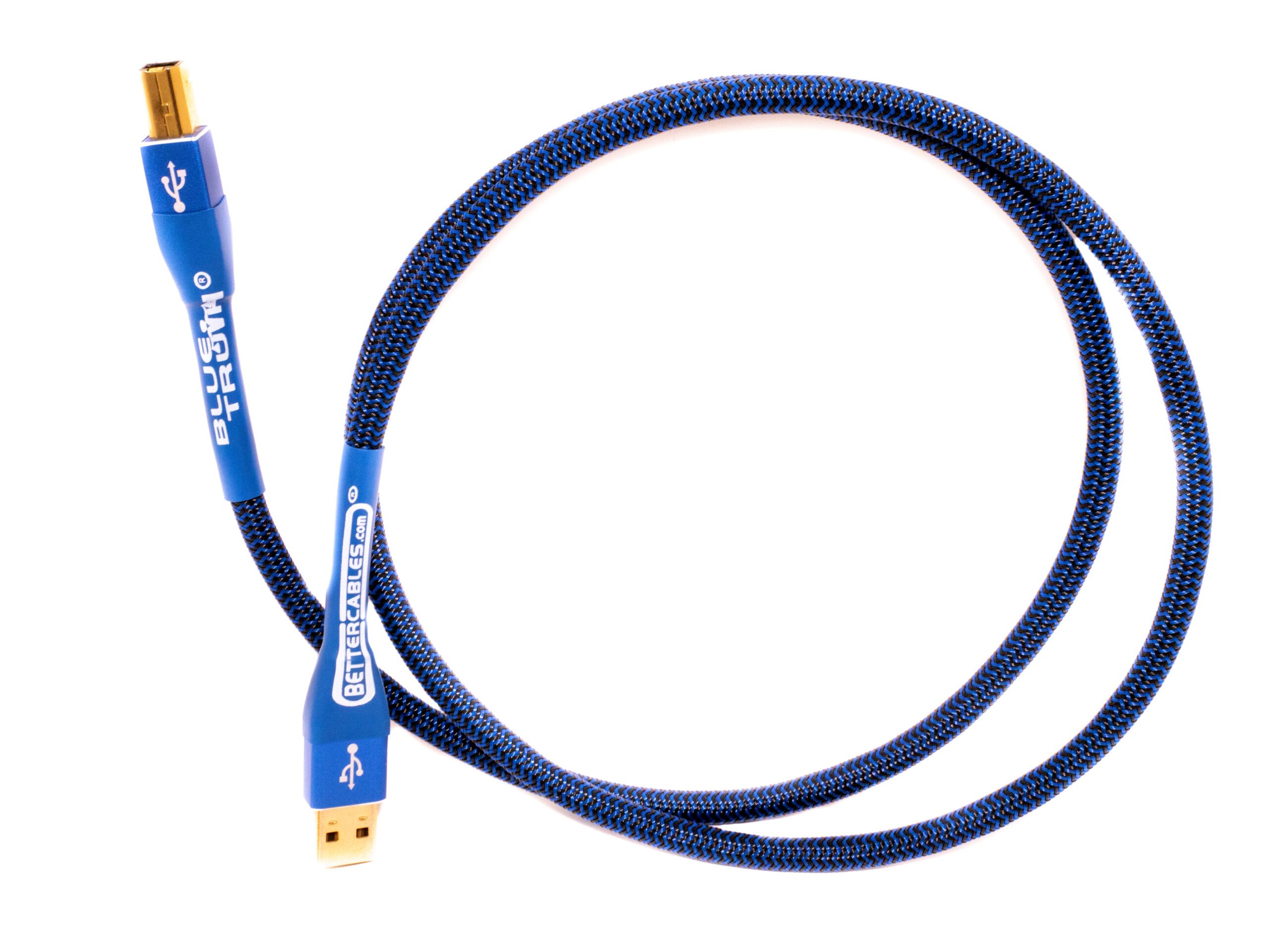
The USB cable uses four silver-coated copper conductors using HDPE as the dielectric. This gives a precise 90Ω connection, and the high-grade gold-plated type A and type B USB connectors are of similarly high grade to the Neutriks used in the XLR.

The power problem

A problem unique to USB that Blue Truth addresses directly is that – unlike almost all other audio signal cables – two of the four conductors inside a USB cable potentially provide power from the host device. That 5V voltage can be a source of noise on the data conductor, which is why Better Cables doubles down on shielding that data pathway, using a combination of two layers of aluminium isolation; a 100% coverage foil and an 85% coverage braid.

Blue Truth Ultra XLR needs some burning-in to remove an out-of-the-packet zing to the upper midrange. Still, a thorough run-in with a Blue Horizons cable burner-inner removes that slight metallic edge to the sound. Still, it leaves the extension and the detail and considerably opens the soundstage. I let the cable run in for a long weekend before commencing. The USB cable didn’t need the same degree of attention (and I don’t have a USB connection for my Blue Horizon cable burner), but I gave it a few days of digital feed before critical listening.

These are very detailed and analytical cables, with the XLR, in particular, having a forward, expressive presentation. I made some quick and dirty comparisons between Blue Truth Ultra using Burmester’s designs, Nordost’s Blue Heaven, and Cardas Clear when connecting a Burmester 088 preamp and 911 Mk 3 power amplifier. This might seem like over-egging the pudding (using a relatively inexpensive XLR cable between two Top Line products costing just this side of £40,000). Still, it exposed the cable and highlighted any issues it might have… and the Blue Truth Ultra didn’t let the side down. In many respects, Blue Truth Ultra went toe-to-toe with Nordost Blue Heaven, although the additional speed and poise of the Nordost design ultimately showed what spending more buys you. Similarly, the Cardas Clear XLR retained a greater sense of musical refinement and naturalness that Blue Truth Ultra can only hint at.

Substantial

If anything, the changes brought about by the USB cable were even more substantial than with the XLR. This is perhaps understandable given that XLR’s pro audio use eliminates noise across long cables, so any cable characteristics are also likely minimised. But XLR’s inherent noise-busting notwithstanding, the improvement Blue Truth brought to USB was marked. Like its Ultra analogue sibling, Blue Truth is extremely detailed across the board, with extremely clean treble and deep, stentorian bass. Unlike the XLR cable, Blue Truth USB has a sense of effortless refinement and ‘listenability’ that is at odds with Blue Truth Ultra XLR’s more expressive presentation. Both are also good at broad-brushstroke dynamic range and close-combat microdynamics. However, I’d give the XLR the edge in the macrodynamic world, and the USB takes the microdynamic prize.

This brings me to my only caveat with Blue Truth in general; while USB is usually outside the purview of ‘cable loom’ thinking, the sonic difference between USB and both XLR and loudspeaker cable is marked. The USB is more rounded and relaxed than the forward nature of the analogue cables that carry the same name. I’d go so far as to say those who like Blue Truth USB might not be as smitten with Blue Truth Ultra XLR and vice versa. They are both equally good in outright terms but different.

Not filters

OK, so if you are wanting your cables to be filters these are not the cables for you. And if you are looking for that ‘the whole is greater than the sum of the parts’ synergy, you’ll need to keep looking (and probably looking at an order of magnitude more expensive). But both Blue Truth cables offer a glimpse into a much bigger world of high-end cable design, with both the XLR and USB punching above their respective weight classes.

Better Cables has come up with the goods with Blue Truth Ultra XLR and Blue Truth USB but – in my opinion – especially the latter. Both represent fine introductions to the world of high-end cables without necessarily spending high-end bucks. Of the two, I find the USB to be the show’s real star, but the XLR is no slouch either and, after a good run-in, does the Better Cables ‘punching up’ thing well. Both are well worth seeking out!

Price and Contact details

  • Blue Truth Ultra XLR: $239.95/1m pair as tested
  • Blue Truth USB: $169.95/1.5m as tested

Manufacturer:

Better Cables

URL: bettercables.com 


Back to Reviews