Up to 37% in savings when you subscribe to hi-fi+
hifi-logo-footer

Begin typing your search above and press return to search. Press Esc to cancel.

Prism Sound Callia headphone DAC preamplifier

To the audiophile, Prism Sound might not be the first name that trips off the tongue when it comes to high-quality digital audio coming out of the Cambridgeshire countryside. But, if you are in the studio, broadcast, or even audio test equipment world, this specialist from the tiny village of Stretham is a name to be reckoned with. This year, Prism Sound crossed the audio Rubicon and has made its first domestic product, the Callia DAC with built in headphone amplifier and preamp.

Essentially the Prism Sound Callia uses the form factor, some of the ergonomics and much of the digital nous of Prism’s Lyra USB interface; in the process gaining domestic inputs and outputs, but losing an A/D converter. Callia also supports RCA and Toslink S/PDIF, and the RCA input can be used in a professional capacity as it supports AES3-ID. In terms of formats, the Audio Class 2.0 USB input supports DSD over DoP to DSD128, and PCM to 32‑bit word lengths and 384kHz sampling rates. However, sampling frequencies beyond 192kHz are passed through a high-performance decimation filter, so hunting down 32/384 files isn’t important in this case. S/PDIF supports PCM up to 24‑bit word lengths, with multiples of 44.1kHz and 48kHz sampling rates up to 192kHz, and DSD64 within a DoP frame.


In terms of technology, Prism goes with an ARM Cortex digital processor, but relies heavily on Prism Sound’s own circuit architecture and reclocking stages. The last is the deliciously named CleverClox hybrid phase-locked loop to act as clock recovery taken from either local or S/PDIF input. This gives a ±50ppm local clock accuracy and a greater than 60dB/decade above 100Hz jitter rejection. This is a balanced set of specifications; as good as it gets without essentially hand-built, tight component matching that demands an order of magnitude more expense, which results in potentially tiny overall improvements. In other words, the Callia sits right on the cusp of the Law of Diminishing Returns as it applies to digital audio.

Although the Callia is a fully digital preamp with no analogue inputs. There are both single-ended RCA and balanced XLR stereo outputs, and these are variable output and controlled from the larger of the two front panel knobs (a resistive-feel potentiometer with a ring of blue LEDs to denote actual volume level). This can also be set to fixed output on that four-switch DIP panel on the rear of the Callia. This is more of a desktop digital ‘hub’ than direct replacement to an existing preamplifier, in part because of the absence of a remote option.Prism Sound went for a high-current, low-impedance headphone amp, with a series of rear mounted DIP switches on the rear panel to match the impedance of your headphones. The options are relatively limited here; less than 32 ohms, between 32 and 50 ohms, or greater than 50 ohms. Three of the four positions on the DIP switch panel mute the main output when a pair of headphones are connected, although one option allows both to play simultaneously, each with its own volume control. This DIP panel also supports legacy and current settings for DSD headroom (or line-up level) for all outputs. It’s worth a quick aside into the packaging and documentation supplied with the Callia because it shows up just how far a lot of domestic audio needs to come. The Prism Sound arrives in a well-made black with blue contrast clamshell box, the kind of thing you might expect a really highend shirt to arrive in. Inside is stiff black foam with cut-outs for the Callia, a chunky USB and power cord, a printed quick-start guide, and a neat aluminium screw-top USB stick that contains the PDF of the full manual and the requisite drivers for Windows computers. The quick-start guide is relatively basic, but will get you up and running. The PDF manual is comprehensive, not only in terms of installation and set-up, but in specifications and the explanations behind those specifications, and even a whistle-stoptour of Prism Sound’s general audio ethos, which is refreshingly down-to-earth.


The interesting thing is there are so many studios using Prism Sound encoders, decoders, SADiE workstations, ProTools interfaces, and mastering devices that many of your recordings already have at least one device from the brand somewhere inthe recording chain. The Callia, goes the argument, is made by the company that knows precisely how music sounds in the studio, and that knowledge extends to the home. There is an obvious temptation to opt for recordings made through

Prism Sound encoders, but in fact that’s almost self-limiting, because people may make the assumption that there is some special link from encoder to decoder. This is simply not the case, so there is no special sifting of the music collection to find recordings that use Prism Sound equipment. However, it’s actually hard to find a modern recording that doesn’t use some form of Prism Sound electronics somewhere in the mix. So, the chances are some of the albums I played featured the company’s electronics somewhere.

This is genuine studio-grade equipment brought home. Callia is no rosetinted canter through your musical collection; it very much tells it like it is. And it’s surprising how many people – when faced with this kind of stark honesty – find themselves wanting something a little less honest. In particular, it seems some would like a sound with more warmth and a little more veiling. Personally though, the unvarnished truth is attractive, even if it comes with less magic glitter sprinkles. And the Prism Sound Callia is good at the unvarnished truth. This DAC gives an insight into the recording itself. You will hear into the mix, discovering the precision of panning, the amount of reverb, the position of microphones… and the limitations to that insight are more to do with the precision of the source and the quality of loudspeakers than the DAC itself. Callia is exceptionally detailed, with extremely precise leading edges. I seem to be on a loose drummer trip at the moment, but listening to thedifference between Ringo Starr’s playing on ‘All My Loving’ [With The Beatles, Parlophone 2009 Mono remaster] and Meg White playing ‘Seven Nation Army’ [Elephant, XL] is extremely easy to follow through the Callia – both have an ability to ‘occupy’ the record, but where Starr’s seemingly-effortless ‘windscreen wiper’ hi-hat is actually swampy and unique, White’s sloppy pounding away at the drum kit is easy to spot.


Moving away from the drum kit, the same complete honesty applies throughout. You get an appraisal of the musician’s and engineer’s art from the Callia, without grace or favour. The sound of an instrument is the sound of that instrument without embellishment or subtraction, and that is a heady wine once you get used to it.

The headphone amplifier stage is very well ‘sorted’ too. You do need to take some time to experiment with the DIP switch block at the rear of the DAC to get the best from the Callia. I found in two cases, the recommended guidelines perfectly suited the headphone used, but in another a more conservative setting was called for. I’m fairly certain this is more down to the vagaries of headphone designers being editorial with the facts about their output load than variability on the Callia’s part, because when set to work with a specific headphone, it works perfectly. In fact, the adjustment of the DIP switches acts more like a headphone volume limiter than a tonal adjustment (unless you are trying to use 300Ω headphones with a sub-32Ω setting). Get this wrong and it might get loud!

There’s a lot to like here. OK, so if you want your electronics to ‘pretty up’ your music, the Prism Sound Callia isn’t for you. Instead, this is one of the most honest DACs you’ll hear. It’s an outstanding and powerful headphone amplifier, too, even if its lack of line level inputs, balance adjustment, and remote control probably limit its real-world practicality as a domestic preamplifier. That’s said, if you want a digital hub connected via long XLR leads to your active loudspeakers, the Callia and a laptop at arm’s length could be all you even need for your musical requirements. An honest, solid, and extremely accurate recommendation.


TECHNICAL SPECIFICATIONS

  • Type: Digital to analogue converter with preamp and headphone amplifier functions:
  • Inputs: coaxial RCA and Toslink S/PDIF inputs (AES3‑ID on coaxial input), Class 2.0 Audio USB type B input
  • Outputs: ¼” TRS headphone jack (on front), RCA pseudobalanced or XLR balanced stereo outputs (on rear), fixed or variable depending on settings
  • Input selection: auto or manual, LED indication in both cases
  • PCM word length: 16bit-32bit
  • Sampling frequencies: 44.1-192kHz (384kHz supported through USB, but fed through decimation filter)
  • DSD precision: DSD64 through S/PDIF, DSD128 through USB (DSD128 also fed through decimation filter)
  • Headphone impedance ranges: < 32Ω, 32Ω-50Ω, >50Ω
  • THD+N: 0.0005%, -0.1dBFS
  • Dynamic range: 115dB (line), 113dB (headphone), -60dBFS
  • Local clock accuracy: ±50ppm
  • Jitter rejection: 60dB/decade above 100dB
  • Dimensions (W×H×D): 28.5×5×24.2cm
  • Weight: 2.1kg
  • Price: £1,795

Manufactured by: Prism Media Products Ltd

URL: www.prismsound.com

Tel: +44(0)1353 648888

Back to reviews

Read more Prism Sound reviews here

Beyond Frontiers Audio Tulip SRPP integrated amplifier

Beyond Frontiers Audio (BFA) was founded in 2009 to design uncompromising, high-performance, handcrafted, hybrid electronics. Presently, the company has a three-strong ‘Tulip’ amp range, comprising stereo and mono power amplifiers, and the integrated amplifier tested here, all of which share the same substantial aluminium chassis.

Weighing in at a meaty 42kg, the Tulip SRPP is one of the heaviest integrated amplifiers in current production. There are good reasons for that high mass, though; a rigid chassis minimises the deleterious effects of flexing or resonating PCBs and this makes the amplifier more frequency stable as a result. In addition, the Tulip SRPP is rated at 250 Watts per channel and that large chassis is a useful means of heat dissipation.

The ‘shared chassis’ concept extended back to the previous iteration of the Tulip amplifier, but similarities end there. The original version of the Tulip simply sported a capacitor between the valve and solid-state stages, but BFA radically revised the amplifier. Specifally, BFA followed the logical progression from understanding that capacitors undermine sonic performance to actually removing those capacitors–something that was hitherto impossible in a shunt-regulated push-pull amp.

The Tulip SRPP is a hybrid design that achieves all of its voltage gain thanks to a pair of JJ Tesla ECC83S valves, together with two E88CC valves as a virtual ground reference. This voltage gain stage drives an output stage made up of Toshiba bi-polar transistors. The amplifier is a unique design by amplifier expert and BFA head designer Andria Saolcki, where the valve gain stage is connected directly to the transistors without capacitors or coupling transformers. The idea is that you get a direct valve sound that combines the freedom and openness of OTL (output transformerless) designs with the ability to drive virtually any loudspeaker thanks to the transistor output stage.

BFA’s Tulip SRPP has zero global or local feedback and uses passive relays for volume attenuation, for the best possible signal attenuation. At power on, the dot matrix display on the front panel tells you how many hours the valves have been run for, followed by a deliberately slow valve warm up designed to maximise valve life. The display shows input and volume, with a descending decibel figure as well as an ascending numerical level to keep both nerds and real people happy.

Controlling the Tulip can be achieved from the front panel button array, or through a supplied remote handset. Instead of the standard ‘plastic fantastic’ handset, the remote matches the amplifier in its brushed aluminium finish, although this can make button legends somewhat difficult to read. And ‘difficult to read buttons’ is one of the few criticisms you can level at the Tulip SRPP!

This amplifier is a single-ended design with four line inputs on high quality RCA sockets, and there is provision for optional preamp outputs should they be required. Our sample came with the optional DAC instead, which offers two coax S/PDIF inputs and a USB socket. This is the first high-resolution USB input I’ve encountered that does not require custom drivers for Windows users; let’s hope that is a portent of USB inputs to come.

The DAC chip is a Burr Brown 1794A, which upsamples all incoming signals to 24 bit/192 kHz precision as standard. The Burr Brown chipset in the Tulip SRPP was chosen for sonic performance when properly implemented, rather than specifications in a resolution arms race. In a world obsessed by DSD and 32bit, 384kHz processing, this may seem like a controversial statement, but it is one that many digital designers subscribe to… even those who have ultimately chosen to go down a different path because of commercial demands. I can’t help but admire those who stick to their guns, especially when those guns sound this good.


BFA also suggests that you can tweak the balance by ‘tube-rolling’ – using different valves and that many seem to like the sound of classic new-old-stock devices – but even in standard guise this is an extremely good amplifier indeed. The Tulip SRPP sounds like that ideal combination of a valve preamplifier combined with a transistor power amplifier, and in this case a subtle, highly refined transistor amp. It doesn’t have the fist-clenched grip that you usually get with such high power ratings, but neither is it a lightweight. Rather it manages to deliver an evenly balanced sound with a deft, light touch; there is an open transparency to the mid and top that is all valve, but the midrange isn’t pushed to the fore leaving bass and treble lagging. I did most of the listening with Bowers & Wilkins 803 Diamonds and the Vivid B1 Decade. In both cases, the bass of the Tulip SRPP was always clear and extended, but with the Vivid loudspeaker, amp and speaker worked in true harmony. The match was a listener’s dream and a reviewer’s nightmare because no writing work gets done!

As with virtually all amplifiers, there seems to be a conscious choice between ‘heft’, and ‘texture’ on the designer’s part, and the BFA design is very much geared toward ‘texture’. The Tulip SRPP’s sound is ideal if you prefer ‘convincing music making’ to ‘internal organ reorganisation’. In other words, if you want to hear the bass notes that are being played, how they are phrased, and what the musician is doing, rather than being beaten about the head with a bass guitar, then BFA’s approach is the way forward.

I did a fair amount of listening via the USB input and got very respectable results, proving the optional DAC is no mere add on. James Blood Ulmer’s remarkable recording Live at the Bayerischer Hof [In+Out Records] sounded as cavernous as it can and had an effortless sense of power and presence; the big kick drum presented an easier, more musical sound that didn’t threaten to crunch my bones, but rather let the track flow. The result was one of the most musically engaging results I’ve had with the 803 Diamonds so far. No longer did this piece act as a mere test of dynamics; instead it returned to its original intention of musical entertainment. On Gregory Porter’s ‘No Love Dying’ [Liquid Spirit, Blue Note], the amount of midrange detail the Tulip SRPP provided meant compression used on the recording was obvious, but that detail also made it easy to enjoy the man’s spectacular voice, and all the heart and soul that he put down in the studio.

Lyricism is clearly a strong BFA trait, and it was clear on virtually everything I tried, from Stanley Clarke’s double bass on Forever [Concorde Records] – which sounded considerably more articulate than usual – to Patricia Barber’s ‘A Touch of Trash’ [Modern Cool, Premonition]. Here, the ‘hollow-state’ effect shone in the form of tremendous transparency to her voice, which had a powerful presence and reflected her precise delivery, against a backdrop of taut and tuneful bass, guitar, and drums.

The track ‘Alfa’ on Mop Mop’s Lunar Love [Agogo Records] consists of a gong-like instrument called a hang, with some artfully orchestrated drops of water, simply sounded more real. This reflects as much on the quality of the amplification, however: the effortless simplicity of the piece and the way the amp combined so much of the ambience and character of both ‘instruments’ into the room was uncanny. It was possible to appreciate the efforts that had gone into the analogue recording and the ability of the source to reveal those efforts. Next up was Tord Gustavsen’s latest release What Was Said [ECM]; here it was the female voice that blew me away. That voice was simultaneously fragile and ghostly, while having a power that did not rely on force in any form. The BFA made it clear that this is a better recording than I had initially thought.


The Beyond Frontiers Audio Tulip SRPP is a substantial amplifier that really does seem to combine valve and transistor technology in an extremely revealing, musical, and involving fashion. Its performance is such that, in combination with the Vivid B1 Decade, it turned in some of the most enjoyable and memorable musical experiences I’ve heard in a long time. The Tulip SRPP is strongly recommended.

TECHNICAL SPECIFICATIONS

  • Type: Valve and solid-state, two‑channel integrated amplifier with optional built-in DAC
  • Analogue inputs: Four single-ended line‑level inputs (via RCA jacks)
  • Digital inputs: Two S/PDIF and one USB
  • Analogue outputs: Optional pre out (via RCA jacks)
  • Supported sample rates:
  • Coaxial S/PDIF: 16-bit, 24-bit — 44.1kHz – 192kHz
  • USB: 16-bit, 24-bit — 44.1kHz – 192kHz
  • Input impedance:
  • High-level: 10kOhms
  • Output impedance (preamp): N/A
  • Headphone Loads: N/A
  • Power Output (peak): 250Wpc @ 8 Ohms, 350 Wpc @ 4 Ohms
  • Bandwidth: 10Hz – 50kHz
  • Distortion: THD +N @ 1kHz 0.1%.
  • Signal to Noise Ratio: Not specified
  • Dimensions (H×W×D): 210 × 420 × 350mm
  • Weight: 42kg
  • Price: £13,850

Manufacturer: Beyond Frontiers Audio

URL: www.beyondfrontiersaudio.com

UK Distributor: Flamingo Audio

Tel: +44(0) 121 212 9288

URL: www.flamingoaudio.co.uk

Back to reviews

Read more Beyond Frontiers Audio reviews here

Pro-Ject Audio Debut Carbon SB turntable with Ortofon 2M Red cartridge

The turntable range from Pro-Ject now extends to 23 models, so it’s no wonder that when a new one comes along, it can wind up with a rather unwieldy name. The Debut Carbon Esprit SB is so-called because it is has a ‘Debut’ plinth and is top of that parituclar range, ‘Carbon’ becaue of the carbon fibre tonearm and ‘Esprit’ because that’s an old Pro-Ject appellation for acrylic platter models. Which leaves ‘SB’ and that stands for Speed Box, which is not a separate box but denotes electronic speed switching. So there is a logic to the nomenclature, albeit not one that extends to the name appearing on the turntable itself; in fact, there is no visible branding at all. In an effort not to fill the review by repeating this deck’s full title, I’ll call it Debut from now on.

This attractive turntable is supplied with an Ortofon 2M Red moving magnet cartridge installed in the headshell of the one-piece carbon-fibre tonearm. All you have to do to set the arm up is twist on the counterweight until the arm is balanced then attempt to align the zero point on the dial with the peg sticking out the back of the bearing. It would be easier if there were a mark along the top of the arm stub to align the downforce dial, but you can get pretty close to the desired 1.8 gram tracking force by eye from the cartridge end. Anti-skate bias is provided by a weight and thread as has always been the case with Pro-Ject arms, and while it’s a slightly fiddly business to put on you only have to do it once. It’s interesting to note that Rega has abandoned bias adjustment on its entry level arms because moving magnet cartridges tend to have similar downforce and anti-skate requirements. This saves them money and us fiddling around, and so is a welcome – if perhaps controversial – move.

The Debut is a nicely executed piece of equipment with the advantage of electronic speed switching, the latter being an intuitive system; press once and the 33.3rpm light flashes until speed is stabilized, press twice for 45 or one long press will turn it off. You can even have the platter spin at 78rpm if you move the belt to the larger pulley, but a cartridge change is required. Dust is kept at bay with a plastic lid, an underrated accessory that few ‘serious’ turntables offer to their detriment, and power is provided by a wall-wart supply.  The arm base has a pair of RCA phono output sockets and an earth point, so it’s easy to upgrade the arm cable. However, the Connect-IT E cable supplied is quite a smart example with a clear casing and twisted pair wires inside.
The inclusion of an acrylic platter on this Debut is described as “an excellent playback platform” by its maker, but it’s notable that there are only three models equipped with this type of platter in the range and these are found at the top of the budget turntables. Most of the ‘bigger’ models use aluminium sandwich platters with a mat.


The Debut has a smooth and easy to enjoy presentation. It is particularly good at rendering the flow of the music regardless of style and this, combined with a high degree of finesse for the price, makes it the perfect partner if you want to chill. But given that the affordable end of the turntable market caters to a younger audience these days chilling is more appropriate. In truth, this Debut is probably still a little bit pricey for teenagers or students and it doesn’t have facilities like an onboard phono stage, USB output, or Bluetooth connectivity – all of which potentially bodes well for sound quality, if not necessarily ‘youf’ appeal.

The Ortofon 2M Red is a decent cartridge for the money (£89) and helps the Debut to deliver detail and tonal depth that contribute to the effortlessness of the sound produced. Leo Kottke’s Great Big Boy [Private Music] is a record of acoustic guitar and band with Kottke’s laconic singing. There is plenty of guitar string zing and lovely fretless bass timbre to enjoy with this turntable. Its calmness of delivery means that low level sounds are well catered for, which goes a long way to producing an engaging result. The kick drum on ‘Nothing Works’ has good impact and much of its reverb breaks out into the room; the sonic picture is not the biggest available, but it’s adequate and varies significantly between records which is a good sign of fidelity.

Bass extension and power is good if not spectacular. Burnt Friedmann & The Nu Dub Players Just Landed [Nonplace] could have more visceral grip and bigger dynamics, but the bass remains tuneful. Timing is something that most turntables can do almost by instinct, but some are more definite in this respect than others and this Debut is more about flow than stop/start leading edge definition.

There is something charming about the Debut’s approach to tempo, too – something that works really well with the lilting groove of Conjure’s ‘Betty Balls Blues’ [Music For The Texts Of Ishmael Reed, American Clavé]. Here you get lots of sumptuous tone from the brass, piano, and voice of Taj Mahal, the latter giving Reed’s fabulous words the full works. He is clearly a character when it comes to laying down the jam, and it’s a pity he hasn’t done more left-field stuff like this. The Debut helps the lyrics sound very clear, and the reverb applied to the voice is equally easy to appreciate. The sax solo on the follow-up track ‘Untitled’ is likewise extremely lyrical; it’s very easy to forget about the mechanics of the replay equipment and be carried away by the tune, very easy indeed.

With Mike Valentine’s rather more recent D2D recording of The Four Seasons [Interpreti Veneziani, Chasing The Dragon]the Debut reveals rather more groove noise and pops than usual. It could have more scale. But, while it’s tonally a little thin, the aforementioned fluency does give it the power to captivate the listener. It would have been nice to have heard more of the body of the sound that this fabulous recording captures, but the Debut’s relaxed demeanour does mean that you don’t get as visceral a result as can be achieved with the best alternatives at the price. Put on something like Binker & Moses’ saxophone and drums [Dem Ones, Gearbox], an album that is all about the physical nature of the instruments, and the Debut’s calming qualities bring out the melodic side of what can often seem like nothing more than a display of muscularity. By limiting the full power of the recording, it cuts through to the heart of the composition; whether you want your turntable to provide this sort of filter is a matter of taste but it certainly doesn’t lack appeal.

Neither does it dull more refined musical styles. Steely Dan’s ‘Gold Teeth’ [Countdown to Ecstasy, ABC] retains its fabulous contrapuntal rhythm and it’s easy to appreciate the beauty of both the lyrics and the playing, Victor Feldman’s conga is great, as is the pedal steel guitar and voice. In fact the whole piece is brimming with life; it could be more realistic, perhaps, but not a lot more engaging.


You get plenty of voltage from the Ortofon, which means that it will work with pretty well any MM phono stage. This might seem basic, but I have come across some MMs that require more gain than you might expect at the affordable end of the spectrum. I tried it with an iFi iPhono2 external preamplifier and into the MM input of a Rega Elex-R integrated amp and got great results in both cases.

Playing Laurie Anderson’s Strange Angels [Warner Bros] with the Debut I was struck by just how much of the recording’s character comes through. This is a polished, and distinctly eighties sounding album with sumptuous bass and mountains of reverb on the kick drum. The Debut let’s you know all of this and more in its own effortless style. Pino Paladino’s fretless bass sounds great and the guitar shines with a brilliance born of expensive studio time. The track made it clear that with an amp and speaker of appropriate price, the Debut is well balanced; it may be a little smooth, but that makes the job of the system easier than a more revealing source. Pro‑Ject didn’t get to 23 models with massive investment and a huge marketing budget; it did so by making turntables that sell and sell well. The Debut Carbon Esprit SB will undoubtedly join those ranks.

TECHNICAL SPECIFICATIONS

  • Type: Full-size turntable, arm and cartridge with speed control
  • Rotational Speeds: 33 1/3 RPM, 45 RPM, 78 RPM
  • Tonearm Length: 8.6-inch
  • Tonearm construction: carbon fibre with integrated headshell
  • Drive Mechanism: Belt drive via flat rubber belt
  • Speed Control: Electronic
  • Platter Type: Acrylic 12-inch platter
  • Platter Weight: Not specified
  • Bearing Type: Not specified
  • Plinth Configuration: Single piece
  • Finishes: High gloss black, red, white
  • Dimensions (H×W×D): 118 × 415 × 320mm
  • Weight: 4.9kg
  • Price: £425

Manufacturer: Pro-Ject Audio

URL: www.project-audio.com

UK Distributor: Henley Designs

Tel: +44(0) 1235 511166

URL: www.henleydesigns.co.uk

Back to reviews

Read more Pro-ject Audio reviews here

Interview with Roy Gandy of Rega Research

Roy Gandy ​started Rega Research more than 40 years ago. Since then, the company has grown to become one of the most important specialist turntable manufacturers in the world, and has expanded to encompass the full gamut of audio equipment. But the turntable is still at the core of Rega. 

Recently, we spoke with Roy Gandy as a part of our Titans of Turntable & Tonearm Technology series within our Hi-Fi+ Guide to Analogue Audio, which can be downloaded here.

Hi-Fi+: What drew you to the field of analogue audio in the first place and what do you regard as your specialties within that field?

RG:  Music drew me to the field. As a student I could not afford equipment to listen to music and so I had to make it.  My specialities would be turntable, arm, and cartridge design along with an understanding of the turntables function and 40 + years of research and development into the subject.

Hi-Fi+: Many in our industry say that analogue audio presently is enjoying a renaissance. Would you agree with this viewpoint and, if so, what do you think is driving that renaissance?

Yes:  The renaissance is a very large growth in a very small niche market.  I hope the growth is due to the possibilities of better sound quality but there are many other factors such as the difficulties with downloading, streaming, and the poor sound quality of any current digital format, particularly MP3, phones, and tablets.

Hi-Fi+: How have engineering practices changed since you built your first turntable? Have the changes influenced subsequent designs?

At Rega we have seen huge R & D investment and changes to almost everything we make.  However, elsewhere little has changed except that the increase in interest has seen a growth in massive, heavy acrylic sculptures.

The market success of our unique and controversial designs, which are based purely on demonstrable sound quality, has influenced all our turntable designs and we currently produce five models instead of the two which we produced for most of the company’s life.

Most of our changes have come from new lighter and stiffer materials along with the increased accuracy available from CNC machines at a lower cost.  We are also very proud of the hundreds of new design ideas that our research has allowed us to produce.  Most of these are insignificant in marketing terms but hundreds of small improvements in shapes and materials have increased the ability of our turntables to accurately measure the micron levels of the record groove.


Hi-Fi+: What are the distinctive ‘hallmarks’ or signature elements of your analogue designs? What distinguishes your products from those of your competitors?

The “hallmark” of a Rega turntable is that it is designed to attempt to measure the minute, microscopic vibrations contained in a record groove.  We look at the real world of precision engineering and question the anecdotal mythology that has forever surrounded the idea of a turntable.

Hi-Fi+: Some prefer to treat turntables and tonearms as integrated systems whose elements should be developed in concert with one another. Others prefer to take more of a ‘mix-and-match’ approach. What is your recommendation and why?

Of course there are many people who wish to try new things. Hi-Fi in general has a large subjective element, which is ideal for those interested in experimentation and satisfying the neurotic urges that exist in many of us.  Because the turntable has an almost impossible task of measuring vibration at the micron level, any change will alter the cartridge signal.  However, in the engineering world the turntable has only an objective function and that is a machine, tool, or instrument to measure the vibration contained in a rotating record, along with inputting the energy to rotate the record in a microscopically constant manner.  The turntable, arm, and cartridge are all part of this machine and all need to be considered as a necessary part of the whole, while accepting that they require some different scientific and engineering functions.

Hi-Fi+: Being as candid as possible, how would you compare the relative merits of digital and analogue source components? What things do you think good analogue sources do singularly well?

I don’t understand why the answer to this question requires “being candid”.  The answer will depend on areas of musical interest and ability to discriminate.

Personally, I know many people for whom musical replay via YouTube on their phone or tablet is adequate for their needs and they have no interest in an increase in quality.  Most people eat readymade supermarket meals and are happy with the taste of frozen food, synthetic cheese, and factory-produced drinks.  I am one of the few percent who are cursed or charmed with the ability to obtain intense pleasure from all my senses and actively seek to create that pleasure.  Tasteless food makes me feel bad so I don’t own a freezer.  I don’t like background music or performers whose aim is stardom, but any special performer, professional or amateur, who cares and communicates, can make me cry, but I have never cried listening to recorded music of any sort. So my aim in the world of recorded music is to try and re-create the emotional elements that can make people cry.  I own about three thousand LP’s and about two hundred CD’s.  I still sometimes actively listen to music on LP but rarely on CD except maybe to transcribe song words or analyze an arrangement.

The simple answer is that neither digital nor analogue musical replay is good or bad.  The artistic musical production possibilities using digital recording and mastering techniques far exceed anything possible on tape.  BUT if one wants to capture the specific performance characteristics of a special musician or an amazing voice, then this is only possible on tape and vinyl replay.

There are hundreds of thousands of badly recorded vinyl albums but maybe one or two thousand good ones.  For me, most CD recordings emasculate the music and I have only about five that, for me, are listenable.

Both digital and analogue recording and replay are massively flawed sciences and it is difficult to understand how either can work at all.  However, at its best the analogue approach far exceeds the digital both audibly and technically.  Those that claim better measurements for the digital domain are simply measuring the wrong things. 


Hi-Fi+: Which elements in the analogue audio signal path—turntables, tonearms, phono cartridges, or phono stages—have the most overall impact on sound quality?

The signal from the record cannot be improved on (“you can’t polish a turd”) and missing information cannot be replaced so one assumes that the turntable/arm/cartridge, are important.  However, the signal or music can be corrupted or destroyed at any stage so every part of the replay chain including amplifier and loudspeaker become equally important.

Hi-Fi+: Which three of your favourite analogue demo discs might you recommend to our readers? (It’s hard to choose just three, we know, but please do your best.)

I don’t agree with the concept of “demo discs” or using discs to demonstrate the replay.  I much prefer the concept that the function of the replay system is to demonstrate the disc.

Hi-Fi+: What set-up or installation tips would you give the newcomer… and what guidance would you give to the expert?

Listen to the music.  Don’t read reviews or magazines.  Be confident in your own beliefs and what you hear.  Find a good retailer who will let you listen and borrow equipment.  Don’t spend large sums on equipment furniture or cables; most of it is a “con”.  There is more available pleasure from listening to music than playing with Hi-Fi.

For the “expert”; I know many competent loudspeaker and electronics experts.  I have never met a turntable expert.  Almost all turntable accepted beliefs are anecdotal, mythological, or completely wrong.

Hi-Fi+: In five years’ time, how do you anticipate that the world of analogue audio will have changed?

No change.

Rocky Mountain International Audio Fest (RMAF) Launches Nation’s Largest Consumer High-end Audio Show This Friday at the DTC Marriott

(DENVER) – Tuesday, October 4, 2016 – The 13th Annual Rocky Mountain International Audio Fest (RMAF) taking place October 7-9, 2016 at the DTC Marriott announces festival information and showcases.

Marjorie Baumert, Director and Co-Founder of the Rocky Mountain International Audio Fest reports that, “RMAF has a full slate of exhibitors for both the 2-channel and CanJam aspects of the show, as well as, a host industry vendors.  We are packed to the gills!  We couldn’t be more pleased with the popularity of RMAF in this challenging year.  We have industry exhibitors from 29 countries, 42 states and international press from 11 countries.  Despite some significant challenges with the Marriott’s current renovations, pre-event registration is over 4,000.”

RMAF is proud to announce the 2nd year of our Entry Level Room series.  RMAF donates these rooms free of charge to a host of exhibitors who offer new innovative products at a reasonable price for people looking to enter the High-end market. There will be 5 rooms this year, expanded from 3 in 2015.  Each room will feature a loudspeaker and headphone system.  The price point for these are rooms: $500, $1,000; $1,500; $2,500 and $5,000.

New to RMAF this year will be the addition of Classic Album Sundays (classicalbumsundays.com) listening sessions taking place in the “Party in the POD.” Classic Album Sundays (CAS) will present full vinyl album listening sessions and discussions. Each session will have an intro to the album, a full (uninterrupted – no talking or cell phones!) listening session of the album and a discussion following. 

The “Party in the POD” taking place in the Pod Pavilion is presented by RMAF with the generous support of the following RMAF exhibitors: CAS selected albums will be played on a VPI Classic Signature turntable using Channel D’s Seta L phono stage, Pearl3 loudspeakers will be provided by Joseph Audio, amplification will be a Continuum S2 Integrated Amp by the Jeff Rowland Design Group and cabling by Cardas Cables.  Sessions will be digitally ripped using Channel D’s award winning Pure Vinyl software and available for playback.


CAS encourages attendees to come listen to music contextually, communally, uninterrupted, and in great sonic detail. At CAS listening sessions, music fans are able to fully immerse themselves into an album that has helped shape our culture and in some cases, our lives.  CAS sessions will be on a first-come-first serve basis and approximately 1.5 hours long.  Doors will close right at the beginning of the session, so get there early!

CAS sessions schedule:

Friday: 2 pm: Stevie Wonder – Innervisions; 5 pm: Talking Heads – Remain in Light

Saturday: 12 pm: Joni Mitchell – Blue; 3 pm: Radiohead – OK Computer

Sunday: 11 am: Billie Holiday – Lady in Satin; 2 pm: Talk Talk – Spirit of Eden

RMAF will be presenting the 2nd Annual Rocky Mountain International HiFi Press Awards (RIHPA), which is co-produced by FIDELITY magazine of Munich and audiobeat.com of the USA. The RIHPA are the High-end audio industry’s first world-wide press awards honoring High-end audio manufacturers.  Nominees and winners will be selected via anonymous ballot by the world’s leading High-end audio publications.  Building on the success of our inaugural event in 2015, the RIHPA has added several new international publications.  For 2016 nominees, visit audiofest.net/awards.  The awards will be presented at the 2nd annual Rocky Mountain International Gala.  Attending the gala will be RIHPA nominees, the press and RMAF exhibitors as well as general public by lottery.

Audio Fest will also be hosting 16 seminars led by 50 industry experts on subjects such as “The Young Guns of HiFi”, “How to Buy a HiFi system: The Process of Price”, “Computer Audio Demystified” and “The Vinyl Future.”

> Register here to be on the RMAF press list and receive a free badge to the festival.

> For further information, please contact Ramsay Thurber at (720) 635-0482, or email at [email protected].  Visit our website at www.audiofest.net for more information.

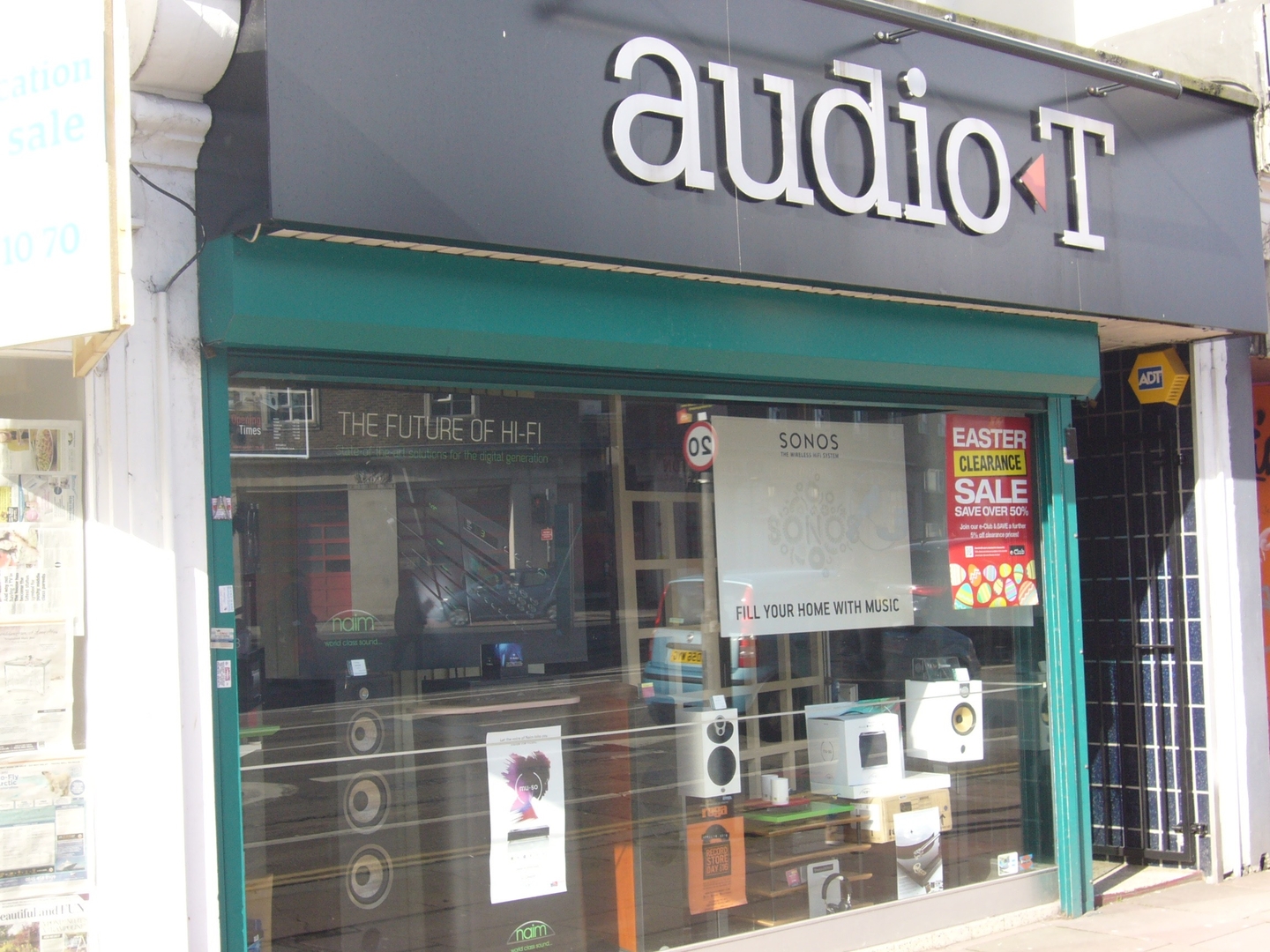
Meet Your Dealer – Audio T

One of the best-known hi-fi store groups in the country, Audio T plays a pivotal role in the shaping of the tastes and interests of music lovers and audio enthusiasts in the UK. Starting way back in 1966, the company has grown from strength to strength over the years, and the 14-store chain is a cornerstone of the annual Bristol Sound & Vision show held every February.

We spoke to Kev Starkie, Audio T’s General Manager about the Audio T group, and his and the company’s take on all things music, audio, and video:

I guess a lot has changed since Audio T was first founded in 1966?

Well, England hasn’t won another World Cup since! Audio T has entered its 50th year this year and over that time, it has seen the products and trends of the Audio and Audio-Video industry change, and eventually merge into the diverse industry we see today. But as much as there is significant change, a lot stays the same, too: many of our staff have been with Audio T for more than 20 years and our directors have been around for more years than I feel comfortable disclosing! This gives us a unique view not only on the business in a wider context, but also on what makes a great system. All the products we stock have been chosen to give our customers the best possible experience.

What brands/products do you stock?

As a group, we keep a core range, but in each store the brands that we hold are products that time and time again we are asked for! So, in no specific order: Naim, Rega , B&W, PMC, Marantz, Chord Company, AudioQuest, Pro‑ject and Arcam. The models change from store to store, and we also have brands that are not shared as they fit an individual store’s existing customer base, so we can get the right product with the right customer.

What inspired you to get into the industry?  

For most of us music is a big part of our lives even if we don’t realise it and I was so keen to get into it as soon as possible. I started work on Saturdays at a store in Bristol at the tender age of 14 as I was so young most of my time was taken up with fitting mains plugs to kit as by all accounts that’s all I was trusted with. The Directors, however, started way earlier than I did.What music do you listen to when doing a demo?

I have a specific track I use for set up, which is ‘The Ballad of the Runaway Horse’ by Jennifer Warnes (from Rob Wasserman’s Duets album), after which I have numerous tracks from acoustic guitar to full blown bass tracks to see if the system is well balanced and timing well.

What is the best piece of advice you can give to someone who is looking to improve/upgrade their system?

Start with what you have; by that, I mean speak to an experienced audio person (in one of our stores, obviously!) and let them help you ‘max out’ what you already have. This will show you where the weaknesses are in your system and save a lot of time and badly invested money making your system sing. It’s often best to let the experts deal with this, because it can be easy to make mistakes along the way.

Where do you see the industry going?  

Only up! The love of music and film has never been stronger, and the multitude of sources mean you can listen, watch, and access the media you want, whenever you want, however you want it. Also, the build, reliability , and value of products on the market is the best we have ever had. The only downside is what to buy and how to integrate it into your existing set up, but that’s where a good store can make that simple!

Who has been your biggest influence? 

I could say a music artist or a film director, but the real influence has to be my parents for playing music as a child and talking about film. The other major influence are the customers who over the years have pushed me to find solutions to their problems and by doing this and creating a great system for them, really gives you a feeling of job satisfaction.

Stereo or home theatre, or both?

I don’t think you can really say one or the other. Sometimes only a good movie will whisk you away for a couple of hours, and the next day blasting out Led Zep at number 11 on the volume dial is the only thing to get the blood flowing.

CD, DAC, or streaming, or all three?  

They all have their place, so that’s a difficult one to pin point. If it’s an upgrade for both then a DAC is the simplest option.

Have you been a part of the vinyl revival? How?

The Audio T group has seen a massive uptake in turntable sales, from our basic deck at £150 to some very exotic models. I think the reason vinyl has become so appealing again is because its gives real ownership, being both tactile and visually stimulating: it sounds great, and the artwork and info on the record sleeves give the listener a real connection with the music. Back in the mid 1990s, I had a moment of weakness and sold my record collection and my deck! However, over the last few years, I’ve bought a new deck and (expensively) replaced most of the vinyl I once sold off for very little. Now with LP on the up buying what you want has never been easier, and I find I put an album on and listen to all the tracks, often finding a track on the record that I didn’t buy it for becoming a favourite.

What motivates you?

That’s simple! We love what we do and we are lucky to have been able to work in such a fun industry. 

GoldenEar Technology Triton Five floorstanding loudspeaker

If ever there was a speaker that best encapsulates ‘affordable excellence’ in audio, it would be the GoldenEar Triton Five. This tall, elegant floorstander is priced to compete with two- and three-way tower speakers, yet the cloth-wrapped Triton Five manages to combine a D’Appolito-style ‘MTM’ (mid-treble-mid) layout with extremely high performance drivers, with a full subwoofer section built into the base of the tower.

The specifications are impressive, especially at the price. The top part of the loudspeaker houses two 152mm cast-basket mid-bass drivers flanking what GoldenEar calls a High-Velocity Folded Ribbon Tweeter, a direct descendent of the Heil air-motion tweeter used by Audiovector, Burmester, and more. Along the bottom sides of the enclosure are four opposing, inertially-balanced planar 200mm sub-bass units, two per side. The crossover sits behind the MTM block, because the motive force of the bass units could add undue vibration and resonance, and the combination of a slight backwards rake and non paralleled side panels means the speaker has a degree of time-alignment and internal standing wave control. The fit and finish is good too, given a lot of the speaker is hidden behind a large acoustically transparent sock. The top plate is removable for obvious, sock replacement reasons (should you find a cat decides to treat the sock like its own personal Everest, or you are clumsy enough to spill the entire contents of an Indian meal down the side, a removable top-plate is a good idea). The speaker comes in a range of colours: Noir, really, really dark grey, Obsidian, Raven wing, Onyx, and Coal. Just kidding, they only come in black.

The Triton Five is a loudspeaker with a claimed frequency response reaching down to 26Hz, with a sensitivity of 90dB and a nominal eight-ohm impedance. So, it should be relatively easy to drive. In reality, that’s sort of the case. This is the kind of loudspeaker that loves power, and to get that 32 inches of bass surface area moving needs both voltage and current to kick the Triton Five into high gear. This is not impossible, even in a relatively low price setting, but the Englishman’s Fear of the Watt needs to be suspended if you want to take maximum advantage of what the Triton Five has to offer. In particular, the Triton Five needs that big amp ‘grip’ that only a large power amp with an appropriately ‘stiff’ power supply can deliver. Once that condition is met, you are, ahem, golden!

Installation is relatively straightforward and these are unfussy speakers to install. The loudspeakers need a lot of room, especially to the side walls, and this may preclude using the speaker in smaller European rooms. That being said, anything more than 3.6m (12’) wide will be more than sufficient, and the loudspeaker doesn’t need to project greatly into the room, so you could in theory use the speakers to fire across a 12’x16’ living room. They are more comfortable firing down the 20’ length of a 20’x16’ room, however.


The loudspeaker has a ‘mail’d fist in a velvet glove’ kind of presentation. This means the kind of big, deep bass that many of us thought wasn’t at all possible at this price level: or at least if it was possible, you wouldn’t want that kind of bass in your listening room. Used with an appropriately powerful amplifier, the Triton Five brings truly awesome-grade deep bass and power without the sort of overblown, flabby, tubby, and flubby bass groans that you can get at this price level. The Triton Five’s bass is the kind that makes you reach for Leftfield or James Blake to see what it’s capable of; you play one of those deep bass tracks (I chose ‘Melt’ from Leftfield’s Leftism album, on the Hard Hands label) at a fair lick, then when you have managed to push your eyes back from the back of your head and clean up all the broken glass, you realise what they are capable of. After that, though, you tend to go for the more subtle moments in music, and realise the Triton Fives are not just there for earth-moving purposes.

The other big feather in the Triton Five’s cap is its soundstaging properties. The loudspeaker builds a wall of sound; not in a manner befitting a murderous 1960s impresario with mad taste in hair, but more like your rear wall has been replaced with the concert hall, club, studio, or other venue in which that particular recording was made. There is a true sense of epic scale on offer here, the kind of thing that you might have to spend £10,000 or more to experience elsewhere. This means that orchestral music is played at orchestral scale and the sense of presence in room is palpable. On the other hand, play some cool jazz from the 1950s and you can almost see the cigarette smoke filling the room. The Triton Five is three dimensional, incredibly open, and capable of an extremely accurate soundstage that ‘scales’ sublimely well.

These two aspects combine perfectly in rock, especially Prog Rock. The simultaneous need for a huge soundstage coupled with an ability to play very deep, very loud is the perfect laundry list for playing Tarkus by Emerson, Lake & Palmer [Cotillion] or for that matter Lateralus by Tool [Volcano] or even Black Holes and Revelations by Muse [Warner], although the last shows up a lot of compression in the process. The Triton Five stays on the right side of Prog pomposity when playing these potentially pompous platters, instead going for the large soundstage and powerful, dynamic bottom end.

It’s not all just about bass and soundstaging, although these are the stand-out aspects of the design. In fact, there’s a fine sense of top-to-bottom coherence, too. The speakers have a natural-to-rich tonal balance that is extremely alluring, and the clean, extended, and grain free treble associated with AMT ribbons. This makes the loudspeaker more than just a bass-powered bruiser, or a wide soundstage with nothing to back it up. This is a deft and subtle loudspeaker too, and that comes across well with fey girl-with-guitar music like Kat Edmonson’s somewhat overplayed ‘Lucky’ from Way Down Low [Spinnarette]. If it can focus your attention as well here as it does with Muse’s bombast, the speaker is doing a lot right.

Viewed from the position of someone used to small-scale, typically British two-way standmounts, all this low frequency energy and broad soundstage may almost flood the listener. However, it’s a little like eating steak after a life of hamburger – the real thing might be overwhelming at first, but it’s hard to go back afterward. Early listening to large speakers after living with little ones can sometimes make you think the bigger speaker is ‘slower’ where in fact you are relearning how to listen to bigger loudspeakers. British audio enthusiasts used to know this and would regularly upgrade from bass-light small-box designs to the more authoritarian bass of IMF or TDL models. Fast forward to today and the Triton Five balances these desires perfectly, sounding a lot faster, a lot more detailed and more dynamic than older transmission line IMFs, but retaining their bass slam and energy.


Spending more does eventually justify itself. When you start to talk about the ‘shape’ and ‘texture’ of deep bass notes, without sacrificing the ‘depth’ of bass, then suddenly some of the true titans of high-end begin to win out. This doesn’t manifest in playing dub reggae or dubstep, but comes across when playing something big and orchestral and a little bit dour – symphonies by Mahler or Bruckner. The bass comes across as the most powerful and structural you can get in its class, but lacks the kind of cold beauty required to portray the depths of this kind of music. Still, we are talking about spending an order of magnitude more than the Triton Five to achieve this ‘textured’ bass quality without sacrificing bass depth in the process, so it’s hardly a major concern. You aren’t buying a KEF Blade ‘on the cheap’ here, but you are buying an exceptionally good loudspeaker that shows its rivals a clean pair of heels.

It’s hard not to be impressed by the GoldenEar Triton Five, because materially you are buying a lot of speaker for the money. The fact that it also delivers a lot of really good sound for the money is an unexpected surprise. At the price it has no peers and no parallels, and comes strongly recommended.

TECHNICAL SPECIFICATIONS

  • Type: Three-way, seven driver floorstanding loudspeaker
  • Driver complement: Two 152mm high‑definition cast‑basket mid/bass drivers, four 200mm planar sub-bass radiators; one HVFR (high‑velocity folded ribbon) tweeter
  • Frequency response: 26Hz–35kHz
  • Sensitivity: 90dB
  • Nominal impedance: 8 ohms
  • Dimensions (H×W×D): 112.4 × 21.6 × 31.4 cm
  • Weight: 18.4kg
  • Price: £2,000 per pair

Manufactured by: GoldenEar Technology

URL: www.goldenear.com

Distributed in the UK by: Karma AV

URL: www.karma-av.co.uk

Tel: +44(0)1423 358846

Back to reviews

Read more GoldenEar Technology reviews here

Chord Hugo TT tabletop DAC/headphone amplifier

When the Chord Electronics Hugo portable DAC/headphone amplifier arrived on the scene back in 2014, it took the high-end headphone world by storm. The paperback book-sized Hugo was brilliantly conceived, beautifully executed, and bristled with technical advancements and evidence of outside-the-box thinking. Indeed, the portable Hugo provided a DAC section so good that it could and routinely did exceed the performance of standalone high-end DACs that cost as much if not more than the Hugo itself.

However, not long after the launch of the original Hugo, Chord Electronics began work on an even more ambitious headphone amp/preamp/DAC called the Hugo TT, where ‘TT’ stands for ‘Table Top’—the environment for which the Hugo TT was explicitly created. What’s more, the Hugo TT offers expanded functionality that enables the product to step beyond the headphone amp/DAC category to serve as a full-featured digital preamplifier suitable for use in full-size hi-fi systems.

What exactly are the differences between the original Hugo and the Hugo TT? One of most important differences is that the Hugo TT provides a rechargeable battery that offers fully twice the capacity of the original Hugo’s battery. Then, beefing up the power supply further still, Chord equips the Hugo TT with a 10,000μF bank of super capacitors, which are said to, “smooth out the instantaneous power demands”, made upon the unit. By design, the Hugo TT is set up so that it can be, ‘permanently connected to the (included) AC power adapter’, meaning that the adapter can top off the battery’s charge level as needed. In day-to-day operation, however, the Hugo TT always runs directly from its battery/super capacitor-equipped power supply—not from the AC mains.

Hugo TT also offers a somewhat different and arguably more versatile mix of digital inputs than the original Hugo. Specifically, the TT provides dual asynchronous, galvanically-isolated USB B-type jacks, one serving as a driverless 16/48-capable Standard Definition input, the other serving as a High Definition input supporting 32/384 PCM playback and DSD 64/128. The High Definition USB input does not require additional drivers for use in Apple or Android systems, but does require installation of a Chord-supplied driver for use in Windows systems (the requisite driver is supplied on a USB-type memory stick).

Other digital connections include an optical TOSLink input (24/192-capable) and a BNC coaxial digital input (32/384-capable). Finally, Hugo TT incorporates an A2DP/aptX Bluetooth input (16/44/48-capable) that offers up to 30m of range.


On the analogue side, Hugo TT again offers expanded connectivity options vis-à-vis the original Hugo. Accordingly, the TT provides two faceplate-mounted 6.35mm headphone jacks and a 3.5mm headphone mini-jack, and offers—on the rear panel—a set of fully balanced stereo analogue outputs via XLR connectors, plus a stereo pair of single-ended analogue outputs via RCA jacks. The Hugo TT can be configured to provide either fixed line-level or variable-level analogue outputs, depending on whether the unit is used as a standalone DAC or as a digital preamplifier.

In terms of appearance and ergonomics the TT is considerably different to the original Hugo. For starters it is, as you might expect, considerably larger so that it looks like an almost square-shaped (225mm x 235mm) aluminium slab that is 45mm thick. The faceplate sports an on/off switch, two 6.35mm headphone jacks and a 3.5mm headphone mini-jack, two small domed control buttons (one for input selection and the other for controlling the Hugo TT’s crossfeed modes), plus a scalloped cutaway in which a small alphanumeric display is fitted. When control buttons are activated the context-sensitive display will briefly show the inputs selected, volume adjustments just made, or changes in crossfeed settings.

The chassis of the unit is die cast, embossed with the Hugo TT’s logo, and treated to a satin silver or black finish. In keeping with longstanding Chord design motifs, the top panel of the unit provides a porthole-like viewing window beneath which are shown a variety of multi-coloured lights that indicate the unit’s battery’s charge status, the input currently selected, and the crossfeed setting. But perhaps the most fascinating element of all is a colour-coded backlight for the porthole, to indicate the resolution level and type of digital audio file currently in play (whether PCM or DSD).

Just to the rear of the top-mounted porthole window is a scalloped cutaway in which is found a touch-sensitive, backlit, translucent dome that serves as the Hugo TT’s volume control. If you rub the dome from left-to-right with your fingertip the volume output levels will increase, and vice versa. Volume level changes are denoted by colour changes in the backlit volume control, with red and yellow indicating lower volume settings, green to cyan indicating mid-level settings, and blue to white indicating the highest volume settings. Unlike the original Hugo, however, the TT also comes with a beautifully machined aluminium remote control module that is ideal for applications where the TT must be placed beyond reach of the user.

The TT uses the same terrific Rob Watts-designed DAC section as found in the original Hugo, where Watts uses a computationally high-powered (but low power consumption) Xilinx Spartan 6 FPGA device to implement a sophisticated digital filtering system that leverages no less than 26,000 filter taps. There are tremendous sonic performance benefits to be had when designers are able to use very large tap-length digital filters—an area where both the Hugo and Hugo TT excel vis-à-vis their competition. As a result, both the Hugo and the Hugo TT deliver a smoother, more three dimensional and more finely focused sound than other DACs in their respective classes.

When I first read about the Hugo TT at the time of its launch, I pictured it in my mind’s eye as a relatively lightly hot-rodded Hugo, but once I heard the TT in action for the first time I realised it had taken much bigger sonic steps forward than I had at first imagined. While there is an undeniable sonic ‘family resemblance’ between the Hugo and the Hugo TT, the table top unit in many respects sounds like an altogether different and better model, which is saying a mouthful if you know how superb the original Hugo truly is. But with that said, let’s explore the audible ways in which the Hugo TT distinguishes itself from its critically acclaimed little brother.

I found that the Hugo TT simply seemed quieter than the Hugo—an improvement that meant a significant amount of previously unrevealed low-level textural and transient information in recordings suddenly became easy to hear and appreciate. A great example would be the track ‘Mermaids’ from jazz vocalist Norma Winstone’s Distances [ECM, CD] where the track opens with the eerie, percussive sounds of the strings of a prepared piano being struck, creating a mysterious, angular, and strangely beautiful introduction for the song that follows. Through the TT, that prepared piano sounded so vivid, solid, and three-dimensional that I almost felt as if I could extend my hand to reach out and touch the instrument.

The Hugo TT proved to be so quiet that it neither provides nor requires adjustable gain switches when it is used, for example, with ultra high-sensitivity custom-fit in-ear monitors. When used with power-hungry headphones you simply turn up the volume, while with high-sensitivity models you throttle the volume settings back, but either way the Hugo TT’s noise floor consistently appears to fall well below even the lowest levels of musical information contained in the tracks being played. I could, for example, effortlessly hear the almost vanishingly low-level swish and patter of percussionist Gene Jackson’s brushes as they skimmed over the surface of his snare drum’s head, gently establishing the pulse for the song ‘Walter Pigeon’ as captured on Eddie Gomez and John Abercrombie’s Structures [Chesky, 24/96]. My point is that with the Hugo TT small bits and pieces of vital low-level information simply appear out of nowhere, set forth against dead quiet backgrounds.


I found the Hugo TT noticeably punchier and more dynamically authoritative than the Hugo, while rendering vigourous transient events with even greater ‘snap’ and impact. What’s odd about this is that on paper the Hugo TT is no more powerful than the Hugo, though in practice it gives the impression that it is; the TT, for example, offers that elusive quality of sonic ‘grunt’ in spades. Just for the fun of it, I fired up the track ‘Dogman’ from the King’s X album of the same name [Atlantic, CD] and gave the Hugo TT its head as it drove a pair of ENIGMAcoustics Dharma D1000 hybrid dynamic headphones. The result was a gloriously muscular, hard-driving sound that perfectly captured the boisterous exuberance of which this power rock trio is capable—especially so when it came time to reproduce the thunderously powerful low-frequency rumble of Dug Pinnick’s 12-string electric bass. I suspect the Hugo TT’s perceived punch, clout, and dynamic muscle are down to its beefier battery and bank of super capacitors serving up gobs of current on demand.

The Hugo TT offers everything we loved about the original Hugo and then some, serving up a sound that is even more finely resolved, more delicate, more three-dimensional, and, yes, seemingly more potent in its presentation. Owners should, however, plan on using USB cables (and other digital cables) of the highest quality in order to hear the Hugo TT at is finest. And exactly how fine is that? Let me simply say the Hugo TT is one of the two or three best headphone amp/DACs I’ve ever heard, regardless of price.

TECHNICAL SPECIFICATIONS

  • Type: High-resolution tabletop headphone amplifier/digital preamplifier/DAC
  • Digital inputs: One TOSLink optical input (24/192-capable), one BNC coaxial input (24/384-capable), one USB B-type input (16/44/48-capable), one High Definition (HD) USB B-type input (32/384 and DSD128-capable, for computer playback with support from the included Chord device driver), and an aptX/A2DP Bluetooth interface (natively handles files to 16/48) offering at least 5m operating range
  • Analogue outputs: Two 6.35mm headphone jacks, one 3.5mm headphone jack, fully balanced stereo XLR, single-ended stereo analogue RCA jacks
  • Digital Filters: 26K tap-length digital filters
  • Controls: Input selection button, crossfeed filter network (three user-selectable levels of crossfeed, or crossfeed defeat), power on/off, advanced digital volume control, with special control sequence that locks Hugo to stand line-level outputs for use as a standalone DAC). Note: Input, sample rate, crossfeed filter settings, volume levels are indicated by colour-change LEDs. A machined aluminium remote control is also supplied
  • Battery/Super Capacitor array: The Hugo TT batter has twice the capacity of the original Hugo battery, supplemented by a 10,000 super capacitor array. By design, the Hugo TT can remain connected to its AC-powered battery charger at all times, although all audio circuitry runs solely from the battery/super capacitor array
  • Headphone output: 110dB SPL into a 300-Ohm headphone load
  • Distortion: THD -140dB
  • Accessories: USB thumb drive with PC/Windows device driver software, wall-plug power supply/battery charger, a USB B-type digital cable, and a TOSLink cable
  • Dimensions (H×W×D): 45 × 235 × 225mm
  • Weight: 3kg
  • Price: £2,995

Manufacturer: Chord Electronics Ltd.

Tel.: +44 (0) 1622 721444

URL: www.chordelectronics.co.uk

Back to reviews

Read more Chord Electronics reviews here

AVI DM10 active standmount loudspeaker and Subwoofer

AVI is a UK company that specialises in active loudspeakers and subwoofers. That presses two audiophile ‘off’ switches – powered speakers, and external bass boxes – but those who like good sound instead of miring themselves in audio dogma should look at the DM10 monitor and 10” Sub from AVI with a little less bias and a little more attention.

The company is the brainchild of designer and engineer Martin Grindrod, who saw almost a decade ago that the market for separate hi-fi components was in decline and that a substantial change was needed. That change meant a move to active loudspeakers, at first using speakers with power amplifier modules, requiring either a conventional preamplifier or use of a computer’s own volume control. However, the revolution was complete by adding a DAC and a simple yet well-engineered line preamplifier into the mix, thereby completely removing the audio system elements to within the loudspeakers themselves. Which takes us to the present day and the DM10 loudspeaker.

AVI’s DM10 is the larger of two standmount loudspeaker models, the baby of the breed being the DM5. In both cases, the drivers are of good stock, even if they aren’t made of hand-spun unicorn eyelashes: in the DM10, these comprise a 25mm silk dome tweeter and 165mm paper cone bass unit built to AVI’s specification by Sinar Baja, an Indonesian company that leverages a considerable amount of Scanspeak DNA in its design and engineering teams. The DM10’s active section features a 75W amp for the tweeters and a 250W amp for the bass units. Instead of the more commonly used Class D switching amp modules, AVI prefers linear amplifiers with bipolar power transistors, chosen for solid sound quality reasons.

The unique part of the DM10, though, is the use of an eighth-order Linkwitz-Riley crossover network (LR8) handing over at 2kHz. This still leaves a full octave in the 165mm unit before it reaches its natural limits. The LR8 network – only achievable realistically with an active crossover – has a very steep 48dB/octave slope, which drastically narrows the crossover region, and is extremely rare: the considerably more expensive Event Opal active studio monitors being the most notable other LR8 crossover user. The DM10’s cabinet itself harks back to the ADM9 active loudspeaker that revolutionised AVI’s fortunes; it’s a solid pro-monitor sized veneered cabinet, with a front-firing port.

The speaker’s DAC stage features two Toslink S/PDIF connectors, but eschews coaxial S/PDIF, USB, HDMI, wireless, or Ethernet connections. Toslink is often overlooked by audiophiles, but is in fact one of the most flexible digital audio connections presently available. Its inclusion means the DM10 can access anything from a high-end CD transport or a network streamer, through Sonos boxes, laptops, and Google Chromecast, and even TV sets and games consoles. The DAC circuit itself uses a Wolfson WM8741 chip capable of 24-bit/192kHz precision, but sample rate conversion is used to play music at a preset 24-bit/96kHz.


Alongside the DAC section, there is a single line-level stereo analogue input, with high-grade gold-plated RCA plugs, there is also a RCA connection from the master loudspeaker to the slaved right channel, and a similar RCA connection for a subwoofer. Those with long memories will look at this as an AVI 2000 series preamplifier in microcosm. The DM10 is also supplied with a small remote control. This has buttons to switch between the analogue and two digital inputs, volume up and down buttons, and a mute control. There are other buttons on the handset, but these do not serve any function on the DM10.

The other product in this review is AVI’s 10” Sub that, as the name suggests, is an active subwoofer with a 10” (250mm) bass driver in its front panel. The 250mm driver is a long throw design that’s capable of an impressive 5cm cone excursion, and is driven by a linear amplifier delivering 200W. The sealed box sub has detent settings between 20Hz and 100Hz, with 60Hz being the optimum position for use with the DM10s. There is also a level control for speaker matching and room integration. The DM10 and sub integrate so well, you might think this a three-way system. The sub runs from a connection from the ‘master’ DM10, or from a subwoofer output on a home cinema amp.

Set-up is straightforward and unfussy. Everything on the DM10 is pre-set; you cannot adjust the sample rate for the digital inputs, for example, and there is no provision for balance adjustment should you need it. This runs counter to the audiophile’s love of tweaking, but ‘fit and forget’ means there’s less to mess up, too. If you use both speakers and subwoofer, set the sub to 60Hz and place it ideally between or behind the speakers, and adjust the level accordingly (go for ‘just about audible’). Adding more subs serves no purpose.

The speaker’s front port means they are relatively ambivalent regarding free-space or boundary use (there is little rear-wall reinforcement in a near boundary setting here, as there is an amplifier module between speaker and wall). 24” stands are a good idea: apply a gentle toe-in if you are the only listener, and a wider, firing-down-the-room set-up if you are not holed up in your man cave and others get a look in. Running in? Forget it! The speakers improve slightly with some bedding in, but that eighth order crossover slope also seems to cover the aspects of the sonic presentation that are altered by run in, and this speaker seems to demonstrate no significant changes over time.

There is a house sound to AVI, which has remained remarkably consistent over the years. I’m tempted to call that ‘civilised pro monitor’, because the DM10 combine the sense of power in reserve that you get from well-made pro speakers, with a more domestically acceptable sense of refinement you get from soft dome tweeters in home use loudspeakers. It’s a deceptively big sound from standmount loudspeakers, not in the ‘better piano than a piano’ sound of an LS3/5a, but there is an impressive sense of scale-change as you move from the small, close mic’d fey sound of Kat Edmonton’s Way Down Low LP [Spinnerette] to the bombast of Beethoven’s ‘Ode To Joy’ [von Karajan, DG].

The loudspeakers image well, in part because of their size, but also because of the close integration between the acoustic centres of mid and bass in the DM10. These combine to give the speaker an almost point-source sound. Imaging, alongside clarity, were two of the main design aims for AVI, and this shows in the soundstage on Eric Dolphy’s ‘Hat and Beard’ from Out To Lunch [Blue Note], which is expansive and accurately disjointed (reflecting the music).

Where the DM10 scores particularly well is in consistency across aspects like detail, imaging, coherence, dynamic range, tonal balance, timbre, rhythm, and more. It doesn’t exaggerate or emphasise any of these aspects, but its balance is closer to an ideal than many. If you feel you are a bass freak, for example, and all other aspects of design take a back seat, then the DM10 might not attract you. But, instead, if you like a sound that is more universally good overall, this is a fine place to land.


For many listeners, the subwoofer is mandatory. The speaker doesn’t try to bend or break the laws of physics, and it has a small cabinet. Adding a sub brings extra bottom end to the proceedings, for any room except the very smallest. But speakers and sub integrate extremely well, and carefully handled, the two work seamlessly. Best of all, ‘carefully handled’ in this case involves no magic rituals, incense burning, or human sacrifice, just a judicious hand on the gain dial.

In 2007, AVI was the first and is still currently the only domestic audio brand to move from separates to a system that begins and ends in the speaker cabinet… and that remains a bold move. Today, however, many audio companies are exploring a similar solution, which appears to be something of a vindication. Regardless, AVI makes extremely good products that work well in domestic settings without costing a fortune, and the DM10 and 10” Sub demonstrate that perfectly. If you can shake off your audiophile addiction and give up all those electronics boxes, the AVI system is recommended and well worth checking out.

TECHNICAL SPECIFICATIONS

  • DM10
  • Type: two-way, front ported active loudspeaker
  • Optical S/PDIF: Stereo data 24 bit 96 kHz (limited by Optical connector)
  • Power Amplifiers: Linear Class AB, 2 × 75 and 2 × 250 Watts
  • Analogue input sensitivity: 500 mV
  • Distortion: Typically 0.002%
  • Volume control range: 100dB (1/2dB steps)
  • Electronic crossover: 2.35 kHz to tweeter, 8th Order Linkwitz Riley
  • Finish: White Ash, Cherry, Walnut, Light Oak as standard
  • Dimensions (W×D×H): 20 × 31 × 26 cms
  • Weight: 26 kilos
  • Price: £1,500 per pair (Black Ash finish, +£50, Rosewood finish, +£100)
  • Subwoofer
  • Type: Sealed box, 250mm active subwoofer
  • Drive unit: 250mm long throw bass unit
  • Amplifier power: 200W Linear Class AB
  • Controls: Level and frequency cut off
  • Finishes: White Ash, Cherry, Black Ash
  • Dimensions (W×D×H): 46 × 36 × 36 cms
  • Price: £800

Manufactured by: AVI/Speaker Techniques Ltd

URL: www.avihifi.co.uk

Tel: +44(0)7774 695 621

Back to reviews

Read more AVI reviews here

National Audio Show 2016, Whittlebury Hall

Just within earshot of Silverstone racetrack, the Whittlebury Hall spa hotel has been the mid-September venue for the UK’s National Audio Show for several years. Although originally one of the leaders in the audio show race, in recent years the show seems to have been stuck in the pit lane, but this year it broke down at the first turn. The show, a fraction of the size on previous years, still had new and exciting products from manufacturers, distributors, and retailers showing their products in the best possible light, and there were still many visitors attending the show on the Saturday, but there was a pervading sense of the show being somewhat ‘played out’ and possibly a rethink of both the show and venue may be in order.

In fairness to the show organisers, some of this comes down to an increasing number of rooms that used to be allocated to exhibitors are now off-limits, as they have been taken over as office space by the University of Buckingham’s School of Education. This not only limits the number of rooms available, but also extends the gap between the entrance suite (where stands and the headphone zone was housed) and the main rooms. But regardless, the show was smaller than ever this year.

However, there were new products, and even a few new brands, at the show. One of the most interesting was Code Audio, a company minted earlier this year showing both its entry-level System One and its soon-to-be-release modular System Two. Both use DSP-controlled active loudspeakers and an amplifier system. The upgradable System Two begins with active two-way, three driver bookshelves, then adds anything from one to four bass units per side depending on taste and room size. Prices start from around £3,500 for System One, with System Two prices still to be confirmed.

Founded last year but brand new to the UK, Arendal Sound (named after the Norwegian city the brand hails from) makes a simple range of speakers named ‘1723 Series’ (a big year for the city of Arendal, apparently). Alongside the trio of subwoofers, the surround and centre-channel loudspeaker (called, appropriately enough Subwoofer 1, 2, and 3, Surround, and Center), the brand makes a floorstanding tower called ‘Tower’, a standmount monitor called ‘Monitor’ and an accompanying stand called ‘Stand’. These well-made and solid speakers, demonstrated by Man 1, Man 2, and Man 3 from Arendal, were sounding clean and refined, and were allegedly almost unbreakable under normal use. Best of all, the Monitor cost £1,400 per pair and the Tower just £2,350.

The other new face on the scene was Onkk, a UK manufacturer of a very promising looking and sounding Cue direct drive turntable. Priced at £16,000 without arm (or £20,000 with custom finished Origin Live arm, Onkk’s own arm is expected next year), the Cue is made by a high-end horologist and has some extremely solid mechanical engineering behind the design. Of particular note is the use of a high-grade ceramic bearing, a pistonic suspension system, and DSP speed control, which can fine-tune speed to within 1/100th of a revolution per minute and save that speed to memory for the next time that recording is played. This is just the first of several designs from the company. Watch this space.

Wall of Music is also a new brand, coming out of Eastern Europe via Northern Ireland. Its Prelude loudspeaker is a thin, open baffle design featuring a single high-frequency driver, a single midrange driver, and 16 low-frequency drivers per side, all for somewhere between £3,700-£4,000 per pair). Unfortunately, more information was not available due to a fairly significant language barrier, and no further information either in print or on-line, but such is the nature of audio start ups in 2016!

One of the more exciting new products from an existing brand was the £18,500 DS Audio DS-Master 1 cartridge and equaliser package. Building on the existing DS-1 light-driven cartridge, this new reference grade component uses a substantially improved equaliser (with higher grade components, and about five times the weight of its more ‘entry level’ brother), design improvements to the cartridge itself, and a fetching shade of purple light show. This proved an exciting sounding component in the great Clearaudio/GamuT/IsoTek-based system in the Sound Fowndations room.

Vertex AQ has been quietly busy of late, and showed off both a new £8,950 65W Class AB AP-60 power amplifier and a £9,950 sealed box, single-driver Beech Ply FRS-8 loudspeaker, both in the Aletheia range. As might be expected from the brand, both pay extremely careful attention to drain paths, EM and RF interference, power feed, and all other aspects of the company’s Systematic Approach to equipment design.


Graham Audio is fast becoming the go-to brand for all things classic British in loudspeakers. Recently revising the Chartwell name for the LS3/5, the brand also recently announced its VOTU floorstanding loudspeaker. A significant departure for the company, this tower and all its BBC derived designs were impressing many at the show. We hope to look at the VOTU soon…

On the amplifier front, Whittlebury Hall saw the first ever trip abroad for the new Unico 90 integrated amplifier from Unison Research, a 100W hybrid valve/MOSFET variant of the company’s popular £4,000 Unison 150. This was the first version of the amp outside of its native Italy. The price of the new model is still to be confirmed.

Also distributed by Henley Designs, Roksan made a special version of its popular £1,900 Radius turntable, this time in pink with a pink-toned tonearm. The reason for the colour scheme? A donation to Breast Cancer Care is made for each pink sample sold.

Staying with turntables, the new £2,295 Prelude by newcomers Planalogue looks very promising, with great accent on energy dispersion in both the constrained layer plinth and the vibration damped standalone motor pod. This Oxford built turntable was sounding great, playing through an Abis tonearm and Hana moving coil cartridge.

In the headzone open-plan headphone section, most of the products on show had been seen before, with a few notable exceptions. The Schiit Audio Jotunheim headphone amp/preamp (see: https://hifiplus.com/articles/first-listen-schiit-audios-new-jotunheim/) had its first UK outing, playing both Mr Speaker’s finest headphones, and on loan to AKG, to showcase its new £1,100 K872. This is essentially a closed back version of the popular 812 headphone.


Meze – best known for its excellent 99 Classic closed-back headphones has launched two new earphones; the £49 11 Neo and the £69 12 Classics. Both using a titanium coated 8mm Mylar driver, the Neo sports an aluminium housing while the Classics features real wood. They both looked great in their respective Iridium and Walnut finishes.

Ultrasone was showing prototypes of its Black Pearl versions of its Edition M on-ear and Edition M+ over ear closed back headphones. Prices are still to be confirmed, but these super shiny headphones were in full parade gloss glory!

Music First Audio showed a prototype of its headphone amplifier at several shows. It’s now close to being the finished article, and in the company’s truly iconoclastic manner, was driven by a Sony Walkman Pro. Cassette never sounded finer!

In the main show, Teddy Pardo was demonstrating the £530 HPN headphone amplifier to great effect with a pair of Sennheiser HD800 headphones. This, coupled with the matching Teddy DAC, was extremely live and exciting sounding.

There was more of course. One of the best sounding rooms at the show was the Audio Consultants room, featuring Nottingham Analogue vinyl, Norma electronics, and German Physiks loudspeakers.

It is particularly good to finally see Pear Audio’s Tom Fletcher derived turntables and arms make their way to the UK, including some extremely interesting prototypes (the foam platter is just there for effect!).

And also good to see Cayin audio electronics back in Blighty.

Also we hope to see more about the Auris range of electronics in future, especially the good-looking £1,795 DHP converter.

A smaller than usual show, then, and while not exactly ‘disappointing’, neither was it particularly ‘appointing’! But for many of the exhibitors at least, it was more about quality than quantity.

You Say You Want a Revolution? Records and Rebels 1966-1970

It’s rare that a website dedicated to audio gets to talk about an art exhibition. But You Say You Want a Revolution? Records and Rebels 1966-1970 at London’s Victoria & Albert museum is not your typical art exhibition. As the name suggests, ‘Revolution’ covers that exciting, musically intense period when pop became rock, people tuned in, turned on, dropped out, sold out, or took up arms against the man.

OK, so this was very much the counter-culture movement of the time. In fact, it was one of the first times the term ‘counter-culture’ was used. But that means the music begins with Revolver and ends with ‘Imagine’, and includes the growth of psychedelia, anti-establishment movements, changes in fashion, and the Mad Men style revolution (that word again) in advertising of the age. If your vision of the 1960s was Bubblegum Pop and I Dream of Jeannie, this is not the exhibition for you.

This is an event that explores the rise and fall of idealism of the 1960s, rising out of the dark days of American conformity or British post-war austerity, with more than 350 exhibits that cover the style, fashion, art, photography, revolutionary zeal, and especially the music of the age. And this is where we come in.

In a way, the show revolves around music. Not only does the show feature hundreds and hundreds of album covers from the time (all donated by the estate of the influential British DJ John Peel), but also includes important artefacts from the era, including John Lennon and George Harrison’s suits worn on the cover of Sgt. Pepper’s Lonely Hearts Club Band, what’s left of one of Hendrix’s guitars, Keith Moon’s drum kit, and many handwritten lyrics from what have now become classics. The show has even recreated a mock Woodstock (without the aromas of patchouli oil, unwashed hippy, and marijuana) as an immersive experience.

It’s not all counter-culture. William Anders spacesuit worn on the Apollo 8 mission is included, in part to introduce the environmental movement (his ‘Earthrise’ photograph being an iconic and pivotal point in that movement’s foundation), and the powerful inclusion of the uniform of a French CRS policeman and a National Guard uniform from the time of the Kent State shootings, next to the ‘uniform’ of the Black Panthers, adds a chilling moment in the exhibit.

Some aspects are noticeable by their absence. The Vietnam War has been extensively covered in other exhibitions, and its relevance here is doubtful, but its inclusion here is relatively minor in comparison to other sections in the event. Also, the photography section of the show is largely given over to the Swinging London scene, and is largely geared toward those who were influences for Antonioni’s famous 1960s thriller Blow Up (David Bailey, Terence Donovan, Terry O’ Neill) and largely ignores important photography made outside of London during the 1960s (such as the work of Diane Arbus, Richard Avedon, Irving Penn, etc). But as a curated walk through the tumultuous late 1960s, Revolution… is as good as it gets.

So, what – if anything – is the audio connection? Aside from the era-defining music, of course, the show itself uses two Sennheiser AMBEO installations at the show; the first an 8.1 channel environment in the ‘student protest’ room and a 14.1 channel AMBEO 3D system recreating the sounds of Woodstock on a 16 minute loop. These are surround sound at its best, in a way, moving the soundfield around you as you walk through these sections of the exhibition. This certainly worked well; the sense of menace as you felt jostled around the protest room was palpable, and many just lay on the floor in the Woodstock room and let sounds wash over them.

In other parts of the exhibit, the sound is provided by Sennheiser’s clever guidePORT headphone-based audio guide system. This uses positioning technology, rather than entering a series of codes entered by the show-goer, meaning the soundfield changes as you approach different parts of the exhibit. This works best in a show like Revolution…, where it is less about narrative exposition relating to specific artworks and more about creating an ambient soundscape as you walk around the show. It’s an effective way of moving people from exhibit to exhibit with accompanying music and sound without having to punch in codes, or creating a cacophony, and is a perfect showcase for the technology.

You Say You Want a Revolution? Records and Rebels 1966-1970 runs at the V&A from now until 26 February 2017, following which it will tour internationally. If you were there at the time and want to know what you did, or you just want to know what life was like if you were ‘in’ in the 1960s, go! Just be prepared to max out your credit card (first launched in the UK in 1966, and there’s a remarkably sexist advert from the late 1960s in the exhibit) in the gift shop.

Rosso Fiorentino Certaldo floorstanding loudspeaker

Rosso Fiorentino was a Florentine painter from the 16th Century. Rosso Fiorentino is also a Florentine loudspeaker manufacturer from the 21st Century. If you are expecting a critique of Rosso Fiorentino’s masterful 1521 oil-on-wood altarpiece ‘Deposition from the Cross’, you are almost certainly reading the wrong website: this review is about a pair of floorstanders.

The Certaldo is a slimline two-and-a-half-way design, with a 25mm silk dome tweeter accompanying a single 130mm composite fibreglass cone midrange and two of the same working as woofers. The internal wiring is all from van den Hul, while the silver-and-gold-over-copper terminals are Rosso Fiorentino’s own. Certaldo is the top end of the company’s third-in-line Prestige Series; more domestically-friendly, less demanding, and less expensive than the brand’s Flagship or Reference lines, but more uncompromising in design and execution than the Rosso Fiorentino Classic Series. Certaldo stands about a metre high on its plinth, which allows for the down-firing port (it is also rear-vented). This all makes for a loudspeaker that returns a claimed sensitivity of 87dB, and a nominal impedance of eight ohms with a five ohm minimum impedance. In other words, possibly very slightly below average sensitivity, but nothing too difficult for any decent amplifier to drive.

The enclosure is elegant and discreet, and that belies the amount of ‘clever’ going on under the skin. Where you might realistically expect a relatively normal MDF ‘box’, Rosso Fiorentino creates a clever composite design, with hollowed out high-density fibreboard side walls and insert panels mass loaded with marble chip on the inside, elegant coloured safety glass on the outer layers. Couple this with 5mm thick aluminium front panels, sophisticated viscoelastic elastomer internal damping arrangements, and steel tensioning bars, and this deceptively straightforward looking loudspeaker is in fact a complex piece of enclosure design. Speaker cabinets are not expected to be this inert at anywhere near the price, and this kind of attention to cabinet detail only comes through solid objective measurement and observational listening.

A significant part of the Rosso Fiorentino product execution is ‘la Sala del Rosso’: a purpose-built listening room designed not only to evaluate the company’s designs, but used as a live music event space. This, combined with a solid technical basis of development, means this comparatively new brand has garnered a reputation for good engineering backed up by good sonic performance.

That aforementioned reputation is more important than it might first seem because what is chronically lacking in the audio industry is good, solid, honest sounding products at prices that are affordable or attainable. The Certaldo fits that role perfectly – it’s an inherently ‘honest’ sounding speaker with a level of design and finish that is ‘honest’ value for the money. This honesty comes across by having a finely balanced performance across the kind of musical and sonic criteria favoured by most people.


Although ‘honesty’ is not a synonym of ‘grounded’, there is something refreshingly pragmatic about the way the Certaldo doesn’t require careful care and feeding in the wild. The loudspeakers benefit from good upstream components, but there’s no need to partner this with a tightly-defined set of the best possible components, and the speaker does not need to be installed in an ideal acoustic space to micron tolerances. A good amp in a fairly good room, and installed reasonably well is more than enough. Yes, you will benefit from improving the components, taking care with the installation, and lots of running in, but the Certaldo is not fussy by audiophile standards. Moreover, the Certaldo’s footprint and its frequency response (45Hz-30kHz) combine to make it a fine loudspeaker for the real-world listener in a typical UK or European living space. Its understated elegance makes the speaker perfect for the shared listening/living room commonly found in the UK and Europe, too.

The first and most repeated phrase on my note pad after ‘honest’ was ‘grown-up’. This is a grown-up speaker for grown-up listeners. By that, I mean it’s a mature and sophisticated design intended for listeners who have grown out of the ‘meathead’ phase of listening. There is none of that growling boomy bass, or even the over-polite upper midrange bloom that can sometimes plague Rosso Fiorentino’s Italian rivals. This sonic integrity (another word that kept appearing on the note pad) is more easily found in the length of listening than the listening itself. This sounds paradoxical, but the best loudspeakers always seem to be the ones in which you can lose yourself for hours, playing a wealth of different musical pieces. In contrast, some of the supposed ‘best’ loudspeakers are initially extremely impressive, but that impressive presentation ultimately proves wearing and limits the amount of time in each listening session.

On the Rosso Fiorentino, Shelby Lynne’s ‘Just A Little Lovin’’ from the album of the same name [Lost Highways] had wonderful lyricism and vocal articulation. Her voice was very slightly forward in the mix, but beautifully refined, and the overall rendition was extremely (that word again) honest. This album is an audiophile classic of soundstaging and it didn’t disappoint; Lynne’s vocals standing proud of the instruments, all of which occupy a three-dimensional space around and behind the loudspeakers, which effectively disappear from the mix. This is not an ‘uncanny’ aspect, as it often happens in really good loudspeakers, but it is comparatively rare at this price point and from loudspeakers this unfussy.

Moving across to ‘Valentine’ on Richard Hawley’s Lady’s Bridge album [Mute] the same applied. The performer’s open and sounding natural voice was again forward of the backing band, and the great guitar playing was projected far into the room. Tonally, this was simply lovely to listen to, and the track had a very 50s feel in a Roy Orbison meets Lambchop manner. Some of the guitar reverb tail is lost a little in the complexity of the mix, but I’d struggle to find a loudspeaker in its peer group that didn’t strike a similar trade-off.

The loudspeaker’s tonality was particularly accurate, suggesting an extremely well-designed cabinet. There was some mild port resonance in the upper bass, but this was extremely mild and not the typical ‘chuff, chuff’ sound sometimes heard in less well-engineered designs. It was more like a slight thickening in the lower tenor, the kind of thing that you tend to only notice on close examination and comparison, rather than an obvious aspect of performance. That aside, the loudspeaker was remarkably integrated, coherent, and lyrical.

Dynamics were excellent, too. This became more apparent on classical works. Playing Tchaikovsky’s Sixth Symphony [Jansons/Oslo Phil, Chandos], the sense of a thrilling race through the first movement makes this a tough dynamic challenge for a loudspeaker. The Certaldo handled this with great ease, moving from dynamic shade to shade without a problem. As you might expect, deeper bass is more ‘noticed’ than ‘felt’ in this case, although the deep bass is impressive in a small to medium room, and doubly so when driven by a meaty, solid state amplifier.

If there is a limitation to the Certaldo, it’s possibly in ultimate loudness. This is not a party loudspeaker, and if you play everything at club levels, there are better loudspeakers for you. It will play loud, more than loud enough to have neighbours call round and shout at you, but for continuous very high volume levels… the Certaldo shows itself to be an elegant paintbrush, not a crop sprayer.


This is the sort of loudspeaker where the phrase ‘let’s be realistic about this’ resonates well. The Certaldo is not a full-range loudspeaker, because it’s not intended to be a full-range loudspeaker. More importantly, the use of a full-range loudspeaker in the kind of rooms in which the Certaldo will reside would actually undermine the sound quality by sounding bass heavy and ponderous. It’s a realistic loudspeaker for a realistic marketplace, at a realistic price. What’s not to like?

It sounds like an oxymoron, but we’re in the midst of a quiet revolution in loudspeaker design. In the past, loudspeakers were good at some things, less so at others. The Rosso Fiorentino Certaldo is that rare loudspeaker that is good at everything it’s supposed to be good at, and the few areas where it shows limitations are deliberate attempts at making a pragmatic design for the real world. I keep using the word ‘honest’ for a reason. This is a loudspeaker that makes a very honest sound, at a very honest price, and comes honestly recommended!

TECHNICAL SPECIFICATIONS

  • Type: 2.5-way rear/down firing ported floorstanders
  • Drivers: 2× 130mm glass-fibre composite cone mid‑woofer, 1× 130mm glass-fibre composite cone mid-woofer, 1× 25mm silk dome tweeter
  • Sensitivity: 87 dBSpl (2.83V/1m)
  • Nominal impedance: 8Ω (min 5Ω)
  • Freq. response (-3dB): 45Hz – 30kHz
  • Dimensions (W×H×D): 104×23×27cm
  • Weight: 22kg each
  • Price: £2,960 per pair

Manufactured by: Rosso Fiorentino

URL: www.rossofiorentino.com

Distributed by: UKD Ltd

URL: www.ukd.co.uk

Tel: +44 (0)1425 460760

Back to reviews

Read more Rosso Fiorentino reviews here