Up to 37% in savings when you subscribe to hi-fi+
hifi-logo-footer

Begin typing your search above and press return to search. Press Esc to cancel.

Gold Note Giglio turntable with B-5.1 arm and Donatello Red cartridge

In the oft-parochial world of audio, some good brands can go almost unnoticed. So it is with Gold Note: the Italian company commands a strong reputation in many parts of the world as a ‘stem to stern’ (or ‘soup to nuts’) brand, as it has products in every category from source components, to amps, cables, and tables, right through to loudspeakers and even record cleaning products. And yet, in other regions the brand remains almost unknown.

However, within the plethora of products Gold Note produces, there’s clearly some deeper emotional investment in the analogue front end. Where other components in the line have catchy titles like ‘PA-1175’ and ‘A-3 XO’, the turntables and cartridges are named, which is why we are looking at the Giglio turntable and Donatello Red cartridge. OK, so the arm has the more prosaic name of B-5.1, but even in the nomenclature, it’s clear vinyl is more of a labour of love. The fact Gold Note makes OEM turntables for many brands (the new Bryston turntable, for example) and has its own line in 180g LPs adds some credence to that statement. This is Gold Note at core.

The £2,800 Giglio – and sister turntable Mediterraneo – are the latest additions to a seven strong range that runs from the affordable Valore models to the cost-no-object twin-armed Bellagio Black King and its “longest platter spindle ever”. In comparison, the Giglio looks positively restrained, but its curvy walnut underside is distinctive by most standards. Three large conical feet mean that the underside of the plinth is effectively on show at all times, which does look extremely attractive, but it’s more than just ornamentation as the plinth structure adds mass and rigidity without introducing excessive resonance. The plinth is in fact a composite of materials with a 3mm layer of stainless steel sandwiched between walnut and the black acrylic of the top layer. This sandwich construction allows the different materials to damp one another’s resonances and thus deliver a low vibration plinth as a whole.

Having the curvy underbelly on show means the bearing housing is also on display, so Gold Note lived up to its name and gold plated the outer components. A mark of the overall design is the combination of shiny gold bearing, brushed metal feet, and a walnut and piano black platter, which all combine elegantly. This bearing accepts an 80mm spindle that has a threaded hole into which the centre screws and ‘clamps’ the platter in place (as there is no force involved, this clamp only acts to stop the platter coming off). The platter itself is made of Sustarin, a hard plastic that is used in gears and bushes and the top surface is ribbed – not ‘for extra playing pleasure’ but to act as a keyed surface for the separate gel mat supplied. Finally there’s a very light clamp that sits on the record.


A lightweight DC adapter supplies power, and feeds a PWM-based power supply that offers electronic speed switching via two buttons on the top of the plinth. Drive is via an O-section belt to the periphery of the platter from a single pulley spindle. The whole ensemble is topped by a good quality dust cover that can’t be removed for listening, which keeps the turntable pristine and acts as a damage-limitation exercise against the onset of kids, pets, and cleaners, but can be an impediment to sound quality.

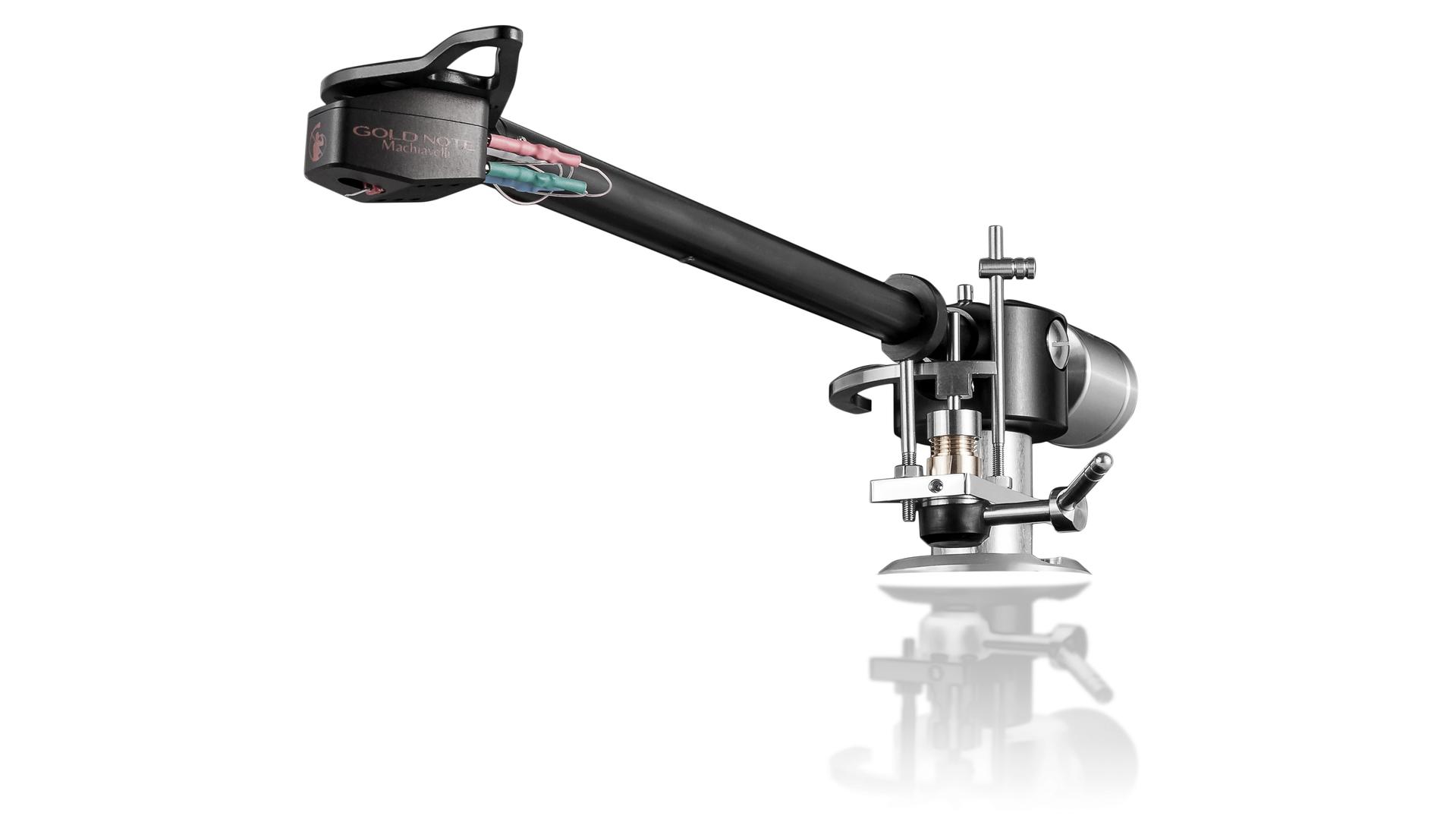
The arm supplied on this Giglio is the B-5.1, a nine inch model. It is largely made from aluminium with a base that allows VTA adjustment in the usual style. It is supplied with two counterweights to accommodate the majority of cartridges on the market. It features what are called micro ball bearings (made by GRW in Germany) in the horizontal plane and has a thread and weight system for anti-skate purposes and a stainless lift/lower lever.

Gold Note’s Donatello Red moving coil cartridge is a high output type with an aluminium cantilever and micro elliptical diamond tip made by Adamant-Namiki in Japan. The company specifies a moving magnet style 47k Ohm load impedance to suite the high internal impedance of the cartridge, but with my Trilogy 907 phono stage it worked best with a more normal 100 ohm, albeit with a higher output than usual. This may fluster some of the more basic phono stages that just rely on rudimentary ‘MM’ and ‘MC’ settings as the optimum is somewhere between the two.
The Gold Note is a smooth performer, with an effortless style that makes it easy to forget the mechanics of the process and enjoy the music. Those looking for a more ‘edge of the seat’ musical experience might look for a deck with a more obvious dynamic presentation and a greater accent on bass extension, but it’s an assured and comfortable sound that suits Alfred Brendell’s piano on Brendell plays Beethoven [Vienna Pro Musica/Wallberg, Turnabout], extracting nice depth of image and showing good pitch stability in the process. This is an even-handed record player that emphasises the tonal qualities of each record it spins. In many ways it is reminiscent of an early Linn LP12 in the way its focus is on the rhythm rather than the drama in the music. Voices and violins benefit from the Gold Note presentation, and while bass lines aren’t the most solid I’ve heard from a record player, they are still tuneful, and the tempo is always clear and engaging.

In experimenting with the Giglio, I found removing the clamp resulted in a more subtle and detailed sound. For example, on Mop Mop’s ‘Let I Go’ [Isle of Magic, Agogo Records], which is a percussion-rich track with vibes and a central voice, the various instruments became easier to follow without the clamp in place. I also preferred replacing the gel mat with a felt alternative from a Rega P3, as depth and separation took quite a dramatic turn for the better. In my system, it became easier to hear the reverb of the various instruments and to enjoy all the different sound sources in the mix, including hand claps that had not previously been apparent. The trade-off, however, was in image width, which seemed restricted to the space between the speakers. However, when I put on Burnt Friedmann and Jaki Leibzeit’s Just Landed [Nonplace] their heavyweight, 45rpm Deutsche dub delivered a good portion of its power and the sound escaped the bounds of the speakers in the horizontal sense.

I mentioned my felted research to Gold Note and the company responded that it offers the gel mat because it appeals to the market; they make a felt mat as well and will discreetly admit that it sounds better.


I moved onto something more sophisticated in the form of Vivaldi’s Four Seasons by the Interpreti Veneziani [Chasing The Dragon] to see whether it would be possible to enjoy the full dynamic power and scale of this remarkable pressing. As it turned out it got pretty close. There is not quite the effortless dynamic range that is available elsewhere, but the sound was refined and had plenty of height. However, there’s a caveat: Gold Note offers an AC filter called the Lucca Power Distributor as an upgrade option, and this could be an option worth taking. While I didn’t have a Lucca to hand, adding a Nottingham Analogue Wave Mechanic power supply between the Giglio’s wallwart and the mains had a fairly profound effect on overall dynamics. Now there was a real vista of sound that revealed the quality of playing and drew me into the music in no uncertain terms. The interplay of the violins was particularly engaging and this combined with the turntable’s inherent grasp of tone made for a real musical treat.

Right out of the box, the Giglio, B-5.1, and Donatello Red package is an elegant looking and sounding replay system. But it’s also one that bears up to some careful attention to its surroundings, suggesting a well-designed concept that is more than just surface attractiveness. You get out of this turntable every bit as much as you want to put in, from an unassuming but attractive sounding deck to a potential powerhouse with only a few tweaks along the way. Just make sure you use a good phono stage to bring out the best in the Donatello Red cartridge!

TECHNICAL SPECIFICATIONS

  • Type: Full-size, DC-drive turntable with electronic speed control and dust cover
  • Rotational Speeds: 33 1/3 RPM, 45 RPM
  • Supported Tonearm Length(s): 9-inch arms
  • Drive Mechanism: Belt driven via 12V DC motor
  • Speed Control: Electronic with fine pitch control
  • Platter Type: Acrylic Susterin 23mm thick.
  • Platter Weight: not specified.
  • Bearing Type: 80mm spindle in carbon rectified steel with finely polished bronze journal.
  • Plinth Configuration: Solid wood, steel and acrylic sandwich
  • Dimensions (H×W×D): 200 × 425 × 360mm
  • Weight: 15kg
  • Price: Giglio turntable £2,800, B-5.1 arm £700, Donatello Red cartridge £560

Manufacturer: Gold Note

Tel: +39 0571 675005

URL: www.goldnote.it

Back to reviews

Read more Gold Note reviews here

Noble Katana Universal-Fit and Custom-Fit In-Ear Monitors

Over the years Hi-Fi+ has covered a number of multi-driver-equipped, custom-fit in-ear monitors (CIEMs) from Noble Audio, including the then flagship Kaiser 10 (issue 119), the 4S (issue 127), and the Savant (issue 137). The things that draw us back to the firm’s in-ear products involve not only their traditionally high sound quality, but also a distinctive quality of cohesiveness that, I think, is born of superior driver integration. With many multi-driver CIEMs and earphones (as with some multi-driver loudspeakers) you can occasionally detect faint signs of phase shift and/or subtle voicing discontinuities that remind you there are multiple disparate drivers trying (not always with success) to create a well-integrated, ‘cut-from-whole-cloth’ sound. Noble products, however, are different in that—more so than many of their competitors—they consistently serve up a beautifully coherent and seamless sonic presentation.

Noble’s latest cohesiveness champion is a (pardon the pun) ‘cutting edge’ model called the Katana, which was announced late in July of 2016, and is offered in both CIEM and universal-fit earphone versions. Eager to hear what the Katanas could do Hi-Fi+ Editor Alan Sircom and I obtained review samples early on with Sircom receiving the universal-fit versions and me receiving a set of Katana CIEMs. And, after some discussion, we decided to join forces to create the Katana review you now have before you.

The Katana is a top-class in-ear monitor that features nine balanced armature-type drivers per earpiece, but what sets it apart is not its driver count, per se, but rather the provenance of the drivers used. For the first time in the company’s history, Noble decided not to use off-the-shelf balanced armature drivers in the Katana, but rather collaborated with the internationally famous balanced armature driver manufacturer Knowles Electronics to create a set of purpose-built drivers for its new CIEM.

Depending on whom you ask, the Katana has either taken over the throne at the top of Noble’s product range or has, at the very least, become the co-flagship model with the Kaiser 10. My personal take on the question is that the Katana has become Noble’s new king-of-the-hill, at least for the moment—an assessment borne out by the fact that Noble just recently discontinued the Kaiser 10 and announced a more Katana-like replacement model to be called the Kaiser Encore (the Encore, like the Katana, gets its own set of purpose-built Knowles drivers). The Noble website now officially lists the Katana and Kaiser Encore as identically priced co-flagship models. Prospective buyers will want to know that, whether they choose the universal- or custom-fit Katanas, the sound will be very similar, although the CIEMs do offer a noticeably higher degree of noise isolation.

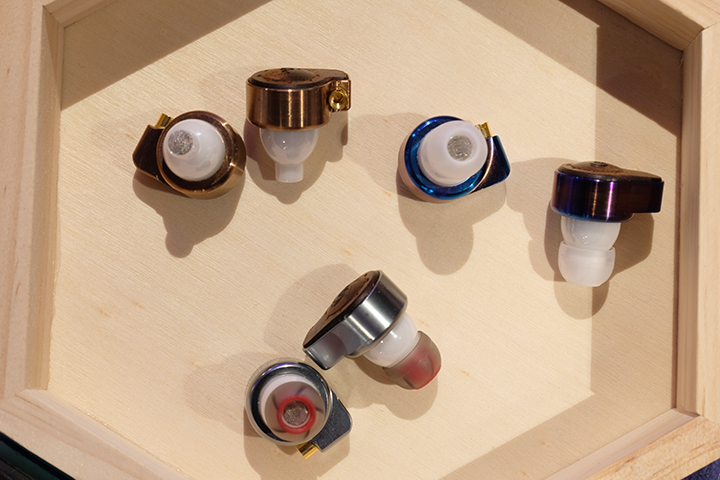
The universal-fit Katanas feature earpieces CNC-machined from billet aluminium with their inner shells anodized jet black and outer fascia caps anodized in a gun metal grey colour. The outer caps are smaller and sleeker that those used in previous Noble universal-fit models, making the Katanas a bit easier to position and to wear comfortably; the earpieces sit comfortably in the fossa of the ears, held in place by the over-ear memory wires. The CIEM models, in turn, can be built in two different ways: as ‘Acrylic’ models with custom-moulded acrylic earpieces offering a plethora of customisation options, or as ‘Prestige’ models with earpieces CNC-machined from a range of beautiful and exotic solid materials.

All Katanas arrive in a watertight Pelican case, and ship with signal cables, a carry pouch, two Noble-branded wrist/amp straps, an owner’s ID card, and a cleaning tool, while the universal-fit versions also come with three sets of S/M/L silicone tips, and one set of S/M and M/L memory foam designs. Quality of build is exceptionally high, meaning that the Katana universal-fit earpieces feel far more robust and solid than the plastic earpieces most manufacturers use. The CIEM earpieces, in turn, are beautiful to look at and are moulded so as to fit just a bit deeper within the ear canal than most, meaning users will enjoy a much better than average fit and downright incredible noise isolation.


Noble Katana universal-fit earphones

Alan Sircom

Welcome to Katana Club. The first rule of Katana Club is: you do not use the wrong ear-tips. The second rule of Katana Club is: you DO NOT use the wrong ear-tips! OK, so I’m no Tyler Durden, this is not Fight Club, and I’m not about to advocate the way of the nihilistic pugilist as the path to righteousness just yet, but the use of the right ear-tips is so intrinsic and important to the end result of the standard fit Katanas, it’s the difference between good sound and ‘wow!’ sound. It’s also an exercise in good bass management. It’s worth your while to spend some time experimenting here.

The demands placed on the correct use of ear-tips is entirely understandable: the nine proprietary drivers inside the gourd-shaped chassis are precisely aligned and the more accurate the fit, the closer the off-the-shelf model gets to the performance of its custom-fit brethren. As the nozzle of the Katana is larger than most, changing tips was a slower process than usual, and the options beyond Noble’s own are relatively limited. Eventually, I settled on the blue/black narrow bore silicone tips supplied by Noble.

When suitably tipped, the Katana is a truly remarkable performer. The coherence across the whole frequency range – already something of a Noble trademark – is even better than previous editions, presumably thanks to those custom-made drivers. This makes the Katana sound like it is using a single driver, but without the frequency and phase limitations that would incur. The Katana sets a new target for manufacturers to produce a product with this grade of seamlessness from low bass to the highest treble, and after spending an hour in their company, going back to ‘mere’ audio is almost always a step backwards. The Katana manages to be incisive and enjoyable at the same time: a rare treat.

The Katana has its limitations, but they are more in line with performance goals rather than product shortcomings. The Katana is a more deft and subtle performer in the bass than many, and this comes at the expense of ultimate bass slam and dynamics. Or rather, it trades a possible emphasis on bass heft for texture, grace, and subtlety in the lower registers, and if your musical tastes aren’t solely geared toward dub reggae and organ music, you’ll probably find yourself liking the Katana. Cleverly, Noble gives you the choice at this flagship grade: Katana for speed and uncoloured neutrality, Kaiser for impact and bass dynamics.

I’ve been using a pair of Noble Kaiser 10 CIEMs for some time: both the K10 and the Katana are perfect on-the-move partners with Chord’s mighty Mojo. The Kaiser 10s are the best things I’ve ever put into my ears. Or rather, were. The Katana—even though not designed specifically for my ears—has comfortably eclipsed the pinnacle of the previous generation in almost every way, except for the K10’s depth and power in the bottom end. And the replacement to the Kaiser 10 adds the performance of the Katana and the potent bass of the K10. Choose wisely… this might just be the best sound you’ll hear from any audio system.


Noble Katana custom-fit in-ear monitors

Chris Martens

During my tests I ran the Katana CIEMs from a Questyle QP1R digital audio player and used a battery of challenging test tracks that I also auditioned through three other Noble CIEMs: the 4S, the Savant, and the Kaiser 10. After all the dust had settled, I was left to confront one simple fact: while past Noble models were very, very good, the new Katana with purpose-built Knowles drivers is superior in virtually every way. Specifically, it seems to offer better resolution, a more grain-free presentation, greater transient speed and control, tauter and more crisply defined bass, and superior dynamic range and agility.

I largely agree with Alan’s comments on the sound of the Katana vs. the Kaiser 10, although unlike Alan I actually preferred the Katana’s low end. While the K10 does have a bit more bottom-end weight and gravitas, I thought the Katana could go every bit as deep, but with greater control, pitch definition, and transient ‘snap’. I suspect if you compared the response curves of the K10 and the Katana, the Katana would have fractionally less low bass, noticeably less enriched mid-bass, and somewhat more elevated upper mids and highs—changes that I think make the Katana the more accurate transducer of the two (though this does not mean the Katana sounds ‘lean’ by any stretch of the imagination).

Two tracks I tried highlighted the Katana’s superiority for me. The first was the O-Zone Percussion Group’s ‘Jazz Variants’ from La Bamba [Klavier, 16/44.1], which is a familiar but also very challenging demo piece frequently heard at audio shows. The O-Zone Percussion Group is a brilliant percussion ensemble featuring everything from a full-size bass drum on up to the smallest and most delicate of high percussion instruments, and everything in between. When bass drum strikes come along, some earphones wilt because they are unable to produce the sheer volumes of bass energy required, while others produce a big and powerful but indistinct ‘Thwooomp’ and call the job done. With the Katana, however, you initially hear a sharp, incisive ‘Thwack!’ as the drum head is first struck, followed a split-second later by a subterranean ‘Boom!’ as the note develops full strength; then, finally, you hear shuddering waves of low-frequency energy as the note reverberates within the recording space and gradually decays. It’s a night/day difference that underscores the Katana’s richer and more sophisticated sound.

Similarly, when high percussion or melodic percussion instruments (think xylophones, glockenspiels, tubular bells and the like) are brought into play, the Katana again delivers a significantly more complete and complex rendition of the tonal colours and transient characteristics of the instruments than its earlier generation Noble brethren do. It’s as if the Katana takes everything likeable about the Noble sound and multiplies it by about 1.2 (which in high-end audio terms is quite a lot).

Second, I was simply enchanted by the sound of the Katana on ‘Nublado’ (the word means ‘cloudy’ or ‘storm clouds’) as performed by Sera Una Noche [Será Una Noche, MA Recordings, 16/44.1], an ensemble of Latin musicians led by Argentine percussionist Santiago Vasquez. ‘Nublado’ is a sultry, jazz-inflected tango that was recorded in the interior of a small church and that features sumptuous instrumentation, including clarinets and flutes, cello, guitar, bandoneon (a type of concertina), and percussion. As the track unfolds, these instruments appear in various combinations, taking turns both in solo roles and as rhythmic engines that drive the tango forward. The result, through the Katana, is a veritable cornucopia of rich textures, timbres, and tonalities—each rendered with purity and polish, no matter how densely layered the recording becomes. The same track also yields satisfying results on other CIEMs and earphones, but I found that whenever I returned to the Katanas I not only became immediately aware of their heightened levels of performance, but in fact had the almost eerie sensation that I was actually listening to an altogether different and better recording of the same song! At the end of the day, it’s this sense of hearing the best each recording has to offer that makes the Katanas so worthwhile.


Summing Up

For Editor Alan Sircom and for me Noble Audio’s Katana has become a go-to in-ear reference; they are superb transducers that allow us to take the joys of high-end audio with us whenever we travel, whether going across London or jetting from continent to continent. If you want to hear some of the best sound available from any modern in-ear monitor, do give the Katana a careful listen—and while you’re at it check out the Katana’s just-announced stable mate, the Kaiser Encore.

TECHNICAL SPECIFICATIONS

  • Type: Universal-fit earphone with machined aluminium earpieces; or custom-fit in-ear monitors with earpieces that can moulded from acrylic (“Acrylic” models), or machined from exotic solid materials (“Prestige” models)
  • Driver Complement: Nine purpose-built balanced armature-type drivers developed with Knowles Electronics
  • Sensitivity: Noble says the Katana is, “Sensitive enough for use with smartphones and portable audio devices.”
  • Accessories: Detachable cable with industry standard 2-pin configuration (078mm diameter), Noble-branded wrist/amp straps, velvet carry pouch, combination cleaning tool/brush, watertight Pelican 1010 Micro Case, carabineer clip, Noble owner’s ID card, and—for the universal fit model—three sets of S/M/L silicone tips, and one set of S/M and M/L memory foam designs
  • Price: Universal-fit: £1,699/$1,850
    Custom-fit, Acrylic: Starting at £1,699/$1,850
    Custom-fit, Prestige (machined from exotic solids): £1,999/ $2,850
  • Note: Noble Audio offers a special Ownership Transfer Service (OTS) for the second owners of any Acrylic-series Noble CIEM, where for a fee of $250 Noble will re-craft the earpieces of the CIEM to fit the ears of a new, second owner.

Manufacturer: Noble Audio

Tel: +1 (805) 886-5255

URL: www.nobleaudio.com

UK URL: www.nobleaudio.co.uk

Back to reviews

Read more Noble Audio reviews here

REL T/9i subwoofer

On the one hand, this is a review of the REL T/9i subwoofer. On the other hand, this is a review of the REL T/9i subwoofer. Because this is a review of two REL T/9i subwoofers. More specifically, this is a survey of how most people get deep bass very wrong, and how a pair of well-integrated RELs are the exception.

Let’s start with the T/9i itself. The top dog in REL’s new core T/i series, the T/9i is a solid square piano gloss cube with a new front firing 254mm long-throw drive unit with a steel chassis and a large inverted dust cap. This is joined by a matching 254mm downward firing passive radiator. Adding depth to the cabinet makes the cabinets act like a concert hall, designed to properly dissipate rather than propagate the back wave.

Additional cabinet wall mass was needed to keep up with the new drivers and so these cabinets are now a full 25mm wall thickness, which accounts for the tremendous solidity one hears in the sound of a T/9i. The rear of the T/9i is taken up by a panel containing the 300 W amplifier with high and low-level inputs, a high-level output, and controls for volume and crossover point. Traditionally, home cinema users run a line level phono cable to the low/LFE input, while audiophiles run a high level input from the speaker terminals to a Neutrik Speakon connector. This cable is supplied, and is typically connected at the loudspeaker end using three flying wires that connect to both of the left and right positive loudspeaker terminals and one of the negative terminals. An uncompressed wireless ‘Arrow’ connection is also available at a premium. Ignoring Arrow, adding a second subwoofer means tying together the left and right positive flying leads, and using this connector more like a conventional loudspeaker cable. So the right subwoofer is connected to the right channel, and what’s left is left. You know what you’re getting with REL; a fast, taut, and deep bass that manages to keep up with the speed of your loudspeakers. Unlike most subs, REL goes after the precision and subtlety in bass, rather than quantity and level. This is what makes the brand so attractive to audiophiles; rather than simply adding more bass, these subs simply add an underpinning of bass reinforcement, allowing the loudspeakers to act more openly and engagingly in the upper registers. Paradoxically, a well set up REL may end up producing a sense of less bass, but the degree of control it offers over the bass entirely justifies its inclusion. The T/9i extends that authority and control over the bass, however it is also powerful enough to lessen that sense of losing bass energy. The T/9i – put simply – is your loudspeakers, but more so. Everything you like about your speakers is heightened; typically opening out the midrange detail, and adding a heightened sense of presence in the upper registers.

You would think, then, that adding a second T/9i would extend the bass and open out the midrange still further, and to an extent it does just that. However, the action of placing two well-engineered subs in the room seems to act on the room itself. A lot of the room-generated problems in audio fall into the sub 200Hz region, and typically require bass traps to tame the lower frequencies. These, it must be said, are often large and not what you might call domestically friendly. Placing an active device that works in precisely that sub-200Hz region that works to control that part of the output has a transforming effect on the sound of your system. And even two of them are small enough not to dominate the room.


This works by installing the T/9i in precisely the places where traditionally you shouldn’t place loudspeakers – the corners of the room. It also works by very careful listening tests, and having the testicular fortitude to be able to own two £900 boxes that you turn down to the point where they are all but inaudible. And it’s here where things go wrong for most systems, and why subs get a poor rap in the audio world. The idea of a subwoofer as bass tamer and active room treatment device seems counter intuitive, and the temptation to set a pair of subs up by using organ music, cinematic explosions, or dubstep is almost unavoidable. But do that and you will invariably set the T/9i (or any other sub) too high.

Staying with the counter intuitive, you should do this more considered setting up procedure even if the sole purpose of buying the subs was to satisfy your basshead desires. Ultimately the REL T/9i duo are bringing more bass to the system, but they are also bringing control; so those deep bass notes will have more energy, more clearly defined ‘shape’, and greater texture. OK, so you will probably end up with the subs set higher than most people, but going through the process is rewarding and produces a better bass than simply turning everything up to 11 and judging bass by the number of loosened screws and evacuated bowels.

To install this way, play something more subtle and simply recorded that you know well – James Taylor is surprisingly good for this, because his recordings are usually quite sparse, yet well recorded with good, but not exaggerated bass – and listen out for the tonality of the midrange voices and instruments. There is a Goldilocks point between where the subs are adding just too much thickness to the lower midrange and when their action becomes almost completely inaudible, and when you hear it, it’s like your room just got bigger and your loudspeakers just got more accurate and insightful. This applies unilaterally: if £1,800 worth of subwoofers can improve more than £20,000 worth of Wilson Duette 2, you know they are on to something.

Whether it was ‘running in’ or my ears needing time to adapt to the new soundfield,  I found turning the T/9i subwoofers down a notch a couple of weeks after the first install was hugely beneficial, because it brought the system into an even tighter Goldilocks spot. At which point, a lot of the bass boom in the room seemed curtailed and the loudspeakers could get on with just doing their job.

REL’s T/9i is an excellent subwoofer for the audiophile. It’s capable of making big bass noises, but is also more than capable of freeing up the loudspeakers and liberating them from the dictatorship of the room. While there is no substitute for huge bass traps and other room treatments, a pair of T/9i get you most of the way there without the domestic angst room treatment can cause. Highly recommended.

Technical specification

  • Type: active subwoofer
  • Inputs: Hi Level Neutrik Speakon, Low level single LFE phono
  • Output: low level single LFE phono
  • Drivers: 1× 254mm long-throw woofer with inverted dust cap, 1× 254mm passive radiator
  • Power output: 300W (RMS), Class AB
  • Controls: High and low level controls, crossover frequency cut-off, 0°/180° phase switch
  • Dimensions (H×W×D): 387×330×407mm
  • Weight: 18.7kg
  • Price: £999

Manufactured by: REL Acoustics

URL: www.rel.net

Tel: +44 (0)1656  768777

Back to reviews

Read more REL Acoustics reviews here

Final SONOROUS III headphones

Final is a well-regarded Japanese manufacturer of high-performance headphones and earphones; the company started out in 1974 as Final Audio Design under the leadership of the legendary audio designer Kanemori Takai. Sadly, Takai-san passed away in June of 2014, but his passionate and emphatically ‘music first’ legacy lives on in the firm’s new President and chief of product design, Mitsuru Hosoo. Under Hosoo-san’s leadership the company became simply ‘Final’ in 2015, while at the same time announcing its two most ambitious headphones to date: the flagship SONOROUS X (£3,699) and its sibling, the SONOROUS VIII (£2,299).

As anyone who has heard these top Final models can attest, they offer a rich, sumptuous, beautifully detailed, and supremely engaging sound that causes audio journalists to wax poetic on the subject of ‘musicality’. The SONOROUS X and VIII are headphones that music lovers could happily enjoy for hours on end, provided they could handle the cost of entry. But recognising that many music lovers are understandably price sensitive, we have chosen to focus our attention on one of the most affordable models in Finals’ SONOROUS-series line up: namely, the SONOROUS III (£299).

Given the dramatic price disparity between the SONOROUS X and the SONOROUS III, you might think that very little of the flagship model’s design know-how and sonic character would have trickled down to the SONOROUS III, but in this assumption you would be mistaken. In point of fact, there are a lot of structural and underlying design detail similarities between the SONOROUS X and its accessibly-priced little brother.

If you placed the SONOROUS X and SONOROUS III on a table side by side, you would immediately see that the two share the same general frame, headband, and ear cup designs, although the SONOROUS X is executed using far more exotic materials. For example, the X features precision made and highly polished stainless steel and aluminium ear cups (and other frame and driver baffle components), whereas the III uses less costly and more commonplace moulded, textured ABS ear cups (this is the same sort of material often used to form modern camera bodies). Stated another way, the SONOROUS X looks as if it was crafted for royal users, while the SONOROUS III—pleasing though it is—has what we Americans would call ‘the common touch’ (a term we intend as praise, by the way). Even so, the general shape and overall industrial design of the two models is strikingly similar

On the inside, still more similarities become apparent. The SONOROUS X uses a 50mm dynamic driver with a finely crafted titanium diaphragm that is integrated with a rigid front plate assembly machined from billet aluminium. The significance of this design says Final, is that it at once suppresses unwanted resonance while at the same time enhancing clarity. Realistically, you wouldn’t expect the SONOROUS III to use the exact same driver as the SONOROUS X and it doesn’t; however, Final points out that the III does use, “the same diaphragm employed with SONOROUS X”, although with a front plate moulded from a “hard resin that is comprised of hard polycarbonate strengthened with 30% glass added to it.”


Both models use Final’s signature BAM (Balanced Air Movement) mechanism said to optimize, “the balance of pressure at the front and rear diaphragm”, and Final adds that the, “SONOROUS III has been tuned to an extremely accurate level based on new knowledge/expertise gained from development of the SONOROUS VIII and SONOROUS X.” My point is that despite the substantial pricing gaps involved there are strong and obvious familial ties between the SONOROUS III and its premium-priced big brothers.

The SONOROUS III arrives, as do all SONOROUS models, with a set of very high quality, user replaceable signal cables fitted with beautifully made polished metal termination plugs. On the headphone end the plugs are terminated with Final’s proprietary Final twist-to-lock bayonet connectors.

Interestingly, Final has discovered — as have several other headphone manufacturers — that both the dimensions and material composition of ear pads can have a substantial impact on the headphone’s sound. For this reason, SONOROUS models feature pads that use a flexible synthetic leather material and carefully chosen sponge padding materials (with apertures on the interior and exterior of the pads) that Final claims help make for, “clear sound quality with sealed headphones.”

The SONOROUS III ships as standard with a set of the firm’s D-series pads, which are relatively thick and very well padded, but our review samples also came with a set of the firm’s optional B-series pads, which are somewhat thinner than the standard pads (thus placing the drivers slightly closer to the wearer’s ear), but are otherwise similarly constructed. Do the alternate pads have much impact on the perceived voicing of the SONOROUS III? Indeed they do.

In a real way, this review entails a description of two similar, but not identical, headphone models: the SONOROUS III as shipped with its standard ear pads and then the SONOROUS III fitted with Final’s ‘B-series’ pads. When the SONOROUS III first arrived it offered a rich, warm, comfortable sound that delivered good but not yet great levels of resolution, nuance, and dynamic expression. Final recommends, giving its full size headphones 70+ hours of run-in at moderate volume levels—a step that I found made a dramatic difference in the headphone’s sound. Post run-in, the SONOROUS III opened up considerably, achieving higher levels of transparency than it had initially shown, while also serving up noticeably higher transient speeds, and an all-round increase in dynamic expressiveness, agility, and nuance. In short, giving the headphone adequate run-in time enables the inherent excellence of the SONOROUS design to shine through.

In standard, as-delivered form the SONOROUS III exhibited five noteworthy sonic characteristics. First, it offered deeply extended and powerful, (albeit somewhat elevated) bass, with plenty of pitch definition and transient impact. Second, the headphone’s midrange was positively luminous, possessed of a vibrant, expressive, and downright soulful quality—a quality the SONOROUS X also provides, though in an even more dramatic and refined way. Third, the III provided extended, but never overly bright, treble response with an uncanny ability to resolve finely filigreed high frequency details. Fourth, the headphone demonstrated effortless transient speed—a quality most evident when listening to the leading edges of notes or when enjoying complicated, rapid-fire musical passages. Finally, and this is a really important point, the SONOROUS III offered a satisfying quality of coherence or cut-from-whole-cloth integrity—an area where the SONOROUS III rivals and in some ways surpassed, the performance of a number of today’s more affordable planar magnetic designs.

The only drawbacks (and they are minor ones) involve the fact that some listeners might wish for headphones with slightly less elevated bass or that offered a slightly more midrange/treble-forward sound, so as to give greater emphasis to transparency, nuance, and resolution. This, however, is precisely where Final’s ‘B-series’ ear pads come in.


Swapping out ear pads is a simple, two-minute process and once I had the B-series pads installed I felt that they transformed (and for my tastes, improved) the sound of the SONOROUS III in several meaningful ways. First, they mitigated the headphone’s degree of bass elevation, while still leaving a deep, impactful low-end intact. Second, they gave the headphone a very slightly more midrange/treble-forward sound that made the SONOROUS III’s resolution, delicacy, and finesse even more apparent, yet without disturbing the quality of natural warmth that makes the headphone so enjoyable for long-term listening. In a nutshell, then, the B-series pad made an already excellent headphone even better.

To enjoy these qualities in action, try listening to Mark O’Connor’s Fanfare for the Volunteer [Sony]—a composition that combines, in equal parts, passages of full frequency-range orchestral bombast with light, lithe, and delicately-phrased string passages (complete, of course, the O’Connor violin solos). The SONOROUS III had more than enough moxie to handle full-tilt orchestral swells and low-percussion outbursts, yet an ability to shift gears in an instant to handle subtle, quicksilver string passages, deftly capturing all their delicate, fleeting moments of inflection and expression. I’ve heard other headphones do this before, but not ones at this price point.

If you’ve ever yearned for the multi-faceted excellence of top-tier headphones such as Final’s SONOROUS X, yet have found their four-figure price tags daunting, the very good news is that the SONOROUS III can take you a surprisingly substantial way toward the sonic mountaintop at an accessible, Everyman price. The miracle, quite frankly, is hearing how much of the flavour of Final’s top model carries through into the SONOROUS III, which is why this headphone is both a sonic treasure and an outright bargain.

TECHNICAL SPECIFICATIONS

  • Type: Dynamic driver-equipped closed-back, circumaural headphone.
  • Driver complement: 50mm dynamic-type full-range with titanium diaphragm
  • Maximum SPL: 105dB
  • Impedance: 16 Ohms
  • Frequency response: Not specified
  • Weight: 410g
  • Warranty: 2 years
  • Price: £299

Manufacturer: Final

2-7-5 Kamiosaki, Shinagawa, Tokyo 141-0021, Japan

Tel: 81 3 6459 3122

URL: www.final-audio-design.com

Distributor: KS Distribution

URL: www.ksdistribution.co.uk

Dealer: High End Headphones

Tel: 01767 448121

URL: www.highendheadphones.co.uk

Back to reviews

Read more Final Audio reviews here

Raidho D-1.1 standmount loudspeaker

I loved the original Raidho C1. It had a winning combination of low-impact cabinet size, wonderful build quality, and interesting in-house driver designs, all integrated into a satisfying whole. Musically, it grabbed my attention right away and whenever I am talking about small speakers, I always think of them. For years I have admired those small stand-mount speakers, driven by high-end source and amplification components, that are truly capable of realising very high levels of musical expression. Such designs have historically been in surprisingly short-supply, though things have got a lot better recently with some notable contenders in this category as driver and cabinet technology has improved so enormously in the past decade.

Some might reject, out of hand, any speaker of this size and they will claim that low-frequency bandwidth and massive scale should be prime requisites within an audio system. That’s okay if you have the room to let large floorstanders breathe, suitable electronics, and the ears to dial them in to the extent where their good points don’t become liabilities. The number of such musically successful domestic systems I have heard can be safely counted on the fingers of one hand.

For those of us with limited room and a love of listening to music through quality audio, the Danish company Raidho offer notable, if costly, salvation and the D-1.1 is the flagship of these small, supremely endowed models. Designed by Michael Børresen, the D-1.1 is the latest version of what began life as the D1. But, appearances can be deceptive and what we are really looking at here is virtually a new speaker that shares only the main cabinet and the tweeter with the D1. The baffle and back plate are new as are the crossover and rear connections, while the 115mm mid/bass driver has undergone major modifications with a new motor structure and surround. This has resulted in a 1.5dB rise in efficiency.

Raidho’s designs have always been concerned with the elimination of harmful resonances throughout the speaker system and the open-backed design of the driver itself and the shifting of the position of the magnets, out of the airflow, have been geared towards this. While the tweeter is identical, the performance of the new bass/midrange driver has become nothing short of epic. The diamond coating was probably born from one of those ideas that are forever floating around in speaker designer’s heads concerning cone material. The result, in the never-ending quest to combine supreme lightness with ultimate stiffness, was to apply a carat and a half of industrial diamond, that is 0.3g, bonded with graphite to the ceramic surface of each driver. Bearing in mind the pitfalls associated with ceramic driver manufacture alone, this was never going to come under the heading of a cheap or easy-to-manufacture option. It took a lot of research and experimentation to get the process just right, but I reckon that this is the kind of attitude and dedication that very often results in fantastic audio products, because that is what we have here.


The build quality is truly exceptional, as is the finish. The tapering ‘boat-back’ is fronted by a two piece time-aligned aluminium baffle where the drivers are constructed straight onto the back, avoiding the unsightly external bolt or screw arrangement that would seem out of place on such elegant little cabinets as these. The tweeter is the well-established Raidho ribbon, though I have heard it referred to as a planar device too. Designated the FTT75-30-8, it isn’t worth splitting hairs over its description, so lets call it a quasi-ribbon mounted in a sealed enclosure. The ultra-light membrane (0.02g of aluminium) is driven by an array of neodymium magnets. It is a magnificent driver.

The rear of the cabinet provides connection through the new 4mm gold-plated sockets, with no option for binding posts. It houses a small port at the mouth of which is an intriguing aluminium fitting that I can only assume is there to calm the air as it exits the cabinet and break up any unwanted turbulence that might be present.

The stands are unique to the Raidho C1 and D1 models. These wobble about at the lightest touch as they employ a loose ball and cup arrangement in each of the four feet while the critical speaker/ top plate interface, where I would normally be looking to slip in some Stillpoints to add some serious resonance control, is already catered for with a small aluminium stem and circular plate arrangement that sits atop a small ball-bearing in a cup. The whole stand provides a less rigid mount than one might usually expect, but goes to show that preconceptions in audio are dangerous things. I have found many occasions when the introduction of a lightweight, low-mass stand has freed the speaker dynamically and that is what we have here. A speaker of such prodigious dynamic capability doesn’t need to be ‘slowed’ by driving a heavy stand through physical connection. It works sometimes, but not here. The other thing about the stand is that it takes the speaker to the correct height and I can’t emphasise this aspect of their design enough. Their height is critical. The movement, when pushed, is disconcerting at first. But they are so typically Raidho and, having tried the D-1.1 on alternative super-heavy, rock solid designs, I can appreciate the lightness of musical touch the dedicated, resonance-controlled stand brings in the pure speed, freedom, and agility of the music.


From the very first listening sessions, it was apparent that the D-1.1 was going to prove a very special musical experience and as the weeks of constant use went by I had them dialled into the room’s acoustics perfectly. They will work surprisingly well when close to a rear wall but better to give them some free air where they will reward you with a fantastically open and insightful performance. I employed a decent amount of toe-in but this will certainly vary, depending on your particular installation. A single pair of Stillpoints Aperture panels, elevated to speaker level and in the corners behind each speaker calmed the room just the right amount too while avoiding that over-damped, energy-sapping feel of so many acoustic treatments. This small adjustment helped focus and clean the soundstage notably.

Very refined tonally and musically, the D-1.1, when suitably driven, is never going to be impolite or compress the high frequencies, leaving them sour and harsh. Rather, they are extraordinarily sophisticated and endlessly textural with a sense of wholesome, open coherence. This is achieved through quite exceptional driver and cabinet integration and of course the very detailed approach to the elimination of harmful resonances within the speaker system, including the stands. Bandwidth is a constant surprise and all that attention you paid to the supports, cabling and the mains distribution pays off big-time when you hear what these Raidhos are capable of. A small caveat here would be that a tonally dull or over-smooth amplifier will sound just that. This tweeter is certainly not in the business of inventing reverberant air or glistening harmonics for the sake of it.

To illustrate this I would cite the eponymous Greentrax 1996 album by the extraordinary Celtic fingerstyle guitarist Tony McManus, who works an ambient atmosphere with restraint and taste while filling it with the most haunting and beautiful melodies. I came to it through a fascination with alternative guitar tunings. It’s one thing to sit with an audio analyst’s ear and try to break down what the speaker is doing but you might miss the tranquility and quietness that the Raidho’s bring. Better to let the music take you where it will. It’s more usual to speak of low noise levels with electronics but, like the C1, there is an uncanny air of quiet against which they show you the music. McManus is a brilliant musician and storyteller and has a calm way with the delicate timing of his playing. But the way the D-1.1’s deal with the leading edge of his guitar followed by the delicious sustain and golden tone gives time and space to really appreciate his superb phrasing and feel the harmonic movement and development of his melodies. The tracks on this album have an almost ethereal quality to them as the music ebbs and flows. The Raidhos drop this straight into the room with calm precision and no suggestion of the intrusive mechanics of the system to be found anywhere. Textural and tonal shadings are compelling and this is one of the real beauties of the speaker. Allowing the music expression and dynamic freedom while imposing so little of itself is one of the reasons that it is easy to sit in front of them for hours, getting lost in the musical intrigue, emotion, and enjoyment of the whole experience. They are helped by their notable soundstage. Broad and incredibly stable, the stage seems to go on and on in all directions. It is certainly the wonderful integration of the whole D-1.1 package and the sense that the speaker has a beguiling presence, some might call it forwardness, especially through the midband that brings the music across the room and toward you in such an accessible way.

The low end is, like all great small speakers, surprising in its extension, movement, and weight. This is obviously not the sole responsibility of the speaker though, but rather the installation as a whole. But these Raidhos are ultra fast, courtesy of their superb drivers and just as importantly, their implementation within that taut little cabinet. They are ripe too and full of colour and focus. You never feel that the speaker is being driven to the edge of where it might be uncomfortable and it never grows overblown or ‘loose’. It is never going to go down where the bigger speakers go. The cabinet dimensions alone will tell you that, but even on music that is bass-centric, I think you would be surprised at where the D-1.1 can venture. The point here is that it does it with a completely proportionate sense of scale and weight and this is never more apparent than on large-scale orchestral music or a simple piano. I say “simple” but, in reality a piano remains one of the most difficult instruments both to record and to reproduce, and yet the D-1.1 is confident in the way it approaches this daunting instrument. Yes, it is precise for sure but it remains unflustered and most importantly, lyrical. As with the Tony McManus album, the D-1.1 is endlessly subtle yet relaxed and this just seems to let the music ‘happen’ right in front of you and to allow the movement within it to grow. Chord intervals and the subtle changes within, show that shifts are more than just the relationship between fundamental notes. There is a whole world of nuance and harmonics beating away as the player shifts emphasis and this is where the D-1.1 is so excellent at letting you into the music rather than just listening “at” it. Their unforced clarity, and decidedly non-hyper balance are exceptional. The removal of resonance throughout the speaker system has been integral to Raidho’s design philosophy. Giving the mind more freedom to concentrate on the music seems well founded to me. Sitting in front of the little Raidhos has been a true learning and understanding experience, rather than a simple case of sitting down and listening to music. Of course, you can do that too, and extremely well. It’s a great loudspeaker for just letting the hours drift away, but more importantly, the D-1.1 is a loudspeaker to help you better understand your music and why it’s important to you.


So, a fabulous little speaker then, but one that requires both a deep wallet and a well-judged system. The 85dB sensitivity is low, but Raidho say that they will work with smaller tube amplifiers and I can absolutely see this. Quality rather than quantity! Their attributes are many but the calm and expressive way they deal with any music makes them something of a rarity in my experience and especially at this size. The D-1.1s are very beautiful both in appearance and musical performance. I think they are great.

TECHNICAL SPECIFICATIONS

Type: Stand-mount bookshelf rear ported speaker system

Driver Complement: 1× sealed ribbon tweeter, 1× 115mm diamond mid/bass driver

Frequency response: 50Hz–50kHz

Sensitivity: 85dB

Impedance: Nominal 6 Ohms

Recommended amplification: >50W minimum

Dimensions: 37×20×36 cm (H×W×D)

Weight: 12.5kg

Finishes: Piano black (as review pair), Walnut, High gloss white and all possible paint colours.

Price: £19,995 (black and white), £21,995 (Walnut) per pair

Stands: £2,499 in silver or £3,000 in black

Manufactured by: Raidho Acoustics

URL: www.raidho.dk

UK Distributor: Decent Audio

URL: www.decentaudio.co.uk

Tel: +44 (0)1642 267012

Back to reviews

Read more Raidho Acoustics reviews here

Stand Your Ground

For years, one of the best-kept secrets in hi-fi has been that the single most cost-effective upgrade you can make to any system (regardless of price or ambition) is to provide it with a dedicated AC supply equipped with a parallel, clean ground. Even after paying an electrician to do the work and deliver the hardware, the financial impact is negligible compared to even a budget box full of electronics, while the musical and sonic benefits are both substantial and fundamental in nature. That might seem like a bold statement but consider the issues for a moment and the logic is unassailable. Not only does the AC supply constitute the raw material from which your system is trying to recreate the musical performance (and as we’ve all experienced, a substantial part of a great meal is having quality ingredients), but it also provides the drain down which all spurious electrical noise is supposed to disappear – which leads us directly to the crucial question of noise floor…

Arguably the biggest challenge facing any audio system is matching the dynamic range of real life: not just the power and scale of real instruments, but also the micro dynamic subtleties, harmonics, and the immediacy of the energy they produce. Collectively these qualities define the system’s ability to imbue the recording with a sense of musical presence, the impression of real instruments in the same space as the listener. You can add ever more power to your amplifiers and buy increasingly efficient speakers to give the system greater headroom, but that’s only half the battle (and financially and practically speaking, a losing battle at that). At the other end of the scale, banishing noise – making the system quieter – delivers equally if not more impressive gains and does so at a fraction of the price and domestic impact. The whole issue of dedicated supplies barely raises its head, with clean grounds an even rarer topic of conversation. Yet as I’ve already stated, both options deliver musically crucial benefits in terms of noise performance and musical integrity. Why aren’t they automatic steps in establishing any audio system? Partly one suspects, because most of the dealers doing the advising and installing the systems would rather sell another box or a more expensive box than hand off the business to a third-party electrician. There again, it’s not always possible to achieve a clean ground: It’s all very well saying bury a ground post in the garden, but that doesn’t help someone living in a third floor apartment (and let’s also point out that your clean ground runs parallel to and isn’t a substitute for the main AC ground – it’s called a safety ground for a reason!).

But there are two things that we can say with absolute certainty: Given the ever-increasing amount of airborne and mains-borne pollution we suffer these days, any system will benefit from sensible attention paid to the quality of its AC supply and grounding arrangements: Secondly, irrespective of the steps you can (or can’t) take to ensure AC and ground integrity, there’s nothing to stop you extending the provision both within the system itself and beyond the electrical into the mechanical realm as well. The notion that electrical and mechanical grounding are directly equivalent might seem alien, but in reality they both act on the system’s performance in exactly the same way, banishing spurious noise and lowering the noise floor. Just as the AC supply and equipment support are both crucial aspects of system infrastructure, helping define the operating conditions (and thus the potential performance of all those expensive boxes of electronics) so mechanical and electrical grounding act in concert. In issue 143, Alan Sircom discussed Nordost’s Sort products, a range of components that offer mechanical grounding solutions across the complete system: it should come as no surprise that the various all-Sorts are designed to operate in tandem with and demonstrably deliver their best performance when used alongside the company’s QRT AC distribution products. But these are only one example of a new understanding and a new category of infrastructure solutions, second generation grounding products designed to operate within the system itself to eliminate spurious noise and distortion. Let’s look at three such products that promise to put a smile on the face of any system – and its owner.

The CAD Ground Control GC1 and GC3

CAD’s Ground Control boxes are not the first of their type – that distinction belongs to Entreq, who have been offering their timber clad grounding boxes for some years. However, the CAD GC1 is smaller, considerably more attractive and also more effective than the agricultural-looking Entreq Silver Tellus. On paper, the svelte GC1 looks more expensive, but then just like its size, that is deceptive as it includes a ground cable in the price – a considerable extra cost when it comes to the Entreq products. Termination is user specified to suit, with options embracing everything from USB or BNC to XLR or 4mm plug. The box itself is a long, narrow acrylic case with a beautiful matte milled surface. Two 4mm sockets on the back are all the options it offers for connection, while its narrow footprint makes accommodating it within an existing rack a distinct possibility. Attractive, practical, and supremely effective: none of those qualities are an accident.

The GC1 was developed specifically to partner CAD’s DAC and source components. The simple truth is that the vast majority of network elements and NAS drives emanate from the computer industry, a market in which noise is far less of an issue and most products are prepared to dump the sonic equivalent of raw sewage straight back into the AC ground – where it promptly pollutes the feed to and performance of not just the associated DAC, but any analogue electronics connected too. The GC1 was developed to act as a super effective sonic sponge, soaking up that noise before it got to degrade the performance of the CAD DAC. It was housed in the same chassis material as the parent product and designed to sit alongside it or on a shelf cluttered with the multiple smaller units so common in computer audio set ups. What makes it so effective? Inside is a wad of high-tech composite sandwich material that converts noise on the system ground to heat, before it can do any damage; an arrangement that helps explain the dramatic increase in efficiency (and thus the smaller size) when compared to Entreq’s ‘box of ground’ approach.

Connect a GC1 to a digital output of your CD player or DAC, or a USB socket on your server, and what should you expect? No prizes for suggesting a substantial drop in noise floor – but what does that actually mean in musical terms. The most immediately obvious difference is that the background gets way blacker with separation and clarity both improving, along with instrumental texture, colour, and character. There’s a dramatic reduction in grain and a new sense of crispness and focus to events, along with increased dynamic range, the ability of the music to jump in level, and the speed with which the instruments respond to input. So far so good, but the really important stuff is lurking behind the obvious, cosmetic changes. That increase in precision and clarity, colour, and harmonic accuracy brings with it an increased sense of rhythmic precision and articulation in the playing. You can simply hear more clearly and accurately where each note starts (and stops) and how it relates to the other notes around it. Phrasing becomes more explicit, there’s greater dramatic contrast in the performance and a greater sense of ensemble, the band playing together. In broad musical terms, the performance gains presence and immediacy, emotional and dramatic impact. It sounds more like people and they sound like better musicians. Which is all pretty impressive stuff. But it gets better…

Where the Ground Control really comes into its own is once you hook it up to the central ground point of the system as a whole – in my case the ground terminal on the QRT QB8. That produces an even bigger difference – and it does it for all sources. Now, if you are wondering why there are two sockets on the back of the GC1, it’s so that you can daisy chain them together for greater capacity – something that’s definitely needed with the main system ground. Fortunately, CAD learnt from their experience and produced a larger GC3 – more than three times the composite material in one, standard chassis box for around twice the price of a GC1. If you thought the GC1 was impressive on your digital equipment then wait until you hear the GC3 on the main system ground!


The difference the Ground Controls make is so profound in my system – a system that already has a fully realized, dedicated AC supply and two parallel clean grounds – that they have become indispensable. I now run three GC1s (CD player, phono stage and preamp) and a GC3. Expensive overkill? Expensive certainly – but worth every penny. The really shocking thing is that I’ve heard just how big a step up I get by using a second GC3 on the pre-amp in place of the GC1. Four figures per box might seem like a lot when those boxes glory in delivering nothing – but then it’s a nothing that really matters to your system. Hearing what the Ground Controls can do doesn’t make them any more affordable, but it will definitely make you wonder how you can scrape the necessary cash together! Simple and stunningly effective, both the GC1 and GC3 get the highest possible recommendation.

Getting Physical… with Neodio and HRS

The beneficial impact of simple cones or spikes under equipment isn’t exactly news. What is new is that we’ve finally started to figure out about how these things work and how they fit into the overall scheme of things. By referring to racks and equipment supports as ‘isolation’, we have been missing the point. Isolating equipment from structure-borne energy is certainly beneficial – but it’s only half the story. What we actually may be working on isolating is the signal, not the equipment. The boxes (and cables) that generate, transfer, or amplify that signal are subject to the impact of airborne energy, especially if they are in the same room as the loudspeakers. At the same time, the operation of the circuits and their power supplies generates its own vibration, admittedly low-level, but right where the signal is and in an environment that’s often poorly suited to dealing with mechanical interference. In this situation, the rubber feet fitted to electronics, far from protecting the delicate signal, actually make matters worse by trapping energy within the chassis – which is why bypassing those feet with an effective exit path can have such a profound impact on system performance.

Mechanical grounds can be as simple as the Cardas maple blocks or basic aluminium ‘tip-toes’. But as more sophisticated solutions have appeared their impact has become more and more impressive, with the Neodio Origine B1 and HRS Vortex being the latest and most effective I’ve come across. But to get the best out of them you need to use them properly – and that means prioritizing their application to the noisiest components. Presented with a set of feet, most people tend to reach straight for their CD player – not a bad call considering there’s a transport whirring and rattling about inside. But actually, there may well be even more effective applications than that. Power transformers and power supply capacitors are two of the biggest noise problems in audio electronics, transformers because they vibrate at mains frequency (as well as being directly connected to the grid, itself a major source of mechanical energy) and capacitors because they are physically large and vibrate in time with the music! In fact, when it comes to deploying mechanical grounds, a really good guiding principle is to ‘follow the power’, a strategy that often leads to treating not just your power amp first, but even before that, the AC distribution block.

What does mechanical grounding deliver? The results are similar and complementary to cleaning up the electrical ground. But where a clean electrical ground is most readily apparent in the blackness of the background, the richness of instrumental colours and the absence of grain, mechanical grounding leans more on the concentration of energy, generating a dramatic increase in presence, impact, and musical purpose; at least if it’s done properly – and that depends to some extent on the equipment involved. The HRS Vortex is the perfect case in point. Specifically developed to deal with the extremely stiff, slab to slab or milled from solid chassis found on so many high-end products, a specially formulated, large area polymer interface grabs high-frequency noise from the chassis, routing it into the stainless steel body. The polymer’s behaviour is frequency dependent, ‘hard’ at higher frequencies while delivering some damping lower down. An internal labyrinth disperses much of that first wave, while the spiked body feeds the rest into the supporting surface – so yes, what you sit these things on does have a significant effect as we’ll see. The Vortex is also unusual in coming as a set of four, with one having an adjustable dome in place of the fixed cones of the others. That ensures that you can achieve level and stable support while more surface contact area makes for a more effective drain. And yes, four sound noticeably better than three. Used under the VTL electronics or the Wadia or Wadax digital front-ends, the Vortex is transformational, injecting such life and immediacy into the performance that it becomes dramatically more vivid and engaging.

But what of other products that employ a less rigid chassis construction?

HRS offer their simpler and more affordable Nimbus couplers for this application, with a softer polymer interface top and bottom that increases the chassis damping quotient. But the Nimbus doesn’t match the leap in performance achieved by the Vortex. For that, you need Neodio’s Origine B1 (price yet to be fixed but very much in the same ball-park as the Vortex). Under ARC electronics or the Berning amplifiers, the B1 feet really shine. Another design that incorporates a dispersive labyrinth, the Neodio supports don’t match the dynamic range of the Vortex, but they excel when it comes to instilling a sense of musical organization, flow, and phrasing – preventing the stored energy in a chassis from cluttering and impeding rhythmic articulation. Unlike the Vortex, the B1 also offers a screw thread interface, meaning that it can be used with speakers, another realm in which they shine. One tip to bear in mind with the B1 – they seem to prefer a lossy supporting surface, like wood or bamboo, as opposed to hard interfaces such as granite or marble. But carefully sited beneath the greatest sources of mechanical energy, three or four Origine B1 feet under the likes of Audio Research’s Reference CD9 or Reference 10 line stage have a really quite remarkable impact on the system’s temporal articulation, phrasing, and forward momentum.


Ground Effect

When it comes to maximising system performance, grounding is the latest area for exploration. We’ve always known about supplying a clean ground for the system’s AC supply, but taking the principle within the system and embracing mechanical as well as electrical grounding can deliver startling benefits from even well-established set ups. The CAD GCs banish noise and bring life, space, and colour in its place while the carefully considered application of mechanical grounds adds presence, energy, and timing. I’d happily recommend the GCs in any situation, while the Vortex, Nimbus and Neodio Origine B1 supports require a little more understanding/experimentation. Really rigid cases will love the Vortex, while a more flexible chassis may well prefer the Origine or Nimbus, the supporting surface playing its own part. But one thing’s for certain: any one of these support solutions properly applied will deliver a seriously impressive (and cost effective) result – and yes, putting a set of grounding feet under the CAD GCs further improves things, demonstrating that CAD units deliver both an electrical AND a mechanical ground. But, even if both mechanical and electrical grounding deliver obvious benefits in isolation, it underlines that you really don’t get the Full Monty until you implement both together. That’s when you get another of those, “I never realised just how good my system already was” moments! 

Contact details

Computer Audio Design (CAD)

URL: www.computeraudiodesign.com

Harmonic Resolution Systems (HRS)

URL: www.avisolation.com

UK distributor: www.audioconsultants.co.uk

Neodio

URL: www.neodio.fr

UK distributor: www.definitiveaudio.co.uk

Hi-Fi+ Awards 2016: Personal Audio Electronics

Desktop Headphone System of the Year

Questyle ‘Golden Reference’ Stack

Like dCS’s powerful Vivaldi digital playback system, the Questyle stack relies on four separate boxes to deliver what might just be the ultimate in headphone performance. Essentially dividing digital playback and headphone replay into separate DSD-ready DAC, preamplifier, and two monophonic amplifiers designed for balanced dual mono Current Mode headphone systems. This means, only the best of the best possible headphone systems need apply, but they are met with some of the finest audio we’ve ever heard wired to a pair of ‘cans’. The gold finish might be cosmetic, but each component in this stack features higher tolerance, better specification components, all mounted on a custom thick-film ceramic PCB for the best possible performance.

In our test, Alan Sircom was awe-struck. “The performance of one goes with and builds upon the performance of the others,” he said, “and there’s a sense that if you start with any one device, the others will logically follow.”

Reviewed in Hi-Fi+ Issue 137

Portable Audio Component of the Year

iFi Audio Micro iDAC2

The word ‘Micro’ is partly misleading, as the only things ‘micro’ about this product are its size and its price. Its aspirations and performance are anything but! Replacing the popular iDAC, the iDAC2 is a major refit for the brand, right down to changing the DAC chip itself, from ESS to Burr Brown’s True Native architecture, allowing full DSD256 and 24-bit, 384kHz PCM performance. The  iDAC also includes a 350mV Class A amplifier section free from coupling capacitors in the output stage, and a scaled down version of parent company AMR’s Zero Jitter circuit.

When testing the iFi iDAC2, Eric Neff was blown away by how so much performance can come from so small a box “The recreation of the recording environment is preserved, allowing the artist’s delivery the completeness it deserves.”. He also found the iDAC2 had “a highly engaging presentation across a variety of headphone styles.” He also felt “It has the power to drive most headphones without issue, and the Burr-Brown chip implementation allows for the delivery of the audio file natively without conversion degradation.” In short, it’s a little marvel!

Reviewed in Hi-Fi+ Issue 134

Hi-Fi+ Awards 2016: Earphones and Custom-fit In-ear Monitors

Value-Priced Earphone of the Year

1More E1001 Triple-Driver

The value end of the earphone market is hotly contested, but 1More’s flagship E1001 Triple-Driver has more than made a space for itself. The design employs a hybrid driver array comprising a dynamic-type woofer and a pair of balanced armature-type tweeter/midrange drivers: the kind of earphone design that might normally be found in models costing considerably more than the E1001. Despite its disarmingly low price, the E1001 arrives in upscale packaging, comes with a broad array of useful accessories, and features fabric-jacketed signal cables fitted with metal mini-plug and Y-yoke assemblies, plus an in-line remote control/mic module. In testing, Chris Martens said, “The E1001 delivers a big, full-bodied sound with very smooth and clear mids and highs.” He also felt it “consistently makes available a reassuring touch of mid-bass weight and warmth that serves as a foundation for the music.”

Reviewed in Hi-Fi+ Issue 140

High-Performance Earphone of the Year

Westone W80

Westone is one of the most important makers of hearing defence, musicians noise reducing in-ear monitoring, and custom-fit hearing aid manufacture in the world, and of course it has also turned its attention to both the earphone and custom-fit in-ear monitor markets, with great success. But the new W80 moves the company’s headphonista profile on considerably. At the pinnacle of the company’s Signature Series, the W80 features eight proprietary drivers, tuned with a passive three-way crossover. The W80 also sports full-size dual bass drivers with separate dual mid and quad high drivers. It includes a set of ALO Audio’s audiophile-grade “Reference 8” cable supplied as standard. Our listening tests show that the technology underlying the W80 more than lives up to the hype, and Westone has pushed the standard of high-performance earphones to levels unthinkable only a few years ago.

Reviewed in Hi-Fi+ Issue 144

Custom-fit In-Ear Monitor of the Year

Noble Audio Katana

In both custom-fit and universal-fit forms, the nine-driver Katana represents a bold new departure for Noble Audio. The previous generation of Noble designs – including the remarkable, award-winning Kaiser 10 – still used off-the-shelf drive units, where the Katana shows just what Noble Audio is capable of doing with its own custom-made drive units in the signal chain.

Our review – a two-handed round-up of both the custom-fit and universal-fit variants – is due to be published in the next issue, but the two reviewers agree that these state-of-the-art Noble Audio Katanas are every bit as exciting and good as the legendary Kaiser 10, with the older model having bigger and bolder voicing, but with the Katana offering superior neutrality, articulation, and detail. The Katana might just have the tautest, fastest, and tightest bass of any in-ear monitor we’ve heard to date. Also, having listened to both extensively, the Katana shows just how fast-moving the top-end of the custom-fit in-ear world is moving. That’s how good the Noble Audio Katana really is!

Reviewed in Hi-Fi+ Issue 143

Hi-Fi+ Awards 2016: Headphones

Value-Priced Headphone of the Year

Meze 99 Classics

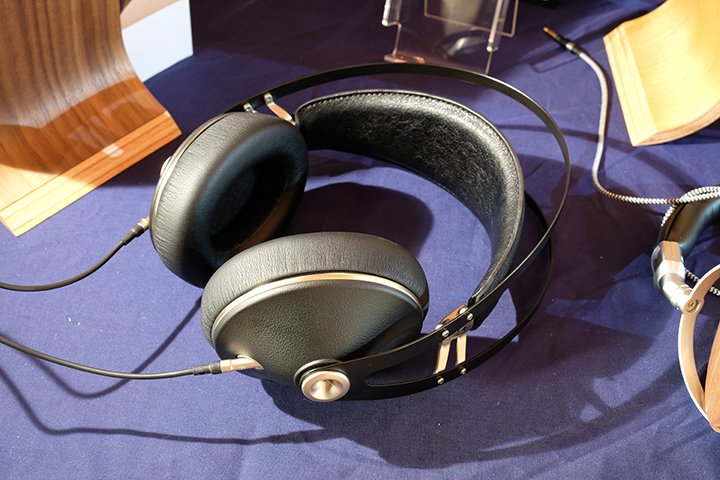
The first product out of Antonio Meze’s Romanian headphone lab, the Model 99 Classics are a closed-back design featuring a 40mm full-range Mylar transducer with a Neodymium magnet system, a V-shaped metal head band with a single flexible inner band of comfy pleather, two sets of Kevlar-wrapped OFC cables (one with and one without an in-line microphone/media controller), and walnut ear-cups. These last are solid blocks of walnut, CNC milled, then hand finished and polished to an artisan matt finish.

In our test, Alan Sircom said, “The Meze 99 is an unexpected joy. It has a sensational musical performance, even when played with very humble audio equipment, and is comfortable enough (both in wear and in listening) to allow the listener to spend many hours at a stretch in the company of the Meze 99 without a care.” 

Reviewed in Hi-Fi+ Issue 134

Closed-Back Headphone of the Year

Final SONOROUS III

Drawing heavily from some really big hitters in the Final range, this headphone has a lot in common with the SONOROUS X and SONOROUS VIII, despite the more than ten-fold price differential. Based around a 50mm dynamic driver that features a polycarbonate/glass resin molded front plate, Final’s unique Balanced Air Movement mechanism, and synthetic leather ear pads, the SONOROUS III looks and sounds more upmarket than many of its peers. In listening, Chris Martens felt that “it offered deeply extended and powerful, (albeit somewhat elevated) bass, with plenty of pitch definition and transient impact,” with a vibrant midrange, an extended treble response, “effortless transient speed”, and “a satisfying quality of coherence.”

Reviewed in Hi-Fi+ Issue 137


Open-Backed Headphone of the Year

MrSpeakers ETHER Flow

In our last Awards, MrSpeakers ETHER C won Closed-Back Headphone of the Year. This time round, it’s the turn of its Open-Backed big brother – the ETHER Flow. This planar magnetic design, using the company’s patented V-Planar technology, also incorporates the TrueFlow U-shaped metal channels with bar magnets with circular relief air holes. This forms the core of the ‘Flow’ upgrades, and helps rid the design of unwanted turbulence.

In his listening test, Chirs Martens felt that, “the ETHER Flow is at once a headphone that is endlessly engaging and always invigorating to hear, yet that is so smooth sounding, comfortable, and relaxing that it makes us want to listen for hours on end. It is everything that a great transducer should be.”

Reviewed in Hi-Fi+ Issue 141

Cost-no-object Headphone of the Year

Focal Utopia

Although Focal has made its Spirit headphones for several years, the new Focal Utopia flagship model is the product of four years of fundamental research and development. The Utopia features a lightweight 40mm pure Beryllium driver set in an M-shaped dome arrangement, with custom designed frame and motor systems, and an ear cup frame that optimises driver positioning for the best stereo imaging. With thin, carbon-fibre yokes, pure lambskin ear and head pads, and high performance OFC cables, no part of the headphone design was subject to corner cutting. As to the sound quality, it more than matches the design, and Focal has created a headphone of rare quality, more than worthy of the Utopia name.

Reviewed in Hi-Fi+ Issue 142

Hi-Fi+ Awards 2016: Loudspeakers

Digital Loudspeaker of the Year

Devialet Gold Phantom

A wholly new category for this year, so why not pick the leader of the pack? The rise in wired or wirelessly connected, active loudspeakers has been hard to miss in recent years, but many of the models in this category tend to be at the lower end of the spectrum. They remain a great way of getting music into and around the home, connecting as they do with both Bluetooth on phones and tablets, and to the home network for on- and off-line streamed musical content, and more.

Devialet’s original Phantom was, to our ears, more an interesting project than a potential audiophile system, but in the latest Gold variant – with its completely new tweeter, revised DAC, and beefed up hybrid Class A/Class D amplifier design delivering 4.5kW peaks – it is a very different proposition. In his enthuiastic review, Alan Sircom concluded that, “the Gold Phantom should be considered one of the best ‘bridge’ products in audio. It is the product that brings 21st Century audio levels of ease of use to audiophiles, and it is also the product that raises the bar for those more used to those convenient 21st Century audio products”.

Reviewed in Hi-Fi+ Issue 140

Value Loudspeaker of the Year

ELAC Debut B5

In his years working with KEF and more recently TAD, loudspeaker expert Andrew Jones has a long, glittering career of designing some of the best-loved loudspeakers ever made. But traditionally, his designs don’t come cheap. So when Jones moved to ELAC, it would have been logical to expect his first designs to be ultimate expressions of his design skills. And in the Debut B5, they were… just not in the way anyone might have imagined.

The Debut series was a chance to see what a truly great designer can do when working to a limited budget. The two-way, rear-ported standmount that resulted features a 25mm cloth dome tweeter coupled to a 135mm Aramid mid-bass driver, in medite cabinets with no internal bracing or damping. In our test, Chris Thomas noted that, “over the course of my time with them I continually forgot that they were so incredibly cheap. In fact nobody who heard them could believe it either. There’s a lot to be said for an audio system that just gets on with it and this was certainly it.”

Reviewed in Hi-Fi+ Issue 134

Standmount Loudspeaker of the Year

Vivid Audio B1 Decade

To celebrate the company’s tenth anniversary, Vivid Audio designer Laurence ‘Dic’ Dickie went back to the first speaker he created for the company: the B1. He thought it was apt that after ten years in production this model should be given the anniversary treatment. It was also an opportunity to incorporate some of the things that he had learned in the intervening decade in designs such as the distinctive Giya line, as well as looking to the designs of other brands for inspiration. The curvy B1 Decade that resulted expands upon the benefits in pressure changes such a design delivers, as well as reaction (or force) cancelling driver arrangements, where the magnet systems of mid/bass drivers are on opposing sides of a cabinet, and braced against one another to keep them under control. Many of the other ideas introduced in the original Vivid B1 remain unchanged, including the tapered tube loading for both the 26mm aluminium dome tweeter and the 50mm aluminium dome midrange. These are joined by two 158mm metal coned mid/bass drivers (one firing forward, one back) with reaction-cancelling bracing. The magnet system was created for the bass unit on the Giya G4 and has a longer linear magnetic field than the standard motor on the Vivid C125 driver. The B1 Decade also B1 Decade also uses reflex ports positioned on opposite sides of the cabinet. These mean you can see straight through the speaker itself, and is another example of reaction-cancellation through symmetry. In our test, Jason Kennedy concluded that “the B1 Decade is special. It lets more of the music through by virtue of its balance and its spectacular timing. The fact that you can hear so much through it is rather good, too.” Just 200 will be made.

Reviewed in Hi-Fi+ Issue 137


Floorstanding Loudspeaker of the Year

Wilson Audio Specialties Sabrina

In the past, one new Wilson Audio loudspeaker would be launched few years, but Such is the rate of change at today that the Sabrina came hot on the heels of the Sasha W/P Series 2 and the Duette Series 2, then to be followed by the ALEXX, the Yvette, and soon the mighty WAMM – effectively one new product per year, every year. As we went to press, Wilson Audio’s hand-over from father to son was completed, with Daryl Wilson taking over the role of CEO as his father David stands down. In the audio world, however, few people retire, they just spend more time designing products! The Sabrina, however, remains something truly special; it’s the least expensive floorstander Wilson Audio has ever made and – judging by the number of electronics and turntable manufacturers fighting over being able to use a pair in their demonstrations, it’s clearly one of those loudspeakers everyone wants. It’s not hard to see why; the three way, rear ported design offers much found in larger Wilson designs, without the need for an absolutely micrometer-precise installation and equipment matching. Comfortable with electronics capable of delivering more than 50 watts per channel, the Sabrina deeply impressed Alan Sircom in test: “It’s the sense of seamlessness across the frequency range. Try hard to listen out for crossover points – I mean really try hard, like you are pretending at being an audio analyser – and you’ll struggle to hear points of inflexion, and in the real world of playing music – forget it!” He also felt the Sabrina, “has the large-scale sound that has made Wilson loudspeakers so successful, so much so in fact that if you close your eyes you’d swear there’s a bigger speaker in the room.”

Reviewed in Hi-Fi+ Issue 134

Cost-No-Object Loudspeaker of the Year

YG Acoustics Sonja XV

To celebrate 15 years of YG Acoustics, the company will release its new four-tower flagship, the Sonja XV, both as a standalone project, and as a substantial upgrade for present Sonja owners. The XV is formally launched in 2017, but we’ve had exclusive access to the loudspeaker in time for a review at time of launch, and the overall performance is as impressive as its physical size would suggest. YG Acoustics really pulled the stops out on this one, introducing a wholly new ‘BilletDome™’ tweeter and a new CNC-milled ‘ViceCore™’ inductor system for the bass crossover network. With each tower standing as tall as the average American man, and the whole package weighing about the same as a Honda Civic, everything about the Sonja XV is designed for cost-no-object performance. In listening, we were surprised by the effortless, unforced treble performance, perfectly matched by a midrange, bass, and sub bass that redefine what is possible to be heard in an audio system.

Reviewed in Hi-Fi+ Issue 145

Subwoofer of the Year

REL T/9i

To some, the only thing better than a subwoofer is two subwoofers, and that was certainly the case when we tested the REL T/9i. While a single T9/i delivers the speed and depth we have come to expect from REL designs, the true strength of the argument comes when you use a pair of subwoofers, but not in the way you might expect. You see, carefully and cleverly used, two of these 300 watt powered subwoofers with a front-firing long-throw 254mm powered bass driver, and a similar downward-firing model used in passive mode, add up to more than the sum of their parts. Not only do they deliver all the bass and drive needed by sub-bass aficionados, but the two act more like active room treatment in the sub-200Hz region. In test, Alan Sircom said, “the T/9i – put simply – is your loudspeakers, but more so. Everything you like about your speakers is heightened; typically opening out the midrange detail, and adding a heightened sense of presence in the upper registers.”

Reviewed in Hi-Fi+ Issue 135

Hi-Fi+ Awards: Innovation of the Year

Magico M3 floorstanding loudspeaker

It might seem strange giving any first-of-its-kind of ‘innovation’ award to a loudspeaker, as they are typically some of the most resistant to change products in any audio system, but the Magico M3 is an exception on two counts. First, the company is pushing the envelope in terms of materials science and technology, and second, the lowered distortion of this sealed box loudspeaker sets a standard that shows we can still extract more and better performance out of our loudspeakers. The innovative materials science comes in the use of graphene in the midrange and bass units – this new, molecule-thick form of carbon has the advantage of being stiffer than virtually any other material at a given weight, and can also be made extremely light. The company has also managed to combine diamond and beryllium coatings in its tweeter design. However, by designing a loudspeaker that uses ‘wings’ of aluminium and carbon fibre along its side panels, and a tripod of effectively low-pass filters derived from the company’s Q-Pods, and utilising a ‘no quarter given’ approach to industrial design, Magico has also made one of the most inert cabinets in audio history. As a result, the new M3 offers lower distortion than any other box loudspeaker to date, and this throws down a challenge to other designers to produce better loudspeakers… at all prices!

Reviewed in Hi-Fi+ Issue 142

Headroom Show 2017

Metropolis Studios in West London is one of the last great recording studios in the British capital, and in the early months of the year it is home for a weekend to the Headroom Show, in association with headphone retailer, Audio Sanctuary. More than 50 brands rocked up again this year – 45 for the headphone world – to fill the four of the five studios and the bar section of the four-floor studio complex.

We recognise that there are a lot of shows crammed into the first few months of every year, and many of the products on show at Headroom have been seen several times in many different events across the globe, so rather than cover all the products at the event, we are going to focus largely on newcomers, or products that are new to the UK or Europe, as well as discuss some of the trends in this fast moving world.

ACS

UK makers of custom in-ear monitors for pro musicians, ACS has recently branched out with a trio of universal fit models, initially designed pragmatically as demonstration models for the custom designs. The single driver Evoke, three driver Evolve, and five driver Emotion are based heavily on the pro range and all feature detachable Danish cables. Prices range from £199-£749, with the custom in-ear versions costing around £50 more.

Audio Technica

We’ve been selectively focusing on Audio Technica’s output both at CES and Bristol, in part because the company had so much to show. This time at Headroom, Audio Technica concentrated on its Pure Digital Drive technology in its Digital Wireless headphone range. The two models – the £299 ATR-DSR7BT and £499 ATR-DSR9BT – both feature an innovative 45mm ‘True Motion D/A diaphragm that couples with a Trigence Dnote chipset. This feeds a digital datastream direct to a multi-layer voice coil on the carbon-composite drive unit, via a modulated power supply voltage. This is akin to taking Wadia’s concept of the ‘power DAC’ even further, right to the drive unit itself.

The aptX, NFC compatible Bluetooth headsets support AAC and SBC codecs to 24-bit, 96kHz, and include a USB combination charger and signal cable for wired connections to Macs and PCs. The difference between the two models include improved materials and finish, but more importantly more layers to the voice coil on the higher-end model.

The Chord Company

The Chord Company launched its ShawCan headphone cable from the company’s Shawline collection. This cable uses silver-plated copper conductors, with a PTFE dielectric, a carbon-composite shield, and a braided outer jacket. The design uses a variation of the company’s Super ARAY conductor geometry so successfully used in its top lines of interconnect cables. Currently available with connectors for mono or stereo jacks, mini jacks, 2-pin IEM, mini XLR, LEMO, and more, we got to hear these on a pair of Audeze through a Chord Electronics DAC and the difference was marked. Prices start from £275 for a 1.5m cable.

It’s worth repeating periodically that despite The Chord Company using a Chord Electronics DAC, and despite The Chord Company and Chord Electronics frequently turning up at the same shows (including this one), the two brands are entirely unrelated and based on different sides of the country. OK, so it’s a small country…


Cyrus

The new £99 soundKey from Cyrus is a bold departure for the Cambridge-based company. The small digital converter/headphone amplifier is designed to run from portable and desktop audio alike (and is compatible with iOS device power output limitations). Made in the UK and not much larger than a couple of SD cards, this powerful little device was Kickstarter funded (raising £50,000 in its first day).

Once the initial Kickstarter angels have been supplied with their soundKeys, we look forward to investigating this UK-built, elegant little portable audio DAC, and see how it shapes up against stiff competition from the likes of AudioQuest’s DragonFly models. First impressions are very positive!

Even

Even currently makes a pair of wired headphones and a pair of wired earphones, with a pair of wireless headphones expected soon. Prices are very competitive, with the in-ears retailing at £129, the H1 headphones priced at £199, and the Bluetooth headphones (expected in May) will cost £299. If you are at the ‘so what?’ stage, the Even EarPrint concept takes this headphone to new levels.

Press a button on the headset and you run through eight, low level pieces of music in the left ear, followed by eight in the right ear. Your job is to press the button when each piece of music is audible. Once the process is complete, the Even H1’s have taken a basic audiological profile of your hearing and applies it to music played through the headphones. This is a fascinating experience, and is especially useful for those who have hearing loss or damage. We hope to be looking at a pair of these clever headphones in a forthcoming issue of Hi-Fi+

Goldmund

A name perhaps best known among high-end audiophiles, the Swiss firm Goldmund has a commanding reputation for top-grade audio and its £9,500 Telos Headphone Amplifier 2 looks set to extend that reputation to the headphone space. This cost-no-object DAC/amplifier is capable of 32-bit, 384kHz or DSD playback through its USB input, high resolution through its optical or coaxial digital inputs, and includes a line input for analogue sources, which are digitised at input.

The main difference between the original and latest version of the Telos is the inclusion of a Binaural encoding option. With Chasing the Dragon actively releasing binaural recordings (among the first in a generation) and the original binaural discs now highly prized, this all-digital amplifier could prove a popular choice among the well-heeled cognoscenti.

On the same stand, Goldmund distributor and Simaudio dealer Sonata Hi-Fi was showing the first European outing for the £1,700 Moon NEO MiND network streamer, allowing the THA2 to gain full streaming services via the NEO MiND’s array of digital outputs.


HiFiMAN

HiFiMAN had a busy few months (when did HiFiMAN have a few ‘quiet’ months? it seems to launch a new product every couple of weeks), but Headroom gave the company a chance to showcase products new to Europe rather than ‘brand new’. The show was the first public outing across the continent for the finalised version of the £50,000+ Shangri-La electrostatic headphone system (playing vinyl through a Michell Orbe turntable), as well as first public outings for the £2,000 RE2000 and £690 RE800 in-ear monitors. The company was also comparing the current and previous versions of its £2,199 HE1000 planar magnetic headphones, which made for fascinating demonstrations!

Jays

As the name suggests, the u-Jays Wireless headphones are a £140 Bluetooth wireless headset with a unique touchpanel on the right ear cup that allows swipe controls of the Android or iOS device to which it is connected. The all-black, and black with gold trim versions were on show. Jays expected to have the new white version available, but the first versions proved too popular and none were left to put on show!

Meze

The 99 Classics by Meze have gained lots of attention since their launch a couple of years ago. The latest variant is the £260 Meze 99 Neo, which has been seen in near-complete form before. The new models are an affordable, none-more-black version of the walnut Classics with the same stamped manganese spring arrangement for the headband.  

oBravo

Innovative Taiwanese brand oBravo has a somewhat bewildering range of in-ear monitors and headphones, including a new $6,000 flagship version of its Air Motion Transformer (AMT) HAMT-1 headphone. More significantly, however, it also had samples of the most expensive earphones currently in production, the hybrid EAMT-0  (codename Zeus) in different finishes. The ‘standard’ model features aluminium enclosures and costs £6,000, with copper and titanium, and each one sounds very different. The supplied Comply tips weren’t an ideal fit for me and there was a lot of ambient noise in the room, but the midrange and bass were extremely exciting, and the treble was effortless too.

Onkyo/Pioneer

Sister brands Onkyo and Pioneer simul-announced their latest DAP designs, the £399.99 Rubato DP-S1 from Onkyo and the £xxx.xx XDP-30R from Pioneer. The two share a lot of common technology, including the dual ESS 9018 SABRE DACs, a 2.4” touchscreen, twin MicroSD slots, and 16GB of internal memory.

The similarities don’t end there. The two also use the same milled-from-solid-billet aluminium chassis (different finishes separate the two), the same basic ergonomics, the ability to run balanced headphone cables, and a custom-based Linux platform. Both also share a dual-band Wi-Fi networking capacity in order to stream TuneIn radio stations and TIDAL services. And both are expected to add MQA to the current line-up of DSD, FLAC, ALAC, AIFF, AAC, WAV, and MP3 file support not long after their launch in May this year. Finally, both include Bluetooth connectivity, and a DAPcontroller App, so your phone in your hand can control the DAP in your pocket.

The main difference is in the voicing and tailoring of the sound of the two devices, with the Onkyo featuring selected components – including thin-film resistors – to make it the more ‘audiophile’ of the two. To this end, the Onkyo will appear in more audiophile settings, while the Pioneer is intended for more mass market appeal. The Android-based Pioneer XDP-100R and Onkyo DP-X1 models will be phased out as a result of the new models.

Sennheiser

Alongside its normal coverage – including the outstanding £54,000 HE 1 electrostatic system – Sennheiser was heavily promoting its wireless designs, to reflect significant change in the portable audio market. The company is convinced that wireless headphones and earphones will come to represent around half the total market by the end of 2017, so its main thrust this year has been to promote higher end wireless designs, such as the Momentum over-ear, on-ear, or even in-ear wireless models, as well as the £329.99 PXC 550 wireless noise-cancelling, touch-panel controlled models. Most of these have been seen in previous shows – most notably Bristol Sound & Vision – but Sennheiser’s commitment to wireless is as strong as ever, even in a dedicated headphone show where wires still dominate.

Tron

Tron’s new Antares (£3,000, Standard model, £5,000 Deluxe pictured here) is a Class A headphone amplifier featuring just one transistor in the output stage. It features a massively overrated power supply (in the good way, not ‘overrated’ in the Mark Wahlberg’s acting ability way), a dual mono linear power supply and is not only powerful enough to drive two sets of headphones at once, but can even drive two sets of desktop loudspeakers! We like the Original Star Trek font, too!