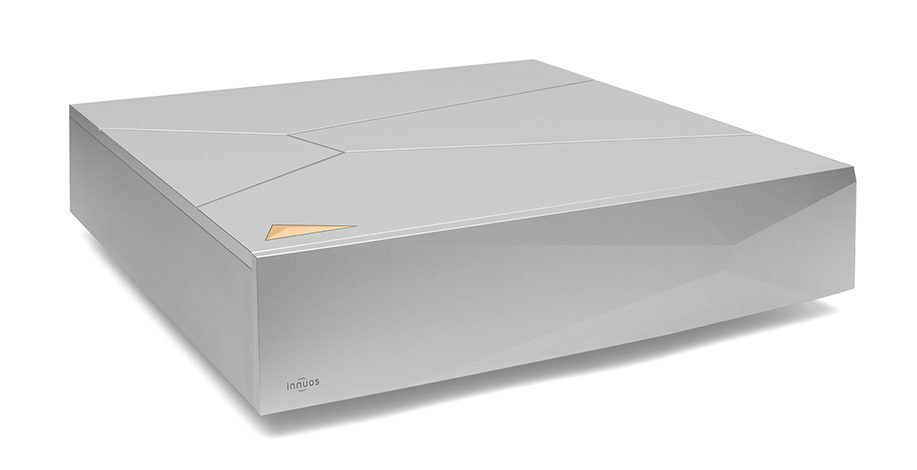
Innuos is one of the foremost manufacturers of high-end music streamers and servers. We spoke to Nuno Vitorino, Innuos co-founder and Director of Research and Development, about the development of the new Next Generation lines and what the future holds for Innuos’ technologies.
What differentiates the NG technologies in the Statement and the new Zen line?
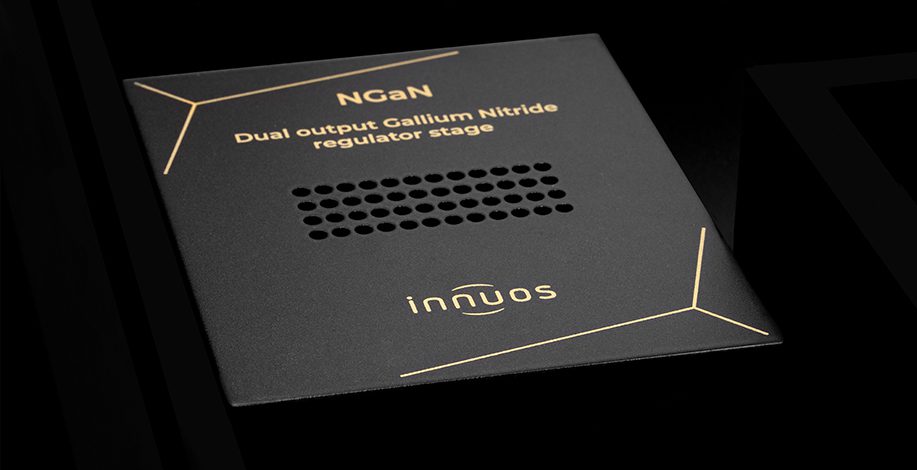
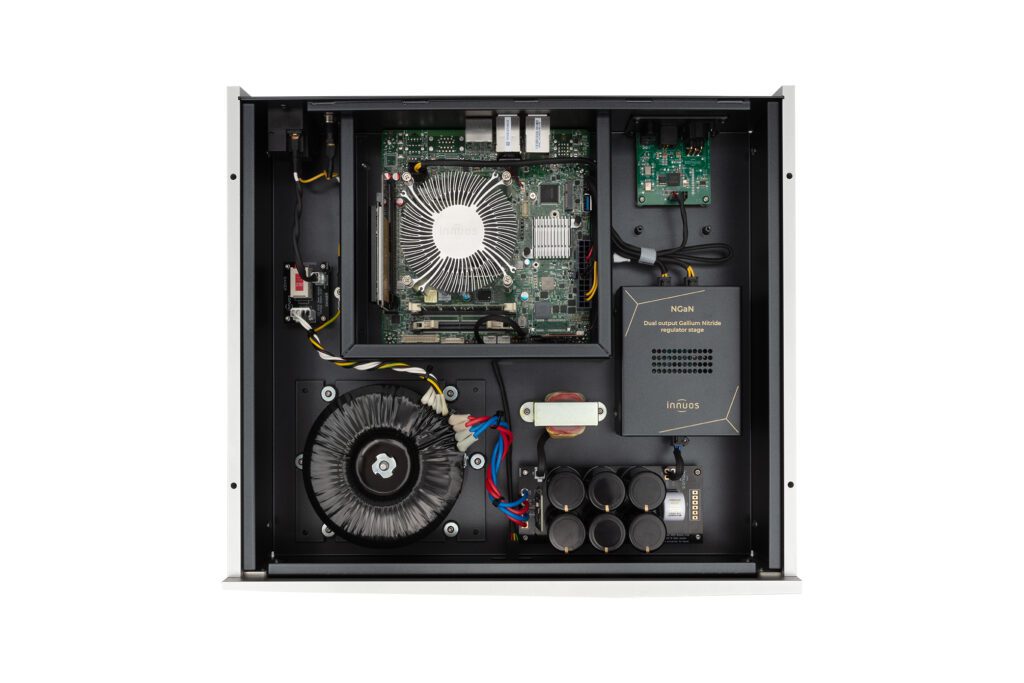
There are differences on both the power and processing areas. On the power side, the ZEN NG has less power rails but introduces the NGaN Gallium Nitride based regulator for the CPU. The main advantage is reducing impendance of the power supply for the processor. On the processing area, the ZEN NG introduce the new PreciseAudio mainboard. This is a custom mainboard that is extensively tuned for audio use as we have complete control over how the mainboard works. Additionally,the new ZEN NG series is based on a Real Time kernel and we used separate isolated processor cores for audio tasks only. This again reduces latency for audio processing.
What are the changes between models in the ZEN range?
Between the ZEN NG and ZENith NG the difference is at the toroidal/rectifier bank (150VA/44000uF on the NG, 400VA/132000uF on the ZENith) and the processor level (four cores and four virtual cores versus eight cores and eight virtual cores).
How are these different from previous ZEN models?
These are very different from the previous ZEN MK3 series, which didn’t use the active rectification technology, GaN regulation and a mainboard with a higher latency.
In a hierarchy of importance, where does the case, hardware, implementation, and firmware sit?
They are all related as software and firmware is what controls the hardware and it’s how you control the hardware that makes all the difference in audio. Power is the foundation though, network and output implementation, audio processing and finally chassis for EMI and vibration.
Is a server still relevant in a streaming world?
Absolutely! First it enables you to experience the highest levels of high resolution (DXD and DSD) but also enables the concept of having your own music collection that is yours forever. Streaming is great for discovering music but due to commercial agreements, you never know if the music you love will always be available there.
What innovative technologies go into the new ZEN range and will they trickle up and down?
Essentially what I explained earlier, plus the XSM (eXtensible Storage Management). We have trickled down already some of the technologies for the Stream Series such as the active rectification, XSM and real time operating system.
How long did it take to design these products?
We focus on developing component technologies which we then incorporate on the products. Most of the technologies that are new on the ZEN NG have been in development since 2019.
Is the original ZEN line is still in production? How long do you expect support to last, and does supporting older models influence app design?
For the MK3 line we expect to fully support it for as long as we can make it compatible with the existing servers.
We do not plan a specific obsolescence, and we discontinue support only when the platform can no longer support the features being introduced with the software so that we don’t have to keep completely different software versions.
Some prefer the performance of the Statement NG to ZEN NG. When that product eventually ends its production life, will there be a similarly sounding replacement?
The Nazaré will replace the Statement as our flagship server incorporating quite a few new technologies and making a significant step up. We also plan to extend the NET and Flow technologies being introduced with the Nazaré that ZEN NG users can upgrade to make significant improvements. These are currently in development.
What challenges do server makers face today, and what might tomorrow bring?
We feel that even with the Nazaré there is further to go to achieve an even more realistic sound reproduction. But a lot of focus is on the user experience and ensuring that the system is intuitive and simple to use, further merging streaming and local libraries together.
Looking a little further into the future, we also feel that LLM’s (Large Language Models) that people generally associate with AI can be integrated to make interaction with music simpler and more natural.
We looked at the Innuos ZEN NG (or ‘Next Gen’) in Issue 240 (see review). The Innuos ZENith Next-Gen server is its bigger brother. Well, externally from the front at least, they are more like identical twins. However, the ZENith is a heavier hitter all round. It’s designed as a bare-bones server as standard. The Innuos server is alsos available with a greater than ever range of plug-in modules and hard drives. The Innuos ZENith Next-Gen server is the modular answer to the big question in streaming audio right now; why do I need a server at all?
The media server perhaps best expresses the pace of change within the audio world. Twenty years ago, a server was the preserve of the nerdiest of computer audio early-adopters. Ten years ago, it was a must-have way of storing those CDs and downloaded high-resolution files. And today, who needs one when you stream everything anyway? In fact, the need for a good server hasn’t gone away. That holds, even if you haven’t ripped a disc since the 2010s.
MC Server
Think of the modern server as a Master of Ceremonies for your system. It makes the transition between locally stored and online music effortless. So effortless that you might not know – or care – where that music is coming from. Sure, this can be done in software blurring the lines between media server, renderer and control point. However, the heavier the lifting done by the server, the less other units need to undertake. At its most extreme, this could mean fewer glitches and drop-outs. Of course, this relies on a robust server architecture. That includes everything from a dedicated amplifier to hardware designed specifically for the task. And it’s here where companies like Innuos score well, and the ‘Mac+DAC’ systems (once a firm favourite) begin to struggle.
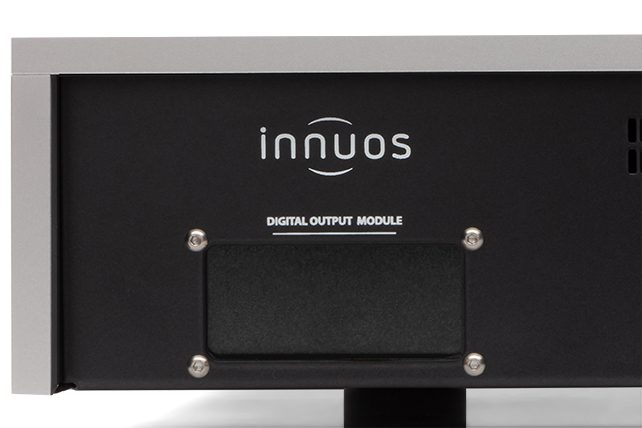
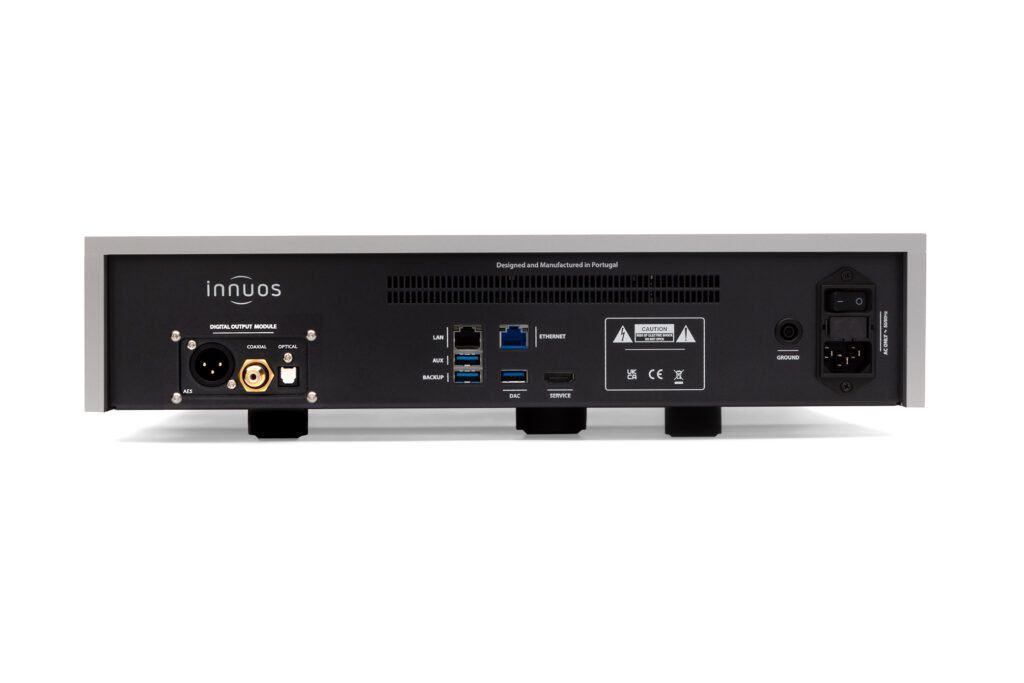
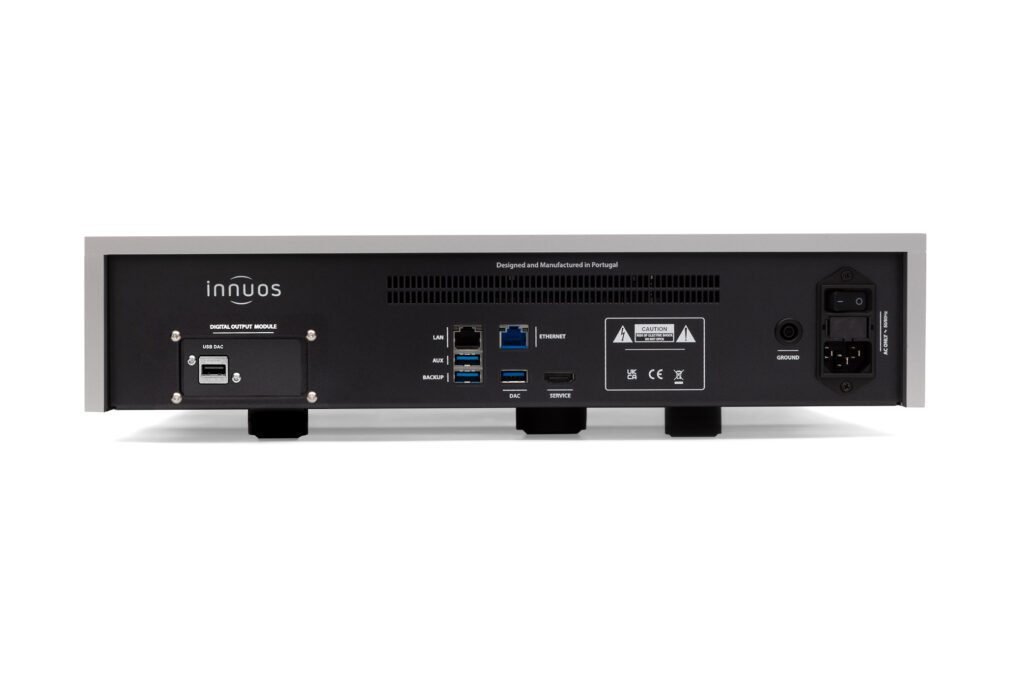
The modern server has to perform different tasks to its forebears of even a few years ago. That explains ZENith’s flexibility of operation. The notion of having USB as the sole output to a DAC still holds water. However, an increasing group of listeners have opted for other ways to move digital files from device to device. Rather than sacrifice performance by tricking out the ZENith NG with every possible digital connection, the company has gone the modular route. You can specify from a choice of ‘PhoenixUSB’ (making the ZENith very similar in performance to the Statement NG in output options), ‘PhoenixI2S’ (using a HDMI connection and a small ‘mode’ selector to ensure the maximum number of I2S connection options), and a ‘SPDIF’ board (which includes S/PDIF coaxial, Toslink and AES digital connections).
PreciseAudio
Like the ZEN NG before it, the ZENith NG is a part of Innuos’ ‘Next-Gen’ project. But the Innuos ZENith Next-Gen server takes elements like the PreciseAudio mainboard and runs with them. If a server takes the strain, then moving from an Intel Core I3 (with four performance cores) to a Core I7 (with eight) spells some serious powerlifting.
The ZENith Next-Gen also features a pSLC (pseudo Single-Level Cell) industrial-grade SSD for the Operating System. Powered independently, this is added directly to the PreciseAudio board. As pSLC contains simplified controllers, they generate much less EMI compared to standard SSDs. Given that SSD does all of the system work, this is claimed to deliver considerably lower operating noise with direct impact on sound quality. This was borne out in comparitive listening tests. The ZENith NG is quieter both in terms of ambient noise and the noise floor of the system.
Raising the power supply game
The standard ZEN NG features a RECAM2 NGaN (Gallium Nitride) power supply. However, the ZENith NG raises the game by using an ARC6 NGaN PSU, derived and trickling down from the Statement. This features active rectification, a chunky 300VA audio-grade (natch!) transformer, high-performance choke regulation and a 130,000µF Mundorf capacity arrays.
The rest of the ZENith NG is identical to the ZEN Next-Gen we tested in Issue 240. Like that model, the PreciseAudio mainboard means Innuos-developed Sense 3 Operating System’s kernel runs in real time, drastically reducing operating latency. This lets the ZENith Next-Gen allocate specific audio processes to dedicated processor cores.
The PreciseAudio board (in both ZEN NG and ZENith NG forms) comes with 16GB of industrial-grade DDR4 RAM has components removed for sonic benefit, and incorporates custom regulators specifically selected to enhance sound quality. Innuos exercises complete low-level control over the mainboard, allowing it to configure individual clocks and hardware protocols optimised for audio performance.
This dedication to the signal path quiets one (or possibly two) of the most common dismissive criticisms of computer audio servers. The ‘it’s just an off-the-shelf PC’ argument has long been on the ropes, as the Next Gen servers are about as near to an off-the-shelf PC as a Formula 1 car is to a shopping trolley. Innuos’ PreciseAudio mainboard is so un-PC it could be in an early 1970s sitcom.
The other criticism is that ‘audio isn’t so special’ and the use of dedicated parts made specifically for their audio properties tends to take the wind out of that argument’s sails. The size of audio files do not make music serving difficult from a Enterprise-level networking system, but maintaining the integrity of the products in that system is uppermost, and the Innuos scores highly on that front.
Storage Options
To recap further, another big change in the move up to Next Gen is the switch from Hard Disk Drives to Solid State Drives, both for on-board music storage and a dedicated SSD to store the Sense 3 OS. This last has power loss protection in the (hopefully unlikely) event of a power cut. This is a pragmatic decision as well as a practical one; the less the drive holding the operating system is likely to go ‘bang!’ under worst-case situations, the less chance repairs are needed in the field. No one wants to end up with an expensive metal brick, and power loss protection reduces the chances of that happening.
The storage for music files is also well accommodated. A new Extensible Storage Management (XSM) feature in Sense allows users to seamlessly add M.2 storage via a slot at the bottom of the system. Alongside the internal storage, this creates a single storage volume of up to 16TB. This means there’s no need to worry about free space on each individual drive unless you are storing the entire canon of Western music in high resolution. The new system is also more robust; if one of the drives fails, only the contents of that drive are affected, and backup can restore files specifically from that drive. Innuos provides 2TB, 4TB, and 8TB of onboard SSD, with an additional 8TB of external SSD doubling up under XSM. It’s possible to extend storage even further with Network Attached Storage, though this may exhibit greater latency than the onboard options.
Finally, while in recap mode, the CD slot is now consigned to history. This is simply down to long-term availablity issues, but its ripping capacity is still there.
ZENith vs ZEN
Just as last time we received a ZEN Mk3 to test against the ZEN NG. This time it’s the great NG battle; ZEN vs ZENith. This one has perhaps even greater significance; the ZEN NG can be upgraded to ZENith NG levels as a factory upgrade. That makes this a title fight; is ZENith NG better than ZEN NG, and is it better enough for someone to make the upgrade? Both challengers spend two days before the weigh-in and then let battle commence!
The simple answer is ‘yes’, the Innuos ZENith Next-Gen server is better than ZEN NG. A lot better. Upgrade better? Well, maybe. The chances are most people with ZEN NG’s have only had them for about a year or less, and I’d argue the standard ZEN NG is good enough to leave well alone for a few seasons.
Birthday present
Consider the upgrade as a birthday present to your system, but maybe that shouldn’t be a first birthday. If I were buying a server and I could stretch to the ZENith, I would do that in an eyeblink. But as it’s a big enough difference, I think people will be prepared to save up a little longer to get the ZENith NG, rather than get ZEN NG today and ZENith NG as an upgrade. Still, it’s good to know the option is open to listeners.
The Innuos ZENith Next-Gen server is fantastic sounding. Music races out of its ports at blinding speed and with a remarkably natural presentation. Transient speed is often a problem with streamed music next to its spinny-disc equivalents. Here, the music – even the crunked-up, accelerated beats of Squarepusher – has as brisk a tempo as the composer or musician intended.
It’s not just about speed; there’s a sense of space and vivid, visceral human beings playing music on the ZENith; something that is generally difficult to replicate on streamed and served music. Compare this to a state-of-the-art server of a few years ago, and the improvements are noticeable.
Making a Statement
Which leads me to the next Innuos-v-Innuos grudge match. The Statement Next Gen is that state-of-the-art server of a few years ago. One that I use regularly. In its last battle against the ZEN Next Gen, the Statement fared well. It’s a very different sound (more fluid and with a bigger soundstage) and while you could see where the ZEN NG did well, the Statement retained its place in the system. Things are not so clear-cut now. The ZENith NG is a more direct challenge to the Statement Next Gen. Yes, it has the directness of the standard ZEN NG, but it adds some warmth and space and fluidity… all the things the Statement excels at. The excellent Sense app runs smoother on ZENith NG, too!
I feel this was ultimately a draw. Each product had its own strengths. However, that’s tempered by me trying to cling on to the Statement’s position in my system. In reality, if you were making the comparison with money burning a hole in your pocket, I think most wouldn’t just ‘settle’ for the ZENith NG. They would actively choose it over the bigger, senior model. The ZENith NG is definitely faster and – ever so slightly – quieter sounding than the Statement. But, in terms of space and pace, they are equally matched.
This says a lot of good things about the ZENith NG. In a set of ‘Winner Stays On’ bouts between the Innuos Statement Next Generation and some really big hitter servers, it has held its own well. At least until you get to the point where a server costs as much as a BMW.
The World Beyond Innuos
The Innuos ZENith Next-Gen server is one of the finest servers I have heard to date. It’s not cheap. However, those that challenge its performance both as a server and in sonic terms are considerably more expensive. That it takes on the mighty Statement NG from the company shows its mettle. Innuos has raised its game with the NG line. In the ZENith it has a truly world-class server that delivers the goods with such speed and enjoyment. It’s good enough to put the Statement Next Gen that I’ve used for years out to pasture.
Discover more about the Next Gen innovations here.
Technical specifications
Type: Music Server
Audio Outputs: Digital Output: USB (Up to 32bit/768KHz, Up to DSD256 via DoP, Up to DSD512 via Native DSD), 1 x Digital Output Module: PhoenixUSB, PhoenixI2S, AES/Coaxial/Optical S/PDIF (Sold Separately), Auxiliary Ethernet Port for Streamer or NAS
Connectivity: Ethernet: 2 x LAN RJ45 Bridged Gigabit Ethernet (LAN, Aux), USB: 3 x USB 3.2 Gen2 (Backup/Import, Aux, DAC), 1x Digital output module bay, 1x Storage expansion bay, 1x HDMI (service only), Chassis Ground: 4mm ‘Speaker plug’ port
Ripping: External USB-connected CD ripper required.
Sample Rates: 44.1kHz, 48kHz, 88.2kHz, 96kHz, 176.4kHz, 192kHz, 352.8kHz, 384kHz, 768kHz. DSD over PCM (DoP) up to DSD256. Native DSD up to DSD512 (on selected DACs)
Bit Depths: 16bit, 24bit, 32bit
Web Interface: Modern Web Browsers from iOS, Android, Windows and OS X
Mobile: Innuos Sense App for iOS/Android/Kindle Fire
Storage: 3D TLC SSD for OS. [Optional] 1 x PCIe NVMe SSD – 2TB / 4TB / 8TB (Factory fitted), [Optional] 1 x m.2 NVMe SSD (User or factory fitted)
Processor: Intel Core i3 (4 x Physical Cores + 4 x Virtual Cores)
Memory: 16GB DDR4 Industrial-Grade RAM
UPnP/DLNA: AssetUPnP
Streaming Services: Qobuz, Tidal, Deezer, HighResAudio, Internet Radio, IDAGIO, Spotify Connect, TIDAL Connect, Qobuz Connect, Radio Paradice FLAC and interactive services
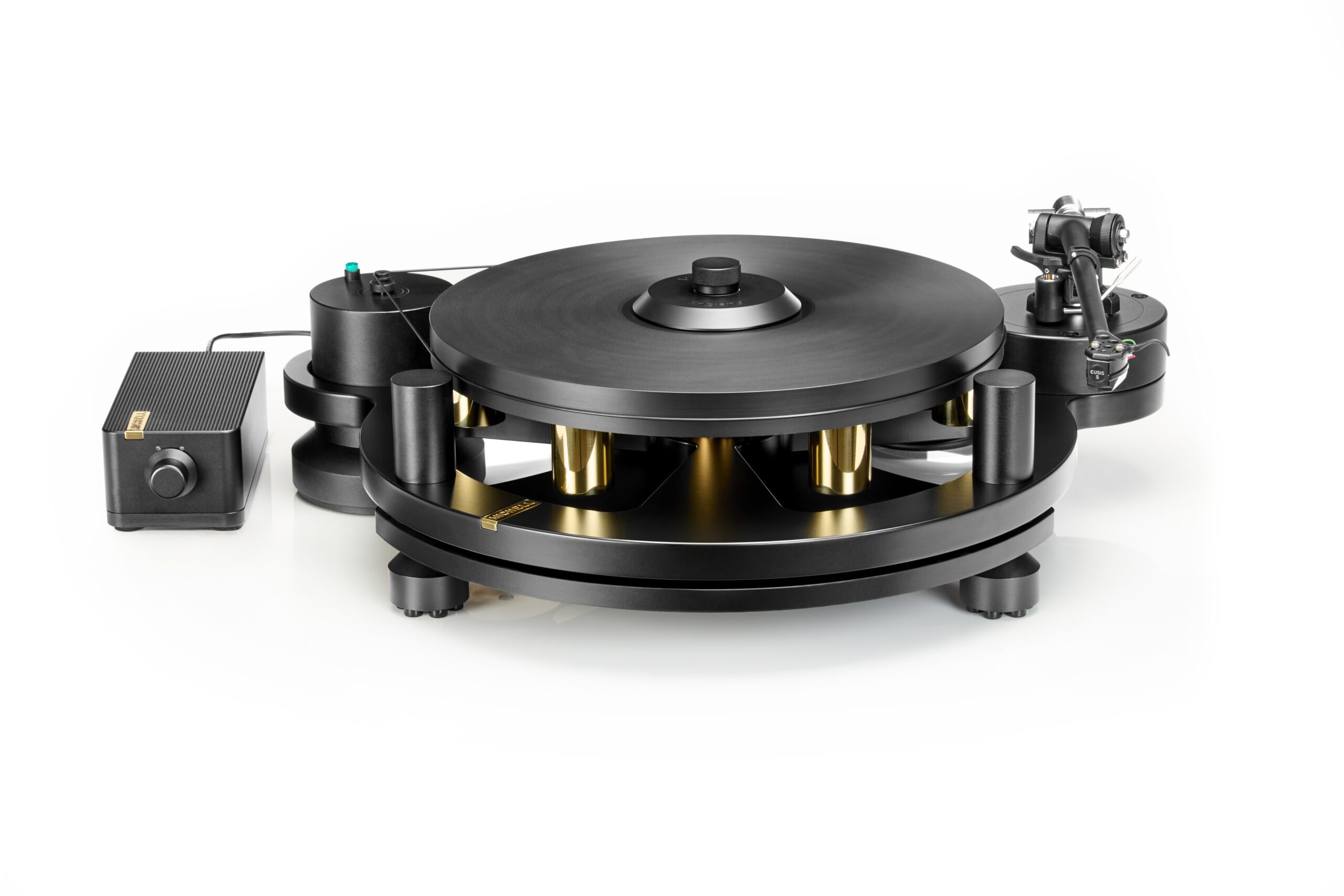
Stevenage, 16 October 2025. Michell Audio, the British manufacturer of the world’s most iconic turntables, is introducing the latest iteration of the legendary Gyro, the product that revolutionised the approach to turntable design. The new design represents the most significant re-imagining of everything beneath the surface to present a deck that is undeniably a Gyro, but delivers dramatic improvements in performance.
“When engineer John Michell produced the first parts for Transcriptor turntables back in 1969 he started a process that eventually led to the launch of the GyroDec in 1982, a product that came to redefine the way turntables are designed,” says Jonathan Nye, Michell’s managing director. “Today’s introduction contiunues this legacy, with an instantly identifiable Gyro that retains the ethos of the original, but packed full of technical innovations that drive the performance forwards in the most dramatic manner.”
Radical developments include the introduction of a precision-machined, solid 19mm aerospace-grade aluminium chassis, replacing the cast aluminium that has been a consistent part of all Gyro models. This move ensures absolute unifiorm mechanical performance across the entire structure, which reduces colouration in the midrange, creates tighter imaging and ensures more efficient energy flow away from the tonearm and bearing.
During the development of the Gyro, the Michell engineers employed cutting edge analysis tools, such as FEA and AI-assisted simulation. This has enabled an overhaul of elements such as optimised vibration control of the suspension and chassis, through fine-tuning of mass distribution and damping zones to disspate vibration and resonance. The result is an audibly lower noise floor and improved rhythm and microdynamics in the music.
Other developments have seen the familiar three-point spring suspension system tuned down from 4.5Hz to 3.5Hz through the use of a self-centering mechanism called Equilibria™, which provides better low-frequency control, timing and pitch accuracy. A quieter background and greater resolution at low volumes has been achieved by introducing bespoke composite Sorbothane™ feet. With six contact nodes they offer superior vibration absorption and control than a single point puck.
The innovative helix oil pump bearing has been upgraded to a double helix, meaning twice the oil flow to lubricate the inverted bearing, reducing friction even futther. And, for both user operation and a lowering of noise, the new motor assembly is a shielded design that incorporates a grounding cable and also enables electronic speed selection of 33.3 or 45 RPM.
Stylistically, the new Gyro is unmistakable, but includes enhancements to the aesthetic design. For example, the Delrin platter now has a grooveless precision turmed edge, instead of a visible groove for the belt, which now self-levels. While not affecting the performance, this refinement presents a more minimalist appearance which sits comfortably with the lines of the new base and feet. The base is now a high-mass aluminium design, replacing the existing lightweight acrylic spider frame. The result of its reduced flex and increased mass is to allow the suspension and feet to perform more predictably, with far greater bass definition and midrange clarity.
Commenting on the introduction, Alister Smith, sales manager – home audio for PMC Distribution UK, says: “It is a very exciting time in the evolution of the Michell Gyro and we are delighted to bring the latest design to the UK audiophile market, continuing the long tradition of Michell turntables leading the way in terms of engineering and musical performance. We know our retailers will be looking forward to demonstrating it to their customers, and are equally sure that those customers will be more than thrilled by what they experience.”
Manufactured in the UK and designed from the ground up by the Michell Audio team, the Gyro is distributed by PMC Distribution UK through carefully selected retailers.
Retail pricing
Gyro £5995.00 without arm and cartridge. Includes a unicover and record clamp.
15 Oct 2025: For over two decades, Crystal Cable has pursued a single vision: to bring music closer to life.
The sold-out limited edition Infinity Power Cable was one such moment in our journey — celebrated, awarded, and cherished by listeners and reviewers around the world. Infinity became a symbol of what was possible when innovation and artistry meet.
Dreams never end; they expand and evolve. At Crystal Cable, we never stop dreaming.
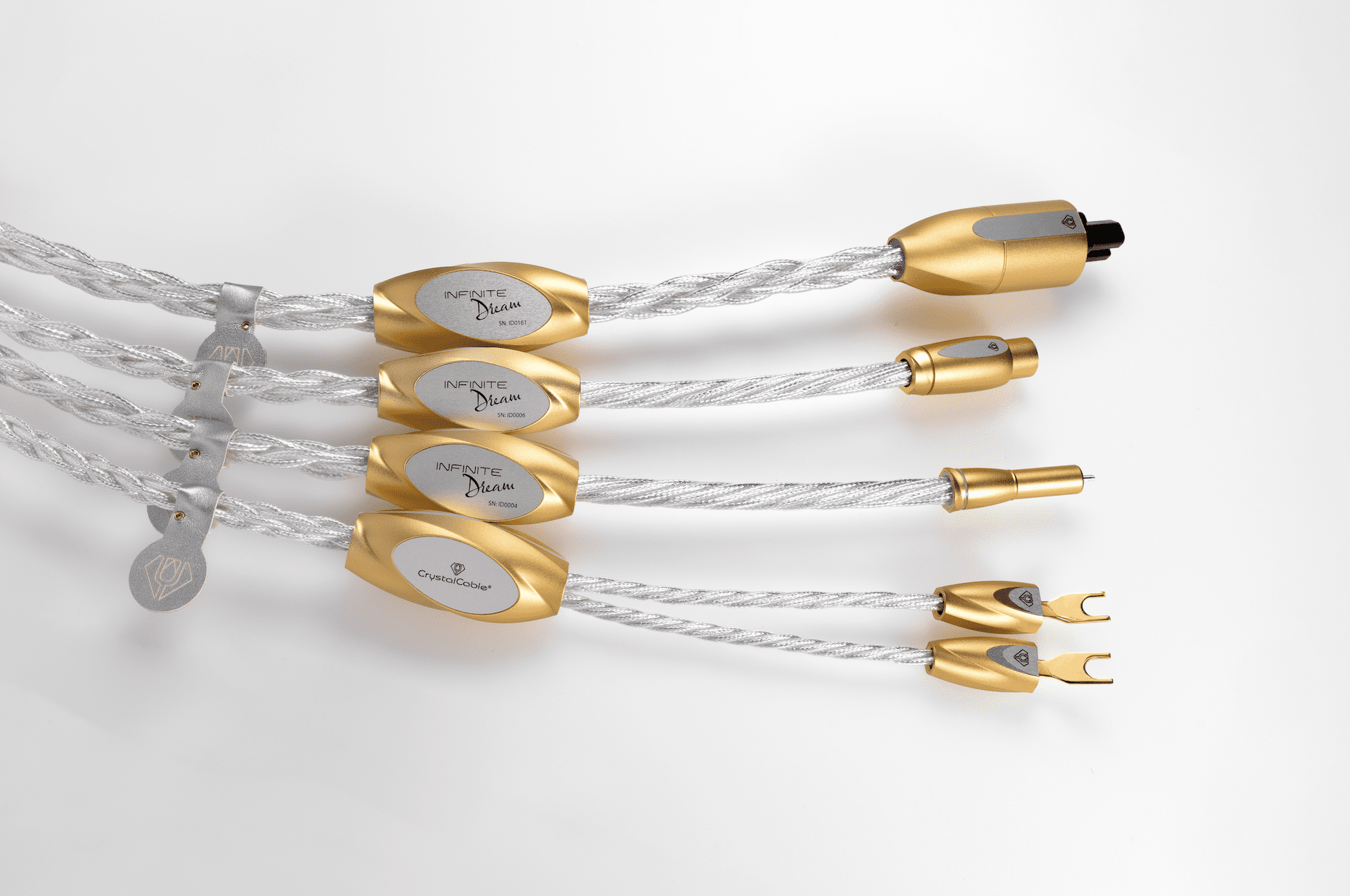
Infinite Dream is the realization of that continuing pursuit — a complete flagship series of Power, Interconnect, and Speaker cables, created without compromise. Every connector is designed in-house to provide the ultimate musical connection and artistic elegance of the cables. It is a series where everything comes together, created for those who believe music should feel limitless, alive, like a never-ending dream.
A series where infinity becomes reality, and reality becomes art.
Infinite Dream Power Cable
Every performance begins with power. The Infinite Dream Power Cable provides the foundation upon which music takes form — stable, silent, and alive with potential.
With its nine superconductors, each formed from a combination of solid Infinite Crystal Silver and Silver-Gold² wires in an optimized topology, the current it delivers is pure, limitless, and unwavering. This architecture minimizes electrical resistance and electromagnetic interference, ensuring that nothing stands between your system and the music it was built to reproduce.
From the first note, it delivers blacker backgrounds, effortless current, and dynamic headroom that gives instruments their natural space and energy. Silence becomes more silent, allowing every sound to emerge with startling clarity — from the delicate shimmer of a cymbal to the full weight of an orchestra.
But Infinite Dream goes beyond specifications. Its true achievement is in the way it allows music to breathe, expand, and flow without limit. The listener experiences power not as electricity, but as emotion — the quiet strength that supports every note, every crescendo, every pause.
This is power delivery elevated to art: invisible yet indispensable, revealing what lies hidden in recordings and turning playback into performance.
Infinite Dream Interconnect Cable
Between source and amplifier, between imagination and reality — this is where the Interconnect stands. It is the vital bridge that carries the essence of music from one component to the next, without compromise and without loss.
Its six conductors are as pure as they can be, combining the most precious materials — silver and gold — to enhance clarity, texture, and tonal richness. The geometry is carefully designed for signal integrity, while high-quality shielding and precise twisting topology eliminate external interference. At both ends, custom-made RCA and XLR connectors ensure perfect transmission, every time.
The Infinite Dream Interconnect reveals music in its most fragile and fleeting forms. It is not only about carrying signal, but about preserving emotion. The soundscape is expansive, dimensional, and tangible, yet never exaggerated.
The interconnect redefined — not a link in the chain, but a pathway to immersion, where every connection becomes invisible and only the performance remains.
Infinite Dream Speaker Cable
The final connection — the moment where power and signal become music.
Eight superconductors, woven into a topology that naturally cancels electromagnetic interference, allow the signal to flow to your loudspeakers with unmatched smoothness, speed, and stability. This unique architecture combines Infinite Crystal Silver and Silver-Gold² conductors, terminated in custom-made Silver-Gold² spades, ensuring the most secure and transparent connection possible.
The Infinite Dream Speaker Cable delivers music with unrestrained authority and breathtaking refinement. It unlocks boundless dynamics yet maintains delicate control, allowing both explosive crescendos and subtle textures to unfold with effortless ease.
Every note carries weight, every silence holds meaning. The scale of a symphony orchestra, the intimacy of a single instrument, the presence of a voice — all are revealed with striking realism and dimensionality.
This is not simply a cable, but the final translation of energy into art. With Infinite Dream Speaker Cables, systems achieve a performance that is as expansive as it is intimate — powerful yet nuanced, vast yet profoundly personal.
It is the dream completed: music in its most vivid, unending form.
Features
Purity of design: Advanced conductor technology and insulation deliver ultra-low distortion and preserve music with absolute clarity.
Compact elegance: Flexible construction integrates seamlessly into any system while maintaining a refined and luxurious appearance.
Positive aging: Materials and connectors are engineered to improve with use, ensuring natural performance that lasts for decades.
Custom connectors: Specially developed for Infinite Dream, they ensure perfect contact, durability, and signal integrity.
Refined craftsmanship: Hand-built in the Netherlands, each cable combines precision engineering with artisanal attention to detail.
Patrick Leonard’s music career is the stuff of legend. As a producer, Leonard has got all the right names in his portfolio. He’s perhaps best known for his collaborations with Madonna, including 1986’s True Blue, 1989’s Like A Prayer and 1998’s Ray of Light albums. He has also worked with everyone from Pink Floyd and Fleetwood Mac to Robbie Robertson and Jeff Beck. He co-wrote and co-produced Leonard Cohen’s 2016 You Want It Darker album. However, It All Comes Down To Mood is his first album under his own steam.
And what an album it is! 16 tracks over four sides, each telling a story in his laconic, post-prog style. For someone who has spent their life at the faders (or sitting in front of a keyboard), he’s a natural storyteller. That time with Leonard Cohen had an effect because he has the same effortless poetic flow and some of the bleakness to his prose.
This is an autobiographical album, and the risk with ‘autobiographical prog’ is that it may meander through the First World Problems of a wealthy middle-aged white man. However, you rarely get that feeling. Sure, he wrote this using keyboards and synths from the 1970s, but it feels more heartfelt and genuine. Yes, it’s also knowing; the track ‘Anderson & Council’ recalls two bluesmen –Pink Anderson and Floyd Council – whose first names inspired Pink Floyd. But it’s also a great song; a country-esque song about broken musical relationships, through the lens of Pink and Floyd never getting along.
It starts well. ‘Hat and Coat’ sets the tone for the album. Leonard sings the lyrics to a solid groove, more in the style of Roger Waters or Mark Knopfler (although not as baritone). The music has a strong The Wall-era Pink Floyd aesthetic, although the lyrics are primarily wry observations rather than public acts of hand-wringing.
My favourite track on the album is ‘Bishops of Fright’, but there are a lot of bangers on here. ‘Bishops of Fright’ is one of the longest tracks on the album; it features Ian Anderson on flute and is arguably the most traditional ‘prog’ tracks. The lyrics are also perhaps the most Floyd-esque paranoia too.
The 16 tracks are an album of maturity. Composition and lyric writing are mature throughout. This perhaps highlights a quirk of this album – it can sound like that problematic ‘I’ve still got it’ album rather than his first. And yet, for all that, it’s no vanity project. Yes, in outright prog-rock terms, those now-superannuated English public-school art-rockers need not lose sleep over It All Comes Down To Mood. But that’s partly because there are no 36-minute-long odes to Swinburne played on a Mellotron in 7/4 time by someone dressed as a grasshopper… thank goodness.
Of course, it helps that the finest musicians accompany him on every track. If you have bassist Tony Levin, guitarist Tim Pierce, and drummer Aaron Sterling in your address book, you’ll use them for your project. You can also call Jethro Tull frontman Ian Anderson and ask him to bring his flute. And, if you have Bob Ludwig under ‘M’ for ‘mastering’ and Chris Bellman under ‘L’ for ‘lacquer cutting’, they go in the mix too. And when it comes to vinyl, who better to ‘shepherd’ it than Michael Fremer?
In that respect, the vinyl pressing deserves praise. The team cut it across four sides, so those grooves have the space to track well, and you could play this repeatedly with no track damage. Yes, you can download this record and even play it on YouTube. But at its heart, this is an LP, a very well-cut, superbly mastered LP.
It’s also a fabulous recording. Every scintilla of information is on display, in its right place in the mix and the sense of cohesion and dynamics make this a must have demonstration record.
I’m frequently negative toward audiophile records because they are so often musically bankrupt, no matter how well-recorded they may be. But, when they are this good, who cares? This is the must-have audiophile record of 2025. Buy it.
Since its first days as BBC engineers making better monitors for the broadcaster, PMC has long been at the forefront of cutting-edge loudspeaker design. The company adopted the transmission line as an excellent way of exacting a better sound from any size of cabinet from the outset. This has been continually refined to become the Advanced Transmission Line we see today.
These technologies have been joined by developments like Laminair and recently LaminairX. We spoke to the company’s co-CEO Ollie Thomas on how the latest developments apply to loudspeakers like prophecy, and beyond.
With the launch of the prophecy series you’ve also announced several technology innovations, including LaminairX. Can you explain briefly what it is and its history – where did the idea come from.
We’ve just launched this technology with the launch of the new prophecy series of speakers it’s the most significant technological advancement that we’ve worked since the original Laminair. But let’s run through the original first.
We brought Laminair out for theQB1 and the twenty.5 series. It’s visibly identifiable as a number of strokes or fins built into the vent exit of the transmission line so the bit that looks like a port on the front of the box suddenly appeared with these fins in it.
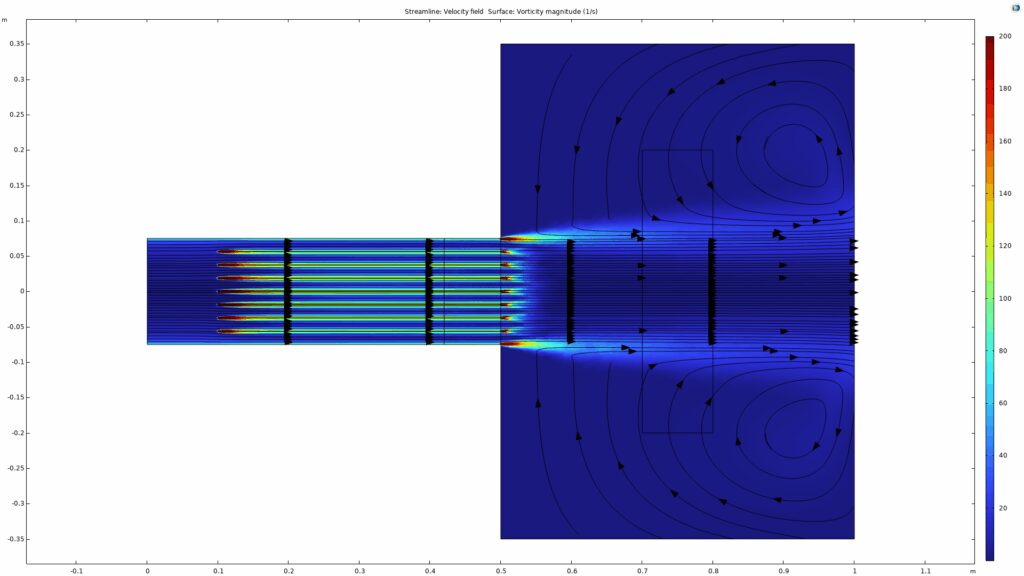
During the development of its new LaminairX air flow technology, PMC produced many CFD simulations (Computational Fluid Dynamics). This diagram shows high velocity air flowing through a transmission line vent and past a set of seven, 400mm long Laminair fins. The colour of the graph shows the incidence of vortices (small airflow rotations) in the flow, with blue showing fewer vortices and red showing more. The arrows show the velocity and direction of airflow. We can see that there are no large rotations in the airflow within the LaminairX part.
The fins control turbulence, which is what we were targeting in the original Laminair; air flow moving in and out of the transmission line moves at a certain velocity, which depends on how constricting the transmission line is and how much the drive unit is moving.
Above a certain threshold, the turbulence of this air flow moving through a tiny aperture increases to a point which is going to cause problems acoustically. So, having identified that, we set about designing some aerodynamic parts to reduce that turbulence and this is where Laminair came from.
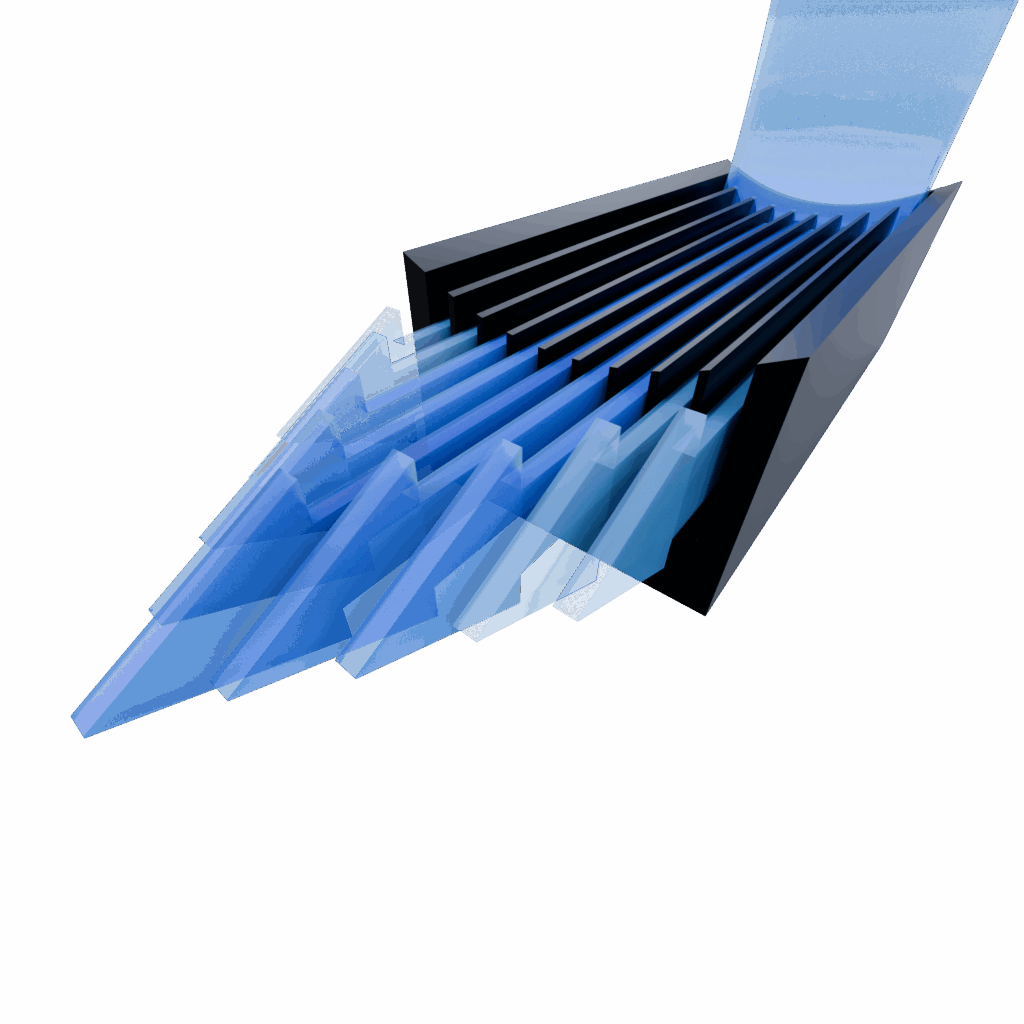
The fins are there to break up that vent exit into multiple smaller channels, which have a larger perimeter and larger surface area within the exit. The benefit of dividing them up is that you can obviously create an infinitely larger area by adding more and more channels. There’s a fine balance between when you put too many channels because it’s too restrictive and you take away all the benefits.
What benefits?
The reason that these fins are channeling the air flow is they bring it back towards laminar airflow conditions (a smooth, unidirectional flow of air, where air moves in parallel layers with minimal disruption or mixing). This is airflow with a low Reynolds number. Air is not moving around in a chaotic manner but it’s a little bit more organised. The best way to think about it is that more of these channels allow more control to build up the air flow. The extra area is slightly more ‘draggy’ but also controlled, albeit in a manner that uses a lot of other aerodynamic principles to measure.
I mentioned the Reynolds number earlier. This is a dimensionless quantity in fluid dynamics that helps predict the flow pattern of a fluid. Essentially, we shoved a load of fins in the twenty.5 and QB1 and we brought the Reynolds number down, which reduced turbulence, noise and harmonic distortion as a result.
Back to LaminairX…
This is probably nine years on since that original release of Laminair. LaminairX describes a more developed version of Laminar. We use a number of simulation software programs to help us visualise that airflow. This give us an idea of what that improvement translates to in terms of reduced distortion and reduce noise. Understanding the principles a little bit better and using these simulation tools we’ve managed to revise Laminair using a parameter called the hydrodynamic entry length. This is a fancy way of saying revising how long those fins are, along with a little bit more development of understanding. For example, the number of channels that you divide in the airflow into plays a much greater role than first expected.
However, the main thing is extending this part without increasing the drag on the airflow allows us to have a fully optimised approach to LaminairX.
Going back to that Reynolds number again, in basic terms, bigger is more turbulent. I think we were floating around 2500 for Laminair, so it pulled the turbulence in the flow down, but it was still behaving quite chaotically. Whereas, if you can get that number below 2000, you feel like you’ve really fully tuned and optimised everything. And that’s where we’re at with LaminairX now.
Is PMC still working with the NPL or is this independent research?
It is purely independent work, all in house at the PMC R&D laboratory. The early work with the National Physical Laboratory was, of course, really useful for testing a proof, and a confirmation of a simulation. You might make a lot of decisions from that simulation, so it’s good to know it is working well.
We still do proof tests where we pull together a simulation. It shows you some stuff, but before you start making design decisions on that, we’ve got to build up some prototypes and actually measure it. Let’s say we run a simulation and what we predict we see, for example a reduction in harmonic distortion. As long as those two figures correlate then you prove the simulation is correct. That was the work we were doing the National Physical Laboratory.
Given the modelling and software technology you’re using, could this project have happened 30 years ago?
We know transmission line theory. It’s a very clever and sophisticated enclosure design that makes PMC speakers so special. Yes, the Laminair function is really focusing on a small part of transmission line design, and it came to us because we are now using higher excursion drive units. With the drive units moving, pressure inside the enclosure translating to faster velocities.
Air at the vent exiting from the enclosure is what made it immediately necessary for us to investigate, because there’s two things that we can prove; the vent noise and harmonic distortion. It’s unlikely we would have been immediately drawn to that being something to do with that air flow through the vent.
However, the vent noise obviously could change. Play like a low organ and that’s much more obvious than measuring a subtle distortion. So for PMC, the application came to us like many engineering things; as a method to solve a problem.
30 years ago, we were seeing greater improvements in the industry by changing materials of drive units and magnet motor assemblies. Tackling an air flow engineering problem 40 years ago, the world of aerodynamics was different. None of the computer simulations existed.
However, it was understood that you could improve flow characteristics with strakes and dividing the channels up. So, we probably would have had a go at it even if we didn’t have computer simulations or the means to accurately model it.
What part did your engineering background before PMC play?
My engineering history (I ‘dabbled’ in aerodynamics ultimately getting involved in cutting-edge racing car design) probably helped us step into this direction.
If you’re developing the aerodynamics of a racing car, there’s three stages of development. You use design simulation, building up a model within a three-dimensional computer generated space. You then prove that that simulation is working correctly by building a model of the car and putting it in a wind tunnel and then using sensors to measure that air flow passing over the body of the car.
Those three stages are the same with speakers; we’ve got our simulation and we then need to measure to make sure the simulation is doing the right thing. We measure those parameters (be that noise or overall speaker distortion) and then put the speaker in an anechoic chamber with a series of measurement microphones in front of it.
The result is we’re getting things like 6dB reduction of the sixth harmonic and 4.5-4dB’s of the fourth and fifth harmonics. So we can measure that and that’s brilliant… but that’s not that third final step. That’s “right, well let’s start the pair of speakers and at home let’s see if that actually sounds like a cleaner bass or mid range.”
Is there a good correlation between what we hear and what we measure?
Yes, but we find there’s a factor that we can’t quite grasp yet. I really like that because that proves that there are other things that we should be figuring out how to measure. Maybe there’s multiple different parameters that we should measure and compare all at the same time.
We could have a series of measurements for whole speaker system and make five different prototypes – one’s got the lowest distortion and the other’s got the smoothest directivity plot – and then you listen to all five of them and you come away thinking, “why does number two sound best when it’s not got the best measurements?” Yeah, that’s exciting.
Is design an iterative process?
If you hear something and you know it doesn’t work but you don’t know why it doesn’t work and then find out why it doesn’t work and fix it… keep going!
Will LaminairX be applied to more loudspeakers?
There’s certain parts of enclosure design and transitional design which we know it probably would not offer the sort of benefits that I’ve been describing and there’s a question mark about whether you need to use it there. But, we are definitely looking at using the technology in a few more new models that we’re working on. This isn’t a technology that is a flash in the pan, it is part of our core PMC technologies that we’re always developing, and at the heart of that is our advanced transmission line theories and now LaminarX, so I think it will be on lots more speakers.
Can you take ATL any further?
It’s a really good question. It would require a simulation of the whole transmission line system… which we’re doing. We’d be using the same simulation software, but there’s far more variables though than just trying to have a look at air flow. You’ve got the air flow moving through the cabinet, you’ve got the cabinet’s mechanical properties, the cabinet’s enclosure materials, the damping factors of those materials and the properties of all of the different absorption material inside the enclosure.
That’s before we look at the moving parts, such as the drive units… so many variables. That sounds incredibly complicated, and our simulations can definitely improve which will lead us to make more creative design decisions.
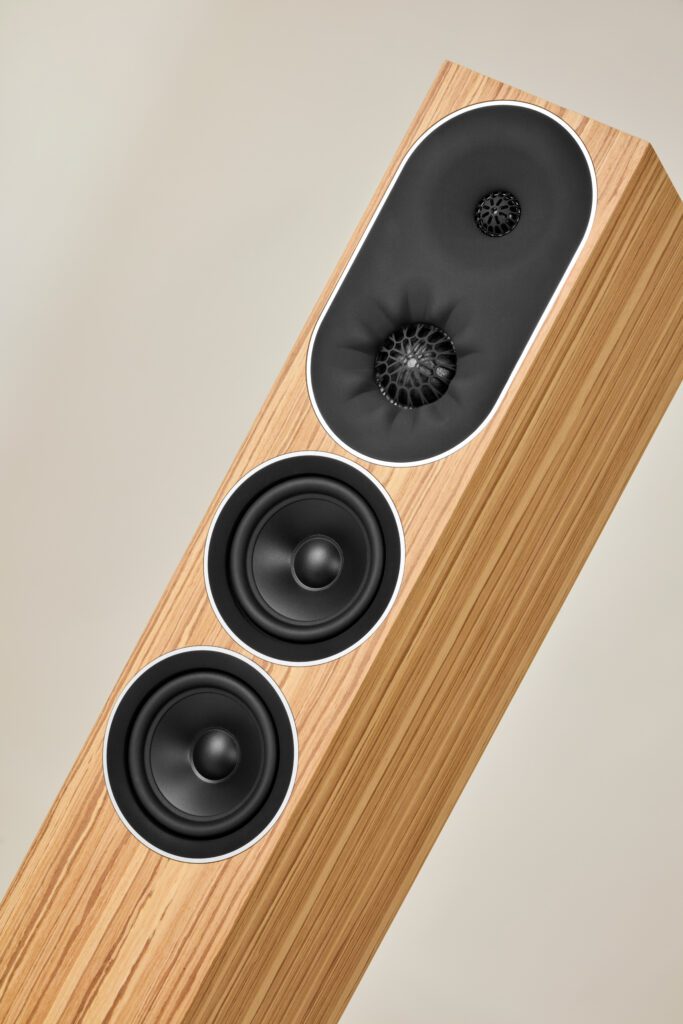
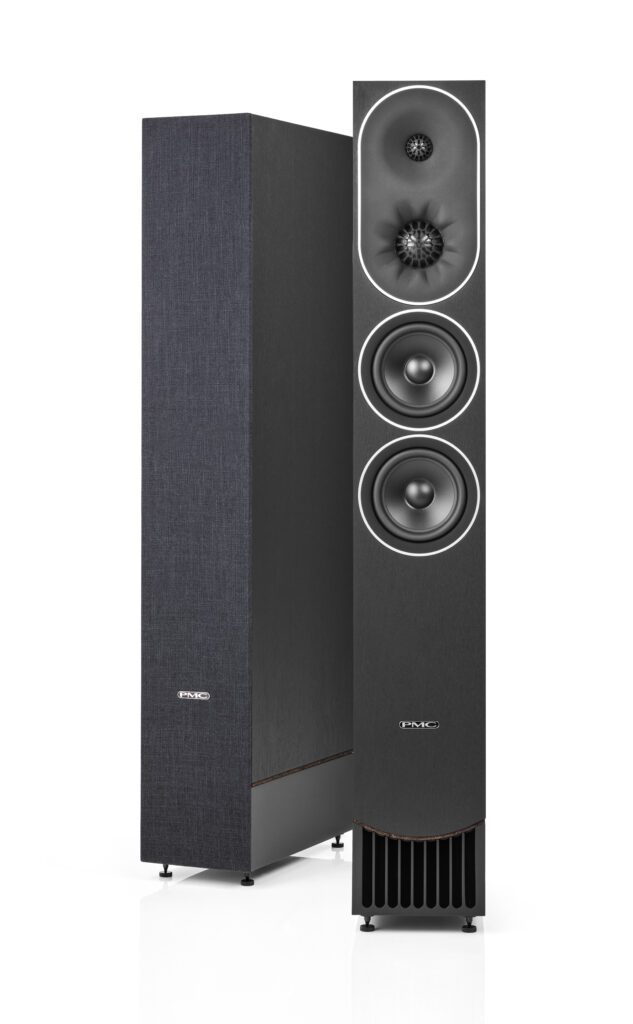
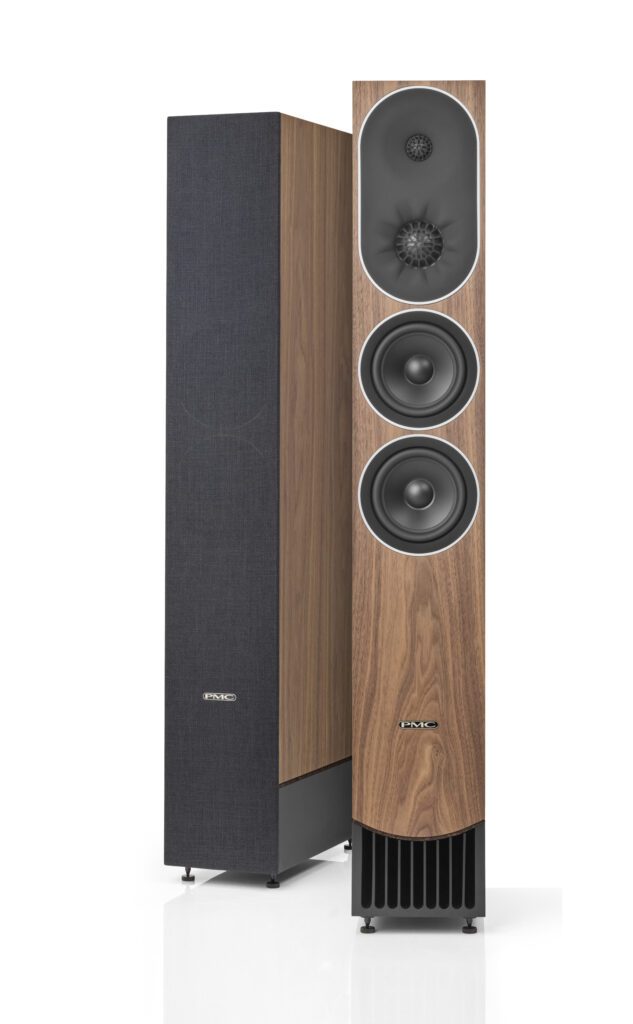
The tallest and most elegant member of PMC’s prophecy range, the prophecy9 encompasses all the developments that have been made for the transmission line speaker specialist’s core product range. The aluminium LaminairX plinth supports it and incorporates new tweeter, midrange and bass drivers in its slim form. Surprisingly, in this day and age, PMC has managed to do this while reducing the price of the top model in its outgoing range. The twentyfive.26i retailed, in fact continues to retail, for £9,975; the prophecy9 is a thousand pounds less at £8,975. PMC say that this has been achieved with more efficient cabinet manufacture (the twenty5i models sloped backwards), increased economies of scale with a shared woofer across the range, and lower cost packaging. That they have done this whilst increasing sound quality is impressive to say the least.
Oval faceplate
The prophecy9 is distinguished by an oval faceplate behind the mid and treble drivers; this isn’t mere styling as it incorporates two of the more critical developments created for this range. These waveguides, positioned around the two drivers, are designed to enhance the speaker’s performance. Like the drive units themselves, they are derived from research conducted for PMC’s professional models, which are widely used in top studios worldwide. The waveguide on the 27mm soft dome tweeter resembles a horn but is described as a shallow oblate spheroid profile. This is likely a fancy term for a horn, but it serves a purpose beyond just increasing sensitivity; it also controls off-axis dispersion. The purpose of which is to integrate its output with that of the midrange dome beneath.
The problem with multi-driver speakers is that different-sized domes and cones produce different-shaped radiation patterns. A 25mm tweeter will have a narrower beam than a 50mm midrange, and a 150mm bass driver will be wider than both by quite a large margin. The waveguides on both tweeter and midrange help to reduce the difference in radiation pattern from one driver to the next, which makes for a more seamless overall presentation. You can probably see that the waveguide on the 55mm midrange dubbed n-compass is more complex than that on the tweeter; it combines both a shallow exponential element and a steep hyperbolic one. The hyperbolic allows the driver to work down to lower frequencies without compromising power, while the exponential provides the off-axis dispersion control as seen with the tweeter. PMC claim that this gives the midrange a smooth, extended response and extensive and even dispersion.
Extra long
At 125mm the bass drivers are relatively small given the prophecy9’s specified 35Hz low frequency extension but there are two of them and they are extra-long throw types. The mica filled polypropylene cones are very light and propelled by an extended voice coil in a suitably large magnetic gap. This means that they have considerable power handling, and when combined with the transmission line loading, provide deep yet controlled bass according to their maker.
Oliver Thomas explains the workings of the LaminairX venting system of the prophecy9 elsewhere in this issue. Still, it’s worth pointing out the practical advantages of having a heavy lump of extruded aluminium as a plinth. Namely, that the weight obviates the need for outrigger legs as found on the previous range, in this model, the spikes thread directly into the metalwork, and there is sufficient bulk for it to pass tilt testing. Another clever move is that the cable terminals are fixed to the back of the plinth, putting them usefully close to the ground with a firm mounting point.
You couldn’t achieve the degree of integration that PMC has with the prophecy9 without a decent crossover. This model has a three-way 24dB/octave (fourth order) crossover built on a military grade 2.5mm thick circuit board that carries double-thickness copper tracks. It uses air core and steel laminate inductors, chosen by extensive listening, and oriented to minimise electromagnetic interaction. PMC have chosen crossover points of 600Hz between bass and midrange, and 3.2kHz for the transition to the tweeter, keeping the midrange clear of any driver changes.
Green credentials
The prophecy9 has a single pair of cable terminals. It is supplied in all cardboard packaging to minimise the environmental impact associated with the foam packing usually found with loudspeakers. Each speaker is provided with a full length grille in an attractive black weave. The cabinet is available in three finishes all of which have been chosen to keep the new range green from an eco perspective, the Mediterranean oak for instance is an artificial veneer made up of multiple small pieces of veneer rather than a single sheet as is usually the case.
This is the third prophecy speaker I have reviewed, and as the most expensive option, it’s naturally the best. That said, I was blown away by the prophecy7 and achieved a great result with the prophecy5. However, since my room doesn’t have a bass reinforcement system, the prophecy9’s extra low frequency capability and the ease of use provided by two bass drivers gave it the edge and then some.
Unusually exacting
This is an unusually exacting and precise loudspeaker, one where the bass is highly capable but never overblown or thick; in fact, it makes many conventionally ported speakers sound that way, as if the port is subtly warming the presentation to compensate for less pristine recordings. Here the bass stops and starts as quickly as the mid and treble, and has equally low perceived distortion.
Clean bass is the key to transparency in loudspeakers; it’s not all that hard to make the mid and treble sound fast and clear, but doing the same at low frequencies is a real challenge that few speakers manage. This, combined with the efforts that PMC has put into integrating the output of the various drivers, has resulted in a speaker that has the clarity of a full-range panel with the power of a dynamic design.
Even with unusual recordings like Arab Strap’s ‘Packs of Three’, which is raw in some respects but sounds less compressed than many of its ilk, you can hear into the studio to a rare extent. I don’t recall the keyboards having such a clear shine to them, or the drums having such well-defined reverb. But then the bass guitar comes in with its deep, rounded, juicy but hard-edged sound, then it’s joined by metallic guitar strings and the yearning of a fiddle, and before you know it, the music is in your veins and you can’t turn away.
The drop
On some tracks it can seem as if the bass is light and lean, ‘Babylon Sisters’ (Steely Dan) being a good example. Still, then the syncopation of guitar and drums gets to you thanks to the clarity with which both are delineated, and you’re no longer concerned about tonal balance but gripped by the brilliance of the musicianship.
Kraftwerk’s Radioactivity (Minimum-Maximum), on the other hand, is produced with uncannily deep bass resonances on the vocal, something that has not been made clear on many occasions in the past, and which is reinforced when the beat drops. I played plenty of vinyl through the prophecy9s as well, and it proved very satisfying, not least Djrum’s Under Tangled Silence, where the piano’s high notes glistened and the bass went down in such controlled and clean fashion.
Tweak time
Being an inveterate tweaker, I tried a better power cable on the Tom Evans Groove+ phono stage and was greeted with more three-dimensional imaging, lower noise and better timing. Laura Marling’s ‘Soothing’ really shone, sounding as if a veil had been removed by the prophecy9s which played down the bass line that often dominates this track and put the spotlight on the vocal where you would expect it.
Pieces like that make it clear that the prophecy9 delivers higher fidelity to the source than most speakers, which often overblow the bass to create a richer sound. I suspect that by basing this design on their studio monitors, PMC has produced a more accurate and revealing result than one usually encounters.
Most speakers are tuned by ear in their final stages at least, yet few engineers have access to the sort of reference that PMC has in the studio world. This has allowed them to deliver a speaker that is both highly transparent to detail and uncannily coherent, but also one that genuinely reflects what the artist/producer/engineer heard in the recording’s final stages.
This means that prophecy9 owners get pretty dam close to the real thing and a lot closer than most can achieve at the price. The prophecy9 is not inexpensive, but you’ll be hard pressed to match it at the price.
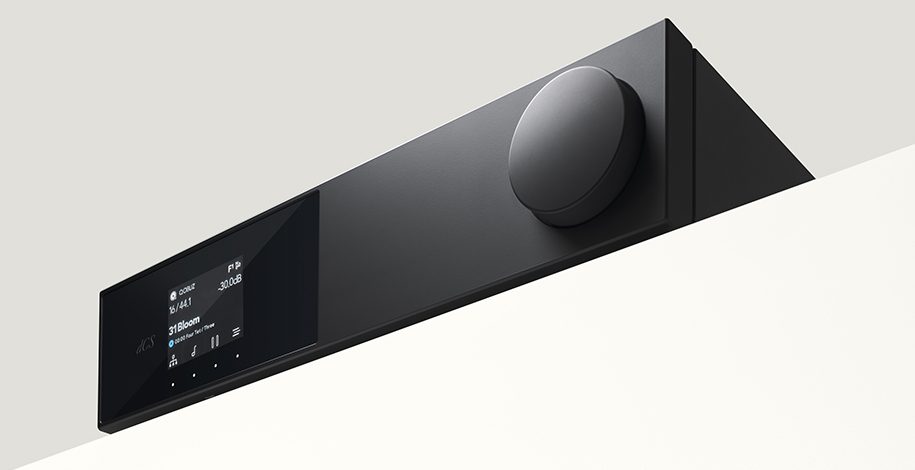
Lina DAC X combines established dCS technologies and several new innovations. Some of these stemmed from the development of Varèse, our latest flagship system. The company’s aim with Lina DAC X was to deliver all the benefits listeners have come to expect from dCS and utilise some of the advances it had made working on Varèse, which encompassed a series of research projects carried out over the past six years. This research has been carried out across mechanical design, electronics design and software engineering, all seeing radical innovation (in the dCS world at least) within the last few years.
We spoke with James Cook, dCS Product Marketing Manager, on the technologies seen in the new Lina DAC X.
Flex-Rigid PCBs
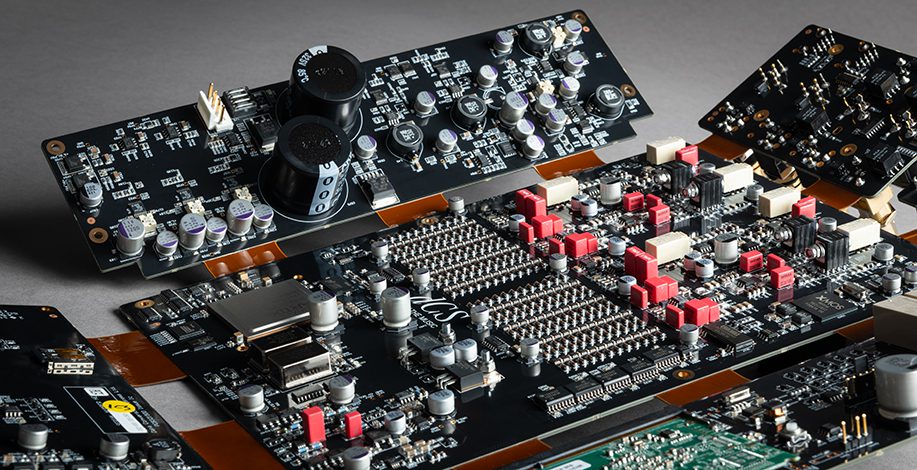
Several dCS products, including Lina DAC X, now feature flex-rigid printed circuit boards (PCBs). This development stemmed from a Varèse research project looking at electronics design.
A flex-rigid PCB is a single printed circuit board made up of multiple pieces, which are connected by continuous flexible conductors.
Utilising a flex-rigid PCB allows us to have what would otherwise be multiple PCBs (one board for signal processing, another for the digital-to-analogue converter, another for I/O and so on) unified onto a single board. This means there are no interconnects between separate PCBs.
This removes any possibility for slight differences in how interconnects are routed – a few millimetres difference in how a ribbon cable is placed can have effects on the performance, for example. Using flex-rigid PCBs allows for short signal paths for key signals (such as clock circuitry, analogue signals), helping to maintain signal integrity throughout the product – all of which helps to ensure optimal performance and sound quality during playback.
It also reduces the risk of crosstalk and helps to further improve reliability. An additional advantage is that the flex-rigid PCBs are easier to test.
Flex-rigid PCBs are challenging to manufacture – to our knowledge, we are the only audio manufacturer to utilise them in our products – but their use brings several benefits.
The Lina DAC X PCB contains over 2,000 surface mount components on a 12-layer flex-rigid PCB, which folds four ways to fit the Lina DAC X chassis.
Chassis Design
As part of the Varèse project, we investigated how we could improve our chassis design. Typically, the chassis of an audio product would be made from multiple individual panels – one for the top, one for the bottom, and one for each side – which are then secured together. Previous dCS products have used separate panels milled from billet aluminium, which are secured together with no visible fixings.
Our latest products, including Lina DAC X, feature a more ambitious, complex chassis. The main structure of the Lina DAC X chassis is constructed from just two parts: the top and sides are all milled from one single billet and the base, front and rear from a second. Reducing the number of panels means a more electrically sealed environment, as there are fewer gaps in the chassis for any unwanted interference to get into or out of.
It also allows us to incorporate other elements – such as mounting points or standoffs for PCBs – into the metalwork of the chassis. Other designs separate PCBs from the chassis with plastic or metal standoffs, which are pressed into the chassis and then secured with self-tapping screws. This can create some variance in how far the PCB is mounted from the chassis, which can have performance implications (consistency of board height compared to the ground plane – the chassis – aids performance).
The standoffs within Lina DAC X are machined from the same aluminium billet as the chassis plates (including screw threads), so there is no variance in their height and no self-tapping screws needed. This provides great consistency of the height between the PCB and chassis.
The chassis design of Lina DAC X, coupled with the use of a flex-rigid PCB, has also allowed us to isolate power supplies from other components. The top plate of the unit includes a significant aluminium channel that runs along the centre line of the product. Viewed from the front, the left-hand side of the channel houses the PCB, and the right-hand side houses the mains transformer. This separation is made possible thanks to the flex-rigid PCB keeping all of the electronics housed in one half of the chassis, leaving the other half free for the transformer.
Ring DAC
Like all dCS products, Lina DAC X utilises several technologies that are unique to dCS – some of which have been carefully honed and refined over many years. The most notable of these is the Ring DAC, a bespoke D/A converter that is found at the heart of all dCS DACs and music players. It allows the Lina DAC X to convert signals to analogue with vanishingly low levels of distortion.
This low distortion level is true at any signal level, even at low amplitudes (such as quiet musical passages or delicate reverb tails) where other DAC architectures will often lose fine detail to distortion. The Lina DAC X benefits from our advanced Mapper algorithms, which distribute digital audio samples to the Ring DAC current sources at ~6MHz, ensuring no unwanted interactions between current sources occur.
The hardware of the Ring DAC is composed of an array of 0.1% precision metal film resistors, each with an accompanying latch to activate or deactivate the current source based on the Mapper. The latches are fed a clock signal generated by ultra-high quality VCXOs (voltage controlled quartz crystal oscillators) that operate within our bespoke Phase Locked Loop circuitry – a section that other manufacturers simply use off-the-shelf chipsets for.
A number of elements inside the Lina DAC X are locked to the VCXOs – such as the switching power supply elements and the front panel display – to ensure no unwanted noise is generated inside the product. This means listeners do not need to perform tasks such as turning the display off to achieve the best sound quality.
Lina DAC X is an important product for the company, as it brings the core values and performance that dCS has to offer at a price that introduces the brand to a new generation of music lovers.
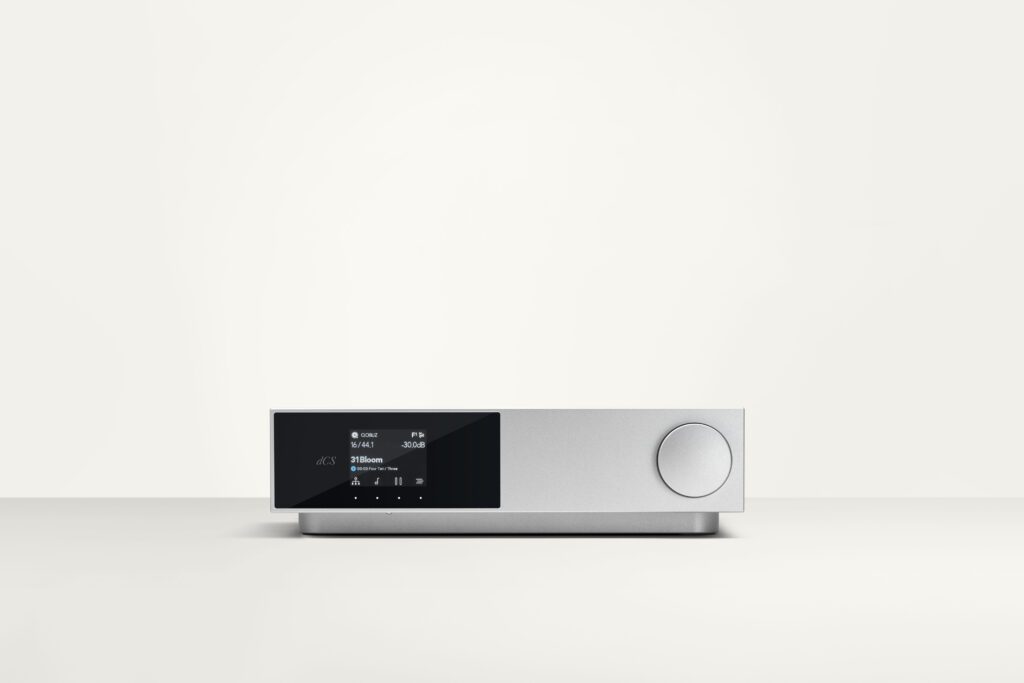
By dCS standards, Lina DAC X’s £13,500 price tag is quite modest compared to their offerings that cost significantly more. The Bartók with APEX is £19,000 and is a staple in my system. It delivers an exceptional high-end digital performance that extracts every bit of detail from a well-recorded piece. The Lina DAC X builds upon the basic Lina, increasing the unit’s size. The Lina is 22cm wide, while the X measures 44cm. Essentially, the standard Lina was designed for a headphone-based system. In contrast, the DAC X is probably better suited for a speaker-based system.
The other notable differences include the large volume knob for quick volume adjustments and infrared control. The unit is crafted from solid aluminium billet and is available in an aluminium or black finish. It is reassuringly heavy, weighing 14kg. The remote is made from alloy. Aside from servicing the usual functions, it also manages the setup menu, upsampling, phase, and filters.
Driving amps
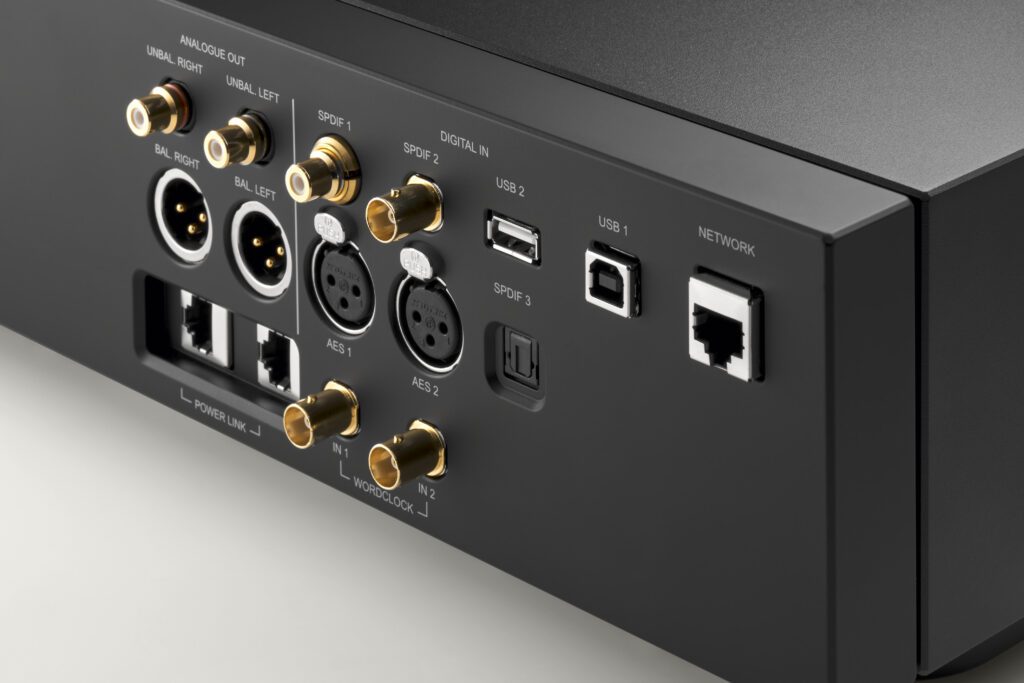
The Lina DAC X can drive a power amplifier directly, with both XLR and single-ended outputs. It has two AES/EBU inputs, which can be used as a pair to support incoming sample rates of up to 384kHz. There’s also one S/PDIF BNC coax, an S/PDIF RCA, a Toslink, a USB PCM, DSD, DSDx2 in asynchronous mode, and a USB connector which can attach to a storage unit. There is also a USB-B port for PC or Mac connectivity.
The other feature of dCS systems, which I very much value, is the ability to adjust output voltages directly from within the Mosaic app. This can range from 0.2V to 6V. I discovered that the optimal setting for the Bartók was achieved by using the highest voltage available. An external passive preamp manages the overall volume. The unit doesn’t operate wirelessly, so it must be connected via a network cable. If a wired connection is problematic, it can be resolved by using a mesh system with a wired link to a satellite mesh receiver.
Within the Mosaic
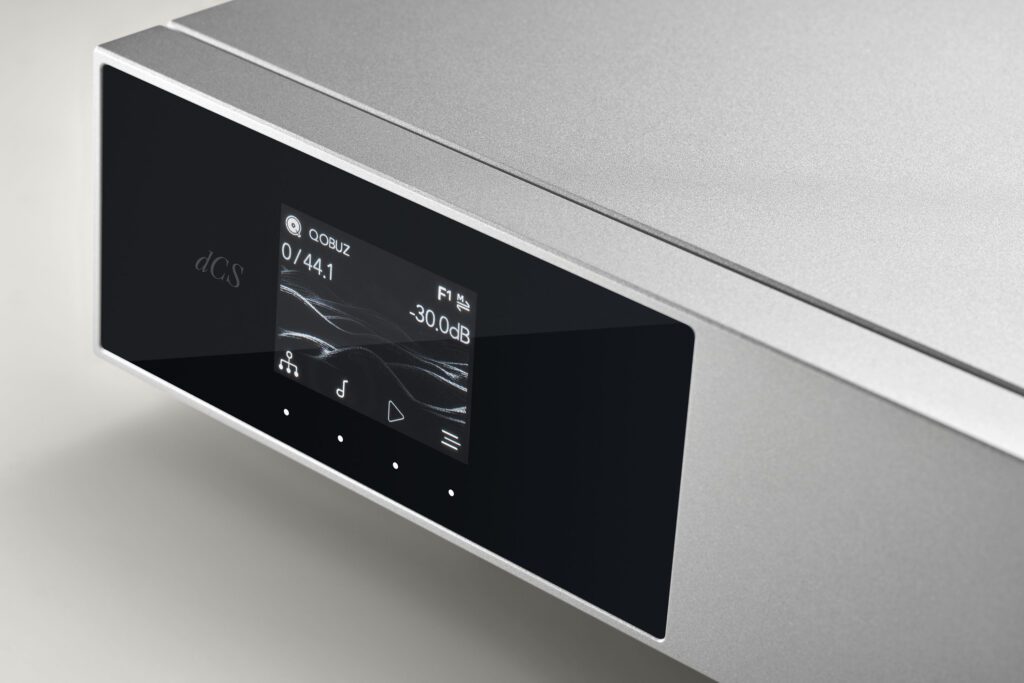
Within the well-designed Mosaic App, there are a variety of filters that apply at different sample rates. A particularly impressive feature is the ability to upsample to DSDx2. Based on my experiments with the Bartók, this is the smoothest and most airy option. The display is a departure from most dCS designs, except Varèse. The screen features four lights that you press to make a selection. In contrast, the Bartók has buttons on the side.
dCS is excellent about its firmware updates. The Bartók now is a different beast from the original Bartók, both in terms of hardware and firmware. The APEX modification made a night-and-day difference. Meanwhile, the Mosaic updates brought new filters and functionality. This is a clear sign of a company that takes its corporate responsibilities seriously. It gives users the confidence that their investment in digital electronics is safe. Expect Lina DAC X to be the same.
Listening
I did my listening using a Lina Clock. It gave additional spatial information that I found highly worthwhile. I fed the Lina DAC X into a Townshend Allegri Reference preamplifier. Then into a pair of VAC Signature 200iq power amplifiers driving a pair of B&W 802D4s. I used a PS Audio PS10 power regenerator and Townshend Audio cabling throughout.
First listening is a trusty favourite, Bach Brandenburg No 4, conducted by Raymond Leppard with the ECO. It was initially recorded by Philips in analogue in 1974. It remains a fabulous recording and something of a classic! There is a lovely sense of an orchestra in front of me, with considerable spatial detail. Also, it gives the sense that it portrays musicians interacting and enjoying themselves in 1974.
The colours and textures of the instruments are all beautifully portrayed. Perhaps a little short of the mighty Bartók at over £10,000 more, but utterly credible and highly communicative and enjoyable from a listener’s point of view. There is a precision to the attack of the bows on strings. Notes start and stop with an accuracy I have come to expect from dCS.
Different textures
The different textures of the strings, harpsichord and two recorders are kept sanitarily separate. Thus, the sonic picture is a highly detailed one.
Next up, a superb Decca recording of the Scherzo from Mahler’s 7th Symphony, with the Chicago Symphony Orchestra. Recorded in 1971 and brilliantly transcribed to digital. My first reaction to what I’m hearing is like I’m listening back “in the box” from a master tape source.
The sound is ultra clean and detailed. There are some difficult-to-reproduce mutterings from the bass drum, which the dCS Lina DAC X does with consummate ease. The double basses are earthy and gritty, the violin section is extensive and weighty, and the neurosis of Mahler’s score translates brilliantly. The violins are a little brighter than Bartók’s version, I note in passing, but they are superbly clear. Rhythmically, the Lina is stunning with exemplary timing of the orchestra’s forces. All extraordinary from a recording that is 54 years old!
Jazz-time
Moving on to jazz, We Get Requests, Oscar Peterson and his trio, with ‘You Look Good to Me’, of course. The trio’s performance is immaculate, swift, and precise. The swing of the music is also beautifully conveyed through the Lina DAC X’s flawless timing. This makes it toe-tapping. The piano is nuanced, the percussion is tight, and the bowed bass rasps. You can feel the lower strings vibrating in a close-miked recording. Altogether this exemplifies what great audio does, making the listener believe they are right there!
Listening to Antonio Forcione’s Tears of Joy, the opening track shows how superb an acoustic guitar can sound. This happens when digital is properly implemented. The attack on the pizzicato is precise and swift. Spatially, the supporting instruments are layered holographically in space.
Incredibly lifelike
The cello’s texture is incredibly lifelike, the overall presentation is immensely dynamic, and I have rarely heard this sound better. It’s like viewing the performance through a freshly cleaned window. Nothing seems to obstruct the speakers and performers. I haven’t heard a network DAC at this price point sound as convincing as this.
‘Chitlins Con Carne’ is a track from one of Kenny Burrell’s Blue Note sessions, and was recorded in 1963. I have the original release on vinyl, and for my money, the digital version on the dCS Lina DAC X just sounds better. It’s more dynamic, more communicative, and quieter on the noise front. Without wishing to step into the digital/analogue standoff, there are recordings which, when transferred at high resolution from the master tape, have so many fewer processes going on. Therefore, it is not difficult for them to sound better, and in this case, it does. Texture, space, and attack – with the dCS, this recording is in a different league compared to the original analogue vinyl pressing, now streamed on Qobuz.
Hall of fame
So the dCS Lina DAC X rightly earns its place in the dCS Hall of Fame. It embodies the dCS house philosophy, characterised by meticulous, no-compromise engineering. Lina DAC X lacks a sonic signature in the best sense, and fits seamlessly into the illustrious line-up of Bartók, Vivaldi, and Varèse. It is attractive, very easy to operate, and is certain to become a timeless classic!
Read more about the technology that went into making the dCS Lina DAC X here.
Technical specifications
Type: Digital converter with streaming and preamp functionality
Digital Inputs: 2 x AES/EBU Used as a Dual AES pair (1+2), supports sample rates up to 384kHz, 1 x S/PDIF BNC Coax 44.1-192kHz, 1 x S/PDIF on RCA 44.1-192kHz, 1 x Toslink 44.1-96kHz, 1 x USB Type B 44.1-384kHz PCM and DSD, DSDx2 in Asynchronous Mode
Network connection: 1x RJ45 (Ethernet), 2x RJ45 (Power Link connection)
Mass Storage: 1 x USB Type A connector (navigated using Mosaic)
Analogue Outputs: 1 stereo balanced pair on 2x 3-pin male XLR connectors, 1 stereo unbalanced pair on 2x RCA Phono connectors.
Formats supported: PCM 44.1-384kHz, up to 24-bit, DSD/64, DSD/128. Native DSD + DoP, FLAC, WAV, AIFF, MQA
Streaming supports the following platforms and services: UPnP, Internet Radio, Qobuz, Spotify, Deezer, Tidal, Roon Ready; QQ Music
Upsampling: Multi-stage DXD oversampling with switchable DSD Upsampling
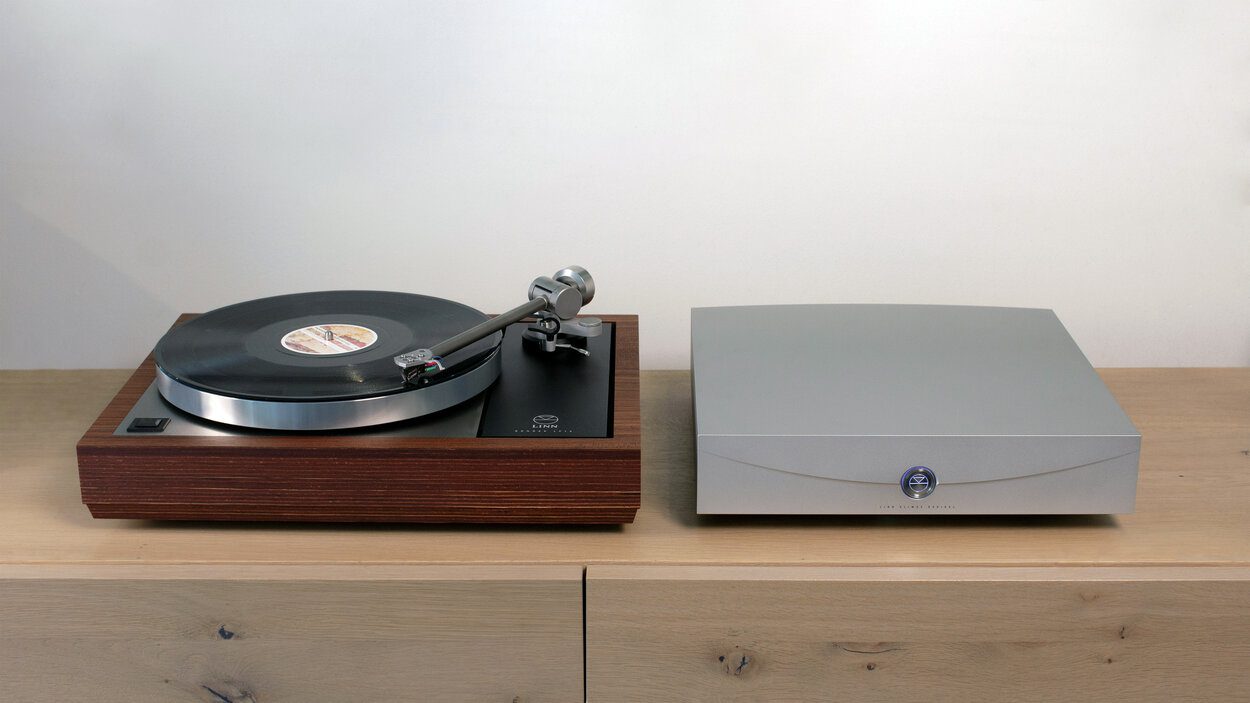
9 Oct 2025, Glasgow, Scotland: Today, Linn launches two new reference-level upgrades for Sondek LP12: a new and improved power supply, Klimax Radikal, and an all-new sub-chassis, Keel SE.
These two performance-critical products raise the performance of the company’s flagship Klimax LP12 to an exhilarating new reference benchmark. Klimax Radikal and Keel SE are the fruit of Linn’s dedication to driving LP12 forward using their inimitable expertise and tireless innovation.
Klimax Radikal
Reference motor control, motor, and power supply for Sondek LP12
Klimax Radikal features hyper-accurate speed management technology, generating sustained, uniform rotation closer to 33⅓rpm than any turntable.
You’ll experience even more music from the record groove, in perfect pitch, thanks to Klimax Radikal’s digitally managed motor control, bespoke Utopik power supply, and machined-aluminium chassis with exceptional electrical and mechanical isolation.
The Utopik power supply is critical to performance, as it possesses separate, dedicated output voltage rails for each of Klimax Radikal’s two specialised tasks: controlling the motor and providing power to internally mounted Urika phono stages. These output rails are separately self-regulating; any sudden, significant draws in power from the motor or controller don’t affect the rails supplying Urika, and vice versa. The independence of these rails ensures consistency and quality of power supplied to both the motor and phono stage, improving the performance of each.
The Utopik power supply is mounted inside its own self-contained, machined sarcophagus, nestled behind the product’s front face. The combination of its thick aluminium walls and the relative distance between it and the main Radikal board makes for superior electrical isolation inside the product.
Also critical to performance is Klimax Radikal’s enhanced mechanical isolation. Weighing in at nearly 14 kg, machined from three pieces of solid aluminium, and mounted on high-mass stainless-steel feet with rubber ring inserts, its beautifully machined casework is reassuringly robust in the face of external influences.
Keel SE
Flagship machined sub-chassis and armboard for Sondek LP12
Keel SE is the super evolution of Linn’s highest-performance LP12 sub-chassis.
With Keel SE, Linn’s engineers have comprehensively improved upon the original using Finite Element Analysis (FEA). Thanks to this revolutionary technology, Linn has been able to evaluate all limitations of previous sub-chassis designs and break free from them—using a combination of cutting-edge virtual prototyping and their own enhanced in-house machining capabilities. The outcome is a new and visibly improved machined sub-chassis with superior stiffness, optimised resonant behaviour, and ideal distribution of mass.
An intricate bracing structure machined into the underside of Keel SE – designed using a mixture of manual and computer-aided optimisations – has helped Linn achieve their number one goal of increasing sub-chassis stiffness as much as possible. This significant 300% increase versus previous designs means that any vibrations travelling through Keel SE have their frequencies forced higher, and their energy substantially lowered.
Optimised resonant behaviour allows Keel SE to better break up and dissipate problematic acoustic energy, reducing its potential impact on the delicate music signal generated by the cartridge.
Keel SE has had rigidity and mass increased precisely where it is needed versus previous designs. Particular focus has been placed on the vital path between the mounting point for Karousel bearing and the tonearm collar. The area between these has been stiffened up greatly—and for very good reason. Even the slightest rocking movement of a sub-chassis and armboard will modify the physical relationship between the tonearm and platter, negatively affecting the stylus’ tracking in the record groove. Making the path between bearing and arm stiffer ensures that any change in geometry is minimised, reducing tracking distortion.
By machining aluminium from calculated areas beneath the armboard, Keel SE has its centre of mass balanced more evenly on its suspension compared to other sub-chassis models. This improves weight distribution between the springs and reduces inertia, improving the critical acoustic isolation properties of any LP12.
Pricing & Availability
Klimax Radikal and Keel SE are available to order from today.
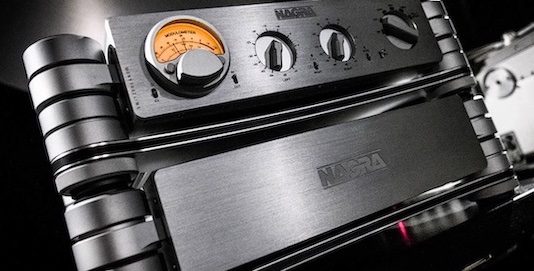
London, England — Absolute Sounds, the UK’s leading high-end hi-fi distribution company since 1978, is pleased to announce its appointment as sole distributor of Nagra audio equipment for the UK and Ireland with immediate effect.
Nagra was formed in Switzerland in 1951 by Stefan Kudelski, a gifted young engineer who set up a workshop at his family’s home in Prilly, near Lake Geneva. From the start, his creations were groundbreaking – his first product, the reel-to-reel Nagra I, was the world’s first professional-quality portable sound recorder. It was a class apart from contemporary alternatives due to its compact size, reliability and sound quality, and a revelation for radio broadcasting, cinema and music recording. The name ‘Nagra’ is derived from a Polish verb meaning “to record” – a nod to Kudelski’s Polish roots.
Over the ensuing decades, Nagra remained firmly established as the gold standard in portable audio recorders, its continuous innovation and meticulous engineering maintaining a peerless reputation among professionals for both mobile and studio-based sound recording. Though its roots were firmly founded in the analogue age, the company straddled the advent of digital audio with ease and earned multiple Oscar and Emmy wins for its technical achievements along the way.
Classic albums, Oscar-winning movies, Cold War spies and trips to the Moon
Nagra’s portable sound recorders – notably the iconic Nagra IV-S – have been used in the recording of some of the most famous albums of all time, including The Beatles’ Let It Be, Pink Floyd’s Dark Side of the Moon, David Bowie’s Heroesand Michael Jackson’s Thriller.
In the world of cinema, numerous films that won Oscars for sound used Nagra recorders in their production, from The Exorcist to The English Patient. In fact, as Academy Award-winning sound engineer Chris Newman put it: “There was virtually no film made from 1961 until the 1990s that did not use Nagra.” The company’s distinctive devices have been a common sight in movies too, as well as being used to make them, from Help! (1965) to Gorillas in the Mist (1988) and The Informant! (2009).
Another string to Nagra’s bow over the decades has been the development of technologies and devices for high-security applications, including covert surveillance. This began in the early 1960s with the SN (Série Noire) miniature reel-to-reel tape recorders, originally developed for the CIA reportedly at the request of President John F. Kennedy. These devices were used extensively during the Cold War era, capitalising on Nagra’s ability to make small portable audio recorders of unique quality and reliability. These characteristics proved invaluable for other adventurous applications, including expeditions to the summit of Everest, the deepest depths of the ocean and even into space with NASA’s Apollo missions.
Nagra’s next mission: launching high-end hi-fi to new heights
It was not until 1997 that Nagra chose to expand its expertise into the domestic setting. The PL-P preamplifier launched at £5,700 (more than £11,000 in today’s money); it was unlike anything the high-end hi-fi establishment was producing, borrowing heavily from the technology and aesthetics of the company’s esteemed recorders – including an ingenious battery power system.
In 2012, a separate company called Audio Technology Switzerland was spun out of the Kudelski Group, which owned the Nagra brand. Operating independently but with the Kudelski family still the main shareholders, the new company looked to steer Nagra’s consumer and professional audio products to even greater heights, while the Kudelski Group focused on other products and services in different industries. To this day, Audio Technology Switzerland remains the custodian of the Nagra audio brand.
Nagra has produced a steady stream of extraordinary high-end hi-fi, encompassing valve and solid-state amps, DACs, turntables and more, whilst also maintaining its unique reputation in the world of professional sound recording. The company and its equipment continue to be inextricably linked with the Montreux Jazz Festival, a partnership that began with the first festival in 1967; other customers include the BBC, NBC, Universal, MGM, Columbia, Paramount, 20th Century Fox, Columbia Pictures and NASA. Contracts with law enforcement and government agencies are also ongoing – and top secret!
Nagra sources the finest circuit components from around the world, many custom-made to its own unique specification. Its products are designed, assembled and tested to the very highest standard at its facility in Romanel-sur-Lausanne, just a few kilometres from Prilly where Nagra was founded, with key procedures such as the winding of the company’s unique audio transformers performed entirely in house. Switzerland is synonymous with quality and precision, and Nagra’s contribution to this reputation since 1951 has been considerable – the company has always been a pioneer in design and manufacturing and among other innovations was the first Swiss firm to use CNC machining.
As Alan Sircom, Editor of Hi-Fi+ magazine, put it:
“The ‘built like a Swiss watch’ cliché is impossible to resist, although it makes me think that perhaps watchmakers should be saying ‘built like a Nagra’.”
In 2025, Nagra’s high-end audio range comprises four product lines – in ascending order, these are the Compact Line, Classic Line, HD Line and Reference Line. There are valve and solid-state circuit designs, analogue and digital source components, amplifiers of different types and sizes… just about the only thing Nagra doesn’t make is speakers! The unmistakable design language established decades ago permeates throughout – impeccably machined rotary switches, meters in circular housings, build quality bettered by none. Producing a Nagra device is as much an art as it is a science; as Nagra says, “unique craftsmanship leads to unique performance.”
The next chapter: Nagra × Absolute Sounds
Matthieu Latour, sales and marketing director at Audio Technology Switzerland, explained why he is excited to partner with Absolute Sounds to distribute Nagra’s hi-fi products in the UK and Ireland:
“Absolute Sounds is among the most prestigious high-end audio distributors in the world, with an expert team led by Ricardo Franassovici – a man whose experience and influence in the field is unrivalled. The company has long-standing relationships with some of the finest audio brands on the planet, many of which have excellent synergy with Nagra components – for example, Wilson Audio, Magico and DeVore Fidelity loudspeakers, and Transparent cables.
“Through Absolute Sounds’ unrivalled network, we can access the finest specialist retailers in the UK and Ireland to ensure Nagra customers receive the exceptional service they deserve. We look forward to writing the next chapter of the Nagra story together!”
Commenting on his company’s partnership with Nagra, Ricardo Franassovici, Absolute Sounds’ founder and managing director, said:
“As the UK’s foremost high-end audio distributor, we’re regularly approached by brands from around the world who seek our expertise. We’re fortunate to already work with many of the sector’s most revered and influential manufacturers; few others measure up to the standard required to add something unique to our portfolio.
“Nagra, however, is truly special – the original Swiss innovator in high-performance audio electronics whose products I’ve admired since my days in the rock music industry in the 1970s. I’ve waited patiently for the opportunity to work with the company and, when it came, I instantly embraced it.
“The late, great Dave Wilson, the doyen of high-end loudspeakers, once said: ‘There is no other brand of electronics that is as unique as Nagra in its history, and in the thorough professional design, concept and execution [of its products].’ The company has a wonderful brand story, and products that stand apart from others in their design and performance. Unquestionably, Nagra is among the finest high-end audio manufacturers in the world, and we are delighted to be working with the company to the benefit of discerning music lovers here in the UK.”
Visit nagraaudio.com for information about Nagra’s 2025 product range.
6 October 2025: To mark 25 years of uncompromising acoustic artistry, Raidho Acoustics proudly presents the 25th Anniversary Edition X2t. This exclusive celebration model is strictly limited to 100 pairs worldwide, each pair individually numbered and adorned with a commemorative anniversary badge.
A Quarter-Century of eXtreme Performance
Since its founding in 2000, Raidho Acoustics has pushed the boundaries of sound reproduction—melding cutting-edge materials, Danish craftsmanship, and relentless research into each speaker. The X series (“eXtreme performance for the price”) has embodied the Raidho spirit, culminating in the latest generation ribbon-tweeter design and Tantalum-coated Ceramix woofers. The X2, in all its different versions, has always been one of the most popular models from Raidho, selling close to 500 pairs in total. Now, in honor of our 25th anniversary, we’ve distilled the Raidho heritage into a truly collector’s item.
What Makes the Anniversary Edition X2t Unique
Limited Edition Numbering
Only 100 pairs produced
Serial plate (1 of 100)
Enhanced Performance
Upgraded crossover for performance at the next level
Furutech High End terminals for improved signal transmission
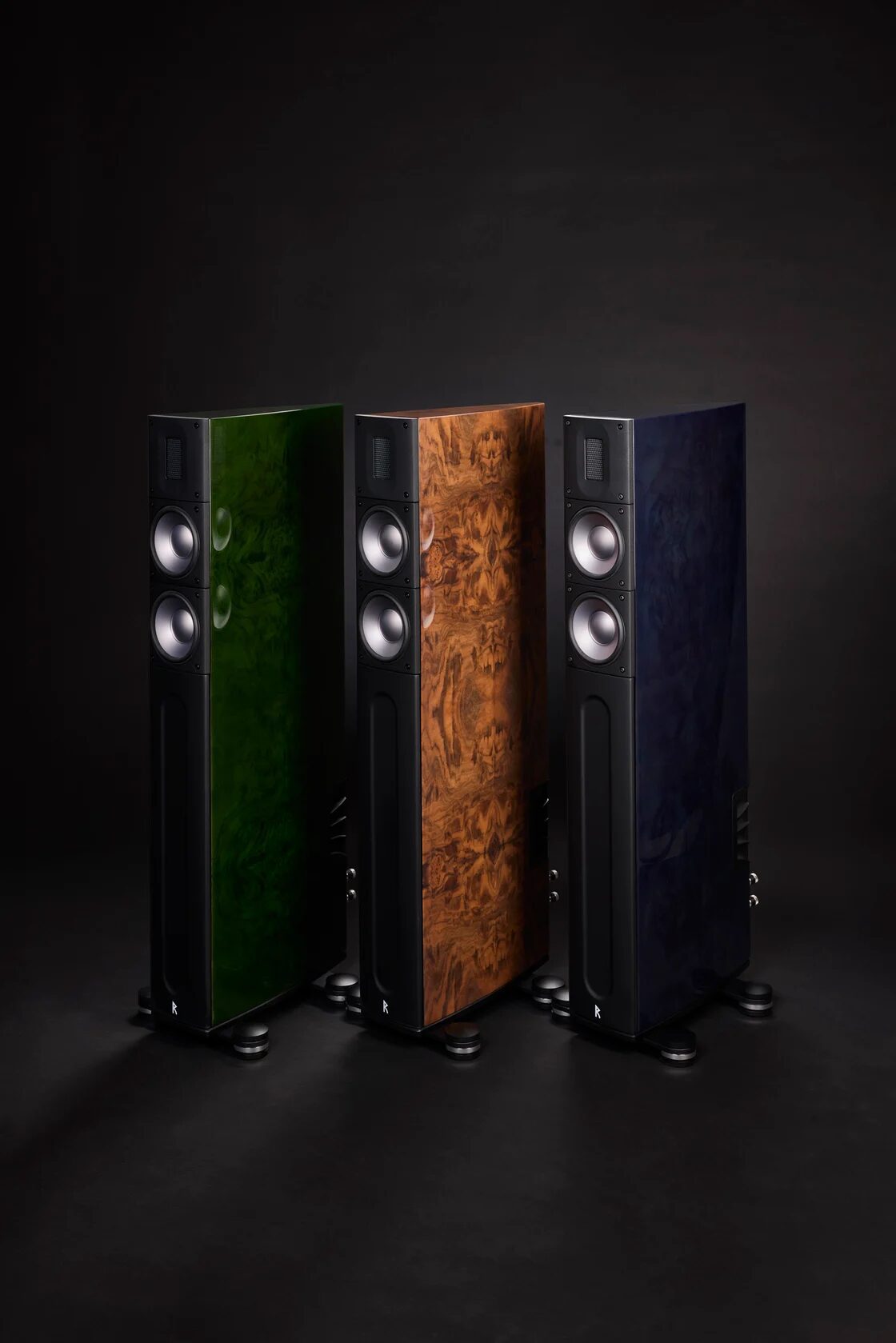
New Exclusive Finishes
Walnut Burl high-gloss piano lacquer
Emerald Green Burl high-gloss piano lacquer
Midnight Blue Burl high-gloss piano lacquer
Commemorative Packaging
Certificate of authenticity signed by Raidho’s executive team
Proven Raidho Engineering, Elevated
Ribbon Tweeter Our in-house, planar-magnetic ribbon tweeter remains the centerpiece—11 µm foil, 20 mg mass, breakup beyond 82 kHz. A tweeter that has around 50 times less mass than conventional dome tweeters. In our humble opinion, one of the best tweeters ever conceived—highly resolving, yet very musical.
Ceramix Woofers with Tantalum Coating Dual 5.25″ drivers utilize a sandwich construction that has an aluminum base with ceramic and Tantalum coatings to push breakup modes out to 15 kHz. Exceptional stiffness without added mass results in a pure midrange, expansive bass, and overwhelming scale. Finally, a woofer that can keep up with the exceptional tweeter.
2.5-Way Topology & Bass Reflex Dual woofers for extended low end; mid/bass and ribbon for seamless integration. Proprietary internal vented port hides elegantly in the rear baffle, allowing bass tuning in steps to fit the room.
Precision Crossover & Cabling Point-to-point, hand-wired crossover using Mundorf audiophile-grade components. Internal cabling (including the crossover) uses Nordost Norse cables for a pure signal path.
Availability & Pricing
The X2t 25th Anniversary Edition is available from September 2025 through authorized Raidho dealers.
MSRP: EUR 21,000 per pair (Walnut) EUR 23,000 (Emerald Green & Midnight Blue) (EU pricing)
Limited to 100 pairs worldwide, each uniquely numbered.
The sound of excellence delivered your way
Whether you prefer the feel of print or the convenience of digital, hi-fi+ keeps you connected to the world of high-performance audio.