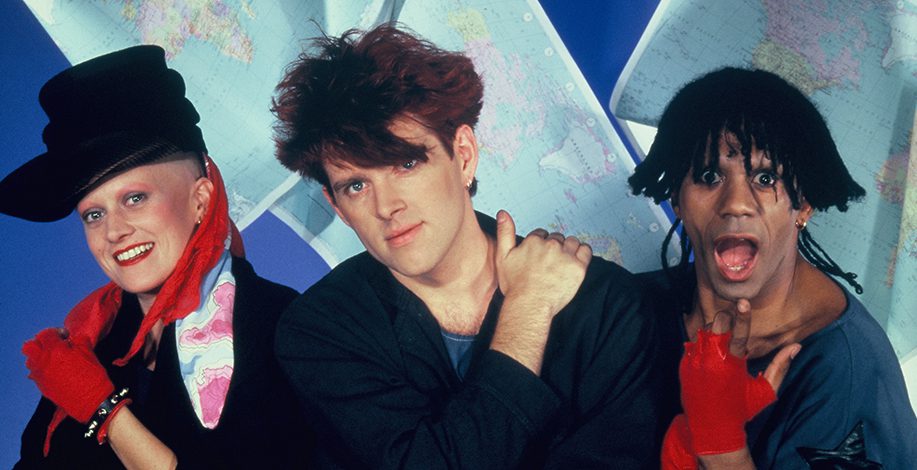
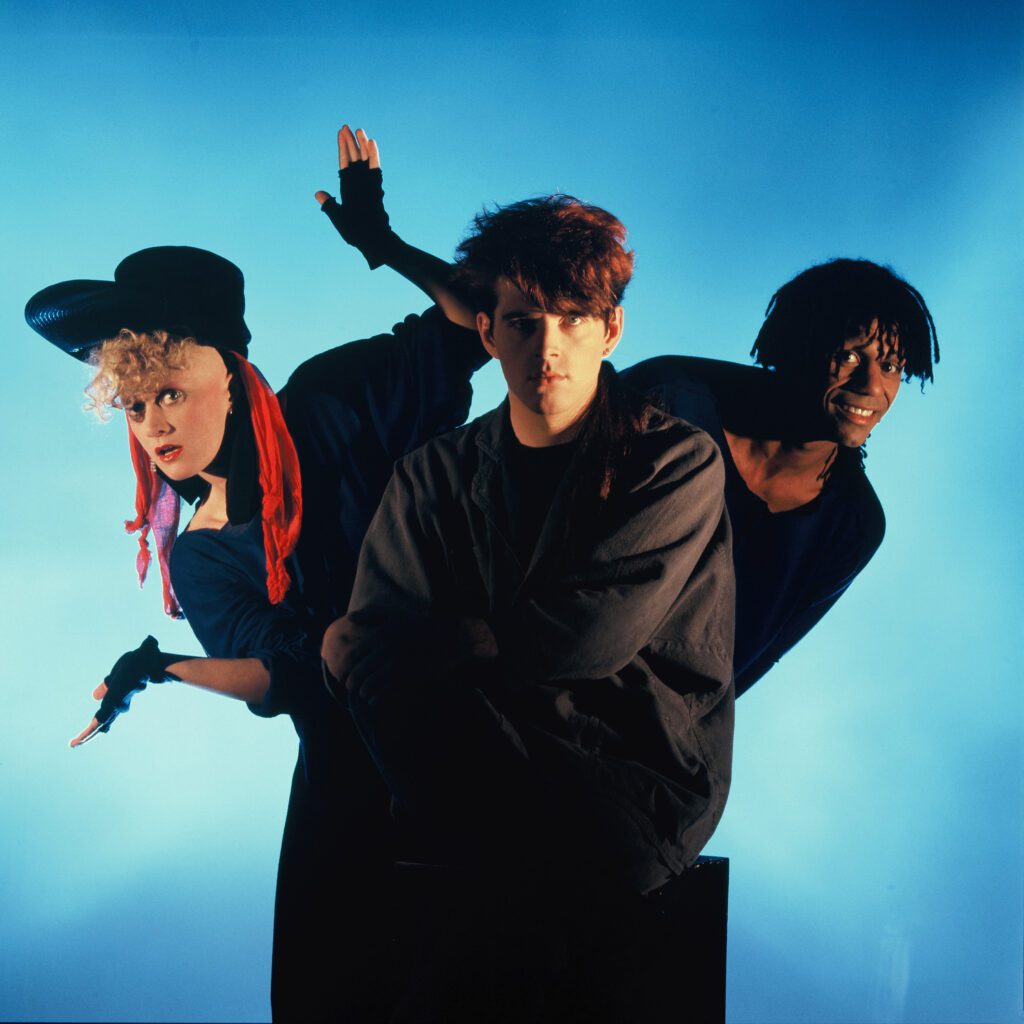
Last year, Into The Gap, the fourth album by ‘80s British pop trio Thompson Twins (Tom Bailey, Alannah Currie and Joe Leeway), celebrated its 40th birthday.
Seen as the band’s crowning achievement, the 1984 record, which was recorded in The Bahamas at Compass Point Studios with producer, Alex Sadkin (Grace Jones, Robert Palmer, Bob Marley and The Wailers), was a multi-platinum seller on both sides of the Atlantic, and included four hit singles: ‘Hold Me Now,’ ‘Doctor Doctor’, ‘You Take Me Up’ and ‘Sister Of Mercy.’
To celebrate the anniversary, Into The Gap has been remastered at Abbey Road by engineer Frank Arkwright and reissued as a three-CD set, a limited edition red vinyl LP, a digital deluxe version and a Dolby Atmos Blu-Ray.
hi-fi+ spoke to Bailey and Currie about the making of the album, what it means to them 40 years on, and why Thompson Twins were about so much more than just writing catchy pop tunes…
SH: It’s 40 years since Into The Gap. How does that make you feel?
AC: It makes me feel very old, but, listening to the tracks again, it’s quite poignant and sad, because it’s lost youth, isn’t it?
When you think of all the fantastic dreams and ideas that you had then, and now that’s diminishing, rapidly (Laughs).
At least you got to achieve some of them…
AC: Yes – it’s brilliant, but it’s very reminiscent of a time and it’s very of its time – it’s very much in context and of its place. You knew where it came from and what came after… It feels like another lifetime. I think I’ve had quite a few lifetimes in between.
TB: I’m feeling very good about it – it’s come as a slow surprise, because, 40 years ago, I never expected to be having conversations like this, but now that it’s here, it feels good.
When I look back at all the records we’ve made, for me it was a high point, and it still is.
Last year, I was doing some live performances of the album and I thought, ‘Oh, does that mean there are going to be some songs that don’t really deserve to be up there with the rest?’
But, actually, it’s a very good and consistent album of high-quality songwriting. And when you listen to it, it was also very well made – it sounds special to me. To put that in context, I don’t feel that way about every record I’ve made…
Is it nice to have it out there in a new deluxe edition? How do you feel about using modern tech like Dolby Atmos to tinker with an album from 40 years ago?
AC: It’s interesting, because we had such a terrible deal with our record company previously – we got no money from digital at all.
We hadn’t been involved with any of the previous releases that the record companies who owned our work had done. This is the first time we’ve been involved.
We haven’t had a lot of input, but we’ve had a bit. I had to hunt through all my photographs – it took me weeks and weeks to find things. I’ve really listened to stuff and heard the remixes.
For me, sound-wise, the new mixes are interesting, but audio is a very different thing these days… I can remember a lot of how we made those tracks and constructed them, and the nuances, the depth, and the amount of work that we put in…
In a way, you don’t hear that so much in the new mixes, and, also, I don’t trust my own ears… I’ve got constant tinnitus… I’ve got old ears.
TB: I didn’t know much about Dolby Atmos, so I went along to the remixing and threw in my comments and criticisms. Whether I was right or wrong in doing that, at least it has had some input from the artist.
Now we’re back in close contact with BMG and we’ve done this very closely with them, so I’m happy with that.
Since 40 years ago, the way that we consume music has been so split up into all sorts of different platforms and formats.
That fragmentation of the experience means nothing’s more valid than anything else – I don’t think streaming’s more valid than Dolby Atmos, for example… It’s just different ways of consuming music.
When you made Into The Gap, you were using cutting-edge tech, like synths and drum machines…
AC: We’d all been in a rough and ready band before – I was on the fringes of it, rather than an intrinsic part – but I was very much going to see bands, and into instruments and playing percussion – the tactile and real nature of it – and then we got a drum machine and a synthesizer, which suddenly gave us the freedom to leave that old band, become a three-piece and go and write songs in the front room of our squat and make these amazing records which had very big sounds, but with just three of us in a studio.
It was trying to marry that tech thing that we’d embraced wholeheartedly with really funky and very real sounds – I used to play fire extinguishers in the studio for God’s sake!
Alex Sadkin was a big part of that – he was a brilliant producer. We were three dirty little squatters in Clapham, but we sent off our tape to him in The Bahamas because we loved the Nightclubbing album that he’d done with Grace Jones.
You made Into The Gap and the album before it, Quick Step & Side Kick, at Compass Point Studios in Nassau. How was it suddenly going from a squat in Clapham to jetting off to The Bahamas?
AC: It was unreal. I remember arriving there for the first time when we did Quick Step… We were still in our cut-off leather jackets and with our smelly little dreadlocks – we probably chain-smoked on the plane the whole way there. When we got out, Grace Jones was there… it was unbelievable, and it was exciting.
TB: When we did the first record there, it really was a shock – we were naïve idiots and turned up in the 99% humidity of The Bahamas in punk outfits (laughs). It was completely inappropriate.
It’s a joke now, but it shows that we didn’t know what we were getting into, whereas the second time we were already familiar with the way of working there.
Any memories of making Into The Gap?
TB: We enjoyed it – it was a good and healthy thing to get away from all the partying and concentrate mostly on cutting the tracks. We brought them back to the UK and finished off the overdubs and mixing at RAK Studios in St John’s Wood [North London].
AC: We had a great time doing it – we took a lot of instruments out there in flight cases. I think Sly Dunbar was around… I can remember Sly & Robbie coming in and playing with the drum machine – they were fascinated.
Into The Gap was a huge album – your most commercially successful record…
AC: It was our peak – I suppose everybody has one peak album, don’t they? Very few seem to have two… That was our big one and everything just synced, from the time we started songwriting to making the record… We had enough experience of making records to know what was good and we had the craft of songwriting down.
I think we felt more confident on that album to expose ourselves more emotionally – we wouldn’t have written something like ‘Hold Me Now’ before because it was a love song between Tom and me. It was something very personal and to make it public… We were trying to pretend we didn’t even have a relationship publicly… (Laughs). It was quite an emotional album.
TB: We’d come up with a way of working on the previous album, but with very strict constraints – we were headlong into the pure synth sound, and we didn’t allow any guitars, and the songwriting was at an industrial level.
With Into The Gap, we suddenly matured as songwriters and thought, ‘Yeah – we can actually deal with emotional subjects a bit more’, and openly and powerfully.
That coincided with widening the musical palette as well – we had a few more acoustic instruments and guitars and pianos on there. Those two albums are like brother and sister.
The song ‘The Gap’ has a Middle Eastern feel, and ‘You Take Me Up’ has a bluesy harmonica and a spiritual-gospel influence, but with a big, soaring pop chorus. You were embracing world music, but mixing it with contemporary sounds…
TB: Yeah – for sure, my interest in world music meant that we weren’t just copying the band next door. We were looking for ideas and fascinated by ideas that came from further afield.
‘The Gap’ kind of lays that down as a manifesto – that whole notion that East and West can’t meet is false, because it’s where they meet that the interesting stuff happens.
We all have ideas that we bring to the mix of cultures. I’ve always been interested in Indian music specifically, but also Middle Eastern and African.
Were you anti-rock and roll?
AC: It seemed like a silly old form, and we’d all had experiences of being in a drums and guitar band… A lot of our songwriting came from storytelling and creating atmospheres, so when we didn’t have to do the rock and roll thing, it was suddenly a wide-open space – you could do anything, and that’s what was really exciting.
We were living on the borders of Clapham and Brixton – we were hanging around Brixton, so there was a lot of reggae and dub…
You also did a lot of club remixes of your music…
TB: That’s right – at that time, nightclubs had become important again. It was where the hip people were hanging out, and so the interesting and new ideas were being traded in that environment.
It was the emergence of DJs as the co-conspirators and curators of ideas.
That happened to coincide with my interest in Jamaican dub remixing – I thought when you made a record, that wasn’t the end of it, as you could do an instrumental version or a dub version, or an extended dance version…
All of those things I was fascinated by became part of our output – when we released an album on cassette, we put extra mixes on the B-side and that became something that fans expected of us.
‘Sister of Mercy’ was inspired by a real-life story of domestic abuse, wasn’t it?
AC: Yes – it was interesting… I was a woman in a band and I didn’t want to write, ‘C’mon, let’s get down…’
‘Sister of Mercy’ was sort of personal because my mother hated my father and she used to say she wanted to kill him.
It was the idea of crimes of passion and that quiet domestic abuse that goes on.
It was sort of an achievement to get something so political and strong as a subject for a pop record, but it went over most people’s heads.
My own sister listened to it and went, ‘Oh, great – it’s a song about me…’ I was like, ‘Hang on a minute…
’We were trying to do something that was different, and we were older than a lot of our peers.
We had all sorts of subjects that we were interested in, and we wanted to look at – to somehow engage people with them by getting them into a track. Sometimes it worked and sometimes it didn’t.
TB: Pop music has the right to be frivolous when it wants to be, but it should also take on something more…
Back in the day, we thought that being in a band was about making the world a better place – it had a social activism agenda as well, and we took that very seriously.
In fact, one of the reasons we were in the band together was that we wanted to make waves. It wasn’t just about pretty songs, although the ‘Saturday night in the disco’ thing was important to us, it was also about telling big stories with curious twists and turns to them.
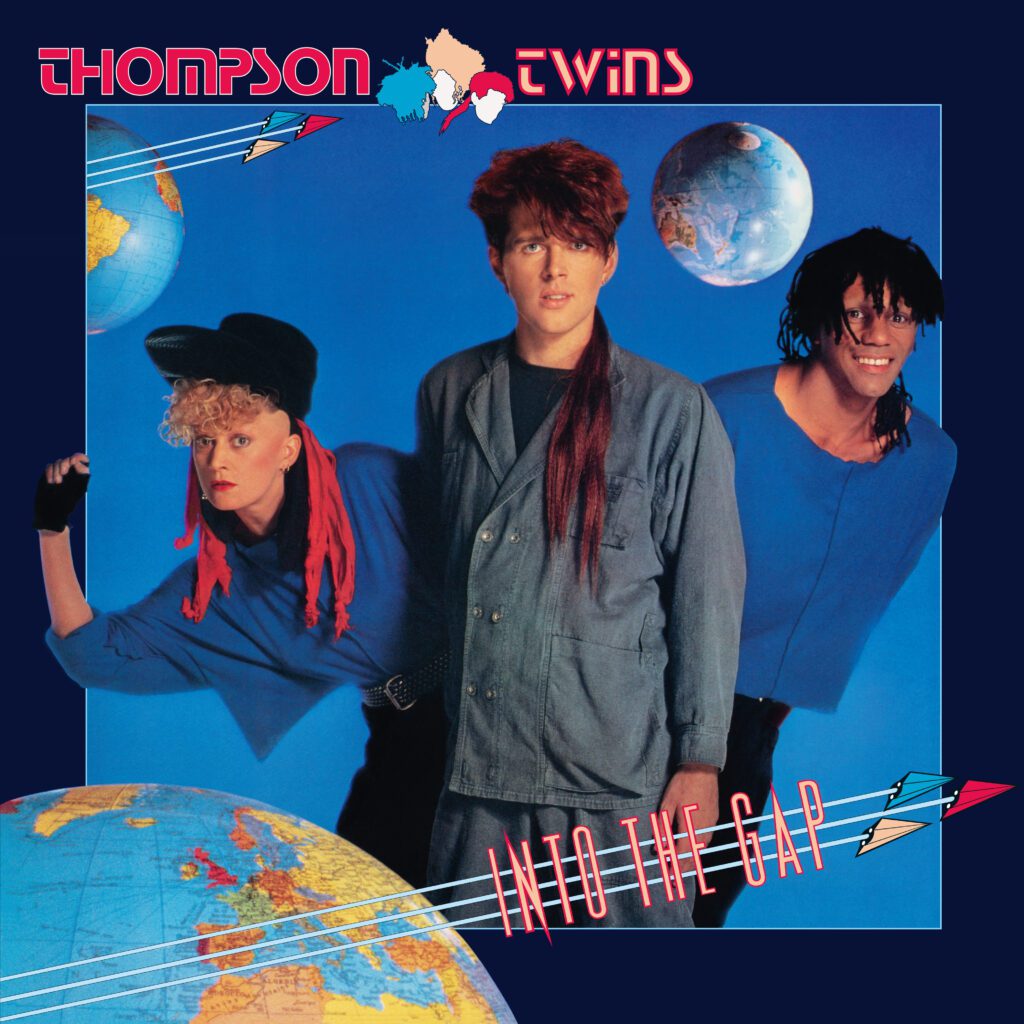
The 40th anniversary edition of Into The Gap by Thompson Twins is out now on BMG.
Trending Articles
See all
By Sean Hannam
More articles from this author
Read Next From Music
See all
Emma-Jean Thackray: Weirdo
- Oct 06, 2026

Klaus Mäkelä: Stravinsky; Debussy
- Sep 29, 2026
Sting: All This Time (Live)
- Sep 08, 2026
Johan Lindvall Trio: End
- Aug 31, 2026