In late spring of 2024, Nordost launched the third generation of what it describes as its entry-level Leif family, including Nordost Red Dawn 3. It’s a four-layer line-up, starting with White Lightning, progressing through Purple Flare, Blue Heaven, and culminating with Red Dawn, the subject of this review. So, in many respects, ‘entry level’ is not really an apposite way to approach Red Dawn, as it sits at the top of a hierarchy that, itself, forms the foundation of a pyramid of products.
The next level of the pyramid is the three-layered ‘Norse’ range, top of which is the Tyr 2, which I’ve used for several years; then there’s the ‘Reference’ range of Valhalla 2, topped by the ‘Supreme Reference’ Odin 2 and Odin Gold. Nevertheless, in terms of price, the Leif series is unquestionably more approachable than those ranges that sit above, and thus represents the likely way in to the Nordost ecosystem for many users. Given this price disparity, some will always question whether this truly represents ‘proper’ Nordost. I’d quite like to address that question here.
Construction
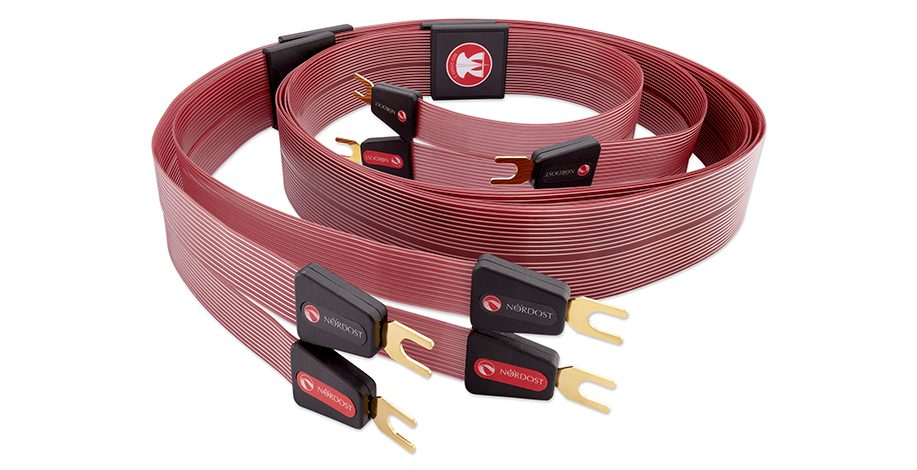
The loudspeaker cable retains the familiar ribbon topology that has defined Nordost’s speaker cables since Flatline and the early Red Dawn, decades ago. Where the Leif Series departs is in eschewing the complex and costly micro mono-filament and twisted micro mono-filament construction in the interconnects and loudspeaker cables of the ranges above it.
This is, no doubt, a large part of what keeps the price within a realistic ballpark for many. Still, it does mean users don’t get the benefit of the (almost entirely) air dielectric that the monofilament creates between conductors and the fluorinated ethylene-propylene (FEP) outer sheathing, which has featured in Norse, Valhalla and Odin interconnect and loudspeaker cables from their inception.
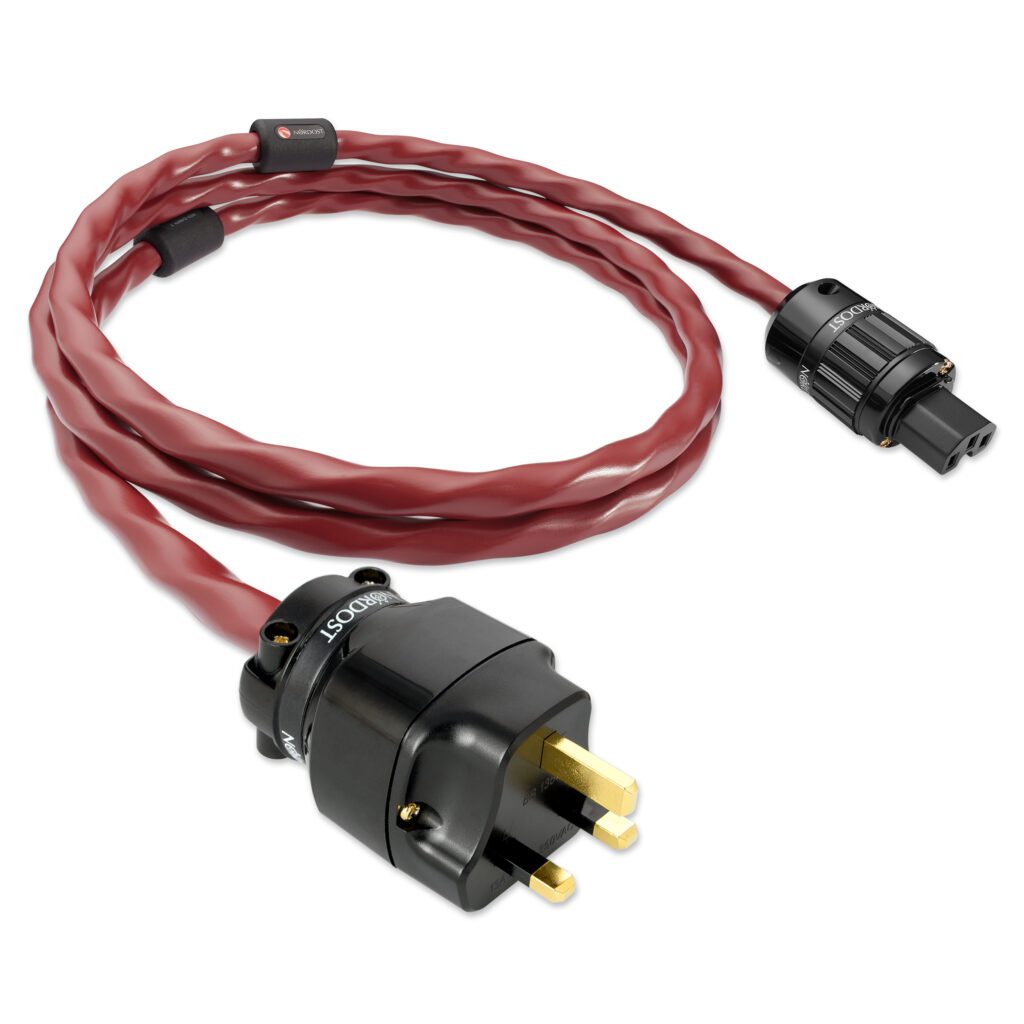
Instead, the Leif series favours a more conventional layout for the FEP insulation/dielectric, in physical contact with the conductors. It uses Nordost’s own silver-plated OFC copper recipe connectors, though. Notably, the Leif series power cords do retain the micro mono-filament construction used in their more expensive stablemates.
Leif 2 to Leif 3
Changes for the third-generation Leif 3 range are largely structural in nature: beefier wire gauges and/or increased conductor count for many items, twisted-pair construction in the interconnects, physical reinforcement and mechanical tuning, and tighter, tougher, and more secure terminations.
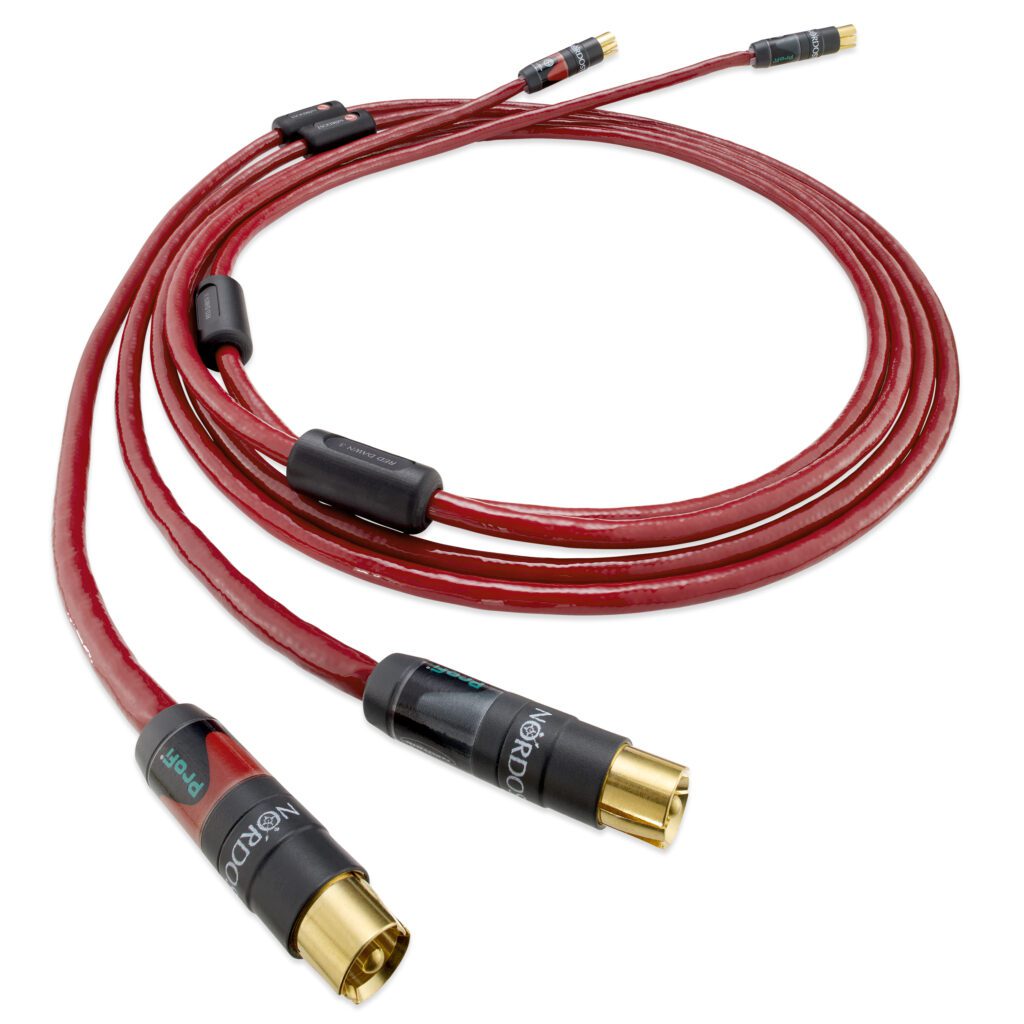
The analogue interconnects now use the same Neutrik connectors as the Norse series, and the loudspeaker cables use more robust versions of the familiar Z-plug banana or spade connectors, which are said to be easier to terminate consistently. Nordost considers the way its cables are terminated to be, in its own way, as critical as the cable topology itself, so improved consistency here is clearly a desirable outcome.
As a long-term Nordost user, my core system has relied on a Tyr 2 cable loom for some time now, but I also have a set of Blue Heaven 2 to draw on when the occasion merits it. These have now been supplemented by the selection of Nordost Red Dawn 3 single-ended interconnects, loudspeaker cables, and mains leads in this review.
Internal logic
One thing that has always been true of Nordost is the internal logic and consistency of their product ranges: there’s a common sound signature but still a clear hierarchy as you move up the ranges. So you always knew that moving from Purple Flare to Blue Heaven or Red Dawn would bring benefits in the sense of ‘more of what you like about what you’ve got, and less of what you don’t’, which isn’t always true of every cable manufacturer out there. Moving from Blue Heaven 2 to Red Dawn 3 has been illuminating, therefore, as it’s quite a significant jump in performance, both within the hierarchy, but also across the generations.
If forced to sketch my old Blue Heaven 2 in a few words, I’d probably class it as a safe pair of hands, a smooth, even-handed, reliable go-to for a wide variety of situations, that isn’t likely to go rogue and wayward under pressure. But its limitations probably lie in that smoothness – a creamy, slightly soft-focus delivery which, nevertheless, still delivers the musical goods. It flatters, without deceiving. The outgoing Red Dawn 2, as I recall, brought more heft, clarity and detail. Still, there’s always been a clear gap between the top of the Leif range and Heimdall at the bottom of the Norse, where the more revealing, but more uncompromising, honesty of the micro mono-filament technology starts to make itself known.
Performance
Now, hearing Red Dawn 3 in my home system, my first thought is how much that gap might have just closed. There’s a level of subtlety and insight here beyond what I was expecting. If you haven’t listened to Nordost cables in a while, or if you have heard the conventional internet ‘wisdom’ that Nordost is bright, with spotlit treble and lightweight bass, you should put your prejudices to one side and take a listen. Moments with any recent ranges quickly dispel that notion, and the Red Dawn in particular is solid, hearty and cohesive.
The Red Dawn 3 loudspeaker cable has the grainless, even-handed quality that has become a Nordost hallmark. The even-handedness translates in musical terms into a level of coherence that at this price, and even considerably beyond it, cannot be taken for granted in many cables; in a fundamental sense, the energy is in the right place, at the right time.
The complex and lengthy percussion solo on ‘Nardis’ from Patricia Barber’s Café Blue (Blue Note – ‘un-mastered’ edition by Premonition Records) is fast, tight and well-controlled, the complex polyrhythms are well handled, easy to access and make more sense of; the interactions with the bass are layered and nuanced, and the moody opening section has structure, purpose, and a sense of direction – not merely the noodly meanderings that some cables might let you assume.
Similar stomp
Similarly, ‘42nd St. Stomp’ from Joanna MacGregor’s Play (Sound Circus) is tight and together, replete with inner detail and structural cues. The excellent articulation these cables are capable of brings out the complexity and dexterity in the playing, the better to show us MacGregor’s skill and musicianship in making Alasdair Nicholson’s piece more than just a novelty take on a hoary old Broadway number. And the Ligeti ‘Autumn in Warsaw’ from the same album retains its devastating power; these are definitely cables that help you explore and appreciate the more challenging elements of 20th-century music, rather than getting in the way.
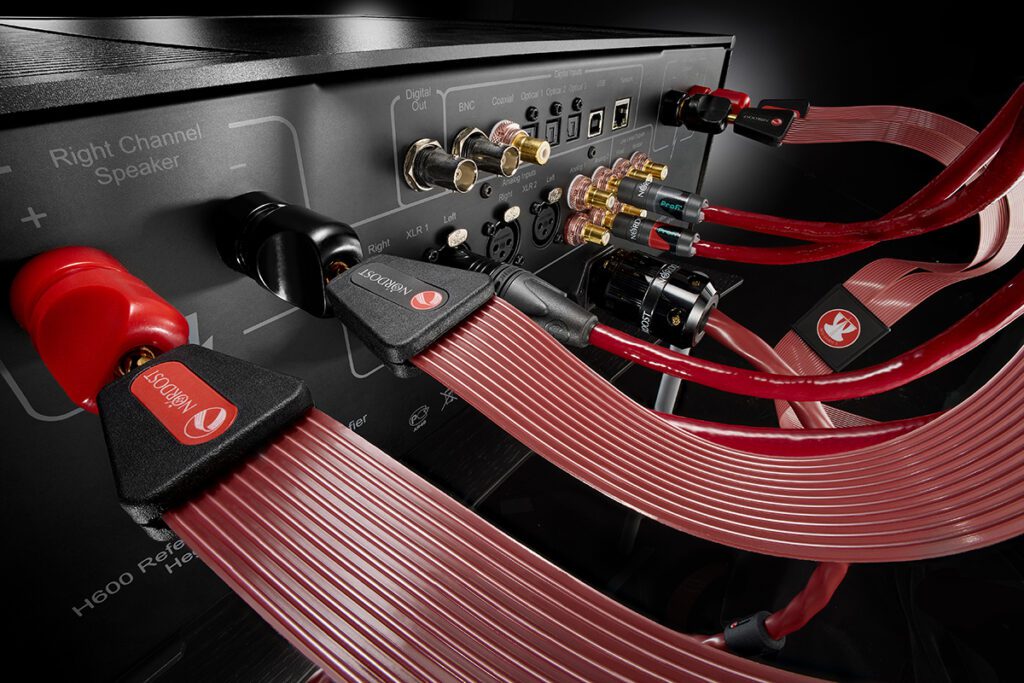
Playing Philip Glass – Piano Works (Deutsche Grammophon) showcased the interconnects ‘particular strengths. ‘Etude #9’ has all the complex, rhythmic shifts and drive that Vikingur Olafsson draws out of this music. This was the disc that first made sense of Philip Glass for me. Olafsson’s portrayal of the interleaved nature of the parts makes this a study in poise and elegance, not merely a technical exercise in metronomic exactitude.
Similarly, the off-balance rhythmic underpinnings of ‘Etude #2’ help highlight how the interconnects show Olafsson adjusting the weighting of the various voices, how he moderates and modulates his touch to keep track of the interwoven phrases, and the threads that layer up the study. And the piano has weight and mass, despite much of the piece being played barely more than mezzo forte. If I had to pick the strongest from what has quickly become a convincing range, it might well be these interconnects.
Mains block
Using Red Dawn 3 power cords via the Nordost QB6 v3 mains block, it’s clear that these power cords and my regular Tyr 2 power cords are stablemates. Direct comparisons, given the price disparity, are unhelpful, so it makes more sense to focus on common strengths: the cords’ ability to deliver the energy in a performance and maintain the integrity of the innumerable components of that performance. There’s an underlying sense of organisation, composure and surefootedness, without obvious compromise to freedom or expressiveness. Yes, the Tyr 2 can deliver even more in terms of structure, intent and purpose, but all these attributes remain clear and present here.
Collectively, this adds up to a cabling loom which doesn’t draw attention to itself. Music is presented without artifice or preference, whether classical, jazz, girl and guitar, or electronica; all were rendered with equal finesse and assuredness. I found myself ranging widely and freely across my music collection, not gravitating towards any particular genre. As a foundation for a capable system, this is a prerequisite and Red Dawn 3 doesn’t falter.
Value judgements
This third-generation Leif series is more expensive than its predecessor, but in the broader scheme of things, not significantly so. Factor in the performance uplift, and a sub 20% rise doesn’t feel at all excessive. I’ve assessed it on its own terms, above, but a quick comparison with my regular Tyr 2 adds some helpful context. The micro-monofilament in the Norse series interconnect and loudspeaker cables is most apparent in the further increased freedom and spaciousness it provides. That freedom manifests in many ways; speed, for one: sudden dynamic shifts can happen more suddenly; conversely and relatedly, slow, contemplative moments have more time and space to develop within.
They are also more emphatic, so there’s a second freedom: scale. There’s more ‘stomp’ in the Joanna MacGregor ‘42nd Street Stomp’, for example, and notes decay for longer, which nicely bookends those faster, cleaner leading edges. So there’s an additional layer of expressiveness, a degree of focus, limpidity and poise that the Leif series cable approaches, but you do need to progress to Norse or beyond, to realise it fully. There’s still a clear gap in performance between these levels of the Nordost pyramid, then. But keep in mind, the equivalent Tyr 2 prices: 1m mains cable – £3,470; 0.6m interconnect – £2,600; 2m loudspeaker cable – £8,025.
The Red Dawn 3 delivers a feeling of musical intent and integrity. You’re never left feeling that the cable has somehow ‘edited’ your musical experience. Yes, it was entirely clear where the value lies in the Norse cables when I eventually reinstalled them. Still, the Red Dawn 3 retains the full-range coherence and cohesiveness that are Nordost characteristics.
Valid and sensible
In that respect, the Leif series is an entirely valid and sensible entry point to the Nordost ecosystem, and Red Dawn 3 represents the ultimate statement of that level’s capabilities. We talk often about the importance of a coherent ‘one-make’ cable loom, about the need to ensure that the limitations of another don’t compromise the strengths of one cable from a different brand, and it’s very accurate, whatever the performance level you are at. And for a disappointing number of cable brands, mixing and matching from different performance tiers is equally ill-advised.
For many, Red Dawn 3 will be enough, but if you want to go beyond, one strength that quickly becomes obvious is that you don’t need to make the leap wholesale from one level to the next. You can make the move to Norse, or beyond, in stages, and be confident that you can realise the benefits of the Norse cables’ performance without them being undermined by whatever Red Dawn sits elsewhere in the system. If I were contemplating such a process, I’d start with the mains power cord to the block, then the power cords to key components, then loudspeaker cable, but the mere fact that you can take such an approach at all, and make sense of every step in the process, is testament to the level of performance the Red Dawn 3 offers in the first place.
Technical specifications
Power cord, UK to 15A IEC (20A IEC optional at extra cost)
- Insulation: FEP
- Construction: Micro Mono-Filament Design
- Conductors: 3 x 12 AWG
- Material: 168 Strand 99.9999% OFC
- Capacitance: 10.0pF/ft
- DC Resistance: 1.64 Ohms per 1000ft/304M
- Price: 1m length, £530, $560, €560
Analogue interconnect
- Insulation: FEP
- Construction: 3 Twisted Pairs, Individually Shielded
- Conductors: 6 x 24 AWG
- Material: Silver-plated 99.9999% solid core OFC
- Overall Shield Coverage: 97% Braid
- Termination: Gold-plated Neutrik Profi RCA or Neutrik XLR
- Price: 0.6m pair £710, ¢750, €750
Loudspeaker cable
- Insulation: FEP
- Conductors: 22 x 24 AWG
- Material: Silver-plated 99.9999% solid-core OFC
- Termination: Gold-plated Spade or Z-plug Banana
- Price: 2m pair £1,100, $1,120, €1,130
Manufacturer
Nordost Corporation
UK distributor
Renaissance Audio
+44(0)131 555 3922
Trending Articles
See all
By Steve Dickinson
More articles from this author
Read Next From Review
See all
Reiki Audio SuperSwitch X/Pro X PSU
- Oct 06, 2026
Audiobyte SuperVOX
- Oct 06, 2026
Unitra WSH-805
- Sep 29, 2026
Wilson Audio Sabrina V
- Sep 29, 2026