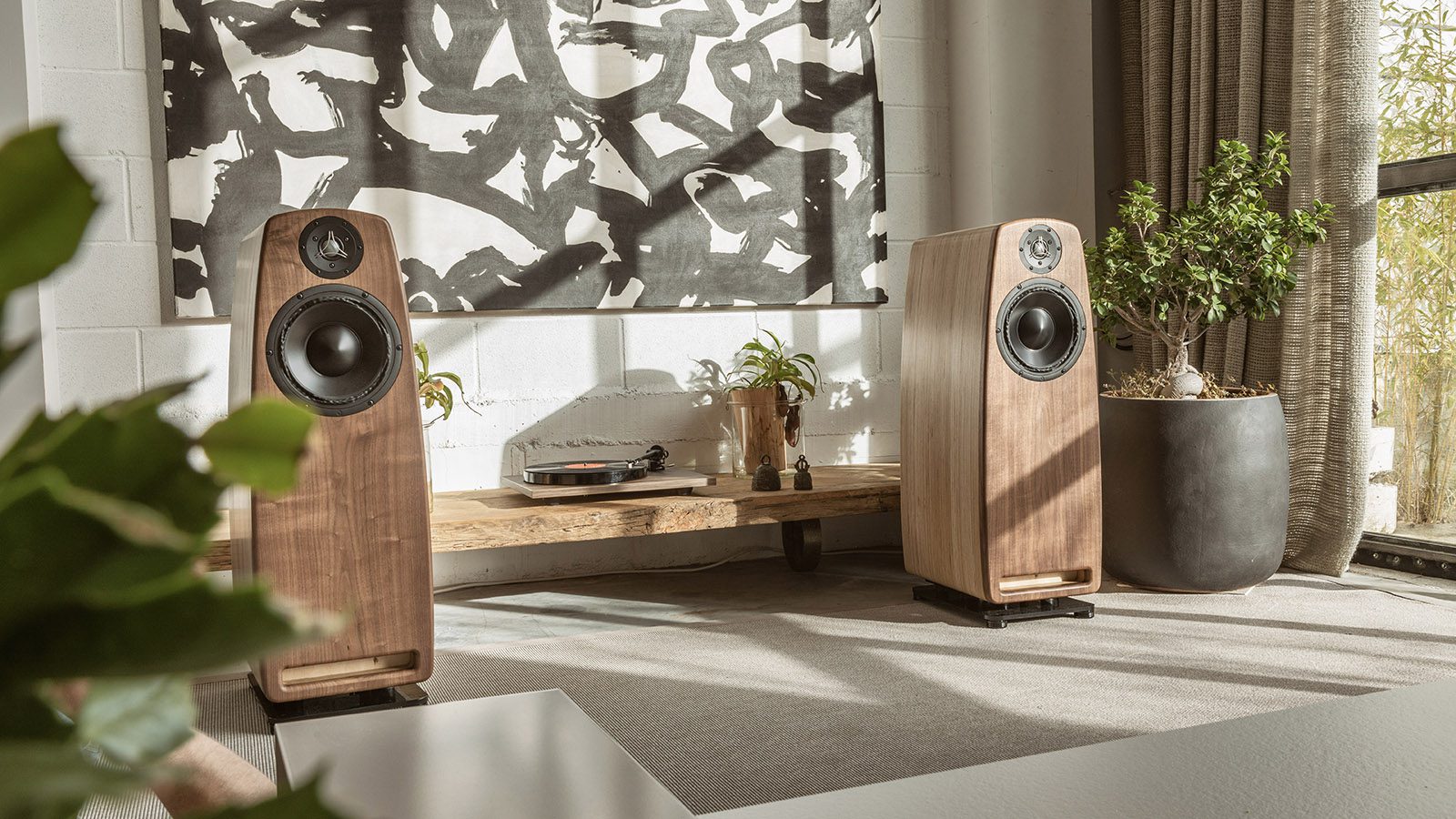
While the Mediterranean countries Italy, France and Greece are well represented by hi-fi brands, Spain has little or no history of audio manufacturing, at least beyond its borders. I guess if you have beautiful countryside, fablulous weather and a culture of impassioned live, acoustic music, sitting indoors and listening to recordings is not as uppermost in the zeitgeist. Recently, this situation has begun to change, with impressive examples such as Kroma Atelier and Wadax emerging on the international scene. Now, we can add a new name to this growing list: Saltwood Sounds.
Based in Pamplona near the western end of the Pyrenees, this start-up was created by two expatriates and a British businessman. Brit Alastair Waugh, a biochemist working in the pharmaceutical industry, and Kiwi boatbuilder Craig Thorburn met through their shared passions for good sound quality and mountain biking. Neal Taylor is based in London and faces the challenge of making Saltwood Sounds a viable enterprise. The trio initially started building desktop Bluetooth speakers, to develop its ideas and brand identity, but soon realised that producing small numbers of high-quality speakers in a saturated market is unlikely to spell success. Waugh adopts a scientific approach to designing loudspeakers, making him at least as qualified as many in the industry. In fact, I can’t think of another scientifically trained designer who has been bold enough to venture into loudspeakers.
Way out west
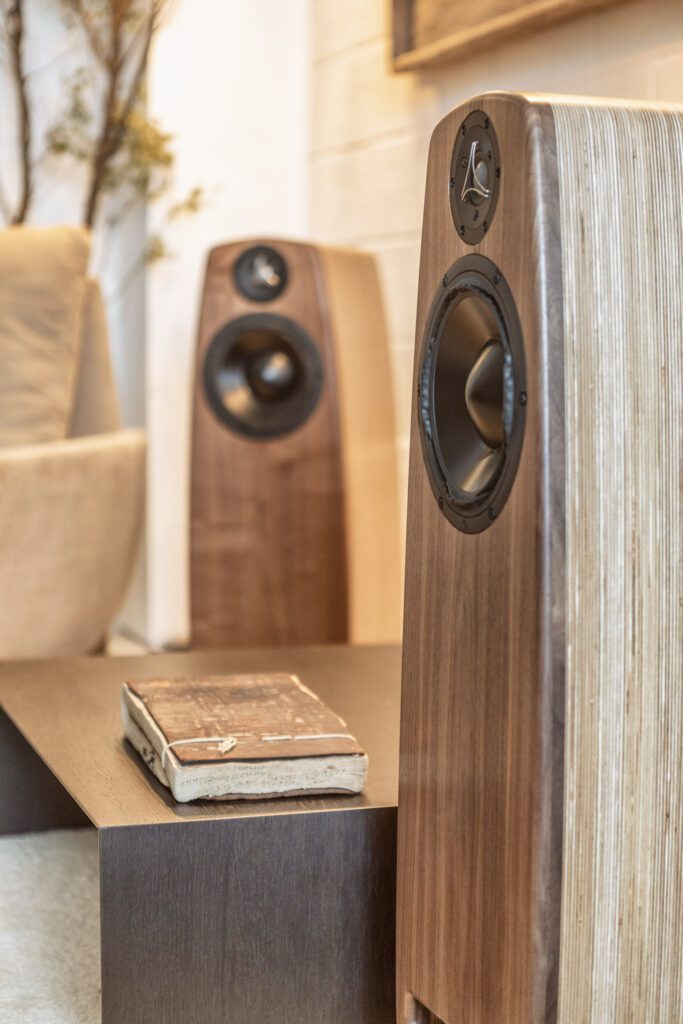
The Finisterre is Saltwood’s first audiophile loudspeaker, named after the most westerly peninsula in Spain. It is a bulky 880mm high design crafted in birch ply, the hard way. Rather than assembling a cabinet from sheets of material, Saltwood applies a similar approach as used by Art Loudspeakers and a few others in building up multiple laminations before machining out an internal 50-litre volume. This results in a highly stiff enclosure that weighs approximately 40 kilos once the drivers, crossover, and plinth are added.
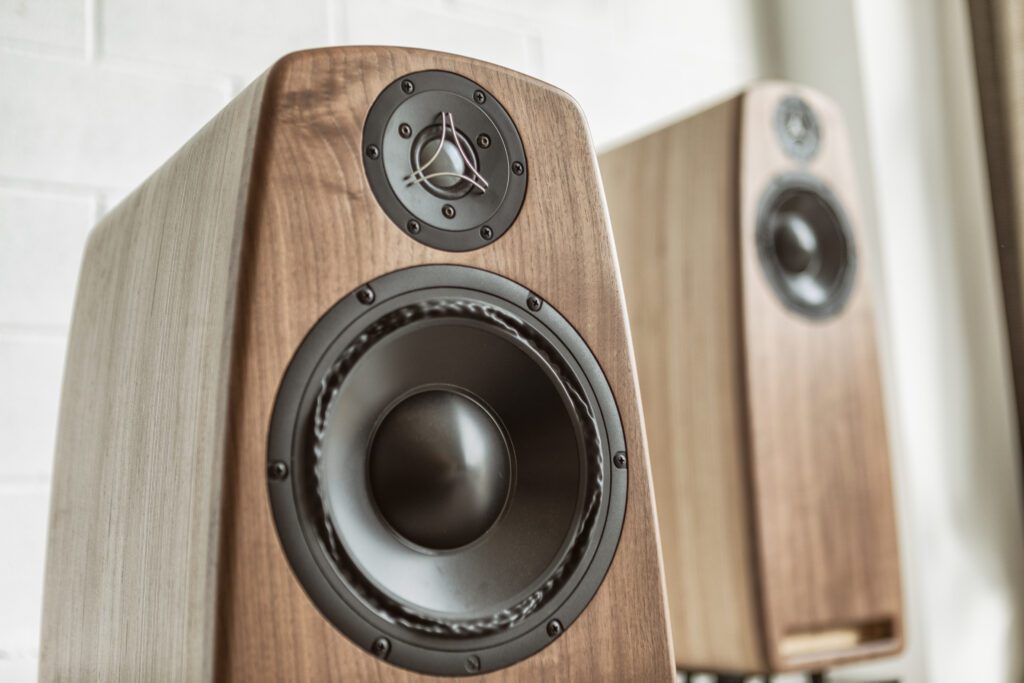
I had the chance to examine the interior of the cabinet and was impressed with what I observed. The bracing is branded, and the crossover is very neatly arranged and quite densely populated with components. The cabinet is reflex-loaded via a slot in the front, featuring a rectangular port that runs up the front of the box behind the front baffle. The front baffle can be made from almost any available hardwood, but the sample provided was in walnut, which contrasts nicely with the light birch ply. Both have an oiled finish that offers a pleasant change from the lacquers used on many speakers.
Having it large
The main driver is quite substantial, especially considering this is a two-way system. That’s no bad thing, however, and this is no ordinary drive unit; it’s an eight-inch (203mm) aluminium speaker from one of the most advanced companies in the field, Purifi from Denmark. It exceeds the standard eight-inch specification; the chassis is nearly an inch larger, and most manufacturers use this as the diameter. Regardless, it’s large, featuring a 52mm voice coil and a ±15mm excursion capacity. Saltwood crosses this over to the tweeter at 1,350Hz, a very high figure for an eight-inch and a very low one for a 25mm tweeter. The latter is a beryllium unit from SB Acoustics, and like the woofer, is said to operate “within its optimum range where distortion is kept to absolute minimum”.
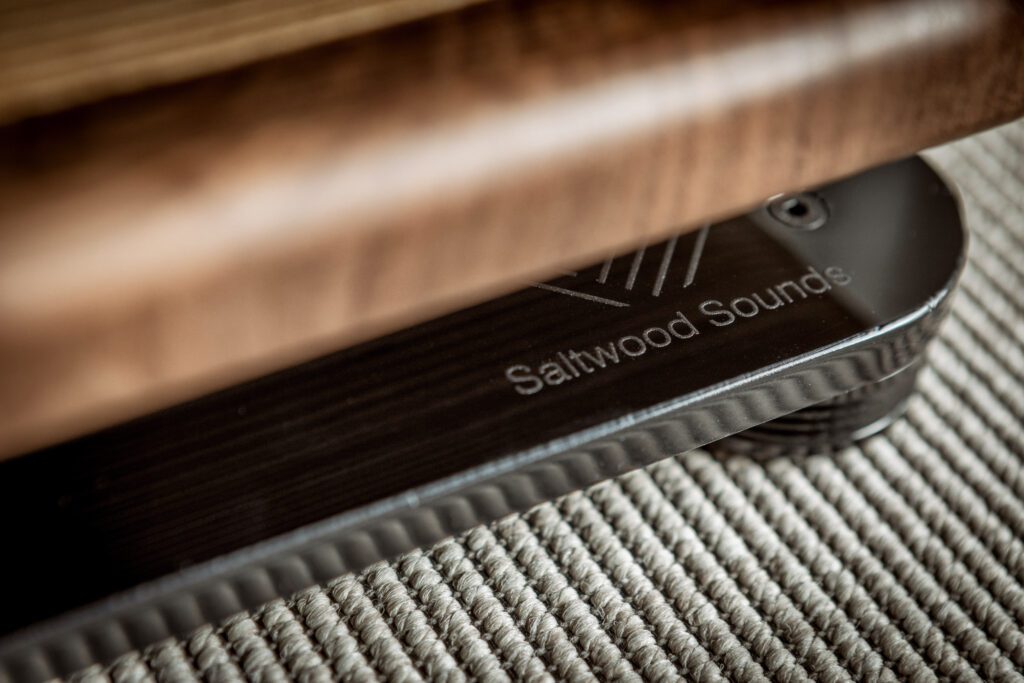
Little is said about the crossover except that it uses very high-quality components, including ClarityCap and Mundorf MCap capacitors with Jantzen air core inductors in a second-order configuration. I wanted to know whether the plinth was provided to accommodate a second reflex port beneath the cabinet, but this is not the case; instead, it creates a sense that the speaker is floating from an aesthetic point of view, using Saltwood’s ‘LEV’ (Levitation & Elimination of Vibrations) system.
Viscoelastic spacers
The spacers between the box and the lower plinth are viscoelastic, which should reduce vibrations transmitted to the floor. Beneath the plinth, aluminium feet are used instead of spikes. Saltwood has been experimenting with Carbide and IsoAcoustic feet, and these may be offered with the Finisterre in the future. On the rear, this substantial speaker has a single pair of high-quality binding post terminals.
Setting up the Finisterre’s is facilitated by their size and the absence of spikes; they aren’t lightweight, but it’s easy to move them around and even slide them short distances. The front port also makes them relatively tolerant of room boundaries. I ended up with a gap of about 50cm between the rear baffle and the wall, and this resulted in a response that sounded very even from the listening position.
Not very metal
With two metal drivers, you might expect the Finisterre to sound bright and thin, as some speakers with similar drivers do, but this couldn’t be further from the truth. In practice, it is a very even-handed, well-balanced loudspeaker, by which I mean it suits my taste for a more relaxed presentation. This is partly because the tweeter is not that high off the ground; at about 80cm, it is lower than usual. You’d need a fairly low sofa to be at ear level with it, possibly even a bean bag if such things still exist. That said, it does not lack detail; image scale is sometimes a little limited, but this depends very much on the recording. Those with a lot of reverb and harmonics have plenty of height.
What you get is superb timing; two-way systems are generally good at this sort of thing, and combining two high-quality drivers like these doubles the effect. This makes it very easy indeed to get involved in music with any form of rhythm, however complex. The woofer may be large, but it is supremely articulate when it needs to be, never becoming congested or compressed regardless of level. What is more impressive is that Saltwood claims the Finisterre extends down to 25Hz, where a decent-sized woofer in a highly stiff box really helps. In practice, the bass does indeed go very low and is one of this speaker’s most attractive qualities; it’s rare to get such controlled and powerful low-frequency extension out of something so compact.
No more trouble
I have been playing Dominique Fils-Aimé’s ‘Birds’ a lot lately; it’s a superb recording of a beautiful dusky voice with plenty of layering and clever use of reverb and other effects. All of this came together via the Finisterres, which revealed the sense of depth in the piece and how the vocals are doubled and layered to give it extra shape and presence. The Finisterres allow the bassline to add depth at low frequencies and help the song flow in a very appealing way.
Another discovery, thanks to Steve Pearce at B&W research, is ‘No More Trouble (Jamaican Extended Instrumental)’ by Bob Marley. It shows just how good analogue recordings were back in the day, especially when played through a speaker capable of accurate timing and deep, textured bass. Here, the guitar and cymbals stood out slightly more than usual, but the overall vibe was powerful, with a lovely bounce to the rhythm.
The above was enjoyed with my 150W Moor Amps Angel 6 power amplifier. I also tried an Axxess Forte 3 streaming amplifier, which happened to be passing by. This is a 100W Class D design with a distinctly different character. It allowed the Finisterres to produce a much more open and agile sound, with the amp’s nimbleness and precise control being clearly evident but not diminishing the musical engagement at all. Now, the bass was powerful and fast, and the midrange and treble were highly detailed and precise. The Moor has a warmer, smoother balance, but in some ways, the quicksilver control of the Axxess suited these speakers just as well.
Science in sound
The Saltwood Finisterre is an impressive loudspeaker for a newcomer; a scientific mind and a boatbuilding skillset clearly combine well when developing something a little different. The combination of a large woofer and dome tweeter in a two-way setup is unconventional. Still, the results confirm that when all the parts are well chosen, not least the crossover that binds them, it can deliver exceptional results. I will be watching Saltwood Sounds closely in future. Any company that can think outside the box and deliver such engaging results is of great interest.
Technical specifications
- Type: 2-way, floorstanding speaker with reflex-loaded enclosure.
- Driver complement: One 25 mm beryllium tweeter; one 8-inch Purifi mid/bass with aluminium cone.
- Crossover frequency: 1350Hz
- Frequency response: 25Hz – 22kHz
- Impedance: 4 Ohms
- Sensitivity: 87dB/W/m
- Dimensions (HxWxD): 880 x 295 x 405 (+30mm with terminals)
- Weight: approx 40kg/each
- Finishes: birch ply with a hardwood baffle.
- Price: £17,000/pair
Manufacturer
Saltwood Sounds
Tel: 0034 662547126
Trending Articles
See all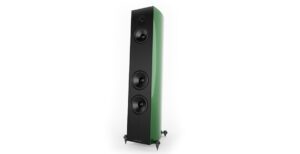
Acoustic Energy Corinium floorstanding loudspeaker
- Dec 23, 2024

Boenicke Audio W8 SE+ floorstanding loudspeaker
- Jan 06, 2022

By Jason Kennedy
More articles from this author
Read Next From Review
See all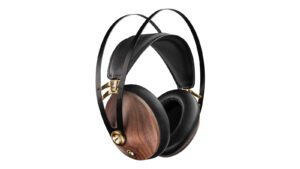
Meze Audio 99 Classics (2nd Generation)
- Sep 22, 2026
MOON 371
- Sep 22, 2026

Nordost QNET 7
- Sep 22, 2026
HIFISTAY Sound Wings+
- Sep 16, 2026