The 99 Classics were not the first product Meze Audio launched – they arrived in 2015, a full four years after the company’s founding. However, they played a key role in bringing the brand closer to mainstream recognition, serving both as a strong statement of intent and as a highly competitive device in their own right. Ten years is a respectable age for a product like this, even by the meticulous standards of Meze Audio – so it’s time for these 99 Classics (2nd Gen) to elevate the model further. That’s the plan, anyway.
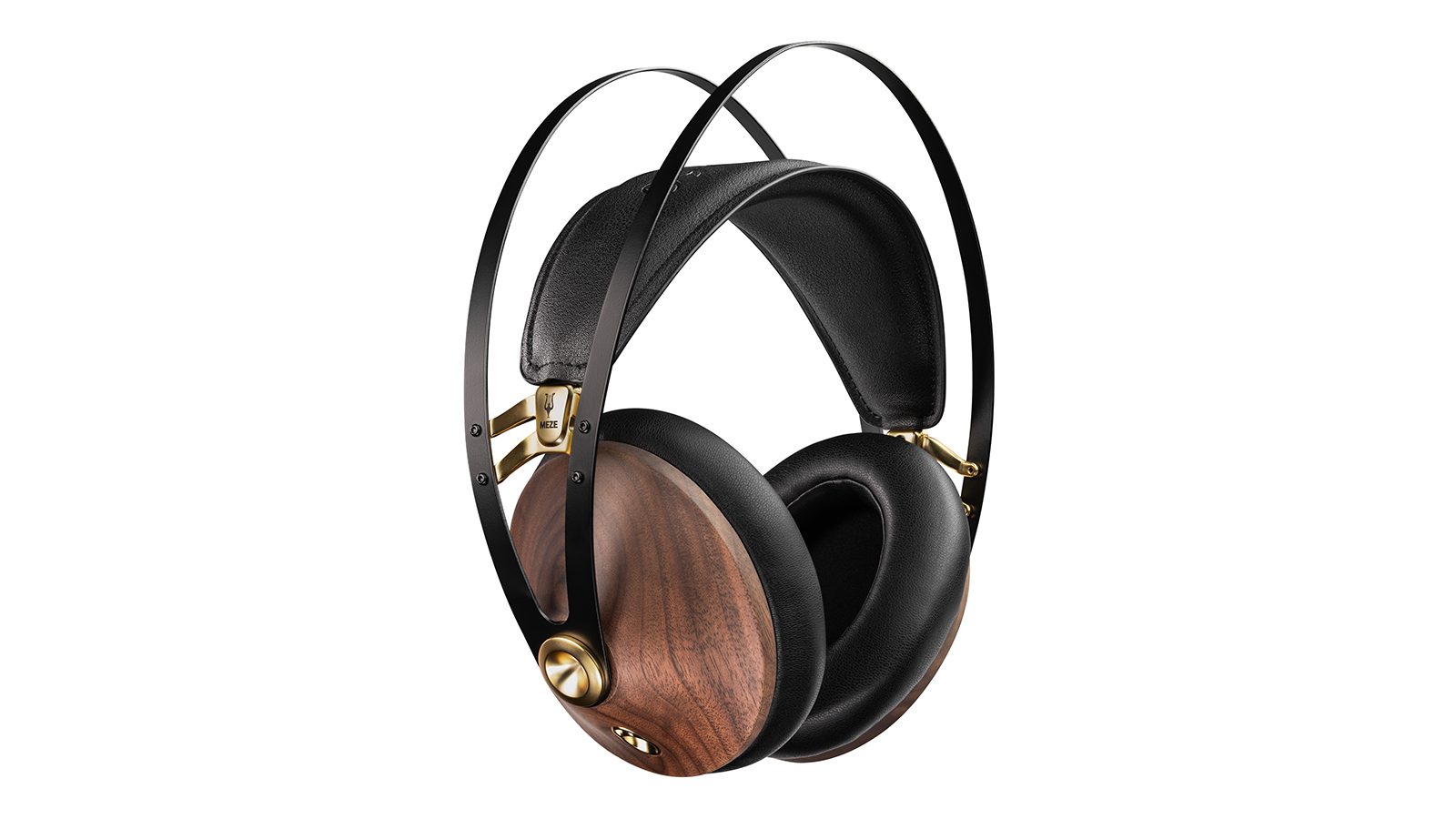
When it comes to design, the 2nd Gen Apple isn’t far removed from its predecessor. There’s not much visually to distinguish this new model from the one it replaces — in fact, the broad outline of the design closely follows the overall template Meze Audio established quite some time ago. It’s unlikely you’d mistake the silhouette of a pair of the company’s over-ear headphones for any other.
Bifurcated vegan
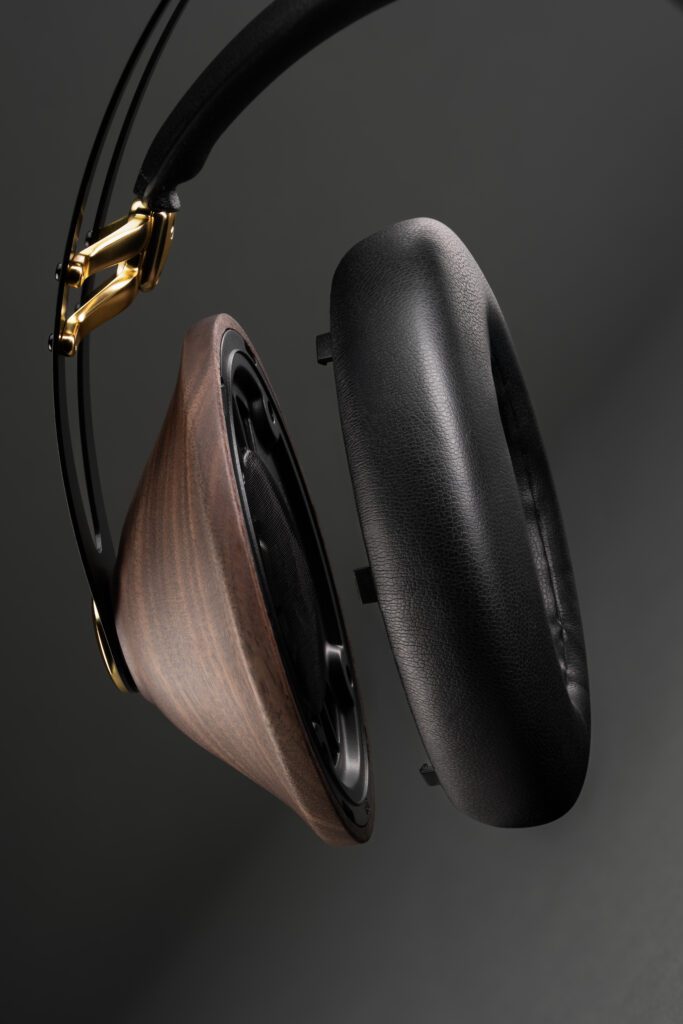
The 99 Classics (2nd Gen) feature a slim bifurcated metal frame with gold-finished cast zinc hardware where it contacts the earcups, along with a vegan leather self-adjusting headband. The headband displays a prominent confirmation of the model name on its outer surface and adjusts using a concealed spring steel strip. The earcups are made from CNC-machined, polished, and hand-finished walnut, and their earpads are a) filled with medium-density memory foam inside vegan leather, and b) detachable thanks to a new six-point clip-in system.
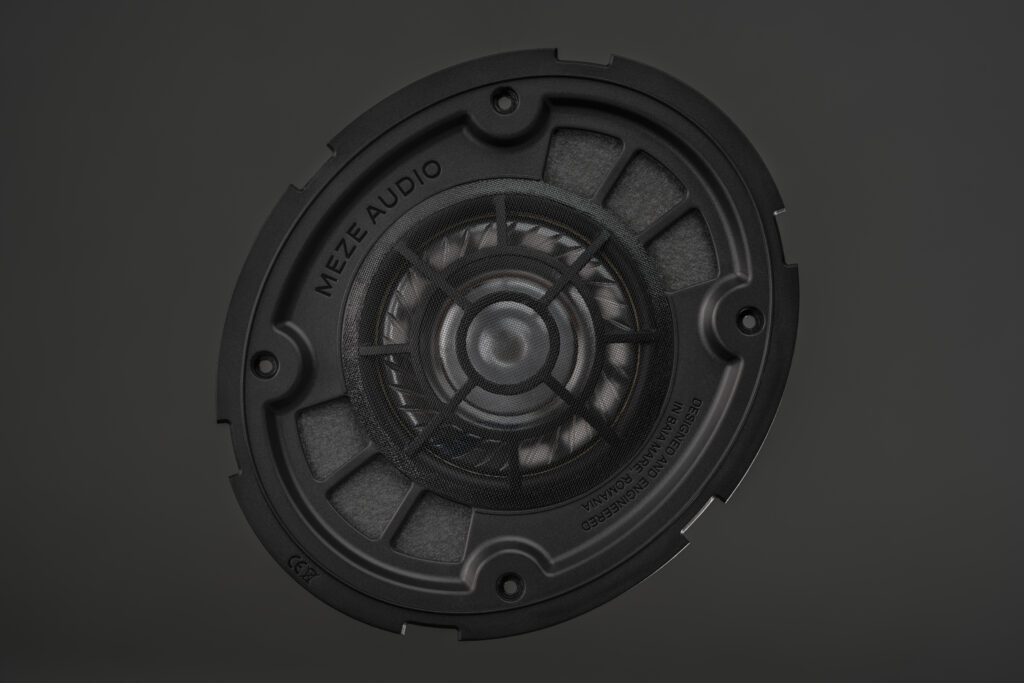
There are notable differences, both in design and specifications. Besides the reworked earpad clip-in system, the earpads and earcups are now larger — the aim is to enhance low-frequency control by reducing standing-wave interactions and to provide more space for those with larger ears. The jack shell in each earcup is now wider and includes a vent above to aid low-frequency performance. Additionally, the baffle architecture has been redesigned with a more open grille and slimmer beams to minimise diffraction and high-frequency artefacts.
Meze Audio states that improved production algorithms and processes have led to better driver matching, with clear benefits for stereo imaging accuracy and overall audio performance consistency. Additionally, it has shifted the tuning focus – aiming for a more balanced, neutral sonic signature. This balance is achieved through the tuning of the driver arrangement, of course. Furthermore, the new 1.8m dual-twisted cord made of Kevlar-sheathed oxygen-free copper also contributes — terminated with a 3.5mm jack, plus a 6.3mm adapter included in the supplied hard travel case. A convenient USB-C DAC dongle is also provided — by connecting one end to the USB-C output of a source and the other to the cable’s 3.5mm port, you can connect your 99 Classics (2nd Gen) to devices without an analogue headphone output.
PEEK a boo!
Unlike the original 99 Classics, which used a mylar diaphragm with a neodymium magnet for audio performance, the 2nd Gen switches to PEEK (polyether ether ketone) with neodymium – it’s still the same 40mm diameter. Meze Audio claims this new driver assembly will provide a frequency response of 15Hz to 25kHz while maintaining very manageable sensitivity (103dB) and impedance (16 Ω).
Because of the cabling options, I can connect the 99 Classics (2nd Gen) to a FiiO M15S digital audio player and a Naim Uniti Star streaming amplifier using the 3.5mm connection. This allows me access to a lot of hi-res material on local storage, as well as to the Technics SL-1300G and Rega Apollo CD player connected to the Naim (the turntable features a Goldring 1042 moving magnet cartridge and feeds the Naim via a Chord Huei phono stage). I attach the 6.3mm adapter and connect the headphones to an iFi IDSD Diablo 2 headphone amp/DAC linked to an Apple MacBook Pro via USB-C. I am also able to fit the Meze Audio USB-C DAC dongle and connect directly to the laptop. All of which proves very instructive.
Success!
Meze Audio has successfully made these headphones a more neutral, less colored listening experience than the model they replace. Whether it’s a 24bit/48kHz FLAC file of The Universe Will Take Care of You by James Holden and Waclaw Zimpel [Border Communities], a substantial vinyl reissue of The Low End Theory by A Tribe Called Quest [Jive], a compact disc of Balluchon by Michiko Ogawa [Ultra Art], or a DSD64 file of a mono remaster of Mr. Tambourine Man by The Byrds [Columbia], the 99 Classic (2nd Gen) seems quite reluctant to voice strong opinions. In the best sense, they are an unemotional listen, with less of a view about how your music should sound than the original 99 Classics.
There’s very little heat in the tonality of these headphones. The tonal balance is just slightly on the warmer side of neutral, it’s true – but this coloration is so mild it can be easily overlooked (or enjoyed, depending on your preferences).
Rendered solidly
The bottom of the frequency range is rendered solidly, with plenty of firm impact when needed – but it’s nuanced too, offering a lot of textural variation and revealing a great deal of detail. The low end is well-shaped and properly controlled — so the Meze Audio have no trouble capturing James Holden’s rhythms with confidence and clarity.
Detail, and plenty of it, is also available at the opposite end of the frequency range, where treble sounds have a crunch and shine that could prove problematic. Happily, though, the 99 Classics (2nd Gen) have plenty of high-end substance to balance out the bite, and even if your source device can deliver significant volume, the headphones never tip into hardness or stridency. In between, the Meze Audio deliver the midrange most directly and eloquently, with the same sky-high levels of detail and insight, allowing voices to articulate ample character and attitude as well as the secrets of tone and technique.
Carefully interconnected
All of this is carefully interconnected, with the smooth and even frequency response ensuring no part of the range is unduly emphasised or unfairly understated. And everything that occurs takes place on a large, airy, and ruthlessly controlled soundstage. There’s more than enough breathing space, even if a recording is complex and/or element-heavy, and the noticeable left/right distance is enhanced by a touch of front/back stretch as well.
There’s a slight hint of dynamic inhibition when major shifts in intensity or ‘quiet/loud’ volume fluctuations happen – but, as with the faint suggestion of heat in the tonal balance, this is far from obvious and not difficult to overlook. Furthermore, the headphones’ focus on the dynamics of harmonic variation, their ability to identify, reveal, and contextualise the over- and undertones around the fundamental, significantly compensates for it.
All of the above applies when you’re listening to the 99 Classics (2nd Gen) using the supplied cable plugged directly into a source device, whether via the 3.5mm connection or the 6.3mm adapter. The overall stance and sonic characteristics of the headphones remain unchanged when you connect the supplied USB-C DAC dongle, but it serves a useful purpose by allowing you to see exactly how well your digital audio source performs in digital-to-analogue conversion.
Dongle debate
Unsurprisingly, the digital-to-analogue capabilities of the iFi iDSD Diablo 2 are clearly and significantly better than those of the Meze Audio dongle. The difference is comparable to that between the dongle and the D-to-A conversion in a MacBook Pro (the Meze Audio device, frankly, performs much better in every respect). The gap between the dongle and a FiiO M15S digital audio player is slightly narrower. Nonetheless, the FiiO device is preferable in most situations – and plugging the dongle into the USB-C port of the M15S also reveals that the Meze Audio device cannot handle DSD files, although it accepts WAV, FLAC, and other common formats.
Hopefully, it’s clear by now that while the Meze Audio 99 Classics (2nd Gen) might not, strictly speaking, have been worth the lengthy wait, they are still very, very capable headphones for the price. I’ve already made a note in my diary for 2035…
Read more about how the Meze Audio 99 Classics (2nd Generation) headphones were designed here.
Technical specifications
- Type: Circumaural; closed-back; over-ear
- Drivers: 40mm dynamic
- Frequency response: 15Hz – 25kHz
- Impedance: 16Ω
- Sensitivity: 103dB SPL/wM @ 1kHz
- Distortion: <0.1% @ 1kHz
- Accessories: Hard case; USB-C DAC dongle/3.5mm adapter
- Weight: 290g
- Price: £319, €349, $349
Manufacturer
Meze Audio
UK distributor
HEA Distribution
Trending Articles
See all
By Simon Lucas
More articles from this author


Read Next From Review
See all
MOON 371
- Sep 22, 2026

Nordost QNET 7
- Sep 22, 2026

HIFISTAY Sound Wings+
- Sep 16, 2026
Marantz Model 10
- Sep 16, 2026