Why do network switches matter to the streaming audiophile? It’s a good question. After all, they simply route packet data from one device, usually a router, to a streamer and sometimes a NAS or music server. Any off-the-shelf four- or eight-port device from a major networking brand will deliver those packets, and most of us have a switch of sorts in the back of our routers. The issue is that network switches operate at high frequencies and are designed for speed and low cost. They are not meant to control the electrical noise that affects all networks because that noise doesn’t stop your TV or computer from functioning.
In audio systems, it has become evident that network noise primarily limits streaming sound quality. Reducing this noise improves the sound, and it’s as simple as that. One method to address this is to use a cleaner power supply with a basic switch; however, a more effective strategy is to design the switch to be as electrically quiet as possible from the beginning. Combining these two approaches usually enhances sound quality when packet data is converted into a digital signal and then an analogue one. Over the years, I have reviewed various switches and have never found one that doesn’t benefit sound quality.
Splitting the differences
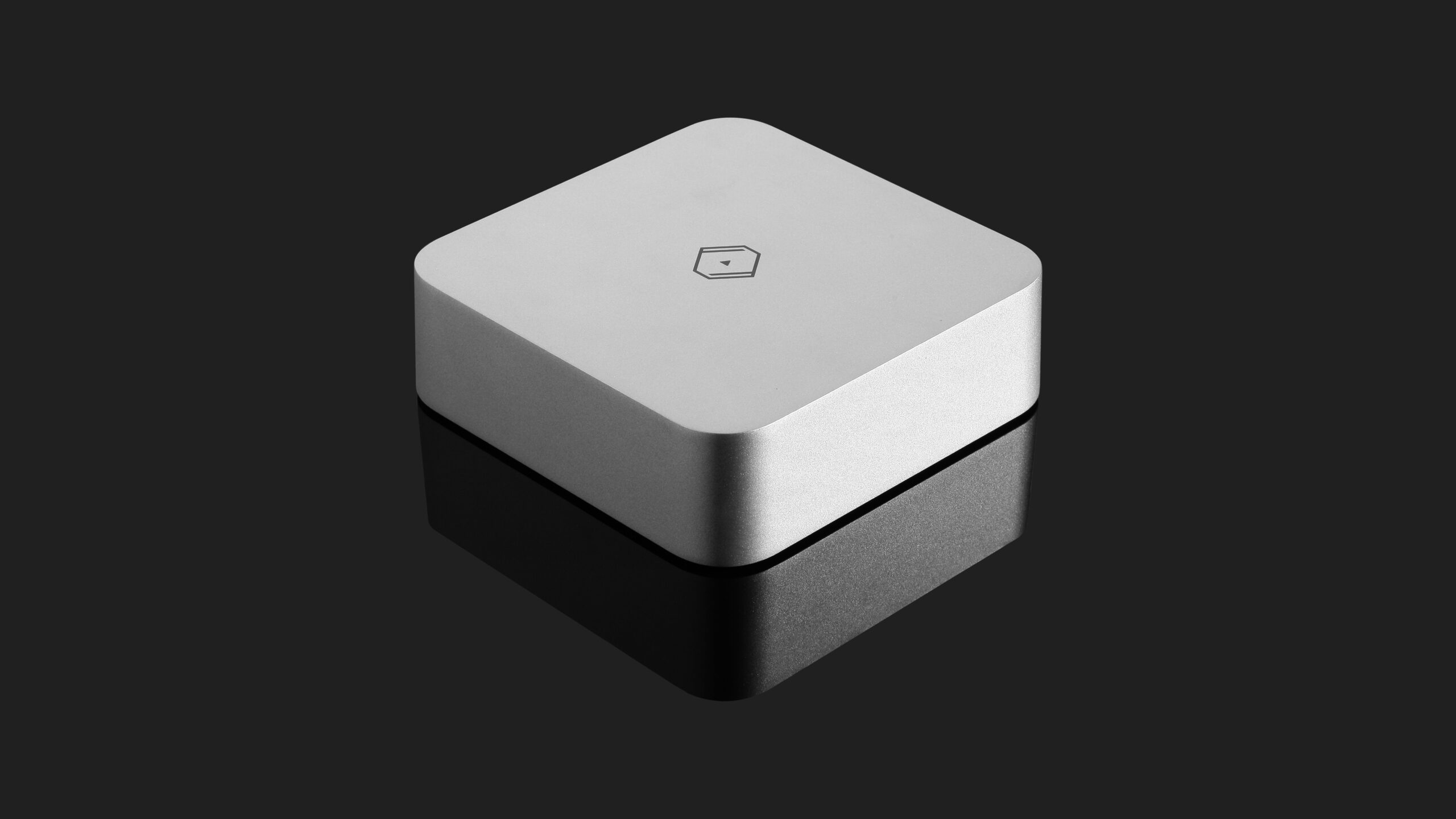
Silent Angel offers a somewhat confusing array of components for the streaming audio enthusiast; their products come in various shapes and sizes, and it’s unclear which components go together and how they should be used. The UK distributor Sound Design Distribution has made a commendable effort to clarify matters by dividing Silent Angel products into three categories and showing potential buyers how they can be combined. The Bonn N8C network switch and Genesis GC word clock are part of the brand’s Compact series, which sits between the entry-level Mini series and the top-tier Xtreme models.
They are indeed compact, yet beautifully shaped and of a decent size, 20cm square; the Bonn N8C and Genesis GC sit side by side on a standard rack shelf quite neatly. With their ‘robust aluminium chassis’, these two units offer high build quality for the price, and from the front and top, they look identical. Only when you look at the back do their functions become clear. The Bonn N8C is an eight-port gigabit network switch with a BNC for connecting a 25MHz word clock and a 12V DC power inlet, for which a chunky 7 amp switched-mode power supply is provided. A switch selects either the onboard TCXO clock or the outboard feed.
Keep quiet and carry on
Silent Angel doesn’t say much about the N8C, except that 25MHz clocks have proven to provide better sound quality than the 10MHz ones found in most word clocks. I had only heard about the advantages of 10MHz clocks before, but I accidentally set the GC to this frequency for my initial audition. It was a clear upgrade; however, the higher 25MHz setting made a much more noticeable improvement.
The Genesis GC word clock is even simpler on the output side; it features its own BNC socket alongside a button and an additional 12V DC inlet. There’s only one subtle hint that could be easily overlooked, though unlikely for reviewers, which is a small illustration of a clock face with 10MHz printed beneath. Since the Bonn N8C has a 25MHz clock input, this initially seems confusing, but if one takes the trouble to check the user guide, it becomes clear that the button switches this clock between 10MHz and 25MHz modes. Silent Angel provides a word clock cable with appropriate gold-plated BNC connectors and a direction label; it’s marked Bastei, which appears to be an in-house brand. I note that you can purchase DC upgrade cables under the same name.
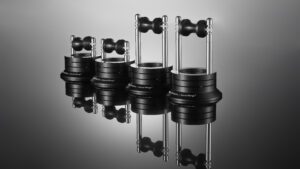
Both units have a rectangular rubber ‘foot’, but Silent Angel supplied two sets of their S28 ‘stands’. These come in boxes of three and are 28mm in diameter and 14mm high. They are designed as both feet and dampers. Made of stainless steel with a rubber O-ring on both sides, they can be used to separate the switch and clock when placed on top of each other or beneath each unit.
On the network
I connected the Bonn N8C in my system between the English Electric 8Switch, which acts as a first line of defence against noise on the network (including the computer and Wi-Fi device in the room), and my Lumin U2 Mini with Network Acoustics Origin power supply, along with a Melco N10 server. I am pleased to report that it worked immediately without requiring any rebooting of connected devices. Switches are generally reliable, but streaming systems, like many of us, are often resistant to change. The outcome was a strong performance in the low frequencies, which have power and weight that are truly inspiring. Furthermore, the overall transparency across the system is commendable, especially considering the reasonable pricing.
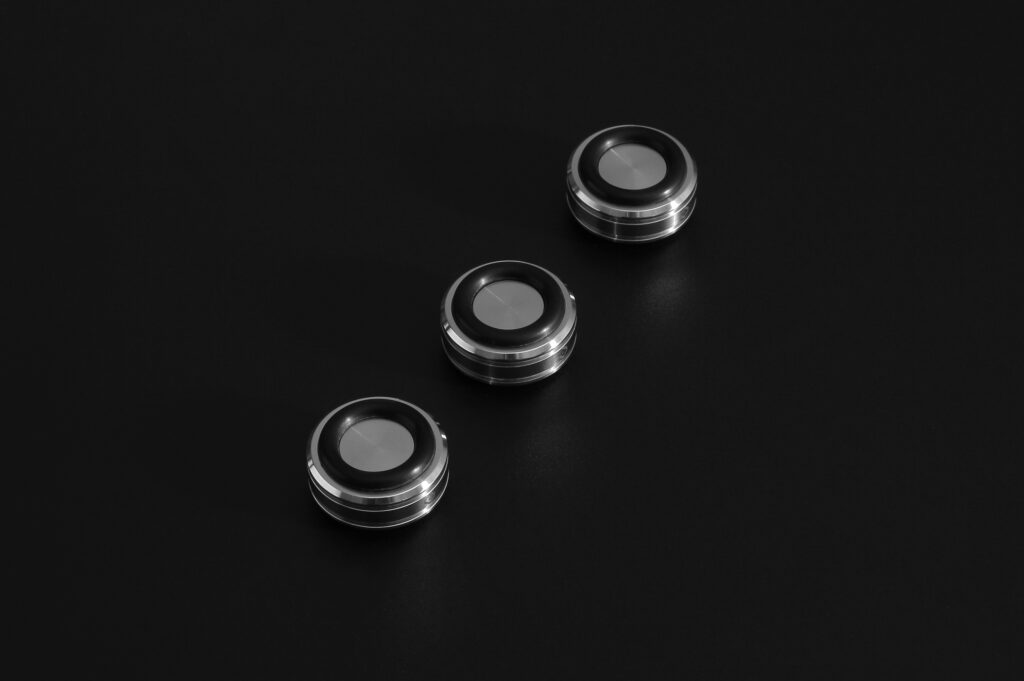
Timing is also good; some tracks from a new Christian Wallumrod piano album develop a nice, fluent groove, at least on the more rhythmically straightforward pieces. There is a degree of rounding in the leading edges compared to a more expensive switch, but this is more desirable than the hardness often found in competing options. Adding three S28 feet to the N8C brought more life and openness to the presentation, giving the leading edges more definition without losing smoothness. The feet are not revolutionary, but they do help as much as you can expect from something so affordable.
Clock on
Adding the Genesis GC word clock proved quite more impactful, as the soundstage literally doubled in width and depth. It was like switching from a 4:3 aspect ratio to a 16:9 widescreen, albeit with more height than that suggests, perhaps 8:6. This was achieved with an excellent recording; not all music possesses this much potential, but it was still something of a game changer in terms of imaging. If you prefer your sounds to be three-dimensional and to extend beyond the speakers in both width and height, then the GC is essential.
It also improved detail retrieval, which is what creates solid stereo imaging; extra detail defines the space within the recording. I could hear more texture in a double bass and a greater sense of vitality from the band as a whole. I tried an older recording in Michael Chapman’s Rainmaker, where the title track incorporates heavy rainfall and thunder, both of which came through with impressive power and weight.
Why fade?
It’s easy to see why they had to be faded down when Chapman’s acoustic guitar takes centre stage, allowing you to hear just how brilliant he was and leaving me wondering why he didn’t achieve greater recognition. The next track, ‘You Say’, offers a hint; however, the song is beautiful as it is, along with the playing, but his voice lacked the effortless appeal of John Martyn and other contemporaries.
Comparing the English Electric with a Chord Company GroundARAY noise reduction device onboard (combined price £1,014) to the N8C (without clock), and connecting the entire noisy network to both units, strongly justified the extra £340 asking price for the Silent Angel. The N8C reproduced more of the recording’s space, with a more precise yet calm sense of timing. Additionally, there was a notable improvement in image quality due to increased detail resolution, which directly results from reduced noise. Overall, this demonstrated the strength of the Silent Angel.
Holding back the tide
It was interesting to hear what reintroducing the 8Switch between the wider world and the N8C did, which was not very subtle. Essentially, this extra barrier improved timing, vitality, and dynamics; it even appeared to increase volume, although I suspect this was a result of the dynamics. Even an excellent switch like the Silent Angel benefits from some assistance to keep noise at bay.
Adding all the noise reduction devices I usually use in my Network Acoustic Tempus switch enabled the N8C/GC pairing to help the system produce some truly cosmic sounds, even with heavy material. This is a well-designed switch and clock package housed in attractive casework that competes very effectively at its price point. It does exactly what a decent switch should: suppress noise and allow the system to deliver plenty of detail smoothly and coherently.
Technical specifications
Bonn N8C
- Type: Streaming audio network switch
- LAN Ethernet ports: 8 gigabit (via RJ45).
- Fibre optic ports: none.
- Clock: TCXO.
- Packet data buffer: not specified.
- Features: 25 MHz clock input.
- Finish: Silver or black.
- Dimensions (HxWxD): 62 x 200 x 200mm
- Weight: 2.8 kg
- Price: £1,349, €1,499, $1,599
Genesis GC
- Type: Word clock.
- Clock frequency: 10MHz, 25MHz
- Clock output port: One via gold-plated BNC.
- Clock output port impedance: 50/75 Ohm auto detection
- Oscillator: TCXO
- Finish: Silver or black.
- Dimensions (HxWxD): 62 x 200 x 200mm
- Weight: 2.8 kg
- Price: £1,449, €1,499, $1,899
S28 stand
- Type: Isolation feet.
- Material: Stainless steel, rubber.
- Dimensions (HxWxD): 14 x 28 x 28mm
- Weight: 50g each
- Price: £45, €59, $79 for three isolation feet
Manufacturer
Silent Angel
UK distributor
Sound Design Distribution Ltd.
+44 (0)2920 679779
Tags: AND S28 STAND GENESIS GC CLOCK SILENT ANGEL BONN N8C NETWORK SWITCH
Trending Articles
See all



By Jason Kennedy
More articles from this author
Read Next From Review
See all
Meze Audio 99 Classics (2nd Generation)
- Sep 22, 2026
MOON 371
- Sep 22, 2026
Nordost QNET 7
- Sep 22, 2026
HIFISTAY Sound Wings+
- Sep 16, 2026