Up to 37% in savings when you subscribe to hi-fi+
hifi-logo-footer

Begin typing your search above and press return to search. Press Esc to cancel.

Focal Utopia: Ultimate headphones get major upgrade

Focal Utopia headphones have gotten a major upgrade.

*From the Focal News Release

Focal has been innovating in audio for more than 40 years. Its flagship Utopia range – spanning from headphones and home hi-fi speakers to custom-install speaker designs and exceptional in-car audio solutions – is designed and hand-crafted in France.

Utopia are the ultimate Focal headphones – and they’ve just had a major upgrade, combining the best of the French brand’s technologies with upgraded design and comfort, to enhance your listening experience. Press release and data sheet attached, but to summarise key updates/points of difference.

  • Sonic upgrade: Focal’s audio experts have explored all the ways they could improve performance and delivered them. The M-shaped drivers and M-shaped grilles enable even clearer and more accurate musical reproduction. Their full-range, Beryllium, ‘M’-shaped speaker drivers are fully open-backed and run with no passive or active correction, from 5 Hz to over 50 kHz! The listening experience they deliver is strikingly real, precise and dynamic, with a soundstage that is both wide and deep.
  • New, more advanced voice coil design using a copper/aluminium alloy (was previously aluminium only.)
  • Lighter design for greater listening comfort – by using yokes forged from recycled carbon fibre.
  • Design overhaul, so this more clearly looks like the flagship model of Focal’s headphone family, with its distinctive honeycomb styling. This is NOT just about looking good: the honeycomb design enables a more open sound, with greater driver movement.
  • Handcrafted in France in Focal’s specialist headphone atelier.

Finally, why simply Focal Utopia, not ‘Focal Utopia 2’ or ‘Focal Utopia new edition’ etc? Because Focal feels this is a luxury product, and in the luxury sector the product names do not change, they simply evolve into new iterations. (Apple, of course, often do the same with iPad etc.) For sake of clarity, you may want to use the year of release, eg Focal Utopia (2022).

Pricing: UK £4699; €4999; USD $4999; Australia $6999.

Optical cartridge pioneer DS Audio replaces DS-W2 with the all-new third generation DS-W3

*From the DS Audio News Release

DS Audio’s inaugural optical cartridge, the ground-breaking DS-W1, was a genuine game changer when first launched in 2015. A year later, the brand announced the higher spec Master 1 and subsequently applied trickle-down technology to upgrade the ‘W’ model to the DS-W2. In 2020, a ‘third generation’ of optical cartridges was launched with the flagship Grand Master, from which trickle-down tech has again been applied to the ‘W’ model, to create the new DS-W3.

The DS-W3 optical cartridge sports a completely new design compared its predecessor and is very much an example of the brand’s ‘third generation’ technology first seen in the flagship Grand Master. Its optical system has been comprehensively re-engineered to deliver a number of benefits.

Independent LEDs and photo-detectors for the left and right channels deliver a significantly increased output voltage: now 70mV compared to the previous 40mV. This new independent design has also made it possible to eliminate crosstalk, greatly improving left and right channel separation. At the same time, the S/N ratio is much improved, resulting in an even lower noise floor.

DS Audio DS-W3

This new design also enables a smaller shading plate, which is reduced in both size and weight – from 1.56mg to 0.74mg – thanks to the use of 99.9% pure beryllium rather than the previous aluminium.

The DS-W3 combines a boron cantilever with a line contact stylus. The cartridge’s body is constructed from aluminum with a structure crafted for maximum rigidity, while the internal wiring is 1.6 times thicker than that of the earlier second generation model, thus reducing impedance.

Like all DS Audio optical cartridges, the DS-W3 requires its own equalizer / phono stage, which this new design also brings up to ‘third generation’ level. All internal components are optimized for third generation cartridge technology, the thickness of the circuit board has increased from 1.6mm to 2.0mm, and the thickness of the copper tracks have been doubled from 35µm to 70µm. The equalizer offers both unbalanced and balanced outputs with a choice of four different low-frequency roll-off points ensuring that the DS-W3 will partner seamlessly with any high-end hi-fi system.


Every DS Audio product is hand-made and quality assured, and every component part tested and evaluated, by the company’s own in-house team of technicians in Japan.

Technical specifications

DS-W3 optical cartridge

Body material Aluminium

Cantilever Boron

Stylus Line contact

Signal output Photo-electric conversion

Output signal level > 70mV

Channel separation > 27dB (@ 1kHz)

Weight 7.9g

DS-W3 phono stage/equalizer

Inputs RCA

Outputs RCA x 2, XLR x 2

Rated output voltage 500mV (@ 1kHz)

Output impedance RCA 120Ω, XLR 600Ω

Pre-amp input impedance > 10Ω

Dimensions 450 (w) x 120 (h) x 435 (d) mm

Weight 13.5kg

Pricing & availability

The DS Audio DS-W3 optical phono cartridge and phono stage/equalizer are available now, priced as follows (inc. VAT):

Cartridge and equalizer package price £12,995

Cartridge only £4,995

Equalizer only £9,495

DS Audio cartridges are fully compatible with any of the company’s accompanying phono stages/equalizers, allowing you to mix and match.

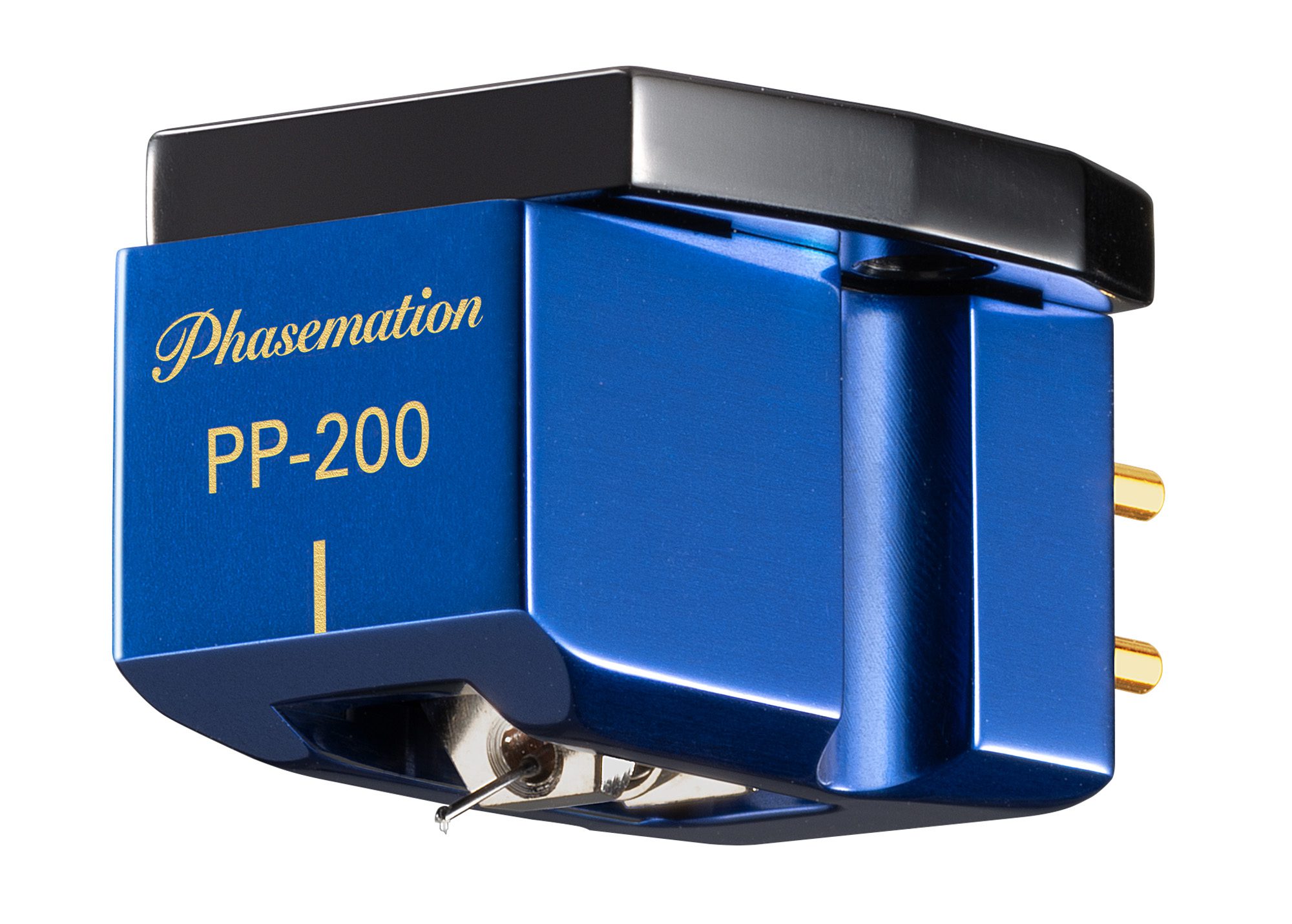
Phasemation PP-200

What is it with the Japanese and moving coil cartridges? There seem to be many companies in that part of the world that make this most precise of hi-fi components, certainly more per capita than anywhere else. I guess the reputation for attention to detail must be accurate as it would be very difficult to make cartridges if you hadn’t mastered this side of the equation. Then there’s the fact that a brand like Phasemation, whose history goes back to 1970, is virtually unknown on this side of the globe… what gives? Has the home market been saturated at last?

Phasemation didn’t start with that name. Its origins lie in Kyodo Denshi System, which specialised in electronic measurement devices before moving into magnetic testing. It wasn’t until the ‘90s that it got into the audio business, making MC step-up transformers and D/A and A/D converters on an OEM basis. How many companies have made both of those, I wonder? In 2002 it created the Phase Tech brand building the P-1 moving coil cartridge, adding a P-3 model two years later and branching out into equalizers and phono stages.

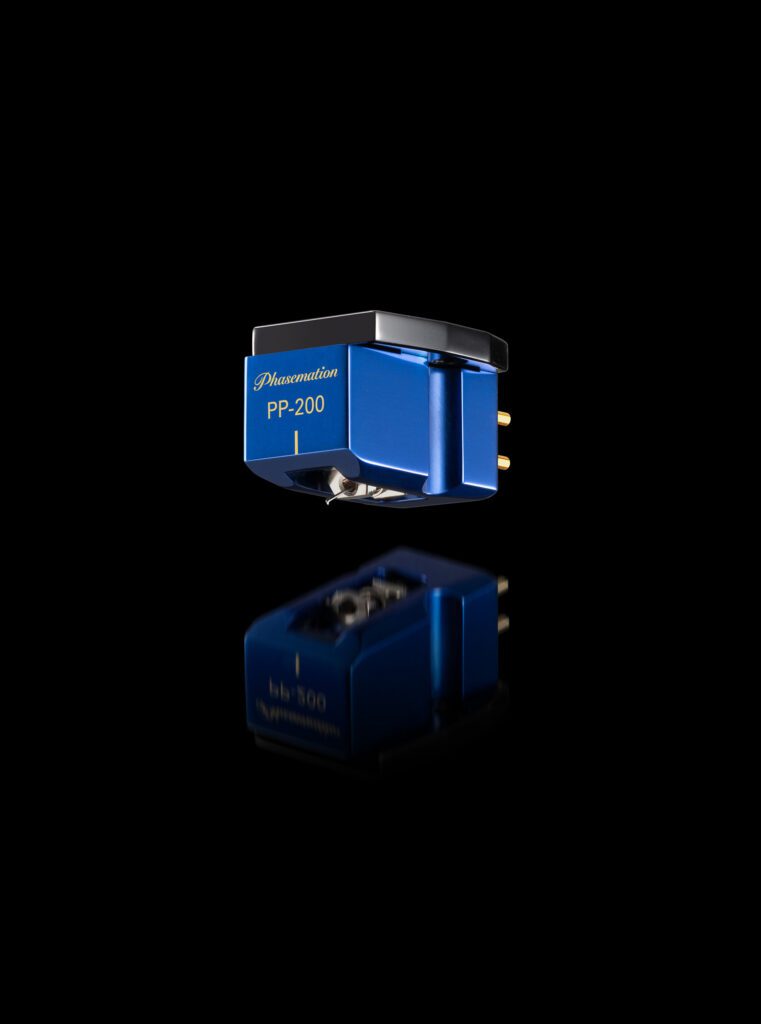
Phase Tech expanded into amplification and digital components, including one of the earliest USB DACs before changing its brand to Phasemation in 2010. Since then, the company has expanded the cartridge range but continues to build analogue electronics and step‑up devices, which have long been popular in Japan. The PP-200 is the most recent and least expensive stereo cartridge in the roster and can easily be differentiated by its blue finish, all the other models are Henry Ford’s favourite shade of very, very dark grey.

Range-topper

The PP-200 is said to be based on the PP-2000 range-topper and “contains its essence,” according to the company blurb. It’s built around a neodymium magnetic circuit which sits in a body shaped to control vibration and “achieve a direct sound quality”. Unusually for a cartridge at this price, it has a boron cantilever; as far as I’m aware, no one else makes a cartridge that has this compound of boron and aluminium performing the critical task of transmitting the vibrations that the stylus reads to the coils that sit inside the magnetic field within the cartridge at this price. Boron has several uses, including flatscreen TVs and neodymium magnets, but as a cantilever, it’s stiffer than most alternatives.

The boron rod used by Phasemation is only 0.26mm in diameter and has a line contact diamond tip on its visible end; visible, that is, if you get down and look at it from the side, you can’t see it from above, which would make lining it up a specific track difficult if there wasn’t a short vertical line on the front of the cartridge body. The body is extremely solid and made of machined Duralumin, an age-hardened aluminium alloy. In the PP-200, both the base and body are made of this material, contributing to an overall weight of 10.5g.

A recommended downforce range of 1.7–2g and medium compliance means this cartridge should be compatible with most modern tonearms. Being Japanese means you don’t get niceties such as threaded mounting holes. I’m not sure why this seems evident, and a convenient facility is not provided on many Japanese cartridges, but they don’t mind the extra fiddle factor involved with nuts and bolts. The PP-200 is supplied with black anodised aluminium fixings, but you get round collars with slots on either side rather than nuts. The bolts have a conventional hex head, but lord knows where you’d find a tool to hold the collars. They do look good, though, as does the leatherette case in which the cartridge is supplied, an appealing Japanese touch.

Low output impedance

This moving coil has an unusually low output impedance of four Ohms, so it theoretically requires a phono stage with a 40 Ohm load, which is far lower than can be found on any active amplifier. A step-up transformer from the Phasemation catalogue (they make four models) would presumably give the best results. I note that the entry-level T-320 is designed for output impedances from 1.5 to 40 Ohms. I have always struggled to get hum-free results with step-up, so I don’t have any in my armoury; instead, I set the mighty Tom Evans Groove+ SRX MkII MC phono stage’s loading to its 112 Ohm minimum and hoped for the best.

My faith was rewarded, but first I had to mount the PP-200 in the arm on my Rega Planar 10, a job which had me seeking a heavier counterweight because the Phasemation is near twice the weight of my usual Aphelion 2 MC. Anti-skate also required a significant increase related to the mass and stylus profile. I dialled in a downforce slightly higher than the midpoint in the range suggested and warmed up the cartridge over a few sides.

The result was impressively sophisticated for the asking price; the PP-200 gets a lot right in that it extracts vibrations from the groove and turns them into an electrical signal. Audible characteristics include a slight emphasis through the upper mid, which tends to bring up electric guitars, cymbals and many voices, plus a fullness in the low end that adds more welly to bass lines. This balance is easy to adjust for, and after a few records, it was less noticeable than at first. Climbing down from an MC at around three times the price will always be obvious, but it wasn’t a painful transition.

Phasemation PP-200

This is partly because the Phasemation has a smooth top end, you usually have to pay more to get treble extension without edginess, but perhaps because of the boron, there is nothing but clean, openness in the highs it delivers. Some might think it a little polite in the treble, which is often a trait of Japanese audio components, but unless you only listen to the finest recordings having a forgiving top end is nearly always a bonus. Partnering electronics will be a factor, and the Tom Evans is highly revealing, so smoothness is doubly appreciated. On Matthew Halsall’s latest live release [Salute to the Sun, Gondwana], his trumpet stands out as bold as er, brass, but doesn’t get in your face and is surrounded by the live atmosphere of the Hallé Hall in Manchester. Bass and percussion are strong, and the sax has a lovely tone; it’s reminiscent of Coltrane in his more soulful moments and stands firm in a remarkably three-dimensional soundstage between the Bowers and Wilkins 802 D4s.

Open and spacious

Dan Berkson’s Dialogues is more open and spacious; it’s not clear whether this is a natural or in-the-box effect, but it works very nicely. The piano sounds fresh but not flyaway, the lower notes ground it, and the tune is propelled by solid double bass with cymbals providing the ‘air’ for the sound to breathe. I challenged the Phasemation’s tracking skills by playing an ancient Atlantic red label copy of Déjà Vu (Crosby, Stills, Nash etc.). While it sounded a bit rough, there was no problem tracing the well-worn grooves and delivering the emotional power of ‘Carry On’. You try playing a scratched CD on anything, it will never give you this sense of time travel, assuming it will play at all.

This experience inspired me to try another oldie in ‘Can’t You Hear Me Knocking’ from the Rolling Stones’ Sticky Fingers [Rolling Stones, zipper cover], here the big-boned bass guitar and off-kilter beat from the late, great Charlie Watts served to enhance that glorious riff. The Phasemation’s controlled delivery keeps everything in its right place, as Radiohead say, though I doubt they were talking about the ‘Stones. The following track, ‘You Gotta Move’, has Jagger appropriating the culture of the bluesmen that inspired him to fabulous effect. This band were always about the blues, after all.

I noticed at one point while contrasting the PP-200 with digital that needle-talk is appealingly low. You don’t hear the vibrations from the groove being amplified by the cartridge body when the sound is muted, which is a good thing. The contrasts with ‘digital generally’ favoured this MC; the bass is a little rich and the highs a shade smooth, but there was no chance you’d rather play the disc or file when this Phasemation could be dropped into a vinyl groove. Select Audio has found a rather good addition to the ranks of Japanese cartridges in Phasemation, and this one looks like excellent value.

TECHNICAL SPECIFICATIONS

  • Type: Low output moving coil phono cartridge
  • Stylus/Cantilever: Line contact diamond tip with boron cantilever
  • Tracking Force: 1.7g–2g
  • Load: Not specified
  • Compliance: 8.5µ/mN [8.5 × 10⁻⁶cm/dyne]
  • Output (1kHz 50mm/s horizontal direction): 0.3 mv
  • Weight: 10.5g (without stylus cover)
  • Price: £895

Manufacturer:

Phasemation

URL: phasemation.com

UK Distributor:

Select Audio

Tel: +(0)1900 601954

URL: selectaudio.co.uk

Read more Phasemation reviews here

Back to Reviews

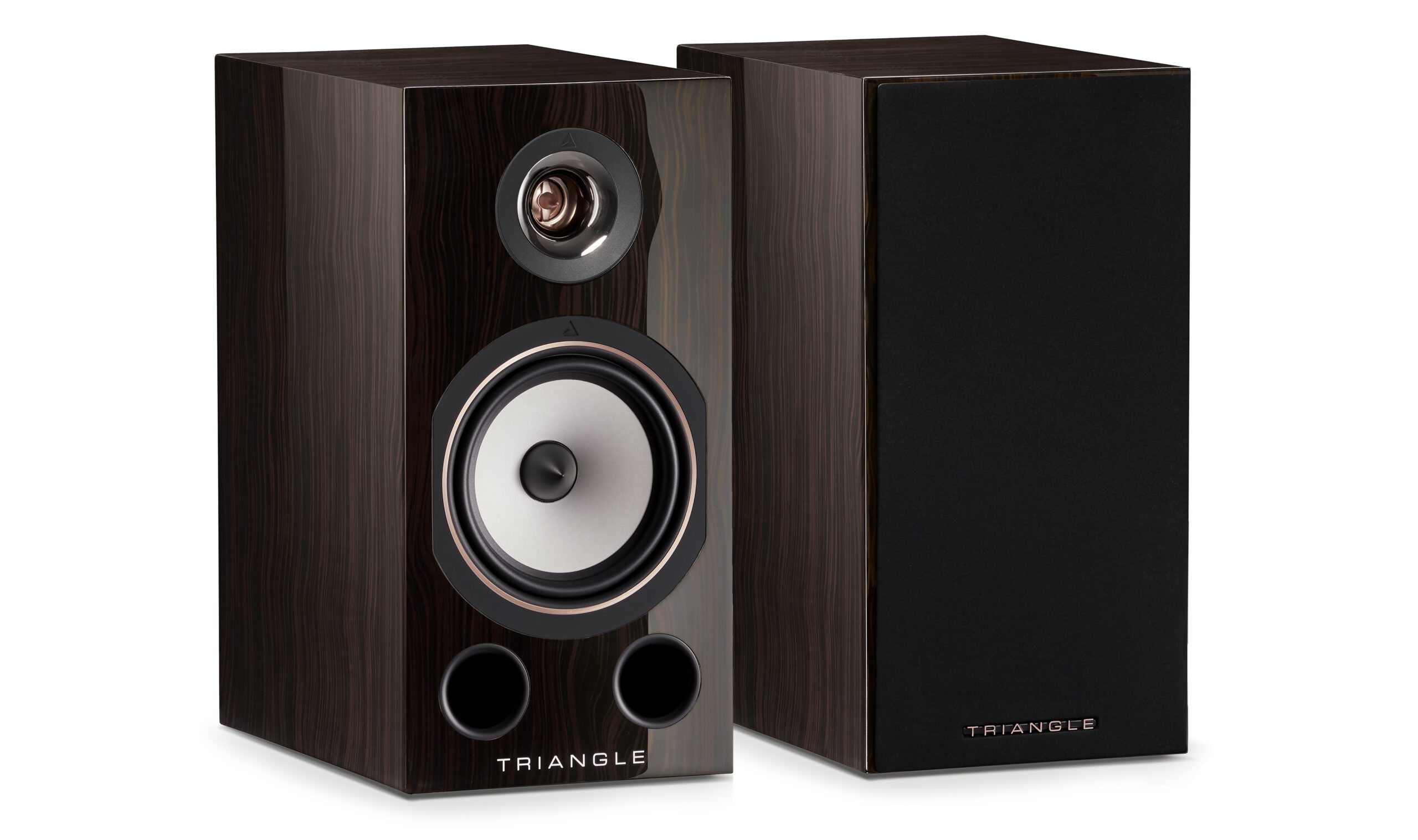
Triangle Comète 40th Anniversary Edition

Triangle celebrated its 40th birthday recently. As luck would have it, the brand turned 40 in 2020, at a time when celebrating such things was strictly restricted. So, the Anniversary products celebrating that event – the stand-mount Comète and floorstanding Antal arrived at the end of the year after Triangle’s 40th.

It’s not hard to see why these two loudspeakers were chosen to carry the flag for this anniversary. However, they have seen many changes in their long lives. The Antal and the Comète were first introduced in 1994 and have remained popular. Also, while there is a burning temptation for a brand to just ‘max out’ its flagship product or product line (in Triangle’s case, the Magellan line), I admire Triangle for recognising the company’s success was born out of more affordable designs, and many, many people who made Triangle what it is today did so through buying loudspeakers like the Comète, and the Antal.

The ‘standard’ versions of both loudspeakers still exist in the Esprit EZ line, so these two special editions are not simply some recreations of past glory. Instead, the 40th Anniversary edition speakers take what’s made these loudspeakers so enduringly popular and build upon that without making the result wildly more expensive than the standard models.

Clean sheet design

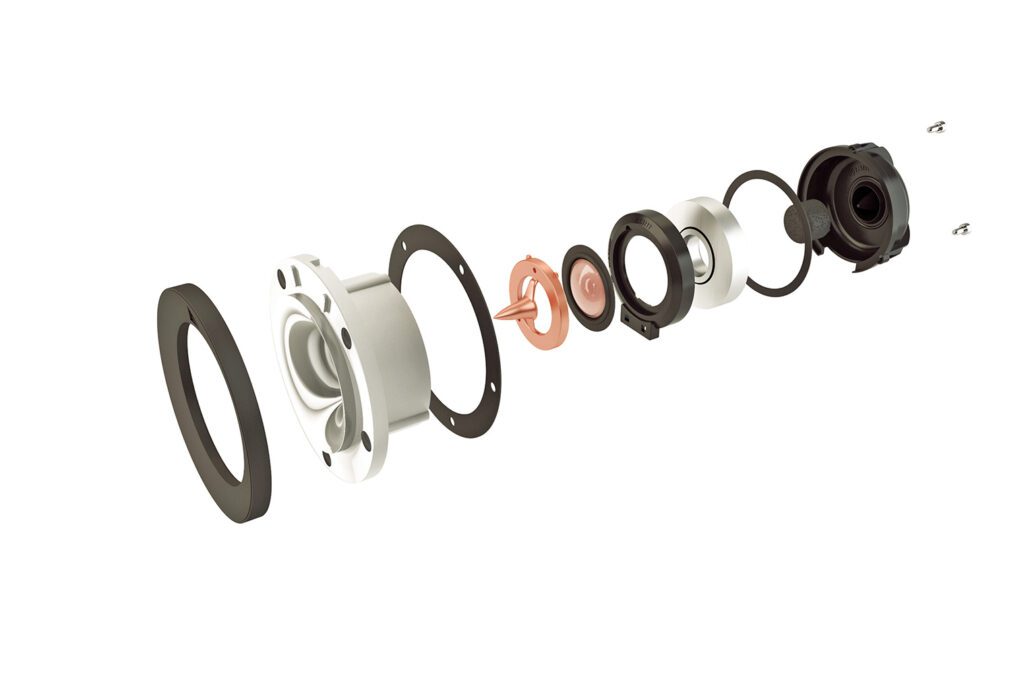
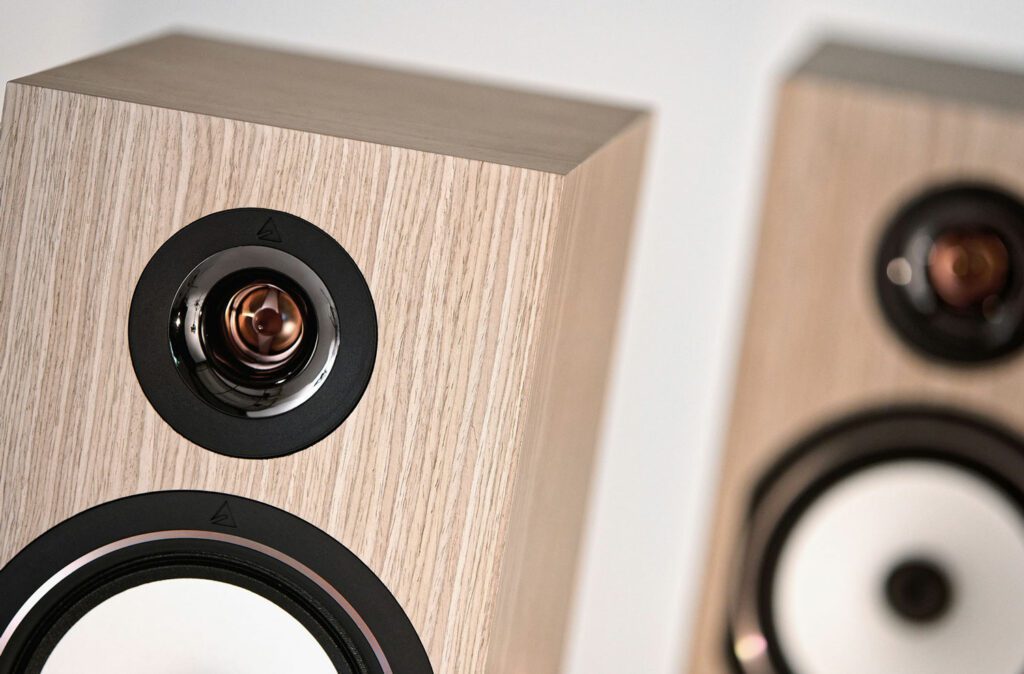
In the Comète 40th Anniversary, Triangle’s engineers took the front-ported two-way enclosure as a starting place and considered almost everything else as a clean sheet. Most notably, the tweeter is a new rose-gold anodised, horn-loaded tweeter with – a first for Triangle – a magnesium dome. It retains the needle-like phase plug of the Esprit series models, which, coupled with the horn-loading, makes for a high-sensitivity 25mm tweeter with well-controlled directivity. Similarly, while the 165mm natural cellulose mid-bass looks notionally like the one in the standard Comète (the most obvious external difference is the colour of the surround trim, with the 40th Anniversary model also sporting some elegant rose gold), it’s a wholly new design with a redesigned suspension and motor.

Triangle Comète 40th Anniversary Edition

The larger magnet of the new motor also necessitated a change to that cone; where the standard model is a pure paper cone, this one needs to use more wood fibres in its construction to act as reinforcement without changing the characteristics of the cone or adding significantly to its overall mass. This means the Comète 40th Anniversary retains the same overall 90dB sensitivity and minimum 4.2Ω impedance as the Esprit model but adds a crucial couple of extra cycles to the bottom end and raises overall power handling slightly.

The changes don’t end with the drive units, however. The 40th Anniversary models have more than their fair share of luxury additions to the internal workings of the loudspeaker. The standard cabling has been replaced with the sort of high-end wiring loom you might find in the company’s Magellan flagship. The crossover components are both specially selected and chosen from high-grade suppliers, and the speakers’ sport air-core coils, metallised polyester-film capacitors, and ceramic resistors. Think of this as being like ‘blueprinting’ a car engine.

Triangle loudspeakers tend to set a higher crossover point than many of their rivals, and the Comète 40th Anniversary is no exception. On the rear panel is a metal plate signifying Triangle’s 40th Anniversary in a cursive script. This again echoes the rose-gold touches throughout the loudspeaker and sports a single pair of high-quality, five-way binding posts.

Real tree

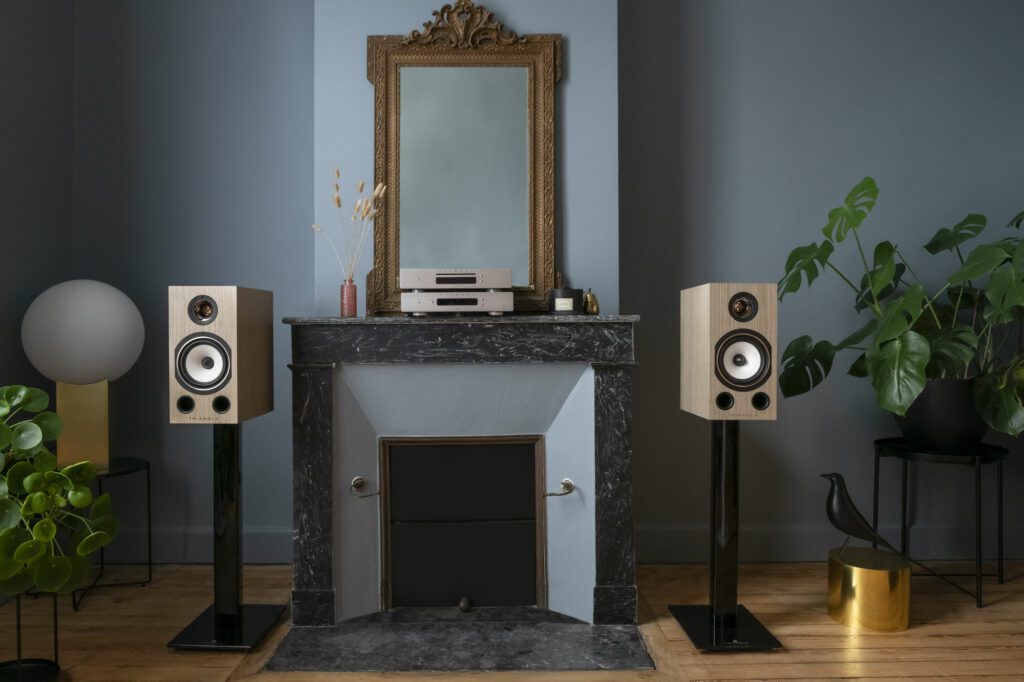
The 40th Anniversary models come supplied in one of two real-tree finishes around that HDF enclosure; a light and matte Blond Sycamore and a high-gloss, darker Santos Rosewood. Judging by the Santos Rosewood model we received, this is an exceptionally pretty and well-built loudspeaker, and the finishes perfectly suit the classic lines of the monitor-sized design. The edges are gently rolled to give the loudspeaker a touch of class, making it impossible to see the joins in that real-wood veneer. There is a host of helpful ‘case candy’; feet are designed to mount to the matching stands or rest on more generic or conventional furniture. The matching stands include four plastic bags for mass loading, but being lazy, I used my pre-filled KEF LS50 stands, which did a fine job.

Triangle Comète 40th Anniversary Edition

Like many European loudspeaker makers, and to its credit, Triangle recommends the Comète 40th Anniversary be used in rooms of 25 square metres or smaller, making this loudspeaker a strong contender in metropolitan homes where space is always at a premium. Moreover, the loudspeaker’s overall efficiency and impedance plot make it undemanding of the amplifier; it responds well to amplifier ‘quality’ but doesn’t need amplifier ‘quantity’; no heavy-lifting muscle power amps are needed to make these Triangles sing. If anything, this loudspeaker sings sweetest with small, highly responsive integrated amps, especially valve amps.

The Triangle Comète 40th Anniversary is perhaps the perfect flag-carrier of the phrase “life begins at 40” because the first thing anyone says about the loudspeakers is ‘they’re lively.’ Those who like Triangle loudspeakers do so because they are fast and exciting but possess an extremely clean and articulate midrange. This comes across irrespective of musical genre or recording but becomes especially noticeable on drum parts.

For example, the notion that Ringo Starr ‘isn’t even the best drummer in the Beatles’ is quickly put to bed when playing the solo from ‘The End’ [Abbey Road, Apple], but it’s actually ‘Carry That Weight’ earlier in that famous medley that shows what the Triangles do so well; here, it’s all about ‘the Ringo Swing’, that swampy high-hat brush that came from a left-handed drummer playing a right-handed kit. Through these speakers, that high-hat sound is energetic and fast enough to define the uniquely Ringo-ness of his playing easily, yet not so energetic to make it too accented. It’s a more direct interpretation of the mix than many speakers make, but not an overly aggressive one. But it does make some of the more universally respected designs sound a bit behind the beat in comparison.

Good bass

The bass is very good given both the loudspeaker and room size recommendations. The speed of the loudspeaker shines through; play ‘The Rat’ by Infected Mushroom [Army of Mushrooms, Dim Mak] and there’s enough bass for most, but the overall performance speed makes you nod your head furiously enough to give you a concussion. Yes, the more dubstep aspects of this album (remember dubstep?) are not given the last morsel of low-end wub-wubbiness required, but in context, deep bass in small rooms is more about window rattling than accurate low-end tones. More authoritative and deep bass would require a lot of bass trapping to keep it in check in this context, and Triangle’s fast, dry bass is a bonus in smaller rooms.

Triangle Comète 40th Anniversary Edition

These aspects of performance can be a double-edged sword. One person’s ‘lively’ is another’s ‘ragged’. Similarly, ‘exciting’ can be perceived as ‘bright’. A clean midrange to some might be lacking upper bass weight to others. On the other hand, these descriptors could also describe a dull, recessed, and muddied sound. Having just fitted a saddle to this fence I’m sitting on, I’m happy to report that both viewpoints are correct relative to the individual’s tastes. The Triangle Comète 40th Anniversary is the antithesis of that old-school Spendor BC1 style, with a very laid-back ‘pipe and slippers’ sound. Nothing is wrong with that; they are still highly accurate, just accurate to different parameters.

Peer performance

Most other aspects of the performance are in line with the Cométe 40th Anniversary’s peers. Soundstaging is very good, and dynamic range is good, too, although neither of these components of a good sound is firmly stated in the Triangle sound, so you will not be drawn to the sound if impressive staging or edge-of-the-seat dynamics are what you seek.

With the Comète 40th Anniversary, the company has returned to first principles. This is pure, unadulterated Triangle sound; lively, vivid, exciting, open and expressly detailed in the midrange. And that midrange-first sound does mean some limitations at the extremes, both in some top-end hardness and some bottom-end lightness. But those of us who love the Triangle sound won’t care because that all-important midrange, lower treble and upper bass are so fast and beguiling.

TECHNICAL SPECIFICATIONS

  • Type: Two-way, two-driver, bass-reflex stand-mount loudspeaker
  • Drive units: Horn-loaded gold-anodized magnesium 25mm dome tweeter, custom untreated paper 165mm mid-bass unit, both Triangle’s own designs
  • Sensitivity: 90dB/m
  • Frequency Response: 47Hz–22kHz ±3dB
  • Nominal impedance: 8Ω
  • Minimum impedance: 4.2Ω
  • Power handling: 90W
  • Finish options: Santos Rosewood, Blonde Sycamore
  • Dimensions (W×H×D): 20 × 40 × 32.4cm
  • Weight: 8.8kg per speaker
  • Price: £1,500 per pair

Manufacturer:

Triangle

URL: trianglehifi.com

UK Distributor:

SCV Distribution

URL: scvdistribution.co.uk

Tel: +44(0)3301 222 500

Read more Triangle reviews here

Back to Reviews

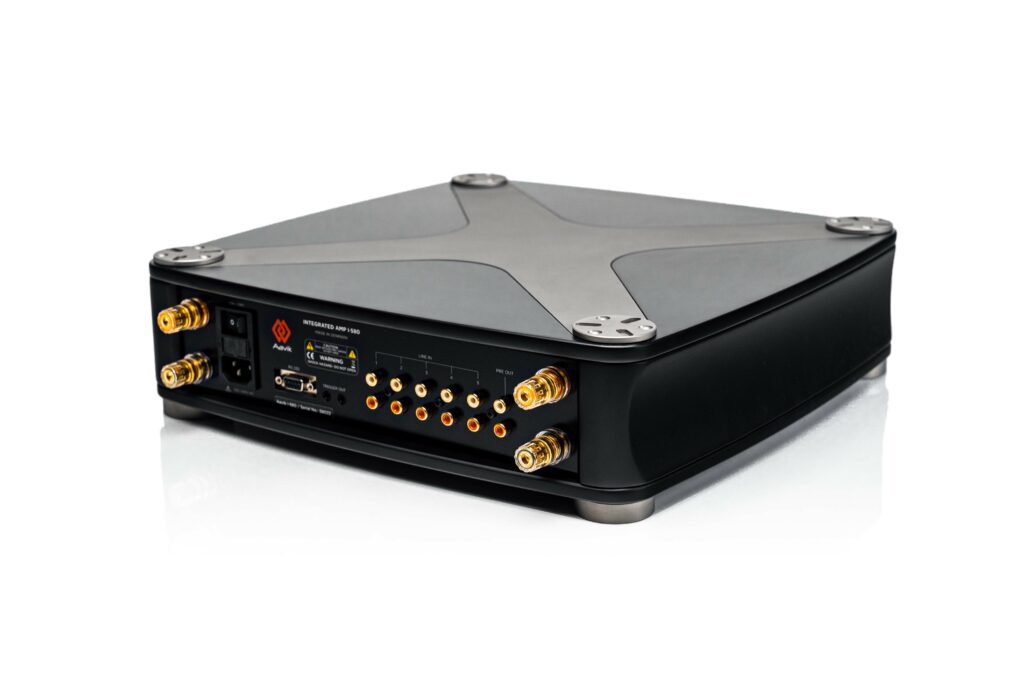
Aavik Acoustics I-580

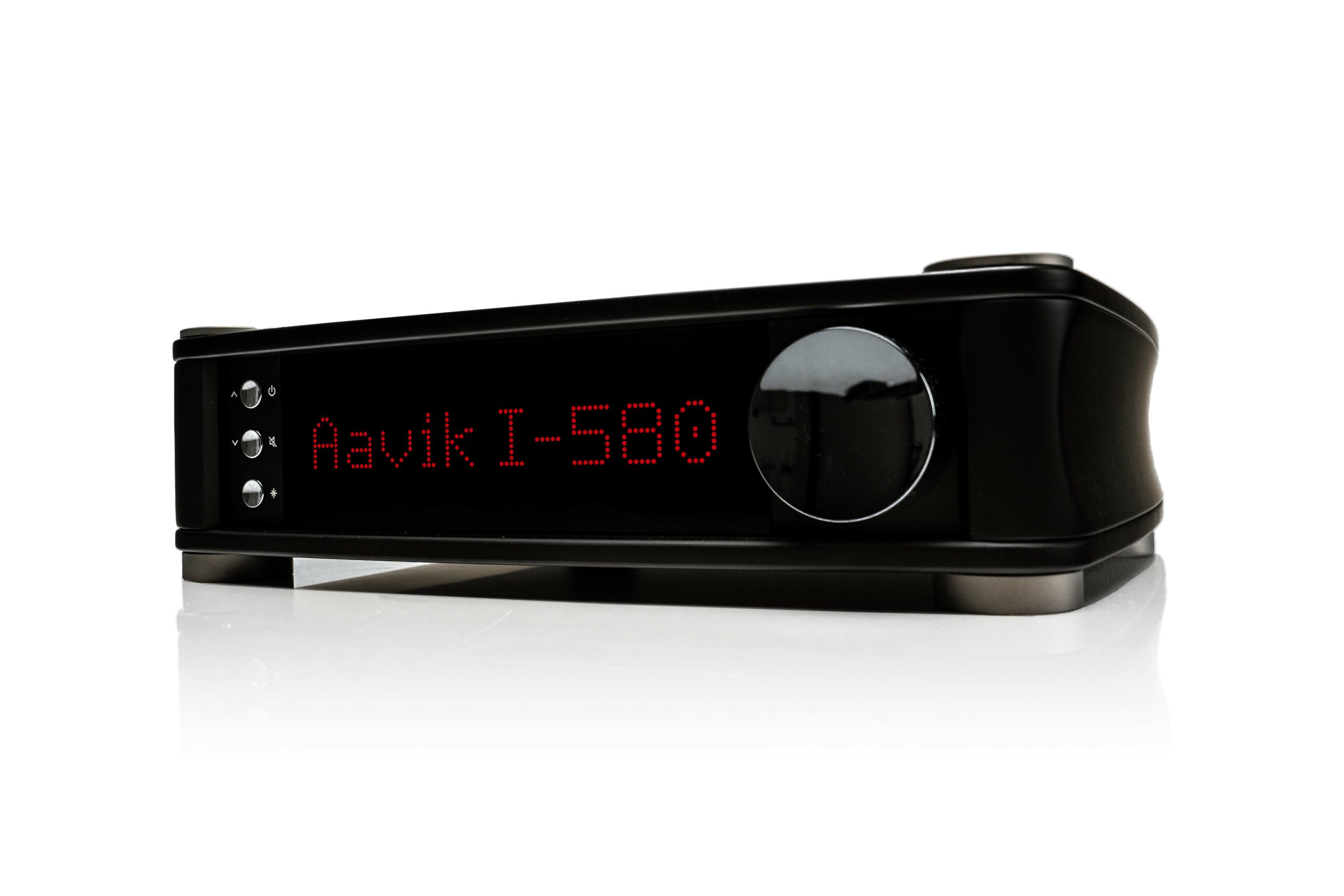
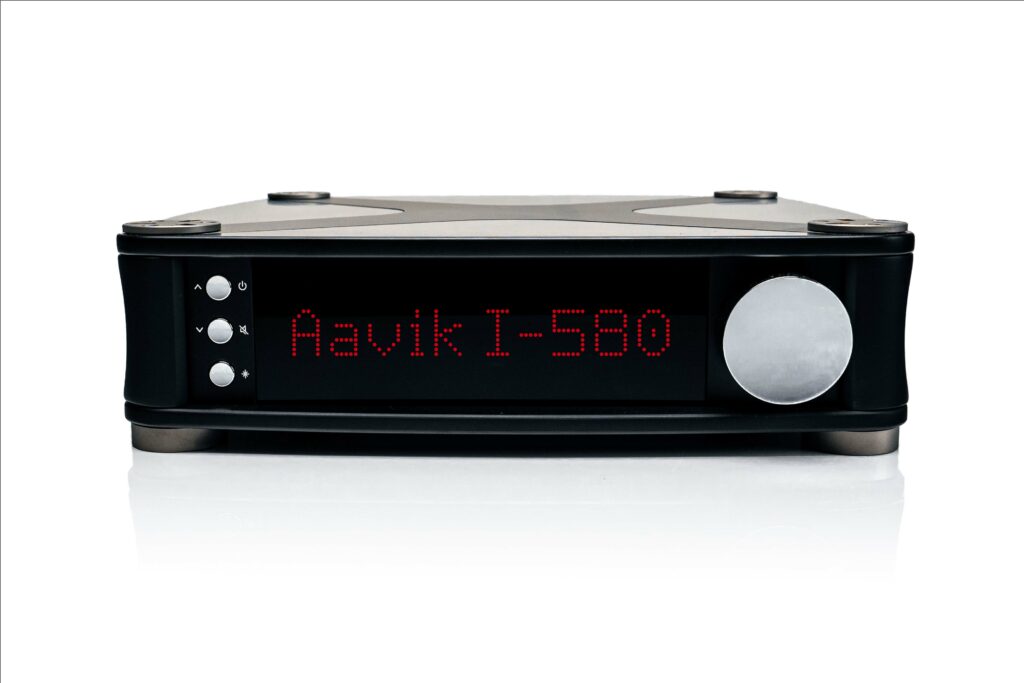
In our ongoing survey of the Danish Power Trio – Aavik, Ansuz, and Børresen – we finally come to the heart of the Aavik Acoustics I-580 integrated amplifier. The 580 line is the top of Aavik Acoustic’s tree (with the I-180 and I-280 below it). We still have a phono stage and a streamer in the 580 line to cover, but this is the significant link in the chain; if the amplifier isn’t up to scratch, the quality of front-ends, speakers, cables and everything in between can never catch up, and the sound quality suffers as a result.

The Aavik Acoustics I-580 integrated amplifier is always going to court controversy twice over. First, it’s a Class D amplifier, which in and of itself is often ‘dismissed’ by some audiophiles (‘dismissed’ being the polite term for ‘angry mob with pitchforks and burning torches’). Despite many high-end ‘wins’ – Bel Canto, Jeff Rowland, Merrill, Mola Mola and Primare being notable contenders – many enthusiasts reject Class D out of hand, often for vague notions of something intangible ‘wrong’ or ‘missing’ from the sound, compared to larger, older and less efficient designs.

Pascal power

Regardless, for its Class D engines, Aavik uses the Danish-designed UMAC amplifier modules from Pascal throughout. Pascal’s devices are relatively uncommon in the audiophile world. Still, they are gaining traction in Public Address systems, where their combination of high power, good loudspeaker compatibility and low distortion at higher frequencies make UMAC an increasingly popular choice for concert halls, churches and touring rock bands.

Why are they gaining ground against other Class D modules? Unlike traditional switching amplifiers that generate their PWM (Pulse Width Modulation) signal against a square wave, UMAC modules use sine waves instead; this makes for less high-frequency noise and requires less filtration at the output as a result. This has a knock-on effect of lowering the inductance of the output and giving the amplifier both a higher damping factor and provision to double its output as you move from eight Ohm to four Ohm loads. In other words, it drives loudspeakers with more authority, an early criticism of Class D designs.

Aavik Acoustics I-580

This is an inherently low noise design, but Aavik reduces that noise floor further by using ultra-low noise regulators to supply power to the amplifier’s circuitry. Aavik claims these regulators offer significantly lower noise than conventional regulators. The I-580s line stages also feature an inverted, virtual ground topology for greater stability and low signal-to-noise ratio irrespective of volume level. This last is seldom discussed, but often the signal-to-noise ratio is a snapshot of the amp’s performance that doesn’t take very high or very low volume levels into account. Many amps might sound dynamic, expressive, and accurate at normal listening levels (where they are measured), but things fall apart at very high or very low volumes.

As above, not so below

The other part of the I-580 controversy relates to how it justifies its place relative to the I-180 and I-280 below. An on-paper basic audit of the specifications of the three amplifiers shows them to use the same basic layout and amplifier module roll-out. They are all 300W amplifiers capable of delivering 600W into four-ohm loads, they are all single-ended only amplifiers with the same number of inputs and outputs, the same large multi-LED front panel and on surface inspection, a similar case. Looks can be deceptive, however, because the I-580 includes a copper inner chassis and titanium resonance control plates in the case that are not included in the other models.

However, perhaps the most significant change is the sheer number of Ansuz Active Tesla Coils in each device; for example, where the I-180 uses 132 such coils, the I-580 uses 348 (240 of which are the company’s square coils). Factor in more than double the amount of Aavik’s dither modules (five in the I-280, 11 in the I-580) and four of the company’s Anti Aerial Resonance Coils, and the I-580 is about as RF and EM interference-free as it is possible to make currently. Those who get hot under the collar about whether RF and EM interference is a blight on audio will grind off some tooth enamel at the thought of so much treatment.

Finally, and common to all models in the Aavik line, the I-580 has built Darkz-ready bases into the top and bottom plates allowing Ansuz’s clever mechanical vibration system to help eliminate yet another potential source of interference. Given the low heat output and the shielding of the amplifier, it’s perfectly acceptable to stack 580-series models on top of one another using a quartet of Darkz to separate each level.

Rest after moving

The amplifier itself does need some time to bed in. This isn’t so much ‘running in’ as ‘needing a bit of a rest after moving about’. I also found that cycling the power several times after changing loudspeakers or loudspeaker cables did seem to make the system more of a ‘match’. But regardless, after a few hours of amplifier pampering, it’s ready to fly!

I’ve heard several iterations of the Aavik amplifier now, from the hulking great U-380 Unity metal version with the large central dial and built-in DAC to the smaller but equally impressive U-150 Unity and now the I-580. With each iteration, they have got lighter in weight and better in sound. The difference in sound quality is not profound – more evolution than revolution, to harness the cliché – but it is better. The previous generations always had a deep, muscular bass and an extremely dynamic and transparent presentation, albeit with a small amount of soundstage limitation and some dry, slightly laid-back sound typical to Class D.

The I-580 expands that soundstage a lot while making that signature dryness less of a feature and more of just a Class D accent. The leading edges speed through this amplifier significantly, giving it a remarkable sense of ‘thereness’ that is hard to beat. Out came ‘Clara’ by Jarvis Cocker and Chilly Gonzales [Room 29, DG], and the combination of piano and slightly broken voice in a hotel suite was like you had been transported into the live event.

Volume sensitivity

This also showed up the volume sensitivity of the amplifier; I’ve been used to hearing some amps – especially Class D designs – have a distinct ‘goldilocks’ point on the dial, where ‘too much’ gets too hard and dry sounding and ‘too little’ breaks up the authenticity and integrity of the sound. Any such changes will be easy to hear because there’s no hiding place. But with the I-580, you could play whisper quiet or very loud with no sense of change in tonality at all.

The I-580 should silence the Class D naysayers because that flat, artificial, electronicky sound associated with the technology had all but disappeared back when the U-380 first dropped (sadly, literally; my sample ended up falling out of its box and narrowly missed flattening my foot). It’s gone now; the sound is still slightly dry and precise, but this is more like a focused sound than a musical desert.

Soundstaging is broader and deeper than I expected; the I-580 doesn’t have the lush imaging of the best valve amplifiers. However, one could argue the best valve amplifiers don’t have the ‘snap’ and imaging precision of the I-580. Couple that with almost no background hash or noise, and sounds are portrayed with near-textbook detail and accuracy, powerful dynamics, outstanding bass and an accurate, zing-and-sting-free top-end.

Aavik Acoustics I-580

This made me want to explore all of Ma Rainey’s Black Bottom [Branford Marsalis, Sony], from the 1920s recreations like ‘Those Dogs of Mine’ to the atmospheric ‘Levee Confronts God’. And it all worked brilliantly. Even without the need for double entendre. And you know you are on to a good thing when you can play anything from Liszt to Led Zep in a single sitting and enjoy it all equally well.

While the inevitable and seemingly endless car analogies used in audio are now almost painfully overused, there is a surprisingly strong parallel between the audio and motoring world when it comes to damn good amplifiers; both fields are in that transition point between an old and a new technology (moving from petrol to electric in cars, Class A and AB to Class D in audio).

Perception shift

Just as driving a high-performance electric car requires a few slight tweaks on the driver’s part to accommodate and genuinely understand how an electric car performs, we are at a point where listeners are starting to shift their perceptions about how recorded music sounds through amplification. All of which means this amplifier is very likely the Tesla Model S Plaid of the audio world!

On the face of it, the fact the Aavik Acoustics I-180, I-280 and I-580 look similar and share a similar essential performance would make it seem that the big boy is a poor proposition. However, the proof is in the listening, and this is one of the best Class D amps out there, and one of the best amps irrespective of amp design. While understandably at its best in the sublime company of its Ansuz and Børresen peers, it’s both a remarkable performer and a perfect gateway into the company’s ethos… and probably many products from these companies.

TECHNICAL SPECIFICATIONS

  • Type: Integrated Class D amplifier
  • Inputs: 5× RCA stereo pairs
  • Outputs: 1× RCA stereo pair, speaker terminals
  • Volume Control: 76×1dB steps
  • Power output: 2x 300/8Ω, 2x 600/4Ω
  • THD+N: < 0.006% (1-100W, 1kHz, 8Ω)
  • IMD: < 0.002% (1x100W, 4Ω)
  • TIM: < 0.008% (1-100W, 4Ω)
  • Aavik Noise Reduction systems included (see text)
  • Dimensions(W×H×D): 40 × 10.2 × 38.4cm
  • Weight: 10.7kg
  • Price: £20,000

Manufacturer:

Aavik Acoustics

URL: audiogroupdenmark.com

Tel: +45 40 51 14 31

Read more Aavik Acoustics reviews here

Back to Reviews

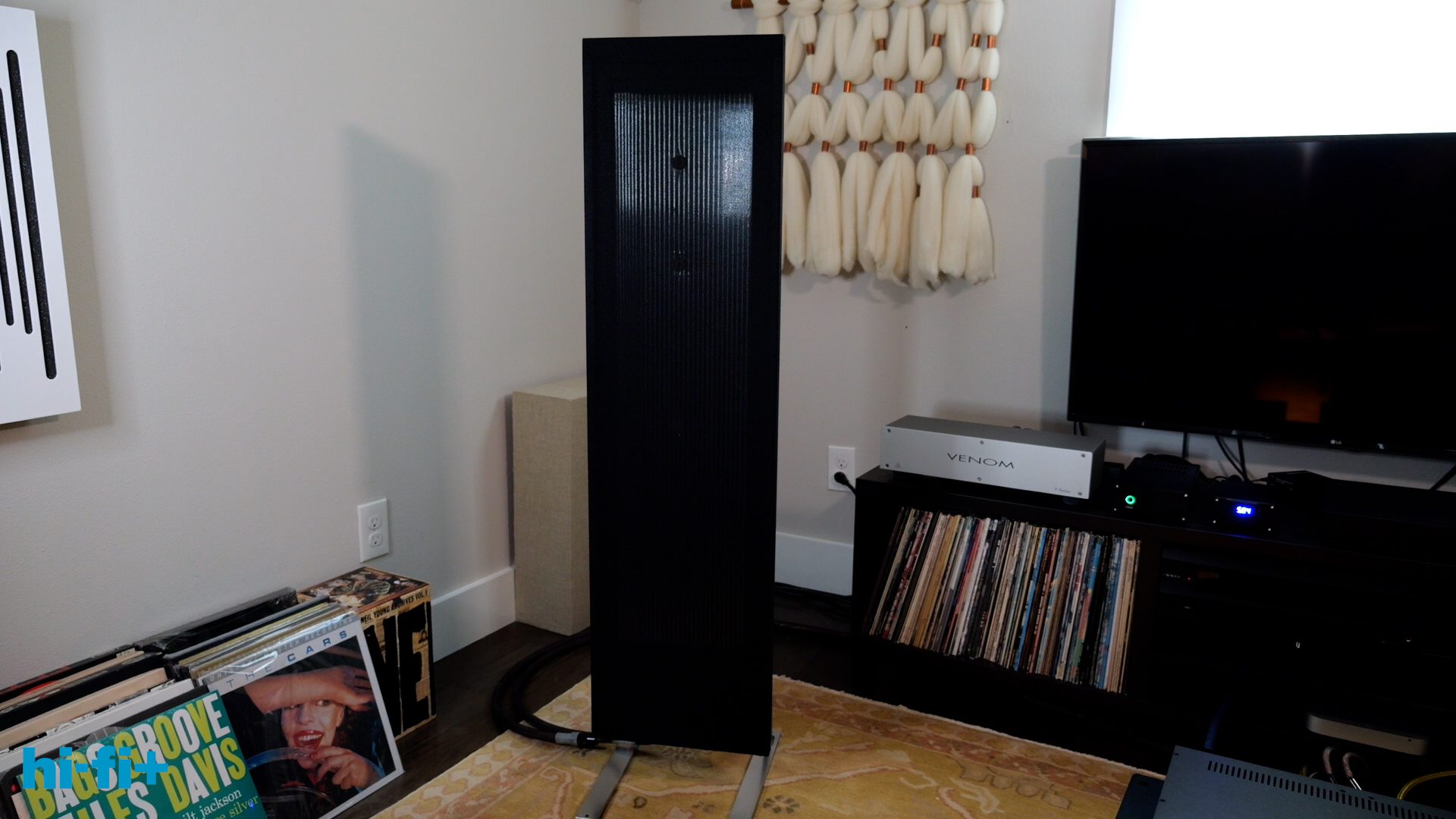
Is Magnepan LRS+ the most significant product of this decade?

Tom Martin goes into detail about how the new Magnepan LRS+ loudspeaker works, and tells why he thinks it could be one of the most significant products of the decade.

Be sure to check out our other videos about the Magnepan LRS+, including a first listen with Chris Martens and a background with Magnepan’s Wendell Diller.

You can see these video and more on the Hi-Fi+ YouTube Channel, such as Tea Time with Alan and Pete.

Hi-Fi+ Editor Alan Sircom and Publisher Pete Collingwood-Trewin talk about what’s happening in the high-end audio world.

Tea Time with Alan and Pete is just one of several new series on the Hi-Fi+ YouTube channel designed for audiophiles of all levels.

Another series is History of Audio, which aims to teach viewers a little about the History of Audio, which might be a trip down memory lane for many. It also hopes those who watch will learn from the varying experiences of other audiophiles through their trials and tribulations with different equipment.

While you’re on our YouTube channel, be sure to check out our Audio Basics series. So far, this series has covered what makes a great stereo system and how to find a great stereo system.

Soon, you can find reports from manufacturers at audio shows from around the world. You can see the likes of Aurender, Focal Naim, AudioThesis, Schiit Audio, and Magnepan, just to name a few. Right now, you can see what debuted at AXPONA 2022 and a bit from the Texas Audio Roundup, including background on the Magnepan LRS+. New videos from Pacific Audio Fest in Seattle are also being uploaded every week.

You can also see product reviews on the hi-fi+ YouTube channel coming soon.

Be sure to subscribe to the YouTube channel so you don’t miss any episodes!

Click to go back to homepage.

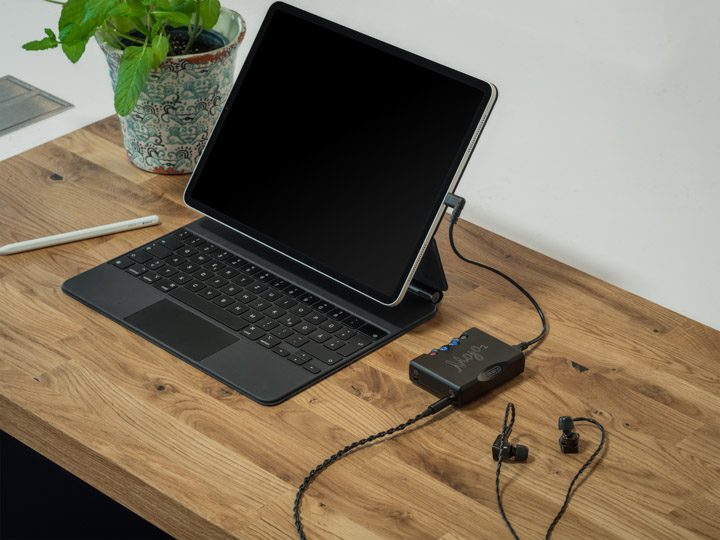
Chord Electronics Mojo 2

In an alarming “where does the time go” moment Chord Electronics has told us that it has been nearly seven years since they launched the Mojo portable DAC/headphone amplifier. I remember the launch at the Shard high above London Bridge station well, and the views from the toilets were spectacular! This time around there was no such ceremony; we live in restricted times but that hasn’t stopped Chord Electronics from making some pretty serious updates to its least expensive creation. That it has done so without significantly raising the price from the £399 it started out at is equally impressive in a world of silicon chip shortages and rising inflation.

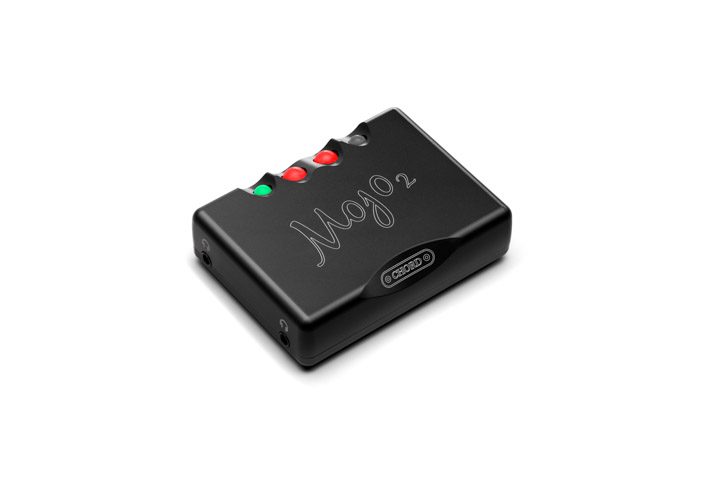
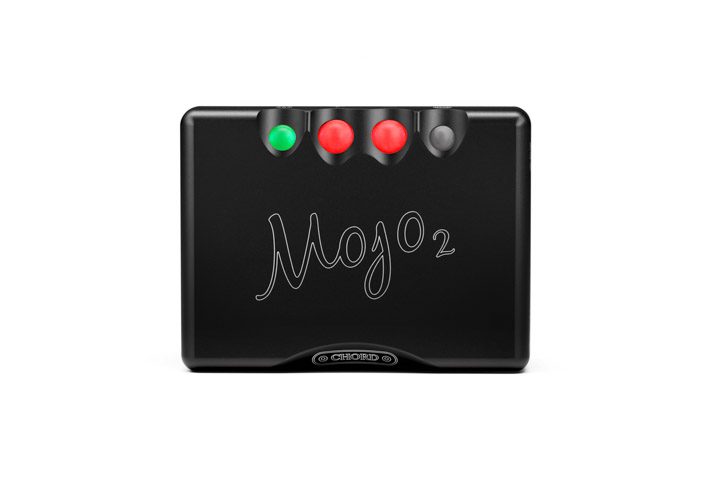
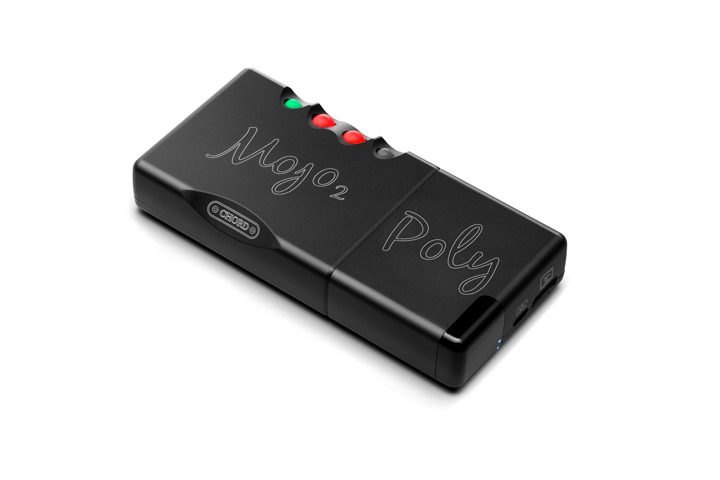
Mojo 2 retails for £450 and remains a British made portable DAC and headphone amplifier that inhabits a solid aluminium case and is controlled by translucent spheres that change colour according to function. The new Mojo has a fourth button which is marked ‘M’ for menu and this provides an entry point to this model’s biggest advance over its predecessor; tone controls via DSP. This is a radical move to say the least, partly because tone controls are so unfashionable within hi-fi circles and significantly because no one else has done this on a portable DAC before. In fact, it’s hard to think of any DACs that have the sort of equalisation capabilities on offer in Mojo 2, Roon notwithstanding.

More than tone controls

This EQ isn’t a mere treble or bass adjustment such as is found on some amplifiers, it’s more of a shelf type of control which allows increases and decreases across frequency ranges, with bass adjustment at 20Hz, a 125Hz shelf, and mid and treble above a 3kHz shelf and at 20kHz. Chord Electronics has produced a video which better explains this but essentially it means that the output can be tailored such that headphones will produce a tonal balance that is either more neutral or more appealing, take your pick. Given that a flat response does not necessarily sound better end users are more likely to pick a response that makes their music more enjoyable through their headphones. It applies to the two headphone outputs which can also be connected to an amplifier so could be used to compensate for tonal variations in speaker and room acoustics.

Chord Electronics Mojo 2

DSP has been used to provide equalisation in a range of products for a number of years but our experience of it has rarely been positive, something is always lost when DSP is used to provide a more even frequency response. Chord Electronics’ digital design consultant Rob Watts points out that DSP doesn’t sound transparent, makes treble harder and loses detail resolution which results in a flatter sound. He explains that “Problem is that small signals lose amplitude accuracy, and the equalising DSP handles small signals differently to large signals as the signal fades into the resolution floor of the DSP. This creates a phase shift that is different for micro signals compared to large signals” and further that “The floating point nature of conventional 64 bit DSP means that it innately suffers from noise floor modulation”.

Watts has defined the specs required to achieve fully transparent EQ with DSP and they are both ambitious and mind boggling for the technically challenged so I won’t go into them, but will repeat that “small signal accuracy – needs to reproduce -301dB perfectly.” Which seems like a big number but is apparently what it takes to offer the degree of equalisation provided by Mojo 2. Another large number is the 705/768kHz required to ensure effective noise shaping, which means that low level signals do not get lost in the noise floor.

Complex Stuff

It’s complex stuff for anything let alone a portable DAC but Chord Electronics and Rob Watts appear to delight in cramming as much bleeding edge tech into their components as possible. The claim is that it runs “the world’s first lossless DSP”, and allows a wider volume range than the first Mojo of 126dB, so broad that it uses different coloured indicators to let you know whether you are in the high or low range, the change being made at -46dB which is slightly above the halfway point in output. There are of course more volume steps than colours available to indicate them so each colour represents a range of output levels with the maximum voltage being a substantial 5.3V. Headphone users might be interested to know that power output is 90mW into 300 Ohms and 600mW into 30 Ohms.

The four tone settings can be adjusted by plus or minus 9dB in 1dB steps and on top of this there are four crossfeed settings albeit one of them is ‘off’. Again the ‘polychromatic polycarbonate control spheres’ change colour to indicate the setting. Don’t lose the manual! Actually as the full manual is a PDF this isn’t really an issue.

Chord Electronics Mojo 2

Adjusting these settings requires a good memory and/or a user manual because you access them by pressing the menu button the requisite number of times to access a particular function then adjust that parameter with the volume buttons. For instance ‘menu’ button and ‘-’ volume allows brightness adjustment, or with the ‘+’ button to adjust crossfeed. Press the ‘menu’ button again for the 20Hz bass peak and again for the 125Hz bass shelf; it takes five presses to get to the 20kHz treble peak setting and the sixth press locks the controls. So absolutely no chance of confusion! It’s not all counting however, the menu button also changes colour to indicate what you are changing so that incompetent reviewers stand a chance of getting things right. In fairness, I’m not sure how Chord Electronics would make this easier without a display and that would raise the price and potentially cut its performance.

The Mojo 2 adds a USB C input to the micro USB (retained for Poly), on top of the minijack coax and Toslink array found on the first Mojo. It also matches the double minijack outputs at the other end of the compact case. These analogue outputs have been upgraded by eliminating coupling capacitors and incorporating a DC coupled output with a digital DC servo, a move claimed to deliver a more neutral tonal balance (if you don’t fiddle with the EQ that is).

Charging is via a second micro USB with battery status indicated by the power button, internal changes to battery management make for faster and, importantly, cooler charging, greater capacity and improved battery life, now claimed to better eight hours (on IEMs/headphones with USB). Chord Electronics has also improved the battery side of things for desktop users; the power supply has been redesigned so that sound quality isn’t compromised when the DAC is permanently connected to a charger.

Enter Poly

While Mojo 2 is predominantly designed for use on the move with a smartphone source it can be paired with the Poly streamer/server that couples to the case and can provide up to 2TB of music file storage via microSD card.

Switching on Mojo 2 prompts a merry dancing of lights for maybe 20 seconds before a relay clicks and it’s ready to roll, thereafter the colour of the power button indicates the incoming sample rate all the way from CD’s 44.1kHz to 768kHz with a final white button for any DSD format. Remembering which is which is not important but the order is similar to that for volume albeit there is a lot more range in the latter and only the upper end has the same colouring. The volume is obviously a lot more critical though, especially for headphone users who want to retain their powers of hearing, Chord Electronics make the point of advising users to take the level right down before first use.

Chord Electronics Mojo 2/Poly

My initial attempts to use the Mojo 2 were thwarted to the extent that a second sample was sent, when that one defeated me I sent a picture to Chord Electronics’ MD and tech guru Matt Bartlett who spotted that the micro USB cable I was using looked a bit skinny, and was possibly not a fully functioning data cable. As it was something I’d found in the bag of random USB cables it was probably a charging cable. Only when I went over to the very short cable supplied in the box (designed for mobile users) was the source able to see the DAC. This hurdle out of the way listening could progress.

I used the Mojo 2 with a Melco N10 digital library, plugged into its USB streaming port, which is admittedly not a typical application but it allowed the DAC to be assessed with a source that was not likely to hold it back or colour the results. The resulting sound using an Audioquest minijack to RCA phono lead into my system was thrilling, intense and very exciting but a little too forward for my tastes. The sound produced being fast and clean but a little too much so with less sophisticated music such as Slint’s fairly edgy Spiderland [Touch and Go]. With smoother material such as Abdullah Ibrahim’s Africa, Tears and Laughter [Enja] it delivered impressive dynamic range thanks to a very low perceived noise floor which let plenty of the quieter details through. A solo violin piece by Amandine Beyer [Outhere] was wonderfully open and immediate, too, but it also showed it was time to try out the tone controls.

It took a while to get used to these, and the manual needed to be at hand every time I did so, but the results were clear and I had plenty of fun trying different combinations of EQ tweaks across the two shelf settings; 125Hz and 3kHz. Each change was clear so long as I jumped two or three dB at a time and having discovered that increasing the 125Hz shelf had a thickening effect I started dialling down the 3kHz and arrived at -4dB as the best option for my system with the Bowers & Wilkins 802 D4s.

Now the balance was similar to the one I get with most mains-powered DACs and allowed Brokeback’s Looks at the Bird [Thrill Jockey] to deliver its full tonal depth, especially from the vibes and double bass. It wasn’t quite as immediate as the flat tone setting but was a lot easier and more relaxed; more importantly there didn’t appear to be any change to timing which is often undermined by DSP. This backs up Chord Electronics’ claim for transparent DSP, a state of affairs that was reinforced with everything I played from the dreamy grooves of Taylor McFerrin to the snappy drive of the Grateful Dead in full flight. The overall performance is extremely good for a DAC at this price and given that I was using fairly basic cables this is not as good as it can get.

There is no shortage of power nor of fine detail, I was impressed on several occasions at the way it could pick out the quieter sounds even when things were getting very busy musically speaking. This happened with ‘Cumberland Blues’ and ‘Gravity’s Angel’ where the organ is easy to follow as are the many effects going on behind the fundamentals of the song.

DAC to the Future?

Whether portable DACs have a future in a world that appears to be dominated by Bluetooth is open to debate but there are plenty of music lovers who realise that cables are small price to pay for great sound on and off the move. I tried the Mojo 2 with a pair of fairly modest Bowers and Wilkins P7 headphones and found that unlike that company’s loudspeakers the tonal balance here was dull through the midband. Bringing the 3kHz shelf back to its zero point did the trick though, it brought the headphones to life, and in a very positive way it has to be said. Now I was able to enjoy a wide range of music at sensible levels, something that has not been the case in the past. I particularly enjoyed Joan Osborne’s ‘Pensacola’ [Relish, Universal] and got a good shot of its emotional impact as well as an insight into its meaning that hasn’t come to the fore when played through the speakers before.

I take my hat off to Rob Watts and Chord Electronics for the way that they have managed to incorporate sophisticated equalisation into the Mojo 2 without compromising its excellent sound quality. Add to that this all metal and impressively well finished little device is made in the UK for a price that competes with the best in the business and you have a bona fide winner.

TECHNICAL SPECIFICATIONS

  • Type: High-resolution portable headphone amplifier/DAC
  • Inputs: One TOSLink optical input, one micro USB input, one USB C input, one coaxial/dual-data coax via 3.5mm minijack
  • Outputs: Two 3.5mm headphone jacks
  • Device drivers: Windows
  • Digital Filters: 40,960 tap-length digital filters
  • Battery: Sufficient power at full charge for 8+ hours of operation. The Mojo 2 can also be powered from a 5V USB power supply
  • Frequency Response: Not specified
  • Headphone output: 90mW into 300 Ohms, 600mW into 30 Ohms
  • Power Output – at 1% distortion: 300 Ohms, 90mW; 30 Ohms, 600mW
  • Accessories: USB-A-to-USB-Micro cable, optional Poly wireless streamer
  • Dimensions (H×W×D): 21 × 82 × 62mm
  • Weight: 185g
  • Price: £449

Manufacturer:

Chord Electronics Ltd.

Tel.: +44 (0) 1622 721444

URL: chordelectronics.co.uk

Back to Reviews

Bowers and Wilkins 802 D4

Abbey Road is about as iconic as British recording studios get. So it’s to Bowers & Wilkins credit that the company’s loudspeakers have been used there since 1980, when they were initially used for film scoring but also hit albums including Hounds of Love; maybe that’s why it’s my favourite in Kate Bush’s back catalogue. You can see the older models lining the corridors at Abbey Road; they clearly never throw anything away, but for the official launch of the new 4th generation 800 Diamond series a pair of the new 801 D4s had been hauled into the studio two control room so that visitors could listen to them. Presumably Bowers & Wilkins had no control over what was played otherwise they might have chosen something other than the Mary Poppins Returns soundtrack, but it made it clear that the company’s latest range topper is a very capable loudspeaker (even Emily Blunt didn’t sound that bad).

Bowers & Wilkins 802 D4 Satin Rosenut Angled Grille Off with reflection

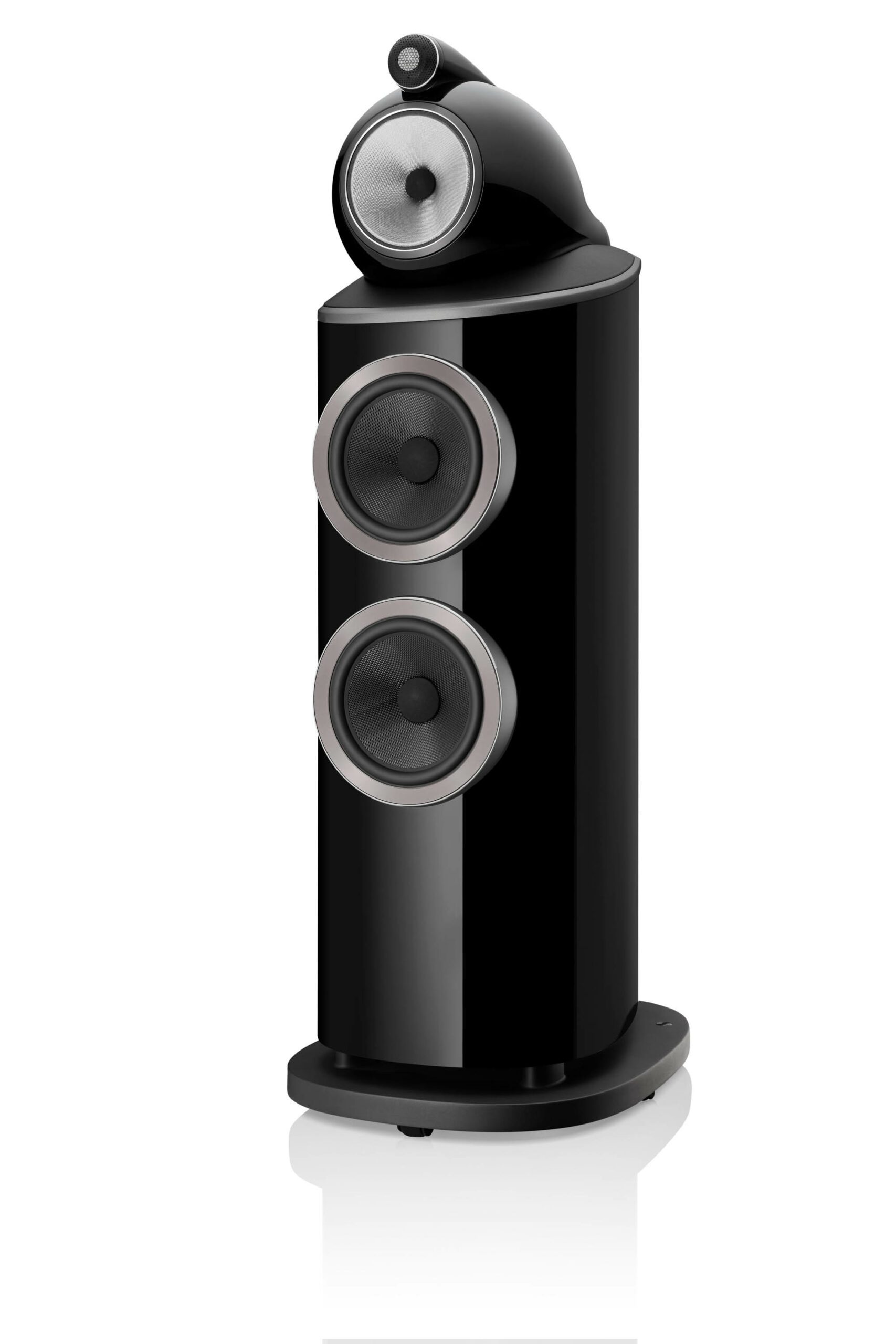
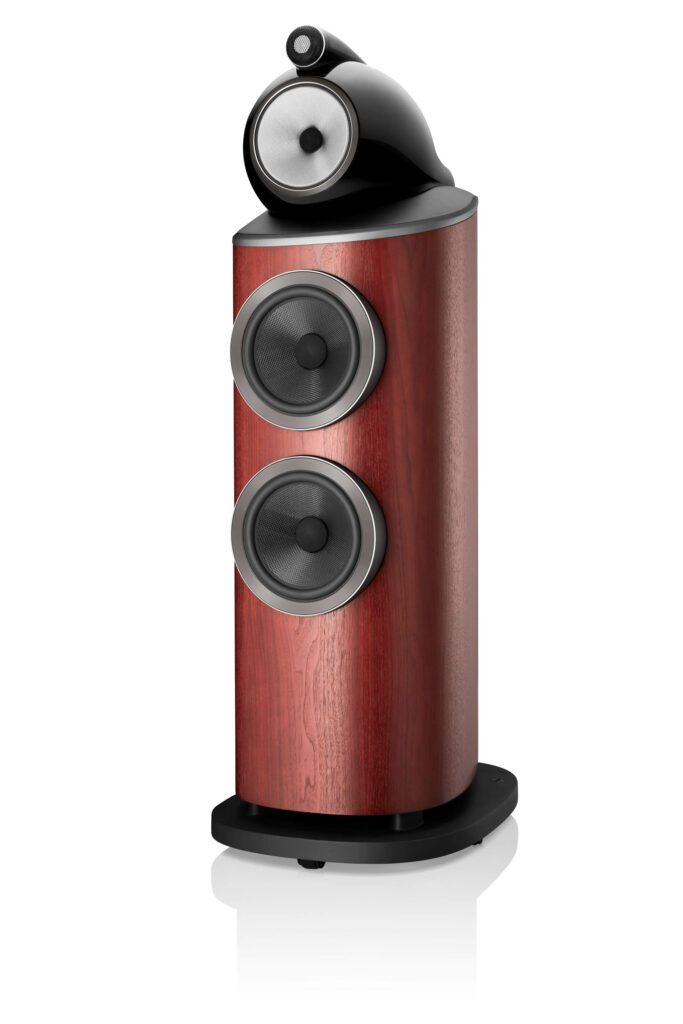
Bowers & Wilkins has been rolling out a new 800 Series every five years or so for the last couple of decades but it has not always been thus. The first example of the breed was the 801 in 1979 and that remained at the top of the tree until 1987 when the Matrix internal bracing structure was introduced. In 1998 the company decided to incorporate some of the ideas developed for the radical Nautilus speaker into the new 800 Series. This was when the distinctive midrange ‘head’ first appeared; its curves machined out of synthetic stone but finished in gloss black, which given the popularity of Corian in high-end kitchens seems an odd move, but then again kitchens are probably not what most high-end audio enthusiasts dream of. This series also employed bent ply cabinets – substantial ones at that – requiring significant tooling investment and providing an extremely stiff structure for the bass drivers to work in. The next move was the introduction of the diamond tweeter dome in 2005, a part which stayed with the following D2 series in 2010 and carried through to the D3 five years later, when the ply wrap was reversed and the iconic yellow Kevlar midrange was swapped for a Continuum cone.

Taken an extra year

The latest 800 Series has taken an extra year because of some pandemic thing. It retains the diamond tweeter dome but there have been big changes made to the rest of the high frequency system. The most obvious being that the housing is twice the weight and nearly three inches longer; this makes it stiffer and allows the tweeter to go down further in frequency without distortion. The magnet count has been reduced to two from three, which reduces compression behind the dome. Likewise, there are twice as many holes in the voice coil former for lightness and ease of movement. Equally important is the way that the tweeter housing is connected to the midrange or Turbine Head beneath it, there are now two rather than one silicone mounting that provide better decoupling than the previous system.

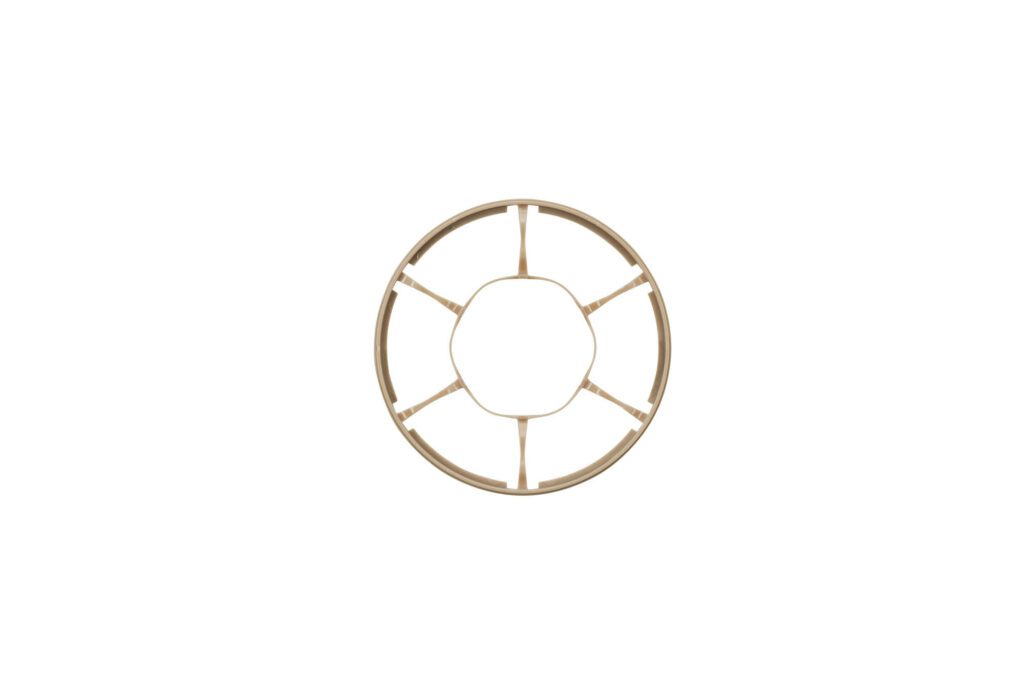
The midrange enclosure also sits on silicone decoupling with four points of contact. This enclosure transitioned from synthetic stone to aluminium in the D3 series but the tuned mass dampers within it have been ‘re-optimised,’ or ‘improved’ as it’s known, this time around. The biggest change to the midrange driver is in the spider that centres the coil former in the throat of the magnet. For what seems like millennia this job has been done by doped and corrugated fabric which is light and flexible enough to allow the cone to move but stiff enough to keep it centred. Bowers & Wilkins’ research elves have been working on a replacement for over a decade, which suggests that the new six leg, thermoplastic spider was not as easy to create as it looks. This looks deceptively simple, but it is very open compared to the normal variety and makes considerably less noise, 80dB less at 1kHz apparently, which sounds like a lot but presumably they weren’t that noisy in the first place. However, in the process of refining the midrange system, the speaker has become more revealing and transparent to such changes. This ‘Biomimetic Suspension’ will likely be rolled out across Bowers & Wilkins’ 600 and 700 series three-ways as it’s not intrinsically expensive, it just took a long time to get right.

Biomimetic Suspension Plan View

The bass cabinet continues to be made out of bent ply but now all the forming is done in the company’s Worthing facility in the UK where the entire 800 Series Diamond range is built. Formerly reserved for the largest models, it has rolled out this construction method across the 800 Series range and has had to add to the array of huge presses in the factory to accommodate this. What you can see has changed here is that the collar beneath the head is no longer wooden but made of a large aluminium casting that is finished in leather; this is said to be more accurate and stiff than the previous approach, it also provides a capping for the neat fluted metal back plate. Inside the box the matrix has been braced with aluminium that is glued and screwed in place. The bass drivers bolted to this solid structure are eight-inch Aerofoil cone types with a new foam anti-resonance plug, internally the metal elements of the motor structure have been upgraded to a steel with very low electrical conductivity and lower inductance, which has apparently reduced distortion over the previous system.

Tilt test

The support plinth is a larger aluminium casting than it was and has threaded holes at the back for tilt test compliance; the latest 802 being more top heavy than its forebear (as I found the first time I went to move them). There are four wheels beneath it; two of which rotate to make manoeuvring these substantial (88kg/194lb) beasts around a little easier, when the spikes are up that is. The spikes are also substantial and have locking collars that are rather like wingnuts so can be tightened without a tool; fortunately Bowers & Wilkins supply magnetic pucks for those of us who want to keep our flooring puncture free. Cable connections are made through plated copper terminals with spade-ended jumper cables provided to allow single wiring.

Steve Pearce, Chief Acoustic Engineer at Bowers & Wilkins’ SRE research centre, said that the acoustic team had worked on improving musicality and coherence when tuning the fourth generation Diamond series. If the last 802 D3 had a weakness that was it; they couldn’t be faulted in terms of detail resolution, imaging and perceived distortion but didn’t always deliver the most engaging result. Or to put it another way, you needed a very special amplifier to make them charming. The 802 has higher than average sensitivity of 90dB but controlling the bass requires power and combining power with speed in an amplifier is a difficult job. However the 802 D4 does indeed sound more musically compelling than its forerunner without any real change to the load so the many other changes to the system have clearly borne fruit.

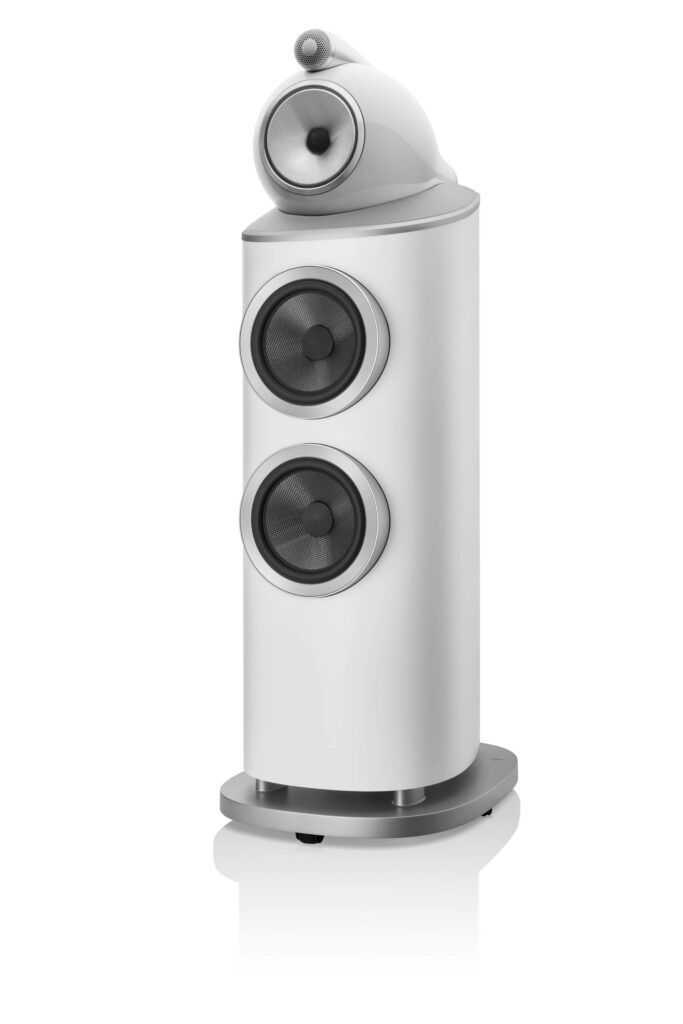
802 D4 White Angle Grille Off with reflection

I started using the 802 D4s with Bryston 7B3 monoblock power amplifiers, genuinely mighty beasts with a specified 700 Watts with which to get any speaker to jump when they say so. These are not the most charming amps but they do allow this speaker to produce beautiful low end and superb imaging of the genuinely holographic variety. The sound produced is both rich in the small details that define the nature of the instruments, voices, recording method and production as well as the power that gives dynamics real impact. They do the micro and the macro with consummate ease and made Hania Rani’s Home [Gondwana] sound gorgeous even though it’s not the most polished of productions.

Switching to my regular power amplifier, the Moor Amps Angel 6 I was immediately impressed with the depth of image produced by the reverb on Dan Berkson’s Dialogues album [Freestyle], the sound wasn’t as incisive as with the Brystons but it timed almost as well. The 802 D4s reveal a mountain of detail with a good source like the Rega P10, there is so much going on in the track ‘Unity’ especially in the drums and percussion and it’s all clear and easy to follow, right down to the quietest parts. This is what you get when the speaker adds so little to the sound, the smallest sounds come through and reinforce their more substantial fundamentals to create a richer and more complete overall picture. I really enjoyed Patricia Barber’s Live: A Fortnight in France [Blue Note], an album that rarely seems to live up to expectations, something that’s easy to put down to weaknesses in the recording. But it seems that when the system and in particular the weakest part of the system, the speaker, is delivering more signal and less colouration it comes together.

On Haydn’s Quartets each instrument inhabits its own clear three dimensional space, the bump of the bows on strings placed clearly in front of the 802s gives you a real sense of realism, and (goose) bumps of your own, as well as lovely depth of tone. This loudspeaker has always been at its best when playing at higher levels, this brings up the midrange and adds to the precision of the imaging as well as the definition of the bass. The power and solidity they bring to Tom Waits’ ‘Shore Leave’ [Swordfishtrombones, Island] is excellent but such niceties fly out of the window when ‘16 Shells from a Thirty-ought-six’ comes on and there is no alternative but to cavort around the room with glee. If there’s energy on the record it comes out of these speakers with gusto, and yes that is a very good thing. Another energetic number that doesn’t always work is ‘Subway Station #5’ by Patricia Barber again, here the harmonics and atmosphere are superb with fabulous attack on the drums, the listener being drawn into the way that Barber builds up intensity with a repeated motif on the piano’s left hand keys while the rest of the band lay down the jam around this phenomenal rhythmic anchor. This piece proved to be totally mesmerising to an extent that it rarely does. These Bowers & Wilkins are powerful both emotionally and physically, they can move as much air as you like but remain calm under fire, seemingly never smearing the sound but letting it flow unfettered into the air.

Cerebral

With more cerebral material it’s the quality of imaging that becomes apparent, I love the way that they throw shapes in the air with sound. Laurie Anderson’s ‘Gravity’s Angel’ [Mister Heartbreak, Warner Bros] is good for this but the 802 D4s are better than most at getting the acoustic and synthetic sounds that she corrals to carve a space in the room. But that alone does not make a piece of music interesting for long, it has to make an emotional connection and this is where the 4th gen 802 Diamond has the edge over its predecessors. The same can be said for the bass which has always been a strongpoint of this loudspeaker but is now clearly better, it is supremely nuanced allowing the characteristics of each instrument or voice to be that little bit more expressive and interesting. Essentially there is less box and more original sound which means that the rumbles on the intro to Blade Runner do not blur with low synth notes, the fretless on Beck’s ‘Paper Tiger’ is clearly the same as that on Serge Gainsbourg’s ‘Melody Nelson’ and the fretless bass on Carla Bley’s  ‘Life Goes On’ is obviously Steve Swallow.

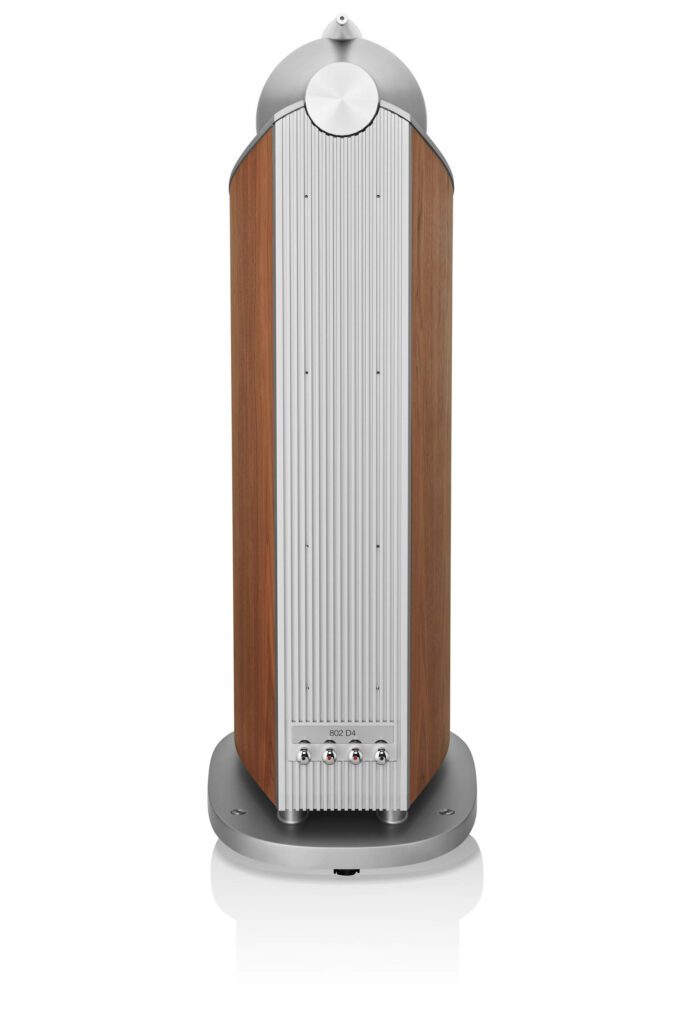
802 D4 Satin Walnut Rear with reflection

The Bowers & Wilkins 802 D4 is more expensive than its forebear but so is everything else around us, including the competition, which in all honesty struggles to compete. Bowers & Wilkins makes more high-end loudspeakers than anyone else in the world, 6,500 pairs of 800 series models a year in fact, and this gives them an economy of scale that means the 802 D4 costs half as much as its nearest serious competitor. It may not have the snob appeal of boutique brands but it has a phenomenal R&D dept that produces world-class loudspeakers, and the 802 D4 is certainly that.

TECHNICAL SPECIFICATIONS

  • Type: 3-way, four-driver, floorstanding speaker with reflex loaded enclosure.
  • Driver complement: One 25mm diamond dome tweeter; one 150mm Continuum cone midrange driver with FST surround; two 200mm Aerofoil cone bass drivers.
  • Frequency response: 17Hz – 28kHz (+/-3dB from reference axis)
  • Impedance: 8 Ohms (minimum 3.0Ω)
  • Sensitivity: 90dB/ 2.83Vrms at 1m
  • Dimensions (HxWxD):  1218 x 413 x 602mm
  • Weight: 88.1kg/each
  • Finishes: Cabinet: Gloss Black, White, Satin Rosenut, Satin Walnut Grille: Black, Grey
  • Price: £24,000/pair
  • Manufacturer:

Bowers & Wilkins

URL: bowerswilkins.com

Tel: 0800 232 1513 (UK only)

Back to Reviews

McIntosh XCS1.5K: Is this their best-ever AV performance?

McIntosh’s XCS1.5K takes centre stage The £39,995 XCS1.5K Center Channel Loudspeaker ushers in McIntosh’s best-ever AV performance

*From the McIntosh news release

Binghamton, New York, USA, 14 September 2022: McIntosh has launched its highest-performing centre speaker to date, the XCS1.5K Center Channel Loudspeaker, which has been designed to complement its iconic XRT2.1K and XRT1.1K floor-standing loudspeakers and form part of an uncompromising McIntosh home cinema system.

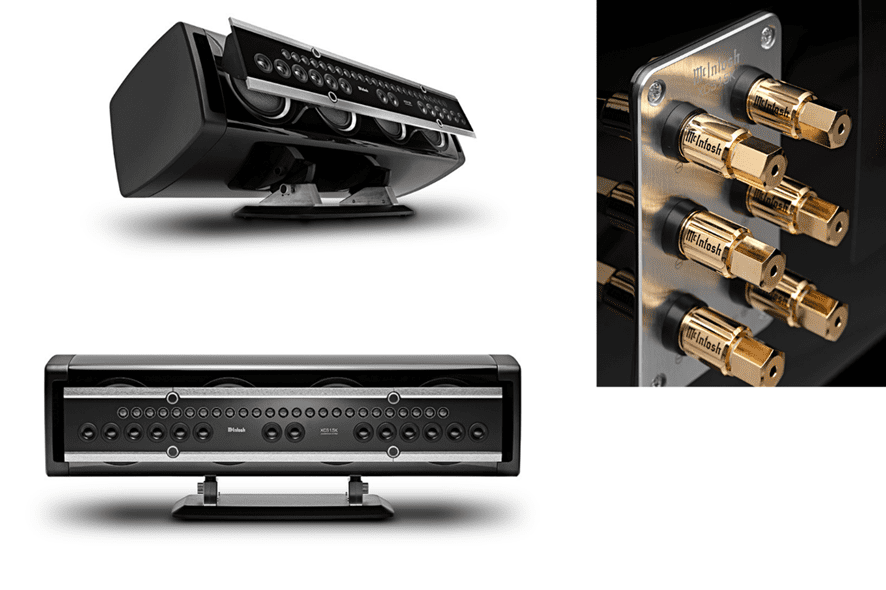
The 80 kg XCS1.5K Center Channel Loudspeaker benefits from 43 individual speaker drivers rated to 1,500 watts for even the most demanding home cinema system. It replaces the XCS2K and XCS1K speakers.

XCS1.5K

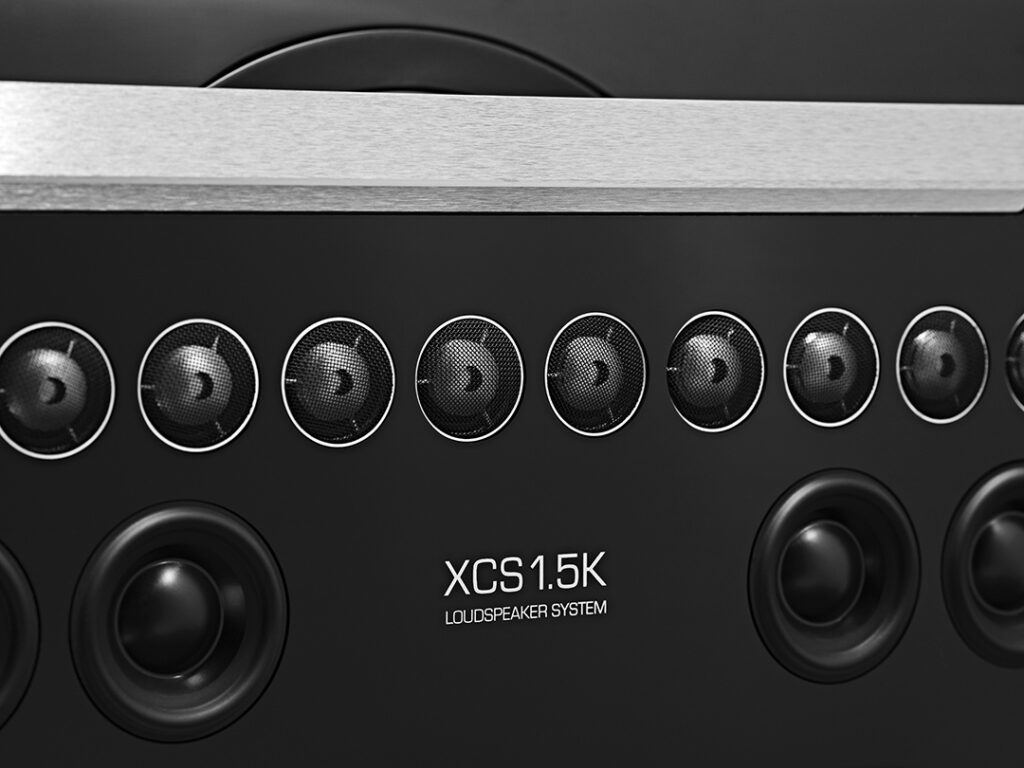
The hybrid three and four-way speaker, comprises 25x 19 mm tweeters, 14x 63.5 mm aluminium cone midrange units and 4x 200 mm long-throw carbon fibre bass drivers, housed in a vented cabinet. The strategic driver selection coupled with a detailed crossover design helps to create a wider sound field and in addition, the speaker can be tilted to one of five preset angles to be optimally aimed to the listening position.

Finishing touches include three sets of McIntosh Solid Cinch™ speaker binding posts, a removable black-knit-cloth speaker grille and classic McIntosh design elements. The speaker also benefits from seven layers of high-gloss piano black paint.

XCS1.5K

Key features at a glance

• 43x individual speaker drivers

• 4x 200 mm long-throw carbon fibre woofers housed in a vented bass cabinet

• 14x 63.5 mm aluminum midrange units

• 25x 19 mm dome tweeters

• Tiltable to one of five preset angles

• Three sets of Solid Cinch™ speaker binding posts (bi/tri-amping or bi- or tri-wiring)

• Detailed crossover design for a wider sound field

• High-current capacity capacitors and inductors

• Removable black knit cloth speaker grille

• Seven layers of high-gloss piano black paint

Unit Dimensions (W x H x D):

49-31/32″ (126.92 cm) x 17-3/16″ (43.66 cm) x 21-7/32″ (53.9 cm)

Unit Weight:

178 lbs (80.74 kg)

Pricing and availability

Orders for the XCS1.5K Center Channel Loudspeaker can now be placed with authorised McIntosh dealers with shipping expected to begin in October 2022 (United States and Canada), and the rest of the world, shortly thereafter.

XCS1.5K Center Channel Loudspeaker £39,995

Trafomatic Audio Elysium

Beginning as a completely conventional review of a completely unconventional valve power amplifier, this view of the Trafomatic Audio Elysium mono amps quickly changed tack. In no small part because of the way it is distributed in the UK (which is very likely a feature in its own right) but also because these products don’t just challenge preconceptions about where the valve amp sits in the pantheon of good audio, it redraws the map of what is possible from every watt an amplifier puts out.

OK so, big valve amplifiers are always something of a statement piece. They are usually large towers of glowing heat, capable of delivering almost unbelievable amounts of power for ‘hollow state’ devices, and their physical characteristics necessitate a large room, often one with a reinforced floor. Even among such lofty company, the Trafomatic Audio Elysium stands out as a unique venture; both the giant Elysium mono power amps and the uncompromising £50,000 Tara30A preamplifier that drives them, in fact.

‘Huh’ moment

Engineer Saša Čokić designs these Serbian giants to be both the ultimate expression of his amplifier designs and the ultimate in valve amplification. While neither preamp nor power amplifier takes the conventional route (the Tara30 uses four single triode power-amp sized valves instead of the usual double triodes and is larger than most integrated valve amps… and if you ask nicely will also be the subject of a review later), the Elysium arguably has the more visible ‘huh?’ moments and those result in the aforementioned landscape-changing aspects of performance.

Trafomatic Audio Elysium valves

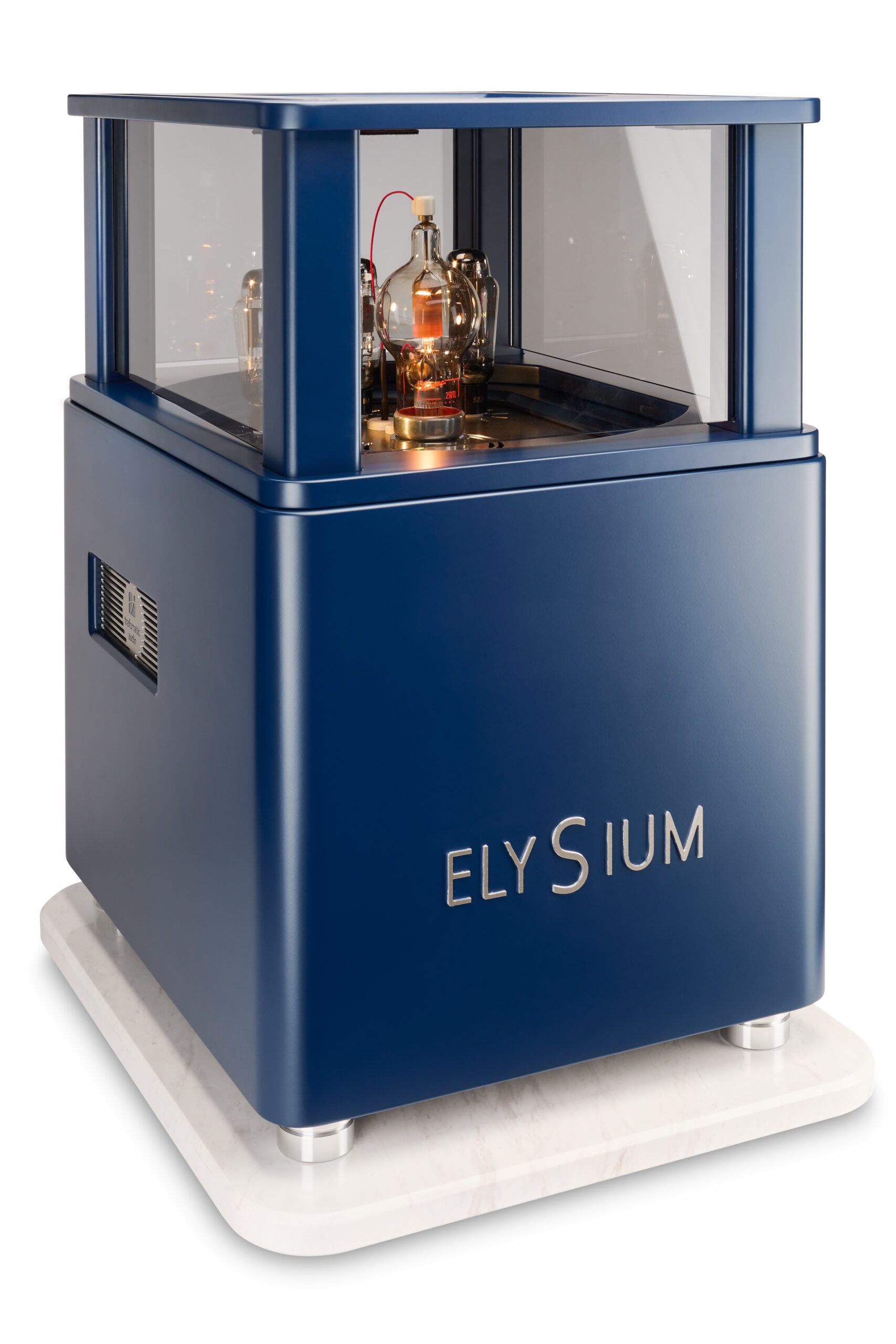
The Elysium is built around the Elmac 250TL direct heated triode power tube, initially designed for high-frequency transmission. High-end audio has been plundering the cinemas, fighter cockpits and radio stations from the 1930s-1950s to find sublime-sounding valves of high-performance for all kinds of use. It’s how we ended up with valves like the 845 and 211 that have come to dominate single-ended triode power amps from the early 1990s and the Audio Note Ongaku. But even by that heady mix of performance and relative obscurity, the Elmac 250TL is left-field. According to Saša Čokić it’s the most transparent amplifier device ever made. One of these elegant and large valves per chassis is flanked by a EML 20b-V4 direct-heated triode and a EML 5Z3 rectifier valve, both chosen for their linearity.

Of course, you don’t just place these valves into a normal amplifier chassis and power them up. This is the sort of DHT (directly heated triode) design that requires obsessive attention on the part of the designer; do you want an output transformer to match this device? No one makes such a thing, and the minimum order required would fill a warehouse with wire and iron for decades. That would make most manufacturers fall at the first hurdle; Trafomatic Audio instead buys up transformer winding machines, so it can make perfect prototypes and optimally designed units inside each Elysium. Similarly, when using a transmission valve designed to remain powered up for years, turning the thing on and off again will shorten the life of the Elmac 250TL. Again, the result is the sort of soft-start circuit Trafomatic Audio had to design would put off many of the less dedicated, but it’s all in a day’s obsessions!

The power of Ten

This now speaks to why the Trafomatic Audio Elysium is made for Ten Collection and not one of the many other distribution agencies or dealers/distributors in the UK. Ten is like a sort of ‘High-End Privée’, a small group of products that are so specialist and uncompromising that they require some understanding from the buyer as much as everyone else. These products are for the long hauler; the person who’s made their audio bones through years of trying the best products available and is prepared to put in the effort to extract that last scintilla of performance. The person who isn’t just a ‘throw a switch’ type, or someone who is content with either background sounds or sitting glued to their listening chair, but instead, they are for those who’ve earned the right to fill their rooms with a sound that is the real deal, driven by those who know just what it takes to get this close to the live event recreated at home.

The easiest way of describing Ten is by drawing a parallel with food. Some want to eat at the best restaurants they can. Others want to cook with the best ingredients possible in their high-end kitchens. Ten is for those who have got to the point where they have Michelin-starred chefs as friends and invite them over for dinner and a quick cooking masterclass!

This is not simply a price distinction, although inevitably, such uncompromised audio instruments are both hard to get and expensive to buy. None of the products in the Ten portfolio are the sort of things you buy… they are the sort of things you go on a waiting list to buy. And while that buys both exclusivity and bragging rights, it comes with its demands. This brings us back to Elysium.

At face value, Trafomatic Audio’s Elysium’s is single-ended a pure Class A/A1 mono power amplifier. It does have both phono and XLR inputs, but the circuit is inherently single-ended in operation. In Class A mode, the Elysium delivers just 20W, although that rises to 70W in Class A1. Clearly, this is no powerhouse amplifier… but that’s where the Elysium changes the game and redraws the map while shifting the goalposts. That shouldn’t be powerful enough to raise the roof when hooked to relatively demanding loads and is the kind of amplifier that should be crying out for high-efficiency, horn-loaded loudspeaker designs or similar. No one in their right mind would partner an amplifier with not that much power on tap with a loudspeaker like a Wilson Audio Chronomaster XVX or similar, would they? Put simply, the Elysium takes the impossible and makes it possible.

Phenomenally good

Not only can it work with a wider range of loudspeakers than you might expect, it makes a phenomenally good sound in harness this way. You will spend longer waiting for the soft start to gently power up the valves than you will conclude that this amplifier redefines a lot of what we take for granted about ‘neutrality’ and ‘transparency’ in audio devices. Saša Čokič’s bold claim about the Elmac 250TL being the most transparent amplifier device ever made doesn’t seem so ‘bold’… it’s practically self-evident.

Audio enthusiasts who have been around the block a few times often talk of the ‘first watt’; much of the sound of a system is encapsulated in the first few watts of power output, unless we are either ‘caning’ the system and driving it very hard or playing something so extremely dynamic that the swings from quiet to loud draw a lot of power. However, even in that last case, such power draw is instantaneous; an amplifier might notionally need huge reserves of power to cope with something like Rachmaninov’s ‘Symphonic Dances’ [Zinman, Telarc… with the composer’s name spelled ‘Rachmaninoff’], but for most of that piece it might never require much power at all. Moreover, where those brief swings of power demand power, the difference between a few dozen watts of unclipped power and small amounts of even-order harmonic distortion compare well to hundreds of watts with even the smallest amount of clipping and tiny levels of odd-order harmonic distortion, which is both easy to hear and nasty on the ear!
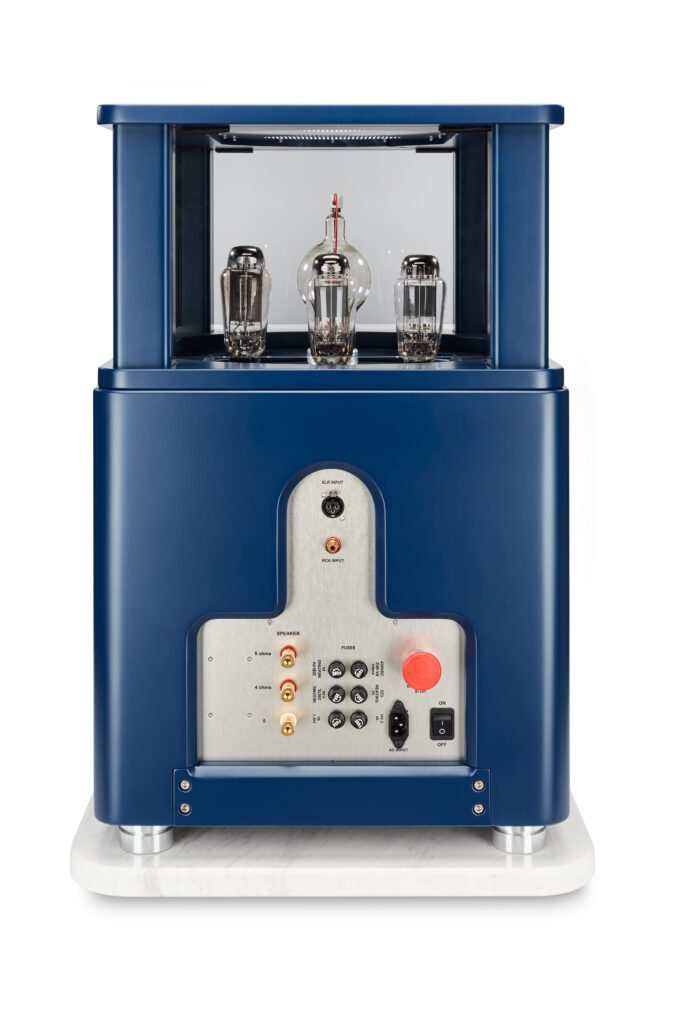
Trafomatic Audio Elysium rear

But we’re automatically doing what could be called ‘end-gaining’ instead of ‘means-whereby-ing’. Looking at this relatively rare case where vast swings of power are required, we overlook the performance when they aren’t. And given the Elysium is very good at covering the big dynamic swings and is totally without parallel in those first few watts, the means whereby most music happens in hi-fi is better than ends gained by focusing on the extremes. That might not make sense at first because we are so totally set on those extremes, but not every journey is a drag-race and the unadulterated realism you get from the Elysium and its super-transparent amplifier device makes you wonder if we’ve approached this all wrong!

Terra Incognita

You are probably thumping something and screaming “Yes, but how does it sound?” This highlights why the Elysium places us in terra incognita. This question also highlights why the Elysium – and in a wider context, the whole Ten concept – is not just for casual audio listening. That super-transparent amplifier device and the vast, beautifully made cabinet that wraps around it kills that question stone dead. How does it sound? It sounds like the cables its connected to, or the cartridge, the DAC, the loudspeakers, hell even the juice it’s being fed from the wall. It’s a fully blameless sound; a blank canvas upon which to draw your audio system’s performance. Get it right and it’s like a Kandinsky painting, an abstraction of music perfectly portrayed. Get it wrong and it’s a finger-painting by a drunk!

So, this isn’t and cannot be a conventional ‘review’, as the review process hits its end-stops long before the Elysium happens. Just in logistical terms, an amplifier that requires this degree of care and feeding does not lend itself to fast A/B tests… you’d be spending the better part of an hour in such a test just waiting for it to power up or power down without distress. But much more than that, it depends on the listener and the time they take to assemble a sufficiently qualified system to benefit from the Elysium’s inherent sonic invisibility.

Curiously – and this is the nearest this gets to being a ‘review’ in the normal sense – this need for ‘qualification’ does not apply to the records played through a system that uses the Elysium. No, it’s not forgiving of dynamically compressed and bright pop recordings that plagued the charts from the 1990s onwards, but neither is it brutally unforgiving of their crimes against ears. It presents the music as it was on the recording without exaggeration or masking. Once again holds to the notion of ultimate transparency from the amplifier; nothing is hidden from view, and nothing is exaggerated unless exaggerated elsewhere in the chain. More significantly, however, this works by letting you hear more of that music and hearing it more cogently.
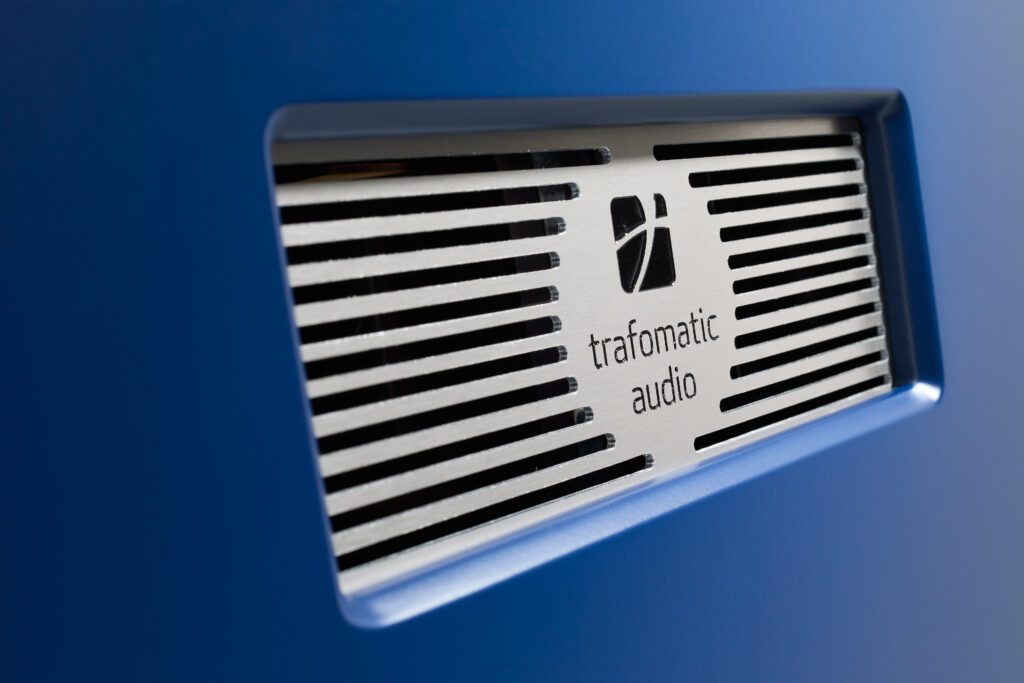
Trafomatic Audio Elysium grille

Many of the discs I use for testing have been played hundreds and hundreds of times, to the point where they are almost musically bankrupt, and a series of reference tones for checking specific aspects of a device or system performance. So, when new revelations are unearthed from those recordings it’s a treat. It’s rare if something new is found on one disc, so you realise this is not’ just another high-end’ amplifier when it happens on recording as it did with the Elysium. And when you move to less familiar recordings that aren’t used as test records but are things you play for fun and enjoyment, those aspects are maximised too.

Excitement

You might not get the same “I haven’t heard that before” revelations, but the excitement of listening to music you’ve not heard before swings into play, even with recordings you have heard many times. This is simply a new and better way of perceiving recorded music, one that’s more commonly associated with the live event… which is spectacular because neither Miles Davis nor Jimi Hendrix are touring these days, and Janis Joplin’s concert days are behind her now she’s dead.

 The Trafomatic Audio Elysium isn’t just for those who sit in front of a system for hours and hours on end and want to extract the last scintilla of performance and musical enjoyment from their systems. It’s for those for whom music is their lifeblood and want to feel that pumping through their veins. They won’t care that the product is so physically substantial that powering it up or down is more of an activity than an operation or that there’s a substantial waiting list, significant price notwithstanding. They’ll just want a pair. That’s what the Elysium does… it shows you what musical heaven on earth can be like!

TECHNICAL SPECIFICATIONS

  • Output power: 70W
  • Class of operation: Full DHT SE Class A 20W, Class A1 20–70W
  • Tubes complement: 2× 20B-V4 EML,
    1× 5Z3 EML , 1× 250TL EIMAC
  • Inputs: RCA/XLR
  • Tubes protection: Wood/glass cover
  • Outputs: 4 and 8 ohms
  • Input sensitivity: 3.5Vrms
  • THD %: 0.3% – 1W/1KHz, 4% – 70W/1KHz
  • Frequency bandwidth:10Hz(-2dB)-60KHz( -3dB)
  • S/N Ratio: 83dB
  • Input impedance: 47K
  • Power consumption: 500VA
  • Input voltage: 230V/50Hz
    (100-120-220-240V available on request)
  • Size (W×D×H): 620 × 520 × 800mm
  • Weight: 85kg per amplifier
  • Price: £58,000 per amplifier

Manufacturer: Trafomatic Audio

URL: trafomaticaudio.com

UK Distributor: Ten

URL: ten-collection.com

Tel: +44(0)208 971 3909


Back to Reviews

Burmester high-end sound for Ferrari

*From the Burmester news release

  • Burmester Audiosysteme now provides ‘pure sound’ in the vehicles of the luxury sports car brand Ferrari
  • With the worldwide launch of the Ferrari Purosangue, the Burmester 3D High-End Surround Sound System also makes its debut
  • Both brands represent the highest level of exclusivity, uncompromising quality and standard-setting performance
  • With the inception of this cooperation, Burmester is continuing to develop unique automotive sound experiences, creating a new chapter for high-end sound systems in the top automotive luxury segment

 Berlin, 13th of September 2022 With the Burmester sound system in the Ferrari Purosangue, an acoustic milestone was created that reflects the extraordinarily high standards of both manufacturers and carries the genes of the two prestigious brands. In the collaboration with Ferrari, Burmester is not simply treading a new path of high-end automotive sound development but elevating the sound experience to an entirely new level of heightened sensory perception.

Starting in 2019, the initial focus of Burmester’s development team was the realization of pure sound with outstanding performance of the system with its 21 speakers and 1,420 watts system power output. This results in superior naturalness and definition in the sound image, plus a new and one-off sound.

Particularly noteworthy are the high and low frequency ranges, where new technological ground has been broken. The ribbon tweeter, which is being used for the first ever time in a production vehicle, as well as the subwoofer, which is installed in a closed housing, play with an unheard of level of precision and impulse fidelity. This results in superior naturalness and definition in the sound image, plus a new and one-off sound. The exceptional level of imaging and clarity completely dissolves the boundaries between music and listener. For pure musical enjoyment.

Unique to Burmester in the market is the use of hybrid amplification. Decades of experience with analog amplification in the home audio sector have been transferred to the automotive sector. Analog amplification and filters for the high and mid-range are combined with digital amplification in the low range – for a warm, natural, detailed but nonetheless powerful sound.

So-called ultra-flat speakers are used in the surround area as well as for 3D sound. Due to their very low installation depth, they allow optimal positioning to enable an authentic spatial sound experience.

With the Burmester sound system in the Purosangue, completely new setting options are used, which emphasize typical features in the Burmester sound.

For an even crisper, cleaner bass, the Precise Bass setting can be selected. In three stages the low-frequency range can be given more discernable punch. This function is available for all presets. If desired, the Stage Plus preset provides a sharper and more contoured stage image that brings the listener even closer to the music.

The dedication in tuning the audio system also followed the discerning demands required to fully meet the unique character of the car, and thus the essence of the automotive works of art from Maranello.

TECHNICAL DATA & HIGHLIGHTS

  • 21 speakers incl. subwoofer, 1,420 watts including 400 watts booster for subwoofer
  • Fully active system – individually controlled and amplified speakers for optimal sound system tuning
  • Ribbon Tweeter – USP
    • extremely fine resolution, very clean reproduction of even the finest nuances
    • absolutely flat, very light metal foil, enables a direct and position-independent sound experience due to its radiation behavior
    • is used for all listening positions
    • also used in the center area for imaging a homogeneous stage
  • Subwoofer with large volume, closed system with high damping for a particularly precise and stunning low-frequency presence
  • Surrounds and 3D full-range ultra-flat speakers allow optimal positioning for an authentic spatial sound experience
  • Hybrid amplifier with analog amplification and filters for treble and midrange and digital amplification in the low frequency range for natural, detailed and powerful sound
  • Very low distortion at maximum possible sound pressure for effortless and faithful reproduction of the full dynamic range, for intensive yet comfortable listening pleasure

ABOUT BURMESTER

Burmester Audiosysteme is an owner-managed, medium-sized company based in Berlin, Germany, and one of the world’s most renowned manufacturers in the field of high-end audio. Since its foundation in 1977, Burmester has created and manufactured high-end audio systems of unequivocal top level in terms of design, build and performance. As one of the very few remaining independent manufacturers in the sector, Burmester is an industry[1]recognized, globally established leader with a clear focus on the home and automotive sector.

Read hi-fi+ Burmester Reviews Here

‘A sound journey to space,’ available at Devialet boutiques

*From the Devialet news release

There is no sound in space, but that didn’t stop us. The pioneering partnership between the world’s leading satellite launch company ArianeGroup and Devialet was one small step for man, but a giant leap for audio engineering. The challenge: reproduce the most powerful sound mankind has ever achieved all while staying true to our brand’s commitment to absolute precision and minimal distortion.

Born of a shared appetite for radical innovation and soul-lifting encounters, the immersive experience premiered at the Dubai exhibition in 2021. And now, brace yourself for full impact. It’s coming to Devialet boutiques around the world.

Click here for more.