Up to 37% in savings when you subscribe to hi-fi+
hifi-logo-footer

Begin typing your search above and press return to search. Press Esc to cancel.

Network Acoustics Muon

Getting great results from a streaming audio system is not as simple as it seems. It’s a bit like a high-end turntable, where selecting the right components is only the first step of the process. Setting the thing up to perform as well as it can is often a painstaking process that frequently requires professional input. It’s an art that some of us have learned over decades as the components themselves become more refined and the knowledge about what really matters accumulates. Streaming of a quality that turntable owners would accept is less than a decade old and there’s still a lot to learn about what makes streaming sources sound engaging and revealing.

Network Acoustics has not been in business long but it has a good handle on what it takes to give any streaming system a good chance of performing as well as it can. Richard Trussell and Rob Osbourne of Network Acoustics have been working on ways to stop the noise that seems to be an intrinsic part of data networks from polluting the data flowing from both local and external streaming sources. They make cables and filters at two levels with this sole purpose in mind and the results produced by the ENO and now Muon filter and ethernet cables suggests that they have found a rather effective way to stop noise entering the system without harming the signal.
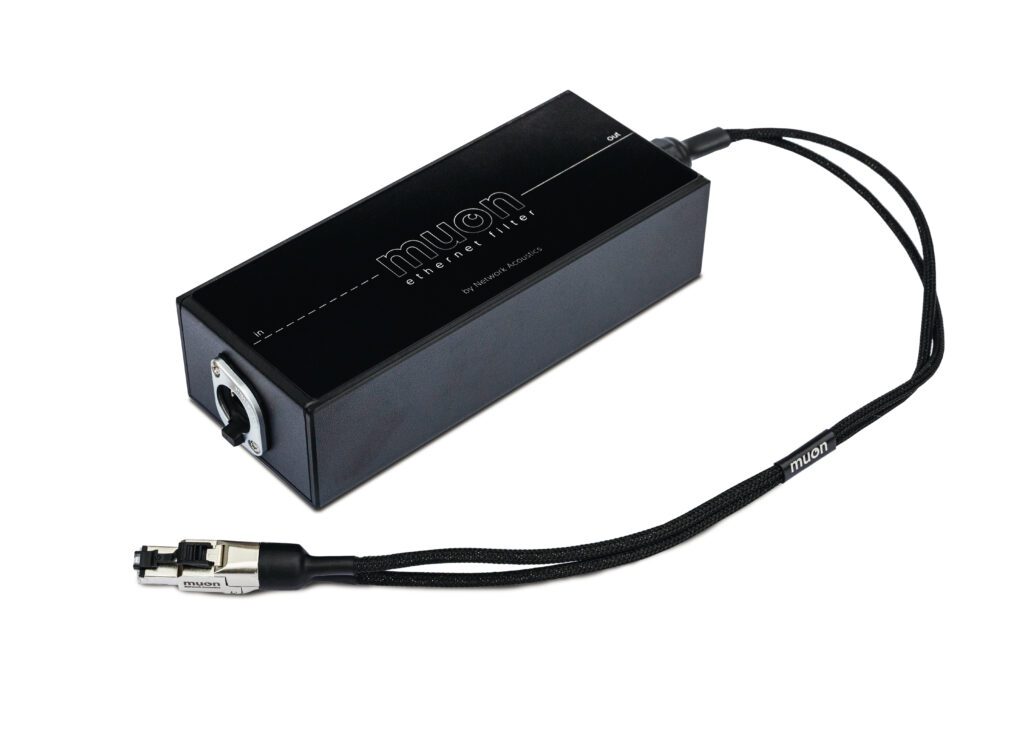
Network Acoustics Muon

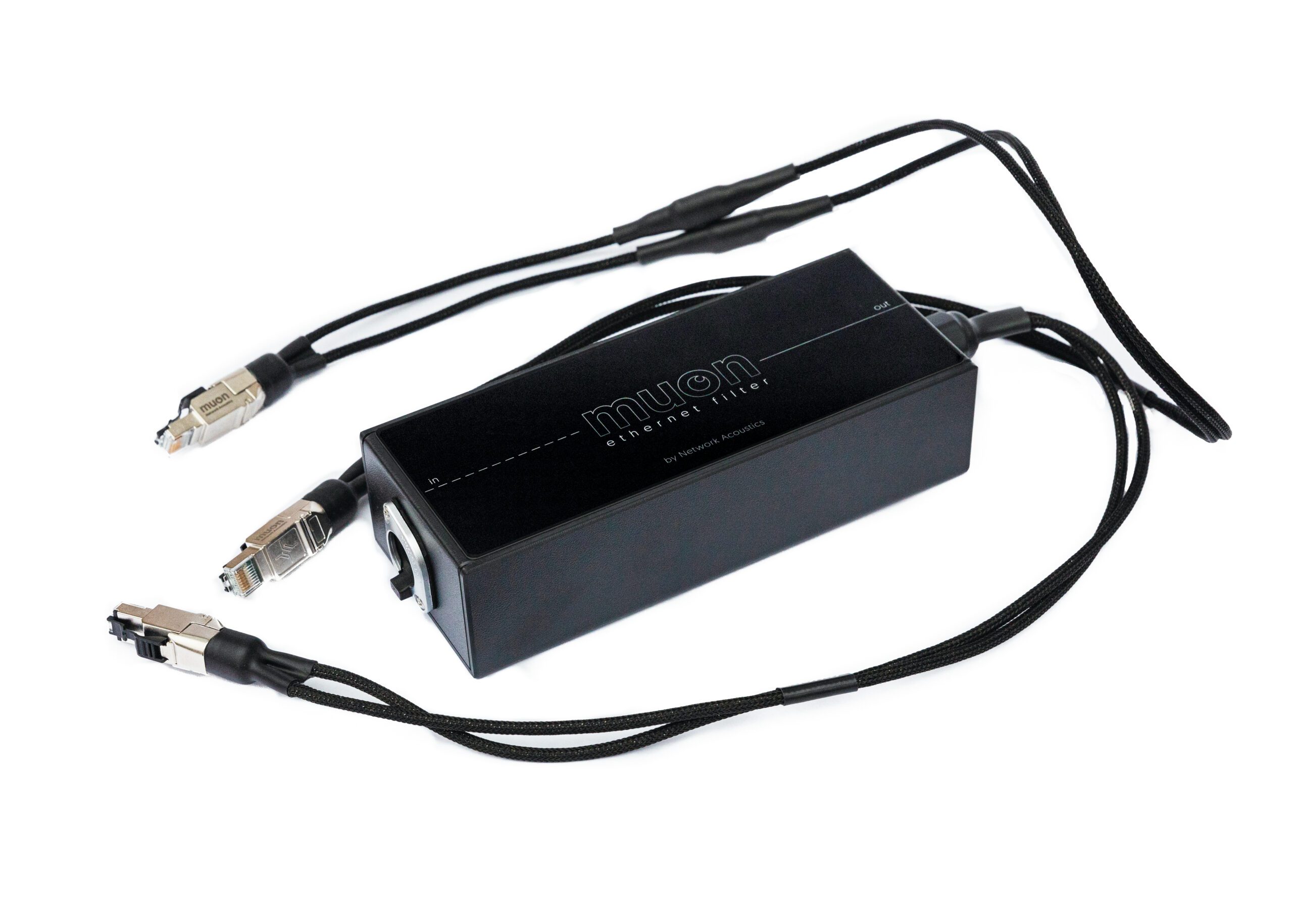
The Muon Streaming System consists of an ethernet filter in a compact, ABS box (sounds better than metal) measuring 7.5 inches long with a Neutrik RJ45 socket at one end and a 50cm captive ethernet cable connected to the other. This has two cores that terminate in a Telegärtner RJ45 plug. The plug goes into your streamer or possibly hard drive (if it has a dedicated ethernet output) and the socket connects to Network Acoustics Muon Streaming Cable which is plugs into a network switch at the other end. It could be connected to the router if that’s in the vicinity, but as a rule it pays to have at least one switch between the router and the network for a streaming system, as a switch provides a degree of isolation.

Secret sauce

The Muon Streaming Cable is similar to the captive lead on the filter but has a small filter nearer to one end than the other, this end should be connected to the filter. The minimum length that Network Acoustics offer the Muon Ethernet Cable in is 1.5m. That length is not an arbitrary one but an important ingredient in the Muon’s performance,  in a classic ‘secret sauce’ manner, where the technology that filters the noise is not disclosed. Richard and Rob will say that the RFI/EMI filter uses proprietary pure silver elements and that this metal is also used in the cables which are 99.99% purity UP-OCC types, but that’s all folks. It’s a passive device that sits inline and somehow extracts the noise that undermines digital audio.

I have been using the ENO filter and cable between an English Electric 8Switch and a Melco N10 music library for some time so the first comparison I made was with this already very effective filtering combo. The Muon increased the clarity of vocal and the acoustic around it, reinforced the impact of a kick drum, increased the sense of immediacy and opened up the soundstage to let the dynamics through. This was with Patricia Barber’s Company (Modern Cool) which is an excellent recording but I’ve not heard the drums in particular sound so real for a long time, good enough to get the arms flailing around on the air kit in fact. On a more audiophile level it was possible to hear that the gaps, the quiet moments were in fact quieter, the noise floor being audibly lower. This indicates greater perceived signal to noise and hence dynamics.

Natural to the max

The next step was to take the Melco out of the loop and contrast the Muon Streaming System with an Audioquest Cinnamon ethernet cable between switch and streamer using Qobuz as the source, a maximum potential situation as far as filtering goes. This was more dramatic with openness, ease, detail and colour flooding in to make the voices on Ryan Adams’ live studio version of ‘Dear John’ tear inducingly beautiful. The sheer onslaught of nuance and tonal depth was overwhelming and the pedal steel extraordinarily enchanting, it was like turning up the naturalness to the max.

Once I had regained composure I did something similar but this time using the Melco as the signal source, dropping in the Muon chain in place of a Melco ethernet to the switch. Here I put on Chasing the Dragon’s recent Locrian Ensemble recording of Mendelssohn Octets where the timing became much clearer and with it the melody, likewise the character of the stringed instruments came to the fore along with the way in which they were played. There was an increase in openness too but not to the extent seen above. On another more familiar piece the same comparison produced greater tone colour with piano notes gaining greater shine, the space around it and a voice being better defined and the phrasing used by all the musicians making its presence felt.
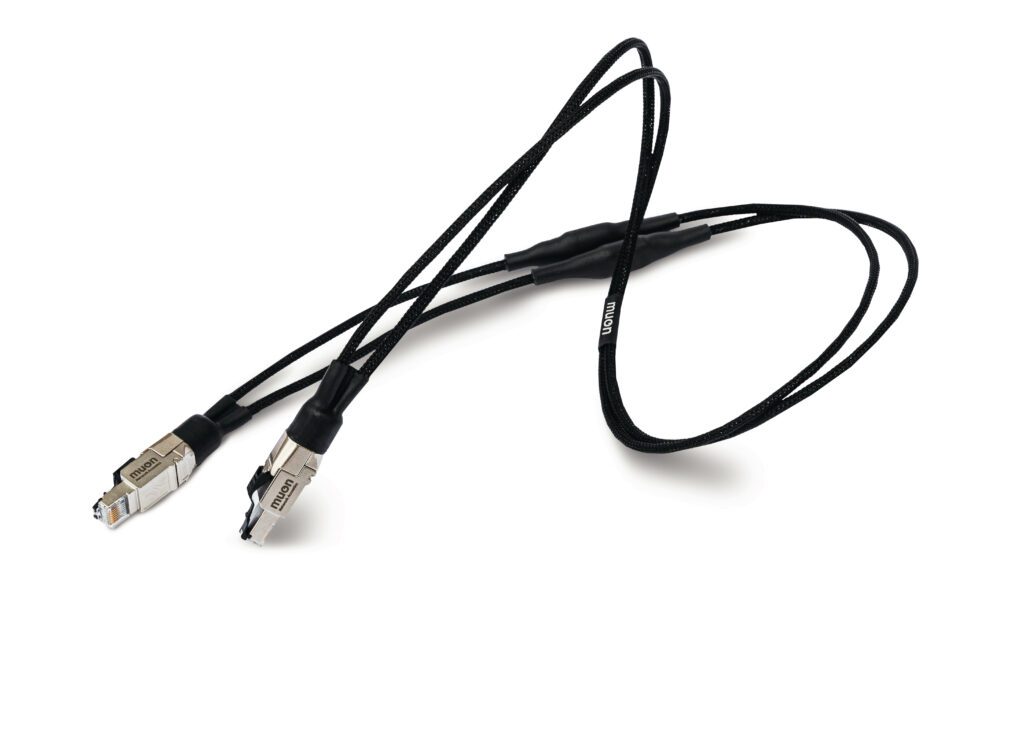
Network Acoustics Ethernet cable

I carried on making comparisons with various streamers and DACs including using USB between Melco and DAC with the Muon components shielding the drive from the network, as it was doing above. The result was very similar with naturalness, beauty and openness all being greatly increased, so much so that ‘Helplessly Hoping’ (Crosby, Stills & Nash) put a lump in my throat. The sound is so clean and yet so relaxed that it’s as easy as very good analogue.

With the Muon Streaming System Network Acoustics prove that RFI/EMI is what stops streaming systems performing sounding as good as they should. I would go so far as to say don’t buy another hard drive, streamer or DAC until you have heard what the stuff you have already can do when it’s free of the hidden harm that electrical noise brings. This is one of those, “you don’t know what you’re missing until you hear it” products. It’s a game changer.

Technical specifications

Muon Ethernet Filter

  • Type Silver wired ethernet filter
  • Input Neutrik RJ45 ethernet
  • Output 50cm UP-OCC continuous cast pure silver ethernet cable
  • Termination Telegärtner RJ45 CAT8 connector
  • Size H×W×D 50 × 190 × 78mm
  • Weight 300g
  • Muon Streaming Cable
  • Type 4-core 100MB/s ethernet network cable
  • Conductor UP-OCC continuous cast 99.99% purity silver
  • Length 1.5m (longer lengths available)
  • Terminations Telegärtner Cat8.1 wide bandwidth gold plated connectors
  • Price Muon Ethernet Filter £1,295
    Muon Streaming Cable £995 (1.5m)
    Muon Streaming System bundle £1,795

Manufacturer

Network Acoustics

www.networkacoustics.com

 +44 (0)1803 313714

Read more Network Acoustics reviews here

Back to Reviews

J Sikora KV Max Zirconium Series Tonearm debuts at Warsaw

J Sikora KV Max Zirconium Series Tonearm debuts at Warsaw Audio Video Show

The guys from J Sikora took the opportunity to show the world their KV Max Zirconium Series Tonearm for the first time at the Warsaw Audio Video Show in Poland last month.

To learn more about this product, click here.

You can see this video and more on the Hi-Fi+ YouTube Channel, such as Tea Time with Alan and Pete.

Hi-Fi+ Editor Alan Sircom and Publisher Pete Collingwood-Trewin talk about what’s happening in the high-end audio world.

Tea Time with Alan and Pete is just one of several new series on the Hi-Fi+ YouTube channel designed for audiophiles of all levels.

Another series is History of Audio, which aims to teach viewers a little about the History of Audio, which might be a trip down memory lane for many. It also hopes those who watch will learn from the varying experiences of other audiophiles through their trials and tribulations with different equipment.

While you’re on our YouTube channel, be sure to check out our Audio Basics series. So far, this series has covered what makes a great stereo system and how to find a great stereo system.

Soon, you can find reports from manufacturers at audio shows from around the world. You can see the likes of Aurender, Focal Naim, AudioThesis, Schiit Audio, and Magnepan, just to name a few. Right now, you can see what debuted at AXPONA 2022 and a bit from the Texas Audio Roundup, including background on the Magnepan LRS+. You can also see videos from Pacific Audio Fest in Seattle, CEDIA 2022 in Dallas, and you’ll see reports from Capital Audio Fest coming next month.

You can also see additional product reviews as well as more from the Warsaw Audio Video show and Capital Audio Fest on the hi-fi+ YouTube channel coming soon.

Be sure to subscribe to the YouTube channel so you don’t miss any episodes!

Back to homepage

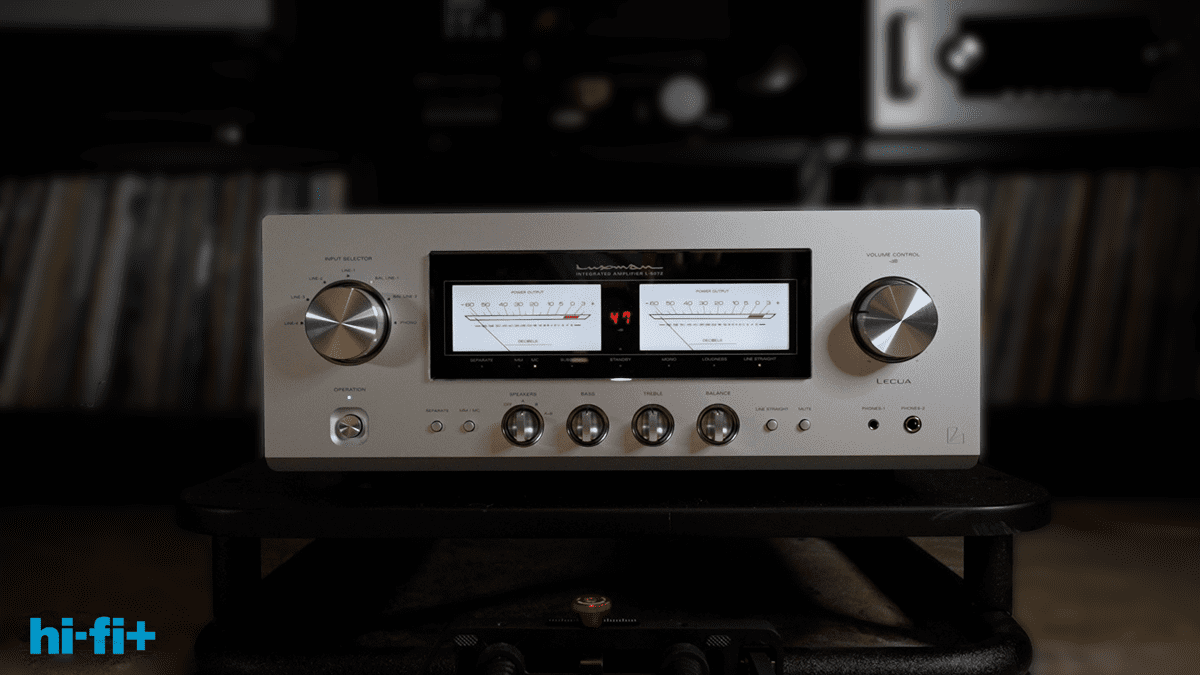
Luxman L-507z: Purest tonality under $50k?

Luxman L-507z offers pure tonality and balance

I’ve reviewed the new Luxman L-507z integrated amplifier on the Plus YouTube channel:

Here are my show notes for this episode for those of you who are intrigued by this integrated amp:

Superpower(s): The L-507z presents music with an extremely pure, low-grain tonality that isn’t compromised by frequency response or dynamic trickery. The frequency balance of the L-507z is very even-handed and the dynamics are outstandingly realistic. This combination of purity, balance and dynamics is hard to find at any price and makes the L-507z an especially good value.

Special features: LIFES 1.0 distortion-cancelling feedback engine. Is this why the L-507z has such a beautiful, grainless sound? Well, who knows? But Luxman seems to think it is a big deal. They emphasize that “extensive computer simulations” were used, along with repeated trials of different components and listening to prototypes.

  • Price: $8995 (U.S.A)
  • Power: 110 watts per channel (8 ohms) or 210 watts per channel (4 ohms)
  • Dimensions: 17.3” wide x 7.0” high x 17.9” deep
  • Weight: 56 lb.
  • Tone controls: bass, treble, loudness contour
  • Phono preamp: yes, with MM and MC inputs
  • Balanced inputs: yes, 2, for line only
  • Headphone output: yes, both single-ended and Pentaconn balanced
  • Remote: yes, IR
  • Associated equipment:
  • dCS Lina DAC and Master Clock
  • Tidal and Qobuz streaming
  • Magnepan LRX+ speakers
  • Golden Ear BRX speakers
  • Sanus speaker stands
  • Audioquest interconnects
  • Audioquest speaker cables
  • Shunyata power cables
  • Shunyata power director
  • Audio Research Ref 6 preamp
  • Legacy Wavelet DAC/Preamp
  • Bryston 3b Cubed amplifier
  • Orchard Audio Starkrimson amplifier
  • Oppo BCD-105 CD player/transport
  • Vicoustic diffusors

For more information about this product, click here.

About Tom Martin:

Tom is a long-time audiophile. He began his reviewing career after acquiring the The Absolute Sound magazine in 1997 and then hi-fi+ magazine in 2002. He has worked closely with Harry Pearson and Robert Harley at TAS and with Roy Gregory and Alan Sircom at hi-fi+. Since Tom and his teams expanded the TAS and Plus platforms in the digital domain, he has served as Chief Content Officer.

Back to homepage

Meze Audio Epoque: New limited Elite planar magnetic headphone

*From the Meze Audio news release

BAIA MARE, Romania – December 8, 2022 – Meze Audio, Romanian-based company developing premium audiophile headphones and earphones, fuses art and high-end audio technology in their newest headphone – EPOQUE.

A limited-edition of Elite, their flagship headphone, Epoque pays homage to one of the most iconic artistic movements – Art Nouveau. Limited to 100 units worldwide, this headphone is Meze’s timeless reminder of “La Belle Epoque”.

“This particular style of art had a significant importance throughout my creative journey, and I wanted to express my admiration for it through my own craft. Much like the artists of that time, we are inspired by shapes, textures and patterns from nature. We try to revive creativity and bring genuine artistic value to a world of mass production. Epoque is the perfect reflection of our artistic sensibilities.” –  Antonio Meze, Lead Designer and Founder of Meze Audio.

Made from CNC milled aluminum, the headphone frame features a sophisticated finish in shades of gray, inspired by iconic works of architecture, paintings and designs that defined the Art Nouveau movement.

Shapes that resemble stems and flowers are hand-applied with precision on the cups, as well as on the carbon fiber headband, giving the impression of an infinite flow of sinuous lines. The painting process is meticulous and unrushed, with each frame taking more than a day to complete, before final assembly.

Made for passionate audiophiles, art enthusiasts and collectors, as part of Meze Audio’s Art Gallery collection, Epoque is now available for $5,000 on mezeaudio.com and in selected dealers’ stores.


About Meze Audio:

Founded in 2011 in Baia Mare, Romania, Meze Audio is renowned for timeless design, pure comfort and engaging vivid sound. We are engineers, musicians and artists. Headphones are the intersection, the common ground where everybody’s interests meet. We are fortunate as our work really is our passion and we develop each model as if making it for ourselves. 

About Antonio Meze – Lead Designer and Founder of Meze Audio:

Award winning industrial designer with over 16 years of experience. In his field, Antonio was always interested in product innovation, technology and its implementation and their social and cultural implications. While working for design studios and companies from all over the world, traveling a lot, Antonio was always in search of the perfect headphone. In 2011, he decided to build that headphone himself, and set out to create a product he could relate to in the same way he felt connected to his Fender Stratocaster guitar. An object to pour his passion for music in, full of personality and life, which also incorporates the attributes of high-end technology.

His journey led to the start of Meze Audio, now a brand of reference for audiophiles all over the world.

Back to homepage

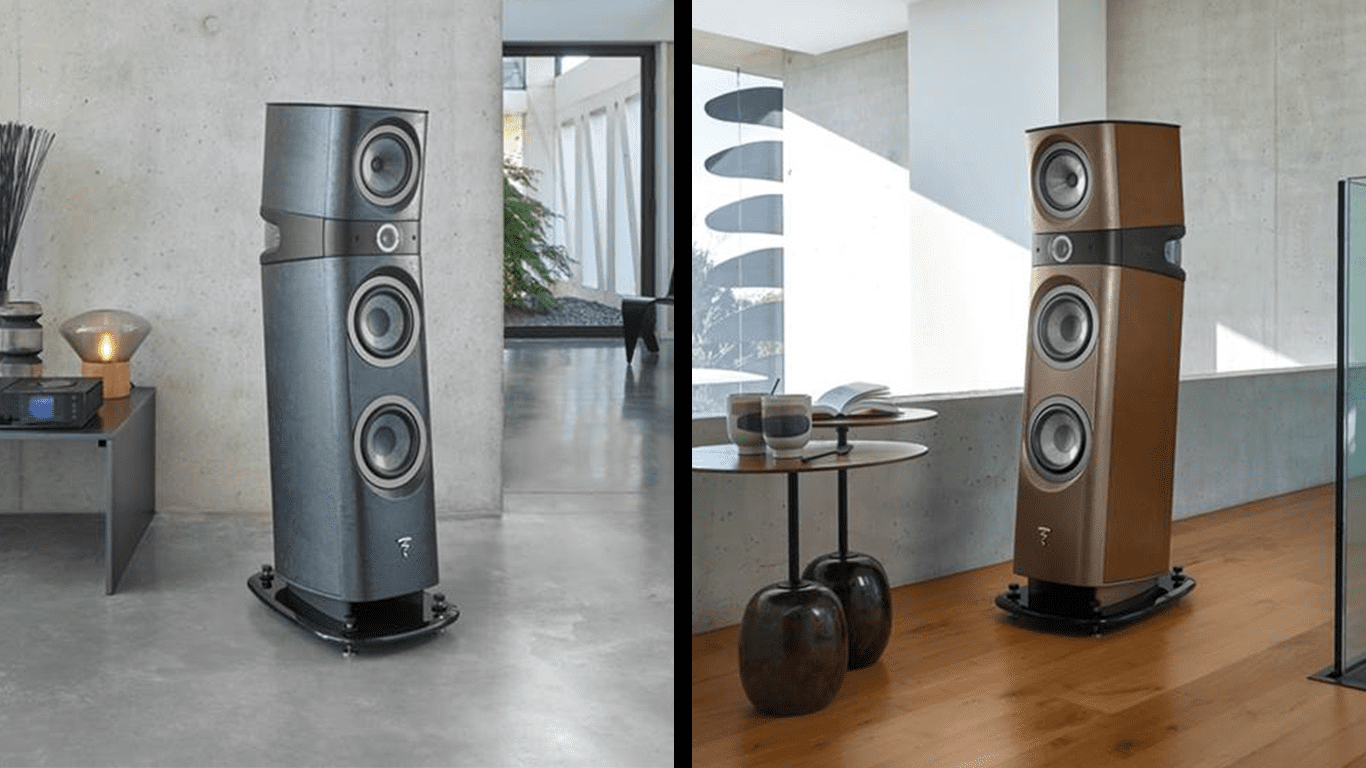
Focal Sopra 2 now available in new finishes

French sound specialist, Focal has launched two new finishes – Black Ostrea and Brown Concrete – for its popular Sopra 2 loudspeakers, designed to bring a modern look and award-winning sound to contemporary home interiors.

Both finishes evolve the concrete effect first featured on the Sopra 2 special editions in the Focal Naim 10th Anniversary system.

The Black Ostrea finish is inspired by the pearlised appearance of an oyster, with an iridescent sheen to each side, while Brown Concrete sports warmer-toned, chocolate-coloured side panels, paired with metallic bronze front panels.

The new Focal Sopra 2 Brown Concrete and Black Ostrea finishes are available to order now, with a suggested retail price of £14,999 per pair.

If you fancy neither oysters nor chocolate, the Sopra 2 remain available in Carrara White, Electric Orange, and Black Lacquer finishes, as well as in Light Oak and Black Oak editions.

For more about this product, click here.

Back to homepage


Margules Audio at CAF: Fully adjustable tonearm?

Veronica Diaz and Julian Margules show off a new turntable, preamps and amp at Capital Audio Fest in Washington, D.C.

The new turntable boasts a fully adjustable tonearm, low noise floor, and many other features that make it a great product.

To find out more about these products, follow the link below:

Home

What is hi-fi+?

hi-fi+ magazine has been a pioneer in the global audio market since the early 1990s. Since the mid-2000s, hi-fi+ has progressively expanded its platforms to include web, newsletter, digital magazine, social media and YouTube. With a focus on high-performance, high-design audio, hi-fi+ serves a global audience of over 300,000 audiophiles.

To sign up for the hifi+ Digital Newsletter, click here.

You can see this video and more on the Hi-Fi+ YouTube Channel, such as Tea Time with Alan and Pete.

Hi-Fi+ Editor Alan Sircom and Publisher Pete Collingwood-Trewin talk about what’s happening in the high-end audio world.

Tea Time with Alan and Pete is just one of several new series on the Hi-Fi+ YouTube channel designed for audiophiles of all levels.

Another series is History of Audio, which aims to teach viewers a little about the History of Audio, which might be a trip down memory lane for many. It also hopes those who watch will learn from the varying experiences of other audiophiles through their trials and tribulations with different equipment.

While you’re on our YouTube channel, be sure to check out our Audio Basics series. So far, this series has covered what makes a great stereo system and how to find a great stereo system.

Soon, you can find reports from manufacturers at audio shows from around the world. You can see the likes of Aurender, Focal Naim, AudioThesis, Schiit Audio, and Magnepan, just to name a few. Right now, you can see what debuted at AXPONA 2022 and a bit from the Texas Audio Roundup, including background on the Magnepan LRS+. You can also see videos from Pacific Audio Fest in Seattle, CEDIA 2022 in Dallas, and you’ll see reports from Capital Audio Fest coming next month.

You can also see additional product reviews as well as more from the Warsaw Audio Video show and Capital Audio Fest on the hi-fi+ YouTube channel coming soon.

Be sure to subscribe to the YouTube channel so you don’t miss any episodes!

Back to homepage

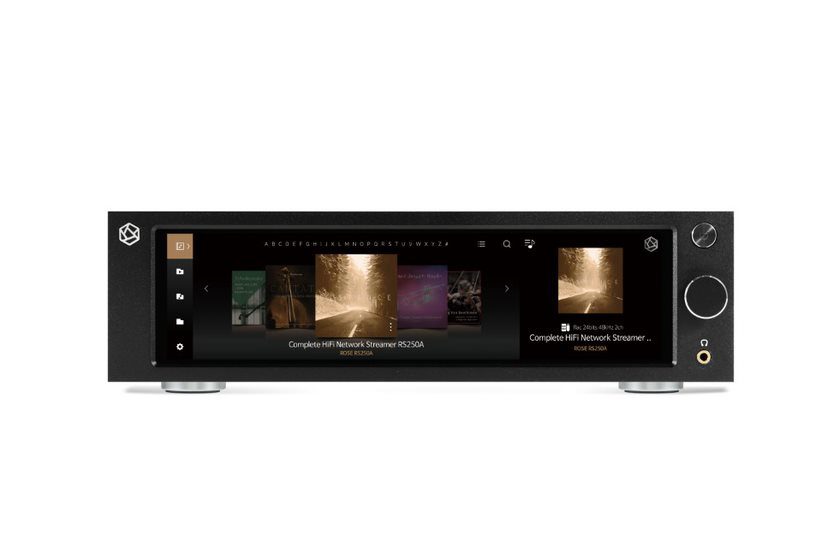
HiFi Rose RS250A Streamer Available Now

HiFi Rose RS250A takes original RS250 design but replaces digital section and output stage

*From the Henley Audio news release

Since its introduction in mid-2021 the RS250 network streamer from HiFi Rose has found a happy home in many audio systems around the world thanks to its compact footprint, excellent sound quality and superior user interface. From December 2022, Henley Audio are happy to announce that the Korean company are updating their popular “mid-level” product with new hardware and a new finish option.

The RS250A (£2349.00 SRP) takes the original RS250 design but replaces the digital section and output stage, including upgrading to the ES9028 PRODAC chip, for a higher level of performance. In addition to the hardware changes, the RS250A is also now available in black finish thanks to huge customer demand. Both silver and black finish will be available across the UK, offering customers to make a choice that suits their system.

The RS250Ais designed to bring together a whole world of digital audio and present it intuitively and enjoyably for auditory and visual pleasure.

Key features include:

  • 8.8” wide multi-touch touchscreen
  • Support for digital audio playback up-to 32-bit / 768KHz (PCM) and DSD512 (Native DSD)
  • New ES9028 PRO DAC chip and 100MHz Femto oscillator✓New HiFi Rose Discrete OPAMP-based output stage
  • Stream music from your network or attached devices through the built-in Rose OS MUSIC app
  • Airplay, Roon Ready and Spotify Connect streaming available
  • Integrated apps for Qobuz, Apple Music and Tidal streaming services
  • MQA certified device (full decoding)
  • Bespoke Rose OS apps give access to video services, podcasts,and radio playback
  • Playback or rip CDs from external optical drives, connected by USB (drive not included)
  • Manually adjust output settings to suit the RS250Ato your needs
  • Special linear power supply configuration minimises electrical noise
  • HDMI output for 4K video output to a connected TV (viaTidal, Rose Tube or Video apps)
  • Wi-Fi, ethernet and Bluetooth 4.0 (AD2DP SINK, AVRCPv1.3) connectivity
  • Bluetooth remote control included, and free Android/iOS apps available

HiFi Rose RS250A: £2349.00 (SRP)

HiFiRose RS250Ain detail

The RS250Ais a high-performance network streamer, DAC,and pre-amplifier with an output stage optimised for true audiophile performance. Thanks to the coveted RoseOS operating system, intuitive touch-screen control and its extensive list of features, the RS250A opens up a wide world of high-quality digital music.

Sound Credentials

The RS250Ais built around a first-class digital stage. Starting with the superior ES9028 PRO DAC chip and utilising an ultra-low phase noise oscillator, the streamer can support and convey the true quality of music formats up-to PCM 32 bit / 768kHz and Native DSD512 (22.5792MHz). In the output stage HiFi Rose have made use of their new discrete op-amp technology which, alongside other premium technologies and materials such as the full linear power circuit, results in a sound performance that is full of character and benefitting from very low noise and distortion.

The RS250Afunctions as a complete digital hub and pre-amplifier, for a fully customised system set-up.With an extensive array of hardware inputs and outputs,including a high-quality headphone out-put,most of which can be customised or adjusted to suit the user’s exact requirements, you can achieve greater control over your whole system than ever before.There isalso the option to connect to the network by ethernet (preferred) or by Wi-Fi. The supplied Bluetooth remote gives seamlesscontrol over most of the RoseOS system.


For more information, visit this link.

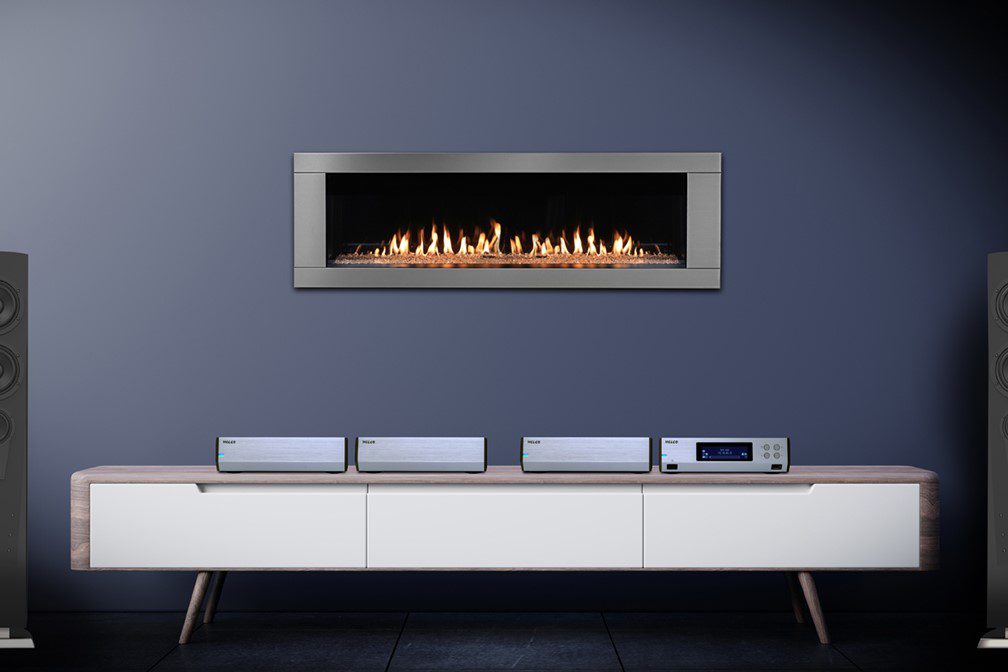
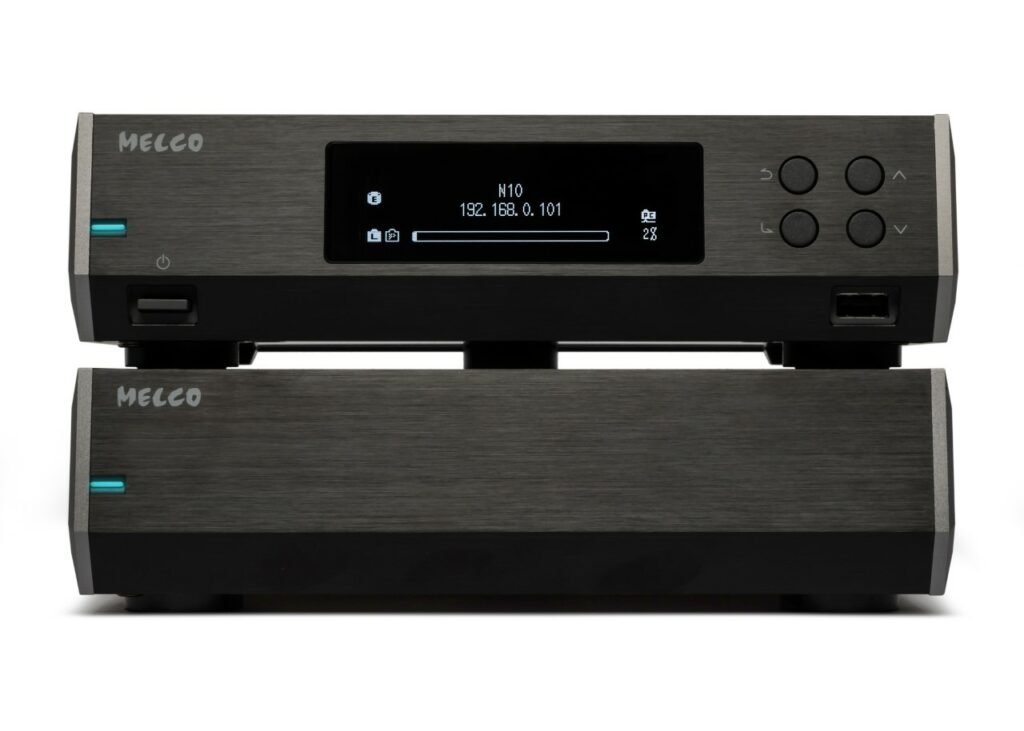
Melco savings on packaged combos this winter

Discounts on packaged hardware bundles offered this winter

*From the Melco news release

5 December 2022, Tokyo, Japan: Japanese digital music library specialist Melco Audio is offering big discounts on packaged hardware bundles this winter. Spanning December and into January 2023, Melco’s ‘Stay Warm and Bundle Up’ promotion has been launched to coincide with prime music-listening season this winter and into the holidays.

To celebrate the season, Melco is offering eight money-saving combo bundles for a limited time only. All of the bundles are based around one of Melco’s award-winning half-width digital music libraries. Buyers can choose between the entry-level N100, in 2 TB or 5 TB configurations, or the flagship two-box N10/2, in a choice of HDD or SSD drive.

The libraries are then bundled with a choice of key Melco accessories, including one of Melco’s two audiophile data switches, the brand new entry-level S100/2 or the flagship S10, or with Melco’s D100 optical drive, which provides archival-quality CD ripping over USB.

Melco has also teamed up with its European distributors to provide two specific bundles for the entry-level N100, with trusted power supplies specific to the local market.

‘Stay Warm and Bundle Up’ promotion offers

Melco N10/2 (SSD) with a Melco S10 data switch Normal price: £14,398/EUR 16,998; Bundle Price: £12,999/EUR 14,999

Melco N10/2 (SSD) with a Melco S100/2 data switch Normal price: £11,498/EUR 13,498; Bundle price: £9,999/EUR 11,999

Melco N10/2 (HDD) with a Melco S10 data switch Normal price: £12,298/EUR 14,498; Bundle Price: £10,999/EUR 12,999

Melco N10/2 (HDD) with a Melco S100/2 data switch Normal price: £9,398/EUR 10,998; Bundle Price: £7,999/EUR 9,999

Melco N100 (2 TB) with a Melco D100 optical drive Normal price: £3,298/EUR 3,848; Bundle Price: £2,899/EUR 3,399

Melco N100 (5 TB) with a Melco D100 optical drive Normal price: £3,948/EUR 4,648; Bundle Price: £3,499/EUR 4,199

Melco N100 (5 TB) with a PSU (PLiXiR/Sbooster) Normal price: £3,224/EUR 3,699; Bundle Price: £2,799/EUR 3,299

Melco N100 (2 TB) with a PSU (PLiXiR/Sbooster) Normal price: £2,574/EUR 2,899; Bundle Price: £2,199/EUR 2,599

The promotion will run in the UK and Europe from December 2022 to 31st January 2023 at participating Melco dealers (see melcoaudio.com) while stocks last.

The money-saving offers are perfect for audiophiles considering the benefits of enjoying a lifetime-built collection of music with Melco’s award-winning audiophile-grade storage, management and playback quality.

Control is via a smartphone or tablet app, with menu functions available from the front panel. Melco digital music libraries are famously easy to use and benefit from additional rear-mounted USB ports for effortless expansion, back-up and connection to USB DACs.

Melco’s unique dual Ethernet ports, provide a dedicated ‘PLAYER’ port in addition to a LAN port, to minimise the unwanted effects of noise on the music signal and present network audio players with a direct, high data-integrity connection for audiophile sound quality.

Back to homepage

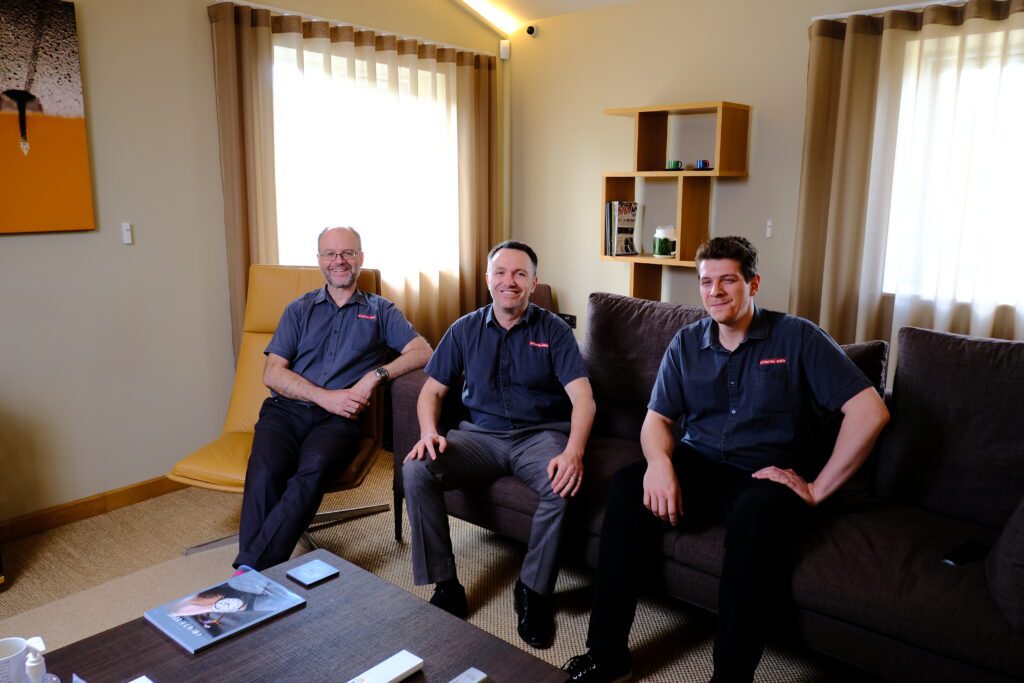
Meet Your Dealer: Mike Cunningham of Criterion Audio

We’ve been to Criterion Audio before, way back in issue 132. The Cambridgeshire audio retailer is one of those destination stores that has a catchment area that extends beyond the country and with a fine selection of stock that covers almost the full gamut of good audio, it’s always high on the list. However, there have been some marked changes since we last visited and it’s always worth a second look, just to play catch-up.

One of the most common questions between retailers of late is ‘what did you do in the lockdowns?’ For those who rely on demonstration, it’s often a grisly tale of layoffs and furloughs, shuttered stores and maybe (just maybe) a lick of paint and a new sofa for the ‘dem room’ when things began to open up. For a few, however, this was a golden opportunity to re-evaluate aspects of the store and make some big changes for the positive, and arguably few have done that with such panache as Criterion Audio.

Criterion Audio

The first component in this was to look honestly at what does and doesn’t work for that setting. “When you last visited,” said Mike Cunningham, Criterion’s Director, “we had a whole room given over to headphones. We still sell headphones but that ‘destination store’ for headphones thing just didn’t work for us.” The small room full of headphones and headphone amps is now an office.

Changing rooms

For some, that would be enough. Not for Mike and not for Criterion. “We took a long, hard look at our main listening room.” He said, pointing to a room now given over to servicing, repairs and updates. “We spent a lot of time and money trying to make that room work, but it never sounded right.” But nothing really prepared me for where they went next.

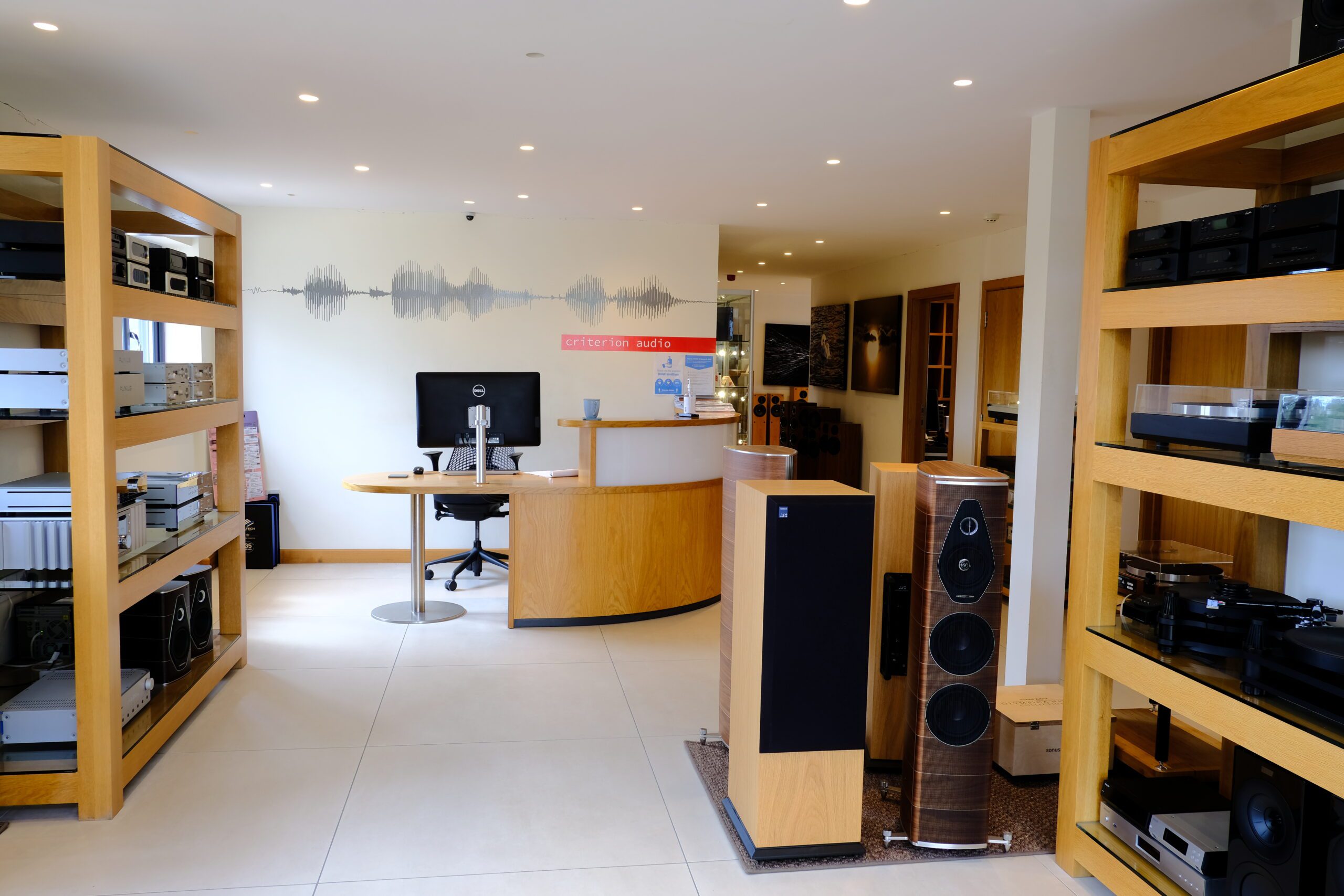
In recent years, Criterion has taken over the entire building, and has gone to work remodelling significant parts of the back section of the store, which used to be warehousing. What was once the second smallest demonstration room was left more or less untouched, and in getting rid of the headphone demonstration suite, it became the smallest demo room on site. In fact, it’s the perfect size for the small-to-medium rooms for those on their first or second rungs on the audio ladder; approximately the size of a modern UK living room in a new‑build house. 

Criterion Audio

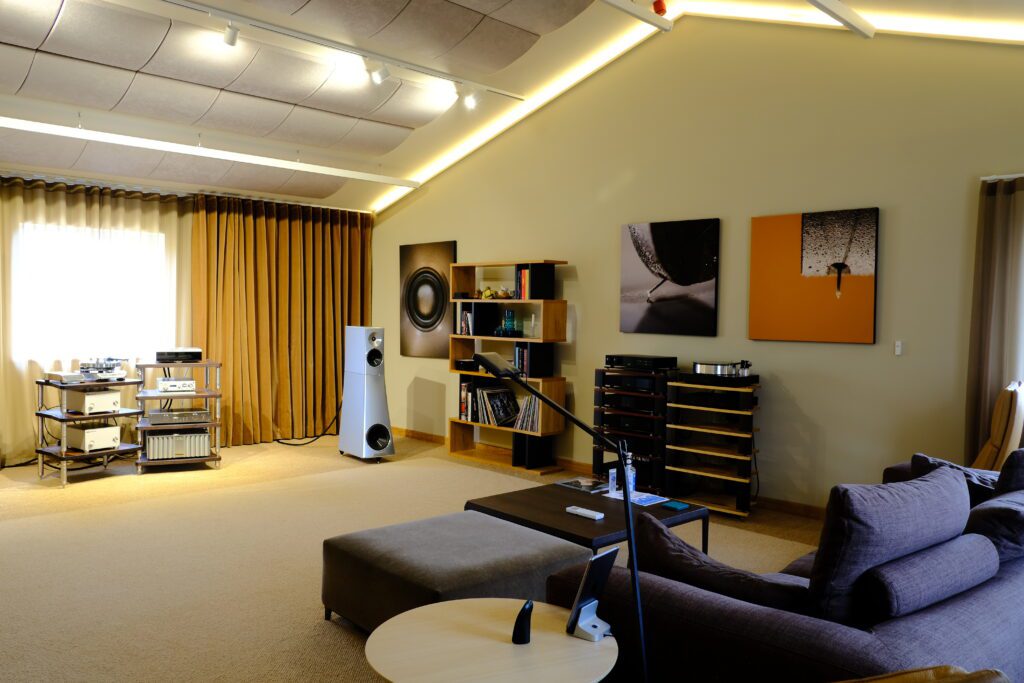
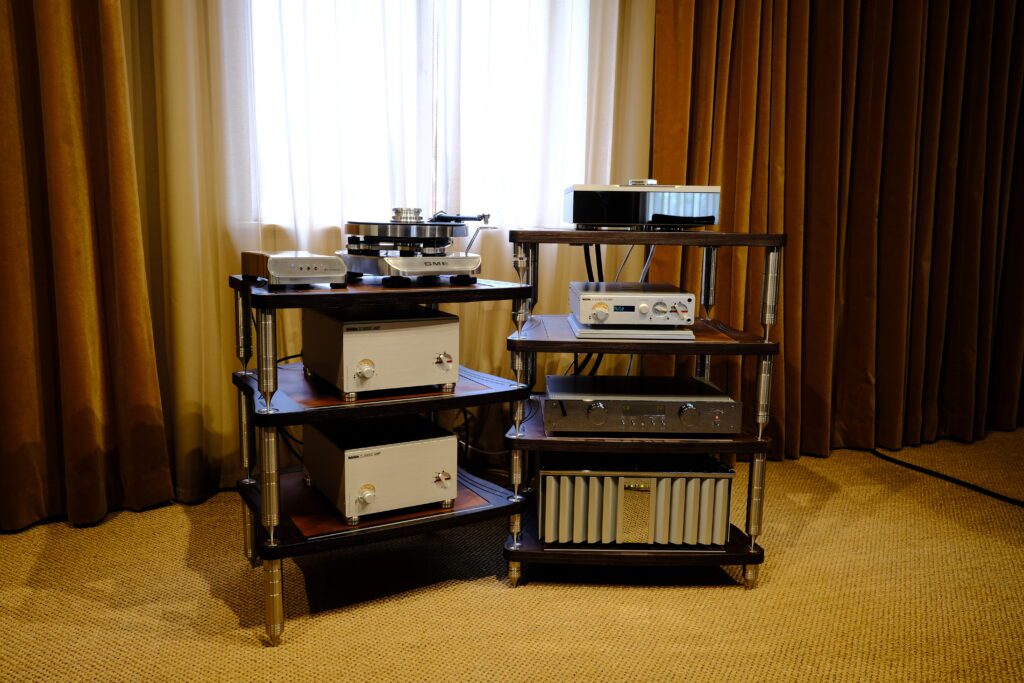
The medium and large-sized listening rooms effectively didn’t exist until recently. They have been built from scratch as dedicated evaluation demonstration rooms retasking some warehouse space, with the middle room about the size of a medium-to-large living room or dedicated listening space, and the end room being capable of demonstrating even the largest full-range floorstanding loudspeakers irrespective of size or cost. 

This is only the start. The rooms have been carefully designed to be sonically isolated from one another, although not with the kind of sonically‑damping soundproofing that turns living spaces into studio control rooms. Everything from the type of window blind to the standoffs holding the airflow ducts has been scrutinised to ensure it has the least impact on the sound. Simply using the same air system shared between two listening rooms was a challenge, because the potential for sound in one to bleed into the other is huge. What’s more, forced air circulation into a room can often create eddy currents in the room’s air, which can also undermine the performance of a system in ways not replicated at home.

The rooms are also slightly non-parallel, but not so much as to make them unrepresentative of a domestic listening environment. However, this non-parallel design helps make distinguishing different equipment that bit easier all round for the listener. Couple this with a vaulted roof in the largest room and you have listening spaces that give a ‘good, better, best’ evaluation space that’s more than good enough to help the discerning listener find the best systems.

Not change for change’s sake

The good part in this is the changes to Criterion are all based on providing a better customer service, so the entrance to the store remains unchanged, with wooden shelves of equipment in a brightly lit and extremely clean foyer. This isn’t meant to show off products per se, but a good collection of YG Acoustics loudspeakers lines one side of the entrance, with a host of Boulder, Moon, Naim, Cyrus, Linn and SME equipment, as well as loudspeakers from ProAc, PMC, Sonus faber and Spendor loudspeakers. Some names that weren’t on the list (AURALiC) are now firm favourites with the Criterion team, others (such as Devialet, Raidho and Vitus, as well as a number of headphone brands) are no longer part of the Criterion portfolio and some are in a state of flux. 

Criterion Audio

There is, however, more consistency than fluidity in that Criterion product portfolio, which suggests good brand curation. End users don’t want to find the product they loved five years ago now completely unsupported by their retailer of choice and must drive across the country to find that brand’s new representative. So, I’m buoyed to see many of the same names still in Criterion’s line-up.

When asked what has proved a surprising success for Criterion, Mike Cunningham is extremely honest, “We sell a lot of ProAc. That’s probably not surprising as they are good loudspeakers, but it’s always surprising just how many people come to us thinking they are going to buy another loudspeaker brand and end up buying a pair of ProAcs.” 

Loudspeakers aside, a consistent thread to Criterion’s sales has been updates and servicing Linn turntables. “We get a lot of Linn turntables in, both from our existing customers and new clients. A lot simply want a reset, but often also go for some of the updates in the process. We do also get regulars upgrading their LP12 with every new modification to the turntable.” Some of these regulars also look to Linn to provide their network streaming devices, although Criterion’s listener base isn’t quite so convinced by the brand’s loudspeakers.

When it comes to high-end audio, a lot of Criterion’s portfolio is still based around the nearby Cambridgeshire high-end distributor, Padood, with Aurender, Boulder, SME and YG all featuring strongly in the retailer’s line-up. And once again, this shows careful curation on both Criterion and Padood’s part. And with more attainably priced products from Boulder and now YG on the way, this working relationship looks set to continue.

But like all good retailers, there’s no sense of sticking slavishly to the output of a distributor and I suspect if a distributor took such a heavy-handed approach, Criterion would find that unacceptable. A good example of this is the company’s relationship with Fine Sounds UK; Criterion is keen to include Bassocontinuo stands and Sonus faber loudspeakers, but there are no McIntosh products on display and the Sonus faber lines on sale at Criterion end before you reach the company’s top level. It’s an intelligent way of building a selection of products for your market, and one that clearly works well.

Criterion Audio

No-one wants to appear to benefit from misfortune, but audio did well during darkest hours of the COVID-19 pandemic. Unable to go to concerts, music lovers the world over improved their stereo systems during the lockdowns. But that success wasn’t consistent; some barely registered a sale while others had one of the best years on record. The secret to success seems to be positive mental attitude, both toward your company and in dealings with clients. Treating people as human beings instead of sales targets makes a big difference in your interaction with the public at large and Criterion was one of those retailers who respected their client base during the lockdowns and it paid dividends. 

The same attitude applies universally. Criterion Audio are nice, honest people to deal with at any level, and it’s that attitude that means they are here to stay. It’s the kind of attitude that makes people keep coming back or recommending friends and family to visit the store. Criterion Audio is a destination for a reason, and thanks to its new and improved listening rooms, that reason just got a whole lot better. 

Criterion Audio

Criterion House, Oakington Rd, Girton, Cambridge CB3 0QH

www.criterionaudio.com

+44(0)1223 233730

Read more Criterion Audio reviews here

Back to Reviews


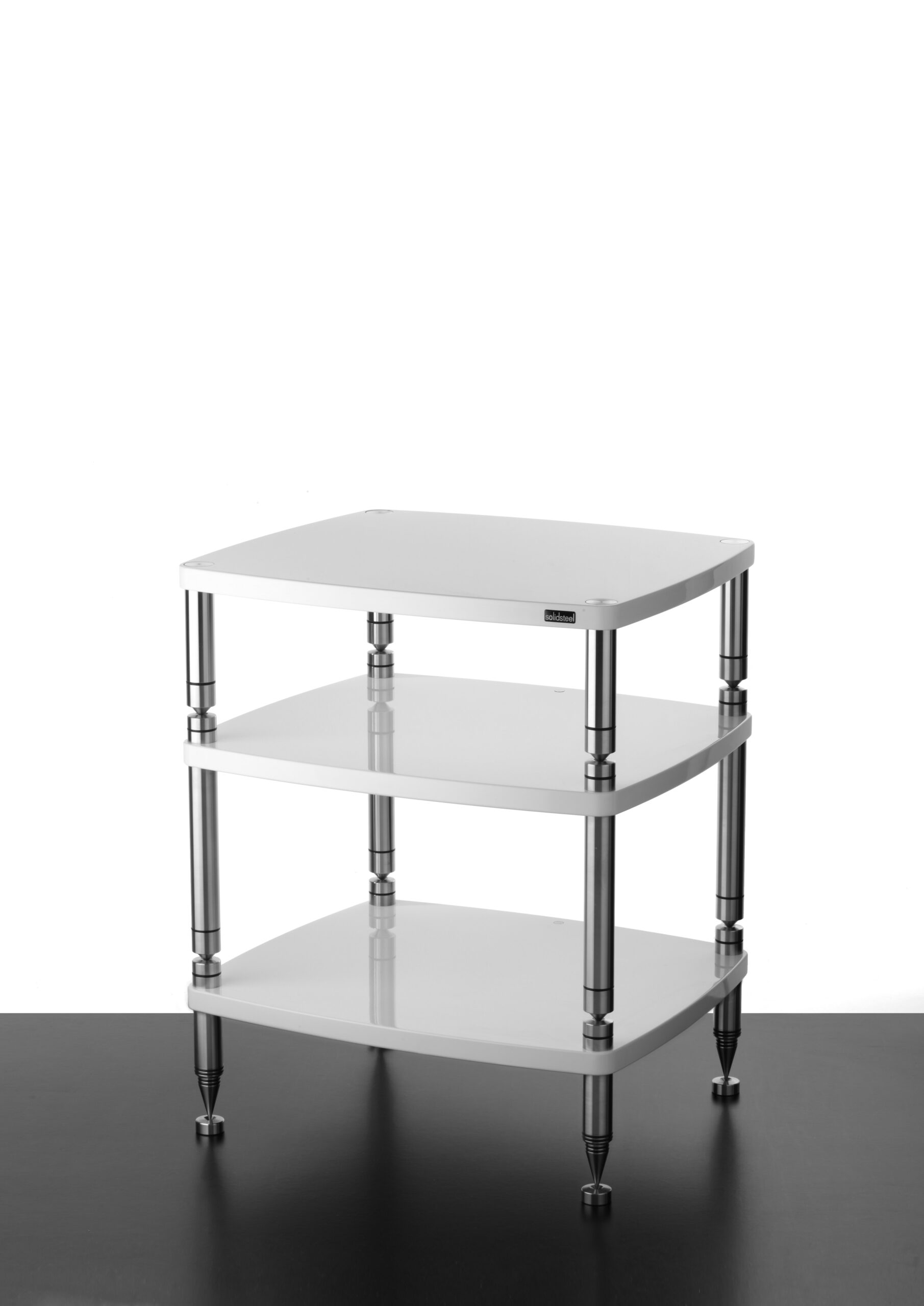
Solidsteel HF-4

You would guess that an equipment rack from a company called ‘Solidsteel’ isn’t going to be the lightest of things, but this elegant four-tier – comprising (as the name suggests) solid stainless-steel hardware coupled with nicely made MDF shelves in a range of finishes – is an absolute unit. No weight is given by Solidsteel for the HF-4. but the word you’re looking for is ‘substantial’.

The spikes of doom!

HF-4 is part of the Italian furniture maker’s top ‘Hyperspike’ range, so called because the uprights for each platform end in a spike, which sits in a dimple in the upright of the platform below; at the bottom, there are four powerful-looking spikes that will either pierce deep into your floor or – more likely – rest on four provided metal cupped feet.

Part of the reason for the Solidsteel HF-4’s high mass has nothing to do with steel; it’s those MDF shelves and the fact they are 30mm thick. That not only puts the shelves into the ‘bloody heavy’ class but unless you have one of those half turntable/half cement mixer record players that costs the equivalent of the GDP of a small South American country, the HF-4 can take it.

Solidsteel claims the HF-4 can take up to 80kg per shelf, not only in that bottom shelf with its power-amp friendly 305mm height, but in the two 205mm high ones and the top shelf too. However, if you are deciding to max-out the weight of the HF-4, bear in mind that 320kg of electronics and a dozen or more kilos of stand sitting on four armour-piercing spikes is going to be ‘fun’ on some ancient rickety floorboards.

Confidence inspiring

What the HF-4 does however is ‘inspire confidence’. Set and levelled, this rack is going nowhere and your spiffy, cost-as-much-as-a-Merc turntable, streamer, pre or power amp is in exceptionally safe hands as a result. That holds as much sonically as it does physically because the platform makes products sound so well controlled. You don’t realise how much a stand influences the sound until you hear ones that don’t, and this one just lets your equipment sound as it was supposed to.

Yes, its high mass means deeper bass, but it also means no zings or stings as you move up the frequency range and as you turn the volume up or down. Nothing is indistinct or thrown into sharp focus and each aspect of a component’s performance was presented honestly and accurately. It was like you were listening to the device with fewer things in the way.

Finally, and this might seem an odd choice to end with, but it makes a perfect jumping off point for any accessory feet, cones or pods. The platforms are adding and subtracting so little to the sound that it gives any such feet the perfect neutral starting place. Of course, paradoxically, that neutral starting place likely means you won’t need such cones, spikes or pods anyway.

Solidsteel has long been the choice of audio manufacturers at shows and demonstrations worldwide to show off their products in as neutral a way as possible, for good reason. The secret’s out now, though. If you want your equipment to sound as unaffected by its support as possible, seek out the HF-4.

Price and contact details

  • Solidsteel HF-4 stand £3,125

Manufacturer

Solidsteel

solidsteel.it

UK distributor

MIAN Audio Distribution

mianuk.com

+(0)1223 782474

Read more Solidsteel reviews here

Back to Reviews

Q Acoustics Concept 50

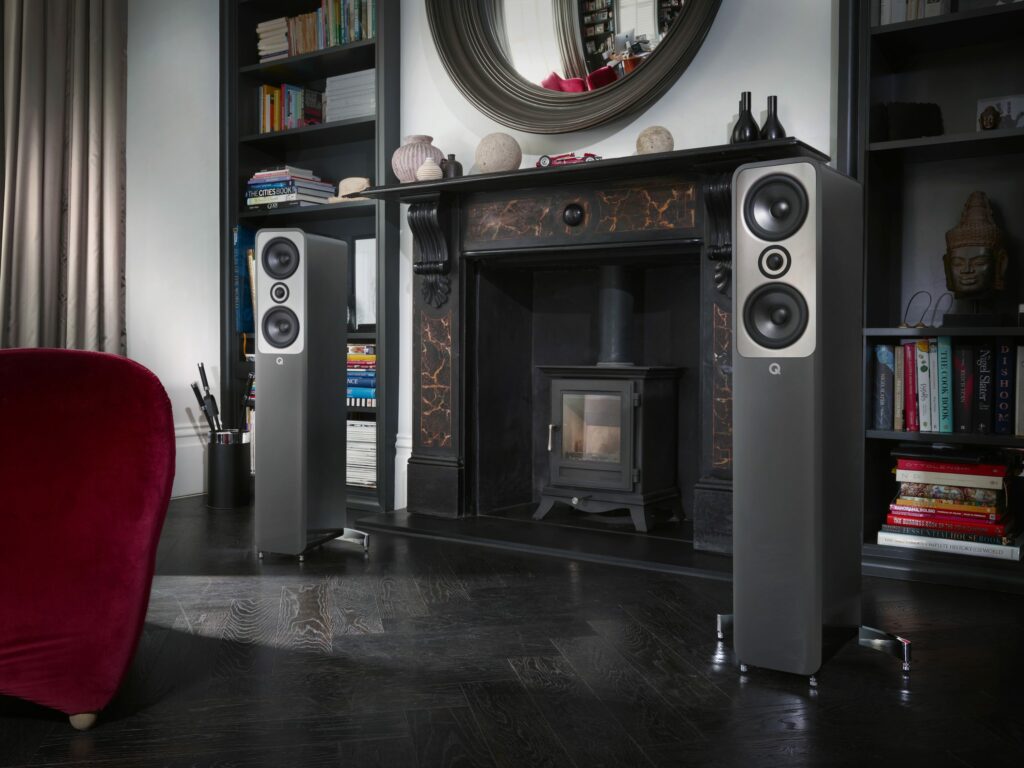
Q Acoustics is a UK‑designed brand that has been making a name for itself at the value end of the market, but its Concept line showed the world that an attainably-priced loudspeaker can have truly world-class innovation and sound. The Q Acoustics Concept 50 floorstander continues that trend.

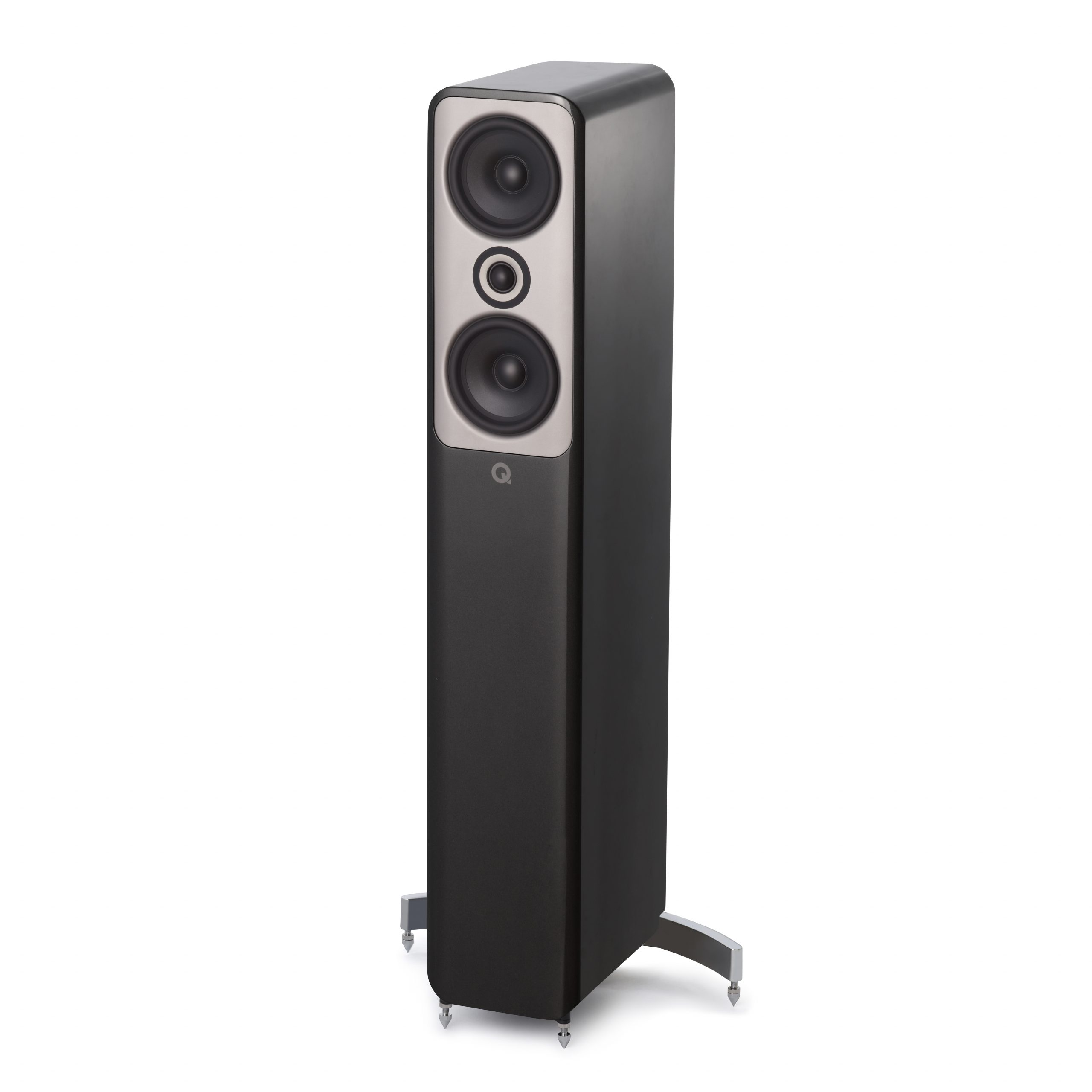
The company’s statement of intent was the Concept 500 floorstander and Concept 300 stand-mount. Launched in 2017, these offered a genuinely new and fascinating way of designing a cabinet with extraordinarily low cabinet interaction. Those concepts have trickled down very effectively into the Q Acoustics Concept 50 floorstanding loudspeaker. A key part of this is the company’s Gelcore cabinet construction, which in the best way possible, is the ultimate expression of ‘inside every big loudspeaker, there’s a small loudspeaker trying to get out’; Concept 50 features an enclosure inside an enclosure, the two separated by what Q Acoustics calls ‘a non-setting gel’, which is a neat, not technical way of describing constrained layer damping. This helps dissipate high-frequency vibration from the moving drivers (that energy gets turned into heat in the adhesive gel).

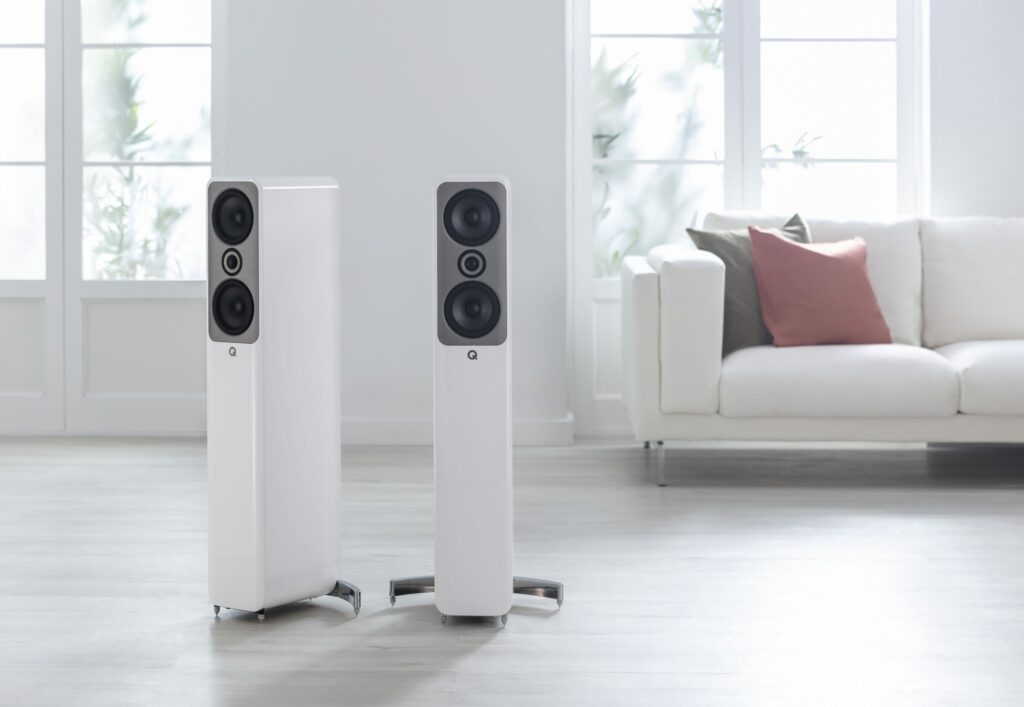
Q Acoustics Concept 50

Having an enclosure enclosed in an enclosure should be rigid enough for most designs, but Q Acoustics trickled down its P2P (Point to Point) internal reinforcement system from its Concept 500 design. P2P is a bracing system applied to those parts of the inner cabinet most prone to low-frequency reverberation. To achieve this, Q Acoustics ran extensive laser interferometry testing and Finite Element Analysis (it claims down to microscopic levels) to examine the cabinet’s performance, and the amount and positioning of the internal bracing are applied accordingly, creating Goldilocks-style cabinet control as a result.

Under pressure

The fun continues inside the inner enclosure with two specially-designed Helmholtz Pressure Equaliser tubes to help mitigate internal reverberation and reduce standing waves. Vibration is further damped by both having the crossover sit in its own sprung isolation base plate and the way the drivers are mounted to the 3mm thick aluminium front baffle, using pre-tensioned studs. The drivers themselves are all unique to Q Acoustics, with a fully chambered, hermetically sealed 25mm fabric dome tweeter in a shallow waveguide that uses an oversized voice coil for greater power handling. This is coupled to a pair of 125mm mid/bass units in a vertical D’Appolito (Mid-Tweeter-Mid) layout.

Q Acoustics Concept 50 features a large bass port and is supplied with foam bungs for use in smaller rooms or places where having speakers far from the rear wall isn’t practical. However, while these loudspeakers are relatively svelte by typical floorstander norms (standing just a shade over one metre tall and just 32cm wide), they still need a medium to large size room to shine; place them up against the wall in a box room, and the bass will dominate. However, with the bungs in place, even a foot or so from the rear wall gives a good balance.

Q Acoustics Concept 50 outrigger

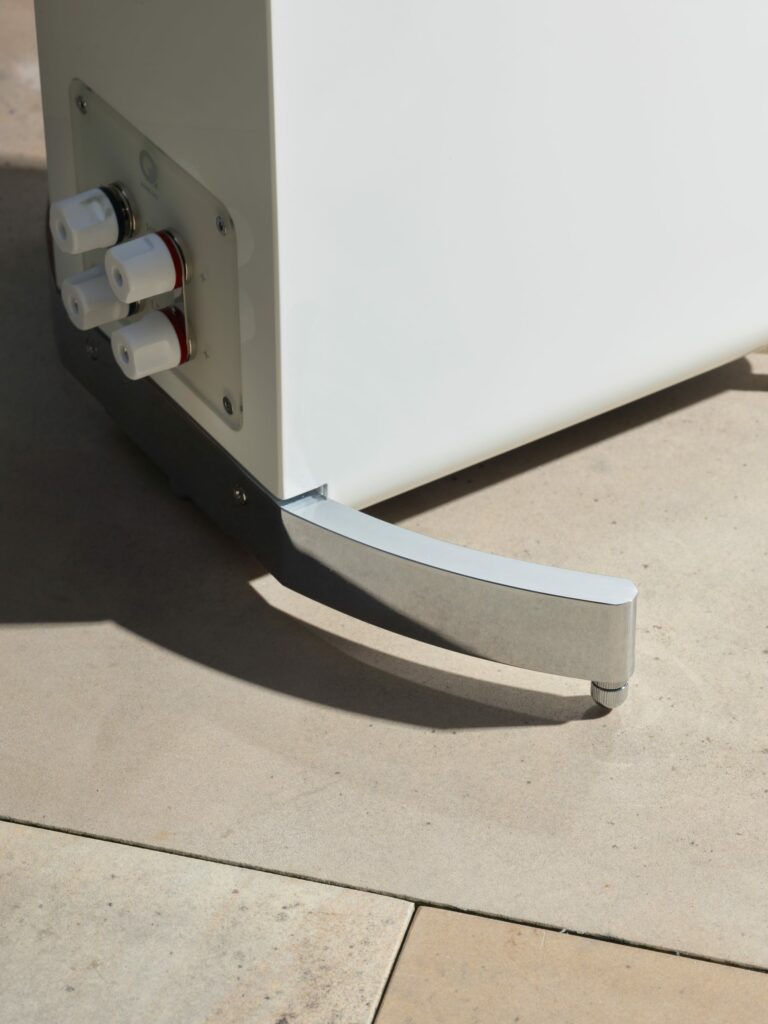
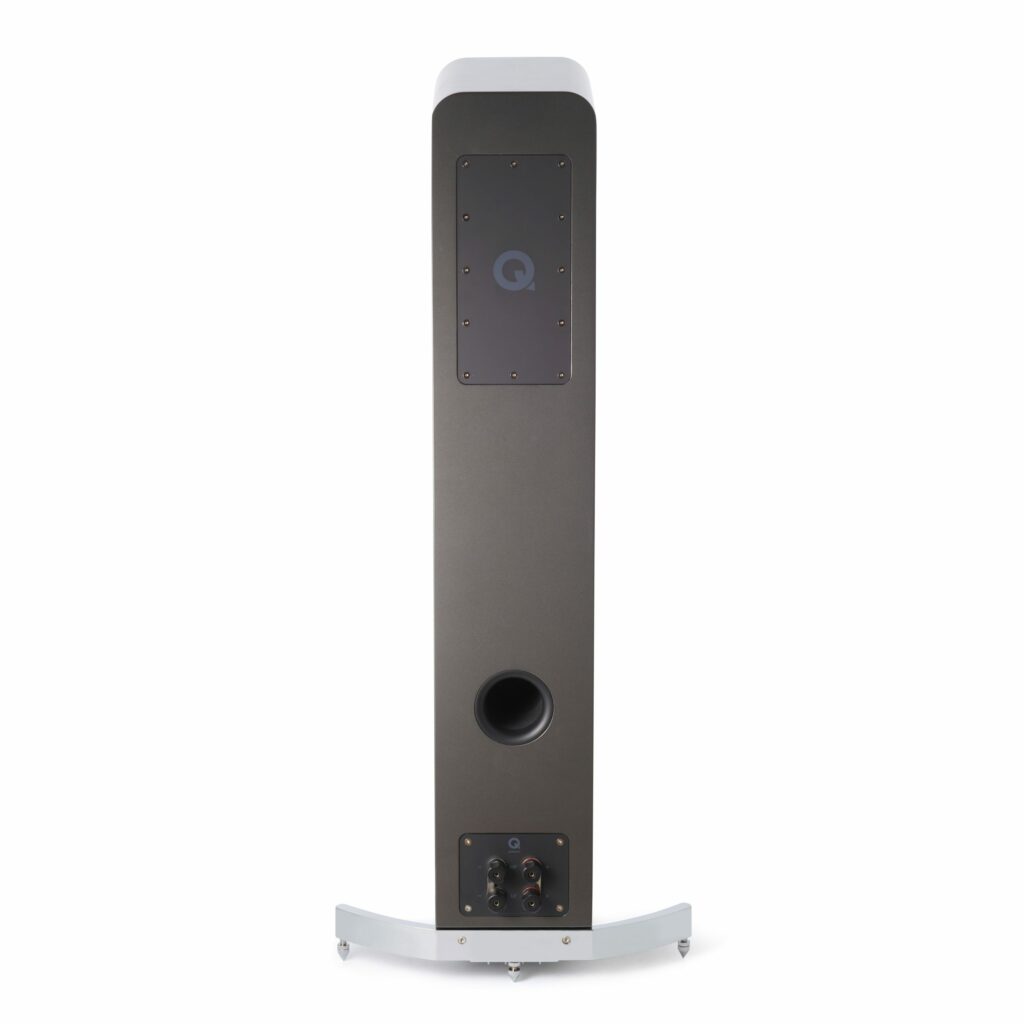
A thin, 23kg cabinet should be the stuff of tilt-test nightmares, but the Q Acoustics Concept 50 includes an outrigger to stabilise the speaker. In truth, I’m a little conflicted about the outrigger’s design; to its great credit, its rear brushed alloy bow shape is elegant and a lot less aesthetically gnarled than the usual ‘one extended arm per corner’ arrangement. The whole base also has deliberate ‘play’ factored in from that sprung isolation platform, and that makes it feel less rigid than most towers, but think of it like a mini Townshend platform. On the other hand, it does look a bit like it’s sitting on its tail, and the rear arms are longer than most. That all being said, I guarantee few people will notice this after about a day, and sitting just above the rear outrigger is a small bi-wire panel.

Care and feeding

Like other Q Acoustics models, the Concept 50 is not a difficult loudspeaker to drive, although it’s probably neither the first choice of two-watt triode fans nor those wanting kilowatt power to drive an in-room PA system. The choice of electronic partners is more quality than quantity, and it found safe havens in the arms of both Hegel and Primare integrated amplifiers. I’ve heard of the Concept 50s also sounding good on the end of similarly mid-range, mid‑powered, great-sounding amps, albeit often ones with a little more ‘zing’ to them. The review pair arrived with plenty of miles on the odometer so any running in happened long before I received them.

I must admit to some initial confusion here. Because I try to avoid too much fact-finding about the marketing of a product while listening, I thought Concept 50 was the replacement for the flagship Concept 500 rather than the top model in a new mid-priced product line. Which meant my initial assessment was thinking this was a £3,600 loudspeaker, not a £1,999 loudspeaker. What’s more, as I was extremely impressed by its performance as a £3,600 loudspeaker and potentially putting at or near the top of the pile for floorstanding loudspeakers at around £3,500–£4,000, when I discovered they cost half as much as I expected, ‘extremely impressed’ doesn’t begin even to cut it.

Q Acoustics Concept 50

The Q Acoustics Concept 50 may not look like a traditional pair of British loudspeakers, but they sure sound like them. There’s a size, weight, and richness of tone to these loudspeakers that belies their size; shut your eyes, and there’s a far wider baffle to each loudspeaker pointing at you. This is both alluring and pin-sharp precise, with instruments easy to pick out within an orchestra or string quartet. This last was especially notable; on ‘Entr’acte’ from Caroline Shaw’s Orange played by the Attacca Quartet [Nonesuch], there’s a palpable sense of musicians at play, and while this isn’t an audiophile-grade recording per se, that dimensionality and detail help add to these lively and impassioned pieces of, er, gardening set to music.

Its strongest suit is midrange; instruments and voices in this all-important register are extremely lithe, liquid and open sounding. ‘Keef’ Richards’ spoken ‘arpeggio/archipelago’ quip at the start of ‘Love In Vain’ [The Rolling Stones, Stripped, Virgin] is just far enough stage left that it can sound ‘phasey’, but here is clear and while diction is not his strong point, the Q Acoustics Concept 50 easily transcribes his distinctive drawl.

Q Acoustics Concept 50 rear

That earlier point about amps with some ‘zing’ is that the top-end is also a little ‘classic BBC’ like, soft and gentle… and very much at odds with the current zeitgeist among speaker designers. However, this more balanced approach reappears as you climb further up the high-end ladder, and the Q Acoustics Concept 50 is not rolled off, and it doesn’t fall down that dull BBC-speaker ‘pipe and slippers’ rabbit hole. Instead, that gentle extension into the upper registers is ultimately more satisfying and results in longer listening sessions. However, you might need some transitional steps; hence some put a bit of zing into that treble from the amplifier.

Enough chuff

I’m always very mindful of ports as they can often ‘chuff’ along with the music. My go-to test here is Trentemøller’s ‘Chameleon’ [The Last Resort, Poker Flat]; the fast, deep, almost square-wave low-end notes do not exist outside of synthesisers but give a perfect snapshot of how the bass performs, especially through a port. The Q Acoustics Concept 50 is a clever design, as it reduces that port chuffing to a bare minimum, and only when playing very loud do these speaker-challenging low notes begin to choke up the port. This is a sign of an exceptionally well-engineered loudspeaker; there are reflex-ported loudspeakers that cost ten, even twenty times that of Concept 50 and don’t have the same port-chuffing control. There’s a demonstrator’s trick played here… if you hear lots of organ music to highlight deep bass but never, ever hear anything with a fast, synth bass line, they might be hiding something. But that’s not something Concept 50 has to hide; unless you want to play a lot of loud, fast house and electronica (where the listening room is likely to be as much of a problem as the loudspeakers), Concept 50 passes with flying colours.

That last sentence is important as it describes the Q Acoustics Concept 50 perfectly; it passes every test with flying colours. It’s a £2,000 loudspeaker that sounds almost like a £4,000 loudspeaker. The design isn’t just ‘another box’ but nor are the innovations that go into the design merely there for their own sakes. A loudspeaker that is easy to drive and possessed of a classic sound yet isn’t so ‘classic’ as to be boring and isn’t undemanding of electronics in quality terms. With Concept 50, Q Acoustics more than earns a place at audio’s top table.

Technical specifications

  • Type two-way, three-driver bass reflex floorstanding loudspeaker
  • Drive units 1 × 25mm tweeter, 2 × 125mm mid/bass units
  • Frequency Response (-6dB) 42Hz–30kHz
  • Nominal impedance 6Ω
  • Minimum impedance 3.6Ω
  • Sensitivity (2.83V @ 1kHz) 90.5dB/W/m
  • Recommended amplifier power 25–150W
  • Crossover frequency 2.1kHz
  • Distortion (120Hz–20kHz, @ 2.83V) <0.2%
  • Effective volume 28.8 litres
  • Finishes Black, white, silver
  • Dimensions (H×W×D, including spikes and stabiliser)
    102.5 × 41.8 × 31.9cm
  • Weight 22.9kg per loudspeaker
  • Price £1,999 per pair

Manufacturer

Q Acoustics

qacoustics.co.uk

Read more Q Acoustics reviews here

Back to Reviews

Product of the Year? 2022 hi-fi+ Awards preview

What’s the hi-fi+ Product of the Year?

In this special episode of Tea Time with Alan and Pete, hi-fi+ Editor Alan Sircom and Publisher Pete Collingwood-Trewin preview the 2022 Awards issue and reveal the Product of the Year.

The hi-fi+ awards issue is available starting Dec.1. Click this link to get your digital subscription.

You can see this video and more on the Hi-Fi+ YouTube Channel, such as product reviews, highlights from trade shows around the globe, and other interesting audiophile content.

Tea Time with Alan and Pete is just one of several new series on the Hi-Fi+ YouTube channel designed for audiophiles of all levels.

Another series is History of Audio, which aims to teach viewers a little about the History of Audio, which might be a trip down memory lane for many. It also hopes those who watch will learn from the varying experiences of other audiophiles through their trials and tribulations with different equipment.

While you’re on our YouTube channel, be sure to check out our Audio Basics series. So far, this series has covered what makes a great stereo system and how to find a great stereo system.

Soon, you can find reports from manufacturers at audio shows from around the world. You can see the likes of Aurender, Focal Naim, AudioThesis, Schiit Audio, and Magnepan, just to name a few. Right now, you can see what debuted at AXPONA 2022 and a bit from the Texas Audio Roundup, including background on the Magnepan LRS+. You can also see videos from Pacific Audio Fest in Seattle, CEDIA 2022 in Dallas, and you’ll see reports from Capital Audio Fest coming next month.

You can also see additional product reviews as well as more from the Warsaw Audio Video show and Capital Audio Fest on the hi-fi+ YouTube channel coming soon.

Be sure to subscribe to the YouTube channel so you don’t miss any episodes!

Back to homepage