Up to 37% in savings when you subscribe to hi-fi+
hifi-logo-footer

Begin typing your search above and press return to search. Press Esc to cancel.

Naim New Classic range: Welcome to a new era in sound

Create the music system you’ve always wanted with the new Naim Audio Classic range. Featuring cutting-edge innovation, sharp styling and exquisite quality, New Classic lives in service of the sound.

*From the Naim news release

Naim Audio launched in 1973 with a simple aim: to experience music replayed in its truest and purest possible form. That meant pushing the boundaries of what is viable, applying an obsessive attention to detail in the pursuit of musical authenticity.

Half a century on, its end goal still starts with the music that moves us; an unwavering line from the first Naim products to the creation of the New Classic range: the NSC 222 streaming pre-amplifier; an all-new iteration of the iconic NAP 250 power amplifier; the NPX 300 power supply upgrade. Each boasts more features – including balanced connections –without sacrificing sound quality.

Designed and engineered by specialists in England, the New Classic range is handcrafted with care and built to last. Sophisticated yet simple to use, these timeless products aim to bring you years of listening pleasure. There are also a range of ways to integrate these new products with existing Naim models.

THE THREE NEW MODELS IN MORE DETAIL

NSC 222 – A SUPERLATIVE STREAMING PRE-AMPLIFIER

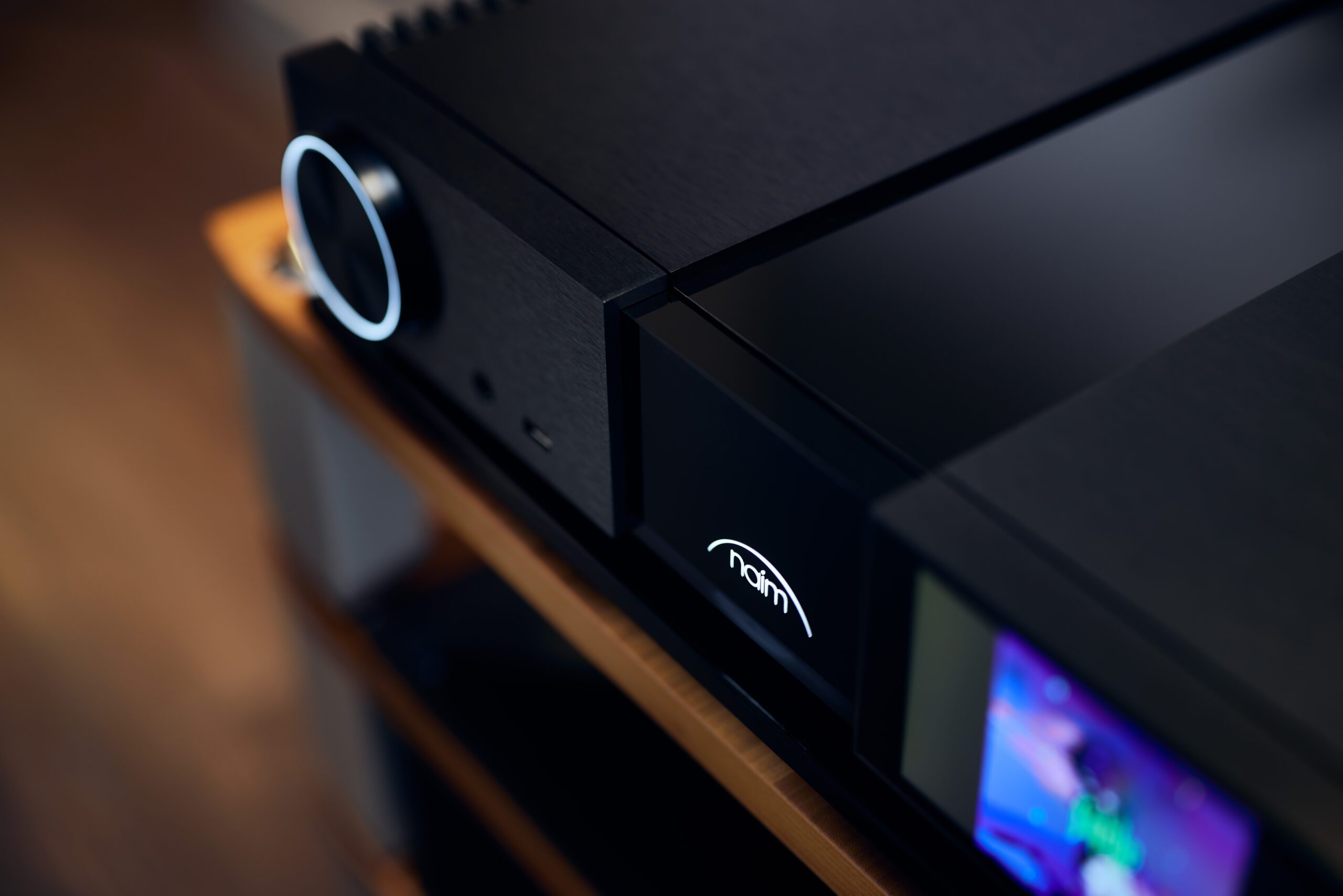
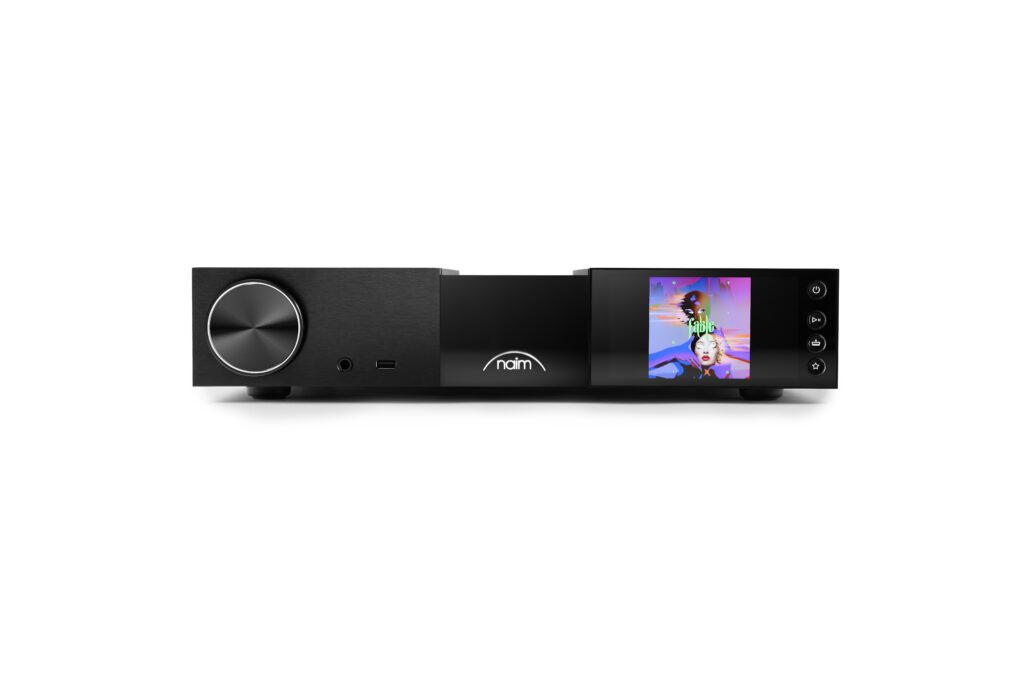
Naim New Classic NSC 222

Start your New Classic musical journey with the NSC 222: a multi-talented streaming pre-amplifier that lets you keep things simple with without compromising on musical quality. Enjoy exceptional streaming performance from Spotify, TIDAL, Qobuz, Apple Music, a world of internet radio and more, with support for bitrates up to 32bits/284kHz.

Prefer vinyl? The NSC 222 has an integrated MM phono stage. A headphone fan? The NSC 222 features Naim’s latest headphone technology as featured in the multi-award-winning Uniti Atom Headphone Edition, for a sublime solo-listening experience.

Everything you’re enjoying listening to is beautifully displayed on a larger, 5.5″ full-colour screen. Easily control the NSC 222 via the Focal & Naim App, the smart Zigbee remote-control handset (no line of sight required) or via the unit itself: the illuminated volume control is a joy to use.

NAP 250 – THE ICONIC POWER AMP: BACK AND BETTER THAN EVER

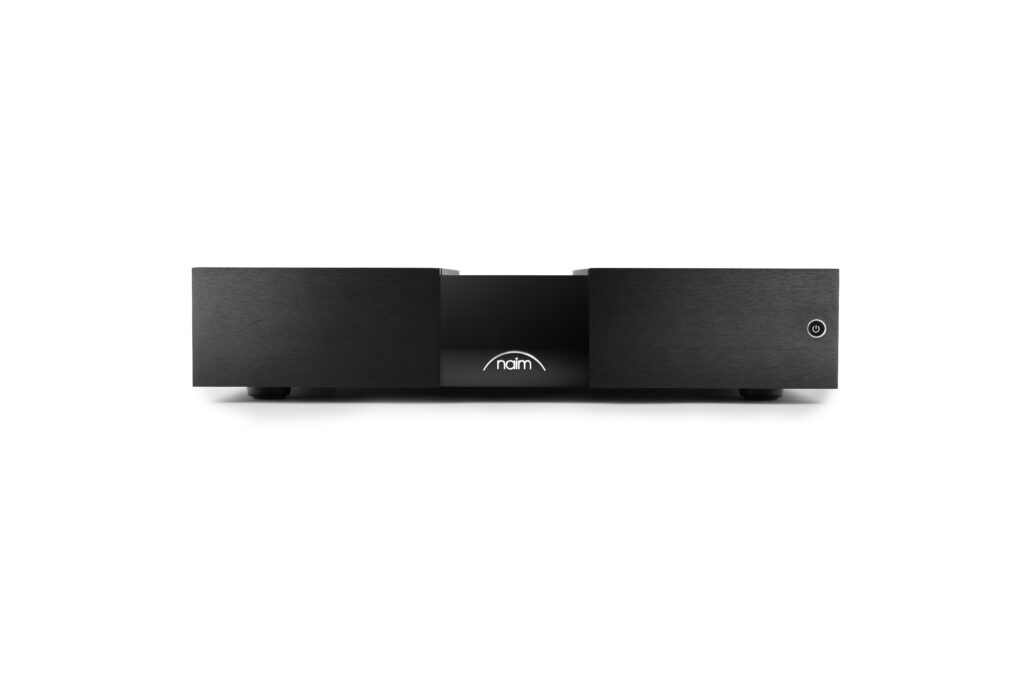
Naim New Classic NAP 250

To drive the speakers – and music – of your choice to new heights, simply pair the NSC 222 with its perfect partner: the NAP 250 power amplifier. In continuous production since 1975, the NAP 250 has gained iconic status. Featuring trickle-down technology from Naim’s flagship Statement amplifier, the new sixth-generation model delivers more power, even better performance, and greater system-matching flexibility.

The new NAP 250 is a 100W per channel dual-model design, with full power regulation. It’s a party-proof design: its heatsink reacts as the volume increases, keeping things cool. Other enhancements include the addition of true balanced XLR connections, plus a range of trickle-down technology from Naim’s flagship Statement amplifier, including an eddy-current circuit breaker between the speaker outputs.

NPX 300 – UPGRADED POWER AND PERFORMANCE

Take your musical experience to the next level with the NPX 300 power supply: an instant upgrade for the NSC 222 streaming pre-amplifier. It disables the internal power supply – immediately reducing the noise floor further still – and provides superior, cleaner power. The New Classic products will be available in global retaile

Triangle Borea BR09

Lord Darlington, in Oscar Wilde’s play ‘Lady Windermere’s Fan’, famously observes that “a cynic is someone who knows the price of everything and the value of nothing.”

We all know people who complain that in audio the link between the cost of manufacture and retail price is often tenuous at best. The resistors used in Product A can be had for less than five pence a pop and the capacitors a mere 30 pence each. In plain speak, vendors are being accused of profiteering.

It’s all good sport of course, but as an argument it fails to account for the overheads of employing design and production staff, providing a building for them to work in and equipment to work with, marketing and advertising, a dealer margin of perhaps 40%, plus service and support.

French cuisine

And, anyway, as Lord Darlington reminds us, value is not cost. Unless we are members of the distortion police, those for whom measurements are all, we approach to value in audio much the same way we might approach a meal. Two chefs cook the French peasant dish ratatouille. The minimal cost of the ingredients is identical, but the more skilful chef turns out a dish that tastes quite sublime while the other’s is rather ho-hum. By happily paying more for one of them, we demonstrate our sensitivity to value.

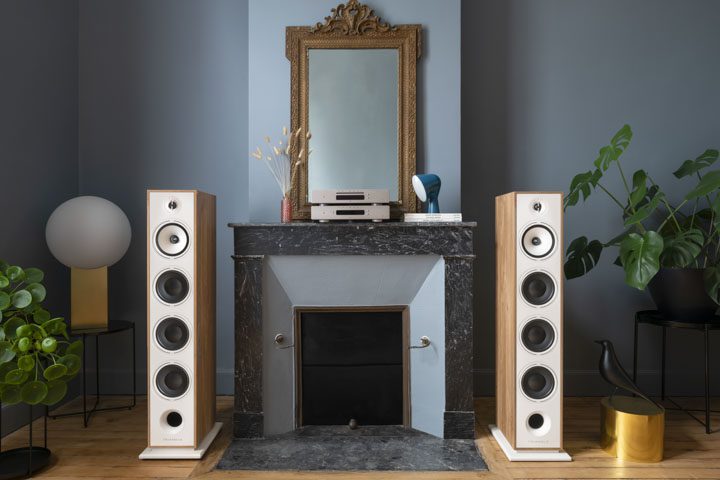
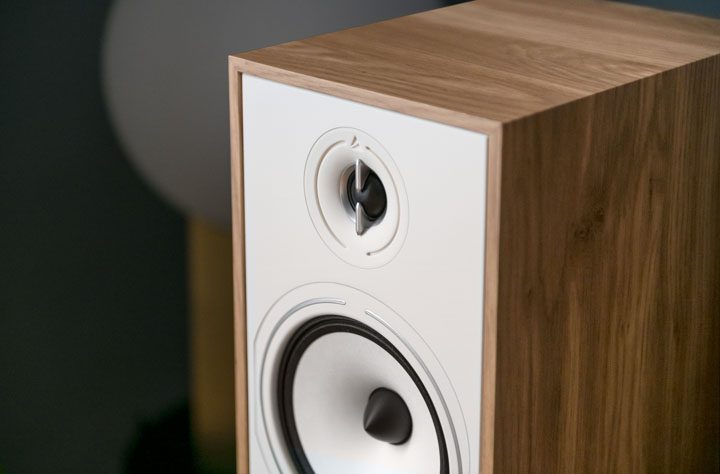
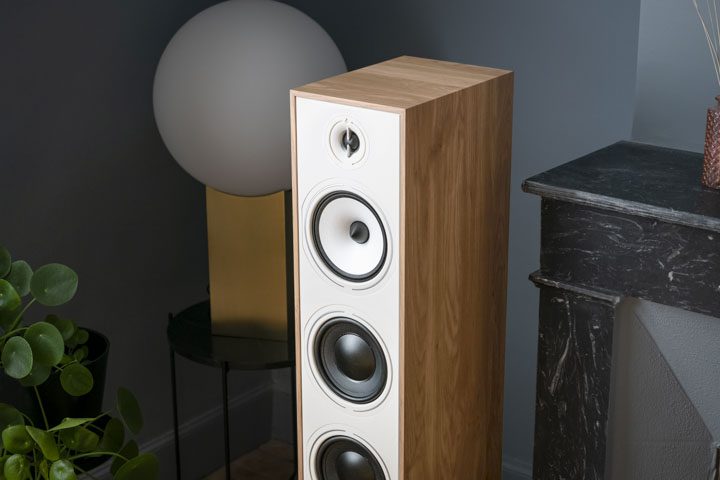
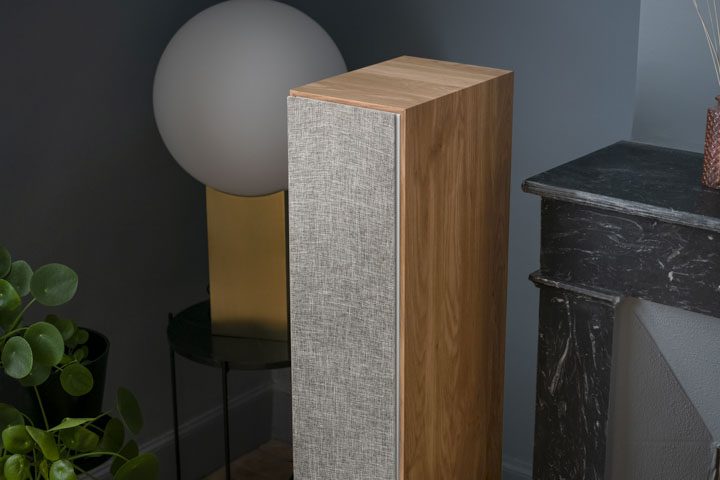
Enter Triangle’s Borea BR09 floorstanding speaker. At a recommended UK price of £1,149 for a pair, the French company gives us a lot for the money; a boxy but aesthetically inoffensive package just over a metre high with three ways, five drivers, and a front-mounted port. The review samples were neatly finished in cream-coloured fronts, with light oak vinyl wrap everywhere else. The speaker is also available in black, white and walnut finishes.

TRIANGLE_BOREA_LIGHT_OAK_LIFESTYLE_01

Triangle designs all of its products at its factory in Soissons but outsources the build of Borea speakers to China. The ’09 is the largest model in a range that comprises two stand-mounted designs, three floorstanders, a centre-channel speaker and a dedicated wedge-shaped speaker designed to deliver movie sound effects. While the Boreas are the least-costly speakers made by Triangle – the company’s portfolio tops out with the Magellan Grand Concert speaker at circa £50,000 – the review sample Boreas impressed right from the start by delivering a good measure of the characteristically entertainingly expressive DNA to be heard further up the Triangle price ladder.

Editor Alan Sircom had a similar reaction when he reviewed the slightly smaller Borea BR08 back in Issue 186. The synchronicity of our respective findings is no coincidence. In most respects the two speakers are the same; the same 25mm neodymium silk dome tweeter with phase plug, the same 16cm paper-coned mid-range driver and the same width and depth dimensions. However, whereas the ’08 has two 16cm fibreglass coned woofers, the ’09 has three, plus an extra 75mm in cabinet height to accommodate the added woofer.

That third driver and resultantly larger bass reflex enclosure allow the ’09 to dig deeper into the lower octaves than the ’08. Triangle claims a minus 3dB point at 35Hz rather than the ’08s 40Hz. With careful siting to take advantage of room gain the review samples generated rather amusing levels of bass slam and weight as part of a relatively linear frequency response.

Take your positions

In my six by four metre listening room, I ended up with the ’09s positioned within a centimetre or so of the dimensions recommended as a starting point by Triangle; a little over half a metre from speaker sides to the side walls, a little under half a metre from the front wall to the rear of each speaker, and with a very slight toe-in towards the listening position. The review samples – brand new out of the packaging –sounded very tight and not well integrated at the start, but after four days I felt I could confidently make listening notes.

To drive the BR09s I used a Bryston 4B Cubed power amplifier connected to the speakers via Quiescent Peak silver cables. The source was Jay’s CDT2-MK3 transport feeding a Denafrips Gaia DDC/re-clocker and a Terminator Plus DAC whose balanced output was attenuated by an icOn 4PRO balanced passive line stage.

TRIANGLE_BOREA_LIGHT_OAK_LIFESTYLE_02

Triangle is not alone in offering floorstanders at a price level where AV buyers and two-channel buyers tend to bump into each other. The Borea BR09s are not so inexpensive that they occupy the AV basement, but neither in two-channel terms are they at all costly, especially for a three-way.

The ’09’s third woofer, aided by the extra efficiency resulting from the port, allowed the speakers to generate enough low-frequency energy in my listening room to jiggle internal organs gently. Movie buffs who want ‘good enough’ and who don’t want the faff, loss of floor space and expense of subs might find a pair of ’09s with the Borea centre speaker to be sufficient. If not, then Triangle makes subs as well.

Tipsy uncle

As a two-channel speaker, the ’09s are a complete riot. Yes, I know that’s not respectable reviewer language, but while they do serve up a very satisfactory level of tonal sophistication and dynamic detail, and I’ll come back that shortly, as an overall package it’s their get-up-and-go that leaves a particularly strong impression. If they were human, they’d be our favourite uncle who turns up slightly tipsy at a sober family gathering. Suddenly it’s a party. The room comes alive, people beam at each other, and everyone feels slightly deflated when he’s been helped into the taxi at the end of the evening.

I played The Mothership Returns, the live recording by Return To Forever [Eagle Records] and on the track ‘Renaissance’, the ’09s absolutely nailed the bite and tone of Jean Luc Ponty’s electric violin, slightly forward but underpinned by the locked-in driving pulse of Stanley Clarke’s bass and Lenny White’s drumming. The track showed that the ’09 drivers are well integrated, and able to perform with satisfying subjective integrity in both the time and frequency domains. The low end sounded crisp and punchy with a surprisingly generous measure of texture, and the mid-range from that 16cm paper-coned driver had me shaking my head in amazement. It’s no particular surprise that a speaker manufacturer should employ its best technical chops on the mid-range driver since it covers the part of the audio bandwidth that many people latch onto first. Still, Triangle’s mid-range driver in the Borea BR09 delivers acoustic instruments and voice with a degree of sophistication quite out of proportion to the modest price point. The woofers are well-controlled and scatter notably little unwelcome harmonic distortion through the audio band to veil that fine mid-range quality. Soundstaging is also a strong point, as might be expected given the narrow cabinet dimensions and the quality of the drivers.

Emotional buttons

It’s not my usual musical fare, but when I played Rag’n’Bone Man’s duet with Pink, the track ‘Anywhere Away From Here’ on the album Life By Misadventure [Columbia Records], the ’09s delivered one of that hairs-on-the-back-of-the-neck moment, so open, immediate and vital was the sound. The same track provided further evidence of the effort that Triangle’s designers have gone to in integrating the drivers. Despite a second-order bass-to-mid crossover point at 310Hz, Rag’n’Bone Man’s rich baritone wove around Pink’s raspy higher-range vocals with a highly satisfying sense of two voices at different frequencies combined seamlessly into a cohesive performance. Quite unexpectedly, it pushed my emotional buttons.

TRIANGLE_BOREA_LIGHT_OAK_LIFESTYLE_04

Some have fingered the silk-domed tweeter used in the Borea range for sometimes drawing attention to grain or brashness elsewhere in the system. On Patricia Kopatchinskaja’s spellbinding recording of Ligeti’s Violin Concerto with the Frankfurt Radio Symphony Orchestra [Naïve] the soloist and violin section explore the instrument’s 3.5kHz upper limit, and there’s piccolo at up to 5kHz. On some systems, these can be finger-nails-on-chalkboard moments, but in my room, with my system, I hardly felt a twinge of discomfort. Perhaps this is system-dependent. Perhaps the added low-end heft of the ’09 over the ’08 to an extent counterbalances any undesirable tendencies at the top end.

Either way, I can imagine that Oscar Wilde’s Lord Darlington would wholly approve of the Triangle Borea BR09. It is honest sonic value, a rare exemplar of strong but understated technical achievement for not a lot of money.

Technical specifications

  • Number of drivers 5
  • Number of ways 3
  • Sensitivity 92.5 dB/W/m
  • Frequency range 35 Hz–22 kHz (+/- 3 dB)
  • Power handling 170 W
  • Nominal impedance 8 Ω
  • Minimum impedance 3.3 Ω
  • Dimensions 206 × 1095 × 314 mm
  • Weight 23.4 kg
  • Price £1,149 per pair

Manufacturer

Triangle

trianglehifi.com

UK distributor

Exertis

exertis.co.uk

+44(0)1256 378751

Back to Reviews

Radialstrahler MBL 101 X-Treme

In part, this discussion of the MBL 101 X-Treme loudspeaker system is as much a discussion about the importance of a good dealer as it is related to the loudspeaker itself. You see, the 101 X-Treme isn’t the sort of loudspeaker you can ‘use’ out of the box; it requires precise and careful equipment partnering and installation and (generally) the kind of demonstrations that are more about working the client around the product than the other way around. In other words, this is as much about KJ West One in Central London as it is about MBL.

Listening to a pair of well-matched Radialstrahler MBL 101 X-Treme (to give it its full name) is perhaps understandably a rare event in the UK. The logistics involved and the size of typical listening rooms precludes too many dealers from being able to demonstrate the loudspeakers adequately, and the ‘set-up and settle down’ time needed to make these loudspeakers sing precludes rocking up to a show unless you can book the listening room two or three days in advance. This last one is almost impossible because many UK-based hotel/conference centres are fully booked during the week, meaning the Friday ‘get in’ for a Saturday show is commonplace. By MBL standards, that means the 101 X-Treme will be fine-tuned, bedded in and ready to sing at its best by about Thursday… four days after the show has ended.

The Long Game

KJ West One took the bold move of installing the MBL 101 X-Treme for the long game. The store handed over its main listening room to the MBL 101 X-Treme installation for some months in early 2022, allowing its clientele – and prospective MBL clients in the country – to visit the speakers in a fixed setting to hear them at their best.

Well, almost. KJ West One took the lockdowns to refurbish its listening room, testing several different room acoustics systems… and unfortunately, none are entirely up to the task. Ultimately, the room is both limited in speaker-to-listener distance and has a relatively low ceiling for large full-range designs. So, the room itself is working at about 90-95% of the potential, even if the loudspeakers were fully bedded in place and installed perfectly for the room.

This is not an ideal setting for a review. We should ideally have weeks to really get under the skin of a product, especially one at this price level, but recently such things have become increasingly difficult. Supply-chain concerns, the difficulties and costs involved in international shipping, and the relative scarcity of UK reviewers with listening rooms that could both take on the project in terms of time, load management and logistics make this more of a ‘visit’ than a ‘review. It’s also not exactly the newest device we have reviewed, and one that’s far outside our usual remit. But listening to the MBL 101 X-Treme isn’t something you turn down when you get the chance.

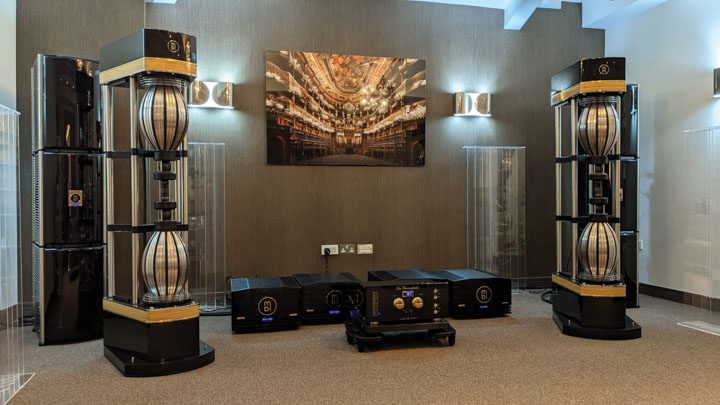
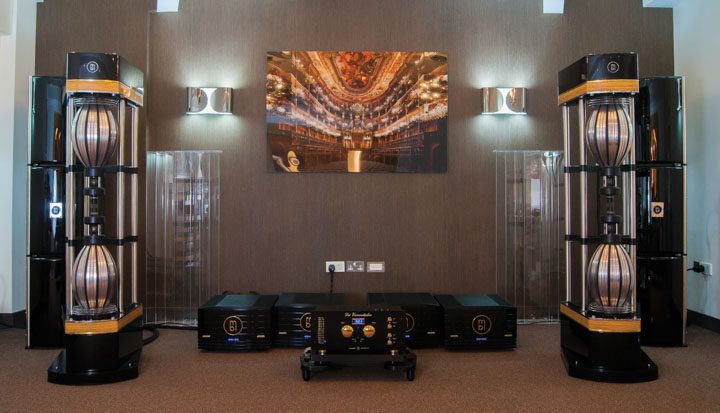
The MBL 101 X-Treme lives up to the ‘extreme’ name. It’s a sizeable four-tower loudspeaker that weighs in at close to one ton all up. It’s available as a full system too, which means a floor full of amplification. MBL wants to show its flagship off in the best possible light, which means a floor-full of MBL’s monoblocks, the matching preamplifier and even the digital front end from the company’s Reference Line.

The Big City Rule!

All up, whether or not you go down the full MBL amplifier route (and I suspect most prospective owners will end up with the full MBL package, or at least the amp/speaker combination, this is an audio system that is going to cost somewhere north of half a million… be they Pounds, Euros, or Dollars. Spending that kind of money on audio equipment is mainly self-filtering about room size; although the Big City Rule still applies (no matter the cost of the system, the cost of the real estate that sits beneath it is greater), so I can’t imagine too many 101 X-Treme systems end up in an apartment in the Mid-levels in Hong Kong… except maybe that 3,400 sq ft one that sold for $59m a couple of years ago.

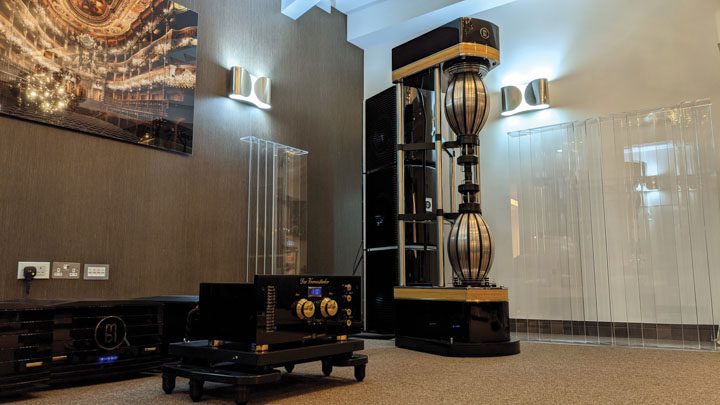
MBL 101 X-Treme at KJ West One

What makes the 101 X-Treme so ‘extreme’? A big part is the omnidirectional speaker drivers in the main units, those distinctive onion-shaped transducers that look like something from a sci-fi movie. These units are hand-built in MBL’s factory, each one taking two weeks to build in a combination of coach-building and hand-crafted technology reminiscent of another era. This isn’t mass-production techniques building quasi-disposable equipment; it’s like hand-crafted measurement instruments from the Victorian era, except made to meet 21st Century standards and demands… along with slightly less brass and fewer galvanometers.

Normally, this kind of engineering would be overkill. Still, the Radialstrahler driver itself lends itself to this kind of precision engineering, and the pinnacle of that engineering takes time to construct. The Radialstrahler is a vertical circular laminate driver. The driver membranes (or lamellas) look like the outer faces of segments of an orange, each ‘orange’ equating to a specific frequency range, like a tweeter, midrange or bass woofer. The shape is more ‘oblate spheroid’ than round. All the segments stack vertically and are fixed at the top to a central rod arrangement, with the motive force of the drivers coming from a moving coil driving a thrust bearing at the base of the driver. The moving coil and magnet form a single unit with the coil moving in the air gap of the magnet. Where a conventional cone acts as a piston, the Radialstrahler pulsates outward organically because the vertical movement of the driver bends the lamellas in all directions. The result is sound that is radiated in an almost complete 360° sphere; an ideal point source in fact.

This idea underpins all of MBL’s omnidirectional designs, but when it comes to the 101 X-Treme, there are a lot of omnidirectional drivers in the same plane. The mirroring of the tweeter, midrange, and bass in the main units requires a heroic amount of rigidity of chassis, which goes some way to explaining the 265kg weight of the main unit; there are four thick steel rods to stop the top driver array from crashing into its mirror below.

The second tower on each side is almost a conventional active subwoofer… if ‘conventional’ to you is a sextet of proprietary side-firing 12-inch bass drivers with their balanced amplifier in a lacquered wood tower that stands over 6’1”. To make this system more manageable it breaks down into separate parts, but stacking a trio of the speaker unit, amplifier/second speaker unit, and third speaker unit is still something of a Herculean task for an installer.

Why Omni-directional?

MBL demonstrates ‘how’ it can be done, and there are few ‘proofs of concept’ more impressive than the 101 X-Treme. Still, perhaps a higher-order question is ‘why?’ The conventional radiating loudspeaker – whether a horn design, a cone-and-dome box or a dipole panel – radiates sound directly from driver to ear. Even though every conventional loudspeaker radiates sound off-axis and dipole/bipole designs radiate sound to the back and front of the loudspeaker, this direct approach is very much at odds with how instruments in the real world propagate sound. Suppose you think of an instrument like a grand piano. In that case, while the sound is directed toward the audience by the direction of the piano lid, there is also a lot of piano sound radiating out in all directions. In a live concert, close to three-quarters of the sound we hear is indirect, reflecting off the walls, floor and ceiling of a concert hall. Anyone who has heard the sound of instruments played in an anechoic chamber will know just how crucial that mix of direct and indirect sound is to give musical instruments their tonality and body.

The omnidirectional loudspeaker is not a new concept and was especially popular in the 1960s and 1970s. Products like the Bose 901 in particular championed indirect sound, and products like the Harman Kardon Citation 13 and the Sonab OA5 (and more modern designs from the likes of Shahinian and arguably some forms of Amazon Echo) rely on omnidirectional principles.

However, these designs rely on conventional pistonic drivers placed in different directions. One could argue this is less ‘omnidirectional’ and more ‘multi-directional’. By contrast, MBL is part of a select group (including German Physiks and Duevel) who make true omnidirectional loudspeaker designs.

MBL 101 X-Treme at KJ West One

Seemingly a paradox, omnidirectional designs are less troubled by first-reflection problems caused by sound bouncing off side walls, ceilings and floors. This is because a conventional drive unit tends to ‘beam’ sound from these reflection points and instead of that focused beam of treble energy bouncing off your side walls, the omnidirectional loudspeaker is projecting sound more evenly everywhere around the room, functionally cancelling out those first-reflection hot-spots. It’s still never a good idea to put any kind of loudspeaker in a highly reflective space for the same reason why a live string quartet sounds very different in a small concert hall than it does in a glass atrium.

Yes, but what does it sound like?

As discussed earlier, a ‘go-see’ has to be more of an initial impression of a loudspeaker than a thorough evaluation. Even a quick listen to the 101 X-Treme is an ear-opening experience. These are not the loudspeakers that can be used for background listening; while they play well at low levels, the 101 X-Treme draws you into the music like a siren (only without the whole ‘being dashed on the rocks’ part). If you want to play music to chop food, or to be in the background while reading a book, look elsewhere (or instead, add another system) because the 101 X-Treme demands your full attention.

This comes as a double-edged sword; the intensity of focus and sense of being a part of living, breathing musical events renders some recordings hard to stomach. Poorly recorded tracks (not ‘consciously lo-fi’… badly compressed ‘Loudness War’ casualties) are an unsettling experience, but one that makes you angry with the engineers rather than the system itself. You feel the urge to drag the producer, engineer and mastering engineers to your listening room, play them what they made and demand an apology.

Then you put something on that is well-recorded. Maybe some classic slice of late 1950s clubby jazz or an intelligently recorded singer in a studio. And you… stop. You stop and listen. Your pulse rate slows. You move quickly into that relaxed alpha wave brain state and remember why music is often used as a therapeutic key to unlocking people. Yes, of course, the omnidirectional nature of the sound makes this a visceral experience, and soundstaging elements and staging precision take on an entirely different aspect. But it puts you there in the room with the audience in a genuinely uncanny manner that is as beguiling as it is different to the norms of audio.

I thought that such a different sound might be something of a hurdle, that you would miss the more direct projection of conventional loudspeakers, but that isn’t the case at all. OK, so the big, more diffuse sound of a singer takes some getting used to, partly because we are so used to hearing singers amplified (even in classical music settings now), but even that isn’t a big jump to make in reality.

Conclusion

The Radialstrahler MBL 101 X-Treme is a big name for a big system that needs a big room and an even bigger budget to create a big sound. It’s also uncompromising in its approach; it’s like being driven in a Maybach… you know you’ve ‘made it’ when you reach this level. While it’s a system to show off and not a system for those wanting background music to their lives, it’s more than just expensive ‘bling’, and you can hear that even from a brief listening session.

Technical specifications

  • Type Four-way omnidirectional loudspeaker with separate subwoofer towers and ambience tweeter in four chassis
  • Drivers (per speaker side) Two Radial TT100 woofers, two Radial MT50/E midrange, two HT37/E Radial tweeters, one “ambience” dome tweeter, six 12″ aluminium cone subwoofers
  • Connectivity options for speaker unit passive, one connection per three-way group
  • Connectivity options for subwoofer active (cinch or XLR)
  • Frequency response 20Hz–40kHz
  • Sensitivity 88dB/2.8V/2pi
  • SPL 111dB
  • Power handling 500W (continuous), 2200W (peak)
  • Cabinet design black, and white, individual finishes (face veneer, multi-layer piano lacquer, silk gloss finishes, leather surfaces in many different colours)
  • Speaker Dimensions (W×H×D) 49.6 × 185 × 64cm
  • Speaker Weight 265kg each
  • Subwoofer Tower Dimensions (W×H×D) 41 × 186 × 67.5cm
  • Subwoofer Tower Weight 226kg each
  • Price £225,000 per stereo system

Manufacturer

MBL Akustikgeräte GmbH

mbl.de

Our thanks to KJ West One

kjwestone.co.uk

+44(0)20 7486 2862

Back to Reviews

Raidho TD 3.2 at Capital Audio Fest

Raidho TD3.2 loudspeakers made an appearance at Capital Audio Fest in November, as demonstrated by Veronica Diaz in the video below:

To see the presentation, watch the above video.

For more information on this product, click here.

Aside from products and manufacturers at Capital Audio Fest, you can see this video and more on the Hi-Fi+ YouTube Channel, such as Tea Time with Alan and Pete.

Hi-Fi+ Editor Alan Sircom and Publisher Pete Collingwood-Trewin talk about what’s happening in the high-end audio world, and reveal the 2022 Product of the Year.

Tea Time with Alan and Pete is just one of several new series on the Hi-Fi+ YouTube channel designed for audiophiles of all levels.

Another series is History of Audio, which aims to teach viewers a little about the History of Audio, which might be a trip down memory lane for many. It also hopes those who watch will learn from the varying experiences of other audiophiles through their trials and tribulations with different equipment.

While you’re on our YouTube channel, be sure to check out our Audio Basics series. So far, this series has covered what makes a great stereo system and how to find a great stereo system.

Soon, you can find reports from manufacturers at audio shows from around the world. You can see the likes of Aurender, Focal Naim, AudioThesis, Schiit Audio, and Magnepan, just to name a few. Right now, you can see what debuted at AXPONA 2022 and a bit from the Texas Audio Roundup, including background on the Magnepan LRS+. You can also see videos from Texas Audio Roundup in Austin, Pacific Audio Fest in Seattle, and CEDIA 2022 in Dallas.

You can also see additional product reviews as well as more from the Warsaw Audio Video show and Capital Audio Fest on the hi-fi+ YouTube channel coming soon.

Be sure to subscribe to the YouTube channel so you don’t miss any episodes!

Back to homepage

Mark Levinson No. 5909

Sony? Bose? Much too commonplace. Bowers & Wilkins? Bang & Olufsen? A little bit try-hard, aren’t they? So what’s a well-heeled and informed audiophile to do when it comes to choosing a pair of wireless, over-ear, active noise-cancelling headphones with which to slay the other occupants of the Business Class Departure Lounge?

 Well, a well-heeled, informed audiophile could do a lot worse than investigate the many and various charms of the headphones-shaped hat that Mark Levinson has just tossed into the ring.

 The No. 5909 wireless, over-ear, active noise-cancelling headphones are currently the least expensive product in the entire Mark Levinson portfolio. ‘Least expensive’ doesn’t automatically equate to ‘affordable’, though, especially not in this instance – a pair of No. 5909 will set you back a quid shy of one thousand pounds. On the other hand, this is Mark Levinson we are talking about; a decidedly high-end name, whether in its traditional two-channel audio guise, or as the ICE system of choice for owners of the distinctly high-quality Lexus-brand cars and SUVs. Looking it from the ground up, the No. 5909 is currently the cheapest way to gain entry to the Mark Levinson luxury brand lifestyle.

Whiff of premium

Which means the No. 5909 need to have a bit more about them than a desirable logo on the earcups and a whiff of premium leather when their packaging is first opened.

Mind you, there’s no denying the olfactory impact the No. 5909 make when first you take them from their (unnecessarily colossal) box. Sitting in their own little tray above an equally lavish and tactile semi-hard carry-case, these headphones look the part as well as that high-quality and flawlessly applied leather across the headband and on the (replaceable, memory foam-filled) earpads, the automotive gloss metallic paint and the anodised aluminium that compromises the frame looks and feels the business.

Mark Levinson No 5909

Even the plastic bits (the earcups themselves, mostly) feel good and look relatively sophisticated. And when you add in usefully compact dimensions (the earcups are deep enough to protrude from the wearer’s head in the classic Cyberman fashion, but at least the frame doesn’t leave those acres of space between it and the sides of the head that are common in less thoughtful designs) the No. 5909 seem a thoroughly judicious proposition before you’ve even heard them. Heck, even the complement of cables and accessories in the carry-case’s internal compartment (USB-C to 3.5mm in 4m and 1.25m lengths, USB-C to USB-C, USB-A to USB-C adapter, 3.5mm to 6.3mm adapter and two-prong flight adapter) look and feel upmarket.

But then you remember this is Mark Levinson and realise that ‘upmarket’ is exactly where it should be.

Attention to business

If anything, the amount of attention Mark Levinson has paid to the business aspect of the No. 5909 surpasses that of the aesthetic. Which, again, is as it should be. The No. 5909 use Bluetooth 5.1 for wireless connectivity, and it’s compatible with SBC, AAC, aptX Adaptive and LDAC codecs. Battery life is a competitive 30 hours with active noise-cancellation switched on, rising to 34 hours if you keep it switched off – and you can score six hours of playback time with just a 15min mains-power pit-stop.

Sound is delivered by a pair of 40mm full-range beryllium-coated dynamic drivers. They’re tuned to adhere as closely to the ‘Harman Curve’ as possible, and according to Mark Levinson they do so more faithfully than any other design.

(For the unenlightened the Harman Curve was created in 2012 by a Harman International team overseen by Sean Olive. It’s a sonic signature preferred by ‘most’ people ‘most’ of the time – and it turns out to be a basically flat EQ with bass and treble elevated by just a few dB. Unlike most exercises in market research, though, where attempting to please ‘most of the people most of the time’ results in blandness that satisfies no one for almost the entire time, the Harman Curve has both credibility and proven efficacy on its side.)

As far as control goes, Mark Levinson has ignored the opportunity to include any capacitive touch-controls on the earcups of the No. 5909. To get your bidding done with your fingertips you’re looking at a smattering of physical controls – on the right earcup there’s a group of three buttons dealing with ‘volume up/down’, ‘play/pause’, ‘skip forwards/backwards’, ‘answer/end/reject call’ and ‘activate voice assistant’, while on the left there’s a button for ‘power on/off/Bluetooth pairing’ and another to cycle through your noise-cancellation options.

Mark Levinson 5909

You’ll have decided on the sort of noise-cancellation you’re after (when it’s ‘on’ it can be set to ‘high’, ‘low’ or ‘adaptive’, and when ‘awareness’ is selected it can be either ‘voice pass’ or ‘ambient’`) in the Mark Levinson headphones app that’s available for Android and iOS. The app also hosts three EQ settings (or, as the app insists, ‘bass contours’) ‘neutral’, ‘attenuated’ or ‘enhanced’, and lets you set an auto-timer for when you’d like the headphones to power down in the absence of any incoming signal. What else? Well, there’s an ‘on/off’ control for on-head detection – but be aware its reactions are absolutely razor-sharp when it’s switched ‘on’, to the point that your music will pause if you nod your head.

Voice-control is responsive, and call-quality is equally impressive – the No. 5909 may only have four mics (a trifling number when compared to all those cheaper alternatives already mentioned) but they most certainly get the business done.

I think we can agree that the No. 5909 are pretty well specified both inside and out – but not so much that they’ve got anywhere near justifying the asking price. So if the price tag isn’t going to look expensive for its own sake, then sound quality is going to have to be pretty special.

Appropriately special

Happily, ‘special’ is a perfectly appropriate word to apply to the performance that’s on offer here. Whether it’s ‘special’ enough to part you from the asking price is very much down to the individual, but what’s not really up for question is the ability the No. 5909 have to make even accomplished ‘mainstream’ alternatives sound a bit hazy and lacking in positivity.

A properly premium pair of headphones deserves a properly premium source, of course – so during the course of this test the No. 5909 are wired to an Astell & Kern A&ultima SP2000T as well as being wirelessly connected to an Apple iPhone 12. And while the most enjoyable and most convincing sound is to be heard when using the A&K, the broad results are fundamentally the same.

No matter if you play a 24bit/96kHz file of Fela Kuti’s Ye Ye De Smell [Regal Zonophone], a DSD64 copy of Stevie Wonder’s Blame It On The Sun [Tamla], an MQA-enhanced Tidal stream of Dexys Midnight Runners’ There, There, My Dear [Parlophone] or a bog-standard file of Arvo Pärt’s Cantus In Memoriam Benjamin Britten from the Hungarian State Opera Orchestra [Naxos], the No. 5909 don’t alter their attitude in the slightest.

They’re lavishly, almost fanatically, detailed – their insight into even the most minor or most transient elements of a recording is quite startling at first and never ceases to impress. They have the sort of lung capacity to make the most of big dynamic variances and the alertness to identify the fleeting harmonic differences lesser designs will ignore as insignificant. Their tonality, from the very bottom of the frequency range to the very top, is consistent, convincing and naturalistic – and the top-to-bottom journey is completely even and smooth, with nothing understated and nothing overplayed.

Personal pocket of space

The soundstage the Mark Levinson describe isn’t the most expansive in all of headphone-land, but it’s authoritatively controlled and consequently extremely easy to understand. Every element of a recording stands securely in a personal pocket of space, enjoys absolute positivity where attack and decay of its contributions are concerned – but is nevertheless integrated into the overall performance in an entirely believable fashion. There’s nothing detached about the way the No. 5909 present music, any more than there’s anything ostentatious or self-satisfied about the way they sound. More than anything, in fact, they sound uncomplicatedly and thrillingly musical.

The post-COVID-19 world has gone a bit mad; people are paying £35,000 for an £8,000 Rolex watch now. So, getting a foot on the Mark Levinson ladder without buying either a room full of expensive equipment or a well-specified Lexus suddenly seems eminently sensible in today’s world. And if you’re fortunate enough to consider the No. 5909 a realistic option then a) lucky you, and b) make sure you hear a pair as soon as possible. You won’t regret it.

Technical specifications

  • Type wireless closed-back over-ear dynamic headphones
  • Drivers 40mm beryllium-coated full-range dynamic
  • Frequency response 10Hz–40kHz (wired)
  • Impedance 32ohms
  • Sensitivity 97dB
  • Distortion not quoted
  • Wireless connectivity Bluetooth 5.1
Codec support SBC, AAC, aptX Adaptive, LDAC
  • Accessories USB-C to 3.5mm (4m, 1.25m); USB-C to USB-C; USB-A to USB-C adapter; 3.5mm to 6.3mm adapter; flight adapter
  • Weight 340g
  • Price £999

Manufacturer

Mark Levinson

marklevinson.com

UK Distributor

Harman Luxury Audio Group

harman.com

+44 (0)1223 203200

Read more Mark Levinson reviews here

Back to Reviews

Melody AN300B MAX

Back in the day when valve amps had fallen out of fashion and only a few stalwarts were persevering with this ancient yet revered technology, the 300B was something of a holy grail valve. For a long time this low-powered triode from the 1930s had been out of production so those in the know (largely in Japan) bought up as much of the unused old stock examples that they could find. Eventually, word got out and demand increased to the point where Chinese companies started to make the 300B again; even a revived Western Electric (the original manufacturer) started to make them as well.

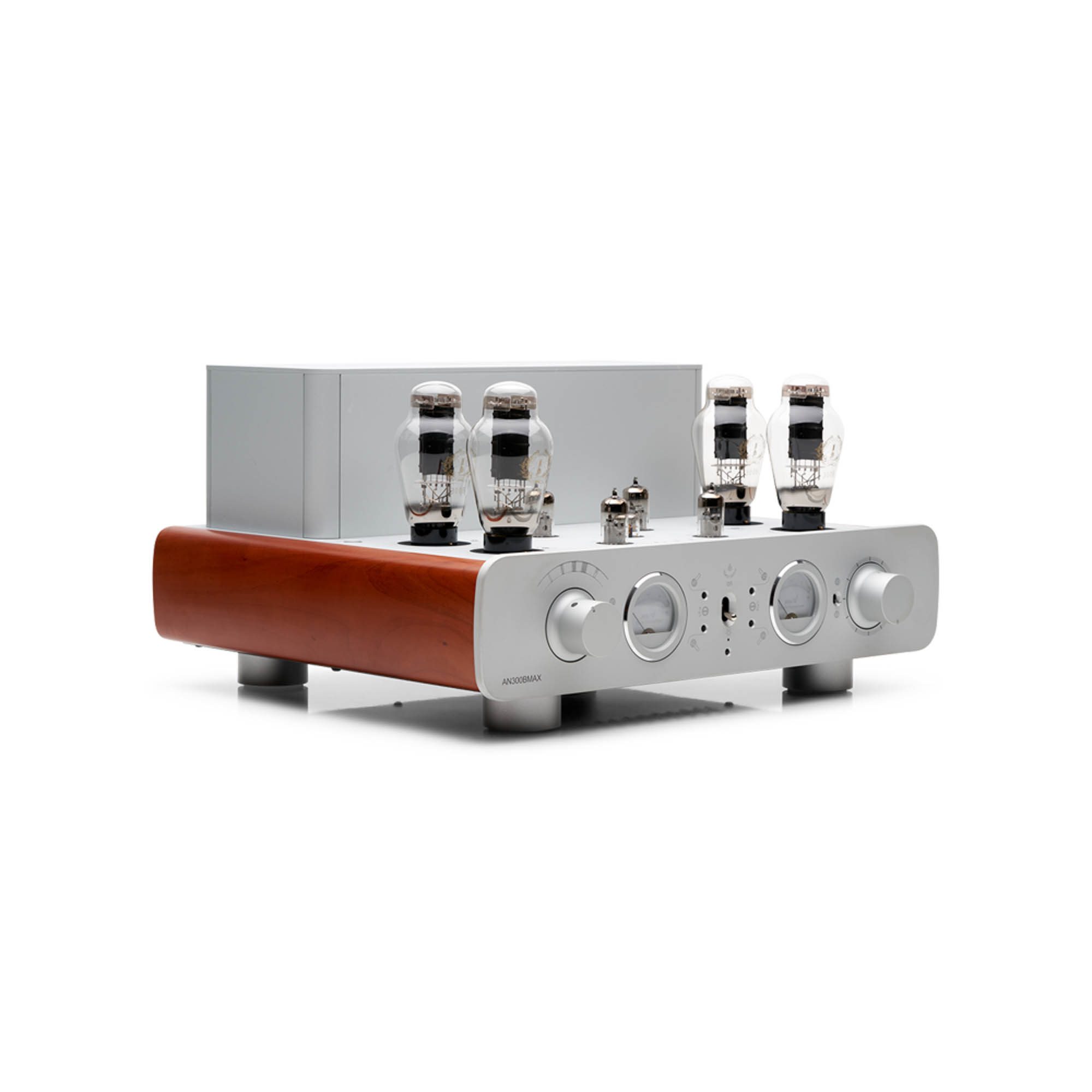
Traditionally used in single-ended form with one valve per channel, the 300B is not a very powerful triode, producing only seven Watts albeit in particularly transparent form when run in Class A. It has a very appealing character that overcomes its low power limitations if you choose your speakers carefully. Realising that few of us have the space or money for the size of speaker that will happily work with such a meagre wattage, the Melody AN300B MAX takes a different approach by using a pair of 300Bs in a push-pull arrangement which produce a quoted 21 Watts per channel in Class AB1 (Class AB1 is one of two ways to use a valve in Class AB2 and the preferred mode for a triode).

Melody is an Australian company which manufactures in Shenzhen near Hong Kong, a popular place among western audio brands with the likes of Cambridge Audio and Quad formerly building its products and still having a research facility in the ever-growing city. Melody produces a range of valve amplifiers totalling 16 integrated and power amp models with the AN300B MAX chassis used for seven of them. Melody uses point-to-point wiring in the classic valve style and incorporates Mundorf capacitors in this model.

Tapping out

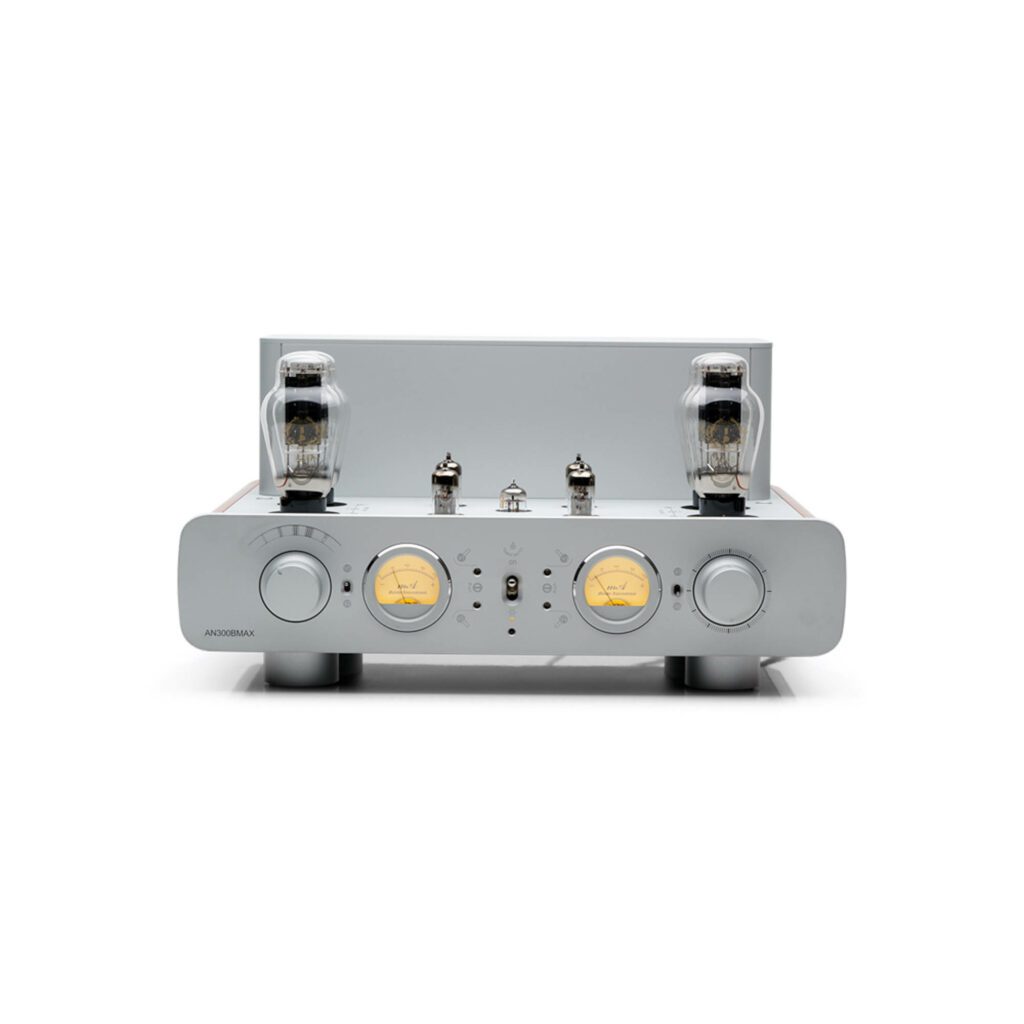
The AN300B Max is a well finished unit with matte silver metalwork and wooden side cheeks flanking a substantial chassis that tips the scales at a more than adequate 33 kilos. More than adequate to discourage moving it too often that’s for sure. The VU meters on the front show power output in normal operation but also function as ampere meters for adjusting bias via the ports either side. Bias is often automatically adjusted but in situations where it isn’t setting this key aspect of valve operation is pretty straightforward, especially when the maker provides instructions and a tool to do the job with, as is the case here.

Melody AN300B MAX

The 300B valves supplied on the AN300B MAX are made by Psvane albeit branded Melody; there is a rather more pricey version of this amp available from the UK distributor VAL Hi-Fi that comes equipped with Western Electric output valves if you are after the real deal. The four XF184 triode valves form the preamplifier gain stage while the WE407 is a rectifier.

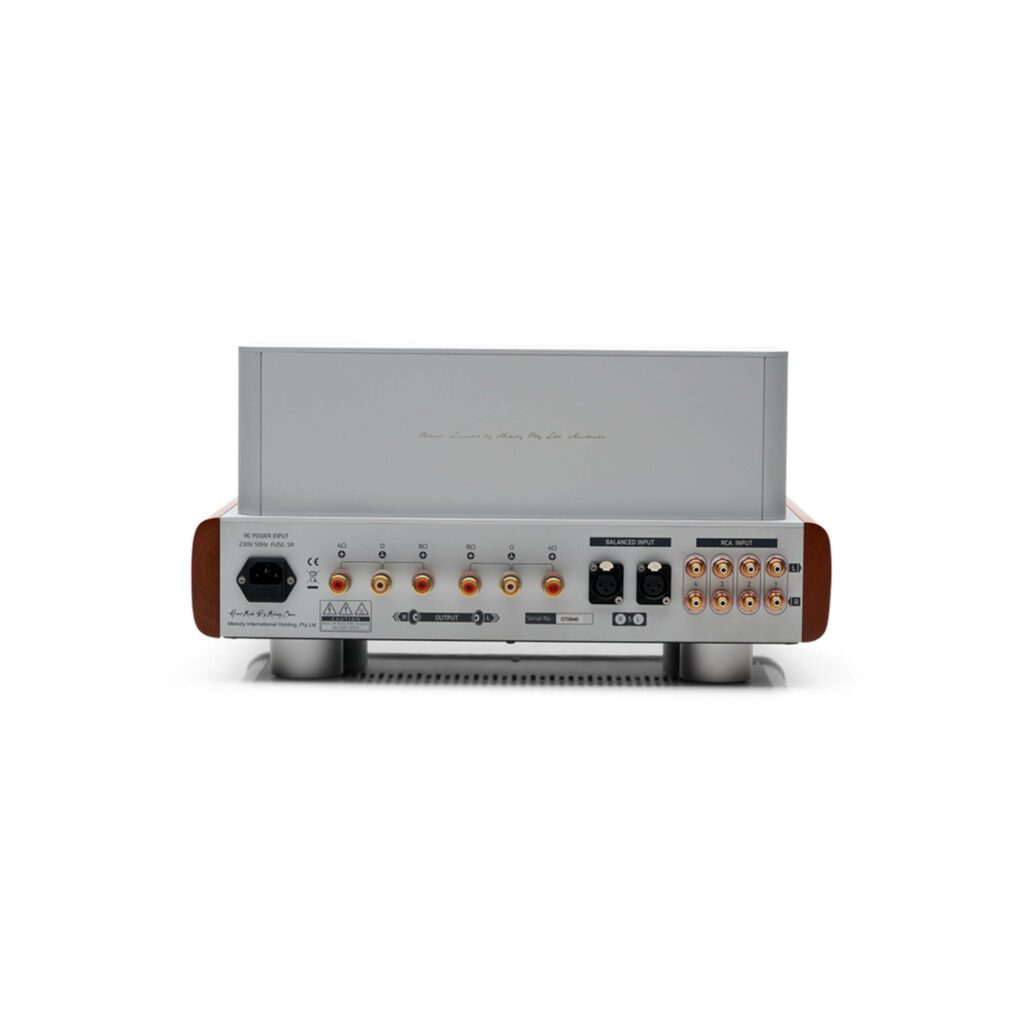
Connection-wise, this amplifier has four pairs of RCA phono inputs and a single pair on XLRs marked balanced, it’s not clear whether they are actually balanced as this mode of operation is quite rare in valve amplifiers. It requires extra transformers to be done and space doesn’t usually permit this in integrated designs. There are no line level outputs just speaker terminals with four and eight-ohm tappings to the output transformers. This is quite a common method of giving the amplifier the best chance of driving a speaker optimally and establishing which works best is essentially a case of trying both and listening to the results.

Thankfully the Melody is supplied with a remote control. it’s limited to input selection and volume control but that’s more than enough to keep you on the couch most of the time. The handset has a ‘stop’ button too which turns the motorised volume pot to minimum, so it’s a bit like a mute but can’t be used to return to the original level. Operationally the AN300B MAX reduces volume to zero when it’s turned on which did lead to mild puzzlement at the lack of any sound before I realised what was happening. It takes 30 seconds to soft start and the volume won’t move until that time has elapsed, again you get used to it. As is very common with valve designs it has a lot of gain and I rarely had the volume pushed as far as the a nine o’clock position even with not particularly sensitive speakers. I do recall quizzing a valve amp engineer about this once and the gist of his response was that’s the way valve circuits are and it’s difficult/compromising to have them function any other way. So at least we know that this is a fairly purist design.

Valve friendly?

The most valve friendly speakers I have in my small armoury are PMC twenty5.26i floorstanders; their 86dB 1W/1m sensitivity is not particularly high but the load they offer to amplifiers seems more friendly than most and I’ve had good results with lower powered amps than this Melody. What struck me initially and continued to make itself heard throughout the time I spent with this amp is its enthusiastic rhythmic drive; valve amps frequently have good timing but here this quality was more evident than usual and it really made the listening an engaging experience. It’s also adept at reflecting the scale of whatever is being reproduced, in this instance it was ‘Penguin in Bondage’ from Frank Zappa and band’s tenure at the Roxy Theatre in 1973. This sounded detailed yet relaxed with fulsome upper bass and a lot of analogue character despite it streaming from a digital source. What really hit home was the degree of live energy presented in the context of a sound that has no leading edge grain. This is a classic valve sound but one with more oomph than is normally achieved using low powered triodes.

Essentially there is some sweetening and smoothing of the mids and highs compared to a Class AB transistor amp, and there is a loss of grip in the bass, but the latter is replaced by a tunefulness and flow that more than makes up for the absence of gut churning. The Engegard Quartet’s rendition of Haydn Quartets was full of vim and expression, the image is not as precisely rendered as it might be but the drama of the music is served with gusto, making the music highly engaging. A rather different live performance from Kraftwerk, ‘Radioactivity’, comes across in full effect albeit with a curtailing of the bone crunching potential in the bass being replaced with an easier listen. So long as you don’t listen too closely to the spoken lyrics “Sellafield 2 will release the same amount of radioactivity into the environment as Chernobyl every four and a half years” it’s top light entertainment, but also not hard to see why the Germans have given up on nuclear power.

Melody AN300B MAX

As there are two transformer tappings of the Melody I decided to try the four-ohm option instead of the eight-ohm used to produce the results above. This reduced the volume slightly and brought a degree of focus that while it made the amp sound less valvey did deliver better bass control and more precise imaging. The eight-ohm option created a bit of a halo effect through the PMCs while the four-ohm tapping was closer to a solid state presentation.


Tube goodness!

It’s still full of vacuum tube goodness however, removing the graininess of solid state and replacing it with relaxed tonal beauty and fabulous timing. The AN300B MAX isn’t quite as transparent as a single ended 300B amplifier but it has a lot more power which comes in handy with this speaker and the KEF Reference 5 Metas that I tried. These were also best suited to the four-ohm output and produced a quietly engaging sound that proved hard to put down, especially when I stuck Dylan’s ‘You Go Your Way (And I’ll Go Mine)’ on the turntable. This came through full of life with a lovely groove and all the instruments and voice sounding vital and energetic. If you want to get that ‘in the studio’ vibe going this amplifier is a fabulous device for the purpose. It’s one of those products that makes you want to keep listening. One track will never do if the album is familiar, it puts paid to playlists and has you seeking out the original, or at least it does if the original is Tom Waits’ Rain Dogs.

Melody’s AN300B MAX is a rather attractive package, it doesn’t offer digital or phono inputs but concentrates on delivering a lot of what’s lovely about triode amplification without the limitations of low power. Build quality appears to be high and musicality even higher, all in all it’s a beauty.

Technical specifications

  • Type 2-channel integrated valve amplifier
  • Analogue inputs Four single-ended line-level inputs (via RCA jacks), one balanced input (via XLR connectors)
  • Digital inputs None
  • Analogue outputs None
  • Supported sample rates N/A
  • Input impedance 100kOhms
  • Output impedance (preamp) N/A
  • Headphone Loads N/A
  • Power Output 21Wpc @ 8 & 4 Ohms
  • Bandwidth Not specified
  • Distortion THD 1%
  • Signal to Noise Ratio 85dB
  • Dimensions (H×W×D) 245 × 475 × 390mm
  • Weight 33kg
  • Price £5,495


Manufacturer

Melody Hifi Europe

melodyhifi.eu

+31 (0)36 3333330

UK Distributor

VAL HiFi

valhifi.co.uk

+44(0)333 577 2005

Read more Melody Hifi reviews here

Back to Reviews

KEF Reference 5 Meta

I should know by now but like a few other things the meaning of the KEF acronym eluded me. So I looked it up; it’s not Kids Earth Fund nor is it Knights of the Eternal Flame (which is a pity perhaps), but Kent Engineering & Foundry. KEF is a loudspeaker company founded way back in 1961 in a Nissen hut in Tovil, Maidstone, that’s the bit that I can remember. I’m not sure if they still have the hut, but Tovil is where KEF makes its best loudspeakers including the Blade and Reference ranges, of which the shiny Reference 5

Meta is the top dog.

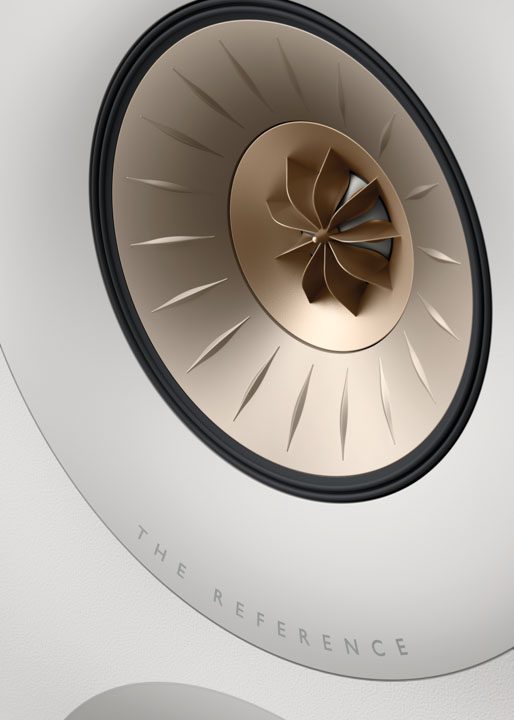
The Reference range has recently been revised and given the ‘Meta’ suffix to indicate a new way of treating energy coming off the back of the tweeter in the middle of the Uni-Q treble/midrange driver at the heart of these loudspeakers. Unlike other companies that have used tapered tubes and damped cavities to prevent the air behind the driver from bouncing back and distorting its behaviour KEF has developed a relatively shallow maze of channels to do the job. Taken on its own this MAT (Metamaterial Absorption Technology) looks like one of those toys that you have to tilt around in order to get a small ball down a labyrinthine path. But the length of each of the paths has been carefully chosen to absorb a narrow band of frequencies and when combined the 30 channels offer “almost 100% absorption across the spectrum above 620Hz”. And given that this is a tweeter it doesn’t operate at anywhere near that frequency, in fact it crosses over to the midrange at 2.1kHz.

KEF Reference 5 Meta

MAT was developed for and introduced in KEF’s popular LS50 model so it’s a rare example of technology trickling up the range and indicates that it’s not just a matter of spending more on the bigger speakers, but a ground up upgrade and one that has required other changes to the driver as a whole. For a start, the ‘tangerine’ waveguide that sits over the tweeter dome on the latest Uni-Q has been reinforced because MAT was causing a deformation in the surround support; this has been remedied with reinforcing ribs to the rear of this element.

Small spiders

KEF’s acoustic engineer Jack Oclee-Brown has also made changes to the midrange motor system in an effort to improve linearity. In fact, KEF is describing this as a complete ‘ground up’ design forced to some extent by the internal conical waveguide required for the MAT system. As you can imagine, the combination of two drivers on one axis is already a complex challenge and here it has a split top plate on the magnet system so that flux density does not reduce as the coil moves away from what would usually be the area of maximum flux. Something that equates to maximum control and minimum distortion. The driver suspension, its surround and spider, has also been upgraded. The spider is now smaller and thus lighter making it easier to place its resonant frequency out of the driver’s operational range. Also the surround, which forms part of the tweeter wave guide now has greater and importantly more linear excursion for reduced overall distortion.

KEF has also sought to reduce vibration from the front baffle that muddies the midrange but not by the usual method of putting a compliant ring under the chassis mounting and decoupling the whole driver as is found in a lot of designs. They argue that this method allows the whole driver chassis to move and thus removes the mechanical grounding that the cones need for low distortion operation. Instead KEF has decoupled the magnet assembly, which is the heaviest part of the driver chassis. Apparently the main benefit of this is that the chassis rim stays still and doesn’t radiate any sound itself.

KEF Reference 5 Meta

There is not a lot of detail about the four bass drivers which continue from the previous Reference series. They are 6.5 inch units with an alloy cone and a large aluminium voice coil in a “massive, vented magnet assembly” that is naturally designed to complement the latest iteration of the Uni-Q mid/treble in between.

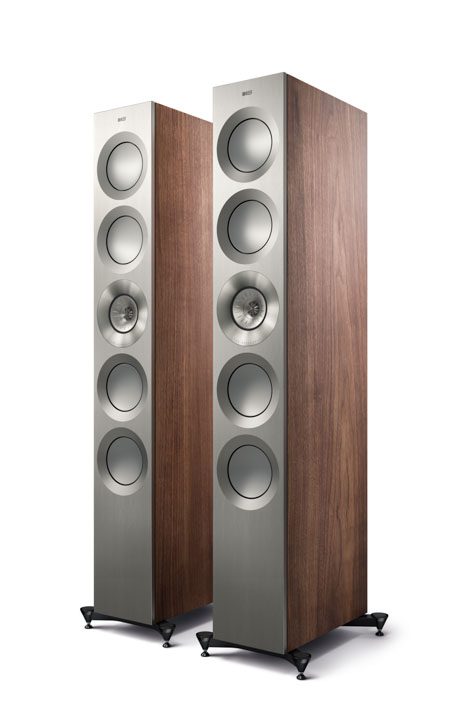
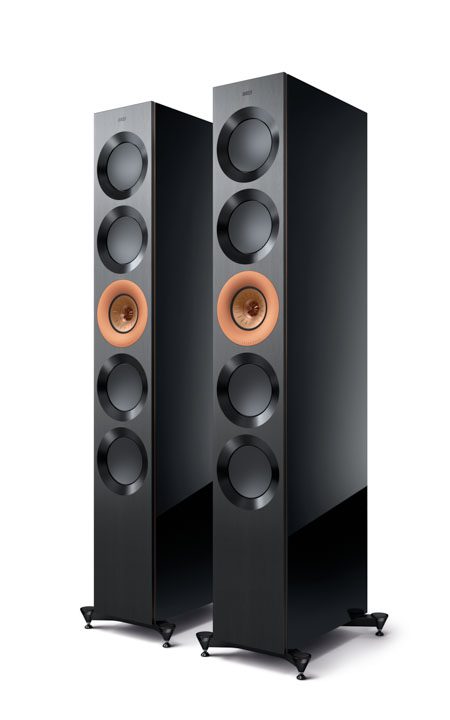
The cabinet is constructed using constrained layer damping for minimum vibration and is distinctly tall and handsome with a slim profile but plenty of depth, it looks very modern in its white livery with silver drivers. KEF offers a number of finish combinations in high gloss paintwork or book matched veneers alongside five driver finish options including copper and blue.

It looks straightforward, but caps on the back cover fixings hold the front baffle in place and explain why there aren’t any trim rings on the bass drivers. There are two ports on the back with removable inserts and the Reference 5 Metas are supplied with four shorter alternative ports. The idea being that in situations where the bass output is too much for a given room or speaker position these can be used to stop the bass from being overblown.

The Reference 5 Meta sits on a pair of outriggers that bolt onto the bottom and provide a wider footprint for stability. The spikes and their seats combine to form a cone shape that’s capped with a lightly domed top, the latter can be removed for easy height adjustment with an Allen key. The terminals look like they come from KEF’s biggest model (the Muon) with asymmetrical aluminium clamps for bi-wired connections to the amplifier. If you only want a single wired connection as I did, KEF have come up with a neat way of linking the bi-wire terminals internally rather than using a plate or jumper wires. Two adjusters screw in for single wiring or can be removed for bi-wired set ups.

All the work that the team in Maidstone has done on the latest Reference 5 Meta pays off almost immediately when you put a good record on the turntable, especially one with some emotional impact. These speakers seem particularly adept at delivering this critical facet of the music, arguably the most critical one given that emotional communication is what music is ultimately all about. I happened to play Ryley Walker’s Golden Sings that have been Sung [Dead Oceans]and the song ‘I Will Ask You Twice’, which sounded rather more heartfelt, deep and meaningful than usual. This is clearly a special loudspeaker, one that breaks down barriers between artist and listener in ways that you don’t often find.

Metaphysical

There sometimes seems to be an inverse law of communication abilities with regard to number of drivers, the more drivers a speaker has the harder it can be for it to get the message through. There are enough ‘technically excellent loudspeakers that leave you cold’ to make one that doesn’t stand out. Whether this is down to the Meta factor is hard to say but reducing midband distortion must help in this regard. These KEFs are not short on detail either, they are extremely revealing in an unhurried yet on the ball fashion. When the bass and drums of Patricia Barber’s version of ‘Yesterdays’ appear in front of your ears it seems almost magical, it’s partly because of the total silence that precedes the first notes but also because of the way that their presence takes up physical space in the room. It’s safe to say that these cabinets are not adding much if any coloration to the mix, especially in the bass which is both very well extended and powerful, more so than I had expected in truth. This is not a huge loudspeaker in terms of physical volume, yet it’s capable of providing the lowest octaves even in a fairly dry room. And this means that double bass and drums have both impact and body that makes for a very satisfying listening experience with a good recording.

I was struck by the image height that these KEFs produce and initially presumed that it’s because they are fairly tall speakers, but then it occurred to me that the mid and treble drivers are no higher than on a bookshelf speaker, and this is the source of much of the detail that goes into producing an image. It’s a result of KEF’s work in improving dispersion from the Uni-Q, but also a factor of better quality bass, subwoofers after all have the effect of creating more convincing imaging. I used the Reference 5 Metas with a Moor Amps Angel 6 power amplifier for much of the time and it had no trouble with their 88dB at four Ohms sensitivity which is to be expected of 150 Watts, what surprised me was that the Melody AN300B Max (also reviewed this month) managed to drive them without much difficulty. It’s hardly surprising that the bass lost some of its gravitas with this 21 Watt triode amplifier but the combination proved to be rather enjoyable, smooth and polished whilst delivering the body in the image. In fact the extra fluency that these tubes brought to the party proved rather enchanting, especially with the harmonies of Crosby, Stills and Nash singing ‘Helplessly Hoping’ at the peak of their vocal powers. It was very easy to hear that two voices shared the right channel while the third got the left, and it was no effort at all to be swept up in the beauty of the song.

KEF Reference 5 Meta

I also indulged in a bit of Massive Attack for contrast and found that there was enough power and control in the bass and impact through the mid to appreciate the darkness that their work explores in a more tuneful and clean fashion. An old blues compilation on vinyl was perhaps the perfect material for the tube powered KEFs, the recordings were probably made with tubes in the first place and the effect was almost like time travel, the years falling away so that despite the absence of stereo there was a palpable sense of musicians in the room.

Back with solid state power and the Weather Station’s mumblings on ‘Marsh’ and other tracks where it’s not clear what is exactly being said but the feelings behind it are transparent in the hands of these KEFs. With an older favourite in Talk Talk’s New Grass where the vocals are quiet but easy to follow and the nuances of the performance are clear thanks to the transparency on offer. These speakers are borderline explicit when it comes to detail resolution, they really drill down into whatever you put through them and deliver the musical treasure that other speakers fail to expose. It gets the micro dynamics, the differences between the volume of notes, spot on and this brings a variety and colour to subtle pieces that often gets lost. It does the macro too of course and I thoroughly enjoyed Led Zeppelin’s ‘Killing Floor’ where they managed to give the bass a thickness that Metallica would have killed for, and  were clearly attempting to emulate on the Black album.

Alternate ports

I didn’t need to use the alternate ports with the Reference 5 Metas because the bass remained clean and controlled with the Angel 6, in fact it sounded deeper and more substantial on some familiar tracks than is often the case. Radiohead’s ‘Desert Island Disk’ for instance usually washes over me in an ambient fashion but here there was a lot of detail at low levels and a substantial kick drum, which made the track more diverse and interesting.

Late in the day a CAAS EPre II preamplifier and Elysian 100 monoblocks turned up and had a spin with the KEFs. This amp’s first 20W are Class A which helped these speakers produce an even more polished and finely detailed result, one that was beautifully relaxed yet with excellent imaging.

Clearly the latest KEF Reference 5s are remarkable loudspeakers, how much the Meta treatment has added/taken away is hard to say but if the results I got are anything to go by they haven’t done any harm. The Reference 5 Meta is very revealing and a strong communicator of a key element of music, it gets to the heart of the performance in a way that makes you want to listen longer, and that is after all the point of a great sound system.


Technical specifications

  • Type: Three-way, six-driver, reflex loaded floorstanding speaker
  • Driver complement: One Uni-Q incorporating 25mm aluminium dome MAT tweeter and 125mm aluminium cone midrange; four 165mm aluminium cone bass drivers
  • Crossover frequencies: 450Hz, 2.1kHz
  • Frequency response: 32Hz–40kHz (long port), 35H –40kHz (short port)
  • Impedance: 4 Ohms
  • Sensitivity: 88dB/W/m
  • Dimensions (H×W×D): 402 × 205 × 462mm (inc grille, terminals and plinth)
  • Weight: 60kg/each
  • Finishes: Satin Walnut/Silver, High-Gloss White/Blue, High‑Gloss White/Champagne, High-Gloss Black/Grey, High-Gloss Black/Copper.
  • Price: £17,500/pair

Manufacturer

KEF

URL: www.kef.com

Read more KEF reviews here

Back to Reviews

Music Interview: Graham Day

Graham Day is one of the founding fathers of British garage rock. The vocalist and guitarist was the frontman of cult ‘80s beat‑psych band The Prisoners, who were adopted by the Mod revival scene, but he’s also released albums as The Solarflares, Graham Day and The Forefathers, and his current project, The Gaolers.

Not only that, but he’s worked with fellow Kent coast-based musician, writer and artist, Billy Childish, as a producer, and briefly played drums in Childish’s group The Mighty Caesars and later bass in The Buff Medways.

For a man whose music career spans more than 40 years – Day is 58 – it’s surprising he hasn’t released a solo album… until now… and even that was a happy accident, he tells me, talking on the phone from his home in Rochester.

“It was all down to the bloody pandemic – the album was supposed to be a Graham Day and The Gaolers record, but our drummer, Dan, lives in Alabama. We were going to play gigs in Hamburg, Paris, London and Brighton – I have to make it worthwhile for him to come over – and I’d booked a studio called Ranscombe in Rochester because I’d written the album,” he explains. “That was April 2020 – it was all going to pan out nicely – but then lockdown scuppered that.”

The record we’re here to talk about is The Master Of None – the title is a reference to how it was made. Not being able to meet up with his band, Day turned the Logic Pro X demos which he’d created for his drummer into a proper album. Building up each song from scratch, he added bass, Hammond organ and congas to the guitar and vocal tracks, and then, finally, the drums, which proved something of a challenge.

“I went to my mate’s printing works unit, where he has a drum kit, plugged my headphones in and stuck a microphone in front of the kit and tried to play along, but it was hideous,” he says. “I found it really difficult. I’m a loud drummer and the unit is big and echoey – the drums were so f***ing loud! I had to turn the headphones up to maximum to be able to hear what I was playing along with. I deafened myself – I couldn’t hear anything for nearly a week afterwards.”

The Master Of None is a great record that doesn’t mess around. It’s stuffed full of short, sharp, highly melodic, garage rock songs, like the dirty and fuzzy opener, ‘A Rose Thorn Sticking In Your Mind’s Eye’, the Kinksy, Brexit-themed, ‘Out Of Your Narrow Mind’, and first single, the angry ‘You Lied To Me’, which is a stinging attack on Boris Johnson and his cronies and recycles the vibrato guitar part from ‘Help You Ann’ by US garage-rockers The Lyres.

There are also some more soulful moments – with its Hammond sound, the title track recalls The Spencer Davis Group, while ‘Don’t Hide Away’, which was written about the pandemic, nods to The Four Tops, and has a melancholy organ line, and ‘A Grain of Sand (That Gets Washed Out To Sea)’ has a groovy ‘60s feel, thanks to a Danelectro electric sitar and congas.

Considering he played everything on the album, Day has managed to pull off a great trick – The Master Of None, which took a couple of months to finish, sounds like it was recorded live with a full band.

“Thanks,” he says. “In a way, the battle I had trying to play along with tracks and layering them is probably what makes it sound like it’s a band playing. It’s a little bit scrappy. I don’t like over-rehearsing anyway – I like things to sound like they’re a little bit of a struggle and we’re a bit unsure. I like that edginess.

“I get bored with songs really quickly, so I tend not to listen to anything I’ve recorded ever again – I’d rather record quickly and move on. If I don’t do that, I’ll end up not doing anything, or the songs will be lost forever. Half of this album I rewrote, and I also wrote new songs for it because I was already fed up with the songs that were going to be on the Gaolers record. It doesn’t bear much resemblance to the album we would’ve recorded back in 2020.”

SH: How do you write songs?

GD: I’m not a prolific writer because I’m quite lazy, I suppose – I need to have a goal in mind. I don’t just sit down and say, ‘I think I’ll write a song today’, just for my own benefit.

If I’m going to record an album, I can write quite quickly, and it falls into place if I know I’ve got to do it. I normally write songs when I’m walking my dog – I get a melody and I hum it into my phone. Then when I get home, I work out what the chords are.

When I was younger, I used to play a guitar, get a riff and try and put a melody over the top of it. I can’t do that anymore – there’s nowhere else for me to go with it. I have to come up with a melody and try to figure the song out around that.

I’ll be honest, I really struggle with words. I often have all the music recorded, but I sit there and say, ‘what the f*** am I going to write a song about?’ I’m 58 years old – I’m not an angry young man anymore.

You sound quite angry on the album, though. Some of the lyrics tackle social issues, injustice, politics, the environment… It’s quite a topical record…

I think that was a product of the situation – Brexit, lockdown, all of that s***. I’m sitting there thinking ‘all I want to do is go on holiday and go and play in the band’. I couldn’t do either of those things, which made me really bitter! A lot of it came from that.

Ordinarily, I’m quite a cheerful, quiet person and I’m not bothered. There’s a song on the album called ‘A Grain of Sand (That Gets Washed Out To Sea)’ where I talk about how I moan about a lot of things, but how I’m not actually an activist. I’ll quite happily sit there and grump about everything, but I’m too lazy to get off my arse and do anything about it.

That song has a Danelectro electric sitar on it…

Yes – that’s it. The original ‘60s one was called a Coral – I’ve got an exact copy of it. A few bands from the ‘60s used them. I’ve got a sitar as well, but it’s too much of a pain in the arse to sit on the floor with and tune it. I end up playing it like a guitar and all the strings snap… When I found the electric one, I thought, ‘brilliant’… It doesn’t particularly sound like a sitar, but it has a unique sound of its own, which is really nice.

That and the congas give the song a groovy ‘60s feel…

Yes – I got the congas and some other Danelectro guitars, including a baritone electric, because I’m also in an instrumental band called The Senior Service. I was getting into that ‘60s spy film thing, which I’ve always loved, like Barry Gray and John Barry.

Do you collect vintage gear?

I’ve had so much stuff over the years, but lack of money has forced me to get rid of some of it, which I really regret. I’ve still got quite a lot of guitars – some vintage ones and some more modern. I have Gretsch ones that are only 10–15 years old – some old Gretsch guitars can be a real bastard to play and quite quirky, but they look great. Some of the guitars made in Japan, 10 or 15 years ago, are pretty decent – I have two or three like that.

The song ‘Out Of Your Narrow Mind’ sounds like The Kinks…

I love The Kinks. I think influences are brilliant to have because you can’t invent anything new, unless it’s really awful. You’ve got to have influences, but you’ve got to tread a thin line between that and actually nicking stuff, so I try and go for a similar feel and hope to God that I’m not nicking something.

Often when I write a song I think ‘that sounds vaguely familiar…’ but I press on with it and then, further down the line, I think ‘oh, f***! I know what that is…’

More often than not, I’m ripping my own stuff off! My wife will say, ‘that’s on one of your other albums…’ And I go, ‘b******s!’

The title track has a soul feel. It reminds me of the Spencer Davis Group…

Oh – brilliant.

There’s also a soul influence to ‘Don’t Hide Away’, which is quite Four Tops – it’s one of my favourites on the record. I like the sad organ on it. It’s quite a melancholy song at heart, with a Northern Soul or Motown feel…

I wanted to go for a more upbeat Four Tops/ Frankie Valli kind of thing, but I started putting things on it and it changed without me intending it to. I really liked the haunting organ line – it changed the feel of the song.

The last song on the album, ‘Time Is Running Out’, deals with eco issues…

I don’t like singing about those things – getting on my high horse and all that b******s, but you’ve got to sing about something. And you can only sing about politics a couple of times. You get to a point where you think, ‘I suppose I’d better have a song about that…’

What does a 58-year-old man sing about? I can’t write about a relationship breaking down – my wife wouldn’t be too happy about that.

I think that tune is a little bit too fast, but it works because it sounds like a battle or a race to a climax. I thought I would stick it at the end of the album, and it was a battle because it was really hard to play along to.

It has backwards guitar on it…

I like that. In the old days, we used to do it properly in the studio with tape – cut the tape, turn it backwards and then stitch it back together. I can remember spending all afternoon doing it for one of The Prisoners albums. Now there’s a little button to do it on Logic – it takes minutes.

What’s your home studio set-up like?

I’ve got one microphone and I use a Vox AC30 amp. When I was recording the guitar for the album, which had to be really loud, I asked the neighbours to tell me if they were going out! They’re pretty understanding – they told me they were going for a walk, so I whacked it up and did the guitar parts. The main thing for me is that gritty guitar thing. I stuck the bass straight into the computer and did the Hammond on a MIDI keyboard.

Would you make a record on your own again? How was the experience?

I did love it. I liked the songwriting aspect of it because I’d never worked like that before – having the time to craft the songs. In the last 40 years of playing, I’ve never really bothered with that. If I get a good idea – a riff or a tune – it’s there and it’s simple. I’ve always thought that if a song takes longer than five minutes to write, it’s not worth writing, but with this album it’s a bit more crafted and layered than perhaps I’ve done in the past. I normally wouldn’t have the time or inclination to do that.

I’m really pleased with some of the songs on it.

Have The Gaolers heard the album?

They’ve heard the demos… (laughs).

The Master Of None is out now on Countdown Records. It’s available on LP, CD and across digital platforms.

 

Back to Music

Capital Audio Fest 2022 highlights

Capital Audio Fest 2022 provided plenty of highlights, as many manufacturers showed off their latest and greatest products.

We caught up with The Absolute Sound Senior Reviewers Alan Taffel and Andy Quint to hear about the rooms and products they enjoyed the most.

To see all their thoughts, watch the videos below:

Products discussed include those from Aurion Audio, Phasemation, Larsen Audio, and the BAACH Stereo Purifier.

For more information on these products and manufacturers, follow the links below:
https://www.aurionaudio.com/
https://www.phasemation.com/index.html
https://www.larsenhifi.com/en/larsen9.htm
https://www.theoretica.us/bacch-sp.html

See Andy’s review on the BAACH SP by clicking here.

Aside from products and manufacturers at Capital Audio Fest, you can see this video and more on the Hi-Fi+ YouTube Channel, such as Tea Time with Alan and Pete.

Hi-Fi+ Editor Alan Sircom and Publisher Pete Collingwood-Trewin talk about what’s happening in the high-end audio world, and reveal the 2022 Product of the Year.

Tea Time with Alan and Pete is just one of several new series on the Hi-Fi+ YouTube channel designed for audiophiles of all levels.

Another series is History of Audio, which aims to teach viewers a little about the History of Audio, which might be a trip down memory lane for many. It also hopes those who watch will learn from the varying experiences of other audiophiles through their trials and tribulations with different equipment.

While you’re on our YouTube channel, be sure to check out our Audio Basics series. So far, this series has covered what makes a great stereo system and how to find a great stereo system.

Soon, you can find reports from manufacturers at audio shows from around the world. You can see the likes of Aurender, Focal Naim, AudioThesis, Schiit Audio, and Magnepan, just to name a few. Right now, you can see what debuted at AXPONA 2022 and a bit from the Texas Audio Roundup, including background on the Magnepan LRS+. You can also see videos from Pacific Audio Fest in Seattle, CEDIA 2022 in Dallas, and you’ll see reports from Capital Audio Fest coming next month.

You can also see additional product reviews as well as more from the Warsaw Audio Video show and Capital Audio Fest on the hi-fi+ YouTube channel coming soon.

Be sure to subscribe to the YouTube channel so you don’t miss any episodes!

Back to homepage


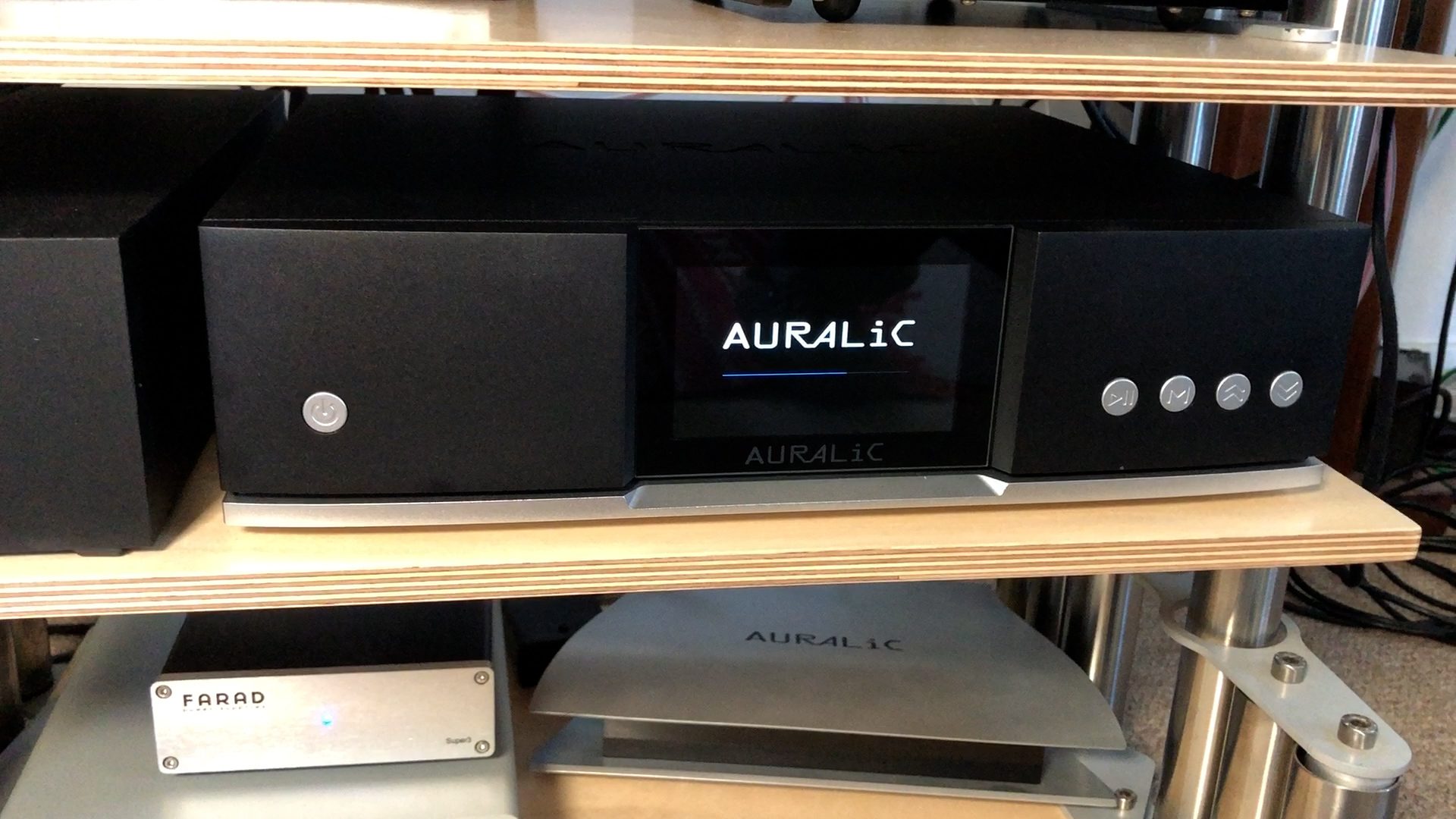
Auralic Aries G1.1: Upconverting streamer?

Auralic Aries G1.1 streamer features upconverting technology

hi-fi+ Reviewer Jason Kennedy takes a look at the Auralic Aries G1.1 streamer and some of its special qualities.

See his full thoughts by watching the video below:

For more information on this product, click here.

You can see this video and more on the Hi-Fi+ YouTube Channel, such as Tea Time with Alan and Pete.

Hi-Fi+ Editor Alan Sircom and Publisher Pete Collingwood-Trewin talk about what’s happening in the high-end audio world.

Tea Time with Alan and Pete is just one of several new series on the Hi-Fi+ YouTube channel designed for audiophiles of all levels.

Another series is History of Audio, which aims to teach viewers a little about the History of Audio, which might be a trip down memory lane for many. It also hopes those who watch will learn from the varying experiences of other audiophiles through their trials and tribulations with different equipment.

While you’re on our YouTube channel, be sure to check out our Audio Basics series. So far, this series has covered what makes a great stereo system and how to find a great stereo system.

Soon, you can find reports from manufacturers at audio shows from around the world. You can see the likes of Aurender, Focal Naim, AudioThesis, Schiit Audio, and Magnepan, just to name a few. Right now, you can see what debuted at AXPONA 2022 and a bit from the Texas Audio Roundup, including background on the Magnepan LRS+. You can also see videos from Pacific Audio Fest in Seattle, CEDIA 2022 in Dallas, and you’ll see reports from Capital Audio Fest coming next month.

You can also see additional product reviews as well as more from the Warsaw Audio Video show and Capital Audio Fest on the hi-fi+ YouTube channel coming soon.

Be sure to subscribe to the YouTube channel so you don’t miss any episodes!

Back to homepage

LEAK Stereo 230 – vintage style meets cutting-edge audio tech

After returning to the audio scene following a four-decade hiatus, legendary British hi-fi pioneer LEAK adds a new, more powerful integrated amplifier to its current range

Cambridgeshire, England –One of the biggest names of the mid-twentieth century hi-fi scene, LEAK returned in 2020 with its first new products since the 1970s. The arrival of the LEAK Stereo 130 integrated amplifier and LEAK CDT CD transport rapidly became one of the most talked-about hi-fi events of the year, fusing the vintage appeal of classic LEAK design with state-of-the-art audio circuitry.As 2022ends and another year begins, the Stereo 130 and CDT are joined by a third new LEAK audio component –the Stereo 230 integrated amplifier. Designed as step-up model from the Stereo 130, the new amp features upgraded circuitry, delivers more power,and features an enhanced DAC stage for digital source components, whilst sporting the same vintage aesthetic that has proven so attractive to passionate music lovers more than half a century after it first appeared.

More about LEAK

Founded in 1934, LEAK is one of the most important names from the early years of the British hi-fi scene, responsible for many technological ‘firsts’ throughout the 1940s, ’50s and ’60s. For example, the Point One series of valve amplifiers introduced in 1945 were the first to reduce total harmonic distortion to 0.1per cent, while the LEAK Sandwich speaker heralded true-piston cone action by sandwiching polystyrene foam between outer skins of stiff aluminium foil. Such was LEAK’s engineering excellence that its 1955Trough-Line is still considered one of the finestFM tuners ever made.Although thoroughly modernised internally, the current LEAK Stereo 130’s wood-clad external design is based on another LEAK classic–the Stereo 30 integrated amplifier, which was the first commercially available all-transistor amplifier upon its arrival in 1963.This groundbreaking amp was famously owned by Jimi Hendrix, among other ’60s luminaries.

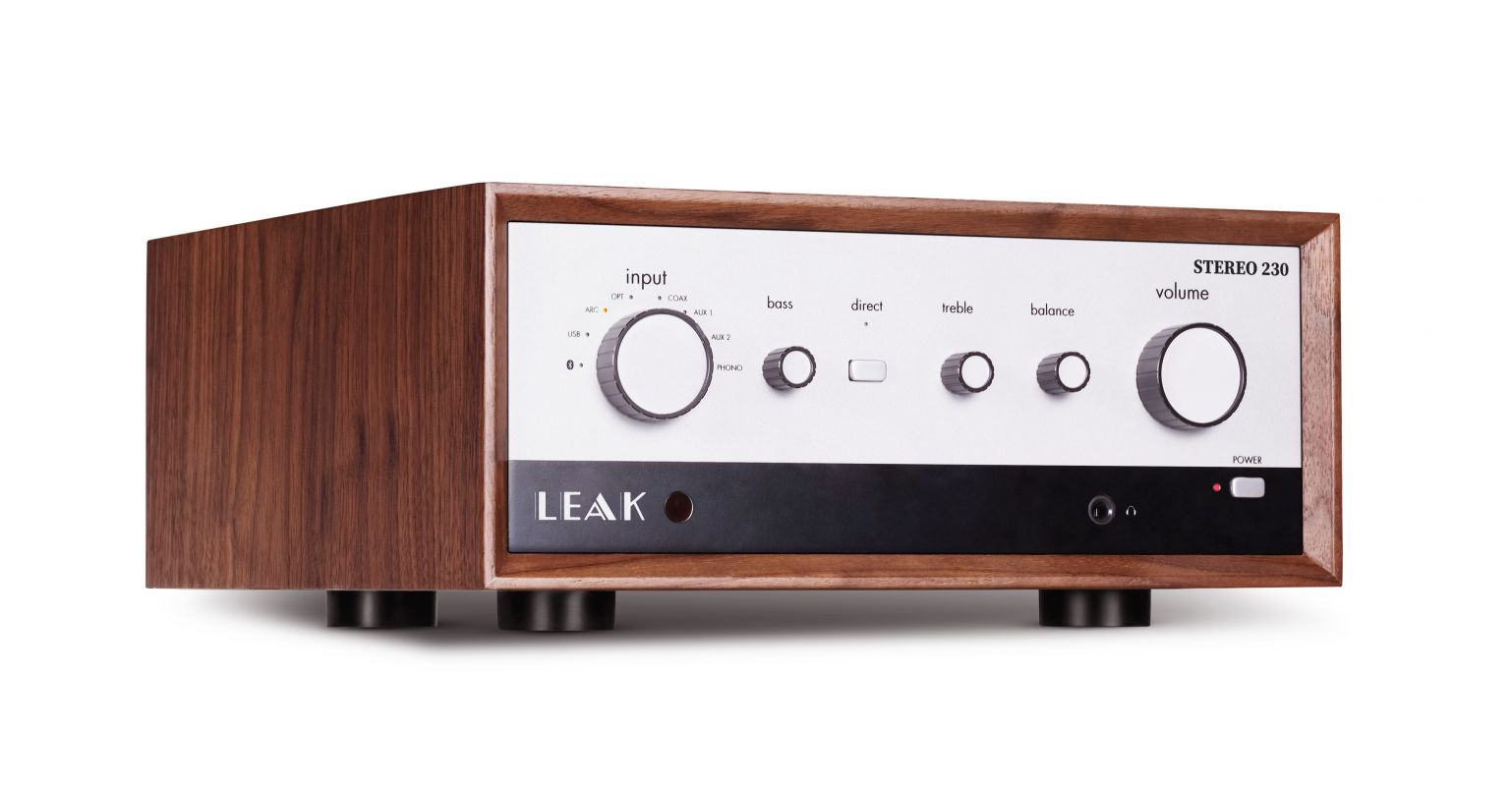
LEAK Stereo 230

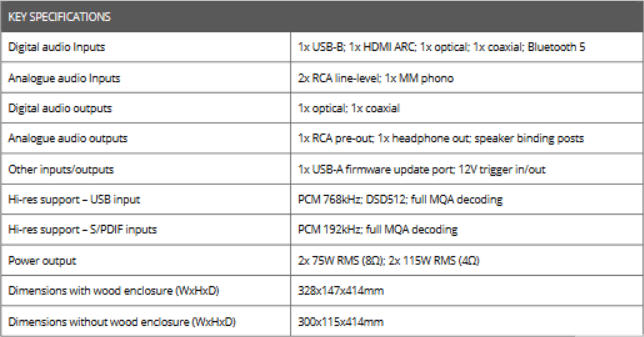
From the front, the new Stereo 230 integrated amp looks almost identical to the Stereo 130 –the same aluminium front panel and invitingly tactile controls,and the same optional walnut wood enclosure adorning its aluminium chassis to complete the classic LEAK look. Its width and height are also the same,but the new amp is 14cm deeper, reflecting its enhanced circuitry and greater power output. Like the Stereo 130, the new amp’s built-in DAC circuitry caters for digital sources such as PCs and Macs, smart phones and tablets, network streamers and CD players –including, of course, LEAK’s own CD Ttransport. It also offers the convenience of Bluetooth reception,supporting the Bluetooth 5 standard for superior speed and range, and multiple codecs including aptX and AAC. Digital inputs stretch to asynchronous USB Type B and two S/PDIF inputs (one coaxial and one optical), plus HDMI ARC. The latter option, which is an addition to the Stereo 130’s specification, extends the Stereo 230’s versatility for use with TVs to make an excellent stereo AV system.

On the analogue side are two line-level stereo RCA inputs, plus an MM phono input.Vinyl lovers benefit from the built-in phono stage’s high-quality, low-noise, JFET-based circuit, digging lashings of detail from an LP’s grooves.

DAC’s a great upgrade

The Stereo 230 upgrades the ES9018K2M DAC chip used in the Stereo 130’s DAC stage to a newer,top-spec chipset from the eminent 32-bit Sabre family –the ES9038Q2M. This is accompanied by proprietary circuitry to make the most of ESS Technology’s HyperStream II architecture and Time Domain Jitter Eliminator for ultra-low noise and high dynamic range.LEAK’s design team has paid great attention to the post-DAC active filter, using op-amps selected for their synergy with the Sabre DAC.Hi-res digital audio support is state-of-the-art, handling PCM up to 32-bit/768kHzandDSD to 22.58MHz (DSD512). MQA–the hi-res streaming technology used by Tidal’s ‘HiFi Plus’ tier–is also supported, with full decoding enabling the complete‘three unfold’ decoding process to be performed internally, as opposed to just the final unfold in the manner of an MQA ‘renderer’. The Stereo 230 is officially ‘Roon Tested’ too, ensuring it works seamlessly in a Roon audio environment.

More power to ya

The Stereo 230’s innate musicality is hardly surprising given the hi-fi handiwork involved. At its core is a Class AB power stage arranged in a dual-parallel configuration,drawing on many decades of amplifier design experience to deliver75W per channel into eight ohms, and 115W per channel into four ohms. A substantial low-noise270VA toroidal transformer is followed by 2x15000uF reservoir capacity, helping the amp to maintain firm control of the music whilst enabling excellent dynamic range.Bass and treble tone controls –a feature passed down from the original Stereo 30to the Stereo 130, and now the Stereo 230 –enable sound to be tailored to suit the varying characteristics of different analogue and digital sources. If preferred, these tone controls may be bypassed to deliver the shortest possible signal path to the precision analogue volume stage, which is controlled by a high-quality motorised ALPS potentiometer.

The Stereo 230’s output power and sonic ability make it a perfect partner for all manner of loudspeakers, not least the Heritage Series models from LEAK’s sister-company Wharfedale –the much-admired Linton, for example, which shares the Stereo 230’s classic 1960s-inspired design and walnut wood finish. The forthcoming Windsor speakers from Castle Acoustics, set for launch in early 2023, are also a fabulous match.Headphone listeners are equally well served by the Stereo 230’sdedicated headphone amp. With its current-feedback design and high slew rate, a dynamic and detailed performance across a range of headphone types is assured.Much effort has gone into the physical layout of the Stereo 230’s circuitry, protecting the sensitive preamp section from noise interference. This, plus the use of independent low-noise power supplies for all critical stages, helps the amp to excel sonically across a range of digital and analogue sources.

Classic hi-fi for modern music lovers

When LEAK returned in 2020 with the Stereo 130 and CDT, the fusion of vintage aesthetic, contemporary features and state-of-the-art technical proficiency heralded a new and unique addition to the hi-fi separates scene. The arrival of the Stereo 230integrated amplifier takes the revived LEAK brand to new levels of power and quality –the epitome of classic hi-fi for the modern age, ready to deliver everything from vinyl and CDs to music streamed from computers and smart devices,through all manner of speakers and headphones. Yet for all its versatility, this is an amplifier that puts the music first. Whatever the source, its virtuosic performance is consistently engaging; foot-tappingly lively yet maturely refined, richly detailed, and fluidly dynamic.The LEAK Stereo 230 is available from January 2023, with or without the optional walnut wood enclosure at RRPsof £1,249and £1,099 respectively.


For more information on this product, click here.

Back to homepage

Copland CSA 100

Back in issue 194, Chris Thomas got to grips with the then-new CSA 150 integrated amplifier from Copland. The Copland hybrid amp project wasn’t simply one amp; there are three in the range. The CSA 100 is the middle model, and it might just be in the sweet spot of the trio.

You see, the Copland CSA 150 is the big hitter, delivering – as the name suggests – a hefty 150W into eight ohms, and standing at 164mm high is quite a big beastie on the shelf. The CSA 100 – also as the name suggests – delivers a still impressive 100W into eight ohms, but cutting some 29mm off the height, shedding a kilo of shipping weight and shaving a grand from the asking price makes a surprisingly big difference. When you consider that the last represents a one-fifth drop in the total price of the amplifier and that many CSA100 amps will be used in systems that never get close to using all of its 100W in reality, you can see why these differences might just make all the difference.

Hybrid Listening

Having recently covered the CSA 100’s bigger brother in the magazine, I am mindful of not going over old ground. However, it’s important to show just how similar these amplifiers are in specification terms, because they share a lot in common in musical terms as a result. Copland started life some 30 years ago in Denmark. The founder Ole Møller remains at the helm to this day. From the outset, Copland amplifiers feature valves (either all-valve or hybrid designs) and sported the clean lines that the brand has retained to this day. The original Copland models were not available in black if I recall correctly, but in all other areas, the strength of the design is you could put an early 1990s Copland amp next to a 2022 model and see no striking differences in product design. While some might argue that suggests lazy industrial design and everything needs a revamp sooner or later, the other side is if something has classic appeal, leave it untouched. But it’s a sign of just how strong and long-lasting Copland’s industrial design remains that where 30 years ago, those distinctive knobs were called ‘Cello-like’, the bespoke Cello amplifiers made by Matthew James today look ‘Copland-esque’ today.

Copland CSA 100

 Like the CSA 150 that preceded it, the CSA 100 features a built-in quad mono DAC built around the Sabre ES 9018 Reference DAC chip from ESS Technology on its digital input board. This can be equipped with an aptX Bluetooth module. This connects to the digital universe through USB, as well as to conventional digital audio devices using a coaxial S/PDIF and two Toslink optical digital connections. It supports both PCM and DSD files, although (in my mind, correctly), Copland steps away from the digital arms race; preferring to stick with DSD128 and 32bit, 384kHz PCM. As ever, Linux and Mac users get to connect to the hi-res side of things without a problem, but Windows users need to download a device driver. There will doubtless be those who start stamping their feet and decrying ‘dealbreaker’ because the CSA 100 won’t play that single DSD512 or 768kHz PCM file they have. To them, I say… “get a life!” Sadly, we’ve been in the thrall to those obsessed by this numbers game for years and for no good reason. I would rather have a system that copes with already high-resolution audio files with aplomb than I would something that chases zeitgeisty super high resolution and falls flat sonically as a result. These files are often of dubious provenance and of questionable sonic benefit over their less lofty brethren. Rant mode disengaged!

Healthy Oomph

Alongside the DAC, there is also a neat moving magnet RIAA phono stage on board and a headphone socket. You can also turn the CSA 100 into a preamplifier in its own right, although this is simply through judicious use of phono plugs on the rear panel rather than turning off the parts of the amp no longer in use. Power it up and it takes 45 seconds or so to spring to life, warming up the lone 6922 that sits in the gain stage of the preamp section. A healthy 100W of MOSFET power is then on offer, and a sign of the degree of ‘oomph’ this amplifier has it that it almost doubles that figure as you slip from an eight to a four-ohm loudspeaker load, pumping out an impressive 180W per channel.

Operation is simplicity itself. There’s a rotary selector to direct the amp to your source component, which is signified by one of the LEDs in a circle in the middle of the front, alongside power on, standby and whether you have switched to the phono input or the digital circuit. The digital option has a little manual dial to select source, making it a bit of a hub. With just two RCA and one XLR analogue stereo line inputs, the CSA 100 doesn’t exactly bristle with inputs, but it has a tape input and output which is both rare and refreshing today. There’s a remote eye in the middle of that central wheel of LEDs.

All of this (apart from the 100W power output) is exactly the same spec and options as the bigger CSA 150. As described earlier, the CSA 100 is a shorter, slightly lighter and cheaper prospect than the CSA 150, but in all other respects is identical in approach. What’s the point of that?

In fact, these two amps speak to two very different clientele. The CSA 150 is ideal for a system with big ideas; that extra power makes it a perfect partner for the likes of Wilson Audio SabrinaX or even Magico A5 loudspeakers. On the other hand, the CSA 100 is more about giving a taste of the high-end to those with loudspeakers at a similar price point to the amp. In a way, that makes it even more important than the CSA 150.

Here’s why? For many, the Copland CSA 100 will be the gateway into the high-end. They will have a good system that makes nice sounds, but have only scratched the surface of the grace, power and sophistication that high-end audio can offer. Get it right and that prospective high-ender has a life-long passion. Get it wrong and they’ll wonder what all the fuss is about. This is the crucial moment when a music lover can identify with the passion that drives high-end designers, or the point when they dismiss the whole shooting match as just so much bling for people with more money than sense!

Fortunately, Copland gets it very right indeed. It’s a tidy, dexterous sound, coupling the grace and finesse of a good valve amp with the drive and slam of a well-engineered solid-state device. It’s also expressively dynamic without the sort of unrestrained dynamic range that high-end speakers love, but can sound ‘edgy’ on speakers you might typically find in commensurately priced systems.

Copland CSA100 rear

What it does so well is communicate that ‘holographic’ soundstaging that draws so many to good audio. The Copland CSA 100 has that in spades, creating a three-dimensional space in front of the listener that you feel is almost possible to reach out and touch. Any of those demonstration-quality ECM recordings are perfect partners here; all that oud-noodling (oudling?) by Anouar Brahem on albums like Blue Maqams or The Astounding Eyes of Rita is mesmerising here, filling the room with a North African/Middle Eastern vibe.

Clearly better

While that staging is what hooks you into the Copland’s sound, it’s the clarity and detail that are the real insights. The CSA 100 gives you a close look into the recording studio or venue; not in a brutishly hard analytical manner, but with the sort of detail and insight that just communicates the music extremely well. Audiophiles often have something of an obsession with finger noise on stringed instruments because it shows how good a device is in picking up very low-level information. Playing ‘May You Never’ by John Martyn {Solid Air, Island] gives excellent insight into the musician’s playing style and all those finger noises (often masked by his percussive playing style) come through well. The flip-side to this – The Glenn Gould/Keith Jarrett Sing-A-Long Hour – is also well resolved, but where some of the more aggressively detailed make Gould’s little snorts and hums irritating to the point they detract from his masterful playing, here they sit well in the Bach piece [Goldberg Variations, Sony]. And while that clarity is somewhat cool and collected, more cerebral than ‘shut up and dance’, few can match the CSA 100’s ability to communicate at the price.

There is good consistency across the inputs too, with no shifts in tone or character as you move from turntable to line input to digital. I’d argue that the RCA line inputs are mildly superior to XLR, that coaxial S/PDIF is marginally superior to Toslink optical and both are a hair better than USB, but unless you are playing the same track back to back through all these inputs, the difference are slight.

The headphone listening experience is one of the few places that requires qualification. While the likes of Sennheiser’s HD 25 II closed-back headphones sounded as clear as a bell and extremely detailed (they are popular with field recordists for a reason), the same did not apply with a pair of the late, lamented AudioQuest NightHawks I use for night-time listening, which sounded ‘peaky’ through the CSA 100.

I’ve been privy to two very different sounding hybrids in successive months, both of which come from the same Absolute Sounds stable. The £6,498 PrimaLuna EVO300 Hybrid is also a 100W integrated amplifier design, albeit one without a phono stage, a headphone amp or a DAC. It also uses six 12AU7 valves. The difference between the two is striking; the PrimaLuna is ‘punchy’ and yet ‘refined’ where the Copland is ‘detailed’ and ‘elegant’ sounding. The EVO300 Hybrid has more of a sonic imprint on the music, but that imprint is very attractive to some listeners.

Copland CSA100

I’m often reluctant to put together combinations in print unless they absolutely sing together, but hooking the Copland CSA 100 to a pair of KEF LS50 Meta loudspeakers is one of those matches made in sonic heaven. Factor in your turntable of choice (I think EAT, Pro-Ject or Vertere would be a great visual and sonic match, but the built-in phono stage is a flexible friend), a good digital source and a cable system that brings out the best of both and in a small to medium sized listening room, that Copland/KEF combo is extremely hard to beat, giving you an extremely detailed and open sounding performance with outstanding soundstaging, boundless energy and a smoothness and satisfaction to the sound that is just… polished.

Metropolitan chic

I have banging on about ‘metropolitan’ high-end audio recently, and the Copland CSA 100 is perhaps the epitome of that concept. The amplifier’s size, features, abilities and classic design make it the kind of device that is made for chic city-dwelling living spaces rather than the dedicated listening rooms of those ‘estate’ listeners (for UK readers, that’s ‘estate’ in the ‘rambling country seat’ sense, and not a cheaply-built tower block in Thamesmead). So, where earlier I said – and still hold – that the CSA 100 is a gateway into high-end audio, it is also sufficiently good in its own right to be that high-end centrepiece in your London flat or your New York apartment.

It’s these last two elements that make the Copland CSA 100 so important in today’s audio world; it sounds sublime with real-world audio devices, showing just what good high-end audio is capable of, and does so in a package that’s as refined as its sound. That gives the amplifier a wider audience than just traditional audiophiles going through a spot of ‘electronics churn’. I suspect all three amps in this series will have universal appeal but the CSA 100 doesn’t suffer from ‘middle child syndrome’; it’s just possibly in the Goldilocks spot where everything just fits well.

Technical specifications

  • Type Integrated amplifier with DAC and phono stage
  • Power 2 × 100 watts into 8 ohms
  • Analogue Inputs 1 × balanced (XLR),
  • 3 × unbalanced (RCA)
  • Digital Inputs 1 × coaxial S/PDIF, 2 × optical S/PDIF, 1 × USB, 1 × aptX HD Bluetooth (optional)
  • Line Output 1 × unbalanced (RCA), 1 × pre-out unbalanced variable (RCA)
  • Phono Input Impedance 47K ohms (MM)
  • Frequency Response 10 Hz- 150 kHz -3dB
  • THD Better than 0.06%
  • Signal/Noise (IHF-A) Better than 90dB
  • Headphone Amp Gain 22 dB @ 100 ohm load impedance
  • Headphone output impedance 40Ω
  • Vacuum Tubes 1 × 6922
  • Remote Yes
  • Dimensions (H×W×D) 135 × 435 × 370mm
  • Shipping Weight 14 Kg
  • Finishes Available Silver or Black
  • Price £3,988
  • Bluetooth Module £198

Manufacturer

Copland

copland.dk

UK Distributor

Absolute Sounds

absolutesounds.com

+44(0)20 8971 3909

Read more Copland reviews here

Back to Reviews