Up to 37% in savings when you subscribe to hi-fi+
hifi-logo-footer

Begin typing your search above and press return to search. Press Esc to cancel.

Tellurium Q Statement cable system

It’s not hard to be cynical about cables: after all, how hard can it be to solder some plugs onto piece of twin-core wire and build a speaker cable? Yet most people can hear differences between cables if they are given a chance, and the things domake a difference, quite a profound difference in many cases. Some have attempted to give cables a notional value in the hierarchy within a system, suggesting you should spend at least ten percent of the system value on the connections, but these are fundamental parts of the signal chain – without them there would be no sound (even wireless systems have to have some cables even if they are only delivering power).

I would argue that regardless of system price you need bloody good cables, as you want as much of the signal as possible to get from the source to the speakers in any situation. In fact, I imagine it would be possible to put together two systems of the same price where one devotes 10% to cables and the other considerably more and find that the latter is the better sounding of the two. The problem is that a lot of cables act as filters allowing certain frequencies through more easily than others, and these filters interact with the source and load in different ways, which is why choosing the right cable for a given system isn’t easy. Geoff Merrigan at Tellurium Q seems to appreciate all of these facts and more. He has spent thousands of hours listening to different conductor materials, different dielectrics, and even different solders. And he has produced what many have found to be extremely good cables as a result.

The Statement is Tellurium Q’s ultimate loudspeaker cable, a very chunky beast of a conduit that has to be folded into its container because coiling it up damages its structure. Inconveniently, Geoff is not very forthcoming about the topology or materials of his cables, which makes him open to accusations of being a purveyor of ‘snake oil’. His response is a fair one; if he told the world what goes into the product it would be copied and he wouldn’t benefit from all the time and effort he’s put into R&D. Most manufacturers do this to some extent; they may seem to be telling all but there are always key details that are kept under wraps. What Geoff will say is that it’s not about speed, the fastest conductor is not necessarily the best in his book. He points out that there is no single thing that makes a good cable, it’s a combination of factors including the way that, “materials affect ranges of frequencies in dissimilar amounts”.

He also talks about trying different solders on the terminations, admitting that “we have tried numerous mixes and diverse percentages of silver in the solder but at the end of our testing and development we chose a solder with no silver whatsoever (no lead either).” Even the connectors themselves have seen a lot of research beyond the type and plating which is silver or appears that way; he states that “we specify the thickness of the plating and what has to be in the plating bath and what should not be.”

In testing Statement, I have to say that I was impressed. One of Tellurium Q’s favourite topics is phase coherence, something that you should be able to achieve if you can get all frequencies to travel through the conductors at the same speed. If this is the source of the excellent timing and coherence that these cables deliver then they appear to have succeeded. This is the first thing that hit me when I got the system up and running; at first it seemed a little odd, but I suspect that’s because most other cables blur the timing of certain frequencies and fail to achieve such tight cohesion. But once you find that groove it is irresistible; Stevie Wonder’s ‘Superstition’ [Talking Book, Motown] is a phenomenal track when it’s as coherent as this, it is very difficult to sit still in the face of such precisely defined funk. This doesn’t mean that it’s clamped down and neutralised, it means that the music flows without effort, propelled by a rhythm section that is locked together yet as supple as a snake.

I also love the dynamics that Statement delivers, even compared to similarly beefy cables this produces the power and drama of an orchestra in full effect. I reverted to an old favourite in Beethoven’s Fifth [Barenboim, Beethoven For All,Decca], and revelled in the dramatic power and the fine textures of massed string instruments. This is a telling piece and not an easy one to deliver in a domestic setting, but with this cable it became realistic and totally compelling. At the other end of the scale, the quieter end, this cable is exceptionally good at pulling out the details that make a singer or instrument palpably real. I first noticed this with Patricia Barber’s ‘Company’ [Modern Cool, Premonition] where there is a glow of sorts around the voice that is usually not audible. It’s presumably a studio effect provided to spotlight the voice but, not one that many cables expose so well.

I had to try a favourite live track, Ryan Adams and the Cardinals playing ‘Hallelujah’ [Live at Das Haus, archive.org], this is large scale but you don’t get the dynamics that Statement delivers and nor do you get the perspective that it provides. I’m talking about the micro dynamics that add depth by rendering the voice, the band, and the audience in the correct ratios. This enhances the realism and makes you want to listen harder and longer. Imaging is in the Premier League, with instruments and voices placed precisely in a soundstage that reflects the recording with great fidelity.

I could rave on about this extraordinary cable but realise that at this price you won’t believe me: the only way to find out is to listen for yourself. But beware; once you hear what Tellurium Q is capable of you won’t forgot the experience in a hurry. You have been warned!

PRICES AND CONTACT DETAILS

  • Type: RCA Interconnect
  • Price: £4,320/1m pair
  • Type: XLR Interconnect
  • Price: £4,740/1m pair
  • Type: Power cord
  • Price: £4,740/1.5m cable
  • Type: Loudspeaker with silver plated 4mm locking terminations
  • Length: 5m pair
  • Price: £1,740/mono metre

Manufacturer: Tellurium Q

URL: statement.telluriumq.com

Distributor: Kog Audio

Tel: +44 (0)24 7722 0650

URL: kogaudio.com

https://hifiplus.com/reviews/

Meet Your Maker: Kazutoshi Yamada, Zanden Audio Systems

We spoke to Kazutoshi Yamada – President of Zanden Audio Systems – during a recent brief tour of Europe. 

Unlike many manufacturers and designers in the audio business, Yamada-san didn’t take the usual route of learning at the feet of the master. He didn’t spend years as an apprentice engineer or junior designer in a large R&D team. Instead, he took the more hardcore enthusiast approach of going it alone with a dream… and an innovative circuit design that he developed while at university. 

AS: Yamada-San, when did you start Zanden?

KY:About 25 years ago, I settled on the Zanden name. My family name Yamada uses a Chinese pictogram that can also be read as ‘Zanden’; ‘Zan’ meaning ‘mountain’ and ‘Den’ meaning ‘rice field.’ However, I didn’t realise the name existed (and means ‘sand’ in English) in the Netherlands until a few years later, when people kept asking me “Is Zanden Dutch?”

AS: How did you get into audio electronics?

KY:While studying at the university (my major was in electronics), I invented a circuit for use in a phono stage and after graduating I started my own private office. This was a valve circuit; I am 66 years old, I am a part of the valve generation, and I started designing valve amplifiers more than 40 years ago. 

Ten years after starting my own office, I invented some tube circuits that were patented in Japan. These form the base circuits of Zanden products and I still use them today. This special circuit went into the original Model 9500 mono amplifier, and later the Model 9600. As well as into the Model 8120 power amplifier from the Modern range… everything! Also, I don’t like to use traditional valve circuits, so with designs like the line and phono stages I use a circuit that is unique and I don’t think any other manufacturers adopt my circuit.

AS: And what is so unique about that circuit?

KY:Most other valve amplifiers only use a combination of resistors and capacitors, and that’s all in the basic circuit. My circuit includes more regulation through a current regulated diode. I use this device and it is very popular in the industry!

AS: And you invented that?

KY:Maybe! I prefer to use the fixed-bias circuit because the sound is very stable. While many tube electronics manufacturers also use a traditional fixed-bias circuit, my circuit is very simple and unique. I use a battery that performs the biasing of the circuit. We have batteries used on PCBs that work for more than 10 years with minimal voltage loss. The combination of a current regulated diode and fixed-bias works very well together for lower noise floor.

AS: Although you have an electronics degree, you did not work for other audio brands before starting Zanden. What are your audio qualifications?

KY:I have over 30 years of experience as a live music coordinator, which means I have attended more than 500 concerts. This is my basic experience for music and means I can compare live and recorded easily as result. I studied electronics to find the difference between live and recorded and how we close the gap. This is what interested me in LP reproduction: when I play back Decca, EMI, and Columbia mono LPs, the tonal balances are totally different. I thought it must be due to different EQ cards. I started research in mono LP as a result, and then made two mono equalisers and did the same for stereo playback!

AS: What were Zanden’s first products?

KY:The first product we made was the Model 9400 power amplifier and the Model 1000 preamplifier, which still form the basis of the Model 9600 MkII and Model 3000 MkII today.

AS: What prompted the changes to these models?

KY:Well, I had a very special product made for Hong Kong – cost no object – which meant I could build the ideal product, using every part I ever dreamed of. When I received such an offer, I decided to make the product, and I thought I can use the technology from that for the next “normal” Zanden products. And that’s precisely what happened.

AS: Are there bigger power amplifiers on the way?

KY:My interest is in high-power amplifiers and almost seven or eight years ago I found some very good valves from Russia – the KT120 – and I was eager to build a push-pull design, and of course, I am still interested in direct-filament tubes (845, 211, 300B) because I think the tonality is better. I sometimes receive requests from distributors to make bigger products (such as for the Hong Kong market), so this was the reason I develop new designs. 

Now I am considering building push-pull designs, because they are theoretically better than single-ended designs. However, many tube lovers still prefer single-ended amplifiers. This was the reason I invented the new generation of amplifiers. I have put these ideas into the special models for Hong Kong, but actually starting with the Chuko line stage and Jinpu phono stage. In the future, I would like to develop the next generation of Zanden products based on those designs. I do hope to design and deliver the top models into the Classic selection, above the existing models.


AS: What do you think audio companies get wrong?

KY:With my products the most important thing in building the amplifier is the direction. My amplifiers use PCBs; many tube designers still prefer point-to-point wiring, but it becomes impossible to fully control the physical directionality of the wire in that kind of a circuit. In my opinion, very few manufacturers take time to judge the right directionality of components such as resistors. We judge them because if the components are even slightly different, the bokeh of the sound changes subtly (Editor’s note: bokeh is a Japanese term used in art to describe the character of out-of-focus background images).

AS: You also made a range of digital audio electronics. Why did you stop?

KY:I concentrated on the 16-bit audio, because I think it sounds more musical than bitstream. However, it is almost impossible to find those 16-bit DAC chipsets anymore and I am still interested in the multibit conversion. While they are very good, I wouldn’t be happy replacing multibit with an AK or ESS converter. But that doesn’t mean I won’t be launching any more digital products!

AS: If you don’t like bitstream DACs how will you launch new digital audio?

KY:I am interested in building a discrete R2R DAC. Right now, we are resourcing parts for this, such as resistors, logic ICs, and so on. The most difficult part in building such a DAC is finding very precise resistors, 0.0005% tolerance for example. However, I have found a source, but it’s not going to be cheap. Nevertheless, it is very important for us to make and design both a USB and a Network converter.

AS: What about DSD and MQA? How can you make them work with a R2R DAC.

KY:DSD will be… difficult! Multibit technology does not lend itself to DSD’s high-frequency bitstream. It’s not impossible, but it is difficult. Zanden is a very small company, I am not sure I can obtain an MQA license until the next generation of digital products are on the market. After they have been released, however, it should not be difficult for me to release MQA onto that digital platform.

AS: How is the digital platform influencing other parts of Zanden Audio Systems?

KY:Quite a lot! My factory was in central Osaka, but this is a crowded, very noisy area, and there is a lot of radio frequency noise. It was hard for me to find a space quiet enough to develop and test our products. If I was to try to develop such a high-resolution DAC, we needed a lower noise floor than central Osaka area could provide. For this reason, we moved the factory to Southern Osaka in May! It is very small, but I can make excellent grounding there and that is vital for good measurements and listening during the DAC development. 

AS: What do you listen to at home?

KY:My turntable is a Kuzma XL DC, with a ZYX 4D cartridge, and I use a pair of Magico Q1 loudspeakers. I am not sure if this is a secret or not, but Alon Wolf of Magico offered a trade (the Q1 for a 1200 phono stage, which he uses in the studio). Sometimes I also use a pair of Wilson Sasha; I have a very good dealer near my factory. Also, I have a vintage pair of Hartley Concertmaster VI loudspeakers. When I visited Hong Kong to present the special model of a very large single-ended monoblock amplifier, my distributor had Hartley Reference Monitors. I was very shocked after hearing them! Such a wonderful sound! So, I returned to Japan and searched in second hand shops until I eventually picked up a very good vintage pair for myself.  

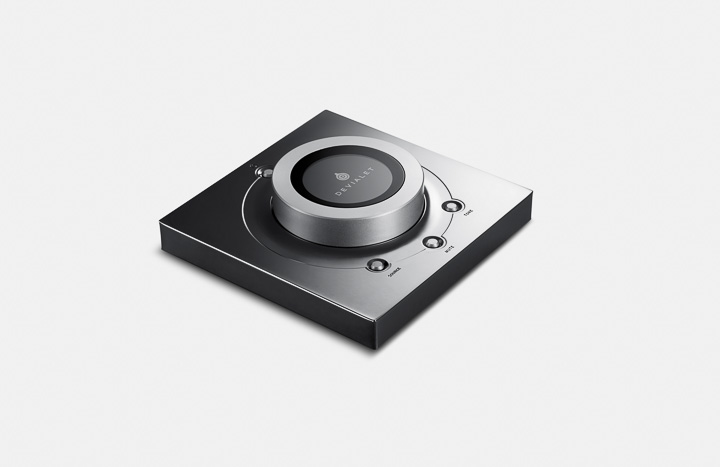
Devialet 140 Expert Pro integrated amplifier

As someone who has been watching the whole Devialet thing evolve over the last decade, it’s been one hell of a rush. The French company – started by a couple of ex-Nortel engineers with a clever amplifier circuit – quickly established itself as perhaps the finest example of disruptive technology in the audio business today. First with the D-Premier, and now with both the Phantom and the Expert series, Devialet continues to innovate, develop, and grow.

And now, where once we had Devialet Expert, we now have Expert Pro, which brings a whole swathe of new technologies and innovations to bear. And, as has been the case from the outset, owners of even the first models can upgrade to the latest Expert Pro technology. Few other brands treat their existing customers so well.

The big change in the move to ‘Pro’ is the new Core Infinity main board. However, to move to that new board requires a lot of heavy lifting on the Expert’s part. This is why owners of original D-Premier models needed to periodically put their devices in for upgrades, so they wouldn’t be left out of the loop for future developments.

Core Infinity is, in fact, the largest change to the Devialet platform since that platform first emerged. It redraws the amplifiers basic Class ADH (‘Class A/Class D Hybrid’) technology at a pretty fundamental level by introducing new Class A voltage amplifier, a new 10-bit current-sensor circuit, and a new Class D current amplifier… and redraws the basic Class A/D algorithm. That’s not a stylistic change… that’s a whole new engine.

There’s more, but let’s focus on that a little first. The move from eight- to ten-bit current-sensor improves the precision of the handover from current amp to voltage amp, and that coupled with more efficient and responsive code controlling the whole ADH circuit means a lot lower distortion figures.

The original Magic Wire D/A conversion circuit has also come under scrutiny in Core Infinity, which itself brings a 6dB improvement in THD and a 2.5dB drop in noise floor. This may be gilding the lily, as the distortion and signal-to-noise ratio of the Expert was already at world-class low levels, but this too represents some of the most significant changes to the basic Devialet core since its launch. All of these changes form what Devialet calls ‘ADH Intelligence.’

In fact, many of these developments (especially in the Class D amplifier) were seen in the strictly limited Original d’Atelier model, but the collective changes eclipse even that design. In fact, the Core Infinity board is one of those technologies that would have been impossible to implement at the time of the original launch of the D-Premier, and prohibitively expensive at the launch of the Expert line, but such is the rate of change in electronics technology that it can be introduced here. AXD is the company’s latest acronym, and it requires suitably-equipped Expert Pro amps to realise. As it stands for Active X-over Design, it also requires a loudspeaker that is both known to Devialet and is in fully active form. This would require getting a pair of loudspeakers we don’t currently have, and several additional Expert Pro amps that we also don’t have to hand, but this is the next step in the company’s Speaker Active Matching… and we could do that with the Wilson Duette II.


As before, the Devialet Expert Pro relies on the on-line configurator to establish who talks to what, and this is stored as a small file on a supplied SD card that sits round the back of the Expert Pro chassis. Configuration is easy, especially as Devialet stores an ever-expanding list of cartridges and loudspeakers, and their key characteristics can be programmed into your Expert Pro with little more than a drop-down menu. Or, in the case of the cartridge, you can enter its parameters manually.

As before, this leads to discussions about Devialet’s Record Active Matching system, which both optimises the cartridge loading and amplifier, and also digitises the LP input at source (to 192kHz precision). Equalisation is then performed in the digital domain, and this allows some of the lessons learned in the Lost Recordings to shine through, as the Devialet has highly adjustable curves. It’s even possible to adjust those curves on-the-fly, via the RAM menu on the front display, which can be accessed via the super-elegant remote handset.

Core Infinity also unlocks some new wireless technologies, most notably Roon  across Devialet AIR, AirPlay, SpotifyConnect, and UPnP. Truth be told, AIR has always been something of a weak spot in the Devialet chainmail, and while drastically improved, it still remains perhaps the one part of the whole Devialet package that could benefit from some improvement. That being said, Apple went through a fairly hefty Operating System update mid-way through the review, and there are many companies playing catch up. AIR, to its credit, remained stable and unfazed by all of this.

We were loaned the Expert 140 Pro, which is the ideal ‘UK domestic’ model. The bigger Expert 220 Pro, and the biggest Expert 250 Pro bring more power to the game (and in the case of the 250 Pro, the original D-Premier chassis), but are otherwise functionally identical, rather than good-better-best options.

The new Core Infinity board completely changes the performance of the Expert. This is a more accurate, precise, and focused sound, which is saying a lot given that these were the same attributes for which the Expert was famous. The Core Infinity board takes those attributes and pushes them to their detail-driven logical conclusion. This is an exceptionally detailed presentation; if playing an orchestral work of old and one of the tubes on a microphone preamplifier is on the way out, you’ll know. If you want to know why Brad Paisley and others cling to their Ken Fisher designed Trainwreck amps, you’ll hear the difference the rectifier circuit makes, and find it easy to identify and differentiate from the more common (and more affordable) Fender amp/stomp box pretenders. That’s the sort of detail the Expert Pro puts out.

While SAM might tame some of the more wild beasts that creates, bear in mind that the detail of the Expert 140 Pro coupled to the wrong loudspeakers could be toodetailed. And, it must be said, the latest Devialet platform is all about the speed – rather than the pace – of delivery. You get all the leading-edge detail and remarkable transparency, and no aspect of the performance is accented. But that includes the rhythm, and that might upset those who listen to a sound directed toward almost imperceptible timing changes.

As with previous iterations of Devialet products, I find myself looking less to rock and more to baroque. That’s not a function of the amplifier tailoring the presentation, but a ‘I wonder how that will sound?’ enquiring mind seeking out detail. And, sure enough, Bach is played with rare insight; Cazals fantastic Cello Suites [Archiv LP] renditions may have arguably been technically eclipsed, but the performance is one of the true masterworks of the 20th Century, and here you get to hear every last finger scrape and even the most subtle ornamentation. It’s that precision that draws you in.

The change is also deceptively potent. If you think you have become adept at spotting where Class A ends and Class D begins, the new Core Infinity shifts the goal-posts and no matter what you try, you just can’t hear that point of inflection (some will ‘hear’ it, all the same). However, where in the past you used to think you were listening to a huge Class A amplifier (but without the heat), this time Devialet seems to have gone for the accuracy and linearity of Class A rather than its sweetness. Once again, that’s no bad thing, just a different set of priorities from the last iteration.


I can’t help feeling that Devialet’s biggest concern with the Expert Pro in all its guises is nothing to do with the performance. It is, in microcosm, an existential crisis endemic to the audio business entire: the lack of new blood. I suspect practically everyone who wanted a Devialet… has one by now, and the number of new people coming along to buy a new Expert 140 Pro is dwindling. Sure, Devialet has got this covered with the Phantom, but I’m not sure if there will be many converts from Phantom to Expert in reality. Core Infinity is an outstanding step-change for Devialet, but I can’t help but think most people who will get to hear it will do so on an Expert model they may have bought half a decade ago. And if Devialet can’t get new people buying its product, who can?

I don’t want to end on a down note because that’s not what the Expert 140 Pro deserves. This is an exciting product, made all the more exciting by the Core Infinity updates. Devialet has made a huge change to its product in the shape of Core Infinity, and it makes the amplifier lead the field in detail retrieval and precision once more. Existing Export owners should make sure their system isn’t pitched into brightness before committing to an upgrade, because they will find the amount of detail on offer an intense experience. But, many will make the change, and make changes to the system because that’s how good the Expert 140 Pro really is.

TECHNICAL SPECIFICATIONS

  •  Type: Integrated digital amplifier
  • Connections: 1×Optical Toslink, 1×combined Optical Jack & RS232 Mini 3.5mm, 1×USB for computer or USB-fitted turntable connection, 1×Ethernet RJ45 for connection to LAN, 4×S/PDIF digital inputs on RCA (or two analogue line level inputs), 1x Phono input – Adjustable Gain and sampling frequency (96 or 192KHz, fully configurable, MM or MC, load, sensitivity, 1953 or 1976 RIAA as standard, 13 additional EQ curves available with on the fly toggle from RAM menu), 1×trigger, speaker terminals and subwoofer output. Optional stereo pre-out
  • Power output: 2×140W into six ohms, adjustable from 50–140 via online configurator
  • THD+N (harmonic distortion) at full power: 0.0005%
  • SNR (Signal-to-Noise ratio): 130 dB unweighted
  • Bandwidth, digital inputs @ 8 to 2 Ω load: DC–87kHz (-3dB), DC–60kHz (-1dB), DC–30kHz (-0.1dB); analogue inputs: same except 0.1Hz (-3dB)
  • Dark Chrome finish, single aluminium block case
  • Dimensions (W×D×H): 38.3 ×38.3 ×4cm
  • Weight: 5.65kg
  • Price: £4,490

Manufactured by: Devialet

URL: devialet.com

https://hifiplus.com/reviews/

WIN! A Gold Note Valore 425 Plus turntable worth over £1,400!!!

We have partnered up with the smart folks from Gold Note to bring you an exciting competition for a chance to win a Valore 425 Plus turntable worth £1,445.45!

Alan Sircom reviewed the Valore 425 Plus in Hi-Fi+ issue 168 where he wrote, “A big part of the reason we’ve been banging on about Gold Note turntables is they get a lot right, especially when it comes to those all-important rubrics of value-for-money and ease-of-use. Valore is Italian for ‘value’ and ‘worth’ (as in both a financial and a moral sense) and the 425 Plusis the uppermost of the two models in the Valore range.”

He went on to say, “The Gold Note Valore 425 Plus is perfectly placed, in that it works exceptionally well with all moving magnet cartridges and most moving coils you would expect to put with a deck at this price.” “It’s a tidy, ordered, detailed, and – above all – quicksilver performer that acts from the midrange on out.”

He concluded by saying, “if your tastes run from World Music to Wagner, the Gold Note Valore 425 Plus is an excellent and inherently honest performer that doesn‘t impose itself on the sound of LP.”

Competition Question

What does ‘Valore’ mean in Italian?

A. Anniversary and Reference

B. Value and Worth

C. Easy to use and Fun

To answer, please visit Gold Note’s dedicated competition page goldnote.it/competition 

Alternatively, send your answer on a postcard (includingyour name, address, and contact details) to Gold Note Competition, Akamai s.r.l,, Via della Gora, 6, Montespertoli ( Firenze), Italy.

Competition Rules

The competition will run from February 28th 2019 until May 2nd 2019 . The competition is open to everyone, but multiple, automated, or bulk entries will be disqualified. The winner will be chosen at random from all valid entries, will be contacted via email (where possible) and their name will be published in the magazine. The Editor’s decision is final and no correspondence will be entered into. Absolute Multimedia (UK) Ltd. is compliant with the Data Protection Act and UK laws apply. Our policy is such that we will not pass on your details to any third party without your prior consent.

IsoAcoustics Gaia I, II, and III loudspeaker isolation feet

As late as the middle of the last decade, the only legitimate audiophile option for the interface between loudspeaker and floor was the spike. You drove them as hard as possible into a wooden or concrete floor or sat them on protectors to prevent the spike cracking marble or tile. Your audiophile ‘cred’ was measured by how inert you could make that loudspeaker, based on the logical assumption that the only part of a speaker that should move is the transducer.

However, an equally logical assumption emerged a dozen or so years ago, that instead of trying to make the loudspeaker cabinets a rigid part of the building, we should instead attempt to somehow decouple them from their environment. Everything from springs to squash balls to ball-races was drafted into supporting roles for loudspeakers (and even audio electronics) with mixed success. The battle doesn’t exactly rage, but it still continues to this day, with some rigidly (pun intended) supporting spikes and others still pursuing the next great interface.

Some of the most consistently successful products to sit under loudspeakers in recent years are the Gaia feet from Canadian isolation specialists IsoAcoustics. These come in three different sizes for different weights of a speaker. The smallest – Gaia III – works with loudspeakers up to 32kg, the Gaia II for loudspeakers between 32kg and 54kg, and the largest Gaia I for loudspeakers up to 100kg. You get four Gaia feet and a mounting kit in each pack, so to install under a stereo pair of speakers, you will need two kits. The Gaia pack comes with a range of screw threads and is designed to replace the spikes supplied with your loudspeakers (not all speaker designers use the same M6 and M8 threads, but the IsoAcoustics website does have an online configurator and SCV a-near infinite range of free options). Just swap out the spikes, level the loudspeakers (using the two knurled collars to lock the screw at the speaker and Gaia ends, and align the logos on each Gaia either directly toward or away from the listening position. While that last might smack of audiophilia nervosa, remember that IsoAcoustics cut its isolation teeth on the ISO Series small speaker stands used to stop monitor and mixing desk interacting with one another in some of the best studios on the planet, and even the most curmudgeonly recording engineers swear by them. These are not people known for taking audiophile hocus-pocus at face value.

The Gaia ‘pod’ itself comprises a machined and dark-chromed stainless steel top and base section, separated internally by a secret-sauce internal elastomer structure, this prevents any resonance from the ground interacting with the loudspeaker and vice versa. There is decoupling in the vertical and horizontal planes, which is why the positioning of the Gaia logo is important: it aligns the decoupling with the plane of the drive units. Hocus-pocus status: revoked!


The internal squidgy bit in the middle of the Gaia feet means that when installed, the loudspeaker has a small amount of travel like it’s sitting on a well-damped suspension system. It doesn’t bounce like the suspension of a Linn turntable, and it doesn’t even have the freedom of movement of something like a Townshend seismic speaker platform, but if you are used to rigid speakers spiked into the floor, that slight movement might come over as disconcerting.

The Townshend platform comparison is an interesting one, not least because I have a set to hand. The two perform in an all-but identical manner in sonic terms, with deeper and tauter bass, improved midrange, greater image depth, more solidity of instruments, and improved dimensionality within a stereo soundstage. There’s a greater overall focus to the sound too, with a good sense of rhythm, and no downsides!

This is a good test for the Gaia supports because those Townshend platforms have been holding up my Wilson Duette Series 2 for almost as long as they have been in the listening room. Other supports have come and gone (the Nordost Sort Füt being the closest to unseating the Townshend), but few offered the same package of overall improvement without a compromise somewhere, even if that compromise simply meant an emptier bank account. The Gaia is the first that delivers the goods in a smaller, more manageable package, and at an attainable price.

The Gaia feet also can make the room have less of an influence over the performance of a loudspeaker. Granted, a full set of eight Gaias will not replace a need for room treatment, especially in an acoustically unfortunate room, but they will lessen the volume level at which any given room can ‘kick off’ and start to join in with the speaker, adding stray resonances and buzzes at a range of frequencies. On the one hand, the Gaia allows you to play a pair of loudspeakers louder in a room. On the other, it will enable you to play music quieter with less interference on a low level from that room: the perfect example of a win-win.

Unless spikes still speak to you so loudly that you cannot countenance any other form of support system on religious grounds, the IsoAcoustics Gaia makes a whole lot of sense. If you want to hear what your loudspeakers really sound like, put them on a set of these support feet. It’s like your loudspeakers just got a significant upgrade!

Prices and Contact details

Gaia I: £599 per set

Gaia II: £299 per set

Gaia III: £199 per set

Manufactured by: IsoAcoustics

URL: isoacoustics.com

Distributed by: SCV Distribution

URL: scvdistribution.co.uk

Tel: +44(0)3301 222 500

Back to reviews

Read more IsoAcoustics reviews here

RME ADI-2 DAC digital converter/headphone amplifier

In all honesty, most domestic DACs fall somewhere between ‘inadequate’ and ‘woefully inadequate’ when it comes to telling the world what they are doing. There are exceptions of course – Chord Electronics and its colour-coded control surfaces being an obvious example – but many domestic digital devices limit their interfaces to a few small LEDs denoting frequency, lock, occasionally your choice of source, and power. Sometimes, there’s not even a button to be found. The German brand RME comes from the pro-audio world. They do things differently there, and the ADI-2 series – including the ADI-2 DAC tested here – positively bristle with displays and control surfaces.

This is not the only aspect of professional audio that filters across to the general public. First, display aside, the product is that combination of solidly built and no-nonsense in approach; the power supply is an external box, and the case is solid, but not made from solid unobtanium covered in dodo leather and panda eyelids. The rear connectors aren’t cast from the purest copper known to man by dwarf-lords. And, unlike many domestic audio brands, the obsession with brand names on the circuit board is not as important as how it performs in its job. You won’t find RME crowing about using the latest chipset from the DAC brand du jour, just an impressive set of provided specifications and measurements.

The ADI-2 DAC’s no-nonsense approach extends to its inputs and outputs. It lacks some of digital audio’s alphabet soup, eschewing inputs such as AES/EBU, BNC, HDMI, I2S, RS232, and RJ45. Instead, it covers the basics with a lone USB 2.0 Type B, RCA coaxial and Toslink optical S/PDIF connectors (AES/EBU is supported if you use an adaptor on the coaxial input). For analogue, it features both single-ended RCA and balanced XLR stereo connectors, and two headphone sockets; a 3.5mm TRS minijack socket for in-ear designs, and a 6.3mm TRS jack socket for headphones. These are not ‘commoned’, but in fact reach back to two separate headphone amplifiers – a lower-gain, lower-noise design for extremely sensitive earphones and in-ear monitors, and a higher-output design for driving traditional headphones.

Then, we get to the nitty-gritty: the control surfaces. Using four push-buttons, three rotary/push knobs, and a small but colourful front-panel display. These are designed to set-up, and operate the DAC, and work in harmony with the black ABS shield-shaped remote. If you begin to wonder why a DAC needs this degree of user interaction, a quick flip through the comprehensive English/German manual quickly demonstrates the thoroughness of the RME concept. You can assign names to inputs and set the preamp to deliver different output levels for the line outputs and/or the ‘Hi-Power’ headphone output (the IEM output remains at a fixed reference -3dBu level), reference input levels. mono/stereo options, the choice of four digital filters, the ability to assign the centre dial to act as a volume or balance control, and controls for adjusting stage width, crossfeed, parametric EQ, tone, and de-emphasis.


Additionally, there’s a choice of three ‘top screens’, or the active display when the DAC is in use. The default is a basic ‘dark volume’ setting which shows a basic textual display of input, output, tone/EQ settings, sampling frequency, output type, and output volume. Volume overloads on this basic screen are clearly visible as the main volume control turns red. Other options are a State Overview, which isn’t a Presidential overview of the Union, but a display of active inputs and their bitstream content, hardware sample rate, and clock source. This is not that useful in fully stable systems, but for those of us who constantly fuss around with different devices (not always with complete success), this is something of a godsend. Finally, there is an Analyser display that shows a basic frequency plot and left-right level display of whichever output is selected. This is a band-pass filter calculation rather than a Fast Fourier Transform, akin to the metering used in a commercial recording studio. As this also gives an indication of output if either analogue outputs or the Type B USB connection are being used to record. Couple that with warning splash screens for a range of errors (including short-circuit detection), and you can see just how alluring this kind of feedback is to most users. While for domestic use, much of the reasons behind this full-on display are fit-and-forget, and of academic use, once the system is set-up, one can’t help but be deeply swayed by that degree of interaction with the RME’s control architecture, and this is echoed in that remote handset. I will admit that I questioned the need for a handset at all at first but overcame my prejudice fast and quickly found it surprisingly useful.

The utility of the RME interface does not buy the ADI-2 DAC a free pass, and it has to live up to its performance sonically as well as ergonomically. And here, notionally, there are three DACs in one to assess: ADI-2 DAC as headphone device, IEM device, and in the context of a traditional audio system. In fact, a quick drop of 3-in-1 works here, because the three different outputs are remarkably similar in tone and intent. This is somewhatdifficult to discuss in absolute terms because you are going through three separate audio pathways that can sway the performance, but the consistency of that performance shone through regardless. This is easier to check on the two headphone sockets because it’s possible to use an IEM at a low gain on the high-output connection, and a pair of headphones through the IEM output. Experimenting with all three types of output results in a headphone socket with more gain, an IEM socket with less noise, and line outputs that sound remarkably similar to the two personal audio options.

That performance, irrespective of output, is one of great detail and insight into the recording as if the RME ADI-2 DAC wants to show off its pro-audio roots once more. You can really ‘hear into a mix’, easily differentiating electronic reverb tails from natural acoustic reverberant spaces. The RME is also great at delineating instruments and voices in a complex mix; I wanted to use the Deadpool 2 OST[Sony CD] if only because it allows me to talk about the track ‘Holy Shit Balls’ legitimately. It’s a parody of typical portentous orchestral music used in movies, with a choir intoning those three words of the title over and over again, Carmina Buranastyle. Like a lot of soundtrack work, though, it’s also well recorded, and the ADI-2 DAC lets you deep dive into the music and the recording itself. The consistency of sound meant this quality of analytical insight applied to high-res PCM and native DSD, too.

The array of options does benefit the listener greatly too. They are designed to be implemented in set-up (if required) rather than applied like seasoning on a disc-by-disc basis, but they do work with the system rather than hamper it. I found the filter options more useful than the EQ (although I found EQ helped balance out the forward and bright sound of some IEMs), preferring the default Short Delay Sharp in most cases. Crossfeed, however, is genuinely fascinating, reducing the stereo width in the treble and emulating the sound of speakers in a live space. To some, it’s pointless… to others a revelation. This gives headphones a more out-of-head presentation and makes digital seem a little more like a turntable, in all the right ways. The sound takes on a depth to the image and an organic sense of physical presence that those of us firmly dunked in analogue replay will love.


Limitations are few in number. The RME is a DAC that stresses detail over rhythm, and some will choose a less forthright, more pleasingly ‘boppy’ sound. Moreover, if you want your DAC to give less than great recordings a soft-landing, look elsewhere; that resolution is always present, always a can opener into the studio… good and bad. Finally, this is not the device to tame demanding headphones with low sensitivity and impedance, as they can sometimes wind up thin and light sounding, EQ notwithstanding.

We’ve barely scratched the surface of what the RME ADI-2 DAC can do, and what it can do is extremely impressive. If you want a DAC that tells it like it is – both regarding detail retrieval and status update and analyser display – the RME ADI-2 DAC is hard to beat for the money.

TECHNICAL SPECIFICATIONS

  • Type: Solid State DAC with headphone amplifier
  • Inputs: Type B USB 2.0 (USB 3.0 compatible), S/PDIF coaxial, Toslink, 12V input for PSU
  • Outputs: 1×pair RCA single-ended stereo line output, 1×pair XLR balanced stereo line output, 1×3.5mm ‘super low noise’ TRS mini-jack, 1×6.35mm ‘Extreme Power’ TRS headphone jack, Recording over USB for S/PDIF signals
  • DSD Replay: Native to DSD256
  • PCM Replay: 32bit, 768kHz
  • Filter options: Short-Delay Sharp, Sharp, Slow, Non‑Oversampling
  • DSP: Crossfeed and Image Width options, five-band parametric EQ
  • Dimensions (W×H×D): 215 ×52 ×150mm
  • Weight: 1kg
  • Price: £895
  • Manufactured by: RME
  • URL: rme-audio.de
  • Distributed by: Synthax UK
  • URL: synthax.co.uk
  • Tel: +44(0)1727 821 870

Back to reviews 

ELAC Vela BS 403 stand‑mount loudspeakers

ELAC has clearly grasped that if you are to sell loudspeakers to an audience that would instead prefer things were invisible (or at least no bigger than a Coke can), you have to make it sexy. The Vela range replaces the 400 Line that has been a staple of ELACs mid-priced offering for many years. The incoming range abandons the traditional rectilinear styling of that series with post-formed corners and oblique angles to produce a beautiful loudspeaker design with tactile textures to add to its allure.

The slopes are what mark out the Vela. The top has an inset aluminium plate with black anodising that gives it a slick look when combined with the gloss black or white finish of the cabinet. However, it’s the base that really sets this speaker apart from the crowd: ELAC has created a die-cast plinth that integrates a downward firing port with a V-shaped opening; it looks great from most angles and in theory allows greater flexibility of placement than a standard rear-firing port. This sort of design detailing alongside the very high fit and finish of the speaker as a whole mark ELAC’s BS 403 out as more domestically friendly than its competitors.

The same plinth is incorporated into the two floorstanders in the Vela range – the two-and-a-half-way FS 407 and three-way FS 409, but in those models there is a base plate beneath that extends the footprint and provides for spike fixing. The BS 403 is the only bookshelf model in a range that extends to one further iteration in the CC 401 centre channel, which does not have the die‑cast base.

ELAC has used drive unit tech from the 400 Line in Vela, so in the 403 there is one of the brand’s distinctive Crystal Membrane midbass drivers, a six-inch example with a 95mm cone supported by a large roll surround. This is a sandwich driver with a paper cone backing bonded to a sheet of stamped aluminium foil, a combination said to reduce colouration and improve power handling. The large surround provides for plus/minus 15mm of excursion, so it should be able to ‘belt it out’ if required. The Jet 5 planar tweeter is a variant on the Heil Air Motion design with neodymium magnets and a claimed response up to 50kHz. It uses a folded foil membrane that requires so much precision in its construction that robots are used for the most demanding part of the process.

Sensitivity is a lower than average 86dB, and nominal impedance is four Ohms, so it needs a bit of power for best results. ELAC makes a dedicated and suitably shiny stand for the BS 403 with a glass base and polished aluminium column, but as this wasn’t supplied, I made do with a Custom Design FS104 Signature stand with its filled central column and Blu-tack under the speakers.


I initially placed the ELACs close to the wall, with about a 25cm gap behind, which seemed appropriate given their size but the resulting thickness in the bass suggested that they need to be further into the room. Extending the gap in increments, I ended up with 40cm between the back of the speaker and the wall.

Before I discovered the low sensitivity of the ELAC, I hooked it up with the most price appropriate amplifier I had to hand, a Rega Brio, and despite its relatively low power (50W), this combination had some very appealing qualities. What initially made an impression was its excellent sense of timing; it’s not exceptional in this regard, but better than average thanks to a reasonable degree of clarity through the mid and treble. It’s particularly useful on vocals, which perhaps explains why Norah Jones sounds particularly sultry on Herbie Hancock’s version of ‘Court and Spark’ [River: The Joni Letters, Verve]. Likewise, Doug MacLeod projects well on his ‘Who’s Driving This Bus,’ where the deep ambiance of the recording is easy to hear, and the bass is articulate if not as deep as other small boxes. That said, the curves and styling of the BS 403 mean that its internal volume isn’t that big, as the way that the casting cuts into the cabinet takes away a fair amount of space. It’s nicely revealing and refined in the upper mid and treble though; that Jet tweeter clearly has its advantages over a lot of the dome tweeters found in the alternatives at this price.

The only area that made itself heard on occasion was the upper bass, which has a slight thickness that makes specific bass notes seem a little congested. I tried moving the speaker further from the wall, and this lightened the effect but didn’t eradicate it. I also tried a lighter sounding cable, but the ELAC is transparent enough to let you hear when this crucial link has been compromised, so I returned to the Townshend F1 Fractal that is my preferred speaker connection. It’s a strange one though; the bass times quite well. It’s got good shape and while not bone-crunching gives a good sense of power and weight. Image scale is also right, not spectacular but easily able to reveal the nature of reverb on any given recording, so Van Morrison’s ‘Fair Play’ [Veedon Fleece, Warner Bros] and Vivaldi’s ‘Bellezza Crudel’ [Tone Wik, Barokkanerne, 2L] have large but distinctly different reverb characteristics. The latter also has an appealing fluidity, and the speakers provide plenty of insight into the piece and its performance.

The smoothness of the treble means that the BS 403 needs to be on-axis, that is pointing straight at you, for maximum vitality and evenness, and even then errs on the side of mellow. This is not a bad thing, but will suit some listeners and systems better than others. I tried the CAD 1543 MkII DAC, for instance, which is incredibly natural and relaxed, and as a result it proved a less suitable partner for this speaker. The Chord DAVE, on the other hand, has a bit more get up and go, a bit more urgency in its leading edges and proved a better match. The DAVE can’t smooth out the bass, but it provides the zip that the ELAC needs unless of course, you are looking for a speaker to bliss out with (it’s good for that). Around this point, I discovered that an amp with a bit more grunt might be appropriate, so I brought in a Leema Tucana, which surprisingly didn’t change things all that dramatically at reasonable levels. When the wick was wound up, however, the ELACs did start to say ‘how high’ when the Tucana said ‘jump,’ and they got surprisingly high when I put on ‘Seeya’ [Deadmau5 while (1<2),Astralwerks]. This is a crunchy dance track with a killer kick drum sound; the size of the ELAC drivers and box limited things, but you can get high-level bass out of them should it be required.

With less visceral material in the form of Waltz for Debby[Bill Evans, Riverside] the piano is perky, the audience quiet but present, and Scott LaFaro’s bass playing is easy to appreciate. What’s particularly helpful is that the acoustics of the venue are so well preserved. And again the tempo of the piece is clear to enjoy, but not thrust to the forefront; it shares equal billing with the melody and tone. My final session was with the full might of an ATC P2, a 150 Watt unliftable beast of a power amp, which brought a greater sense of ease, but didn’t cure the bass thickness (it’s not a power or control thing as far as one can see). The extra space that the ATC amp brought out was welcome and the depth of ambiance it revealed particularly useful at putting you in the room with the musicians on a quality recording; the best ones have a sense of naturalness that is particularly inviting.


The ELAC Vela BS 403 has been created to make decent loudspeakers appeal to those who value style as much as content; the world it seems is not yet able to appreciate that listening brings you closer to God when looks are not considered. Hey, we have Jersey Shoreand Big Brother…it’s a shallow universe! This speaker, however, toes the fine line between the conflicting demands of making concessions to contemporary styling but not so much as to undermine its effortless sound. If you are looking for a speaker that fits into a modern lifestyle and encourages you to unwind at the end of the day, this should be on your ‘must hear’ list.

TECHNICAL SPECIFICATIONS

  • Type: Two-way, two-driver stand-mount monitor with ported bass reflex enclosure
  • Driver complement: One Jet 5 air motion tweeter, one 150mm AS XR mid-bass driver
  • Frequency response: 41Hz–50kHz
  • Crossover frequency: 2.4kHz
  • Impedance: 4 Ohms
  • Sensitivity: 86dB/W/m
  • Dimensions (H×W×D):
    362 ×191 ×240mm
  • Weight: 7.1kg/each
  • Finishes: Black High-Gloss,
    White High-Gloss
  • Price: £1,750 per pair
  • Manufacturer: ELAC
  • Tel: Germany +49 0431 / 64774-0
  • Tel: USA +01 714-252-8843
  • URL: elac.com

Distributor: Hi-Fi Network

Tel: +44(0)1285 643088

URL: hifi-network.com

Back to reviews

Read more ELAC reviews here

Transparent Reference PowerIsolator power conditioner

It’s not so long ago that power conditioners were not a ‘thing’, especially in the UK and many European audio circles. We used to pride ourselves on having ‘clean’ power, as the juice coming into our homes was not fed through as many local transformers as happens elsewhere on the planet. So, while American manufacturers were developing power conditioners and regenerators for an ever-increasing local audience, many Europeans dismissed the notion as gilding the lily. That all changed as we added an increasing number of switch-mode power supplies into the home, whether they be inside home computers, LCD televisions, or the endless cavalcade of phone chargers left dangling on any nearby power-strip. This not only awoke a whole continent to the need for power products but required a change of thinking on the part of the power conditioner providers: rather than inoculate the system against power evils outside of the home, now the enemy was within.

Power conditioners, until very recently, tended toward one of two compromises. They cleaned up the power and made the sound more refined and open, but either did so at the expense of dynamic range, or by adding a boat anchor to the music. In other words, ‘big and slow’ or ‘fast and thin’. This is why, despite obvious advantages in the midrange, treble, and soundstaging of a system, and the lowering of the overall noise that a good power conditioner brought to the party, many decided that the price paid elsewhere in the musical presentation was too steep.

Transparent was wisely late to the power conditioner game. It has a four-strong line-up of power conditioners, of which the Reference sits below the two-output Opus and XL models and above the multi-output PowerIsolator. The Reference PowerIsolator comes with eight outlets if you are based in America, seven if in the EU, and only six if you live in the UK. This is because the large UK 13A three pin plug has the advantage of large contact area for the live, neutral, and earth pins, and its design makes it impossible to invert AC polarity, but it takes up more real-estate on the PowerIsolator’s back panel… and UK fire safety regulations require anything that carries a current be fused (power cords included), which adds even more size to the UK three-pin plug.

The Reference PowerIsolator (whatever the socketry at the rear) features a quartet of separate noise-isolated parallel filter banks. It also features power factor correction, and – as a mark of how our industry is changing concerning digital audio – a Gigabit Ethernet isolator with surge protection. Unlike many such boxes that merely use a fuse, the Transparent uses a parallel hydraulic circuit breaker, which suddenly becomes all the more advantageous in UK circles, because our systems often have twice the number of fuses than in other countries because of that additional fire safety requirement for a fuse in every power cord. The amp-heavy, curved, and very dark grey box features extruded aluminium side-bars and cross bracing holding a rigid polymer shell, and – like the contents of the filter boxes in Transparent’s higher-end cables, including the Reference power cords recommended for use with this PowerIsolator – are epoxy-loaded to reduce vibration and resonance, as well as add mass to the overall unit.


We at Hi-Fi+ have a set terminology – the Transparent product falls into the ‘power conditioner’ category – but it really doesn’t fit here. The clue is in the name; PowerIsolator. And isolation is what it does and does very well. It’s a rigid, almost impermeable barrier to stop noise from elsewhere on the power line making it into your audio system, across all frequencies. And when you hear that, you soon discover that other products obsessed with the minutiae of power conditioning might not be looking at the bigger picture. Instead, Transparent adopts the ‘do one thing and do it properly’ approach.

The improvements are substantial, especially on higher-resolution equipment that comes with inherent sensitivity to its surroundings. There’s a strong sense of effortlessness to the sound that is more than just lower noise backgrounds (or, more correctly, the result of low noise backgrounds, adequately executed). This also helps free up the inner detail in a soundstage, while retaining the width and precision of that stereo image. Meanwhile, the overall power and dynamism of the music played is undimmed, freed even, and while this is more about ‘grace’ and ‘space’, it doesn’t interfere with ‘pace’ either.

Adding those two Ethernet connections is a boon. As we inevitably move toward a more networked audio approach, it’s becoming clear that the network is the single largest cause of power-related noise in a modern system. Unfortunately, unplugging your system from that source of noise also disconnects you from Tidal and Qobuz, so radical surgery is worse than the symptoms of the disease. The Reference PowerIsolator shuts out that network noise, and this has a dramatic effect on the sound of your system… even when the network streamer is not in use. If this were the only barrier the isolator brought to the system, it would be gratefully received, but as it also carries the same isolation to the whole system, it’s a done deal.

There is also a ‘secret menu’ trick with using the Reference PowerIsolator. Although it has six outputs in the UK, only use every alternate one. That way you get a double-dose of isolation and adding a second Reference is a way of building on the first without having to trade in or trade up or a bank of XL or Opus models.

I never got to fly on Concorde, but now I realise that I didn’t really want to break the sound barrier. With the Transparent Reference PowerIsolator in tow, I want more of a sound barrier. I want a solid wall between power and sound… and that’s what the Reference PowerIsolator brings, without any sonic booms or rattled windows, unless you want to create your own. We’ve been used to talking about the best of these power products as ‘benign+’ as in, they improve one aspect of performance while doing nothing too wrong elsewhere. This enhances the performance across the board. The power revolution starts here!

Price and contact details

Transparent Reference PowerIsolator

Price: £4,875

Manufactured by: Transparent

URL: transparentcable.com

Distributed by: Absolute Sounds

URL: absolutesounds.com

Tel: +44(0)20 8971 3909

Back to reviews 

Read more Transparent reviews here

Schiit Audio Jotunheim Multibit headphone amp/preamp

When Schiit Audio introduced its Jotunheim headphone amp/preamp in 2016, it was considered a technical marvel and a bargain. Jotunheim used a unique balanced circuit topology, called a ‘Pivot Point’ gain stage, developed by company founder and president Jason Stoddard. In theory, the ‘Pivot Point’ circuit could have been patented, but Stoddard decided against this to avoid divulging the inner subtleties of the design. It works very well, though, as Stoddard observed that, apart from power output, Jotunheim offers better measurable performance than any other Schiit Audio headphone amplifier, irrespective of price.

The name Jotunheim is drawn from Norse mythology and means “Land of the Giants”—a name that takes on ironic connotations once you realise that while powerful, the amp is actually deceptively small. Its price is small too, coming in at a very manageable £385 or $399 US. That sum buys you a sophisticated albeit minimalist headphone amp/preamp with balanced (XLR) and single-ended (RCA) analogue inputs and preamp outputs, plus balanced (4-pin XLR) and single-ended (6.35mm phone jack) headphone outputs. Maximum balanced power output is a substantial 7500mW @ 16 Ohms. Distortion is low (<0.001% THD, 20Hz–20kHz) and bandwidth is impressive (2Hz–700kHz, -3dB).

There are two front panel-mounted toggle switches, an input selector and master gain control (for gain of either 2 or 8); a third, rear panel toggle serves as the main on/off switch. Schiit describes Jotunheim as a “configurable” amp in that it offers users the option of adding one of three possible I/O modules: a MM phono stage with passive RIAA equalisation (+£100 or $100), a balanced AK4490-based Delta Sigma-type DAC (+£100 or $100), and a true Multibit DAC (+£200 or $200), patterned after Schiit’s Modi 2 Multibit DAC.

This review focuses on the Jotunheim Multibit model because, like the Modi 2, it is said to offer “the most affordable multibit DAC with a modern architecture—from any manufacturer, from any country in the world.” The DAC is based on an Analog Devices AS5547 multibit DAC and features Schiit’s “unique, closed-form digital filter”—the brainchild of company co-founder and digital guru Mike Moffat. By design, this DAC supports PCM files only, for resolutions up to 24/192.

As in our original review, the Jotunheim amp sounded powerful, refined, and accomplished—shockingly so in light of its price. It offers punch and authority, sufficient detail and resolution, quiet backgrounds, and precise control over the leading and trailing edges of notes. The amp is powerful enough to drive demanding headphones (e.g., the HiFiMAN Susvara), yet quiet enough to use with high-sensitivity CIEMs (e.g., the Noble Audio Katana). Better still, Jotunheim sounds agile and fleet-footed, offering a brilliant combination of instantaneous energy delivery and cat-quick transient speeds.


The new Multibit DAC option, however, is what really sets Jotunheim Multibit apart. Jotunheim’s original balanced (Delta Sigma-type) DAC was an excellent option for the money, but the Multibit DAC, which costs only £100 or $100 more, lifts performance to a much higher level. Side-by-side comparisons of the Balanced DAC module vs the Multibit DAC show the latter consistently offers superior resolution of low-level details, greater transient acuity, and markedly more contoured and three-dimensional renderings of instrumental and human voices. In fact, the Multibit DAC unlocks previously hidden layers of performance in the Jotunheim amp; you don’t so much listen to the Multibit DAC, but instead hear through it to access the inner workings of the music. A great example would be the Multibit’s performance on ‘The Mermaid’ from Norma Winstone’s Distances [ECM, 16/44.1] where the DAC does a spooky-good job with the harmonically complex sounds of the prepared piano heard at the opening of the track, while rendering the inflexions of Winstone’s voice with rare focus and grace.

For those looking to climb way up the personal audio performance ladder without crushing their wallets, Schiit Audio’s Jotunheim Multibit offers greater high-end bang for the bucks (or pounds, or euros) than any other option I’ve heard to date.

TECHNICAL SPECIFICATIONS

Schiit Audio Jotunheim fully balanced configurable headphone amp/preamp

  • Type: Solid-state, fully balanced headphone amplifier/preamp using a proprietary Pivot Point circuit topology
  • Analogue Inputs: One single-ended stereo analogue input (via RCA jacks), one balanced stereo analogue input (via XLR connectors)
  • Other Inputs: Jotunheim provide an internal space and rear panel I/O cutout opening to accommodate either an optional moving magnet phono stage with passive RIAA equalisation, a fully balanced Delta Sigma-type USB DAC, or a full-on Multibit USB DAC
  • Analogue Outputs: One stereo single-ended analogue preamp output (via RCA jacks), one stereo balanced analogue preamp output (via XLR connectors); two headphone outputs—one balanced (via 4-pin CLR connector) and one single-ended (via 6.35mm headphone jack)
  • Gain: 2 (6dB) or 8 (14dB)
  • Frequency Response, Analogue: 20Hz – 20kHz, ± 0.1dB; 2Hz – 700kHz, -3dB
  • Distortion:
  •             THD: <0.001%, 20Hz – 20kHz, at 1V RMS
  •             IMD: <0.0015%, CCIR
  • Power Output:
  •             Balanced: 7500mW @ 16 ohms; 5000mW @ 32 ohms; 3000mW @ 50 ohms; 900mW @ 300 ohms;
    500mW @ 600 ohms
  • Single-Ended: 2500mW @ 16 ohms; 1500mW @ 32 ohms; 800mW @ 50 ohms; 350mW @ 300 ohms;
    175mW @ 600 ohms
  • Dimensions (H×W×D): 15.24 ×30.48 ×22.86cm
  • Weight: 2.27 Kg
  • Price: £385, $399 US

Optional Schiit Audio Jotunheim Multibit DAC module

  • Type: Mutlibit DAC module with proprietary closed-form digital filter, based on Analog Devices AA5547 multibit DAC
  • Inputs: USB
    Outputs: Stereo analogue output to Jotunheim’s internal I/O module connector.
    Frequency response: 20Hz – 20kHz, -0.1dB
  • Formats: PCM at resolutions up to 24/192
  • Distortion:
  •             THD: <0.006%, 20Hz – 20kHz, at maximum output
  •             IMD: <0.007%, CCIR
  • Signal/Noise ratio: >104dB, unweighted, referenced to 2V RMS
  • Price: £200, $200 US

MANUFACTURER INFORMATION: Schiit Audio
Valencia, CA 91355 USA

Tel: (323) 230-0079

URL: www.schiit.com

UK Distributor: Schiit Europe
Beech Road, High Wycombe,
Buckinghamshire, HP11 1RY England

Tel: +44 (0) 1494 956558

URL: www.schiit.eu.com

Back to reviews

Read more Schiit Audio reviews here

Dynaudio Xeo 20 active stand-mount loudspeaker

Dynaudio is that rare combination of industry titan and innovator. Typically, brands get large, then they get hide-bound by their own conventions, and smaller, more agile companies come along and develop new concepts for the next generation. It happens in almost every circle of commerce and business. That Dynaudio has the cojones to not rest on its laurels shows a brand prepared to move with the times and to make the market move to its own beat. That deserves credit even before we slit the box on the new Xeo 20 wireless digital active loudspeaker.

Xeo 20 – replacing 2014’s Xeo 4 – is a two-way stand-mount loudspeaker, featuring a pair of 65W digital amplifier modules driving each unit independently. It uses a DSP-derived crossover network, which means in theory a new voicing could be downloaded, but in practice, it means the crossover sticks close to the drive units respective parameters.  It also allows improved off-axis performance (always something of a Dynaudio strong suit anyway) so there is less of a need for a tight between-the-speakers sweet spot. The Xeo 20’s voicing is broadly similar to that of the company’s LYD 5 active nearfield monitor from the pro world – although these models are considerably cheaper than the Xeo 20, they command an excellent reputation with the studio cognoscenti, so having the Xeo 20 rub tonal shoulders with the LYD 5 is a really good idea. Where the similarities with LYD 5 ends are the degree of interface that the Xeo 20 offers, and it’s here that the Dynaudio design shows some serious forward-thinking on the part of the Great Danes.

The key here is flexibility. If you have an existing digital device and just want an active speaker system to take in its digital output, the Xeo 20 can accommodate that (to 24 bit, 192kHz precision) through its Toslink optical cable. If you have a full analogue preamp, you could do the same with the pair of RCA connections, or a 3.5mm minijack. Or you can extend this still further with the optional Dynaudio Connect box. Then you can always go wireless, with aptX Bluetooth. It doesn’t speak Apple AirPlay, DLNA (unless through the Connect box), or Wi-Fi (in part because entering a password into a loudspeaker – even one as smart as the Xeo 20 – is the stuff of deity-level hacking).

The cabinet itself is exceptionally well made and feels solid. It has Dynaudio’s distinctive slot-shaped port running along the top of the rear baffle of the loudspeaker. This port allows a reasonably high degree of room placement options – not quite to the ‘room agnostic’ levels of the KEF LS50W, but you don’t need to be too worried about how close the loudspeaker gets to the rear or side walls. Which brings us neatly to the rear panel of the master loudspeaker. It’s amazing just how comprehensively specified a loudspeaker can be with just three switches, the first of which adjusts the sound according to placement (‘Neutral’, or free space, ‘Wall’, and ‘Corner’). The second is an insanely useful button that rarely figures on this kind of speaker: placement – you define whether the master speaker is the left or right channel. Most other systems force you to use one channel as the master, irrespective of whether that works in your setting. That little switch helps a lot. There are also three zones – Red, Blue, and Green – if you want to use multiple Xeos in different rooms. A remote handset also gives you control over the Xeo 20 ( a series of buttons on the top panel are fitted to the Xeo 10, but no other model in the line). Finally, a pair of tiny LEDs describes the status, connection, volume, firmware updates, mute, some troubleshooting, and more. In fact, this is one of those products where the description of its installation process takes longer than the installation. In use, this was quick and simple to set up.


The LYD 5 heritage is clear from the moment you first install these loudspeakers, as they are crisp and studio-clean in performance. The Xeo 20’s absolute honesty shines through quickly, with excellent soundstaging properties and fast, precise detail from treble on down. The loudspeaker holds to an accurate rather than overly full and rich sounding bass; DSP helps dig out slightly deeper bass notes than you might expect from a two-way like this, but ultimately it’s about clean and dry bass in good order, rather than a bloomy, flubby noise that is ill-controlled and acts like a boat anchor for the sound. This is clean, light, and upbeat instead.

Curiously, what clinched the Xeo 20 performance for me wasn’t music (although it scored several aces in musical terms)… it was listening to the Today Programmeon BBC Radio 4 one morning. This drive-time news and current affairs broadcast is not a good example of the BBC at its best, as it often has heavy compression to be listenable while commuting. But regular listeners are so used to the voices of the presenters and journalists, nuance is surprisingly easy to pick up. And John Humphrys’ voice had plenty of ‘in the room with you’ intelligibility and detail.

Staying with Radio 4 and bookending the day, I tuned in late one night to hear ‘Sailing By’ and the Shipping Forecast, and the same thing happened. As a night owl, I must have heard that damn slow waltz (written by Ronald Binge the year I was born) hundreds of times, it’s an old recording, and can put even the most red-eyed insomniac into REM sleep in seconds. And yet, through the Xeo 20, you could hear into the recording. Binge was Mantovani’s arranger, and the track has the same cascading strings sound that everyone remembers from the ‘Medication Time!’ scene from One Flew Over The Cuckoo’s Nest. That and the gentle shuffle on brushes shine through.

Of course, the Xeo 20 is actually capable of so much more. The music is almost secondary to the interface and array of options, but the musical performance is so good you never quite think that. I tried streaming music through aptX, with everything from Skrillex (ah, dubstep… remember those heady times of five years ago?), through Bach Cello Suites [Casals, Archiv], right through to hardcore P-Funk ‘Rumpofsteelskin’ from Parliament’s Motor-Booty Affair[Casablanca]. In each case, the Xeo 20 played whatever it was fed without prejudice, and with accuracy, detail, and a great deal of precision.

Dynaudio has been knocking them out of the park of late, and the Xeo 20 is no exception… and yet, that’s perhaps the only blot on the Xeo 20’s copybook. And it’s an unfair blot if you look at it for any length of time. You see, the Xeo 20 is not the Special Forty. Of course, it isn’t; the Special Forty costs more than the Xeo 20 and doesn’t even have built-in amplification. To get the Special Forty to live up to its name requires first-class electronics, none of which are either built into the loudspeaker or provided in the box. A reasonable minimum electronic outlay to get the Special Forty sounding like a honey is at least about the same as a Special Forty. In other words; five grand is not two grand, so stop with the comparison. But you just can’t. The Special Forty is sospecial that it’s been something of an ‘oh bugger!’ moment in the design studios of many of Dynaudio’s rivals big and small. The Xeo 20 is cut from the same cloth as the Special Forty, but the Special Forty wears it better. If you make the comparison, you don’t hear a more expensive separates audio system culminating in a pair of similarly-sized passive Dynaudios in a nicer finish, you hear the sound of your own resolve crumbling. But, I’m pretty sure Dynaudio won’t be too upset in losing a few sales to itself.


This category is both entertaining and exciting, in no small part because it didn’t exist a decade ago. In fact, Dynaudio was one of the first with the original Xeo range, but the market is growing at a fair lick now, with DALI, ELAC, KEF, and brands that don’t capitalise their whole name like Aurender and Devialet creating something that already seems more than just a niche. This feels like the start of a movement toward high-performance active wireless speakers. Dynaudio has been a part of that from the outset, and just moved back to the flag-waving position with the latest Xeo models.

I’m not going to call out which of these models is the most flexible because, by the time you finish reading this sentence, three more systems will have appeared to challenge the performance of these three designs, such is the rate of change in this field. But I am tempted by the overall package offered by Dynaudio here. It seems more level-headed than most, yet without being too level-headed or bland. And thanks to that wide dispersion DSP crossover, the Xeo 20 is that bit more listener-friendly than most of its rivals. And it has that studio-like clarity and precision of detail and focus. In all, the Dynaudio Xeo 20 may just be the active DSP speaker to beat!

TECHNICAL SPECIFICATIONS

  • Type: Active two-way ported stand-mount loudspeaker
  • Analogue inputs: Mini-jack, RCA Stereo
  • Digital inputs: Toslink
  • Wireless: 24bit, 96kHz (via optional Dynaudio Connect box)
  • Drive units: 28mm soft dome tweeter,
    140mm MSP mid/woofer
  • Crossover: DSP-based, crossing over at 4.7kHz
  • Frequency Response (±3dB):
    40Hz–21kHz
  • Amplifier power: 2×65W Class D
  • Finish: Black, white
  • Dimensions (W×H×D): 180 ×320 ×257mm
  • Weight: 6.2kg
  • Price: £1,999 per pair

Manufactured by: Dynaudio A/S

URL: dynaudio.com

Tel: +44 (0)1638 742427

Back to reviews

Read more Dynaudio reviews here

Raidho XT-5 floorstanding loudspeaker

The XT-5 is a Raidho speaker, but it’s a Raidho speaker with a difference. If you think you know how it’s going to sound, best think again. When Alan Sircom reviewed the company’s flagship model, the tall, elegant yet not too imposing DT‑4.8 (Issue 161), he discovered a new and impressive breed of Raidho. That speaker was preceded by this one – the XT-5 is where it all started, and the good news is that it is smaller, more attainable (if not entirely affordable) but every bit as pretty as the flagship. In fact, such was the step-change in performance compared to the previous models, irrespective of price, until the DT-4.8 showed up the XT-5 was the de facto flagship, despite sitting at the top of the company’s junior range.

Raidho speakers have always made a lot of noise. This is not musical output you understand – although they’ve always put on an impressive show – but profile, especially media profile. For a small company with a short history, they’ve achieved a lot of reviews and attracted a lot of attention: partly because they looked so distinctive (and generally attractive), partly because they incorporated some genuinely different thinking (and not just the obvious, visible stuff) and somewhat because they sounded different (again, apparently so). The planar magnetic tweeter and those white, ceramic – later, dark grey diamond – coated cones are pretty distinctive. The speakers sounded distinctive too, with phenomenal speed, dynamic coherence and transparency. It made for an immediately impressive and musically articulate performance, and the rest is, as they say, history.

Except that, alongside those demonstrable strengths sat a set of similar weaknesses. I suspect that the real revolution in the Raidho speakers was the direct connection between the motor assemblies and the machined front baffles, eliminating the traditional driver basket and creating a far shorter path for the escape of spurious mechanical energy – hence the exceptional dynamics and musical clarity. But you can add to that mix a sound that leant heavily on the leading edge of notes, cropping the harmonic tails, crossovers engineered to generate a mid-bass hump and power handling that could have been better – a potentially fatal combination. The result was that the most impressive Raidhos were always the smallest while, with subsequent development fastened on trying to fill out the harmonic envelope and further improve speed and dynamics, the bottom end discontinuities and lack of deep bass became more problematic the larger and more expensive the speaker. Ultimately, that imbalance did prove fatal – to the company – and Raidho was acquired by Danish mainstream audio electronics manufacturer Dantax, who set about putting things right. That involved improving service in the field, but it also meant reassessing the product line and underlying engineering.

There was no denying the striking appearance, innovative engineering or sheer attitude of the Raidho speakers but they needed a bit of balance and a little polish – preferably without losing their attractive industrial design. Dantax drafted in some substantial speaker design expertise, including Benno Meldgaard, the man behind the beautifully-balanced GamuT loudspeakers. The existing models are getting an engineering makeover, with suitably impressive results, but the XT-5 is a bird of a different feather, an all-new design that showcases both Raidho’s latest cone technology and the revised engineering approach. It’s the shape of things to come – and I’m not just talking about the elegantly elongated cabinet with its almost aerofoil cross-section…


If you’ve been paying attention down at the back, you’ll have noticed that both the TD-4.8 and the XT-5 share a T in their product designation – although in this case that T is not a common factor. The T in TD denotes the use of a super expensive tantalum coating, confined to the outer reaches of Raidho’s Diamond range and well beyond the outer reaches of most mere mortal’s bank accounts. The T in XT stands for titanium-nitride, a development of the white Ceramix cones used throughout the more affordable lines. The “deep ceramic’’ process used by Raidho creates a three-layer structure, an aluminium core sandwiched between thick ceramic skins. It produces a rigid, lightweight cone with good self-damping – for a ceramic structure. Sputter depositing two, thin skins of titanium-nitride on each side of the Ceramix cone creates an even stiffer structure but crucially, one with better, more tuneable resonant behaviour. Combine that with a more powerful motor with twice the power handling of previous versions, and you have a driver that’s more dynamic, more capable, and delivers a lower fundamental resonance. Add a decent crossover and that in turn translates into a speaker system that’s more powerful, more dynamic and delivers more linear bass – but we’re getting ahead of ourselves.

The XT drivers are tiny – a mere 100mm in diameter, roughly the same size as the bass-mid driver in an LS3/5A – so Raidho gives you six of them. That’s six per speaker! You also get substantial outriggers fitted with adjustable feet – a nicety that used to be a (somewhat kludgy) cost option on older Raidho models, an unforgivable oversight on speakers with such long baffles, where rake angle is going to prove critical. Carefully flared slot ports are built into the rear spine to reflex load the bass. One more hangover from the good old/bad old days: the XT-5 only accepts 4mm plugs, although that should have changed by the time you read this. These are classic Raidhos concerning their tall, slim profile, but the XT-5 takes that a stage further, the narrow 140mm baffle fronting a depth of nearly 500mm and a height of 1300mm. That’s deep, tall and SLIM. I’ve seen wings on aeroplanes with lower aspect ratios than this. It also makes for a speaker that is smaller than it looks in pictures and has a lower domestic impact still. From the front, you barely notice the XT-5, from the side you can’t help but see it, but that’s down to the sharply defined and steeply raked profile and the beautiful Birdseye Maple Burl veneer, something more generally associated with Bentley dashboards and super yachts than loudspeakers. The choice of this exotic veneer is both a statement of intent, a small hint of the XT‑5’s real importance in the world of Raidho and a significant contributor to the speaker’s €39,800 price tag. You can always opt for a high-gloss black finish and save yourself €4,500 without sacrificing performance. Or, if you are interested in just how important that titanium-nitride coating is, you could always listen to the X-5, a mere €26,900 in black, a speaker that employs all the same cabinetry and engineering as the XT model, but with standard Ceramix cones. You’ll soon discover that while the X-5 is mightily impressive for the money, the XT-5 is well worth the extra.

Listening to this new Raidho the first thing you’ll notice is their sheer musical presence. The XT-5 delivers all the attacking vim and dynamic vigour of older Raidhos, but now it’s backed up with some honest-to-goodness body, weight, and welly. The bottom end is more profound than you have any right to expect from such a svelte cabinet, but it’s also fast, tactile, and articulate, sure-footed, pitch-perfect and beautifully integrated. As a result, the mid-band has the sort of body, colour, and dimensionality that’s a first for a Raidho floorstander, while still offering the same textural resolution and immediacy that has always been their hallmark.

Listen to Isabelle Faust playing Mozart’s early violin concertos and the XT-5s deliver a real sense of the incredible skill of her nimble bowing, especially hooked up to a really quick amp like the CH Precision I1 or Goldmund Telos 590. But this is where you also get a real sense of presence, scale, and dimensionality, her movement relative to the microphones and the band around her. This is what the XT-5 brings to the Raidho party – and it’s all to do with the when, where, and how of the speakers’ bottom end. Go to the other end of the musical scale – the Shostakovich 5th will do nicely – and the slim Raidhos present all the stark, chill atmosphere of the opening, the shiver in the strings and the doleful chimes, but then they shock you with the sudden weight and impact of an orchestral tutti. This is bass with enough depth and more than enough power to shock and surprise, whether it’s Yuri Petrenko waving his baton or the pounding thunder of the Gravity OST [Water Tower]. But the best thing about it is that it doesn’t just arrive on time, it only arrives when it should. It brings that all-important sense of shape and body to the mid-band, scale and dimensionality to the acoustic, but it does it without slurring rhythms, smudging textures, or dulling leading edges. You get attack, definition, and more than enough weight to impress. There’s no loss of the palpable dynamic impact, immediacy, and rhythmic drive that were always Raidho strengths, but now they are more expressive, more sophisticated, and far more subtle. You often saw older Raidho designs used with integrated amps because they needed the coherence of a one-box solution to help tie them together. The XT-5 works the other way round, taking the performance potential of high-end integrateds and stretching them as far as they will go, actually delivering on the budget esoterica promise. The XT-5s don’t NEED power, but they do like it, so think at least 60 Watts of tubes or a solid 100 Watts of transistors to make them sing.

So, play a great recording and the XT-5s sound great: actually, more than excellent. Play a great recording, and they’ll take you back with their incredible combination of delicacy, nimble micro-dynamics and immediacy, their ability to jump in level and density as the musicians demand it – real “they are here” capability. But that’s not the XT-5s party piece or their greatest attribute. Sounding good on great recordings is smart but not that unusual: sounding good – unearthing the music on indifferent records – now that’s special, and that’s what these speakers can do. Whether it’s the congested muddle of mid-80s multi-mic’d classical, or the average modern pop recording – all ProTools and loudness wars – the XT-5s have an unerring ability to extract every last ounce of energy and dynamic range, every last millimetre of space and separation, every last breath of air from the sonic quagmire. The next best thing to an audio decompression device, they bring the music back to life, but more importantly, they make it fun again. It’s hard to make a case for the sonic quality of Orange Juice recordings, but when Edwyn Collins sings through the XT-5s, you really do wish you’d met a girl like her.


The XT-5 looks and sounds like a Raidho. But it also has poise and balance that goes well beyond just its looks. It has astonishing weight and power considering its slim proportions – and it delivers them (and the rest of the music) with purpose and enthusiasm. Some speakers are more polite than the XT-5, and there are some that are warmer, kinder, and altogether cuddlier: the XT-5s are a pair of musical Jimmy Choos – as opposed to practical, common sense Crocs. They’re sharp, stylish, and not afraid to have a good time.

When Raidho decided to re-visit the top-end of their entry-level X-series, I’m not sure they were expecting to arrive at the XT-5. I’m not sure they anticipated just what a ground-up engineering overhaul of the company’s driver technology and system design would deliver. The results are as impressive as they are promising – and not a little scary. For all the past prominence and genuinely remarkable moments, the XT-5 is the speaker that really marks Raidho’s coming of age. It’s like the family sent their awkward, slightly gawky, punk daughter (the teenager with all the attitude) away to finishing school. What they got back has enjoyed the benefits of a little judicious weight redistribution, stands up straight, has learnt how to walk (and dance), to converse in three different (musical) languages – and still has plenty of attitude. What they got back is tall, slim, elegant, confident, and impeccably turned out. What they got back is an audio supermodel!

TECHNICAL SPECIFICATIONS

  •   Type: Three-way, reflex loaded loudspeaker
  • Driver Complement: 1×Raidho planar magnetic tweeter
    2×Raidho TiCeramix 100mm midrange
    4×Raidho TiCeramix 100mm bass
  • Bandwidth: 33Hz–50kHz
  • Efficiency: 90dB
  • Impedance: 6 Ohms
  • Dimensions (W×H×D):
    145 ×1300 ×470mm
  • Footprint: 300 x 470mm
  • Weight: 45.5kg ea.
  • Price: Birdseye Maple Burl – €39,800
    High Gloss Black – €35,300

Manufacturer: Raidho Acoustics

URL: raidho.dk

UK Distributor: Decent Audio

URL: decentaudio.co.uk

Tel.: +44 (0) 1642 267012

Back to reviews

Read more Raidho Acoustics reviews here

Bowers & Wilkins 606 stand-mount loudspeaker

Things are afoot in Steyning. Bowers & Wilkins’ research facility in the sleepy Sussex town is being broken down and boxed up, but fear not; this is not the end of the UK’s most extensively equipped loudspeaker design laboratory, the spiritual home of many great loudspeakers including the Nautilus and its many progenies. It’s just that the R’n’D department is expanding and is moving to larger premises 20 minutes up the road in Southwater. So if anything it’s the beginning of a new era during which the engineers employed will no doubt be beavering away on technology that will find its way into a wide variety of audio products.

The 606 is the larger of two stand-mount designs in the recently launched 600 series, the sixth generation of Bowers & Wilkins entry-level range of loudspeakers. The company has made some attempt to rationalise the naming and models in this range, the previous 600 series had 68x numbers; the 606’s predecessor was the 685 S2 which while it worked for that range was inconsistent with naming in other ranges. Now all the names derive from those in the 800 series, the big boys from whence much of the tech trickles down, so the smaller the last number, the bigger the speaker. The most significant change to the new 600 series models is the introduction of the silver Continuum cone in place of the yellow Kevlar of the outgoing range. This means that there are no Kevlar coned speakers among Bowers & Wilkins audiophile models, if anywhere else for that matter. Continuum’s introduction to this end of the range means it’s the end of the ‘bulletproof’ Kevlar era, a cone material that has featured on Bowers & Wilkins speakers for decades.

At the 600 series launch former What Hi-Fi?man of action and now B&W Product Communication Director Andy Kerr demonstrated the differences between the Kevlar equipped 600s and the new models, and it was pretty stark. Continuum in these models, which have been changed in other ways but not too dramatically, makes for lower colouration, higher resolution, and greater transparency. It’s not a subtle difference. The change of port position may have helped here: the 685 S2 had a front firing port as did its smaller sibling the 686 S2, but after extensive research on the company’s part, rear-firing ports can be made without sonic compromise. The same port and terminal tray moulding is used across the 600 and 700 ranges, giving a cleaner looking speaker.

Bowers & Wilkins’ goal with 600 series is to deliver the best sound that they can at the given price points, so expense has been spared on the finishing, which is matte black or white only, and there are no shiny bits of trim either. There are bi-wire terminals, however, something that could perhaps have been shaved back to a single pair, but that benefit is not as high as using the same part across so many models. The money has been spent where it counts – on the drivers. The mid/bass unit has a Continuum cone, as mentioned; this is a woven and coated material like Kevlar, but one with a more controlled break-up characteristic that measures better in all the respects that Bowers is prepared to divulge. There is nearly always a compromise somewhere with new audio technology, but in this case, the benefits have been proven to be so significant in both 800 and 700 series that this new material is clearly a winner.


The tweeter is very similar to that in the 700 series; it shares a decoupled aluminium dome but without the carbon vapour deposition across its surface. There is also a simplified version of the housing behind the dome. Likewise, the mid/bass cone doesn’t have such a fancy chassis nor the neodymium magnet of 700 series midrange drivers. Tthe cabinets are relatively straightforward, save for magnetic grilles and no visible fixings on the drivers.

It takes a while to get a handle on this speaker because it does everything so well, by which I mean it’s revealing of fine detail, has remarkable bass extension, reasonable timing, and impressive power handling. Speakers at this price point usually have one or two areas that are apparently limited; there is often a degree of veiling of detail and smearing of the cues that give a sense of interplay between musicians. Controlled bass is also a rarity; usually the box joins in and/or the port becomes audible, but there were only one or two occasions where I thought that I could hear the cabinet on the 606. I’m sure that if you put the same drivers in an 800 series cabinet or similar it would be cleaner and quieter, but this box is very well controlled for its price. The only area that gives away its entry-level status is the treble; this is not quite as refined as it could be, not quite as smooth perhaps. But that’s not obvious either and is probably only noticeable to those of us fortunate enough to use considerably more expensive speakers every day. It’s difficult to adjust expectations, but not much adjustment was necessary at all with the 606.

What really impressed me was the clarity of midrange and the power and extension of the bass, I know that smaller boxes have a perceptual advantage inasmuch as you don’t expect them to do deep bass, but even so the muscularity they bring to Beethoven’s ‘5th’ [Barenboim, BeethovenFor All, Decca] makes the piece considerably more powerful and involving. Image scale is excellent too which makes everything seem more real. A Bowers R’n’D favourite, Macy Gray’s ‘Annabelle’ [Stripped, Chesky], starts with a guitar up in the top left-hand corner of the room and this was projected as well as most of the speakers I’ve tried it on. It’s only when the vocals come in centre stage is there a suggestion of dryness that tells you that this speaker won’t require a bank loan. I tried to counter this with a smoother source in the CAD 1543 MkII DAC but oddly all that did was show that the speaker is capable of being more open and relaxed than it had before; the treble character didn’t go away, but the midrange revealed hidden strengths.

At the opposite extreme, you can put on the ‘Chili Pepper’s ‘Funky Monks’ [Blood Sex Sugar Magik, Warner Bros] and revel in the leading edge definition and the speakers ability to give shape and attack to Flea’s inspired bass playing. Guitarist John Frusciante may have been the official genius of the band, but Flea was its pumping heart, the source of raw funk that propelled them to success. All this is apparent on these diminutive B&Ws, all this and more. Doug MacLeod’s latest release Break the Chain[Reference Recordings] is a rather more sophisticated production with a lovely deep, round bass and smoothly sung songs about tragic events, it makes you wonder how on earth makers of sub £1,000 speakers hope to compete. Luckily for them, and us, the market is not an entirely logical place; taste plays its part both in sound and looks. Fortunately for Q-Acoustics, Monitor Audio et al. people are led by aesthetics as much as anything else even when they want sound quality. The 606 isn’t unattractive, but neither is it shiny or curvy; it’s plain and clean with the minimum of styling which is a good look in my book. It does have a grille over the tweeter, but that’s there for the driver’s safety rather than to look cool.


I tried the 606 with a bigger amp, Leema’s Tucana integrated, and it responded by delivering more subtlety through finer detail that created more complete imaging from vocals such as Patricia Barber’s. Timing is something that speakers get better at with run-in, and possibly I didn’t have enough time to do this thoroughly because there is something slightly mechanical about this aspect. Again, however, it’s hard to calibrate for the price, and great timing is hard to achieve without either the designer focusing on it at the expense of other qualities or just plain old cost. The Bowers & Wilkins 606 is very even-handed, revealing an incredibly capable speaker for the money, its looks are the opposite of the sonic pictures it’s capable of creating, so close your eyes and let your ears ‘see’ the music.

TECHNICAL SPECIFICATIONS

  • Type: Two-way, two-driver stand-mount monitor with rear-ported bass reflex enclosure
  • Driver complement: One 25mm decoupled dome aluminium tweeter, one 165mm Continuum cone mid-bass driver
  • Frequency response: 52Hz – 28kHz ±3dB
  • Crossover frequency: Not specified
  • Impedance: 8 Ohms nominal/
    3.7 Ohms minimum
  • Sensitivity: 88dB/W/m
  • Dimensions (H×W×D): 345 ×190 ×300mm
  • Weight: 6.9kg/each
  • Finishes: Matte black, matte white
  • Price: £549; STAV24 stands £99

Manufacturer: B&W Group Ltd

URL: bowers-wilkins.co.uk 

Tel: +44 (0)800 232 1513

Back to reviews

Read more Bowers & Wilkins reviews here