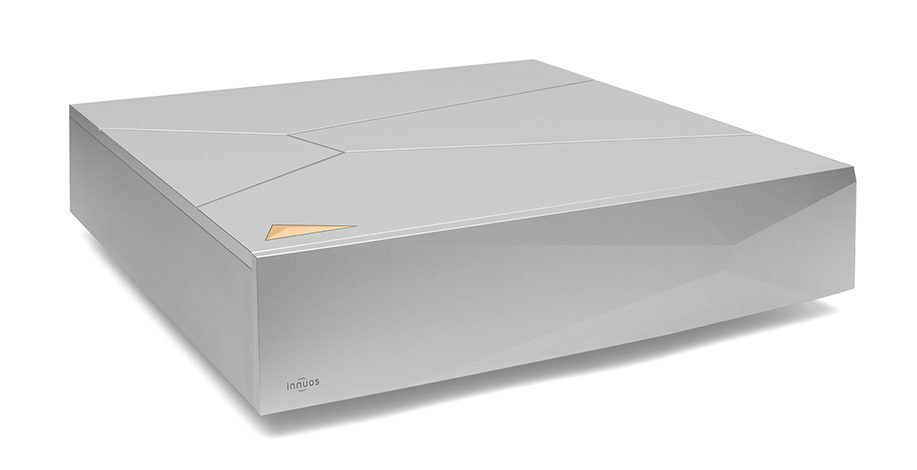
We looked at the Innuos ZEN NG (or ‘Next Gen’) in Issue 240 (see review). The Innuos ZENith Next-Gen server is its bigger brother. Well, externally from the front at least, they are more like identical twins. However, the ZENith is a heavier hitter all round. It’s designed as a bare-bones server as standard. The Innuos server is alsos available with a greater than ever range of plug-in modules and hard drives. The Innuos ZENith Next-Gen server is the modular answer to the big question in streaming audio right now; why do I need a server at all?
The media server perhaps best expresses the pace of change within the audio world. Twenty years ago, a server was the preserve of the nerdiest of computer audio early-adopters. Ten years ago, it was a must-have way of storing those CDs and downloaded high-resolution files. And today, who needs one when you stream everything anyway? In fact, the need for a good server hasn’t gone away. That holds, even if you haven’t ripped a disc since the 2010s.
MC Server
Think of the modern server as a Master of Ceremonies for your system. It makes the transition between locally stored and online music effortless. So effortless that you might not know – or care – where that music is coming from. Sure, this can be done in software blurring the lines between media server, renderer and control point. However, the heavier the lifting done by the server, the less other units need to undertake. At its most extreme, this could mean fewer glitches and drop-outs. Of course, this relies on a robust server architecture. That includes everything from a dedicated amplifier to hardware designed specifically for the task. And it’s here where companies like Innuos score well, and the ‘Mac+DAC’ systems (once a firm favourite) begin to struggle.
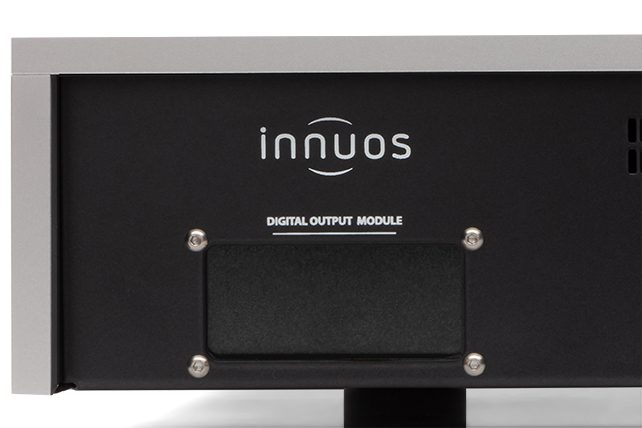
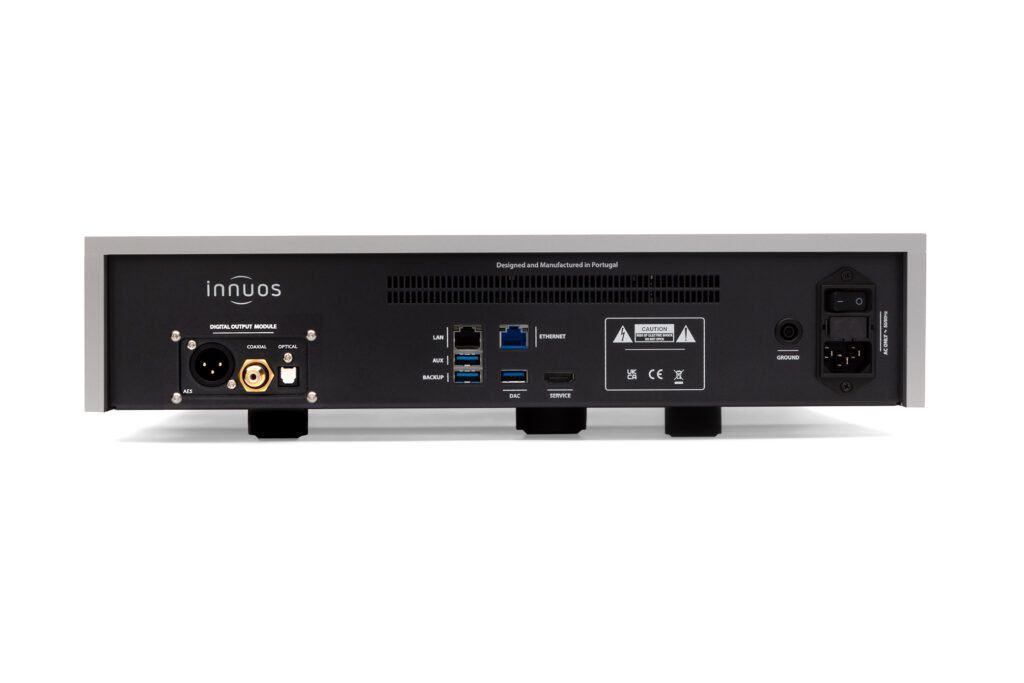
The modern server has to perform different tasks to its forebears of even a few years ago. That explains ZENith’s flexibility of operation. The notion of having USB as the sole output to a DAC still holds water. However, an increasing group of listeners have opted for other ways to move digital files from device to device. Rather than sacrifice performance by tricking out the ZENith NG with every possible digital connection, the company has gone the modular route. You can specify from a choice of ‘PhoenixUSB’ (making the ZENith very similar in performance to the Statement NG in output options), ‘PhoenixI2S’ (using a HDMI connection and a small ‘mode’ selector to ensure the maximum number of I2S connection options), and a ‘SPDIF’ board (which includes S/PDIF coaxial, Toslink and AES digital connections).
PreciseAudio
Like the ZEN NG before it, the ZENith NG is a part of Innuos’ ‘Next-Gen’ project. But the Innuos ZENith Next-Gen server takes elements like the PreciseAudio mainboard and runs with them. If a server takes the strain, then moving from an Intel Core I3 (with four performance cores) to a Core I7 (with eight) spells some serious powerlifting.
The ZENith Next-Gen also features a pSLC (pseudo Single-Level Cell) industrial-grade SSD for the Operating System. Powered independently, this is added directly to the PreciseAudio board. As pSLC contains simplified controllers, they generate much less EMI compared to standard SSDs. Given that SSD does all of the system work, this is claimed to deliver considerably lower operating noise with direct impact on sound quality. This was borne out in comparitive listening tests. The ZENith NG is quieter both in terms of ambient noise and the noise floor of the system.
Raising the power supply game
The standard ZEN NG features a RECAM2 NGaN (Gallium Nitride) power supply. However, the ZENith NG raises the game by using an ARC6 NGaN PSU, derived and trickling down from the Statement. This features active rectification, a chunky 300VA audio-grade (natch!) transformer, high-performance choke regulation and a 130,000µF Mundorf capacity arrays.
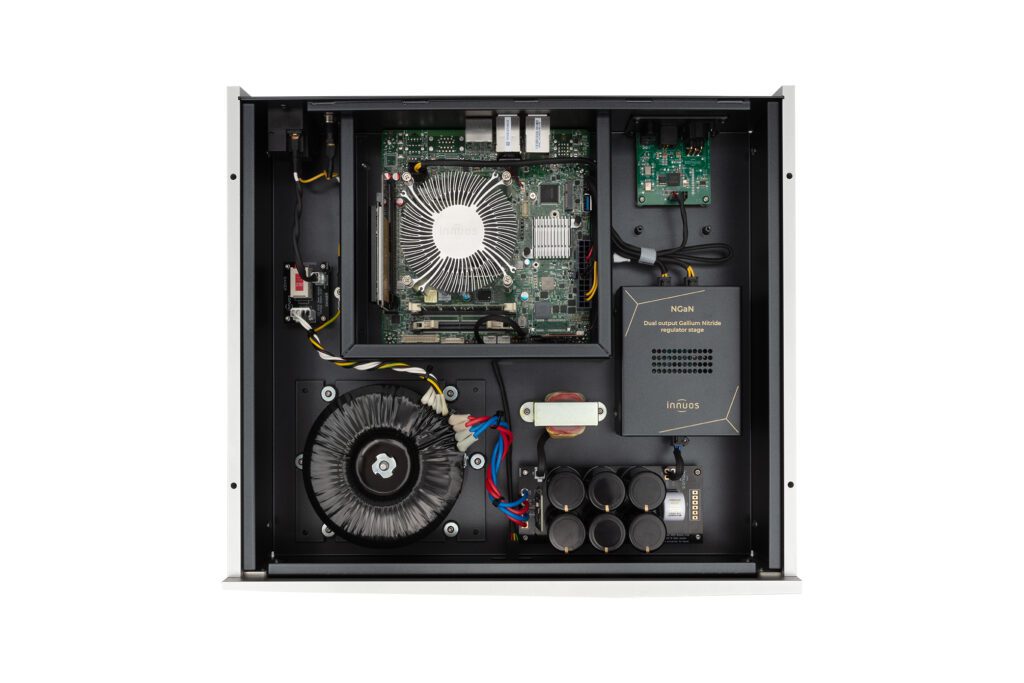
The rest of the ZENith NG is identical to the ZEN Next-Gen we tested in Issue 240. Like that model, the PreciseAudio mainboard means Innuos-developed Sense 3 Operating System’s kernel runs in real time, drastically reducing operating latency. This lets the ZENith Next-Gen allocate specific audio processes to dedicated processor cores.
The PreciseAudio board (in both ZEN NG and ZENith NG forms) comes with 16GB of industrial-grade DDR4 RAM has components removed for sonic benefit, and incorporates custom regulators specifically selected to enhance sound quality. Innuos exercises complete low-level control over the mainboard, allowing it to configure individual clocks and hardware protocols optimised for audio performance.
This dedication to the signal path quiets one (or possibly two) of the most common dismissive criticisms of computer audio servers. The ‘it’s just an off-the-shelf PC’ argument has long been on the ropes, as the Next Gen servers are about as near to an off-the-shelf PC as a Formula 1 car is to a shopping trolley. Innuos’ PreciseAudio mainboard is so un-PC it could be in an early 1970s sitcom.
The other criticism is that ‘audio isn’t so special’ and the use of dedicated parts made specifically for their audio properties tends to take the wind out of that argument’s sails. The size of audio files do not make music serving difficult from a Enterprise-level networking system, but maintaining the integrity of the products in that system is uppermost, and the Innuos scores highly on that front.
Storage Options
To recap further, another big change in the move up to Next Gen is the switch from Hard Disk Drives to Solid State Drives, both for on-board music storage and a dedicated SSD to store the Sense 3 OS. This last has power loss protection in the (hopefully unlikely) event of a power cut. This is a pragmatic decision as well as a practical one; the less the drive holding the operating system is likely to go ‘bang!’ under worst-case situations, the less chance repairs are needed in the field. No one wants to end up with an expensive metal brick, and power loss protection reduces the chances of that happening.
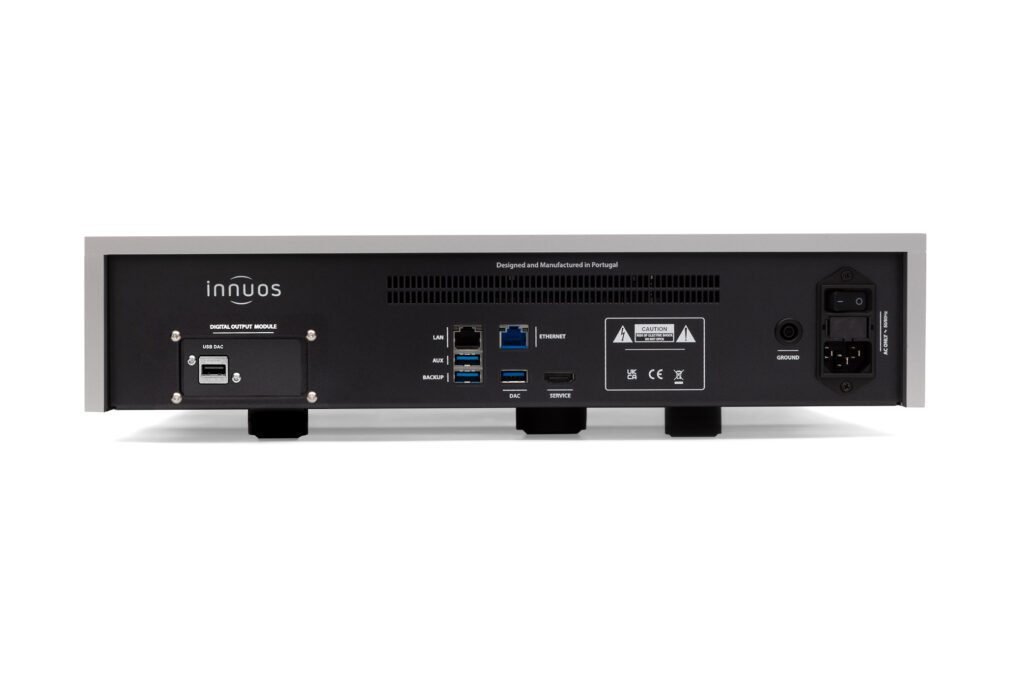
The storage for music files is also well accommodated. A new Extensible Storage Management (XSM) feature in Sense allows users to seamlessly add M.2 storage via a slot at the bottom of the system. Alongside the internal storage, this creates a single storage volume of up to 16TB. This means there’s no need to worry about free space on each individual drive unless you are storing the entire canon of Western music in high resolution. The new system is also more robust; if one of the drives fails, only the contents of that drive are affected, and backup can restore files specifically from that drive. Innuos provides 2TB, 4TB, and 8TB of onboard SSD, with an additional 8TB of external SSD doubling up under XSM. It’s possible to extend storage even further with Network Attached Storage, though this may exhibit greater latency than the onboard options.
Finally, while in recap mode, the CD slot is now consigned to history. This is simply down to long-term availablity issues, but its ripping capacity is still there.
ZENith vs ZEN
Just as last time we received a ZEN Mk3 to test against the ZEN NG. This time it’s the great NG battle; ZEN vs ZENith. This one has perhaps even greater significance; the ZEN NG can be upgraded to ZENith NG levels as a factory upgrade. That makes this a title fight; is ZENith NG better than ZEN NG, and is it better enough for someone to make the upgrade? Both challengers spend two days before the weigh-in and then let battle commence!
The simple answer is ‘yes’, the Innuos ZENith Next-Gen server is better than ZEN NG. A lot better. Upgrade better? Well, maybe. The chances are most people with ZEN NG’s have only had them for about a year or less, and I’d argue the standard ZEN NG is good enough to leave well alone for a few seasons.
Birthday present
Consider the upgrade as a birthday present to your system, but maybe that shouldn’t be a first birthday. If I were buying a server and I could stretch to the ZENith, I would do that in an eyeblink. But as it’s a big enough difference, I think people will be prepared to save up a little longer to get the ZENith NG, rather than get ZEN NG today and ZENith NG as an upgrade. Still, it’s good to know the option is open to listeners.
The Innuos ZENith Next-Gen server is fantastic sounding. Music races out of its ports at blinding speed and with a remarkably natural presentation. Transient speed is often a problem with streamed music next to its spinny-disc equivalents. Here, the music – even the crunked-up, accelerated beats of Squarepusher – has as brisk a tempo as the composer or musician intended.
It’s not just about speed; there’s a sense of space and vivid, visceral human beings playing music on the ZENith; something that is generally difficult to replicate on streamed and served music. Compare this to a state-of-the-art server of a few years ago, and the improvements are noticeable.
Making a Statement
Which leads me to the next Innuos-v-Innuos grudge match. The Statement Next Gen is that state-of-the-art server of a few years ago. One that I use regularly. In its last battle against the ZEN Next Gen, the Statement fared well. It’s a very different sound (more fluid and with a bigger soundstage) and while you could see where the ZEN NG did well, the Statement retained its place in the system. Things are not so clear-cut now. The ZENith NG is a more direct challenge to the Statement Next Gen. Yes, it has the directness of the standard ZEN NG, but it adds some warmth and space and fluidity… all the things the Statement excels at. The excellent Sense app runs smoother on ZENith NG, too!
I feel this was ultimately a draw. Each product had its own strengths. However, that’s tempered by me trying to cling on to the Statement’s position in my system. In reality, if you were making the comparison with money burning a hole in your pocket, I think most wouldn’t just ‘settle’ for the ZENith NG. They would actively choose it over the bigger, senior model. The ZENith NG is definitely faster and – ever so slightly – quieter sounding than the Statement. But, in terms of space and pace, they are equally matched.
This says a lot of good things about the ZENith NG. In a set of ‘Winner Stays On’ bouts between the Innuos Statement Next Generation and some really big hitter servers, it has held its own well. At least until you get to the point where a server costs as much as a BMW.
The World Beyond Innuos
The Innuos ZENith Next-Gen server is one of the finest servers I have heard to date. It’s not cheap. However, those that challenge its performance both as a server and in sonic terms are considerably more expensive. That it takes on the mighty Statement NG from the company shows its mettle. Innuos has raised its game with the NG line. In the ZENith it has a truly world-class server that delivers the goods with such speed and enjoyment. It’s good enough to put the Statement Next Gen that I’ve used for years out to pasture.
Discover more about the Next Gen innovations here.
Technical specifications
- Type: Music Server
- Audio Outputs: Digital Output: USB (Up to 32bit/768KHz, Up to DSD256 via DoP, Up to DSD512 via Native DSD), 1 x Digital Output Module: PhoenixUSB, PhoenixI2S, AES/Coaxial/Optical S/PDIF (Sold Separately), Auxiliary Ethernet Port for Streamer or NAS
- Connectivity: Ethernet: 2 x LAN RJ45 Bridged Gigabit Ethernet (LAN, Aux), USB: 3 x USB 3.2 Gen2 (Backup/Import, Aux, DAC), 1x Digital output module bay, 1x Storage expansion bay, 1x HDMI (service only), Chassis Ground: 4mm ‘Speaker plug’ port
- Ripping: External USB-connected CD ripper required.
- Ripper Formats: FLAC (compression level 0), WAV. Playback Audio Formats: WAC, AIFF, FLAC, ALAC, AAC, MP3, MQA
- Sample Rates: 44.1kHz, 48kHz, 88.2kHz, 96kHz, 176.4kHz, 192kHz, 352.8kHz, 384kHz, 768kHz. DSD over PCM (DoP) up to DSD256. Native DSD up to DSD512 (on selected DACs)
- Bit Depths: 16bit, 24bit, 32bit
- Web Interface: Modern Web Browsers from iOS, Android, Windows and OS X
- Mobile: Innuos Sense App for iOS/Android/Kindle Fire
- Storage: 3D TLC SSD for OS. [Optional] 1 x PCIe NVMe SSD – 2TB / 4TB / 8TB (Factory fitted), [Optional] 1 x m.2 NVMe SSD (User or factory fitted)
- Processor: Intel Core i3 (4 x Physical Cores + 4 x Virtual Cores)
- Memory: 16GB DDR4 Industrial-Grade RAM
- UPnP/DLNA: AssetUPnP
- Streaming Services: Qobuz, Tidal, Deezer, HighResAudio, Internet Radio, IDAGIO, Spotify Connect, TIDAL Connect, Qobuz Connect, Radio Paradice FLAC and interactive services
- Finish: Black or Silver
- Dimensions (WxHxD): 42×10.5×36.5cm
- Weight: 14.3kg
- Price: from £14,800, €15,600, $21,700
Manufacturer
Innuos
Homepage: www.innuos.com
Product Page: https://innuos.com/zenith-ng/
Where to Buy: https://innuos.com/where-to-buy/
+351 308 800 826
UK distributor
Innuos
+44(0)2475 200 210
Tags: INNUOS ZENITH NEXT-GEN SERVER
Trending Articles
See all
By Alan Sircom
More articles from this author
Read Next From Review
See all
Eversolo T8
- Oct 13, 2026
Acoustic Energy AE Active
- Oct 13, 2026
Reiki Audio SuperSwitch X/Pro X PSU
- Oct 06, 2026
Audiobyte SuperVOX
- Oct 06, 2026