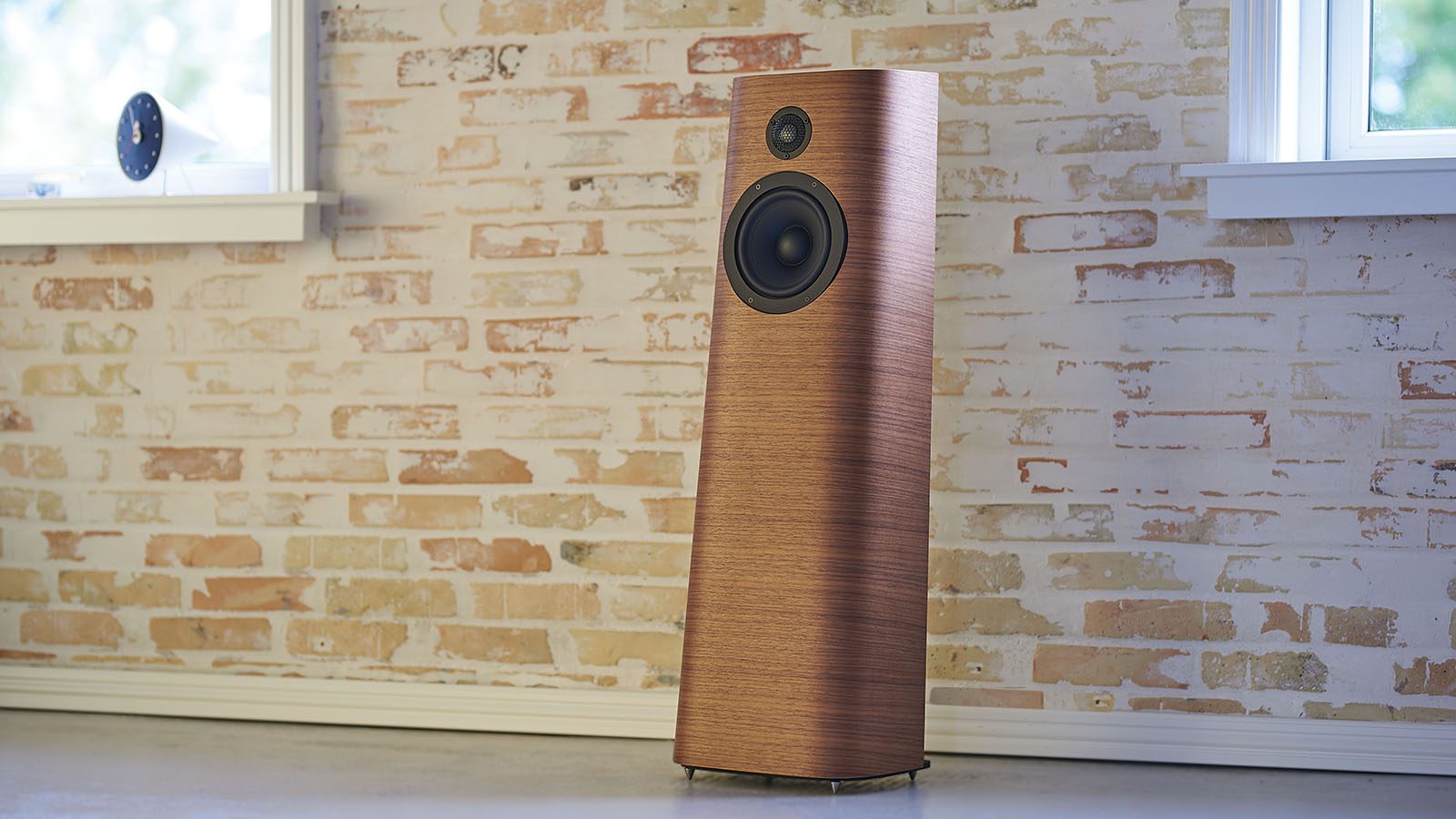
Charles and Ray Eames may have popularised bent ply with their Lounge Chair, but the Scandinavians were producing furniture in that style decades earlier, with Alvar Aalto’s 60 Stool, designed in 1933, being a notable example. Danish brand Davone also clearly appreciates the appeal of bent plywood, as all its products feature this elegant material.
Davone was founded in 2007 by Paul Schenkel, who caught the bug at the tender age of 14 and then wrote software to achieve more accurate speaker measurements while studying those audiophile staples, aeronautics and physics. His first speaker was the Davone Rithm (reviewed in Issue 76), a very distinctive curved speaker that from the side resembles the Star Trek logo. Since then, he has developed a range of superb-looking speakers, including the tulip-like Meander (reviewed in Issue 208) with upward-firing drivers and optional Wi-Fi operation, and the substantial Grande, which features a convex baffle and a four-legged base, and looks so much like an Eames chair that it’s almost uncanny.
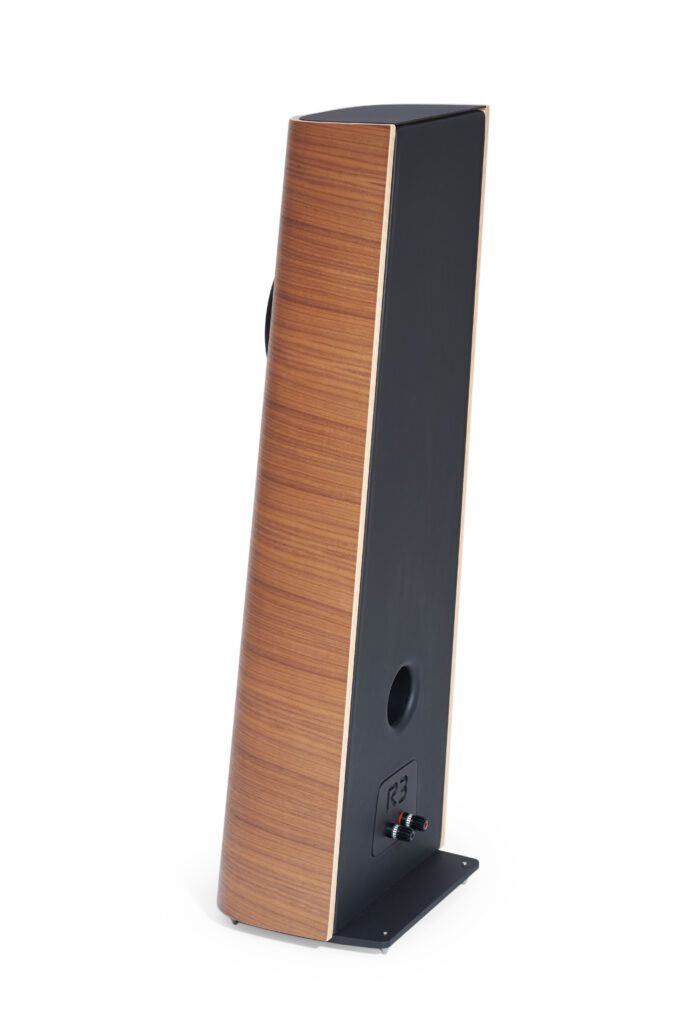
Today, Davone offers six speakers in its range, with the Reference Three being the latest and positioned two places below the top model, the Reference One (reviewed in Issue 223). The Reference Three is a very simply designed loudspeaker, featuring a bent plywood wrap around the front baffle and sides, which end in a flat rear panel. From the side, it almost appears as though a speaker has been cut in half vertically, with a slightly backward tilt cabinet that is balanced by a metal plinth protruding at the bottom.
Natural fibres
The driver array features a beryllium tweeter and a cellulose glass composite woofer. While Davone manufactures its cabinets in-house, they do not disclose the source of the drivers, but they are clearly very fond of the tweeter, whose “incredible rigidity represents the ultimate material for a tweeter dome.” Focal shares this view about the material: a metal that is toxic if inhaled during machining but possesses exceptional strength-to-weight properties, making it ideal for applications such as a high-frequency driver dome. Davone uses this tweeter in all its reference models but does not specify where it crosses over to the woofer.
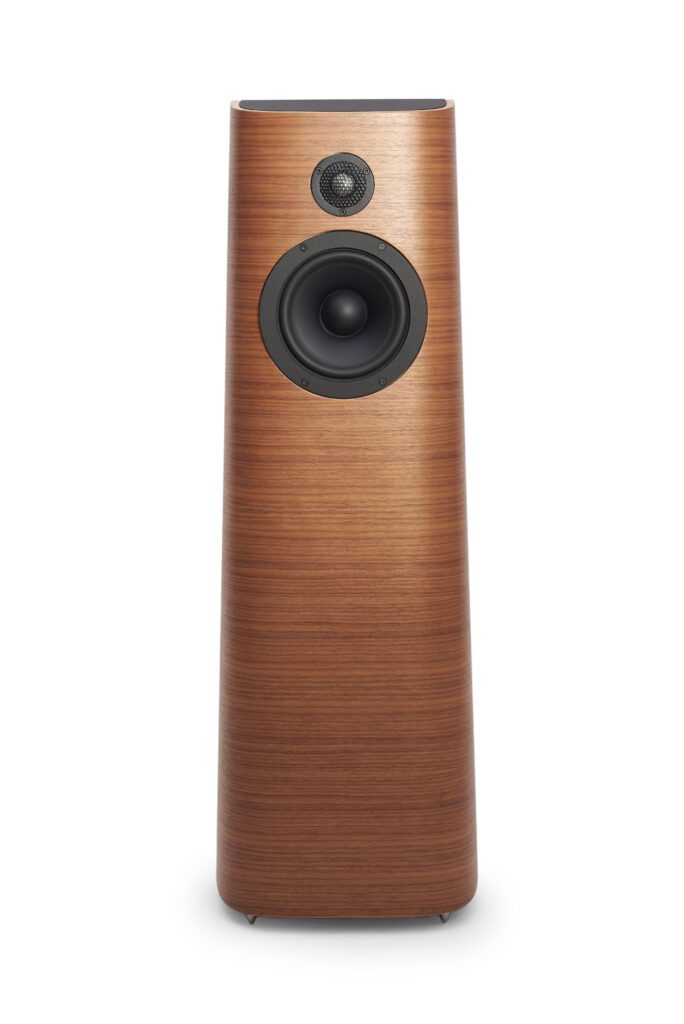
The cone on the seven-inch mid/bass driver combines cellulose, the main component of plant cell walls, with glass fibre. The cellulose provides damping and gives the driver a “warm, natural tone”, while the glass fibre adds stiffness so that the entire cone can be controlled. This composite is then coated for enhanced stability and consistency, and powered by a balanced drive motor structure that is said to maintain symmetrical voice coil motion. Davone claims that this results in a driver “that is both musical and precise”, an entirely laudable aim.
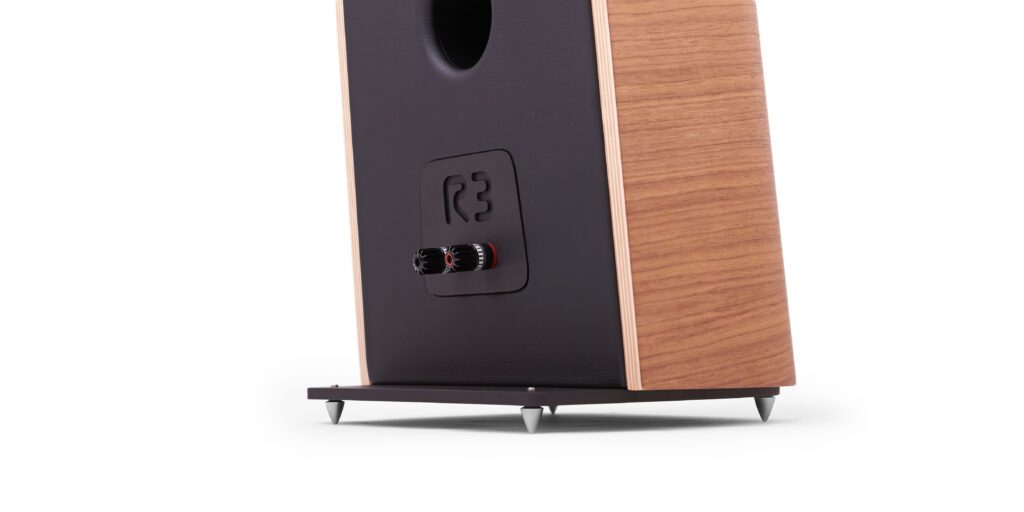
Considering that the cabinet is what sets Davone speakers apart from others, I was surprised not to find more information beyond the fact that the Reference Three features a bass reflex design with a port on the rear positioned close to the woofer. Davone states that the construction includes a 25mm form-pressed plywood baffle and a tuned absorber. The low-frequency resonances are suppressed using a Helmholtz absorber, reducing the need for excessive damping material. These techniques – which originated in the Reference Two – lead to an efficient low-frequency performance with minimal unwanted resonances across the woofer’s operating range. This model is predominantly constructed from plywood rather than veneered MDF.
Hook up
The cable terminals are singular, so there’s no option to bi-wire or amp, but I don’t think that’s a bad thing. These terminals are good quality, possibly WBT, but I didn’t see the brand. The entire speaker sits on a metal base that accepts a set of conical spikes supplied in the box.
Placement-wise, I found that the Reference Three worked at a point between 50 and 60cm from the wall and toed in, but not on axis. Results will, of course, vary with room and taste, but I suspect that in most cases, you’ll need a bit of space behind them. I connected the mighty Moor Amps Angel 6 with its 150 Class AB watts using William Eikos speaker cables and played a few tracks from Qobuz, via their Connect system rather than my usual streaming app, because the sound was notably better. I was immediately struck by how much body and weight these unusually attractive speakers produce. They look like an aesthetic design exercise but are also remarkably capable of delivering a well-timed, tonally rich, and three-dimensional soundstage.
The reverb on Daisy Rickman’s deep voice is especially well captured and surprisingly natural once you move past the various effects. The bass line on ‘In My House’ (Kendra Morris) is very melodic, and it soon becomes obvious that the Reference Threes are detail monsters of the subtle kind – you can hear into every part of the music and understand exactly what’s happening, yet the focus remains on musical engagement. The dual nature of the Reference Three undoubtedly aids this, but combining it with such relaxed transparency makes for a very appealing quality.
Clean beats
With the more substantial antics of Chase and Status’ ‘Baddadan’, I was able to enjoy the powerful beats in a muscular and well-extended form, without the discomfort that many speakers impose on heavy material of this kind. In other words, the Reference Threes are unusually clear-sounding speakers that don’t falter under pressure, remaining coherent and uncolored with evident ease. Tone is also exceptionally well-rendered; this was evident across all kinds of material, including hardanger fiddle, piano, guitar, and voice, which always seemed to shine regardless of its timbre. The Davones share some similarities with the Dali Epikore 9s I have been enjoying this year; they are relaxed yet highly revealing, forgiving yet informative.
Switching to a different amplifier revealed that much of what I was hearing was directly related to the partnering electronics. With a Bonawatt Triton tube/Class D integrated amplifier, they became distinctly vivid, with an electric sense of presence that was not short on thrill power.
Fizzed
Now the music fizzed with atmosphere and kept me on the edge of my seat; the Reference Threes no longer sounded laid back but had energy reserves that were previously unnoticed. Keith Jarrett’s ‘It’s Easy to Remember’ from At the Deer Head Inn was beautiful, revealing how much affection he had for this standard and the atmosphere of the intimate setting. This amp’s broad dynamic range, which the Davone lapped up, was displayed in aural form, giving great recordings like this a rare sense of being there.
Once again, I experienced how the Reference Threes can deliver power effortlessly, with the pairing with this amplifier encouraging a considerable level across a broad range of musical styles. The control offered by the 250W amplifier meant that there was no overhang or blurring of the transitions between notes, which contributed to powerful realism with good live recordings like Bill Frisell’s East West. Here, you get the muscularity of electric guitar, bass, and drums with clarity that immerses you in the moment. It’s quite a thrill.
Punching up
The last amp I tested came from the other end of the price spectrum, a Rega Elex-R integrated, although only its power amplifier section was in use, with preamp duties handled by a Townshend Allegri Reference. This setup allowed the Davone speakers to showcase their emotional intelligence, or at least to make that aspect of the music more noticeable. The Rega isn’t the smoothest amplifier I use, but it’s arguably the most musical, and this became evident with the Reference Three speakers, which highlighted the amp’s qualities and delivered a highly engaging musical experience. They appear to soften the edge of harder-sounding instruments like the saxophone without sacrificing energy or the groove’s power. The suggestion being that many other speakers might actually enhance the hardness of such instruments and overemphasise the attack.
I have to admit that when the Davone Reference Threes arrived, I initially thought that nothing so simple and attractive could be a serious loudspeaker. Now that I have spent a few weeks with them, I realise how mistaken I was; they prove that good looks are no barrier to great sound and that what seems simple is often more sophisticated than it appears. This two-way model punches well above its weight.
Find out more about what went into the Reference Three here
Technical specifications
- Type: 2-way, floorstanding speaker with reflex loaded enclosure.
- Driver complement: One 25mm beryllium dome tweeter; one 7 inch coated cellulose fibre blend mid/bass.
- Crossover frequencies: not specified.
- Frequency response: 38Hz – 30kHz, -3dB
- Impedance: 4Ω
- Sensitivity: 86dB/2.83V/m
- Dimensions (HxWxD): 900 x 310 x 240mm
- Weight: 20kg/each
- Finish: Quarter-cut walnut.
- Price: £6,400, €7,200, $8,400 per pair
Manufacturer
Davone
+45 23 88 71 72
Trending Articles
See all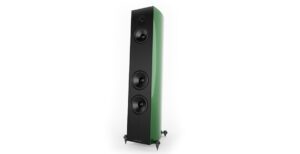
Acoustic Energy Corinium floorstanding loudspeaker
- Dec 23, 2024
Trending Articles

By Jason Kennedy
More articles from this author

Read Next From Review
See all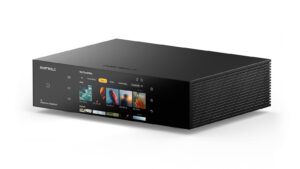
Eversolo T8
- Oct 13, 2026
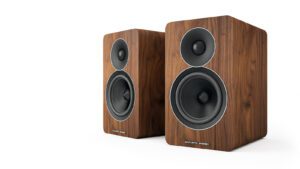
Acoustic Energy AE Active
- Oct 13, 2026
Reiki Audio SuperSwitch X/Pro X PSU
- Oct 06, 2026

Audiobyte SuperVOX
- Oct 06, 2026