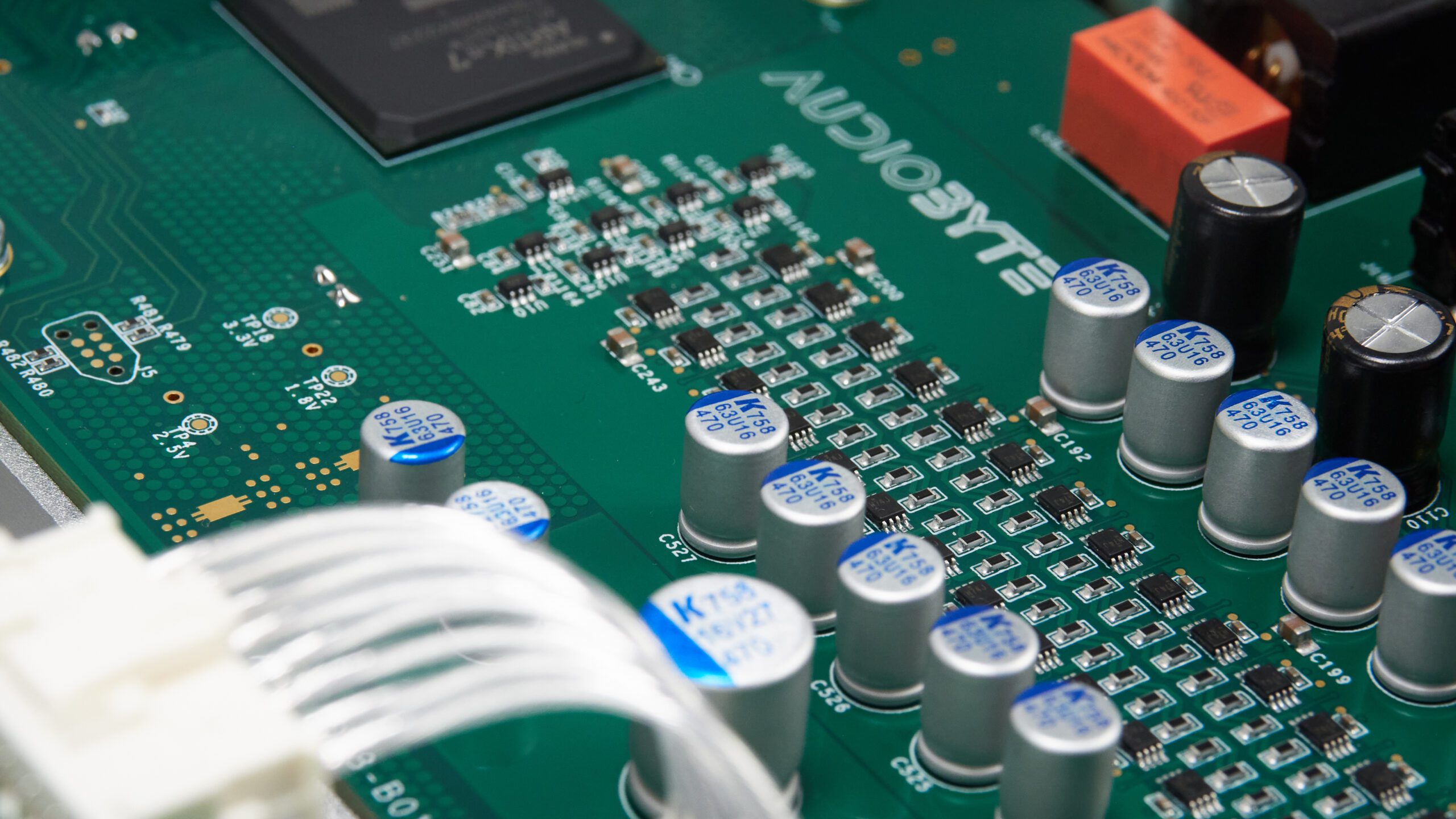
Nicolae Jitariu, CEO and chief designer at Rockna and Audiobyte, is something of a digital expert. The Romanian engineer has been associated with digital designs from Goldmund and MSB and has been instrumental in the re-emergence of I2S as a digital interface. We spoke to him about the development of the latest devices from Audiobyte, and how things have changed from the Hydra-line to the new Super-series
What is the purpose of AudioByte as a company?
Audiobyte has always served as a testbed for new ideas and technologies. Many projects began as theoretical concepts and have resulted in product architectures that diverge significantly from industry standards. Of course, this also means the journey to production can sometimes be challenging, as what we imagine doesn’t always perform as expected. Nevertheless, we enjoy the pursuit of discovering new ways to reproduce music, and among the myriad methods, when it works, it is truly exceptional.
Product development is highly non-linear for us. Our gear is not just engineered; it results from research, so the obstacles we encounter reflect the tools we use and how we acquire and apply knowledge. For example, working with FPGA—hardware defined by software—is inherently challenging. A blank canvas offers the artist limitless possibilities, but creating a great work of art is difficult. Similarly, the first step is to achieve baseline functionality, then go through optimisation cycles until the performance improves significantly.
What has changed between HydraVOX and SuperVOX?
A few years ago, we released the HydraVOX DAC, which was a true one-bit discrete design. We gained a lot of knowledge during that development, and naturally, an evolution of that concept emerged to enhance all aspects. With the SuperVOX, the most significant change was to increase the physical bits from one to five, while relaxing the delta-sigma modulator response and, consequently, the analogue filter stages. One weakness of delta-sigma implementations is noise. The fewer bits you have, the higher the noise, which requires intensive work on digital noise shaping and analogue filters. But moving from one to five physical bits can drastically alter the performance, and the design can be seen as a multi-level or multi-bit delta-sigma, with a noise floor improvement of an impressive 24 dB compared to the one-bit version.
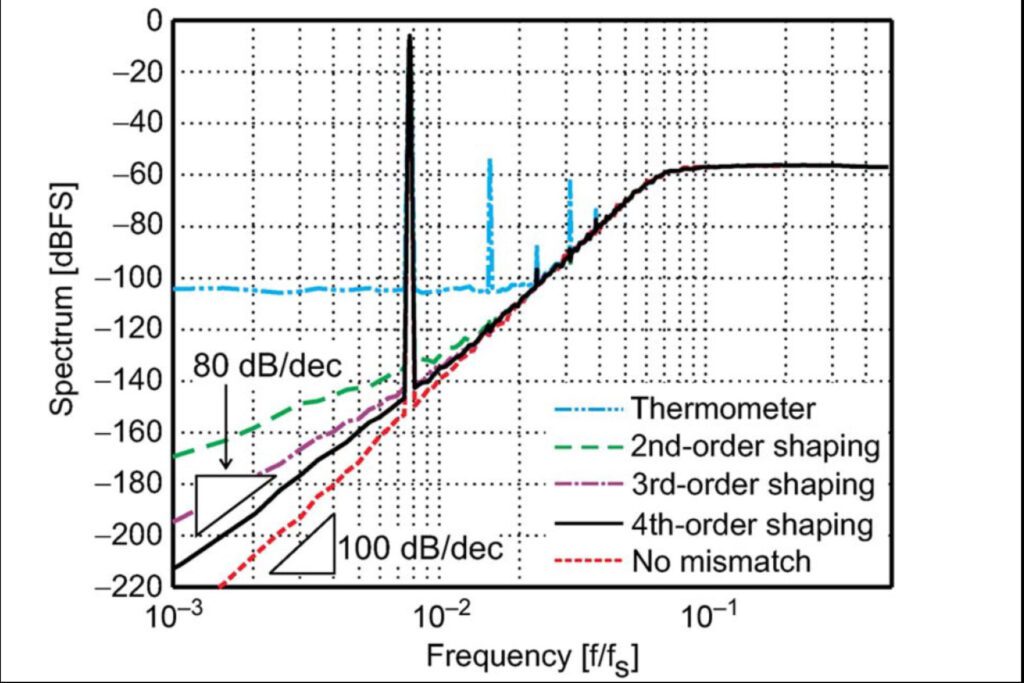
On paper, the change seems simple, but the real difficulty comes from practical issues where the supposed advantages are lessened by element mismatch and parasitic effects, many of which relate to the high-frequency switching of the DAC components (above 10 MHz, compared to an R2R DAC, which generally works below 1 MHz). As a result, extra signal processing is necessary to realise the potential of a discrete multi-level design. We should also highlight the second-order mismatch shaper and a vector quantiser-based ISI (Inter-Symbol Interference) noise shaper. The mismatch shaper moves the distortion caused by the tolerances of the resistive parts out of the audio band. Meanwhile, the vector quantiser (VQ) performs a similar role to reduce non-linearities caused by the analogue transitions of the switching components.
Using these techniques, we can switch the DAC elements consistently and predictably, which helps reduce their contribution to noise and distortion. Since each on/off change in the analogue domain introduces some noise and distortion, activating all the DAC elements at once is not advisable. However, with our VQ-based ISI shaper, only a few elements are switched at a time, leading to a notable improvement in the final outcome.
How long did this development take?
It took us over a year to develop and integrate the above-mentioned technologies into a functioning product. It may not seem long, but after 8-9 months pass, the team can become a little discouraged, and the pressure to release the product starts to mount, making the conditions challenging. After numerous simulations, drafting schematics and engineering the initial PCB layouts, we hand-built the first boards.
Testing the initial prototype was a great relief for everyone because the electrical checks passed and the concept delivered the expected measurements. However, the journey was not over yet. While refining the algorithm, we realised we needed significantly more computing power, as the initial FPGA could only handle one channel. This led us to develop the most powerful chip we have used to date for conversion. In the end, seeing abstract theory validated in practice is a truly rewarding moment.
Were there problems along the way?
Moving from the R&D phase to full-scale production often revealed gaps and dependencies that threatened our enthusiasm. Supplying the parts, conducting proper quality control and testing, failure analysis, and assembly processes all need to be carefully managed, as minor oversights can lead to unwanted delays. Timing the initial reveal with the production setup and maintaining development momentum is a delicate balancing act.
Is the design approach similar to previous products?
Our previous Audiobyte product line was also a trio; the Hydra series. It was a very ambitious project for us, and its technological innovations still stand the test of time.
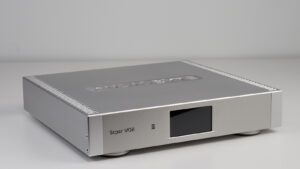
With the SuperVOX as a standalone product, we adopted a different approach. Aside from the filters, volume control is as precise and tight as possible in the digital realm, with 0.5 dB steps, and the clocking system is similar to those used in ultra-high-end devices. The architecture maintains an exceptional level of immersion in sound reproduction while also delivering excellent measurements. Physically, the product moves to a higher tier. The enclosure is crafted from solid aluminium with tighter tolerances and improved thermal and mechanical stability.
What’s next?
Our ideas for products and technologies consistently surpass our development capacity. The limitation is intentional, as concepts are only released when they are sufficiently original and pass a comprehensive engineering review. This is why we are cautious about announcing what we are working on. However, some directions are certain.
The SuperHEAD, a headphone amplifier and pre-amplifier completing the Super series trio, has passed final validation and is now in production. Achieving a high-performance analogue product has been a long-standing goal of ours, and we are thrilled with the results of this design. We still have some very innovative solutions and ideas for areas such as amplification or precise analogue volume control, so that work will continue.
Read the review of the Audiobyte SuperVOX here.
Contact Details
Manufacturer
Audiobyte
+40 745 167 868
Trending Articles
See all
Acoustic Energy Corinium floorstanding loudspeaker
- Dec 23, 2024
Xavian Unica
- Apr 07, 2026


By Alan Sircom
More articles from this author

Read Next From Blog
See all
Tech Talk: Nigel Bell of Reiki Audio
- Oct 06, 2026
Tech Talk: Wiktor Schulfer of Unitra
- Sep 29, 2026

Tech Talk: Daryl Wilson of Wilson Audio
- Sep 29, 2026

Tech Talk: Antonio Meze of Meze Audio
- Sep 22, 2026