Taiko Audio is the product of a Dutch high-end audio laboratory in Oldenzaal. It is the brainchild of engineer and audio enthusiast Emile Bok. Emile – who has been building loudspeakers since he was twelve years old – began building audio components back in 2008, starting with grounding blocks. Studying grounding – and later isolation – stood Emile in good stead for making a high-end server.
The first was the SGM 2015, a custom server design, originally used for demonstrations at the Munich High-End. The handful of units made for the 2016 Munich show was so highly praised by demonstrators, that the custom ‘Sound Galleries Music’ platform became a product in and of itself but was recently superseded by the SGM Extreme; a product that really lives up to its name.
Every aspect of the SGM Extreme is taken to, you guessed it, the extreme. The dual Intel Xeon CPU design (useful for running Roon alongside the modified Windows 10) is matched with 12 carefully selected 4GB DIMM memory modules. Recently, the SGM Extreme became even more, er, extremer thanks to the development of a custom super low-latency and low noise USB interface board. Where most server companies would be happy with off-the-shelf interfaces, Emile realised the USB controller circuit is a sonic pinch-point in what is otherwise the best way to send audio files from server to DAC. Building a custom USB controller board is ‘going the extra mile’ but first taking a 600-mile round trip before you go that extra mile. It also means Taiko Audio needs to furnish customers with DAC-specific code to provide the best possible connection between the two components. ‘Generic’ is not a word in Emile’s vocabulary.

Nothing is left to chance here, whether it’s the OS stored on PCIe Intel Optane non-volatile storage (this is not a SSD or Winchester drive, and as a consequence currently costs more than most PCs), with anything from 2TB-24TB of onboard PCIe SSD storage. Emile’s audiophile interests shine through when looking at the rest of the SGM Extreme, as it is more like an extremely carefully laid out power amplifier, with individually chambered subsystems to prevent RFI leakage, a very high-performance linear power supply with 700,000µF of reservoir capacitance, and a passively cooled CNC milled chassis that features a hybrid of copper, aluminium and panzerholz wood.
Around about now, someone reading this will start grinding their teeth and saying, “it’s just a PC in a fancy box.” This is true… and Krug is just prosecco in an expensive bottle, or a Rolls-Royce Phantom VIII is just a posh BMW 7-Series. Sure, you can get some of the way there by using the same platform Taiko Audio builds upon; Signalyst’s HQPlayer audio player (for the original SGM) or Jplay software player, navigated by Roon, and you could do this on virtually any PC, and you’d be missing the point because the “PC in a fancy box” argument is reductionism taken to an absurd level. It would be almost impossible to replicate the degree of obsessiveness without going down very similar – and similarly expensive – lines and the performance upgrades the differences between what you can do with more off-the-shelf computer products and the Taiko Audio SGM Extreme is profound.
Trending Articles
See all
Primare PRE60/ATC SCM150 ASL system
- Jul 06, 2016
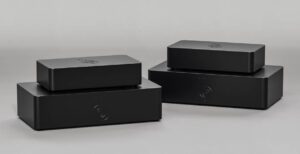
Reiki Audio SuperSwitch Pro/Pro Statement
- Mar 27, 2024

hi-fi+ issue 250: the Awards
- Dec 02, 2025


By Alan Sircom
More articles from this author


Read Next From Review
See all
Ultrafide Audio DIAS-U8
- Sep 07, 2026
Revival Audio Sprint 3
- Aug 31, 2026
Transrotor Bellini TMD, TRA 9, Figaro
- Aug 31, 2026

Burmester 232
- Aug 31, 2026