Receiving a product for review from a company you haven’t interacted with before is always slightly tense. Your mission, should you choose to accept it, is to examine something into which the designer has invested their heart and soul. You must compare the materials you’ve been given with the actual object or objects in the rack. And you can’t even ride a motorbike while jumping out of a helicopter wearing someone else’s face. The Revival Audio Sprint 3 is one such mission. Cue the Lalo Schifrin music.
One way to make this process slightly easier is to obtain the most or, even better, the least expensive product the company offers. The most affordable device should be a condensed reflection of what defines the brand but presented in a way that is more nuanced than simply throwing money at the problem. Fortunately, the Revival Audio Sprint 3 is exactly that: the most affordable speaker in the range, designed to serve as a perfect introduction to what Revival Audio — which started as a collaboration between industry mover and shaker Jacky Lee and the late acoustic engineer Daniel Emonts — is all about.
Simple premise
The premise of the Sprint 3 is simple enough. Intended to embody a combination of French elegance and bespoke engineering that avoids unnecessary complexity. As a two-way stand-mount, it is unlikely to be accused of any unwanted frills in terms of configuration, and the overall design is conventional, if reasonably large, for a stand-mount speaker.
Part of this scale is due to the larger-than-average seven-inch midrange driver. This driver is made from a material that Revival Audio describes as Basalt Sandwich Construction (BSC). It consists of actual volcanic basalt, specifically impregnated basalt fibre fabrics, with a relatively thick layer of adhesive on the back and covered with a layer of felt made from a special fibre. The result, despite using a material generally recognised as rock, is lightweight and strong, with extremely high levels of natural damping.
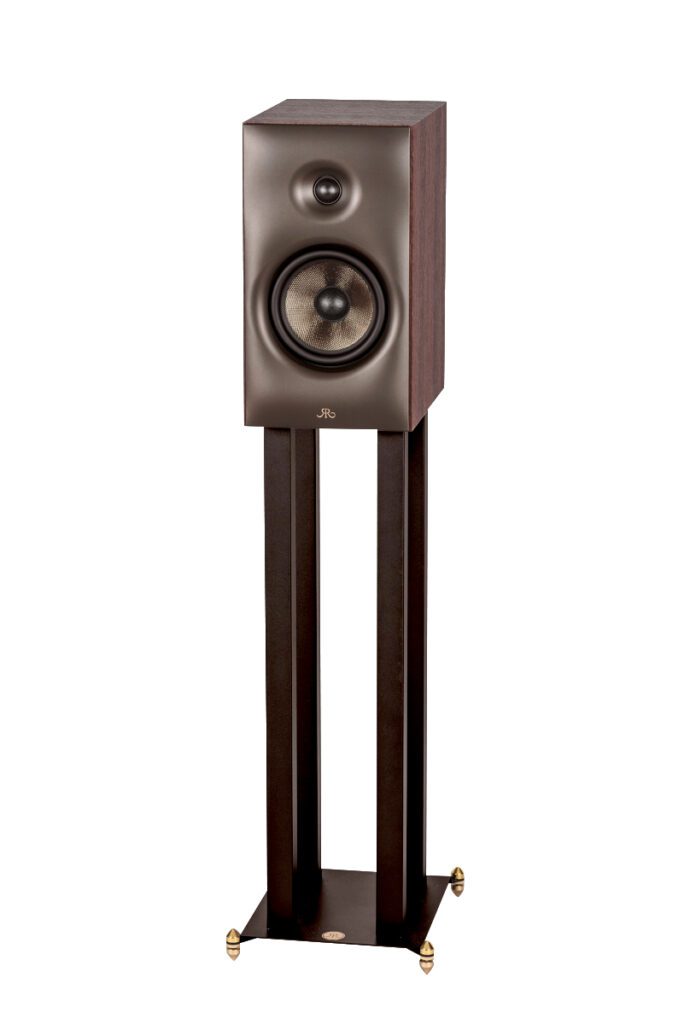
This handover occurs at 1.8kHz to the company’s mysteriously named ‘RASC’ tweeter, which is less volcanic in origin but still technologically distinctive. RASC is a soft dome device covered in a secret material that helps delay the onset of breakup and other unwanted behaviours. The suspension of this dome is asymmetric and intended to assist the pistonic movement of the dome. A relatively large ferrite magnet is used alongside a specially designed rear chamber to help control unwanted energy radiating back through the dome. This tweeter is used in all Revival Audio products and can be seen as a key component of the company’s identity.
Composite baffle
Also notable is a baffle specific to the Sprint models. Called ‘Elytron’, it’s a composite material that combines a waveguide for the tweeter with resonance control for the rest of the cabinet, which is more conventional and made of MDF. It can be removed from the cabinet (and Revival Audio has taken the trouble of veneering behind it as well, suggesting they encourage you to experiment with and without). Fabric can be attached to these baffles, making them function as more traditional grilles.
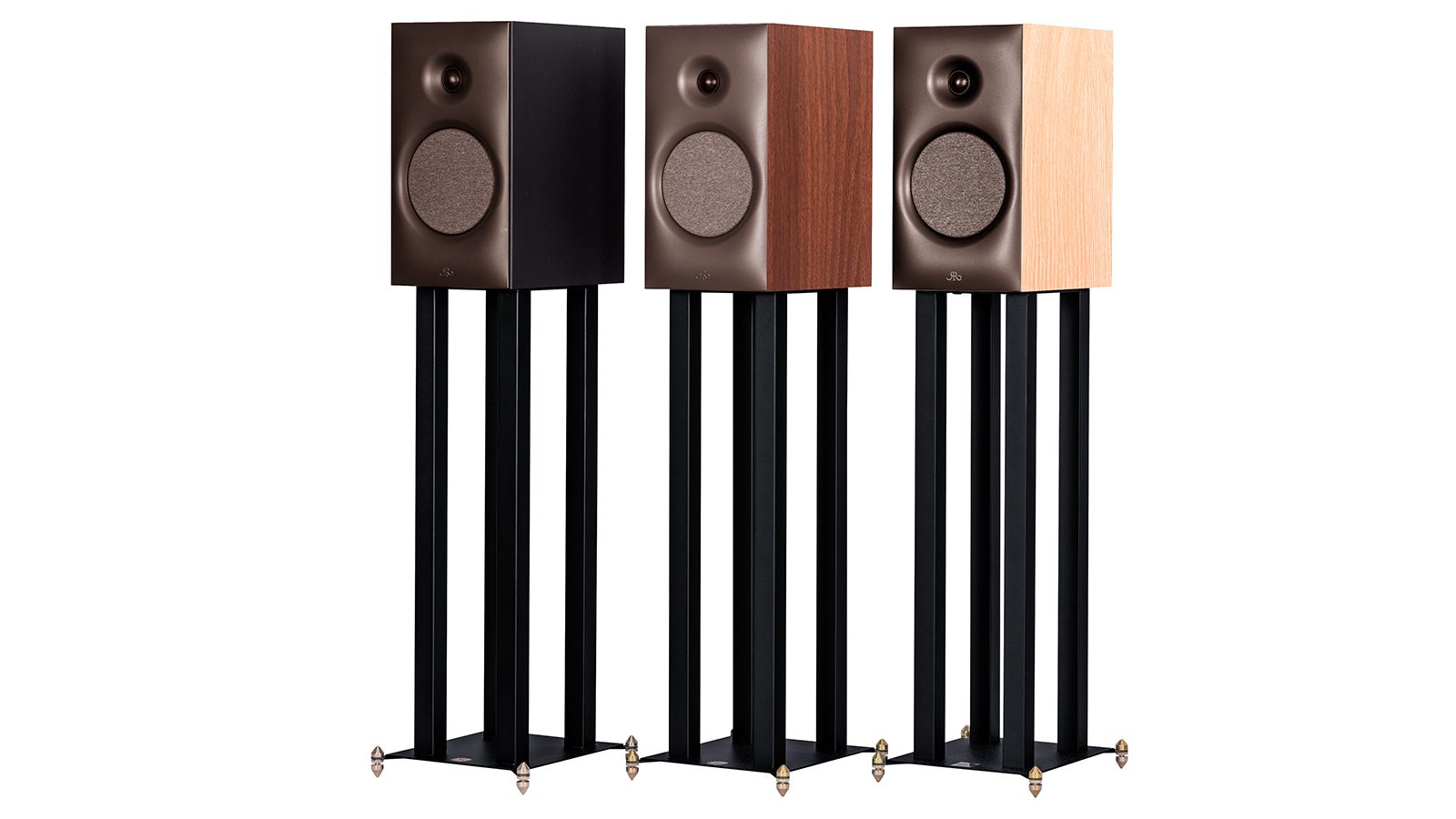
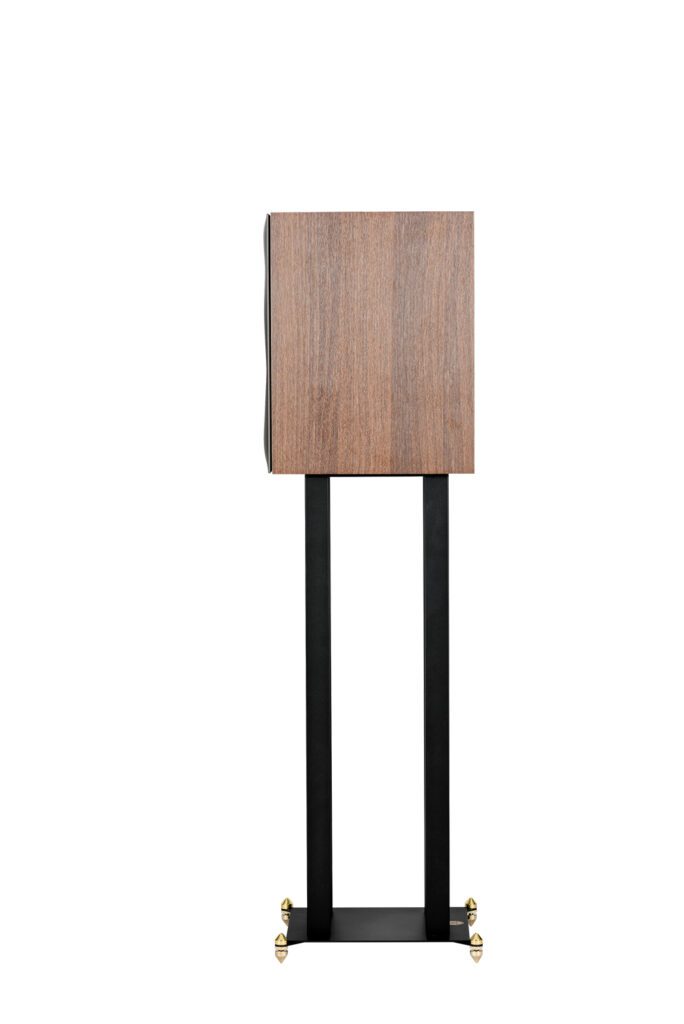
The result is a speaker with a distinctive visual identity thanks to the baffle, but, in the walnut of the review samples, it comes across as slightly anonymous. While the larger Atalante models look quite unique in the market, stripped of their badges, the Sprint 3 could be the work of several different companies. The build quality and overall finish are good, and you have the option of a dedicated stand or using most aftermarket designs without issue. If I were choosing a pair, I’d likely opt for the Blonde Oak, which provides the entire speaker with a bit more contrast.
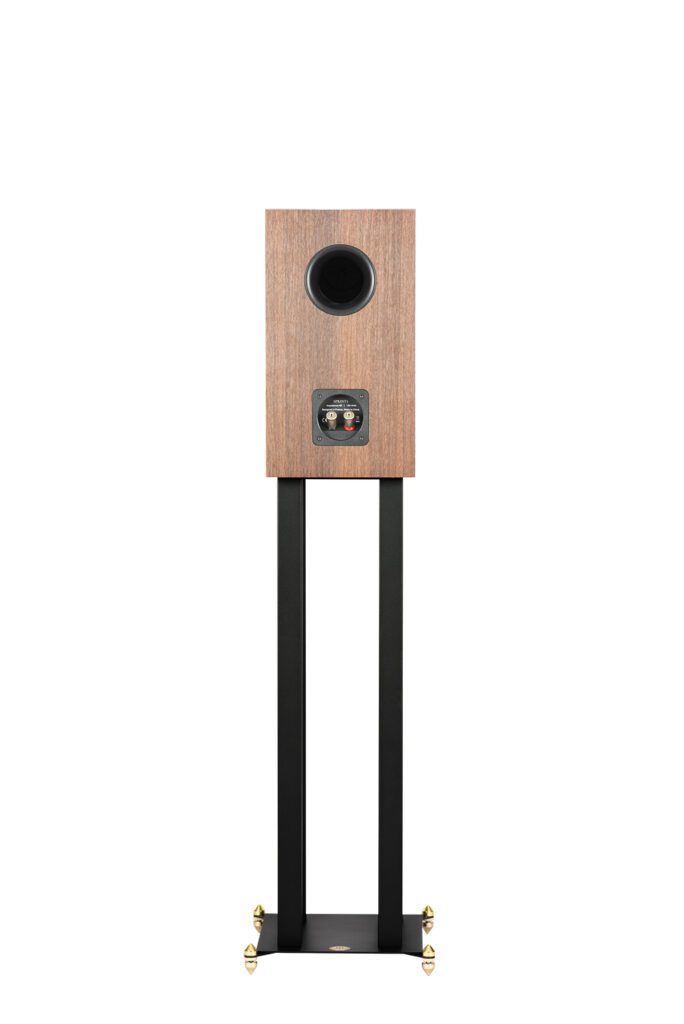
Revival Audio dedicates space on its website to explain that its speakers result from extensive real-world listening, aiming to avoid unnecessary complexity and overdesign. The specifications of the Sprint 3 are reasonable but not particularly remarkable; Revival states a frequency response of 55Hz-22kHz at ±3dB, with an impedance of 6 ohms and a sensitivity of 87dB/W. However, the actual listening experience has been quite different.
A game of two halves
This is because Sprint 3 exemplified a ‘game of two halves’ style product, showing significantly better performance with some equipment here than with others. The samples were initially connected to the resident Cambridge Audio Edge A, which received a digital signal via coax from a Chord Electronics Hugo Mscaler and Roon.
From the outset, the Revival Audio performs impressively. The quoted figures on the website seem very accurate; I have achieved a frequency response closer to 40Hz within the ±3dB range in this room, and the sensitivity also feels higher than the quoted figure.
At the same time, it was difficult to feel truly excited about the Sprint 3 because it wasn’t delivering anything particularly thrilling. Playing Aha Shake Heartbreak by the Kings of Leon [Handmedown] was technically sound but lacked some of the pure joy that this album should exude in abundance. Technically, there was nothing wrong; this is a speaker that is articulate, tonally steady, and retains useful detail, but the overall impression was somewhat clinical.
Fortunately, I keep more than one amplifier running for situations like this. Pairing a Naim Supernait 3 with an Eversolo DMP-A6 Gen 2 resulted in a markedly different listening experience. Together, this duo made the Sprint 3 much more engaging. Suddenly, the Followills are back, sounding loud and energetic, delivering much greater involvement. Much has been written about Naim’s dominance over the years, but this truly demonstrates the phenomenon. The Revival Audio doesn’t just need to be powered; it needs to be driven.
Cheerfully bonkers
This isn’t just advantageous for rock material either. Lemon Jelly’s quirky and shifting Lost Horizons [XL] isn’t a particularly fast album, but the cheerfully bonkers ‘Experiment Number 6’ crackles with the restless proto-jazz energy that makes it a bit of a head-nodder. Once again, the excellent low end of the Sprint 3 really helps fill out the lower registers without disrupting the overall speed or flow of the track.
Another strong point of the Sprint 3 is its ability to consistently produce good stereo images even with large-scale material. Its handling of the opening ‘Fists of Fury’ from Kamasi Washington’s Heaven & Earth [Young] is genuinely outstanding for a relatively affordable stand-mount. It delays audible congestion to a point where you are unlikely to be sympathetic with the volume levels you are requesting.
The relatively wide front profile and that Elytron baffle (which genuinely helps with dispersion, based on testing with them on and off) assist the Sprint 3 in producing a performance that extends beyond the speakers without creating any unwanted gap in the middle, made even more impressive by the fact that the Naim isn’t an amplifier that naturally favours this kind of presentation.
Seamless handover
How you perceive the Revival Audio is thanks in part to a seamless and well-judged handover between the two drivers, and an admirably consistent tone across the entire frequency response. You can buy more detailed speakers at this price point, but few of them balance civility and impact like this one. It’s been just as happy covering evening TV viewing and other mundane tasks as it has been for genuine sit-and-concentrate listening, which is always the hallmark of a solid all-rounder.
In fact, aside from the sober appearance and the need to select partnering equipment carefully, it’s hard not to be impressed by this most affordable rung of the Revival Audio range. Sprint 3 has done a fine job of introducing me to the company, and I am confident it will be just as effective for others. It makes a convincing case for the company’s overall engineering approach, and now that introductions have been made, I look forward to seeing what the rest of the range can do.
Technical specifications
- Type: Two-way stand-mount loudspeaker
- Drivers 1x 28mm soft-dome tweeter, 1x 180mm BSC (Basalt Sandwich Construction) woofer
- Frequency Response (±3db): 55Hz – 22kHz (-3dB)
- Sensitivity (2.83V/1m): 87dB/2.83V/ 1 metre
- Nominal Impedance: 6Ω
- Minimum Impedance: 4.5Ω at 175Hz
- Crossover Frequency: 1.8kHz
- Recommended Amplifier Power: 150 watts, starting from 30 watts
- Recommended Room Size: 15 to 35 m2
- Finish: Blonde Oak, Walnut, Matt Black
- Dimensions (HxWxD): 38 x 21.3 x 30.7 cm
- Net Weight: 9.1 kg
- Price: £990, €950, $1,495 per pair
Manufacturer
Revival Audio
UK distributor
EliteAudio UK
0800 464 7274 (UK only)
Trending Articles
See all
By Ed Selley
More articles from this author

Read Next From Review
See all
Eversolo T8
- Oct 13, 2026
Acoustic Energy AE Active
- Oct 13, 2026
Reiki Audio SuperSwitch X/Pro X PSU
- Oct 06, 2026
Audiobyte SuperVOX
- Oct 06, 2026