It’s strange how things have changed. Twenty years ago, audiophile networked audio meant a Squeezebox, and most listeners still spun CDs and SACDs. A decade ago, your music was on a Network Attached Storage device. Now, online streaming dominates. The same radical change happened to the network infrastructure; we went from ‘what’s that?’ to ‘off-the-shelf’ in those first ten years of networked audio. Since then, we’ve learned that everything in the chain can make a difference, and the Reiki Audio SuperSwitch X, with its matching Pro X PSU, highlights how far we’ve come.
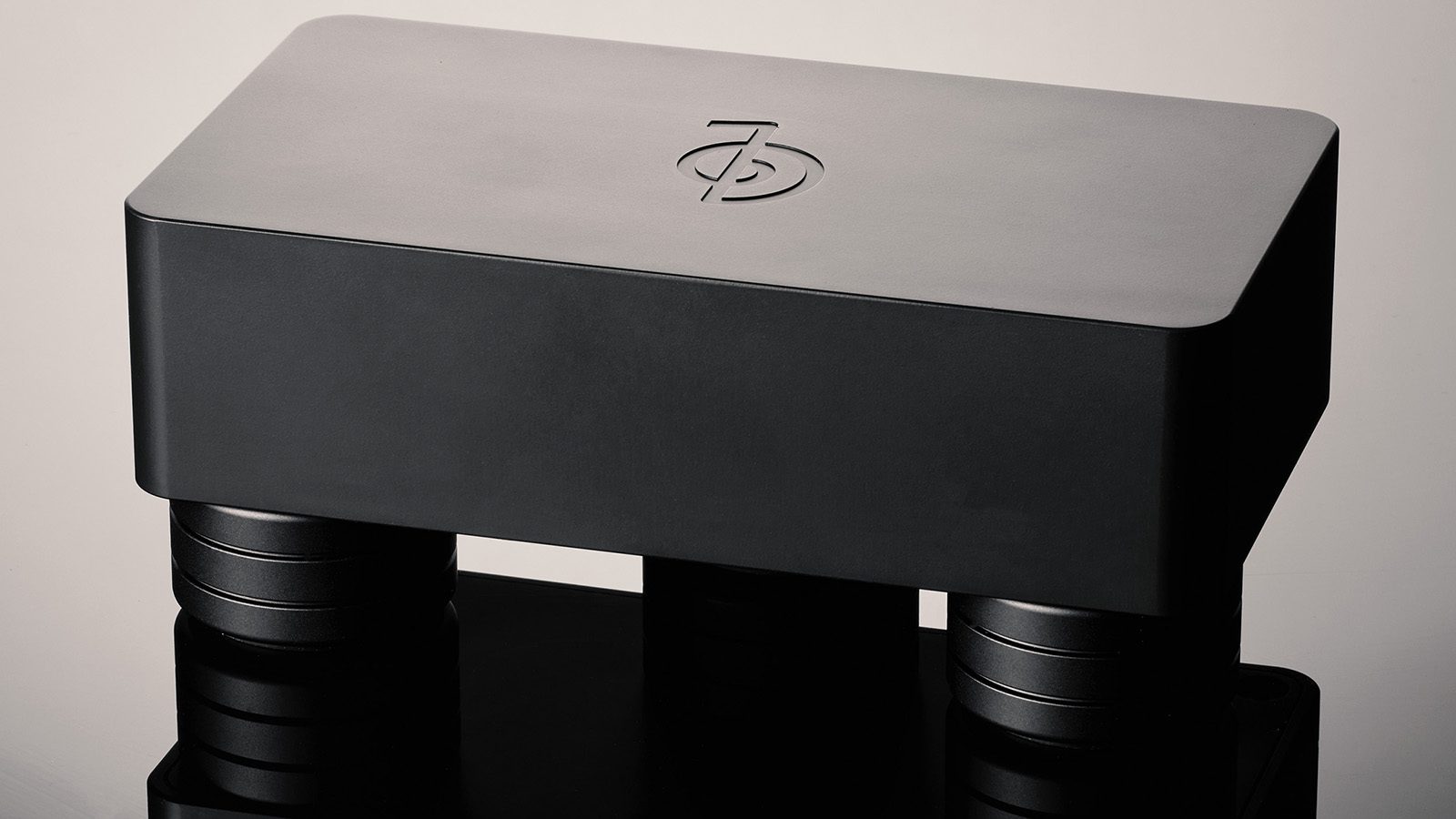
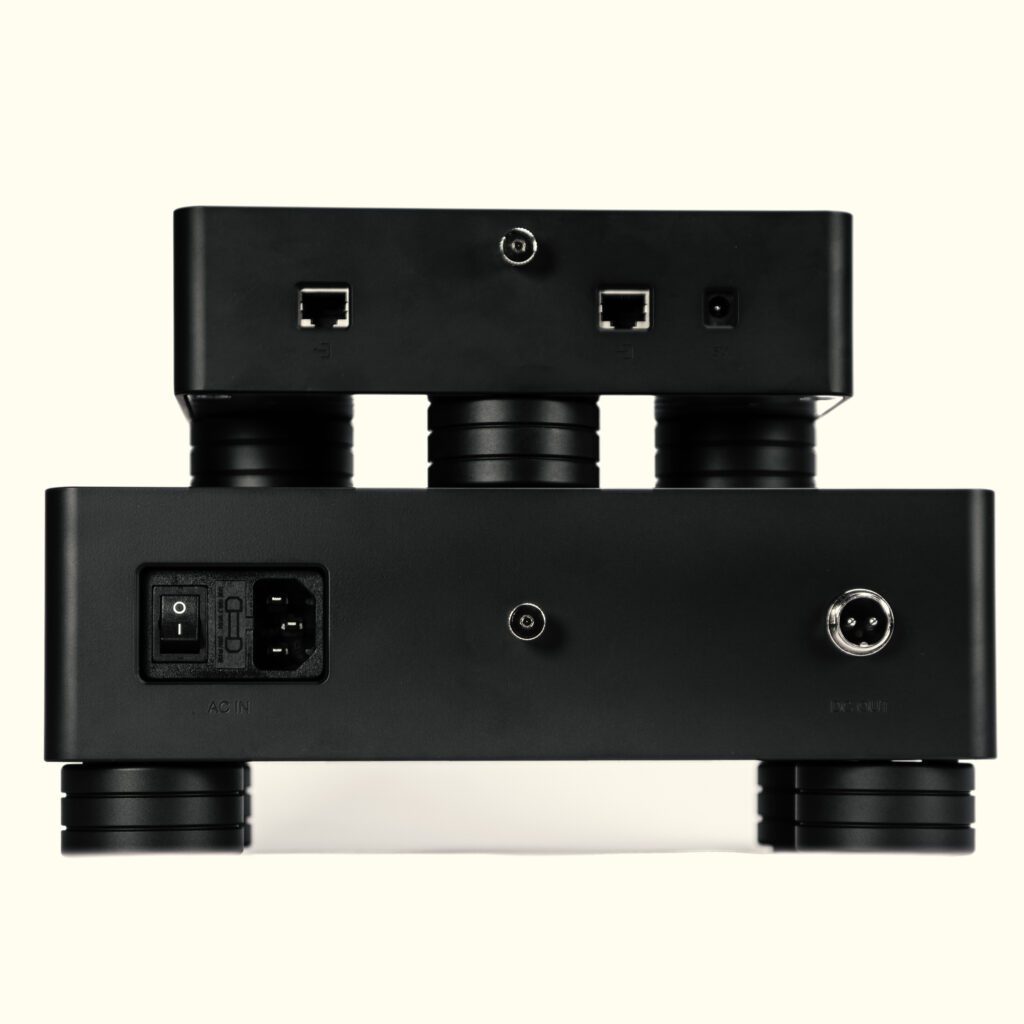
The Reiki Audio SuperSwitch X is built around a standard gigabit network switch, but with modifications to both the circuitry and – most importantly – the casework it sits in. The most obvious change to the circuitry is the removal of the status LEDs that accompany most RJ45 sockets. It also reduces the number of RJ45 sockets to the absolute minimum: one in, one out (although you can specify one with three ports). The reason for these changes is the same as the rationale for re-casing the switch’s circuit: reduction in noise. Having both unused spare RJ45 sockets and a Christmas tree of flashing LEDs near the ones in use creates small amounts of electromagnetic and radio-frequency interference at a point where keeping these effects to a minimum is crucial for good sound reproduction.
Multi-layer
That 10mm milled aluminium case is, in fact, a multi-layered affair, with an outer Cerakote ceramic coating, an internal copper lining, and a special EM absorber made by 3M on the inside. The circuit boards themselves are then subjected to additional vibration damping. This doubles the casing thickness compared with previous versions of SuperSwitch and adds resin-cased components on the board to limit vibrational effects.
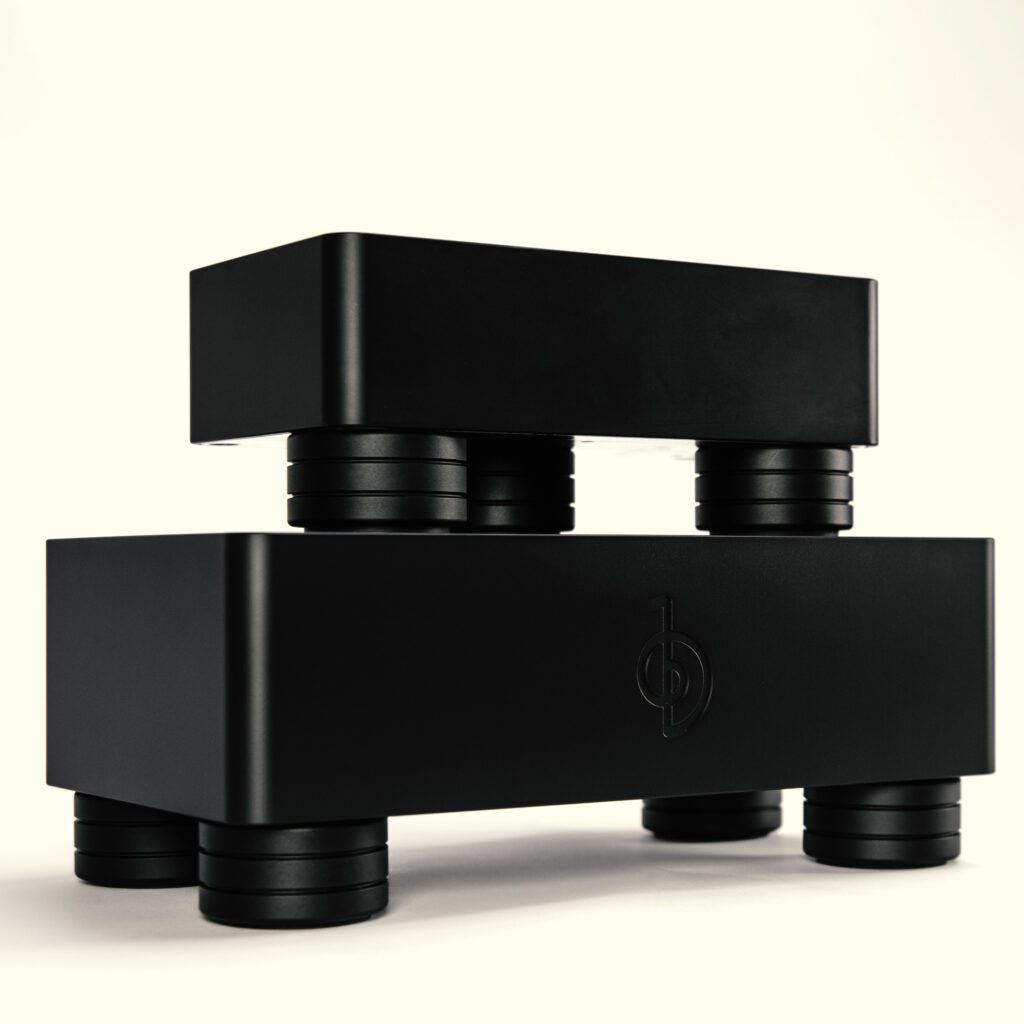
The Pro X PSU follows the same design concept. Technically, the SuperSwitch X could be used with a ‘wall-wart’ supply, but to date no one has. There are also grounding tags on both devices for those using aftermarket grounding systems or simply to allow the SuperSwitch X case to be grounded via its PSU.
There is also an identically priced OpticalBridge X, which replaces an RJ45 socket with an SFP transceiver. This is best used when the router and the system are far apart, typically with an OpticalBridge X at both ends (some streamers have their own SFP input, but it may still be advisable to use an OpticalBridge X as an intermediary). In most settings, however, the SuperSwitch X/PSU X is a better option.
Both the switch and the power supply come with ‘optional’ Stack Audio feet. These are not supplied as standard because some people with Stillpoints, HIFISTAY, finite elemente, IsoAcoustics and similar will probably opt for their own solutions. I’d say give the Stack feet a go; that trio of noise-busters beneath the Switch and PSU make a difference… and it might just be a gateway into a stack of Stack Audio. Ansuz and Nordost users probably won’t use the Stack feet, but they’ll also probably use those companies’ own switches.
Replacement
The SuperSwitch X/Pro X broadens the range rather than replacing the earlier SuperSwitch model and its power supply, but if you are thinking this will mean a plethora of second-hand Reiki Audio switches suddenly appearing on the used market, guess again. It seems that most SuperSwitch users now place that model at the router end of the network, with the SuperSwitch X at the system end. There might be a few appearing on the second-hand market for those that already had two previous-generation Reiki Audio switches, but otherwise these will be redeployed in the network… at least until everything gets a SuperSwitch! It’s also possible such listeners will invest in long lines of JundoStream cable from Reiki first.
Because network data is packetized, the data itself should remain unaffected by the network. Even streaming high-rate DSD is not exactly ‘heavy lifting’ for a Gigabit Ethernet network; this isn’t enterprise-grade file handling, pushing exabytes of data from one side of the planet to another. What happens to the sound through a good switch has nothing to do with the data packets and more to do with making sure the environment where those data packets are handled is as unsullied by noise as possible. And it’s surprising just how big a difference that makes.
The SuperSwitch X/Pro X PSU package shows that we often ascribe a level of sonic artificiality to streamed music that simply isn’t there. It’s being artificially introduced into the network through extraneous RF and EM interference, which undermines the sound of those data packets. Reiki’s system is like handing your car to a valet for an afternoon; it’s the same car, it doesn’t run any smoother, but its look and feel are so improved that you even drive it differently for a few miles.
Not subtle
The difference is not subtle, especially when you listen to something a little more chilled and natural-sounding; Bill Evans’ wonderful ‘Peace Piece’ [Everybody Digs Bill Evans, Riverside]. You feel your body relaxing into the music faster; the sound is more ‘analogue’; not replicating the LP, getting closer to the real deal. The original SuperSwitch was already good at this, but the SuperSwitch X/Pro X PSU takes ‘fidelity’ and ‘effortless, natural sound’ to a new level. It does this across the board, too; OK, no one apart from a reviewer looking for an angle is ever going to use a £4,250 switch with a £500 Bluesound NODE streamer, but if they did, they might be surprised at how good the NODE sounds.
In more balanced systems, the Reiki still raises the game. Music just gets that bit less ‘electronicky’ and more like real music. And that even applies to electronic music; it’s as if Kraftwerk was being performed ‘Unplugged.’ Yes, I know that Kraftwerk Unplugged would be the sounds of fingers tapping keys and nothing more, but you get the drift… it takes away that sense of artificial brashness that so many people think is the difference between streaming and playing CDs or SACDs.
No place to hide
The Reiki SuperSwitch X/Pro X PSU combo doesn’t give many places for bad recordings to hide; yes it helps the sound of the system not be plagued by interference, and that means the ‘sound’ of the Reiki system is more a reflection of the streamer having to do less work, but that often means the system exposes recordings all the more readily. You’ll easily hear the difference in mastering when calling on the same track from local ripped CDs, Spotify, Tidal and Qobuz, for example.
Nothing is clear-cut here; sometimes ripped CDs are better than Qobuz, other times the roles are reversed. But a bad recording is unmasked by the Reiki; possibly more so than some of its rivals. That’s not a bad thing, though; I would rather a warts ‘n’ all approach to one that sweetens the pill, but adds a little bit of sugar to everything in the process. Your mileage may vary, however.
That honest, yet natural performance on a par with some of the best dedicated servers. Obviously, a good server brings more to the mix (such as dedicated RJ45 or USB sockets and good software), but in terms of sheer performance uplift, the Reiki Audio SuperSwitch X/Pro X raises the music quality to that level.
Observations
There are observations. The cable connecting the two boxes has a locking two-pin connector at the power supply end and a standard power supply connector at the switch. This is necessary because someone might buy the SuperSwitch X without the supply and use a conventional plug-top supply. However, the thickness of the outer chassis means this connector doesn’t feel fully seated when it is. Also, as there is a complete absence of LEDs on both the switch and the power supply, you might experience a few ‘is this on’ moments. Note, however, there’s also no discussion of performance here, because I simply can’t fault it.
The Reiki Audio SuperSwitch X and Pro X PSU never put a (Stack) foot wrong. They remove the impediments that surround network data, allowing the streamer to get as unsullied a data stream as I believe it’s possible to get right now. If you always wanted to know what your network can do, the SuperSwitch X and Pro X PSU give you the perfect opportunity.
Find out more about the development of the Reiki Audio SuperSwitch X and Pro X PSU here.
Technical specifications
SuperSwitch X
- Gigabit switch
- 10mm aluminium case, copper-lined
- Vibration damped circuit board
- Available with 2 or 3 ports
- Case grounding post (4mm spade)
- Requires 5v DC (2.1mm barrel)
- Dimensions (WxHxD, with AUVA feet): 19.2x8x11.5cm
- Weight (with AUVA feet): 1.98kg
Pro X PSU
- Type: Fully linear PSU delivers stable, clean, low ripple, low noise DC power
- Resin filled audio grade transformer, 25% larger than PRO
- 10mm aluminium case
- Case grounding post (4mm spade)
- 5v DC output via GX16-2 socket (for Reiki Audio devices)
- 9v and 12v options to suit a range of devices
- Dimensions (WxHxD, with AUVA feet): 26×10.8×14.8cm
- Weight (with AUVA feet): 5.11kg
- Price (SuperSwitch X/Pro X PSU, as tested with two ports and Stack AUVA feet): £5,520, €5,520, $6,725
- 3-port equivalent: £5,880
Manufacturer
Reiki Audio
Tags: NETWORK SWITCH POWER SUPPLY PRO X PSU REIKI AUDIO SUPERSWITCH X
Trending Articles
See all
Computer Audio Design CAT computer audio transport
- Oct 13, 2014
Trending Articles

By Alan Sircom
More articles from this author


Read Next From Review
See all
Audiobyte SuperVOX
- Oct 06, 2026
Unitra WSH-805
- Sep 29, 2026

Wilson Audio Sabrina V
- Sep 29, 2026

Meze Audio 99 Classics (2nd Generation)
- Sep 22, 2026