Up to 37% in savings when you subscribe to hi-fi+
hifi-logo-footer

Begin typing your search above and press return to search. Press Esc to cancel.

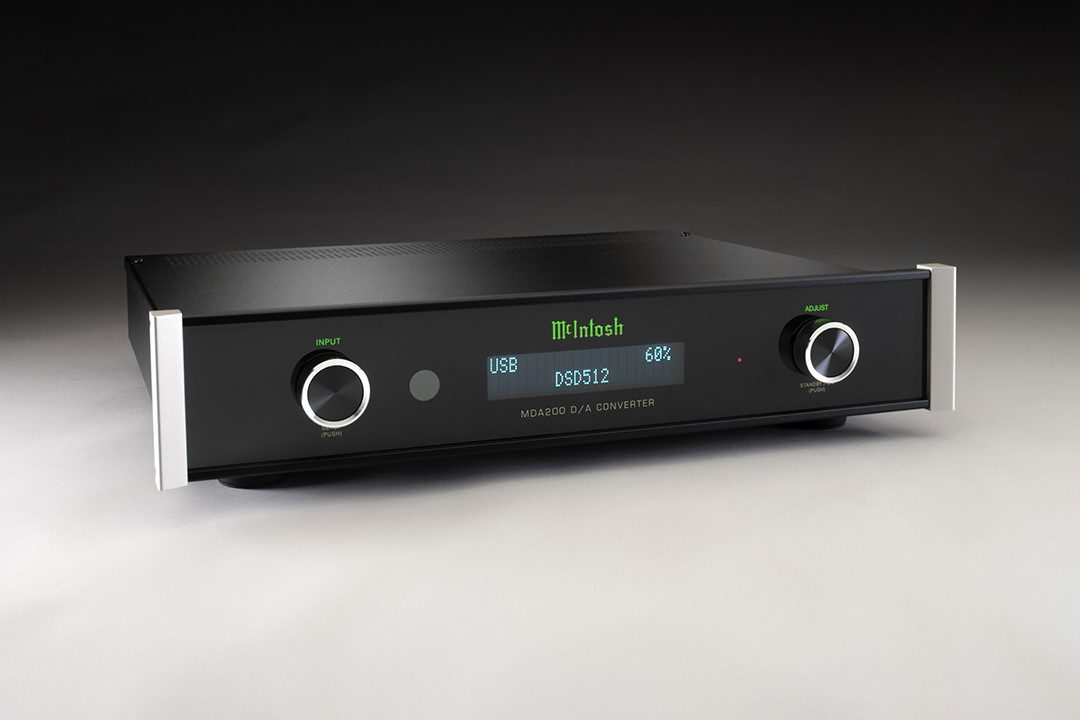
McIntosh MDA200 upgradable DAC protects into the future

McIntosh MDA200 is an upgradable DAC that protects against future changes in technology.

*From the McIntosh news release

Binghamton, New York, USA, 17 November 2022: McIntosh has unveiled a new upgradable DAC that protects owners against future changes in digital audio technology.

The new MDA200 D/A Converter is based around McIntosh’s established DA2 Digital Audio Module featured in the award-winning flagship MA12000 Integrated Amplifier and C2700 and C53 Preamplifiers.

The DA2 Digital Audio Module has been designed with the ability to be replaced by a newer digital audio module in the future, positioning the MDA200 D/A Converter as a timeless investment keeping home audio systems current for years, if not decades, to come.

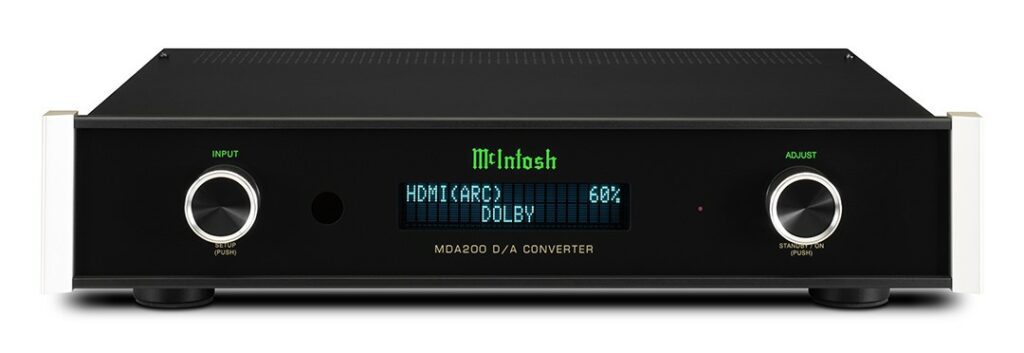
McIntosh MDA200

The MDA200 benefits from a next generation, Quad Balanced, 8-channel, 32-bit digital-to-analogue converter. This audiophile-grade DAC features enhanced dynamic range and improved total harmonic distortion.

Support for high-resolution digital audio playback is offered, with the USB input providing native DSD playback up to DSD512 and DXD to 384 kHz; the coax and optical inputs support up to 24-bit/192 kHz.

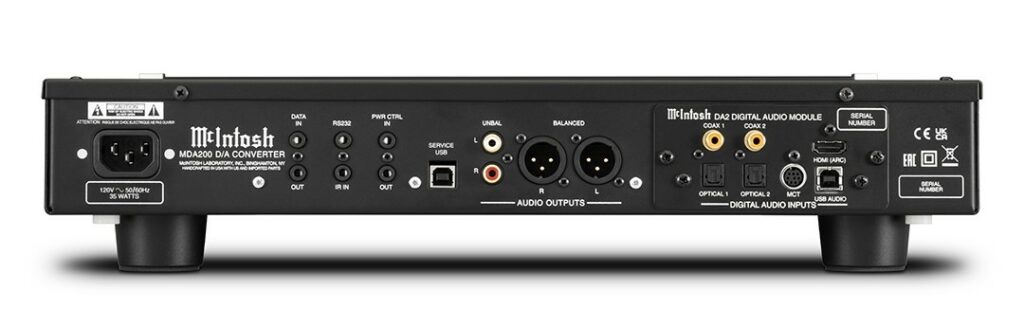
The MDA200 benefits from seven digital audio inputs: two coaxial, two optical, one USB, one MCT (to pair with McIntosh’s MCT series of SACD/CD Transports), plus an audio-only HDMI Audio Return Channel (ARC) to improve sound quality from TVs.

Audiophile touches include balanced and unbalanced analogue outputs, plus Roon Tested designation from Roon Labs.

The DAC includes classic McIntosh’s design elements including an illuminated logo, rotary control knobs, custom machined aluminum end-caps and a black-glass faceplate.

McIntosh MDA200

Pricing and availability

Orders for the MDA200 D/A Converter can now be placed with authorised McIntosh dealers with shipping expected to begin in November 2022 (United States and Canada), and the rest of the world, shortly thereafter, £4,995.

About McIntosh

Founded in 1949, McIntosh Laboratory is known for offering distinguished quality audio products, superior customer service and the ultimate experience in music and film. All McIntosh products are handcrafted at the Binghamton, NY factory by over 150 employees with a passion for music and the McIntosh heritage. McIntosh continues to define the ultimate home entertainment experience for discerning consumers around the world, with the iconic McIntosh Blue Watt Meters, globally recognised as a symbol of quality audio.

Since its inception, McIntosh has been powering some of the most important moments in music history and pop culture. From President Lyndon Johnson’s inauguration speech, to Woodstock, to the famous Grateful Dead ‘Wall of Sound’, McIntosh has not only witnessed history, it has also shaped it. With McIntosh, customers have the ability to create their own premium audio experience – and truly live their music. Visit mcintoshlabs.com to learn more.

Back to homepage

SourcePoint 10: New speaker from Andrew Jones?

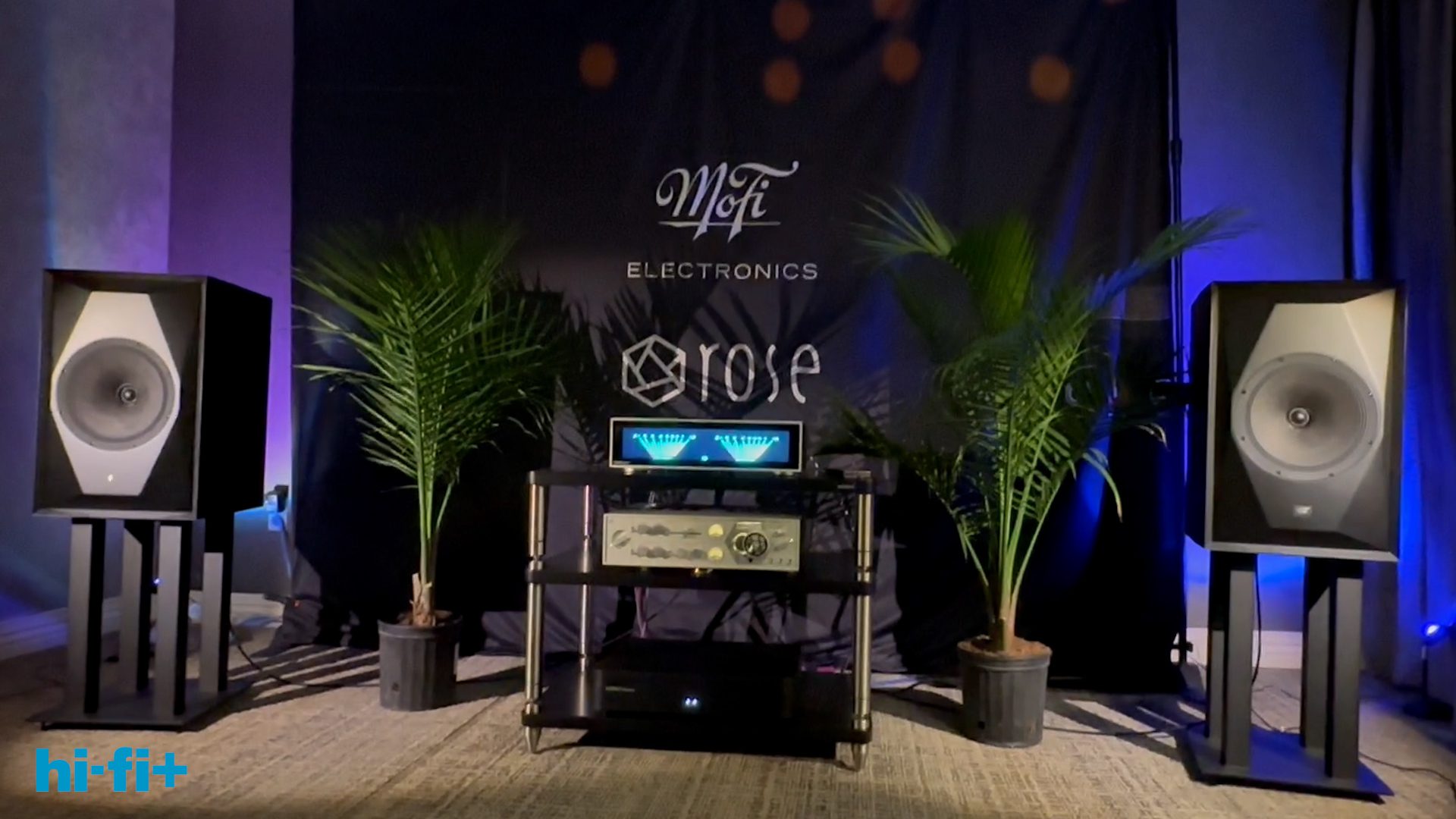
SourcePoint 10 loudspeaker from MoFi Electronics at Capital Audio Fest

In this video, legendary speaker designer Andrew Jones describes the process for designing his latest speaker, the SourcePoint 10 from MoFi Electronics.

Jones talks about the 10 inch bass drivers, his thought process and why he decided to include a frame on the front of the speaker.

For more information, visit the link below:
https://www.mofielectronics.com/sourcepoint10

You can see this video and more on the Hi-Fi+ YouTube Channel, such as Tea Time with Alan and Pete.

Hi-Fi+ Editor Alan Sircom and Publisher Pete Collingwood-Trewin talk about what’s happening in the high-end audio world.

Tea Time with Alan and Pete is just one of several new series on the Hi-Fi+ YouTube channel designed for audiophiles of all levels.

Another series is History of Audio, which aims to teach viewers a little about the History of Audio, which might be a trip down memory lane for many. It also hopes those who watch will learn from the varying experiences of other audiophiles through their trials and tribulations with different equipment.

While you’re on our YouTube channel, be sure to check out our Audio Basics series. So far, this series has covered what makes a great stereo system and how to find a great stereo system.

Soon, you can find reports from manufacturers at audio shows from around the world. You can see the likes of Aurender, Focal Naim, AudioThesis, Schiit Audio, and Magnepan, just to name a few. Right now, you can see what debuted at AXPONA 2022 and a bit from the Texas Audio Roundup, including background on the Magnepan LRS+. You can also see videos from Pacific Audio Fest in Seattle, CEDIA 2022 in Dallas, and you’ll see reports from Capital Audio Fest coming next month.

You can also see additional product reviews as well as more from the Warsaw Audio Video show and Capital Audio Fest on the hi-fi+ YouTube channel coming soon.

Be sure to subscribe to the YouTube channel so you don’t miss any episodes!

Back to homepage


Devialet Mania: 360-degree sound?

Devialet Mania, a hifi portable speaker

*From the Devialet news release

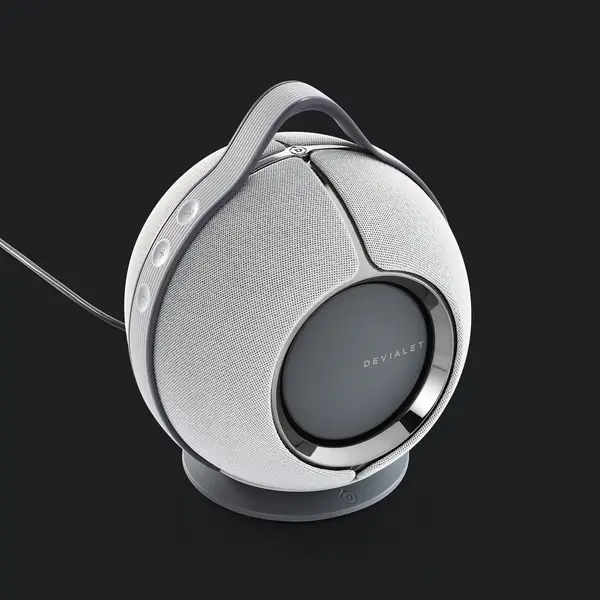
Introducing Devialet Mania, our first-ever high fidelity smart speaker to translate our signature sound purity into a portable form. Once you get a taste, it will be impossible to listen on-the-go any other way.

Capable of unleashing powerhouse, expansive soundstage, Devialet Mania is the only portable speaker with adaptive 360° stereo sound. Revel in a sound that morphs to your surroundings, sparking a sensory frenzy wherever you go.

Transcend the limits of your space. With Devialet Mania, Devialet’s iconic aesthetic has morphed into portable speaker form. A handle for ease of movement. An IPX4 splash-resistant rating for resilience. And Devialet’s first built-in battery for up to 10 hours of wireless streaming. Experience pure infatuation with augmented listening that leaves a lasting impression.

Sturdy and soft, fused. Devialet Mania boasts visible push-push woofers and a co-spherical design. A luxurious woven skin swathes its exoskeleton, which in turn protects the technologies held within. Make it your focus, tuck it away, take it outdoors— it was designed to sublimate any setting, any moment.

Let Devialet Mania adapt to your environment and revel in the experience. Its real-time acoustic mapping technology, ASC – Active Stereo Calibration, taps four-room calibrating microphones and embedded intelligence capabilities to allow it to automatically evolve the audio rendering based on its surroundings.

It took us four years to translate our signature sound purity into portable form, and Devialet Mania is the culmination: a 30-20,000 hertz range, bass that you can feel in your bones, and sound that is nothing short of obsession-inducing. Succumb to its sound quality once and you’ll never kick the habit.

The portable speaker was engineered to homogeneously diffuse stereo sound in every direction. Move around your space. You’ll enjoy the same immersive listening experience no matter your position.

Get your hands on Devialet Mania Station, an add-on wireless charging dock so you can charge up without being tied down. Note that Devialet Mania Opéra de Paris edition package comes with a complimentary Devialet Mania Station.

For more information, click here.

Back to homepage

PMC twenty5.26i loudspeaker Review: Bass producing vents?

PMC twenty5.26i as reviewed by Jason Kennedy, who talks about the vents on the front that produce bass through a transmission line from the drivers to the vents.

You can see this video and more on the Hi-Fi+ YouTube Channel, such as Tea Time with Alan and Pete.

Hi-Fi+ Editor Alan Sircom and Publisher Pete Collingwood-Trewin talk about what’s happening in the high-end audio world.

Tea Time with Alan and Pete is just one of several new series on the Hi-Fi+ YouTube channel designed for audiophiles of all levels.

Another series is History of Audio, which aims to teach viewers a little about the History of Audio, which might be a trip down memory lane for many. It also hopes those who watch will learn from the varying experiences of other audiophiles through their trials and tribulations with different equipment.

While you’re on our YouTube channel, be sure to check out our Audio Basics series. So far, this series has covered what makes a great stereo system and how to find a great stereo system.

Soon, you can find reports from manufacturers at audio shows from around the world. You can see the likes of Aurender, Focal Naim, AudioThesis, Schiit Audio, and Magnepan, just to name a few. Right now, you can see what debuted at AXPONA 2022 and a bit from the Texas Audio Roundup, including background on the Magnepan LRS+. You can also see videos from Pacific Audio Fest in Seattle, CEDIA 2022 in Dallas, and you’ll see reports from Capital Audio Fest coming next month.

You can also see additional product reviews as well as more from the Warsaw Audio Video show and Capital Audio Fest on the hi-fi+ YouTube channel coming soon.

Be sure to subscribe to the YouTube channel so you don’t miss any episodes!

Back to homepage

McIntosh MI502 Digital Amplifier launches

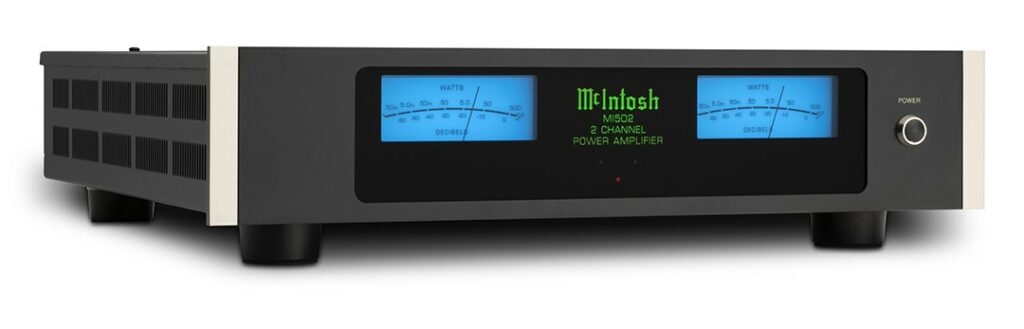
McIntosh MI502 2-Channel Digital Amplifier offers an incredible 500 watts of McIntosh-quality Class D power.

*From the McIntosh news release

Binghamton, New York, USA, 3 November 2022: McIntosh has launched the MI502 2-Channel Digital Amplifier, a powerful and highly versatile Class D power amp that’s set to expand the company’s uncompromising ‘Ci-Fi’ (Custom Install Fidelity) portfolio.

The MI502 is extremely flexible, offering a substantial 500 watts of power into 8 ohms or 800 watts into 4 ohms, making it highly attractive for premium custom-installed home audio or home cinema systems.

The amplifier uses innovative closed-loop digital switching technology with resilient power supplies to produce groundbreaking performance levels for custom install audio; McIntosh’s world-renowned sound quality comes as standard.

mcintosh-MI502-front

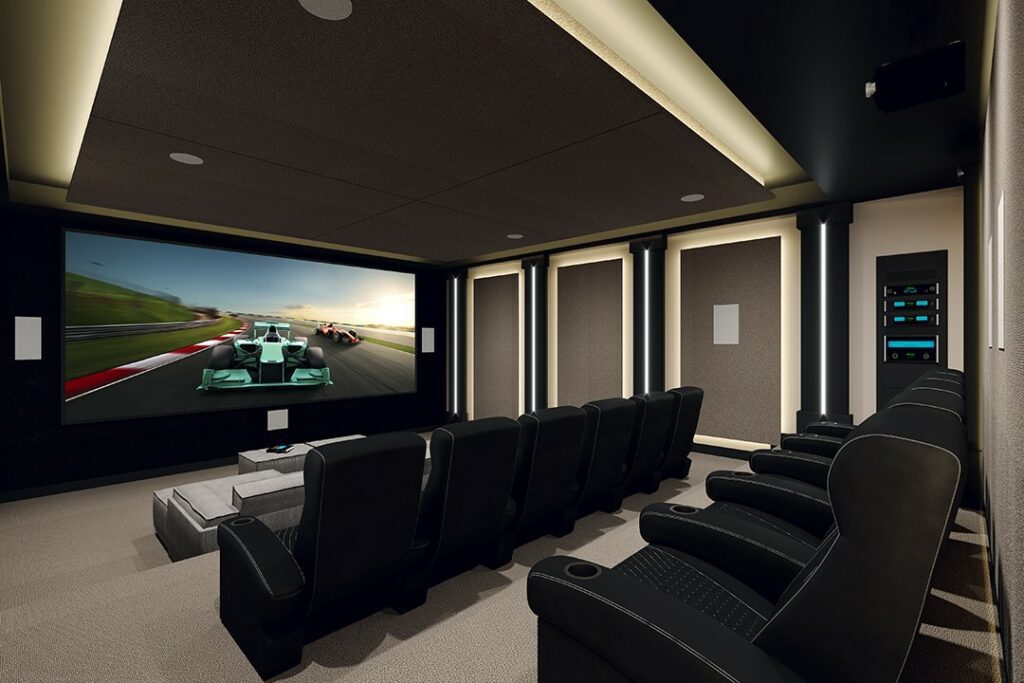
The MI502 can be configured flexibly, too: it can be used to power the front left and right speakers in a home cinema system; drive two in-wall subwoofers; a pair could drive the three front channels of a home cinema plus one subwoofer; or even power a pair of outdoor speakers; multiple MI502s could also be used to power a distributed home audio system.

Rack-mountable with a 2U height, the MI502’s highly efficient Class D amplifier means the amplifier does not require noisy cooling fans to maintain nominal operating temperature, despite its powerful 500-watt output.

mcintosh_MI502 Lifestyle

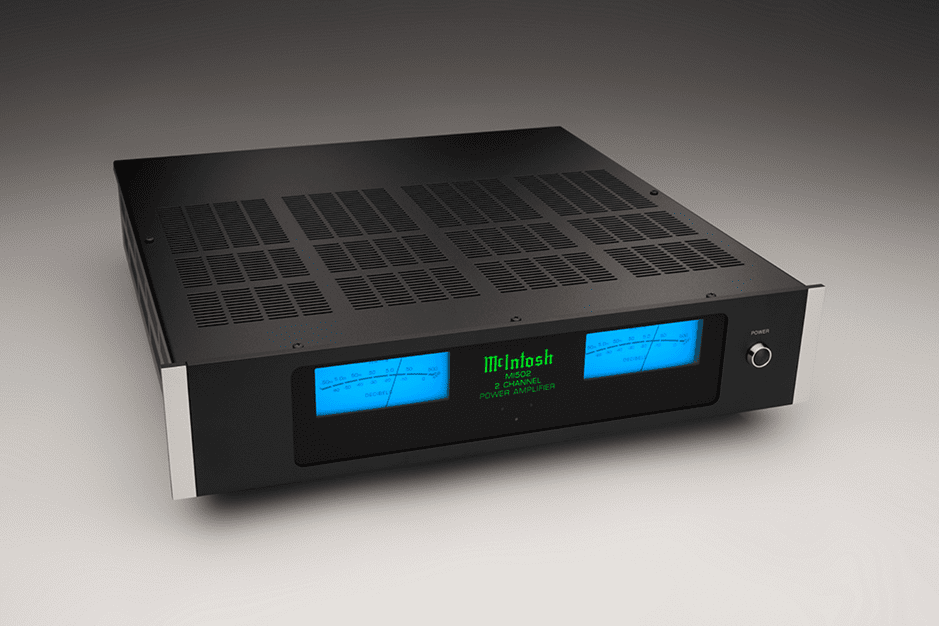
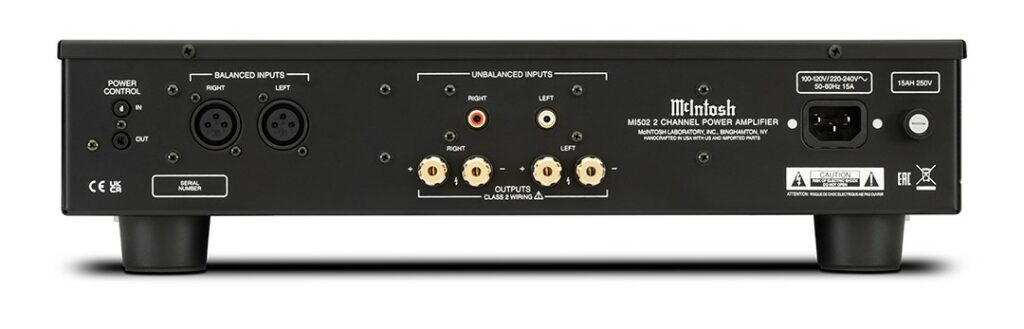
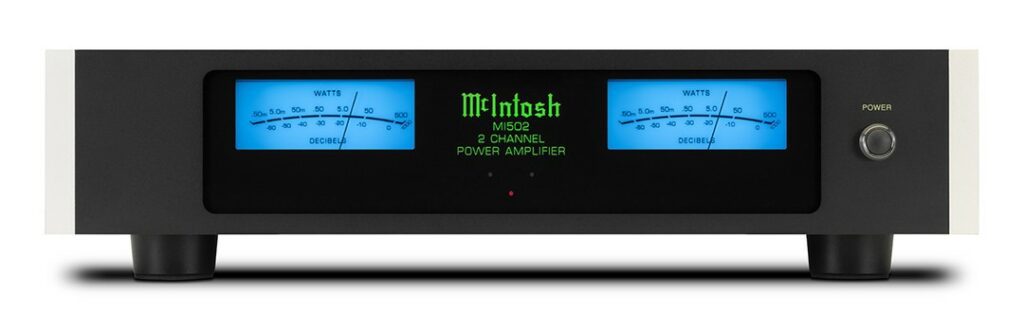
The front panel features two blue McIntosh Watt Meters that display the power output of each channel, while multi-colour LED indicators display the status of each channel. The rear panel includes a pair of balanced and unbalanced inputs to connect to preamplifiers, and a pair of McIntosh’s standard five-way speaker binding posts are also included.

Also included is a black-glass front panel, an illuminated McIntosh logo, and a familiar form factor, highlighted by silver trim.

mcintosh-MI502-Back

The MI502 also benefits from several proprietary McIntosh technologies including:

Power Guard® signal overload technology that prevents overdriving the speakers

Sentry Monitor™ short-circuit protection circuit that disengages the output stage before current exceeds safe operating levels and then resets automatically when operating conditions return to normal

Power Control 12-volt triggering capabilities

Eco-friendly on/off signal sensing that turns the unit off if no input signal has been detected for a set amount of time, or automatically turns the amp on when it senses a signal

mcintosh-MI502 Angle Left

Pricing and availability

Orders for the MI502 can now be placed with authorised McIntosh dealers with shipping expected to begin in November 2022 (United States and Canada), and the rest of the world, shortly thereafter, £5,995.

Back to homepage

Gold Note Mediterraneo X and PH-5 at Warsaw Audio Video Show

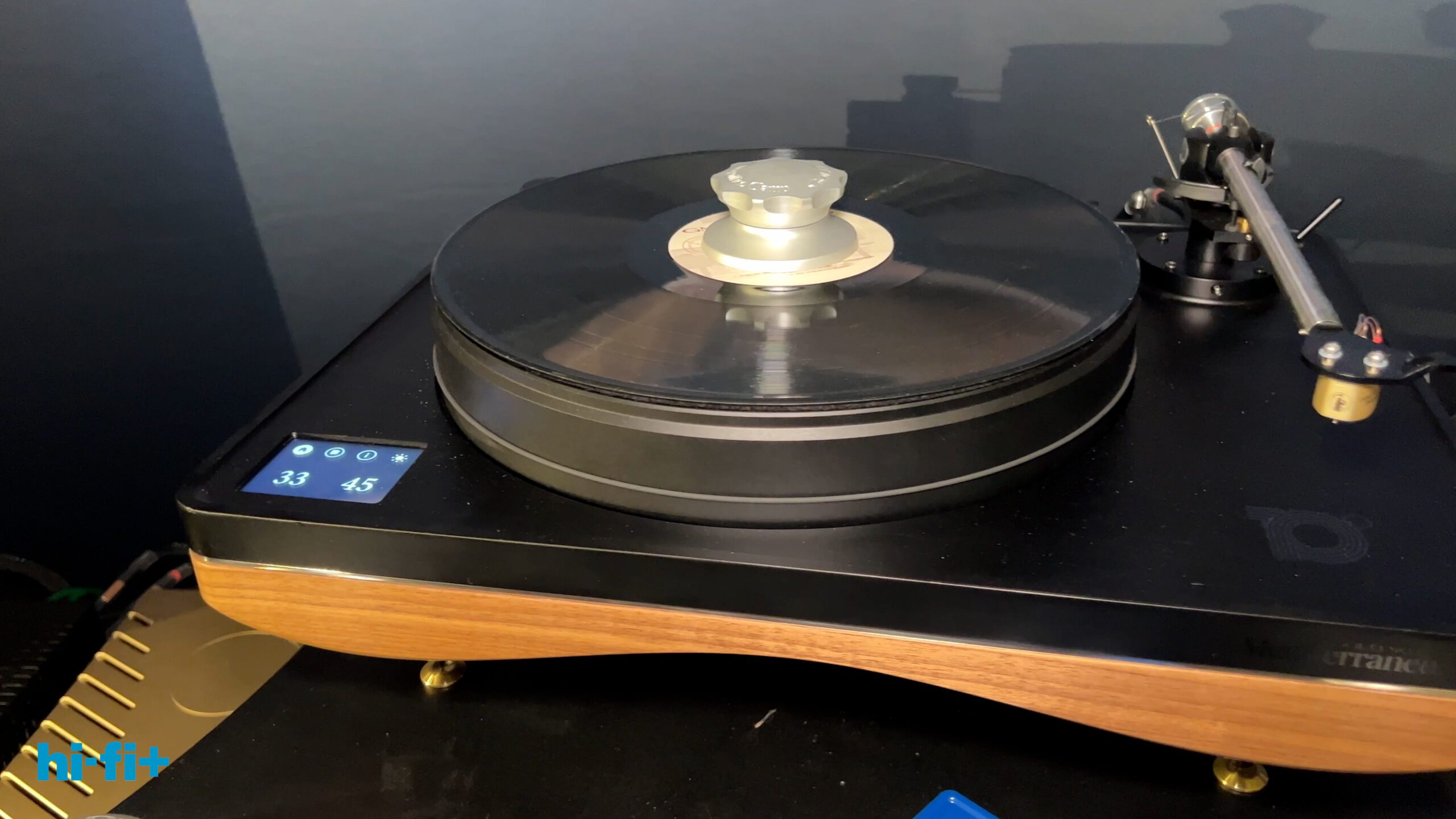
Gold Note Mediterraneo X and PH-5 were displayed at Warsaw Audio Video Show in Poland last weekend.

In the video below, Gold Note Italy CEO Maurizio Aterini talks about the Mediterraneo X turntable, which celebrates the company’s 10-year anniversary.

He also shows off the PH-5 phono stage, which is making its international debut at the Warsaw Audio Video Show in Poland.

For more information about these products, visit the following links:
https://www.goldnote.it/turntables/mediterraneo/
https://www.goldnote.it/phono-stages/ph-5/

You can see this video and more on the Hi-Fi+ YouTube Channel, such as Tea Time with Alan and Pete.

Hi-Fi+ Editor Alan Sircom and Publisher Pete Collingwood-Trewin talk about what’s happening in the high-end audio world.

Tea Time with Alan and Pete is just one of several new series on the Hi-Fi+ YouTube channel designed for audiophiles of all levels.

Another series is History of Audio, which aims to teach viewers a little about the History of Audio, which might be a trip down memory lane for many. It also hopes those who watch will learn from the varying experiences of other audiophiles through their trials and tribulations with different equipment.

While you’re on our YouTube channel, be sure to check out our Audio Basics series. So far, this series has covered what makes a great stereo system and how to find a great stereo system.

Soon, you can find reports from manufacturers at audio shows from around the world. You can see the likes of Aurender, Focal Naim, AudioThesis, Schiit Audio, and Magnepan, just to name a few. Right now, you can see what debuted at AXPONA 2022 and a bit from the Texas Audio Roundup, including background on the Magnepan LRS+. You can also see videos from Pacific Audio Fest in Seattle, CEDIA 2022 in Dallas, and you’ll see reports from Capital Audio Fest coming next month.

You can also see additional product reviews as well as more from the Warsaw Audio Video show and Capital Audio Fest on the hi-fi+ YouTube channel coming soon.

Be sure to subscribe to the YouTube channel so you don’t miss any episodes!

Back to homepage

Audio Analogue Bellini Anniversary and Donizetti Anniversary

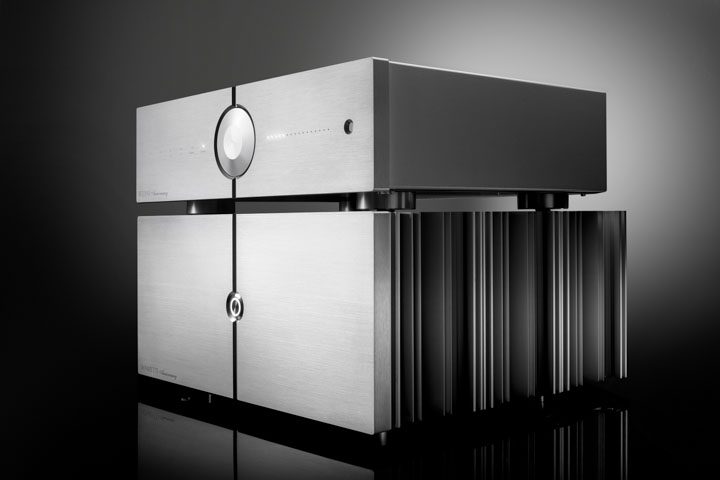
This took a long time. During the lockdowns of 2020, we got the Audio Analogue Bellini Anniversary preamp and Donizetti Anniversary stereo power amp. And during those lockdowns, it got completely overlooked, in the way you can easily overlook a stereo power amp that comes in a box that Ikea might use to flat-pack a whole kitchen. It’s a shame because these two are a fine paring.

Let’s get the rant bit out of the way first; Audio Analogue came to fame in the mid-1990s thanks to its excellent Puccini integrated amplifier. That product does not define the brand; the Italian company makes a whole range of audio electronics from half-sized digital products (the excellent AAdrive and AAdac that we tested in Issue 193) as well as phono stages, integrated amps and these fantastic separate preamp and power amplifier. And yet, when talking about this upcoming review to audio-adjacent friends, it was always, ‘ah yes… the Puccini!’ That said, being known as ‘the Puccini brand’ is better than ‘Audio who?’!

Happy 27th Birthday!

The introduction wasn’t simply to fill space; the Puccini was Audio Analogue’s first product back in 1995. Twenty years later, Audio Analogue produced a version of the Puccini to celebrate that anniversary. That formed an Anniversary line of products (all designed in Airtech’s laboratories), including the more powerful Maestro Anniversary integrated amplifier, and Bellini Anniversary preamplifier and Donizetti Anniversary power amplifier.

Like Puccini and Maestro, Bellini and Donizetti are well-known names in Audio Analogue’s history and, like the Puccini Anniversary and Maestro Anniversary, the Bellini and Donizetti Anniversary models share little more than the name with their predecessors. The Bellini Anniversary is closer to the Maestro Anniversary, as it shares the same basic preamplifier circuit. However, the Bellini Anniversary adds an inductive-capacitive filtering system to the main power supply, designed specifically for the preamp. This filter is suggested to significantly reduce ‘disturbance’ from the mains in terms of ripple and potential EM interference.
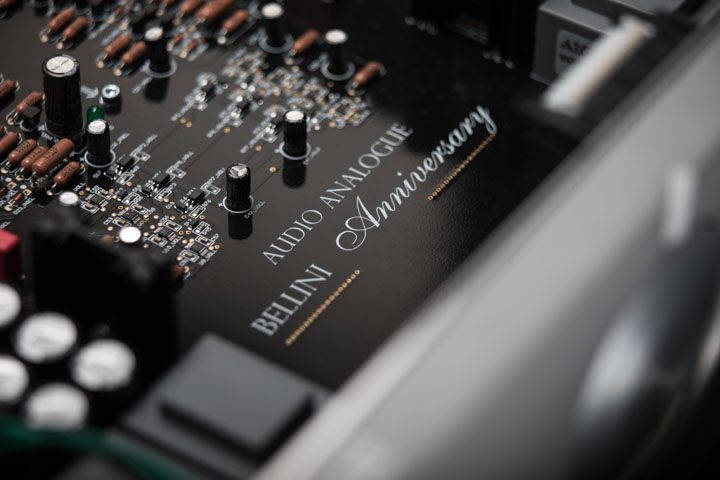
Audio Analogue Bellini Anniversary internal

The four-layer circuit board uses Audio Analogue’s own SeGeSTA (Single Gain Stage Transconductance Amplifier) circuit to keep the noise floor low. The fully-balanced, dual mono preamp has no global feedback, and the board layout is designed to minimise potential noise and crosstalk ingress by reducing crossing points between input and output and between digital control sections and analogue inputs. What’s – pleasantly – surprising about the Bellini Anniversary is the extensive use of traditional components over surface-mount designs. This allows the amplifier to specify very high-grade components and affords the Bellini Anniversary owner better long-term repair options (if a resistor needs replacing, it’s a lot easier to do so with a discrete component than it is trying to unpick and replace a surface-mounted equivalent).

For a balanced design, there are a lot of single-ended inputs; the Bellini Anniversary has two balanced XLR and three RCA single-ended inputs, with two XLR and two RCA outputs. I think this is a good option for a domestic industry that has never fully embraced the joys of balanced inputs, but in listening, the balanced option used throughout sounds better.

The Bellini Anniversary’s basic functionality needs a bit of a run-up, as it’s perhaps not the most instantly intuitive design around. Having one control to drive standby, input selection and volume can take some time to understand, and until you get the knack of operating it… use the remote. Once you do get that knack, you’ll probably still want to use the remote because switching inputs involves pressing the button for the correct length of time and moving majestically in sequence through the inputs. Fortunately, these inputs are clearly marked with white LEDs on the front left of the preamp, while the volume is displayed through 22 white LEDs on the right-hand side. These are dimmable… from the remote.

Bring on the brute!

The Donizetti Anniversary (which also shares nothing but the name with its predecessor) is an absolute unit, a friendly brute of a 250W power amplifier that doubles to 500W into four ohms and 950W into two-ohm loads. There’s nothing out there in loudspeaker land that will trouble it; two beefy 1200VA transformers designed specifically for the amp help. Because the amp is a pure dual mono design, the two transformers stack one on top of the other, which gives the amp an uneven weight distribution. When coupled with some spiky heatsinks that run the length of the sides of the amp, this forward-tilted weight distribution makes the amplifier approximately 1.35 standard metric pigs to move; but once sited and the blood flow is staunched, it becomes the most docile of amplifiers unless provoked by music!
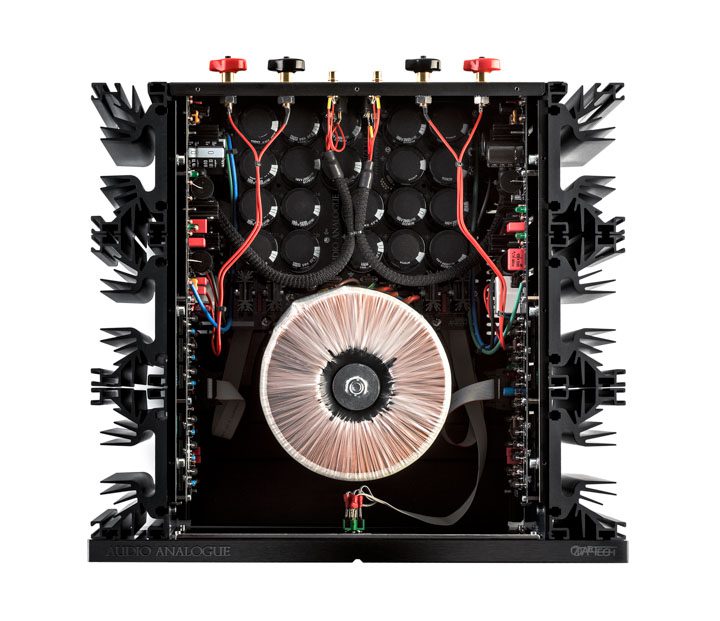
Audio Analogue Doninzetti Anniversary internal

All that heatsinking does push for an observation about the Donizetti Anniversary. It takes a while to come on song. Not just in terms of its initial conditioning phase (I can’t speak about that as it all happened long before the amplifier arrived), but in terms of starting the amp from standby. It really only comes on song when the heatsinks are warm to the touch, which can take anything up to half an hour or more. It’s worth the wait, but those who demand instant gratification from their amplifiers will not like that their first few tracks played will lack the satisfying musical integrity they will experience later in the session.

As with the Bellini Anniversary, the no-global feedback Donizetti Anniversary uses Audio Analogue’s SeGeSTA configuration, which in the Donizetti’s case is followed by a group of four transistors per side to deliver the requisite current without influencing the gain stage. It also has the same ‘minimal crossing points’ layout seen in the Bellini Anniversary, uses high-quality discrete components on four-layer boards, and sports 7N OCC copper case wiring throughout. With both balanced and single-ended inputs and high-grade speaker terminals at the rear and a single soft-start push button on the front, it’s likely all the amplifier you need. If it isn’t, there’s also an option to run two Donizetti Anniversary in dual mono… presumably if you want to use a pair of loudspeakers as a foghorn.

Sound quality

Within about 20 seconds into the listening, my notes read ‘mailed fist in a velvet glove’. It’s a cliché, but one that holds a lot of water when listening to the Audio Analogue Bellini and Donizetti Anniversary duo. The overall sound is refined and effortless… but with a lot of speaker-gripping control and sheer grunt in reserve should you decide to play it loud.

A sign of a good amp combination is that controlled power, where it doesn’t tip over into brightness or showy deep bass rumbling unless it’s called for. If that is the case, the Audio Analogue pairing is an extremely good amp combination. That first track was ‘Englishman in New York’ by Sting […Nothing Like the Sun, A&M] and it sounded extremely fine. The shape and texture of the music played had great flow and some force when called for and had plenty of grace and charm throughout. Sting’s odd diction is not the best test of vocal articulation, but I’d say it works well; perhaps the ‘refinement’ part of the sound makes him more ‘Mild Skin Irritant’ than ‘Sting’, but the combination paints the recording with all the right shades.
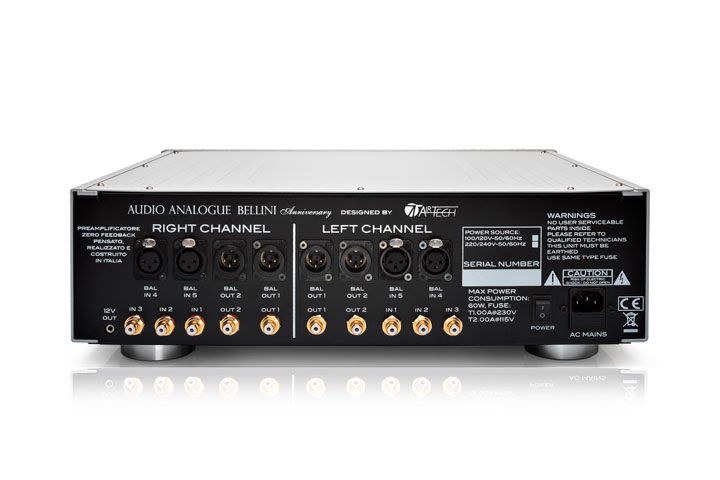
Audio Analogue Bellini Anniversary rear panel

Swapping from this to ‘Insomnia’ by Faithless [Reverence, Cheeky/BMG] showed the space and power this duo has in abundance. I’m frequently shocked that this classic of Progressive House music is getting on for 27 years old but played loud it sounded fresh and exciting through the Audio Analogue pairing. That famous ‘drop’ is powerful and expressive and when the drums kick back in, you are back in the clubs again. That drop needs a system that is both sophisticated (it can sound too toppy) and dynamic enough to make it seem like it’s 1995 again.

Another telling sign of the quality of the Audio Analogue pairing was how happy they were when things changed. Swap over loudspeakers and the amps change their character to suit (up to a point… it’s still the same refined, warm balance with a holographic soundstage and lots of fluid midrange detail). Swap sources and the amps react accordingly. Even changing preamp and power amplifier shows their basic refined/warm/neutral sound shines through. They are at their best when you keep the amps in the Audio Analogue family, however.

Again and again, I found myself drawn into a wide, near holographic soundstage filled with instruments that have a sublime midrange, a subtly underpinning of bass, and a refined, never once brash treble. OK, so maybe the soundstage wasn’t so pronounced when playing some 1970s pub-rock recordings [‘She Does It Right’ by Dr Feelgood, Down By The Jetty, UA] but here it’s all about managing raw charm. You get to hear Wilko Johnson ripping through a Telecaster at a ferocious pace, and loses none of ferocity of that bridge pickup and its tweeter-shattering intensity. But what the Audio Analogue duo do so well is give this recording a sense of its own place in history. You can almost smell cheap beer, cheaper aftershave, and Canvey Island’s finest whelks when playing this record through the Audio Analogue duo, so natural is the sense of space and energy.

There’s always a trade-off somewhere in audio. Here it’s between absolute fidelity and wider musical approachability. Those sublime recordings – not just test records, but the ones you use to show off a system, like ‘Babylon Sisters’ from Steely Dan’s Aja [MCA] ­ are reproduced extremely well, but lack a little of the top-end sparkle and vividness you hear through the very best audio electronics. On the other hand, records that are all-but unlistenable on top-notch audio systems – like the stupidly compressed ‘I Bet You Look Good on the Dancefloor’ from Arctic Monkeys Whatever People Say I Am, That’s What I’m Not [Domino] – sounded, well, OK. The compression was still apparent, the dynamic range of the recording paper thin, but the pace and fun of the track was retained and not so undermined by the sheer detail retrieval of the system.
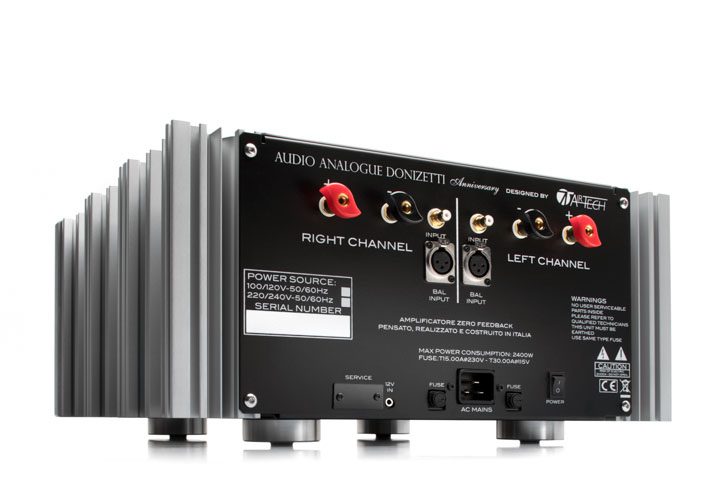
Audio Analogue Donizetti rear panel

I am in two minds about that trade-off. It renders a lot more music listenable but those recordings that don’t need a helping hand are less well presented.

Conclusion

The spectre of audio’s rose-tinted view of the past should be exorcised. We sometimes prize those classic big pre/power combinations from the 1980s, but if we listened to them today on a level playing field, I suspect a few of the Anointed Ones of audio wouldn’t hold a candle to this Audio Analogue pairing. It’s gentle, refined and sophisticated touch with music – that not only rolls with the punches but can also deliver a neat haymaker when required – is extremely alluring, especially for those who do not simply choose audiophile-approved recordings. The Audio Analogue Bellini Anniversary and Donizetti Anniversary is the pre/power combo that puts a smile on your face.

Technical specifications

Bellini Anniversary line preamplifier

  • Inputs 3x RCA single-ended stereo pair, 2x XLR balanced stereo pair
  • Outputs 2x RCA single-ended stereo pair, 2x XLR balanced stereo pair
  • Input impedance 47kΩ
  • Output gain 5dB (single-ended), 11dB (balanced)
  • Frequency response (attenuation 0.5dB) 0Hz–200kHz
  • Unbalanced output noise (Band 0 Hz–8kHz) 24µV, 9µV (A-wtd)
  • Balanced output noise (Band 0 Hz–8kHz) 37µV, 14µV (A-wtd)
  • SNR(0dB/A weighted/ref. 2Vrms) -107dB (single-ended), -103dB (balanced) – unbalanced output
  • Finish Black or silver
  • Dimensions(H×W×D) 140 × 450 × 380 mm
  • Weight 12kg
  • Price £6,000

Donizetti Anniversary stereo solid-state power amplifier

  • Inputs 1x RCA single ended stereo pair, 1x XLR balanced stereo pair
  • Input impedance 47Kohm
  • Power on 8Ω load 250W (1,000W mono)
  • Power on 4Ω load 500W (1,700W mono)
  • Power on 2Ω load 950W (2,200W mono)
  • Power Amp gain 26db
  • Sensitivity (8Ω output nominal power) 2.3Vrms
  • Frequency Response 0Hz 110kHz +0dB, -3dB
  • SNR; >110dB
  • Output resistance (rated power on 8Ω at 1kHz); 0.15Ω
  • Noise reported at the input (0Hz-80kHz); 10µV, 4µV (A-Wtd)
  • Finish Black or silver
  • Dimensions(H×W×D) 221 × 450 × 428 mm
  • Weight 41.2 Kg
  • Price £11,000

Manufacturer

Audio Analogue

URL: audioanalogue.com

UK Distributor

Decent Audio

Tel: +44(0)1642 263765

URL: decentaudio.co.uk

Read more Audio Analogue reviews here

Back to Reviews

JBL HDI-3800

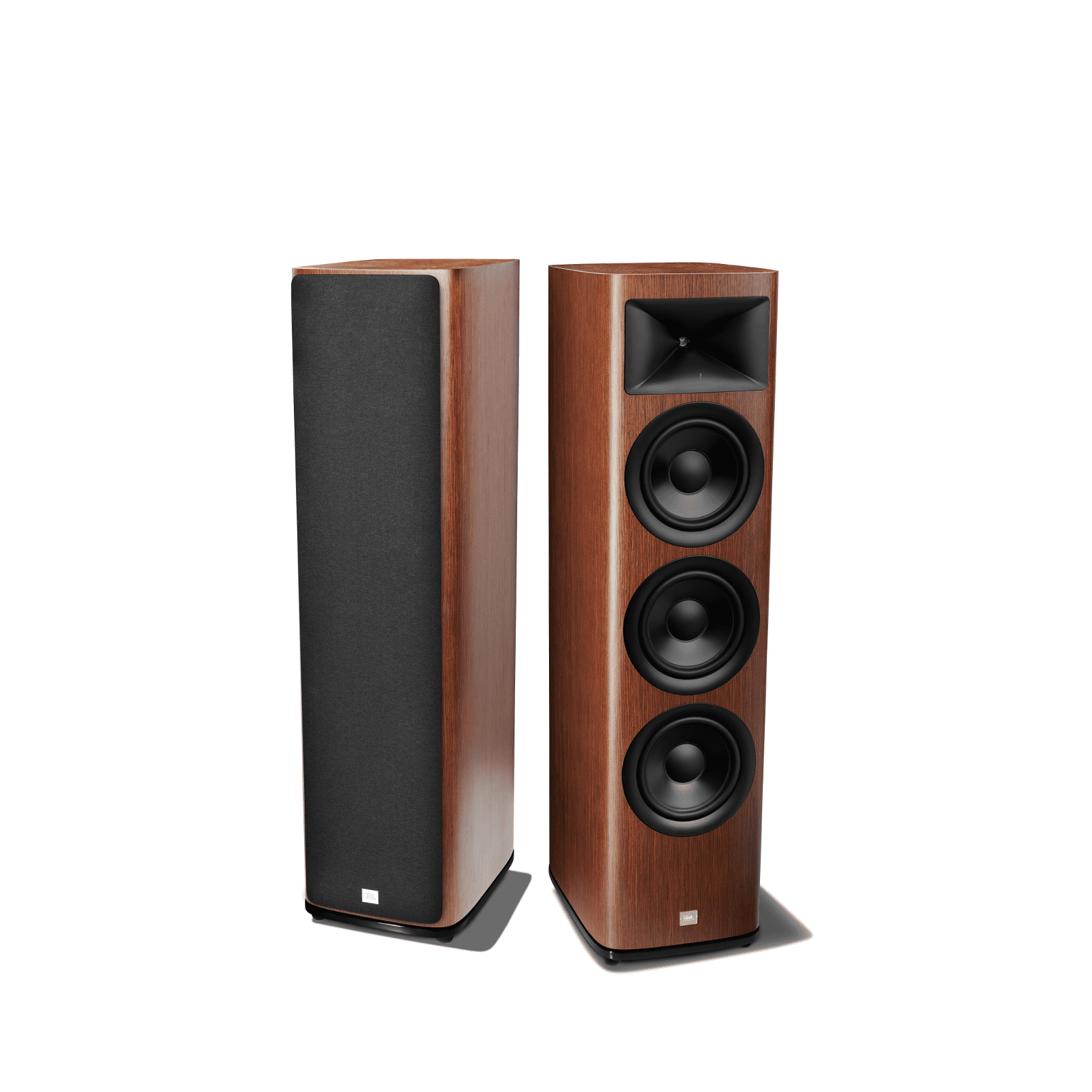
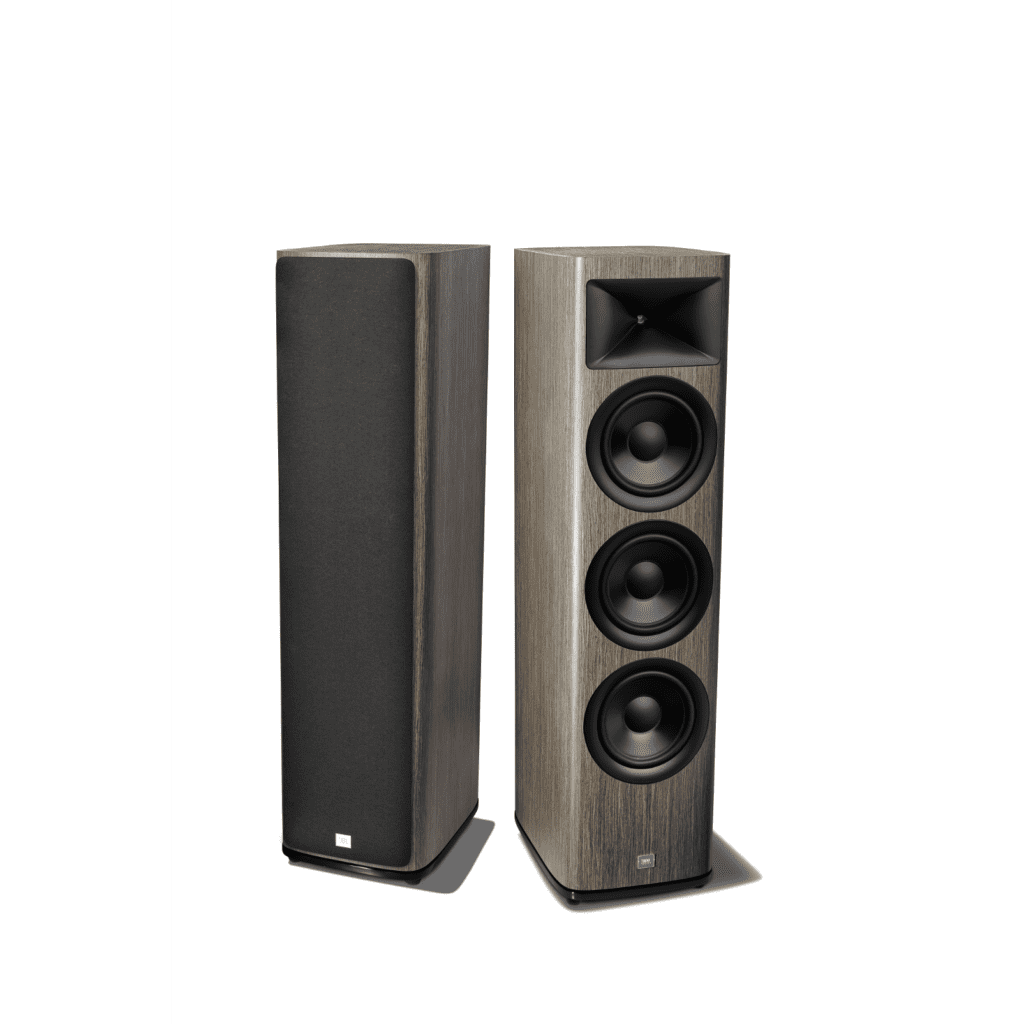
It’s not unusual to get a glimpse of the difference between the US and European markets for loudspeakers but if there’s anything in the pictures to give a sense of scale you will realise that these JBLs are more than a mere glimpse, they are the full Sherman tank. In the likely event that there are no clues to their scale I’ll mention that the HDI-3800s are 1.1m high and weigh 38 kilos. In the high end this is nothing unusual but at £4,000 these speakers are aimed at a broader market and presumably one that is as interested in watching movies as listening to music. To put it more bluntly, it’s a lot of speaker for the money and there aren’t many other respected brands that can compete when it comes to kilos per pound sterling.

They clearly come from a place where space is more affordable and high SPLs are very popular, but they also come from a brand with an impressive heritage that goes way back to the days when big was the only game in town where speakers were concerned. JBL has been releasing a lot of retro style speakers of late, often with lovely orange foam grilles, but the HDI-3800 is a more up to date beast that requires no stand and packs a lot of drive units into its substantial form.

JBL HDI 3800

Let’s not underplay that ‘substantial’ nature of the loudspeaker. Although this isn’t as physically demanding a loudspeaker as the eight-foot tall, one-ton behemoths that dominate the top end of high-end audio (as well as the imposing girth of JBL’s own large horn designs), this is one heck of a lot of loudspeaker, and a heck of a lot of loudspeaker for the money, too. We shouldn’t be impressed simply by the size and weight of a loudspeaker design, but the HDI-3800’s physical characteristics directly contribute to an equally-impressive sub-40Hz in room response.

Despite the three big lower drivers, this is a two-and-a-half-way, reflex-loaded loudspeaker so the two lower drivers are bass units and the one above covers both mid and bass frequencies. They are eight-inch units with cast aluminium chassis and aluminium cones controlled by a substantial magnet assembly which incorporates a flux stabilisation ring, a vented pole piece and copper shorting ring. Features that are well regarded methods for reducing distortion and increasing linearity. The cabinet itself is very solid and loaded with two reflex ports on the rear, meaning they will need a reasonable amount of space behind them in most rooms if the bass is to remain controlled. The high frequency unit is a compression driver which is why there is a horn in front of it; this is a genuine horn system as opposed to the shallow horns or waveguides found on a number of speakers that have conventional dome tweeters providing treble.

Good compression

Compression drivers are a JBL speciality and come from the world of pro audio where high sound pressures are an absolute necessity, you can’t entertain a crowd of thousands with conventional tweeters unless you have an awful lot of them spread around the auditorium. Compression drivers are able to do this because the diaphragm is larger than the throat or compression cavity that sits between it and the horn, this arrangement increases resistance to radiation which rather counter intuitively also increases efficiency. The reason is that the driver is better matched to the volume of air it is driving than is the case with a dome fixed to a flat speaker baffle. This makes them significantly more sensitive but does bring the challenge of getting an even response from a horn. Compression drivers are generally aluminium but in the 2410H-2 used in the HDI-3800 JBL have used a thermoplastic polymer called Teonex, which has the correct rigidity and is better damped than metal alternatives. It is also an annular diaphragm, that is it is O shaped rather than being a full dome, with fixings at inner and outer edges and nothing conventional in the way of suspension, the polymer itself is flexible enough to be used thus.

JBL HDI compression driver

The overall sensitivity of this JBL is higher than average at 92dB but that’s for a four Ohm load so it will need a bit of muscle to achieve its potential, JBL recommend anything from 25 to 300 Watts and I used a Moor Amps Angel 6 which sits near the middle of this range with 150 Watts on tap. Perhaps inspired by their cinematic inclinations the first track that dropped on the streamer was the title theme from Blade Runner which includes speech that came through with considerable clarity before Vangelis’ gorgeous wall of synth took centre stage. The low end on this was lovely, it had an ease and extension that you only get with higher sensitivity designs. You get a strong sense of mass, a substantial presence that can only really be achieved with big or multiple drivers in big boxes.

The sound is more cuddly than you might imagine given the fire power on offer, the treble and mid are appealingly smooth and reflect the balance of whatever you play without any sense of effort. The bass could be faster, the voicing is distinctly cinematic in this regard with the emphasis on scale and depth rather than immediacy, but I tried something which helped notably in this regard. I reviewed a set of Franc equipment support feet around the same time and tried the Slim model under the rubber feet of the JBLs (spikes are supplied for the masochists). These raise the speakers by 25mm and increase the sense of pace and openness rather nicely, they don’t appear to reduce bass power one bit and allow track’s like Rymden’s ‘The Lugubrious Youth of Lucky Luke Live’ to become quietly captivating. The piano in particular was superb but the harsher sounds became more obvious and on balance I preferred the balance with the JBLs on the floor. I suspect that this is a height thing related to the horn as much as the isolating abilities of the feet.

Temporary measures

I really enjoyed a Bonnie Raitt album, Taking My Time, on vinyl, here the HDI-3800 showed the age of the recording alongside the high calibre of the performance. They also revealed the benefits of not leaving the phono stage on a network switch (a temporary measure I assure you) by delivering better imaging with it back on the rack. This is a revealing speaker of that I have no doubt. I tried the JBLs on a much lower powered Enleum AMP-23R integrated amp (issue 202) that had bowled me over with its charm through my regular speakers. Here it continued to shine with, surprisingly, some of the best sounding dub I have enjoyed at home courtesy of Burnt Friedman. I think it was partly a success because the Enleum doesn’t really plumb the low frequency depths but emphasises the tune emphasising harmonics rather than very low bass. This album is often overpowering in this respect, and by making the low end a little leaner it was able to deliver a more enjoyable result.

JBL_HDI_3800

However, the more music I played through the JBLs the better it seemed to get, the focus on ‘music’ rather ‘sound’ was notable and I enjoyed a variety of albums both old and new. I gave Joni Mitchell and James Taylor’s live performance from 1970 a spin on Qobuz and while it’s not the greatest sounding recording it was easy to enjoy the natural simplicity of Mitchell’s high voice and the way it contrasted with the dark texture of Taylor’s. Playing this  with the Angel 6 amplifier I enjoyed an easier and more sumptuous sound and one that continued to impress when it came to voices; on Nick Cave’s ‘Jesus Alone’ for instance the bass is very low and weighty but the voice is in a distinct spotlight. The speaker controlling the bass and allowing the mid and treble to shine through with no sense of overlap or blur. It builds a powerful, torquey sound that’s bursting with electricity and feels as though it could lash out at any moment. Ambience is well served by this depth as well, the speaker picking up on the echoes and reverb that build up the picture of a live recording. Tracks with reverb and delay applied ‘in the box’ are just as effective, Kendrick Lamarr’s ‘How Much a Dollar Cost’ being a good example of track that’s been carefully constructed to sound edgy but which is also remarkably clear and solid in its three dimensionality. It sounds as if it could have been mastered on a speaker like this.

Conclusion

I suspect that these JBLs had not been given much of a run-in prior to delivery because the results they produced improved markedly over the weeks that they were in the system. I played a lot of music through a variety of sources and amplifiers and came to the conclusion that they are really rather good, their high sensitivity is a definite bonus but ultimately the HDI-3800s are a lot more sophisticated than they look. This combined with their competitive pricing makes them look like rather good value if you have the space.

Technical specifications

  • Type 2.5-way, four-driver, reflex loaded floorstanding speaker with horn loaded tweeter.
  • Driver complement One 25mm Teonex compression driver; three 200mm black Advanced Aluminium Matrix cone, cast frame woofers
  • Crossover frequencies 800Hz, 1800Hz
  • Frequency response 37Hz–30kHz
  • Impedance 4 Ohms
  • Sensitivity 92dB (2.83V @ 1m)
  • Dimensions (H×W×D) 1100.5 × 300 × 417.8mm
  • Weight 38kg/each
  • Finishes High gloss black, satin walnut, grey oak
  • Price £3,999/pair

Manufacturer

JBL

Tel: +44(0)1223 203200

URL: jbl.com/specialty-audio

Read more JBL reviews here

Back to Reviews
Nagra Reference MC Cartridge coming soon

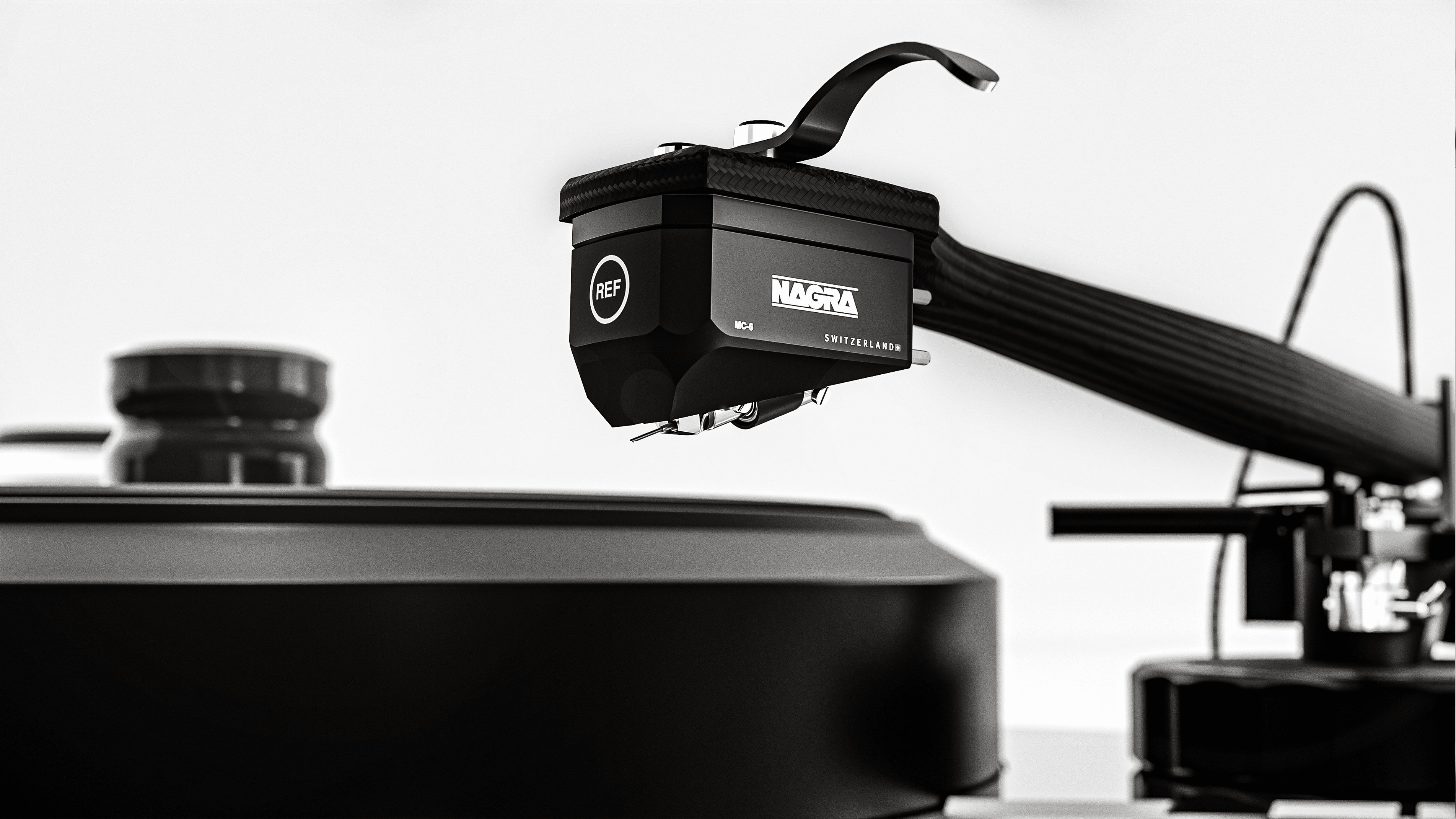
Nagra Reference MC Cartridge Swiss high-end audio firm, Nagra, announces the upcoming release of its first phonocartridge–the Nagra Reference MC cartridge. Initial units are scheduled t o be delivered in December. The Nagra Reference MC cartridge is the product of a number of years of intense R&D  supplemented by extensive listening tests. This moving coil cartridge will be available in 4 and 6 Ohm variants. Designed in parallel with the Nagra 70th Anniversary Reference turntable/tonearm system, it is an ideal companion component to complete the ultimate LP playback platform.

The Reference MC cartridge features a number of significant and unique elements. While traditional moving coil transducers utilize a single layer coil body, the Nagra Reference MC cartridge employs a multi-layer transducer featuring a double layer coil body wound with hyper-pure silver windings. The 6 Ohm Reference outputs 0.45mV@5cm/S. The 4 Ohm Reference achieves an output of 0.30mV@5cm/S.

A stiff ruby cantilever is mated to a high strength titanium structure featuring a DLC(diamond-likecarbon) coating. The titanium structure utilized in the coil body/cantilever interface addresses a traditional source of resonance and substantially reduces vibration unrelated to the  musical signal. The stylus tip is a Swiss produced, Fritz Gyger S profile chosen for its wonderful combination of detail retrieval and musicality.

Further evidence of the obsessive attention to detail in the cartridge’s design is found in the connector pins. Those employed in the Reference MC cartridge eliminate the commonly found connection joint between the pin and the coil. In the case of the Reference MC, the  pin is a continuous single piece from its external endpoint to its internal point of contact with the coil, resulting in a welcomed lowering of inductance.

In addition to the extensive focus on the generator system and groove/stylus/cantilever interface, Nagra’s team of engineers and designers paid great attention to the Reference MC cartridge body. Substantial material science investigation lead the team to a unique, non-ferrous alloy called EXIUM AM. Born from aerospace materials research, EXIUM AM is the result of a collaboration between the CNES (the French equivalent of NASA), the Ecole de Mines de Paris and the French firm LBI Foundries. It was developed to address the need for an alloy with very high damping properties–a necessary attribute for a particular Mars mission whose purpose was to measure minute seismic activities on the red planet. Nagra engineers determined that this high damping characteristic alloy was perfect for use in audio applications where the elimination of unwanted vibrations and resonances is an extreme priority. As a result, the Reference cartridge utilizes an EXIUM AM in lay at the critical interface between cartridge generator and the cartridge body. (An examination of Nagra’s 70th Anniversary Reference turntable will reveal that the table’s platter features a precisely CNC machined ring of EXIUM AM.) Nagra’s use of EXIUM AM is exclusive. Nagra has secured the sole world wide right to use EXIUM AM in audio products. In order to produce a cartridge of optimal weight for the Reference Anniversary tonearm, while maintaining high internal damping properties, a proprietary supermagnesium alloy is utilized for the balance of the cartridge body.

The Nagra Reference cartridge has exceptional tracking ability, resonance control and exemplary specifications. It will match most tonearms and phonostages but will reach its ultimate potential when paired with the Nagra Reference turntable/tonearm system and Nagra phonostages.

As these highlights indicate, Nagra is committed to being a world leader in state of the art LP playback products. We look forward to the upcoming release of the Nagra Reference MC cartridge. We are anxious for serious vinyl lovers around the world to experience their collections like never before.

Sonus Faber Olympica Nova now available in piano black

Sonus Faber Olympica Nova now available in piano black

*From the Sonus Faber news release

1 November 2022, Vicenza, Italy: Sonus faber has unveiled an all-new piano black finish option for its award-winning Olympica Nova AV loudspeaker collection.

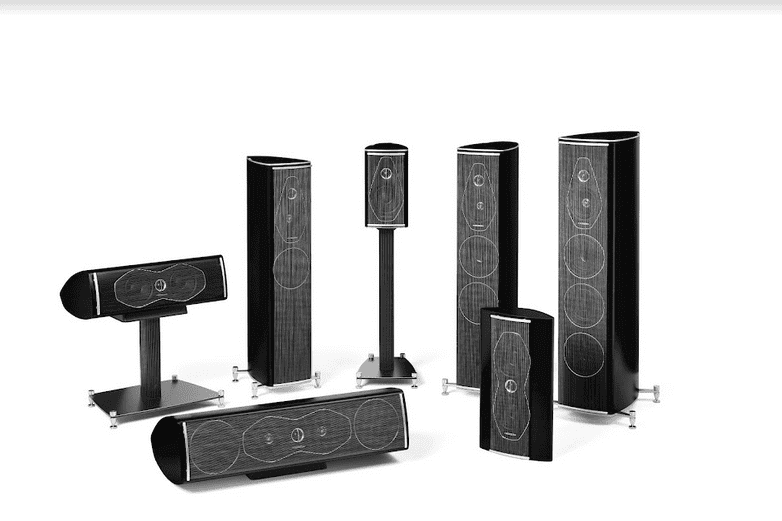
The seven-strong speaker collection, which includes a stand-mount, three floorstanders, two centre channels, plus an on-wall model, is the second iteration of Sonus faber’s original Olympica collection and pays homage to the debut models, while adding innovative trickle-down technologies, including new drivers, crossovers and internal volume tuning, plus updated cabinets and a renewed exterior design.

Olympica Nova is available in rich Walnut and Wenge finishes, and now, the all-new piano black finish, offering discerning listeners greater choice when system-matching loudspeakers to existing equipment, home décor, or home cinema systems/installations.

All Olympica Nova models eschew flat panels and parallel cabinet sides to improve enclosure performance and maintain the typical asymmetrical Lute shape of the first- generation Olympica. The shape of the cabinet is an original design concept that allows versatile positioning to help tune the bass response in any room.


Pricing and availability

Olympica Nova in black is available through authorised Sonus faber dealers from 1 November 2022.

Olympica Nova W (wall) £3,500

Olympica Nova Ci (2-way centre) £4,500

Olympica Nova Cii (3-way centre) £6,500

Olympica Nova I (2-way standmount) £5,950

Olympica Nova II (3-way floorstander) £8,950

Olympica Nova III (3-way floorstander) £11,900

Olympica Nova V (3-way floorstander) £14,900

Sonus faber is distributed in the UK by Fine Sounds UK

ELAC ConneX DCB41: One solution with endless applications

ELAC ConneX DCB41: One solution with endless applications!

*From the ELAC news release

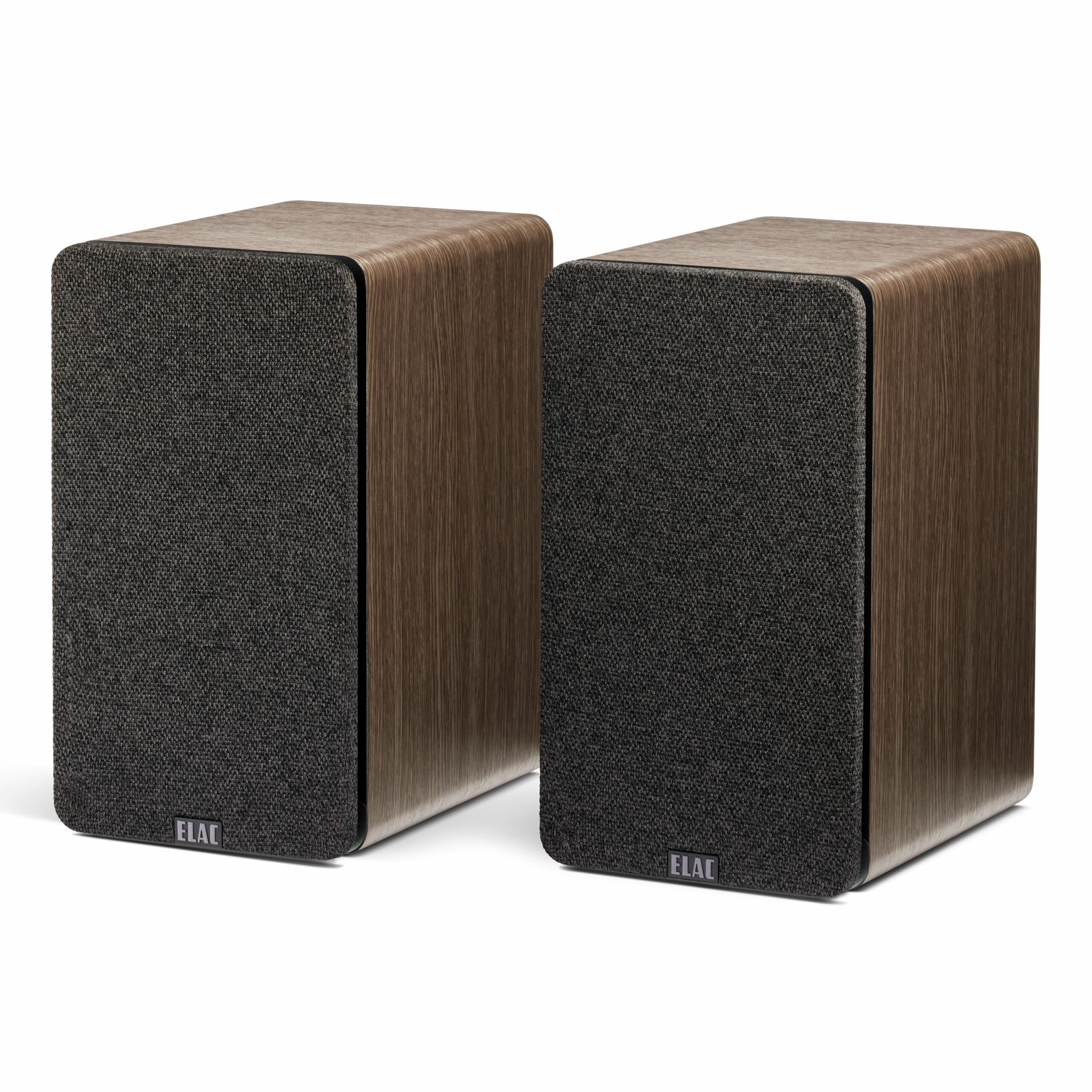
With the new ConneX DCB41, ELAC presents an active stereo loudspeaker system with a variety of connection options to accommodate every conceivable source. Compact dimensions and a big sound…the ELAC ConneX DCB41 is the perfect all-rounder for uncomplicated hi-fi.

Easy connections

The ELAC ConneX DCB41 loudspeaker system defines the new standard of simplicity for setting up high-quality sound for music, TV or computer applications. A ConneX system comprises one active and one passive loudspeaker. The comprehensive range of inputs (HDMI ARC with CEC functionality, analog line IN / phono IN, digital IN (optical), USB and Bluetooth APT-X) makes it easy to connect or link all sources: from the latest TVs, popular gaming consoles, iconic turntables, tablets or cellphones…ConneX gives them all a voice, guaranteeing flawless, thrilling sound. Operation is very straightforward using the enclosed remote control and the rotary encoder on the loudspeaker.

Simply inspiring

From restrained elegance to striking statements: the different colors of the ConneX DCB41 (black, walnut, orange and blue) combined with the matte painted front baffle and removable grilles mean the ConneX DCB41 will complement any surroundings where high-fidelity sound is required.
Given their compact dimensions, these speakers deliver an astonishingly powerful sound. The interaction between carefully matched components such as the chassis and amplifiers is a delight. A long-throw woofer guarantees effortless, full-range sound and a precisely defined midrange. The waveguide of the tweeter optimizes the directional characteristics of the DCB41 and sends acoustic energy precisely where it is needed. To minimize venting sounds, the rear bass reflex port has a large cross-sectional area and is folded inside the cabinet. For larger rooms or if extra bass performance is required, simply connect an active subwoofer to the subwoofer output. Easy to set up, easy to control – easy listening with ELAC.

ELAC ConneX DCB41: Prices and availability

The ELAC ConneX DCB41 is available as a stereo set from November 2022 with vinyl finishes in the colors Black Ash, Walnut, Orange and Blue. The recommended retail price is €529 for a set of two loudspeakers.

The company

ELAC is passionate about driving innovation and refining its existing products. Throughout the 90 years of our company history, we have crafted products of unmistakable quality and sound that stand out from the crowd. Our latest innovations complete the ELAC experience, enabling our discerning customers to experience the passion in our products in the form of music and film.

Back to homepage

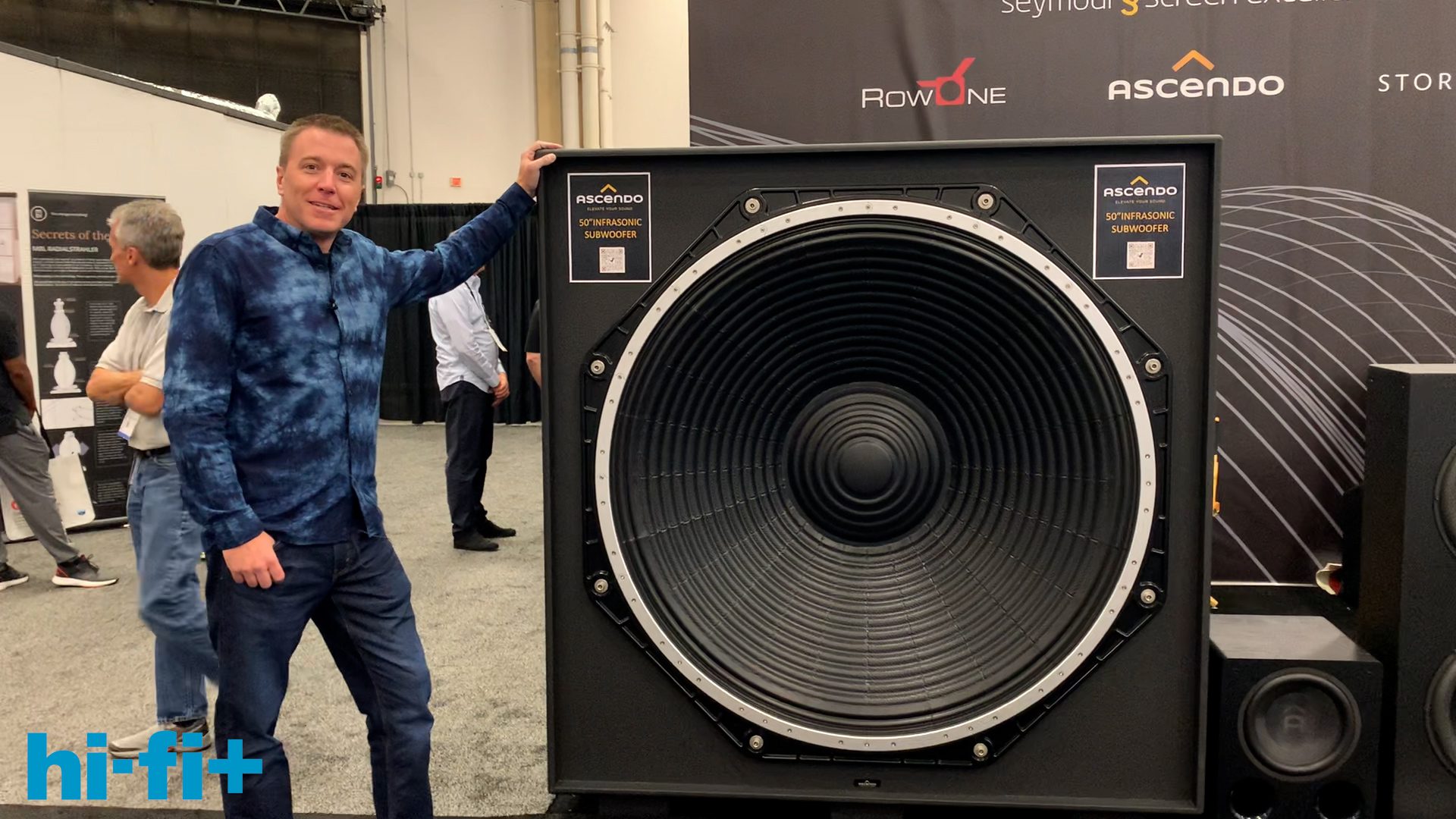
CEDIA Expo 2022 highlights part 1: 50″ Subwoofer?

CEDIA Expo 2022 highlights include Ascendo 50″ subwoofer, Focal Naim, PSB Speakers, and more.

Lance Profyt takes us around some of the CEDIA Expo 2022 in Dallas. Stops include Focal Naim, PSB Speakers, NAD Electronics, Ascendo, Devialet, Gallo Acoustics, and more.

Stay tuned for Part 2 from CEDIA.


For more information on the products seen in this video, visit the following links:
https://www.focalnaimamerica.com/
https://www.ascendo.de/en/loudspeaker/subwoofer.html
https://www.psbspeakers.com/
https://nadelectronics.com/
https://www.devialet.com/
https://galloacoustics.com/

You can see this video and more on the Hi-Fi+ YouTube Channel, such as Tea Time with Alan and Pete.

Hi-Fi+ Editor Alan Sircom and Publisher Pete Collingwood-Trewin talk about what’s happening in the high-end audio world.

Tea Time with Alan and Pete is just one of several new series on the Hi-Fi+ YouTube channel designed for audiophiles of all levels.

Another series is History of Audio, which aims to teach viewers a little about the History of Audio, which might be a trip down memory lane for many. It also hopes those who watch will learn from the varying experiences of other audiophiles through their trials and tribulations with different equipment.

While you’re on our YouTube channel, be sure to check out our Audio Basics series. So far, this series has covered what makes a great stereo system and how to find a great stereo system.

Soon, you can find reports from manufacturers at audio shows from around the world. You can see the likes of Aurender, Focal Naim, AudioThesis, Schiit Audio, and Magnepan, just to name a few. Right now, you can see what debuted at AXPONA 2022 and a bit from the Texas Audio Roundup, including background on the Magnepan LRS+. You can also see videos from Pacific Audio Fest in Seattle, CEDIA 2022 in Dallas, and you’ll see reports from Capital Audio Fest coming next month.

You can also see additional product reviews as well as more from CEDIA Expo 2022 in Dallas on the hi-fi+ YouTube channel coming soon.

Be sure to subscribe to the YouTube channel so you don’t miss any episodes!

Back to homepage