Up to 37% in savings when you subscribe to hi-fi+
hifi-logo-footer

Begin typing your search above and press return to search. Press Esc to cancel.

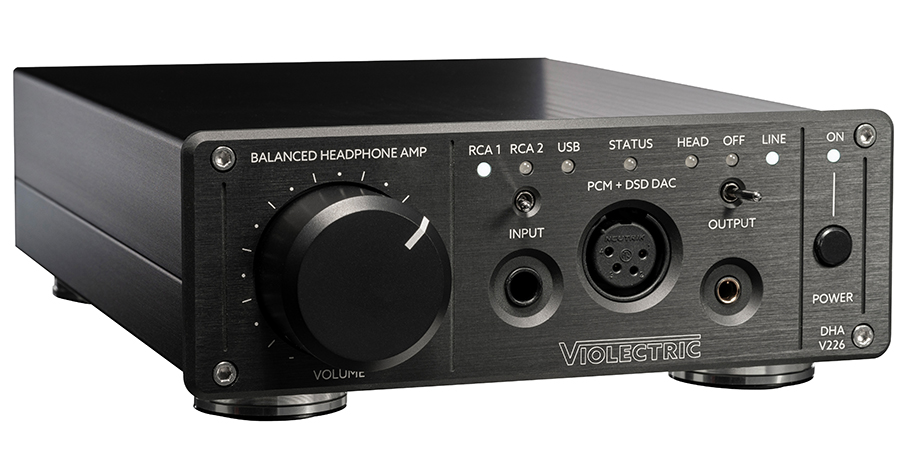
Violectric DHA V226

You can forgive attentive readers of hi-fi+ for doing a double-take at the Violectric DHA V226. Even a cursory glance at the design language employed on the front panel of the V226 suggests that it might be a very close cousin to the Niimbus US 5 PRO. Just so. The DHA V226 is designed and manufactured in Germany by the same team responsible for the Niimbus. However, it has a retail price of £1,300 compared to the US 5 PRO’s £5,140.

Lifting the lid

Lifting their respective lids makes the relationship between the DHA V226 and the Niimbus even more apparent. Violectric’s design head, Fried Reim, has not entirely made a mini-Niimbus in the V226. His flagship amplifier features a more complex circuit, higher-quality components, a stiffer and more robust power supply, and a significantly superior volume control arrangement. Even so, the power supply and gain circuit employed in the Violectric DHA V226 feature essentially the same design principles. However, they result in half the output power of the Niimbus in a chassis some 50% smaller. 

However, unlike the Niimbus, which is purely a headphone amp, the Violectric DHA V226 also contains a DAC. This is based around a 32-bit Cirrus Logic CS43131 chip. The V226 can, therefore, handle PCM up to 384 kHz and DSD 64-256. It costs £3,840 less than the Niimbus. Additionally, buyers get the same five-year guarantee.

Design choices

Some might be disappointed that the V226’s only digital input is a USB-C socket. Adding a S/PDIF input would have been challenging both from a real-estate viewpoint – the rear panel on the Violectric DHA V226 is already crammed – and would have required additional circuitry. This has implications for cost and internal layout. Violectric has also assumed that most customers for a one-box solution at this price point want to connect to a tablet, a phone or a DAP. Thus, USB is the de facto standard.

Headphone amplifiers must have an adjustable gain because headphones vary so much between makes and types in their need for current and Voltage. Sources have variable outputs, too. With fixed gain, headphone A might be dangerously loud, while headphone B is hopelessly quiet. Fried Reim is a thinker and a bold engineer, not afraid to do things his way. Evidence of this engineering boldness is at the rear of the Violectric DHA V226. Here, we find DIP switches that adjust the gain in seven steps from -18dB to +18dB.

Take a DIP

Unlike most alternative amplifier designs, the critical thing to note is that Reim’s DIP switches allow pre-gain or sensitivity to be adjusted, not output gain. While an alternative headamp might switch its output between low, medium and high gain settings, Violectric amplifiers have fixed output gain. In the case of the V226, it is + 2dB unbalanced and 4dB balanced. Reim argues that the advantage of this approach is that you can optimise the entire amplification path for the lowest noise and maximum load driving ability, whether connected to high-efficiency IEMs or low-efficiency dynamic headphones. 

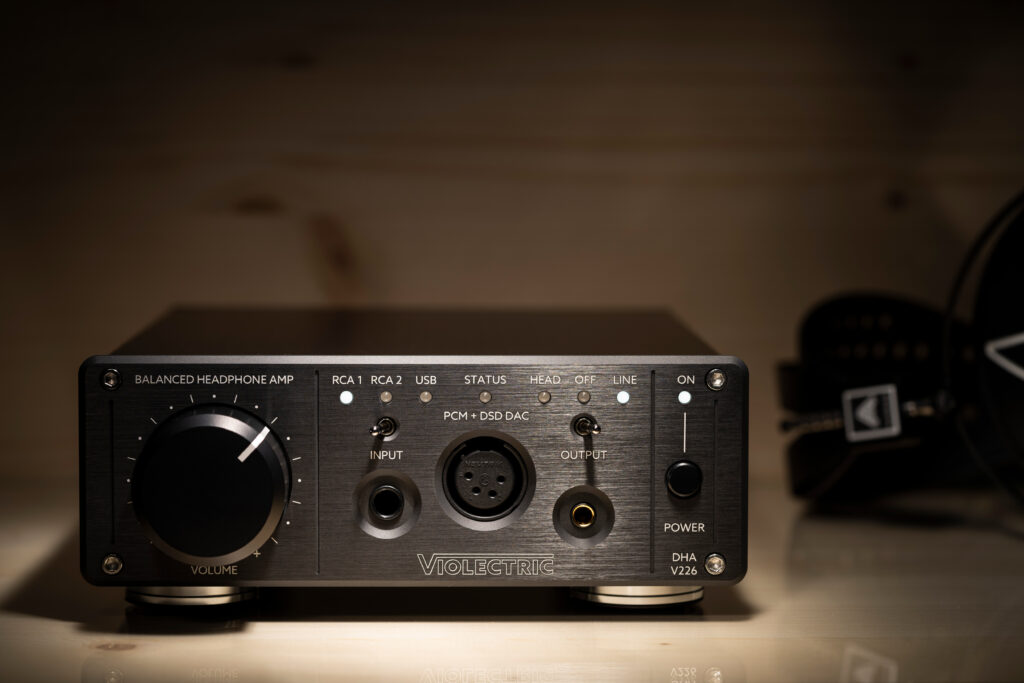
Also on the back panel of the V226 are two pairs of analogue RCA inputs and a single pair of RCA line stage outputs. A push button configures the line stage for operation with or without the integral ALPS RK27 volume control. On the front panel are status LEDs, miniature toggle switches that allow inputs and outputs to be selected, a large rotary volume control, single-ended 6.3mm TRS socket, plus 4-pin XLR and 4.4mm Pentaconn sockets. The latter are both balanced, of course. The Violectric DHA V226 mirrors Reim’s other designs by incorporating protection for headphones and IEMs from DC. They are electrically isolated on start-up and shutdown to prevent possible damage. Output impedance is 0.5 Ohms, input impedance 10 kOhms.

Warmed up

The run-in and warmed-up review sample V226 was connected to a 5th-generation iPad Air using the standard Apple USB cable. A Susvara headphone was connected to the V226’s XLR socket. Qobuz was launched on the iPad, and Zsela Thompson’s first studio album, Big For You (released mid-June this year), was played. 

It’s quite a while since I last heard a Cirrus chip in a DAC. The V226 reminded me how, while they might be less ubiquitous than the common-or-garden ESS equivalent, the Cirrus series sounds very good indeed. To my ears, it is perhaps as resolving yet notably more natural-sounding. The amplification that follows the DAC stage in the V226 is linear to plus or minus half a dB from 5Hz to 250kHz. It features a dynamic range of 131dB and THD+N of 102dB.

Through its XLR and Pentaconn outlets, the V226 delivers 23.2 Volts in a 600 Ohm load and 1.5mW at 16 Ohms. Into 100 Ohms, the output is 3.5mW. The damping factor into 50 Ohms is 200 single-ended and 100 balanced. The above are all respectable rather than exceptional figures. Still, the Violectric DHA V226 could drive the Susvara headphones to such a standard that I could happily adjust to living with the result.

Bass-ics

Having just set aside the Niimbus US 5 PRO, despite its simpler circuitry and much lower cost, the V226 sounds noticeably Niimbus-like. That’s not to suggest it’s in the same league in terms of sonic quality. Rather, it exhibits the recognisable Violectric house sound. This sound combines flowing musical naturalism with clean, tightly controlled muscularity and transparency. 
The keyed-bass stabs that punctuate the track ‘Fire Escape’ on Big For You were rendered by the Violectric DHA V226 driving the Susvara with very satisfying power and texture. Simultaneously, over and around them floated the smoky, breathiness of Zsela’s intriguing voice. She reminds me of a young Joan Armatrading. Her voice was given an appropriate balance of intimacy and prominence. The V226 presents a nicely layered sound stage too. Changing the system configuration and using the V226 as a headphone amplifier revealed its more profound competence.

I removed the Niimbus US 5 PRO from the circuit, replacing it with the V226 and connecting that to the reference Mola Mola Tambaqui DAC using XLR-to-RCA converters. Despite the balanced-to-single-ended hack, not something I would do out of choice, the results were rather sobering, given that I have recently spent my money buying the Niimbus. Yes, the Niimbus gives reassuringly superior results in terms of transparency, dynamic expression and tonal density when fed by the Tambaqui. Still, the little Violectric DHA V2266, when given the same high-quality input, was not quite as far behind as I had imagined it would be. 

Come on!

The Tambaqui is superior by all measures to the Cirrus chip in the Violectric DHA V2266, but come on. What should we reasonably expect given the enormous price difference? The more sensible and balanced way to view this is that as a combined DAC/amplifier combination, the V226 is far from disgracing itself in posher company.

Violectric’s studio-cum-industrial design language may not be to all tastes. However, electronically and functionally, the V226 has an awful lot going for it. There’s more than a whiff of diminishing returns here, as there is with pretty much all of audio. As I re-packed theViolectric DHA V226 for return to the UK distributor, I did so with the conviction. Anyone who buys one is going to have good reason to heartily congratulate themselves for making such a smart conservatively priced choice. 


Technical specifications

  • Type: headphone amplifier/DAC/line stage preamplifier
  • DAC: 32-bit with typical 130 dB dynamic range, -115 dB THD+N
  • Power 3500mW into 100 Ohm, 23V RMS into 600 Ohm
  • Inputs 1 x analogue stereo inputs (unbalanced via RCA), 1 x digital input (USB-C with up to 32-bit and up to 384kHz for PCM signals, DSD 64 256)
  • Outputs: 1 x 4-pin XLR, balanced / 1 x Pentaconn, bal. / 1 x 6.3 mm jack, unbalanced.
  • Line Out: Stereo outputs (unbalanced via RCA)
  • Dimensions: (W x H x D): 17 x 5.5 x 29 cm
  • Weight: 3 kg
  • Price: £1,300, $1,599, €1,599

Manufacturer

Violectric

www.violectric.de

UK distributor

Electromod

www.electromod.co.uk

+(0)1494 956558
Back to Reviews

Focal Aria X No3

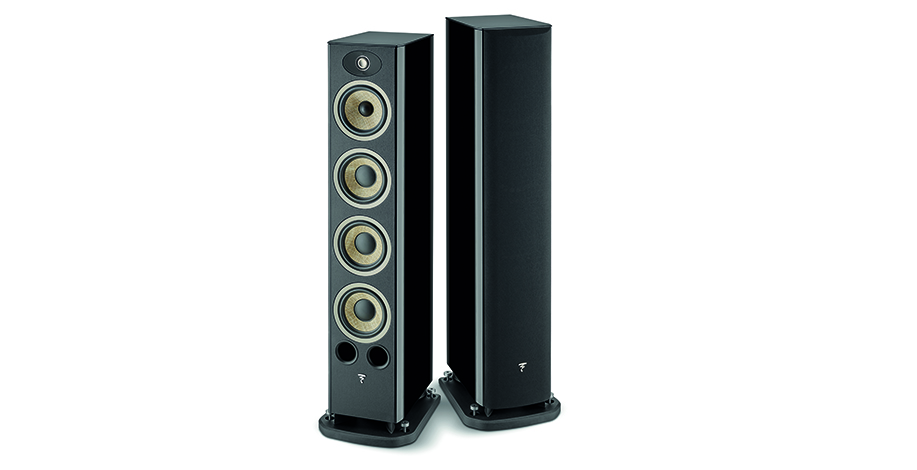
When Focal launched the original Aria range back in 2013, it did something that no previous Focal speaker had previously achieved… for me. Before it, I had admired Focal products, respected them, and even coveted them at points, but I’d never truly loved what they did. The Arias arrived, still doing all I expected Focal speakers to do. However, they did so with a level of out-and-out fun that hadn’t previously been part of the repertoire. Subsequent launches above and below the Arias have maintained this essence of joy. This means any update to its source has always piqued my interest. So, how does the Focal Aria X No3 floorstanding loudspeaker, from its revised Aria line, shape up?

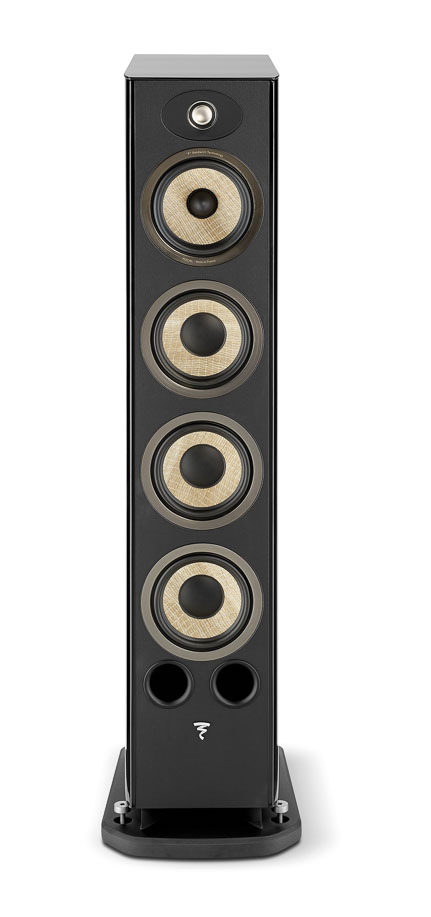
The No3 is the second-highest model in the range, a like-for-like replacement of the outgoing Aria model. A single stand-mount is joined by three floorstanding models, which unusually retain both supporting centre, surround and subwoofer options too. The No3 is exactly the same height as the range-topping Aria X No 4. However, as it uses more significant 203mm bass drivers, it is significantly wider. This means that No3, while comparatively svelte, is a fairly large speaker in its own right. 

Aria developments

The driver complement is recognisably similar to the original Aria models but includes many of the developments that Focal has been working on in the ensuing decade. The tweeter is an aluminium and magnesium alloy unit that employs the M-shaped profile the company has been moving to in its tweeter and headphone drivers over the last few years. It was first used in the Vestia range, which overlaps the lower levels of the Aria X models. The tweeter itself sits in a urethane plate. This acts as a shallow waveguide with a claimed upper-frequency response of 30kHz. 

This is partnered with four 165mm ‘F Sandwich’, a term that Focal proudly emblazons on the driver surround. It’s a name that has consistently baffled those less committed.  These use a layer of flax fibre sandwiched between two layers of glass fibre. Focal claims this results in a combination with ideal acoustic properties. It’s also vastly easier to make than the composite designs used in the Sopra and Utopia models. They are used on the Kanta No1s that have been resident here as test speaker units.

While all four units are the same size, the uppermost unit is set up as a dedicated midrange unit. It features a distinct dust cap and motor assembly to facilitate its operation across a frequency range of 260Hz to 3.1kHz. The three lower drivers are dedicated bass drivers. They extend down to the claimed low-frequency roll-off of 39Hz at the ±3dB measurement point, starting from 260Hz. 

Port smart

One of the most significant changes for the Aria X concerns how these drivers are ported. The lower section of the cabinet contains both a pair of forward-firing ports and a lower-firing port that acts against a plinth that works as a fixed boundary. The plinth is a very smart piece of industrial design, as it ships with the spikes already fitted but placed in a raised position. You can attach the plinth, move the Focal to the desired location, and then deploy the spikes via a supplied tool once the Focal Aria X No3 is where you want it. 


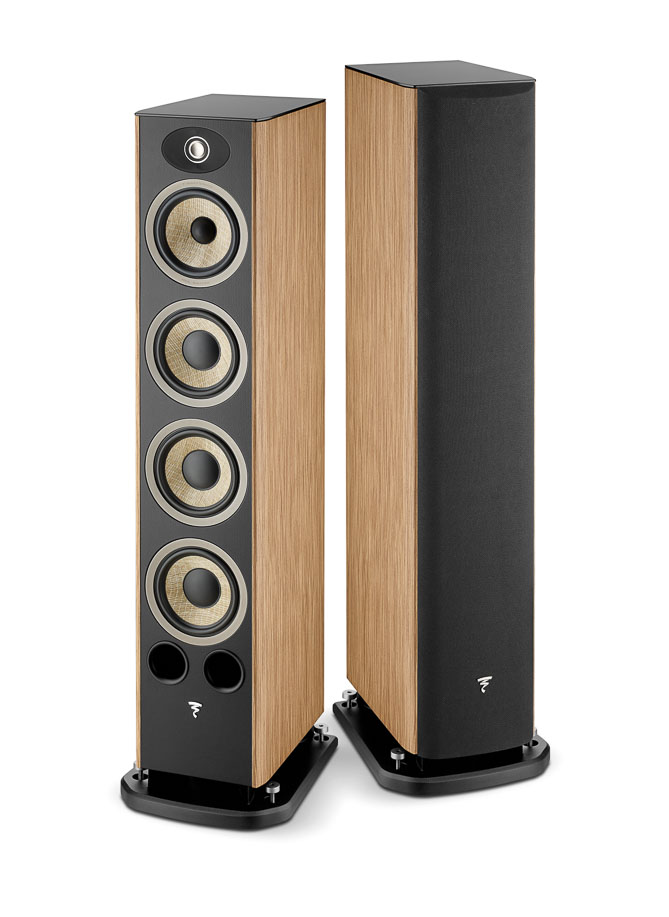
At over a metre tall, the Focal is an imposing speaker and is littered with touches that have you convinced it costs more than it does. The non-parallel sides and separate top plate all feel of a very high standard, and the speaker itself is a good-looking bit of kit.

Fine finish

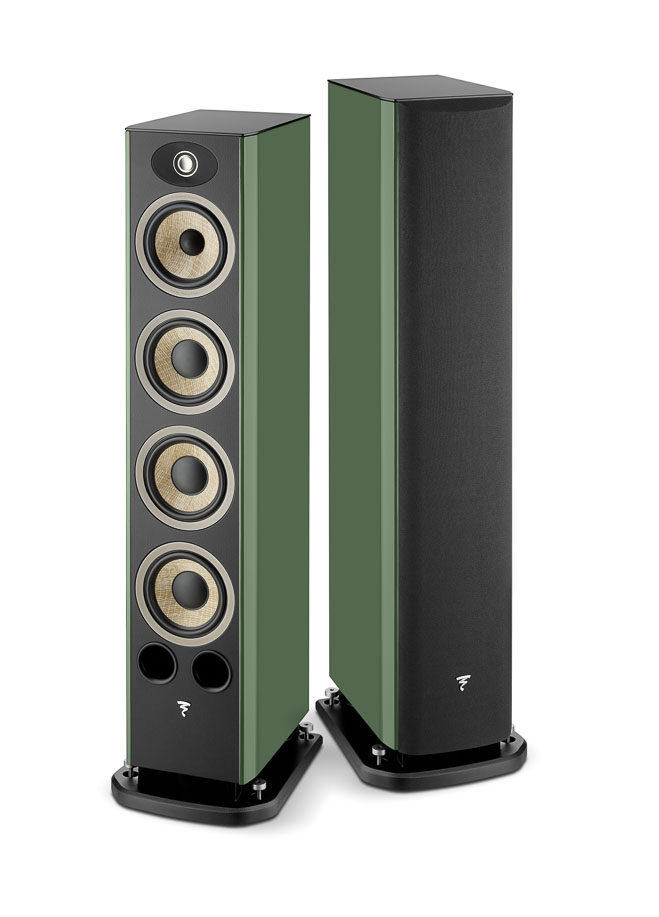
In addition to the expected gloss black and ‘Prime’ walnut options, Focal has also made them available in ‘Moss Green High Gloss’, in which the review samples were supplied. This won’t be a perfect fit for every living space, but it looks genuinely excellent, giving the speaker an identity and working well with the black front baffle and flax drivers. 

The engineering changes that have gone into the Aria X are not night and day different to the original. Still, one fairly profound difference to the old model revealed itself early on. The original Aria might have ushered in some changes in how much fun a Focal speaker could be, but it was very much in keeping with older designs in terms of the effort that went into positioning it. The Focal Aria X No3, by contrast, has been happy in most locations and angles I have tried it in. So long as it is two metres apart and at least two metres from the listening position, I’ve enjoyed consistently good results. The claimed sensitivity of 92dB/w feels a little high. Meanwhile, the minimum impedance dip of 2.8 ohms means that a reasonable amount of power will be needed to get the best from them.

Worth it!

That best is worth working for though. The way the Focal tackles Regina Spektor’s Live in London [Sire] encapsulates everything it does so well. The space of the venue and the energy of the audience is palpable and well worked into the presentation. When the opening On the Radio begins, the piano’s weight and scale, even relative to the venue is readily apparent. Spektor herself sounds utterly convincing; her energy and staccato vocal style are perfectly delivered. 

And above all, it’s fun. This woman loves to perform live in front of an audience psyched to be there, and without losing a single nuance in the recording itself, the Focal radiates this joy into every aspect of the performance. Even better news is this joy is measured and never dominates material that is more considered and reflective. A lovely run through Bill Fay’s Countless Branches [Dead Oceans] doesn’t seek to lift the mood of this gentle and heartfelt body of songs—instead the Focal concentrates on the consistent tonal excellence that has defined their offerings for many years. 

Double-priced comparisons

Indeed, there have been points during my time with the Focal Aria X No3 when I made comparisons to the Bowers & Wilkins 702 S3 Signature that passed through shortly before and wore a price tag double that of the Focal. When you lean on the Focal, it doesn’t have the same composure as the Bowers & Wilkins and neither can it hit quite as hard in the bottom end, but until you are pushing it firmly into the realms of the antisocial, the differences are tiny. 

Other improvements to the Focal have ensured that the gap to more expensive rivals is closer than they might like. This still wouldn’t be my choice of speaker to listen exclusively to victims of the late nineties and early noughties loudness war, and it will always make it clear when a recording is a little on the hard side. The key difference is that it does so with an almost apologetic edge; making you aware of issues in the background rather than highlighting them to the extent of masking any good in the recording. It does this while still being able to respond to high-quality recordings. A considered Sunday morning in front of Talk Talk’s Spirit of Eden [Parlophone] was a chance for the Focal to truly shine at sounding big, believable and utterly unforced in how it goes about making music. 

Aria Evolved

What is interesting for me is that this also meant the Aria lets me still find joy in this minimalist set of songs in exactly the same way as it does with the rather more overtly ballistic 1999 by Cassius [Virgin]. Time signatures are nailed down and the effortless flow of music is captured in a way that makes the reproduction an art and science. So long as your partnering equipment is up to supplying the power and not tripping over itself, the Focal effortlessly builds on the achievements of its ancestors. 

The fact that it does this while not significantly adding to the price of a range of speakers that have already done a very good job of holding their value over their long lives means that the Focal Aria X No3 winds up looking like superb value, too. This is a large, attractive, and superbly made speaker that takes on rivals at considerably higher price points. In short, it continues to mix key Focal attributes with a welcome sense of joie de vivre. 

Technical specifications

  • Type Bass-reflex 3-way floorstanding loudspeaker 
  • Speaker drivers 3 x 6.5” (16.5cm) Flax bass 
  • 6.5” (16.5cm) Flax midrange with TMD® surround 
  • Aluminium/Magnesium ‘M’-shaped inverted dome TAM tweeter 
  • Frequency response (+/-3dB) 39Hz – 30kHz 
  • Response at -6dB 32Hz 
  • Sensitivity 92dB Nominal impedance 8Ω 
  • Minimum impedance 2.8Ω 
  • Recommended amp power 40 – 300W 
  • Crossover frequency 260Hz/3,100Hz 
  • Dimensions (HxLxD) 451/4×115/8×145/8” (115×29.4×37.1cm) 
  • Weight 63.93lbs (29kg)
  • Price; £3,499, $5,198, €4,000 per pair

Manufacturer

Focal

www.focal.com

More from Focal

Back to Reviews

Fyne Audio Vintage 5

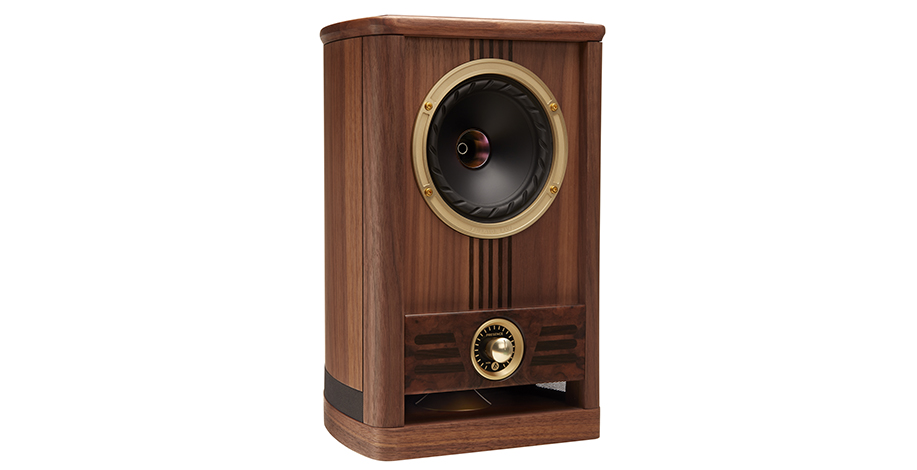
Very few loudspeaker manufacturers appear fully-formed as if from nowhere. But the Fyne Audio Vintage 5 comes from different stock. ‘Fully-formed’ was how it felt in 2017 when Fyne Audio exploded onto the scene. Before we could get our bearings, it had brought out several complete ranges. Fyne offered a range of solutions, from budget to high-performance, from the outset. Before we’d recovered from that, it brought out several more. It then revised and updated the ranges, introducing enhanced variants with upgraded drive units. Fyne has certainly been busy, but when your core team comprises several of the key personnel from the old Tannoy company, you’re probably better equipped to hit the ground running than most fledgeling speaker companies.

Most of those earlier ranges were designed to a modern aesthetic style. That is, with slightly curvaceous cabinets and high gloss finishes. They fit well in a contemporary room. However, you know these guys had a hankering to revisit the classic, old-school designs their erstwhile employer was known for. And more recently, Fyne has done just that. The company has two new ranges. There’s the Vintage Classics in simpler, rectangular, pro-audio-inspired cabinets. Then there is the Vintage range, featuring more finely worked, boat-backed, and elegantly veneered cabinets. Their sophistication is more than skin deep. The Vintage series is mostly substantial floorstanding designs. They sport 10”, 12” or 15” versions of Fyne’s top-spec IsoFlare coaxial driver, as also seen in their F-series. However, there’s also the baby of the range, the Vintage 5. As its name suggests, sports a 5” version of the drive unit, in a cute-as-a-button compact bookshelf design. 

Mini Monitor

The Vintage 5 is similarly sized to the classic BBC LS3/5a mini monitors. That means a cabinet volume of around five litres. The Fyne Audio Vintage 5 will never provide the room-filling output of its larger siblings. Nor does it have the sort of scale and weight they can deliver. But it does sound bigger and bolder than those diminutive proportions might suggest. So, don’t dismiss it out of hand if, like me, the BBC models don’t deliver the goods for you.

This is likely to be the Vintage 5’s biggest problem, though. At around £3,750 a pair, it’s pricey for a dinky stand-mount speaker. Especially when the BBC clones (themselves usually at the ‘luxury’ end of the small speaker market) are coming in at under £3k. They, too, are competing on price with larger models elsewhere, which may produce a room-filling sound effect a bit better. Therefore, many prospective purchasers may take one look at the size and one look at the price and dismiss it outright. That could be a mistake…

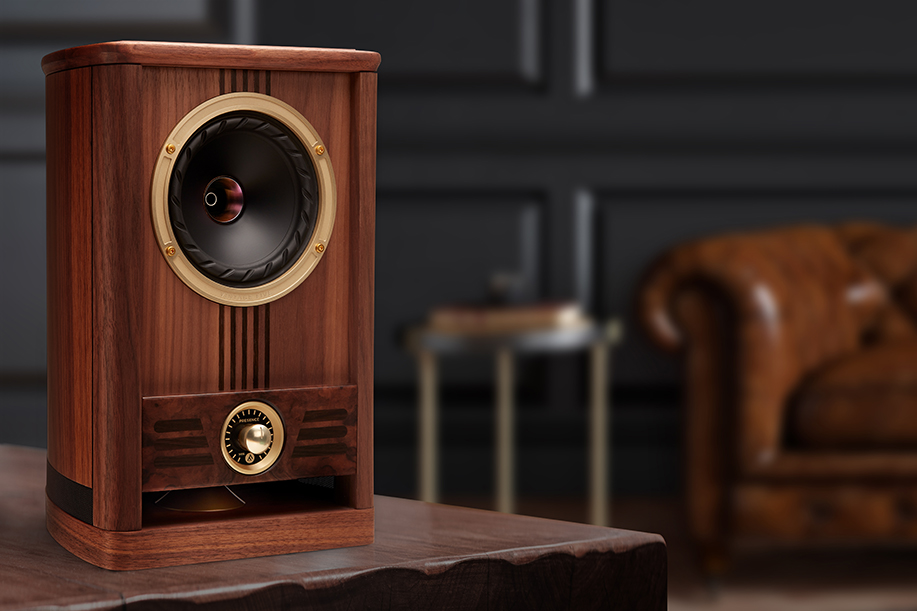
Vintage Five Lifestyle

If you close your eyes, it’s not difficult to imagine this is a bigger loudspeaker – it feels less constrained by its dimensions than most rivals, less reserved and more willing to step up and boogie. Once you get beyond the bottom octave in the bass, there’s little to remind you that these are tiny enclosures. The fundamental notes are still there, just not quite as fully fleshed out as a bigger driver can manage. But even here, there’s a winning side to this trade-off. The Vintage 5s exhibit an extraordinary level of focus. Larger, multi-driver assemblies struggle to achieve a degree of coherence comparable to this.

Driver configuration

With the coaxial driver configuration, the compression tweeter is so close-coupled to the mid/bass cone that it is literally and sonically closer to the ideal of a point source. The small size emphasises the nature of that relationship all the more. Stand-mount loudspeakers are often said to ‘disappear’ sonically much more readily than larger, floorstanding designs. That’s especially true of the Vintage 5.

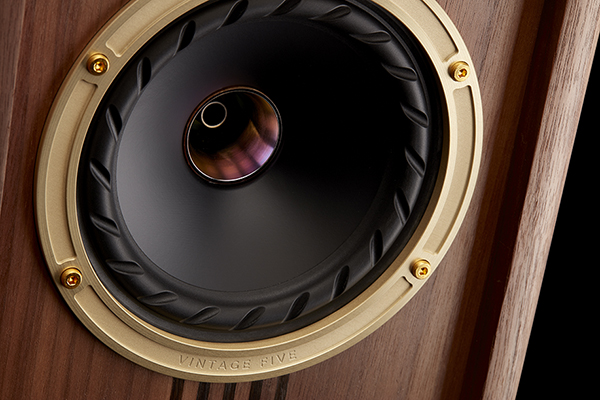
Vintage Five Driver Detail

The drive unit is the 5” variant of the top-spec IsoFlare coaxial driver. It features the super-light magnesium compression tweeter, multifibre paper cone, and Fyne’s proprietary fluted driver surround. This last is said to reduce coloration from edge reflections. Fyne Audio produces lesser versions of this driver, though they all share similar technology and cone profiles. However, the Vintage series shares the most sophisticated drivers with the F1 series. As with all the models, it’s a reflex ported design. The enclosure itself isn’t the full height of the cabinet. Instead, it extends down to a few centimetres above the baseplate, and the port exits from the middle of the bottom of this box. It is directed by a tractrix-profile (a curved cone) diffuser to vent radially in all directions through apertures in the front, sides and rear at the foot of the cabinet. 

Cabinet of delights

The cabinet construction is also a particular delight. Beautifully finished in exquisitely jointed, wax-finished Walnut veneer (Fyne provides a small tin for refreshing this), there’s a craftsmanship to these cabinets that you rarely see at this price. These are not inexpensive loudspeakers, especially considering their diminutive size. To add a little context, the next smallest model, the floorstanding Vintage 10, is £18,000, and the largest, the Vintage 15, is £30,000. There can be little doubt that the cabinetry contributes somewhat to the cost. However, it also quickly becomes clear that the Vintage 5s are not some cynical marketing gimmick designed to sell off the halo effect of their bigger siblings. There’s a genuine level of serious performance available here, which earns them their place in this illustrious lineup.

The Fyne Audio Vintage 5s may need a little more room around them to breathe than those sealed box BBC designs. However, this wasn’t limiting in my room because I’m not siting them on a shelf, or a wall. Fyne do sell suitable 60cm stands, whereas I used the Vintage 5s on my own 60cm MusicWorks acrylic speaker stands. These might not be a good aesthetic match, but they do perform well. Because the diffuser allows the port to vent omnidirectionally, the proximity of the port exit to reflecting surfaces isn’t quite as much of an issue as it can be in some instances. Siting these a little nearer to the wall than I usually do did help add a little more body to the bass output.

Bottom-end mass

Solo piano isn’t a bad test of whether you’re going to miss the bottom end mass. So, Alfred Brendel playing the Arietta from Beethoven’s last piano sonata, Op.111 [Philips], and the first thing you notice is the way he measures out every note; there’s a considered, thoughtful quality to the playing here. It brings a cohesiveness to the, somewhat disparate, theme and variations form that some speakers have failed to portray.

There’s sufficient weight to the lower registers. However, the articulation and the placement of the notes are so exquisitely delivered that it wouldn’t matter if the bass were a little shy because the music is rendered so intelligible. Similarly, Graham Fitkin’s ‘The Cone Gatherers’ from Flak [Fitkin] might not put a concert grand piano in your living room. Still, it delivers a very convincing ‘salon’ acoustic that anchors the listener firmly in the performance space, even if not adjacent to the instrument. 

After Kim

Coming directly after listening to my own FinkTeam Kims, with their 200mm two-way design, the period of readjustment was remarkably and surprisingly brief. Once I’d got the speaker placement settled, the coherence and the levels of musical communication on offer from these diminutive boxes quickly dispelled any misgivings about their ability to scale. It was easy just to get on with enjoying the music.

Take ‘Miel et Ciendres’ from Dhafer Youssef’s album Divine Shadows [Jazzwise], the speakers’ articulation and focus are such that you really feel the way he plays the Oud, the small embellishments, the speed and delicacy of his fingerwork that propels the track; the string quartet accompanying the piece has form and structure, the percussion tight and solid. ‘Wind and Shadows’ from the same album, the polyrhythms are very well articulated, and thus make more sense working with what the Oud is doing. The insistent rhythm is captivating; almost, but never quite tripping over its feet, it adds an exciting and propulsive dimension to this track. This is a performance as good as any I’ve heard, and largely down to that extraordinary level of coherence achieved by this small, coaxial drive unit.

Personal performance

Last year I was fortunate to go to a live performance of the set featured on Esperanza Spalding and Fred Hersch Alive at the Village Vanguard [Palmetto]. Sadly, not at the Village Vanguard, but all the better for seeing these two extraordinary performers together. Spalding’s chatty, conversational style of delivery, married to Hersch’s freewheeling, idiosyncratic piano makes for a very personal performance, where you, the audience, are very much drawn into the proceedings. The speakers’ ability to disappear brought out the intimacy of this gig. It captured and recreated the atmosphere, allowing me to recall my response to the performance that evening vividly. This, surely, is what hi-fi is meant to do.

If you’re still bothered about the Fyne Audio Vintage 5’s ability to do scale and mass, put on Christopher Seitzen, Incantations [Sony Music]. ‘Indoafrica’ from Avner Dorman’s concerto ‘Frozen in Time’ sounds full, vivid and fleshed out, Seitzen’s percussion convincingly set off by the Romanian National Symphony Orchestra. The opening percussive crash explodes from the Vintage 5s in a way that makes wanting any more seem churlish and insensitive. Their sheer articulation, speed and cohesiveness bring a sense of real energy and dynamism to Seitzen’s marimba playing. This, coupled with an orchestra clearly positioned behind, allows for a more appreciable dialogue between percussion and ensemble.

Presence

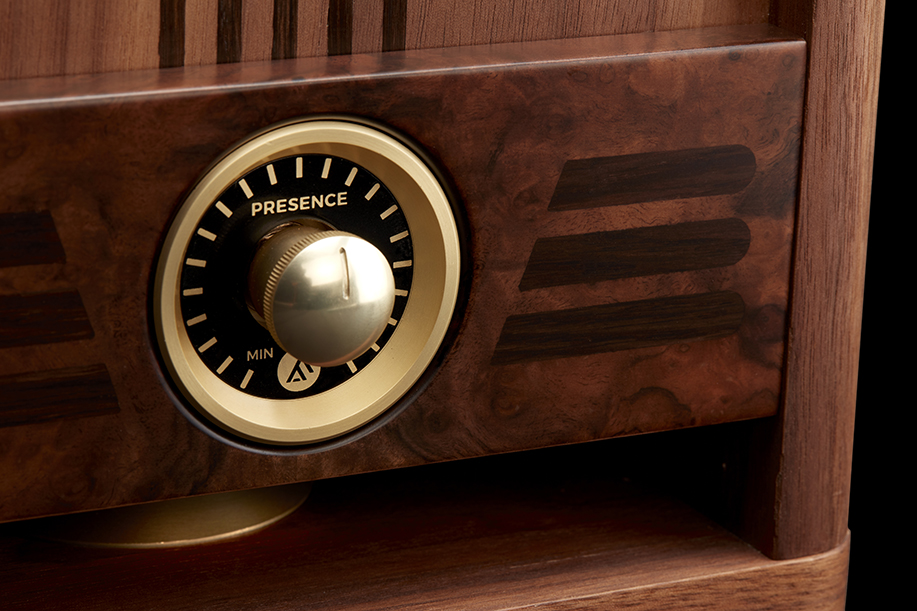
Another interesting feature of the Vintage series is the ‘presence’ control. The crossover is user adjustable via a dial on the front panel, allowing the listener to tweak the energy levels in and around the presence region. It’s subtle, like so many aspects of this loudspeaker. This further enhances the flexibility by allowing for a degree of adjustment for different rooms or listener preferences. It’s more restrained than many a tone control: turned fully down, Simon Phillips’ drums on ‘Spark’ from Hiromi’s album Spark [Telarc] have more ‘body’; turned fully up, they have more ‘skin’ for example, but there’s no gross shift in overall tonality of the music.

Vintage Five Presence Switch

What the Fyne Audio Vintage 5 does deliver on this track is more insight into the way Hiromi’s percussive style marries so well with Phillips’ percussion technique. It’s clear each is very sensitive to the playing of the other at every point. The presence control does give a little more flexibility while you’re playing with placement to get the best balance of bass weight and articulation, or if your room is a little unhelpful sonically, but for the most part, I left it set to the 12 o’clock ‘neutral’ position. 

Supertrax

Not long after the Vintage 5s arrived, Fyne Audio announced the Supertrax supertweeter (these guys are incorrigible, and I’m starting to wonder if they ever sleep). I won’t steal anybody’s thunder, but if anybody out there is wondering whether there’s any sense in adding a £3k supertweeter to a £3.75k loudspeaker, the answer might surprise you. Or, if you’ve digested my thoughts above, it might not. Revisiting the Seitzen album, Incantations, the marimba gains structure and tonal depth, the orchestra occupies a clearer, better delineated and more three-dimensional space. For some reason, Fyne Audio hasn’t released a Vintage 8. This could use the 8” driver from the F1.8. Come on, guys, what have you been doing all this time? But in its absence, I have an odd feeling a Vintage 5 plus Supertrax could step up to the plate. 

The Fyne Audio Vintage 5 doesn’t so much occupy a niche, as create a niche. It delivers a performance which is so far outside what I expect from even the best miniature loudspeakers that it confounds expectations. There’s a level of coherence and cohesiveness here that makes even the best integrated 2-driver designs feel slightly disconnected. Look elsewhere if you have a big space to fill and an extensive Mahler collection. However, in a smallish suburban room like my British Standard suburban semi-detached offers, who could ask for anything more? I got rhythm? Yes indeed. 

Technical specifications

  • Type: Two-way bookshelf/standmounting loudspeaker, reflex ported, downwards-firing port with Tractrix diffuser.
  • Driver complement: 1 x 125mm IsoFlare point source driver, multi-fibre bass / midrange cone, FyneFlute surround with 19mm magnesium dome compression tweeter, neodymium magnet system
  • Crossover frequency: 1.9kHz
  • Crossover type: Single wired passive low loss, 2nd order low pass, 1st order high pass. Deep Cryogenically Treated
  • Power handling: 50W (RMS, continuous), 200W (peak)
  • Frequency response: (-6dB in room, typical) 46Hz-38kHz
  • Impedance: Nominal 8Ω
  • Sensitivity: 87dB @ 2.83V / 1 metre
  • Dimensions (HxWxD): cabinet: 350 x 219 x 260mm 
  • Weight: 6.2Kg each
  • Finishes: Walnut
  • Price: £3,750, $4,999, €4,500 per pair

Manufacturer

Fyne Audio Limited 

www.fyneaudio.com

+44 (0)141 428 4008

More from Fyne Audio

Back to Reviews

Magico S5 (2024 edition)

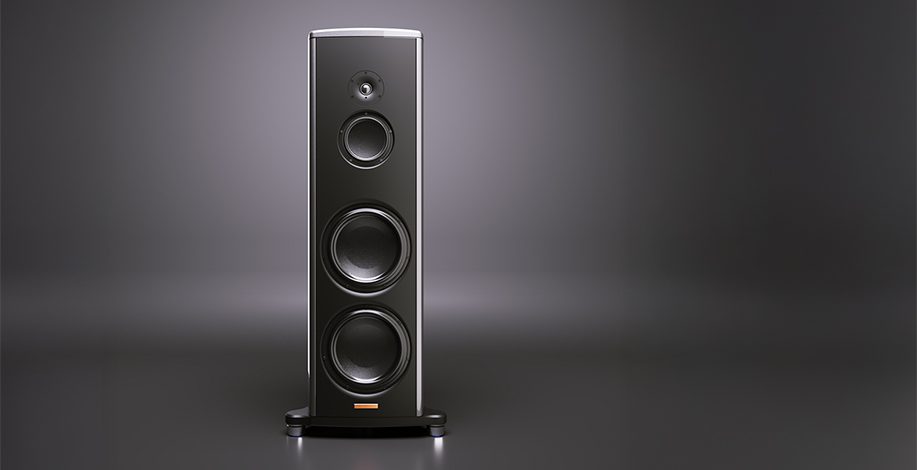
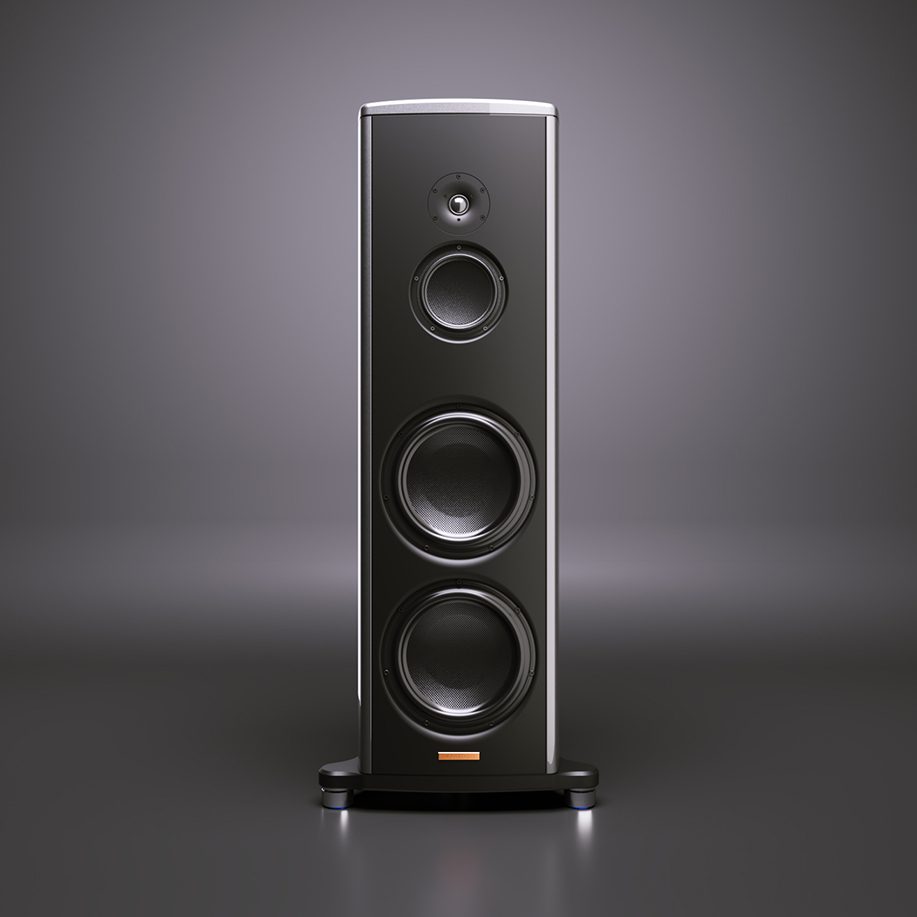
Magico is updating its S-series of loudspeakers, including the Magico S5, which was first introduced in late 2024. The new Magico S5 (2024 edition) is not merely a ‘Mk III’ upgrade of an existing product. There is no badge engineering that disguises minor changes to a popular item. In fact, one of the only parts shared between the S5 and its predecessors is the badge. These are fundamental alterations to some of high-end audio’s most prized loudspeakers. The new S5 is so remarkable that Jimmy Hughes felt compelled to share his thoughts based solely on tracks played at the press conference. I’ve included his comments as a second opinion below.

Magico launched the original S5 in 2014. This was one of Magico’s first products to feature a beryllium-domed tweeter. It was also one of the first to feature Nano-Tec (carbon fibre nanotube) cone technology in its midrange driver. Its successor—the S5 Mk II—arrived about three years later. That model was heavily influenced by the company’s 10th anniversary ‘thank you!’ M Project statement loudspeaker. In 2024, to celebrate 20 years in the speaker-making business, the S5 was reimagined from the ground up. 

Arrivederci, sourdough

While everyone else was making sourdough bread and struggling to learn a foreign language, the 2020 lockdowns represented a period of significant investment at Magico’s San Francisco base. The company renovated its testing and listening facility. That infrastructure improvement informs this new generation of Magico. For example, its new Polytec Laser Vibrometer enables precise measurement of minute vibrations. This measures the cabinet panels and the sound levels they produce. 

Similarly, the company’s new Klippel Near-Field Scanner robot allows for multiple acoustic measurements of the 3D sphere surrounding the S5. This provides a comprehensive view of the speaker’s on- and off-axis response. Together, they aid in creating a loudspeaker enclosure that minimises vibration and achieves a near-ideal acoustic response for a multi-way loudspeaker. 

You begin to understand why the Magico S5 (2024 edition) isn’t merely a ‘MkIII’ version when you compare enclosures. These new measurement tools, combined with 3D simulation, have led to a loudspeaker with a 31% increase in internal volume. It produces a sound that reaches a realistic 20Hz in-room (5Hz lower than its predecessor) while maintaining the same sensitivity rating. 

Even a cursory glance at the front baffle reveals that Magico isn’t messing around here. The new curve of the front baffle and the resulting change in cabinet shape visually softens the cabinet’s overall appearance. It also enhances stiffness and aids damping.

Drive time

The new S-series benefits from the latest (version eight) Nano-Tec drivers for the 15.24cm midrange and two 25.4cm bass cones. These drivers feature an aluminium honeycomb core sandwiched between graphene-reinforced carbon-fibre skins. This core structure—achievable only with recently developed manufacturing techniques—enables lower thickness, lighter weight, and more effective damping. 

This is complemented by a new driver chassis, resulting from three years of meticulous research and development. Magico claims that this third-generation chassis structure enhances force distribution (no sniggering at the back, Skywalker!), permits better suspension designs, and features a dual-post configuration that balances dynamic tensile wire forces. It is also said to combine stiffness and damping while allowing minimal acoustic contribution by reducing modes and maximising airflow. 

Magico S5 (2024 edition)

Both mid and bass units feature oversized titanium voice coils (76mm for the midrange and an impressive 130mm for the woofers), equipped with a copper cap. The long-throw voice coil in the bass units offers an impressive 1.27cm of linear movement. 

Developed for the M-Series, the 28mm diamond-coated beryllium tweeter uses a neodymium-based motor system. This design provides greater power handling compared to other models in the S-Series. Careful FEA modelling enabled Magico to enhance the mechanical and acoustical performance of the tweeter’s back chamber; however, due to the meticulous nature of the design, every aspect receives the ‘careful’ treatment.

That careful approach extends to the crossover. The S5’s three-way Elliptical Symmetry Crossover (ESXO) is a 24 dB per octave Linkwitz-Riley filter featuring the highest of high-grade components, such as Mundorf MResist Ultra resistors and MCoil Foil inductors. 

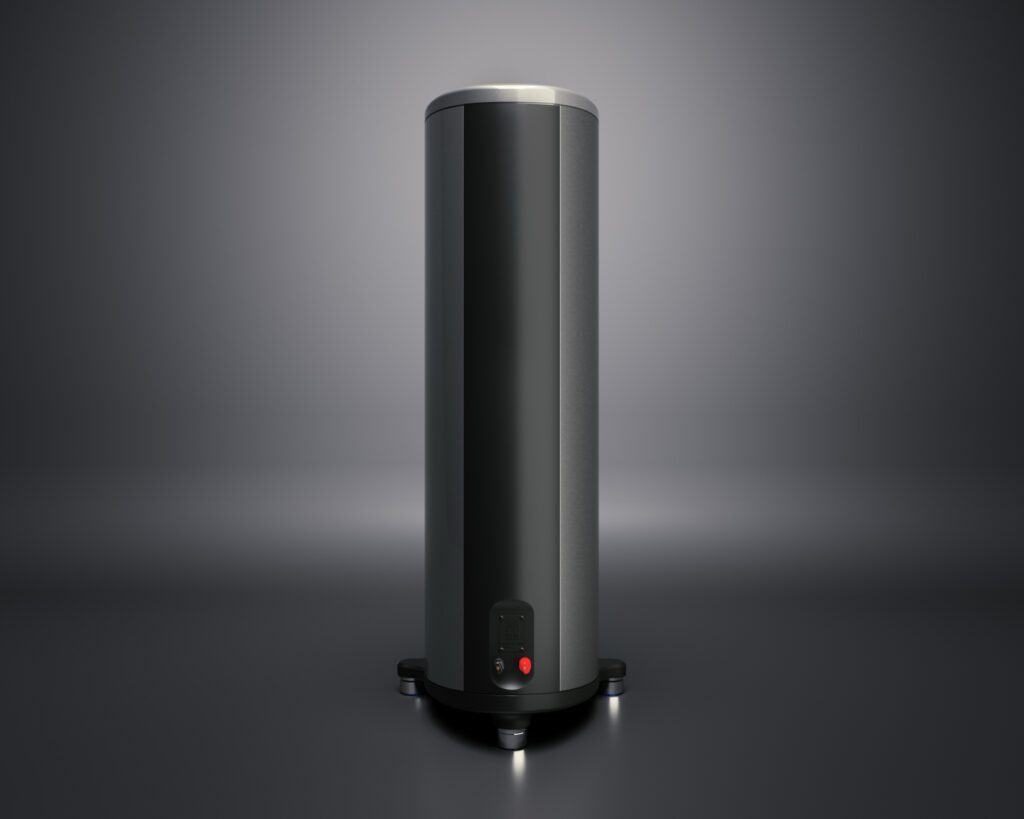
The loudspeaker is mounted on a new three-foot support system featuring constrained-layer damping and high-quality materials. While the front baffle is consistently black, the sides and top plate come in six smooth-feeling Softec finishes and six high-gloss options. 

Two schools

There are two schools of thought in high-end loudspeaker design: ‘musicality’ and ‘accuracy.’ While there is significant middle ground (most are somewhere on a continuum between these two poles), Magico has traditionally favoured the ‘accuracy’ side. This aligns well with those seeking precision in their musical playback. However, the Magico S5 (2024 edition) bridges the gap between accuracy and musical enjoyment better than most. The reason for this is that it doesn’t sacrifice Magico’s signature accuracy for the sake of enjoyment, or vice versa. This makes it an exceptionally easy loudspeaker to listen to.

And then there’s the bass. The bass is deeper and better defined than its S5 predecessors, providing a more organic sense of slam and purpose. Sealed box bass is generally tighter and more accurate than its ported counterparts, though this often comes at the expense of depth and ‘meatiness’. However, the S5 again delivers a ‘best of both worlds’ bass performance.

The S5 and its predecessors are all about the detail. However, where the new model differs from its older brothers is that does not preclude a sense of musical scale and, especially, flow. There’s a real sense of musical dimension (not just soundstage, but the ability to convey music within that soundstage).

Detail and Flow

This combination of detail and flow allows a listener to pick out an individual singer within a choir while simultaneously taking in the whole musical work [Lux Aurumque, Meditatio: Music for Mixed Choir, Rakel Edda Guõmundsdóttir, Schola Cantorum Reykjavicensis, Hörõur Áskelsson, BIS]. It’s an uncanny ability, and one that is only possible with a loudspeaker as intrinsically neutral and accurate as the S5.

With a quality loudspeaker, you want to play all those discs you know to judge its performance. With an exceptional loudspeaker, you can set that aside and simply enjoy the music you love. The Magico S5 (2024 edition) is an exceptional loudspeaker, allowing me to transition quickly to the recordings I wanted to play instead of those I needed for testing. So, it’s less about ‘cataloguing differences in performance’ and more about Cat Power or Cat Stevens. A significant part of that is that it excelled in every test I could devise.

The deliberate absence of character that Magico aims for in all its loudspeakers is still not fully realised. This is an inherently neutral transducer – one of the most neutral available – and it isn’t designed to push your fun buttons. That isn’t damning with faint praise; Magico enthusiasts choose their speakers precisely for that ‘just the facts’ approach. However, the S5 also possesses more ‘magic’ than most Magicos; not hocus-pocus or undue warmth, brightness, or alterations to the frequency response; the S5’s structure stays out of the way and allows you to focus on the music. However, those seeking a lush, rose-tinted approach to music should keep looking. This is not for you!

Nowhere to hide

Yes, the S5 leaves no place for a recording to hide. If an engineer uses poor microphone technique, a singer moves their head excessively, or the producer applies too much reverb, the S5 reveals everything. Even well-known audio classics like Peter Gabriel’s So album [Charisma] unveil details usually lost inside the cabinet. This makes the lyrics of ‘Don’t Give Up’ an emotionally powerful experience, reminiscent of the first time you heard it nearly 40 years ago. However, that doesn’t mean you should cherry-pick through your music collection; old Motown and Northern Soul tracks provide just as much information and – despite sometimes being recorded cheaply and harshly– aren’t ruined by the loudspeaker.

On the surface, not much has changed with the original Magico S5. It remains a three-way, four-driver sealed floorstander. While it is wider, deeper, and heavier, it retains the same height, has the same number of drivers, and looks similar from a distance. The original Magico S5 is still an exceptional loudspeaker, albeit one from ten years ago. So much has evolved, and the Magico S5 2024 edition illustrates just how far we’ve progressed. 

Second Opinion: Jimmy Hughes

Thursday, January 30, 2025 – an unmissable invitation to visit KJ West One in London to discover Magico’s latest S5 floorstanding loudspeaker. Magico’s founder and CEO, Alon Wolf, flew in from the USA to lead the presentation and discuss the changes and upgrades made in creating this new loudspeaker. He emphasised his philosophy of making the S5 a high-quality, no-compromise design built to a standard rather than a price point. Wolf believed that compromising performance – by lowering build quality or using inferior components to reduce costs – was not morally justifiable. 

But, what might a speaker of this calibre actually sound like?

Effortlessly dynamic

Powered by D’Agostino electronics, the Magico S5 (2024 edition) sounded beautifully clean and precise. While listening, I measured peak levels typically around 65dB, with a few tracks reaching 73dB. Across all types of material, the musical presentation was relaxed yet focused, incisive, and effortlessly dynamic.

The sound quality was exceptional. The first track we heard – ‘The Sound of Silence’ by Nouela –featured a solo female voice accompanied by soft piano. The voice floated from the speakers and lingered in the air –both disembodied yet vivid and highly present. The voice had an abundance of breathy presence but wasn’t harsh or thin. Although highly detailed and extremely revealing of subtle tonal and dynamic nuances, the S5 seems largely free of colorations that might emphasise shortcomings in the source material.

Exceptionally clean and well-behaved, the S5 neither booms nor resonates. It also does not sound harsh or edgy due to limitations in the loudspeaker driver units. It’s truly an open window to the music, neither adding nor subtracting from the signals it receives.

Playing Saint-Saens’ violin showpiece, the Introduction and Rondo Capriccioso with Ida Haendel, her 1696 Stradivari violin sounded crisp, immediate, and tactile without seeming edgy. Via the S5, the instrument projected powerfully and effortlessly into the room.

Sub-seeking

‘Where’s the sub?’ was everyone’s surprised reaction while listening to In the Dark by Max Richter. Magico claims its S5 goes down to 20Hz, producing acres of deep, firm, decisive, exceptionally clean bass. Interestingly, we were unaware of the Magico S5’s prodigious bass capability during any of the previous tracks played. The speakers had simply seemed fast, nimble and lean. But when real bass emerged, boy, was it there.

However, when ‘4 Marzo 1943’ by Lucio Dalla started, it seemed as if the volume had been set a notch too low. Then, unexpectedly, Dalla’s raw, throaty voice entered – commandingly loud and full of presence and immediacy. Such extreme dynamic contrasts were remarkable- shocking, even…

We heard many other tracks too, but by now it was abundantly clear that the Magico S5s met the demands of just about every genre of music and recording. At the same time, one’s focus remained on the music itself, rather than its reproduction.

Sure, we listened to the S5s, evaluating their technical performance. However, each time a new track played (especially one I was unfamiliar with), I found myself instantly captivated by the music and its performance. There is no greater praise…

So, is it all worth it? Musically, the results speak for themselves. Costly? Without a doubt. However, the S5 is less expensive than some rival designs. It’s a beautifully crafted item that should offer a lifetime of listening pleasure.  


Technical specifications

  • Type: Three-way, four driver, sealed box dynamic loudspeaker
  • Driver Complement: 1 x 28mm diamond-coated beryllium dome tweeter, 1 x 15.24cm Graphene Nano-Tec Gen 8 midrange cone, 2 x 25.4cm Graphene Nano-Tec Gen 8 bass cones
  • Sensitivity: 88dB
  • Impedance: 4 ohms
  • Frequency response: 20Hz-50kHz (in-room) 
  • Recommended Power: 50-1,000 Watts
  • Finish: Piano Black, Titanium Grey, Pearl White, Racer Blue, Corsa Red, Octane Orange (Magico Gloss finishes). Midnight Black, Graphite Grey, Silver Ash, Cobalt Blue, Sienna Bronze, Aubergine (Softec finish)
  • Dimensions (HxDxW): 122cm x 49cm x 48.5cm
  • Weight: 118 kg
  • Price: From £90,000

Manufacturer

Magico LLC

www.magicoaudio.com

UK distributor

Absolute Sounds

www.absolutesounds.com

+44(0)208 971 3909

More from Magico

Back to Reviews

The new AE320² completes the new 300 Series

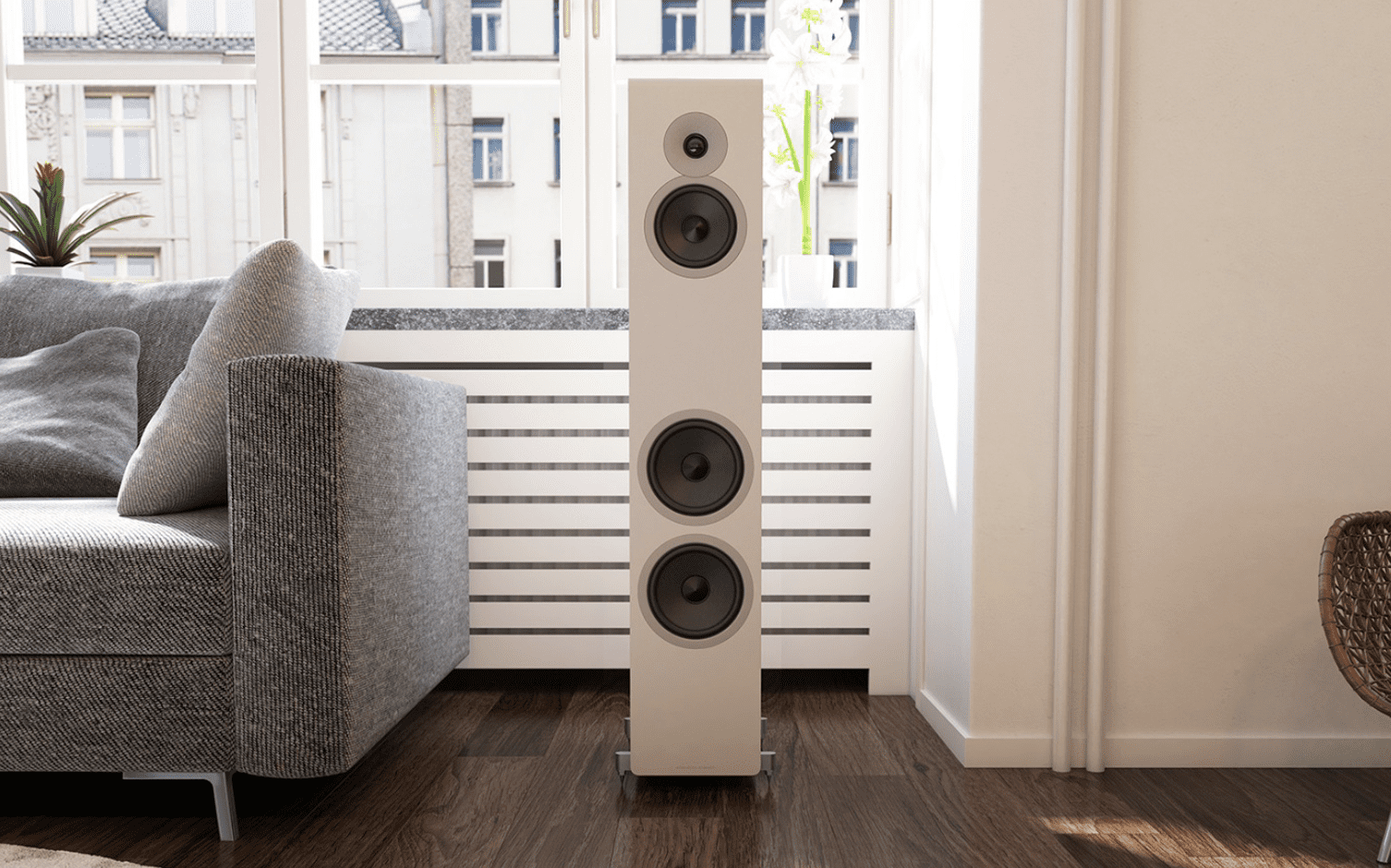
10 June 2025: Acoustic Energy is proud to announce the arrival of the AE320 floor standing loudspeaker completing the recently launched, reimagined 300 Series line up.  With a larger form-factor based on the Corinium driver array, the new AE320² sets new standards for performance, design, and value in the mid-range loudspeaker market. 

Suitable for medium to large sized rooms the AE320² features new cabinet design and drivers with considerably improved performance in all areas.

The AE320²’s all-new mid-woofer is crafted from a unique blend of paper and coconut husk, delivering a smooth, natural tonal balance with the dynamic punch of Acoustic Energy’s traditional aluminium cones. This is paired with a newly developed soft-dome tweeter, derived directly from the Corinium, offering open, delicate, and natural high frequencies.

For the first time at this price point, the AE320² incorporates Resonance Suppression Composite (RSC™) cabinet technology—originally developed for Acoustic Energy’s Reference Series – dramatically reducing cabinet coloration and allowing the drivers to perform with exceptional clarity and precision.

The AE320² also debuts a sleek new aesthetic, featuring a durable ‘silk-touch’ matte finish available in walnut, black, or white, with colour-matched trims and premium grille fabrics. Solid aluminium feet provide both stability and a refined visual touch.

Mat Spandl, Managing Director of Acoustic Energy, commented “The development of the new 300 Series has been a journey of innovation and discovery. By leveraging the insights from our Corinium project, we have been able to push the boundaries of what is possible in loudspeaker design at this price point. Our goal was to create a speaker that not only delivers exceptional sound quality but also integrates seamlessly into modern living spaces. We believe the new AE320² achieves this and more.”

The AE320² are available from late June from authorised retailers.

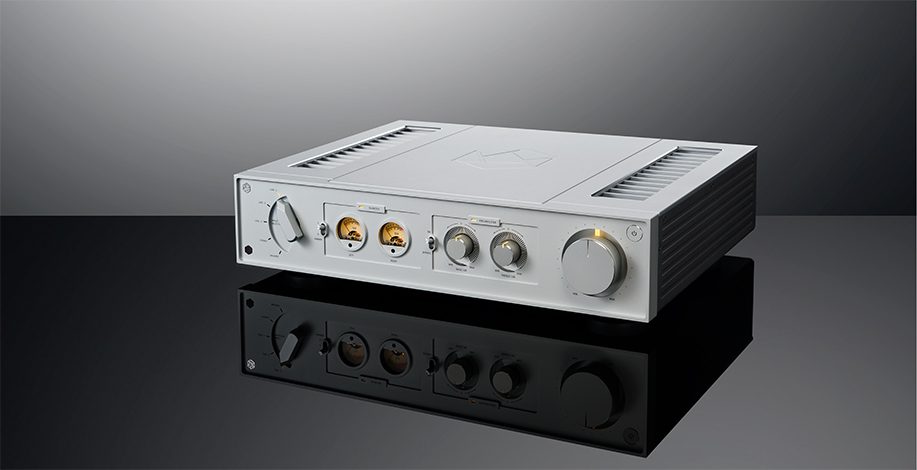
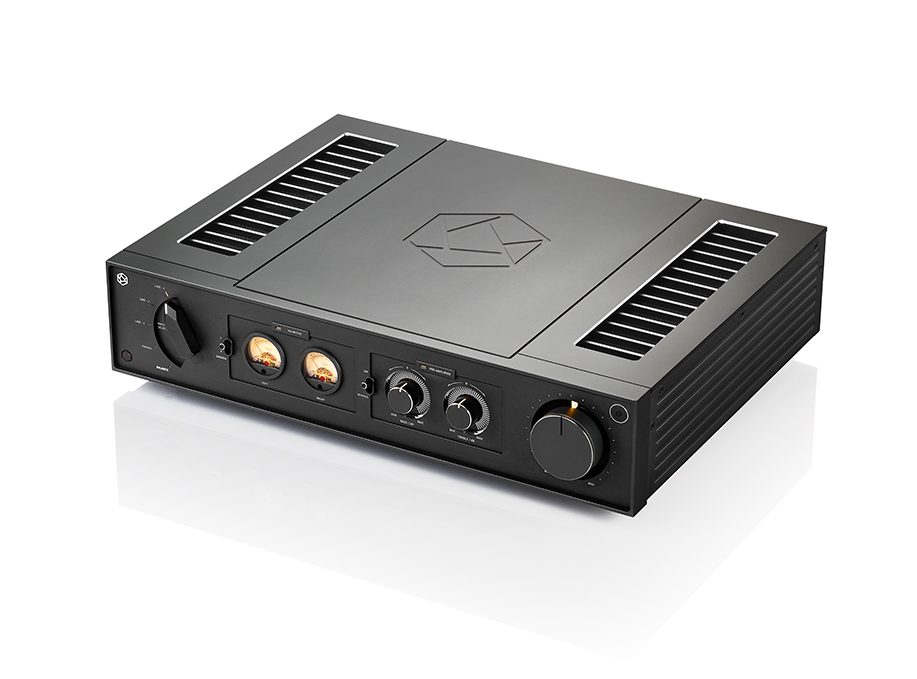
HiFi Rose RA280

On occasion, audio companies can positively delight in subverting expectations, and the device you see here is a magnificent example of the practice. Suppose you were to consider the range of HiFi Rose streamers, most recently the RS130 streaming transport that featured in issue 230. In that case, you might assume that any matching amplifier would feature extensive connectivity and be firmly into the ‘smart’ category of amp we’ve seen in increasing numbers over the last decade. 

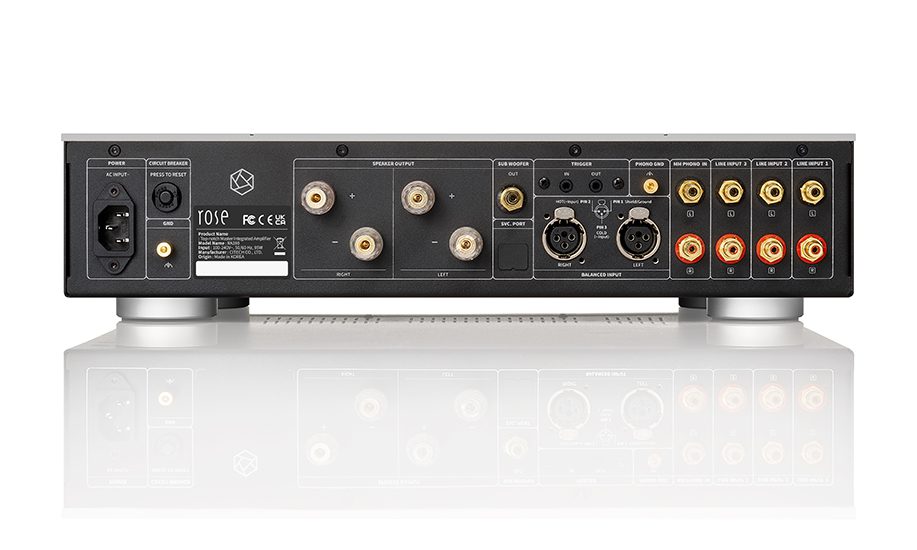
One look at the RA280 should have you questioning such assumptions, and a more involved glance at the back panel will be enough to let you know you would be very far off the mark. Regarding operation and connectivity, the RA280 is undoubtedly a very ‘trad’ piece of kit—almost the complete opposite of the streamers. However, HiFi Rose has channelled their willingness to do things a little differently into the actual amplifier section itself. 

No shortage of power

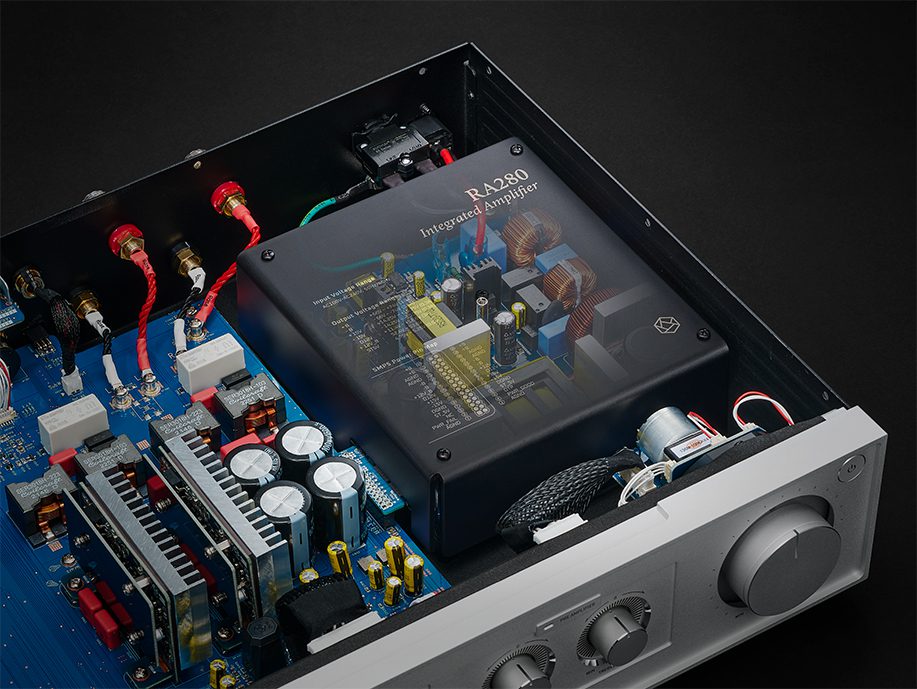
Like the larger (and more visually spectacular) RA180, the RA280 is a class D design. There are only two channels here as opposed to the four in larger amps, but there’s no shortage of power, with 250 watts available in 8 ohms. The genuinely exciting part of this section is lurking in the output. HiFi Rose has sought to deal with the notional ‘dead time’ when the circuit switches between states. The RA280 incorporates ultra-high-speed gallium nitride FETs intended to reduce this notional dead time to an irreducible minimum. I will note at this point that, by an astonishing coincidence, the most vocal proponents of the dead time concept happen to make other types of amplifiers, but it shows some interesting thinking on the part of HiFi Rose. 

Neither is this the only interesting material choice in play. A switching power supply is used, and this can swing 2.5kW for dynamic peaks as required. It uses silicone carbide FETs to further beef up the means of delivery. Something potentially handy is that this is a switching PSU with universal voltage. Even if the means by which the RA280 works are notionally conventional, the details by which it does it are not. 

This amplifier section connects a preamp stage that uses a conventional volume pot with an actual start and finish point. This has a very pleasant weight and feel, but it’s only fair to point out that, with the balanced input especially, the minimum position on the volume control is not actually silent, and the mute function will be needed to ensure that the amp actually stops making noise. It’s unclear if this is deliberate, but this is my first time seeing it. 

Exclusively analogue

The RA280 is exclusively analogue in operation: a single XLR input and a moving magnet phono stage support three RCA line inputs. There are no digital inputs, streaming, or headphone sockets, for that matter. This might seem odd given the connectivity of the streamers, but when you consider them as a pair, it makes rather more sense, with each box handing its own selection of inputs. There is only a single subwoofer out, though, which means that any thoughts of routing an external headphone amp will need a modicum of thought. 

However, many people will be willing to work with that issue because the RA280 manages to be utterly charming in the metal. Nothing I’ve ever tested from HiFi Rose has been anything other than solid, but the exquisitely made RA280 belies the asking price. The casework is extremely solidly built and immaculately finished (and your irregular reminder that these are not the same thing) in the black and silver options. The reduction in ‘visual drama’ over the larger RS180 works to the advantage of the smaller amp as it retains plenty of fascinating features, the lovely input selector and VU meters being particular highlights, but without looking like a committee of people that never actually met designed the thing. A small but perfectly useable remote control completes the functionality department. 

The RA280 doesn’t let up on the surprises when you start listening to it. Having never previously sat there listening to Class D devices, acutely aware of much in the way of a notional dead zone in the performance at any point during listening, it might not be too surprising a statement that I haven’t heard anything on the RA280 where I can definitively say ‘yes, that’s the gallium FETs.’ If this sounds underwhelming, it really, really shouldn’t. 

It doesn’t sound underwhelming because the RA280 performs like it contains a highly potent quartet of KT88 or KT120 valves instead of the class D modules and their attendant output devices. How it gets stuck into Over Tage by Svaneborg Kardyb [Gondwana] is positively luscious regarding its richness and tonality. It distinguishes between avoiding sounding overblown or soft and matches refinement with an extraordinarily vivid presentation. 

Headroom heading

Where the RA280 is entirely unlike any valve amp I’ve ever tested is that headroom is heading happily in the direction of unlimited. The bulk of listening was undertaken in company with the excellent Focal Aria X No3 and nothing in the Focal’s requirements so much as scratched the surface of the headroom on offer from the HiFi Rose. The power on offer is never overt; it’s perfectly possible to select a low-level, late-night friendly volume setting without recourse to a pair of tweezers. At the same time, there is a level of drive and current delivery that ensures that the Focal is driven rather than powered. The more current-hungry Kudos Titan 505 stood in for the Focals for a time, and the RA280 was utterly unphased by its requirements. 

Where this makes itself felt is a fabulous level of bass extension that possesses a detail and control that ensures that even the huge and complex electronic underpinnings of Martina Topley-Bird’s Game [Self-released] are articulate and engaging while still entirely seismic in its weight and depth. Anyone coming from a more flat earth style presentation might find that the RA280 isn’t as consistently ballistic as amps from that school of design, but it would be a considerable stretch to describe it as languid. 

The phono stage is a genuine surprise as well. Having not previously encountered one from HiFi Rose before this point, I wasn’t sure what to expect or if it would be anything other than a by-the-numbers’ we have included this feature type affair. It perfectly complements the lush overall balance of the amplifier. A fine example is Signals by Marconi Union [Just Music]. It plays with weight and authority, nailing the brooding scale and menace of Strata. HiFi Rose has done a fine job covering the basics; noise levels are negligible, ensuring detail is easy to perceive, and they’ve also done a commendable job of ensuring that the gain syncs closely to the other inputs. With these basics in place, the phono stage feels like an organic extension of the amplifier circuit. Calexico’s Algiers [City Slang] manages to be rhythmic and engaging but never at the expense of a fabulous richness to both voices and instruments that encourage you to keep listening, not because the result is technically accomplished but because it sounds genuinely good. 

Unshowy

This unshowy but supremely accomplished ability to keep you listening to the RA280 is a party piece that surprised me long after I installed it. A considerable amount of testing took place with an Astell & Kern SE300 portable player running as a Roon Endpoint into the balanced input of the HiFi Rose. The ladder DAC in the SE300 demonstrated the same effortless ability to resolve without nitpicking that the RA280 does. I often found myself using the combination in preference to my resident system because it was so easy to listen to in the wholly positive use of the term.

The HiFi Rose RA280 might subvert your expectations of how it performs based on the sophisticated nature of the streamers, but dig a bit deeper, and the company’s ethos is still readily apparent. Like the streamers, this is an amplifier built the way that the company feels it should be done, and the result is deeply impressive. 

Technical Specifications

  • Type: Integrated Amplifier
  • Power Output (4/8Ω, per channel each module): 250 W
  • Frequency Response: 10Hz-66kHz ±1dB
  • Input Sensitivity (Unbalanced): 300 mV
  • Input Sensitivity (Balanced): 600 mV
  • Phono Input Sensitivity (MM): 5 mV
  • Damping Factor > 250
  • Signal To Noise Ratio
  • (Speaker Output @ 250W x 2 Channels, Balanced/Unbalanced) 109 dB
  • Signal To Noise Ratio (MM Input)
  • (Speaker Output @ 250W x 2 Channels) 85 dB
  • THD +N:
  • (Speaker Output @ 250W x 2 Channels, Unbalanced) 0.007 %
  • Output Impedance:
  • (Speaker Output @ 250W x 2 Channels, Unbalanced) 0.03 Ω
  • Phono Input: MM Input
  • Phono Stage Impedance (MM): 47 kΩ
  • RCA Input(s): 3
  • Input Impedance (Unbalanced Input): 47k Ω
  • Balanced XLR Input(s): 1
  • Input Impedance (Balanced Input):47k Ω
  • Subwoofer Output(s): 1
  • Dimensions (W x H x D) 430 x 103 x 355 mm
  • Weight 9.5 kg
  • Price: £2,999, $2,995, €3,250

Manufacturer

HiFi Rose

www.hifirose.com

UK distributor

Henley Audio

www.heleyaudio.co.uk

+44(0)1235 511166

More from HiFi Rose

Back to Reviews

Music Interview: Fairground Attraction

It’s been almost 35 years since we last heard from Fairground Attraction.

The skiffle-pop-country band scored a number one hit single with ‘Perfect’ in 1988 and their debut album, The First Of A Million Kisses, went triple platinum.

At the 1988 Brit Awards, the group walked away with trophies for Best Single and Best Album – the first act to do so in the same year. Only Blur, Coldplay and Adele have done it since.

Sadly, Fairground Attraction was short-lived – the band split in 1990, but Scottish vocalist, Eddi Reader, and Welsh guitarist / songwriter, Mark Nevin, have both enjoyed successful solo careers.

Now the band’s original line-up: Reader, Nevin, Simon Edwards (guitarrón – a Mexican acoustic bass) and Roy Dodds (drums) is back together, alongside guest musicians Roger Beaujolais (vibraphone) and Graham Henderson (accordion), who both played with the group the first time round, and they’ve released the follow up to The First Of A Million Kisses – a brand-new studio album called Beautiful Happening.

Fairground Attraction
© Genevieve Stevenson

It’s a strong, hopeful and joyous record that soaks up influences including country, pop, folk, jazz, Southern soul, gospel and Tex-Mex.

hi-fi+ talked to Reader and Nevin, who, until last year, hadn’t spoken to each other since 1990, to find out why they decided to let bygones be bygones, get back in the studio and head out on tour.

As a lyric from the title track of the new album says, ‘Something beautiful is going on…’

SH: So, it’s been 35 years between Fairground Attraction’s debut album, The First of A Million Kisses, and the follow up, this year’s Beautiful Happening. That must be some kind of record… How was it making the ‘difficult second album?’


MN:
Actually, making the record was a case of putting the pieces back together and it felt incredibly natural and easy. It all fell into place. 

You’ve just come back from playing some concerts in Japan – they were your first gigs as a band since you split up in 1990. How was that?

MN: It was very strange – up until the last minute, it was, ‘Will we do it?’ The guitarrón and the accordion couldn’t get on the same flight as us – everything went wrong.

ER: It was like an Ealing comedy… 

MN: So, when we finally all turned up and arrived on the stage it was a relief and a great moment for us, and for the audience… 

Am I right in thinking that you two hadn’t spoken to each other since the band broke up? What brought you back together?

ER: Me and Mark played together in West Hampstead [in June 2023] – us reconciling was just a beautiful healing moment. Life’s too short – that’s basically been the theme since COVID.

I wanted to reconnect, and I realised that time was going past fast – Mark had told me that Roy wasn’t well, and Mark had also had some run-ins with the hospital… I thought, ‘This is bullshit – these guys are really important to me on a level that’s not even to do with music…’ 

So, I wanted to reconcile with them in some way, and it was as easy as just picking up the phone and saying, ‘Let’s go for a wee bite to eat’, and it was great. Mark was as shining as he always is.

It’s a great record… You made it at Master Chord Studio, in North London, earlier this year – how was it recording with each other again?

MN: The first day that we were in Master Chord, it was the four us and Roger Beaujolais and Graham Henderson – that was the first time the six of us had been in a room together since we’d all been on stage together 35 years before. It was a very emotional experience and we recorded ‘A Hundred Years of Heartache’, which was very relevant to the occasion… Thirty five years of heartache was over in that moment that we played together again, and it was incredibly powerful.

‘A Hundred Years of Heartache’ was the first song we recorded when we got in the studio because it felt so significant. When I first played it to Eddi, she said: ‘If I sing it, I just might die of crying.’

In Japan, we opened the set with that song – it was a statement. 

So, how did you approach the album? Mark – I know that you’d written some new songs ahead of the sessions, and you also revisited some that you’d had for a while. What kind of record did you want to make?

MN: We had an ethos that was about joy – ultimately, that was the bottom line – the currency we deal in. The most important thing we do with our music is to create joy and hope. We don’t want to bring people down or moan about stuff – there are plenty of other people doing that. We’ve always had that from the start – a song like ‘Perfect’ is an incredibly positive song. 

I’ve listened to so-called great songwriters who are just wallowing around in misery. Anyone can do that. 

© Genevieve Stevenson

A great songwriter is one who can make you feel a bit more hopeful about life, and Eddi has this incredible capacity for joy as a human being, and in her voice, so when you put those two ingredients together, you get this thing that’s bigger than the sum of the parts. 

We’re grateful to have somehow stumbled upon each other and have this chemistry that enables us to do it. Once we get in a room together, with the songs, Eddi’s voice and the guys, the rest of it just takes care of itself. 

So, you’re pleased with the new album?

MN: I’m delighted. It was important that we came back and did something that felt confident and good, and I’m confident we’ve done that. It was hard to get it together so quickly to go to Japan – the weeks leading up to that were hectic, getting it mixed and mastered. 

When I heard it through the headphones for the first time, it was quite a strange moment – I’d missed a flight to Venice and found myself in Pisa, so I was listening to it while walking around the Leaning Tower of Pisa, which was totally random. It was in beautiful sunshine. and I just felt so happy. For me, the Leaning Tower of Pisa will always be associated with that glorious moment.

Eddi – where did you first hear the finished record?

ER: I was crossing Killermont Street at the Buchanan Street Bus Station [in Glasgow]. It was a sunny day and it was lovely, but not as sunny as Pisa… There were leaning buildings…

MN: But they weren’t meant to be leaning…

The first single from the new album was ‘What’s Wrong With The World?’, which was released in March this year. Since it came out, there’s a lot more wrong with the world…

MN: Every day there is… 

As well as addressing the state of the world, the song also tackles personal issues – Eddi sings, ‘What’s wrong with the world? Maybe it’s me…’ The track revisits familiar Fairground Attraction territory musically – it’s a laidback country shuffle… 

MN: It’s funny – when we first played it, we thought, ‘It sort of sounds like ‘Perfect…’ It’s not ‘Perfect’ but it’s weird how that happened – it was quite amusing, and we were like an audience to our own performance… We were laughing and enjoying it – it just came together in that way. 

It resonates with the past but, at the same time, it’s very relevant to the moment we’re living in. But it’s not saying (moans): ‘Oh, what’s wrong with the world? Isn’t it awful? What can we do?’ 

It’s saying that at the end of the day, we’ve only got ourselves and all we can do is to be the best versions of ourselves. 

The title track of the album, ‘Beautiful Happening’, was released as the second single – it’s a beautiful song and, Eddi, your voice sounds great on it… It’s one of my favourite songs on the record and it’s hopeful and positive – about something wonderful coming out of dark and sad times… 

ER: That was why I was attracted to it – Mark has always been the musical director of Fairground Attraction. When he writes a song and I get it, it works. Whenever I get to fly, it’s usually because I’m supported by quality musicianship and quality songwriting that’s not trite. 

When you hear a new song that’s kind of a modern classic… I think Amy Winehouse’s ‘Love Is A Losing Game’ is a modern classic and so is Mark’s ‘Allelujah’ [by Fairground Attraction] – there are writers who aren’t really appreciated when we’re living in this generation. I’m sorry, Mark – you’re not going to get the appreciation until you’re dead! That’s the world we live in – it’s always been that way and it always will be. 

Mark – was the song ‘Beautiful Happening’  inspired by Andrea Bocelli?

MN: Yeah – well, during lockdown, there was a moment when Andrea Bocelli sung hymns in an empty cathedral in Milan [on YouTube]. I don’t know if you saw it? It was absolutely beautiful, and his voice was echoing around an empty square. 

There were also shots of an empty New York, Paris, Sydney – all over the world. It was bizarre – all these cities were completely empty because people were in their homes. It was terrifying – the end of the world – but I had this feeling that something great could come out the other side of it, or let’s hope it could…

ER: Thank God you were able to write something like that… I think it’s a big message that needs to be said in a very simple way – the song says that even though you’re going through challenges, it will expand you… That’s the way that spiritual thinking has been for centuries and it’s all in that song. 

Mark – the track ‘Sing Anyway’, which is on the new record – originally appeared on your solo album, My Unfashionable Opinion

MN: That’s right – it has a very similar sentiment. It’s about getting up and carrying on – ultimately, it’s about faith. Without faith, you’re doomed.

‘Sun and Moon’ is a soulful, jaunty and celebratory song about a relationship, and it has the Kick Horns session guys playing on it…

ER: That’s Mark – he has great taste, and he pulls it together. 

MN: We’ve known the guys from Kick Horns for a long time – they’re great blokes and brilliant musicians and it felt very familiar having them around. 

We thought it would be nice to have horns on it – it felt like that kind of song – and while they were there, they played on a few other ones, which helped to enhance the record and give it something different. 

We wanted it to resonate with The First Of A Million Kisses, as it’s obviously the same group, but we didn’t want it to be an identical record – it had to have different elements.

Kick Horns are also on ‘Last Night (Was A Sweet One)’, which has a jazzy feel and a Mexican flavour…

MN: You might say it’s Tex Mex – that partly came about because of the guitarrón that Simon plays. It was an accident – years ago, he was looking for a bass and he saw one for sale in the paper for £90. So, he bought this obscure Mexican bass and when he brought it to Eddi’s prefab, and got it out of his black plastic bag, and played it, it had such a beautiful, sad sound, and when it came together with my guitar and Eddi’s voice, we thought, ‘Wow – we sound like something that’s unique.’

‘Gatecrashing Heaven’ has a soul-gospel feel – the chord sequence reminds me of classic Stax, like an Otis Redding ballad. I like the lyric, ‘All access denied to a sinner like me…’ Who out of you two has a better chance of going to heaven rather than hell?

ER: I think we’re all in heaven – or hell – all the time. 

MN: We’re already there, Sean, and you can come as well. 

Beautiful Happening is out now (Raresong Recordings)

www.fairground-attraction.co.uk

Back to Music

T+A PSD 3100 HV

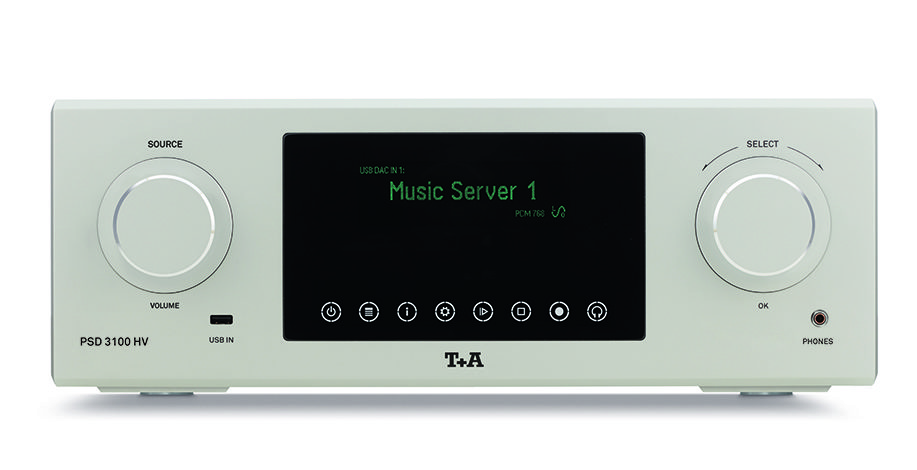
When the editor of this fine publication, a man routinely in the company of devices with gravitational pull, describes a DAC as ‘large’, it is sufficient to raise a note of mild alarm and have me reach for my third Weetabix of the day and a weight belt. True enough, the T+A PSD 3100 HV is a bit of a whopper. It’s the best part of 20cm tall, half a metre deep, and tips the scales at 26kg. That makes the T+A a very big DAC indeed, but it does at least boast functionality as extensive as the casework. 

Describing the T+A as a ‘DAC’ is like describing Fortnum & Mason as a ‘convenience store’; it is not wholly inaccurate but rather undersells the scope of the services available. The PSD 3100 HV is a fully functional preamp that operates in the analogue domain via resistor ladder-based volume control. So, in addition to the digital inputs, there is a single RCA analogue input and a DAB/FM aerial socket. Given that most of us only possess a single analogue source, it gives scope for the T+A to become the complete front end of many systems. 

Digital star

Digital is the star of the show, though, and to this end, you get USB-B, two HDMI inputs with loop out, AES, two coax inputs (one BNC, one RCA), two optical connections and an example of T+A’s IPA Link for SACD transfer. It uses the ‘Gen3’ version of T+A’s UPnP streaming platform, allowing access to Qobuz, Tidal (the latter via the Connect function) and UPnP access, internet radio and AirPlay. The PSD 3100 HV has a Roon mod fitted, but at the time of testing (August 2024), the PSD 3100 HV had not been Roon certified. All functionality is available to RCA, XLR outputs, and a 4.4mm Pentaconn headphone socket. 

The decoding for this extensive connectivity follows the T+A practice of splitting by format. It supports PCM to 768kHz precision, and this is decoded via a quartet of Texas Instruments (nee Burr Brown) PCM1795 chips running in dual differential mode and with a choice of four filters and the choice of switching to non-oversampling mode.

DSD

Meanwhile, it takes DSD to 11.2MHz via a separate decoding module with its own pair of filters. You select these filter options via the app, and to T+A’s lasting credit, the process is far simpler to tinker with in reality than it might sound on paper. 

The PSD 3100 HV has one of the most elaborate power supply arrangements I’ve experienced on any product in any category. Many manufacturers will claim that they have split the power supply for the analogue and digital sections, but this feels a bit half-hearted compared to the lengths that T+A has gone to here. On the rear panel of the PSD 3100 HV, you will find an IEC socket at each end of the casework, each feeding a power supply, one of which is for digital and one for analogue. Both must be connected for the unit to work. Fortunately, I have 24 AC sockets available for moments like this; it might be something to consider in more ‘conventional’ setups. 

Will it fit?

Of course, this will be secondary to whether the T+A will fit in your system full stop. It is a vast bit of kit, more akin to a power amp than a digital front end, and you’ll need a fairly hefty rack to accommodate it. However, how T+A builds the PSD 3100 HV will leave many people making room for it. The immaculate casework has details like the top panel’s porthole showing off the decoder. These (not-so) little touches speak to a level of care and attention that justifies the price tag.

How the controls operate and how they feel while they do so is hugely confidence-inspiring. Details like the soft touch buttons on the front panel that work seamlessly underline an unquestionable fastidiousness in engineering. The only slight oddity is that, while the display is vast, it is not a full-colour type, and some bits of information are more challenging to read than expected. The enormous metal remote is an absolute joy and a minor work of art in its own right. 

I initially connected the T+A up as a line-level DAC, running via XLR into a Chord Electronics CPM2800MkII integrated amp and Kudos Titan 505 speakers and listening via UPnP. I did so without an idea of what to expect because the company has been on a sonic journey over the years, particularly with digital. What was once scrupulously accurate if a trifle dry has become more full-bodied and engaging. 

Expansive

In this case, the sound the PSD 3100 HV generates is as expansive as the casework. The opening brass of Gregory Porter’s Concorde [Blue Note] is a wave of scale and texture that washes over the listening position, effortlessly replicating the effect of sitting front and centre before the real thing. When Porter begins singing, the PSD 3100 HV transports you to this big, confident, immersive presentation. There is an unflappable quality in the T+A’s response to the layers of musicians that helps reduce the perception of any digital decoding happening. 

Something notable and admirable about this effortless ability to unpack material is that it doesn’t harm the T+A’s ability to deliver more aggressive material with the speed and punch it needs. Steven Wilson’s The Future Bites [Caroline International] maintains its relentlessness and energy, even as the sound envelopes you. This album has a surround mix, but I suspect most T+A owners won’t want to listen to it, such is the PSD 3100 HV’s ability with the stereo mix. 

More to give

As good as the T+A is as a line-level device with PCM, it has more to give. One of the reasons that I would be keen for T+A to secure their Roon certification is that using my resident Roon Nucleus via the USB input and upsampling to DSD sees the PSD 3100 HV become even more lush and expansive. Visual Audio Sensory Theater by VAST [Elektra] opens with the slow building ‘Here’, and how the T+A keeps adding scale while keeping everything intelligible yet ballistic is a near-perfect tightrope walk. I rarely think DSD is ‘better’ than PCM under all conditions. What T+A is doing, though, is genuinely exceptional. 

I then roped the PSD 3100 HV into testing the unusual Kudos Sigao Drive external crossover system. This arrangement meant running it as a preamp and using analogue input for a Violectic PPA V790 phono stage. This new configuration took about five minutes to establish that the T+A’s preamp section is far from an afterthought. As you might expect from a resistor ladder-based control, it’s beautifully linear and allows ultra-fine adjustment. It also effortlessly reflects the qualities of the Violectric and connected Vertere MG-1 MkII turntable.

Uncompressed effortlessness

Some of that same uncompressed effortlessness is present with just the analogue section running, and it meant that a spirited blast through Super Superabundance [Transgressive], the vinyl reissue of the Young Knives classic retains a ballistic edge but with enough forgiveness to handle less-than-perfect mastering that it demonstrates from time to time. At no stage do you find yourself listening and framing the result as ‘good for a DAC.’ It’s a meaningfully excellent preamp in its own right. And finally, it’s a shame that FM and DAB radio have become a minority sport in modern hi-fi, because they are more than welcome additions that far from let the side down.

What this all means is that while the T+A is rather large and not inconsequentially expensive, it has the scope to replace more than one existing box in your system (potentially freeing up that second mains socket as you go) while feeling completely and utterly free from compromise as it does so. The PSD 3100 HV is an entirely up-to-the-minute product that retains enough of the T+A fastidiousness to delight while showing a level of musical joy that it is hard not to fall for entirely. The PSD 3100 HV is undoubtedly very big, but it’s also very clever and an absolute delight to listen to. 


Technical specifications

  • Product T+A PSD 3100 HV 
  • Type: Digital preamplifier
  • Digital inputs: 1x AES/EBU (XLR), 4x S/PDIF (1x coaxial, 1x BNC, 2x Toslink), 2x USB (1x DAC, 1x Mass Storage, 2x HDMI, 1x RJ45, 1x IPA (LVDS), Wireless LAN connection
  • Analogue inputs: 1x RCA pair line-level input, FM/DAB antenna, HLink connection to other T+A devices
  • Digital Outputs: 1x HDMI (ARC), 1x coaxial S/PDIF
  • Analogue outputs: 1x RCA pair, 1x XLR pair, HLink
  • Digital input precision: AES/EBU, S/PDIF to 24bit, 192kHz PCM. USB to 24bit, 768kHz, DSD 512
  • D/A-Converter: Double-Differential-Quadruple-Converter with four 32-bit Sigma-Delta D/A-Converter per channel. 705.6/768 kHz conversion rate (PCM), T+A-True-1Bit DSD D/A-Converter, up to DSD 512 (24,5 MHz), native bitstream (DSD)
  • Dimensions (H x W x D): 17 x 46 x 46 cm 
  • Weight: 26 kg
  • Price: £14,900, $22,000, €16,500

Manufacturer

T+A elektroakustik GmbH & Co.

www.ta-hifi.de

UK distributor

Kog Audio

www.kogaudio.com

+44(0)24 7722 0650

More from T+A

Back to Reviews

KEF LS60 Wireless

What’s better than a wireless all-in-one audio system? A wireless all-in-two audio system, that’s what – because true stereo sound is a joy forever. And while it might not have got in on the ground floor where wireless all-in-two audio systems are concerned, KEF didn’t have to sprint up too many flights of stairs to get into the elevator – ever since 2017’s LS50 Wireless, the company has been there-or-thereabouts whenever the conversation turns to ‘wireless convenience without sacrificing authentic hi-fi quality sound’. 

On a pound-for-pound basis, the performance of the current KEF wireless streaming system line-up is hard to lay a glove on. It doesn’t do any harm that every model in the line-up is, to a lesser or greater extent, visually quite individual and interesting, too. But the company has taken things to the next level with the LS60 Wireless – the company bills it as ‘wireless hi-fi speakers’, but we all know the truth. This is a wireless all-in-two streaming system – just on a larger scale than we’ve become used to from KEF.

Lifestyle appeal

Of course, it’s the vexed notion of ‘lifestyle’ that’s a big part of the appeal of the whole all-in-two wireless streaming system market – or, at least, the lack of disruption thereof. Any number of music lovers struggle to accommodate a full-on, full-size audio system – too expensive, too ugly, too big, too jarring when introduced into otherwise carefully considered interior design vocabulary. KEF gives every indication of understanding this entirely – and so before any discussion of how the LS60 Wireless performs, it’s perfectly valid to consider the way it looks.

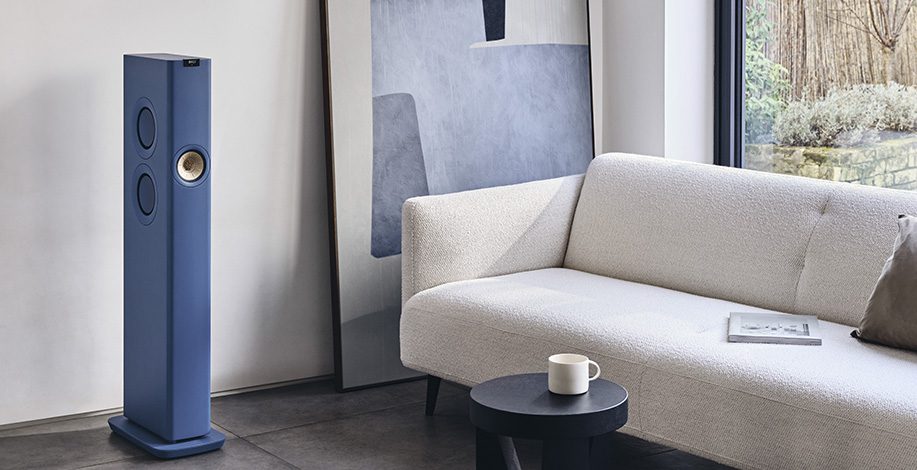
These are extraordinarily slender loudspeakers – ignore their stabilising plinths and they’re just 13cm wide. Name a narrower floorstanding speaker. Not easy, is it? Even when you take the plinths into account, they’re just 21cm across – and so they’re hardly about to stick their oar too assertively into your interior decor choices. And the selection of matte finishes – ‘carbon’ black, ‘mineral’ white, ‘titanium’ grey and ‘royal’ blue, with ‘Lotus Edition’ British racing green as a cost option – does no harm whatsoever when it comes to delivering a harmonious look. Add in the drama of the driver array in each skinny tower and you’ve a striking and, arguably, elegant pair of loudspeakers here.

Driver array

Ah yes, the driver array. Each tower features the 12th and latest version of KEF’s Uni-Q driver; at 100mm, the smallest Uni-Q drive unit since the 75mm model in the KHT1005. Here it features a 19mm vented aluminium dome tweeter in the throat of a 10cm vented aluminium cone that covers the midrange frequencies, and incorporates a tweeter damper gap and new ‘Z-Flex’ driver surround to minimise distortion and create as even a dispersion as possible. 

KEF LS60 Wireless

The tweeter is also packing KEF’s acclaimed ‘Metamaterial Absorption Technology’ (or ‘MAT’, to use its rather underwhelming acronym). MAT is designed to absorb those soundwaves that radiate from the back of a drive unit and disrupt its forward output – it’s the tweeter dome that’s getting the MAT treatment in this instance. A plastic disc printed with a maze-like pattern sits behind the tweeter, and each of its ‘routes’ is the ideal length to absorb a specific range of frequencies. KEF reckons the MAT method is so effective that it can absorb 99 percent of these unwanted soundwaves.  

Uni-Core

For low frequencies, KEF has deployed its Uni-Core driver technology that’s recently taken a good share of the praise lavished on its KC62 subwoofer. The intention is to liberate a whole lot of bass presence from unpromisingly small enclosures (by subwoofer standards, the KC62 is very small indeed) by combining force cancellation (which requires drivers to be positioned back-to-back), concentrically arranged voice coils and one shared motor per pair of drivers.

For the LS60 Wireless, two pairs of 14cm Uni-Core drivers are used in each speaker, positioned equidistantly around the forward-facing Uni-Q array in an arrangement KEF calls ‘Single Apparent Source’. This layout debuted in 2011’s witheringly expensive Blade loudspeaker, and is designed to give the impression of information from all parts of the frequency range originating from a single point – with precise stereo imaging over an uncommonly large area the ultimate goal.  

A different Class

KEF has specified Class A/B amplification for the tweeter – 100 watts of it per speaker. The midrange cone gets 100 watts of power per side too, but this time it’s of the Class D variety. Class D is also used to drive each of the eight (count ‘em!) UniCore bass drivers – there’s a total of 1000 watts available, which my rudimentary back-of-envelope calculations reveal to be 125 watts per driver. All the amplification is boxed off in the lower half of each tower, where it can’t disturb the drive units – heatsinks that vent at the rear of each speaker keep operating temperatures acceptable. 

As is usually the case with an all-in-two speaker system, the LS60 Wireless features a ‘primary’ and a ‘secondary’ speaker. Both speakers require mains power, of course, but other than this the secondary speaker features just a pre-out for a subwoofer, a USB-A slot for servicing and an RJ45 socket for a hard-wired connection to the primary speaker. It’s worth noting that the two speakers are perfectly happy to maintain a wireless connection, but this arrangement results in all sources being resampled to 24bit/96kHz PCM resolution – wire them together using the generous length of cable KEF provides and 24bit/192kHZ PCM resampling is the result. 

Story eARC 

The primary speaker, too, has connections for mains power, a pre-out for a subwoofer, a USB-A slot for servicing and an RJ45 to connect to its partnering speaker. In addition, it features an HDMI eARC socket, digital optical and digital coaxial inputs, a pair of stereo RCA analogue connections and an RJ45 socket for ethernet connection. Wireless connectivity runs to dual-band wi-fi and Bluetooth 5.0 with SBC and AAC codec compatibility – a wired or wireless connection to a network brings Apple AirPlay 2 and Google Chromecast into play. And the LS60 Wireless is also Roon Ready and UPnP-compatible. If this array of options where sources of sound are concerned seems a little tentative, the KEF Connect control app allows you to integrate Amazon Music, Deezer, Qobuz, Spotify and TIDAL music streaming services as well as to access internet radio.

The app itself has evolved to the point where it’s now a perfectly usable, stable and logical interface – a big advance on those bad old days when a KEF all-in-two demanded the use of two apps to exploit all of its functions. These days KEF Connect allows access to all playback functions, room configuration and EQ adjustment, phase correction, a bass extension limiter and plenty more besides. 

The company also provides a little remote control handset, more (it seems to me) for the sake of box-ticking than for any compelling necessity. If your smartphone is temporarily unavailable, the remote control will let you select input, adjust volume and access basic playback controls too. 

Expert time

It’s certainly worth investigating the ‘expert’ set-up menu in the control app, as it’s possible to exert quite an influence over the eventual performance of the LS60 Wireless. Certainly if your room is towards an extreme of one kind or another – lots of glazing, unusual shape, generously stocked with soft furnishing or what-have-you – you can mitigate it to a fair degree.

And once that’s done, of course, it’s just a question of playing some favourite music from a favourite source or two. During the course of this review I listened to internet radio and TIDAL via the KEF Connect app, a Rega Apollo CD player into the digital coaxial input, a Panasonic DP-UB820 UHD Blu-ray player using the HDMI eARC socket, and a Clearaudio Concept turntable via a Chord Huei phono stage into the stereo RCA inputs. And it’s fair to say there’s merit to each of these methods – and plenty of it. 

Integration

No matter where you start, it’s the integration of all those drive units that’s most immediately impressive. Obviously there are qualitative differences between a 160kbps stream of France’s FIP internet radio station presenting Sous les Jupes de FIP and a 180g vinyl reissue of Heaven or Las Vegas by Cocteau Twins [4AD], but where stereo focus and coherence is concerned the LS60 Wireless never wavers. The soundstage it creates is wide and tall, with plenty of elbow-room available on it, but it’s simultaneously tightly unified and orderly. The notion of a ‘single apparent source’ of sound is delivered on from the get-go. 

Low-frequency information is deep and textured, controlled at the onset of each note or hit with something approaching fanaticism, and absolutely loaded with detail both broad and fine. The KEF can summon prodigious levels or straightforward punch, but within that it’s a subtle and insightful performer. The authority over the bottom end means it’s able to express the Frafra rhythm of Florence Adooni’s Kinne [Philophon] with absolute assurance as well as no little enthusiasm. Edges are straight and true, and the decay of bass information is observed just as carefully as the attack.  

Analysis vs entertainment

A similar balance between ‘analysis’ and ‘entertainment’ is struck through the rest of the frequency range. There’s considerable bite and shine to the top of the frequency range, a real impression of attack when the music demands it, but at the same time the LS60 Wireless shapes treble information deftly and never loses the run of its high-frequency reproduction even at significant volume. And the midrange acuity that’s apparent during a listen to a CD copy of The World’s Biggest Paving Slab by English Teacher [Island] leaves you in absolutely no doubt that you’re getting the complete and unexpurgated picture. There’s an immediacy to the way the KEF all-in-two handles a vocalist, as well as profoundly impressive insight into their character, their attitude and their technique, that is endlessly engaging. 

Hans Zimmer’s blaring, droning soundtrack to Dune: Part 2 [WaterTower Music] gives the system the opportunity to demonstrate its dynamic potency – and it’s safe to say it doesn’t disappoint. The KEF can shift from ‘tense, urgent whisper’ to ‘all-out firefight’ in an instant, and the distance it can put between these two positions (in terms of intensity as well as sheer volume) is extreme.

Zimmer texture

There’s a gratifying amount of texture given to the sonic abstractions Zimmer indulges in here, and a real sense of outright scale. If you want your new all-in-two system to double up for movie night, the LS60 Wireless has the midrange fidelity, the scale and the completely confident soundstaging ability to make even the most accomplished soundbar sound confined and passive.

Overall tonality is carefully neutral, and the KEF seems perfectly willing to get out of the way of recordings in order to allow them to express their particular flavour without hindrance. The sensation of unity and singularity is extremely strong, even when playing a scissors-and-glue collage like Music Makes Me High by The Avalanches [Modular] – despite the sheer number of drivers involved in the system, the LS60 Wireless integrates the frequency range with the same sort of confidence it demonstrates when describing a soundstage. 

Struggling to ‘yes, but…’

It’s customary at this point to muster a “yes, but…” or two in order to demonstrate that I’m difficult to please and a man of some discernment – but in all honesty, I’m struggling. Yes, a wireless system is never actually wireless if you want to introduce sources that aren’t apps on smartphones – but that’s hardly an issue that’s unique to this KEF system. And it’s true that the KEF Connect app did forget what it was doing on a couple of occasions during my time with the LS60 Wireless (on both occasions it was supposed to be continuing with a TIDAL playlist) – but other than this, I have nothing.

So if you’re interested in some extremely impressive engineering clothed in some notably attractive and fairly unusual loudspeakers, in a big serving of hi-fi audio credibility balanced against convenience that’s easily described as ‘painless’, KEF – not for the first time – has the all-in-two for you.   

Technical specifications

  • Type: Floorstanding loudspeaker system with integrated amplification, DSP, and wireless connectivity
  • Driver complement: Uni-Q 19mm vented aluminium dome tweeter within 100mm vented aluminium midrange cone array; 4 x 135mm Uni-Core force-cancelling bass driver
  • Amplification power (w)/type (per speaker): 100/Class A/B (tweeter); 100/Class D (midrange); 500/Class D (bass) 
  • Frequency response: 31Hz – 24kHz
  • Crossover frequencies: 350Hz; 2.8kHz
  • Inputs: HDMI eARC; digital optical; digital coaxial; stereo analogue RCA; RJ45 ethernet; USB-A (service only); RJ45 interspeaker connection
  • Wireless inputs: dual-band wi-fi; Bluetooth 5.0; Apple AirPlay 2; Google Chromecast; Roon Ready; Spotify Connect; TIDAL Connect; internet radio
  • Outputs: subwoofer
  • Digital audio sample rates: up to 24bit/384kHz
  • File types: AAC; AIFF; ALAC; DSD; FLAC; LPCM; MP3; MP4; OGG; WAV; WMA; MQA
  • Dimensions (hwd, cm) (per speaker): 109 x 21 x 39 
  • Weight (kg) (per speaker): 31.2
  • Finishes: carbon black; titanium grey; royal blue; mineral white; british racing green (cost option)
  • Price: £4,499, $4,999, €4,999 per pair (£5,499, $5,999, €5,999 British Racing Green ‘Lotus Edition’)

Manufacturer

KEF

www.kef.com

UK distributor

GP Acoustics (UK) Ltd

www.uk.kef.com

+44 (0) 1622 672261

More from KEF

Back to Reviews

WK Audio TheRay

We’ve been watching the growth of Polish cable brand WK Audio for some time. The brand seriously impressed us with its TheRed power cords (tested in Issue 221), loudspeaker cables (tested in Issue 227) and interconnect cables (tested in Issue 237) and looks like doing the same with its more affordable and practical TheRay power cord. 

The original Red is a hand-made cable that features individually shielded conductors. Not everyone will be comfortable with a power cord with separate live, neutral, and earth cables, and not everyone is willing to pay almost €6,000 for a power cord. However, WK Audio’s TheRay power cords address this because they are more practical (the three conductors are housed in the same outer sleeve) and more affordable (half the price of TheRed).

Handcrafted from high-clarity copper, the conductor has a cross-section of 6mm², and the three conductors use vibration-damping materials. TheRay is also the result of the same material science and conductor geometry knowledge that went into TheRed and uses the same listening panel development. TheRay is fettled with Furutech and comes in US, EU, and UK plug options.

Basic and exclusive

The ‘fettled with Furutech’ offers a two-tier quality option with TheRay. In its ‘Basic’ version, the pale blue cable features Furutech’s FI-E38R Schuko and FI-C15 NCF R IEC plugs. The ‘Exclusive’ upgrades these to the FI-E50 and FI-50 NCF R plugs, respectively. TheRay can also be configured in a high-current form with a Furutech FI-52 R plug. We tested the Basic version, and referring to it as ‘Basic’ is probably the only downside of this otherwise excellent cable. 

OK, let’s temper that a little. The reason I believe this is an excellent power cord is that it fulfils what a good audio power cord is supposed to do: cause the least harm possible. If you’re looking for a cable that flattens out the bumps inherent in your amplifier’s performance, or one that adds a bit of brightness or richness to the system… keep looking. The WK Audio TheRay requires your electronics to be ‘sorted’. It’s not that it won’t benefit such products, but it adds or subtracts nothing. For those systems that want a cable to act as a filter or tone control, TheRay is too honest for that.

Instead, it gracefully steps aside for the music. Yes, we discuss noise floors being lowered, but this one is no exception. Music doesn’t emerge from some loud, dark abyss here; rather, it presents the music as honestly and clearly as possible. Lowering the noise floor? It’s more like a sigh of relief from the electronics, allowing them to bear less of a burden. 

You can truly hear how much TheRay allows the music to flow in any powerfully dynamic passage. It could just as easily be The Pixies belting out ‘Debaser’ [Doolittle, 4AD] as it could be Zinman and the Baltimore SO delivering Rachmaninov’s Symphonic Dances [Telarc]. The result is the same. There’s no sense of constriction to dynamics, imagery, or the space around the instruments, and those loud-soft-loud moments are given a free pass. It’s as if your amplifier received a performance boost. 

The difference between TheRed and TheRay is subtle until you reach the high-end audio systems. At that point, TheRed’s more uncompromising architecture enhances the sound’s freedom even further. On the other hand, considering the more affordably priced option, TheRay’s ability to allow music to be less constrained by electronics offers an extremely attractive proposition.

WK Audio is currently the best cable brand you’ve never heard of, but with products like TheRay (and recently, the even more affordable TheOne… more on that later), it’s clear that the company is on the brink of making a big name for itself. Witold ‘Witek’ Kamiñski’s cable brand is the one to watch! 

Technical specifications

Price (as reviewed): €3,000/1.5m

Manufacturer

WK Audio

www.wkaudio.com

More from WK Audio

Back to Reviews

Advance Paris A12 Classic

Advance Paris is a well-established player in Europe, selling in more than 40 countries worldwide, but when I spotted it at the Bristol Hi-Fi Show earlier this year, it was still a new name to me.

Established in 1995 in France as Advance Acoustic, it started with a range of five loudspeakers and only branched out into electronics once it launched its first integrated amplifier in 2004. The first product under the Advance Paris brand came along in 2013.

As the name suggests, Advance Paris products are designed in France but manufactured in China. But what impressed me at Bristol was the breadth of the product range, the many facilities, and the versatility offered by the amplifiers. Whenever I asked, ‘And how much is that?’ I responded, ‘Really?’, as they all seemed to offer a lot for very little money. I couldn’t wait to get my hands on something from them.

Its range is extensive, with eight integrated amps ranging from £500 to £3,750. There are two preamps (£1,500 and £3,500) and two stereo and two monobloc power amps, priced between £1,500 to £4,000. Then there are two CD players for £650 and £890 and transport for £1,000. It also offers wireless speakers, Bluetooth receivers, a range of streamers, and all-in-one systems.

Two hybrids

I was particularly interested in their two hybrid integrated amps, the 130W A10 Classic priced at £2,000 and the 190W A12 Classic reviewed here (£3,000).

The A12 Classic impressed me with its wide range of inputs, tube preamp stage, powerful transistor power amp stage, built-in DAC, moving coil and moving magnet phono stage and two headphone outputs, all for the modest asking price of £3,000. This amplifier comes in a very smart package with a substantial metal case and stylish black acrylic front panel sporting two large, blue VU meters and a window to showcase the two low-noise, triode ECC81/12AT7 preamp tubes.

Advance Paris says the heart of its philosophy combines good sound quality with a wide choice of digital and analogue inputs. The Classic A12 uses a dual-mono circuit topology, and although its front panel looks minimalist, don’t be fooled—it gives access to a broad selection of input and output options. 

On the far left at the bottom is the on/off/standby button, then a small display next to it shows the chosen volume and when the valve preamp section warm-up is complete. A similar display towards the far right displays the desired input and, in conjunction with the large central volume/multifunction knob, allows the user to select one (or both) of the two speaker outputs, adjust or bypass the tone controls, tailor the automatic switch-off timer operation and select ‘TV Audio’ and ‘Amp In’ so that you can use a different preamp with the A12. Bottom right are outputs for two pairs of headphones, which are individually adjustable for both gain (-4dB, -0dB, +6dB) and headphone output impedance (100Ω for phones with a middle or high impedance between 100Ω and 600Ω, and between 0Ω and 32Ω for lower-impedance models).

Unusually, there are two separate rotary input selector knobs on either side of the volume control, analogue on the left and digital on the right.

Two sets of binding posts provide two pairs of speaker outputs, which can be selected individually or together to provide sound in two rooms or bi-wiring a single pair of speakers.

Versatile

When it comes to inputs, it is not so much a question of what the A12 Classic has as what it doesn’t have. 

Let’s start with analogue inputs. There are five RCA line-in sockets plus an RCA input for phono, with adjustable input capacitance (100pF, 200pF and 300pF) and adjustable gain for moving magnet and moving coil (high and low). There are more RCAs for preamp out, record out and power amp in. There are also two sets of balanced XLR inputs and one XLR balanced preamp output.

The A12 Classic has a built-in DAC based on the well-respected and widely used Burr Brown PCM1796 chipset. There are seven digital inputs, including three optical, three coaxial, one AES/EBU and one USB, and connectors for optional aptX Bluetooth modules (the £100 X-FTB01 or £150 X-FTB02). 

It is also fully ready to be hooked up to a home cinema system, with two subwoofer outputs with adjustable roll-over points of 75Hz or 150Hz, an HDMI input for a DVD player, and an HDMI ARC for use with a TV.

Although a streamer is missing from the A12 Classic, Advance Paris offers a compact WTX MicroStream plug-in high-definition streamer module, which operates via wi-fi and plugs into one of the auxiliary RCA inputs. At £150, this allows the A12 Classic to offer the user streaming for around the same overall price as some integrated amps with a streamer built in. Setting up the app to control it proved straightforward enough.

For most of my listening, I used a Gold Note CD10 CD player with Marten Oscar Duo loudspeakers. I used an Audio Note TT3/PSU3/Io1/AN-S9 front end to evaluate the phono input.

I started with CD as a source, initially feeding the CD10’s digital output into the A12’s DAC. The sound was dynamic, detailed and syncopated with great snap and poise to drums and percussion, deep tuneful bass guitar lines and open, articulate male and female vocals. 

Street Racing

On Bruce Springsteen’s ‘Racing in the Streets’ from his Darkness on the Edge of Town CD, I was impressed by the openness of his vocals, the presence and body of the piano on the intro, the crispness of drum rimshots, and the sheer power and weight of the bass line when it kicked in. One well-respected rival sounded colder in its balance, and the A12 better separated the various strands of the music.

On ‘All I See is You’ from saxophonist Dave Koz’s Saxophonic CD, the A12 again offered a clearer insight into percussion, conveyed the body and bite of his sax better and conveyed the rhythmic impetus and flow of the music better.

I also tried the A12’s built-in DAC against the onboard DAC in the CD10, and it was not found lacking. Bass lines were tight, snappy, and moved well, while vocals, piano, guitar, and saxophone were well-voiced and natural. The music has a good sense of rhythmic impetus and structure. If you pair the A12 with a CD player priced between £1,000 and £2,000, try its digital output into the A12’s DAC. 

I next tried streaming using the Advance Paris WTX MicroStream. I quickly set up the app and searched Tidal for the track ‘A Place for Skipper’ from guitar legend Larry Carlton’s Discovery album.

Despite the modest £150 asking price of the streamer, I was impressed by the delicacy and detail in the percussion lines and by the natural voicing and note detail on the guitar. The bass line was weighty, tight, and agile, and compared with one well-respected competitor’s built-in streamer; it performed extremely well.

Skip to Linda Ronstadt’s gorgeous ballad ‘Lo Siento Mi Vida’ from her Hasten Down the Wind album. It nicely differentiated the sonic signatures of the two guitars in the intro, and Ronstadt’s vocals were open, sensual, and packed an excellent emotional and dynamic punch. When she turned up the volume on a note, the A12 rose to the challenge without becoming harsh or strident.

It would be easy to dismiss the tiny WTX MicroStream as a cheap add-on. But it’s better than that. It punches well above its weight and does not let the A12 down.

Earning Ears

My ears were really earning their keep checking out the multiple inputs of the A12. Next up was the phono input. This phono stage features adjustable capacitance for MM and adjustable gain for MC.

I used my Audio Note Io1 with its S9 transformer into the MM input set to the lowest capacitance. From the first few bars of the title track of the wonderful half-speed mastered version of John Martyn’s classic Solid Air, the A12 proved that its phono stage was more than fit for purpose. The double bass was powerful, tight, and tuneful, Martyn’s guitar was delicately painted and nicely separated, his vocals were open and articulate, and the staccato rhythm that drives this wonderful track along was well captured.

Next, I tried ‘Red Lights in the Rain’ from Canadian singer/songwriter/guitarist Stephen Fearing’s The Secret of Climbing album for Rega (get one if you don’t have one!). Here, his vocals exhibited delicacy, power, and emotional impact but without any harshness or sibilance, while his guitar had a good body and note shape detail. All in all, it was an excellent performance.

But we are still going! There were two things I still wanted to check out. First, I tried the headphone output and, finally, the effect of using the High Bias setting. You select High Bias by operating a toggle switch on the back panel with a small blue light on the front panel to indicate when it is in use. Advance Paris says that in High Bias mode, the sound “is comparable to that of a Class A amplifier on the first few watts of use”. Gotta be worth a try.

Trying it out on ‘Never Too Far to Fall’ from George Benson’s In Your Eyes album, the vocals seemed a bit more open and sweeter on High Bias, but on the downside, the bass line lost some weight and impulsion.

On ‘The Bright Side’ from Dave Koz’s The Dance: Yes, the overall sound was sweeter, but the percussion lacked impact, and his sax was softer and lacking bite. Again, the bass line seemed fuller and more melodic in normal bias mode. On balance, I concluded that the High Bias setting wasn’t for me, so I left it out of the circuit for all my listening. The amp was more than good enough without it.

From experience, I know that the headphone output can be an afterthought in many amplifiers, but I am pleased to say that this wasn’t the case with the A12 Classic.

Plugging in my Focal Clear headphones, after the first few bars of ‘I Can See Clearly Now’ from guitarist Peter White’s excellent Groovin’ CD, I could put any such fears to one side as the A12’s performance was detailed, dynamic, well balanced and articulate. I could hear how White shaped each note and what the backing players were doing, while that great, reggae-like bass line was weighty and moved well. 

‘No One Emotion’ from George Benson’s 20/20 confirmed the competence of the A12’s headphone amp. The track was conveyed with great speed, poise, and impetus, and the driving synth bass line was weighty and pacey, keeping the rhythmic energy of the track flowing. Benson’s vocals were open and articulate, and that screaming guitar solo from Michael Sembello was well-voiced, with great power and inner detail but without sounding harsh or strident.

Magnificent multitasker

I was wondering if there was anything that the Advance Paris A12 Classic couldn’t do. It is a great-sounding amplifier with more than enough power for any speakers you care to throw at it, and it benefits from a valve preamp stage that gives it an edge in sound quality over many similarly priced competitors.

It has a built-in DAC and adding £150 to your bill for the tiny but excellent WTX MicroStream plug-in streamer allows you to add another source with great sound quality from Tidal or Qobuz.

It not only performs well on its analogue line and digital inputs but also has a very capable moving magnet/moving coil phono stage that allows you to enjoy high-quality vinyl playback. Meanwhile, its excellent built-in headphone amp is more than good enough to satisfy most listeners, saving you from shelling out on a separate one.

At £3,000, the A12 Classic is a bargain, and I recommend it enthusiastically. 

Technical specifications

  • Type: Class AB, two-channel hybrid integrated amplifier
  • Analogue inputs: 5x analogue RCA line input, 1x phono (MM/MC), 2x XLR balanced line inputs
  • Digital inputs: 3x optical, 3x coaxial, 1x AES/EBU, HDMI ARC, USB
  • Power output: 190Wpc into 8 ohms, 280Wpc into 4ohms 
  • Distortion: 0.007%
  • Frequency response: 10Hz-35kHz (-3dB)
  • Signal-to-noise ratio: 103dB 
  • Channel separation: >75dB
  • DAC: Burr-Brown PCM1796
  • Phono stage gain: MM: 38dB (47kohms), MC: 48dB (low), 58dB (high) (47ohms)
  • Dimensions: (WxHxD) 43x19x45.5cm 
  • Weight:  17.9kg
  • Price:  £3,000, $3,799, €2,690

Manufacturer

Advance Paris SARL 

www.advanceparis.com

+33 (0) 160 185 895

UK distributor

Decent Audio

www.decentaudio.co.uk

+44 (0) 1642 263765

Back to Reviews

DALI Rubikore 8

First there was the Kore, the mahoosive mighty Kore at £85k, then came the marginally more affordable Epikore 11 at £40k. Now, the trickle has turned into a flood and borne fruit in the shape of Rubikore at £2,299 and up. DALI has followed classic loudspeaker design practice with Nordic efficiency in turning the ideas developed for their flagship into an affordable range of ambitious loudspeakers in just two years, the engineering department must be a busy place.

The Rubikore range consists of three stereo models plus an on-wall and an LCR for films and that, the price mentioned above relates to the Rubikore 2 standmount, the Rubikore 6 floorstander is £4,499 and the Rubikore 8 under consideration here is a pound under six grand. And it is a lot of very nicely finished loudspeaker for the money. Hopefully the pictures will reveal the range of finishes available and the glossiness of their lacquer. Compare this with similarly equipped and scaled models from other brands and you will see that DALI is making a very good case for itself in the hard fought mid market.

Starting at the top of the 110cm tall Rubikore 8 cabinet you have the high frequency section of the loudspeaker, this consists of not one but two drivers in the form of a 29mm soft dome and a 45mm planar magnetic, the latter covering the highest frequencies and the larger than average tweeter doing the (relatively) heavy lifting of highs that you might just be able to hear. DALI makes a big point about the dome being free of ferrofluid, an oil that is used largely to keep voice coils cool. Its claim is that this fluid impedes movement in the driver and slows down its transient response but say that without it the voice coil has to be more precisely centred in the magnetic gap than is conventionally the case.

DALI calls the paper and wood fibre cones on its mid and bass drivers ‘Clarity Cones.’ These have a light coating to provide the desired degree of damping. They are embossed to pool the coating, which increases damping without adding too much weight. This aims to make the midrange smoother. The SMC (or Soft Magnetic Compound) magnet system on these drivers uses insulated iron granules rather than solid iron, this is because the latter conducts electricity and current in the voice coil creates eddy currents in the iron that restricts movement due to a braking effect. DALI’s SMC also gives the Rubikore a more linear impedance and thus makes the amplifier’s life easier, they suggest that the Rubikore 8’s 90.5dB/4 Ohm load can be driven with a 30W amp. SMC has also been used in the crossover inductors where it is said to measurably reduce distortion by a significant amount, DALI also uses fancy Mundorf capacitors in the network.

Which way?

It points out that the “bass reflex port is a driver” which at low frequencies is generally the case. Here DALI has used three continuously flared ports to avoid the turbulence that makes these ‘drivers’ non linear. The whole loudspeaker is described as being a 2.5+0.5+0.5 way design which is kind of confusing, what it means is that the three 165mm mid/bass drivers are considered to be 2.5-way plus a half-way while the two high frequency drivers only constitute a half-way. Essentially the three cones are separated at 500Hz and 800Hz and hand over to the dome tweeter at 2.4kHz, however all of them cover the bass, so the lower one goes from the 38Hz cut-off up to 500Hz, the middle one goes from 38Hz to 800Hz and the top one includes everything from 38Hz to 2.4kHz. The high frequencies are covered by two drivers but there is no crossover between the two, instead DALI relies on the natural roll-off of the dome as the planar driver takes over between 11 and 14kHz. Clearly the crossover network is not straightforward, but the results suggest that it does a very good job.

The Rubikore 8 is a substantial and attractive loudspeaker that’s available in a range of four finishes, I was sent the high gloss white but there is also a very attractive walnut and ‘maroon’ which looks more like a veneer than a paint finish. A pair of grey fleck grilles are included and attach magnetically so that there are no ugly sockets to see when they are left in the box. Each speaker comes with a pair of cast outrigger stabilising bars that bolt onto the bottom and can be fitted with supplied spikes, they provide the requisite stability without extending the footprint to an excessive degree. Speaker cables connect to bi-wirable terminals supplied with bridging plates for single wiring.

It’s easy to take such things for granted but unboxing the Rubikore 8s did enhance my experience with them. You know that they have been designed and packed by a company that has considered every last detail. Sadly, this is not always the case. The box for accessories is very nicely done too and the whole shebang should be good for several courier journeys before the 30kgs of loudspeaker start to become vulnerable.

Low end theory

I reviewed the Epikore 11s last year and got a superb result, the smoothness of midrange left a very positive impression as did their ability to make such a wide range of music sound engaging and detailed. The Rubikore 8 doesn’t quite match that model as one might expect but it has some of the same characteristics, notably in the absence of glare or grain in the midrange and the articulation of the bass. I started with e.s.t. 30, a live concert celebrating that much loved trio’s anniversary albeit without the late Esbjorn Svensson, it’s a good recording and one that revealed the impressive low frequency extension of the DALIs. The piano shimmered in the mid and top while double bass and kick drum were nicely articulated in the bass, the notes of the ‘bull fiddle’ being well differentiated and revealing just how clean the low end is from the biggest Rubikores.

Someone recommended Eric Dolphy’s version of ‘God Bless the Child’ (Live at the University of Illinois, 1963), a recording that the DALIs show has depth and stereo solidity that is surprisingly good for the time. They also make it clear that Dolphy was a musician of not inconsiderable talent even if he is overshadowed by his peers today. Another vintage jazz piece, ‘Mercy, Mercy, Mercy’ by Cannonball Adderley was recorded in front of an invited audience by David Axelrod who created a club of sorts in his studio. The Rubikore 8s make it clear that this was a great idea because the atmosphere is tangible and the playing superb, you clearly cannot underestimate the benefit that putting an audience in front of a musician has on the end result.

These speakers proved to be very adept at throwing around the spatial dynamics of a far less natural recording in the shape of Gryphon Rue’s 4n_Objx which is largely electronic but uses vintage synths and minimal beats. The DALIs reveal that it has been mixed to sound three dimensional in a synthetic but very effective fashion that few among its audience is likely to appreciate on their earbuds. These DALIs offer a high level of transparency for the asking price but don’t have the slightly exposed character found with some of the competition. They deliver detail but don’t emphasise shortcomings within recordings and that’s a bonus with releases like this. While not as smooth as the Epikore 11s the Rubikore 8s do reflect this aspect of their character which I suspect has a lot to do with the SMC in their motor systems.

Prince meets Zappa

Of course if a piece of music is limited when it comes to something like dynamics they don’t gloss over it, I found this with the new Hiatus Kaiyote album Love Heart Cheat Code, which the DALIs make clear is a fabulous piece of inspiring jazz funk from down under. The speakers allowed me to appreciate the originality and playing/singing abilities on an album that has touches of Prince, hip hop and even Zappa, by making it easy to hear into the layers of a production. One that has been compressed in order to fit everything in and make it accessible to an audience that doesn’t have the luxury of loudspeakers of the Rubikore 8’s calibre. I suspect that this album will sound rather harder and less easy to enjoy through other loudspeakers, especially those that seek to reveal as much detail as possible.

This capability is at least partly down to the remarkable timing qualities that these DALIs possess. As a rule, the more ‘ways’ that a loudspeaker has the more difficult keeping them all in precise synchronisation becomes, which is why it’s hard to beat a two-way and also why some won’t give up on full range drivers. 

Timing really is the key to making complex music accessible and enjoyable, without it the less obvious musical forms can easily sound hard, bright and uncomfortable. That the Rubikore 8 deals with vintage jazz and mixes cut for contemporary tastes indicates that it has its finger firmly on the timing pulse.

Power handling is also a strong point, this you would expect given the size of the box and the quantity of drivers, however while plenty of big boxes can give high levels not many of them can do it as with the ease of this DALI. It remains controlled and dynamic while delivering above average volume levels and simultaneously delivers a strong stereo image, with instruments like piano having real solidity without masking other elements in a performance. More importantly than all of this is that the Rubikore 8s draw you into the music by delivering the sound in an engaging and easy to follow fashion. 

Generous spirit

These are not monitors, they don’t seek to expose every bum note or the fact that a vinyl record could probably do with a good clean, they are revealing in a generous fashion which is usually much more enjoyable than warts and all presentation styles. Tonal contrast is for instance excellent, this was apparent with all manner of instruments and voices, especially the acoustic variety. The Liv Andrea Hauge Trio play piano, bass and drums and sometimes do so in a seemingly chaotic fashion, it’s almost free jazz except there’s no screeching and no one pushes the piano down the stairs. And this can be hard to follow if the system isn’t able to keep up, to distinguish between notes and to keep everything in perspective. The Rubikore 8s proved to be more than up to the job, pulling out the dynamic characteristics of the various instruments and presenting it along with the tonal palette in a totally coherent fashion.

This was apparent on the more familiar Steely Dan tune ‘Babylon Sisters’ which I regularly play as a test of engagement, it can all too easily sound plush but boring, but the DALI’s ability to clarify what each element in the mix is contributing and to show you how they connect with the rest of the band means that before you know it “Shake it” escapes your lips as you attempt to match the perfection of the backing vocals. Some call it dynamic expression, this ability to reveal the full envelope of each note or to at least deliver the most important elements. The Rubikore 8s are not as polished as some speakers but in exchange they provide the key ingredients for anyone who is really interested in what the musicians are playing, in how they are communicating with each other and the listener. And that for my money is worth a whole lot more than the veneer of sophistication. It’s a vivid, lifelike delivery that works with electronica, acoustic jazz and classical and the ferocity of modern prog that The God In Hackney lay down on The World in Air Quotes.

I am very impressed with the DALI Rubikore 8s, the Rubicon model that preceded it was good but with the trickle down from Kore this Danish company has managed to leverage huge amounts of resolution in an effortless fashion from a speaker that would cost significantly more if it were made by a boutique brand. It may well be time to forget about snob appeal and embrace a brand that delivers serious bang for your buck. 


Technical specifications

  • Type: 2.5+0.5+0.5-way, five-driver, reflex loaded floorstanding speaker.
  • Driver complement: One 29mm low loass soft dome; one 17x45mm planar magnetostatic tweeter; three 6.5 inch Clarity Cone paper and wood fibre mid/bass drivers with SMC magnets.
  • Crossover frequencies: 500Hz, 800Hz, 2.4kHz, 14kHz
  • Frequency response: 38Hz – 34kHz
  • Impedance: 4 Ohms
  • Sensitivity: 90.5 @ 2.83V/1m
  • Dimensions (HxWxD): 1100 x 220 x 444mm
  • Weight: 30kg/each
  • Finishes: High Gloss Black, High Gloss White, High Gloss Maroon, Natural Walnut.
  • Price: £5,999, $12,000, €6,998/pair

Manufacturer

DALI A/S

www.dali-speakers.com

+45 9672 1155

More from DALI

Back to Reviews