Up to 37% in savings when you subscribe to hi-fi+
hifi-logo-footer

Begin typing your search above and press return to search. Press Esc to cancel.

Win! A fabulous Purist Audio Design 30th Anniversary USB cable worth $1,500!!

We’ve teamed up with Purist Audio Design to offer you the chance to win Purist’s award-winning 30th Anniversary USB! Declared “very highly recommended,” the 30th Anniversary USB was reviewed in last month’s issue by Nicholas Ripley.

Ripley felt that, “The overall sound with this cable is just the right side of ‘dark’ to be full of musical gravitas rather than ‘moody’, and is also powerful, weighty, and monumental when it needs to be.” He also felt that “the Purist cable wants for nothing in terms of soundstage retrieval and detail; and detail across the board, too.”

The Purist Audio Design 30th Anniversary USB Audio Cable is a high resolution, high speed cable that will pass a high quality DAC signal over longer lengths than expected with a wide assortment of computer interfaces. It uses the largest gauge conductors allowed by USB standards to allow for accurate signal transfer up to the format’s theoretical maximum length of five metres. Few cables can achieve this in reality and this allows computers to be located away from audio components without compromising performance.

Normally retailing for $1,500, we are giving away a 30th Anniversary USB cable for free, to one lucky reader! To enter, just answer the question below.

Competition Question

What is the longest recommended length for a USB cable?

A.              1 metres

B.              3 metres

C.              5 metres

D.              7 metres

To answer, please visit Purist Audio Design’s dedicated competition page at http://www.puristaudiodesign.com/win_30thusb.php. Alternatively, send your answer on a postcard (including your name, address, and contact details) to Purist 30th Anniversary Competition, Purist Audio Design, P.O. Box 125, Clute, Texas 77531 USA

Competition Rules

The competition will run from October, 6th 2016 until December, 1st 2016. The competition is open to everyone, but multiple, automated or bulk entries will be disqualified. The winner will be chosen at random from all valid entries, will be contacted via email (where possible) and their name will be published in the magazine. The Editor’s decision is final and no correspondence will be entered into. Absolute Multimedia (UK) Ltd. is compliant with the Data Protection Act and UK laws apply. Our policy is such that we will not pass on your details to any third party without your prior consent.

WIN! A fantastic “Audiophile Starter Kit” from Echobox Audio worth over $800!!!

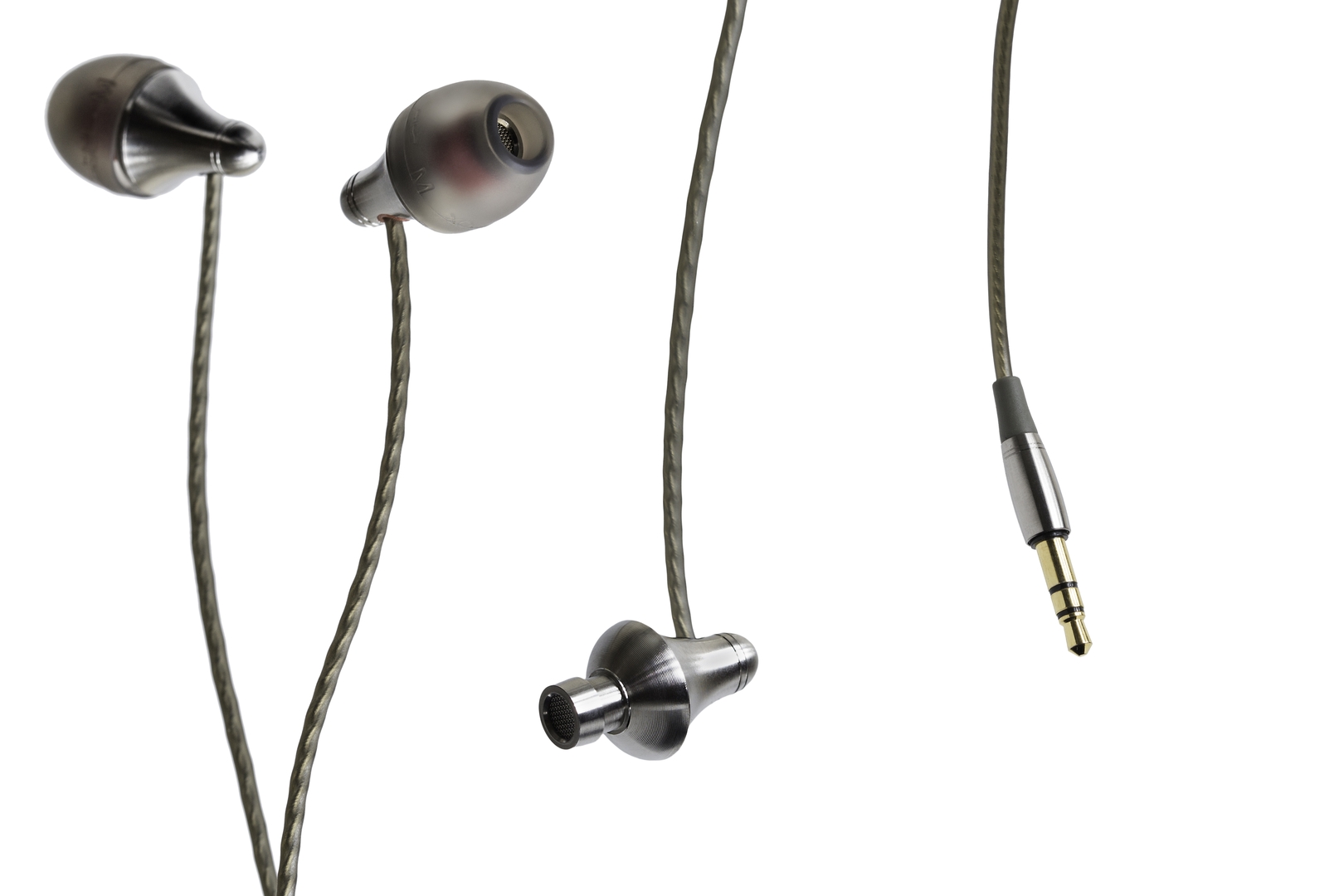
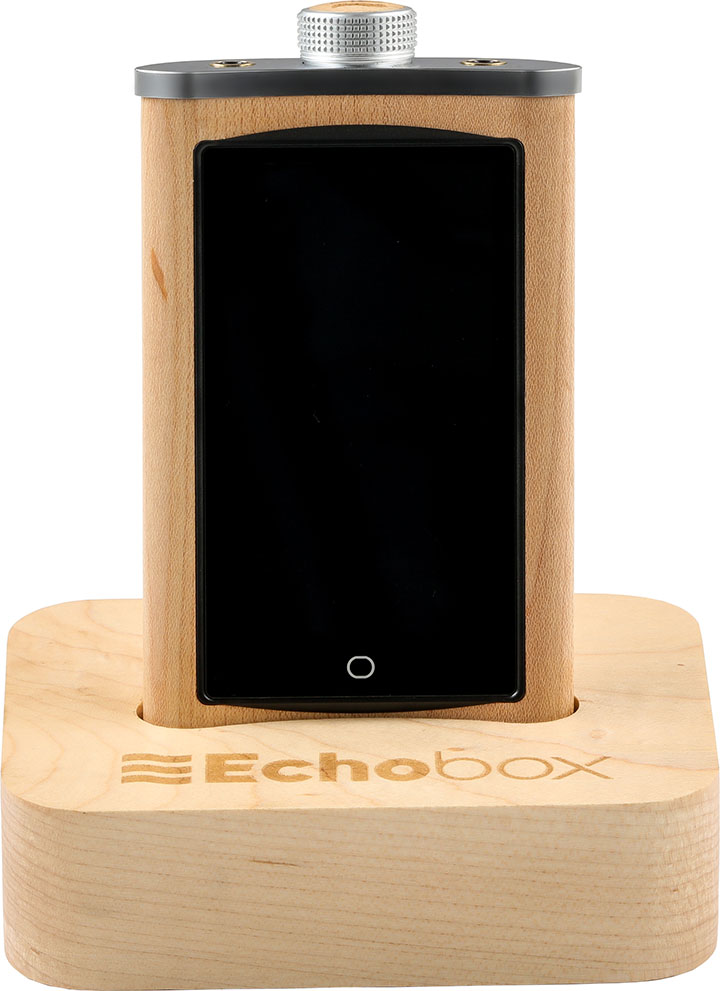
We have collaborated with the smart guys at Echobox to bring an fantastic competition with the chance to win a complete Audiophile Starter Kit, comprising the exciting new Explorer DAP (in one of a choice of colours), a matching dock, and a pair of MFI (Apple Certified Microphone) Finder X1i Earphones, a complete system worth more than $800! The Explorer DAP is so new even we’ve not tested it yet, but the Finder X1 earphones were reviewed by Chris Martens in issue 139 of Hi-Fi+.

Chris wrote that Finder X1 comes with, “…a set of three screw-on, colour-coded white, black, and red tuning filters that allow users to adjust the sound signature of the X1s to suit their tastes.” According to Echobox, the white filter, “offers a warmer sound, with more bass and less emphasis on treble, while the black filter creates a more balanced sound, and the red filter is the brightest of the three”.

The X1s offer high apparent build quality, sleek design, sophisticated use of materials, and – with the right filters in place – a sound that is vibrant, expressive, and alive. Given their reasonable price, who could wish for more?”

Competition Question

Which of the three colours of Finder X1 filters does Echobox say produces the most balanced sound?

A.         White

B.         Black

C.         Red

To answer, please visit Echobox’s dedicated competition page at www.EchoboxHiFiPlus.com Alternatively, send your answer on a postcard (including your name, address, and contact details) to X1 Finder Competition, Echobox Audio LLC, 604 Arizona Ave,Santa Monica, CA, 90401, USA


Competition Rules

The competition will run from October, 6th 2016 until December, 1st 2016. The competition is open to everyone, but multiple, automated or bulk entries will be disqualified. The winner will be chosen at random from all valid entries, will be contacted via email (where possible) and their name will be published in the magazine. The Editor’s decision is final and no correspondence will be entered into. Absolute Multimedia (UK) Ltd. is compliant with the Data Protection Act and UK laws apply. Our policy is such that we will not pass on your details to any third party without your prior consent.

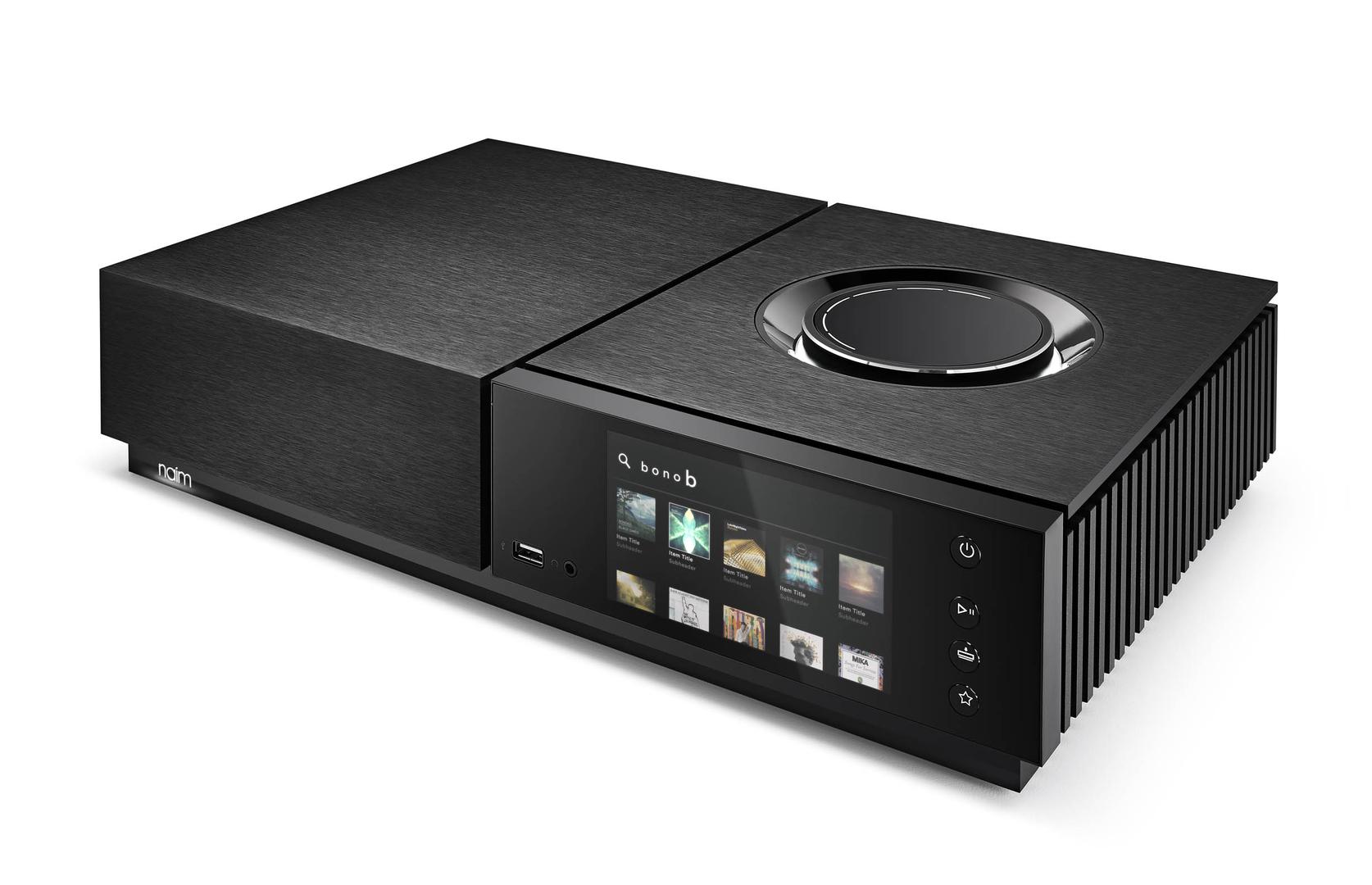
Four new from Naim

We missed the boat on the latest Naim news, thanks to a rogue website breaking embargo while I was on the flight out to Rocky Mountain Audio Fest. So, instead of simply running the same information on the quartet of new Naim Uniti products (replacing the previous quintet), I thought I would try to concentrate on the reaction to the first two models, heard both by a scoop of audio journalists (other collective nouns are available) at the Naim factory, and the first public outing of the same at RMAF.

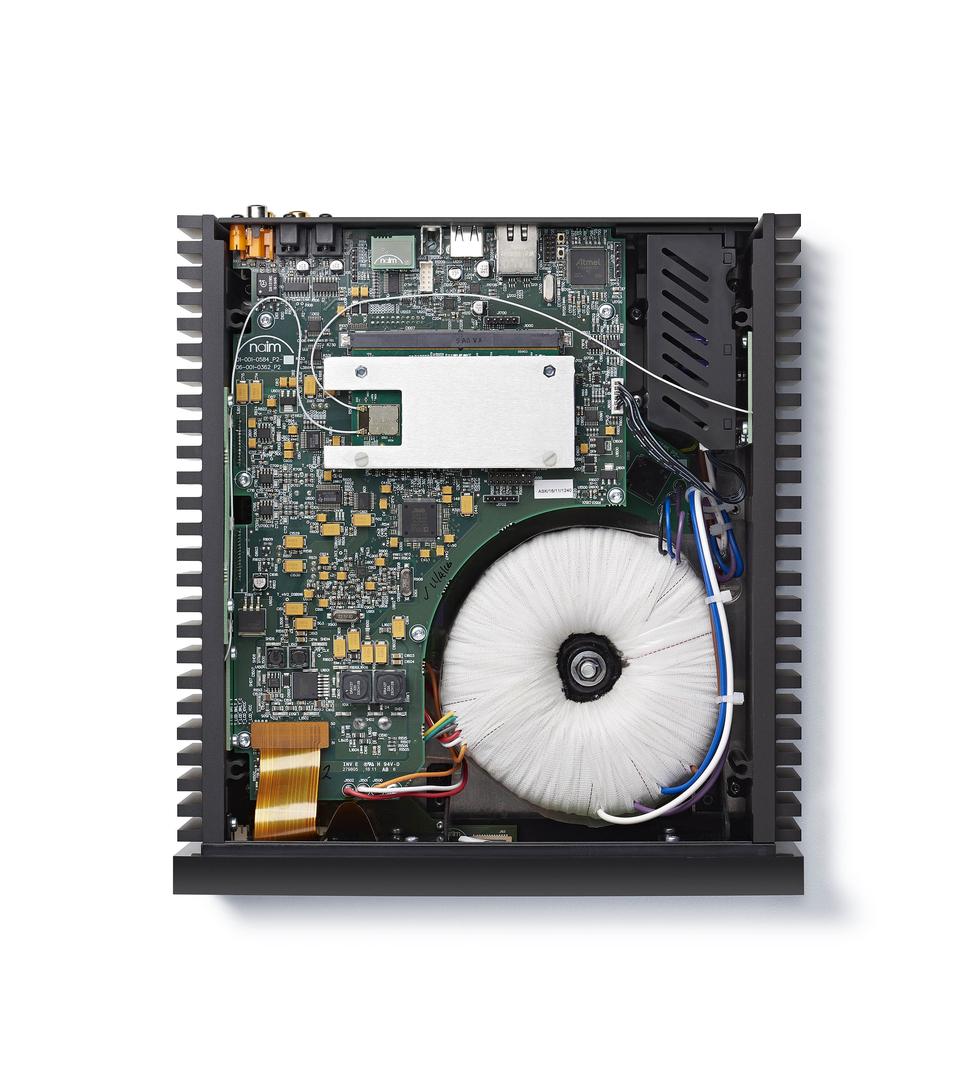
The first two models to launch were – coincidentally – the first two to be seen both privately and in public. The £1,600 Uniti Atom (replacing the UnitiQute) is a half-width, all-in-one network player, with the large top-mounted controller found in the Statement and Muso, a full-colour 5” widescreen display that extends across most of the front panel. Like all the new Uniti range, the central aspect of this design is a completely new streaming platform, incorporating a 40-bit SHARC DSP chip and Burr Brown DACs and a completely redesigned circuit with significantly greater onboard memory, and improved wireless connectivity. The Atom uses a 40W Class AB amplifier, but can be upgraded with a power amplifier, and features an analogue RCA pair of inputs alongside the coaxial, optical, USB, and RJ45 network connections. Wireless and AptX Bluetooth are available as standard and an optional HDMI connection will be available soon. Atom can connect using AirPlay and Google Cast for Audio, it is comfy talking to TIDAL or Spotify Connect, and can access Internet radio stations.

This is no small change, and required significant investment in time and people to develop. Naim claims this is a two-year project, and required the R&D team expand from seven to 25. As they can all handle 24bit, 384kHz PCM and up to DSD 128, delivering up to 12 separate 24/384 files simultaneously across a network, the file serving has been greatly enhanced.

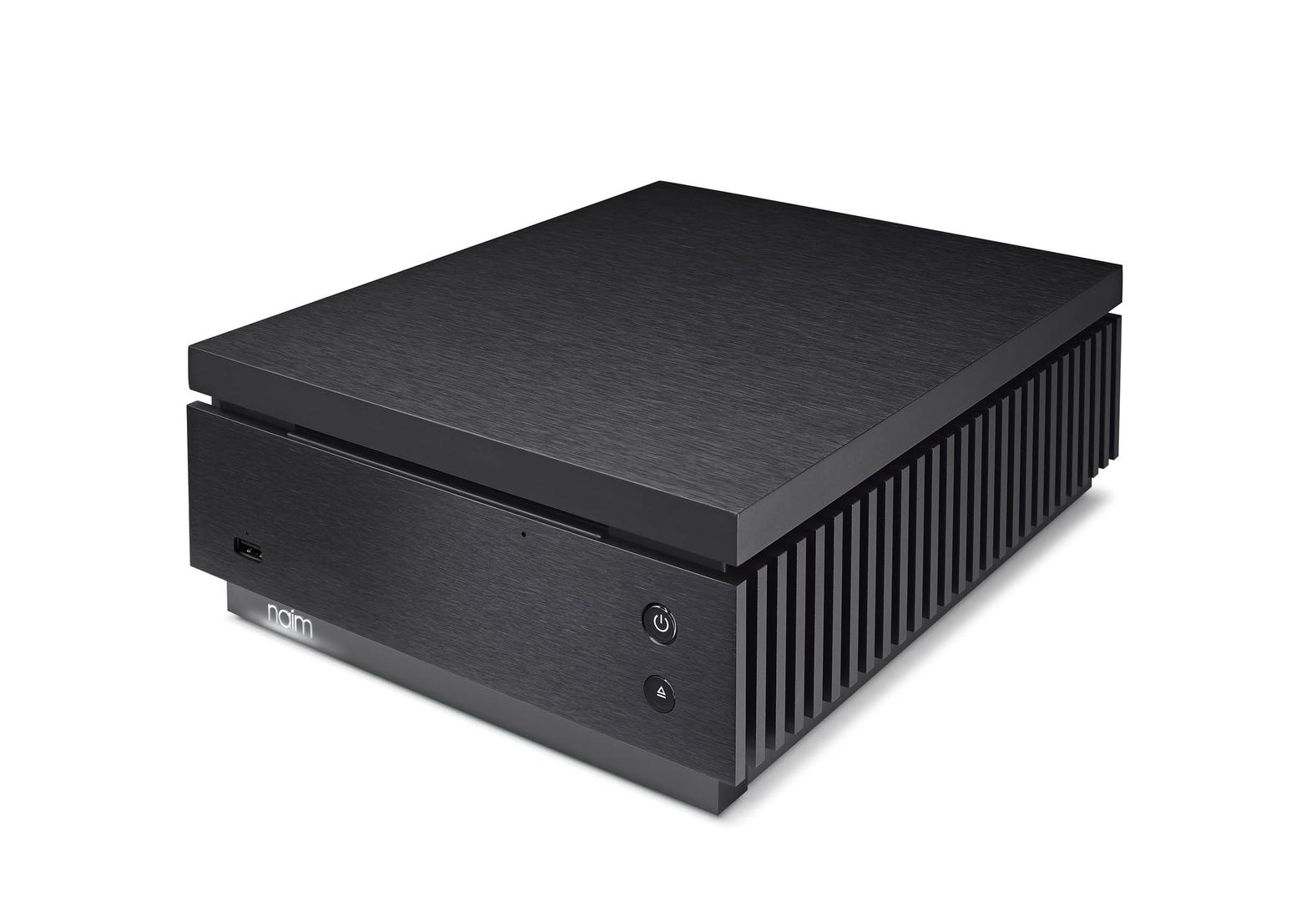
Atom is joined by the Uniti Core ripper/server/player (£1,650). This replaces the more expensive UnitiServe, building a full platform in its own right running under custom Linux code. The Core comes complete with two USB sockets front and rear for uploading and downloading files, a RJ45 connection for Ethernet connection, and a BNC S/PDIF connection for direct digital audio hook-ups to DACs. The Core does not include a built-in HDD, but instead includes a caddy for a HDD (Naim is building a list of useful compatible drives). This is useful, because not every network user will want internal storage as they may already have a NAS drive for storage.

These two models will be in the stores in the next few weeks and will be followed by the £2,999 Uniti Star, a full-width all-in-one device complete with ripping CD player and music storages, and the top of the range £3,800 Uniti Nova integrated player. These replace the Uniti 2 and SuperUniti respectively, with the UnitiLite model effectively fading away.

The overall look to these new Uniti models draws heavily from both Statement and Muso, pulling away from the design of the Classic line with its curved front and green display. The large, top-mounted rotary controller is also a function of the newer generation products, and is echoed in a sophisticated bidirectional remote handset. This design works well for one-box units like the Uniti range and the Muso models, and it also works well atop the giant Statement preamplifier, but if this is part of a gradual design-change roll out across the range, I’m not sure how it will sit in a rack of electronics. And, with the new Uniti platform in essence out-performing the existing streaming option on a number of levels, changes to Classic models will likely follow soon.

The new Uniti designs are sharp-edged – almost Densen sharp – giving the new quartet a more ‘squared-off’ look than existing Uniti models. And, like the latest generation of Naim products, it looks to ‘float’ on white-lit transparent acrylic than the more traditional four feet of earlier designs.

A small party of journalists were invited down to the Naim factory to tour the new production facility, which will comprise several workstations designed purely for Uniti, with everything built in-house on a jig-based assembly system, rather than more traditional production line techniques. This has helped keep prices similar or even lower than the previous version of Uniti.

Then we were shown Naim’s slightly overdamped listening room for a short demonstration of the first two Uniti products, the Atom and Core, driving a pair of Focal Aria floorstanders. The sound retained the typical Naim bright, clean, and fast sound, was perfectly capable of driving the Focals well even at fairly high volumes in so large and overdamped a room filled with equally overdamped journalists. There were a couple of minor operational glitches in the demonstration, mostly to do with running two networks on one network, but the overall effect was a fast and fun sounding Naim system

Within seconds of the announcement it seems, the UK forums dedicated or loyal to the Naim brand exploded into life. While it would be good journalistic form to lie about this, the reaction – based on nothing but a press release and photos – wasn’t quite as vitriolic as expected, given the fairly substantial changes to the external design. Yes, the usual ‘why is the logo not green?’, the inevitable ‘Julian Vereker will be turning in his grave’ and general ‘the sky is falling’ comments were rolled out, but equally there were many who liked the new look, and felt the products moved the brand more toward the stylistic cues of the Statement and Muso products.

This was, however, quickly followed up by the first public outing of the Atom and Core at RMAF, again driven into a pair of Focal Aria floorstanders. The first public outing is always something of a crucible, and judging by the people I spoke to in the room and around, it seemed like it will be deemed a success. In particular, people seems to love the new interface, and how the larger screen combined with the new top-mount control and the app combine seamlessly to make accessing and playing music almost Sonos-grade easy, but with a sound quality that made the Atom more than welcome in among the high-end audio extremes. One or two show-goers even pointed to the Naim room as being one of the best sounding at the show. I don’t think I’d agree (there were better sounds in about five or six rooms, but the combination of pace coupled with a very natural tonal balance made it a room that many could ‘chillax’ in and the room seemed less like an authoritarian man cave audiophile room and more like a meeting place for like minded music lovers. This is a great sign for the Naim system, in my opinion, as it fits the profile of Uniti perfectly.

The tougher test might just come this week, when the Atom and Core are seen at the upcoming and new Indulgence show at the Novotel London West hotel, in Hammersmith in west London. Here, it will be played to the Naim home crowd, the self-same folk who are the most likely to criticise the new Uniti products for not looking like the old Uniti products. Personally, I think if they can get over that built-in bias, they’ll love them! 

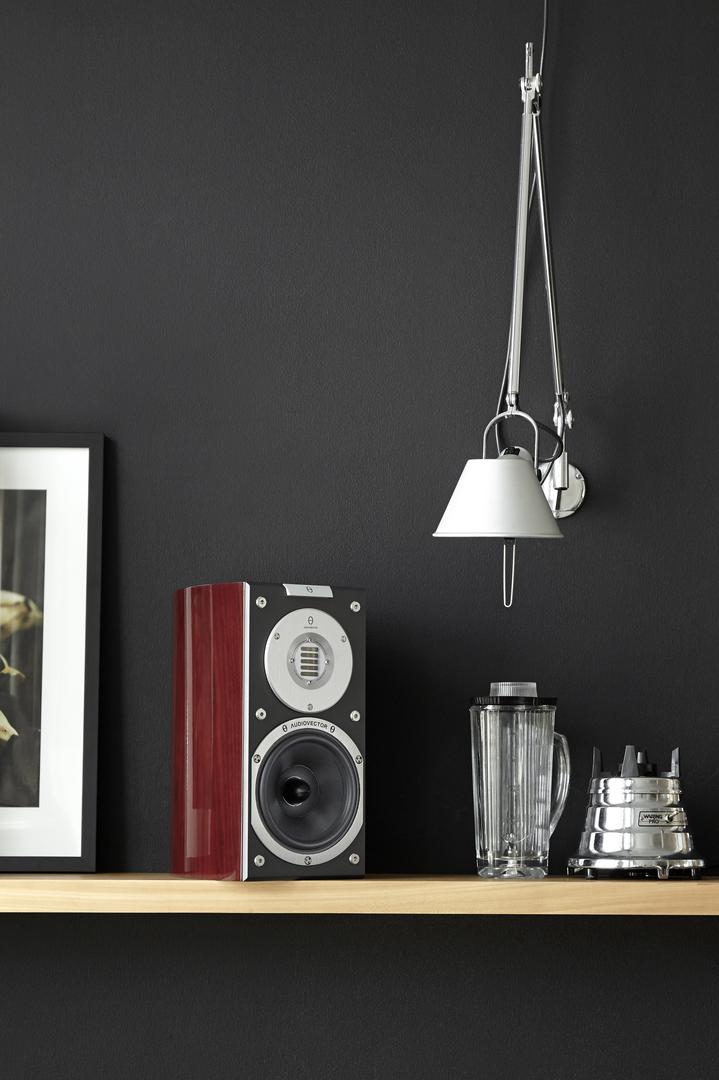
Audiovector SR1 Avantgarde Arreté standmount loudspeakers

The unique upgrade path offered by Copenhagen-based speaker maker Audiovector is absolutely great, but in reality many buyers don’t need to take advantage of the scheme. People, it seems, largely buy either the entry-level Super of the top Avantgarde Arrete version of any specific model – rarely the ‘tweeners’. So, in to looking at a specific model in the SR range, it stands to reason that the best models to check are the extremes of the range.

When it comes to the SR1 standmount, the logical place to start is at the SR1 Super; it’s an entry point to the SR range, so why not use the entry point of the entry level speaker? In fact, the reverse is true, too. The SR1 Avantgarde Arreté is the pinnacle of Audiovector standmount technology – if you like what Audiovector does and either like standmounts or have no space for floorstanders, this is as good as it gets.

Audiovector also recently changed its S-series from Si to SR series. Launched at the end of 2014, the changes between the lines are more evolutionary than revolutionary, with improvements to materials, crossover, and cabinet construction techniques. But this is academic for the Audiovector S or Si owner, because the best thing about this SR series is it’s available to any Audiovector S-series user from the last 10 or so years. Practically everything in an Audiovector S1 or Si1 loudspeaker can be brought up to date, even to the point of changing the finish of the loudspeaker should you wish. Basically, unless you have a loudspeaker cabinet so fundamentally damaged that it is uneconomic to repair, you can insert your old S-series speaker, upgrade everything, and walk out with an essentially new loudspeaker. But, if you have a S1 Super or Si1 Super, upgrading it to a SR1 Super isn’t – and shouldn’t be – an option. Instead, if you have one of these models and fancy a spot of upgrading, go for the Avantgarde Arreté instead; you’ll not regret it.

The SR1 in all its guises is a two-way rear-ported standmount, using a non-parallel tapered back design, to minimise internal standing waves. The tweeter (with rear-radiating air flow designed for good soundstaging) is coupled with a 152mm Carbon Composite bass driver. Along the way from Super to Avantgarde Arreté, the SR goes through three different tweeters, culminating in the Audiovector-built AMT ribbon design, a ‘no energy’ mass loading of the front baffle and the rear plate, a revised and cryogenic-treated 4th order Linkwitz Riley crossover, and even shock absorbers built into the bracing. The net result of these changes is a loudspeaker that returns a frequency response from 45Hz-23kHz in the Super, to 39Hz-54kHz in the Avantgarde Arreté. Focusing on the frequency response on its own, however, only shows a fraction of what the SR1 can do in its Avantgarde Arreté guise can do.


This is a loudspeaker that demands ‘good’ from its partners. Good stands (Audiovector’s own are ideal), good cables (ditto), good electronics, and a good installation. The natural partner for Audiovector is Naim Audio – because for the longest time the company was Naim’s Danish distributor – but this is not a mandatory mix, and I’ve heard Audiovector sound extremely good with Arcam, Devialet, Gryphon, Primare, and more. Both the specs of the loudspeaker and the listening suggest the matching process is more down to quality of electronics than sheer muscle power, although the SR1 can handle its fair share of brute force, too, should the need arise. I used the SR1 with both the Naim SuperUniti and the excellent Moon ACE one-box do it all amplifier (more on that in the next issue). There is also a Discreet version, with its own hub and active loudspeakers; we’ve tested Audiovector Discreet active loudspeakers before and find them excellent, but went with the passive standmounts for the purposes of this test.

Installation is fairly straightforward, and the usual ‘equilateral triangle, with a slight toe-in’ rules apply. But it’s here where Audiovector begins to show what it can be capable of. Just place them in the room as a ‘first fit’ as described and you’ll get good sound from them. Take time to install them with great care and attention, in particular making sure the distance from the side walls, rear wall, height and overall level are just right, and you go from ‘good’ sound to ‘stunning’ sound. This level of precision installation is usually the preserve of loudspeakers with impressive five-figure price tags; at this level, high precision installation is still a good thing, but the rewards are relatively minor. Not with the SR1 Avantgarde Arreté – it isn’t the kind of loudspeaker that will bite you in the qualities if the installation isn’t perfect, but if you think they sound good out of the box, just wait until you spend a few hours getting them just right!

I know that it’s a misappropriation of the acronym, but ‘SR’ in the Audiovector SR1 Avantgarde Arreté could well stand for ‘speedy response’. These loudspeakers have an extremely quick transient response; play complex drum and cymbal patterns (forget the audiophile drum records, I’m talking quick-fire Gene Krupa or Bernard Purdie, or Clyde Stubblefield’s playing on James Brown’s ‘The Funky Drummer’) and the SR1 reacts so quickly you forget there’s a speaker in the way. It just sounds like a drummer. It’s clean, too: you can quickly move from dirty (in a good way) funk to extremely cerebral Mozart piano concertos [Mozart: Great Piano Concertos, Ashkenazy, Philharmonia Orchestra, Decca] and the SR1 Avantgarde Arreté shifts genres without turning a hair.

I think you can best describe the SR1 Avantgarde Arreté’s performance as being possessed of an absence of compression. This tends not to be an immediate identifier –most will initially like it for its fidelity, its natural way of dealing with percussion and bass notes, and that sheer speed of delivery. But these all ultimately conjoin into one extraordinarily uncompressed sound. You tend not to notice this ‘whole’ because you are too busy enjoying the improved aspect of sound you focus upon, be it detail, soundstage, dynamic range, micro-dynamic subtlety, vocal articulation… what have you. However, over the course of a few hours, you begin to notice that those other aspects of a performance that don’t immediately grab you have been subtly improved, too. Pretty soon you begin to realise that the sound is just more free, and  less compressed, than most standmount loudspeakers.

Perhaps the most obvious signifier of quality in the Audiovector SR1 Avantgarde Arreté’s performance is you tend to notice different recordings more than limitations in performance. Move from a recording made in Studio 2 of Abbey Road to one made in Capitol Studios and you will easily hear the change in environment. You’ll also start to realise why some people highly prize LPs with the words ‘A Porky Prime Cut’ scribed into the run-out groove. This might sound like an oxymoron, but different albums should sound different to one another, and many pieces of audio equipment gloss over this fact, making instead a possibly beauteous but ultimately artificial sound. The Audiovector doesn’t do that at all, it allows the listener to skip over the audiophile artifice and get right at the music, which is supposedly what it’s all about.

OK, let’s put this into some perspective. This is a two-way standmount loudspeaker. It is not a full-range design, and it probably won’t fill a concert hall with sound – for that you need more cabinet volume and drive unit surface area. The SR1 Avantgarde Arreté doesn’t change or even bend the laws of physics. However, they do sound bigger than their cabinets would suggest, and although it’s a ported design, you won’t hear the port playing along unless you have a point to prove… and a stethoscope. Also, if your habits involve being hugely ambulatory during your listening sessions, the AMT tweeter design is best suited for sit-and-listen types: it has good horizontal dispersion, but the vertical component isn’t as wide as a dome tweeter (that being said, angling the loudspeaker upwards slightly does redress the balance).


I’m really, really impressed by the Audiovector SR1 Avantgarde Arreté. They do so many things right, and so little wrong, that you could easily put a ‘1’ in front of the price and people would still stand by its sound. They are materially, tonally, physically, and most significantly financially different from my Wilson Duette IIs, but the Audiovector is the first standmount loudspeaker priced considerably below those Wilsons that gave them a serious challenge. That’s how good the SR1 Avantgarde Arreté can be. Highly recommended – you bet!

Technical Specifications

  • Type: Ported two-way standmount loudspeaker
  • Drive units: 1× Audivector-produced AMT ‘Avantgarde’ folded ribbon tweeter, 1× 152mm carbon composite mid-woofer
  • Frequency Response: 39Hz-52kHz (-6dB)
  • Sensitivity: 87.5dB
  • Nominal impedance:
  • Crossover point: 2.8kHz
  • Maximum power handling: 200W
  • Finish: eight, including matt and gloss white and black, four piano gloss wood veneers
  • Dimensions (W×H×D): 19×37×28cm
  • Weight: 12kg each
  • Price: £3,312 per pair (+£300 for custom finishes)

Manufactured by: Audiovector

URL: www.audiovector.com

Tel: +45 3539 6060

Back to reviews

Read more Audiovector reviews here

Linn Klimax DS network music player

Back in 2007, Linn Products launched a game-changing product called the Klimax DS. It was the first post-physical digital streaming player to really take music seriously. It underwent a couple of changes in the intervening years, but the basic package remained essentially unchanged for one very obvious reason – it sounded bloody good. 2007 in streamer years is ancient, but the Klimax DS has stayed the course, and any Klimax player can be brought up to date to the latest ‘DS/2’ standard.

But now there’s the Linn Klimax DS (the so-called ‘DS/3’), and everything has changed. And, of course, what changed with the DS also applies to the DSM, which adds HDMI and line-level preamp functionality to the standard DS streamer. As both of these products feature the Exakt RJ45 links for fully digital active (aktiv, in Linn-speak) connections to many Linn, B&W, KEF, and Kudos speakers, the preamp is superfluous unless you are adding a line-level source.

The core (kore?) of the latest upgrade is what Linn calls its Katalyst DAC architecture. In many digital systems, digital conversion takes place under fairly tightly constrained digital architectural limitations: the circuit itself is often a variation on a theme of the application notes or application board sent out by the chip designer. In fairness to some makers, there are not a lot of options open to an audio engineer faced with a chip that has very tightly specified demands, but this leads to the somewhat erroneous but understandable concept that any digital product essentially ‘sounds like its chips’.

Those who know their way around digital design don’t follow so narrow a path. Some – like Chord Electronics and dCS – go as far as to design their own DAC from scratch. Linn went instead with the Katalyst architecture, and just as the Exakt system launched to the pithy ‘the source is in the speaker’ sound-byte, so Katalyst and Klimax is all about ‘a DAC is more than just a chip’. Katalyst involved scanning all the chip catalogues on the planet in search of devices flexible enough to accept not just a single voltage, but multiple power supply feeds – two for modulation and three for the conversion stage – all fed from an extremely stable and fully isolated voltage source. This is perhaps not unexpected from a company like Linn, which has a long history in making stable voltage power supplies for devices like the Radikal for the LP12 turntable, but the process required looking beyond the usual suspects for DAC chips, all of which accept a limited voltage input to the chip, despite that power feeding a range of different sub-systems within the DAC.

Power feed alone makes a big difference to the performance of the DAC, but that’s only part of the Katalyst architecture. The signal is fed through a data optimization process (a 16x, 768kHz upsampler working at 35 bit precision, then to a 8x, 6.144MHz modulator) before being passed to an array of bitstream DACs, and finally passed to a new analogue output driver. The whole digital signal path from upsampler to the main conversion of the DAC array, is governed by a high precision master clock.

This data optimization system largely obviates the need for super high-resolution files and DSD, because the upsampling process raises 16/44 to 24/192 PCM files up to such a high performance level internally. Given Linn has been able to track what digital streaming users actually listen to (not individual listeners in some kind of Big Brother tracking, but the Linn DS users as a cohort), it seems that we are moving away from local collections of manicured super high-resolution files and toward online services like TIDAL. As a result, the company sees no need to break its own rules about ‘open, commonly used’ formats. Moreover, Linn’s Studio Master recordings are sold as 24/192 FLAC files, but are also sold as SACD discs, so I guess they would have a good track onwhat is and isn’t important in high resolution audio. This is at odds with the somewhat enforced DSD/MQA ‘acronym arms race’, and I respect Linn’s stance on this.


Linn Klimax DS fits in the standard Klimax chassis from 2007 (very early Klimax cases need some internal surgery to fit), and the solid aluminium chassis with internal chambering to physically separate digital, analogue, logic, and power supply is still a very good way of making a digital device.Linn retained the chassis, and designed the latest DS/3 architecture to be an almost direct replacement for the existing internals of the predecessor. From a manufacturing standing, that means no retooling or reworking the casework, which given the sophistication of the case is no bad thing. It also allows existing Klimax users to upgrade without losing out.

Linn retains a loyal following, for good reason. And the Klimax demonstrates a major part of that good reason. If you are the owner of an existing Klimax, you don’t end up consigning that expensive streamer to trade-in or eBay hell. Instead, if you want, your existing Klimax gets the full DS/3 treatment, and you get your old Klimax DS/2 back in a basic ‘Renew DS’ box. And now it’s time to call on the hackneyed car analogy, because that’s like driving your one or two generation old Mercedes S-Class into the showroom, asking the salesperson if they could turn your old S-Class into a new S-Class, then give you back the original drivetrain, electronics, safety features, and interior of that older S-Class, in a new C-Class body. What you do with your Renew DS is up to you: an initial comparison is obvious, but then you could use it to extend your system to another room, adding amp and speakers along the way, you could hand it down to a family member or friend (+500 brownie points guaranteed), or you will get very good money for it if you choose to sell it on. Whatever you choose to do, Linn’s ‘leave no Klimaxer behind’ plan seems eminently sensible to me.

Because this was a very hush-hush review, with strict embargos and non-disclosure agreements that explained in graphic detail what would happen to my technical area if I even breathed a word about this product before the middle of September, I listened to the DS/3 in a top-spec Linn system in Scotland, and I used a Klimax DS/2 as comparison.  This, however, is a decent place to start because the DS/2 is already among the best digital streamers out there, and many DS/2s will be used in this system context.  I had expected the comparison process to be a protracted, nuanced affair, trying to define subtle differences between products that really weren’t that different.  So, out came ‘Son of a Preacher Man’ from Dusty Springfield’s justly famous Dusty In Memphis album [Phillips], which sounded extremely good on the DS/2. Two bars into the same track on the DS/3 and it sounded like she was singing with a band, where the DS/2 now sounded like she was singing to a backing track.  It was as if a group of better and better-rehearsed musicians had turned up. In truth, it took longer to acclimate myself to the conditions than it did to parse the differences between the DS/2 and DS/3.In the context of a system you know, if you already have a Linn Klimax DS or DS/2 the amount of time you will need to audition the DS/3 before realising you have to buy a DS/3 is about twice as long as it will take you to read this sentence.Naturally, this hot Linn-on-Linn comparison action came with several Studio Master albums from the Linn Label. Perhaps the most significant was the Largo from Beethoven’s Piano Concerto No. 3 [Scottish Chamber Orchestra, Linn Records]. This is a wonderful piece of music, played beautifully at the best of times, and on the DS/2, listening was a therapeutic experience, as it felt as if your heart rate and blood pressure calmed in the listening. But the new DS/3 took this to new levels. It felt like Beethoven was working on you at a synaptic level. This felt like a serotonin burst… I probably wasn’t smarter or a nicer person for the playing of this track, but I felt a burning desire to work some differential calculus while rescuing a kitten. ‘Get Lucky’ from Random Access Memories by Daft Punk [Columbia] sounded like ‘Get Lucky’ on the DS/2, but on the DS/3, it sounded like ‘Get Lucky’ on cocaine, in gold lamé hot pants, and with glitter sprinkles.


Then there’s the whole finding new music aspect, which comes as a result of that effortless TIDAL connectivity. ‘String Trio – Continuity Theory’ by the Janaki String Trio on their Debut album [Yarlung] is not something I would normally play, but I happened upon it almost at random and found it profound and powerful.

‘Profound’ is the watchword, here. The DS/3 simply makes music more profound. That sounds trite, but it holds throughout. Although the comparison between DS/2 and DS/3 is an instant one, the difference also has more staying power. With less ‘filter’ in the way of the music, the Klimax DS/3 opens the listener up to so much greater depth to their music, and as a result sessions get protracted. I sat and listened to all of Zappa’s Joe’s Garage [Zappa Records], smirking along with all the crass jokes, as well as just enjoying the music and the musicianship.

Like the best LP replay systems, you can follow every line of the music, without losing sight of the composition and intent of the music. This was possible with the Klimax DS/2, because of that streamer’s unfatiguing delivery and inherently ‘undigital’ treble, but the level of musical insight the DS/3 brings to the music just makes the whole process a lot more organic, in the way you might turn your attention from one musician to another, or from melody to harmony, when listening to live music.

It’s not just audiophile-approved pieces of music that have this kind of effect through the DS/3. ‘The Hunter’ by bizarre Icleandic space pixie Bjork, ‘Because’ by the Beatles, ‘God Only Knows’ by the Beach Boys, even ‘Satellite’ by Nine Inch Nails: all captivate, all drag you into the music. This is music replay as orgiastic tribal stuff. The last time it got this atavistic, I’m sure there was a big black monolith and a thigh bone involved.

The strange thing about the Klimax DS/3 sound is you don’t tend to talk about the sound, more about how the sound has an influence on you. It is, obviously, extremely detailed, very tonally accurate, dynamic, coherent, and possessed of the sort of ringing-free, effortless treble that makes a lot of digital audio sound, well, digital. But, where many other products focus on these aspects of performance, this does that rare holistic thing that makes you reach deeper into your musical collection, whether locally streamed or on TIDAL or Qobuz. If you have spent any time with the Klimax DS or DS/2, you’ll know what I am on about here, and what the Klimax DS does, the Klimax DS/3 does an order of magnitude better.

In fact, the first three words I wrote on my note pad sum up the Klimax DS/3 effect better than all the other 1997 or so words written here. And I wrote them in capitals and underlined them twice for good measure: Holy. Living. F**k. That’s the ten-second later comment, and it was still relevant at the time I put away the note-pad. I’ve not heard every single digital device, but I’ve heard a lot of them, and Klimax DS/3 is the best of the ones I’ve heard, or at least the best I’ve heard that don’t cost as much as a decent luxury car. And even at the super-lofty end of high-end digital, the Klimax DS/3 stands with the best of them, and even shows a clean pair of heels to some of audio’s upper echelon with ease. It might even be the best of all of them, and therefore comes profoundly recommended.

  • TECHNICAL SPECIFICATIONS
  • KLIMAX DS/DSM
  • Type: Network music player (DSM with preamp functions)
  • Analogue inputs (DSM only): 1× Balanced XLR pair Digital input: Ethernet RJ45 (DSM adds 3× HDMI Type A, 1× S/PDIF RCA also configurable as output, 2× Toslink)
  • Analogue output: 1× Balanced XLR pair, 1× unbalanced RCA pair
  • Digital output: 2× RJ45 Exakt link (DSM adds 1× HDMI Type A)
  • Supported file types: FLAC, Apple Lossless (ALAC), WAV, MP3, WMA (except lossless), AIFF, AAC, OGG
  • Audio sample rates: 7.35 k, 8 k, 11.025 k, 12 k, 14.7 k, 16k, 22.05 k, 24 k, 29.4 k, 32 k, 44.1 k, 48 k, 88.2 k, 96 k, 176.4 k, 192 k
  • Word Depths: 16-24bits
  • Control Protocol: Compatible with UPnP™ media servers, UPnP™ AV 1.0 control points, OpenHome.org compatible
  • THD+N (line output): THD+N < 0.0007 %
  • Dynamic range: >110dB
  • Gain range: -80dB to +20dB, 1dB steps
  • Finish: Black or silver
  • Dimensions (W×H×D): 35×6×35.5cm
  • Weight: 8.6kg
  • Price: Klimax DS £15,800, DSM £18,900
  • Klimax DS upgrade £3,850,
  • Klimax DSM upgrade £4,200

Manufactured by: Linn Products Ltd

URL: www.linn.co.uk

Tel: +44 141 307 7777 

Tel (UK Freephone Only): 0800 001 5111

Back to reviews

Read more Linn Products reviews here

Prism Sound Callia headphone DAC preamplifier

To the audiophile, Prism Sound might not be the first name that trips off the tongue when it comes to high-quality digital audio coming out of the Cambridgeshire countryside. But, if you are in the studio, broadcast, or even audio test equipment world, this specialist from the tiny village of Stretham is a name to be reckoned with. This year, Prism Sound crossed the audio Rubicon and has made its first domestic product, the Callia DAC with built in headphone amplifier and preamp.

Essentially the Prism Sound Callia uses the form factor, some of the ergonomics and much of the digital nous of Prism’s Lyra USB interface; in the process gaining domestic inputs and outputs, but losing an A/D converter. Callia also supports RCA and Toslink S/PDIF, and the RCA input can be used in a professional capacity as it supports AES3-ID. In terms of formats, the Audio Class 2.0 USB input supports DSD over DoP to DSD128, and PCM to 32‑bit word lengths and 384kHz sampling rates. However, sampling frequencies beyond 192kHz are passed through a high-performance decimation filter, so hunting down 32/384 files isn’t important in this case. S/PDIF supports PCM up to 24‑bit word lengths, with multiples of 44.1kHz and 48kHz sampling rates up to 192kHz, and DSD64 within a DoP frame.


In terms of technology, Prism goes with an ARM Cortex digital processor, but relies heavily on Prism Sound’s own circuit architecture and reclocking stages. The last is the deliciously named CleverClox hybrid phase-locked loop to act as clock recovery taken from either local or S/PDIF input. This gives a ±50ppm local clock accuracy and a greater than 60dB/decade above 100Hz jitter rejection. This is a balanced set of specifications; as good as it gets without essentially hand-built, tight component matching that demands an order of magnitude more expense, which results in potentially tiny overall improvements. In other words, the Callia sits right on the cusp of the Law of Diminishing Returns as it applies to digital audio.

Although the Callia is a fully digital preamp with no analogue inputs. There are both single-ended RCA and balanced XLR stereo outputs, and these are variable output and controlled from the larger of the two front panel knobs (a resistive-feel potentiometer with a ring of blue LEDs to denote actual volume level). This can also be set to fixed output on that four-switch DIP panel on the rear of the Callia. This is more of a desktop digital ‘hub’ than direct replacement to an existing preamplifier, in part because of the absence of a remote option.Prism Sound went for a high-current, low-impedance headphone amp, with a series of rear mounted DIP switches on the rear panel to match the impedance of your headphones. The options are relatively limited here; less than 32 ohms, between 32 and 50 ohms, or greater than 50 ohms. Three of the four positions on the DIP switch panel mute the main output when a pair of headphones are connected, although one option allows both to play simultaneously, each with its own volume control. This DIP panel also supports legacy and current settings for DSD headroom (or line-up level) for all outputs. It’s worth a quick aside into the packaging and documentation supplied with the Callia because it shows up just how far a lot of domestic audio needs to come. The Prism Sound arrives in a well-made black with blue contrast clamshell box, the kind of thing you might expect a really highend shirt to arrive in. Inside is stiff black foam with cut-outs for the Callia, a chunky USB and power cord, a printed quick-start guide, and a neat aluminium screw-top USB stick that contains the PDF of the full manual and the requisite drivers for Windows computers. The quick-start guide is relatively basic, but will get you up and running. The PDF manual is comprehensive, not only in terms of installation and set-up, but in specifications and the explanations behind those specifications, and even a whistle-stoptour of Prism Sound’s general audio ethos, which is refreshingly down-to-earth.


The interesting thing is there are so many studios using Prism Sound encoders, decoders, SADiE workstations, ProTools interfaces, and mastering devices that many of your recordings already have at least one device from the brand somewhere inthe recording chain. The Callia, goes the argument, is made by the company that knows precisely how music sounds in the studio, and that knowledge extends to the home. There is an obvious temptation to opt for recordings made through

Prism Sound encoders, but in fact that’s almost self-limiting, because people may make the assumption that there is some special link from encoder to decoder. This is simply not the case, so there is no special sifting of the music collection to find recordings that use Prism Sound equipment. However, it’s actually hard to find a modern recording that doesn’t use some form of Prism Sound electronics somewhere in the mix. So, the chances are some of the albums I played featured the company’s electronics somewhere.

This is genuine studio-grade equipment brought home. Callia is no rosetinted canter through your musical collection; it very much tells it like it is. And it’s surprising how many people – when faced with this kind of stark honesty – find themselves wanting something a little less honest. In particular, it seems some would like a sound with more warmth and a little more veiling. Personally though, the unvarnished truth is attractive, even if it comes with less magic glitter sprinkles. And the Prism Sound Callia is good at the unvarnished truth. This DAC gives an insight into the recording itself. You will hear into the mix, discovering the precision of panning, the amount of reverb, the position of microphones… and the limitations to that insight are more to do with the precision of the source and the quality of loudspeakers than the DAC itself. Callia is exceptionally detailed, with extremely precise leading edges. I seem to be on a loose drummer trip at the moment, but listening to thedifference between Ringo Starr’s playing on ‘All My Loving’ [With The Beatles, Parlophone 2009 Mono remaster] and Meg White playing ‘Seven Nation Army’ [Elephant, XL] is extremely easy to follow through the Callia – both have an ability to ‘occupy’ the record, but where Starr’s seemingly-effortless ‘windscreen wiper’ hi-hat is actually swampy and unique, White’s sloppy pounding away at the drum kit is easy to spot.


Moving away from the drum kit, the same complete honesty applies throughout. You get an appraisal of the musician’s and engineer’s art from the Callia, without grace or favour. The sound of an instrument is the sound of that instrument without embellishment or subtraction, and that is a heady wine once you get used to it.

The headphone amplifier stage is very well ‘sorted’ too. You do need to take some time to experiment with the DIP switch block at the rear of the DAC to get the best from the Callia. I found in two cases, the recommended guidelines perfectly suited the headphone used, but in another a more conservative setting was called for. I’m fairly certain this is more down to the vagaries of headphone designers being editorial with the facts about their output load than variability on the Callia’s part, because when set to work with a specific headphone, it works perfectly. In fact, the adjustment of the DIP switches acts more like a headphone volume limiter than a tonal adjustment (unless you are trying to use 300Ω headphones with a sub-32Ω setting). Get this wrong and it might get loud!

There’s a lot to like here. OK, so if you want your electronics to ‘pretty up’ your music, the Prism Sound Callia isn’t for you. Instead, this is one of the most honest DACs you’ll hear. It’s an outstanding and powerful headphone amplifier, too, even if its lack of line level inputs, balance adjustment, and remote control probably limit its real-world practicality as a domestic preamplifier. That’s said, if you want a digital hub connected via long XLR leads to your active loudspeakers, the Callia and a laptop at arm’s length could be all you even need for your musical requirements. An honest, solid, and extremely accurate recommendation.


TECHNICAL SPECIFICATIONS

  • Type: Digital to analogue converter with preamp and headphone amplifier functions:
  • Inputs: coaxial RCA and Toslink S/PDIF inputs (AES3‑ID on coaxial input), Class 2.0 Audio USB type B input
  • Outputs: ¼” TRS headphone jack (on front), RCA pseudobalanced or XLR balanced stereo outputs (on rear), fixed or variable depending on settings
  • Input selection: auto or manual, LED indication in both cases
  • PCM word length: 16bit-32bit
  • Sampling frequencies: 44.1-192kHz (384kHz supported through USB, but fed through decimation filter)
  • DSD precision: DSD64 through S/PDIF, DSD128 through USB (DSD128 also fed through decimation filter)
  • Headphone impedance ranges: < 32Ω, 32Ω-50Ω, >50Ω
  • THD+N: 0.0005%, -0.1dBFS
  • Dynamic range: 115dB (line), 113dB (headphone), -60dBFS
  • Local clock accuracy: ±50ppm
  • Jitter rejection: 60dB/decade above 100dB
  • Dimensions (W×H×D): 28.5×5×24.2cm
  • Weight: 2.1kg
  • Price: £1,795

Manufactured by: Prism Media Products Ltd

URL: www.prismsound.com

Tel: +44(0)1353 648888

Back to reviews

Read more Prism Sound reviews here

Beyond Frontiers Audio Tulip SRPP integrated amplifier

Beyond Frontiers Audio (BFA) was founded in 2009 to design uncompromising, high-performance, handcrafted, hybrid electronics. Presently, the company has a three-strong ‘Tulip’ amp range, comprising stereo and mono power amplifiers, and the integrated amplifier tested here, all of which share the same substantial aluminium chassis.

Weighing in at a meaty 42kg, the Tulip SRPP is one of the heaviest integrated amplifiers in current production. There are good reasons for that high mass, though; a rigid chassis minimises the deleterious effects of flexing or resonating PCBs and this makes the amplifier more frequency stable as a result. In addition, the Tulip SRPP is rated at 250 Watts per channel and that large chassis is a useful means of heat dissipation.

The ‘shared chassis’ concept extended back to the previous iteration of the Tulip amplifier, but similarities end there. The original version of the Tulip simply sported a capacitor between the valve and solid-state stages, but BFA radically revised the amplifier. Specifally, BFA followed the logical progression from understanding that capacitors undermine sonic performance to actually removing those capacitors–something that was hitherto impossible in a shunt-regulated push-pull amp.

The Tulip SRPP is a hybrid design that achieves all of its voltage gain thanks to a pair of JJ Tesla ECC83S valves, together with two E88CC valves as a virtual ground reference. This voltage gain stage drives an output stage made up of Toshiba bi-polar transistors. The amplifier is a unique design by amplifier expert and BFA head designer Andria Saolcki, where the valve gain stage is connected directly to the transistors without capacitors or coupling transformers. The idea is that you get a direct valve sound that combines the freedom and openness of OTL (output transformerless) designs with the ability to drive virtually any loudspeaker thanks to the transistor output stage.

BFA’s Tulip SRPP has zero global or local feedback and uses passive relays for volume attenuation, for the best possible signal attenuation. At power on, the dot matrix display on the front panel tells you how many hours the valves have been run for, followed by a deliberately slow valve warm up designed to maximise valve life. The display shows input and volume, with a descending decibel figure as well as an ascending numerical level to keep both nerds and real people happy.

Controlling the Tulip can be achieved from the front panel button array, or through a supplied remote handset. Instead of the standard ‘plastic fantastic’ handset, the remote matches the amplifier in its brushed aluminium finish, although this can make button legends somewhat difficult to read. And ‘difficult to read buttons’ is one of the few criticisms you can level at the Tulip SRPP!

This amplifier is a single-ended design with four line inputs on high quality RCA sockets, and there is provision for optional preamp outputs should they be required. Our sample came with the optional DAC instead, which offers two coax S/PDIF inputs and a USB socket. This is the first high-resolution USB input I’ve encountered that does not require custom drivers for Windows users; let’s hope that is a portent of USB inputs to come.

The DAC chip is a Burr Brown 1794A, which upsamples all incoming signals to 24 bit/192 kHz precision as standard. The Burr Brown chipset in the Tulip SRPP was chosen for sonic performance when properly implemented, rather than specifications in a resolution arms race. In a world obsessed by DSD and 32bit, 384kHz processing, this may seem like a controversial statement, but it is one that many digital designers subscribe to… even those who have ultimately chosen to go down a different path because of commercial demands. I can’t help but admire those who stick to their guns, especially when those guns sound this good.


BFA also suggests that you can tweak the balance by ‘tube-rolling’ – using different valves and that many seem to like the sound of classic new-old-stock devices – but even in standard guise this is an extremely good amplifier indeed. The Tulip SRPP sounds like that ideal combination of a valve preamplifier combined with a transistor power amplifier, and in this case a subtle, highly refined transistor amp. It doesn’t have the fist-clenched grip that you usually get with such high power ratings, but neither is it a lightweight. Rather it manages to deliver an evenly balanced sound with a deft, light touch; there is an open transparency to the mid and top that is all valve, but the midrange isn’t pushed to the fore leaving bass and treble lagging. I did most of the listening with Bowers & Wilkins 803 Diamonds and the Vivid B1 Decade. In both cases, the bass of the Tulip SRPP was always clear and extended, but with the Vivid loudspeaker, amp and speaker worked in true harmony. The match was a listener’s dream and a reviewer’s nightmare because no writing work gets done!

As with virtually all amplifiers, there seems to be a conscious choice between ‘heft’, and ‘texture’ on the designer’s part, and the BFA design is very much geared toward ‘texture’. The Tulip SRPP’s sound is ideal if you prefer ‘convincing music making’ to ‘internal organ reorganisation’. In other words, if you want to hear the bass notes that are being played, how they are phrased, and what the musician is doing, rather than being beaten about the head with a bass guitar, then BFA’s approach is the way forward.

I did a fair amount of listening via the USB input and got very respectable results, proving the optional DAC is no mere add on. James Blood Ulmer’s remarkable recording Live at the Bayerischer Hof [In+Out Records] sounded as cavernous as it can and had an effortless sense of power and presence; the big kick drum presented an easier, more musical sound that didn’t threaten to crunch my bones, but rather let the track flow. The result was one of the most musically engaging results I’ve had with the 803 Diamonds so far. No longer did this piece act as a mere test of dynamics; instead it returned to its original intention of musical entertainment. On Gregory Porter’s ‘No Love Dying’ [Liquid Spirit, Blue Note], the amount of midrange detail the Tulip SRPP provided meant compression used on the recording was obvious, but that detail also made it easy to enjoy the man’s spectacular voice, and all the heart and soul that he put down in the studio.

Lyricism is clearly a strong BFA trait, and it was clear on virtually everything I tried, from Stanley Clarke’s double bass on Forever [Concorde Records] – which sounded considerably more articulate than usual – to Patricia Barber’s ‘A Touch of Trash’ [Modern Cool, Premonition]. Here, the ‘hollow-state’ effect shone in the form of tremendous transparency to her voice, which had a powerful presence and reflected her precise delivery, against a backdrop of taut and tuneful bass, guitar, and drums.

The track ‘Alfa’ on Mop Mop’s Lunar Love [Agogo Records] consists of a gong-like instrument called a hang, with some artfully orchestrated drops of water, simply sounded more real. This reflects as much on the quality of the amplification, however: the effortless simplicity of the piece and the way the amp combined so much of the ambience and character of both ‘instruments’ into the room was uncanny. It was possible to appreciate the efforts that had gone into the analogue recording and the ability of the source to reveal those efforts. Next up was Tord Gustavsen’s latest release What Was Said [ECM]; here it was the female voice that blew me away. That voice was simultaneously fragile and ghostly, while having a power that did not rely on force in any form. The BFA made it clear that this is a better recording than I had initially thought.


The Beyond Frontiers Audio Tulip SRPP is a substantial amplifier that really does seem to combine valve and transistor technology in an extremely revealing, musical, and involving fashion. Its performance is such that, in combination with the Vivid B1 Decade, it turned in some of the most enjoyable and memorable musical experiences I’ve heard in a long time. The Tulip SRPP is strongly recommended.

TECHNICAL SPECIFICATIONS

  • Type: Valve and solid-state, two‑channel integrated amplifier with optional built-in DAC
  • Analogue inputs: Four single-ended line‑level inputs (via RCA jacks)
  • Digital inputs: Two S/PDIF and one USB
  • Analogue outputs: Optional pre out (via RCA jacks)
  • Supported sample rates:
  • Coaxial S/PDIF: 16-bit, 24-bit — 44.1kHz – 192kHz
  • USB: 16-bit, 24-bit — 44.1kHz – 192kHz
  • Input impedance:
  • High-level: 10kOhms
  • Output impedance (preamp): N/A
  • Headphone Loads: N/A
  • Power Output (peak): 250Wpc @ 8 Ohms, 350 Wpc @ 4 Ohms
  • Bandwidth: 10Hz – 50kHz
  • Distortion: THD +N @ 1kHz 0.1%.
  • Signal to Noise Ratio: Not specified
  • Dimensions (H×W×D): 210 × 420 × 350mm
  • Weight: 42kg
  • Price: £13,850

Manufacturer: Beyond Frontiers Audio

URL: www.beyondfrontiersaudio.com

UK Distributor: Flamingo Audio

Tel: +44(0) 121 212 9288

URL: www.flamingoaudio.co.uk

Back to reviews

Read more Beyond Frontiers Audio reviews here

Pro-Ject Audio Debut Carbon SB turntable with Ortofon 2M Red cartridge

The turntable range from Pro-Ject now extends to 23 models, so it’s no wonder that when a new one comes along, it can wind up with a rather unwieldy name. The Debut Carbon Esprit SB is so-called because it is has a ‘Debut’ plinth and is top of that parituclar range, ‘Carbon’ becaue of the carbon fibre tonearm and ‘Esprit’ because that’s an old Pro-Ject appellation for acrylic platter models. Which leaves ‘SB’ and that stands for Speed Box, which is not a separate box but denotes electronic speed switching. So there is a logic to the nomenclature, albeit not one that extends to the name appearing on the turntable itself; in fact, there is no visible branding at all. In an effort not to fill the review by repeating this deck’s full title, I’ll call it Debut from now on.

This attractive turntable is supplied with an Ortofon 2M Red moving magnet cartridge installed in the headshell of the one-piece carbon-fibre tonearm. All you have to do to set the arm up is twist on the counterweight until the arm is balanced then attempt to align the zero point on the dial with the peg sticking out the back of the bearing. It would be easier if there were a mark along the top of the arm stub to align the downforce dial, but you can get pretty close to the desired 1.8 gram tracking force by eye from the cartridge end. Anti-skate bias is provided by a weight and thread as has always been the case with Pro-Ject arms, and while it’s a slightly fiddly business to put on you only have to do it once. It’s interesting to note that Rega has abandoned bias adjustment on its entry level arms because moving magnet cartridges tend to have similar downforce and anti-skate requirements. This saves them money and us fiddling around, and so is a welcome – if perhaps controversial – move.

The Debut is a nicely executed piece of equipment with the advantage of electronic speed switching, the latter being an intuitive system; press once and the 33.3rpm light flashes until speed is stabilized, press twice for 45 or one long press will turn it off. You can even have the platter spin at 78rpm if you move the belt to the larger pulley, but a cartridge change is required. Dust is kept at bay with a plastic lid, an underrated accessory that few ‘serious’ turntables offer to their detriment, and power is provided by a wall-wart supply.  The arm base has a pair of RCA phono output sockets and an earth point, so it’s easy to upgrade the arm cable. However, the Connect-IT E cable supplied is quite a smart example with a clear casing and twisted pair wires inside.
The inclusion of an acrylic platter on this Debut is described as “an excellent playback platform” by its maker, but it’s notable that there are only three models equipped with this type of platter in the range and these are found at the top of the budget turntables. Most of the ‘bigger’ models use aluminium sandwich platters with a mat.


The Debut has a smooth and easy to enjoy presentation. It is particularly good at rendering the flow of the music regardless of style and this, combined with a high degree of finesse for the price, makes it the perfect partner if you want to chill. But given that the affordable end of the turntable market caters to a younger audience these days chilling is more appropriate. In truth, this Debut is probably still a little bit pricey for teenagers or students and it doesn’t have facilities like an onboard phono stage, USB output, or Bluetooth connectivity – all of which potentially bodes well for sound quality, if not necessarily ‘youf’ appeal.

The Ortofon 2M Red is a decent cartridge for the money (£89) and helps the Debut to deliver detail and tonal depth that contribute to the effortlessness of the sound produced. Leo Kottke’s Great Big Boy [Private Music] is a record of acoustic guitar and band with Kottke’s laconic singing. There is plenty of guitar string zing and lovely fretless bass timbre to enjoy with this turntable. Its calmness of delivery means that low level sounds are well catered for, which goes a long way to producing an engaging result. The kick drum on ‘Nothing Works’ has good impact and much of its reverb breaks out into the room; the sonic picture is not the biggest available, but it’s adequate and varies significantly between records which is a good sign of fidelity.

Bass extension and power is good if not spectacular. Burnt Friedmann & The Nu Dub Players Just Landed [Nonplace] could have more visceral grip and bigger dynamics, but the bass remains tuneful. Timing is something that most turntables can do almost by instinct, but some are more definite in this respect than others and this Debut is more about flow than stop/start leading edge definition.

There is something charming about the Debut’s approach to tempo, too – something that works really well with the lilting groove of Conjure’s ‘Betty Balls Blues’ [Music For The Texts Of Ishmael Reed, American Clavé]. Here you get lots of sumptuous tone from the brass, piano, and voice of Taj Mahal, the latter giving Reed’s fabulous words the full works. He is clearly a character when it comes to laying down the jam, and it’s a pity he hasn’t done more left-field stuff like this. The Debut helps the lyrics sound very clear, and the reverb applied to the voice is equally easy to appreciate. The sax solo on the follow-up track ‘Untitled’ is likewise extremely lyrical; it’s very easy to forget about the mechanics of the replay equipment and be carried away by the tune, very easy indeed.

With Mike Valentine’s rather more recent D2D recording of The Four Seasons [Interpreti Veneziani, Chasing The Dragon]the Debut reveals rather more groove noise and pops than usual. It could have more scale. But, while it’s tonally a little thin, the aforementioned fluency does give it the power to captivate the listener. It would have been nice to have heard more of the body of the sound that this fabulous recording captures, but the Debut’s relaxed demeanour does mean that you don’t get as visceral a result as can be achieved with the best alternatives at the price. Put on something like Binker & Moses’ saxophone and drums [Dem Ones, Gearbox], an album that is all about the physical nature of the instruments, and the Debut’s calming qualities bring out the melodic side of what can often seem like nothing more than a display of muscularity. By limiting the full power of the recording, it cuts through to the heart of the composition; whether you want your turntable to provide this sort of filter is a matter of taste but it certainly doesn’t lack appeal.

Neither does it dull more refined musical styles. Steely Dan’s ‘Gold Teeth’ [Countdown to Ecstasy, ABC] retains its fabulous contrapuntal rhythm and it’s easy to appreciate the beauty of both the lyrics and the playing, Victor Feldman’s conga is great, as is the pedal steel guitar and voice. In fact the whole piece is brimming with life; it could be more realistic, perhaps, but not a lot more engaging.


You get plenty of voltage from the Ortofon, which means that it will work with pretty well any MM phono stage. This might seem basic, but I have come across some MMs that require more gain than you might expect at the affordable end of the spectrum. I tried it with an iFi iPhono2 external preamplifier and into the MM input of a Rega Elex-R integrated amp and got great results in both cases.

Playing Laurie Anderson’s Strange Angels [Warner Bros] with the Debut I was struck by just how much of the recording’s character comes through. This is a polished, and distinctly eighties sounding album with sumptuous bass and mountains of reverb on the kick drum. The Debut let’s you know all of this and more in its own effortless style. Pino Paladino’s fretless bass sounds great and the guitar shines with a brilliance born of expensive studio time. The track made it clear that with an amp and speaker of appropriate price, the Debut is well balanced; it may be a little smooth, but that makes the job of the system easier than a more revealing source. Pro‑Ject didn’t get to 23 models with massive investment and a huge marketing budget; it did so by making turntables that sell and sell well. The Debut Carbon Esprit SB will undoubtedly join those ranks.

TECHNICAL SPECIFICATIONS

  • Type: Full-size turntable, arm and cartridge with speed control
  • Rotational Speeds: 33 1/3 RPM, 45 RPM, 78 RPM
  • Tonearm Length: 8.6-inch
  • Tonearm construction: carbon fibre with integrated headshell
  • Drive Mechanism: Belt drive via flat rubber belt
  • Speed Control: Electronic
  • Platter Type: Acrylic 12-inch platter
  • Platter Weight: Not specified
  • Bearing Type: Not specified
  • Plinth Configuration: Single piece
  • Finishes: High gloss black, red, white
  • Dimensions (H×W×D): 118 × 415 × 320mm
  • Weight: 4.9kg
  • Price: £425

Manufacturer: Pro-Ject Audio

URL: www.project-audio.com

UK Distributor: Henley Designs

Tel: +44(0) 1235 511166

URL: www.henleydesigns.co.uk

Back to reviews

Read more Pro-ject Audio reviews here

Interview with Roy Gandy of Rega Research

Roy Gandy ​started Rega Research more than 40 years ago. Since then, the company has grown to become one of the most important specialist turntable manufacturers in the world, and has expanded to encompass the full gamut of audio equipment. But the turntable is still at the core of Rega. 

Recently, we spoke with Roy Gandy as a part of our Titans of Turntable & Tonearm Technology series within our Hi-Fi+ Guide to Analogue Audio, which can be downloaded here.

Hi-Fi+: What drew you to the field of analogue audio in the first place and what do you regard as your specialties within that field?

RG:  Music drew me to the field. As a student I could not afford equipment to listen to music and so I had to make it.  My specialities would be turntable, arm, and cartridge design along with an understanding of the turntables function and 40 + years of research and development into the subject.

Hi-Fi+: Many in our industry say that analogue audio presently is enjoying a renaissance. Would you agree with this viewpoint and, if so, what do you think is driving that renaissance?

Yes:  The renaissance is a very large growth in a very small niche market.  I hope the growth is due to the possibilities of better sound quality but there are many other factors such as the difficulties with downloading, streaming, and the poor sound quality of any current digital format, particularly MP3, phones, and tablets.

Hi-Fi+: How have engineering practices changed since you built your first turntable? Have the changes influenced subsequent designs?

At Rega we have seen huge R & D investment and changes to almost everything we make.  However, elsewhere little has changed except that the increase in interest has seen a growth in massive, heavy acrylic sculptures.

The market success of our unique and controversial designs, which are based purely on demonstrable sound quality, has influenced all our turntable designs and we currently produce five models instead of the two which we produced for most of the company’s life.

Most of our changes have come from new lighter and stiffer materials along with the increased accuracy available from CNC machines at a lower cost.  We are also very proud of the hundreds of new design ideas that our research has allowed us to produce.  Most of these are insignificant in marketing terms but hundreds of small improvements in shapes and materials have increased the ability of our turntables to accurately measure the micron levels of the record groove.


Hi-Fi+: What are the distinctive ‘hallmarks’ or signature elements of your analogue designs? What distinguishes your products from those of your competitors?

The “hallmark” of a Rega turntable is that it is designed to attempt to measure the minute, microscopic vibrations contained in a record groove.  We look at the real world of precision engineering and question the anecdotal mythology that has forever surrounded the idea of a turntable.

Hi-Fi+: Some prefer to treat turntables and tonearms as integrated systems whose elements should be developed in concert with one another. Others prefer to take more of a ‘mix-and-match’ approach. What is your recommendation and why?

Of course there are many people who wish to try new things. Hi-Fi in general has a large subjective element, which is ideal for those interested in experimentation and satisfying the neurotic urges that exist in many of us.  Because the turntable has an almost impossible task of measuring vibration at the micron level, any change will alter the cartridge signal.  However, in the engineering world the turntable has only an objective function and that is a machine, tool, or instrument to measure the vibration contained in a rotating record, along with inputting the energy to rotate the record in a microscopically constant manner.  The turntable, arm, and cartridge are all part of this machine and all need to be considered as a necessary part of the whole, while accepting that they require some different scientific and engineering functions.

Hi-Fi+: Being as candid as possible, how would you compare the relative merits of digital and analogue source components? What things do you think good analogue sources do singularly well?

I don’t understand why the answer to this question requires “being candid”.  The answer will depend on areas of musical interest and ability to discriminate.

Personally, I know many people for whom musical replay via YouTube on their phone or tablet is adequate for their needs and they have no interest in an increase in quality.  Most people eat readymade supermarket meals and are happy with the taste of frozen food, synthetic cheese, and factory-produced drinks.  I am one of the few percent who are cursed or charmed with the ability to obtain intense pleasure from all my senses and actively seek to create that pleasure.  Tasteless food makes me feel bad so I don’t own a freezer.  I don’t like background music or performers whose aim is stardom, but any special performer, professional or amateur, who cares and communicates, can make me cry, but I have never cried listening to recorded music of any sort. So my aim in the world of recorded music is to try and re-create the emotional elements that can make people cry.  I own about three thousand LP’s and about two hundred CD’s.  I still sometimes actively listen to music on LP but rarely on CD except maybe to transcribe song words or analyze an arrangement.

The simple answer is that neither digital nor analogue musical replay is good or bad.  The artistic musical production possibilities using digital recording and mastering techniques far exceed anything possible on tape.  BUT if one wants to capture the specific performance characteristics of a special musician or an amazing voice, then this is only possible on tape and vinyl replay.

There are hundreds of thousands of badly recorded vinyl albums but maybe one or two thousand good ones.  For me, most CD recordings emasculate the music and I have only about five that, for me, are listenable.

Both digital and analogue recording and replay are massively flawed sciences and it is difficult to understand how either can work at all.  However, at its best the analogue approach far exceeds the digital both audibly and technically.  Those that claim better measurements for the digital domain are simply measuring the wrong things. 


Hi-Fi+: Which elements in the analogue audio signal path—turntables, tonearms, phono cartridges, or phono stages—have the most overall impact on sound quality?

The signal from the record cannot be improved on (“you can’t polish a turd”) and missing information cannot be replaced so one assumes that the turntable/arm/cartridge, are important.  However, the signal or music can be corrupted or destroyed at any stage so every part of the replay chain including amplifier and loudspeaker become equally important.

Hi-Fi+: Which three of your favourite analogue demo discs might you recommend to our readers? (It’s hard to choose just three, we know, but please do your best.)

I don’t agree with the concept of “demo discs” or using discs to demonstrate the replay.  I much prefer the concept that the function of the replay system is to demonstrate the disc.

Hi-Fi+: What set-up or installation tips would you give the newcomer… and what guidance would you give to the expert?

Listen to the music.  Don’t read reviews or magazines.  Be confident in your own beliefs and what you hear.  Find a good retailer who will let you listen and borrow equipment.  Don’t spend large sums on equipment furniture or cables; most of it is a “con”.  There is more available pleasure from listening to music than playing with Hi-Fi.

For the “expert”; I know many competent loudspeaker and electronics experts.  I have never met a turntable expert.  Almost all turntable accepted beliefs are anecdotal, mythological, or completely wrong.

Hi-Fi+: In five years’ time, how do you anticipate that the world of analogue audio will have changed?

No change.

Rocky Mountain International Audio Fest (RMAF) Launches Nation’s Largest Consumer High-end Audio Show This Friday at the DTC Marriott

(DENVER) – Tuesday, October 4, 2016 – The 13th Annual Rocky Mountain International Audio Fest (RMAF) taking place October 7-9, 2016 at the DTC Marriott announces festival information and showcases.

Marjorie Baumert, Director and Co-Founder of the Rocky Mountain International Audio Fest reports that, “RMAF has a full slate of exhibitors for both the 2-channel and CanJam aspects of the show, as well as, a host industry vendors.  We are packed to the gills!  We couldn’t be more pleased with the popularity of RMAF in this challenging year.  We have industry exhibitors from 29 countries, 42 states and international press from 11 countries.  Despite some significant challenges with the Marriott’s current renovations, pre-event registration is over 4,000.”

RMAF is proud to announce the 2nd year of our Entry Level Room series.  RMAF donates these rooms free of charge to a host of exhibitors who offer new innovative products at a reasonable price for people looking to enter the High-end market. There will be 5 rooms this year, expanded from 3 in 2015.  Each room will feature a loudspeaker and headphone system.  The price point for these are rooms: $500, $1,000; $1,500; $2,500 and $5,000.

New to RMAF this year will be the addition of Classic Album Sundays (classicalbumsundays.com) listening sessions taking place in the “Party in the POD.” Classic Album Sundays (CAS) will present full vinyl album listening sessions and discussions. Each session will have an intro to the album, a full (uninterrupted – no talking or cell phones!) listening session of the album and a discussion following. 

The “Party in the POD” taking place in the Pod Pavilion is presented by RMAF with the generous support of the following RMAF exhibitors: CAS selected albums will be played on a VPI Classic Signature turntable using Channel D’s Seta L phono stage, Pearl3 loudspeakers will be provided by Joseph Audio, amplification will be a Continuum S2 Integrated Amp by the Jeff Rowland Design Group and cabling by Cardas Cables.  Sessions will be digitally ripped using Channel D’s award winning Pure Vinyl software and available for playback.


CAS encourages attendees to come listen to music contextually, communally, uninterrupted, and in great sonic detail. At CAS listening sessions, music fans are able to fully immerse themselves into an album that has helped shape our culture and in some cases, our lives.  CAS sessions will be on a first-come-first serve basis and approximately 1.5 hours long.  Doors will close right at the beginning of the session, so get there early!

CAS sessions schedule:

Friday: 2 pm: Stevie Wonder – Innervisions; 5 pm: Talking Heads – Remain in Light

Saturday: 12 pm: Joni Mitchell – Blue; 3 pm: Radiohead – OK Computer

Sunday: 11 am: Billie Holiday – Lady in Satin; 2 pm: Talk Talk – Spirit of Eden

RMAF will be presenting the 2nd Annual Rocky Mountain International HiFi Press Awards (RIHPA), which is co-produced by FIDELITY magazine of Munich and audiobeat.com of the USA. The RIHPA are the High-end audio industry’s first world-wide press awards honoring High-end audio manufacturers.  Nominees and winners will be selected via anonymous ballot by the world’s leading High-end audio publications.  Building on the success of our inaugural event in 2015, the RIHPA has added several new international publications.  For 2016 nominees, visit audiofest.net/awards.  The awards will be presented at the 2nd annual Rocky Mountain International Gala.  Attending the gala will be RIHPA nominees, the press and RMAF exhibitors as well as general public by lottery.

Audio Fest will also be hosting 16 seminars led by 50 industry experts on subjects such as “The Young Guns of HiFi”, “How to Buy a HiFi system: The Process of Price”, “Computer Audio Demystified” and “The Vinyl Future.”

> Register here to be on the RMAF press list and receive a free badge to the festival.

> For further information, please contact Ramsay Thurber at (720) 635-0482, or email at [email protected].  Visit our website at www.audiofest.net for more information.

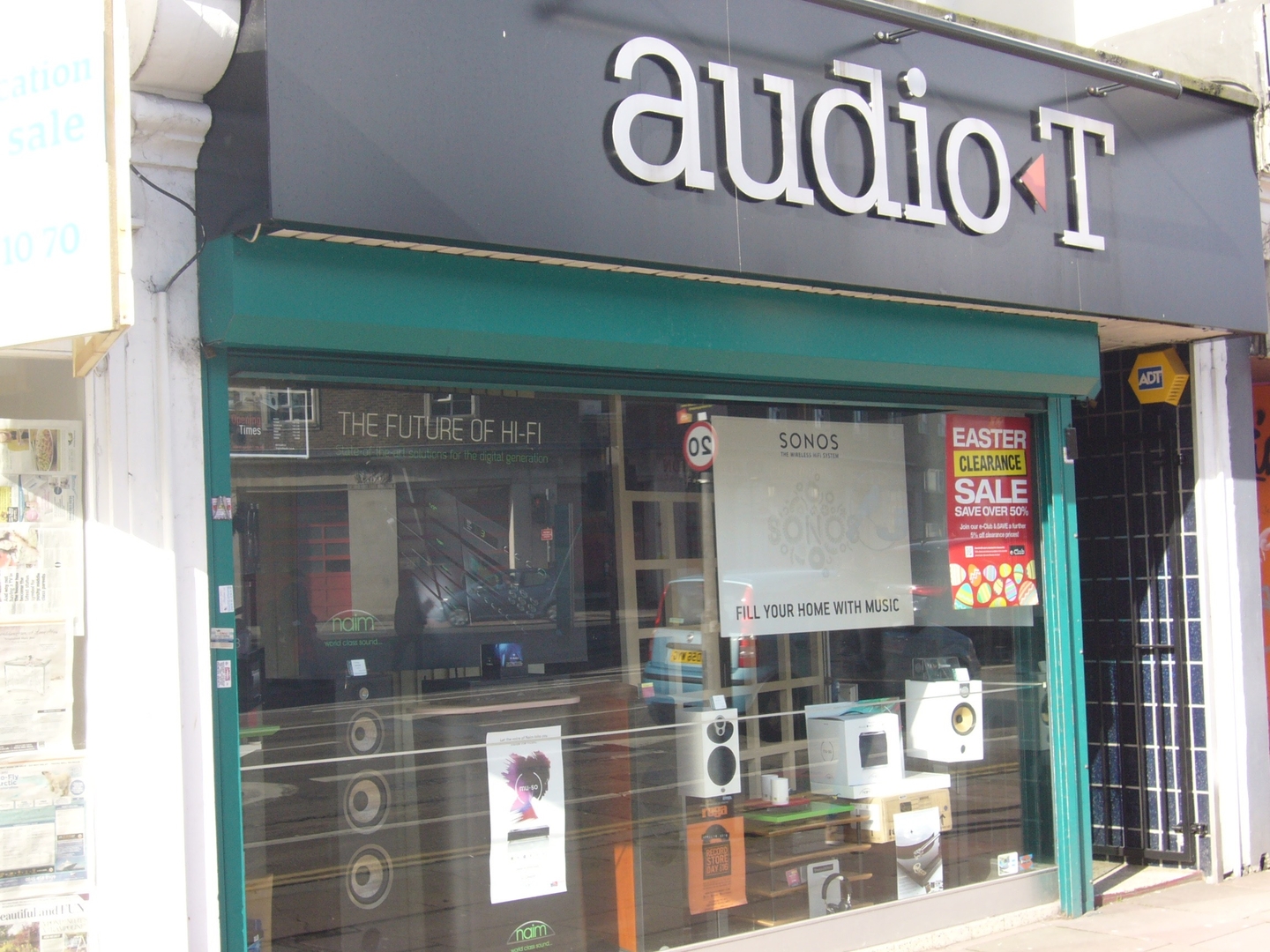
Meet Your Dealer – Audio T

One of the best-known hi-fi store groups in the country, Audio T plays a pivotal role in the shaping of the tastes and interests of music lovers and audio enthusiasts in the UK. Starting way back in 1966, the company has grown from strength to strength over the years, and the 14-store chain is a cornerstone of the annual Bristol Sound & Vision show held every February.

We spoke to Kev Starkie, Audio T’s General Manager about the Audio T group, and his and the company’s take on all things music, audio, and video:

I guess a lot has changed since Audio T was first founded in 1966?

Well, England hasn’t won another World Cup since! Audio T has entered its 50th year this year and over that time, it has seen the products and trends of the Audio and Audio-Video industry change, and eventually merge into the diverse industry we see today. But as much as there is significant change, a lot stays the same, too: many of our staff have been with Audio T for more than 20 years and our directors have been around for more years than I feel comfortable disclosing! This gives us a unique view not only on the business in a wider context, but also on what makes a great system. All the products we stock have been chosen to give our customers the best possible experience.

What brands/products do you stock?

As a group, we keep a core range, but in each store the brands that we hold are products that time and time again we are asked for! So, in no specific order: Naim, Rega , B&W, PMC, Marantz, Chord Company, AudioQuest, Pro‑ject and Arcam. The models change from store to store, and we also have brands that are not shared as they fit an individual store’s existing customer base, so we can get the right product with the right customer.

What inspired you to get into the industry?  

For most of us music is a big part of our lives even if we don’t realise it and I was so keen to get into it as soon as possible. I started work on Saturdays at a store in Bristol at the tender age of 14 as I was so young most of my time was taken up with fitting mains plugs to kit as by all accounts that’s all I was trusted with. The Directors, however, started way earlier than I did.What music do you listen to when doing a demo?

I have a specific track I use for set up, which is ‘The Ballad of the Runaway Horse’ by Jennifer Warnes (from Rob Wasserman’s Duets album), after which I have numerous tracks from acoustic guitar to full blown bass tracks to see if the system is well balanced and timing well.

What is the best piece of advice you can give to someone who is looking to improve/upgrade their system?

Start with what you have; by that, I mean speak to an experienced audio person (in one of our stores, obviously!) and let them help you ‘max out’ what you already have. This will show you where the weaknesses are in your system and save a lot of time and badly invested money making your system sing. It’s often best to let the experts deal with this, because it can be easy to make mistakes along the way.

Where do you see the industry going?  

Only up! The love of music and film has never been stronger, and the multitude of sources mean you can listen, watch, and access the media you want, whenever you want, however you want it. Also, the build, reliability , and value of products on the market is the best we have ever had. The only downside is what to buy and how to integrate it into your existing set up, but that’s where a good store can make that simple!

Who has been your biggest influence? 

I could say a music artist or a film director, but the real influence has to be my parents for playing music as a child and talking about film. The other major influence are the customers who over the years have pushed me to find solutions to their problems and by doing this and creating a great system for them, really gives you a feeling of job satisfaction.

Stereo or home theatre, or both?

I don’t think you can really say one or the other. Sometimes only a good movie will whisk you away for a couple of hours, and the next day blasting out Led Zep at number 11 on the volume dial is the only thing to get the blood flowing.

CD, DAC, or streaming, or all three?  

They all have their place, so that’s a difficult one to pin point. If it’s an upgrade for both then a DAC is the simplest option.

Have you been a part of the vinyl revival? How?

The Audio T group has seen a massive uptake in turntable sales, from our basic deck at £150 to some very exotic models. I think the reason vinyl has become so appealing again is because its gives real ownership, being both tactile and visually stimulating: it sounds great, and the artwork and info on the record sleeves give the listener a real connection with the music. Back in the mid 1990s, I had a moment of weakness and sold my record collection and my deck! However, over the last few years, I’ve bought a new deck and (expensively) replaced most of the vinyl I once sold off for very little. Now with LP on the up buying what you want has never been easier, and I find I put an album on and listen to all the tracks, often finding a track on the record that I didn’t buy it for becoming a favourite.

What motivates you?

That’s simple! We love what we do and we are lucky to have been able to work in such a fun industry. 

GoldenEar Technology Triton Five floorstanding loudspeaker

If ever there was a speaker that best encapsulates ‘affordable excellence’ in audio, it would be the GoldenEar Triton Five. This tall, elegant floorstander is priced to compete with two- and three-way tower speakers, yet the cloth-wrapped Triton Five manages to combine a D’Appolito-style ‘MTM’ (mid-treble-mid) layout with extremely high performance drivers, with a full subwoofer section built into the base of the tower.

The specifications are impressive, especially at the price. The top part of the loudspeaker houses two 152mm cast-basket mid-bass drivers flanking what GoldenEar calls a High-Velocity Folded Ribbon Tweeter, a direct descendent of the Heil air-motion tweeter used by Audiovector, Burmester, and more. Along the bottom sides of the enclosure are four opposing, inertially-balanced planar 200mm sub-bass units, two per side. The crossover sits behind the MTM block, because the motive force of the bass units could add undue vibration and resonance, and the combination of a slight backwards rake and non paralleled side panels means the speaker has a degree of time-alignment and internal standing wave control. The fit and finish is good too, given a lot of the speaker is hidden behind a large acoustically transparent sock. The top plate is removable for obvious, sock replacement reasons (should you find a cat decides to treat the sock like its own personal Everest, or you are clumsy enough to spill the entire contents of an Indian meal down the side, a removable top-plate is a good idea). The speaker comes in a range of colours: Noir, really, really dark grey, Obsidian, Raven wing, Onyx, and Coal. Just kidding, they only come in black.

The Triton Five is a loudspeaker with a claimed frequency response reaching down to 26Hz, with a sensitivity of 90dB and a nominal eight-ohm impedance. So, it should be relatively easy to drive. In reality, that’s sort of the case. This is the kind of loudspeaker that loves power, and to get that 32 inches of bass surface area moving needs both voltage and current to kick the Triton Five into high gear. This is not impossible, even in a relatively low price setting, but the Englishman’s Fear of the Watt needs to be suspended if you want to take maximum advantage of what the Triton Five has to offer. In particular, the Triton Five needs that big amp ‘grip’ that only a large power amp with an appropriately ‘stiff’ power supply can deliver. Once that condition is met, you are, ahem, golden!

Installation is relatively straightforward and these are unfussy speakers to install. The loudspeakers need a lot of room, especially to the side walls, and this may preclude using the speaker in smaller European rooms. That being said, anything more than 3.6m (12’) wide will be more than sufficient, and the loudspeaker doesn’t need to project greatly into the room, so you could in theory use the speakers to fire across a 12’x16’ living room. They are more comfortable firing down the 20’ length of a 20’x16’ room, however.


The loudspeaker has a ‘mail’d fist in a velvet glove’ kind of presentation. This means the kind of big, deep bass that many of us thought wasn’t at all possible at this price level: or at least if it was possible, you wouldn’t want that kind of bass in your listening room. Used with an appropriately powerful amplifier, the Triton Five brings truly awesome-grade deep bass and power without the sort of overblown, flabby, tubby, and flubby bass groans that you can get at this price level. The Triton Five’s bass is the kind that makes you reach for Leftfield or James Blake to see what it’s capable of; you play one of those deep bass tracks (I chose ‘Melt’ from Leftfield’s Leftism album, on the Hard Hands label) at a fair lick, then when you have managed to push your eyes back from the back of your head and clean up all the broken glass, you realise what they are capable of. After that, though, you tend to go for the more subtle moments in music, and realise the Triton Fives are not just there for earth-moving purposes.

The other big feather in the Triton Five’s cap is its soundstaging properties. The loudspeaker builds a wall of sound; not in a manner befitting a murderous 1960s impresario with mad taste in hair, but more like your rear wall has been replaced with the concert hall, club, studio, or other venue in which that particular recording was made. There is a true sense of epic scale on offer here, the kind of thing that you might have to spend £10,000 or more to experience elsewhere. This means that orchestral music is played at orchestral scale and the sense of presence in room is palpable. On the other hand, play some cool jazz from the 1950s and you can almost see the cigarette smoke filling the room. The Triton Five is three dimensional, incredibly open, and capable of an extremely accurate soundstage that ‘scales’ sublimely well.

These two aspects combine perfectly in rock, especially Prog Rock. The simultaneous need for a huge soundstage coupled with an ability to play very deep, very loud is the perfect laundry list for playing Tarkus by Emerson, Lake & Palmer [Cotillion] or for that matter Lateralus by Tool [Volcano] or even Black Holes and Revelations by Muse [Warner], although the last shows up a lot of compression in the process. The Triton Five stays on the right side of Prog pomposity when playing these potentially pompous platters, instead going for the large soundstage and powerful, dynamic bottom end.

It’s not all just about bass and soundstaging, although these are the stand-out aspects of the design. In fact, there’s a fine sense of top-to-bottom coherence, too. The speakers have a natural-to-rich tonal balance that is extremely alluring, and the clean, extended, and grain free treble associated with AMT ribbons. This makes the loudspeaker more than just a bass-powered bruiser, or a wide soundstage with nothing to back it up. This is a deft and subtle loudspeaker too, and that comes across well with fey girl-with-guitar music like Kat Edmonson’s somewhat overplayed ‘Lucky’ from Way Down Low [Spinnarette]. If it can focus your attention as well here as it does with Muse’s bombast, the speaker is doing a lot right.

Viewed from the position of someone used to small-scale, typically British two-way standmounts, all this low frequency energy and broad soundstage may almost flood the listener. However, it’s a little like eating steak after a life of hamburger – the real thing might be overwhelming at first, but it’s hard to go back afterward. Early listening to large speakers after living with little ones can sometimes make you think the bigger speaker is ‘slower’ where in fact you are relearning how to listen to bigger loudspeakers. British audio enthusiasts used to know this and would regularly upgrade from bass-light small-box designs to the more authoritarian bass of IMF or TDL models. Fast forward to today and the Triton Five balances these desires perfectly, sounding a lot faster, a lot more detailed and more dynamic than older transmission line IMFs, but retaining their bass slam and energy.


Spending more does eventually justify itself. When you start to talk about the ‘shape’ and ‘texture’ of deep bass notes, without sacrificing the ‘depth’ of bass, then suddenly some of the true titans of high-end begin to win out. This doesn’t manifest in playing dub reggae or dubstep, but comes across when playing something big and orchestral and a little bit dour – symphonies by Mahler or Bruckner. The bass comes across as the most powerful and structural you can get in its class, but lacks the kind of cold beauty required to portray the depths of this kind of music. Still, we are talking about spending an order of magnitude more than the Triton Five to achieve this ‘textured’ bass quality without sacrificing bass depth in the process, so it’s hardly a major concern. You aren’t buying a KEF Blade ‘on the cheap’ here, but you are buying an exceptionally good loudspeaker that shows its rivals a clean pair of heels.

It’s hard not to be impressed by the GoldenEar Triton Five, because materially you are buying a lot of speaker for the money. The fact that it also delivers a lot of really good sound for the money is an unexpected surprise. At the price it has no peers and no parallels, and comes strongly recommended.

TECHNICAL SPECIFICATIONS

  • Type: Three-way, seven driver floorstanding loudspeaker
  • Driver complement: Two 152mm high‑definition cast‑basket mid/bass drivers, four 200mm planar sub-bass radiators; one HVFR (high‑velocity folded ribbon) tweeter
  • Frequency response: 26Hz–35kHz
  • Sensitivity: 90dB
  • Nominal impedance: 8 ohms
  • Dimensions (H×W×D): 112.4 × 21.6 × 31.4 cm
  • Weight: 18.4kg
  • Price: £2,000 per pair

Manufactured by: GoldenEar Technology

URL: www.goldenear.com

Distributed in the UK by: Karma AV

URL: www.karma-av.co.uk

Tel: +44(0)1423 358846

Back to reviews

Read more GoldenEar Technology reviews here