Up to 37% in savings when you subscribe to hi-fi+
hifi-logo-footer

Begin typing your search above and press return to search. Press Esc to cancel.

Thorens TD 1601 suspended semi-automatic turntable

As a teenager my close friend had a Thorens TD 160 with a SME Series 2 arm. I was jealous. All that I could muster from my meagre pocket money was a Trio KD1033B, and whilst that turntable was well respected in the hi-fi magazines of the day as a starter spinner it could never compete with the Swiss made Thorens, a turntable considered as one of the best in the 70’s. It and its forerunners, notably the TD 150 (1965) and TD 125 (1968) were the company’s first models to have a 3-point spring suspended sub chassis, an idea originally conceived by Acoustic Research and later also taken up by Linn and Ariston amongst others. Thoren’s TD 126 and its extensions the TD 127 and TD 226, plus the Reference from 1980 and Prestige from 1983 were also designed with this kind of suspension. At the 2019 Munich hi-fi show amidst retro designs from a number of famous manufacturers I was quite excited to see TD 160 look-alikes, in the form of the TD 1600 and TD 1601 (£2,299 and £2,799 respectively). They were being presented alongside the TM 1600, a reel to reel player of the same size, due out this year developed in cooperation with manufacturer Ballfinger. Thorens had a great reputation in the past for turntables – and I’m honoured to possess both a TD 124 and TD 135 – but it is the TD 160 that I always wanted to own. 

Thorens began its long history in 1883 by producing musical boxes and clock movements; it even made Edison-type cylinder players, harmonicas and cigarette lighters. Whilst most of its turntables were iconic there were a few ‘original’ ideas that perhaps the company would like to forget about; from the TDW 224 that had a record changer for eight discs sat next to the player so that they didn’t rest on the spindle, to even the development of a concrete plinth. The company was indeed prolific in terms of its designs and numbers of models. Whilst it effectively hit the bumpers a while back it has been given a new lease of life in the form of Gunter Kürten who took over in May 2018. His CV is impressive; former CEO of ELAC, General Manager of Denon and various roles at LG, Sharp and Sony. His acquisition of the company brings a desire to carry forward some of the company’s history into the 21st century and it is fitting to see a new incarnation of the TD 160 albeit with significant developments in the form of the motor, arm, suspension and also semi-automation in the case of the TD 1601. Gunter wants to reflect the original ethos of the brand; things like high performance, engineering innovation and good value. Indeed, there are a large number of models (17 on their website!) being made under the Thorens label.

The three-point suspension and damping on the TD 1600 and TD 1601 is important to mention, as rather than having the three conical coil springs suspended from above (as it is in the models mentioned earlier) it is now supported on the baseboard. This means that the sub-chassis doesn’t hang but rather it stands on these springs, and is free from wobbling using a clever system that stops lateral movement; a stiffening plate is there to ensure rigidity of the sub-chassis and ties the location of the main bearing precisely with the arm mounting point. A tension wire is in place to oppose the pull on the suspension from the drive belt and to lessen ‘suspension stagger’ by stabilizing the movement of the sub-chassis in the vertical plane, restricting any lateral movement specifically in the direction opposing the drive belt. 

Both new models come supplied with a tonearm, the gimball bearing 9” TP 92. Where the TD 1600 is a basic manual model the TD 1601 here for review is semi-automatic with motor stop and arm-lift at the end of the record, allowing you to fall asleep at the end of the LP without fear of wearing out the stylus or motor. The extra £500 for this turntable is simply for the addition of this mechanism. Setting up the cartridge weight requires plugging in the unit and pressing the “lift” button on the right of the plinth to lower the arm as there is obviously no traditional manual viscous cue. Placing the stylus on the record is easy; turn the motor on, move the arm to where you want it to be and press the ‘green’ illuminated lift button and when the record has been lowered onto the record it will change to ‘red’. Selection of 33rpm and 45rpm is made using buttons to the left. The exact point at which the arm raises at the end of the record can be adjusted internally, and the turntable has a separate and fairly quiet motor that lifts the stylus off the record. Both models also have balanced XLR output and come in a choice of piano black or beautiful high-gloss walnut variants. XLR outputs have a little ‘form’ with Thorens, having previously been used on the TD 900 series, which were released in May 2017. However, Thorens only released three such models (903, 905, 907) and they are being phased out this year, making the TD 1600/1601’s XLR output unique in the Thorens line. The similarity with the iconic TD 160 is evident in the classical wooden plinth, two-part platter with inner belt drive, thick rubber mat, the arm board and acrylic dust cover. That cover particularly makes the turntable look retro. 


The players come supplied with external power supplying +/- 16V to the turntable chassis mounted printed circuit board. A quartz referenced synthesized AC signal of low voltage of around 12v is then generated to power the synchronous AC motor of a type used by other notable turntable manufacturers. A stable and smooth AC signal is switchable between two frequencies which enables the player to play both the speeds. The circuit also allows fine adjustment of each speed via two trims at the rear of the turntable. Like the TD 160 this is a belt driven turntable with the belt feeding the inner of the two part-platter. The main platter fits carefully over the smaller one making for a very tight fit, so care must be taken in placing it on the smaller platter. The original TD 160 platter could ‘ring’ quite a bit but this platter is heavier and quieter. The plinth is also significantly better than the original turntable; the MDF base is thicker and the unit sits on three feet. The arm is an excellent improvement on the company’s earlier TP 82 unipivot arm, though the elder is still seen on other turntables in the current line-up. The TP 92 has a multilayer aluminium tube for increased internal damping, plus there is a non-moving damping ring added at the first bending node midway along it. This helped to maintain a very quiet operation with no noise created. The tube is terminated and clamped at the cartridge mount end making for a larger surface area of connection resulting in stable mechanical contact. Mechanical energy could therefore be dissipated from the stylus to the arm and then to the sub-chassis and stiffener plate. The counterweight is positioned at the height the stylus touches the record, therefore minimising changes in downforce if the LP is warped. Where my pre-production sample had a counterweight screwing into the back of the arm relying on my stylus scales to get the weight at the right point, the production model will have a conventional styled counterweight where you can balance to zero and then dial to your chosen weight. I always rely on weighing scales, whatever the counterweight says! The arm looked very good and worked very well with the supplied Audio Technica AT-OC9XML, an excellent cartridge with micro-linear stylus and boron cantilever. While Thorens has returned to Germany, a country steeped in record deck production, the manufacture of these decks is being performed in Taiwan. The standard of manufacture is very good, as is the separate power supply which has an on-and-off rocker switch at the rear.

I listened to a large variety of music for the review. Amplification was a Manley Steelhead EQ, a Music First Audio pre and Krell power. Firstly, I decided to play something appropriate for this time of year, the white-vinyl In Winter from Katie Melua [BMG]. Her voice and the relaxed and ostensibly quiet instrumentation allowed me to hear how silent and accurate the turntable worked. I needed to add a little force to the cartridge for the louder sections to get it sounding at its best; 2.1g. Once I had got things just right I could really hear the music start to breathe. The sound was very open and clear from top to bottom, though particularly good with the very low frequencies. Track 3 ‘Perfect World’ was very well defined and controlled, whether it be the vocals, guitars, piano or percussion. This is a natural and musically confident player.

Time for David Bowie’s Legacy album [Sony] so I could hear some of the music from the TD 160 era. Everything was clear and accurate covering all frequencies, especially the bass end, though I reduced that somewhat going up to 400 ohms load. Audio Technica only advise 100 ohms plus, so play about with your settings if you have them! If you want excessive excitement then look elsewhere, this turntable is all about accuracy and honesty. A bit like my old headmaster at school at the time of the TD 160; he wasn’t extravert, rather he was ‘to the point’, but he knew his stuff and was very reliable. Similarly, this turntable was honest and showed authority over the music being played with nothing sounding out of place, just perhaps a little too polite. Turning to a bit of excitement, Nielsen’s 4th symphony (DG, Herbert von Karajan), the instruments were clearly positioned in their designated seats with brass and percussion coming across precisely but still allowing the quieter strings to have their say. The turntable never felt strained and was detailed and dynamic, with the quieter sections as exciting as the louder, the arm showing no signs that it couldn’t cope. There were also no fluctuations in speed from this electronically controlled motor. Dr John’s City that Care Forgot [Diverse Records] was next to hit the platter. ‘Keep on Goin’ opened up the sound with lots more gusto and the AT-OC9XML allowed it to sound at its best. The cymbals came across as clearly as the bass. Headroom was excellent with no signs of panic from either the cartridge or arm. I can see why Thorens want to utilise an Audio Technica cartridge for their own brand. I have been using AT cartridges for years as they are excellent and certainly cost effective. The modified three-point suspension worked a treat, there was no noise making its way to the stand nor any vibrations to the stylus; I always tap plinths and tables to test for vibrations – a bit like folk kicking tyres when they go to buy a car, except that my tapping makes a point. It is imperative to have a turntable free from external vibrations as well as able to dissipate or quell internal energy from the stylus. Similarly, the effect of the motor pulling on the belt didn’t give any problems, that thread of steel doing its job. Mike Valentine’s Espana album [Chasing the Dragon] is one of my favourites, one that was directly cut to vinyl in one go, so any noises between movements can still be heard, such as the performers turning pages. This was a very realistic and ‘careful’ performance, not far from how I heard it when it was recorded at Air Studios. There was no colouration from the arm or platter, or from the substantial MDF base. The rubber mat is fairly thick and heavily damped and ‘branded’ and it worked well with all the records I played. There is no record clamp, since this would take away links with its DNA, though I did find my aged free gift puck (from Richer Sounds) that I was given at the same time as my friend bought his TD 160. It just gave slightly better contact between record and mat and on some records more command of the music. 


All in all, then, the sound quality was what I would expect from Thorens; both good control of all the music and an excellent control of the speed. The arm was also surprisingly good for a P&P turntable, with no colouration. Only on a few occasions did I find the arm wouldn’t lift at the end of the LP, though as mentioned earlier that can be adjusted. Performance of the TD 1601 was well controlled and refined, doing everything well, if perhaps just a little too well-behaved, but if you want a retro looking turntable with all the history to go with it then this is certainly a good choice. 

TECHNICAL SPECIFICATIONS

Type: Suspended semi-automatic turntable

Suspension system: Stabilised sub chassis on three conical springs

Platter: two part aluminium with rubber mat

Belt: Polished precision, with adjustable tension

Motor: electronically controlled, with contactless auto shut-off

Arm: Thorens 9” precision tonearm (TP 92) with electrical lift

Finish: Black, aluminium

Price: £2,899

Manufactured by: Thorens

url: thorens.com

Distributed in the UK by: UKD

URL: ukd.co.uk

Tel: +44(0)1425 460670

Chord Electronics appoints new US/Canada distribution partner

3rd June 2020, Kent, United Kingdom: Chord Electronics is delighted to announce a new partnership with US company, The Sound Organisation, to distribute its British-built audio ranges in North America and Canada; the Kent company’s decision to appoint The Sound Organisation is effective immediately.

Chord Electronics would like to take the opportunity to thank Jay Rein and his team at Bluebird Music for their hard work in helping to raise awareness of the Chord Electronics brand over the past 20 years. 

New distributor The Sound Organisation will stock and ship Chord Electronics products from its centrally located facility in Arlington, Texas, USA.

The Sound Organisation contacts

Tel: +(1) 972-234-0182
soundorg.com
[email protected]

Chord Electronics’ media contact

Dan George +44 (0)7899 808918 
[email protected]

Chord Electronics contacts 

Tel: +44 (0)1622 721444 
Email: [email protected] 
www.chordelectronics.co.uk

About Chord Electronics Ltd

Chord Electronics Ltd is a world-leading manufacturer of high-performance hi-fi and audio products. Since 1989, from its spectacular riverside base in Kent, England, Chord Electronics has been creating some of the planet’s finest hi-fi, home cinema and professional audio equipment. A technology-driven innovator, Chord Electronics continues to deliver excellence through exemplary audio engineering, cutting-edge design and a true aesthetic understanding. 

Chord Electronics is trusted and admired internationally and its global customer base includes: Metropolis Studios, Abbey Road Studios (London); Sony Music Studios (New York), Skywalker Sound (California) and more. www.chordelectronics.co.uk

Triangle Borea BR03 stand-mount loudspeakers

“Never mind the quality, feel the width”. Citing the title of a ‘60s UK sitcom is not the most zeitgeisty way to begin a review, I realise – but it’s nevertheless appropriate, for no other reason than Triangle’s brand-new Borea BR03 standmounting loudspeakers aren’t the most zeitgeisty product.

These days, a modestly priced pair of speakers like this tends to be designed as either a gateway drug into a life of hi-fi hedonism or as an accompaniment to a compact all-in-one system. And, first and foremost, they tend to be of manageable size. Look at the companies who have dominated the entry level during this century (Q Acoustics, Monitor Audio or DALI, for instance) – if their £300–£400 standmounters have anything in common (beyond excellent pound-for-pound performance), it’s that they’re usually small enough to remain discreet.

Well, Triangle doesn’t roll like that. 

If there’s any such thing as a typical Triangle loudspeaker, it features a large cabinet and a large number of drivers. And while Borea BR03 is just a two-way design, its cabinet is (by prevailing standards) undeniably on the large side. There’s no replacement for displacement and significant internal volume never held a loudspeaker back before, so that the Borea BR03 are a shade larger than the typical ‘bookshelf’ design normally touted at the price should prove popular.

What is certain, though, is that Triangle hasn’t allowed the need to hit an extremely modest price point to compromise its engineering principles. Yes, that hefty cabinet is covered in the sort of vinyl wrap that’s much more the norm than the exception at this price. But after that, Triangle’s Borea BR03 are specified like more expensive speakers. 

Inside the precisely-cornered cabinet, for example, Triangle has deployed its Driver Vibration Absorption System: perforated MDF panels and foam gaskets stiffen the enclosure, and both reject and absorb unwelcome vibration at the same time. At the back of the cabinet there are nice chunky gold-plated binding posts capable of accepting a 4mm banana plug. 

And up front, the bottom of the baffle is dominated by a couple of forward-facing tubular reflex ports – these should offer a degree more flexibility when it comes to positioning the BR03s, if a little less opportunity for fine-tuning low frequency response, than the more usual rear-firing arrangement. Above them sits a 165mm mid/bass driver with a diaphragm built of natural cellulose paper, bulleted in the centre for the usual reasons. Triangle is 40 years old this year and has been designing and building its own drivers for the last 35 of them – this particular driver technology has trickled down from Triangle’s more expensive Esprit Ez range. Up top is a 25mm silk dome ‘Efficient Flow System’ tweeter – it’s sited behind a phase plug designed to make the highest frequencies less directional,  and thus the speaker (once again) easier to position. The speaker grilles are attached magnetically, although the grille-off appearance of the BR03s is so fashionably retro that a quartet of grille-holes would look appropriate too.


There are some other worthwhile numbers attached to the BR03 beyond the 38 × 21 × 31cm cabinet dimensions. Frequency response is a claimed 46Hz–22kHz, which is impressive even by ‘chunky stand-mounter’ standards, while sensitivity of 90dB/W/m and a nominal 8 Ohms impedance shouldn’t make the Triangles all that taxing a load. A 7kg kerb weight per speaker is pretty significant, too.  

Securing the BR03s on a pair of Atacama Moseco 7 stands brings them up to a good operating height, isolates them as effectively as they ever can be, and gives a strong visual suggestion of a big, boxy lollipop.

The majority of the critical listening is done using the Marantz M-CR612 (or Melody X to its friends) all-in-one stereo system. It’s as compact as the BR03s are beefy, and during the testing process serves up audio from CD, internet radio and many of the world’s most popular streaming services. Naim’s excellent pocket-rocket NAP 100 power amp (in conjunction with the equally compact UnitiQute 2) is also pressed into service – purely to examine the limits of the Triangles’ capabilities, you understand. Speaker cable is QED’s splendid new XT40i Reference – at £11 per metre it’s at the upper end of what’s appropriate.

It doesn’t take long for the BR03s to establish their modus operandi – once through Count Basie’s technicolor version of The Beatles’ Do You Want To Know A Secret? [Verve] is more than enough for them to lay their cards on the table. 

Fundamentally, the Triangles want to entertain you. It’s not that they’re ignorant of the concepts of accuracy and fidelity, it’s simply that they don’t prioritise them. Instead, the BR03 put their emphasis on drive, vigour, punch and all the aspects of music-making that can turn every tune into a party-starter.

The midrange is the attention-hogger here. A biggish band arrangement like this one can too often result in the middle of the frequency range getting crowded and consequently indistinct, but the BR03s do sterling work in keeping competing elements distinct. This lack of clutter gives a reasonable impression of breathing space on what could easily descend into sounding like a congested soundstage, and while the Triangles won’t unseat the (admittedly way more expensive) leaders in the field in the clarity stakes, they’re an enjoyably organised and upfront listen.  

Unlike quite a few price-comparable rivals, though, the BR03s don’t confuse excitement with shouting. The hefty dynamic variances in the Basie recording are ramped up confidently, but the Triangles are never in any danger of letting things get out of hand. And their powers of midrange communication are spotlit even more effectively by a listen to Nick Cave & The Bad Seeds’ (Are You) The One That I’ve Been Waiting For? [Mute]. There’s an unequivocal quality to the singer’s delivery that brings makes the character and sincerity of his vocal more significant than the finest details – which is just as well, really, because the finest details tend to go astray in the BR03s’ never-ending quest for scale and dynamism.

Swapping over to Blawan’s Why They Hide Their Bodies Under My Garage? [Hessle Audio] switches the emphasis to the top and bottom of the frequency range, and here too the Triangles are determined, like Viv Savage in This Is Spinal Tap, to have a good time all the time. Treble sounds attack with proper verve and purpose. Nothing in the nature of the Marantz, Naim or QED partners in this test suggests that the Triangles are adroit and direct at the highest frequencies. Place them in a system with a very forthright treble and they could be provoked into brightness, however.

By way of contrast, bass sounds are altogether more disciplined. There’s the necessary punch and heft, but enough control and square-edged rapidity to initially make that claimed 46Hz seem a possible false alarm. In fact, there’s no shortage of extension here – but the control that’s at such a premium at the top end is far more apparent down at the bottom.

Overall tonality is generally convincing (though the bass response can rob some recordings of richness) and that’s true of timing too. Only when a recording gets complex and multi-faceted (as the Basie does, constantly) do the Triangles demonstrate a mild lack of unity and togetherness. 


In every other respect, the BR03s fluctuate between ‘pretty good’ and ‘really quite impressive’. They generate scale even greater than they look like they might; their soundstaging is believable; low-level harmonic dynamics are alluded to while broad-strokes dynamism is available in spades. But they’re capable of decent subtlety, too, even if you know they’re drumming their fingers while waiting for the next opportunity to pounce.  

This magazine is far from unfamiliar with speakers costing anywhere between ten and one hundred times the price of the Borea BR03s. But keep the Triangles firmly in context – of their likely partnering electronics, mostly. Then their enthusiasm, verve and straightforward musicality makes them an intriguing choice. And, as is obvious by now, any shortfall in perceived quality is more than made up for in straightforward quantity.

TECHNICAL SPECIFICATIONS

Type: Two-way, two-driver stand-mount monitor with front-ported bass reflex enclosure

Driver complement: 25mm EFS silk dome tweeter; 165mm cellulose paper mid/bass driver

Frequency response: 46Hz–22kHz

Crossover frequency: 

Impedance: 8 Ohms

Sensitivity: 90dB/W/m

Dimensions (H×W×D): 380 × 206 × 314mm

Weight: 7kg/each

Finishes: Black; White; Walnut

Price: £399/pair

Manufacturer: Triangle

URL: trianglehifi.com   

UK distributor: Elite Audio

URL: eliteaudiouk.com

Mark Levinson No. 515 turntable

It says something about the state of the vinyl revival that established high-end brands which existed in the day of vinyl supremacy are building its first-ever turntables. That is the case with the Mark Levinson No. 515, which is the first turntable to bear that name in the history of the marque. Eagle-eyed record player enthusiasts will notice however that this turntable bears a striking resemblance to those from a well-known US turntable specialist, namely VPI. Mark Levinson make no bones about this and given that developing a turntable that’s worthy of their name would be quite a challenge for an electronics company, the approach makes a lot of sense, why go to so much trouble when an expert in the field is happy to create a custom turntable to your specification. OEM turntable manufacturing has happened in the past, with companies including Rega making decks for other brands, but it’s relatively uncommon now and especially in the high end.

The No. 515 is not merely a rebadged model from the VPI range. Mark Levinson has put some research into the design, and the result has several distinctions not seen in the VPI range. The plinth is a sandwich of aluminium and composite materials with a vinyl wrap, and it’s big, at 533mm it’s too wide for the top of my rack. Four Delrin and aluminium feet keep it perched high enough for the power supply to sit underneath with the drive spindle sticking up at the right height. The way that the motor sits within a niche in the plinth is elegant, and the fact that the power supply is part of the system means that you don’t need to find space for another small box. It does mean a potentially chunky power cable hanging off the back but as the PSU and motor are separate to the turntable that doesn’t provide a direct conduit for vibration. What this approach does mean is that the No. 515’s performance can be affected by the nature of the supporting surface as this provides the energy path between motor and plinth.

Mark Levinson has chosen to drive the platter with no fewer than three belts, which is not a VPI trait. Levinson’s take is, “We use three belts to provide a somewhat tighter connection between the motor and the platter, which mitigates the effects of drag and results in a slightly more extended and accurate bass sound than a single belt. (It doesn’t look half bad either!).” The motor is a high torque AC synchronous type with the requisite power to spin up the substantial platter to 45rpm from standstill; the switch system doesn’t allow you to jump straight from 33.3 to the higher speed, you need to switch one off before using the other. 

The platter is a robust and attractively machined lump of aluminium that sits on an inverted stainless steel bearing with a phosphor bronze bushing.  The platter has a threaded centre spindle; however, the heavyweight stainless steel clamp that sits over the spindle requires no turning, which makes switching records a much quicker process. A mat made of a synthetic material that’s thicker than the wool variety sits atop the platter. 

The tonearm looks very much like a VPI except for one significant variation which is that rather than being a typical JMW Memorial unipivot it has gimbal bearings, an idea that Mark Levinson brought to the table. The other difference is that the tonearm is not a metal or carbon tube but a 3D printed creation; this has the advantage that armtube and headshell are all one piece and means that no finishing is required. I couldn’t find any reference to its effective length in the manual, so I got the ruler out. As measurement required taking the distance from stylus tip to the bearing centre on the arm, it is a bit tricky, but using the supplied (metal) set-up gauge, it comes out at 275mm, which is close to 11 inches (279.4mm). The official word, however, is that it’s a 10inch arm.


The printed element armtube combines with a stainless steel gimbal assembly and counterweight, the latter having the advantage that it allows for fine adjustments with a knob on the back. It’s not clear whether the heavy counterweight is removable because of this facility, which could be an issue with the bearings in transit. The more obvious knob and dial on the arm is the large one for VTA, which offers an obvious and easy way to set and change the height of the arm. So much so that you can replicate VTA settings for different records which is quite a luxury. Rather than having a pair of arm cables exiting the back of the turntable, the No. 515 has a couple of RCA phono sockets either side of an earth post. You don’t get cables for this link however so you will need to find some suitably shielded interconnects for the job.

The No. 515 comes in two forms, with or without an Ortofon Cadenza Bronze cartridge, with which the name gains an MC suffix. This moving coil has cobalt-iron pole pieces and has an extruded aluminium housing with a conical aluminium cantilever and a Replicant 100 stylus (no Blade Runner jokes please). The price jumps by £2,000 with the Ortofon in place, but you do get it pre-installed and set up at the higher-than-recommended 2.7g downforce that Mark Levinson feels sounds best.

After hooking up the outputs with Townshend F1 Fractal interconnect to a Tom Evans Groove SRX phono stage, my initial impressions of the No. 515 were not very good. It seemed opaque and lacking in dynamic contrast and timing precision, so uninspiring in fact that I decided to change the cartridge. At this point, I discovered that the fixing bolts were not sufficiently tight. Unsurprisingly, sorting this proved highly beneficial to the results, which came under the category ‘gas on and cooking’. Now Weather Reports’ ‘125th Street Congress’ [Sweetnighter, CBS] was busting out of the speakers in forthright fashion and flowing freely with it. 

Not being a massive fan of record clamps I made a bit of comparison with the weight on and off different albums and concluded that not using the clamp was less appealing than leaving it on. It seems to sit on the sound, darkening the balance and stealing some of the life and energy which is what happens when you attempt to damp a piece of vibrating plastic, of course. Without the weight, the No. 515 sounds more open and vital with better resolution of mid and high frequencies, so that’s how listening proceeded. 

On Bill Evans’ Waltz for Debby [Riverside], this record player resolved the brushes on skins of Paul Motian’s drums very clearly, with a bit more emphasis on this element than usual. It’s not the most resolute result I’ve had with this record. Still, the Cadenza is a relatively affordable MC, so I decided to change cartridges after all and put on something that seems more appropriate to the cost of the turntable. This cartridge upgrade took the form of a Transfiguration Proteus, which delivered a lot of the low-level detail that I was looking for straight from the first bar. When it was warmed up things got a lot more interesting especially when I put on Jocelyn Smith’s Honest Song [Berliner Meister Schallplatten], a direct to disc recording with a full band that was rendered with considerable power and realism by the No. 515. Timing is not in the very first league, but when it comes to getting a sense of being in the room with the musicians, it was a strong showing.

With Joni Mitchell’s live version of the ‘Circle Dance’ [Miles of Aisles, Asylum] the sense of being in a broad audience with all their requests for songs was palpable, the atmosphere almost crackling with the energy of the event. When Joni speaks and sings, you get a lot of the acoustic reverb from the stage; it’s great to hear the character of a recording it takes the listener to the place and time of the event. This is as close to time travel as it’s possible to achieve without a suitably equipped DeLorean. You get the warmth of Joni’s voice in full effect, the performance might have had a bit more scale and power back in 1974 but I don’t imagine that the PA would have been as revealing as this. The Proteus sounds rich and mellow on the Mark Levinson and when I dug out a vintage pressing of Al Green Explores Your Mind[London] to contrast with a modern audiophile repress it’s clear that tape decay is not something to be taken lightly. The faults of the worn pressing are audible, of course. Still, they take second place to the clarity and energy on offer that makes tracks like ‘Take Me to the River’ all the more essential it sounded so good that I had to let the album run into the fabulous ‘God Blessed Our Love’ with its super sweet backing vocals.

For a bit of contemporary contrast, I put on Tord Gustavsen’s The Other Side [ECM], which I reviewed when it came out on CD but only really began to appreciate once I got the vinyl. This album sounded sublime on the No. 515 with impressively quiet backgrounds and fabulous phrasing from the piano and double bass alike; the long arm gives this turntable a calm, sure-footed presentation that sounds even better when you wind up the level. I was still not quite feeling the timing however and decided to try a different interconnect to see if that would help, I went for Rega’s relatively inexpensive but turntable specific Low Capacitance cable. This cable isn’t as refined as the Townshend but did benefit timing quite obviously, and it also reduced hum a little probably because it’s fully shielded. Now the Mark Levinson gained some coherence which made for even more captivating listening, the full beauty of the Gustavsen set becoming all the more apparent as a result.


As Mark Levinson is keen to point out the low-end capabilities of this turntable, I found one of my heaviest albums in Burnt Friedman and Jaki Liebezeit’s Secret Rhythms [Nonplace]. This 45rpm pressing of bass and percussion revealed that the No. 515 does indeed plumb the depths well; low drums in particular kick with a resounding thud and the percussive metal work zings into life. The resulting full bandwidth powerplay is highly entertaining and sofa-vibrating in equal measure. It could have a bit more of the reverb that the best turntables extract from this album, but the calm, powerful delivery is easy to enjoy. I went back to the Ortofon Cadenza at this point to see how close it could get and discovered a delivery with impressive extension and some genuinely 3D imaging. It didn’t have the charm of the pricier cartridge, but I have to say that the texture it found in bowed double bass and the stability it brought to lively passages was not unentertaining. Continued listening did little to undermine this impression with a clean and open sound that’s strong on instruments and gives voices a sense of ‘body’ in the room.

Mark Levinson makes the No. 515 with the company’s customer base in mind, and ML amplifiers now have seriously good phono stages onboard (which put paid to my suggestion that they make a stage that could fit under the plinth of this turntable). The opportunity to buy a matching record player will appeal to that base. For the rest of us, the No. 515 is a substantial turntable with many appealing qualities and a sound that is as physical as the record player itself. It would be interesting to contrast cartridges that you can get for the £2,000 premium for the Ortofon Cadenza Bronze to the turntable, This Ortofon is competent and revealing, but there may be alternatives that are a little easier to love, and the turntable is more than capable of handling a more up-market cartridge. But such things are often in the ear of the beholder so don’t discount it by any means. 

TECHNICAL SPECIFICATIONS

Type: Full-size, AC-drive turntable with 10inch tonearm

Rotational Speeds: 33 1/3 RPM, 45 RPM

Supplied Tonearm Length(s): 10-inch

Drive Mechanism: Belt driven via AC synchronous motor. Triple belt drive

Speed Control: Electronic speed control

Platter Type: Solid aluminium with soft mat

Platter Weight: Not specified

Bearing Type: Hardened stainless steel shaft spinning in a phosphor bronze bushing

Plinth Configuration: Rigid plinth on Delrin and aluminium feet

Dimensions (H×W×D): 200 × 533 × 404mm

Weight: 26kg

Price: £10,000 (turntable), £12,000 (inc Ortofon Cadenza Bronze)

Manufactured by: Harman International

URL: marklevinson.com

Distributed in the UK by Arcam

URL: arcam.com

Tel: +44(0)7917 685759

Norma IPA-70B integrated amplifier

I did wonder why this company has the name it does but a quick scan of founder Enrico Rossi’s background indicates that he’s a big fan of opera, and an Italian, so it didn’t take much of a leap to guess that the name comes from Bellini’s opera of the same name. Rossi’s company is based in Cremona, an Italian city that’s steeped in musical history thanks to the craftsmanship of Guarneri, Amati and Stradivari. Names that will be familiar to Sonus faber enthusiasts as well as those with a passing interest in violins and violas. There must be something in the water because this Norma amplifier is also extremely musical despite the absence of wood and gut. 

Norma makes a range of electronics that largely consists of amplifiers in one or two boxes and digital sources in the form of a CD player and a DAC… alongside a unit that does both. The IPA-70B is a rather elegant integrated amplifier that sits just above the entry level HS-DA1 and forms the starting point for the IPA range. This amp is as impressive inside as it is attractive outside, as its internals are very neatly laid out and colour coded in black and red with the heavy-lifting elements of the power supply shut away in their own case, presumably to keep transformer radiation away from the signal chain. The asymmetric nature of the heatsinking reveals that the power transistors are on the opposite side to the transformer, which must also help with keeping the signal clean.

In its standard state, the IPA-70B has five line inputs and a direct or AV input alongside a record output, but it can be supplied with either an onboard USB DAC or an MM/MC phono stage which is a useful degree of flexibility. The DAC is a relatively old-school Wolfson type with a maximum 24-bit/192kHz sample rate. This choice suggests it was made for sound quality rather than specmanship reasons. The optional phono stage has multiple gain and impedance settings plus ‘spare’ options for both, so you can have a setting of choice within reason. The amp can be controlled with the single button and volume knob on the front or with an aluminium remote handset which is almost festooned with small switches. It does, however, fit easily in the hand and with practise you can find the volume buttons without looking. The only minor gripe with ergonomics is that it’s difficult to see how high the volume is in anything but bright light. 

Being an opera nut, Enrico Rossi is very keen on the human voice and bases his designs on the getting it right, in his own words “I have never heard a system, with correct voice reproduction sound bad with other types of music. If you reproduce the voice well, everything else will be automatically reproduced well too.” I hadn’t read that when I first started using the Norma through Bowers & Wilkins 802 loudspeakers but one of the first notes made was about how good the voice sounded, specifically how much nuance and subtlety could be heard in Ishmael Reed’s voice on Conjure’s Bad Mouth album [American Clavé], where the cymbals were clean and open and the bass line muscular. This is achieved partly because noise levels are clearly very low but more importantly because this amp’s timing is absolutely bang on, yet it is also smooth and relaxed. It’s a bit of an enigma, usually this combination of qualities can only be found with planet busting Class A amps, and only the biggest have the bass capabilities offered by this 70 Watter. 


The distributor Anthony Mills puts a lot of this down to Norma’s preference for very wide bandwidth; 2MHz, which is not outrageous but neither is it common. I started out using the IPA-70B with a pretty high end Moon 780D streaming DAC, which undoubtedly helped matters but the performance wasn’t that far behind with the onboard converter. Not as smooth and sweet but extremely articulate and well separated. This is a relaxed but phenomenally precise amplifier that lets you hear right into the mix with anything it plays, if the speakers are up to the job. My preferred timing test this season is ‘Cumberland Blues’ by the Grateful Dead [Europe ’72, Warner Bros]; it’s not the sweetest recording and there’s a heck of a lot going on but the clarity and coherence of the Norma made it hang together perfectly, allowing two guitars, two keyboards and a rhythm section to bang out a kickin’ groove. The following track ‘He’s Gone’ is more laid-back and an absolute beauty with this amp, full of superb bass lines and heart rending lyrics.

Moving over to vinyl with an external phono stage revealed just how good it is at opening up the micro dynamics, tracking the different levels of the voices and instruments in the mix. Here it became apparent that there is a slight sense of smoothness in the amp’s character, which stops anything sounding grainy in the typical class AB fashion. It is slightly synthetic and not something I’ve previously encountered but it doesn’t get in the way of the music which is extremely compelling regardless of type. If you are looking for the grit and grain in a recording this might be an issue, but if you are looking to hear right into the soundstage and enjoy great timing then it’s a price worth paying. A Class A amp will give a bit more transparency but won’t have the power available here nor necessarily the ability to track microdynamics so well.

Going over to the onboard DAC on the Norma and hooking up an AURALiC ARIES G1 network streamer to the USB input the sense of great timing continued, the onboard DAC is not as finessed as the external and admittedly very pricey one I was using but in some ways the extra bite it brings to leading edges is no bad thing. Playing Esbjorn Svensson Trio’s Live in Hamburg (ACT) it strikes me that they were the ZZ Top of the jazz world, both bands had phenomenal rhythmic precision (the difference being that E.S.T. could do this whilst improvising, I’ve not heard the little band from Texas do the same). The Norma distributor mentioned that this amp works well with Russell K speakers so I hooked up some Red 120s and found a lot to like in the surprising scale and low end extension they delivered. There was so much of the latter that I had to pull them a good half metre from the wall, which suggests a less than vice like grip on the IPA-70B’s behalf, however tricky tunes like ‘Cumberland Blues’ worked a treat. 


The last speaker to take the Norma test were my trusty PMC fact.8s, and almost immediately I realised that they should have gone on first. This is a superb combination thanks to the ‘no holds barred’ transparency of the speaker and the smooth but fast nature of the amp. Imaging was superb as was contrast and separation between instruments and voices, a quality that made Radiohead’s ‘Decks Dark’ [A Moon Shaped Pool, XL] a lot more interesting than usual. A lot of work has clearly gone into this production with the engineer using depth variations and placement to create a holographic soundstage that while totally unnatural is extremely effective and envelopes the listener. It inspired me to play Arvo Pärt’s ‘Tabula Rasa’ with Tasmin Little on violin [Fratres, EMI Classics], here the texture and variety of the timbre from that instrument was scintillating, but it didn’t move me as much as ZZ Top’s ‘10 Dollar Man’ [Tejas, Warner Bros], which hit the spot far harder than expected thanks to the dynamics of Billy Gibbons’ guitar playing.

This Norma is an intriguing amplifier; it does so many things so well that you have to wonder how Enrico Rossi has achieved it. The ability to combine so many strengths in what is a relatively compact and attractive amp is very unusual, very few do pace this well and it’s equally rare to hear microdynamics delivered so clearly. It certainly makes you wonder about the bigger IPA-140B, which if like this it can double its output into a halving of load must be a bit of a monster. Feature wise the single input DAC might be a limit for some and at this price level some competitors offer balanced inputs, but the DAC itself is very good and personally I’ve yet to hear real benefits in balanced connections where cable lengths are sensible. If you’re in the market for a new amplifier I suggest you put this near the top of your audition list.

TECHNICAL SPECIFICATIONS

Type: Solid-state, two-channel integrated amplifier with remote control and optional built-in DAC or phono stage

Analogue inputs: Four single-ended line-level inputs (via RCA jacks), one direct AV input (via RCA jacks)

Digital inputs: One USB port with DAC option

Analogue outputs: One rec out (via RCA jacks)

Supported sample rates: USB: 16-bit, 24-bit, 32-bit — 32kHz–192kHz

Input impedance: 10kOhms

Output impedance (preamp): N/A

Headphone Loads: N/A

Power Output: 70Wpc @ 8 Ohms, 140 Wpc @ 4 Ohms

Frequency response: 0–800kHz

Distortion: Not specified

Signal to Noise Ratio: Not specified

Dimensions (H×W×D): 75 × 430 × 350mm

Weight: 15kg

Price: £3,475 line only, £4,024 including USB DAC

Manufacturer: Norma Audio Electronics

Tel: +39 (0)372 493113

URL: normaudio.com

UK Distributor: Hi-Fidelity Ltd

Tel: +44 (0)7787 056723

URL: hifidelityuk.co.uk 

Krell K-300i Integrated Amplifier

The first time I heard the name Krell was in the 1956 sci-fi movie Forbidden Planet that was a remake of Shakespeare’s The Tempest but set on a world far, far away. Glorious colour and Theremin-fuelled range of sound effects, groundbreaking at the time, leant an atmosphere of shimmering scientific achievement. The extinct Krell were so technologically advanced that they had driven themselves to extinction, leaving behind their accumulated knowledge in the shape of great glistening machines of unimaginable power. 

Fast forward to the early ’80s and the name Krell makes a re-appearance on British shores as an American audio amplifier called the KSA-50, followed by the 100. It was affectionately referred to here as the first high-end solid-state amplifier, and it certainly had its advocates. It seems odd to reflect now that what we might call the British high-end, the Linn/Naim axis, was one of the only complete systems that made much sense. Love it or hate it (and some did both), it bought the system approach into stark focus. Though the worthy Krell had no ready-made supporting cast, it often found itself driving a pair of Apogees, perhaps coupled with an Audio Research preamplifier. But the important thing was that there was an American amp that wasn’t only good in a straight line. It went round corners too. Dan D’Agostino and Krell had arrived.

You can research what happened next, but eventually, like many companies, new investment was sought, lots happened, and by 2009 the entire D’Agostino family connection was broken. They were out, but Krell ploughed on. As per usual, there were all sorts of criticism alongside the new funding. The usual post-takeover stuff really and it has been no surprise to see that Krell has now dug deep and gone back to what it has always done best. The entry-level K-300i I have been listening to is a US-made integrated amplifier that embodies some of the original amplifier’s solid virtues, certainly in so far as it looks like a Krell anyway.

This solid-cased design, with its bow-fronted central section, is an integrated design that is easy to equip thoroughly for today’s audio environment. The K-300i can be a straightforward amp with separate source components like a CD player or a turntable (though it has no onboard phono stage) or supplied with a digital module that certainly enhances its scope considerably. This latter configuration is the K-300i’s defining character because it becomes a powerful digital hub. If you like your audio system as compact as possible and want to keep the component count down, then a K-300i plus access to one of the primary subscription streaming services makes the three-box system (one-box amp/streamer/DAC and a pair of speakers) an attractive proposition.

It’s a handsome thing (silver in this case) and heavy too at around 20 kg due, in no part, to its dinner-plate-sized 771 VA transformer. It runs using Krell’s i-Bias circuit topology that reduces heat and draws less power than their original Class A designs. It is also very well equipped as far as inputs go. Three RCA and two balanced XLRs are the analogue options and there is a preamp out too. Digital inputs, with the optional card fitted, include three HDMI sockets, two of which are for inputs plus a solitary out. There are a couple of USB connections as well. On the rear panel, you’ll find a USB-B, and on the front, you can utilise the USB-A, should you want playback from a memory stick. It also offers both S/PDIF coaxial and optical options and a single pair of splendid speaker outputs with spade lugs or 4mm connectivity.


The digital card is based around a DAC from ESS and can function as a full network renderer. It can deal with the usual file formats up to 192 kHz/24-bit and will even do DSD up to 128. It caters for all the quality online subscription services as I mentioned, including Tidal and its MQA encoded Masters. For those who prefer the superb productive music surfing environment of Roon, the Krell is ready to be utilised as an endpoint for a Roon core. There is a good Krell Connect app too. Oh, and it also has Bluetooth wireless streaming. So, pretty well equipped I reckon for just about every current eventuality. It’s easy to set up and has a comprehensive remote control. Through its menu section, you can individually name each input and even equalise their levels if you so choose. A neat but small display window allows you to control the menu section and the day-to-day operation of the amp well.

I used this Krell with both a dCS Vivaldi CD player and streamed music using Tidal through Roon while the speakers were the splendid Wilson Duette 2 all hooked up with some Nordost cabling. At 150 watts into 8 ohms, doubling up to 300 watts into 4 ohms, you might expect the Krell to be something of a powerhouse. It is, but the Krell doesn’t just rely on muscularity to achieve some very musical results. Its low-level achievements are excellent, and those late-night listening sessions find the amplifier still weighty and robust through its bandwidth, and this came to become one of its defining strengths at any volume level. The sheer density and breadth of the music is always compelling, as is the driving nature of the bass. 

Listening to Soul Insight from The Marcus King Band [Evil Teen] the amplifier has the sort of taut rhythmic impact that is so much a part of his music. With shades of the Allman Brothers, this draws its influence from the southern states. Its robust and solid bass and drum-propelled driving rhythms are intensely ‘live’ in feel, and King’s voice has that smokey throated soulful sound offset by his thick and honkey Gibson 345 guitar. For someone in his early 20’s King plays with an attack and a ferocious depth of technique that is remarkable. The Krell has an air of relentless push when confronted with this and kicks the rhythm section into the room, giving the drummer plenty of leeway to charge around the kit while the bass is so pervasive and articulate.

The amplifier has a fantastic grip and shows the recording for what it is. The music reminds me of rock bands of the ‘70s and ‘80s but in the right way. It’s electronically tight and rhythmically loose at the same time and the Hammond organ that feels like a real throwback is tasteful and often used as a thickener for the overall weight and density of the music. The K-300i shows it to be brim-full of flavour. The sound is completely integrated and rhythmically to the point and on this album maintains the raw feel that is so absolutely essential for it to work. When listening to this through the Krell, I didn’t want to sit back and peel the audio layers away, and I never felt like examining anything in minute detail. The performance is all about freedom, soul and impact and the joy and musical exuberance of just playing together. In other words, the Krell can get down and dirty and listening to it is genuinely an exciting and compelling experience.

Flip that musical coin and take a listen to Madison Cunningham’s latest album Who Are You Now [Verve Forecast, MQA version] and you will hear how the Krell, tasked with a very different set of musical challenges, becomes an entirely different animal indeed. Madison is one of those singer/songwriters who comes along rarely and again, for such a young artist, seems to have accumulated a lifetime’s experience from who knows where? Shades of Joni, Shawn and Rikki are all there, hanging in the harmonics and the Krell’s intimacy is gentle yet persuasive with a beautiful separation between the vocals and the beautifully arranged instrumentation. Now, this is the kind of music to walk in and investigate so you can take your time and look closely at the components and small details that slot together so well to make the whole. You can listen to the poetry of the pieces and find their meaning and appreciate how the various reverbs have been so masterfully judged to bring the words to life. Of course, you get a front-row seat to the production and the way the producer has given the material life. It’s the sort of joined-up performance that one usually associates with high-end pre/power combos. 

When I think back through the amplifiers that have left their mark, I tend to recall them through a single listening session or even a solitary piece of music that brings together their technical abilities and their ability to connect emotionally. With the Krell, this happened for me after watching the TV presentation of Joni 75, the celebration of the wondrous Joni Mitchell’s 75th birthday. Her songs, performed by various artists have become etched in my mind over the years. I thought I knew them and their secrets but this celebration gave them new relevance for me. It’s not the greatest of live recordings, and MQA hasn’t transformed it into such, but the respect that the artists show to these gems is fantastic. Seal’s take on ‘Both Sides Now’ has a fragile delicacy and a poignancy within those lyrics that is incredibly moving, while Marisoul (backed by Los Lobos) singing ‘Nothing Can Be Done’ shows these songs live on and find new meaning for each generation. The intimacy of the Krell-based system took the listening experience to memorable level and surely we are all looking for systems that can do that.

John McLaughlin’s live version of the flowing river that is ‘Lotus Feet’ from the astonishing Remember Shakti album [Polygram] is so crammed full of the most delicious tonal and rhythmic suggestions. Yet, it merely drifts by on so many systems. Even some ultra-expensive set-ups that I have heard render it as a series of percussive events linked by some noodling bits of Bansuri (bamboo flute) and guitar. The Krell showed its tonal deftness. With a drone instrument throwing a distant sheet of shifting shade and light, the band work the meandering and elusive melody in and out of the themes. It has the space and time to be understated and yet to draw you in. 


Jackson Browne’s ‘Live Nude Cabaret’ from Time The Conqueror [Inside] is where the Krell shows its uncanny ability to grow very wide image-wise. It describes a different and even deeper musical landscape and acoustic with depth and a rock-solid bass line rolling underneath the whole event, creating time and ambience. Not every amplifier has the gentle confidence of the Krell on this song, but its overall clarity and taut power always work to bring the music alive. The production is sparing with nothing superfluous in the mix. It was delicious through the Krell, which is very fine at controlling musical perspectives and gentle dynamic shifts as well as tonal landscapes. 

Drawing on its well of power and coupling it with notable resolution proves to be a winning combination for the K-300i. It has even found favour with Naim Audio die-hards (no easy task), who view the K-300i as something akin to a ‘SuperDuperUniti’. So, purely as an integrated amplifier, the Krell-300i is a winner. The Krell has an excellent taut tonality that stays this side of ‘lean’, has power to burn and can deliver it into all sorts of speaker loads with speed and sure-footed dynamic stability. Like all good amps, it imposes itself on the music yet never gets in its way and the 150 watts into 8 ohms is going to be ample for all but the more extreme systems and locations. So far, so good, but the K-300i becomes a different proposition entirely with the addition of the digital board, and for the extra outlay, it is well worth it. Audiophile-grade streaming is a growing area of the market and incorporating all the electronics into a single component is going to be attractive to many people. If you’re one of them, you should certainly put the Krell K-300i on your audition shortlist. 

TECHNICAL SPECIFICATIONS

Type: Integrated amplifier with optional digital board which is retrofittable

Power Output: 150 watts -8 0hms, 300 watts – 4 ohms

Analog Inputs: 2 × XLR, 3 × RCA

Digital Inputs: 2 × USB, 2 × HDMI plus I × HDMI output, 1 × Optical, 1 × coaxial

Remote Control: 

Damping Factor: >228

Gain: 25dB

Dimensions: 105 × 438 × 457mm (H×W×D)

Weight: 23.6 kg

Finishes Available: Black or silver

Price: £7,500. Optional digital Module £1,300

Manufacturer: Krell Industries

URL: krellonline.com

UK Distributor: Absolute Sounds

URL: absolutesounds.com 

Dan Clark Audio ÆON 2 Closed closed-back planar magnetic headphones

A few months ago, the firm formerly known as ‘MrSpeakers’ adopted a new moniker: Dan Clark Audio. All the good stuff we loved about the former brand stayed the same, but in my humble opinion the company name is greatly improved. Besides, who could make sense of a company named MrSpeakers but that didn’t make loudspeakers but instead built world-class headphones? Muy confusing, no? Fortunately, the MrSpeakers name has passed away; long live Dan Clark Audio.

Coinciding with the announcement of its new name, Dan Clark Audio also announced a major redesign of its ÆON Flow headphones, both open and closed-back versions, which are now recast as the ÆON 2 Open and ÆON 2 Closed. Several weeks back Andy Regan, President of Dan Clark Audio, gave me a call to give a preview of the firm’s then upcoming name change and to offer me access to one of the very first review samples of the ÆON 2 Closed, which I eagerly accepted. Like its predecessor, the ÆON 2 Closed is a beautifully constructed, closed-back, planar magnetic headphone that is easy to drive and sensibly priced at $899 US or £900. What this capsule description can’t tell you, however, is how very different to its forebears the ÆON 2 Closed truly is, which is why it’s the subject of the review.

To provide a necessary bit of context, let’s take a brief look at the history of Dan Clark Audio. In its earliest days the firm offered highly modified versions of the popular Fostex T50RP headphones. These were well received, but many—including Dan Clark himself—felt that the way forward was for the company to manufacture high performance headphones entirely of its own design.

Accordingly, the firm’s first 100% Dan Clark designed and built planar magnetic headphones were its ETHER models (priced between $1,599 and $1,999 US), which launched in the UK just in time to be shown at the first CanJam London event in 2015. Ever since, the ETHER product family has gone through a number of successful and continuing evolutionary iterations. 

The original open-back ETHER (sporting bright metallic red ear cup frames) and closed-back ETHER C (featuring carbon-fibre ear cup enclosures) models introduced the firm’s signature V-Planar ‘knurled’ diaphragm technology, which enable linear excursion across the entire diaphragm surface—not just at the centre. Both models were praised for their tonal neutrality and striking transparency—especially the ETHER C, which came as something of a sonic revelation relative to competing closed-back headphones of the time.


Next came the open-back ETHER Flow (now with metallic blue ear cup frames) and the closed-back ETHER C Flow (still featuring carbon-fibre ear cups), which introduced the firm’s TrueFlow motor optimisation technology. TrueFlow uses small waveguide-like fittings said to eliminate “turbulence-inducing right angles in a (planar magnetic) driver’s motor structure for greatly reduced distortion, extended frequency response and improved dynamics.” The sonic upshot was that the ETHER Flow models preserved the neutrality and transparency of the original ETHERs, but offered a slightly warmer, more mellifluous and more organic sound overall.

Later, the ETHER Flow models evolved further to become the ETHER Flow 1.1 and the ETHER C Flow 1.1, through the introduction of a new voicing tuning system said to “improve detail retrieval and dynamics.” The ‘1.1’ tuning system is also offered as a backward-compatible upgrade for earlier Flow models. 

This brings us to the present day, where the firm has created an all-new ETHER 2. ETHER 2 featuring a delicate, spider-web-like, moulded metal and carbon-fibre ear cup frame (much like the frame of the firm’s superb VOCE electrostatic headphone). ETHER 2 uses an all-new planar magnetic driver designed from the ground up around the TrueFlow architecture and that incorporates a diaphragm fully 70% lighter than previous ETHER diaphragms. ETHER 2 is hands-down the best ETHER model yet.

Why so much background on Dan Clark Audio’s ETHER models? The answer is that the evolution of the ETHER models created a template that the firm’s mid-priced yet very high performance ÆON-series headphones have followed. Dan Clark has always been aware of the need for high value personal audio products and it is not lost on him that not all listeners can afford headphones in the ETHER price range. The ÆON models tackle this problem head on using creatively cost-reduced designs that are heavily influenced by technologies drawn from the ETHER models, yet that sell for around half the price (ÆON models range from $799 to $899 US).

Like the ETHER-series headphones, the ÆON models are planar magnetic headphones offered in both open and closed-back versions. Two key differences are that the ÆON driver offers about 2/3rds the surface area of the ETHER driver and that the headphone uses moulded ABS ear cups that are ear-shaped (not round like the ETHER ear cups). Like the ETHER models, the ÆON headphones used V-Planar diaphragms from the outset and evolved to include TrueFlow motor technologies leading to the release of ÆON Flow Open and ÆON Flow Closed models. This year marks the release of the new ÆON 2 Closed.

At first glance the ÆON 2 Closed looks deceptively similar to the ÆON Flow Closed, though it comes dressed in a new maroon colour, but the fact is that it incorporates a large number of improvements. The most important changes are arguably the new ÆON 2 planar magnetic drivers whose design is based upon that of the ETHER 2 drivers. In practice this means the ÆON 2 drivers are ‘flipped around’ vis-à-vis earlier ÆON drivers, so that the magnet arrays and TrueFlow element are now on the back or ear cup side of the headphone and are no longer in the pathway between the drivers’ diaphragms and the ears. Similarly, the ÆON 2 drivers get, says Dan Clark Audio, “streamlined flow elements” featuring “higher precision machined flow structures” in place of the injection moulded flow elements previously used. The ÆON 2 drivers are also said to feature “superior driver damping for improved resolution, dynamics and a smoother frequency response.” Finally, the voicing of the ÆON 2 Closed is said to be to offer “a warmer, fuller tone” than before.

Another subtle but very meaningful change is that the ÆON 2s feature redesigned ear cup mounting yokes that, for the first in the history of the ÆON range, allow the ÆON 2s to be a fully folding or collapsible design. Three upshots of this change are that the ÆON 2 becomes significantly more compact for travellers, meaning that it can and does come with a much smaller form-fitting protective hard-shell case, and also meaning, says the designer, that the overall “clamping, fit, feel and structural integrity of the entire headphone” are improved.

For my listening tests, I used the ÆON 2 Closed with my reference iFi Audio Pro iDSD headphone amp/DAC/streamer in conjunction with an AURALiC ARIES wireless bridge and a server drive loaded with CD quality or better PCM, DXD and DSD music files. Power conditioning was handled by an iFi Audio PowerStation fitted with dual iFi AC iPurifier devices. I also had on hand a set of Dan Clark ÆON Flow Closed headphones for comparison. Because the ÆON 2 Closed seemed so similar to the ÆON Flow Closed, I anticipated that sonic improvements, if any, would be incremental, but I soon discovered the ÆON 2 Closed took much more major steps forward.


The first and most enduring impression I had of the ÆON 2 Closed was that it sounded strikingly similar to Dan Clark’s far more costly open-back ETHER 2. By this I mean that ÆON 2 Closed found that elusive sweet spot between organic musicality on the one hand and desirable accuracy and neutral tonal balance on the other. I also found that, relative to the earlier ÆON models, the new ÆON 2 Closed offered a marked increase in resolution, focus, nuance and dynamic expression. 

To appreciate what I mean by this, try listening to the familiar Thelonious Monk composition ‘Round Midnight’as recorded by Jim Gailloreto’s Jazz String Quintet on the album American Complex [Origin Classical, 16/44.1]. The Jazz String Quintet is configured much like a traditional string quartet (cello, viola and two violins), but with the addition of Gailloreto on saxophones and other wind instruments. What caught my ear first was the way the ÆON 2 Closed captured vibrantly, but also delineated clearly, the individual voices of the four stringed instruments and especially of Gailloreto’s horn. In particular, the ÆON 2 Closed offered up intense qualities of tonal purity and colour, plus a sensitive rendering of the distinctive dynamics of the horn, all in the context of a broad, expansive soundstage that vividly conveyed a sonic quality of ‘liquidity’ (reminding listeners that air is, after all, a fluid medium). 

More good examples of what the ÆON 2 Closed can do can be heard on the track ‘Don’t Feel Your Touch’ from Bruce Cockburn’s Big Circumstance [True North Records, 16/44.1]. The song is an intimate reflection on the passing of loved ones from our lives, and is carried forward by Cockburn’s at time plaintive and almost anguished vocals, his beautiful and crystal clear guitar work, and a gently swaying rhythmic motif crafted through a lilting bass line and delicate percussion. Through many transducers this track can sometimes have an exaggeratedly ‘analytical’ quality characterised by jangly sharp edges on the guitar and percussion and a somewhat cold tone overall. The ÆON 2 Closed, however, found and beautifully reproduced the underlying soulfulness inherent in the track while giving just the right amount of weight to Cockburn’s emotionally charged vocals. In particular, the Dan Clark headphones perfectly captured the subdued yet searing intensity of the lines, “I just said goodnight to the closest thing I have to home/Oh, and the night grows sharp and hollow/As a junkie’s craving vein/And I don’t feel your touch, again.” 

Yet another track that shows off the ÆON 2 Closed’s impressive soundstaging capabilities is ‘Stank’ from Jamey Haddad, Lenny White and Mark Sherman’s remarkable percussion-centric album Explorations in Space and Time [Chesky, 24/96]. ‘Stank’ showcases a trio of master percussionists playing a wide array of high, mid and low-pitched percussion instruments in the resonant interior of a church, through the vehicle of a track that is the epitome of funkiness (in the good sense of funkiness, that is). Through the ÆON 2 Closed headphones the listener is treated to an enormous soundstage that gives a near front-row perspective on an vibrant percussion ensemble spread out across the chancel of a church. Not only are the voices of the instruments rendered with plenty of clarity and rich tonal colours, but the placement and positioning of the instruments within the chancel is clearly spelled out, too. Better still, the ÆON 2 Closed lets listeners hear and enjoy the interactions between the instruments and the resonant acoustics of the recording venue. In short, it’s an imaging and soundstaging tour de force.


I consider the ÆON 2 Closed a true sonic overachiever, but with that said let me also acknowledge that while its sound is highly reminiscent of the ETHER 2 it is not fully the equal of its bigger brother, nor should we expect it to be for the price. If you compare the ETHER 2 and ÆON 2 Closed in rapid succession you find the more costly headphone does offer even higher levels of resolution, sharper focus and even more expansive soundstaging.

However, the ÆON 2 Closed is an extremely well balanced performer that in almost every way channels the best sonic aspects of the ETHER 2, albeit at slightly lower levels of performance in an absolute sense. Even so, the ÆON 2 Closed does so many things, so well, for such a sensible price that it seems impossible not to fall in love with the things. For now, the ÆON 2 Closed stands as a new benchmark for mid-priced high-end headphones. 

TECHNICAL SPECIFICATIONS

Type: Closed-back planar magnetic headphones

Driver complement: Single full-range planar magnetic drivers with proprietary V-Planar and TrueFlow technologies

Impedance: 13 Ohms

Sensitivity: 92dB/mW

Frequency Response: Yes! (Dan Clark Audio’s position is this: “We don’t publish a spec because too many vendors shamelessly exaggerate the response of their headphones to win the ‘spec wars,’ making any comparison of specs irrelevant.”)

Weight: 340g

Accessories: Moulded carry case, 2m dual-entry cable with 3.5mm and 6.35mm terminations, a series of felt-like textile voicing inserts that can be used to adjust headphone voicing characteristics, if desired. For this review we evaluated the headphone with no voicing inserts installed

Price: £900, or $899 US

Manufacturer information: Dan Clark Audio

URL: danclarkaudio.com

UK distributor: Electromod Ltd.

Tel: +44 (0) 1494 956558

URL: electromod.co.uk

ADAM Audio’s Highly Anticipated T8V Studio Monitor Available at Retail Worldwide

Berlin, Germany (June 1st, 2020) — ADAM Audio is extremely pleased to announce that their highly-anticipated T8V studio monitor, is now available for purchase at retailers worldwide. The T8V is the latest addition to the company’s award-winning T-Series line of professional studio monitors which offer renowned ADAM Audio performance, quality and reliability at a value price point. Featuring an 8-inch woofer paired with powerful amplification, the T8V’s power and lower bass extension make it an ideal choice for project and home studios, clients who work in bassheavy music genres such as hip hop, dance, ambient, dub and EDM, and those who work in non-electronic genres like funk, metal, blues and pop.

Like the full T Series line which delivers performance and specifications unprecedented in their class, the new T8V has a frequency response that reaches down 33 Hz and the ability to project an impressive SPL of 118 dB per pair. The extremely low bass extension of the T8Vs make these monitors an ideal choice to pair with the T10S T Series subwoofer.


The new T8V monitors have already received high praise from reviewers for their performance, clarity and price point, for example:

“Choosing a set of monitors that work for you is one of the most important music-making decisions you’ll ever make. With the T8V, you’ll get a high percentage of the top models’ performance for a fraction of their cost. The T8Vs are good enough to perform as the main monitors in many recording setups; delectable detail and insight make the affordable T8Vs an ideal choice for those who desire a bass performance deeper than their pockets would normally allow.” – Music Tech Magazine.

“What surprised me in the first few days of using the T8V monitors was the level of detail throughout the range and how similar these sounded to monitors which back in 2007 cost me over three times the price of the T8V. Not only did the performance impress me but also the huge sweet spot. The T8V are so impressive I am considering putting my money where my mouth is; these really do sound and feel like an upgrade which is insane given the price. For roughly £500 for a set of T8V you may be hard pressed finding another set of monitors that can provide you with a sweet spot this wide with detail comparable in style and performance to much more expensive monitors.” – Production Expert.

“Reviewing studio monitors is hard work at the best of times. The thing I like best is just how little fatigue that they cause, even after a long session, your ears never feel battered and the clarity is just superb. The sound is consistent and controlled throughout the whole frequency range. I love the clarity and definition that you get.” – DJ CityTV.


ADAM Audio’s acclaimed T-Series line of studio monitors was launched in 2018 with the T5V 5- inch woofer and T7V 7-inch woofer models, followed in 2019 by the T10S subwoofer. Just like the previous two monitors in the T-Series lineup, the T8V makes use of ADAM Audio technology developed for the company’s high end flagship S series available at a very affordable price point.

The T Series U-ART tweeter (Unique Accelerated Ribbon Tweeter) is mated to a sophisticated waveguide with the same dispersion-control attributes as the HPS waveguide in the S Series. The Class D amplifiers for tweeter and woofer offer ample power for the 8-inch woofer, delivering 20 W and 70 W respectively and providing 118 dB max SPL per pair. All T Series models feature a beveled cabinet design, rear-firing bass reflex port, built-in DSPcontrolled driver crossovers and equalization, and multi-way analog connections; and are compatible with the ADAM Audio T10S subwoofer.

The new T8V comes with the company’s exceptional five-year warranty for registered users and is available at retailers worldwide with an MSRP of $299 USD; SRP 299 € (incl. VAT.) , £259 incl VAT.

About ADAM Audio

ADAM Audio monitors have had a reputation for sonic excellence and unrivaled quality ever since the company was founded in 1999. With the development of the X-ART and S-ART tweeters, which are characterized by an extended frequency range up to 50 kHz and a higher efficiency compared to dome tweeters, this unique tweeter design has become the embodiment of a transparent, highly defined and authentic sound that is the most defining development of ADAM’s proprietary designs today. Being made and tested painstakingly by hand in the Berlin factory, ADAM’s high frequency driver is a rare exception in these days of automated mass production. ADAM Audio is represented worldwide through a global network of distributors and dealers in more than 75 countries. ADAM also has offices in Nashville, TN and Tanixa, China. ADAM Audio is a member of The Focusrite Group, a global music and audio products group whose products and solutions facilitate the high-quality production of recorded and live sound.

www.adam-audio.com

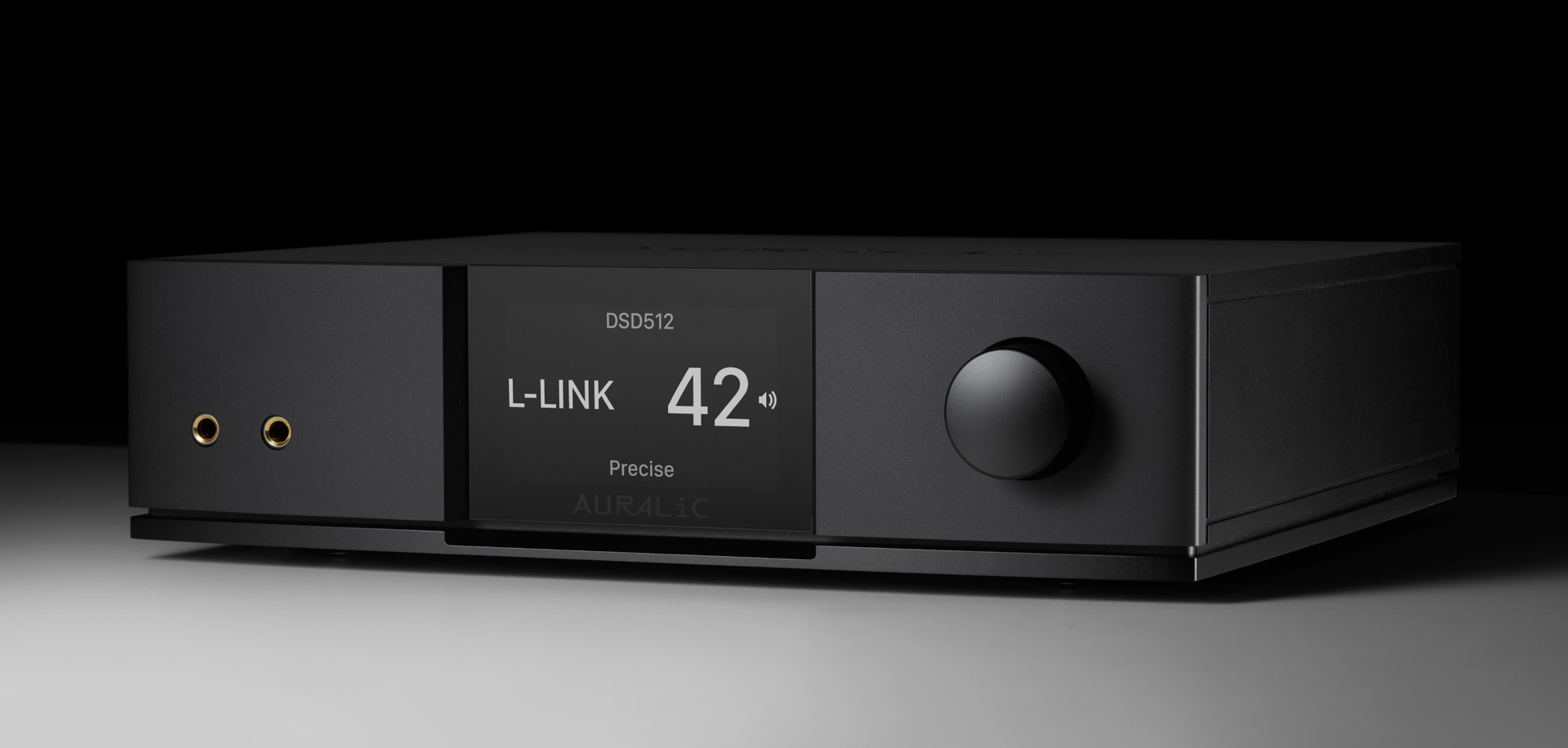
AURALiC The G2.1 Series — Breathing New Life into Your Music

AURALiC introduces a category-wide update to its award-winning G2 and GX Product Range: Series G2.1/GX.1. The G2 Series now stands as one of AURALiC’s most successful projects. The effects of this effort have served as an important lesson to the team: that digitally oriented audiophiles prize above all else: sonic performance, industrial design, and diversity of features in their purchases. While the success of the G2 products proved a welcome chapter, the AURALiC team, in its innovative spirit, feels that it’s time to further the series in terms of its capabilities, both in the realm of hardware and software.

Enter Series G2.1. AURALiC is proud to introduce the next evolution in the development of its products. The AURALiC engineering team has developed G2’s next evolutionary step, embodied by the all-new:

ARIES G2.1 Streaming Transport,

VEGA G2.1 Streaming DAC,

LEO GX.1 Master Reference Clock,

SIRIUS G2.1 Upsampling Processor.


Below please find details on improvements made regarding the new G2.1/GX.1 series…

Unity Chassis II

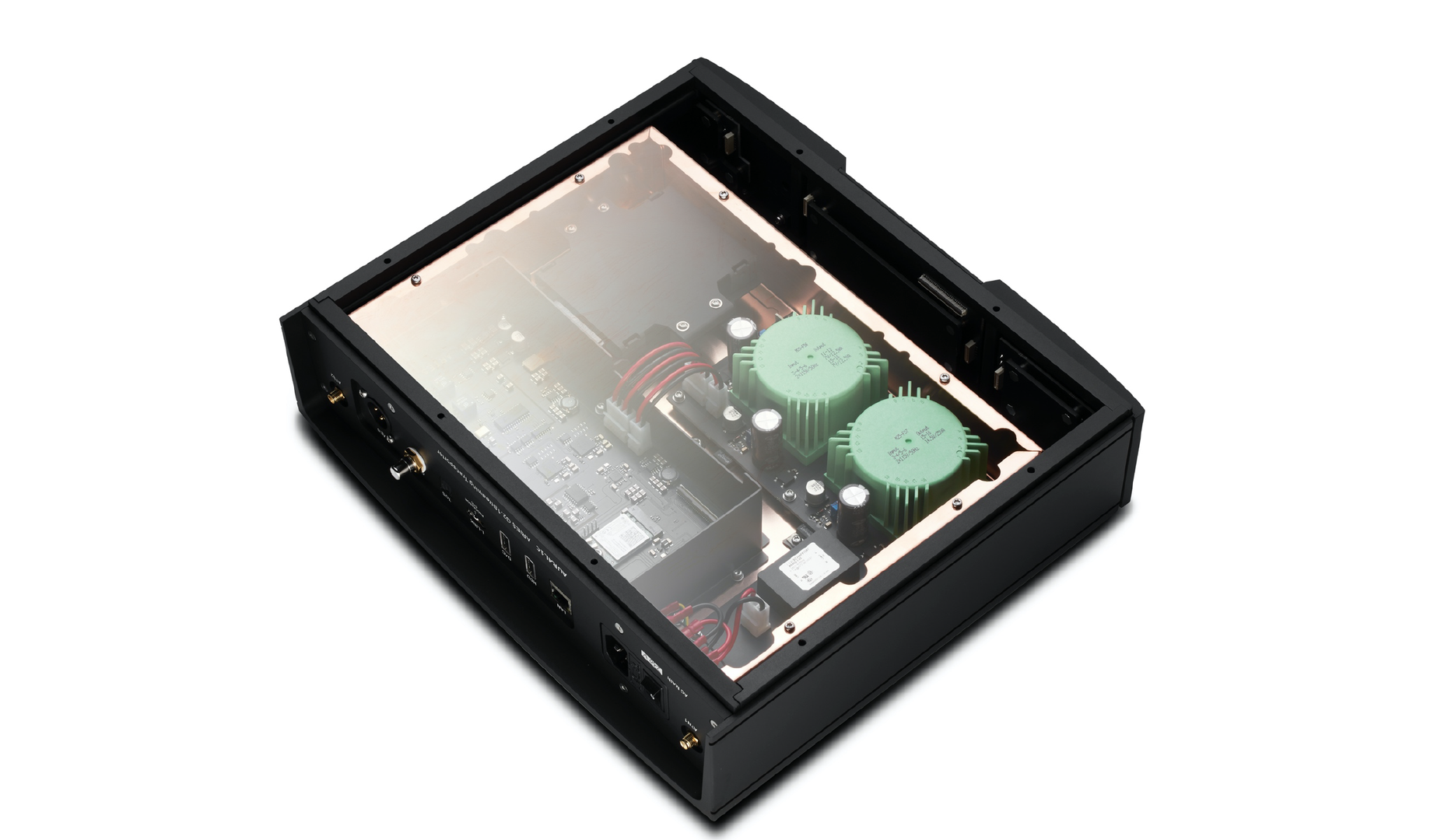
The G2.1 Series casework now features a double enclosure, or “chassis-within-a-chassis,” where the outer casework is manufactured from high-grade aluminum and an additional internal enclosure is made from copper. These design revisions enhance EMI shielding, providing an audible improvement to performance. A new, sculpted metal base provides a high-mass, heavyweight foundation for the G2.1/GX.1 series, bonded to the enhanced four-foot assembly. This substantial base adds overall mass to the product and further builds on AURALiC’s modest elegance and improves the sound of the product overall.


Enhanced Suspension System

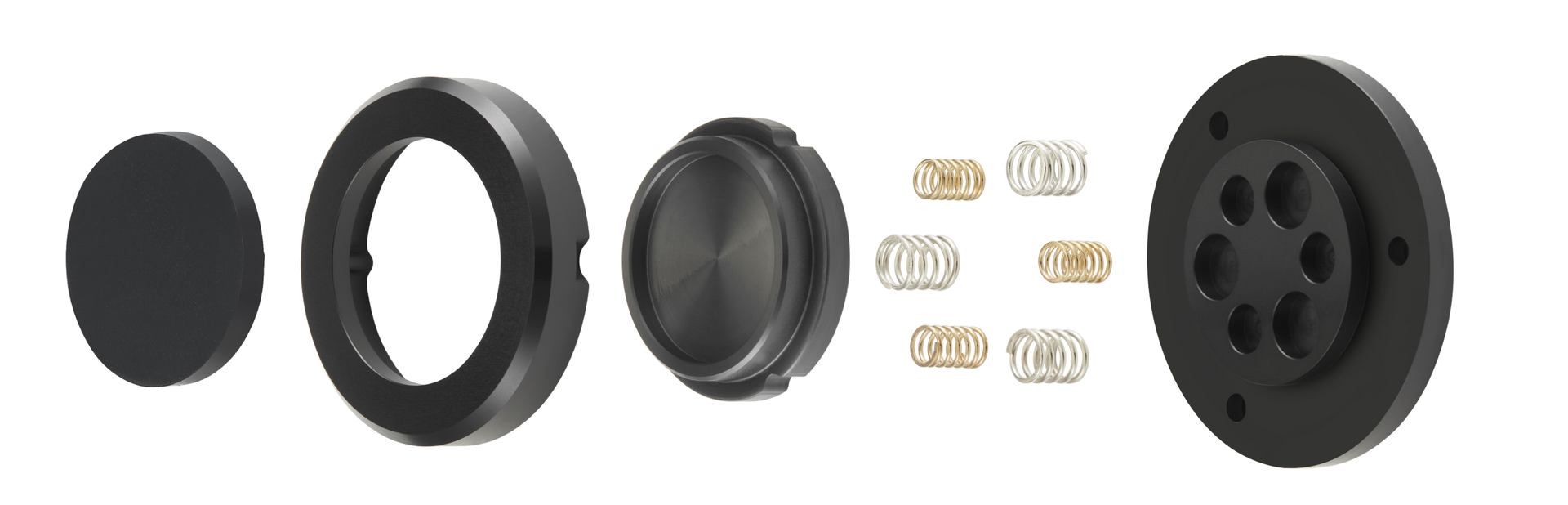
The balanced weight distribution design found internally in the original G2/GX layout remains unchanged, but a newly designed suspension spike system further isolates the product from external mechanical vibration. Potentially harmful vibrations are absorbed within the six-coiled-spring, acoustically calibrated core of each foot, with each spring tuned to a different tension point, resulting in greater sound clarity and a more open sound field through vibration damping at separate frequencies, yet again providing for enhanced sonic performance. 


Circuit Optimisations

While external changes to the series are certainly welcome, internal circuitry modification couldn’t be ignored. For the ARIES G2.1, the USB output has been transformed into a more universal category of application, allowing for a broad level of compatibility across most manufacturers’ USB inputs. The HDD port, for local hard drive connectivity, has been given a power boost to handle a broad range of USB drives requiring higher power delivery. These optimizations have extended the potential feature sets of the products.

CD Playback and ripping – the latest from Lightning streaming We couldn’t ignore the importance of additional features offered by the tried and tested Lightning OS, now in its seventh iteration. As requested by our customers, Lighting OS 7.0 will provide CD playback with optional ripping capabilities. Customers can use a CD drive connected via USB to the AURALiC product. Lightning’s CD function will read each disk sector several times to ensure ultimate data accuracy, then save to memory cache prior to playback. This makes for a completely jitter-free CD playback experience, besting other standalone CD players at far higher prices. As for ripping, while you may already have the lion’s share of your CD collection stored on a drive or NAS of some kind, the ability to comfortably add CD albums to your library on occasion will add a welcome utility to your AURALiC setup. This feature will work with any of our ARIES (Not ARIES Mini), ALTAIR and POLARIS variants. Simply connect a CD drive via USB to one of the capable AURALiC products and begin to play back or rip your CDs.

Lightning Link Continuity One aspect of the overall G2.1/X.1 design that remains unchanged, and for good reason, is AURALiC’s Lightning Link protocol, making connectivity between G2/GX devices and G2.1/GX.1 an uninterrupted feature, so that owners of both G2 products and the newer generation of G2.1 products can be connected together for seamless functionality in one system.

G2 By Request AURALiC understands some customers may wish to add to their G2 series of components and maintain the aesthetics of the original series. To this end, AURALiC will, by special order, construct and ship original G2 products for customers who would like to complete the look of their previously existing G2 products. Customers should expect a longer lead time for custom G2 product orders. AURALiC will place a time limit on this courtesy offer, but it should provide customers with enough time and notice to take advantage of the opportunity.

Available Now G2.1 and GX.1 products are all available now, have begun shipping globally, and will reach customers very soon.

Suggested Retail Pricing (U.S. and Canada)

ARIES G2.1 ……………………..….…………………………………………… $4,799.00

VEGA G2.1 ……………………………………………………………………… $6,899.00

LEO GX.1 ……………………………………………………………………….. $8,999.00

SIRIUS G2.1 …………………………………………………………………….. $6,899.00

Suggested Retail Pricing (EU, with 20% VAT)

ARIES G2.1 ……………………..….…………………………………………… €4,699.00

VEGA G2.1 ……………………………………………………………………… €6,699.00

LEO GX.1 ……………………………………………………………………….. €8,999.00

SIRIUS G2.1 …………………………………………………………………….. €6,699.00

Suggested Retail Pricing (UK, with 20% VAT)

ARIES G2.1 ……………………..….…………………………………………… £4,199.00

VEGA G2.1 ……………………………………………………………………… £5,999.00

LEO GX.1 ……………………………………………………………………….. £7,999.00

SIRIUS G2.1 …………………………………………………………………….. £5,999.00 

MQA POWERS BEST LISTENING EXPERIENCE EVERYWHERE WITH EXPANDING GLOBAL PARTNERSHIP NETWORK

From the MQA press release

London / (Virtual) Munich, 29 May 2020 – MQA, the pioneering audio technology company, continues to grow its network of international partners and expand its reach.  While there may be no Munich High End Show this year, there’s an abundance of partnership news to share.

“Even during these extremely challenging times, we’ve seen strong business potential and have proceeded with campaign opportunities to support our partners,” stated MQA CEO Mike Jbara.  “Development work continues uninterrupted, and we’ve been able to showcase MQA’s unique capabilities to deliver the best sound for live audio broadcasts, as well as within video, proving we’re ready to help existing and new partners navigate whatever the future brings.  The one constant remains our quest to deliver the best quality audio, whatever the playback environment.”

Partnership News

Luxman, recently joined the MQA family with the release of its D-03X digital player which has MQA-CD playback capability.  Another new hi-fi partner, Monitor Audio, has now officially launched its MQA-enabled IMS-4* music streaming solution – the product was demonstrated for the first time at ISE 2020.  HiFi Rose released its RS201 network streamer late last year and will soon be adding the RS150 to its range of MQA-capable products.  Other new joiners include Topping and its D90 (with MQA) DAC, and Magnet, which is gearing up for international distribution of its recently released Elite S DAC

Existing MQA partners who have announced new products include the following:

(*subject to final test & certification)

MQA On The Go

A new partnership with FiiO adds to the availability of MQA-enabled portable products, with MQA capability integrated into its range of portable players released earlier this year: the new M11 Pro and M15 players, alongside the existing M11 model which can now be updated.  The dongle category, popular for boosting handset audio capability, has two new offerings: HELM Audio’s Bolt DAC/AMP can now be pre-ordered from for delivery in July; while Highscreen released its MQA-enabled TrueSound Pro rendering adapter in February.

New portable products from existing partners include: Astell&Kern’s A&norma SR25 player; iFi audio’s portable hip-dac; and a firmware update to upgrade the HiBy Music R6 and R6 Pro portable players, with the R8 coming soon.

In the world of in-car entertainment, JVC Kenwood continues to integrate MQA into more of its automotive accessories: during June and July, several Sat Nav products will be released to the Japanese market which support MQA-CD and MQA file playback.

MQA Transforms Sound Everywhere

Prior to lockdown, MQA teamed up with Bluesound and tastemakers Jazz re:freshed and British Underground, for the inaugural Master Sessions event at London’s British Grove Studios.  At the event, Mercury Prize nominees SEED Ensemble performed an exclusive live set, which was broadcast live in MQA audio to audiences at Bluesound dealerships across UK, Europe and South Africa.  The technology for live audio streaming was first demonstrated during SXSW in March 2018.

MQA then joined forces with British Music Embassy to provide a livestream for UK artists due to perform at the cancelled South By South West (SXSW) 2020 festival.  For the first time, thanks to MQA’s unique audio technology, the original sound from these live sessions is captured within HD video, to showcase the artists and their music in the best possible quality.

Commented Fred Bolza of New Soil, who manages Theon Cross, “Theon’s trip to SXSW was to be a key part of his plans for 2020, acting as the culmination of activity around his 2019 album Fyah and the start of the next chapter of his journey.  Despite the event’s cancellation we were resolved to find a way of bringing the music to people and, thanks to MQA, the British Music Embassy and Jazz re:freshed, Theon was able to perform, livestream and capture his SXSW set to a level of quality that was undoubtedly the next best thing to being there!

ELAC Concentro S 509

From the ELAC GmbH press release:

Kiel, May 2020: A feast for the eyes, a precision tool… and wholeheartedly dedicated to music: the ELAC Concentro S 509 is a distinctively styled loudspeaker with an impressive feature set. Although a cursory glance suggests a close resemblance to the smaller Concentro S 507, a direct comparison reveals the major difference.

Internal and external scale… 
The shape of the Concentro S 509 seamlessly blends the extravagant design of the large Concentros with the clean lines of the world-renowned Vela Series. The wraparound baffle forms the basis for superb acoustics but combines with the gently angled cabinet, the trapezoid basic shape and expressive bottom assembly with “high-heel” effect to create a powerful yet natural and elegant appearance. The impressive overall dimensions create a canvass for meticulously applied high-gloss lacquer and elegant real wood veneer finishes.

Your own ear is always the best judge… 
The acoustic centerpiece of the Concentro S 509 is the stepX-JET: a concentric chassis comprising the new JET 5c tweeter and a midrange driver with an aluminum membrane. A patented technology uses exchangeable DRCs (Directivity Control Rings) to tailor the directional characteristics in the mid-frequency range to conditions in the listening room. The different DCRs (three aluminum DCRs are included as standard) are used to optimize the relationship between direct and diffuse sound in the listening zone. 

You can delete the word “compromise” from your vocabulary…
The stepX-JET is supported by a front-mounted low/midrange unit that employs AS-XR technology. Four powerful side-firing, long-throw woofers with a diameter of 180 mm ensure effortless bass performance. The special ICD configuration (Impulse Compensated Design) guarantees contoured bass reproduction free of any coloration due to unwanted mechanical vibrations. Put simply, the Concentro S 509 delivers stunning dynamics, exceptional resolution, and all-encompassing reproduction of signals. Although utterly uncompromising in technical terms, its personality is defined by the sheer joy of playing and a tangible love of music.
 

ELAC Concentro S 509: Price and availability 
The Concentro S 509 is available in high-gloss lacquer finishes (black and white) and in a high-gloss walnut veneer from May 2020 at a suggested retail price of € 7.999 by the end of June /€ 8.499 from by the end of June per unit.

Technics SL-1210GAE Limited Edition

Editor’s note: Like much of the EU press, we were invited to an exclusive Vimeo Webinar to present this product, which would have normally been launched at Munich High-End. Obviously, we were not able to inspect the product up close, but in essence the turntable seems to be an almost identical model to the limited edition SL-1210GAE (from 2016) that marked the relaunch of the Technics brand, with the principle difference being the all-black colour scheme, the improved insulation and the bundled high-performance Nagaoka cartridge made specifically for this model.

From the Technics press release

May 28, 2020 – Technics has been delivering a wide variety of epoch-making audio products, such as speaker systems, amps and audio players to worldwide markets since 1965, the year in which this valued Hi-Fi audio brand debuted. This year, Technics releases the SL-1210GAE Limited Edition direct drive turntable to commemorate the 55th anniversary of the Technics brand. This special model is based on the internationally acclaimed Grand Class SL-1200G hi-fi turntable and features a full black colour scheme, which has already proved popular with other recent Technics products. The SL-1210GAE will be available from June 2020 and limited to only 700 units throughout Europe.

Special and exclusive specifications of the SL-1210GAE 55th anniversary model

1. All-black colour scheme

The SL-1210GAE’s 10-mm-thick aluminium top panel sports a meticulously anodized black brushed hairline finish. In addition, the operation buttons and tonearm also employ a high quality black finish that results in a uniform, premium appearance.

2. Special badge inscribed with a serial number

The SL-1210GAE is wholly made in Japan by skilled artisans’ hands, with a significant level of hand-made processes to ensure the highest quality possible. The top panel features a special badge, inscribed with the unique serial number to signify that it is a 55th anniversary model.

3. Insulator

The specially developed zinc insulator features αGEL™, a soft gel-like material with excellent shock absorbing properties which is also used on the highly acclaimed, ‘flagship’ SL-1000R reference turntable. The high-density zinc die-cast housing offers superb vibration damping characteristics and excellent long-term reliability. The new insulator effectively isolates the turntable from external vibrations, ensuring completely undisturbed music reproduction whilst preserving every fine nuance and detail within the musical signal. 

αGEL™ is a trademark of Taica Corporation registered in Japan and/or other countries.

4. Strobe light ON-OFF switch

Turning off the strobe light allows the listener to concentrate more effectively on the music, especially in dimmed environment.

5. Specially tuned, unique Nagaoka pickup cartridge provided

In developing the SL-1210GAE, Technics collaborated with Nagaoka, a highly-respected manufacturer with a global reputation for record styluses and pickup systems. Nagaoka boasts world-leading microfabrication technologies for difficult-to-cut materials and celebrates its 80th anniversary this year. The SL-1210GAE is supplied with the Moving Magnet(MM) type JT-1210 cartridge that was specifically tuned by a joint team of engineers from Technics and Nagaoka. The JT-1210 employs a Boron cantilever and is specifically tuned and designed to offer superior performance in focus and detail in comparison to other Moving Magnet cartridges. It will only be available together with the SL-1210GAE turntable. The superlative sonic capabilities of the JT-1210 cartridge and SL-1210GAE Direct Drive Turntable ensure that this limited edition full package will be even more valuable and desirable.

The expected retail price of this limited edition turntable is €4,500.