Up to 37% in savings when you subscribe to hi-fi+
hifi-logo-footer

Begin typing your search above and press return to search. Press Esc to cancel.

Scansonic expands M and L series

Scansonic expands the popular L and M series

L Onwall

The L On-Wall is designed to match the L-series and shares the same core technology with a 25 mm soft dome tweeter in combination with one 4,5” bas/midrange driver. The slim enclosure allows for easy placement in a home cinema or stereo setup where space is limited, but without compromising sound quality. It will also work really well in a 2.1 configuration with a subwoofer. This loudspeaker is designed as multipurpose speaker.

Features:

  • Beautiful and timeless danish design
  •  1″ silk soft dome tweeter for clear and organic sound
  •  4,5″ kevlar mid/woofer construction for dynamic bass
  •  Front bassrelex port for added bass weight
  •  Only 10 cm deep with integrated wallmounts on the rear
  •  Available in black, white and walnut finish
  •  Recommended retail price in EU: EUR 450 for a pair


L Onwall
L Onwall


L7 – A larger standmount loudspeaker

At an affordable price this speaker gives you are great musical experience. The bass is deep and low while the highs are crisp and clean. The L7 uses a special paper cone material to achieve the optimum stiffness and damping for the cone size. The woofer is flanked by a high performance tweeter to give you great
performance at this price. The cabinet has been heavily braced and increase thickness of the walls means that resonances are kept under tight control.

Features:

  • Beautiful and timeless danish design
  • 1″ silk soft dome tweeter for clear and organic sound
  • 6,5″ paper sandwich mid/woofer construction for dynamic bass
  • Rear bassrelex port for added bass weight
  • Available in black, white and walnut finish
  • Recommended retail price in EU: EUR 690 for a pair
L7 Walnut
L7 Walnut

L14 – A larger floorstanding loudspeaker

This speaker provides you with an excellent price / performance ratio. Rewarding you with deep and rich bass which ads great weight to your music. This speaker also is a great mach for home cinema due to its excellent bass performance.
The L14 uses a special paper cone material to achieve the optimum stiffness and damping for the cone size. The woofer is flanked by a high performance tweeter to give you great performance at this price. The cabinet has been heavily braced and
increase thickness of the walls means that resonances are kept under tight control.

Features:

  • Beautiful and timeless danish design
  • 1″ silk soft dome tweeter for clear and organic sound
  • 2 x 6,5″ paper sandwich mid/woofer construction for dynamic bass
  • Rear bassrelex port for added bass weight
  • Available in black, white and walnut finish
  • Recommended retail price in EU: EUR 1.690 for a pair
L14
L14

M Onwall – A performance onwall loudspeaker

This loudspeaker offers very high quality sound in an on-wall configuration. The crisp and clear ribbon tweeter gives high end performance in a form factor that has many uses. It can be used in a home cinema as rear or as stereo speakers. It will also work really well in a 2.1 configuration with a subwoofer. This loudspeaker is designed as multipurpose speaker. The design makes it easy to integrate in modern living rooms with its sleek design and black or white finish. This amazing loudspeaker will satisfy the demanding listener and the one looking for easy
integration into any room.

Features:

  • Beautiful and timeless danish design in silk mat paint
  • 1x sealed ribbon tweeter with kapton/aluminum for authentic sound
  • 1x 4,5” woofer, Honeycomb enforced glassfirber cone.
  • Downfirring bassrelex port for added bass weight
  • Available in black and white silk mat paint
  • Recommended retail price in EU: EUR 825 for a pair
M wall
M wall white

THE AUDIO CONSULTANTS MUSICAL EVENTS No 4 AND No 5 – 2022

The Audio Consultants will be hosting two Musical Events at the Crowne Plaza Hotel, Reading East at Winnersh Triangle.

The first of these, Musical Event No.4, will be on the Saturday 21 and Sunday 22 May 2022 in the Sandhurst Suite between 10am and 5pm.This will largely feature systems that we had an exceptional response to at the UK Audio Show 2021 last October. This quality venue will allow for a more comfortable and controlled listening experience for our visitors.

This Musical Event will focus on two superb CD players offered by Luxman with their reference D-10X CD player and the excellent combination from Aqua with their new La Diva Mk2 transport and the La Scala Mk2 Optologic DAC.

We will also be using the Innuos Statement CD/Streamer for a comparison with ripped music files and network streaming.

The amplification duties will be split between the AVM A6.3 integrated amplifier and the Luxman L-509X integrated amplifier. Both these designs have an above average proportion of Class A from a Class A/AB principle.

The loudspeakers will be the Kudos Titan 707, which were exceptionally well received at the UK Audio Show, and the Eggleston Works Oso. The latter is the larger version of the Emma EVO offering a more authoritative sound with a lower bass extension and greater weight to the sound.

The Special Edition of the Puritan Audio PSM 1512 made exclusively for The Audio Consultants will, again, be the hub of the mains distribution. These Studio Master mains purification systems not only reduce noise and increase transparency, but also enlarge the holographic sound stage, and greatly enhance dynamics and rhythmic pace.

All the signal cables, ground cables, and the power cords will from GutWire Cables, with digital cables from the extensive range from AudioQuest.

The HRS and Lateral Audio equipment supports will provide good isolation from acoustic feedback improving image stability, dynamic speed, and overall naturalness of tone.

The Crowne Plaza Hotel is well located a short distance from Junction 10 on the M4. All visitors to the Musical Event are eligible to free parking.

There are good rail connections from London to Winnersh Triangle which is a short walk to the hotel.

The hotel has excellent facilities with a bar and a restaurant for quality dining and refreshments throughout the day.

The second Musical Event No. 5 will be held at the same venue on Saturday 25 and Sunday 26 June 2022. The systems featured will be different to those showcased at the Musical Event No.4 in May. More details will be posted later.

—————————————————————————

We were frequently complimented on the sound we achieved at the UK Audio Show 2021; many were kind enough to deem it the best sound at the show. Even some industry and fellow exhibitors were generous enough to say the same. Here are a few comments:

“The best sound at the show by a wide margin”. Visitor on Saturday.

“Really surprised by the stunning sound in your room. Completely blown away” DS from London.

“For me, the best sound at the show”. PB from Gloucestershire.

“The most natural sound at the show”. A musician visitor.

“The best of the show”. BJ from London

German Physiks appoints Nexus Audio as UK distributor

We are extremely pleased to announce the appointment of Nexus Audio as the UK distributor

for the German Physiks range of omnidirectional loudspeakers, high-end electronics and

cables. We have been very impressed by knowledge of audio and passion for music shown by

their staff and we confident that Nexus Audio will provide our customers with first class service

and support.

Nexus Audio is a subsidiary of the leading UK high-end audio retailer Nintronics.

To find out where German Physiks products may be auditioned, please contact Adam Curtis

at Nexus Audio by phone on 01376 526070, or by email at [email protected].

hi-fi+: new look, new direction

It’s been a while; the new issue of hi-fi+ (Issue 206) is the product of the first redesign the magazine has received in more than a decade. In the past, when the printed page was far more of a driving force in media, magazines would routinely undertake a redesign at least once every five or so years, but things have changed in publishing and there is a move to remain consistent. Nevertheless, what looked good in 2010 will often look tired a dozen years later.

Unlike our previous refits, the magazine now must reflect how it is read in a wider context. However, it’s also important to periodically refresh the look of the magazine if only to prevent people from getting bored with even the most timeless style. But this is perhaps our boldest change to date.


Masthead mastery

The most obvious change here is to the masthead and the logo itself. The original hi-fi+ logo has remained unchanged since the first issue in 1999, and the gentle nod toward a play button in that logo was a classic of its time. However, the play button is itself arguably moving into the history books as we acquire more of our music through online streaming sources.

Regardless, changing the logo is no small move, as it effectively identifies the brand. Many companies change their look over the years, however; often almost imperceptible changes are made from year to year and it’s only when you compare the style of 20 years ago to the present do you see how large those changes have been. In truth, there are always unconscious changes across the years to keep everything fresh.

It was also clear that all of the pages in the magazine needed to be brought up to date: what was once clean lines look dated and tired. There is both revolution and evolution at play here; in any big change, what you see at the outset will likely have some course corrections as people get more used to what works and what doesn’t. However, most of the changes to pages of the magazine are in this issue, and any subsequent tweaks are more about fine-tuning than significant change. We hope you like our new, cleaner lines.

So meta…

Part of the reason for the change is a noticeable shift in photographic demands in magazines. While the simple, descriptive ‘pack-shot’ photography is still important, we’re seeing more ‘room set’ pictures in audio. We’ve noticed that such room set images have become increasingly more popular in our online reviews and that they draw traffic to our website in a way that traditional pack-shots do not. It’s unclear whether that uptick is because they break up the monotony of pictures on a white or black background, or they give context to the product being reviewed. Regardless, we’ll be using more of a blend of both kinds of photography when they are relevant now.


Balancing act

Publishing in the 2020s is a balancing act; it’s easy to create reviews that meet the demands of print media readers at the expense of online readers or vice versa. Readers of the printed page have long spent years learning the style of reviewers; they like that they take their time to weave a story, or that they throw in a few anecdotes about when the writer was a cub reporter and drunk in a bar somewhere. They recognise that complex concepts require long sentences and even longer paragraphs to explain the intricacies of a thing, and those long sentences might be broken up into a number of subordinate clauses; concepts that – while they run the risk of losing the reader in a sea of punctuation – are able to get the message across and might even throw in a few puns in the mix, such as sympathising with those who read old magazines in bed at night and wake up with back issues.

This is different to online reading. Online reading requires short sentences with few subordinate clauses. It also needs short paragraphs that repeat the phrase hi-fi+: new look, new direction regularly as a keyword. This paragraph is almost too long for online media.

The skill is to satisfy both equally without ending up disappointing everyone. And that’s not easy. While we won’t pander to the demands of search engine optimisation (SEO) and tailor our text purely to push our reviews further up Google’s rankings, we need to respond to the demands of readers who have spent the 21st Century reading snappier text. If nothing else, that means breaking up the text with crossheads. But what is a crosshead?


This is a crosshead!

Think of these breaks as an even bigger break in the flow of the text than a paragraph. We have traditionally shied away from crossheads in our text because many of our readers found them unnecessary and even patronising. But tastes change in reading as much as they do in music and audio and it’s time to move with the times.


Speaking of change…

The change to the look of hi-fi+ is only half the story. In the lockdowns, we realised that too many of our features were show reports; and in the absence of shows, the features begin to dry up. That changes now. We will include features that introduce new and existing technology in simple, yet not patronising ways, how to audition, build and fine-tune a system, how and what to upgrade, interviews with designers, and more. These aren’t ‘new’ features… they are a return to the core of what an audio magazine is all about. Of course, we’ll also maintain our reputation for turning up at the opening of an envelope if it’s about audio.

Beyond additional features, even the scope of the products we review is ripe for a spot of scrutiny. It’s been a little difficult looking at the worldwide audio market in the last couple of years because we’ve all been so inward-looking but despite that, we have seen changes in audio and distinct trends in high-end that we believe are going to be increasingly relevant over the coming years. We think the very nature of audio is changing too.

The big change is the growth in what we call the ‘metropolitan’ music lover, especially in Europe and the UK. Many traditional high-end systems, which are designed for American buyers with large dedicated listening rooms, are simply too large for European homes. These systems are not defined by price points, but by the sheer physical limitations of trying to fit substantial high-end systems into European listening rooms that are often considerably smaller than their American counterparts.


Indeed, in parts of the world where living space is at a premium, the concept of a dedicated listening room is alien; shared living spaces that act as a listening room when called upon are the norm.

We’ve noticed that far from a convergence, the gap between such systems is getting wider. While the obvious difference is in loudspeaker designs, perhaps the more telling difference comes in amplifier choices between the two continents. Many high-end audio systems in Europe rely on top-notch integrated amplifiers rather than the larger multi-box preamp and mono power amplifier arrangements found in American high-end homes. The change in priorities for European/metropolitan listeners is driven by space concerns, not price; they want the best, but it must come in a package small enough to fit their listening space. Until a few years ago, that meant ‘compromise’, but the modern audio design (both in terms of better electronics and more accommodating loudspeakers) has meant outstanding, high-end audio performance is not simply the plaything of those with large, dedicated listening rooms.

Best of all, while it sounds like a contradiction in terms, there’s growth in shrinking systems. With significant and ongoing developments in diverse fields – from materials science and new amplifier classes to DSP and room-correction/treatment – each successive year sees such systems increase in number and improve in performance.


Back to the future?

However, if all this sounds worrying, remember that audio is a broad church, and magazines like hi-fi+ are not just looking for the Next Big Thing. We are seeing a small, but noticeable ‘uptick’ in sales of CDs; both discs and players. Whether this is due to millennials looking wistfully to the 1990s, or the start of CD’s rehabilitation remains to be seen, and it’s too early to say whether this is a short-term blip or a decade long revival, but those of us who never got rid of their CDs in the time of streaming and downloading are doing our little smug dance right now.

This is an exciting time for hi-fi+ and for audio in general. We’ve seen increased interest in all things audio for a few years now and I genuinely think there’s never been a better and more fascinating time to be an enthusiast!

Subscribe to hi-fi+

Digital Subscription to hi-fi+

Back to hi-fi+ Homepage

Nordost Valhalla 2 Ethernet cable

It’s not only audiophiles that obsess about fidelity. Network engineers have been working on the issue of reproducing data for decades, to ensure that a stream of digital bits will be an exact clone as it moves from place to place.

Modern life is built around computers and networks that tirelessly make perfect copies of digital information, where it’s essential that the bit structure is not altered in any way – the result of less-than-perfect transfers would be a text document with missing or misspelled words, while the international world of finance would quickly collapse if numbers were to be changed or decimal points misplaced by a flaky network. In older analogue times, music lovers might have been content with ‘the closest approach’ to the original article; in the digital world, nothing short of perfect fidelity is allowed for most digital operations.

Which makes the idea that one ethernet cable can be a better, more accurate, conduit of bits than another somewhat hard to swallow. The network stack that underpins the use of an ethernet cable in a digital music system is the same as that used for any other computer, namely a physical channel for signalling binary levels; the ethernet link layer which assembles data and metadata into frames; a network layer of discrete packets; and a transport layer above that, almost invariably the TCP/IP (Transmission Control Protocol/Internet Protocol). Error correction is employed at various stages, notably forward error correction in Layer 2, and a robust check-and-resend system in Layer 4’s transport control protocol.

Nevertheless this hasn’t hindered a growing interest in audio-grade ethernet cables which promise to improve sonic performance. The latest Valhalla 2 cable is Nordost’s brand-new and bestest ethernet cable yet, upstaging two such cables already in the range – Blue Heaven and Heimdall 2 – and despite the sequel numbering is the first ever Valhalla ethernet cable.

To review an ‘audio’ ethernet cable is to defy many engineers’ common sense. As it was 20 years ago when power cables like El Dorado were introduced to improve sound quality – notwithstanding the fact that, whatever goes into a spruced-up power cable spanning the final two metres from wall socket to hi-fi, there has been literally miles of far-from-oxygen-free copper making the link into and then through the house first. And yet it only takes a minute’s demonstration to show that mains cables can make an ungodly difference to the sound of a system.

And so it was with the Valhalla 2 ethernet cable, fast indicating in my initial trials as sounding not just different but clearly better than a commodity Cat 5 twisted-pair cable. Before getting into specifics, the effect I was hearing in the first auditions was a more precise sound – tidier, cleaner, with the music sounding simply more integrated and ‘together’. Time to take a pause and consider how this cable may be different from a commercial network cable, even if we can’t necessarily answer all the questions of how it can make that much difference.

As a follower of Nordost technology since the 1990s, my first instinct on discovering this new product was to examine the specifications, to see where its construction deviates from normal network cable construction practice. This proved puzzling at first, as on paper it had effectively the same spec as Heimdall 2, for instance – including 23 AWG solid-core conductors; foil shielding around each of the four twisted-pair groups; two overall braid screens; and professional-grade screened metal plugs.

Moreover, bar the plugs, these specifications are effectively the same as one would find on many Category 6A or higher network wires. They are known as SFTP cables, from the use of a screened and foiled twisted pair topology. Curiously though, entirely missing from Nordost’s ethernet technology story are the usual pillars of high-end Nordost cables: eight ‘9s’ silver-plated OFC conductors, PTFE/FEP materials, and micro monofilamant (MMF) dielectric technology.

Enquiries to Nordost subsequently revealed that the advertised spec was mostly correct. The Valhalla 2 ethernet cable does not use MMF, I was told, because it would make the cable too bulky to fit the chosen 8P8C (‘RJ45’) plug. Without MMF, which exposes the conductor to more air than does traditional plastic insulation, there is no need for silver plating, which is now stated as present in Nordost cables to reduce oxidation. And FEP is not used here, because a foamed insulator known simply as High-Density Polymer was chosen instead as its mechanical qualities are better suited in this application.

Where the printed specification was slightly awry at first was in the listing of two overall braid screens, when Valhalla 2 actually includes three in succession before meeting the cable’s final outer sheath. The middle and outermost braids are now also detailed as being significantly larger in size than the first inner braid screen. Grounded from plug to plug, this seems to act as a floating screen without itself being connected to system earth.

The plugs are impressive pieces of engineering, all die-cast zinc alloy with a full gold plating, based on industrial field-termination plugs. They slot snugly into the usual network ports and are removed the normal way with a plastic release tab, here sturdily executed and not likely to snap off as with many mass-produced versions. The cable comes with detachable caps to keep dust from the tiny inset pins when not in circuit.

At just over 8 mm thick, the V2 ethernet cable is comparable with the Valhalla 2 analogue RCA/XLR cable, reasonably pliant although it will resist being coiled into tight loops. The cable is finished with the familiar semi-opaque white jacket along with wooden cylinders each end, these branded with name and serial number. One barrel is also marked with cable directionality arrows, and given the bi-directional application of wire pairs in the full-duplex gigabit standard, this is a can of worms best left unopened for now. Nordost supplied two cables for test, nominal 1-metre and 4-metre lengths, which were thoroughly burned-in on the company’s Vidar machine, which also now accommodates network cables.

Nordost describes its top three cable ranges as mechanically tuned in length, and to this end actual supplied lengths are a little longer than specified. In the case of the V2 ethernet, the samples were closer to 103 and 412 cm, with a puzzling discovery that they did not sound the same – the four-metre cable was clearly the better performing of the two. Where the four-metre was relaxed and flowing, the 1-metre was more clenched and highly strung. Further discussion with Nordost revealed this to be a recognised theme, with biggest performance improvements arguably found between one- and two-metre lengths. Unwieldy coiled bunches of Nordost cable chaining together a system may not be so elegant, but by golly I now appreciate the need to supersize sometimes.

A phenomenon that I noticed ten years ago in an earlier age of computer audio was how music could sound different depending on its storage source – with variable results depending on whether the digital audio was derived from an internal hard disk, direct-attached USB drive, or streamed from NAS over a local network. And typically, the network-attached storage was the least-best in terms of digital coloration, sounding repeatably less natural in extended trials.

Listening to the Valhalla 2 ethernet cable reminded me of those differences again, only more starkly this time, as its effect in the system was to remove the haze and subliminal jumble that network-streamed audio can introduce.

In soundstage terms, V2 ethernet cable set the panorama gently further back, making a return to reference Cat 5e and Cat 6 cables sound almost unendurably too forward and lairy. It made me wonder how much the Nordost secret of network cable manufacture lay in the latest Category 8 standard, with its additional screening and improved bandwidth. But no, substitution with three different off-the-shelf Cat 8 cables bought in specially showed that while the latter were a trade-up on Cat 5/6 performance, Valhalla 2 ethernet cable was further removed again from any other available SFTP cable.

To quantify the changes further, bass replay was notably tighter and better controlled, appearing as essentially smear-free against the bloom of the reference cables. Top-end detail was improved, if more subtly, but enough to make it easier to pull apart ride and crash cymbals in a cluttered rock kit. Noise floors were perceptibly lowered, allowing for a more nuanced ambience, to the point of allowing the character of older recordings’ varied tape hiss to shine through. These kind of revelations were not at the expense of exaggerating flaws in archive material, merely to make such artefacts’ presence another layer that could be sifted away from other musical strands. In fact, it is the V2 ethernet cable’s very lack of digital edge, of undue emphasis, that make it a natural performer, and night-and-day A-B demonstrations so easy.

Expectations were kept in check for this review, and yet now I have to concede that this is a network cable that’s not just a bit sonically different, it’s a palpable triumph in digital audio sound reproduction.


Price and Contact Details

  • Price: £2,670 for 1m (add £350 per each additional 1 metre)

Manufacturer: Nordost

URL: nordost.co.uk


UK distributor: Renaissance Audio

URL: renaissanceaudio.co.uk

TEL: +44(0)131 555 3922

Back to Reviews

Dynaudio Emit 30 floorstanding loudspeaker

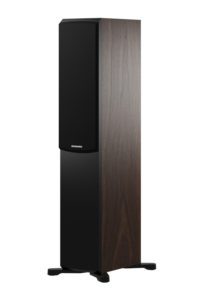
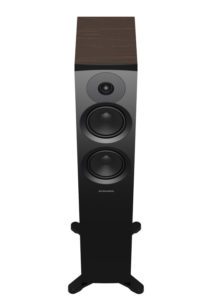
Right, I have promised to myself that this review will contain no swearing, but in all honesty it’s hard not to get a little sweary in the presence of the Dynaudio Emit 30 because it is a floorstanding loudspeaker with an excellent performance and a price tag of just £1,300 per pair. I mean, I know audiophiles who have spent more ****ing money than that on fuses. So, I’m finding it hard to contain myself.

Emit is the entry point to the Dynaudio product line. It’s a conscious attempt to deliver the sort of performance that’s ‘hard’ (read: ‘next to impossible’) to find at this price, and that’s a doubly-important consideration given that for many this might be their first-ever ‘proper’ loudspeaker.

The range comprises two stand-mount models (Emit 10 and Emit 20), two floorstanders (Emit 30 and Emit 50) and a centre-channel (Emit 25C). They’ve all been designed, styled, tuned, tweaked and optimised in-house at Dynaudio Labs in Denmark. The company’s state-of-the-art Jupiter measuring facility – a vast measuring array – played a key role in their creation. We went with the Emit 30 as it seems to be in something of a sweet spot.

In fact, that sweet spot is best highlighted by just how hard it was to get a pair of these loudspeakers. Dynaudio can barely make them fast enough to keep up with demand; even before the product range was launched, dealers were pointing their bank accounts at Dynaudio knowing the Emit range will sell like a complete, well… I promised I wouldn’t swear.

Given the cost of these loudspeakers, the Emit 30 uses some downright impressive technology in its drivers, enclosure and even the port. If you judge a loudspeaker by its weight (it’s not an ideal measure, and there are a lot of exceptions to prove the rule, but generally a weightier speaker means a deader cabinet, which itself means the drivers don’t have to fight a civil war with their enclosure) then the Emit 30 will impress. It has a cabinet made from 18mm thick MDF panels, wrapped in one of three laminate finishes; we went with Walnut, but there’s also the very on trend white and black (fortunately not the black ash veneer that the 1980s would like back). There’s a magnetised grille, too, but the speaker is best used ‘au natural’.

All Emit speakers use the Cerotar tweeter from the Evoke series, which in turn is based on the Esotar Forty tweeter from Dynaudio’s Special Forty anniversary speaker. Cerotar’s custom AirFlow magnet is made from strontium carbonate ferrite+ ceramic, while the 28mm voice-coil is made from aluminium – a Dynaudio signature, that is even used in the company’s legendary Esotar 3 high-frequency driver. Meanwhile, the ingenious Hexis helps control the resonances behind the diaphragm which then helps control the movement in the dome itself. Doubtless, someone will see the word ‘strontium’ and start replaying episodes of Chernobyl. Save yourself the horrors; naturally-occuring strontium carbonate is non-radioactive and commonly used in fireworks and magnets. It’s the strontium-90 isotope (a byproduct of nuclear weapons and accidents) that is the stuff of nightmares.

Emit’s mid/bass drivers are also based on those found in the Evoke range. Their diaphragms are made from MSP (Magnesium Silicate Polymer) – a material developed by Dynaudio to create an ideal combination of lightness, stiffness and damping for incredible accuracy. They’re bonded directly to the copper-clad-aluminium voice-coil assembly for even more control over their movement. The driver also features a dual-stacked ferrite-ceramic magnet for greater control over the driver’s movement and excursion. Emit speakers also feature a new dual-flared bass-reflex port, optimised to reduce air turbulence and minimise unwanted ‘chuffing’, particularly with deep notes. And that attention to detail even extends to the internal damping material, which has been measured down to the gram for the right combination of damping and openness.

Most loudspeakers take some time to run in, and the Emit 30 is no exception; from cold out of the box you could be looking at a hundred hours or so before everything settles down. Fortunately, the changes are subtle and gently progressive (rather than a hundred hours of aural pain and a complete change of character at the end).

This is a truly excellent loudspeaker, not simply ‘for the money’. It has the detail and clarity of many giant-killers coupled with a lot of bass, both bass depth and the dynamic range of far bigger loudspeakers. This results in a loudspeaker that has the scale and energy to handle Mitsuko Uchida playing Beethoven’s late piano sonatas [Decca]. At this price, you either get the technical brilliance of her playing or the range of emotions she conveys. It’s what separates the high-end from the merely ‘good’; on the Emit 30 you manage to hear both that information and the passion behind the playing. This alone is rare, but couple that with the sense of space and solidity of image the Emit 30 produces and you get the feeling of a real sized concert grand piano being played by a real human being… and that combination done right is incredibly hard to find in loudspeakers this side of about £3,000.

Such loudspeakers will never sell in droves if they only play to the classical or jazz-end of the spectrum, but the piano is a difficult instrument to get right on a number of levels and the Emit 30 does well in all of them. OK, so it doesn’t have the filigree ‘spaces around the notes’ inner detail of smaller, exceptionally well-designed two-way stand-mounts, or high-end models that cost as much as a container-load of Emit 30s, but that isn’t the point. Play anything from dance music to power-chord-driven rock and you get the same result. The original ZZ Top line-up has recently gone, but they left behind a legacy of swampy recordings of note, including ‘La Grange’ from Tres Hombres [London], and here it takes on that need to play air guitar, air bass (thanks, Dusty) and air drums.

Something not commonly discussed in loudspeakers is the design’s ability to ‘jink’; abruptly change direction in line with the music. This is a quality that is closely linked to a speaker’s ability to ‘time’, but it’s as much about tracking changes in melody as it is to do with tempo. The Emit 30 ‘jinks’ surprisingly well. Really deep electronic bass notes can get a little ponderous under extreme conditions, but you will have to be playing ‘Chameleon’ by Trentemøller [The Last Resort, Poker Flat] or similar at near party levels to reach those conditions. For the rest of its playing envelope, the Emit 30 effectively turns on a dime or a sixpence… if we still had sixpences.

Frankly, there wasn’t anything I threw at the Emit 30 that didn’t perform well, and that’s an important consideration. Sure, we can use carefully selected pieces of music that are designed to sound good or bring out the best in a system, but in the real world that the Emit 30 occupies, those are optional extras. This is a loudspeaker that needs to make good sounds when pumping some grime from a phone to a Bluetooth DAC, or belting out some K-Pop or practically everything you care to name. OK, so there’s no expectation to make a bad recording sound wonderful, but there is an expectation for the Emit 30 to not make a bad recording sound worse, and that’s what they do exceptionally well. Of course they sound great playing nicely recorded dinner jazz played at genteel levels, but they also hold together at higher volumes with relatively compressed music without making your ears bleed. If anything, the Emit 30 err on the side of forgiveness, because that surprisingly deep bottom end and not-too-peaky tweeter bring out the best, even in the worst.

It’s hard to look at the Emit 30’s limitations without looking at them through the filter of how little a pair of these loudspeakers cost. You aren’t buying a cabinet with a depth of finish that draws admiration from passing French polishers and furniture restorers, you aren’t buying a loudspeaker with a crossover network or drive units made from Platinum-coated Unobtainium (although what you get on the Emit 30 gets surprisingly close), and you aren’t paying for bearded Nordic artisans to assemble these speakers to your precise specifications. Yes, you can get all these things in a new loudspeaker for £1,300 per pair… if you have a time machine set to 1971. If you don’t have that time machine to hand, those limitations begin to look very nit-picky indeed.

There’s a phrase used in audio; the ‘mug’s eyeful’. It summons up images of products that look like a bargain, but any notions of quality quickly stop at the word ‘look’. The Dynaudio Emit 30 is the absolute opposite of a mug’s eyeful; it offers superb value coupled with outstanding performance. They are every millimetre a Dynaudio loudspeaker, with the family sound and a deep, pounding bass that matches perfectly with the rooms in which such a loudspeaker will live. It’s a sophisticated design that cuts few corners to achieve that low price. Not only is it a good speaker, the Dynaudio Emit 30 throws down a gauntlet to other brands; if Dynaudio can do something like the Emit 30, why the **** can’t you?


TECHNICAL SPECIFICATIONS

  • Type: two-and-a-half way bass-reflex floorstanding loudspeaker
  • Drive units: 28mm soft-dome Cerotar tweeter, 140mm MSP mid/woofer, 140mm MSP woofer
  • Frequency Response: 44Hz–25kHz (±3dB)
  • Sensitivity: 87dB (2.83V/1m)
  • Impedance: 4Ω
  • IEC power handling: 180W
  • Crossover topology: 1st Order (tweeter)/2nd Order (mid‑woofer)
  • Crossover frequencies: 1kHz, 3.55kHz
  • Finish: Black, White, Walnut
  • Dimensions (W×H×D): 26.8 × 94.7 × 33.5cm (incl. grilles and feet)
  • Weight: 15.53kg
  • Price: £1,300 per pair


Manufacturer: Dynaudio

URL: dynaudio.com


UK Distributor: Dynaudio UK

URL: dynaudio.com

Tel: +44(0)1638 742427

Back to Reviews

Taiko Audio SGM Extreme music server

Taiko Audio is the product of a Dutch high-end audio laboratory in Oldenzaal. It is the brainchild of engineer and audio enthusiast Emile Bok. Emile – who has been building loudspeakers since he was twelve years old – began building audio components back in 2008, starting with grounding blocks. Studying grounding – and later isolation – stood Emile in good stead for making a high-end server.

The first was the SGM 2015, a custom server design, originally used for demonstrations at the Munich High-End. The handful of units made for the 2016 Munich show was so highly praised by demonstrators, that the custom ‘Sound Galleries Music’ platform became a product in and of itself but was recently superseded by the SGM Extreme; a product that really lives up to its name.

Every aspect of the SGM Extreme is taken to, you guessed it, the extreme. The dual Intel Xeon CPU design (useful for running Roon alongside the modified Windows 10) is matched with 12 carefully selected 4GB DIMM memory modules. Recently, the SGM Extreme became even more, er, extremer thanks to the development of a custom super low-latency and low noise USB interface board. Where most server companies would be happy with off-the-shelf interfaces, Emile realised the USB controller circuit is a sonic pinch-point in what is otherwise the best way to send audio files from server to DAC. Building a custom USB controller board is ‘going the extra mile’ but first taking a 600-mile round trip before you go that extra mile. It also means Taiko Audio needs to furnish customers with DAC-specific code to provide the best possible connection between the two components. ‘Generic’ is not a word in Emile’s vocabulary.

Taiko Audio SGM Extreme detail

Nothing is left to chance here, whether it’s the OS stored on PCIe Intel Optane non-volatile storage (this is not a SSD or Winchester drive, and as a consequence currently costs more than most PCs), with anything from 2TB-24TB of onboard PCIe SSD storage. Emile’s audiophile interests shine through when looking at the rest of the SGM Extreme, as it is more like an extremely carefully laid out power amplifier, with individually chambered subsystems to prevent RFI leakage, a very high-performance linear power supply with 700,000µF of reservoir capacitance, and a passively cooled CNC milled chassis that features a hybrid of copper, aluminium and panzerholz wood.

Around about now, someone reading this will start grinding their teeth and saying, “it’s just a PC in a fancy box.” This is true… and Krug is just prosecco in an expensive bottle, or a Rolls-Royce Phantom VIII is just a posh BMW 7-Series. Sure, you can get some of the way there by using the same platform Taiko Audio builds upon; Signalyst’s HQPlayer audio player (for the original SGM) or Jplay software player, navigated by Roon, and you could do this on virtually any PC, and you’d be missing the point because the “PC in a fancy box” argument is reductionism taken to an absurd level. It would be almost impossible to replicate the degree of obsessiveness without going down very similar – and similarly expensive – lines and the performance upgrades the differences between what you can do with more off-the-shelf computer products and the Taiko Audio SGM Extreme is profound.

The Taiko Audio SGM Extreme holds concepts very similar to Sir Dave Brailsford’s ideas of ‘Marginal Gains’ and the ‘1% Principle’. Using these concepts of making small, but repeatable changes to everything in the process allowed Sir Dave Brailsford to take British cycling to go from winning a single Olympic gold medal in its 76-year history prior to 2002 to winning seven out of ten Olympic track cycling gold medals in the 2008 Beijing Olympics, and it took until the 2020 Tokyo Olympics for other teams to catch up. Looking to the improvements possible with a music server, Emile employed a similar ethos; that anything that can be improved, should be improved… even if that improvement produces marginal gains, those gains accumulate, and the net result pushes far ahead of the opposition.

Internal layout of Taiko Audio SGM Extreme

Listening centred around the SGM Extreme sending the signal via USB to the T+A SDV 3100 HV tested in the last issue. From the get-go, just in background listening, it was clear we were in the company of greatness. While streamed audio is extremely good, there’s always a nagging sense of something a little more that can be extracted from a spinning disc. There’s a ‘tangible’ quality to the physical format that doesn’t quite translate to streamed and served music. The score is evened slightly when dealing with well-curated music (online or locally networked), and streamed audio has reached a point where it eclipses all bar the best physical players. But when dealing with the highest quality options, to date, the spinning disc has the edge.

The SGM Extreme changes the game. It is the point of inflexion for that high-end sound. It’s the point where high-end streaming takes on the same degree of subtlety and rootedness that you might get from an absolute pinnacle CD or SACD player. For those of us who are used to streaming and what it can do, listening to the SGM Extreme is like 20 years of validation, and for those who aren’t, it just sounds damn good.

It’s a bit of an abstract property but the SGM Extreme just sounds ‘right’ whatever you play. The order and structure of the music are as you expect they should be, rather than ‘almost’ how they should be. This is something more than accurate tonality, wide dynamic range, precision, vocal articulation, detail, rhythm or any of those regular characteristics. In part because you can get pretty much all of those things to a very high degree from the most basic level streaming. It’s just that the SGM Extreme simply raises the bar on every aspect of music by several notches.

This results in a surprisingly ‘un-digital’ digital sound, whatever you chose to play. Those tiny, almost inaudible cues that help you define ‘live’ music from its recorded counterpart are almost impossibly difficult to replicate in the home, but the sounds coming through the SGM Extreme take you a notch closer to that reality. Moreover, the pervasive ‘thinness’ of sound (not in terms of tonality or solidity of presentation, more a sense of the sound being a little insubstantial) and the ‘greyness’ of digital audio is, well, gone. This is perhaps something more ‘perceived’ over a few hours than any kind of instant gratification, but you find yourself drawing deeper from the music played through the SGM Extreme.

I keep wanting to say ‘irrespective of genre or format’ in every sentence and it’s why I’ve been consciously avoiding pulling out specific recordings to highlight musical passages. This is like pressing the ‘reset’ button on your understanding of what digital audio is capable of. All those usual musical asides about aspects of sonic performance… yeah, it does all that and makes your DAC sound better in the process. But more importantly, it makes your music sound more like the real thing. And it does it universally!

The downside to the Taiko Audio (aside from it going away) is the name itself. Speaking from direct personal experience, never use the sentence: “I just got into SGM Extreme. It’s a Dutch thing.” If you do, the response seems to be “I didn’t know you were into that stuff” followed by discussions about talcum powder and how not to get it caught in a zip while cornering in the wet. Or something. Humour aside, the fact the custom USB board is so uniquely configured that you essentially have to use custom drivers to align it to the DAC you are using is at once both a sign of the SGM Extreme’s uncompromising stance and a cause of some minor consternation… until you hear how well the server ‘talks’ to the USB receiver of the DAC itself. Er, that’s it. Seriously, the quip about the name is about as critical as it gets when it comes to the Taiko Audio SGM Extreme.

Taiko Audio SGM Extreme rear panel

The Taiko Audio SGM Extreme is a musical revelation. It might be big, heavy, expensive, and uncompromising, but it also shows you exactly what is possible from a music server. Yes, it’s the server that could finally silence the ‘yeah… but I still prefer CD’ stick-in-the-muds, but more important still, it pushes far past the limits of what digital audio can do. The best don’t come cheap… but if you want the best in digital audio, this is it right now!


TECHNICAL SPECIFICATIONS

  • Type: Configurable Music Server
  • CPU: Dual Intel Xeon Scalable10 core – 20 thread CPU’s for20 cores – 40 threads in total
  • Chassis: CNC machined hybrid copper/ aluminium/‘panzerholz’ chassis. Completely passive cooled for silent and fan-less operation.
  • RAM: Twelve 4GB custom order industrial memory modules for 48GB in total
  • Storage: Standard storage provisions include 280BG of PCIe Intel Optane storage for the operating system, 2TB of PCIe storage for music files. Music storage can be increased in 2TB increments up a maximum of 24TB
  • Software: Custom Windows 10 Enterprise LTSC 2019 OS, Roon playback software
  • Connections: External connections consist of 5 USB ports, 2 copper Rj45 ethernet ports, 1 finer SFP open slot ethernet port, 1 VGA port, S/PDIF, AES/EBU single, dual or quad optionally available
  • Remote Access: Remote setup and maintenance
  • Cooling: In-house designed ultra-high precision passive cooling system
  • Power Supply: Linear power supply, 400VA transformer, Lundahl chokes, 700.000uF of Mundorf and Duelund capacitors
  • Colour Options: Silver and Black
  • Dimensions (W×H×D): 48.3 × 45.5 × 18cm (including feet)
  • Weight: 45kg
  • Price: from £25,000


Manufacturer: Taiko Audio

URL: taikoaudio.com

UK distributor: Kog Audio

URL: kogaudio.com

Tel: +44(0)24 7722 0650


Back to Reviews

Celebrating 10 years of Gold Note

In the last 10 years, despite the changes we have faced, the difficulties overcome and hundreds of different experiences, we have always preserved our identity and pursued the same original dream, the same vision that guided our CEO Maurizio Aterini right from the design of its first turntable. This is why we decided to celebrate such an important date together with partners, suppliers, and customers who have accompanied us along this exciting journey and have believed in us from the very beginning, sharing the values on which Gold Note is founded:

  • People at the core
  • Authentically Made in Italy
  • Tradition and expertise as sources of constant innovation
  • Attention to sustainability and energy efficiency to reduce the impact on the environment.

CREATIVE CONCEPT: “THE MATERIALITY OF SOUND”

We would like to tell these first 10 years through a variety of voices and share their messages through a variety of channels and tools, such as a dedicated, immersive website with 3D elements, and shape-morphing technique to create a storytelling of Gold Note values focused on the concept of “the materiality of sound”. Through the scrolling mechanic, where the users are involved in a synesthetic experience aimed at “showing” the sound, materializing its invisible essence into animations that turn abstract forms of gold metals, kinetic sand, and “space matter” into the concrete shapes of the most iconic Gold Note products.

Browse the website at: https:www.goldnoteanniversary.it/en/

The same creative concept is conveyed by a series of videos: each one, through the type of material and the products protagonists, represents a specific value or experience that identifies Gold Note; so the Mediterraneo and the brightness of its gold leaf finish expresses the match of tradition & Innovation, whereasthe PH-1000 is a milestone on the road to the future. The DS-10 is entrusted with the task of standing for the Italian sound, a well-balanced, full-bodied sound as natural as possible, thats neither wholly analytical nor sentimental. Finally, the XS-85 loudspeaker becomes the symbol of our ultimate purpose: making people feel, with each listening, a fulfilling sense of music enjoyment.

Enjoy your immersive experience in the Gold Note world:

View hi-fi+ reviews of Gold Note products here

Devialet Dione all-in-one soundbar

From the Devialet press release


Paris, 29th March 2022: Devialet today announces the arrival of its new product, Devialet Dione, the ultimate all-in-one soundbar, now available to pre-order.


Strikingly immersive but surprisingly slim, Devialet Dione marks the next step toward the company’s mission to elevate sound to its rightful place in people’s lives. Once again shattering industry standards in audio engineering, Devialet Dione offers world-class sound quality with zero compromises, breathing new life into the way people watch and listen to their TV content, without the need for a separate subwoofer.


A fusion of Devialet’s iconic qualities – superior audio engineering and cutting edge, purposeful design – Devialet Dione is powered by a suite of patented Devialet technologies that ensure an exceptional sound experience for every home entertainment need.


Franck Lebouchard, Devialet’s CEO, says:

“At Devialet, we thrive on creating extraordinary products that deliver unprecedented sound experiences. We have pursued our vision of redefining the place sound holds in people’s lives through our unique amplifiers, Phantom speakers, and true wireless earbuds. Now, DevialetDione, our first soundbar, brings us even closer to our goal.”


DEVIALET ENGINEERING AT ITS FINEST, FOR AN UNPARALLELED SOUND EXPERIENCE


Featuring two new patented technologies, combined with a host of existing proprietary technologies, Devialet Dione has been carefully crafted to provide a truly immersive sound experience in an all-in-one compact device.


  • SPACE™ actively upscales any content into Devialet Dione 5.1.2 audio channels creating an enveloping spatialization effect
  • ADE (Advanced Dimensional Experience), a new digital signal processing technology, that uses beamforming to reinforce 3D immersion
  • AVL™ (Adaptive Volume Level) dynamically equalizes sound levels for a more enjoyable viewing experience
  • ORB®️ enables the central sphere to adapt mechanically and acoustically to the position of the soundbar, maximizing sound restitution no matter where the soundbar is positioned


In addition to these dedicated proprietary technologies, Devialet Dione embeds award-winning ADH® analogue-digital amplification technology inside a unique audio system on a chip (SoC), uniting the precision of analogue with the power and compactness of digital into a single 1cm² silicon die, to provide unrivalled clarity of sound while greatly optimizing power consumption.


Alongside ADH®, Devialet Dione combines an unprecedented seventeen Devialet-designed neodymium drivers, including eight long-throw subwoofers in a SAM®-powered (Speaker Active Matching) push-push configuration to deliver unbelievably powerful, deep bass whatever the volume and eliminate the need for a separate subwoofer.  It also creates an impressively thin but powerful soundbar with industry-leading compactness to performance ratio.


TRULY IMMERSIVE


Devialet Dione is compatible with Dolby Atmos, offering the latest innovations in multichannel and object-based audio. The soundbar is also capable of enhancing immersion on any content such as TV channels thanks to SPACE™, Devialet’s proprietary 3D upmixing sound algorithm.


Owing to the eight subwoofers, nine aluminium full-range speakers, room calibration scan and cutting edge beamforming techniques – cancelling noise and improving spatialization – Devialet Dione provides full immersion capabilities.


Devialet Dione offers 2 positionings on which sound immersion has been worked on. Thanks to  ADE®️ technology, immersion remains perfect whether Dione is wall-mounted or placed flat on a piece of furniture. The internal gyro sensor automatically detects its position and adjusts the audio signal accordingly, to maximize impact and immersion.


PURPOSEFUL DESIGN, TAILORED TO EVERY NEED 


With best-in-class performance-to-thinness ratio, sitting at just 77mm high, Devialet Dione stands out in sound quality, as well as in design.


Devialet Dione’s sleek appearance blends seamlessly into any space while its eye-catching central ORB®️ offers a nod to Devialet Phantom’s signature aesthetic, and most importantly maintains perfect front-facing orientation no matter the position.


Controlled via the Devialet app, users can use the room calibration scan to ensure the sound perfectly suits their surroundings.


With four unique listening modes – Movie and Spatial modes actively convert stereo content into a full-fledged multichannel experience using SPACE™ algorithms; Voice mode boosts accuracy and intelligibility of podcasts and news programs while Music mode faithfully reproduces a stereo setup and disables all spatialization effects – Devialet Dione delivers phenomenal sound, whatever the occasion.


LEADING CONNECTIVITY FOR SMOOTH USABILITY


Alongside its iconic design, breathtakingly immersive atmosphere and superior sound quality, Devialet Dione boasts industry-leading plug-and-play features including HDMI 2.1 eARC with CEC, Optical (TOSLINK), Airplay 2, Spotify Connect, UPnP and Bluetooth 5.0.


Devialet Dione is available to pre-order now. Retailing at £1,990, the product will be available to UK buyers in-store from April at the likes of Harrods and Selfridges, as well as from Devialet’s website and retail stores listed here.

ADOT MC01 Kit 2 fibre/ethernet conversion kit

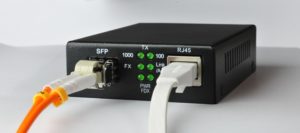
At a glance, this fibre conversion kit from Melco distributor ADMM looks like a tricky sell. There are numerous fibre to ethernet (media) converters on the market and most of them look like the ADOT MC01, except for one important detail; this one has four dipswitches at the ‘other’ end (the end you don’t see in most pictures) and these allow speed throttling down from the gigabit required for computer networks to 100Mbs, which is more than sufficient for audio signals. Fibre has a number of advantages on its own, but by slowing down the speed of operation ADOT adds another means of reducing noise… which usually means a reduction in perceived distortion in the eventual analogue signal.

The MC01 kits that ADOT sells are designed to make it easy for audio enthusiasts – as opposed to network engineers – to break the electrical chain between a domestic router or network and the audio system. Ethernet is marvellous stuff at sharing noise on a network, whether its created by the router itself or any of the devices using it, and ADOT has produced some impressive looking graphics to show how much noise and jitter its systems can remove. There are several advantages to a media converter such as the MC01, including galvanic isolation (which always reduces noise) and the fact that it reconstructs the signal at the receiver which reduces jitter.

There are two ways of using fibre in a streaming set up. The first requires two media converters with the ethernet from the switch or router connecting to the first where it’s converted to an optical signal and sent down the fibre to the second MC01 and converted back to ethernet. You connect that output to your streamer or server/hard drive. That arrangement requires two MC01s. The other option is to use a network switch with an SFP port for the fibre; Melco’s S100 switch has this but so do many others. In this situation, you connect the media converter to the switch with fibre then convert to ethernet for the final connection to the audio equipment.

It’s a simple installation process and the point of the ADOT kits is that they provide all the elements required to finish the job. These consist of the MC01 convertor, an SFP adapter that allows the fibre cable to connect to the media convertor, the cable itself and a power supply for the MC01. ADOT has selected the best performing examples of each element and offers a range of power supply options in its three kits. Kit 1 comes with a switched mode plug-top supply, Kit 2 gets a linear plug top with EI transformer and Kit 3 comes with a rather more serious Plixir 5V supply in its own rather smart case. The fourth option is a single MC01 for use with one of these kits; fortunately a divider is provided so that a single power supply can feed two converters.

My fun with the MC01 Kit 2 started when I had to figure out how to connect a 1.2m run of fibre to the media convertor using an SFP adapter, which really isn’t complicated once you have removed all the protective caps and covers and established which way up the plug needs to be. That done I got the second MC01 out of its anti-static bag and connected it to the other end of the fibre, powering both with the chunky plug-top linear power supply and connecting the first to the network switch and the second to an Innuos Zenith SE music server, the signal then went directly from there to the Aqua LinQ streamer reviewed last month. The effect on what was already a very good streaming source was a relaxation of the sound that allowed the image to fall back from the speakers and give a degree of perspective that was previously missing. It did this without undermining timing; in fact, the melodic aspect of the music seemed to be increased. There is a sense of cleaning up, as if a previously undetected grunginess was removed to leave notes pristine, warm and fluent.

Bypassing the streamer and taking a USB feed directly to the Aqua La Scala MkII DAC did the same thing but clearly improved the sense of timing in the process, opening up Gil Scott-Heron’s ‘New York is Killing Me’ [I’m New Here, XL] and revealing it to be a rather better recording that appeared to be the case before. There is a distinct removal of time smear which means that notes stop and start in cleaner fashion and the spaces in between are better defined. Both of these examples were heard when playing music stored on the Innuos server, no music was travelling through the fibre, but the link to the network and eventually the rest of the world (WAN) is a conduit for noise and breaking it clearly allows the audio equipment to do a better job.


When streaming from Qobuz the benefits of the fibre are broadly similar but there is a greater sense of openness in the presentation and with it greater clarity, contrast and subtlety. All of which combines to produce a result that is closer to analogue than can usually be achieved with streaming services; it’s arguably not as good as locally stored music but good enough to enjoy at a proper volume level. The sense of timing is clearly enhanced once more and ‘Can’t You Hear Me Knocking’ [Rolling Stones, Sticky Fingers, Virgin] has real groove, that searing riff really does the business. Finally, I was able to try using a single MC01 with an SOtM network switch with an SFP connection, this did much the same as the twin MC01 arrangement with a clear increase in clarity but added to the dynamic impact as well; again this was with locally stored material.

The ADOT fibre kit brought an upgrade to my system better than achieved with a network switch at the same price. It delivers greater transparency and resolution from the streaming system regardless of music source. Results will vary with situation, but from where I sit ‘this is a definite contribution to road safety’, which – for those not well-dipped in 1980s British TV nostalgia – translates to “it works damn well”.


TECHNICAL SPECIFICATIONS

  • Type: fibre/ethernet conversion kit
  • In/outputs: SFP, RJ45
  • Power supply: plug-top linear 5V, 1A
  • Accessories: 1.5m fibre cable, SFP adapter
  • Size H×W×D: 25 × 68 × 92mm
  • Weight: 207g
  • Warranty: 2 years
  • Price: MC01 Kit 2 £399
    Single MCO1 converter £179
    ADOT fibre optic cable: from £20


Manufacturer: ADMM

Tel: +44(0)1252 784525

URL: www.audiophiledigital.co.uk

Back to Reviews


German Physiks Emperor integrated amplifier

Although best known as a loudspeaker maker of some note, German Physiks has long since taken steps to make sure its core products get the best possible performance. This is not a new thing; many companies best known for one branch of audio have produced other components in the chain. Often this moves from ‘showcasing’ the core product in its best light to creating an outstanding product line in its own right; such is the case with the Emperor amplifier range from the company.

Emperor is a range of five audio electronics components; an integrated amp, a preamplifier, a crossover network, a stereo power amplifier and a pair of mono power amplifiers. The size and heft of each are almost relevant to the class above; the integrated amplifier has the sort of size and weight one might expect from a large stereo amplifier; there are few standard equipment tables that can house an amplifier that’s almost half a metre wide and deep, a quarter of a metre high and weighs in at a healthy 60kg (that’s 132.28lbs or nine and a half stone in old money). The whole range was first shown about three years ago but has years of prior development.

The Emperor integrated amplifier is in a category that – until recently – didn’t exist; the super high-end integrated amplifier. Granted there were always one or two super-high-end integrated amps (such as the ASR Emitter and Audio Note Ongaku) but with CH Precision, Constellation Audio, darTZeel, Mark Levinson, Jeff Rowland and Vitus all making integrated amplifiers costing in excess of £25,000, you could almost dismiss the Emperor as just following the trend.

Almost.

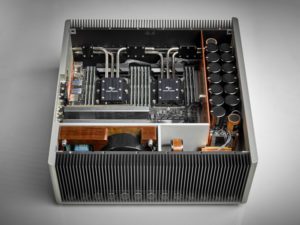
The Emperor integrated amplifier combines the electronics from the Emperor preamplifier and Emperor stereo power amplifier in one chassis. All the components are mounted onto a heavy-duty internal steel chassis. An outer chassis is attached to this and is made from 15mm thick machined aluminium. The sides, top and rear are made as one assembly attached to a steel frame, allowing them to be removed for easy access when servicing. This assembly on its own weighs 17kg.

There is extensive heatsinking but it is primarily housed inside the unit. This gives a cleaner look and hides a lot of potentially sharp edges and corners. The heatsinks are large enough to ensure that the unit runs cool, even when running at high power levels. Running at a lower temperature extends the life of the components. Generally speaking, every 10°C increase of a component’s operating temperature reduces that component’s lifetime by half.

The hot air from the heatsinks vents out through openings around the edge of the chassis top plate. Beneath this, covering the electronics is a ventilation control plate that has an array of strategically placed holes. This controls airflow through the unit so that all the components operate at an even temperature. This ensures optimal operation of the balanced circuitry; if some parts of the circuit are at different temperatures, the balance of the two halves of the circuit is disturbed. This ventilation control plate is made of steel; not just to give it an impressive heft… steel acts as an electromagnetic screen. Both the precision of that balanced circuit temperature control and the steel used in the ventilation control plate are said to reduce the noise floor of the Emperor’s amplifier circuit. This sophisticated passive cooling system is not the sort of feature that comes from either electronics engineers or industrial designers; it comes from working with an engineer who specialises in designing cooling systems for electronics.

 Perhaps unsurprisingly, the Class A/B power amplifier sits beneath the ventilation control plate. The power amp is constructed as two mono power amplifier sections. Each channel’s output stage uses 12 bi-polar devices, chosen for their performance and reliability. These are flanked by the reservoir capacitors for the output stage power supply rails. These are located as close as possible to the output devices to minimise losses caused by wiring resistance, and that means high peak currents can be delivered when required. The heatsinks and power amplifier boards are constructed as one assembly and this can be easily removed for access to the preamplifier section. Neutrik RCA and XLR terminals, and WBT Nextgen loudspeaker terminals are used throughout.

The preamp section is located on a second level under the power amplifier boards. As with the power section, this is constructed as two mono channels and is fully balanced, with a relay-switched resistor network volume control. This is more complex than a single-ended potentiometer volume control but has the advantage that the input and output impedances remain constant, regardless of the setting. Naturally given the uncompromising nature of the Emperor amplifier, close tolerance resistors are used in this network so that the two channels track very accurately. All signal switching is done by relays to keep signal paths as short as possible and minimise noise pick-up.

Like many super-high-end designs, the Emperor integrated amplifier includes both balanced and single-ended inputs (three of each, in fact). Unlike many such models, however, there is no provision for built-in phono stages, DACs or streamers. These are conscious decisions, rather than ‘rookie errors’ on German Physiks part. When it comes to phono stages, it was felt that those who have a high-end turntable system tend to have already invested heavily in the complete front-end in this respect, and few onboard phono stages are sonically superior to the best high-end standalone designs. When it comes to DACs and streamers, German Physiks plays a long game with the Emperor; the state-of-the-art DAC or streamer today will look like it ‘came out of the Ark’ five or ten years hence, so rather than include an input that will be redundant in a few years, the smart money is on standalone DAC or streamer options.

Yes, you could make the D/A converter or streamer as a plug-in option (and in the process allow future upgrades), but this would require a significant amount of circuit-board real estate and keeping the noise that they would generate out of the rest of the circuit would require the sort of additional internal chambering that would increase both the price and weight of the Emperor.

In operational terms, the 300W per channel Emperor is more ‘benign ruler’ than ‘dictator’. I mean, the power-up cycle could have gone a bit Dirty Harry here: “I know what you’re thinking… did I blow the mains fuse or only the circuit breaker in the fuse box? But seeing how this is a 2.5kVA transformer with an inrush current that can blow your drive units clean off, you gotta ask yourself… do I feel lucky?” Fortunately, a four-stage 20-second soft-start is better than my scriptwriting skills.

Finally, it’s the little things that make the difference. For example, the Emperor’s logic board spends most of its time in sleep mode (although in an amp this size, you have to think Chuck Norris; it doesn’t ‘sleep’… it ‘waits’), only waking on receipt of a command from the remote handset, acting on that command, then staying out of the way of the sound. Lifting a 60kg amplifier onto an equipment stand (and finding an equipment stand that can handle a 60kg load) are the nearest the Emperor gets to ‘audio tyrant’.

Mentioning Clint Eastwood and Chuck Norris in almost the same breath is probably a good way of opening the description of how the Emperor actually performs. There’s a sense of absolute unburstability here; possibly thanks to a stiff power supply that doubles its power from eight-ohms to four and once again into two-ohms. Short of rocking up with a pair of old Apogee Scintillas, there is no loudspeaker that will challenge the Emperor. It exudes a sense of quiet confidence, physical control and presence because nothing fazes the Emperor amp.

The degree of control it holds over loudspeakers, and the system in general is a heady wine. Play something you know well – like ‘Celestial Echo’ from Malia and Boris Blank’s Convergence album [Boutique]  – and you tend to have a preconceived notion about the recording based on prior listening. The Emperor helps get past those preconceptions; on this album, there’s a tendency to dismiss it as electronica with a breathy female vocal upfront, but here there’s a sense of instrumentalists at work. Not only is this clear with more coherent and articulate vocals, but Emperor digs deeper into the mix than usual. Backing and lead vocals in particular are easily delineated and defined.

However, all this precision, dynamic range and detailing doesn’t come at the expense of the musical energy of a recording. Granted the Emperor’s ability to present a vibrant, visceral three-dimensional musical space in front of you – with full-range instruments living in a solid soundstage – does make you reach for the more ‘majestic’ end of the musical spectrum. Classical and well-recorded jazz takes on that ‘majestic’ property and early listening sessions are so taken up with the full-thickness detail being presented, your brain takes some time to process all that information. But we adapt fast and the Emperor’s top-to-bottom precision makes you turn to something altogether faster and nastier. You know… for fun.

Out comes Infected Mushroom [‘Vicious Delicious’ from the album of the same name, Reincarnate]. It gets cranked to eye-squeezing levels. It’s a stand-off between the amp, the drive units, any panes of glass and your cortex. The Emperor wins; it’s fast-paced, informative and those chord progressions are handled with effortless ease, even within this maelstrom.

Emperor has a velvet glove atop its mailed fist. The amplifier might be all about precision and control, but it’s also a rich and inviting sound. It’s an amplifier of great poise, whether it’s playing something large scale [Haydn’s ‘Nelson Mass’, Wilcocks, Kings College Choir, Decca] or small, quiet jazz [the gentle bossa nova of ‘C’est Magnifique’, Melody Gardot, Sunset In The Blue, Universal]. The Emperor ‘scales’ beautifully and keeps time like a stopwatch, too. In fact, whatever you played, it simply made it sound ‘better’.

There is also a profound sense of stereo staging, a fully three-dimensional experience rooted in a sense of solidity and presence that makes the sound emanating from any loudspeaker – not simply a German Physiks design – sound centred, precise and extremely communicative. This isn’t by a small margin; the amplifier makes smaller loudspeakers sound bigger, bigger loudspeakers sound more powerful, and more powerful loudspeakers sound a little bit awesome.

Even if most audio enthusiasts were born in the 20th, we are deep enough into the 21st Century to have adopted a modern mindset, and as such it’s hard not to think of the term ‘Emperor’ without summoning up a degree of bombast; yes, you might envisage Jacques-Louis David’s triumphant ‘Napoleon Crossing the Alps’ painting, but the term today also summons up images of moustache-twirling dictators. However, the Emperor lives up to its name in that it treats the audio system as its empire to rule over, and it rules with a benevolent, yet authoritative, hand. OK, so those who look to an amplifier to be some kind of musical warmth-creator will look elsewhere: Rich – yes. Rose-tinted – no. Otherwise, I’m kind of wondering what – if anything – would fluster the Emperor. Maybe high-resolution, dynamically uncompressed recordings of thunderclaps played at real-world levels.
 

If there were any justice in the world, there would be a small army of audiophiles, storming the barricades of mediocre sound, shouting cries of ‘For the Emperor!’ at the top of their lungs. Of course, an army of audiophiles would probably take quite a while to storm those barricades, might well get embroiled in a long-winded discussion about the correct tools required for barricade storming, conclude that the old tools were better and would be wearing ear protection to counter all that shouting… but it’s the thought that counts. The Emperor by German Physiks is big, heavy, expensive and outrageously good. That alone makes it worth a spot of Empire-building.


TECHNICAL SPECIFICATIONS

  • Type: integrated amplifier
  • Line Inputs: 3× RCA single-ended stereo, 3× XLR balanced stereo
  • Line Outputs: 2× RCA single-ended stereo, 2× XLR balanced stereo
  • Preamp Outputs: 1× RCA single-ended stereo, 1× XLR balanced stereo
  • Amplifier outputs: WBT next-gen speaker terminals
  • Power output: 300W per channel into 8Ω, 600W per channel into 4Ω
  • Frequency Response: 0.5Hz–80kHz (-3dB, at 1W, 8Ω)
  • THD+N: 0.01% (22Hz–22kHz, 1W, 8Ω)
  • S/N: -91dBA (A-weighted, at 1W, 8Ω, balanced operation)
  • Dimensions (W×H×D): 47.4× 24 × 47.4cm
  • Weight: 60kg
  • Price: £33,500


Manufacturer: DDD-Manufactur-GmbH

URL: german-physiks.com

Tel: +49(0)6109 502 98 23

UK Tel: +44(0)7812 093677

Back to Reviews

Audio Research Reference 80S stereo power amplifier

It’s hard to think of a more iconic modern tube electronics company than Audio Research. Yes, there are rivals that make some excellent amplification, but few that make such a complete audio electronics package and have so immediately identifiable appearance as Minnesota’s Audio Research Corporation.

The brand’s models effectively differentiate between the lower cost Foundation range and the more up-market Reference line. The latter is larger, as it is designed to accommodate a wider range of up-scale performance parameters, but the new jumping-off point for ARC’s top-dollar line is the Reference 80S stereo power amplifier. This builds on the (circuit and industrial) design of the hugely popular Reference 160 S/160 M power amplifiers, effectively lowering the power output to make a more flexible and affordable Reference-class power amp.

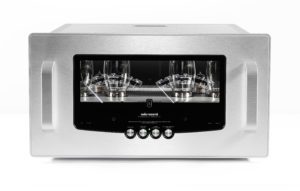
This means you get a power amplifier that uses an almost identical arrangement of two 6H30 double-triodes in the gain stage with multiple pairs of KT150 power valves/tubes in either push-pull or triode mode with auto-biasing, adjustable fan speed, those excellent look-through ‘Ghost Meters’ and all the trimmings. But by using just a single pair of KT150s per side, the Reference 80S is an amplifier that went on a bit of a power diet, as it puts out 70W per channel into an eight-ohm load. This also means it is ever so slightly smaller, some 17kg lighter and several thousand cheaper than its 140W per channel Reference 160S counterpart, which uses two pairs of KT150 tubes per channel, and the Reference 140M, which also uses two pairs of KT150 tubes per channel but separates them into individual mono cases. This is clearly something of a groove that Audio Research is enjoying!

This might seem like a lot of replication at first, but in fact, it’s a fine way of making a ‘good/better/best’ set of power amplifiers, without undermining any of them in the process. The basic performance of all three is effectively identical, defined by that clever circuit, just you get more power for more demanding loudspeakers or bigger rooms as you go up the line.

In fact, the only real downside in this comes down to reviewers trying to fill space on the page and ending up going over the same descriptions about the amp and its circuit time and time again. On the other hand, if there really is ‘nothing to see here’ it’s because the ground covered by the Reference 160 S and Reference 160 M has been so comprehensively mapped out, and that the Reference 80S continues that process. In fact, it continues the process so successfully and seamlessly that the biggest disconnects between this new stereo amp and the bigger mono and stereo models are the amount of heat each one puts out (unsurprisingly, given fewer power tubes per channel, the Reference 80S is the coolest, but not by much) and absence of a space between ‘80’ and ‘S’ in the name. No, really, that’s about it… the apple isn’t falling far from the tree here.

This ‘nothing to see here’ is a surprisingly hard task to nail, because using the same tubes in a scalable configuration is no guarantee of consistency. Somewhere along the line, one of them sounds different… and it’s often the smaller of the group, which ends up sounding bass light thanks to less transformer ‘iron’. On the other hand, scaling a circuit up and down implies different loudspeaker partners, and an amplifier intended to ‘see’ a pair of mid-sized loudspeakers in a typical small(ish) listening space has a very different sonic ‘fist’ to one that is expected to be used with full-range flagship loudspeakers in a room that could double up as an aircraft hangar. Getting it right is a balancing act that requires some very reliable ears to work for the company.

For Audio Research, those ears sit behind the very large beard of Warren Gehl, Design Engineer and Aural Evaluator for Audio Research. Let’s face it, anyone who has the words ‘Aural Evaluator’ baked into their job title is going to know how to voice an amplifier, but Warren takes this to the extreme. He’s the kind of listener those of us who get paid to listen take seriously. The real deal, and the reason why there is such consistency of sound between these three power amplifiers.

The difficulty for a reviewer who has looked at all three products is ensuring you don’t just unconsciously plagiarise yourself (because if the amps are very consistent, your words should be consistent too, and you might end up using the same descriptions) but you also don’t want to check those prior reviews in case they influence your writing.

The Reference 80S is keenly dynamic in use, both in micro and macrodynamics. If you play a large-scale piece of music [Tennstedt tearing into Mahler’s Symphony 2 ‘Resurrection’, LPO], it manages to cope with both the huge dynamic swings in this masterpiece and the subtle cues that show this to be an orchestra of musicians playing together.

This good dynamic range is partnered with a fine sense of detail across the board from the deepest bass to the highest treble. In fact, that clean, extended treble is a bit of a key point to the Reference 80S sound; play something like ‘Because He Was a Bonny Lad’ by The Unthanks [Here’s the Tender Coming, Rabble Rouser]. The tight harmony of the two close-miked vocalists is extended and shows up any potential granularity in the mid and treble of an amplifier. Here, their voices are sonorous and clean right into the highest ranges and when the rest of the folk instruments kick in, there is clear sonic and spatial delineation.

Beyond this, however, there’s a sense of rhythmic ‘bounce’ to the recording that is often lost in all the detail (it’s why it was a popular demo track of Naim Audio a few years ago). What the Reference 80S shows, however, is that ‘pace’ need not be mutually exclusive with ‘detail’ or ‘dynamics range’. If you want an amplifier to deliver all the filigree soundstaging and inner detail of a recording, this is it… but the same applies if you just want to kick back and play some rock and have some fun.

Where the Reference 80S ‘shows its limitations’ is when trying to push it beyond its very wide comfort zone. It’s impressively loud and dynamic… until you hear what 140W can do instead of 70W, all other things being equal. The Reference 80S is remarkably good at not running out of puff, but once again compared to the sheer headroom of the Reference 160 S and especially 160 M, it’s clear there’s even more to offer. And yet, if the Reference 80S is all you need for room size or loudspeakers, you’ll probably never notice where it runs out of steam… because, in all likelihood, it won’t run out of steam. Ever.

OK, despite claims to the contrary, I’m going to cop to some ‘cheating’ of sorts. After I collated my notes on the Reference 80S, I went looking at both my reviews of its two bigger brothers and then looked at other reviewers’ work on all three amps. In truth, there’s some real consistency in all these words, as if the smaller, medium and larger models all have the same tonal characteristics (or at least, the same tonal characteristics relative to speaker and room size considerations). We’re all barking up the same dog (or something) here… and again I’m going to point to Warren Gehl’s adroit listening skills in fine-tuning these amplifiers to give them such consistency.

That consistency is the joy of this amplifier. If you have a yearning for Big Boy Audio Research, but don’t want or need the additional power and the increased size, space, heat and price tag that top-end amplification requires, the Reference 80S is perfect. Making a bigger amp smaller is often a path to being disgruntled, or at least puts you some way from being ‘gruntled’. This is the first step on the Audio Research Reference power amplifier ladder, and I can’t help but feel that while it is for many the only step they’ll ever need to take, for others the excellent Reference 80S will be the first step into a world of the highest in high-end audio.


TECHNICAL SPECIFICATIONS

  • Power output: 70 watts continuous from 20Hz to 20kHz
  • Tubes Required: 2 matched pair KT150 (Power output V1-V4); 2 6H30 (Gain stage V5, V6)
  • THD+N (@1kHz): typically 1% at 140 watts (33 watts in Triode mode) per channel, below 0.04% at 1 watt (Note that actual power output is dependent upon both line voltage and “condition” i.e.: if power line has high distortion, maximum power will be affected adversely, although from a listening standpoint this is not critical)
  • Power Bandwidth (-3dB points):
    7Hz to 68kHz
  • Frequency Response:
    0.7Hz–94kHz (-3dB points at 1W)
  • Input Sensitivity: 1.4V RMS Balanced for rated output. (25.5 dB gain into 8 ohms); 0.7V RMS SE for rated output
  • Input Impedance: 300K ohms Balanced, 75K ohms Single Ended
  • Output Polarity: Non-inverting
  • Balanced input pin 2+ (IEC-268)
  • Output Taps: 16Ω, 8Ω, 4Ω
  • Output regulation: Approximately 1.0dB 16 Ohm Load to Open Circuit
  • (Damping factor approximately 8)
  • Overall negative feedback: 15dB
  • Slew Rate: 10 volts/microsecond
  • Rise Time: 4.0 microseconds
  • Dimensions (W×H×D): 48.3 × 26 × 47cm
  • Weight: 28.2kg
  • Price: £14,998


Manufacturer: Audio Research

URL: audioresearch.com


UK Distributor: Absolute Sounds

URL: absolutesounds.com

Tel: +44(0)208 971 3909

Back to Reviews