To the uninitiated, the last two or three years of output from Michell Audio appear to be a period of unexpected activity following a longer phase of steady progress. The reality, however, is somewhat more complex. Michell has never ceased to tweak, upgrade, and strengthen its range of products; it has simply become much better at communicating that to people.
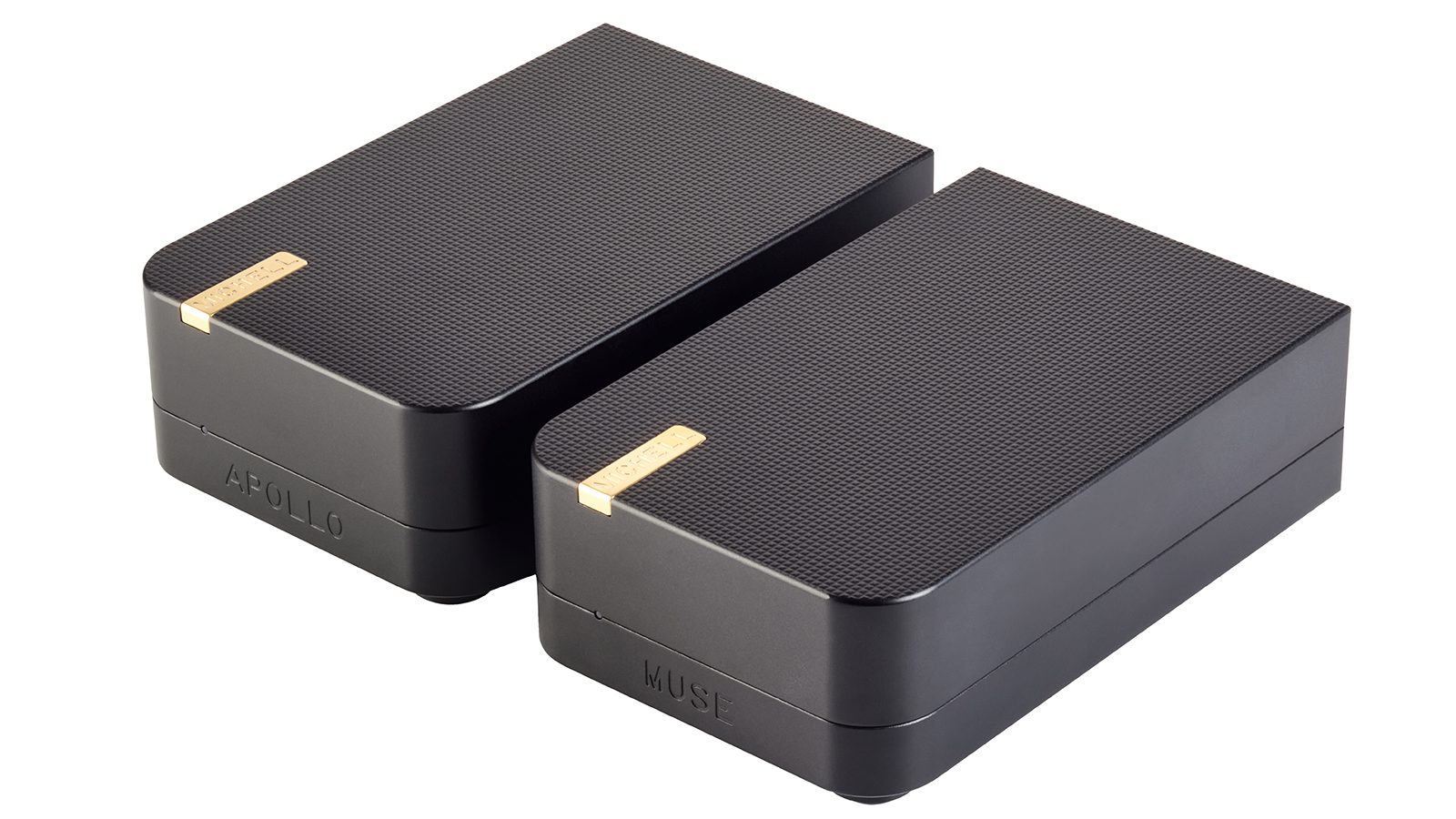
The Apollo phono stage and Muse power supply are a logical addition to the company’s range, considering the long-standing presence of the Cusis cartridges on the market. These two units are sold as a set and cannot operate independently. Michell hinted during the official launch that some of the engineering developed for the Muse might have broader applications beyond the Apollo, but this has not yet materialised.
Clean sheet?
The Apollo is not a completely original design (I doubt any phono stage can be considered as such), as it was built upon the final output of Trichord. This company historically had a close relationship with Michell but is currently inactive. Their highly regarded Dino and Diablo models were single-input, single-ended units with the option of an external power supply; a pattern that is clearly followed here. What the Michell duo does is refine these fundamentals to achieve higher performance.
The Apollo itself utilises hardware derived from professional microphone amplifiers to create a circuit that operates in class A at both the preamp and gain stages. Rectification is achieved via a passive RIAA circuit, and each stage is monitored and controlled using feedback circuits for consistent performance. Key components in the circuit are hand-matched to ensure they deliver the highest possible performance.
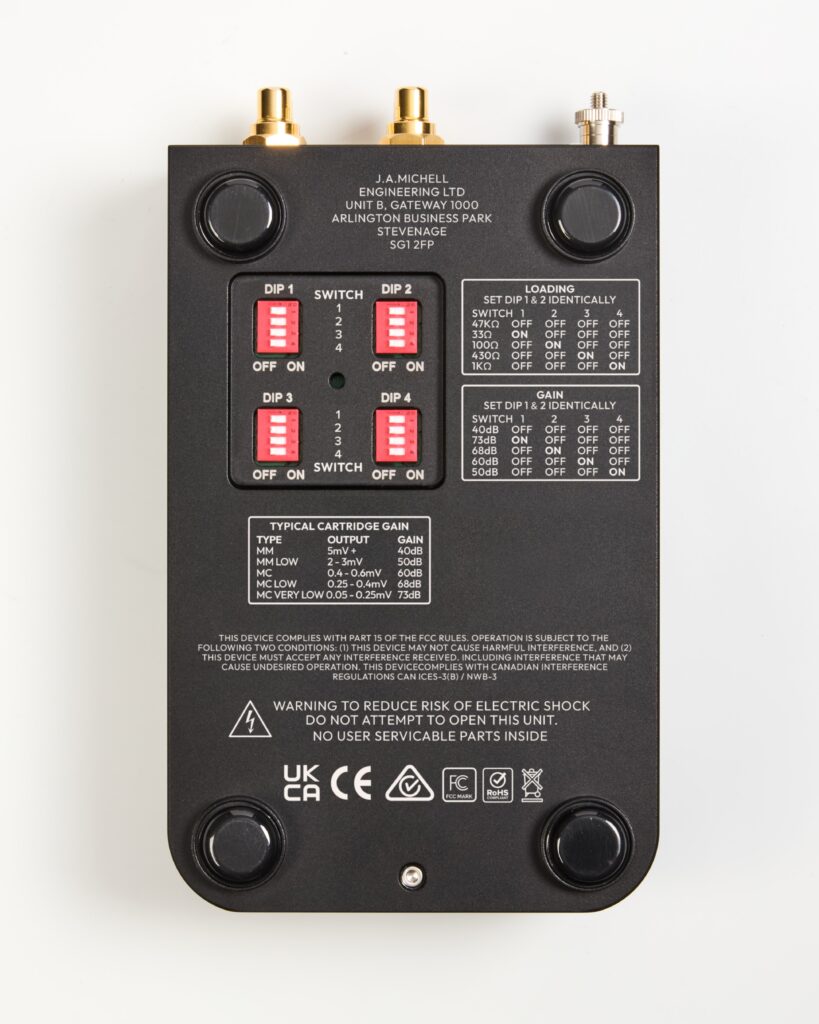
This circuit can handle both moving magnet and moving coil designs, and, with a maximum available gain of no less than 73dB, it will suit most cartridges. Impedance is adjustable, but capacitance is fixed at 100pF. I’ve rarely encountered issues with this for the cartridges I have here, but it’s worth considering if it matters to you. If you need balanced operation for multiple inputs, this might not be the best choice.
Gain and impedance adjustments are made via DIP switches on the underside of the Apollo. As someone who habitually lives with a phono stage where all adjustments can be made via remote, I confess I usually groan a little when confronted with these. Still, Michell has placed them behind an easy-to-remove panel, engraved the settings nearby, and spaced them so that people over the age of six can adjust them individually, which makes the setup process relatively painless for me.
Feeding the minimalist
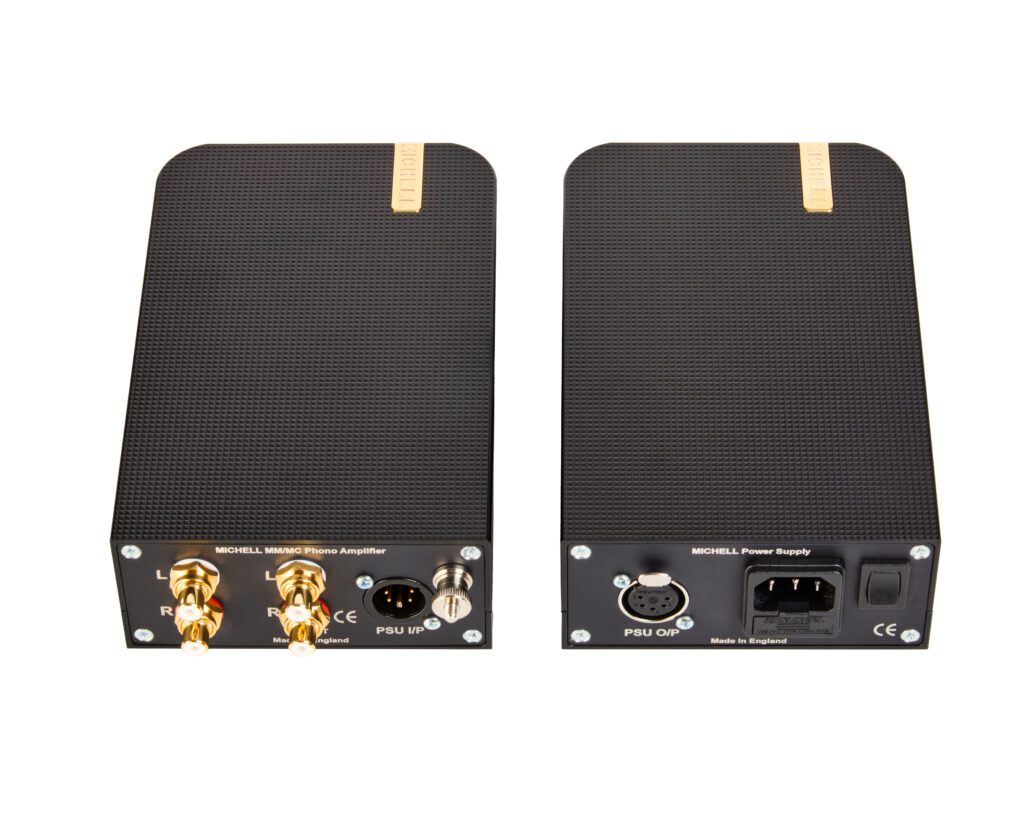
The Muse includes a low-noise toroidal transformer designed to power a minimalist supply in the Apollo itself. It uses advanced capacitance multiplier technology and high-quality voltage regulators to minimise ripple and noise, providing two highly filtered and regulated DC outputs. The cable connecting it to the Apollo is custom-made in collaboration with Chord Company. It is more ornate than typically expected for such a role (though it can still bend easily for simple placement of the units). Michell is not usually known for hardware of this kind, but during development, they found that the benefits of the cable were too significant to overlook.
The two units are housed within robust chassis, machined from two solid billets of aluminium and finished with a solid aluminium back plate. The aim is to create an enclosure that is both resistant to external electronic interference and capable of protecting the delicate circuitry inside from vibration.
Together
When positioned together, the two units feel reassuringly solid and impressively minimalist, with a single rocker switch on the back of the Muse being the only external control, and two small white lights indicating that the units have power. It can be challenging to give small boxes like this a perceived ‘worth’, but Michell has done a good job of it. The two units are only available in black, which doesn’t perfectly match quite a few GyroDecs, but the quality of finish should help mitigate any disappointment.
For testing, I used the resident Vertere MG-1 MkII, SG-1 HB tonearm, and Mystic cartridge. The Apollo allows for a 1kΩ impedance setting, which is essential for a good match with the Mystic, and I settled on the 68dB gain setting as the best match into the resident Cambridge Audio Edge A integrated amplifier. Even before I started listening, the Apollo had begun to make a strong case for itself. Michell’s notes on its design include an extensive discussion about noise reduction, and the result of that effort is that the Apollo is completely silent at idle. Even with the amplifier volume set relatively high, it’s not until the stylus lands in the groove that you become aware of any output.
Positive noise
Start listening to the noises that the Michell does make rather than the ones it doesn’t, and the news is equally positive. I chose Ajate’s fascinating Abrada [180g] as the first album for critical listening, and the Michell instantly performed well. This is a superb pressing that allows this unique collection of Japanese Afrobeat (an inevitably pretentious description of ten Japanese blokes having a riot in a recording studio) to emerge from silence, often with startling levels of dynamics and energy.
The key to the Apollo and Muse’s effectiveness lies in their ability to present very little of themselves in outright sonic terms. The qualities of the Vertere are conveyed without embellishment, and there’s almost nothing in the performance you can point to and confidently say is the Michell. Of course, if you prefer the presentation of your turntable, this is entirely a good thing, and this is genuinely one of the most affordable devices I’ve encountered that can achieve this.
Effortless transparency
Another noticeable aspect after more listening is that this effortless transparency spans a wide bandwidth. The bass extension was the first thing I observed; with the Apollo, the deep low note at the start of Dead Can Dance’s Song of the Stars [4AD] borders on subsonic. It’s a force you both feel and hear, yet it is delivered with such clarity and precision that it is never merely a blunt force. The integration with the upper registers is also perfectly seamless. Bass energy transitions smoothly into the midrange in a way that feels natural and well balanced.
Listen a bit longer, and you will notice that the upper registers are just as effortlessly extended. Sturgill Simpson’s stunning Cuttin’ Grass Vol 1 [High Top Mountain] displays a significant amount of treble energy across various stringed instruments, and the Michell does an excellent job of conveying their tonal qualities and presence in the recordings. The balance that the duo strikes between energy and refinement is very well judged. With very hot pressings (in my case, an original pressing of Placebo’s Meds [Virgin]), the Michell will inevitably indicate some issues, but it does so in a relatively gentle manner.
Lower is still good
Fitting the MG-1 with a Vertere Darksabre moving magnet cartridge shows that the core qualities of the Apollo and Muse are preserved when using lower gain settings. I honestly don’t know how many phono stages at this level are used with a moving magnet cartridge, but it doesn’t seem like an afterthought on the Michell, and it suggests that the other load and gain settings will be just as effective.
This isn’t a shock-and-awe device; in fact, apart from their visual drama, Michell devices are very rarely such. However, it is a genuinely accomplished piece and something that should appeal far beyond just owning a Michell turntable. There is nothing revolutionary in engineering terms, but the meticulous care and thoroughness of the execution make the result truly impressive. Michell’s ongoing expansion continues to produce excellent products, and I look forward to seeing what comes next.
Technical specifications
- Type: solid-state, MM/MC phono stage
- Phono input: RCA sockets
- Analogue outputs: single-ended RCA
- Input impedance: 33, 100, 430, 1k, 47k Ohms
- Input capacitance: 100pF
- Output impedance: not specified
- Gain: variable 40, 50, 60, 68, 73dB
- Distortion THD+N: -104dB
- Signal to noise & distortion: >104dB (MC)
- Dimensions (HxWxD): 60 x 115 x 280mm each unit
- Weight: 3kg combined
- Price: £3,500, €3,998, $4,999
Manufacturer
Michell Audio
UK distributor
PMC Distribution UK
+44(0)1767 686300
Tags: MICHELL AUDIO APOLLO MICHELL AUDIO MUSE PHONO STAGE POWER SUPPLY
Trending Articles
See all
By Ed Selley
More articles from this author

Read Next From Review
See all
HIFISTAY Sound Wings+
- Sep 16, 2026
Marantz Model 10
- Sep 16, 2026
DeVore Fidelity O/Bronze
- Sep 16, 2026
Network Acoustics Origin
- Sep 16, 2026