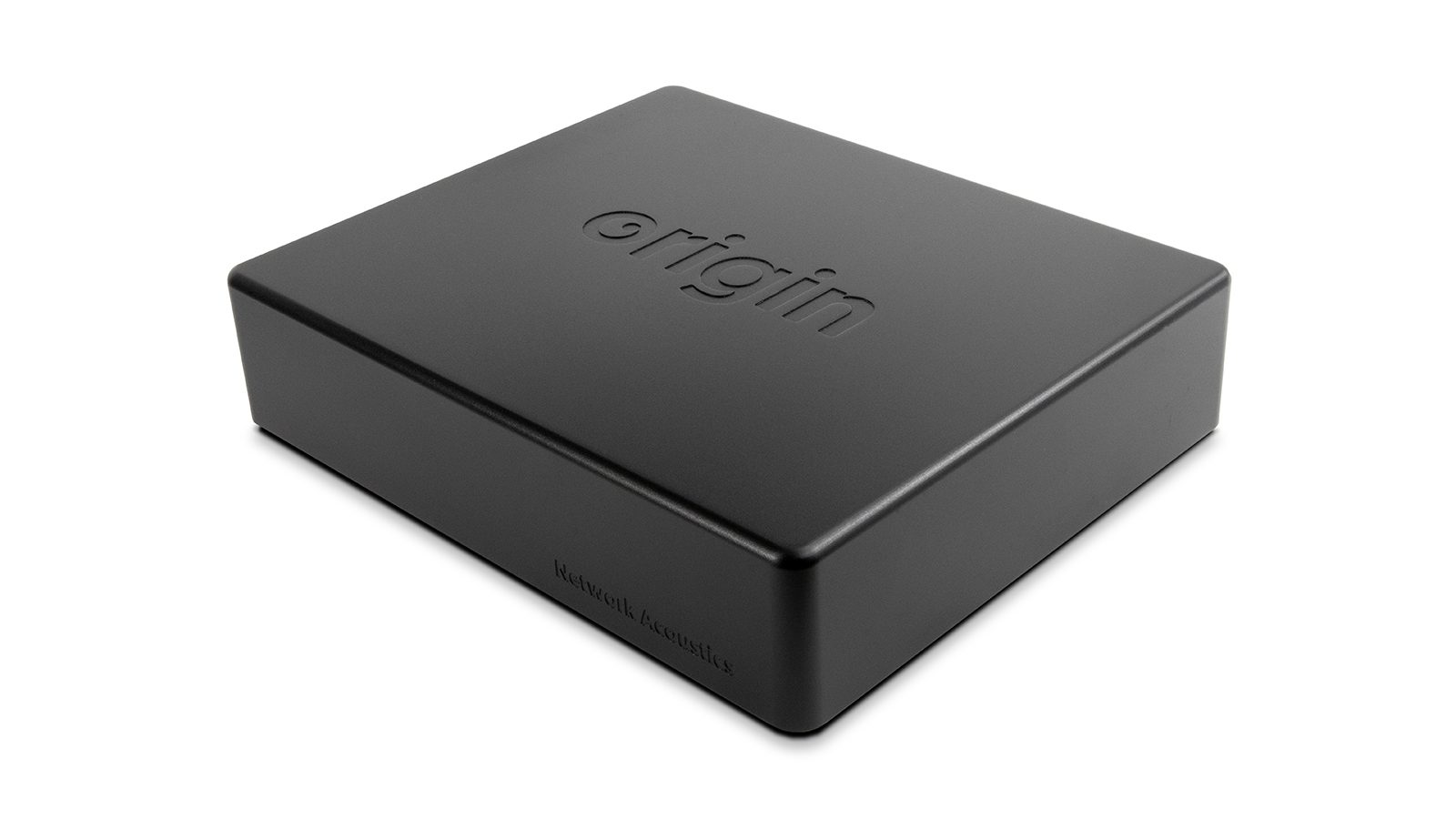
When Rich Trussell developed a power supply for the Network Acoustics Tempus network switch two years ago, he concluded that the best results could be achieved by combining a switched-mode supply with the filtering used in linear power supplies. For the Network Acoustics Origin, he decided to go further by increasing the quality of the SMPS modules. Additionally, he added four stages of discrete filtering rather than relying on the filtering built into the devices themselves. He also added a Mundorf capacitor on the output. This provides a small amount of instant power to meet transient demands.
Hand crafting
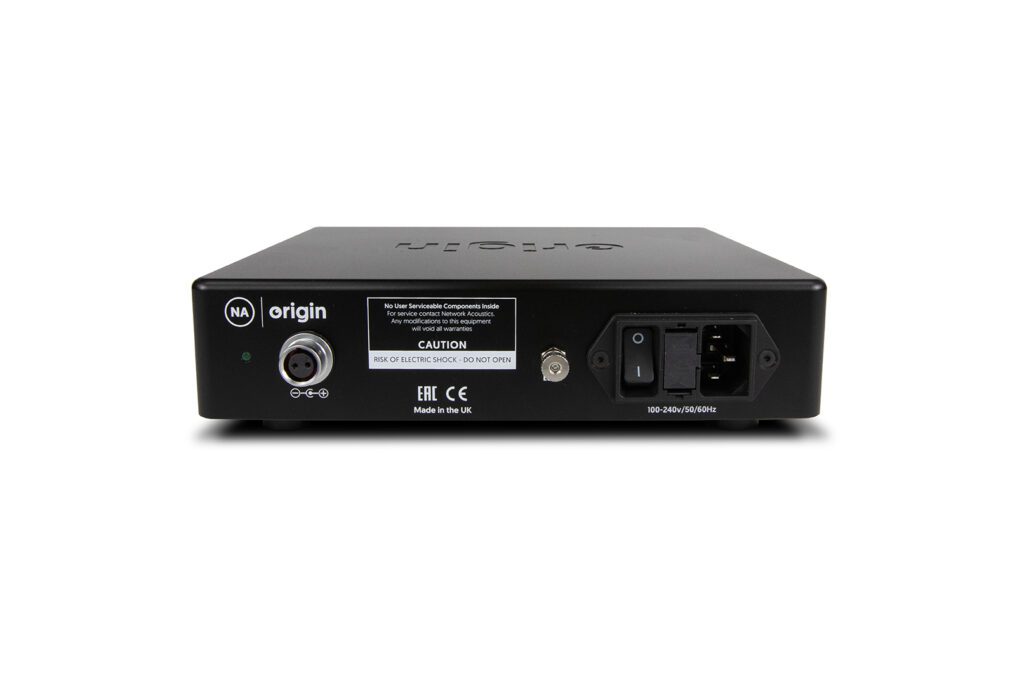
This supply is housed in a machined aluminium case that is about half the width, around eight inches. It stands just over two inches high. It is an exceptionally well-crafted box, as it needs to be for the asking price of over two thousand pounds. Output is via a sleek Weipu two-pin connector with a straightforward push-lock system. Network Acoustics supplies one of its reference DC power cables, 1.5m long, terminated with a barrel connector. The cable is available in two sizes. This company has a talent for crafting high-quality digital cables by hand, and the example provided here reflects that quality. It is certainly not a standard off-the-shelf item.
The Origin is available in 5V and 12V output versions; the former is suitable for most network switches, while the higher output option is appropriate for many streamers, DACs, routers, and switches. The earth point is connected to the incoming earth on the mains supply. There is potential to connect this point to a better ground. For example, any one of the plethora of grounding devices available.
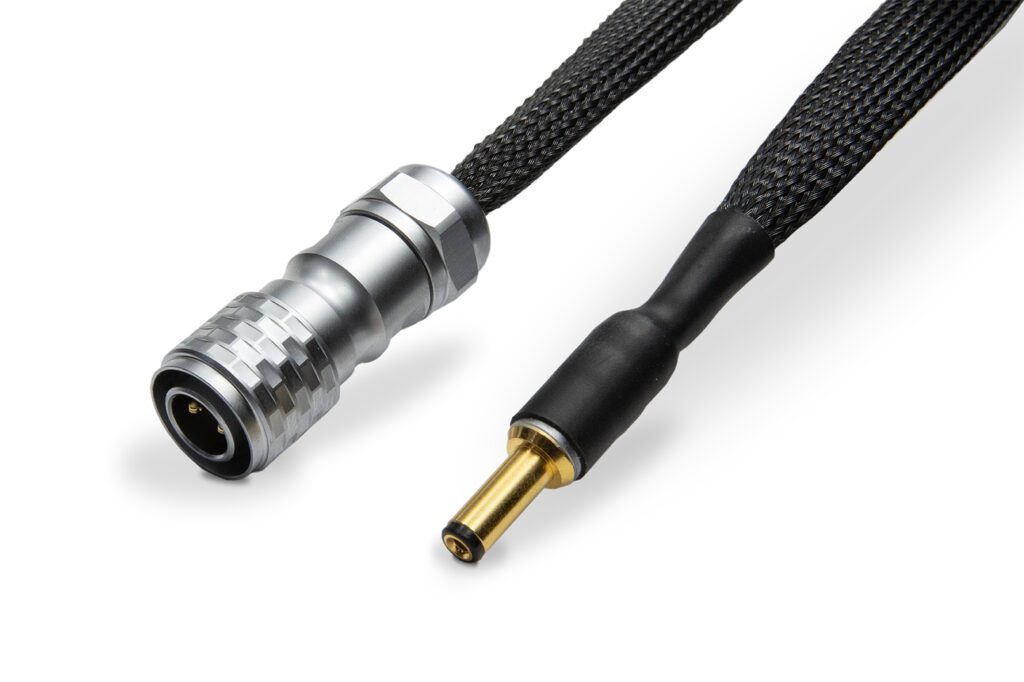
While you can use the Origin with any component, it was mainly designed for digital audio devices. That is where its capacity to deliver clean power at high speed offers the greatest potential. Its use is confined to components with a barrel DC input that can operate on 12V/3A or 5V/3.5A. In my experience, this covers most digital devices. A few examples require different voltages, and having switchable output voltages would have been useful. However, Trussell explains that this would either raise the price or lower quality. He could add multiple supplies into a single case, which would need a larger, pricier enclosure. Or, he could switch the output on the existing SMPS, which could increase noise.
OG to Origin
Since the Lumin U2 Mini had already been adapted to an external 12v power supply, this was my first point of evaluation for the Origin. Instead of comparing it with the Tempus PSU, which isn’t sold separately, I initially connected the hefty Longdog LPS I had been using with this streamer before switching to the Origin. The difference the Origin made to the Lumin’s performance was quite striking. Honestly, it felt like upgrading to a streamer costing three times as much.
Considering how essential the power supply is to any piece of audio equipment, this result shouldn’t be so surprising. But it still took me aback. The noise floor dropped. As a result, the sound became quieter, calmer, clearer, and more precise, with the music gaining rhythmic drive and tonal subtlety that wasn’t evident with the other supply.
Space between notes
There was now space between the notes instead of blurred attack and decay; everything began and ended more cleanly and accurately, making the nuances of the recording much easier to appreciate.
Keith Jarrett’s latest solo release, New Vienna [ECM], is so vivid that it becomes utterly captivating. The Origin truly turns this modest streamer into a giant slayer. It reveals the beauty and depth in every detail of what it plays, especially recordings like this. I mentioned Arild Andersen’s Achirana [ECM] last month; my experience with Lumin and Origin inspired me to do so. Of course, you need a decent DAC to reveal what’s happening, and the Bricasti M11 Classic is undoubtedly one. However, I would expect the benefits to be clear with something costing around a third of that. As always with audio reproduction, the key is lowering the noise floor. In many ways, Origin shows that much of the digital signal corruption enters through the mains. There’s plenty on the network as well. However, I doubt it’s as problematic as what comes directly out of the wall socket.
Ramblin’ on
I also tested this power supply with a Melco N100. This server/streamer is equipped with an inline SMPS that supplies 12V, making it a suitable candidate for the Origin treatment. In this case, the effect was equally impressive, with the Network Acoustics supply enabling the Melco to produce significantly greater three-dimensionality in the image. It also provided a much cleaner tone and a touch of openness and realism that it doesn’t normally hint at. I particularly enjoyed the immediacy it added to the Ginger Baker Trio’s Ramblin’ [Going Back Home, Atlantic], which gained vitality thanks to the way this supply lifts a veil from the sound.
Network Acoustics created an adapter to connect the Origin to my BT router. It might seem over the top, but if you stream from online services like Qobuz, removing noise early in the chain is beneficial. And it proved to be true: the improvement was nearly as significant as with the Lumin. It prompted me to exclaim “wow.” Once again, there was extra detail that expanded the soundstage, thanks to a reduction in the noise floor. This resulted in better imaging stability and more brilliance on the high notes of piano and guitar. Bob Marley began to bounce, making the regular supplies rendition sound like a trudge.
Deeper silence
Finally, I tested the Origin with the Silent Angel N8C network switch reviewed in the last issue; the SMPS supplied with that switch has a 7-amp rating, but the Origin’s three amps proved enough. Here, it had a similar effect to that observed elsewhere. It cut through the muddiness to clarify the sound and present it in a cleaner, more immediate form, with vocals especially gaining a lovely purity and clearly improved timing.
The Network Acoustics Origin is more costly than most components it can easily be paired with. However, it elevates all of those I tested to a level higher than their combined cost. This was evident with the Lumin streamer and the BT router. It clearly shows that many components have untapped potential or are limited by the power supplies provided, often to reduce costs. The Origin demonstrates what Naim, Cyrus, and others have long recognised: power supplies are just as important as audio circuitry for achieving excellent results. When they perform as well as this, the outcome can be spectacular.
Technical specifications
- Type: DC power supply
- Output: 12V/3A or 5V/3.5A
- Cable: 1.5m
- Connector: 2.1mm or 2.5mm DC barrel
- Dimensions (H x W x D): 58 x 218 x 180mm
- Weight: 1.7kg
- Price: £2,295, €2,945, $2,795
Manufacturer
Network Acoustics
+44(0)2380 615 627
Trending Articles
See all

By Jason Kennedy
More articles from this author
Read Next From Review
See all
HIFISTAY Sound Wings+
- Sep 16, 2026
Marantz Model 10
- Sep 16, 2026
DeVore Fidelity O/Bronze
- Sep 16, 2026
OePhi Kali
- Sep 08, 2026