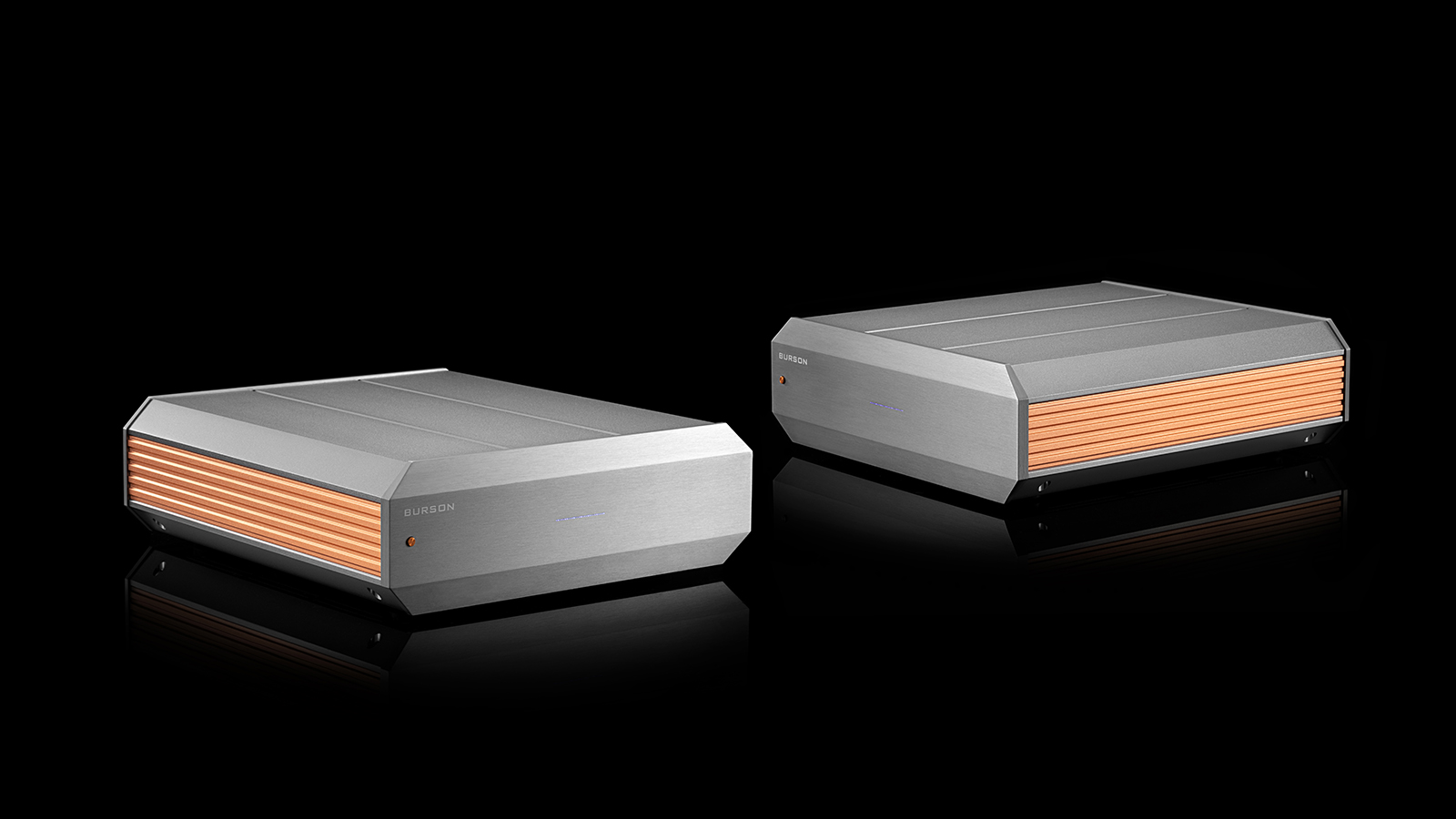
Only Class A amplification suffices for some of us audiophiles. If that’s our preference, then Melbourne-based Burson Audio should be on our radar. There’s irony in the fact that a manufacturer located in a hot climate produces amplifiers that draw a lot of power from the wall socket and then emit most of it as heat into the room. Burson’s design team remains unrepentant.
The latest version of this unique approach is the company’s new Timekeeper Voyager monoblocks. They are similar but not identical in specs to the Timekeeper 3X GT favourably reviewed here in Issue 212. The GT models remain part of the Burson product range. The Voyager is not a replacement but an alternative for those with more funds.
Super-duper-charger?
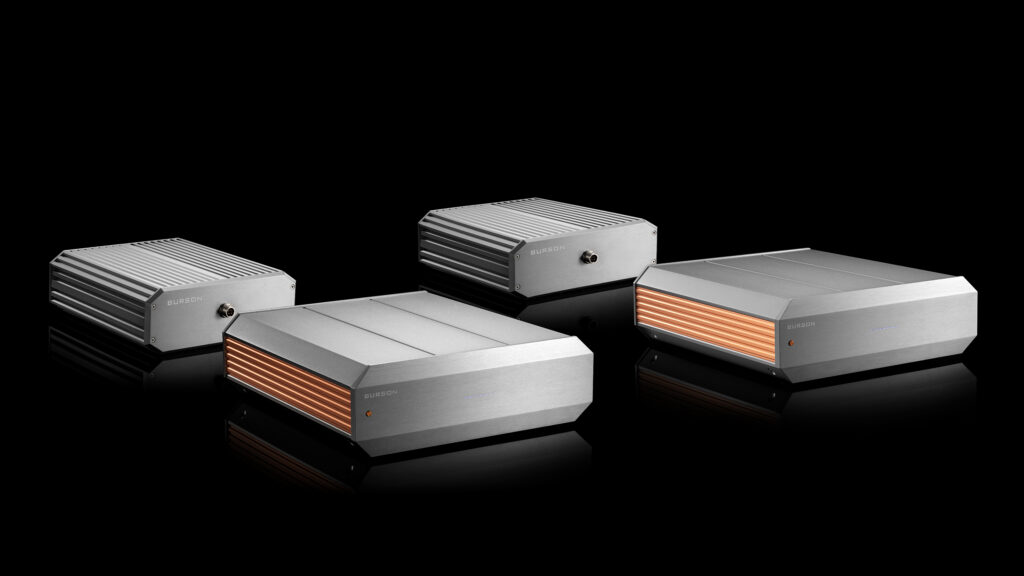
Also new is Burson’s Fusion Core power supply. This is the company’s first product to use GaN devices for switching duties. It’s an upgrade over the standard Supercharger power supply. However, it still keeps the Timekeeper Voyager power amps in the realm of the reasonably priced.
Burson’s amplifiers are compact and lightweight units that bridge the gap between smaller, lighter Class D amplifiers and larger, heavier traditional Class A/B models with transformer-based linear power supplies. The Voyagers feature a slightly bulkier chassis compared to the GT design, measuring 265 x 270 x 85mm and weighing 7kg. According to Burson, their approach mainly focuses on refining the GT circuit internally rather than undergoing a complete redesign.
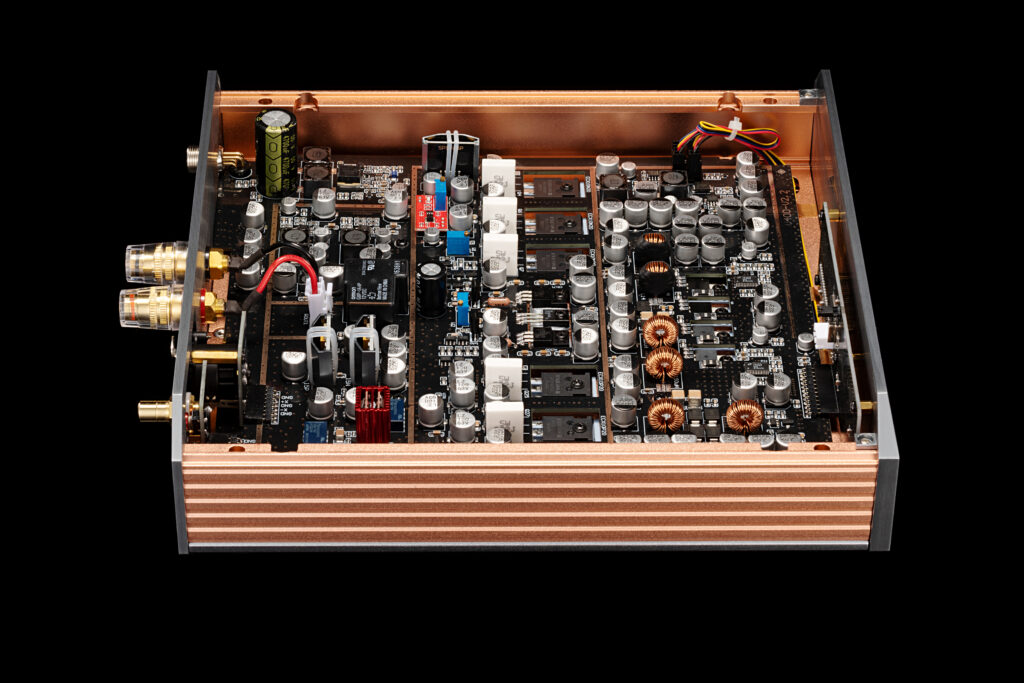
Among the changes is improved voltage regulation, which is claimed to be as quiet as battery power. The larger chassis also enables better management of the heat generated by the output devices. To be precise, the GT and Voyager are both Class A/B amplifiers. However, they operate in Class A in the regions where it really matters – the GT models up to 25 Watts and the Voyager up to 32 Watts. The cost of this semi-purist approach is 200 Watts of power consumption at idle, and significantly more when the amplifiers are driven.
Two sections
As is Burson’s established practice, the power supply of the amplifiers is divided into two sections to keep the significant EMI and heat-producing functions separate from the sensitive gain stages. The Supercharger is a wall wart—one for each monoblock. Meanwhile, the Fusion Core—again one per monoblock—is a larger ribbed aluminium chassis. Fusion Core stands on its own feet and connects to the wall socket via a standard kettle lead. It connects to the amplifier via a locking umbilical cord. Fusion Core provides the same 32 volts as the Supercharger but more than twice the current. Burson’s designers operate the GaN transistors in the Fusion Core at 100kHz. Inside the amplifiers, the DC-to-DC conversion runs at 170kHz to prevent interference with the audio band.
The amplification in the monoblocks is dual-differential; a switchable 12dB (XLR), 6dB (RCA) buffer using Burson’s swappable discrete op-amps. An output stage employing MOSFETs from UK manufacturer Exicon follow this. Burson states an output of 100 Watts per monoblock into eight Ohms and 200 into four Ohms. This also has a gain of 29dB and THD of 0.03% at 1kHz. A Noctua fan at the base of each Voyager aids in dissipating the heat generated during amplification. While some might view this as a concern, throughout the review period—often at quite high volume levels—the fans remained inaudible, even when close by. Nonetheless, the gentle airflow they produced could occasionally be felt with a damp finger held near the rear vents.
To GaN or not to GaN
Why are there no GaNs in the amplifiers? Burson responded: “GaN actually makes the most measurable difference in power supplies where its ultra-fast switching allows the realisation of low-noise and high-current with minimal EMI. That said, we’re actively exploring GaN applications in the amplifier stage too, but it’s still early days in our R&D process.” Adding the optional Fusion Core power supply to the Voyagers doubles the box count, of course. Still, the supplied umbilical cord is long enough to allow the cool-running supplies to be sat on a hard floor behind the kit table and thus hidden from view.
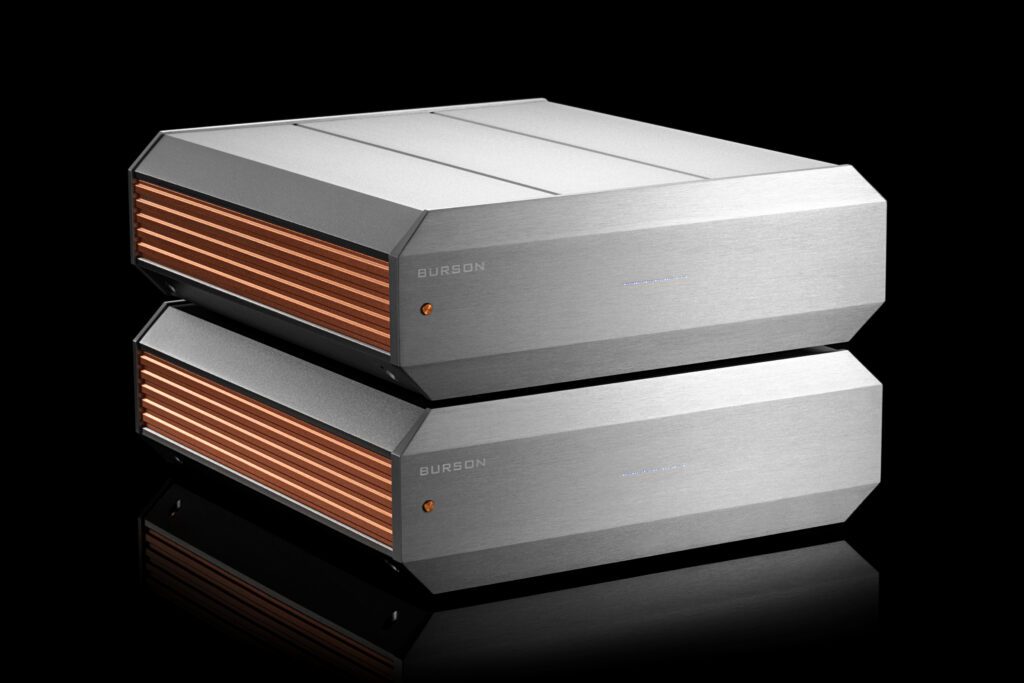
The rear panel of the Voyager features speaker terminals. It also sports the RCA/XLR selection and buffer on/off toggles, two trigger sockets, and the 32V power socket. The front has an expressively blank brushed aluminium face. This is almost identical to that of the Timekeeper 3X GT or GT4. A subtle Burson logo, a small on/off button, and a strip of LEDs that change colour based on the position of the two miniature switches on the back panel are present. Light blue indicates XLR input and buffer on, deep blue indicates buffer off, green signifies RCA and buffer on, red indicates buffer off.
I used the Timekeeper Voyagers to drive PMC MB2se speakers. I fed them tracks via a Life-Changer Audio iCon 5 Balanced Line controller and a Master Fidelity NADAC from three different network players still in the household for evaluation. The 3X GTs were very enjoyable when I lived with them. The Timekeeper Voyagers – no surprise given their genealogy – took me sonically straight back to that first encounter. They both share a brisk and lively presentation, rich in tonal detail.
Give me seven!
The Voyagers’ extra seven Watts of Class A output over the GT makes no noticeable difference in the listening environment. What truly matters is the more than doubling of available current when using the Fusion Core power supply. Although Burson’s amplifiers with Supercharger power supplies are already quite capable in the dynamic performance arena, switching to the Fusion Cores results in improved energy transfer, especially during dynamic swings, which now sound more expressive.
Burson’s marketing material emphasises the lower noise levels achieved by the Fusion Core and its proprietary Voltage regulation, so it must be somewhat frustrating for the designers that the amplification does not respond with a better signal-to-noise ratio. Whether it’s 3X GT or GT4 with the Supercharger wall wart or Voyager with Fusion Cores, the claimed SNR remains stubbornly around 110dB – hardly poor but not particularly impressive either. As noted earlier, the GT and Voyager amplifier circuits are closely related, so perhaps we shouldn’t be surprised.
Core fitness
The Voyagers with Fusion Core power supply offer detail and soundstaging that match other options at a similar price. However, when we assess rhythmic flow, tonal density, and texture, Burson’s approach gives it a slight edge over some competitors. There is a quality to how all genres of recorded material are delivered that can be described as natural confidence rather than artificial effects, enabling the Voyagers to be enjoyed for long listening sessions without causing listener fatigue.
Whether or not the Timekeeper part of the product name refers to the amplifiers’ excellent timing abilities, it is certainly appropriate; the deep Class A bias means that the Voyager and GT models perform flawlessly in this regard. Bass guitarists often speak of playing ‘in the pocket’, and if we want to understand what that sounds like, the Voyager monoblocks can teach us.
Fans of prog rock band Yes will notice that Chris Squire’s Rickenbacker bass is more prominent in the recently remastered version of Close To The Edge than in earlier editions. The Voyagers’ precise timing clearly showed that Squire was an even more talented musician than many already recognise; a highly skilled technician who did extraordinary things with his bass at the time, and a musical storyteller with his own unique language.
The Voyagers confirmed this by perfectly capturing Squire’s distinctive, bright, growling tone. It was these abilities that also led to a particularly satisfying hour or so spent with Lina Tur Bonet’s Musica Alchemica and their recording of Vivaldi’s Four Seasons and, on the same album, the Four Seasons of Buenos Aires by Astor Piazzolla. Is it jazz? Is it classical? We get classical virtuoso meets gypsy fiddler, with all its syncopated back-beats, time signature shifts and stabbing pizzicato one minute, then lush classical romance the next.
Proper technique
The Voyagers demonstrate such a high level of proper technique – dynamic expression, agility, tonal richness and timing – that they encourage us to set aside audiophile listening habits and enjoy the music with unreserved delight.
It’s been a while since I last heard the regular Timekeeper GT range. So readers should approach this conclusion with caution. However, my musical memory tells me they are very close to their newer and more expensive sibling. While some buyers will spend extra on the Voyagers and undoubtedly be very pleased, others might take a more pragmatic view and decide that the GT4s with Fusion Core power supplies will suffice.
Technical specifications
- Type: Class A/B mono power amplifiers
- Inputs: 1x single-ended RCA / 1x balanced XLR
- Input impedance: Single-ended: 100 kΩ / Balanced: 200 kΩ
- Output: Speaker binding posts<span class=”Apple-converted-space”>
- Output impedance: <0.015Ω, 20 Hz to 20 kHz
- Output Power: 100W into 8Ω / 200W into 4Ω
- Frequency response: 20 Hz to 20 kHz
- THD: <0.03% @ 1 kHz
- Signal to Noise Ratio: 110dB
- Dimensions (WxDxH): 26.5x27x8.5cm
- Weight: 7kg
- Price (Burson Timekeeper Voyager + Fusion Core): £4,726, €6,200, $6,000
Manufacturer
Burson Audio
UK distributor
Elite Audio
UK only: 0800 464 7274
Trending Articles
See all
By Kevin Fiske
More articles from this author
Read Next From Review
See all
HIFISTAY Sound Wings+
- Sep 16, 2026
Marantz Model 10
- Sep 16, 2026
DeVore Fidelity O/Bronze
- Sep 16, 2026
Network Acoustics Origin
- Sep 16, 2026