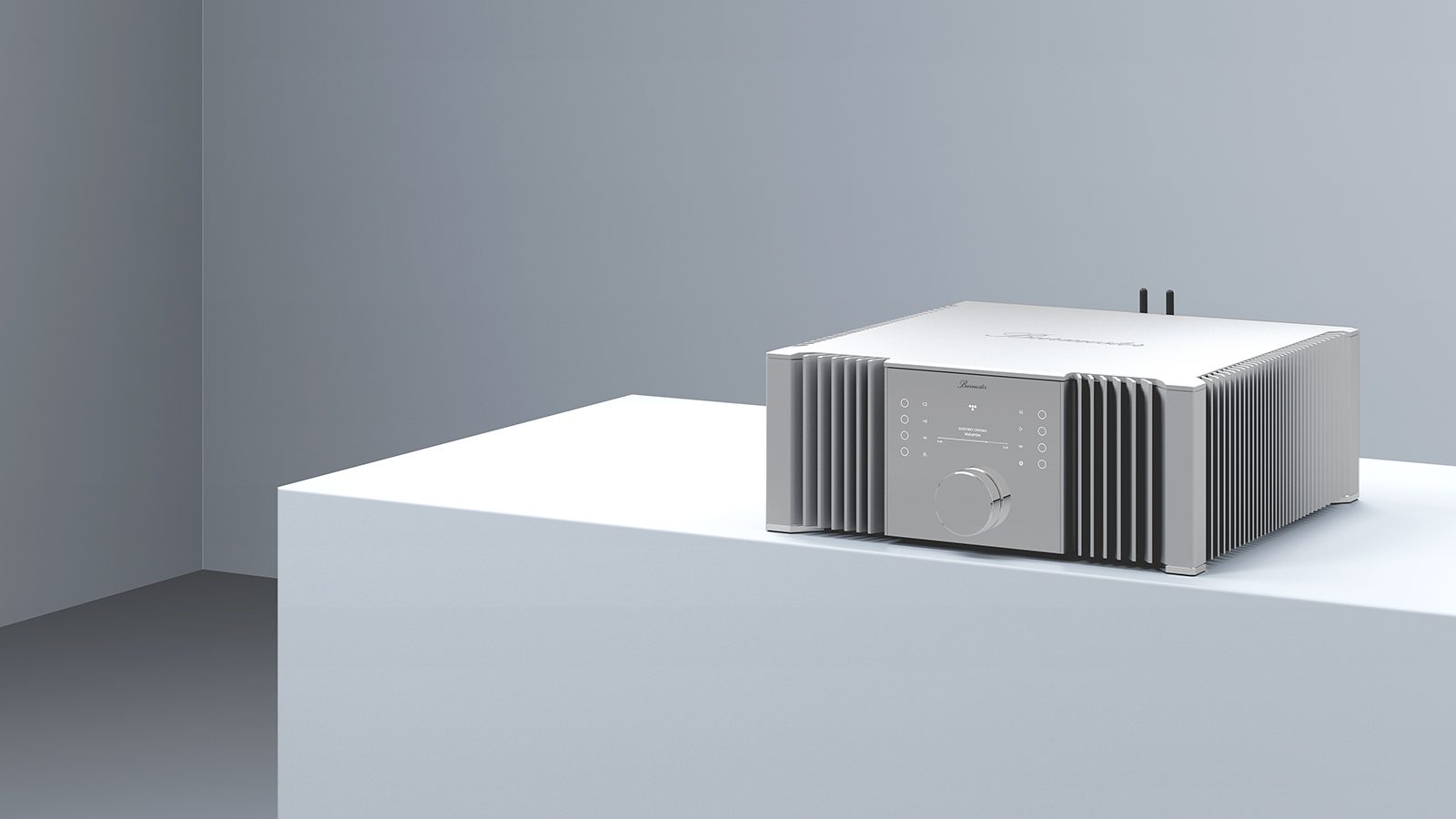
Audio is evolving, and the Burmester 232 integrated amplifier leads the way. A well-known name in high-end audio—with products still in production dating back to 1980—Burmester also attracts customers through its automotive ventures. These clients have very different expectations for their audio equipment. Their demands more closely resemble what future audio buyers will seek on a broader scale.
That means a product like the Burmester 232 prompts questions about audio within a wider context. I apologise if that leads to some philosophical reflection on ‘why’ it exists. It’s necessary before we examine ‘what’ it does and ‘how’ it sounds.
A century of amplification
At its core, an amplifier remains just that—an amplifier. It allows users to select one of many low-level signals. They can set their own volume. And listeners can boost the signal’s power so it can be played through a transducer, such as headphones or loudspeakers. Yes, amplifiers include phono equalisers, digital converters, and even network streaming capabilities to generate those low-level signals. Still, the fundamental purpose of an amplifier has remained unchanged for a century.
However, the technology used to create an amplifier, and our expectations of it, have changed. Increasingly, the ‘our expectations’ part outweighs the ‘technology’. This is a common aspect of the modern world; technology is now a ‘given’. Take photography, for example: a photographer 50 years ago would need to know how to choose the right combination of shutter speed and aperture for the film sensitivity at the time. The same photographer today can rely on scene-evaluating metering and increasingly sophisticated algorithms to achieve the same results.
That means product specifications are becoming less significant, and operation and real-world performance are gaining importance. So, the 150W Class A/B power of the Burmester 232 might seem relatively unimportant. It is enough to drive most loudspeakers likely connected to its speaker terminals. The interface is what truly matters.
At the forefront
Burmester is at the forefront of this change for good reason. While the company’s traditional customers approach the brand through conventional audio channels, there is a new market of affluent consumers. They spend hours every week listening to Burmester equipment from the comfort of their Mercedes-Benz, Porsche, or even Bugatti or Ferrari. The Mercedes-Benz S-Class customer desires S-Class quality in everything, and the association with Burmester reinforces this. However, that S-Class customer now expects a modern user interface. The single-function buttons and dials that their father or grandfather used don’t cut it today.
The Burmester 232 exemplifies this shift in listener preferences. The company’s later products follow this trend. Although this development does not make products like Burmester’s excellent 808 Mk5 preamplifier obsolete, that preamplifier’s visual design—featuring hard buttons and Dot Matrix displays—reminds one of 1970s mixing desks or Apollo-era NASA equipment. This visual style resonates little with those in their 40s or younger.
Burmester understands better than many of its rivals that customers aren’t willing to act as beta testers for the company. Any slight ‘clunkiness’ in the interface and operations is no longer acceptable, given the sound quality’s impressive quality. It must work well and sound good from the start. Even if that requires more extensive time in design and development. This partly explains why the revolutionary integrated amplifier of 2023 arrived in 2024. But don’t worry; the 232 remains just as revolutionary.
Noodle-free zone
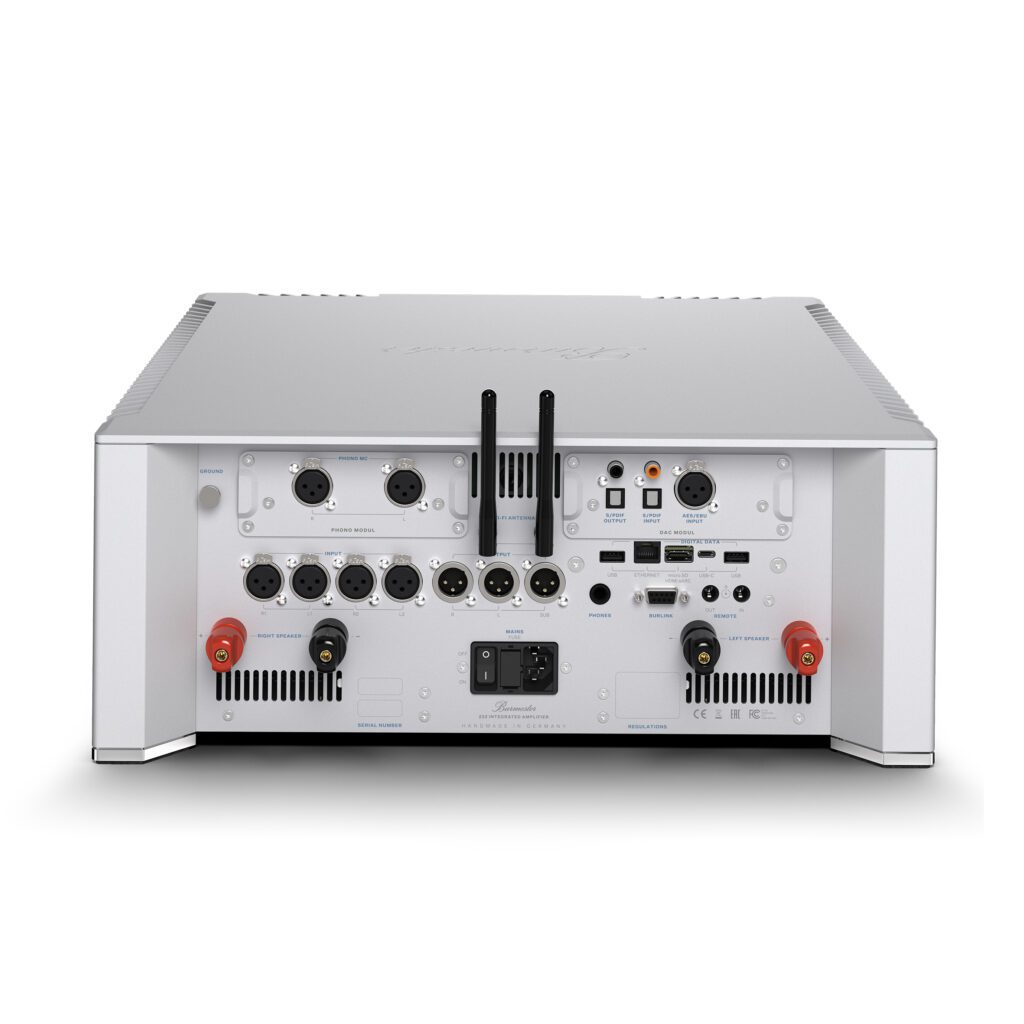
Enough noodling, back to the product! Although we say our expectations of technology outweigh the technology itself, that does not make it unimportant. The Burmester 232 combines the company’s high-quality preamplifier stage with a symmetric, DC-coupled dual-mono Class A/B power amplifier capable of delivering 150W into a four Ohm loudspeaker load. The preamplifier section is comprehensive, available as a standard balanced-only line-level amplifier, with optional DAC and moving-coil-only phono stage plug-in boards. The dealer can install these boards.
Digital connections such as USB, Ethernet, HDMI ARC and Bluetooth are available on the rear panel of every 232 but are only ‘unlocked’ with the addition of the 32-bit, 768kHz DAC board. This board provides a coaxial digital, Toslink optical digital, and AES balanced digital connection via XLR, along with coaxial and Toslink digital outputs.
One notable point is that the MC stage has XLR inputs instead of phono sockets. This reflects the lineage of the optional stage; its circuit is derived from the 077 preamp and 100 phono preamplifier (tested in Issue 77). Since a moving-coil cartridge is inherently balanced in operation, this is the correct approach, but few tonearm cables come with XLR connections as standard. However, adaptors are available, and Burmester’s own 217 turntable combination (tested in Issue 213) is a notable exception.
Comprehensive installation
Naturally, with this level of modularity, proper configuration is essential. The installation process is, by the 232’s very nature, comprehensive. Setting up the 232 is simple, and everything is clearly outlined in the manual. If you are technically inclined, installing all the boards and preparing your turntable and network is as easy as setting up a computer for the first time. Additionally, it’s a one-off setup, unless you decide to change your name or time zone in witness protection.
If you’re not tech-savvy, that’s what dealers are for! In fact, I’d argue this should be part of the dealer’s installation process anyway, as some library and source management settings can take time. Simply put, the goal of the installation process is to make the Burmester 232 work for you. That’s more than just saying “Hello, Alan!’ on power-up; if you want AirPlay and Tidal but not Qobuz, or you wish to organise the sources in your library to suit your preferences… the Burmester 232 can be customised to your liking—no need to scroll through a list of devices you don’t own.
Basic remote
The Burmester 232 comes with a remote control for basic functions. However, Burmester’s own Conduct app for Android or iOS offers a more comprehensive exploration of the 232’s features, as well as access to the library functions. The 232 is also Roon Ready, should you wish to utilise Roon’s services. I have long believed that Roon Ready products fall into two categories: those transformed by the system, and those for whom it is merely a welcome additional feature. The Burmester 232 is very much in the latter category. Roon is not an afterthought, but the product stands firmly on its own well-crafted feet.
It’s excellent that there are several ways to operate the amplifier without ever needing to reach for the control panel. In most cases, there’s not much more to say about its control surfaces beyond a basic overview because we’ve moved to app control. However, the 232 has a trick up its sleeve…
Not hyperbole
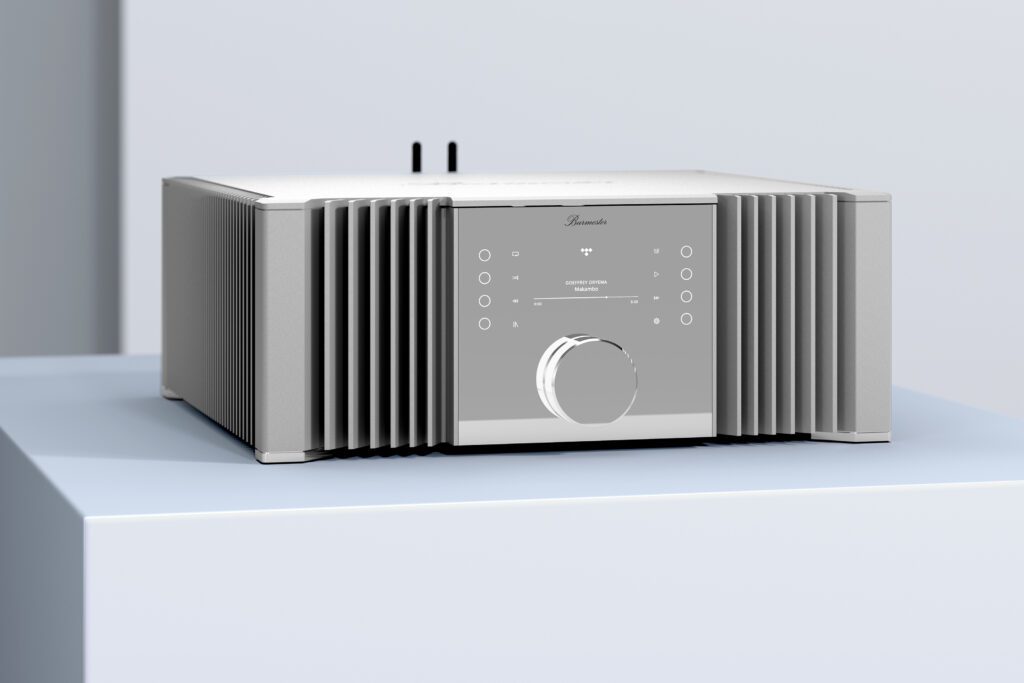
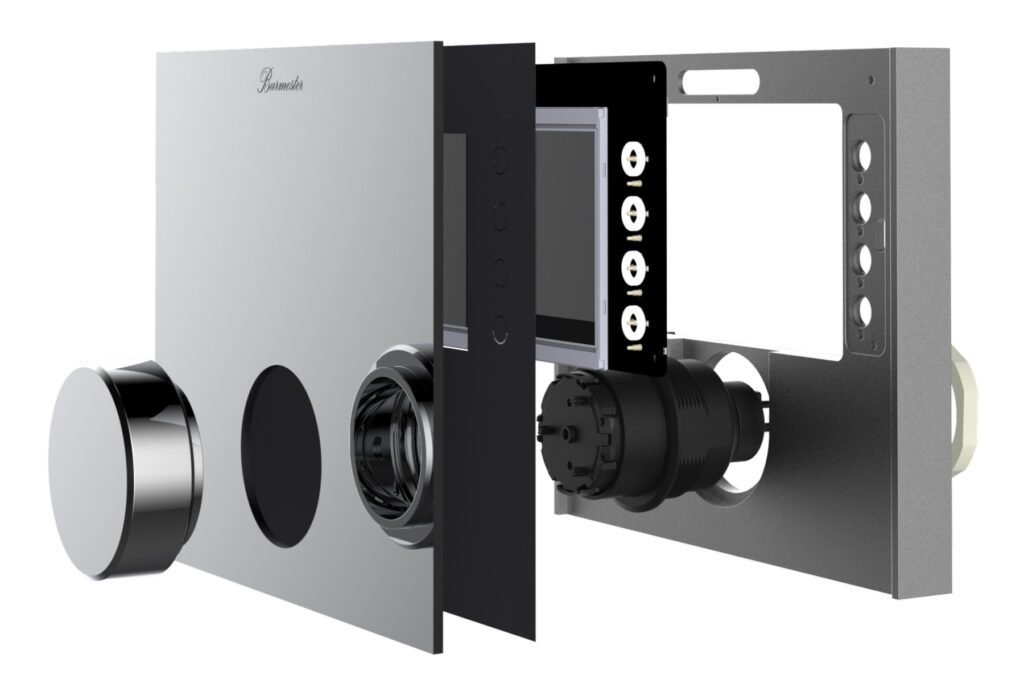
Operating the 232 is a fascinating experience, and for once, that isn’t hyperbole. The front panel features a central screen, flanked by four touch buttons on each side, with remote sensors positioned above and – the interesting bit – the rotary encoder below. We are accustomed to multi-use touch buttons that control different functions on the screen (even beyond audio; we use them every time we operate a modern ATM).
However, the rotary encoder is distinctive, and the first time someone uses it, they experience a ‘wow!’ moment. When the encoder is in ‘source selection’ mode, it feels like there are stops as you scroll through the options. If you then switch to volume mode, those stops disappear. Use it to browse albums on a USB drive or Internet radio stations, and the ‘feel’ of the encoder changes beneath your fingers. But here’s the thing: it feels right each time. And here’s the other thing: returning to a conventional ‘dial’ feels like resetting your watch to 20th-century time.
Moving over to the industrial design, Burmester has pulled off something clever here. The company’s design cues are very well known, and straying too far from them risks undermining the classic look and feel of Burmester products. It needs to be big, square and chrome. And yet, the 232 manages to combine those traditional design elements with something that looks very ‘now’. It’s still a big, 29kg box with heatsinks along the front and sides (which make for an ‘fun’ lift out of the packaging), but looks, well, timeless.
Burmester with a twist
The sound is characteristic of Burmester, with a unique twist. It delivers a big, warm, inviting, yet highly detailed audio experience. There’s a strong sense of intensely detailed bass; this has always been a Dieter Burmester signature. As a bass guitarist, it had to play a bass line with definition and slam… and the 232 more than lives up to that. ‘Bending Hectic’ from The Smile’s Wall of Eyes album [XL] features bass that underpins the track perfectly, but it’s not just a simple, walking bass. It’s a challenging part to play because it shifts from experimental jazz to neo-prog, and at times it can either overpower the overall sound or cause it to lose its integrity. Anything that maintains that balance is excellent, and the 232 performs this with effortless ease and charm.
Listening to Loyle Carner is almost essential on Autumnal Sunday mornings in London. The relaxed vibe and jazzy, hip-hop poetry of ‘Homerton’ [hugo, AMF] is beautifully rendered through the Burmester 232. The sound is full, with a wide stage that extends beyond the loudspeakers but remains tightly focused. His voice is detailed and articulate, which is especially important as his fast-paced MLE accent isn’t the easiest for listeners to understand. It makes the emotion of the recording (about the birth of his son and his relationship with his own father) all the more upfront.
No overanalysis
The more you listen to the 232, the more you want to listen, which is always a good sign. I found myself not wanting to overanalyse the sound, not because it was a poor performer in particular aspects, but because I drifted into the music itself. Drag back to the audio presentation, it has excellent staging. This tonal balance never screams or shouts, but isn’t so warm or refined that it masks detail, and is exceptionally coherent across its range. None of which matters one jot when you are listening to 2020s-era Taylor Swift pouring out the angst or 1970s-era Tom Waits pouring out the bourbon.
The twist is that it’s not quite as warm-sounding as previous Burmester models. It’s still inviting and inherently enjoyable to listen to, but it has more impact than some of the older designs. This aligns well with the more recent models, such as the 216 and 218 power amplifiers. It also gives the amplifier a more contemporary tonal balance. I don’t like those ‘good for classical’, ‘best used with jazz’ descriptions because they are too simplistic.
The ‘oomph’ factor
However, the 232 does have that ‘oomph’ factor that makes it excellent for dynamic pieces. Whether those pieces feature guitars, synths, or brass sections that demand high dynamics; the outcome is the same… and it sounds fantastic. The 216 brought a much-needed Infected Mushroom element to the Burmester family, and that trend continues with the 232. Which makes it a twist with no downside!
No product is perfect, but I believe the 232’s limitations are more theoretical than practical—specifically, the power output. In everyday use, unless you’re routinely driving loudspeakers with inch-thick steel cones or trying to drown out the sound of that jet engine you unaccountably decided to install at the back of the room, the power is more than sufficient. Also, the tone controls on the 032 and 082 are now a thing of the past. In everyday use, I’m sure the two people who rely on tone controls at this level will mourn their loss.
Caught by the concepts
It’s easy to get caught up in the concepts behind the Burmester 232, and rightly so. There’s so much behind the scenes that I could add, from the choice of transistors to the operational amplifiers. Far from being just a fully featured integrated amplifier, it is likely to set a new audio design standard for the next decade or more. That’s not just about defining Burmester devices. There’s something about the tactile feel of that rotary controller that should serve as a lesson for audio electronics companies in general. But beyond that, it’s an excellent amplifier.
Burmester’s excellent preamplifiers and power amplifiers receive high praise. But people can see its integrated designs as stepping stones to those separates. However, with the 232, Burmester challenges that assumption. This is an outstanding integrated amplifier – by far the best Burmester has ever produced – and one that leaves you satisfied. If this is the future from Berlin’s audio experts, then count me in!
Technical specifications
- Type: Integrated amplifier with Streaming DAC and MC phono options
- Analogue Inputs: 2x balanced XLR (1x XLR with phono module)
- Digital inputs: 2x USB-A, 1x USB-C, 1x microSD, 1x HDMI ARC (1x RCA, 1x Toslink, 1x AES XLR with DAC module)
- Analogue outputs: 2x XLR, 1x subwoofer output (RCA), 6.3mm headphone jack (on rear panel)
- Digital outputs (with DAC module): 1x RCA, 1x Toslink
- Output power (stereo, CEA): 150W per channel into 4Ω
- Pulse Power (stereo, CEA): 200W per channel into 4Ω, 110W per channel into 8Ω
- Remote control: IR/Bluetooth, Burmester Conduct App
- Sources: Library (USB mass storage and UPnP, via Burmester Conduct App); Qobuz Connect, Spotify Connect, Tidal Connect, Roon Ready, Apple AirPlay, Internet radio (via Burmester Conduct)
- Finish: Silver, Black. Bespoke finishes on request
- Dimensions (WxHxD): 45×17.7x48cm
- Weight: 29kg
- Price: £15,500-£23,300, €17,900-€26,800, $25,000-$40,000 (depending on module choices)
Manufacturer
Burmester Audiosysteme GmbH
+49 307 87 96 80
Trending Articles
See all
Krell Vanguard integrated amplifier
- Apr 07, 2015
Trending Articles

By Alan Sircom
More articles from this author
Read Next From Review
See all
Eversolo T8
- Oct 13, 2026

Acoustic Energy AE Active
- Oct 13, 2026
Reiki Audio SuperSwitch X/Pro X PSU
- Oct 06, 2026
Audiobyte SuperVOX
- Oct 06, 2026