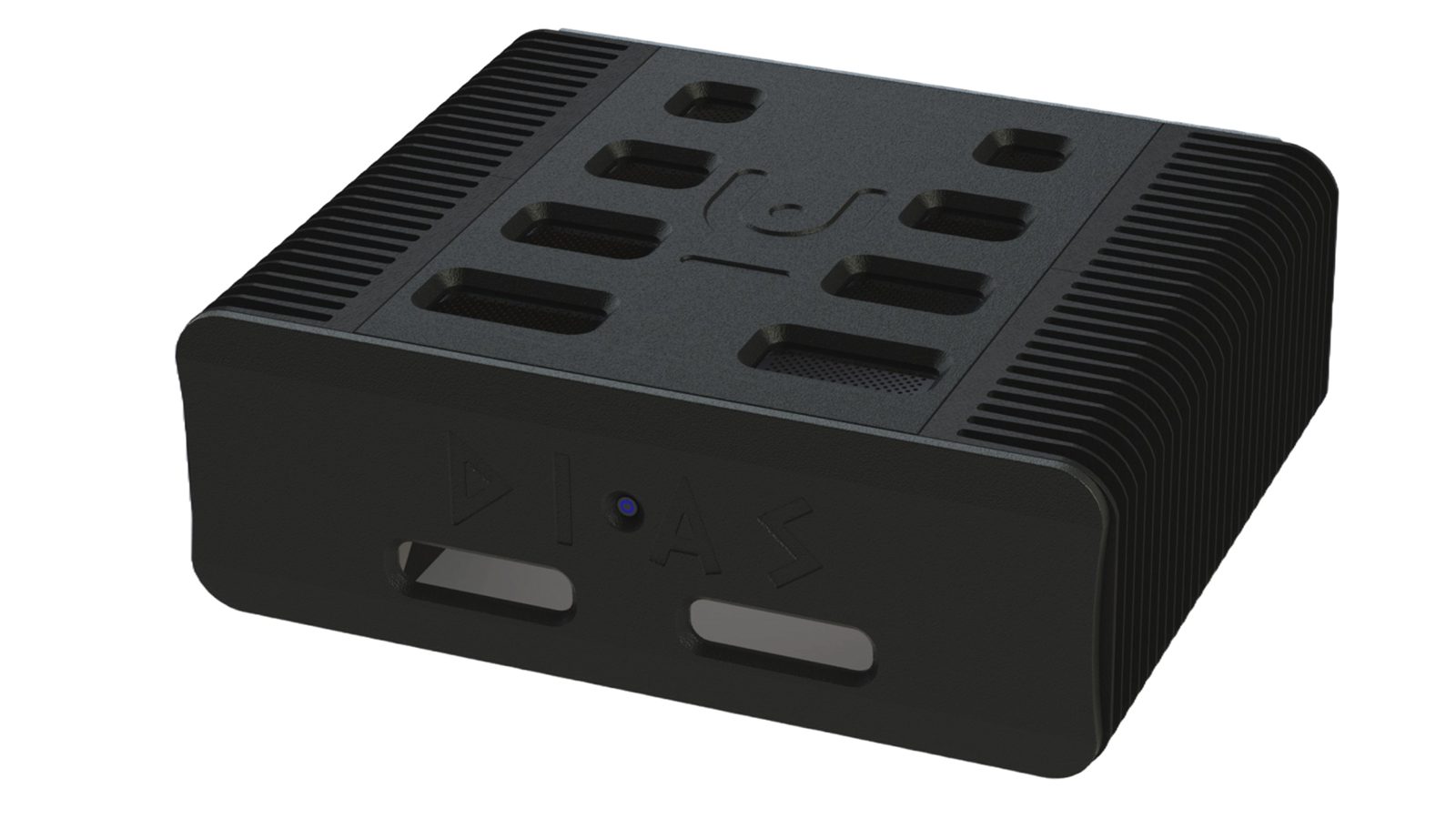
Ultrafide, short for Ultra Fidelity, is a subsidiary of MC2 Audio & XTA Electronics. This is a high-end manufacturer of professional audio, born in 1993. A brand from whom sixty amplifiers appeared on the main stage at Glastonbury, over twenty of their amplifiers can be found at the legendary Air Studios, and even NASA is an illustrious client. Ultrafide also makes a fully analogue quad-output preamp, the U4PRE. This model includes an adjustable MM/MC phono stage and a high-end headphone amp. The partnering U500DC Power Amplifier completes the “UltraSigma” Pre/Power combo. The U500DC was recently repackaged into a slightly different form factor as the SP500. This model sports alternative input/output options and rack mounting ability (for studio/CI). These, along with the DIAS-U8, are the first forays into the domestic audio market from a company with a stellar track record in the Pro sphere.
Zeus-powered
For those with a classical bent, Dias was the original name for Zeus, the king of the gods. It’s a symbol of ultimate power that ruled the earth and skies with thunder and lightning.
The DIAS has a sliding bias design and can deliver a massive 1KW per channel, using a proprietary in-house class AB design. Its architecture is dual mono in design, and it weighs in at 50kg, a two-man lift. It was the brainchild of company founder and pro audio legend Terry Clarke and R&D Manager/Head Designer Alex Cooper. DIAS utilises MC2 Audio’s unique floating drive technique. This means the output stage is controlled by a single op-amp IC. This is itself powered from floating rails that track the power output signal. All of which enables a simple, effective, and reliable, overall control loop said to give a characteristically ‘open’ and natural sound, even at high power levels. Alex Cooper, the designer of the DIAS, had previously designed guitar amplifiers which have been sold to Jimmy Page (Led Zeppelin), Pete Townsend (The Who), and Micky Moody (Whitesnake), amongst many others.
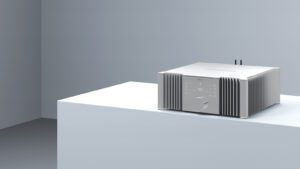
The On/Off switch is on the rear, with a standby switch on the front. There are two speaker outputs per channel to facilitate bi-wiring. As well as XLR inputs, there are also a pair of XLR outputs to enable daisy-chaining. The unit has custom-designed and manufactured heatsink fins on the sides and just the standby switch on the front. It comes in any colour as long as it’s black!
Truth vs beauty
There is an age-old discussion about the difference between domestic speakers and monitors. The argument goes that speakers are there to make the music sound beautiful, whereas monitors are there to “tell the truth” to an engineer, the warts and all. The same, I guess, is true of a Pro amplifier; it is there to tell you the way the music is, and not to gloss over cracks or view the music with rose-tinted spectacles. B&W successfully bridges this gap with their 800/802d4’s, of which I have and use a pair.
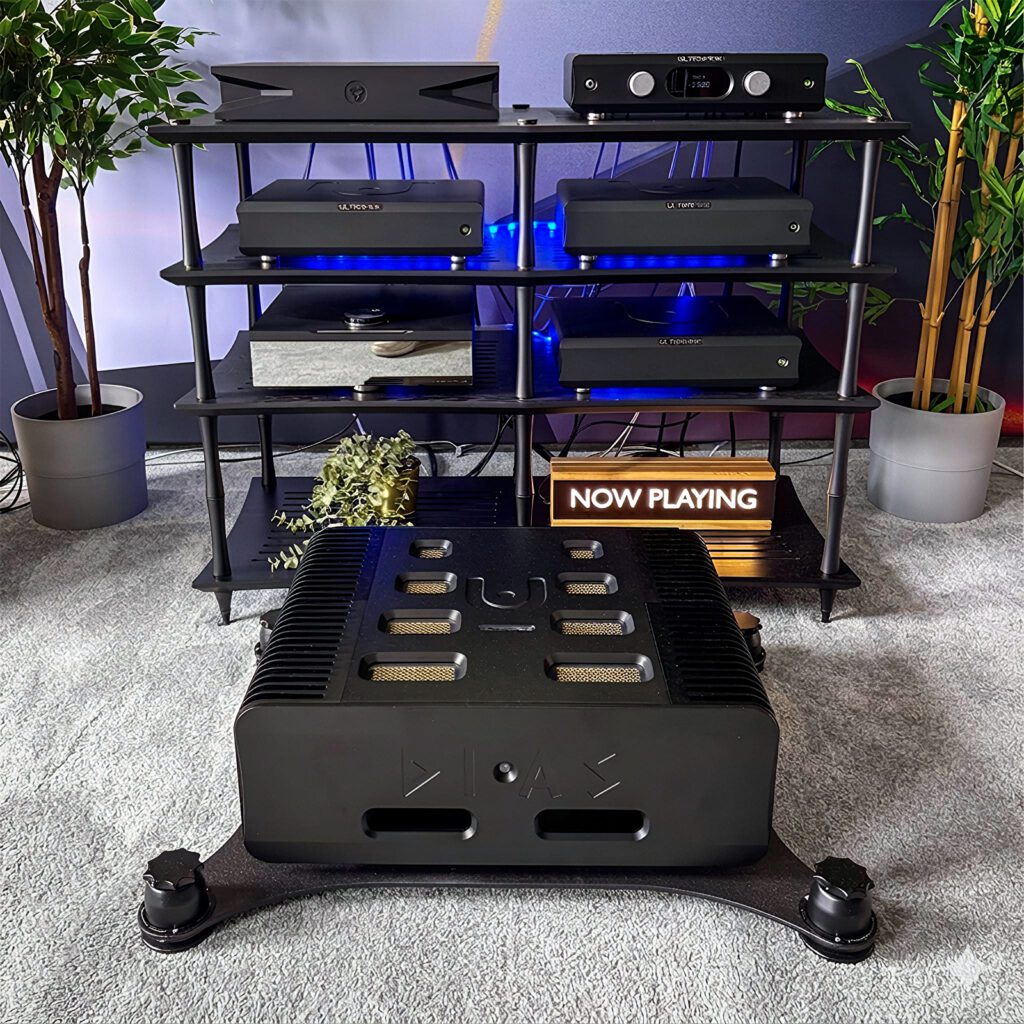
My natural preference is for the maximum detail and information, so I appreciate transparency in an amp/speaker. In my experience, it makes reviewing much easier. After all, a product with a big personality may sound lovely, but it can easily obscure the qualities of something else in the chain that you may happen to be reviewing. The DIAS is one of those former such products, more on this later.
Listening on Bowers & Wilkins 802d4’s, with a dCS Bartók Apex with clock as a source, a Townshend Allegri preamplifier, Townshend cabling throughout, and a PS Audio PS10 power regenerator, I set about listening to the mighty DIAS.
It means business!
First up, my trusty reference recording of Daniel Barenboim playing and conducting Mozart’s Rondo in D Major, and the DIAS really showing it means business! The orchestral introduction has slam and wallop in equal measure. Very sharp attack, fast transients, and a lifelike presentation. When the piano comes in, the Steinway is gloriously rich in timbre, not brightness or tininess that lesser amps would offer up here. Rhythmically, the amplifier is rock-solid.
The performance is gutsy and dynamic, there is a sense of unlimited power, and it is causing the speakers to up their game. When Barenboim changes his pianistic voicing between hands to bring out the bass line, his musical intentions are abundantly clear, almost to the point of exaggeration. Is this studio sound or hi-fi sound? I don’t know – it’s just a very strong rendition which could exist in both camps. There is also absolutely no hint of harshness, even at substantial volumes. The amplifier is firmly in control. An iron fist in a velvet glove to trot out that age-old but most appropriate cliché.
Grip, yet complexity
Another feature that presents itself is that this power amplifier not only has a great deal of grip, but it also handles complexity well. Sometimes you meet charming individuals who don’t pay attention to detail. While I wouldn’t obviously say this amplifier is charming, it handles the weight and substance of the orchestra really well, in terms of imagery and space. Pretty exemplary, really.
Next up, Delibes “Pas des Ethiopiens” from the ballet Sylvia, conducted on this Decca recording from 1972 by Richard Bonynge. There is a tightness to the presentation of the sound. You can feel the stage depth and the instruments placed around it perfectly in space. The percussion is lean and super accurate, and the strings, when they answer, are really massive. The triangle, to the right extreme, comes across with sparkling clarity. I often use this as a reference recording because, despite its age, it comes from the golden age of Decca, and it is always open to new depths of capable equipment to find new things in the recording. There is a calmness to the presentation, the amplifier has great clarity without breaking into a sweat, and I am hearing new things and textures.
Big-boned
The recent New Year’s Day Concert from Vienna has just been released, this year conducted by Yanick Nézet Séguin, beautifully recorded by Sony. Listening to the Fledermaus Quadrille shows just what the Ultrafide can do. There is firstly the big-boned presentation of this powerful orchestra, the Vienna Philharmonic. Percussion is weighty and taut, the amp manages to create the sense of bluster of the piece whilst drilling down into the micro details of the performance. The strings are most accurately portrayed; there is the Schwung of the four pieces, which is electric, and a real sense that you are seated in the 10th row of the Musikverein in Vienna! Rarely have I heard this piece sound so good.
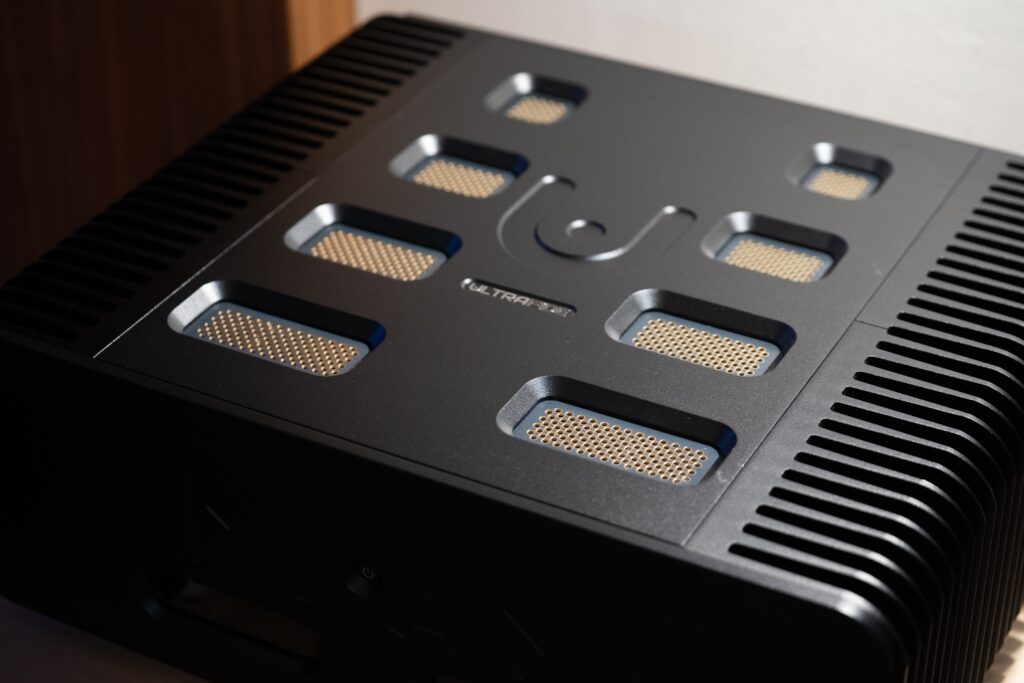
Ionisation, Varèse’s masterpiece beautifully recorded on ‘Decca Sound,’ is a virtuoso percussion piece, where you are confronted by a plethora of varied percussive textures. The U8 passes this test with aplomb; the sheer physicality of sticks on skins makes me jump. Marvellous attack to each note, no smudge or smear. There’s also an incredibly fast attack and rapid decay. And there’s no confusion with the different percussion instruments, just a starkly real portrayal of this most eccentric piece. There is a huge dynamic range, going from the quietest murmurs to the loudest bangs. This is an aspect of the studio which delights in the home, subject to friendly neighbours! The background is inky black, absolutely no noise, even on this originally analogue recording. The U8 is unashamedly violent with this piece, and proud of it.
Digging Kraftwerk
‘Autobahn’ by Kraftwerk (from the album of the same name) always provides an opportunity for a great audio setup to dig right into the mix. From the diesel lorry going across the speaker area to the voices and electronic effects, this is one of the best renditions of the track I’ve heard. I can see how the track is constructed, from the clarity of the words, the positioning of the effects, and the sheer deconstruction the amp is doing. I am aware of hearing some of these effects for the first time, something of an education for me. It is a grown-up and highly revealing rendition.
Ultrafide has certainly come up with something of a winner with this power amplifier. In the right system, it is highly capable and absolutely in control of things. There was never a moment reviewing when it showed itself less than highly talented, exemplary even. It is beautifully engineered, oozing power, and despite its seemingly high price, represents good value-for-money in a rarefied field of similarly capable amplifiers. I don’t think that the fact that Ultrafide’s roots are in Pro Audio is a problem, or even relevant. There are great amplifiers, and there are not-so-great amplifiers, and for me, this fits into the former category with ease!
Technical specifications
- Type: Dual-mono, Class AB stereo power amplifier featuring proprietary “TCD” (TC Drive) floating drive stage and “TLB” (Thermally Locked Bias) design
- Power Output: 2 x 1000W @ 4 Ohms (2 x 600W @ 8 Ohms)
- Noise: -73dBu (Un-Weighted 22-22KHz)
- Dynamic Range: 110dB (Un-Weighted 22-22kHz)
- Distortion (4R): 0.008% at 300W | 0.05% at 500W
- Rise/Fall time: 5µS
- Weight: 50 Kg
- Price: £27,499, €32,500, $35,000
Manufacturer
Ultrafide Audio (MC2 Audio)
+44(0)1404 44633
Trending Articles
See all
hi-fi+ issue 250: the Awards
- Dec 02, 2025
Karan Acoustics Master Collection POWERa Mono
- Jul 26, 2022
Trending Articles

By Rafael Todes
More articles from this author
Read Next From Review
See all
Revival Audio Sprint 3
- Aug 31, 2026
Transrotor Bellini TMD, TRA 9, Figaro
- Aug 31, 2026
Burmester 232
- Aug 31, 2026
Acoustic Energy AE1 40th Anniversary
- Aug 31, 2026