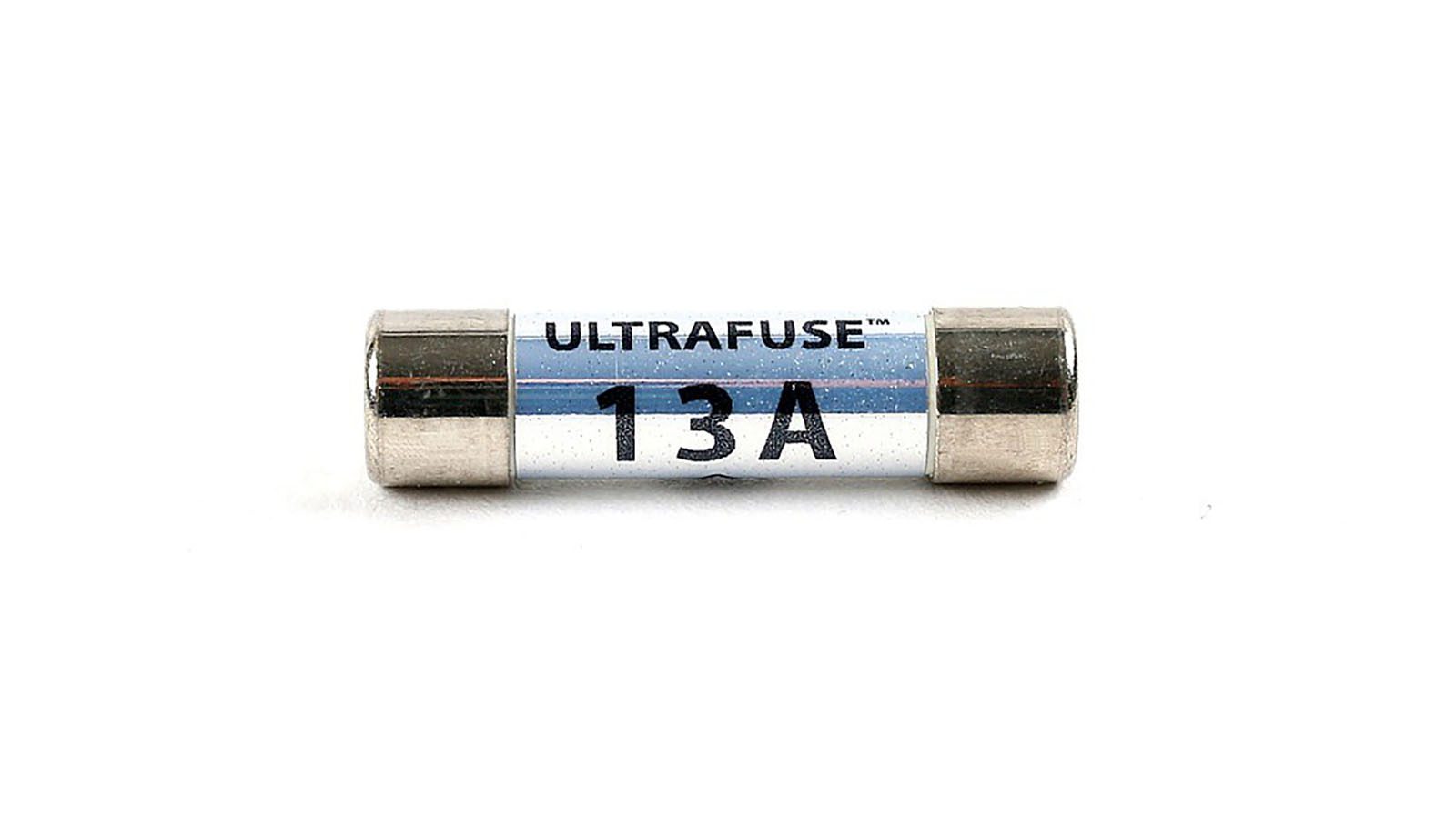
One of the great joys – and pains – of being an audio enthusiast in the UK is our 13A ‘G-Type’ plugs. On the upside, the three-pin plug has an excellent contact area and is inherently safe. The downsides are that they are designed as right-angled plugs by default. They also have a nasty habit of turning pin-side up when walked on barefoot. Additionally, they are fused. The fuse enhances safety but can also be a pinch point for sound quality. Russ Andrews has been addressing ‘mains’ quality for decades. As a UK-based company, it has first-hand experience dealing with our fused plugs. The result is the Russ Andrews UltraFuse – available in 3A, 5A, 10A and 13A.
Russ Andrews producing fuses in different amperages highlights its status as a UK-based brand. Many audiophile fuses are 13A only, overlooking the fact that most sources require a smaller fuse. In the rare event that something goes wrong, an over-specified fuse can lead to a potential electrical fire. Although this largely depends on the quality of the wiring behind the plug, should there be a fault, the UK mains circuit design relies on the fuse to blow. Therefore, the fuse protects the product, its plug, and its cord.
Ceramic
The Russ Andrews UltraFuse features a ceramic body with nickel-plated caps. Inside is a silver-plated copper fuse wire. The fuse comes in a small grey box with silver writing. A little sachet containing a DeoxIT Gold wipe also fits inside the box. The wipe treats the end caps of the fuse (and the fuse terminations in the plug itself). A little sticker is used to identify plugs that feature the UltraFuse. I used a 13A UltraFuse to replace the fuse in an older Nordost Blue Heaven G-Type plug, connecting to a Primare I35 Prisma integrated amplifier. This plugged directly into the wall, without distribution blocks or power conditioners to cloud the issue. I also listened to the cable without the Russ Andrews UltraFuse. Additionally, I have two identical Blue Heaven cables without the UltraFuse as a comparison.

The UltraFused cable made a clear difference. Clear has double meaning here, covering both ‘an obvious change’ and ‘it increased transparency’. There was a greater sense of focus and snap to the sound, a more direct connection between you and the music. The change was on par with an improvement in power cord performance. It added weight and body to the sound without overloading it or slowing it down.
Going for Gold
To double-check that I wasn’t hearing cleaner connections, I treated one of the Blue Heaven cables without the UltraFuse with DeoxIT Gold and reinserted the supplied fuse. There was a slight improvement in transparency, but the difference was, at best, minor and nuanced. Even without the small sticker indicating which plug had the UltraFuse, the distinction between them was clear. The Russ Andrews UltraFuse consistently sounded more authentic, while the standard fuses had an electronic ‘haze’ compared to it.
I’m sometimes cautious about including country-specific reviews in an international magazine. However, that three-pin plug is not exclusively UK-based; enthusiasts in Ireland, Malta, Hong Kong, Singapore, Dubai, and other countries also use it. For those of us using good-quality G-Type (13A) power cords, replacing the existing fuse with a Russ Andrews UltraFuse is the best sonic upgrade you can make.
Price and contact details
- Russ Andrews UltraFuse: £70
Manufacturer
Russ Andrews
+44(0)1539 797300
Tags: FUSES RUSS ANDREWS ULTRAFUSES
Trending Articles
See all
By Alan Sircom
More articles from this author


Read Next From Review
See all
Reiki Audio SuperSwitch X/Pro X PSU
- Oct 06, 2026

Audiobyte SuperVOX
- Oct 06, 2026
Unitra WSH-805
- Sep 29, 2026

Wilson Audio Sabrina V
- Sep 29, 2026