Up to 37% in savings when you subscribe to hi-fi+
hifi-logo-footer

Begin typing your search above and press return to search. Press Esc to cancel.

RENAISSANCE AUDIO’S HAND-PICKED RANGE TO BE SHOWCASED AT THE INDULGENCE SHOW

Renaissance Audio is delighted to be showcasing a wide selection of its audio products at the Indulgence Show. Renaissance’s goal is to bring the listener closer to the real music experience and the products they are showcasing certainly do this. 

Ground-breaking technologies, an acute attention to detail and quality, and a daring disregard for convention are what make Renaissance’s hi-fi systems stand out. All the products that Renaissance Audio will be demonstrating at the Indulgence Show have been hand-picked for these characteristics. 

Turntables from the US masters of vinyl replay, VPI, will impress all music lovers. There will be the first opportunity to see and hear the new VPI Player, a striking high-end all-in-one turntable – no amp necessary! VPI’s award-winning Prime Scout and Prime Signature turntables will also be on demonstration. 

The Moon Neo range from Canadian high-end audio specialist, Simaudio, is set to be one of the show’s highlights. The MiND network player, the new 240i integrated amplifier and the extraordinary ACE all-in-one system will be ready for visitors to listen to in Renaissance’s room at the show. 

Studio Connections BLACK STAR cables will provide the links to create an astonishing system, and the mighty KEF Reference loudspeakers will deliver the music.

For more information visit: www. www.renaissanceaudio.co.uk 

Contact: 

Angela Brown: 07975 907899 Matthew Tasker: 07791 380267 

[email protected] [email protected]

Devialet Expert 1000 Pro two-box integrated amplifier

A company like Devialet seemingly churns through products at a fair lick. Since the launch of the D-Premier, there have been several different products launched, upgraded, uprated, and enhanced. And that’s before we include the newer Phantom line. Add in changes in distribution, prestige stores, exotic advertising campaigns, and lots of venture capital driving the whole brand, and it’s little wonder there is some confusion.

Let’s backtrack and explain. The original D-Premier eventually became the Expert 250, and still remains (albeit with completely redesigned ’Pro’ internals) in the catalogue to this day. When the D-Premier became an Expert, it was joined by two other models; namely the Expert 130 Pro and the 220 Pro. The 220 Pro and 250 Pro can upgraded with their own matching Companion models, and there are two twin-chassis only designs: the Expert 440 Pro, and the Expert 1000 Pro tested here. Users of older D-Premiers or Experts used to have an upgrade program, where their product was given completely reworked internals, but that upgrade path expired earlier this year.

Between these launches, there was a short-lived but very significant special edition of the D-Premier – The Original d’Atelier. The significance of this product was that it incorporated many of the design developments that now go into the latest iterations of the main Devialet amplifiers, and in particular what lives inside the Expert 1000 Pro.

Internally, the differences between the Expert 1000 Pro and the older models are significant. The new amps deploy what Devialet calls ADH Intelligence in its patented Class A/Class D Hybrid amplifier design. This is effectively a redrawing of the amplifier circuit, effectively uprating the precision of the ADH core control architecture by a factor of four. This makes the ADH feedback loop faster, improves the resolving power of the Class A amplifier from eight to 10 bits, and this results in lower overall THD. Both the Class A and Class D amplifiers have been completely redesigned, with the Class A amplifier now a greatly simplified circuit, and the Class D amp pulled straight from that of the Original d’Atelier, with extensive beefing up. It’s effectively added 50% more power to the previous models, and includes more filter inductors per channel. The analogue to digital conversion stage (Magic Wire in Devialet-speak) is new, too, knocking 6dB off the THD and cutting the noise floor by 2.5dB. Add in a power supply that can now deliver 4kW and a very sophisticated (and large) thermal management system, which includes a 2.5kg copper base plate, and it all becomes clear that this is not simply old wine in new bottles.


The Expert 1000 Pro arrives in two Devialet boxes. The amplifiers are functionally identical, except you are missing one controller. The inherently digital nature of the Devialet design means the two can be conjoined with a single cable.

As before, the Expert 1000 Pro is extremely adjustable, with an online configurator to access a host of changes to inputs and power output, as well as adjustments to the phono stage to best match your cartridge. And, like all analogue inputs on the Expert 1000 Pro, these inputs are almost immediately digitised inside the Devialet device. The configurator requires uploading a small chunk of code from the website to each of the master and slave amplifiers, using a pair of SD cards (supplied).

This is also an ongoing project. Regular operating system upgrades are flushed through the line of Devialet amplifiers, adding and refining key facilities. When last I reviewed a Devialet amp, the key feature of the moment was SAM (its speaker active matching system… more on this later), and the up-and-coming ones are adding Roon, UPnP/DNLA streaming, and the potential for Expert and Phantom to work together as one. And Devialet’s stumbling block then was wireless connectivity. Sadly, time doesn’t heal all wounds, and it’s not much better now. Devialet AIR is an ambitious project to stream high resolution signals from source to system that is probably more trouble than its worth. Avoid wireless unless absolutely necessary.

SAM is more successful. Hundreds of high-end loudspeaker designs have now signed up to be measured by Devialet, and that includes Wilson Audio and the Duette II is on the list. As the acronym suggests, SAM reads the characteristics of the loudspeaker as a config file into the amplifier, which then tailors its output to closely follow that speaker’s performance envelope. This results in both tighter, deeper bass, and better thermal protection for the loudspeaker. Note that this doesn’t mean ‘louder’ as often it limits the maximum volume of the amplifier quite conservatively. It should mean ‘better’.

In truth, I find SAM effective and audible, but not something I would use on a regular basis. The Wilson Duette II has more than enough bass for my room, it seems, and having a DSP-enhanced additional bass ‘thwack’ seems unnecessary. I also find SAM to be a little overawing, especially with a loudspeaker of the dynamic range of the Duette II. But you can adjust the intensity of SAM, or even switch it off altogether. In my room, with my speakers, ‘off’ was my preferred setting, but this is one of the most interesting aspects of the whole amplifier. ‘Your Mileage May Vary’ has never held so much truth.

I must also confess to continue to have something of a mixed relationship with the Devialet phono stage. It remains one of the clearest, cleanest, and quietest phono stages money can buy, but occasionally I want the ‘sparkle’ that a good analogue phono stage brings to the party. On balance though, I’d rate the Expert 1000 Pro’s phono stage consistently somewhere between very good and excellent, especially as you dial in a cartridge’s exact specification from the website, and many of the better known cartridges come pre-figured. So where applying load information about a cartridge might involve look-up tables and guesswork, here, you just point a mouse at ‘Lyra’ and you’re done.

The super-clean, super-detailed presentation of the Expert 1000 Pro is interesting. This is all the things about Devialet writ big. Really big. The first thing that hits you is an ‘is it on?’ silent background, followed closely by the most dynamic of dynamic ranges you’ll have heard in years. SAM is a good option here as pulling a kilowatt of power could easily throw a driver across a room. You will turn it up too loud because of the absence of background noise, you will play whatever it was far too loud and you will quickly reach for the volume control with fruity language. Never mind ‘edge of the seat’ dynamics, this is ‘jump out of your seat’ rodeo dynamics.

Then you settle down to that Devialet sound, or rather absence of sound. This remains one of the most sonically transparent sounds around, except for a mild etched presentation around the upper mids. You have to really work your record collection to find this, but I got there with The Shape of Jazz to Come by Ornette Coleman [Columbia]. This hard, angular performance from jazz’ golden year of 1959 is a seminal work, but it’s not an easy one, and sometimes it goes down better with a little bit of sugar. The Devialet duo don’t do sugar. Instead, that etched sound just made the album a little more ‘difficult’. This was quicksilver, though, and hard to find again, especially when the amps had been powered up for a couple of hours.

Otherwise the Expert 1000 Pro is an exceptionally difficult amplifier to describe, because it pushes past a lot of the descriptive parameters. It’s easier to just put the word ‘excellent’ on repeat and rattle off a series of questions about performance: imaging – excellent. Detail retrieval – excellent. Coherence – excellent. Vocal articulation… you get the message.

In discussing the sound quality, we might as well just hark back to the original D-Premier review again, just that all the D-Premier did this does more so and with greater authority thanks to the extra power and the better specifications. The Expert 1000 Pro remains outstandingly detailed and precise: the tiniest finger squeak on a fretboard, the smallest touch on a tam-tam, is all delivered to you perfectly. Not simply as a mild change in timbre, but in a sense of different physical solidity of the instrument that simply doesn’t make it through the circuits of most amplifiers. The Expert 1000 Pro’s inherent lack of character shines through on every recording by it altering the fundamental ‘shape’ of the acoustic or studio each time, as it should. There is a fundamental unflappability about the Expert 1000 Pro, too, more so even than its already unflappable little and older brothers. .


The first Devialet hit the ground running at the end of the last decade. It changed the face of audio. The Devialet Expert 1000 Pro pushes that performance to the very limit of what a loudspeaker can do. It might not make quite as big an impact as the first model because we are now all very used to seeing what they do in homes and stores. We already know what they can do and how well they can do it. We even know their obvious strengths and their much less obvious weaknesses. Expert 1000 Pro is a real star. Very strongly recommended!

TECHNICAL SPECIFICATIONS

  • Connections: 1× Optical Toslink, 1× combined Optical Jack & RS232 Mini 3.5mm, 1× USB for computer or USB-fitted turntable connection, 1× Ethernet RJ45 for connection to LAN, 1× AES/EBU input (XLR), 4× S/PDIF digital inputs on RCA (or two analogue line level inputs), 1× Phono input – Adjustable Gain and sampling frequency (96 or 192KHz, fully configurable, MM or MC, load, sensitivity, 1953 or 1976 RIAA standard), 1x trigger, speaker terminals and subwoofer output. Optional AIR wireless
  • Power output: 2× 1000W into six ohms, adjustable from 50–1000W via online configurator
  • ADC: PCM 4220, 24 bit/192 kHz – upsampling of all content
  • DSP: 400 MHz 4 channels 40 bit/192 kHz floating point Single Ultra High Precision clock, low jitter ADH Core (Analog Digital Hybrid) Devialet ‘Magic Wire’ DAC, to 24 bit/192 kHz Switch Mode Power Supply peak 4000W
  • THD+N (harmonic distortion) at full power: 0.00025%
  • IMD (intermodulation) SMTPE: 0.001%
  • SNR (Signal-to-Noise ratio): 133 dB unweighted
  • No measurable thermal distortion
  • Output impedance: < 0.001 Ω
  • Bandwidth, digital inputs @ 8 to 2 Ω load: DC–87kHz (-3dB), DC–60kHz (-1dB), DC–30kHz (-0.1dB); analog inputs: same except 0.1Hz (-3dB)
  • Dark Chrome finish, single aluminium block case per chassis
  • Dimensions (W×D×H): 40 × 40 × 4cm
  • Weight: 9.7kg, Companion 9.5kg
  • Price: £22,900

Manufactured by: Devialet

URL: www.devialet.com

Tel: +44 (0)808 168 4944 (UK only)

Back to reviews

Read more Devialet reviews here 

ELAC Uni‑Fi FS U5 Slim floorstanding loudspeaker

Not only is white the new black, but speakers are getting skinnier. The pressure to be thin is not limited to us humans, it seems. That appears to be the ethos behind ELAC’s Uni-Fi Slim range, which – if the blurb is to be believed – is the same as the existing Uni‑Fi range in deeper cabinets with narrower front baffles. The spec for the Uni-Fi UF5 says it’s 200mm wide, the FS U5 seen here is 22mm narrower, which is less than an inch so not a lot but every millimetre counts in this image conscious era. A consciousness that is particular to Europeans it seems as the standard Uni-Fi range is not available in this market.

Designer Andrew Jones learned his chops at KEF back in the Laurie Fincham era. He then took his skills to TAD and developed a concentric mid/tweeter for their high end models. He has done the same trick at ELAC, clearly his KEF years convinced him of the efficacy of this approach. This time the drivers are in far more affordable loudspeakers and feature aluminium cones exclusively: the tweeter is the only soft part in this toned beauty.

The Uni-Fi Slim range consists of a bookshelf and a tower/floorstander with two extra bass drivers in the cabinet. As is becoming the norm, you can have it in black or white paint finishes, but veneers are, it seems, right out in the world of affordable loudspeakers. And given the choice between imitation wood and a satin paint finish, I too would be inclined toward the latter. Where IKEA leads the world follows!

The Uni-Fi Slim tower comes with a raft of accessories to keep it standing straight and tall. Machined and anodised aluminium bars fit on the bottom of the cabinet and extend the footprint to give it greater stability and, more compellingly, the ability to pass EU tilt tests. This bar accepts custom spikes with their own separate top caps that come with metal and rubber spike pucks to stop the speaker from impaling the laminate floor. It’s quite an impressive array really, albeit somewhat at odds with the discreet inclinations of the box as a whole. So while the hidden driver fixings and magnetic grille mounting minimize the mechanical aspects of the look, the stand goes the other way, but it looks cool so I’ll forgive it.

The only slight jarring feature is a clip on the back that is obviously too small to wall mount the speaker. It turns out that this is a safety clip so that you can tie the speaker to the wall and make sure that not even the most determined toddler could tip it over. A sensible idea in theory, but a bit too close to the practices of the aforementioned Scandiwegian furniture outlet for comfort.


The drive units are more important of course, and that concentric driver is an impressive piece of work. It couples a 100mm aluminium midrange cone with a 25mm soft dome tweeter at it centre; a technique that Tannoy and (of course) KEF have long favoured, but still remains relatively uncommon. The benefit is uniform directivity for both drivers, as the waveguide of the tweeter acts to match the directivity of the mid/woofer and tweeter, to get better off-axis response at the crossover point. The reason for the lack of such drivers across the market is the cost of developing them: they are prohibitively expensive to make unless you intend to make them by the thousand.

ELAC combines this unit with three 130mm bass drivers with aluminium cones in a cabinet with no fewer than three reflex ports on its back. Andrew Jones explains: “Internally, the cabinet is divided into two chambers: upper and lower. The upper chamber mimics the bookshelf speaker and so has its own port. The division also helps to raise the frequency of the first standing wave in the cabinet to make it easier to deal with. The lower chamber is double the volume with double the number of drivers. To maintain the same tuning frequency I could use one new port or simply use two ports. An advantage of using two ports is that they can be placed more easily to minimize excitation from what remains of the internal standing waves. They also couple to the room better than would a single port.”

The cable terminals look pretty swish and were designed by ELAC rather than being from the usual sources, a nice touch that further enhances the quality feel of this model.

In my system, placed with their backs 40cm from the rear wall, the Slim Towers made a strong first impression. They have a sophistication and authority in the bass that you don’t find with many alternatives at the price. It was the bass line on Talking Heads’ ‘Crosseyed and Painless’ [Remain in Light, Sire] that first caught my ear, it was deep and taut and fitted in precisely with the drums and guitar in a presentation that was spacious for this less than expansive recording. Conjure’s ‘Wardrobe Master of Paradise’ [Music For The Texts Of Ishmael Reed, American Clavé] managed to widen the soundstage out to the sides of the room, revealing a grungier bass line and pretty decent timing for a three-way.

Amandine Beyer’s solo violin [JS Bach Sonatas & Partitas BWV 1001 – 1006, Zig-Zag Territoires] revealed a slight edginess, a degree of forwardness that proves you still can’t make the perfect loudspeaker for £1,200. It’s a tough track and the last speaker I played it on cost more than ten times as much, so it’s a tough ask as well. Further listening brought this same edginess up, but only very occasionally. It may be something that extended run in would ameliorate, but that it did reveal this character in a well-damped room with an even-handed source and amplifier suggests that it’s a ‘try before you buy’ design. But that’s hardly unusual with speakers at almost any price.

The speaker is also fairly current hungry. The spec says 85dB for a four Ohm nominal impedance which means you need a reasonably powerful amp to get the best out of it. The ATC P1 had no trouble, but the more price appropriate Rega Brio wasn’t always full in control. It delivered plenty of pace and life, but couldn’t plumb the depths with Lorde’s ‘Royals’ [Pure Heroine, Universal] for instance. Leftfield’s ‘Inspection Check One’ [Leftism, Hard Hands] was, however, highly entertaining, the deep bass lines delivered with all their bounce and much of their weight intact. I also got a very engaging result with the Allegretto from Beethoven’s 7th Symphony [Barenboim, Beethoven For All, 24/96, Decca]. The ELAC delivering the dynamic tension of the piece with ease alongside good scale, gutsy bowed bass lines, and a good deal of the power in the performance. Overall, a good result for the pairing.


Back with the ATC and its 150 Watts the Uni-Fi Tower did a nice job with Handel’s Messiah ([cademy of Ancient Music, Hogwood, L’Oiseau-Lyre], bringing out much of the depth in the recording and delivering Emma Kirkby’s voice with impressive clarity. Voices are a distinct strength of this loudspeaker, whether it’s Taj Mahal, Laura Marling, or a soprano, you can always hear their lyrics clearly. Indicating that the midrange is very clean and coherent, if perhaps a little bit emphasised. This I suspect is why some recordings can sound a little edgey or grainy, as proved the case with Infected Mushrooms’ ‘Avratz’ [Converting Vegetarians, Yo-Yo], which starts with a bright synth sound that on the ELACs gets a tiny bit glassy if the level is turned up. I should temper this by saying that I don’t review many speakers at this price point and it’s not always easy to calibrate expectations to suit. It’s also important to note that the only other speaker I had near this price sounded almost crude by comparison.

Andrew Jones demonstrated his latest floorstander at the Munich High End show in May. The Adante appears to have the same driver configuration, but what you see are three passive bass units that conceal active ones that sit behind them, but not in an isobaric arrangement. It’s a rather more expensive design but shows that Jones is a designer who thinks outside of the box. That he can produce something like this floorstander for such a competitive price is further testament to his ingenuity.

TECHNICAL SPECIFICATIONS

  • Type: 3-way, five-driver, floorstanding speaker
  • Driver complement: One concentric driver with 25mm soft dome tweeter and 100mm aluminium midrange driver; three 130mm aluminium bass drivers
  • Crossover frequencies: 270Hz, 2.7kHz
  • Frequency response: 42Hz–25kHz
  • Impedance: 4 Ohms, minimum 3.4 Ohms
  • Sensitivity: 85dB/W/m
  • Dimensions (H×W×D): 980 × 178 × 293mm
  • Weight: 16.85kg/each
  • Finishes: black or white satin paint
  • Price: £1,200/pair

Manufacturer: ELAC

URL: www.elac.com

Distributor: Hi-Fi Network

Tel: +44 (0) 1285 643088

URL: www.hifi-network.com

Back to reviews

Read more ELAC reviews here

Jadis JA-80 MK II mono valve power amplifier

Sometimes it’s weird how these things come together. In quick succession, we have tested two amplifiers from different sides of France, both with a very shiny finish, both with a very distinctive way of doing things, and both with a very loyal following among the music loving fraternity. In all other respects, they could not be more different, and they reflect the huge dichotomy that exists within the audio world today.

Based in Villedubert, just outside of Carcassonne and some 50 miles as the crow flies from the border of France and Spain, Jadis made its first amplifier back in 1983. That was the JA-80 mono power amplifier. Such is the design methodology of the company that although there had been several revisions to the original circuit, the JA-80 stayed effectively unchanged for more than three decades, only now morphing into the JA-80 Mk II. Most companies would have churned through maybe seven different versions of the amplifier design in the intervening years, but Jadis is not like that.

The reason for the change from JA-80 to JA-80 Mk II came about because of change in the output valve world. Back in 1983, KT88 or the similar 6550 were all the rage, widely available, and standards were high. In today’s market, these valves are more likely to be used past failure, new but of very poor quality, or ruinously expensive New Old Stock. Meanwhile, other, more modern designs became available that addressed the problems in build quality inherent to the KT88 and offered improved performance, to boot. Unfortunately, they are incompatible with the original JA-80 design, and thus the JA-80 Mk II was born. This, however, also gives the Jadis JA-80 Mk II greater flexibility of output valve options.

Where the original JA-80 used two pairs of KT88s per side to deliver a conservative 60W per channel in pure Class A operation, and could be reworked to include a wide range of output valves, the new JA-80 Mk II takes advantage of the new Tung-Sol KT150 output tube. The distinctive, gherkin-shaped ‘kinkless tetrode’ KT150 is one of the most talked about recent designs: one of the few genuinely new, designed for the audiophile, valves on the market today, designed for high power and low harmonic distortion. These power tubes have proved exceptionally popular in high-end audiophile circles, being almost universally adopted by companies like Audio Research.

The use of two pairs of KT150 power valves per side give the new JA-80 Mk II mono amp a potential power output of 90W. It’s also possible to rig the JA-80 Mk II to run different valves, if you find it impossible to source KT150s, or for some bizarre reason didn’t like the KT150. You could swap them out for KT88, KT90, KT120, 6550, EL34, or 6CA7 valves – but only in push-pull, ultra-linear operation. However, to engage in this kind of valve substitution does require sending the Jadis amplifiers in for subtle changes in the internal wiring of the valve seats. However, this is possible because it is internal wiring, and not a simple circuit board. Companies more set on profit margins and production engineering targets might have taken this redesign opportunity to move from the tried, trusted, and time consuming point-to-point wiring. Jadis instead stayed true to the path because it sounds better.


The rest of the design remains almost identical to the original JA-80, because change for its own sake is anathema to Jadis. The other valves in the circuit are an ECC83 as line driver and a ECC82 as phase shifter, which are flanked by four blue coupling capacitors. All the valves are housed at the rear of the amplifier chassis and can be kept from prying hands thanks to a supplied cage that no-one will ever use because the amplifier looks so much nicer without. In fairness, it looks pretty, even with the cage, but if you can drive the amp without the cage, you will at every opportunity because  – unlike most of humanity – the JA-80 Mk II looks so much better with its clothes off!

The power transformer at the front of the chassis is elegantly chrome-capped, while the output transformer is shielded, and has a gold name plate on its top. This is a core part of the Jadis ‘secret sauce’ and is proprietary and made in-house. A pair of larger high-capacity capacitors fill the gap between the two transformers. Real-estate is limited on the JA-80 Mk II chassis, and this means the layout of the power amp is perhaps slightly back-to-front, with the power inlet socket on the top and to the front of the chassis, and the valve layout at the rear of the amplifier near the single central RCA line input, and the two sets of speaker terminals. These are bi-wire terminals, rather than different taps for loudspeaker impedance. The amplifier is wired as standard for loudspeakers in the four to eight ohm impedance range, but internally altered for anything from one to 16 ohms.

Once set and installed, user input is limited. The valves are automatically biassing and there are LED indicators next to each valve to indicate potential failure of that ‘bottle’. These are almost the only concessions to modernity, though. The amplifier has two large toggle switches on the front fascia. The first powers up the heater circuit, turning the amplifier from ‘off’ to ‘standby’, and the central indicator LED glows red. Ten or so minutes later, you are advised to throw the second ‘Operate’ switch, which moves the amplifier into full play mode, and that LED now glows green. Turning the amplifier off is to run the process in reverse, although there is no need for the intervening ten minute delay. The delay between the two actions allows the valves to come to their correct thermal operating temperature before play time, and shortening the time between throwing the two switches ultimately also shortens the life of the tubes. Most modern power amplifiers incorporate some kind of microprocessor or relay circuit to move from heating to full operation. Jadis places the onus on the responsible listener. However, if you are responsible enough to know never to fire up a power amp without turning the preamplifier on first, you are responsible enough to drive the JA-80 Mk II.


The Jadis design is not demanding but deserving of good partners. You could easily hook this to some very humble, relatively prosaic-sounding equipment and it will sound lovely, in part because the sound of the Jadis is always lovely, but hook it to the really good stuff to show what it is capable of, and you will be served up so much more than just ‘lovely’. The conservative, built-for-the-long-game nature of the design means the valves are rarely stressed, and this makes the amplifiers uniquely well suited in ‘fighting above their weight class’ partnership (for example, despite an upper bass impedance dip that can stress many valve power amps, the JA-80 Mk II drove my Wilson Duette II with effortless ease like it was born for the task, and most of my listening centred around those loudspeakers). In use, I did feel that the Jadis tended more toward the fast, detailed sound of Nordost Valhalla 2 and Odin 2 over the more rounded, expressive performance of Cardas Clear cable. but even here this was more seasoning to taste rather than a clear-cut ‘never use’ proclamation.

I am a part of the soundbyte generation, and it’s difficult to not give into this when an amplifier has an overarching characteristic that fits snugly into such simple descriptors. And in the case of the JA-80 Mk II, that descriptor is ‘beguiling’. Music springs to life in the presence of the JA-80 Mk II, and listening is more about being enthralled, both by the musical content, and especially by that music’s lyricism.

This amplifier duo is all about the musical passion, and you are inexorably drawn to music that highlights that passion, at least at first. This is the amplifier for opera lovers, who appreciate the beauty of a soprano’s voice rather than the sort of stark detail that allows you to visualise the shape of her vocal chords.

That beguiling, almost seductive sound extends to the imaging. A pair of JA-80 Mk II have one of the most holographic soundstages out there, with its outstanding depth and even great height worthy of note. My go-to disc here is the overture to The Pirates of Penzance by the LSO [Decca SXL, original LP] and the combination of a natural linear flow of music from theme to theme and a soundstage that seems to go on forever just makes you smile. Or at least smile away those tumultuous few weeks in late May to early June in the UK. Politics and terrorism be damned: the Jadis combo helped music bring salve to the disquieted soul. That sounds pretentious, but the Jadis really does bring that sense of musical beauty and refinement to almost everything it touches.

I am mindful that this might begin to sound like the JA-80 Mk II amps are all ‘surface’ with no ‘meat’, but that is far from the truth. These are also dynamically expressive, cogent, detailed designs, with a surprisingly deep, taut bass. They easily passed the ‘wub, wub’ test of James Blake’s eponymous first album [ATLAS/A&M], but they also achieved both depth and precision when faced with the deep bass electronica chattering of Kraftwerk’s ‘Numbers’ [Minimum-Maximum, Kling Klang] and Trentemøller’s ‘Chameleon’ [The Last Resort, Poker Flat]. The Jadis amps also allowed powerful rock guitar that sense of drive and energy it so needs, and yet beyond all this, I found myself drawn to acoustic instruments and the classical or jazz spectrum because that lyrical beauty the JA-80 Mk II is so great at reproducing really makes a difference here. If you want to know the difference between some pick-up jazz piano  noodler and Bill Evans, the expression in every note comes through perfectly here. This difference is easy to parse in the live event; many good jazz pianists are talented and highly skilled, but what separates them from the true masters of the art is that ‘between the notes’ expressiveness that is fleeting and sometimes never makes it all the way through the replay chain. The JA-80 Mk II is remarkably revealing of musical intent in this way, and although it ticks all the audiophile boxes along the way, it’s this ability to make sense of the musician’s intent that separates the Jadis from much of the audio pack.


OK, so the JA-80 Mk II’s sublime character is still ‘character’ and those after absolute neutrality in their power amplifiers will never opt for Jadis. In fact, they will probably never opt for a valve amp of any description, but that beauteous nature of the JA-80 Mk II sound is more about beguiling (that word again) character than stark honesty. But those who seek that character in their audio systems do so for a reason, and will frequently reject stark honesty for being too stark. This is not ‘lush’ or ‘rich’, it’s just music that sounds damn beautiful, and that is extremely attractive.

There is something refreshingly old-school about Jadis, and that is reflected in the products it makes. The sound these JA-80Mk II amps deliver is just so damn lovely, you’ll be hard pressed to find better at any price. It’s the reason why the company made the same amplifier for almost 35 years without a significant change, and there is every reason to expect the JA-80 Mk II to carry on that tradition. If you want your music beautiful, beguiling, and extremely entertaining, the JA-80 Mk II is highly recommended.

TECHNICAL SPECIFICATIONS

  • Type: pure Class A mono valve power amplifier
  • Valve complement: 4× KT150 power tetrodes, 1× ECC82 and 1x ECC83 double triode per channel. Other power valves can be substituted
  • Power Output: up to 90 watts per channel
  • Frequency Response: 20Hz to 27kHz
  • Loudspeaker impedance: from 1Ω to 16Ω
  • Bias: Automatic
  • Sensitivity: 500mV
  • Power consumption: 190W per channel
  • Dimensions (W×H×D): 24x26x62.5cm
per chassis
  • Weight: 35kg per chassis
  • Price: £7,998 per channel

Manufactured by: Jadis

URL: www.jadis-electronics.com

Distributed by: Absolute Sounds

URL: www.absolutesounds.com

Tel: +44(0)20 8971 3909

Back to reviews

Read more Jadis reviews here

Stillpoints Ultra 6 resonance control filters

I have been using Stillpoints as a fundamental part of my home system now for around a decade. I say ‘fundamental’ because I think that sums up the nature of their application and musical effectiveness rather well. From the ESS rack through the Ultra Mini, (the smallest commercial filter), to the Apertures (Stillpoints acoustic-treatment panels), I have found that Stillpoints products bring their considerable influences to bear right at the heart of the music, and this is where we need it most.

Up until recently the resonance control filters came in three guises. The Ultra Mini, with attached base can be used with just about any electronics or small(ish) standmount loudspeaker. They don’t take up much room, but are deadly effective when it comes to liberating the music from within the system and improving articulation from top to bottom. Just slip some under your CD player to get a flavour of what they can do. I should add here that, if you like their effect, then that should be the first step in ‘floating’ the whole system because this is where they really pay off big-time, with a release of musical energy and dynamics that hints at where your system could go. Minis are a great introduction to the Stillpoints range of products that finds its ultimate expression in a fully fitted ESS rack, where the devices are layered upon each other to startling effect.

The Ultra SS is a two-piece filter housed within a stainless steel body that can be fitted as a direct threaded replacement for any foot that might be detachable… or just slotted beneath electronics, medium sized speakers, or their stands. Next up is the Ultra 5 which, as the name suggests, houses five of the same filters found in the Ultra SS. But here they are sandwiched between two substantial stainless steel pucks and invisible externally. I have used these under just about everything from hard discs to large loudspeakers. Again they can be fitted to just about any component (electronics or speakers) by using a set of thread converters that the company can supply. Up until now, if you wanted to support a high-end system from front to back or if you had an ESS rack, perhaps fitted with their steel crossbar system known as ‘The Grid’, these are the models you would employ to do the job.


The arrival of the Ultra 6 has changed matters considerably. These wear their filter devices externally in a 5:1 configuration. This is a beautifully made, sculptured steel billet that shows five Stillpoints technology pockets on the upper face and a single one – with a thread in the centre – on the opposing side. This is a necessity really as the Ultra 6, if used as a free-standing support and not screwed directly into The Grid, is going to require a base to stabilise it and to allow for independent levelling of each component. So, at a stroke it would appear that the Ultra 5 has assumed a new role within the system where it is now best suited to supporting speakers, preferably directly attached, and the the Ultra 6 has become the ultimate way of treating electronics to the Stillpoints effect.

If you are used to Ultra 5’s, the 6 is something of a revelation. Replacing four 5’s, located beneath a dCS Vivaldi transport, with three Ultra 6’s with bases brings all the usual benefits of speed, air, and incredibly detailed control of the minutiae of musical technique but with an improved sense of dynamism and movement. Tempos seem even more explicit and to me there seems an added sense of poise and musical space. By this I don’t mean that the soundstage necessarily opens wider but that the musicians appear to have more ‘time’ to express themselves. Phrasing is more precise and the interplay between instruments takes on a more delicious richness and regardless of the complexity, the music sounds notably more vivid. Never was this so boldly conveyed as when i listened to the darkly atmospheric Worrisome Heart CD by Melody Gardot [Verve]. I love her work and the more artistically introverted she becomes, the more I like to peel back the layers of that musical moodiness. This sparingly produced album is so textural and subtle that less well-sorted systems let it drift by in a rather dull palette of tonality. It seems that nothing much is happening, and this is where the Stillpoints come into play with a vengeance. When the tempos are as slow and introverted as this, the Ultra 6’s never drop a stitch and the darker, more velvety arrangements just draw you into the music. This is precisely what great systems must do. The ear is engaged with the very small and the superb focus and realisation of tempo become inseparable, but the 6’s certainly bring a change in perspectives and dimension, too. Its subtle, but listen carefully to the instrumentation and particularly the drums and there’s a tangible depth between them and it’s consistent as well. They get right into a recording and expose its nature and its content at a fundamental level. If you want to hear what the musicians are doing then the Ultra 6 is the best way to ‘treat’ a system that I have heard.

So, the Stillpoints suite of products seems more balanced and complete now and though they are hardly cheap, they are superbly built, never wear out and the further you delve into them and employ them within your system, the more intense their influence is. Obviously they are going to have varying levels of effect with equipment from different manufacturers and the possibilities are as endless as the myriad of combinations available. Personally I have found them completely invaluable in closing the gap between the system, the music, and the listener. Highly recommended.

PRICES AND CONTACTS

Price: £799 each or £849 with base

Manufactured by: Stillpoints

URL: www.stillpoints.us

Distributed by: Kog Audio

URL: www.kogaudio.com

Tel: +44 (0) 24 7722 0650

Back to reviews

Read more Stillpoints reviews here

Meet Your Maker – Westone Laboratories

It’s a mistake to underestimate Westone. On the face of it, to the untutored audiophile eye, Westone comes across as a relatively small, if powerfully professional company making high-quality earphones and custom-fit in-ear monitors. Westone has a similar cachet as a brand like Noble, and as a consequence it’s thought of in the same size. Then, you rock up to the company’s premises in Colorado Springs and realise the error of your ways.

You see, when Westone isn’t making products for audio experts, it’s making custom earpieces for the hearing healthcare market, hearing protection for people like the US military and most of its allies, as well as in-ear and custom in-ear monitors for a considerable amount of the world’s musicians.

Although the company has been in the hearing business since 1959, a lot of this polymath approach to all things audio comes down to the twins – Karl and Kris Cartwright. Constantly animated, interested in everything, between them they have amassed a wealth of audiological information that no one human being could possibly know, as well as taking measurements of more ears than anyone else (equivalent to taking ear impressions for the entire population of the city of Luxembourg). And, although the whole Westone industry is fascinating in its own right (especially in the world of hearing protection, which now has highly advanced active circuitry that can kick in faster than a bullet can travel down a barrel), we decided to focus on the audio side, in particular the custom audio assembly line: a small, dedicated team of specialist engineers making custom-fit in-ear monitors in a manner honed through years of practice.

Here, Karl and Kris took us through the steps required to make a set of custom fit in-ear monitors:

To show just how important its rock clientele is for Westone, the company has its own music stage!

This is not some fly-by-night company: Westone’s ‘war wall’ shows its constantly looking forward.

The twin brothers Karl and Kris Cartwright are fascinated by everything – Karl is the one with the beard!

Alongside Westone’s musical models, its custom in-ear DefendEar designs can even work in the rifle range.


Kris Cartwright takes a pair of pre-processed ear impressions, about to become a pair of CIEMs.

Wax moulds are made of the impressions, in order to make the raw versions of the final CIEM designs.

Although the impressions are optimal versions of your ears, experts with years of experience shape them for the best fit.

Kris shows off the finished in-ear result, perfectly reworked for optimum blend of comfort and accuracy.


There are dozens of different styles of custom earpiece faceplates, including wood finishes from Martin guitars.

A close look at this specialist’s fingertips reveal years of expertly crafting and joining inner section with outer.

Each design has a set series of tiny drive units optimally placed. These are a set of units from an ES60.

Like all processes in the manufacture of Westone CIEMs, the drivers are hand assembled by experts.

A special custom version of an ES60 CIEM shows the careful and precise placement of drivers.

Whether if it’s a CIEM or an entry-level earphone, each model is supplied with a complete kit of components.

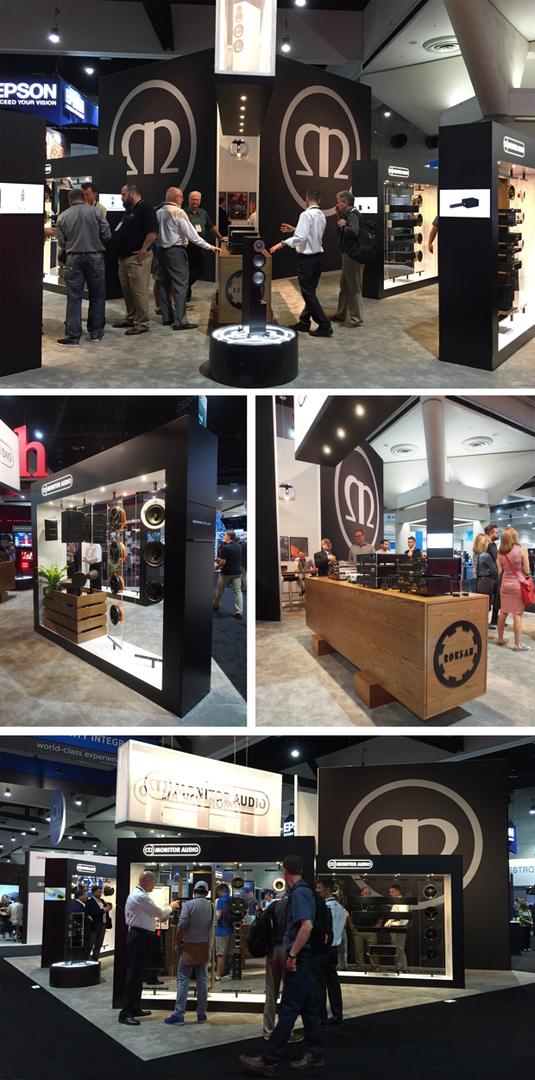
MONITOR AUDIO LAUNCHES NEW CUSTOM INSTALL PRODUCTS AT CEDIA 2017

Monitor Audio is delighted to showcase their new custom install ranges for the first time at this year’s CEDIA show in San Diego. The new speakers and amplifiers benefit from Monitor Audio’s forty years of audio design expertise. 

The flush-fit In-Ceiling CF230 speaker delivers beautifully realistic sound from an ultra-discreet profile, whilst the ICS-8 In-Ceiling Subwoofer will deliver all the bass you’ll ever need. The three new super-slim In-Wall Speakers, WSS130, 230 and 430, demonstrate how Monitor Audio’s legendary sound can be delivered through a thin profile. 

All the audio is powered by five new Installation Amplifiers: IA150-2, IA60-12, IA200-2C, IA800-2C and IA150-8C. 

Monitor Audio is also launching their new Custom Install Product Guide at CEDIA. An interactive version is available upon request. 

Monitor Audio is a wholly British owned and managed loudspeaker designer and manufacturer. Since 1972 it has been at the leading edge of loudspeaker design and technology, perfecting the implementation of metal drivers. It is renowned for exemplary speaker cabinet construction and finish. 

Contact: 

Angela Brown: 07975 907899 Matthew Tasker: 07791 380267 

[email protected] [email protected] 

Phison A2.12 stereo power amplifier

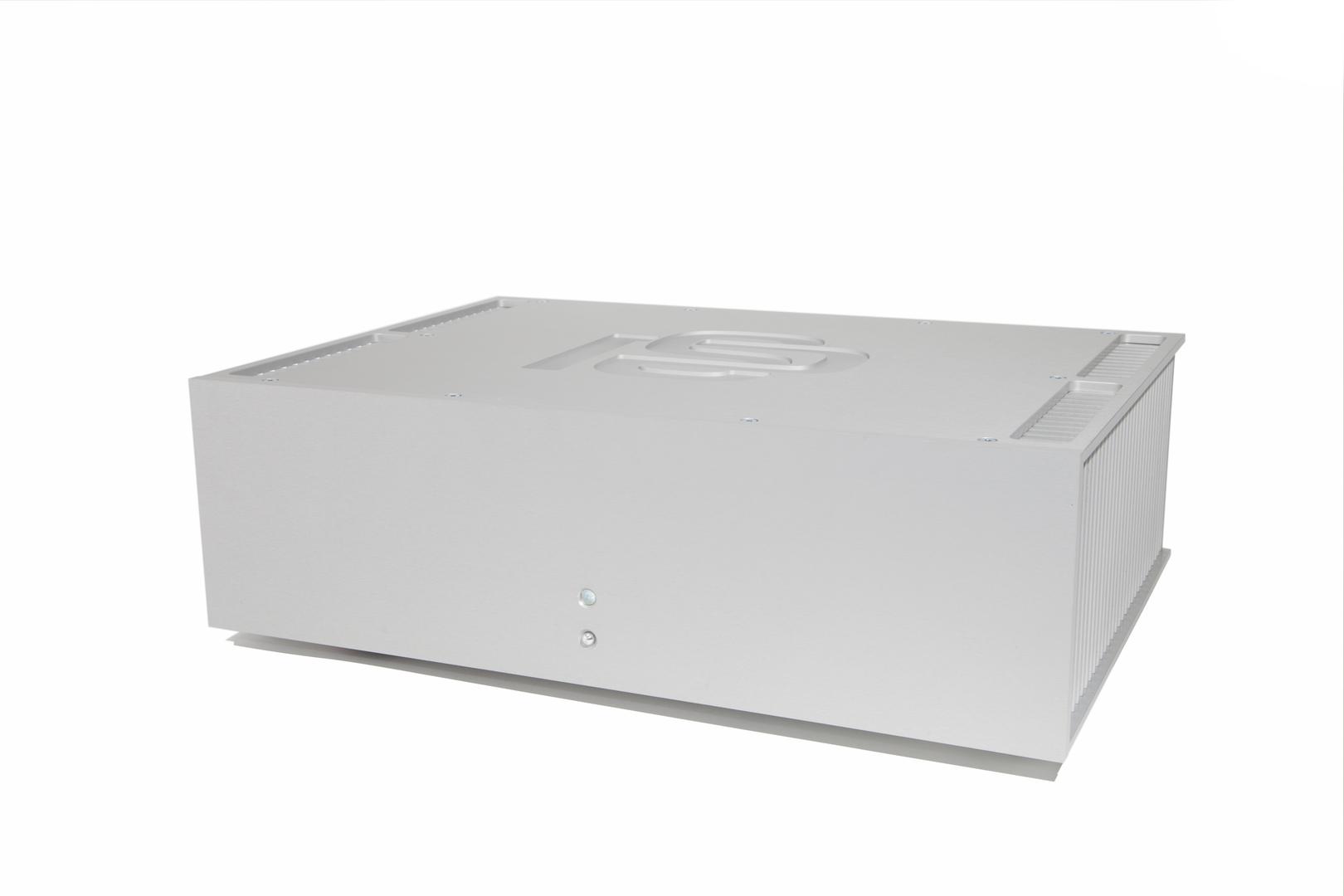
It’s pronounced like ‘bison’ because it’s a combination of the founder’s forenames; Philip and Sonny, and they’re Danes. But you can tell that from the understated elegance of the Phison design, of course. There are many aluminium blocks in the world of high-end power amps, but this one is that bit more precise and compact than most. It is, however, no lighter. The size makes you think the A2.120 shouldn’t be too much of a brute, but 28kg is heavy whatever size it comes in.

Phison co-founder, Sonny Andersen, started out making electronics, for himself but eventually contacted local high-end company Raidho where he helped to build what would become the Aavik power amplifier. But that was not before he got into making electronics on an OEM basis for the audio and logistics world. So it was perhaps inevitable that Sonny would start building his own amplifiers on a commercial level, and this started with the Phison PD2 balanced preamplifier, which uses discrete modules that are created in-house. This preamp can be a line stage alone or have a DAC and/or phono stage onboard, and it can be operated with either a Phison handset or an Apple TV remote, an inexpensive but attractive alternative.

The A2.120 is so-called because it has two channels of 120 Watts (8 Ohms, 220W/4 Ohms) in its matte anodised, clean lined casework. The weight is accounted for by two power transformers, but these are not used in a dual mono configuration because Sonny wanted to be able to bridge the output (delivering 300 Watts into 8 Ohms) and separate power supplies can’t produce so much power. The A2.120 is built around the same gain stage as the Phison preamp, with a current feedback module preceded by a voltage feedback stage that sets the gain. The output stage has 14 bipolar transistors per channel so as to cope with the demand when the amplifier is bridged, and the gain module incorporates both JFETs and bipolar devices.

The power supply as you may have guessed is a linear type, hence the substantial transformers. Phison experimented with switch-mode supplies, but came to the conclusion that the company could get better bass performance with a more traditional approach. Which is odd because my own experience is that the limitations of SMPS are usually more obvious in the treble, but implementation is everything with audio circuits. Here the bandwidth has been restricted with a simple low pass filter to 330kHz to avoid instability, but notionally at least, the design could be used at up to 800kHz.


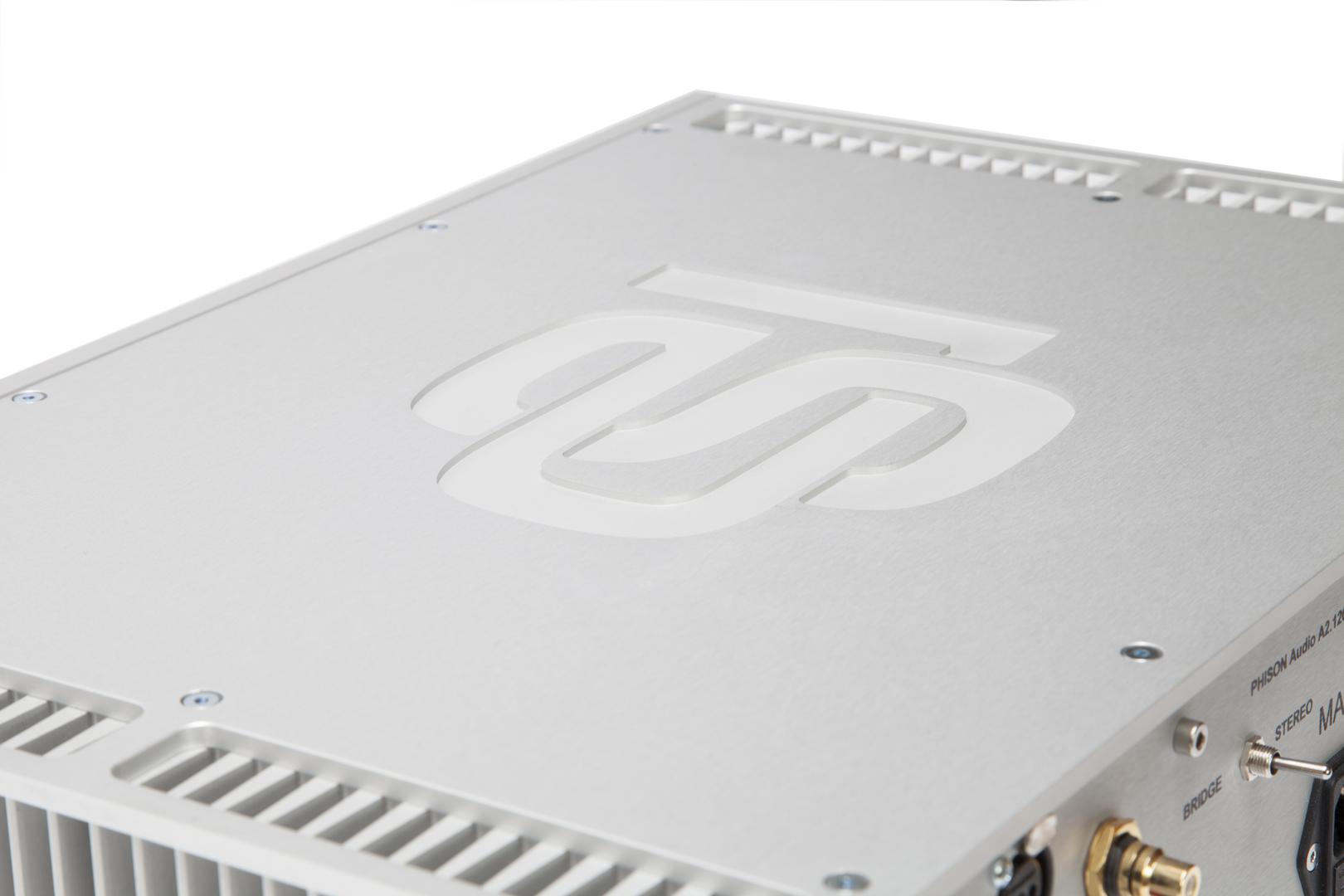
Connections are nearly as spare as the design of the case, but do include both RCA single-ended and XLR balanced inputs alongside good quality binding posts for speaker cables. I like the simple on/off button at the front with its unusually bright indicator; there’s none of the electronic delays or relay clicking of more complex designs. Build quality is very high; the Phison case is really nicely put together and that deep laser cut logo in the lid looks the part.

I kicked off listening by connecting the Phison to my regular Townshend Allegri passive preamp and a pair of visiting speakers in the shape of Q-Acoustics excellent new Concept 500 floorstanders. This combination produced an uncannily open, transparent, but slightly bright sound. I suspect that even though the amp had been on for an hour or two it still wasn’t warmed up because this effect was less obvious with subsequent speakers. Nonetheless, from the outset, it had a freshness that was totally inspiring and made my admittedly more affordable ATC P1 seem a little earthbound. The speakers seemed to disappear and leave a very spirited yet clean and controlled musical performance in their place. I wasn’t so surprised by this with a good hi-res recording like Vivladi’s Belleza Crudel [Tone Wik, Alexandra Opsahi, 2L]. but it did give me new respect for Tom Waits ‘In Shades’ [Heart Attack & Vine, Ayslum]. This was revealed to have room filling imaging and a great guitar sound with lots of reverb thanks to excellent leading edge definition without the slightest hint of grain. It made this track pretty well impossible to turn off despite its familiarity.

The Phison doesn’t achieve its fast, open, and clear sound by ignoring the bass. When some decent low end comes along, it’s delivered with all due weight and gravitas. The bass is both full and tightly controlled as Esperanza Spalding’s ‘Judas’ made clear [Emily’s D+Evolution, HD Tracks]. This track also made following all the instruments and voices easy because separation is first class. Dynamics are also very well served, as evidenced when playing some nimble piano, where the difference in weighting between various notes is as good an indicator of dynamic subtlety as a big orchestral transient (the Phison amp is good with orchestral scale, too).

The great thing about a quick amplifier is that it gives the impression of having all the time in the world to present the musical picture; this is because it’s not blurring the detail and can give each note the weight, shape, and tonal character it requires. This works with baroque and boogie, I put on ZZ Top’s ‘Enjoy And Get It On’ [Tejas, Warner Bros] as I am wont to do and got thoroughly carried away with the proceedings. The somewhat more contemporary and rather more accurately captured ‘Too Many Misses’ [Doug MacLeod Exactly Like This, Reference Recordings] comes through with what sounds like all of its natural reverb intact, producing as a consequence a soundstage that’s at least as deep as it is wide, and populated by very convincing instruments and voice.

Another big sound is produced by Ryan Adams and the Cardinal’s live version of ‘Hallelujah’. Here you get the atmosphere of the auditorium, guitar that cuts the air like a knife, and lead vocal that’s controlled and precise at a good approximation of live volume. Put on something less plush like many of the modern ‘bedroom’ recordings made by less well supported artists and the limitations of affordable digital recording are exposed. This is take no prisoners transparency, so if you’re into mainstream pop or deliberately grungy recordings it might not be the ticket.

Phison deliberately doesn’t go for that ‘polish’ or ‘sheen’ you get with some high-end power amplifiers. Instead, Sonny seems to be aiming for maximum clarity and for that I salute him: how are you ever going to get to audio nirvana with false idols? After all, ‘fidelity’ to the original recording is an important part of what should represent ‘high fidelity’.

With the PMC Fact.8 in its grip the Phison once again delivered an absorbing sound; this speaker has a balance similar to that of the Phison and the combination produced remarkably well defined imaging and ultra quiet backgrounds. Listening to the Henry Threadgill Sextett’s ‘Bermuda Blues’ [You Know The Number, Novus]reminded me once again just how storming a performance this is. The performance just opens up and lets the sound expand into the room, the power and drive of two drummers is something else, and the sense of being there totally convincing.


You get the sense that there is absolutely no fat on the bone, but in all the right ways. In other words, rather than being ‘lean’, the amplifier does not embellish the signal with a bit of its own colour in an effort to produce a particular sound. It seems to merely amplify in the ‘straight wire with gain’ style that should be the goal, but all too often gets perverted by taste. This much was made clear when I upped the speaker ante to a pair of Bowers & Wilkins 803 D3 floorstanders; these showed that the Phison has both speed and authority, with extremely solid bass and deep imaging, and all the sounds on the recording had complete integrity. This speaker is nimble, revealing, and very capable in the low end with the A2.120 at the end of its cables, producing music that was as emotionally engaging as it was precise in its presentation.

The Phison A2.120 is clearly not a me-too product. It’s a high performance power amplifier with unusually high transparency, lots of energy, and enough power to control most loudspeakers. As a consequence, it’s not for those who are seeking out a rose-tinted, plush, soft-edged, and euphonic performance. Instead, the A2.120 is a very revealing piece of kit, and shouldn’t that be exactly what we want from the best audio?

TECHNICAL SPECIFICATIONS

  • Type: Solid state bridgeable, stereo power amplifier.
  • Valve complement: N/A
  • Analogue inputs: One pair single ended (via RCA jacks), one pair balanced (via XLR)
  • Analogue outputs: One pair of speaker taps (via 5-way binding posts)
  • Power output: 120Wpc @ 8 Ohms, 220Wpc @ 4 Ohms, 300Wpc bridged into 8 Ohms
  • Bandwidth: 1Hz–330kHz
  • Sensitivity: Not specified
  • Distortion: Not specified
  • Signal to Noise Ratio: Not specified
  • Dimensions (H×W×D): 181 × 483 × 476mm
  • Weight: 28kg
  • Price: €9,450 (c. £7,995)

Manufacturer: Phison Audio

Tel: +45 23362644

URL: www.phisonaudio.dk

UK retailer: Purité Audio

Tel: 0208 815 5878

URL: www.puriteaudio.co.uk

Back to reviews

Read more Phison Audio reviews here

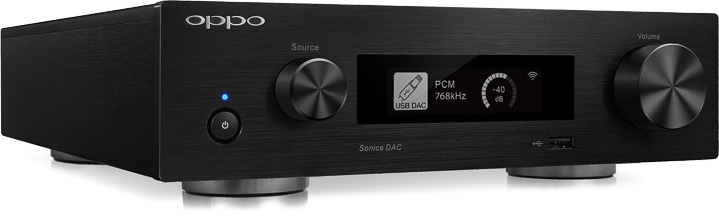
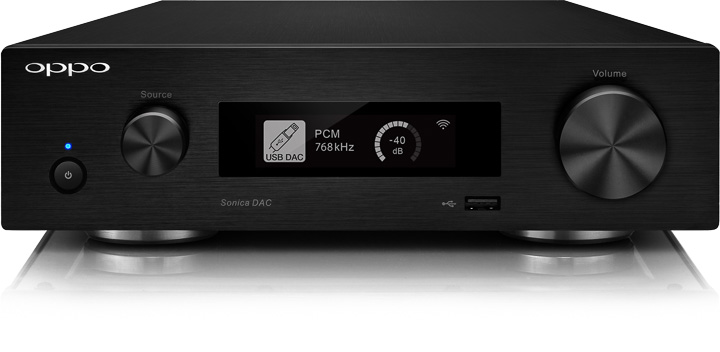
Oppo Digital Sonica DAC

Many enthusiasts recognise Oppo Digital as a manufacturer of overachieving universal disc players, high performance planar magnetic headphones, and related personal audio electronics. But, over the past year or two, Oppo has begun to explore the wireless audio product category, first through its Sonica-series multi-room wireless speaker systems and now through the audiophile-grade Sonica DAC/network streamer, which is the subject of this review.

I first encountered the Sonica DAC at a trade show late last year, where I had a chance to speak with Oppo’s Chief Technology Officer Jason Liao about the unit. Liao, who is often modest to a fault, carefully outlined the elaborate features and functions of the Sonica DAC and then said, very softly, “I think it’s the best sounding source component Oppo has ever built,” which was saying a mouthful, considering the source. I decided then and there that, pending Editor Sircom’s approval, Hi-Fi+ would have to review the unit once it entered full production to see what it could do.

In trying to understand the Sonica DAC’s capabilities, it helps to start by looking at its primary function, which is to serve as a versatile, audiophile-grade DAC. To fill that brief, the Sonica DAC is based upon ESS Technology’s ES9038PRO 32-bit HyperStream DAC device, which is the flagship of the ESS SABRE PRO-series range and is said to offer a stonking 140dB of dynamic range. The DAC’s USB input supports PCM audio from 44.1 kHz up to 768 kHz with word lengths of 16, 24, or 32-bits; it also converts DSD 64, 128, and 256 in DoP (DSD over PCM) or native format, and can even handle DSD512 in native format. Additionally, the DAC provides connections for USB storage devices, coaxial and optical (Toslink) S/PDIF inputs, plus a host of network streaming inputs, which we will touch upon in a moment. The S/PDIF inputs, network inputs, and USB storage device inputs, support PCM files captured at 44.1 kHz to 192 kHz rates with bit depths of 16 to 24-bits, plus DSD 64 files.

In the interest of achieving high signal purity and low noise, the Sonica DAC provides fully balanced analogue circuitry from end to end (that is, it preserves a balanced circuit topology all the way from the DAC chip on through to the XLR connector-equipped balanced outputs on the rear panel). In fact, Oppo stresses that even the single-ended, RCA jack-equipped outputs rely upon an output signal that is, “converted from the balanced output.” Oppo claims that its balanced circuit design, “provides better common-mode noise rejections, improves signal quality, and results in better channel separation by eliminating the common ground return path.”

Feeding the Sonica’s digital and analogue audio sections is a beefy power supply based upon what Oppo describes as, “a massive toroidal transformer, which offers superior efficiency and significantly lower exterior magnetic field interference compared to traditional laminated steel core transformers.” This helps explain, in part, the fact that while the Sonica DAC is not a physically large unit, it nevertheless tips the scales at a hefty 4.7 kg (a weight exceeding that of some of Oppo’s earlier generation universal disk players). Suffice it to say that when you lift the Sonica DAC from its box, it presents itself with an impressive quality of heft that suggests it is a substantial component in more ways than one.


If offered purely as a conventional digital-to-analogue-converter, I suspect Oppo’s Sonica DAC would win acclaim as a product offering exceptional sound quality and uncommon value for money. But, the simple fact of the matter is that the Sonica is much more than just a conventional DAC, because it is also a full-featured and elegant network streamer and digital audio player. Specifically, the Sonica DAC is capable of connecting to its owner’s home network—either via Ethernet or Wi-Fi, and then of connecting to any DLNA servers, network-attached USB storage devices, or streaming service applications such as Spotify or Tidal that the owner may have in place. Moreover, users can connect USB storage devices directly to the Sonica DAC, and play files from those devices under the control of a free app available from Oppo. Finally, the Sonica DAC offers Bluetooth 4.1 and Apple Airplay connectivity, meaning it can stream wireless audio content from iOS or Android smartphones, tablets, etc.

What makes all this streaming content relatively easy to access is Oppo’s free, clever, and easy-to-use Sonica app, which is offered in Apple iOS or Android versions. After downloading and installing the Sonica app on the control device of choice, one simply verifies that the device is connected to the home network and then walks through a simple, straightforward set-up procedure through which the app first ‘discovers’ the Sonica DAC, then configures the DAC for connection to the home network, then seeks out available network storage resources and/or USB storage devices connected to the DAC itself, and finally enables playback of files from those resources through the app’s user interface. The Sonica app is not as full featured as similar apps I have seen from AURALiC, Naim, or Roon, but it is blessedly simple to install and to use, meaning you won’t need an advanced degree in Computer Science to make the music happen. (In an overly complex world, simplicity can be a great gift, wouldn’t you say?)

Looking to put the Sonica DAC through its paces, I connected it to the analogue inputs of the remarkable and very revealing new Sonoma Acoustics Model One Electrostatic Headphone system. This not only gave me the opportunity to evaluate the sonic performance of the Sonica DAC through an extremely high-resolution transducer, but also enabled me to compare it with the high performance DAC built into the Sonoma system’s electrostatic headphone amplifier.

If I had to sum up the Sonica DAC’s sound in just one word, the word I would choose is “masterful”—a word not often associated with sub-£1,000 DAC/streamers. (Come to think of it, there really aren’t very many sub-£1,000 DAC/streamers on the market, are there?) I call the sound masterful because, in ways large and small, dramatic and subtle, the Sonica DAC tackles all kinds of musical material with a sophisticated, extremely revealing, and sure-handed touch. Yet unlike components so fixated on ‘detail retrieval’ that they lose the main musical thread, the Sonica always retains a graceful, appropriate, and authentic touch of musical ‘sweetness’ (where the recording permits this). I am not speaking about sweetness of the cloying or syrupy kind, but rather about the sort of sweetness that exposes the timbral differences between classical guitars versus steel-string guitars, or that can show the at times biting attack of brass instruments while also revealing their underlying burnished metallic glow. The point is that the Sonica DAC manages to provide rich (but not artificially enriched) tonal colours, cleanly delineated (but not ‘edge-enhanced’) transient sounds, and an ability to dive deep to tease out useful bits of low-level musical detail, yet without sounding cold, glassy, or analytical.

Some great examples of these qualities in play come in the form of Miles Davis’ live performance of Cyndi Lauper’s ‘Time After Time’ as captured on Live Around the World [Warner Bros., 16/44.1]. The track, of course, features Davis’ trumpet played at everything from whisper-quiet to quite full-throated levels and in each instance the timbres of the horn, as rendered through the Sonica DAC, sounded spot on—especially in moments where Davis inserts transitory, high-energy trumpet commentary on the song’s main melody. But another fascinating element involved the sheer wealth of low-level stage sounds captured in the recording (for instance, a moment where an onstage amplifier emits a brief ‘squawk’, or where extremely delicate percussion accent notes are supplied by members of Davis’ band)—all of which are adroitly rendered by the Oppo. Such details not only create a wide, deep soundstage, but also give the track its unmistakable you-are-there live feel.


But turning to a much earlier recording (from the early 1970’s), I also tried Miles’ Davis’ Tribute to Jack Johnson [Columbia, DSD64], and was struck again by the Oppo’s desirable combination of tonal richness, transient acuity, and effortless detail. The nearly half-hour long track ‘Right Off’ leverages profound grooves created by bassist Michael Henderson and percussionist Billy Cobham, and as I listened to their work unfold it occurred to me that I had never before heard Henderson’s bass sound so earthy, punchy, and agile as it did through the Oppo, nor had I heard the brisk urgency of Cobham’s intricate cymbal work rendered with such incisive (yet still smooth-sounding) clarity and transient speed. Again and again, then, I found myself wanting to compare the Sonica DAC (in favourable ways) with DACs several times its price.

At the end of the day, the best reason to consider Oppo’s Sonica DAC is because of its masterful sound, which honestly would do a far more expensive component proud. But the Sonica’s extreme versatility and multi-faceted streaming capabilities take things to an even higher level, making the Sonica a ‘DAC for all seasons and reasons’. With a selling price a tick under £800, the Sonica DAC/streamer is not just an audiophile gem, but also a legitimate bargain.

TECHNICAL SPECIFICATIONS

  • Type: Solid-state high-resolution PCM, DXD, and DSD‑capable digital-to-analogue converter with wireless and network streaming capabilities
  • Digital Inputs: One USB (B-type) for digital music playback, two USB (A-type) port for connecting USB storage devices), one coaxial S/PDIF, one optical S/PDIF (Toslink), one Ethernet port (via RJ-45 connector), Bluetooth 4.1, Wi-Fi 802.11.a/b/g/n/ac
  • Analogue Input: One auxiliary stereo RCA pair
  • Analogue Outputs: Stereo single-ended RCA, stereo balanced XLR
  • DAC Resolution/Supported Digital Formats:
  • USB: Stereo PCM and Stereo DSD (DoP v1.1 or native).All PCM from 44.1 kHz to 768 kHz with word lengths of 16, 24, or 32-bits/s to 384KS/s with word lengths up to 32-bits. DSD 64, DSD 128, DSD 256. DSD512 native mode only)
  • Coaxial and Optical S/PDIF: Stereo PCM and Stereo DSD (DoP v1.1 or native), All PCM from 44.1 kHz to 192kHz with word lengths of 16 or 24-bits, DSD 64
  • USB (Type A) Storage/Supported Digital Formats:
  • USB: 2.0 mass storage only
  • Audio formats: AAC, AIF, AIFC, AIFF, APE, FLAC, M4A, M4A (Apple Lossless), ALAC, OGG, WAV, WMA, DSF, DFF
  • Sample rates/formats: PCM up to 192 kHz/24-bit, DSD 64
  • Frequency Response: 20Hz–20kHz, +0/–0.04dB, 20Hz–160kHz (+0/-2.4dB)
  • Distortion (THD + Noise): < –115dB
  • Signal-to-Noise Ratio (A-weighted) and Dynamic Range: > 120dB
  • Output Voltage: 4 ± 0.4Vrms via XLR output, 2 ± 0.2Vrms via single-ended outputs.
  • User Interface: Oppo Sonica App (available for iOS and Android devices), front panel OLED display
  • Dimensions (H×W×D): 76 × 254 × 360mm
  • Weight: 4.7kg
  • Price: £799

Manufacturer: Oppo Digital, Inc.

URL: www.oppodigital.com

Tel: +1 (650) 961-1118

UK Distributor: Oppo BD UK, Ltd.

URL: www.oppo-bluray.co.uk

Tel. (UK): 0845 060 9395, (Europe): +44 (0)1603 402240

Back to reviews

Read more Oppo reviews here

Arcam rPhono phono stage

Arcam’s rSeries of components genuinely extend the functionality of both Arcam’s product line, and electronics in general. Few companies (only Musical Fidelity and PS Audio spring to mind) produce a similarly extensive line of truly useful audio components, as they all combine a refreshing blend of versatily, affordability, and a complete absence of BS. The rPhono is one of the latest models, and it’s a damn fine inclusion to the audio pantheon.

As the name suggests, the rPhono is a standalone phono stage. It’s RIAA only, but a series of rear-mounted DIP switches offer a surprising amount of flexibility in cartridge options. Adjustable impedance, capacitance, and gain afford the rPhono far greater choice in MM and MC cartridge selection than its bluff exterior and £399 price tag would ever suggest. There is also an inclusion that has all but disappeared from modern phono equalisers, but its inclusion is gratefully received: the rumble filter. While the modern turntable is now more resistant to rumble than ever before (Crosley notwithstanding), the variable quality control of some vinyl pressing plants means finding an LP without some degree of warp can be difficult, and those records that aren’t so warped as to require replacement can still undermine the performance of a good audio system, and a rumble filter is a lot less discomforting that watching your bass drivers flap about. Unlike LP replay systems from a couple of generations ago, this rumble filter is hidden away on a rear-mounted DIP switch, and is not intended as a button you action as and when the mood (or the flapping cones) take you. Front or rear mounted, there will be many who welcome the reintroduction of the rumble filter.

Choice of cartridge notwithstanding, the rPhono is simplicity itself to setup. It runs from a 12V, 2W wall-wart power supply (or can be fed from modern Arcam amps that come with an outlet). There is no need to bother hunting for aftermarket power supplies, because Arcam did sterling work ensuring the power feed is well isolated from the equaliser electronics. Even those pesky DIP switches and the gain adjustment are taken care of, thanks to a supplied tool that sits on the underside of the black-finished aluminium case. The rPhono also comes with a pair of phono-phono cables to connect the phono stage to the amp, but I suspect in most cases, these will stay in the box and something better gets put to use. Nevertheless, it’s a measure of Arcam’s no-nonsense approach that free cables are supplied in the box. Similarly, running in, Arcam-style involves taking the rPhono out of the box, and plugging it in. Does it get better over time… yes, a bit, but not enough to write lengthy tomes about burning in or conditioning. Once you have set your cartridge loading to suit, and plugged everything together, the rPhono is good to go. Minimalism reigns supreme though; just a logo on the top panel and a green LED bar on the front.


Then you plug it in, turn the amp to the phono stage, and realise why the whole ‘Excellence for all’ subtext of this issue applies perfectly here. If there is a better example of a high-end product in all but price tag, I have yet to hear it. The rPhono is the perfect example of a high-end phono preamplifier in every respect, bar two: put it in a big, heavy box with an inch-thick front panel, and make it cost £3,990 and it would tick those boxes, too. You’d need to make no changes to the performance, though. OK, so in reality compared to the very top end, you lose something of the last degree of texture, depth, and timbral shading, but given the quality of the product and just how much more you need to spend to get something substantially better, the rPhono is doing a lot right, and not a lot wrong.

The mark of a good phono stage is two-fold. First, can it cope with very demanding loads without struggling, and second just how good a cartridge would you use with the phono stage. In the first case, the Arcam’s low noise and flexibility of installation almost made it pass the extremely unfair Ortofon MC7500 test: this now historic cartridge has so low an output, people have speculated whether it’s a moving coil or simply a moving hoop of wire. Nevertheless, the cartridge’s 0.15mV output is more of a test of the noise floor of a phono stage at this time, and the rPhono acquits itself surprisingly well. It’s patently a well-engineered design because the noise floor is unobtrusive even faced with an implausible load. OK, so the rPhone lacked enough gain here, but in the real world this would never be a problem, and what you have is a whisper-quiet background from the phono stage and a fine gain-structure that benefits both the majority of cartridges and most line-level preamplifiers or integrated amps. Test. Passed. Easily. Most of the rest of the listening was divided between my VPI Prime with a Lyra Delos cartridge and the Roksan Radius/Nima/Corus Silver package tested in this issue.

The next test was partnering the rPhono with more realistic loads, but cartridges far beyond the scope of a £400 phono stage. And it’s here where the Arcam rPhono really showed what it was made of. What separates great cartridges from the merely ‘good’ is their character; some cartridges are more sonorous, some more harmonically structured, some have a greater sense of instrument timbre, and all of these subtle differences in performance require a high-grade phono stage. Using an average phono stage with a good cartridge is a waste of a good cartridge, but the rPhono lets that cartridge character shine through. This is not simply down to accurate cartridge loading (although this helps), the inherent transparency and openness of the rPhono simply gets out of the way of the cartridge, to let the music pass untrammelled and unsullied. Put another way, if you’ve ever wondered why some people like Lyra cartridges, some prefer Dynavectors, some choose Kiseki models, and some go for Ortofon, you haven’t heard what they can do through a good phono stage, and the Arcam rPhono represents the most cost-effective way of getting a good phono stage I currently know of.

How this comes through is by allowing you to play all kinds of music through the system, constrained only by the tonal and timbral balance of the cartridge itself (and how it interacts with turntable and arm). So, you play a complex piece of operatic music, such as Handel’s Belshazzar [Turnabout three LP set from 1964] and the precision of the stereo image and its ability to separate singers, choir, and orchestra all bespeaks of a fine cartridge well reproduced. The same happened across the full pomp of the whole of Genesis’ Selling England by the Pound [Virgin, EMI 100th Anniversary pressing], and even managed to extract the fun groove out of DJ Krush’s Turntabalized album [Mo Wax], without being drowned in mid-1990s Trip Hop excess. And when it comes to extracting the groove from the groove, few examples work better than listening to all of Funkadelic’s One Nation Under A Groove LP [Warner]. Perhaps this is the ultimate expression of why the rPhono is a great phono stage (not just at the money, it’s a great phono stage anyway); individual tracks came and went, and quickly blurred into whole albums (in fact, in all these cases, multiple albums). I’m not a big listener to early 1970s Genesis, as my Pretensionometer tends to go into the red zone, but the Arcam rPhono made me want to listen to more, and that doesn’t often happen at this price point.


We’re living in a golden age of good phono stages that deliver high-end performance without the attendant hyperbolic prices. Models from Cyrus and Vertere are good enough to take on challengers costing £10,000, but now Arcam does the same for under £400. Now it’s time for those five words that send audiophile manufacturers running for cover: The Law of Diminishing Returns. Some say that law doesn’t exist in audio, and especially not in the vinyl world, but in my view, when it comes to phono stages, the point of inflexion begins with the Arcam rPhono. You need to spend a lot more to get a little better performance.

TECHNICAL SPECIFICATIONS

  • Type: MM/MC phono stage
  • Frequency response, Rumble filter OFF: 20Hz–50kHz +/– 0.2dB, –3dB at 7Hz
  • Frequency response, Rumble filter ON: 45Hz–50kHz +/–0.2dB, –3dB at 20Hz, –13dB at 10Hz
  • THD+N (at 1kHz, 5V Out), MC input, 30dB gain: 0.005%
  • THD+N (at 1kHz, 5V Out), MM input, 30dB gain: 0.0015%
  • System gain, MC input:
    60, 70, 80, or 82dB
  • System gain, MM input:
    30, 40, 50, or 52dB
  • Input impedance, MC input:
    50-550Ω + 1nF
  • Input impedance, MM input:
    47kΩ + 120, 220, 340 or 440pF
  • Equivalent noise (A-wgt, 40dB MM gain), MC input: 0.06µV RMS
  • Equivalent noise (A-wgt, 40dB MM gain), MM input: 0.5µV RMS
  • Output level, Nominal: 0.5V RMS
  • Output level, Maximum: 6V RMS
  • Power requirements (max):
    12V DC, 2.0A
  • Dimensions (W×H×D): 194 × 44 × 124mm
  • Weight: 1.1kg
  • Price: £399

Manufactured by: Arcam

URL: www.arcam.co.uk

Tel: +4(0)1223 203200

Back to reviews

Read more Arcam reviews here

Burmester Audiosysteme B18 floorstanding loudspeaker

Outside of its native Germany, Burmester is perhaps best known for its audio electronics and, more recently, its automotive audio systems inside some of the world’s best cars. Although the company has made loudspeakers for decades, and some of those loudspeakers were highly respected, they were frequently dismissed by those who thought one brand is never able to perform all audio tasks, and were somewhat harder to justify in smaller listening spaces due to their demanding room size requirements.

Recently, however, those objections are fast being overturned, and it’s thanks to loudspeakers like the B18. In part, one of the reasons why the B18 is such an agent of change is down to size and price. Electronics, even designs as ‘statement’ as Burmester, are relatively easy to slot into most European living spaces. Even the flagship 909 Mk 5 power amplifier is not much larger than a beer fridge that can stand close to the wall (the beer fridge should join the Olympic-sized swimming pool, the double decker bus, and Wales as slightly bizarre units of measurements). Loudspeakers, on the other hand, demand and take up a lot of space, and the bigger the loudspeaker, the more demanding their room requirements. Burmester traditionally makes very large loudspeakers (like the B100 and B80 Mk 2) that are never going to fit into a small, elegant apartment in Berlin, Paris, or London. Models like the B18, and the B10 before it, challenge that perception head on, by being smaller, more attainable loudspeakers.

The B10 was mentioned on purpose, because the standmount – Burmester’s first – delivered much of what ultimately trickled up into the B18. OK, so the front baffle of the B10 is not the midrange and treble panel of the B18, but they are close enough to mean they should never marry.

The B18 is a two and a half way floorstander. It’s rear ported, so placement close to the rear wall is not advised, but the loudspeaker is provided with a pair of foam bungs, and there is a bass control to tailor the loudspeaker to a surprisingly large number of rooms, both in terms of room position and ultimate bass control.

It seems Burmester might have learned quite a lot from its automotive division, too. The aluminium-MDF sandwich front baffle is there to significantly reduce cabinet resonance: this follows the concepts investigated in the B10, but the same idea makes a lot of sense when you consider trying to get good sound from the inside of a car. Alongside some heavy-duty DSP, the interior of a car is all about resonance control and finding ways to keep that resonance at bay. FEM analysis of the cabinet helps, and the resultant cabinet is exceptionally torsion-resistant. That doesn’t just make it corner better in the wet; it helps reduce internal resonance simply by making a more solid enclosure. All without having to adopt some wild styling that would make it harder to sell to the more conservative buyers that respect the Burmester brand.


Drivers, too, have come in for some heavy analysis. Again like the B10, the B18 eschews Burmester’s preferred Heil-style Air Motion Transformer ribbon tweeter, for a bespoke ring radiator tweeter. This gives a lot of the resolution of an AMT, without the Heil driver’s greater cost of manufacture and its more demanding demeanour. Ring radiator tweeters continue to be popular with many brands, because they give much of the clarity and extension of such ribbons, without the excessive brightness of metal cones. Partner this unit with low and mid fibreglass 170mm units derived from the B10, and this is an accessible design for the real-world user, not some audiophile dream that becomes a nightmare outside of the man cave.

The B18 demands and deserves some grip from its amplifier partner. Although it’s not simply the end piece for Burmester systems, it’s both a natural partner and the choice of listening instrument for the speaker designers, so the B18 is best used with solid-state amplifier designs with good current delivery and a good damping factor. Used with an ill controlled valve power amplifier that is pathologically afraid of power delivery and you get ill-controlled bass where the sense of bloat is hard to control. That is not the fault of the B18, however, because once you put a good solid-state amp to its speaker terminals, it responds to the extra grip by throwing out a lot of clean detail across the range, and a wide, expansive soundstage. It goes from ‘flap’ to ‘snap’ in seconds, and the results when suitably partnered, are excellent.

The loudspeaker settles in quickly and easily. Straight out of the box, the sound is somewhat ‘boom-tizz’, with a clear treble, a healthy sounding low-end ‘thwack’, and not much more. That goes away quickly though, as the midrange seems to fill out at speed. A couple of hours into listening, that sense of ‘boom-tizz’ all but evaporated. There remained a very slight enhancement of the upper bass that didn’t completely disappear, but the effect is mild and certainly not troubling. If anything, it’s a measure of Burmester getting its potential clients right, because this help in the upper bass is perfect to make small to medium sized rooms sound big.

I found the B18 a very easy loudspeaker to live with. It has that great combination of refinement, easy and effortless bass, and unforced dynamic range that lends the speaker to protracted listening sessions. But, alongside this unforced presentation, it has a fine ability to wig out and play really loud!

It’s hard not to play ‘No Sanctuary Here’ by the late Chris Jones [Roadhouses & Automobiles, Stockfisch], because I’ve never been to any Burmester demonstration that didn’t feature this recording. But, it sums up everything that is really good about the B18 in the process. Like the recording, the loudspeaker is extremely detailed, with lots of midrange and treble information on offer. Yet, for all that detail, the overall presentation is far from fatiguing, which accounts for the ability to sit in front of the B18 for hours without complaint (and the ability to hear Chris Jones played 30 times an hour at an audiophile show without a burning desire to throw up). Also, both recording and loudspeaker produce an outstanding sense of imaging and soundstaging, with a visceral, holographic instrument stage, with musicians rooted solidly in place. But perhaps what makes the B18 so attractive is its ability to play music gracefully. I didn’t find myself reaching for classical music too often while listening to the B18, and ultimately ended up kicking myself for the omission. This is an extremely deft transducer for playing Mozart, as it is for playing, er Mastodon.


For all its grace combined with that ability to play at surprisingly loud levels, the B18 is every bit the controlled loudspeaker design. It can go wild – I played ‘Supermassive Black Hole’ by Muse [Black Holes & Revelations, Warners] at levels far louder than I should – but the B18 never seems to trip over itself. There is always a sense of control that isn’t simply self-preservation; the B18 plays music as if you will back off before the loudspeaker begins to struggle. Perhaps this means the B18 is not the last word in beat management, but it never once seems to enforce a rhythmic structure of its own on the music. It’s not that kind of control. Instead, it’s like music with a strong impressario at the helm. A sound of great authority, with only the last octave standing between this speaker and absolute top end audio perfection.

I have to admit that one of my last pieces of information I check before filing copy is the price, because price can be its own bias. As a result, that usually means the price in the specifications box is written as “£xxx”. It also acts as an unconscious guesstimate of just how expensive a product is, in very broad terms. And, thanks to reviewing a lot of products, I’m usually pretty good at that guessing game. For most of the review, I had this loudspeaker down as “£xx,xxx” and had it in my head as being around £12,500, not £7,500. Granted at £12,500 it might represent ‘challenging’ value for money, but not that challenging given the provenance. For £7,500, the B18 floorstander is a real killer, and it’s not simply a product for Burmester owners. Recommended.

TECHNICAL SPECIFICATIONS

  • Type: 2.5-way floorstanding rear-ported loudspeaker
  • Drive units: 1× 25mm ring-radiator tweeter, 170mm glass‑fibre cone midrange, 170mm glass-fibre cone bass unit
  • Impedance: 4Ω
  • Sensitivity (at 2.83V/1m): 88dB
  • Power rating: 120W
  • Frequency response: 42Hz–30kHz (±3dB)
  • Crossover frequencies: 400Hz, 2.3kHz
  • Available in: high gloss white, black , walnut, or makassar finish
  • Dimensions (W×H×D): 20.4 × 105.6 × 39.5cm
  • Weight: 34.8 kg per loudspeaker
  • Price: £7,500 per pair

Manufactured by: Burmester Audiosysteme GmbH

URL: www.burmester.de

Tel: +49 30 787 968 0

Back to reviews

Read more Burmester reviews here

Warwick Acoustics’ Model One electrostatic headphone

Early last year, at the CanJam SoCal event, I met up with a spokesperson from Warwick Audio Technologies—a spin-off from the University of Warwick in Coventry. What Warwick Audio Technologies had created, the gentleman explained, was an entirely new way of making electrostatic headphone drive units. The technology was called HPEL, which stands for High-Precision Electrostatic Laminate. The benefits of HPEL, I was told, included the capability for producing light and highly responsive electrostatic drivers in large multi-layer sheets from which multiple drivers of virtually any desired size or shape could be cut and trimmed. Better still, the HPEL production methodology afforded exceptional driver-to-driver consistency and uniformity—something not easily achieved with conventional electrostatic driver manufacturing techniques.

Warwick Audio Technologies did not intend to manufacture electrostatic headphones, per se, but rather hoped to license its technology to someone who would appreciate the technical and sonic benefits of HPEL and who would be able to bring an HPEL-based headphone system to market in an effective way. That ‘someone’ turned out to be Sonoma Acoustics, a Colorado-based firm led by a group of the same technical visionaries who originally helped launch the high-resolution SACD disc format and its corresponding DSD digital audio file format. The leader and General Manager of Sonoma Acoustics is none other than David Kawakami—a man whose name is, in many high-end audio circles, almost synonymous with high-res audio. For now, Sonoma’s focus is on the successful launch of its newly released Model One electrostatic headphone system ($4,995 or £4,595), which is the subject of this review. But, don’t be surprised if you see the Sonoma Acoustics team launching other kinds of audio products in the future.

The Sonoma Acoustics’ Model One electrostatic headphone system is a turnkey high-resolution music playback system that includes not only an electrostatic headphone (based on Warwick’s HPEL technology), but also a matching, purpose-built electrostatic headphone energiser/DAC/ADC/DSP module. What are the ADC and DSP elements for, you ask? The answer is that the Sonoma team wanted to give the Model One headphones a very specific “modified pseudo-diffuse field” frequency response curve and needed to apply digital signal processing to make this possible. But, they also wanted to make sure that the Model One’s energiser module could accept both digital and analogue inputs. So, the purpose of having an analogue-to-digital converter on board is to allow incoming analogue signals to be digitised on arrival, facilitating downstream DSP processing later on. One point prospective Sonoma buyers should therefore bear in mind is that the Model One headphones work only with their companion energiser/DAC/ADC/DSP module and vice versa.

The Model One headphones use Warwick-developed, low mass, single-ended (as opposed to push-pull) HPEL electrostatic drivers. In essence, each driver consists of a three-layer ‘sandwich’ comprising a stainless steel mesh grid that faces the rear side of the ear cup, a centrally-positioned open-cell insulating spacer made of Formex™ (a type of polypropylene), and then a machine-tensioned, 15μm-thick, flexible film laminate diaphragm that faces the front (or ear) side of the ear cup. The diaphragm is made of bi-axially oriented propylene film (BOPP) with a vapour deposited aluminium surface sealed with a synthetic lacquer. This entire three-layer ‘sandwich’ is then clamped within a cassette-like two-piece protective frame made of 40% glass-filled polyphenylene sulphide (PPS) from which the driver is isolated by precision-made PORON™ microcellular urethane foam gaskets.


Sonoma describes the operation of the driver as follows: “When the audio signal is superimposed on a 1350 V DC bias voltage, the ‘drum-skins’ formed by the flexible ‘front’ grid vibrate, producing sound.” Sonoma emphasizes that, “Unlike a traditional electrostatic panel, the sound you hear from a HPEL does not pass through a grid.” So, gaskets and protective cassette frame aside, there is nothing between the flexible film diaphragm and the wearer’s ears.

The Formex insulating spacer mentioned above, plays a critical role in the driver’s performance, because its open-cell design effectively sub-divides the surface of the flexible diaphragm into a number of small, differently dimensioned, ‘drum skin’-like cells that each have different resonant signatures. Each of the cells operates independently on an acoustical level, although all are driven in parallel on an electrical level. “As a result,” says Sonoma, “the sound from each cell combines in acoustic space, but the independent resonances average out, avoiding any large resonant peak in the audio band (as can happen with a single driver area).” Sonoma claims the driver remains linear to over 60 kHz, and that drivers are matched to within < ± 0.8 dB tolerances.

The Model One headphone, which is very light in weight, features cup housings made of injection-moulded magnesium, with a strong and flexible headband made of Nylon 12, and ear and headband pads covered in Cabretta (sheepskin) leather. Finally, the Model One gets its own custom made signal/bias voltage cable, developed in collaboration between Sonoma and Straight Wire; the cable uses silver-plated, high-purity oxygen free copper conductors, Kevlar® reinforcement threads, and offers extremely low (50 rF/m) capacitance.

The design of the Sonoma Model One energiser/DAC shows every bit as much attention to detail as the headphone does. The energiser features a single-ended, FET-based Class A amplifier capable, says Sonoma, of a “maximum amplitude of 145V (rms), which is superimposed on the 1350V DC bias.” The amp uses FET devices sourced from International Rectifier, plus very high quality passive parts from suppliers such as AVX, Bourns, Vishay, and others. The energiser provides two digital inputs (USB and coaxial S/PDIF) and two analogue inputs (a high level input via RCA jacks and a low level input through a 3.5mm mini-jack).

Powering the unit is an outboard, very high quality switch mode power supply with a fixed frequency switcher that operates at over 85 kHz. This outboard module features extensive internal filtering and is connected to the energiser via a custom made, shielded ‘umbilical cord’ fitted with Switchcraft locking connectors. Internally, the energiser incorporates multiple low-noise, high-current linear regulators, with separate regulators feeding both analogue and digital sections of the energiser, as well as high- and low-current circuit stages. The entire energiser/DAC/ADC/DSP module is housed in an enclosure milled from solid aluminium, complete with 3D wave-shaped cooling vents machined into the energiser’s top surfaces.

Incoming analogue signals are routed via separate, dynamic range-optimised paths though a high precision, 32-bit AKM ADC device, yielding a signal-to-noise ratio of greater than 120dB. Again, analogue signals are converted to digital form so that they—like digital audio inputs to the Model One—can be processed by the module’s 64-bit fixed-point DSP engine, which is implemented via a multi-core XMOS processor.

The DAC section of the Model One is based on two 32-bit stereo ESS Reference DACs, configured to yield a signal-to-noise ratio of 129dB. The DAC’s USB input accepts high-res PCM files at up to 32-bit/384 kHz rates, while also handling DSD64/DSD128 files via DoP (DSD over PCM). The coaxial S/PDIF input, in turn accepts all PCM inputs up to 24-bit/192 kHz. Finally, to keep timing straight, the energiser’s DAC section uses a Crystek ultra-low-phase noise oscillator, which produces just 82 femtoseconds of jitter.

Obviously, the Model One’s energiser/DAC module is geared to serve not only as the ideal powerplant for the Model One headphones, but also as a versatile source component capable of extracting the ‘Nth degree’ of resolution and musical nuance from DSD, PCM, and analogue audio signals.

Now that we’ve discussed the Model One system’s technical highlights, it’s time to ask the big question: How does its sound?

Right off the bat, I found myself won over by the Model One system’s deliberate ‘modified pseudo-diffuse field’ frequency response curve, which to my ears yielded wonderfully natural and uncoloured voicing. Many headphones exhibit distinctive sonic signatures, complete with certain identifiable response peaks and troughs, but the Model One is different; it consistently sounds evenly balanced across the entire audio spectrum and on all types of music. As a result, it is pleasingly ecumenical in its approach to musical genres, giving of its best on everything from Jackson Browne’s full-tilt live recording of Running On Empty [Rhino/Elektra, 24/192] on through to the most delicate passages of the late Beethoven string quartets [Cypress String Quartet, Avie Records, 24/96].


Next, I was struck by the Model One’s ability to deliver full measures of electrostatic performance in terms of resolution and transient agility, yet without any hint of the slight artificial upper midrange and treble ‘sheen’ some electrostatic designs impose. Frankly, many headphone veterans have been conditioned to think this undesirable element of ‘electrostatic sheen’ is the necessary price to be paid for the desirable qualities of ultra-high resolution and lightning-quick transient response, but the Model One shows this just isn’t so. On the contrary, the Model One proves you really can have all the good stuff, sonically speaking, without unwanted sonic side effects.

For a good example of the Model One’s unforced transparency and smooth naturalness in action, listen closely to Alison Krauss’ lead vocals and Jerry Douglas’ vivid Dobro lines on ‘Let Me Touch You For Awhile’ from Krauss + Union Station’s Live [New Rounder, DSD64]. Krauss’ voice famously strives for the ‘high, lonesome sound’ so characteristic of bluegrass music, but that on many loudspeaker and headphone-based systems comes out sounding ‘high, lonesome… and shrill’. But not so with the Model One; it treads that oh-so-fine line between resolution and redemption, showing Krauss’ voice replete with terrific treble clarity and power, but free from blaring edges and pain inducing glare. Similarly, Douglas’ Dobro is known for qualities at once incisive, and yet tinged with a gentle, melancholy tonality. Many headphones reduce the sound of Douglas’ Dobro to a jangly mess, but the Model One lets its sound ring true—a sound that has real presence and the unmistakable ‘twang’ Dobros should have, but without artificial metallic edginess.

Sooner or later, someone will ask, “This audiophile stuff is all well and good, but can the Model One’s boogie?” The answer is that they can—to a point. On the aforementioned Running On Empty, the Model One system did a great job of capturing the sheer energy and gusto of Browne’s touring band from the late 1970’s, complete with soaring lead and backing vocals, scorching guitar lines, potent percussion, and gutsy, propulsive bass licks. Let’s put it this way: If you can listen to the album’s title track and not wind up wanting to play air guitar, drums, or bass, then you’re a more self-controlled listener than I am. On high-energy material, the Model One is helped by an uncanny ability to render dynamic contrasts in a vivid way.
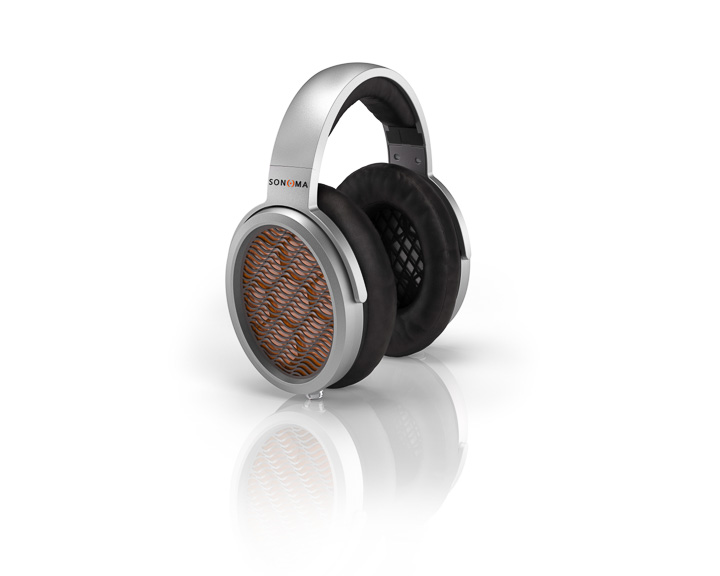
Moreover, the Model One system provides a quality of endlessly (but not oppressively) sharp focus, which tends to make all types of music more engaging. For an example of what I mean by ‘focus’, listen closely to the intersecting timbres of Yo-Yo Ma’s cello, Edgar Meyer’s bass, and Mark O’Connor’s violin on ‘Misty Moonlight Waltz’ from Appalachian Journey [Sony Classical, DSD64]. With the greatest of ease, the Model One delineates the overlapping voices of the three instruments, while at the same time showing how they operate together to form a musical whole greater than the sum of its parts.

Are there limits to what the Model One can do? I can think of two. First, in an absolute sense, the Sonoma system cannot play as loudly some do, which might or might not be a concern for listeners who like to listen at high volumes. Second, under extreme circumstances the system can be overwhelmed temporarily by extremely high amplitude low-bass material, such as the punishing low percussion notes heard near the beginning of ‘O Vazio’ [Jazz Kaleidoscope, Reference Recordings, HDCD], resulting in momentary audible distortion. However, the reality is that such ‘stress-test’ passages are the musical exception and not the rule, meaning that most of the time the Model One system will treat you to first-class musical reproduction on almost any kind of material.


Some headphone systems are ones you admire as reference components, while others are ones you want to spend time with purely for the joy of hearing your favourite music reproduced with power, detail, expressiveness, and nuance. Quite frankly, the Sonoma Acoustics Model One system is both, which is why I would encourage listeners to go hear this impressive system for themselves. Just be forewarned that to hear Sonoma’s Model One system in action is to want one of your very own (or at least that’s been my experience thus far).

TECHNICAL SPECIFICATIONS

  • Model One headphone
  • Type: Circumaural, open-back, electrostatic headphone
  • Drivers: Full-range, low mass, single-ended electrostatic drivers
  • Effective driver area: 3570 mm²
  • Frequency response: 10 Hz–60 kHz
  • Weight: 303 grams (excluding cables)
  • Model One energiser/DAC
  • Type: Class A solid-state electrostatic headphone energiser with built-in DAC, ADC, and DSP functions
  • Inputs: One USB digital input, one coaxial S/PDIF digital input, two stereo analogue inputs (one high-level via RCA jacks, one low-level via 3.5mm mini-socket)
  • Outputs: One electrostatics headphone/bias voltage output jack
  • DAC: Dual mono, 32-bit/384 kHz ESS DACs with balanced outputs
  • ADC: 32-bit/384 kHz AKM multi-channel ADC with balanced input buffers.
  • DSP: 64-bit (double-precision) fixed-point processing at native sample rates, via multi-core XMOS device
  • Digital audio formats supported:
    USB: All PCM inputs up to 32‑bit/384 kHz and DSD via DoP (DSD64/DSD128)
    Coaxial S/PDIF: All PCM inputs up to 24-bit/192 kHz
  • Device Drivers: An XMOS device driver is required when the Model One system is used in Windows environments
  • Frequency response: Bandwidth > 65 kHz
  • Distortion + Noise: < 0.05%
  • Dimensions (H×W×D): 57 × 190 × 290mm
  • Weight: 2.45 kg
  • System Price: £4,595 (UK), $4,995 (US)

Manufacturer: Warwick Acoustics

URL: www.warwickacoustics.com

UK Distributor:

Padood

Tel: +44 (0) 1223 653199

URL: www.padood.com

Back to reviews

Read more Warwick Acoustics reviews here