Up to 37% in savings when you subscribe to hi-fi+
hifi-logo-footer

Begin typing your search above and press return to search. Press Esc to cancel.

Merrill Audio Christine line-stage preamplifier

Bringing really high quality audio into your home requires a number of things to come together. Firstly you need the money, and as I used the term “Really high quality” you are going to need quite a bit of it. But secondly, you are likely to find good use for a really discriminatory ear. This is not as easy as it seems because worthwhile experience is hard to come by. For example, the convenience of modern-day streaming solutions that offer an abundance of reasonably priced options can also provide excellent musical performance if handled with care but, if you want to swim in the deep end of audio’s bottomless pool, that care is a lot more complicated than “plug ‘n’ play”: Caveat Emptor has never had more resonance.

Those who do take time to master the art of discriminating listening may speak with one voice, but almost all of them share a common language. And the first phrase they learn in that language is, “really, really good preamps are thin on the ground.” There are a lot of line-stages and preamplifiers out there, at all prices. But the top-notch ones, the ones that make music sing – I’d be lucky if I could call on maybe a dozen or so first-rate designs. So, when I had the chance to live with the Merrill Christine, I was intrigued because this is an analogue design from a small manufacturer who completely (upon first investigation) understands the wonderful things such a device can bestow upon a music system. As a result, Merrill Audio, with its Christine line-stage and the complimentary Kratos power supply upgrade, attempts to join that select list of line-stages and preamplifiers that actually do what they are supposed to do as part of the whole ‘preamp’ deal.

The Christine is part of a small, but growing, range of amplifier products from US-based Merrill Audio, and it’s named after the wife of founder/designer Merrill Wettasinghe. Christine (the line-stage, not Merrill’s wife) is a two-box design comprising the control unit itself and the Kratos power supply, connected by a dedicated umbilical. Interestingly, Merrill suggests that, due to the design of the Kratos, there is no need for anything other than a bog‑standard mains lead. There is a less uncompromising Cara line preamp, the Jens phono stage, and a trio of Class D power amplifiers; the stereo Taranis, the middle-ground Thor mono amps, and the range-topping 400W Veritas. There is also a range of cables from the company.

The main control unit has a 24-carat gold-plated aluminium fascia and a huge display window. The gloss gold is a matter of taste but, as someone who has been known to moan about displays that are only fully legible when you are standing a few feet away from them, I applaud Christine’s clear communication through what looks bit like a dot-matrix-type of illumination. Now I can see, from my customary listening position, which input is selected and what the level of each channel is set to. In fact, I could probably see it from your customary listening position, even if that’s on the other side of the planet, so large is the read-out. The display is simple, but I like it and it can be switched off if you find it intrusive, or selected to operate only during the duration of a command.

The entire line-stage is fully balanced front to back and I completely understand that some manufacturers are very keen on this. Personally I do wish though that Merrill had included some single-ended connections as not all power amplifiers or source components are endowed with ‘proper’ balanced connections. But this speaks to the Christine’s no-quarter-given approach. Use the line-stage with a pseudo-balanced source or power amplifier and it shows up the absence of a ‘proper’ balanced connection. So, the absence of balanced-single-ended converter cables is well-justified on sonic grounds. This does limit the pile of compatible source components and power amplifiers, although it also makes Merrill’s own designs major front-runners. I typically have a preference for single-ended over balanced in those electronics where both were offered and I could compare them, but in this case, the balanced option was so key to getting the product to deliver on its promises, single-ended was quickly consigned to the dump bin for the duration of the test. Having said that, I totally agree that this comparison is not made on a level playing field and completely respect the choice of those manufacturers who have chosen to go down the fully-balanced route. If your system is largely single-ended then Merrill will happily supply convertors. Less than ideal perhaps, but still effective.

Somewhat uniquely, there are no controls on the Christine itself. Remote commands are made through the well-known Apple unit which, though rather small and easily mislaid, works well enough. It enables any one of the four balanced inputs to be selected and controls the volume and the menus, through which you can set things like minimum and maximum volume or to invert polarity. It is quite comprehensive and there is a truly excellent owner’s manual to guide you through the user-adjustable options. That being said, I spent a day with the remote hidden down the back of the couch, and a few hard buttons on the front panel would have turned the air less blue.


I knew I was going to have the Christine for a couple of months and was able to slot it directly into a range of equipment at a range of price and performance points. One thing that emerged from this process fairly quickly is this is not a line-stage to be taken lightly, and hooked up trivially. This is a top-notch line-stage that demands equally top-notch components up-and-downstream. Any potential limitations along the way and the resolution of the Christine throws them into sharp relief, which is what a good line preamplifier is ultimately supposed to do.

What’s more, it did its job with some aplomb. Obviously it was always going to offer a different view of the music depending on the rest of the system, but this is where the excitement lies in audio reviewing at this level. The music is the reference and not the equipment and the Merrill passed all its early auditions with flying colours before settling into place as if it belonged.

It is quiet. I mean really, really quiet in that rather black, silent way. Bandwidth was excellent too and it carried this effortless feeling of movement, common to all great audio, into whatever it was asked to do. The immediate impact and difference in the presentation was hard to miss. Broad, tall, and deep, and with an unreconstructed feel about it which was both interestingly different and I have to say, enormously attractive. A truly exceptional line-stage should knit the limitless facets of the music together in a self-contained way so each individual part is easily accessible to the ear and yet within the whole musical picture. The best line-stages manage this in a way that no other component does. You can focus on the most minute of dynamic shifts or fall for an exquisitely phrased line of musical text, but it should always be a part of the whole. The Christine passes this test with flying colours and it does so with an ease and lack of system-born tension that makes listening relaxed, confident, and easy.

This is the area that many outputs that operate in the digital domain show their limitations. The best I have heard is the output stage on the dCS Vivaldi, but that is exceptional, and so many are rather deconstructive and miss out describing the instrumental timbre, pitch, and character of instruments, leaving them instead sounding somewhat pinched and over- processed. The same applies to vocals – the words are clear enough, but there is often little sense of the lung power driving them from the mouth, or the human articulation and phrasing that gives them meaning, and an emotional connection beyond mere lyrics. I still prefer the more organic and melodic commentary of a dedicated high-end line-stage, and the Merrill Christine invites the listener to really explore the music. To some, a line-stage is merely a source selector with a gain control: this is the case for the defence, and it’s compelling!

One of the great cliches of audio reviewing is the description of the soundstage as being either 3D or, even more crass, holographic and where the Merrill Christine is concerned, I would really like to avoid such descriptions. But, it is difficult as the way that the music is framed is both these things and it makes the system attractive to listen to. Instruments hang in the air way outside the boundaries of the loudspeakers and those elements of the mix that are central are right there, slap in the middle of the picture, bursting with presence and life. Small changes of depth and positioning either in the acoustic, or the mix, are stunning. I have to say that the way the music is presented through the Merrill is exceptional and can be captivating. If you like this expansive landscape of sound then you are going to love the Christine.

The Christine is an extraordinarily wide-bandwidth design (it’s claimed to have its -3dB point at 1.5MHz and is said to be ruler-flat from DC to 750kHz), and this can prove challenging to some amplifiers. Some wide-bandwidth power amplifiers are – paradoxically – not designed to ‘see’ an equally wide-bandwidth preamp, and the power amplifier can make the amplifier combination seem almost too refined. On the other hand, hook the Christine either to an amplifier with no extended-frequency expectations, or one that is designed to ‘see’ a wide bandwith preamp in place, and the sound is transformed to become hyper clean, extended, and precise. I prefer the Merrill’s approach for its intrinsic honesty, especially as when the amplifier combination is ‘right’, it becomes an open window on the audio and musical worlds.

Somehow, the Merrill Christine manages to combine the two seemingly disparate sides of audio: detail and enjoyment. The Christine has oodles of detail on tap, allowing the listener to dig deep into their recordings, pull out the most hidden parts of the recording, and lay them open for investigation. But it is always ‘open’, not ‘bare’. So often, this kind of hyper-analysis comes at the expense of the musical enjoyment and is often directly equated to brightness. The Christine manages to tread this path well, not adding undue ‘clarity’ to the midrange and treble, and not getting in the way of the actual reason why we listen to audio equipment in the first place – musical satisfaction and enjoyment. This comes over as an ease that means the Christine virtually guarantees hours of fatigue-free, immersive listening.


From an audio box-swapper’s perspective, running through a range of different amplifiers (each operating in balanced mode), with each new design hooked to the Christine, I admired the Merrill’s ability to let their particular characteristics shine. The wonderfully natural transparency of good valve amplifiers and their ability to superimpose musical phrase upon phrase, and the unassuming, yet commanding power and tonal palette of the best of solid-state designs were left intact, even though the system was musically quite different with each of them. All remain absolutely on the ball rhythmically (something I have only recently come to value highly) and the Christine is quicksilver when it comes to pure speed, musical flow, and movement, however complex. Most of all, the Christine’s performance points to an equally fine presentation from the company’s trio of power amplifier options. They may have more of an uphill struggle however, thanks to the audiophile’s knee-jerk dismissal of Class D.

So, it’s a thumbs up for the Merrill Christine and its Kratos power supply. Give it a serious system to control and it will just lay the music out before you without exerting any apparent stranglehold or imposing too much of its own character on the power amplifier. It is tight, nicely controlled and also tonally quite sweet and I would imagine that it will have broad appeal whether you listen with your heart or your head.

TECHNICAL SPECIFICATIONS

Type: Two-box Line-stage (control unit and PS)

Inputs: 4 x XLR

Outputs: 2 x pairs XLR

Input impedance: 100k balanced

Signal to Noise ratio: >110dB

Dimensions: Christine – 10 × 44 × 38 cm
Kratos – 12 × 18 × 19.5 cm

Weight: 6.8kg

Price: $13,000 including world-wide shipping

Manufacturer: Merrill Audio

URL: www.MerrillAudio.net

Legacy to Showcase New Technology in VALOR Speaker at RMAF 2017

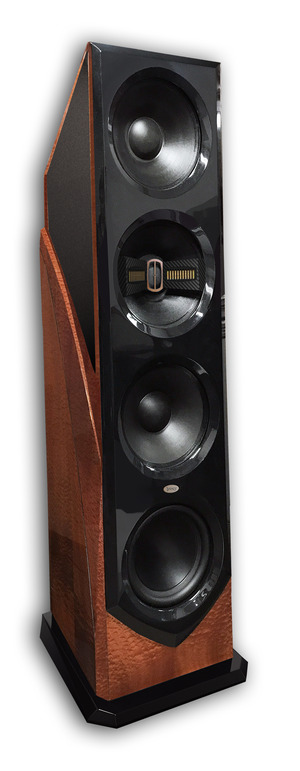
(Springfield, IL) – Legacy Audio will premiere the new VALOR loudspeaker system in Evergreen Ballroom A at Rocky Mountain Audio Fest. Powered by an incredible 2750 watts per side, the VALOR is first to employ STEREO UNFOLD technology licensed from Bohmer Audio® of Sweden. By combining a controlled- directivity front array for the initial wave-launch and a side/rear -firing ambient array, VALOR is able to reconstruct the natural sequence of sound arrival of the performance space.

Precise spatial cues key to imaging are typically masked by early listening room reflections, while desirable late reflections that provide the dimensions and presence of the recording venue are either smeared or fade prematurely. The strategically shaped, dual radiation patterns generated by the VALOR system reduce early reflection in the direct field, thus unmasking critical spatial cues, while Wavelet’s STEREO UNFOLD algorithm identifies ambient information and restores it to proper time and level in the diffuse field.


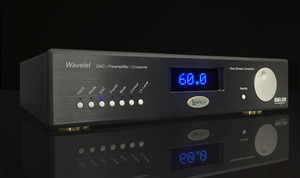
Legacy’s sophisticated Wavelet Preamp/DAC/Processor provides time alignment and crossover functions for the four-way system while hosting SPDIF, Toslink and USB digital inputs and 2 pair each of balanced and unbalanced inputs.


Legacy’s Chief Designer Engineer, Bill Dudleston, will provide demonstrations of this extraordinary new technology at 11am, 1pm and 3pm daily in Evergreen Ballroom A at Rocky Mountain Audio Fest.

Specifications
Application:                   Sequential sound field reconstruction system, auto-setup with calibrated microphone
Processor:                      Wavelet 2 input, 8 output, 56 bit DSP, Room Correcton/ Stereo Unfold algorithm
System Type:                 8 Driver, 4-way system with specialized 3 driver ambient array
Tweeter:                         Dual 4” AMT bridge-mounted in post convergent array
Midrange:                      1.5” coaxial, titanium/polyester diaphragm, precision waveguide
Midwoofer:                    14” carbon/pulp curvilinear cone, neo motor, dipolar
Bass:                               Dual 14” carbon/pulp curvilinear cone, neo motor in super cardioid array
Subwoofer:                     Dual 12” aluminum diaphragms, 480oz. motors, cast frame, 3” dual 4 layer voice coils
Passive Radiator:            Dual 12” patented symmetrically loaded with 2” travel
Low Freq. Alignment:    Hybrid cardioid pattern, dual rear radiator, down-firing sub
Inputs:                             1pr binding posts for upper range, 2XLR balanced for bass, sub, 1XLR for STEREO UNFOLD
Internal Amplification:    Subs- 1kW, Bass- 750W, Mid-500W, Ambient Array-500W
Recommended Amp:       1 external channel of 60 watts or greater required per side for high frequencies
Freq. Response:               12Hz-30kHz
Impedance:                     XLR 10k, binding posts 4 ohms
Sensitivity:                     100.5 dB (2.83V @ 1m)
Crossover:                       65, 800, 6k
Cabinet Size:                   Cabinet 67” H x 16.25” W x 18” D, Base 1.5” H x 20.75” W x 20.75” D
Weight:                            288 lbs. each
Price:                               TBA


Over 30 Years of Excellence

Legacy has established reference level performance in home theater and audiophile settings since 1983. The rigorous quality standard is the same for our flagship commercial doubleHELIX system as our Studio HD bookshelf system. For further information, please visit our website www.legacyaudio.com


LEGACY Audio 3023 E. Sangamon Avenue Springfield, IL 62702

(800) 283-4644


For press inquiries or high resolution images, please contact [email protected] or 217-544-3178

MERGING TECHNOLOGIES AT RMAF 2017

http://www.merging.com/uploads/assets/packs/NADAC_Marketing_Pack-May_2017.zip

Puidoux, September 2017: The MERGING+PLAYER, MERGING+NADAC and MERGING+POWER will be featured in a dedicated room at The Rocky Mountain Audio Festival in Denver.  This late decision to take a room at the show was predicated by a change in US distribution and the desire to show the full range of products without conflict from other brands in the same room.

The MERGING+PLAYER offers a single box solution to playing files with Roon. It is offered in stereo or multichannel variants to cater for the former SACD enthusiasts, who can listen to the multichannel files as they should be heard. Since Roon 1.3, multichannel DSD playback has been implemented and this was a direct result of the Merging/Roon partnership which is ongoing with the intention to introduce other new features in the future.

The room will be staffed by Chris Hollebone, Sales and Marketing Manager of Merging, Fraser Jones, President of Independent Audio and Michael Broughton of The Audiophile Source who will be working his magic in setting up the room. Independent Audio is based in Portland, Maine and has been Merging’s professional distributor for many years. The company has an enviable track record of managing logistics and technical support throughout the USA and Merging is confident that the change will suit the dealer network. 


RMAF will be the first North American demonstration of the MERGING+POWER. Reviewers have been unanimous in praising the excellent audio quality of the MERGING+PLAYER and MERGING+NADAC, so that would indicate that the designers did a fine job with the power supply. There is a body of opinion that maintains that removing all AC components from the chassis should improve the performance even more. MERGING+POWER is the answer. The unique hybrid design mixes switch mode and analog toroidal transformer technology to separate the different requirements of the key internal components. All major parts of the power plant meet aerospace or military specifications and have been selected to offer the ultimate in sonic integrity. MERGING+POWER is a product designed to add magic to excellence for the most discerning users.  

The advantages of using Ethernet were plainly obvious to other DAC and server manufacturers and there has been much interest in how this could be incorporated into their products. The Aurender X100 Digital Music Player will be connected to the network to show the versatility that this can bring to the home. This product takes advantage of Merging’s LINUX Virtual Audio Device which can be adopted by other devices using the same operating system. Merging has also developed drivers for OSX and Windows to ensure that RAVENNA can be used with any computer platform. Merging will soon be introducing ZMan, a new compact and powerful RAVENNA circuit board which will be offered to OEM partners, bringing the advantages of a networked solution to audio components as diverse as loudspeakers, DACs and server/streamers. In addition to RAVENNA, this board will allow for a whole range of other capabilities like Roon Ready support, streaming services and DSP processing for advanced formats decoding or room correction.

-ends-

Merging Technologies SA is a Swiss manufacturer with over 25 years of experience in developing groundbreaking, professional Audio and Video products for a wide range of entertainment and media industries.  With a dedicated user base in the elite end of the music, film, television, mastering and performances industries, Merging is committed to developing product ranges with unrivalled quality and flexibility, no matter what the application. Merging builds tools for people who want more from their systems, have an inherent need to push boundaries, and believe that quality always comes first.

RAVENNA is a solution for real-time distribution of audio and other media content in IP-based network environments. Utilizing standardized network protocols and technologies, RAVENNA can operate on existing network infrastructures. RAVENNA is designed to meet the strict requirements of the pro audio market featuring low latency, full signal transparency and high reliability and is fully AES67 compatible. With a capacity of nearly 8 x MADI streams over a single Gigabit Ethernet link, it is also the first and only Layer-3 based IP audio protocol with full support for high-channel count DXD and DSD signals.

While primarily targeting the professional broadcast market, RAVENNA is also suitable for deployment in other pro audio market segments like live sound, install market and recording. Possible fields of application include (but are not limited to) in-house signal distribution in broadcasting houses, theatres, concert halls and other fixed installations, flexible setups at venues and live events, OB van support, inter-facility links across WAN connections and in production & recording applications. http://ravenna.alcnetworx.com

CAD USB Cable I and II

FROM THE COMPUTER AUDIO DESIGN PRESS RELEASE: In the world of analogue audio, there’s little doubt that a system’s sonic performance can be markedly constrained or improved by the quality of its various cables. But when it comes to digital audio, could there be even more to play for? Computer Audio Design’s (CAD) Scott Berry believes so, and has been putting his ideas to the test for some time before bringing two exceptional new USB interconnects to market.

Let’s face it, from CD players to computers and from servers to streamers, digital audio source components can be noisy creatures. Compared to purely analogue devices, they produce considerably more high frequency ‘noise’, which is generated by CPUs, chipsets, switch mode power supplies, regulators and the like. Given that most audiophiles now have a system that includes some digital components, how do you prevent this unwanted noise from interfering with your system’s overall performance? The answer: tackle it before it reaches the analogue stage. In other words, prevent it from entering the digital to analogue converter (DAC).

CAD’s new CAD USB Cable I & II are specifically engineered to filter out noise from any and all digital music sources before it reaches the DAC. They build on the patented filtering technology that was previously developed by CAD when the company’s first USB cable was launched four years ago. That technology was unique and made the CAD cable notably different from any other on the market at the time. But designer Scott Berry is not one to sit on his laurels and has since remained head-down in USB technology, determined as ever to take its performance further still.

A USB cable is made up of four conductors: two for power (+5V and ground), and two for high speed differential data signals (data+ and data-). Unwanted high frequency noise is present on all of them and so CAD’s patented filtering system is carefully designed to tackle all four. However, since the +5V conductor carries particularly large amounts of high frequency noise, CAD uses a separate, highly-shielded cable for the +5V conductor, giving added protection and isolation to the ground and data signals.

But CAD’s USB designs go considerably further than simply reducing unwanted noise. “Conductors used for high speed signals employ quite different materials and construction techniques to those that only operate at lower frequencies,” explains Berry, “and what’s more there’s considerable variation among them.” CAD therefore spent many years comparing materials and construction techniques and noting the resulting differences in sound quality. An intense period of research and experimentation then followed, working with different conductive and insulating materials to develop prototypes for evaluation, until Berry was satisfied that he had achieved the very best sound quality.  “The conductors used to transmit music in our USB cables are manufactured only for CAD, to our individual specifications,” he proudly confirms. 

The new CAD USB Cable I is an enhanced version of the company’s first cable, now featuring improvements to its patented filtering technology. The USB Cable II, meanwhile, takes noise reduction considerably further. It includes the same patented filtering as Cable I but partners this with a whole different construction and insulation, again using proprietary materials (the details of which remain a closely guarded secret) along with three independent CAD absorbers designed to further reduce unwanted high frequency electrical noise and mechanical vibration.

So confident is Berry in the performance of CAD’s new USB Cables I & II that he’s happy to offer a 30-day money back guarantee. “We believe that we’ve been working on USB cable filter design longer than anyone in the market and the results of this experience can be heard by comparing our CAD USB cables to any others on the market at any price.” 

Hear the new CAD USB Cable I & II in action and meet Scott Berry and the Computer Audio Design team at The Indulgence Show on 29th September to 1st October in London’s Hammersmith International Centre www.indulgenceshow.com

Pricing and availability

The new CAD USB Cable I & II are available now, priced at £540 and £880 respectively for a 1.1 metre length. Longer lengths and cables without the +5VDC line are available to order.

Consumer contacts for publication

Computer Audio Design products are sold through specialist dealers in the UK and worldwide. For more information:

www.computeraudiodesign.com

[email protected]

0203 397 0334 (+44 203 397 0334 if calling from outside the UK)

Bang & Olufsen: Hugge, Beer, and Beolabs

Unlike brands like Carlsberg, Bang & Olufsen has only tangentially made a big thing of being Danish. The company may exemplify Scandinavian elegance and may be one of the most important employers in Jutland, but its outlook and direction is principally international. Perhaps this is why the company has managed to become such a big hit in the home audio, home video, and automotive sectors: B&O is not so ‘Scandiwegian’ that it only appears in Volvos or minimalist homes.

But the company’s latest campaign is surprisingly Danish in approach. It’s latest ‘Press Pause and Play’ campaign is very ‘Hugge’ in approach, but is not based on an attempt at shoe-horning an audio company with the Danish shared way of eating cupcakes while chilling out in hats that was absurdly popular last winter. In fact, Bang & Olufsen worked with York University in England to determine the emotional influence of music on the listener. In a paper entitled “Compose yourself: The Emotional Influence of Music” the team of researchers, commissioned by Bang & Olufsen, found that (perhaps not surprisingly) ‘sad’ songs induced ‘sadness’ in listeners and ‘happy’ songs made people feel ‘happier’.

Where this research stops being a candidate for an IgNobel Prize (awarded each year to the most pointless and patently obvious ‘we concluded that water is wet’ style research in science) is that alongside asking the 20 volunteers about their emotional state while listening to music, experts from the university’s Music, Science, and Technology Research Cluster (MSTRC) used their bespoke Audience Response System to assess peripheral nervous system activations and motion capture. They also monitored listeners’ heart rates and skin conduction, which are both indicators of the arousal of the autonomous nervous system. And the results of that test indicate that some styles of music had a physiologically calming effect on listeners and could therefore be used to help address emotional issues. On average, skin conductance (a measurement used to monitor arousal to stimuli) was lower while music was playing than during the silent pauses in between each piece. Dr Hauke Egermann, Director of York Music Psychology Group at the University of York oversaw the research and compiled the report. A TEDx speaker with a PhD in Music Psychology and Neuroscience, the findings underline his existing theories and research regarding the powerful psychological potential of music. He comments: “These findings provide further evidence that music can form an important part of our overall mental wellbeing, helping us to regulate our mood. In particular, we have shown that music can override the negative impact of feeling sad and actually allow us to enjoy this emotion in a safe environment.” Working with York is also fine on the Scandiwegian front too, as the town used to be called Jórvík, and was a popular tourist destination for 9th Century Vikings.

A slightly more tenuous link comes with the limited edition beer brewed in association with a local brewer, Mikkeller. Bang & Olufsen wanted to infuse the beer with the music of Danish artists, so the company placed a (sealed) B&O Play loudspeaker inside one of the tanks of a brewery making India Pale Ale, and played music to the proto-beer. Not being master brewers, Bang & Olufsen were unclear whether this was applied to the mash tun, the lauter tun, the boil kettle, or the fermentation tank. While this sounds more like hype and nonsense, there is a slight nugget of potential truth in all this: back when brewers in England were trying to send beer to troops in India, they discovered an extremely hoppy brew, fermented and agitated by the action of a slow boat around the Cape of Good Hope, and the agitation caused by sound waves through the beer mash might constitute a similar effect. If you believe this, I have a bridge to sell you. Regardless, the resultant Beobrew IPA is a pretty reasonable microbrewery beer, with the taste of a session IPA but at 6.8% ABV, with the kick of premium bitter.

Kicking back with a beer, a short session by Faroese singer Elvor (whose work was used in the York University research), and a quick description and listen to the new Active DSP BeoLab 50 loudspeakers in West London’s Metropolis studios, maybe Bang & Olufsen have a point. The BeoLab 50 loudspeakers – a more real-world, domestically-chummy spin-off from the company’s extremely clever BeoLab 90 – features an advanced sound customisation system that requires room measurement on installation, and works on-the-fly to compensate for room anomalies. It also allows the listener to move between ‘hot spot’ and group listening thanks to an adjustable and powered Acoustic Lens at the top of the loudspeaker. This speaker is already in the stores and costs £22,930 per pair. We hope to be able to look at these soon.

Domestic loudspeakers in the studio environment are always going to sound good because the control room is acoustically designed for the task of critical listening. Nevertheless, the BeoLab 50 did make an admirably good job of playing music with the kind of dynamic range, scale, and bass performance that is extremely honest and hard to live without, and yet the loudspeaker isn’t the kind of product that is hostile to design led interiors.

As Steve Devonshire, Product and Training Manager for Bang & Olufsen, said in a short interview at the product launch, “People now want more intuitive products that are easy to use, not more features. We want to make an alternative to the smartphone as music source. There’s nothing wrong with smartphones, but we think music should be a part of allocating time for yourself, especially if we can make music as the artist intended.”

Plinius Hiato integrated amplifier

I’m not sure if it’s the climate in New Zealand or the Lord of the Rings effect, but if the Plinius Hiato is anything to go by, they like to go large down under. The Hiato is a beast of an amplifier; I have not reviewed a larger integrated in recent times. But, it’s not unattractive even if one is discouraged from taking it out of the box on account of its bulk. The Hiato is a pretty serious piece of kit in all respects and thankfully what comes out of its speaker terminals makes all the effort worthwhile.

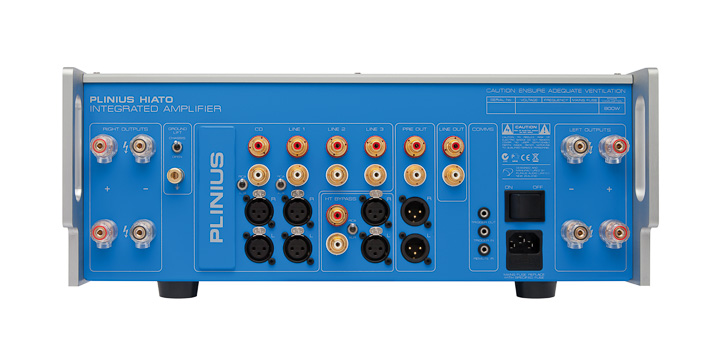
According to the spec it weighs 25 kilos, but that’s without the phono stage, which feels like it adds another 10 kilos or I’m getting a bit more of a lightweight in my old age. That’s not excessive for a 300 Watt amplifier: what is excessive is the remote control. I’ve definitely not come across a bigger example. It’s a foot long and weighs more than a pound, you could use it as a bludgeon to fend off attackers. I presume that either Kiwis are all gorillas or that it acts as a heat sink to cool down your hands in the summer. The explanation from Plinius is that they do the majority of the machining, surface finishing, and anodizing on site and they use ‘through-hole’ components rather than surface mount, which makes for a bigger PCB inside. Plinius also wanted to use the same buttons as you find on the amp itself, all of which makes for a handset you are not going to lose in a hurry. It gives access to four single-ended line inputs, two balanced, and an optional phono stage. The latter adds £1,300 to the price, but does at least have variable loading and gain accessible from the back panel. There’s also home theatre bypass for incorporation into a surround system, effectively turning the Haito into a power amp for external processors.

Looking at the rest of Plinius’s extensive range of electronics, the top power amp, the SA Reference, looks a lot like it was used in this integrated. Both share the same power rating but the power amp has twice the current capability and weighs more than twice as much. So clearly the resemblance is not very deep, the power amp section is actually based on the Plinius SB 301, but has been adapted to suit the available space. It looks more like the Tautoro preamp and this part of it is ‘largely related’ to that range topper.

The chassis construction looks more complicated and expensive than the ‘square box with a big facia’ approach used by many but this is presumably related to the in-house metalworking. That also explains the bright blue rear panel which makes a pleasant change. That panel houses the aforementioned inputs alongside preamp outputs in single-ended and balanced varieties plus a line output on RCA phonos. There are gain and loading settings for the MM/MC phono input, with five impedance options allied to four degrees of gain from 50dB to 66dB. The front panel has input and phase switching, alongside a minijack input for portable devices. There is no headphone output.

I noticed that the Hiato stays quite warm in standby mode, and the spec says 69W is consumed in that state. I also spotted that another reviewer suggested it needs a few days to warm up and settle down. It thus joins a select few brands its polar bear bothering tendencies of drawing a lot of power when sleeping and needing to sleep when not in use, so the ecologically inclined will have to install a few more panels to offset their musical enjoyment. I imagine that solar could be a remarkably clean source of AC if only the sun shone when you wanted to listen!


When hooked up to a pair of Bowers & Wilkins’ remarkable 802 D3 loudspeakers and a source consisting Melco N1ZH digital transport and CAD 1543 Mk2 DAC, the sound produced is muscular, but in a good way. The velvet gloves are on but the iron fist is clearly in control and, as suggested, it does take a while to relax and become one with the speakers. During which time you get used to its power delivery and start to enjoy what you are hearing, which in my case included ‘Deck’s Dark’ from A Moon Shaped Pool [Radiohead, XL]. Here the vocals were particularly clear, while the surrounding music had all the scale you expect with plenty of 3D solidity. There is a degree of sound-sculpting on this album that takes a decent amplifier to resolve effectively, which the Hiato does it very well and exposes all the reverb and effects used to achieve it in the process. It gives a real insight into the skills of the band and their producer Nigel Godrich.

Bill Wither’s ‘Sweet Wanomi’ [Just As I Am, A&M] is very different as befits its all-analogue production and vintage. Here the bass is round and fat while the vocals are warm and rich. This is a suitably transparent amplifier, but one that has the power to deliver bass weight when it’s called for, without leaving any obvious trace of itself. So complex electronica has all the body and depth you want presented in clear-cut layers with an apparently effortless delivery. It does the work so you don’t have to. It times well too, which is a nice trick for a powerful amp. When there’s a groove it finds it immediately and your head and/or feet respond. This was made obvious on Doug MacLeod’s ‘Too Many Misses’ from Exactly Like This [Reference Recordings], which is a stunning recording, but one where you can often be wowed by the imaging but remain uninvolved with the music. This Plinius won’t let that happen thanks to definite leading edges with no apparent grain, just smooth musical flow.

Combined with this are excellent dynamics at both high and low levels. It’s easy to make an impact when the level is cranked, but it takes a special amplifier to deliver the same contrast at quieter volumes. Vivaldi’s excellent Belleza Crudel [Tone Wik, Alexandra Opsahl, 2L] made this obvious by pulling me into the music when I’d left it down low in an attempt at focusing on the writing side of the job, that didn’t work for all the right reasons.

I tried using the Hiato with a Rega RP8 turntable running Rega’s Apheta 2 moving coil, and while it had plenty of gain, it proved impossible to get a hum-free result. The Rega doesn’t have an earth lead so I tried connecting the amp’s earth to the arm base but that didn’t help, I also flipped the ground lift switch on the back of the amp to little effect. An SME turntable and arm proved quieter but not entirely silent either, so it’s possible that there was a fault in this department. It sounded good nonetheless, with many of the same characteristics found with the line inputs. Whether it warrants the cost will depend on what you have in the way of an external phono amp: I tried a Tom Evans Microgroove+ MkII, which costs a little less, and this had better dynamics, and timing and detail resolution that was in the same league as the onboard stage. The Hiato does have a warmer and fuller balance, however, and depending on cartridge this might swing it for some.


Used as a regular integrated I found that nothing I had to hand could better it, even separate pre/power combos of similar price. Its timing always had the upper hand in any comparison I could make. The one amp that gave it a close battle is the new PM-10 from Marantz, which has a distinctly smoother balance, and a beguiling silkiness that makes the Plinius seem a little too obviously powerful. That said, the Hiato is no less transparent to musical detail and has a solidity that’s very convincing. The presentation does in some ways seem more honest and visceral, it’s a bit of a chalk and cheese comparison really but does highlight the sense of realism, the sweat and sawdust of live music being that much more palpable in its hands.

This piece of Kiwi beefcake is well featured, solidly yet elegantly built, and comes from a company that is responsible for far more of the actual manufacturing than you will find with many brands. Its character is pretty subtle by the standards of high powered amps and I would be very happy to give the Plinius Hiato a home, just so long as I didn’t have to move it too often!

TECHNICAL SPECIFICATIONS

  • Type: Solid-state, 2-channel integrated amplifier with optional built-in phonostage
  • Analogue inputs: One MM/MC phono input (via RCA jacks), four single‑ended line-level inputs (via RCA jacks), two balanced inputs (via XLR connectors), one HT bypass input (via RCA jacks and XLR connectors), one aux input (via 3.5mm jack)
  • Digital inputs: N/A
  • Analogue outputs: One pre-out (via RCA jacks and XLR connectors), one line output (via RCA jacks)
  • Supported sample rates: N/A
  • Input impedance: not specified
  • Output impedance (preamp): not specified
  • Headphone Loads: N/A
  • Power Output: 300Wpc @ 8 Ohms, 450Wpc @ 4 Ohms
  • Bandwidth: Not specified
  • Distortion: Typically < /+ 0.05% THD at rated power.
  • Signal to Noise Ratio: Not specified
  • Dimensions (H×W×D):
    170 × 450 × 455mm
  • Weight: 25kg
  • Price: £8,600 (£9,900 with phono stage)

Manufacturer: Plinius

Tel: +64 3 982 4766

URL: www.pliniusaudio.com

UK Distributor: Padood

Tel: +44 (0) 1223 653199

URL: www.padood.com

Back to reviews

Read more Plinius reviews here

Noble Audio Kaiser Encore universal-fit earphones

I first encountered Noble Audio a number of years ago when the firm’s reigning flagship was the Kaiser 10 custom-fit in-ear monitor, which I reviewed in Hi-Fi+ issue 119. As it turns out, the Kaiser 10’s name contains two embedded references, the first a nod to Noble Audio’s master technician Kaiser Soze (no relation to the similarly named fictional crime lord from the movie The Usual Suspects) and the second an allusion to the fact that the CIEM featured an elaborate array of ten balanced armature-type drivers per earpiece. Early on, the Kaiser 10 won a reputation as one of the finest in-ear listening devices available and it cultivated an almost cult-like following (especially in online headphone communities) among discriminating listeners. In short, Noble’s Kaiser 10 became an in-ear icon in its own time—a CIEM well loved by those fortunate enough to own a set and coveted by those who did not.

In my view, the Kaiser 10’s strong suits were its warm, comfortable, and unfailingly musical sound, plus a distinctive and disarming quality of ‘cut from whole cloth’ sonic cohesiveness and integrity—qualities I attribute to Noble Audio’s demonstrated talent for getting multiple drive units to ‘sing’ with one coherent voice. But with that said, I would add that the K10 was perhaps not the last word in tonal neutrality, because it exhibited slightly soft and somewhat subdued-sounding highs, plus a powerful—some might say overly powerful—low-frequency presentation. At the time, the K10 and other Noble designs were based on standard, off-the-shelf balanced armature drivers.

Moving forward, Noble Audio president and co-founder Dr John Moulton decided that, in order for his firm’s future designs to unlock higher levels of performance, it would be necessary to forego off-the-shelf drivers and instead to create new proprietary drive units built to Noble specifications. To this end, Noble teamed with the famous balanced armature driver manufacturer Knowles to create purpose-built, Noble‑specification drive units, which first appeared in Noble’s nine-driver Katana model, released in mid-2016.

Hi-Fi+ Editor Alan Sircom and I reviewed the Katana (in both CIEM and universal-fit earphone forms) in Hi-Fi+ issue 143, and came away impressed. Relative to the K10 (which both Alan and I own and enjoy), the Katana showed significant improvements in terms of dynamics, transient speed, resolution, focus, and—here’s that word again—cohesiveness. What is more, the Katana’s voicing offered a somewhat more neutral presentation than the K10, leading me to write that, “if you compared the response curves of the K10 and the Katana, the Katana would have fractionally less low bass, noticeably less enriched mid-bass, and somewhat more elevated upper mids and highs—changes that I think make the Katana the more accurate transducer of the two…”

Around the time of the Katana’s release, Noble announced it had plans to discontinue the venerable Kaiser 10 and replace it with an updated model called the Kaiser Encore—a model that would feature its own set of proprietary Noble/Knowles drivers. The Kaiser Encore went in to full production this past February and has become the subject of this review. Since my past Noble reviews have mostly focused on CIEM models, I decided to request samples of the universal-fit version of the Kaiser Encore for this review and Noble graciously obliged.


Noble’s press release on the Kaiser Encore states that, “The new Kaiser Encore retains the musical essence and engaging presentation of its predecessor while introducing the sonic advantages of proprietary drive units, x10!” Then, expanding on this statement Noble adds that, “the proprietary drive units introduce improvements to the critical mid-range, adding additional clarity and bringing a more neutral tonal balance.” Given these claims, I was eager to learn how the Kaiser Encore would sound in comparison to the original Kaiser 10 and the Katana.

The Kaiser Encore sells for £1,699 (or $1,850) in universal-fit form, with CIEM pricing starting at £1,959 (or $2,099), with UK fitting performed by Gisele Flower of Aid2Hearing. The universal-fit Kaiser Encore features ten proprietary and matched balanced armature drivers per side, with an earpiece design that is updated (that is, more compact and svelte) vis-à-vis earlier Noble universal-fit models. Each two-piece earpiece sports an inner and outer shell fashioned from CNC-machined aluminium, with are true works of art; subtle contours and detail touches abound. In keeping with past practice, the Kaiser Encore universal-fit models have their own distinctive colour scheme, where the inward-facing part of the earpiece shell is matt finished natural aluminium, while the outer shells—also matt finished—are anodised in a beautiful grey/blue colour and marked with an inset Noble ‘crown’ logo.

The earphones arrive in a watertight Pelican 1010 hard-shell case, with case contents including the Kaiser Encores themselves, a detachable signal cable with standard two-pin earpiece connections (0.78mm pin diameter), a cleaning tool, a velvet carry bag, two Noble-logo rubber wrist/amp straps, a carabiner clip, an owner’s ID card, several Noble decals, and—most importantly—a metal storage plate that holds eleven pairs of ear tips in various sizes (six pairs of single-flange silicone tips, three pairs of dual-flange silicone tips, and two pairs of compressible foam tips).

For this review, I had on hand for comparison purposes my reference pairs of Noble Kaiser 10 and Katana CIEMs, plus my Questyle QP1r high-res portable digital audio player, which was used throughout my listening tests as a ‘known-good’ control amplifier/DAC. Here’s what my comparison tests revealed.

The Kaiser 10, as expected, was its usual warm, comfortable, and musically accessible self—the sonic equivalent of a favourite pair of perfectly broken-in blue jeans. The Katana, by contrast, showed just how far Noble has come with its proprietary drivers, serving up a sound that—in almost every way—was qualitatively superior to the original Kaiser 10, while also offering voicing that was at once engaging and accessible, yet also more accurate than the K10.

When I first plugged in the Kaiser Encores, and in light of Noble’s press release, I was expecting to hear something that sounded much like the original K10, but with enhanced midrange response and better soundstaging. However, what I actually heard was something very different and—to my way of thinking—very much better.

As advertised, the Kaiser Encore does offer enhanced midrange response as compared to the K10, with a somewhat more midrange forward sound. But what the press release doesn’t say is that the Kaiser Encore also offers substantially different voicing from top to bottom, with tighter, better controlled, and more accurately balanced bass, wonderfully revealing and wide-open mids, and more focussed, more delicate, and more extended highs. In short, the Kaiser Encore has been transformed to become arguably the most neutral sounding, most accurately balanced, and most revealing of all Noble earphones I have yet heard. Does this represent a fairly big departure from the sound of the K10? Yes. Is that a good thing? Emphatically yes!

On a recoding such as violinist Hilary Hahn’s performance of Vaughan-Williams’ The Lark Ascending [Deutsche Gramophon, 16/44.1], for example, the Kaiser Encore makes it much easier to hear the action of Hahn’s violin and to follow even its smallest and almost whisper quiet shifts in timbre or dynamic emphasis. Similarly, on the title track of Mary Chapin Carpenter’s Come On, Come On [SBME Special Markets, 16/44.1], the Kaiser Encore let’s you enjoy the long, delicate reverb tails that make the singer’s voice seem to linger and float on the air, while the sharp attack and gradual decay of notes from her acoustic guitar are rendered with a just right combination of vividness (on the initial attack) and relaxed naturalness (on the decay). And there, in a nutshell, is the essence of the Kaiser Encore’s sound: it is always clear, fine-grained, and sharply focused, and yet it is also wonderfully natural, graceful, and unforced. In a sense, the Kaiser Encore is the earphone I’ve long wished for Noble to build—one that is highly coherent and plays the music as it is recorded, with little in the way of well-intended euphonic colourations.


The review set of Kaiser Encore’s also lead to a shift in my thinking on the question of universal-fit vs. custom-fit in-ear monitors. Up to this point, I’ve been solidly in the “choose CIEMs when possible” camp, because—at the end of the day—they do offer a customised fit and with it higher levels of noise isolation. But the catch, I’ve discovered, is that the same “fills up your ears completely” factor that makes CIEMs so effective at noise isolation also (eventually) makes them prone to subtle discomfort over longer listening sessions. In contrast, Noble’s brilliantly shaped universal-fit earpieces, when fitted with right-sized tips for the wearer (an absolute must for optimal comfort and sound), are extremely comfortable and remain so for hours on end, which is why the Kaiser Encores are becoming my go-to choices for high quality sound when traveling.

Noble Audio’s Kaiser Encore is a more than worthy successor to the famous Kaiser 10, even though I think the new model sounds considerably different to the original and now legendary classic. But for those who want to hear their music ‘straight, no chaser’, I suspect the Kaiser Encore will win an immediate and enthusiastic ‘vive la différence’ reaction.

TECHNICAL SPECIFICATIONS

  • Type: Universal-fit earphone with machined aluminium earpieces
  • Driver Complement: Ten purpose-built balanced armature-type drivers developed in collaboration between Noble Audio and Knowles Electronics
  • Frequency Response: Not specified
  • Impedance: Not Specified
  • Sensitivity: Not specified. Noble says the Kaiser Encore is, “Sensitive enough for use with smartphones and portable audio devices.”
  • Accessories: Detachable cable with industry standard 2-pin configuration (0.78mm diameter), Noble‑branded wrist/amp straps, velvet carry pouch, combination cleaning tool/brush, watertight Pelican 1010 Micro Case, carabineer clip, Noble owner’s ID card, and multiple set single and dual‑flange silicone tips, and two sets of memory foam tips
  • Weight: Not specified
  • Price:
    Universal-fit: £1,699/$1,850
    Custom-fit versions: Pricing starts at £1,959/$2,099

Manufacturer: Noble Audio

Tel: +1 (805) 886-5255

URL: www.nobleaudio.com

Noble Audio UK URL: www.nobleaudio.co.uk

UK Audiologist for CIEM version: Aid2Hearing

Tel: +44 (0) 20 8445 6030

URL: www.aid2hearing.co.uk

Back to reviews

Read more Noble Audio reviews here

Hi-Fi+ Interviews Marjorie Baumert of the Rocky Mountain Audio Fest

The 13th annual Rocky Mountain Audio Fest at the Marriott Tech Center in Denver, CO is almost upon us. It runs from October 6 to October 8 (October 6 is a press/trade day). In the run-up to the event, we spoke to the organiser, Marjorie Baumert, about how the show began, how it grew both before and after the passing of RMAF founder (and Marjorie’s husband) Al Stiefel, how the show continues to evolve and change, and the future of the event.

Hi-Fi+: How did RMAF get its start?

The story is now told best by the founder of the Colorado Audio Society, Art Tedeschi:

“Rocky Mountain Audio Fest’s first show appeared in October, 2004. Members of the Colorado Audio Society had for many years thought about a local audio show as an extension of the Society’s goal of expanding public awareness of high end audio.

The concept took a serious turn when CAS members Al Stiefel and Ron Welborne took it upon themselves to explore the possibility of creating an audio show in Denver. With Al’s business acumen, Ron’s knowledge of the infrastructure of local audio shows, and CAS member volunteers to provide much of the support (and let’s not forget Al’s capable wife, Marjorie Baumert), the 2004 show became a reality!”

Al and I had sold our commercial sign shop and were ready for a new adventure. I had to go back to school to learn how to create a website and Al had to learn how to run a business with no employees. Ron’s knowledge of the industry and running the VSAC show along with his wife, Dana’s, ability to create our first logo rounded out the team. The Colorado Audio Society donated their time as volunteers to make it all happen.

Hi-Fi+: What are the distinctive characteristics that set RMAF apart from other audio shows on the calendar?
RMAF’s staff is volunteer based and comprised of members of the Colorado Audio Society, family and friends. Brian Boehler, current president of the Colorado Audio Society recently wrote, “The Colorado Audio Society has always been the heart and soul of RMAF.  Our efforts over the years have made for a fun and exciting show because of your smiling faces, helpful attitudes and friendly demeanor.” Our volunteers return year after year and have grown to include people from all over the world.

RMAF was created to offer a good value for each exhibitor by keeping costs down and treating people with respect. In doing so, a community started to build and an annual destination. Today I received a note from a new exhibitor: “We are a fairly new company, but RMAF has been the most organized and professional exhibition that I’ve experienced yet, and for that I thank you and your team.” Exhibitors notice the value of going the extra mile for them.

We also respect the value of our attendees and create professional badges for each of them. They were particularly thrilled when we made room on the badge for their monikers. I have heard countless stories over the years about people meeting for the first time in person, yet had been following each other for years on the websites. Since we include the city, state, country on the badge, people often spark up conversations about hometowns while waiting for the elevator.

Hi-Fi+: When your husband and RMAF co-founder Al Stiefel unexpectedly passed away in early 2009 the entire audiophile community mourned with you. But, in the years that have followed it seems you have continued to leave your own imprint on RMAF. How did you do this and what are some special touches you have brought to the show?
Al was an audiophile and engineer who understood all things manufactured and also had a photographic memory. He knew all about the industry history from years of reading all the publications. I never had to spend a moment learning about the industry because I always had this encyclopedia next to me! I will never be as technically saavy as Al or understand the history with his depth of knowledge so I had to figure out what value I could bring to RMAF by myself.

I began with my roots as a computer programmer. I understand the value of data and have been fortunate to hire a team of programmers over the years who went beyond my capability to create the database I dreamed of for RMAF. I truly believe that together we have created an amazing website. It is easy to use and filled with valuable information for exhibitors, press, and attendees. We were even able to make the product guide downloadable and compatible with the visually impaired software so they can plan their trip in advance.

I am also from a large family, #3 out of 6, and fortunate to have grown up with three sisters and two brothers and parents that celebrated us and our individual talents. They have all given me the strength to succeed and reminded me that you have to have heart and always treat people with respect.


Hi-Fi+: How do you think RMAF has evolved over the years?

We have been very fortunate to have exhibitors continue to support RMAF even with the development of several conflicting shows. The press has been very kind to us also.

My job is to create an environment for exhibitors to present their products to a knowledgeable and interested audience.

The heart and soul of RMAF has always been community. We hear from our exhibitors that RMAF is place where all people feel comfortable stepping out of their comfort zones and interacting with companies and people that they don’t normally have the opportunity to connect with. We are very proud of this. In the recent past we have expanded upon this communal good will with a set of new initiatives.

These initiatives include continued expansion and refinement of seminars that benefit the industry as a whole. In addition, the RMAF Entry Level Room series help young companies and superior products be showcased.  They can enter the High-end without breaking the bank. Our sponsorship of the Classic Album Sundays room gives people the opportunity to truly listen and appreciate a vinyl LP.  2017 is the  3rd year of the Rocky Mountain International HiFi Press Awards (RIHPA) that select the global SOTA in an anonymous ballot format by the world’s High-end press and not done anywhere else in our industry.

New this year to the show will be the Innovation Floor located on Summit Tower 2 sponsored by RMAF. The Innovation Floor will feature innovative audio technology exhibits in a hands-on environment. A place where people can play, build speakers, experience 3D spatial audio and explore a behind the scenes view into audio. In the end, we believe very strongly in supporting the industry in an all boats rise together fashion.

Hi-Fi+: How and when did the relationship between RMAF and Head-Fi/CanJam get established? Is it a symbiotic relationship from you point of view?

Best told by Jude Mansilla:

“Late in 2008, RMAF co-founder Al Stiefel contacted me to discuss the idea of a Head-Fi presence at Rocky Mountain Audio Fest 2009-an idea he was very enthusiastic about, and that his charisma had me excited about it in microseconds, too. After some discussions, we planned to meet in person at CES 2009 to discuss Head-Fi at Audio Fest 2009. Unfortunately, we were both very busy in Las Vegas this year. Near the end of CES, Al called to see if we could finally meet, and, after I explained I was about to get on a plane back home, we laughed about having likely been in the same buildings at the same times, yet missing each other in Vegas. We planned to catch up after CES, but that was the last I talked to the kind man so many in the high-end audio industry knew and loved.”

“The RMAF Advisory Board includes a small group of industry heavies, including Ray Kimber (president of Kimber Kable), Joe Reynolds (president of Nordost Corporation), Roy Gregory (formerly editor of Hi-Fi+ and currently with theaudiobeat.com.) Though I never had the privilege of getting to know Al Stiefel beyond our phone calls, I can’t imagine he’d have wanted it any other way than for the show to go on.”

“Ray Kimber called to tell me that they were still very interested in carrying out Al’s wish to have a Head-Fi presence at RMAF 2009. The good Mr. Kimber invited me and John Purtill to Denver to attend an RMAF Advisory Board meeting on June 25, 2009. How do diehard audio enthusiasts say no to that? Simple–they don’t.”

“We drove to Marjorie and Al’s gorgeous home, which also serves as RMAF HQ. …Without exception, every one of the members of the RMAF Advisory Board was excited about bringing the headphone audio enthusiasts and vendors to RMAF–a sort of cross-pollenation, and new blood.” ..

“By the end of the meeting, the idea had acquired flesh and blood, as well as a strong set of lungs and some fast-twitch muscle, all of which it’s going to need, as we’ve got about a three-month sprint to hammer this out before RMAF 2009.”

Hi-Fi+: Do you consider yourself an audiophile or more as someone who helps bring audiophiles together, or both? Do you personally participate in the hobby and if so, how?
I am not an audiophile but I have loved music for as long as I can remember. My parents loved music and it was always playing in the house and in the car. We always knew when my Mom or Dad loved a song because they would listen to the entire song before turning off the car. So my brothers and sisters and I just sang along to whatever tune was playing.

I attend high end shows throughout the US and around the world to learn more about the industry, new products and trying to understand the ever-changing technologies. It is difficult for me to do this at my show since I mostly stay in the office to take care of last minute issues. Our Colorado Audio Society meetings are always informative and I try to attend as many as I can throughout the year.


Hi-Fi+: When you have a chance to listen to music for personal enjoyment, what pieces of music have you been listening to of late?

This time of year is very stressful for me…deadlines, non-stop phone calls, etc. I find if I can sing out loud to songs of my youth (rock and roll), it relaxes me…as long as no one is listening! Unfortunately, I cannot carry a tune but I know every word to every song! Music has always part of my life and I have very eclectic taste. I am usually open to listening to music I am not familiar with as there is always a gem in the mix. At my first audiophile show by myself I was in a room and loved the music they were playing but I had no clue what was playing. Doug White was kind enough to teach me how to download an app called Spotify and life changed forever!

Hi-Fi+: If explaining RMAF to a newcomer, what would you tell them to expect from the show? What’s the draw? What are the things you hope they would take away from a first visit to RMAF?

Enjoyment. Music makes everything better. I usually tell them to bring some music that they love in whatever format they listen to and experience it on different systems. Doing this gives them insight into exciting new possibilities for sound in their lives. I hope they will come back next year…and bring a new friend!


Hi-Fi+: Many of us keep ‘mental scrapbooks’ of happy memories. What are two or three of your happiest memories from RMAF events in the past?
Hanging out in the bar with Dave and Carol Clark and Al walked over to join us. He was so happy at how well the show turned out, he just couldn’t stop smiling. I still remember how happy my heart was at that moment.

At the first RMAF I was totally exhausted and walked down to the Starbucks in the hotel with Faith Turner. We were waiting in line and listened to some people start to talk about the show. They were so complimentary that we both looked at each other and smiled!

I was nervous about RMAF 2009 and how I was going to survive an RMAF without Al. The RMAF Advisory Board was very supportive but I was still unsure. After all, Al had always been the face of RMAF and most of the exhibitors had never met me in person. The entire show is a bit of a blur for me but the memories of the RMAF volunteers, Press, Exhibitors and Marriott staff, who took a chance on Marcie and I being able to pull it off always brings a smile. That weekend was filled with tears, laughter, hugs and of course a blackout! I am always thankful for the support which continues to energize me.

Hi-Fi+: Looking ahead, what are your hopes and dreams for RMAF in the years ahead?
I hope RMAF will continue to thrive and grow organically. We will continue to try new things each year and provide a useful resource in the audiophile calendar.


RENAISSANCE AUDIO’S HAND-PICKED RANGE TO BE SHOWCASED AT THE INDULGENCE SHOW

Renaissance Audio is delighted to be showcasing a wide selection of its audio products at the Indulgence Show. Renaissance’s goal is to bring the listener closer to the real music experience and the products they are showcasing certainly do this. 

Ground-breaking technologies, an acute attention to detail and quality, and a daring disregard for convention are what make Renaissance’s hi-fi systems stand out. All the products that Renaissance Audio will be demonstrating at the Indulgence Show have been hand-picked for these characteristics. 

Turntables from the US masters of vinyl replay, VPI, will impress all music lovers. There will be the first opportunity to see and hear the new VPI Player, a striking high-end all-in-one turntable – no amp necessary! VPI’s award-winning Prime Scout and Prime Signature turntables will also be on demonstration. 

The Moon Neo range from Canadian high-end audio specialist, Simaudio, is set to be one of the show’s highlights. The MiND network player, the new 240i integrated amplifier and the extraordinary ACE all-in-one system will be ready for visitors to listen to in Renaissance’s room at the show. 

Studio Connections BLACK STAR cables will provide the links to create an astonishing system, and the mighty KEF Reference loudspeakers will deliver the music.

For more information visit: www. www.renaissanceaudio.co.uk 

Contact: 

Angela Brown: 07975 907899 Matthew Tasker: 07791 380267 

[email protected] [email protected]

Devialet Expert 1000 Pro two-box integrated amplifier

A company like Devialet seemingly churns through products at a fair lick. Since the launch of the D-Premier, there have been several different products launched, upgraded, uprated, and enhanced. And that’s before we include the newer Phantom line. Add in changes in distribution, prestige stores, exotic advertising campaigns, and lots of venture capital driving the whole brand, and it’s little wonder there is some confusion.

Let’s backtrack and explain. The original D-Premier eventually became the Expert 250, and still remains (albeit with completely redesigned ’Pro’ internals) in the catalogue to this day. When the D-Premier became an Expert, it was joined by two other models; namely the Expert 130 Pro and the 220 Pro. The 220 Pro and 250 Pro can upgraded with their own matching Companion models, and there are two twin-chassis only designs: the Expert 440 Pro, and the Expert 1000 Pro tested here. Users of older D-Premiers or Experts used to have an upgrade program, where their product was given completely reworked internals, but that upgrade path expired earlier this year.

Between these launches, there was a short-lived but very significant special edition of the D-Premier – The Original d’Atelier. The significance of this product was that it incorporated many of the design developments that now go into the latest iterations of the main Devialet amplifiers, and in particular what lives inside the Expert 1000 Pro.

Internally, the differences between the Expert 1000 Pro and the older models are significant. The new amps deploy what Devialet calls ADH Intelligence in its patented Class A/Class D Hybrid amplifier design. This is effectively a redrawing of the amplifier circuit, effectively uprating the precision of the ADH core control architecture by a factor of four. This makes the ADH feedback loop faster, improves the resolving power of the Class A amplifier from eight to 10 bits, and this results in lower overall THD. Both the Class A and Class D amplifiers have been completely redesigned, with the Class A amplifier now a greatly simplified circuit, and the Class D amp pulled straight from that of the Original d’Atelier, with extensive beefing up. It’s effectively added 50% more power to the previous models, and includes more filter inductors per channel. The analogue to digital conversion stage (Magic Wire in Devialet-speak) is new, too, knocking 6dB off the THD and cutting the noise floor by 2.5dB. Add in a power supply that can now deliver 4kW and a very sophisticated (and large) thermal management system, which includes a 2.5kg copper base plate, and it all becomes clear that this is not simply old wine in new bottles.


The Expert 1000 Pro arrives in two Devialet boxes. The amplifiers are functionally identical, except you are missing one controller. The inherently digital nature of the Devialet design means the two can be conjoined with a single cable.

As before, the Expert 1000 Pro is extremely adjustable, with an online configurator to access a host of changes to inputs and power output, as well as adjustments to the phono stage to best match your cartridge. And, like all analogue inputs on the Expert 1000 Pro, these inputs are almost immediately digitised inside the Devialet device. The configurator requires uploading a small chunk of code from the website to each of the master and slave amplifiers, using a pair of SD cards (supplied).

This is also an ongoing project. Regular operating system upgrades are flushed through the line of Devialet amplifiers, adding and refining key facilities. When last I reviewed a Devialet amp, the key feature of the moment was SAM (its speaker active matching system… more on this later), and the up-and-coming ones are adding Roon, UPnP/DNLA streaming, and the potential for Expert and Phantom to work together as one. And Devialet’s stumbling block then was wireless connectivity. Sadly, time doesn’t heal all wounds, and it’s not much better now. Devialet AIR is an ambitious project to stream high resolution signals from source to system that is probably more trouble than its worth. Avoid wireless unless absolutely necessary.

SAM is more successful. Hundreds of high-end loudspeaker designs have now signed up to be measured by Devialet, and that includes Wilson Audio and the Duette II is on the list. As the acronym suggests, SAM reads the characteristics of the loudspeaker as a config file into the amplifier, which then tailors its output to closely follow that speaker’s performance envelope. This results in both tighter, deeper bass, and better thermal protection for the loudspeaker. Note that this doesn’t mean ‘louder’ as often it limits the maximum volume of the amplifier quite conservatively. It should mean ‘better’.

In truth, I find SAM effective and audible, but not something I would use on a regular basis. The Wilson Duette II has more than enough bass for my room, it seems, and having a DSP-enhanced additional bass ‘thwack’ seems unnecessary. I also find SAM to be a little overawing, especially with a loudspeaker of the dynamic range of the Duette II. But you can adjust the intensity of SAM, or even switch it off altogether. In my room, with my speakers, ‘off’ was my preferred setting, but this is one of the most interesting aspects of the whole amplifier. ‘Your Mileage May Vary’ has never held so much truth.

I must also confess to continue to have something of a mixed relationship with the Devialet phono stage. It remains one of the clearest, cleanest, and quietest phono stages money can buy, but occasionally I want the ‘sparkle’ that a good analogue phono stage brings to the party. On balance though, I’d rate the Expert 1000 Pro’s phono stage consistently somewhere between very good and excellent, especially as you dial in a cartridge’s exact specification from the website, and many of the better known cartridges come pre-figured. So where applying load information about a cartridge might involve look-up tables and guesswork, here, you just point a mouse at ‘Lyra’ and you’re done.

The super-clean, super-detailed presentation of the Expert 1000 Pro is interesting. This is all the things about Devialet writ big. Really big. The first thing that hits you is an ‘is it on?’ silent background, followed closely by the most dynamic of dynamic ranges you’ll have heard in years. SAM is a good option here as pulling a kilowatt of power could easily throw a driver across a room. You will turn it up too loud because of the absence of background noise, you will play whatever it was far too loud and you will quickly reach for the volume control with fruity language. Never mind ‘edge of the seat’ dynamics, this is ‘jump out of your seat’ rodeo dynamics.

Then you settle down to that Devialet sound, or rather absence of sound. This remains one of the most sonically transparent sounds around, except for a mild etched presentation around the upper mids. You have to really work your record collection to find this, but I got there with The Shape of Jazz to Come by Ornette Coleman [Columbia]. This hard, angular performance from jazz’ golden year of 1959 is a seminal work, but it’s not an easy one, and sometimes it goes down better with a little bit of sugar. The Devialet duo don’t do sugar. Instead, that etched sound just made the album a little more ‘difficult’. This was quicksilver, though, and hard to find again, especially when the amps had been powered up for a couple of hours.

Otherwise the Expert 1000 Pro is an exceptionally difficult amplifier to describe, because it pushes past a lot of the descriptive parameters. It’s easier to just put the word ‘excellent’ on repeat and rattle off a series of questions about performance: imaging – excellent. Detail retrieval – excellent. Coherence – excellent. Vocal articulation… you get the message.

In discussing the sound quality, we might as well just hark back to the original D-Premier review again, just that all the D-Premier did this does more so and with greater authority thanks to the extra power and the better specifications. The Expert 1000 Pro remains outstandingly detailed and precise: the tiniest finger squeak on a fretboard, the smallest touch on a tam-tam, is all delivered to you perfectly. Not simply as a mild change in timbre, but in a sense of different physical solidity of the instrument that simply doesn’t make it through the circuits of most amplifiers. The Expert 1000 Pro’s inherent lack of character shines through on every recording by it altering the fundamental ‘shape’ of the acoustic or studio each time, as it should. There is a fundamental unflappability about the Expert 1000 Pro, too, more so even than its already unflappable little and older brothers. .


The first Devialet hit the ground running at the end of the last decade. It changed the face of audio. The Devialet Expert 1000 Pro pushes that performance to the very limit of what a loudspeaker can do. It might not make quite as big an impact as the first model because we are now all very used to seeing what they do in homes and stores. We already know what they can do and how well they can do it. We even know their obvious strengths and their much less obvious weaknesses. Expert 1000 Pro is a real star. Very strongly recommended!

TECHNICAL SPECIFICATIONS

  • Connections: 1× Optical Toslink, 1× combined Optical Jack & RS232 Mini 3.5mm, 1× USB for computer or USB-fitted turntable connection, 1× Ethernet RJ45 for connection to LAN, 1× AES/EBU input (XLR), 4× S/PDIF digital inputs on RCA (or two analogue line level inputs), 1× Phono input – Adjustable Gain and sampling frequency (96 or 192KHz, fully configurable, MM or MC, load, sensitivity, 1953 or 1976 RIAA standard), 1x trigger, speaker terminals and subwoofer output. Optional AIR wireless
  • Power output: 2× 1000W into six ohms, adjustable from 50–1000W via online configurator
  • ADC: PCM 4220, 24 bit/192 kHz – upsampling of all content
  • DSP: 400 MHz 4 channels 40 bit/192 kHz floating point Single Ultra High Precision clock, low jitter ADH Core (Analog Digital Hybrid) Devialet ‘Magic Wire’ DAC, to 24 bit/192 kHz Switch Mode Power Supply peak 4000W
  • THD+N (harmonic distortion) at full power: 0.00025%
  • IMD (intermodulation) SMTPE: 0.001%
  • SNR (Signal-to-Noise ratio): 133 dB unweighted
  • No measurable thermal distortion
  • Output impedance: < 0.001 Ω
  • Bandwidth, digital inputs @ 8 to 2 Ω load: DC–87kHz (-3dB), DC–60kHz (-1dB), DC–30kHz (-0.1dB); analog inputs: same except 0.1Hz (-3dB)
  • Dark Chrome finish, single aluminium block case per chassis
  • Dimensions (W×D×H): 40 × 40 × 4cm
  • Weight: 9.7kg, Companion 9.5kg
  • Price: £22,900

Manufactured by: Devialet

URL: www.devialet.com

Tel: +44 (0)808 168 4944 (UK only)

Back to reviews

Read more Devialet reviews here 

ELAC Uni‑Fi FS U5 Slim floorstanding loudspeaker

Not only is white the new black, but speakers are getting skinnier. The pressure to be thin is not limited to us humans, it seems. That appears to be the ethos behind ELAC’s Uni-Fi Slim range, which – if the blurb is to be believed – is the same as the existing Uni‑Fi range in deeper cabinets with narrower front baffles. The spec for the Uni-Fi UF5 says it’s 200mm wide, the FS U5 seen here is 22mm narrower, which is less than an inch so not a lot but every millimetre counts in this image conscious era. A consciousness that is particular to Europeans it seems as the standard Uni-Fi range is not available in this market.

Designer Andrew Jones learned his chops at KEF back in the Laurie Fincham era. He then took his skills to TAD and developed a concentric mid/tweeter for their high end models. He has done the same trick at ELAC, clearly his KEF years convinced him of the efficacy of this approach. This time the drivers are in far more affordable loudspeakers and feature aluminium cones exclusively: the tweeter is the only soft part in this toned beauty.

The Uni-Fi Slim range consists of a bookshelf and a tower/floorstander with two extra bass drivers in the cabinet. As is becoming the norm, you can have it in black or white paint finishes, but veneers are, it seems, right out in the world of affordable loudspeakers. And given the choice between imitation wood and a satin paint finish, I too would be inclined toward the latter. Where IKEA leads the world follows!

The Uni-Fi Slim tower comes with a raft of accessories to keep it standing straight and tall. Machined and anodised aluminium bars fit on the bottom of the cabinet and extend the footprint to give it greater stability and, more compellingly, the ability to pass EU tilt tests. This bar accepts custom spikes with their own separate top caps that come with metal and rubber spike pucks to stop the speaker from impaling the laminate floor. It’s quite an impressive array really, albeit somewhat at odds with the discreet inclinations of the box as a whole. So while the hidden driver fixings and magnetic grille mounting minimize the mechanical aspects of the look, the stand goes the other way, but it looks cool so I’ll forgive it.

The only slight jarring feature is a clip on the back that is obviously too small to wall mount the speaker. It turns out that this is a safety clip so that you can tie the speaker to the wall and make sure that not even the most determined toddler could tip it over. A sensible idea in theory, but a bit too close to the practices of the aforementioned Scandiwegian furniture outlet for comfort.


The drive units are more important of course, and that concentric driver is an impressive piece of work. It couples a 100mm aluminium midrange cone with a 25mm soft dome tweeter at it centre; a technique that Tannoy and (of course) KEF have long favoured, but still remains relatively uncommon. The benefit is uniform directivity for both drivers, as the waveguide of the tweeter acts to match the directivity of the mid/woofer and tweeter, to get better off-axis response at the crossover point. The reason for the lack of such drivers across the market is the cost of developing them: they are prohibitively expensive to make unless you intend to make them by the thousand.

ELAC combines this unit with three 130mm bass drivers with aluminium cones in a cabinet with no fewer than three reflex ports on its back. Andrew Jones explains: “Internally, the cabinet is divided into two chambers: upper and lower. The upper chamber mimics the bookshelf speaker and so has its own port. The division also helps to raise the frequency of the first standing wave in the cabinet to make it easier to deal with. The lower chamber is double the volume with double the number of drivers. To maintain the same tuning frequency I could use one new port or simply use two ports. An advantage of using two ports is that they can be placed more easily to minimize excitation from what remains of the internal standing waves. They also couple to the room better than would a single port.”

The cable terminals look pretty swish and were designed by ELAC rather than being from the usual sources, a nice touch that further enhances the quality feel of this model.

In my system, placed with their backs 40cm from the rear wall, the Slim Towers made a strong first impression. They have a sophistication and authority in the bass that you don’t find with many alternatives at the price. It was the bass line on Talking Heads’ ‘Crosseyed and Painless’ [Remain in Light, Sire] that first caught my ear, it was deep and taut and fitted in precisely with the drums and guitar in a presentation that was spacious for this less than expansive recording. Conjure’s ‘Wardrobe Master of Paradise’ [Music For The Texts Of Ishmael Reed, American Clavé] managed to widen the soundstage out to the sides of the room, revealing a grungier bass line and pretty decent timing for a three-way.

Amandine Beyer’s solo violin [JS Bach Sonatas & Partitas BWV 1001 – 1006, Zig-Zag Territoires] revealed a slight edginess, a degree of forwardness that proves you still can’t make the perfect loudspeaker for £1,200. It’s a tough track and the last speaker I played it on cost more than ten times as much, so it’s a tough ask as well. Further listening brought this same edginess up, but only very occasionally. It may be something that extended run in would ameliorate, but that it did reveal this character in a well-damped room with an even-handed source and amplifier suggests that it’s a ‘try before you buy’ design. But that’s hardly unusual with speakers at almost any price.

The speaker is also fairly current hungry. The spec says 85dB for a four Ohm nominal impedance which means you need a reasonably powerful amp to get the best out of it. The ATC P1 had no trouble, but the more price appropriate Rega Brio wasn’t always full in control. It delivered plenty of pace and life, but couldn’t plumb the depths with Lorde’s ‘Royals’ [Pure Heroine, Universal] for instance. Leftfield’s ‘Inspection Check One’ [Leftism, Hard Hands] was, however, highly entertaining, the deep bass lines delivered with all their bounce and much of their weight intact. I also got a very engaging result with the Allegretto from Beethoven’s 7th Symphony [Barenboim, Beethoven For All, 24/96, Decca]. The ELAC delivering the dynamic tension of the piece with ease alongside good scale, gutsy bowed bass lines, and a good deal of the power in the performance. Overall, a good result for the pairing.


Back with the ATC and its 150 Watts the Uni-Fi Tower did a nice job with Handel’s Messiah ([cademy of Ancient Music, Hogwood, L’Oiseau-Lyre], bringing out much of the depth in the recording and delivering Emma Kirkby’s voice with impressive clarity. Voices are a distinct strength of this loudspeaker, whether it’s Taj Mahal, Laura Marling, or a soprano, you can always hear their lyrics clearly. Indicating that the midrange is very clean and coherent, if perhaps a little bit emphasised. This I suspect is why some recordings can sound a little edgey or grainy, as proved the case with Infected Mushrooms’ ‘Avratz’ [Converting Vegetarians, Yo-Yo], which starts with a bright synth sound that on the ELACs gets a tiny bit glassy if the level is turned up. I should temper this by saying that I don’t review many speakers at this price point and it’s not always easy to calibrate expectations to suit. It’s also important to note that the only other speaker I had near this price sounded almost crude by comparison.

Andrew Jones demonstrated his latest floorstander at the Munich High End show in May. The Adante appears to have the same driver configuration, but what you see are three passive bass units that conceal active ones that sit behind them, but not in an isobaric arrangement. It’s a rather more expensive design but shows that Jones is a designer who thinks outside of the box. That he can produce something like this floorstander for such a competitive price is further testament to his ingenuity.

TECHNICAL SPECIFICATIONS

  • Type: 3-way, five-driver, floorstanding speaker
  • Driver complement: One concentric driver with 25mm soft dome tweeter and 100mm aluminium midrange driver; three 130mm aluminium bass drivers
  • Crossover frequencies: 270Hz, 2.7kHz
  • Frequency response: 42Hz–25kHz
  • Impedance: 4 Ohms, minimum 3.4 Ohms
  • Sensitivity: 85dB/W/m
  • Dimensions (H×W×D): 980 × 178 × 293mm
  • Weight: 16.85kg/each
  • Finishes: black or white satin paint
  • Price: £1,200/pair

Manufacturer: ELAC

URL: www.elac.com

Distributor: Hi-Fi Network

Tel: +44 (0) 1285 643088

URL: www.hifi-network.com

Back to reviews

Read more ELAC reviews here

Jadis JA-80 MK II mono valve power amplifier

Sometimes it’s weird how these things come together. In quick succession, we have tested two amplifiers from different sides of France, both with a very shiny finish, both with a very distinctive way of doing things, and both with a very loyal following among the music loving fraternity. In all other respects, they could not be more different, and they reflect the huge dichotomy that exists within the audio world today.

Based in Villedubert, just outside of Carcassonne and some 50 miles as the crow flies from the border of France and Spain, Jadis made its first amplifier back in 1983. That was the JA-80 mono power amplifier. Such is the design methodology of the company that although there had been several revisions to the original circuit, the JA-80 stayed effectively unchanged for more than three decades, only now morphing into the JA-80 Mk II. Most companies would have churned through maybe seven different versions of the amplifier design in the intervening years, but Jadis is not like that.

The reason for the change from JA-80 to JA-80 Mk II came about because of change in the output valve world. Back in 1983, KT88 or the similar 6550 were all the rage, widely available, and standards were high. In today’s market, these valves are more likely to be used past failure, new but of very poor quality, or ruinously expensive New Old Stock. Meanwhile, other, more modern designs became available that addressed the problems in build quality inherent to the KT88 and offered improved performance, to boot. Unfortunately, they are incompatible with the original JA-80 design, and thus the JA-80 Mk II was born. This, however, also gives the Jadis JA-80 Mk II greater flexibility of output valve options.

Where the original JA-80 used two pairs of KT88s per side to deliver a conservative 60W per channel in pure Class A operation, and could be reworked to include a wide range of output valves, the new JA-80 Mk II takes advantage of the new Tung-Sol KT150 output tube. The distinctive, gherkin-shaped ‘kinkless tetrode’ KT150 is one of the most talked about recent designs: one of the few genuinely new, designed for the audiophile, valves on the market today, designed for high power and low harmonic distortion. These power tubes have proved exceptionally popular in high-end audiophile circles, being almost universally adopted by companies like Audio Research.

The use of two pairs of KT150 power valves per side give the new JA-80 Mk II mono amp a potential power output of 90W. It’s also possible to rig the JA-80 Mk II to run different valves, if you find it impossible to source KT150s, or for some bizarre reason didn’t like the KT150. You could swap them out for KT88, KT90, KT120, 6550, EL34, or 6CA7 valves – but only in push-pull, ultra-linear operation. However, to engage in this kind of valve substitution does require sending the Jadis amplifiers in for subtle changes in the internal wiring of the valve seats. However, this is possible because it is internal wiring, and not a simple circuit board. Companies more set on profit margins and production engineering targets might have taken this redesign opportunity to move from the tried, trusted, and time consuming point-to-point wiring. Jadis instead stayed true to the path because it sounds better.


The rest of the design remains almost identical to the original JA-80, because change for its own sake is anathema to Jadis. The other valves in the circuit are an ECC83 as line driver and a ECC82 as phase shifter, which are flanked by four blue coupling capacitors. All the valves are housed at the rear of the amplifier chassis and can be kept from prying hands thanks to a supplied cage that no-one will ever use because the amplifier looks so much nicer without. In fairness, it looks pretty, even with the cage, but if you can drive the amp without the cage, you will at every opportunity because  – unlike most of humanity – the JA-80 Mk II looks so much better with its clothes off!

The power transformer at the front of the chassis is elegantly chrome-capped, while the output transformer is shielded, and has a gold name plate on its top. This is a core part of the Jadis ‘secret sauce’ and is proprietary and made in-house. A pair of larger high-capacity capacitors fill the gap between the two transformers. Real-estate is limited on the JA-80 Mk II chassis, and this means the layout of the power amp is perhaps slightly back-to-front, with the power inlet socket on the top and to the front of the chassis, and the valve layout at the rear of the amplifier near the single central RCA line input, and the two sets of speaker terminals. These are bi-wire terminals, rather than different taps for loudspeaker impedance. The amplifier is wired as standard for loudspeakers in the four to eight ohm impedance range, but internally altered for anything from one to 16 ohms.

Once set and installed, user input is limited. The valves are automatically biassing and there are LED indicators next to each valve to indicate potential failure of that ‘bottle’. These are almost the only concessions to modernity, though. The amplifier has two large toggle switches on the front fascia. The first powers up the heater circuit, turning the amplifier from ‘off’ to ‘standby’, and the central indicator LED glows red. Ten or so minutes later, you are advised to throw the second ‘Operate’ switch, which moves the amplifier into full play mode, and that LED now glows green. Turning the amplifier off is to run the process in reverse, although there is no need for the intervening ten minute delay. The delay between the two actions allows the valves to come to their correct thermal operating temperature before play time, and shortening the time between throwing the two switches ultimately also shortens the life of the tubes. Most modern power amplifiers incorporate some kind of microprocessor or relay circuit to move from heating to full operation. Jadis places the onus on the responsible listener. However, if you are responsible enough to know never to fire up a power amp without turning the preamplifier on first, you are responsible enough to drive the JA-80 Mk II.


The Jadis design is not demanding but deserving of good partners. You could easily hook this to some very humble, relatively prosaic-sounding equipment and it will sound lovely, in part because the sound of the Jadis is always lovely, but hook it to the really good stuff to show what it is capable of, and you will be served up so much more than just ‘lovely’. The conservative, built-for-the-long-game nature of the design means the valves are rarely stressed, and this makes the amplifiers uniquely well suited in ‘fighting above their weight class’ partnership (for example, despite an upper bass impedance dip that can stress many valve power amps, the JA-80 Mk II drove my Wilson Duette II with effortless ease like it was born for the task, and most of my listening centred around those loudspeakers). In use, I did feel that the Jadis tended more toward the fast, detailed sound of Nordost Valhalla 2 and Odin 2 over the more rounded, expressive performance of Cardas Clear cable. but even here this was more seasoning to taste rather than a clear-cut ‘never use’ proclamation.

I am a part of the soundbyte generation, and it’s difficult to not give into this when an amplifier has an overarching characteristic that fits snugly into such simple descriptors. And in the case of the JA-80 Mk II, that descriptor is ‘beguiling’. Music springs to life in the presence of the JA-80 Mk II, and listening is more about being enthralled, both by the musical content, and especially by that music’s lyricism.

This amplifier duo is all about the musical passion, and you are inexorably drawn to music that highlights that passion, at least at first. This is the amplifier for opera lovers, who appreciate the beauty of a soprano’s voice rather than the sort of stark detail that allows you to visualise the shape of her vocal chords.

That beguiling, almost seductive sound extends to the imaging. A pair of JA-80 Mk II have one of the most holographic soundstages out there, with its outstanding depth and even great height worthy of note. My go-to disc here is the overture to The Pirates of Penzance by the LSO [Decca SXL, original LP] and the combination of a natural linear flow of music from theme to theme and a soundstage that seems to go on forever just makes you smile. Or at least smile away those tumultuous few weeks in late May to early June in the UK. Politics and terrorism be damned: the Jadis combo helped music bring salve to the disquieted soul. That sounds pretentious, but the Jadis really does bring that sense of musical beauty and refinement to almost everything it touches.

I am mindful that this might begin to sound like the JA-80 Mk II amps are all ‘surface’ with no ‘meat’, but that is far from the truth. These are also dynamically expressive, cogent, detailed designs, with a surprisingly deep, taut bass. They easily passed the ‘wub, wub’ test of James Blake’s eponymous first album [ATLAS/A&M], but they also achieved both depth and precision when faced with the deep bass electronica chattering of Kraftwerk’s ‘Numbers’ [Minimum-Maximum, Kling Klang] and Trentemøller’s ‘Chameleon’ [The Last Resort, Poker Flat]. The Jadis amps also allowed powerful rock guitar that sense of drive and energy it so needs, and yet beyond all this, I found myself drawn to acoustic instruments and the classical or jazz spectrum because that lyrical beauty the JA-80 Mk II is so great at reproducing really makes a difference here. If you want to know the difference between some pick-up jazz piano  noodler and Bill Evans, the expression in every note comes through perfectly here. This difference is easy to parse in the live event; many good jazz pianists are talented and highly skilled, but what separates them from the true masters of the art is that ‘between the notes’ expressiveness that is fleeting and sometimes never makes it all the way through the replay chain. The JA-80 Mk II is remarkably revealing of musical intent in this way, and although it ticks all the audiophile boxes along the way, it’s this ability to make sense of the musician’s intent that separates the Jadis from much of the audio pack.


OK, so the JA-80 Mk II’s sublime character is still ‘character’ and those after absolute neutrality in their power amplifiers will never opt for Jadis. In fact, they will probably never opt for a valve amp of any description, but that beauteous nature of the JA-80 Mk II sound is more about beguiling (that word again) character than stark honesty. But those who seek that character in their audio systems do so for a reason, and will frequently reject stark honesty for being too stark. This is not ‘lush’ or ‘rich’, it’s just music that sounds damn beautiful, and that is extremely attractive.

There is something refreshingly old-school about Jadis, and that is reflected in the products it makes. The sound these JA-80Mk II amps deliver is just so damn lovely, you’ll be hard pressed to find better at any price. It’s the reason why the company made the same amplifier for almost 35 years without a significant change, and there is every reason to expect the JA-80 Mk II to carry on that tradition. If you want your music beautiful, beguiling, and extremely entertaining, the JA-80 Mk II is highly recommended.

TECHNICAL SPECIFICATIONS

  • Type: pure Class A mono valve power amplifier
  • Valve complement: 4× KT150 power tetrodes, 1× ECC82 and 1x ECC83 double triode per channel. Other power valves can be substituted
  • Power Output: up to 90 watts per channel
  • Frequency Response: 20Hz to 27kHz
  • Loudspeaker impedance: from 1Ω to 16Ω
  • Bias: Automatic
  • Sensitivity: 500mV
  • Power consumption: 190W per channel
  • Dimensions (W×H×D): 24x26x62.5cm
per chassis
  • Weight: 35kg per chassis
  • Price: £7,998 per channel

Manufactured by: Jadis

URL: www.jadis-electronics.com

Distributed by: Absolute Sounds

URL: www.absolutesounds.com

Tel: +44(0)20 8971 3909

Back to reviews

Read more Jadis reviews here