Up to 37% in savings when you subscribe to hi-fi+
hifi-logo-footer

Begin typing your search above and press return to search. Press Esc to cancel.

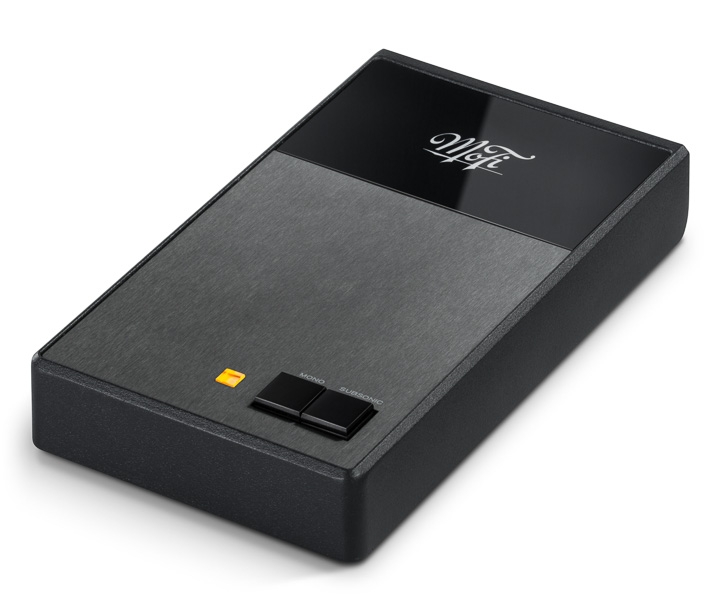
Mobile Fidelity Studiophono phono stage

Mobile Fidelity’s Impressive Studiodeck turntable and Studiotracker cartridge were reviewed in Issue 156, and rightly applauded for their build quality, excellent sonics, and set-up ease. During the process of putting my final touches on the Studiodeck review I must have inadvertently stepped on shamrock because right before I was ready to (regrettably) box up the Studiodeck, I found a compact little package waiting for me out on the doorstep. Imagine my good fortune, the Mofi Studiophono had arrived in the nick of time as not only was it potentially a great phono stage, it was a perfect excuse to keep the audition going a bit longer and have the Studiodeck sitting in my system for another few weeks. If you are still catching up on Mobile Fidelity’s latest equipment offerings, let me give you a quick recap. Mobile Fidelity, that brand you used to associate with high-end LPs, has now – via its Studiodeck and Ultradeck product lines–positioned itself as purveyor of the whole analogue front-end experience. The higher echelon ‘ultra’ line and the budget friendlier ‘studio’ series both include the full turntablist monty: cartridge, turntable, and now phonostage. The Studiophono reviewed here – like the rest of the Mofi equipment family – is a long time coming and the product of several years of meticulous research, development, and design. This prolonged design effort was led by the legendary audio electronics whisperer Tim De Paravicini and that alone demands a closer look, if only to appreciate his valued mark on the Studiophono.

Tim De Paravicini is a global analogue renaissance man of sorts who has travelled many roads over the past decades, working with EAR, Musical Fidelity, and Luxman, to name a few of his more recognisable stops. Tim was commissioned some years ago by Mobile Fidelity to completely rebuild a critical component of Mofi’s vaunted GAIN 2 mastering chain: a Studer A-80 ¼’’ reel-to-reel. Based on the success of this venture De Paravicini was uniquely suited to captain the design of the Studiophono as he understood the technical aspects and standards Mobile Fidelity sought to deliver better than anyone: to create an ultra-wide bandwidth, high transparency phono stage truly faithful to original master recordings. Tim de Paravicini oversaw all circuit design and part selection to accomplish Mofi’s mission for the Studiophono. Quite an unexpected and welcomed pedigree for a £249 component, I think you might agree.

The Studiophono is a perfect aesthetic compliment to the Studiodeck turntable and makes a handsome second step in your analogue chain. While sharing a visual connection to the Mofi turntables, the Studiodeck was not engineered with any specific sonic synergy in mind and was intended to be a piece of equipment that can stand on its own and be added into any system. The vibration resistant metal chassis is well propertied at 3-3/4’’W x1-1/4’’ H x6-5/8’’ D and with its low profile can squeeze into most tight spaces and does not necessitate its own shelf on your rack. On the operations side the Studiophono allows a wide array of gain (between 40dB and 66 dB) and loading adjustments (75 ohms-47Kohms) that will accommodate virtually any moving magnet or moving coil cartridge. Without making any adjustments Studiophono is set to operate out of the box with most high-output moving magnet or moving iron phono cartridges. If use of a low-output moving coil cartridge is desired, quick and easy adjustments are made on the underside of the unit with a bank of DIP toggle switches that you thankfully don’t have to be a PhD to figure out how to use. For the power supply, the Studiophono is equipped with a balanced external power supply that was chosen to keep noise away from the low-level circuitry in the relatively small chassis.


The only two (and therefore deemed most prominent) features on Studiophono are option buttons found on the bottom of the unit next to the power indicator light: a ‘Mono’ button and a separate ‘Subsonic’ button, both of which are meant to enable Studiophono users to dive a layer deeper into their recordings. When operating in Mono mode the two channel inputs of the Studiophono’s second stage amplifier are connected together and are said by Mofi to be the next best thing outside a dedicated Mono cartridge. I found the Mono feature to have a substantial effect that did seem to solidify and enhance the depth of some of my most treasured mono records like Analog Productions’ beautifully done 2015 reissue of Pet Sounds [Capitol], and a near-mint copy 1967 original of the Byrds’ Younger Than Yesterday[Columbia]. The added stability and enhanced soundstage layering added to the recordings when using the mono button was quite remarkable. If recent high profile Mono reissues of the Beatles catalogue, Bob Dylan, or any number of others are floating your boat currently, this feature on the Studiophono is highly recommended for an audition and worth the price of entry. The Studiophono’s “Subsonic” feature was a bit less impressive. The idea behind the subsonic filter is to prevent amplifier robbing output or ‘woofer pumping’ caused by pesky warped records. The subsonic filter is said to kick in around 20Hz the filter will go down 2.5 dB, and it rolls to 27 dB down once 5Hz is reached.  This sounds like a fine Idea, but maybe all my records were in too good of shape to need the help? I did not notice much evidence of any sonic impact toggling this switch on and off with any number or records, some very clearly warped. Nice to have as an option and maybe your playback will benefit, but I can not vouch for the effectiveness of this feature after my audition.

Given the unit’s ultra-affordable price the natural assumption would be to listen to the Studiophono expecting that a budget component of this calibre would quickly reveal itself to pick one aspect or hug one side of the sonic spectrum for dear life. Will they be clawing for warmth or scrapping for detail? Will they have to sacrifice response in the low end or high end? You get this picture and unfortunately all too many components listed under £300 continually find ways to remind us how true this assumption can be. Well some surprises are good ones after all; Mobile Fidelity has figured out how to give the Studiophono a healthy dose of sonic balance. Aided by an exceptionally quiet noise floor, I found over a wide variety of records that the Mofi Studiophono was an alert guardian of my precious analogue signal. Dynamics and detail were always present and accounted for and the sound never lost that “easy-does-it” signature analogue charm. Curtis Mayfield’s ‘Pusherman’ is quite a Superfly[Curtom] guilty pleasure and exemplifies what the Studiophono does best. An original 1972 copy of Superflyalways seems to find its way onto my platter because of its incredible atmospherics coupled with an intimate presentation that never seemed to be properly flushed out in a multitude of subsequent reissues. The Studiophono illuminated the early seventies web of tension very well that Curtis was trying to hip us all to ahead of his time. The stone groove bass line, the frantic wah wah guitar, and Curtis’ gravy smooth vocals all sparkled and seemed to have a liveliness about them. There is much to take in on the Superfly, but a harsh note is not one of them. Often I find this recording particularly revealing because with so many competing sound styles an overly lush phono section will quickly allow the instrumental interplay to turn into mush. The studiophono was able to whip the track into shape and keep everything crisp while never losing a rounded and open feel that makes the music so compelling. I was floored by the sonic sophistication the Studiophono was able to bring to my audition. The Studiophono on its own merits and even more so paired as a combo with the Studiodeck & Studiotracker outpaces anything else on the market I have heard at its price point. Higher end phono stages I had on hand like the Fosgate Signature (10x the Studiophono’s price) were certainly more musical, more nuanced, and more delicate with the sound presentation, but the margin was not as great as you might think – not by a long shot! The Studiodeck is an all star performer and does not give you the impression in any way you are missing out or making sacrifices at its £249 list price. The Studiophono will be a valued and integral part of your front-end chain, not just a budget component that is checking a necessary box for you to be able to play your records.

TECHNICAL SPECIFICATIONS

  • Type: solid-state, MM/MC phono stage
  • Phono inputs: One pair single-ended RCA
  • Analogue outputs: One pair single-ended RCA
  • Input impedance MM: 47kOhm
  • Input impedance MC: 75, 100, 500, 1k, 10k, 47k Ohms
  • Input capacitance: 100pF
  • Distortion: < .01% (MM) / < .012% (MC)
  • Dimensions (H×W×D): 3.2×9.5 x16.8cm
  • Price: £249

Manufacturer: Mobile Fidelity

URL: mofielectronics.com

Distributed by: Select Audio

URL: selectaudio.co.uk

Tel: +44(0)1900 601954

Back to reviews

Read more Mobile Fidelity reviews here

Grand Opening of HiFiPilot UK:

To celebrate the Grand Opening of HifiPilot UK, the new representative of the audio brands IOTAVX from Middlesbrough and XTZ from Torup (Sweden) in the UK. With their direct sales strategy, both brands are  famous for their price / performance ratios as well as for customer service and complete customer support. Thus, the website www.hifipilot.uk is now your best source of high quality HiFi equipment. Besides the product ranges of IOTAVX and XTZ, you can also find attractive offers on sets there.


We celebrate this Opening with some unique deals for selected products. Be quick and secure your share of these special discounts which can be found here: https://hifipilot.uk/store/category/offers/sub/deals

Aavik Acoustics U-150 Unity integrated amplifier

When a company makes a hit of an amplifier in the high-end – even if actual sales are not huge, it’s sometimes hard to listen to criticism. Especially when that criticism is muted next to the plaudits. The Aavik U-300 Unity is one such product. We loved it in issue 139 and loved it enough to give it an award, but if there was a complaint (sky high price aside), it was that the amplifier wasn’t too good in display terms. Two little white LEDs, three buttons and a volume control, echoed in the Apple handset supplied. OK, so this degree of minimalism was quite easy to understand, but you still had the occasional ‘senior moment’ when staring at two white lights trying to work out whether that means ‘volume’ or ‘source’. If I’m being honest, middle-aged eyes don’t help here because the legends on the U-300 box were not written for aging eyes.

The U-150 Unity is the response. And it comes with the kind of display you can see from across the room… even if that room is an aircraft hangar. Aavik has gone from having one of the smallest, most minimal displays, to one of the largest in the business. But it’s welcomed.

In fact, the basic layout of the Aavik design is more or less unchanged. It still has the three buttons along the top panel that control source selection, turn the amplifier on or off and mute the U-150. And it still has the huge, easy-turn central knob which behaves in a modal manner. It defaults to a volume control, but at the tap of a button turns into a source selector. I’d still like for there to be a way to access some kind of balance control, or maybe even greater set-up modes and display options from the three button, one dial combination, but… baby steps!

Functionally, too, the Aavik U-150 Unity shares much with its bigger brother. The connection count is lowered slightly and the circuit board has been re-laid to fit into the smaller footprint, but the two are more similar than they are unalike. There are three line inputs, and one set of preamp outputs. The DAC supports USB, two BNC-type S/PDIF coaxial connections and two Toslink optical connectors. Above this are the RCA inputs and earth tag for a turntable, and above the vinyl input is an RS232 port and two 12v triggers. The power connector is in the centre of the rear panel and the sides sport those finger-stripping knurled Delrin speaker terminals.

The big departure from the U-300 is that the digital and moving coil input are now optional extras, configured at purchase. In its standard guise, the U-150 is a very simple three-input integrated amplifier. This poses an interesting philosophical discussion on two sides. First, I’m wondering just how many people will take up the denuded U-150, or go with some or all of the options? I would imagine there will be very few takers for the line-only model, but more for the digital audio version and yet more for the complete system. At that point, it would be interesting to see how many people take this on as a traditional line+phono integrated amplfiier without the digital stages. Then, and this one’s the more sketchy issue, if the full-thickness U-150 offers a very similar performance to the U-300, will the cheaper model cannibalise sales of the big hitter? Interestingly, here I think the answer is a resounding ‘no’, even if the products sounded completely identical. There’s a different cachet to the none-more-black U-300 that I feel will appeal to audiophiles in a way that the more prosaic looking U-150 may struggle with. Also, and this is a cold indictment on the nature of the modern audiophile, there will be many who choose the U-300 over the U-150 simply because it’s more expensive. We in high-end audio sometimes dance around the subject of Veblen goods (expensive things that are valued for their expense), but the notion does exist in high-end audio.

Its optional circuits are not wholly identical to those fitted to the U-300. The phono stage remains a discreet, floating, balanced, ultra-low noise, bipolar input circuit with paralleled transistor pairs. This is a good match to the floating, balanced signal generator that is known as a moving coil phono cartridge. The Aavik U-150 phono stage has a base 60dB gain (which is adjustable to 70dB in 2dB steps), and the cartridge loading is adjustable from 50ohm to 10kOhm. This is slightly more flexible than the original U-300.


The DAC on the other hand shows what a difference a few years make. The original model sported a 24bit, 192kHz DAC, but this new board supports DSD 64 and DSD 128 (albeit downmixed to PCM), improves to 32bit PCM precision, and – at present unconfirmed – brings MQA to the Aavik platform. Whether or not these improvements loop back to newer versions of the U-300 remains unclear.

The core of the U-150, however, is functionally identical to the core of the U-300. It’s a 300W Class D design that, like the U-300 before it, doubles its power to 600W into a four ohm load. The arguments about Class D – both positive and negative – have been made time and again. The nay-sayers just see a cheap, cool-running chip amplifier, where the converts see that cheap, cool-running chip amplifier as the starting place to deliver a potentially high-performance sound. It’s all about the implementation, which in some cases means elegant ways to mask Class D operation behind valves or Class A current dumping circuits, and in others means equally elegant ways to extract the best from the chip itself. Aavik chose the latter option.

Back to that ‘volume’ control, which again echoes the U-300 design. Aside from a power-off switch on the rear of the amplifier, the controls are limited to three push buttons on the top plate, and that volume dial. The change here is to the new large LED displays flanking the dial itself. The logic of the trio of buttons has not changed and the button in the middle of the top plate still dims or turns off the display (with such a huge display, this becomes more imporant). As before, but with added readability, the display on the right denotes which input is in use, the one of the left shows volume in 80 steps from –80dB to 0dB. The left button on the top operates mute, but press and hold this button to choose one of three gain settings for an individual source, using the main control knob. The right hand button typically controls navigation (source selection), but press and hold this button and you go into remote control pairing mode. Aavik recommends the standard slim Apple remote to control the U-150. Press and hold both left and right buttons in a three second ‘power chord’ and the amp switches to set-up mode, adjusting the cartridge loading for the optional phono stage, some display management, and the option for a hard reboot.

Where the U-300 looks like a piece of military hardware in its ‘none-more-black’ livery, the U-150 looks and feels more like a modern piece of audio hardware, with styling reminscent of AURALiC and BMC Audio designs. This is no bad thing, as too much deviation from the mean in the looks department might spell reduced sales, but the U-300 had an ace or two up its sleeve. For example, with the U-300’s central barrel, the top buttons were clearly defined. Now they sit on a flatter, more uniform plate. The design changes do help to significantly lower the price of the U-150 however; those D’Agostino like ventilation holes in the side panels of the U-300 were very expensive to make, and the horizontal aluminium heatsink slats are a more expedient option.

What’s great here is the changes between U-300 and U-150 are all based around building a more affordable design without sacrificing the basic circuit. Stripping out subsystems that might be unnecessary for all users, and moving from a more elegant to a more functional and affordable exterior is more than justifiable if the sonics still stand up. And here we get back to the really good stuff.

The amplifier behaves ‘much’ like its bigger brother; if anything, it got to its right operating temperature faster than the U-300 thanks to those horizontal heatsinks. And yes, like its bigger brother, the Aavik runs warm for a Class D design, but not worryingly so. And it also retains that ‘is this thing on?’ noise floor.


That’s the thing about the U-150 Unity from Aavik. It sounds like the U-300. I mean really like the U-300. As in, if you read the review of the U-300, what applies there applies here. The amplifier is quiet, the phono stage excellent, the DAC is lively and entertaining, and the amplifier itself is precise and even-handed. It’s the perfect amplifier to resolve differences in component and cable (not surprising that, given it’s owned by the same people who make Ansuz cables). This poses a problem for a reviewer, in terms of potentially repeating oneself, but at least I find myself agreeing with me.

That all being said, in very close comparison, there are slight differences in performance. Where the U-300 is ‘lively’, the U-150 can tip over into ‘excitable exuberance’. That’s probably the big difference in sonic terms. It’s also paradoxically at once a little more and a little less warm than the big guy; by this, I mean it can sometimes sound slightly too warm with some recordings, but is overall less warm and rich sounding than the U-300. Otherwise, it’s that same unforced, rhythmic, boppy, detailed sound of the Aavik U-300, but for a lot less money. And, when it comes to these differences, we are seriously gilding the lily, here. For the most part, and for practically everyone, the U-150 is sonically almost identical to the U-300.

This, of course, presumes that the reader will have already read a review of the Aavik U-300, and there is no guarantee of that at all. So what do ‘they’ sound like. In a way, it tows the line between two pre/power amplfier combos also tested in this issue – the D’Agostino Progressions (p24) and the Sugden Sapphires (p43). Forget about the pricing for a moment and just think on the tone. One is sumptuous, the other dynamic. One accents the midrange, the other commands the bottom end. One is all about dynamic energy, the other a sense of flow. The Aavik U-150 sits squarely in the middle!

If anything, the Aavik U-150 falls into the inviting sounding presentation, although that makes it sound like its a bad thing. Actually, it just makes music sound like it’s the kind of thing you’d want to listen to, rather than analyse. It’s dynamic and exciting, accurate, and yet not bland or sparce. It’s just a damn good amplifier, and a perfect ambassador for Class D.

What the Aavik U-150 does so well (as the U-300 does so well) is deliver a consistent and integrated performance. Some amplifiers are a great DAC with a mediocre amp attached, or a fine line-stage with an afterthought of a phono section. The Aavik platform is none of those things. It is an exciting performer regardless of whether you are using the line stages, the DAC or the phono. And, also like the U-300, the Aavik platform really ties the music together well. Music flows well with Aavik, and the sound easily moves from theme to theme and from beat to beat.

What was a limitation on the U-300 remains a limitation here too. Only, in the context of an amplifier that costs €10,000 these problems are even less well founded than on an amplifier that costs €25,000. The need for a balance control remains, and the dynamic range of the amplifier is good, but not outstanding. This becomes less of an issue with a €10,000 amp because it’s less likely to be partnered with the kind of loudspeakers than highight such dynamic foreshortening. Toe-to-toe, the dynamic range of the U-150 is probably a little more constrained compared to the U-300. The U-150 doesn’t have the same giant killing properties, but possibly it’s not meant to have such properties. This will not be used with loudspeakers of such full-range and dynamic performance that they can fell trees at 20 paces. The U-300, on the other hand, might just end up in such a system. It doesn’t have any more muscle or definition, but maybe it just can bench-press slightly more pounds when it’s needed to.

I return to the big question again. Will the U-150 cannibalise sales of the U-300. The more time I spend with the notion, the more I think it might. Yes, if you are looking at the two from the position of a gazillionaire with a pair of giant loudspeakers, then the U-300 does have a little something extra in tow. But the thing is, I struggle to find that little something extra in day-to-day listening. The U-300 remains a great amplifier, but the U-150 is almost the same amplifier for a lot less money. That makes the U-150 an excellent addition to the audiophile roster of great products.


When it comes down to it, the Aavik U-150 stands independent its bigger brother. It reaches a different market and maybe those looking for a €25,000 amp will not even countenance the idea of a €10,000 amp, even if they perform almost identically. But at that €10,000 price point, the world just got a new champion. There can’t be many amplifier brands that would do something quite as bold as Aavik has done here!

TECHNICAL SPECIFICATIONS

  • Type: integrated amplifier
  • Inputs: Three line-level single-ended stereo pair RCA analogue inputs,
  • Optional inputs: stereo pair RCA inputs for phono, two S/PDIF Coaxial digital inputs with RCA connectors. One Toslink S/PDIF connection. USB B.
  • Outputs: Five way loudspeaker terminals, RCA pair
  • Digital formats supported: (USB and S/PDIF RCA) PCM up to 32-bit, 192kHz, , DSD 64, DSD 126, MQA to be confirmed. (S/PDIF Toslink) PCM up to 24‑bit, 96kHz
  • Power output: 30W into 8Ω, 600W into 4Ω
  • Attenuation: -80dB to 0dB in 80 steps
  • Frequency response: not specified
  • THD+N: <0.006% (1–100W, 8Ω)
  • IMD: 0.0008%
  • Dimensions (W×D×H): 44 ×37 ×8.8cm
  • Price: €10,000 (basic version)

Manufactured by: Aavik Acoustics

URL: www.aavik-acoustics.com

Tel: +45 40 51 14 31

Back to reviews

Read more Aavik Acoustics reviews here

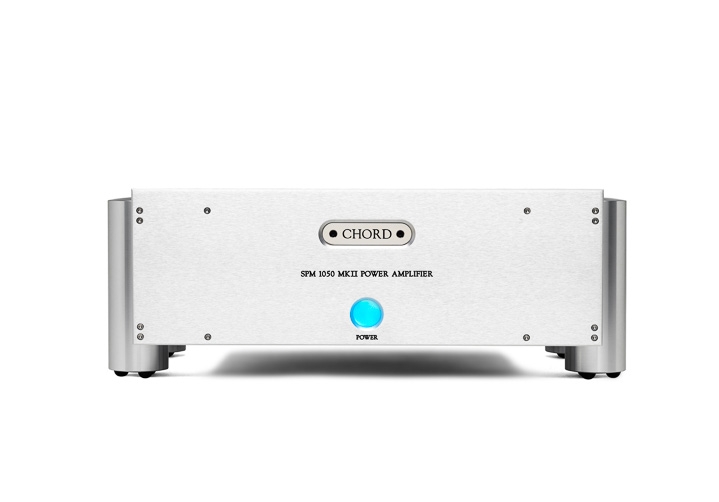
Chord Electronics DAVE DAC/SPM 1050 MkII stereo power amplifier

I think it was Krell that got the ball rolling on heavy duty chassis construction for audio. Many have picked up this ball since the 1980s but no company (in the UK at least) has run with that ball quite as enthusiastically as Chord Electronics, which manages to get more machined aluminium and stainless steel fixings into a portable DAC than many manufacturers do on a 100 Watt amplifier. It’s clearly an aesthetic that works for Chord and its customers. The DAVE DAC (I would have preferred Barry or Steve), is the only full-sized, non-portable converter in Chord’s current armoury, but it looks like it would work at depths up to 100 metres such is the solidity of the casework and the construction of porthole over the display.

DAVE is not the primary reason for this review (we reviewed it in Issue 141); it just happened to be in the right place, my listening room, at the time when Chord’s new SPM 1050 MkII power amp turned up. But it seemed an obvious partner. This is the middle model in the Kent based company’s stereo power amp roster with a specified output of 200 Watts per channel. Like all Chord amps, it’s based around a high frequency switch-mode power supply, an approach found in Linn amplifiers among a few others, which in the SPM 1050 Mk II’s case makes up to 2kW available to the four lateral structure dual-die MOSFET output transistors used in each channel. The Mk II suffix indicates that this SPM 1050 has lower output distortion, improved capacitance, and better isolation of the mains transformer than its first generation predecessor. All are factors that Chord claims reduces output distortion and thus increases transparency, and fidelity; in listening, there’s no reason to doubt its veracity.

To recap, DAVE isn’t just a made up name, it stands for Digital to Analogue Veritas in Extremis, although I doubt that will be a question that comes up on University Challengein the foreseeable future. DAVE has rather more features up its bolted down sleeves than you might imagine, but it is the most advanced DAC that Chord has ever made. As with all such creations from the company, it’s not based on a mass-produced chipset but on an FPGA or ‘field programmable gate array’, a device that is claimed to have 1,000 times the processing power of a normal digital to analogue chipset. Chord’s digital wizard is Rob Watts, one of the only men in audio who talks about taps in D/A converters, which is partly because this term relates to an era when you tapped into a delay line to store data samples when interpolating the steps between sample points in the digital to analogue conversion process. Stay with me, here. Watts is of the opinion that for maximum timing accuracy you need an infinite number of taps and as DAVE is thus far his most advanced converter it has a fair few of them, 164,000 to be precise. Like all of Chord’s converters it upsamples quite heavily, too: 2,048 times in fact, both numbers being possible thanks to the power of the FPGA, which Watts describes as “a sea of gates that you can connect together to make any digital device you like. You could make a PC processor out of an FPGA, or a device that controls a rover on Mars.”

In terms of features, DAVE is also well equipped; it has eight digital inputs all but RJ45 and RCA coaxial types. The former is still uncommon on DACs, but the latter, while a compromise, is also very popular and it seems slightly odd that not one of the four coaxial inputs has this connector. They are all BNCs which are true 75 Ohm connections and thus well suited to the task, but only high-end sources have this as an output. Watts himself prefers optical connections and DAVE has two Toslink examples alongside computer audio favourite USB, which can cope with the highest 768kHz sample rate and is good for DSD. The converter itself supports DSD up to DSD512, both native and DoP. Switching between inputs proved more challenging than expected, there are four switches around the volume knob on DAVE but if you press the north or south ones it changes the function of the west and east buttons that usually switch between inputs, so I gave up and used the remote. Chord’s operational logic often meets operator incompetence, chezKennedy. I was able to switch between volume controlled and fixed output however, the latter being an option that isn’t often included on DAC/preamplifiers today; on most DAC/preamps you usually have to wind the level to max. This comes down to the custom nature of the DSP on DAVE, and is one of many variables you can tweak. These include high frequency filter switching, display colour options that can be quite lurid but indicate sample frequencies: e.g., red for 44.1kHz, dark blue for 192kHz, with shades in between and beyond. How you are supposed to remember which colour means which sample rate is another question but not one you really need to answer. More useful are phase switching, dual data mode for split channel digital connections, DSD and PCM specific modes that will work with the other format but are optimised for one, and headphone mode which offers four crossfeed settings and the potential to drive impedances from 8 to 800 Ohms.


Its perfect partner – the SPM-1050 MkII – is a simpler beast on the outside, but it still has a dash of colour; the on/off switch looks likea large acrylic ball and indicates its status with three colours that let you know if it’s off, warming up, or on. As the middle process takes not long at all this button is usually red (off) or light blue (on). The back panel is surprisingly cramped for a full width device, all the in- and outputs being situated in the middle around a 10A mains inlet. This takes a bigger IEC plug than usual and meant that I had no choice but use the cable in the box, but Chord’s very design is supposed to minimise the need for esoteric power cords. As it has RCA connectors, most of the listening was spent with Townshend Audio Fractal single-ended interconnects and the F1 Fractal speaker cable from the same company, but I also tried the XLR balanced connection with more prosaic cabling just to see if that would make a difference.

I initially hooked DAVE up to my regular ATC P2 power amp and to the server with a USB connection and while the result had good depth and vitality with plenty of low level detail, not to mention drive in the bass, it seemed a little lacking in overall resolution and quality of timing. So I switched to the indirect approach and put an AURALiC ARIES LE streamer between server and DAC with Ethernet to the AURALiC and then Chord Co Signature coax to DAVE and this was a lot more enjoyable. Alfa Mist’s ‘Keep On’ [Antiphon, Pink Bird] had really good high frequencies, dimensionality, and immediacy. That was via my reference PMC Fact.8 speakers – a combination that after a while proved a little bit too immediate and forward. Hence, I switched to the more relaxed Q-Acoustics Concept 500 floorstanders, which made the not quite CD standard of Qobuz sound pretty darn good with the right tunes. I tried the USB direct/coax and streamer comparison again and while USB gave decent timing it couldn’t compete with the three dimensionality of the alternative approach even though that involves more potential loss between source and converter.

Switching to the Chord SPM 1050 MkII and playing Ahmad Jamal’s The Awakening[Impulse], I was struck by both the brilliance of the playing and the distinctive late 1960s character of the recording, but that did nothing to undermine the groove, which is aided by the SPM 1050 MkII’s solid bottom end. The body of the double bass when it joins the piano’s bass notes is clearly defined and the whole band are clearly in the pocket, cooking with gas, and therefore contravening several fire safety codes. Continuing the classic jazz tip with Lee Morgan’s The Sidewinder[Blue Note], this system gave fabulous horn stabs, clear-cut cymbal action, and snare snap with bass in the background. It also digs out great subtlety in Morgan’s solo. The SPM 1050 MkII has excellent control of low frequencies, that much is obvious when playing ‘Royals’ [Lorde, Pure Heroine, Universal], which was extremely articulate in the bass and had extra helpings of reverb on the click sound.

Switching to the more revealing and demanding Bowers & Wilkins 802 D3 speakers results were similar, but more clear cut. Here the Chord pairing cuts through some of the ‘thickener’ on the Mobile Fidelity recording of ‘Company’ [Patricia Barber, Modern Cool, Premonition] and delivered tighter bass if not the full vinyl style midrange transparency that the recording is capable of. Radiohead’s ‘Decks Dark’ [A Moon Shaped Pool, XL], on the other hand, was full of detail; the various sounds on it were placed precisely between and beyond the actual speakers, so there’s plenty of differentiation between recordings, that’s for sure. Ryan Adams and the Cardinals’ live version of ‘Hallelujah’ had plenty of tension alongside the atmosphere of the live event and there was real focus on the feeling in the voice. Alison Krauss + Union Stations’ Live[Decca], on the other hand sounded very easy with natural timing, although I have heard this more ‘vibrant’.

High frequencies are slightly accented, but this doesn’t undermine transparency through the midband , which means you get plenty of expression out of everything from voices to saxophones. Denser recordings could sound a little thin sometimes: Beethoven’s 7th [Barenboim, Beethoven For All, Symphony No.7 in A, Op.92, 24/96, Decca] while having no shortage of power, did lack some nuanced musical flow. Chamber music worked a lot better, especially with recordings that benefit from the exposure provided by these components.

Usually with DAC/preamps the volume control is a limiting factor and adding my Townshend Allegri between them and the power amp is obviously beneficial, but not here. This is the first time I have found a component like this that performs better on its own, delivering greater delicacy and dynamic subtlety thanks to higher overall resolution. I also tried the AES/EBU connection to DAVE and despite not having a dedicated balanced digital cable, this connection proved nearly as good as the dedicated digital coax with a slightly less extended top end which gave it a more relaxed balance overall. I also tried a balanced connection from DAVE to SPM 1050 MkII but the relatively real-world nature of the cabling was no match for the Townshend RCA connection, especially when it came to depth of image and layering therein.


I also tried the DSD+ and PCM+ settings which clearly benefit the relevant formats to the extent that you have to wonder why these don’t automatically switch when a DSD or PCM signal comes along. The marvellous 2L label from Norway makes great recordings in all manner of formats and gives away sample tracks. It’s possible to contrast the same performance in 24/192 and DSD128, for instance. This was done with the Mozart Violin concerto in D major (Marianne Thorsen, violin TrondheimSolistene) and delivered a distinct difference between both formats via their appropriate settings and when playing DSD through the PCM+ setting. In the latter case there is more focus and a clearer sense of the recording venue with DSD via DSD+, but this increased with the PCM version on the PCM+ filter, which sounded that much more realistic.

Chord’s DAVE is clearly an impressive piece of digital audio hardware, but it’s not alone; going direct from DAC to amp makes a lot of sense when it’s this DAC and the Chord SPM 1050 Mk II. The SPM 1050 MkII is a powerful and precise amplifier that with the right speakers can deliver the goods in convincing fashion. Not having heard its predecessor I can’t say if it’s a major upgrade, but that’s not really the point. Chord Electronics may be making waves in the portable audio market, but it’s never taken its eye off the ‘real’ hi-fi market. With all the attention placed on the DACs, it’s easy to skip over Chord’s amps. Don’t… there’s a lot of ‘excellence’ here.

TECHNICAL SPECIFICATIONS

Chord DAVE

  • Type: Solid-state high-resolution PCM and DSD-capable digital-to-analogue converter/preamplifier
  • Digital Inputs: One AES/EBU, four Coaxial BNC, two Toslink, and one USB Type B
  • Analogue Outputs: One stereo single-ended (via RCA jacks), one balanced (via XLR connectors). Both outputs are configurable for fixed or variable level operation
  • DAC Resolution/Supported Digital Formats: All PCM from 44.1KS/s to 768KS/s with word lengths up to 32-bit, DSD64, DSD128, DSD512. The following format restrictions apply:
    769KS/s and 384KS/s are supported through USB only
    32-bit word lengths supported through USB only
  • Frequency Response: 20Hz–20kHz, ± 0.1dB
  • Distortion (THD + Noise): Not specified
  • Output Voltage: Not specified
  • User Interface: LCD display and remote handset
  • Dimensions (H×W×D): 71 ×333.5 ×154mm
  • Weight: 7kg
  • Price: £8,499

Chord SPM 1050 Mk II

  • Type: solid state stereo power amplifier
  • Analogue inputs: One pair balanced (via XLR), one pair single ended (via RCA jacks)
  • Analogue outputs: One pair of speaker taps (via 5-way binding posts)
  • Power output: 200Wpc @ 8 Ohms
  • Bandwidth: 0.2Hz–46kHz -1dB
  • Sensitivity: Not specified
  • Distortion: 0.05% distortion into 8Ω
  • Signal to Noise Ratio: Better than 103dB
  • Dimensions (H×W×D): 128 ×480 ×355mm (including Integra legs)
  • Weight: 10kg
  • Price: £5,450

Manufacturer: Chord Electronics

Tel: 01622 721444

URL: chordelectronics.co.uk 

Back to reviews

Read more Chord Electronics reviews here

Shunyata Research Denali D6000/T power distributor

The Denali by Shunyata Research is one of those products that came late to the UK. Everywhere else in the world (starting from the US on out) got the power distributor before us, but it was worth the wait; in making the Denali compatible with UK domestic mains power regulations, we ended up getting a slightly beefier version of the Denali that will now (no pun intended) filter through to other Denali customers. Not so much a Mark 2 Denali, more a Denali Version 1.1, and in fairness those changes shouldn’t amount to a sonic difference (so no need for owners of existing Denalis to start thinking of a trade-up) but we still get to reap the benefits.

There is also a significant back-story to the Denali, underpinning all of Shunyata’s recent products. A few years ago, one of Shunyata Research’s clients was so impressed by what his Hydra Triton/Typhon power distribution box did to his audio system, he wondered if it could help in his day job. So, he brought the Shunyata product to work… and plugged it into the medical imaging device he used in his cardiology surgery. The resultant drop in noise floor he experienced at home also happened at the operating table; he could use the imaging products with greater definition, and – as a direct result – more operations had a successful outcome (given this is a cardiologist searching for vital electrical impulses in the heart itself, the opposite to ‘a successful outcome’ is pretty bleak). When this story filtered back (pun intended) to Shunyata’s boss Caelin Gabriel, he created a division of the company – Clear Image Scientific®– to help improve the resolution of medical imaging devices through cleaner power. That Shunyata’s products have a direct effect on medical imaging products is no surprise given Caelin Gabriel’s previous career in ultra-sensitive data acquisition systems. He’s used to pulling a signal out of a sea of noise, but that’s as near as it gets to discussing what Gabriel did in that past life because it’s all redacted Area 51 stuff. However, the innovations from CIS pass to subsequent generations of Shunyata Research products, and vice versa. The Denali line is a direct recipient of this bilateral research and development pathway.

Central to Shunyata’s concepts, the Denali features CCI (Component to Component Interference), introduced many years ago with the introduction of the Hydra Model-8. The Denali was the first Shunyata Research product to use the CCI ‘Medical Grade’ filters that were developed specifically for the CIS power conditioner. These filters are designed to reduce noise by more than 40dB at 1MHz, which is also a marked improvement over the 24dB reduction provided by the aforementioned Hydra, Shunyata’s previous flagship design. The Denali uses two patented technologies in its design, the first being the NIC (Noise Isolation Chamber), which was introduced in the original Triton. The second technology is the QR/BB, which was developed under the medical research program. The Denali actually eclipsed the performance of the reference Triton for a time, but Shunyata created a third version of the flagship that included a similar hybrid technology from the Denali series, but in a larger and more effective form.

As the acronym suggests, the CCI filters not only reduce mains noise, but also isolate the audio components from one another. As we inexorably move from an analogue world (with digital sources) to a more mixed audio palette with a greater number of digital sources, often involving some kind of Wi-Fi system, this need to separate the influences of one product on its fellow rack-mates is becoming a primary concern. The Denali helps to not only keep mains-borne noise from outside the system stay outside the system, it helps prevent inter-component contamination. As the other work-around option is multiple boxes to work on each component, the integrated, but separated, approach works for me.

Alongside the CCI filters, the Denali also sports a patented ‘QR/BB’ dynamic enhancement. Typically, a power conditioner stores some power in capacitors, chokes, or coils. This is available to the devices that use the conditioner, but big ‘pulls’ on power delivery from the wall are not completely instantaneous as a result. This is why many power conditioners got short shrift with users of big power amplifiers, or – paradoxically – smaller power amps with stiff power supplies that give a taut, fast rhythm. In the first case, a power conditioner can seem to dynamically compress the sound, in the latter it acts to slow it down. Not here, though.

QR/BB removes all those chokes and caps from the path, and in the process (according to Shunyata, at least) makes the current delivery more dynamic than the raw AC mains itself!


Acronym lovers will also appreciate Shunyata’s KPIP (Kinetic Phase Inversion Process; a proprietary treatment used to speed up running in), and CGS (Chassis Ground System) terminal, or the earth/grounding tag that sits at the bottom of the Denali and can be connected as a floating ground to other devices. It also has 40,000 amps’ worth of transient protection (under the Trident banner), eight-gauge internal wire, and a special ‘hydraulic electromagnetic breaker to prevent it being undermined by a noisy fuse. Fuses are a function of UK power, and the plugs in the Alpha EF and NR cables used in the chain are all of the best quality.

The six outlets on the rear of the Denali now feature 13A three-pin UK sockets (part of the hold-up to getting a UK version was the manufacture of Shunyata’s own CopperCONN™ nickel-plated pure copper conductors in UK form), and the Denali itself has a 16A IEC C20 input. The six sockets are sub-divided into a high-current pair (for power amplifiers) and four standard current sockets for sources. The original US version further sub-divided the sockets into three zones, with maximum isolation between these zones; the topmost two rated at 15A continuous, while the third (‘Z3’) is the high-current circuit, rated at 16A continuous. Unlike most power distribution products, the Denali is no shelf-hogger; it stands vertically next to the system, a tower design that, from the front at least, looks like an obelisk. A platinum obelisk rising out of an aluminium base, and four stainless-steel feet. There is a rack-mounted D6000/S version and a smaller two-outlet D2000/T that are both available in the US and the EU, but haven’t made it to Blighty yet.

Often with power conditioners, the effect is somewhat nuanced. It’s either a ‘back-and-forth’ thing, or a ‘put it in the system for two weeks and see if you can live without it when you remove it’ kind of subtle effect. That isn’t to say the effect is too subtle to be of actual benefit, but it’s not the kind of immediate, transformational change for the better you might find from upgrading an amplifier or a player, for example. The Denali is one of the rare exceptions: you put it in the system, and the system immediately sounds better… job done, open wallet and extract money.

But exactly what is ‘better’ in this context? It’s an important upgrade to that sense of not sitting in front of electronics, but instead enjoying the musical experience as it should be experienced. Those little niggles that exist even in a top-flight system – the slight harshness in the upper mid, the pervasive scratchiness in the mid-bass that isn’t quite undermining enough to require extensive system surgery, but never fully go away – are drastically reduced. I knew I was on to something when the normal listening test music quickly came and went and was replaced by things you might want to try and experience; such as ‘Fantastic Planet’ from Soil and ‘Pimp’ Sessions’ Planet Pimp[Victor]. In fact, what the Denali does is rid the world of over-rich tonal colours and excesses. This opens up a wider gamut of music to the listener (hence the aforementioned Japanese Death Jazz). And, while I can see some wanting their music more brightly lit, most will quickly realise that the significant increase in tonal palette is better than overt, over-processed sound.

This is sound less distorted, pure and simple. It sounds like your electronics are tampering with the sound less than before, almost irrespective of the type of electronics used. It’s the system you bought in the first place, as it should be. I tried the Denali on a range of products from source to subwoofer, and solid-state to tube, and it worked more or less universally. The ‘more or less’ part applies to turntables – not that it undermined the vinyl performance, it just made little difference. Everything else gratefully received the Denali’s juice. OK, so I doubt anyone with £5,000 worth of system is going to use a £5,950 power conditioner, but otherwise go for it, and you quickly realise why the Denali is one of those products that is universally well received in the high-end fraternity. Because it’s damn good!

TECHNICAL SPECIFICATIONS

  • Mains inlet: 16A IEC C20 input
  • Mains outlets: 4x7A and 2x16A
  • Noise suppression: Zone 1 to Zone 2: >60dB (500kHz–10MHz), >24dB (100kHz–30MHz); Inlet to Z1 or Z2: >25dB (500kHz–30MHz); Inlet to Z3: >15dB (100kHz–30MHz)
  • Max continuous current (UK):16A
  • Peak instantaneous current: >1000A @10MS
  • Dimensions (W×H×D): 20×45 ×44cm
  • Weight: 11 kg
  • Price: £5,950 (Alpha EF power cable, £1,320. Alpha NR cables, £1,650)

Manufacturer: Shunyata Research Inc.

URL: shunyata.com

Distributed in the UK by: the Shunyata Distribution company

Tel: +44(0) 330 223 3769

URL: shunyata-uk.com

Back to reviews

Read more Shunyata reviews here

Loud & Clear/Naim music streamer event – Thursday August 23rd

Based out of extensive showrooms in the Finnieston part of Glasgow,  Loud & Clear have been designing supplying, installing and supporting Naim hi-fi systems for over 20 years.

To help celebrate the introduction of Naim ‘s brand new range of music streamers – Loud & Clear are hosting the exclusive Scottish launch of the flagship ND555

Hosted at the prestigious Hotel du Vin at One Devonshire Gardens in Glasgow’s West End – the event will showcase the  £19599 ND555/555PS in the context of a NAC552/NAP500 reference system. The event will run on Thursday August 23rd from 7pm  with presentations at 7.30 pm and 9pm.Representatives from both Naim Audio and Loud & Clear will be on hand to answer any questions.   

https://www.hotelduvin.com/<wbr></wbr>locations/glasgow/meetings/

Visitor can be assured of great tunes on an amazing hi-fi system !

Spaces are limited and demand is high – so please either contact Barbra on 0141 221 0221, email [email protected]  or register on 

Eventbrite https://www.eventbrite.co.uk/<wbr></wbr>e/naim-audio-nd555-scottish-<wbr></wbr>launch-tickets-47219881938

Sugden Sapphire DAP‑800 preamp and FBA-800 power amplifier

For just over half a century, for almost as long as there have been transistor amplifiers in fact, there has been Sugden. The company moves to its own beat; it makes amps that don’t follow the trend, and makes products that sound truly lovely in the right systems. The Sapphire range is the latest from a brand that cycles its products about once in a generation.

‘Range’ is probably an ambitious way of putting things. There is a preamp and a stereo power amp. The DAP-800 preamplifier is designed as a bit of a one-stop-shop, with balanced and single-ended inputs, a built-in DAC… but no phono stage or network streaming capacity.

The key sections of the preamp (analogue and digital) are self-contained, each having their own power supply voltage regulation and circuit board assemblies, to the point where the analogue stage uses a toroidal transformer while the digital section has its own E-core transformer. This means the digital power supplies are totally isolated from the analogue stage.

The DAP-800’s analogue stage features what Sugden calls a ‘VCV’ (Voltage Controlled Volume) circuit, which first featured in its Masterclass amps, and is seen here in its latest and most developed form. This circuit has a high impedance input section and a current gain stage, which drives a folded cascode stage into a Class A output stage. The folded cascode circuit facilitates a wide bandwidth with maximum dynamics and low capacitive connectivity. The volume control does not attenuate the signal; instead it ‘informs’ the current gain stage of the correct volume level. This means the tonal balance is constant irrespective of the output level, as opposed to most potentiometers and even ladder resistor array active volume controls.

The DAC connects to the digital outside world through inputs for USB, and optical and coaxial S/PDIF signals. The actual DAC is a non-oversampling, digital filtering-free, DAC capable of 24 bit/96kHz precision and where the digital interface transceiver is a Wolfson Micro electronics device. The DAC also includes Post Conversion Filtering in the analogue output stage. The USB signal received is converted via a circuit including a Texas Instruments Universal IC whose
S/PDIF output signal is reclocked and dejittered by the Wolfson interface transceiver.

This DAC configuration has been adopted for Sugden’s digital processing after many many hours of auditioning of a wide sample of DSPs. It was first used in the company’s Masterclass DAC-4 processor, and – with Sugden no longer building the CD player to match the A21 – the DAC-4 and DAC built into the DAP-800 represent the company’s main digital ‘push’.


The choice of on-board DAC is intriguing. As discussed, it’s a 96kHz, 24-bit non-oversampling design, built for performance, not for the numbers. That’s an aproach more commonly seen on Audio Note and 47 Laboratory DACs and the occcasional tweaky models that periodically spring up and vanish soon after – not from a brand better known for making products that stay in production for decades. Actually, that sort of fits. Those seeking the Best Of The Moment in the numbers and acronyms arms race need not apply, as this one is for the listeners. On the other hand, those who buy in an unfaddy manner will appreciate something that doesn’t follow this arms race, and are likely to limit their music to ripped 16/44 CDs and similar-level offerings online. My concern here is that those with 24/192 files from high-res providers will not find their files supported as there is no downconversion option. So long as that’s known up-front by potential DAP-800 owners, that possibly is no big deal. Regardless, a DAC that only works to 24/96 precision will invariably result in a host of ‘No DSD… count me out’ comments, often from people who have no DSD files and no intention of owning any DSD files. Those who go searching for reasons why they don’t need to buy have found a reason without ever having to take the trouble to dig further. Consider this a service rendered to the measurebators and spec-freaks – this is not for you, and you can go about your business untrammelled by Sugden’s really rather good sounding DAP-800 preamp.

Similarly, a 40W power amplifier – even though it’s pumping out those 40W in pure Class A – will turn people away. There are some who might have legitimate call to be turned away here. You might have a loudspeaker that has the efficiency of a marble pillar and want to play those speakers at PA levels in an aircraft hanger. However, a surprising number of listeners will never get much past the first one or two watts on an amplifier, and it’s here where the FBA-800 shines.

The FBA-800 gets its prefix because it is a ‘Floating Bridge Amplifier’. And yes, I too am trying not to whistle the theme tune to Monkeyas I wrote that. Floating Bridge Amplifier is actually extremely descriptive as the amplifier operates in bridged mode with the output earth floating. Each channel consists of two amplifiers working as voltage amplifiers driving an output stage of bridged power transistors. This means the amp works in pure balanced operation from input to output if you select XLR connections. The advantages are a low noise floor, better power output relative to the voltage rails, and – with the fixed current of the Class A mode – low output impedance and better load tolerance.

The Power amplifier is DC coupled, with a servo lock, and features a full DC protection circuit. This circuit is statically switched using extremely low impedance MOSFET switching devices. This circuit also acts as a soft-start switch. The FBA-800’s power supply is a low impedance design with a single custom made bi-filar wound transformer with four separate windings. Its main smoothing capacitors for the output stage are specially developed for professional audio applications with excellent ripple characteristics and long life. These ultimately feed to the four power transistors per channel in the output stages. These are multi emitter devices with an output capability of 26 amps per device.

There’s a sense of overbuild here, but not to excess. For example, although the amplifier is rated at 40W per channel, the transformers are specced for 350W use. Like all Sugden amps, the circuit boards all use plated-through-hole PCBs and the company eschews surface-mount devices. As there are reports of tiny components and greater potential for tin whiskers (solder forming its own dendrites in an EM field) over the decades, this might not be a bad idea.


Power amplifiers are not known for their functionality, but the FBA-800 is remarkably comprehensively specified. It has two buttons on the front panel alongside the big on/off switch. One switches between balanced and single-ended operation, and the other lowers the input sensitivty by -6dB. This allows the user to adjust the gain structure to better match the preamp and loudspeakers. This is a surprisingly useful addition, especially for those who want to look beyond the Sapphire preamp.

Let’s not beat around the bush here. The FBA-800 runs hot. 40W in Class A pumps out a lot of heat, a surprising amount given the eco-friendly nature of the world today. Of course when powered down power consumption isn’t an issue, but this amp could pass as a space heater. But, that’s the price you pay for good sound, and the FBA-800 sounds really, really good. But we are running away with the story here. Let’s start with the system and the preamp.

I used the Sugden combination with a variety of sources, but predominantly from my MacBook Pro through the USB input and via S/PDIF from a Naim Uniti Core server. Both balanced and single-ended connections between pre and power were tried, using Nordost Blue Heaven, Cardas Clear, and generic microphone cable, and the matching Nordost and Cardas cables were used in building the whole system. Speakers were either Chartwell LS6/f towers or Wilson Audio Duette 2s, although the Dynaudio Contour 30 did see some Sugden action, too.

The good news is that the amplfiers do not require extravagent cable wrangling. Differences between cables could be heard and provided advantages in system building, but the system was just as comfy with a set of microphone cables between the preamp and power amplifier. In listening, I moderately preferred the balanced operation, but unless you are using long cables, it’s a bit of a tie.

Now we can talk about the sound. Sugden is trying a tag line that says ‘Rescuing Music From Technology’ and it fits perfectly here. These are products that ooze musical enjoyment from every extremely hot pore. This is a sound quality that delivers the detail goods, but you never, ever notice because the overarching feeling is one of sheer listening enjoyment. There is nothing forward about the sound of the Sugden system, but there is nothing laid back about the sound either. Instead, it just draws you in. I am reminded of the A21SE by the same company, which I have used – off and on – almost since it was launched. OK, so the O-rings on the feet eventually fell off after about 15 years, and I had to superglue one of the grilles after about a decade of use, but that amp just keeps coming out of storage and being used, not because it’s a reference point but just because it’s like a musical homecoming. Music sounds right on that amplifier, but it sounds even more right here.

At first flush, you’ll tend toward playing relatively gentle music. It’s like you need to get through your Vaughan Williams  phase on the Sugdens. You do this because it’s so rewarding, the sense of layering to the music, the sheer charm, and effortlessness to the sound is perfectly expressed in slightly flowing, gentle music designed for a pastoral mood. It’s like night-birds listening to ‘Sailing By’ at the end of the Radio 4 broadcasting day to reset their calm levels.

That feeling is temporary, however. Pretty soon, you are trawling through the meatier end of the collection, often through jazz and into rock. These Sugdens can handle every type of music you throw at them, but there’s an in-head process you go through. It’s a voyage of musical redescovery. I found myself listening to some very well-trodden musical paths, even to the point of listening to all of Kind of Blueby Miles Davis [Columbia]. Like practically anyone who has listened to an audio system, or has eaten in a restaurant, I know that album backwards. There’s no tread left anymore… except I found myself listening to that album in full through the Sugden combo, and loving every minute of it.

There’s a temptation to equate warm electronics with warm sound, and there is a kernel of truth to the connection. But that warmth doesn’t come at the expense of leading edge delivery and it doesn’t just make a huge soundstage as some kind of crowd pleaser. In fact, the combination – but especially the power amp – are extremely good at presenting the leading edges of music in a way that preserves timing information but doesn’t swamp the tonality or musical enjoyment at the same time. It’s the way the sound is just pulled together in one effortless gestalt that matters, and that’s what the Sugden amps do so well. You don’t tend to focus on elements of the sound because the music is so overarching, but if you force yourself to break up the sonic performance into bite-sized pieces, all those pieces are at or close to the top of their respective games. So when listening to Laura Marling singing ‘Take the Night Off’ [Once I Was An Eagle, Virgin], you not only have the stereo separation of voice and guitar, the detail and vocal articulation, the microdynamics of string noises, and the dynamic range of her singing rising out of the aether, but you get the added bonus of all of those things working together.

This shines through with the non-oversampling DAC, although I can’t help feeling this is a good and musical DAC in an otherwise fantastic system.


Actually, I’m about 8/10 with the DAP-800. I like its overall performance, and what could be thought of as a limitation in the DAC actually turns out to be the star of the preamp show. It’s a flexible and good sounding model and a keenly priced one at that. But it’s not the FBA-800. That’s something really special. It’s good with its Sugden brother, but it would really shine on the end of a superstar preamp, the kind that people talk of in hushed tones and are willing to spend tens of thousands owning. If I’m 8/10 on the DAP-800, I’m at about 11.5 out of 10 for the FBA-800. It’s best in balanced mode and that might keep away those who went from ‘purist’ to ‘puritanical’ but forget the connections, and even forget the 40W power output – these are some of the nicest watts you’ll ever hear. This isn’t just a world-class power amp, it sounds like home. If you can relate to what I mean by that, you are on the way to owning a Sugden Sapphire.

TECHNICAL SPECIFICATIONS

DAP-800

  • Inputs: Four line level inputs, one balanced input, bypass
  • Digital Inputs: Three S/PDIF coax, two S/PDIF optical, one USB type B, Word length up to 24bit 96k
  • Outputs: Two line level outputs, one balanced output, tape output
  • Volume Control: Motorised remote control (analogue) RC5 compatible
  • Mains Power Switching: Separate for analogue and digital circuits
  • Input Sensitivity:120mV for 1 Volt out
  • Maximum Output: 9 Volts
  • Frequency Response: 0dB 15Hz–98kHz
  • Bandwidth: 8Hz–125kHz
  • Signal to Noise: >85dB
  • Distortion: <0.05% @ 1kHz, 1 Volt out
  • Dimensions: 120 ×430 ×340mm (hwd)
  • Gross Weight (packed): 10kgs
  • Price: £4,635

FBA-800

  • Type: power amplifier
  • Inputs: Stereo line level, stereo balanced
  • Outputs: Stereo pair multi-way locking binding posts
  • Front Panel Gain Selector: 6dB input attenuation
  • Front Panel Input Selector: RCA or XLR
  • Input Sensitivity: 735mV for full output
  • Power Output: 40 Watts into 8 Ohms both channels working
  • Frequency Response: 0dB 20Hz–80kHz
  • Bandwidth: 6Hz–113kHz
  • Signal to Noise: >96dB
  • Distortion at 1 Watt 1kHz: >0.05%
  • Dimensions (H×W×D): 21 ×43 ×46cm
  • Weight (packed): 25kgs
  • Price: £6,635

Manufactured by: Sugden Audio

URL: sugdenaudio.com

Tel: +44 (0) 1924 404088

Back to reviews

Read more Sugden Audio reviews here

Bel Canto Design Black EX integrated amplifier

Bel Canto Design has been producing terrific sounding gear for over twenty years. Based in the heart of downtown Minneapolis, Minnesota, the firm began as a tube specialist yet has evolved into a premier solid-state shop. Founder John Stronczer is a dedicated engineer and passionate audiophile who examines the benefit of every part to ensure it is a necessary component of sufficient quality to add meaningfully to the whole of the piece. I have had a couple of opportunities to spend time at Bel Canto HQ and I can attest to the measured approach and high standards used to infuse a bit of audio magic into their gear. John’s attention to both the engineering and sonic benefits of each part create wonder and once again I am privileged to enjoy their latest work.

The Bel Canto Black series was a mighty leap into ultra-high-end audio a few years ago. The Black is a three-box system that was not exactly a dual mono amp and preamp combo. The third box was so much more than a preamp and more of a convergence control unit. Imposing, with black anodized aluminium glowing with HAL 9000 inspired red LED’s, the Black system was a high-end coming-out party for the company. At around £55,000 it was by far the brand’s most expensive and sophisticated offering. Indeed, it has been hailed by the press for the impressive sound quality and the digital and analogue convergent tech. Fortunately for the rest of us, the last few years have seen some ‘trickle-down’ from this system; first to the impressive Black ACI 600 integrated at around £25,000 and now the Black EX Integrated, the subject of this review, at £15,000.

Upon opening the box, you find the manual, a hefty remote control, and a BNC to RCA adapter for S/PDIF use. The Black EX is encased in thick foam underneath. First impressions of the unit are, for me, strongly favourable. It is a beautiful industrial design of black (naturally) aluminium with a display, one control wheel and a headphone jack on the front. This spartan layout belies the incredible level of customization over the sound and input options found within the Black EX’s control software. The headphone jack has its own independent circuitry that utilises a dedicated 112dB dynamic range DAC to supply its own separate output buffer stage. I found it is a more than credible device, albeit one that does require its own break in time to achieve best quality.

The Black system; The Original Black, the ACI 600, and the Black EX all are centered around two proprietary technologies. One is the AMiP platform. What is it exactly? AMiP stands for ‘Asynchronous Multi-Input Processor’. It is a multi-processor based system that manages the Ethernet interface, audio, DAC’s, and inputs to coordinate with Roon and DLNA based servers, streaming services like Tidal and MQA encoded files to access digital music in virtually any form from anywhere they can connect to. It can accept files up to 24/192 via its many digital inputs such as S/PDIF, Toslink, and AES and up to 24/384 and DSD128 via USB 2.0. As usual for these devices Mac computers require no driver. Windows machines can download the Black EX specific driver from the Bel Canto website.

The second cornerstone is Bel Canto’s HDR-II (High Dynamic Resolution) core. HDR is a result of twenty years of refinement to a DAC technology Bel Canto has chosen to refine due to the “rightness” of its D to A conversion. The DAC wars created several camps of adherents to certain DAC approaches, R2R, Delta-Sigma, Multi-Bit… so many approaches. What many audiophiles fail to grasp is the chip is a start. What the engineer does with it is likely more meaningful to good sound than the base approach. Bel Canto describes what they have achieved as the, “highest levels of analogue purity and uncompromised performance,” which basically translates to a more musical result. No digital edge or rounded off highs from the digitizing of an analog signal then converting it back. Or making the file more musical as analog if it was digitally recorded. To me the Black EX via it’s HDR-II tech has a rightness to the sound. It is not artificial. Audiophiles can debate the engineering greatness of a particular approach strictly from an engineering perspective; I frankly only care which approach yields better sound from my speakers.


Another aspect of achieving this sonic quality is the pure Class A differential analogue output from the DAC working in tandem with the balanced analogue section. The goal is to preserve all of the original dynamics from the recording regardless of the quality of signal being fed via the digital or analogue inputs. The key to this part of the processing is using constant current and voltage to bias all parts in the analog output chain. Essentially Class A is being imposed on the signal from all contributing factors. This facilitates the maintenance of all original signals and dynamics.

This now fully realised signal is passed on to the 250W into 8 Ohms or (500W into 4 Ohms) Bel Canto custom NCore Stereo amplifier that delivers of clean and ultra-quiet Class D power.

As stated earlier the available controls are minimal on both the front panel and via the remote. Yet all user adjustments of the system can be done with either. To save new settings you hold the program button or press the wheel for a few seconds to complete the save. You will initially use the save function quite a bit because the Black EX has the capability to incrementally tailor the sound to your room and personal preferences in fine detail. The first interesting feature used to customize the sound is the Tilt function. Similar to Quad’s Tilt system in the old 34 preamp, this boosts bass and cuts treble – or cuts bass and boosts treble – around 775Hz. You can adjust the tonal balance in 0.6dB increments up to a maximum 3dB variance. This is more than an EQ effort to assist with both room and loudspeaker management to personal taste. I found it to be a fun exercise that does allow for specific compensation for room anomalies.

Another very useful feature is the Bass management customization. The Black EX has one pair of RCA outputs. Each can be used to feed a powered subwoofer a mono signal. The Black EX offers a BASS EQ (Shipped in the Off position) that features a 2nd order Butterworth Low and High pass filter set. These filters allow a + or – 3dB range in 0.6dB increments up to 250Hz. Many of the newer high-end subs have their own adjustment DSP but for a simple powered sub it allows for fine integration within the system and room. The bass-management 2nd order low pass filter allows adjustment from 40Hz to 120Hz in 10 Hz increments. The High Pass filter you can deploy for your loudspeakers to tailor them as well from 40Hz to 120Hz in 10Hz increments to add even more assist to subwoofer integration. If that is not enough there is also a bass gain setting from -6dB to +6dB in one step stages. It may take some time to work through your sub setting, but your room, sub, and speakers will be in harmony. I spent a fun afternoon with the Black EX and my SVS PB12+ subwoofer finding and experimenting with the best settings. In the end I could make the sub disappear in seamless coordination with my Vandersteen Treo CT’s or I could pump up the volume with some EDM tracks and annoy my wife. Who knew she did not appreciate Basshunter?

The Black EX provides a MC/MM Phono preamp with a strong selection of settings even for low output moving coil cartridges. The curve choice is RIAA only but that should cover the majority of listener preferences. An afternoon’s listening with my VPI Prime Signature and Ortofon Cadenza Bronze MC cartridge proved to be very enjoyable. There was some depth missing compared to my reference Moon 610LP phono pre, however, considering the Moon costs half what the Black EX does the presentation was certainly a worthy one. Changing cartridge settings was a simple task via the remote control. It was overall an impressive effort for something usually underwhelming on a multi-function device.

Bel Canto has provided an IOS certified app called SEEK which allow for iDevice control over your playlists and source access. I found SEEK to work well and it was very good at searching out audio files from anywhere between my far flung networked computer system and on line streaming services. Entering my login for Tidal was simple and opened up a huge library of CD quality tunes. The Black EX as noted previously, is also in the process of becoming Roon certified. I am a Roon fan and I used Roon for most of my library control as it is much more comprehensive to music curation than SEEK. If you are not a Roon subscriber, then SEEK will serve you well.


When I reviewed the Bel Canto Ref600 Monos and the 2.7 DAC I was struck by the naturalness of the presentation. The Black EX takes that naturalness to another level. This was not what I would normally expect from a digital device and Class D amplifiers. I was enjoying an analog experience. I started with Tidal via the SEEK app on my iPhone 8 plus queueing up the FM radio 70’s staple ‘FM’ by Steely Dan from the FMmovie soundtrack [MCA]. This 16/44.1 was as clear and clean as I can ever remember hearing it. The opening guitar work had a spangle (a technical term) that cut through the bassline. The tenor sax was tone filled with just the right amount of rasp. Having listened to this song for over forty years it is one of those soundtracks of your life songs. To hear it in such a quality “analogue” presentation was incredibly satisfying. This was a great start demonstrating immediately what Bel Canto said they were striving for with their twenty-year quest to incrementally improve on their chosen DAC technology.

Next up was Murray Perahia performing Beethoven’s Piano Sonata No. 29 in B Flat Major, Op. 106 “Hammerklavier” 1. Allegro also via Tidal. Piano can be tough for digital, subject to brightness and sometimes brittle tonality I approach it with trepidation. The Black EX delivered with full tonality and a complete lack of brightness or edge. Listening to the performance I am struck by the feeling of joy and playfulness. There is an uplifting energy to the piece that was magnified by the correctness to the piano’s tone. The precision and nuance of Mr. Perahia’s playing carried through with wonderful fullness. The Black EX made this an almost live experience with its tone and dimensionality. Very well done.

Wrapping up with the SACD of Alison Krauss + Union Station Live[2002 Rounder Records] ‘The Lucky One’features Alison’s incredibly pure voice accompanied by the impeccable musicianship of Union Station. Female vocals can make or break any system. The Bel Canto Black EX Integrated’s rendering of Alison’s voice was exquisitely pure. The guitar, Dobro, and violin tone were full and full of tone. It was a superb and natural presentation.

Finally, it’s hard not to consider the Bel Canto Black EX without going to the ‘D’-word – Devialet. The slim, shiny box from Paris was the ‘shot heard round the audio world’ when it first appeared at the start of this decade, and the shockwaves continue to resonate through much of high-end audio. In truth, Devialet was and remains more prevalent in Europe and the UK than the US to my mind, but it opened the door for smaller, integrated products that retain high-end performance worldwide. I haven’t logged enough hours with a Devialet to compare directly, but the Bel Canto’s sound stands on its own. It’s not a ‘Devialet killer’ because it doesn’t need to be a ‘Devialet killer’. Audio is sufficiently broad in scope for both to coexist peacefully. But what it has in common with that French fashionista is that people with separate preamps, DACs, phono stages, power amps, power supplies and the rest listen to these one-box wonders… and often trade the lot in for this one superstar. That’s what the original D-Premier did so well, and that’s what the Bel Canto Black EX does so well, too. This is a disruptive product, challenging head on the status quo of high-end audio, and that is refreshing and a much needed catalyst for change in what can too often be an industry hide-bound in convention. Other brands should be worried, but more importantly, other brands should be learning from the Black EX and doing the same thing!


I’m trying a spot of British-style understatement: the Black EX is ‘a bit of’ a game changer. Its older siblings came first to be sure, but to bring the natural and analogue qualities to digital in most any form at this price point is exciting. This is a reference piece that would be at home anchoring any high performing system. It might save some big coin too as one box for amp, pre-amp, DAC, and streamer means a lot of high cost cables that are not needed. It has plenty of power to drive virtually any speaker, too. In the end, I am impressed. People need to hear this device and I know after doing so many will find a way to make it the centrepiece of their system.

TECHNICAL SPECIFICATIONS

  • Type: Integrated Amplifier
  • Input: Phono – 1 RCA with MM & MC capabilities, Analogue – 2 pr RCA, AES/EBU, S/PDIF, Toslink, USB A & B, RS232
  • Output: 2x RCA also can be Mono Subwoofer Out
  • Class Operation: Class-D with Class-A internal
  • Load Impedance: 8 Ohm and 4 Ohm
  • Low Level Outputs: Line Level Analogue 4.5Vrms with Bass Management
  • Headphone: 4.5 Vrms maximum, 32 Ohm minimum load
  • Maximum Data rates: 24bit/192kHz PCM AES/EBU,
    S/PDIF, TOSlink. 24bit/192kHz PCM, MQA, and DSD64 via 10/100 Ethernet, 24bits/384kHz, MQA, and DSD64/128 (DoP) USB2 Audio
  • MM/MC Input: Input Sensitivity: MM: 2.5mV to 5mV; MC: 0.25mV to 0.5mV. Input Load MM: 47K Ohms; MC: 50, 100, 500, 1000
  • RIAA Accuracy: +/- 0.25dB, 50Hz – 15kHz
  • THD+N: <0.01% 1kHz A-weighted
  • SNR: >70dB A-weighted
  • Dynamic Range: 110dB, A-weighted 20Hz – 20kHz
  • Loudspeaker Output:
    Maximum Power Output: 500W – 4 Ohm, 250W – 8 Ohm
    Minimum Load: 2 Ohms
    Peak Output Current: 25 Amperes
  • Frequency Response: -3dB 0Hz–50kHz, all loads
  • Output Connections: 2 pair WBT Nextgen binding posts
  • Dynamic Range: 125dB A-weighted
  • THD+N: <0.001%, 1kHz, 4 Ohms
  • IMD (CCIF): <0.001% 1W, 18.5:19.5kHz 1:1, 4 Ohms
  • Power usage On: 40W
  • Power usage Off: 0W
  • Power Requirements: 100-120VAC or 230-240VAC 50/60Hz Internally set
  • Dimensions (WxDxH): 451 ×394 ×89mm
  • Weight: 12 kg.
  • Price: £15,000

Manufactured by: Bel Canto Design Inc

URL: belcantodesign.com

Distributed in the UK by: Padood

URL: padood.com

Tel: +44 (0)1223 653199

Back to reviews

Read more Bel Canto reviews here

Exposure XM5 integrated amplifier

Way back in the day when Exposure were the only real competitor that Naim had in the UK, both companies made a lot of half width black boxes. They were all ugly and, in the case of Naim, strangely connected little things that sounded very entertaining while not appearing to be too bothered about neutrality and bandwidth. Since that time both brands have changed ownership but Exposure has retained its manufacturing, test, and assembly facilities in West Sussex… not far from its original base near Brighton.

Last year Exposure returned to the half-width scale for its XM range, headed up by the XM5 integrated amp but also containing the XM7 preamp and XM9 monoblock power amps, XM3 phono stage, and XM HP headphone amp. Clearly there’s an appetite for the more petite in the market for separates even at this relatively high price per cubic centimetre. Rega, for example, makes the Brio for £698 with a phono stage but no DAC while Cyrus has its One with phono stage and Bluetooth but again no digital inputs at £699, and NAD, Marantz, and Rotel offer amps with both facilities at both higher and lower price points but in slightly bigger boxes.

The £1,236 XM5 claims to be an amplifier for all seasons thanks to the inclusion of an onboard digital to analogue converter and a phono stage, which in the age of the vinyl revival is probably a good idea. It’s for moving magnet cartridges only and is marked as aux/phono suggesting that with a bit of under lid fiddling this input can be a regular line type, but apparently that is not the case; perhaps the word ‘aux’ is provided for markets that don’t want a phono stage! Otherwise there is a single line input and an AV input. The DAC has optical and coaxial inputs for S/PDIF connections to the TV or a CD player, albeit the coax ones are both on BNC sockets, which is a proper 75 Ohm connection, but not one you’ll find on many affordable sources. I presume that the USB input connects to an XMOS receiver chip as the amp comes with Windows drivers for that protocol; Mac users can just plug and play.

The XM5 has a linear power supply based on a 200VA toroidal transformer and the spec claims that, “Only high quality resistors and capacitors are used in the signal path”. The output devices are Toshiba bipolar transistors, which doesn’t mean that they have a split personality. The casework is not as fancy as some, but pretty tidy with a brushed aluminium front panel that sports buttons for scrolling through the inputs and a motorised volume pot. The remote handset is very much off the shelf and fully buttoned up, but volume is picked out in green which helps; it also has individual input selectors. Be careful with the AV input; it bypasses the volume control and goes straight to the power amp, so can only be used with sources that have their own volume adjustment, such as AV processors.


It’s clear that Exposure has tried to make as mass-market an amplifier as it can with the XM5, but in leaving out the most popular connection system used by the great unwashed they may have missed a trick. Bluetooth, for all its limitations, is the de factoconnection method for the smartphone generation, which is why you see it in amps from bigger brands. But Exposure has been in the amp business for some time and by omitting an RF receiver in the vicinity of the audio signal, many would argue better sound quality can be achieved.

The back panel of the XM5 incorporates BFA style loudspeaker connections that require a 4mm banana plug on your speaker cables – a bit like Naim amps, but without the preference for high impedance cables. I connected Townshend F1 Fractal cables to the amp and left the PMC Fact.8 speakers on the other end. This, however, didn’t prove a particularly happy match: I suspect that the power amp section of the Exposure was not really up to the task of driving this speaker with its lower than average sensitivity and highly revealing nature. The sound the two produced, while relaxed, was lazy as a result of limited dynamics and sluggish bass, but there was plenty of detail especially through the treble. This was with the Melco N1A server connected directly to the USB input so I switched to external D/A conversion courtesy of the CAD 1543 MkII in the hope that this would help matters. It did, in terms of increased vitality, but the timing remained so-so and the treble became more prominent, even though the CAD is the most relaxed of converters.

I switched to a more affordable PMC in the compact form of the twenty5.21 standmount in the hope that its smooth but revealing character would be a better match. These opened up the midrange quite nicely, with voice benefiting in particular, but they still seemed a little underpowered and prone to forwardness in the treble. That said when I put on Talking Heads’ ‘Crosseyed and Painless’ [Remain in Light, Sire] it was difficult to sit still so strong was the power of the funk. I tried a Rega Brio with these speakers and got a less refined and clean result, but one that had more vivacity, the Exposure having a calmer and larger scale presentation. At this point it seemed that another speaker was going to be necessary so I brought in the substantial Q-Acoustics Concept 500 floorstanders that have been giving excellent results with a number of amps. This proved a much more auspicious pairing with the XM5, which provided good scale, plenty of energy, and decent levels of detail resolution. Radiohead’s ‘Decks Dark’ [A Moon Shaped Pool,XL] was delivered with power and scale aplenty, the bass having good weight, and the spatial effects of the production coming through well, if not to the full extent available. The more challenging nature of Beethoven’s 7th was not as well handled, however; timing cues needed to be more obvious and the dynamics that make this piece so engaging were not fully realised.

I decided to try the phono stage and went through the faff of installing a Goldring 1042 moving magnet in a Rega RP8 for the purpose; happily it was worth the effort when the stylus hit the groove on Leo Kottke’s Great Big Boy[Private Music]. I don’t usually use MMs, but when they are as good as this Goldring there’s a lot to enjoy; dense fine detail produces a strong sense of presence that almost puts the musician in the room. Timing is better thanks to the source and the bass drum kick has harmonics that fill up the soundstage so well that it takes a while to notice how good the voice is. MCs might do highs better but not many have midrange clarity of this calibre – clarity that makes lyrics that much easier to understand. The acid wit of Patricia Barber’s vocls in ‘Company’ [Modern Cool, Premonition] is placed front and centre until the drum and bass take over and deliver muscular backing for the trumpet break. Vinyl was proving to be rather addictive through the XM5 however, so I switched back to the USB input with the same track albeit in a slightly different Mobile Fidelity Original Masters form where the balance is heavier and smoother: this was just as powerful but lacked the energy of the vinyl.


There are of course other digital inputs available and by running Ethernet from the server to an AURALiC ARIES I was able to take advantage of the coax option. This provided a distinctly more musical and dynamically superior result to USB; it’s an interesting comparison though and with some material the difference is greater than others. Herbie Hancock’s ‘Chameleon’ [Head Hunters, Columbia] for instance sounded a bit more funky and fluid via coax, the USB option seeming a bit dry and stilted. Switching to the medieval grooves of La Folia[Atrium Musicae De Madrid, Gregorio Paniagua, Harmonia Mundi], the coax connection delivered considerably more layering of depth and graduation of micro dynamics, making it a clear winner.

The Exposure XM5 is a neat and well-equipped integrated amplifier that does nearly everything the contemporary music lover might desire. Sound quality is as ever highly dependent on finding a good match on the loudspeaker front, and while the XM5 doesn’t have vast reserves of power, meaning you have to be a little more careful than usual, get the speaker selection bit right and this Exposure should provide many moons of listening pleasure.

TECHNICAL SPECIFICATIONS

Type: Solid-state, two-channel integrated amplifier with built-in DAC and phono stage

Analogue inputs: One MM phono input (via RCA jacks) , one single-ended line-level inputss (via RCA jacks), one AV input (via RCA jacks)

Digital inputs: Four S/PDIF (two coaxial BNC, two optical), one USB port

Analogue outputs: One pre-output (via RCA jacks)

Supported sample rates:
· SPDIF inputs BNC Coax & Optical : 32 – 192KHz @ 16-24 bits
· USB input : Linear PCM 44K1 – 192kHz @ 16-24 bits DSD x64 (DoP)

Input impedance:

High-level: 14kOhms

Phono: 47kOhms

Output impedance (preamp): not specified

Headphone Loads: N/A

Power Output: 60Wpc @ 8 Ohms

Bandwidth: Not specified

Distortion: THD <0.01% at 1kHz rated power

Signal to Noise Ratio: Not specified

Dimensions (H×W×D): 89 ×218 ×363mm

Weight: 5kg

Price: £1,236

Manufacturer: Exposure Electronics

Tel: +44 (0)1273 423877

URL: exposurehifi.com

Back to reviews

Read more Exposure Electronics reviews here

Dynaudio Contour 30 floorstanding loudspeaker

There’s an easy – but wrong-headed – dismissal of Dynaudio as just a safe pair of musical hands. The notion is understandable: the company makes very well-built loudspeakers with a significant amount of objective test and measurement in the design process, and they are created to work with the maximum amount of possible combinations of upstream electronics. Dynaudio’s styling is conservative, too. All of which also makes it easy for someone to dismiss Dynaudio by calling on a product from a quarter of a century ago. The Dynaudio Contour 30 floorstander ably demonstrates why that kind of lazy criticism is wrong.

The Contour 30 is a tall, slim, deceptively heavy floorstander, beautifully finished with curved front and rear panels that yield an elegant one-piece look. The gloss white of the review pair, or any of the five other finishes is offset by a curved contrasting aluminium 14mm thick baffle (silvery grey-white in the white models, matt black in the black and tree-coloured models). There is also a matching grille, which is magnetically attached, but only reaches down to the Dynaudio logo on the front baffle – this gives a three-tiered appearance (cabinet, baffle, grille) that looks good, but is the one deviation from the otherwise minimalist, clean lines. There’s a standmount Contour 20 and a larger Contour 60 tower in the range.

This Contour 30 model is a two-and-a-half-way, rear-ported design, with the company’s latest 28mm Esotar2 tweeter (back when Dynaudio used to sell drive units to speaker builders, the Esotar tweeter was the one you saved up for, because the soft-dome fabric tweeter sounded more effortless, more clear-sounding, and more ‘right’ than its rivals, and the Esotar2 only builds on those properties). This tweeter is joined by a pair of new 18W55 180mm MSP cones, with doubled magnets, a longer aluminium voice coil, and thinner cone material than previous models. This is met with a high-grade crossover network bristling with Mundorf caps and air-cored inductors.

In most speakers, that would be enough. You could stuff those elements in a fairly ‘blah’ box and get a good sound. Not Dynaudio, though. The ‘deceptively heavy’ bit is the asymmetric use of MDF across the cabinet. The front, top, and bottom are 26mm thick, the rear is 38mm thick, and the side panels are 16mm thick. These are further strengthened with MDF bracing near each driver, and an internal acoustic treatment called KERF. Sounding a little like an obscure sport (“Yay! We won Olympic Bronze in the Mixed Kerfing”), the KERF-cut is a series of MDF diffraction strips running along the internal side walls of the Contour 30’s cabinet, designed to reduce the influence of standing waves. The cabinet is filled with three kinds of acoustic absoption. According to Dynaudio, each cabinet takes over 90 minutes to turn on a five-axis CNC machine, the lacquering process takes 40 hours to cure, and 16 pieces of sandpaper make the ultimate sacrifice in order to finish the speaker to Dynaudio’s standard.

A set of outrigger feet and the single-wired multi-way terminals seal the deal. Except they don’t: Dynaudio discovered that the performance of the Contour 30 was improved by a new set of high-grade feet, both supplied as standard to new customers and available for free to existing Contour 30 owners. They make a big difference, too. I like the fact the company didn’t just sign off the design, but updated it – even something as seemingly trivial as feet – but I really like that this is a free retrofit for all existing owners. That is all existing owners who feel inclined to heft these loudspeakers off their current perch.

The Contour 30 is not a difficult loudspeaker to drive, although an 87dB sensitivity, a four-ohm minimum impedance, and 300W power handling all suggest use of a meaty, high-performance amplifier. I used it with effortless ease with a Naim Uniti Nova (although I think further up the Naim range will help), and it also performed perfectly well with the D’Agostino pre/power combination tested on page 20. The loudspeaker isn’t cable fussy and doesn’t make too heavy demands on the user in terms of installation or room treatment; just follow the manual. The speakers are best used away from the rear wall (I think about a metre is a good starting place) and ideally about a metre from the side walls. That being said, the more you put in, the more you get out in installation terms.  OK, so there isn’t a £20,000 loudspeaker lurking inside the box waiting for the magic installation to let it out, but following good first principles of levelling, position, toe-in, and the rest of the general housekeeping that applies to  loudspeakers makes a big difference.


Like many modern reviews, the review sample has ‘been around the houses’ and is one of the company’s show models, so any notion of running-in was dispensed with several demonstrations ago. Any loudspeaker benefits from a shake-down period, however, where the product ultimately loosens up and shows what it can really do and in Dynaudio’s case, this can take some time.

The joy of the Contour 30 is it is perfectly designed to work precisely where it should work: in mid-sized rooms. The loudspeaker is large enough to physically and sonically dominate small rooms, and is probably just not quite loudspeaker enough in really big rooms, but in a medium sized room it works nigh-on perfectly. I can’t help but think of Goldilocks and the Three Bearshere. In a smaller room, if you want this performance, go with a Special Forty or a Contour 20 (but probably the Special Forty) and in a bigger room, possibly go for the Contour 60 or the C2 Platinum. That’s the other secret joy of Dynaudio – the company has nailed consistency. There’s no batch variation in individual models, and the individual models have a consistent sound through the ranges. Many brands make that claim and some achieve that goal with a smaller and more high-end portfolio. Dynaudio smashes this one out of the park – if you like the sound of the bigger or smaller models but have a room that’s too small or too big, the Contour 30 fits. If you think this sounds like faint praise, guess again.

In fact, what this does is ‘right size’ music to your room. In the process, it makes both the room and the speaker disappear. This becomes a major bonus when playing orchestral pieces, especially the more bombastic end of the orchestral canon. The last movement of Solti’s version of Mahler’s Eighth Symphony [Decca] for example. You get a scale of sound that you would normally expect from huge speakers in big rooms. Or the concert hall.

If the Contour 30 was just about big sound, that would be enough for many, but the loudspeaker scales ‘down’ as well as it scales ‘up’. ‘Take the Night Off’ by Laura Marling [Once I Was An Eagle, Virgin] highlights this perfectly. Suddenly we shift from a concert hall packed with the largest confluence of orchestral musicians, choir, and organ you can think of, to an intimate, sparse recording of close mic’d voice and guitar. Both have their appropriate sizes, and both are represented here perfectly.

That too, would be enough for most listeners. A soundstage that adapts to the musical scale, but has excellent dimensionality ticks the boxes for many audiophiles. But then there’s the detail and ‘direct injection’ honesty of the timbre of the loudspeakers, which comes across as an articulate and precise performer. Articulate is the key here: I played ‘The Murder Mystery’ from The Velvet Underground’s third and eponymously titled album [MGM]. This has four vocalists (Stirling Morrison and Maureen Tucker panned hard left, Lou Reed and Doug Yule panned hard right) reciting completely different lyrics at the same time. It’s designed to confound, but the Contour 30s allow you to focus more on one channel because they are so precise. This is only possible if you have a speaker that goes for absolute realism and doesn’t blur or exaggerate.

We are getting into the realm of ‘good stuff’, but there’s more. That more is the bass, which is both deep and extremely rhythmic. That rear port doesn’t tend to choke up when playing fast electronic beats (it only just fails the ‘Chameleon’ test from Trentemøller’s The Last Resorton Poker Flat records, and then only at higher volumes), but play a good bass line or a tight rhythm section and the Contour 30’s infectious sense of ‘bounce’ wins out. I played ‘Memphis Soul Stew’ by King Curtis [King Curtis at Fillmore West,ATCO], which has both a kicking bass line and the kind of drum work (from Bernard Purdie) that gives other drummers panic attacks. This live cut is served up with remarkable clarity (it sounds like you are sitting at the mixing desk), but most importantly for this recording, with the kind of foot-tappingly right sound from the backline musicians that makes you just want to listen to the whole album. Even the mediocre covers.


Although the speaker has an outstanding bass, an honest and accurate treble, and sets the standard for soundstage scale and detail, the overall dynamic range is slightly foreshortened. This is, at best, mild and feels like nit-picking when set against the excellent performance this speaker achieves throughout. And, in fairness, you are going to have to actively seek out recordings that highlight this dynamic range limitation (Pickard: The Flight of Icarus[BIS] for example) and in many respects it’s the right course of action for a loudspeaker intended for medium sized rooms, because the kind of wild swings of dynamic range I’m describing here often overdrive such rooms. Nevertheless, if a lot of your music is a mix of fanfares and tympani, you’re gonna need a bigger speaker. And room. When it comes to that audiophile obsession – microdynamics – we’re on safer ground. The subtle cues that separate a natural reverberation from a reverb unit, and those almost imperceptible squeaks of finger noises on stringed instruments (or the sound of valves being pressed on brass) are extremely well preserved.

Dynaudio is clearly on something of a roll at the moment. The remarkable Special Forty is one of the best standmounts you can buy, and the Contour 30 extends that ‘wow factor’ to floorstanders. Its also almost tailor made for typical Shard living/listening rooms (as opposed to giant man caves) the world over, both in looks and sound. I can’t help but be impressed. For many listeners, you’re done. This is all the loudspeaker you’ll ever need.

TECHNICAL SPECIFICATIONS

Type: Two-and-a-half-way floorstanding monitor with bass reflex cabinet loading

Driver complement: One 28mm fabric dome Esotar2 tweeter with proprietary DSR (Dynaudio special recipe) coating, two 18cm 18W55 mid-bass driver with MSP (magnesium silicate polymer) diaphragm

Frequency response: 41Hz–23kHz, ± 3dB

Impedance: 6 Ohms

Sensitivity: 86 dB (2.83V/1m)

Dimensions (H×W×D): 360 × 198 × 322mm

Weight: 8.1kg

Finishes: Grey birch/black trim, red birch/black trim

Price: £6,612

MANUFACTURER INFORMATION: Dynaudio A/S

URL: dynaudio.com

DISTRIBUTOR INFORMATION:
Dynaudio UK

Tel: +44 01638 742427

Back to reviews

Read more Dynaudio reviews here

Dan D’Agostino Master Audio Systems Progression preamp and stereo amplifier

The Dan D’Agostino Master Audio Systems Progression range is designed to sit under the mighty Momentum. But, unlike most brands that make the cheaper line ‘lite’ or ‘stripped-down’, D’Agostino makes the two lines entirely different in performance!

This is not something new for D’Agostino. Back in the 1980s, the two products from Dan’s drawing board that everyone wanted were either the KSA-50 or the KSA-250. The KSA-50 was the lower-powered, deceptively powerful pure Class A design, and the KSA-250 was the powerhouse. Watt for watt, the KSA-50 was considerably more expensive. Fast-forward to 2018 and the Progression Stereo delivers more power than its more upmarket Momentum Stereo counterpart.

And then there’s the preamplifier. The Momentum is a more uncompromising design (balanced operation only, none of that built-in optional DAC or Bluetooth operation for the remote) and the Progression looks like the more flexible option, rather than a ‘discount design’.

Progression came about because of the runaway success of Momentum. The Momentum amps became one of the most common must-have electronics for high-end and super-high-end audio systems, and those who lacked enough folding to reach Momentum levels wanted a piece of the action. Momentum Stereo came about, but this was still a lot of money for a stereo chassis, and Dan’s loyal following (many of whom stopped buying ‘the other brand’ when he left) wanted a product that could reach the attainable level. Instead, they got a whole product line, starting – like the Momentum series before it – with the power amplifiers, and recently the preamp.

The Progression Preamplifier is every inch a D’Agostino design. Like the Momentum before it, the Progression avoids negative feedback altoghether. “It is not used anywhere in the Progression Preamplifier,” says D’Agostino, “nor is it necessary.” And yet, this is a very linear, extremely wide bandwidth design. Open-loop distortion is less than < 0.006% and the open loop bandwidth extends to over 100KHz. This would normally suffer from picking up mobile cell phone ‘polling’, but that solid, two-chassis-in-one case prevents RF noise pick-up very effectively. This is similar to the Momentum, just in a chassis that a human can lift without bursting something.


However, Progression adds new features previously not included in any preamplifier that has Dan’s design fingerprints. Most noticeably, the Progression preamp features an optional digital module. The digital module adds coaxial, Toslink, and USB capability to the base analogue base model. A fully differential DAC handles PCM signals up to 24 bit/384 KHz and DSD signals up to 4xDSD (11.2 MHz). This digital module feeds a discrete, fully complementary and balanced analogue signal path from input to output.

D’Agostino has also adopted Bluetooth in the Progression, but in entirely not the way you were thinking. Bluetooth is only used for the remote control. In a gem of a ‘why didn’t I think of that’ notion, using Bluetooth to send remote codes from handset to chassis means the line-of-sight problems that beset IR handsets are eliminated, and the range of the handset suddenly becomes measured in tens of metres. This is central to the Progression and isn’t a function of the optional DAC, and anyone trying to use the Progression’s Bluetooth technology to send their own sounds from phone to D’Agostino is going to be disappointed. And most audiophiles will be very happy at that.

The volume control features a stepped balanced resistor ladder, using high-linearity solid-state relays and discrete precision resistors. The performance of these devices means that in theory at least, bandwidth and transient response of the preamplifier circuitry are unaffected by volume setting. The Progression Preamplifier has two independent outputs that can be individually operated or used simultaneously for driving a second amplifier in a subwoofer based system.

Like its bigger brother, the Progression power supply makes extensive use of electrical and magnetic shielding to keep radiated interference away from critical preamplifier circuits. Internal circuitry filters RF noise on the mains input, and compensates for asymmetric power waveforms and DC on the mains. A second DC output is included to power future Progression source components. It doesn’t take a black belt in rocket surgery to get to the words ‘phono stage’ here.

The central ‘Captain Nemo’ VU meters at the centre of the Momentum’s dial was not practical in the Progression pre, so instead there are two smaller VU metres. These flip between acting as VU meters when playing music to volume indicators when adjusting the volume, or balance indicators. That, plus the central volume control (which feels almost as nice as the one on its bigger brother), and the illuminated buttons on the front panel, makes for a look that is surprisingly sophisticated in the flesh

Meanwhile, the Progression Stereo Amplifier uses the company’s innovative ‘Super Rail’ circuitry, first unveiled in the Progression Mono. Every amplifier employs two voltage rails, a positive one and a companion negative rail. Voltage rails support the delivery of power to the speaker. The music signal swings between these two rails, but never quite reaches the output rails’ full capability. Allegedly borrowing the idea of a turbocharger in a car engine, D’Agostino’s Super Rail uses higher voltage rails in the sections prior to the output stage, to allow the musical signal to exploit the full capability of the output voltage rails.


Dan D’Agostino was never a believer in the ‘power corrupts’ argument. To Dan, “abundant” power is required for realistic sound quality, and that abudnance is a cornerstone of D’Agostino’s amplifier designs, past and present. The Progression Stereo continues this practice. Its aluminium chassis houses a power supply transformer with nearly 3kVA of apparent power, coupled to 400,000µF of storage capacitance. Paired to this foundation is a fully complementary driver stage, and output circuitry outfitted with 48 power transistors – 24 each for the left and right channels. As a result, the Progression Stereo is conservatively rated at 300 Watts into 8 Ohms and delivers 600 Watts into 4 Ohms, and properly doubles its output again into 2 Ohms, with a 1,200 Watt power output.

Reputed to be inspired by Dan’s collection of classic Swiss watches, the Progression Stereo is fronted by an exposed movement power meter. `This features two 90-degree needle swing arms, and a high-speed ballistic circuit enhances the meter’s responsiveness. Longer swing arms improve readability across the amplifier’s entire output range, although in use, I can’t help thinking those musical swings are rarely that power hungry in the real world.

The venturi style heatsink design, premiered in the Momentum amplifiers, has been adapted to the cooling needs of the Progression Stereo amplifier. Starting with a 22kg aluminium slab (not pure copper this time), each heatsink is milled to form the most efficient cooling element possible. As a result, the Progression Stereo amplifier runs surprisingly cool due to its innovative heatsink design. Standard finishes include silver and black with custom painted finishes available on request.

This is in a way the best of all possible worlds, or at least the best of D’Agostino’s output. The Stereo manages somehow to combine the suave, sophisticated sound of the Momentum, with the dynamism, the energy, and sheer slam of ‘the old company’. It’s as if Dan got all his best products in one room and made something that takes the best of all of them.

The amplifiers (alone or in combination) deliver a sense of authority the like of which few have heard from an amplifier in decades. We use the term ‘muscular’ occasionally in audio reviewing, but this is the difference between ‘I work out’ muscular and ‘I just pulled a 20-ton truck with my teeth’ muscular, and you hear it at the first beat of a kick drum. That bass takes on a visceral, physical intent rather than just air moving. Listening to Bernard Purdie take his turn on ‘Memphis Soul Stew’ [King Curtis at Fillmore West, ATCO] as he warmed up, you could hear the difference. The drum beat was fast and powerful, but didn’t swamp the tiny squeak of the drum pedal. Then the bass kicks in and suddenly you understand what ‘solidity’ is supposed to mean; not stodgy soundstaging, but the distinct feeling that someone is standing on stage.

It’s not just about muscular ‘slam’ and solidity. There is some real subtlety going on here. If an engineer tried to get away with a failing preamp tube on the second violins’ microphone preamp tube, the hiss will be clear enough to try and shout at the mixing engineers. And dynamic range is off the charts awesome; play Rachmaninov’s Symphonic Dances [Telarc] and you’ll jump out of your skin a couple of times in the first few minutes.

That old canard about big amps can’t ‘time’ is also put to bed here. This is an amp combination with an infectious sense of rhythm; especially the preamplifier it seems, which has a fine sense of funkiness in the presence of Funkadelic recordings. OK, so Maggot Brain[Westbound] probably isn’t the first choice of audiophile listeners, but it’s worth persevering (perhaps). This album requires an amp with lots of fast-twitch fibres, and the Progression duo don’t disappoint. That legendary Eddie Hazel fuzz solo sounds wonderful.


In performance terms, the Progression duo are so good, it makes me wonder whether they cut in on the Momentum integrated or M-Life models. Granted in modern audio one shelf is better than two, but in absolute performance terms, good though the Momentum integrated is, the gap between the two products is wafer thin, and I keep thinking I would end up with the Progression pair.

I am of two minds about the D’Agostino Progression, both of them good. First, I can’t help feeling that the Progression is just that – progress by D’Agostino. This series is not simply D’Agostino making more attainable products; it’s adding things to the amp concept, some of which I can’t help thinking will end up in the top line. Second, I have a distinct impression that these amps sound ‘almost’ as good as the big guns. In some respects, they may even sound better. Far from being Momentum-lite or MyFirstD’Agostino, the Progression amplifiers are well-matched, well engineered, and well nigh endlessly powerful for most modern systems. What’s great here is not just that D’Agostino managed to make something as attractive and as good sounding for almost half the price, but that for most people those more attainable Progression models are more than enough. In a straight fight, the D’Agostino Momentum models are the better products, but their biggest rivals are their little brothers.

TECHNICAL SPECIFICATIONS

Type:line preamplifier

Inputs: 4x XLR, 2x RCA, RS232 port, 2x 12v, Bluetooth (remote only)

Optional digital inputs: USB Type A, Optical Toslink, S/PDIF Coaxial

Outputs: 2x XLR

Frequency Response: 0.1Hz-1MHz, -3dB

THD+N: < 0.018% , 20 Hz to 20kHz

Signal to Noise ratio: -95dB, unweighted

Price: £24,998 (£29,998 digital)

Type:solid-state power amp

Inputs: 2x XLR

Power Output: 300W (8Ω), 600W (4Ω), 1,200W (2Ω)

Frequency Response: 1Hz-200kHz, -1 dB

Distortion: 300 watts @ 8Ω 0.15% @ 1 kHz

Signal to Noise ratio: 105dB, unweighted

Dimensions (H×W×D): 45.7×50.8×19 cm

Weight: 57kg

Price: £24,998

Finishes: Silver, black, custom on request

Manufactured by: D’Agostino LLC

URL: dandagostino.com

UK Distributor: Absolute Sounds

URL: absolutesounds.com

Tel: +44(0)20 8971 3909

Back to reviews here

Read more D’Agostino reviews here

Audeze LCD-MX4 planar magnetic headphone

Many veteran headphone enthusiasts are familiar with the California-based firm Audeze and its famous LCD family of full-size planar magnetic headphones, the flagship model of which is the critically acclaimed LCD-4 headphone, which sells for a bracing £3,599 (or $3,995 in the US). Those who have heard the LCD-4 would likely agree that it is an extremely sophisticated and sonically capable headphone—one characterised by deep, powerful and well-defined bass, with exceedingly open, transparent, revealing, and well-balanced mids, upper mids, and highs. Despite these desirable strengths the LCD-4 is not necessarily the right headphone for everyone, partly because of its formidable price, but also because the headphone is comparatively heavy and bulky with what some consider overly high clamping pressures. Moreover, the LCD-4 is only moderately sensitive (97dB), which means it enjoys a reputation for being somewhat power hungry and extremely demanding of amplifier quality. This raises a question: wouldn’t it be nice to have a headphone that sounded much like the LCD-4, but that was considerably lighter, more comfortable, easier to drive, and less costly into the bargain?

This is precisely where the new LCD‑MX4 model comes in, priced at £2,799 (or $2,995 in the US). In fact, the easiest way to understand the LCD-MX4 is to think of it as something of a cross between the ultra-high performance Audeze LCD-4 and the firm’s more sensitive, easier to drive, and lower priced LCD-X—albeit a new model complete with some distinctive design twists of its own that make it one of the lightest and most comfortable LCD models ever.

The LCD-MX4 is an open-back, circumaural planar magnetic headphone that uses an extremely low-mass 106mm Uniforce diaphragm patterned after the diaphragm of the LCD-4. Like the LCD-4, the LCD-MX4 is fitted with an extremely powerful Double Fluxor™ magnet array that is essentially a more powerful version of the LCD-X magnet array. One key differentiator, however, is that the LCD-MX4 foregoes the Fazor™ waveguide elements used in both the LCD-4 and the LCD-X. The end result is a headphone that offers transient speed and transparency reminiscent of the LCD-4, but that enjoys significantly higher sensitivity (a stonking 105dB, which is higher than any other LCD model).

Where the LCD-4 uses massive wood ear cup frames fitted with heavy slotted metal outward-facing driver protection plates, the LCD-MX4 uses a more streamlined and lightweight one-piece ear cup and vented rear cover made of magnesium. This new ear cup/rear cover structure not only looks lighter and more svelte than the ear cups and rear covers of other LCD models; it feels noticeably lighter, especially when the wearer suddenly turns his or her head to the side. Like the LCD-4, the LCD-MX4 uses a sturdy but light carbon fibre headband frame, beneath which is suspended a nicely made leather headband support strap.
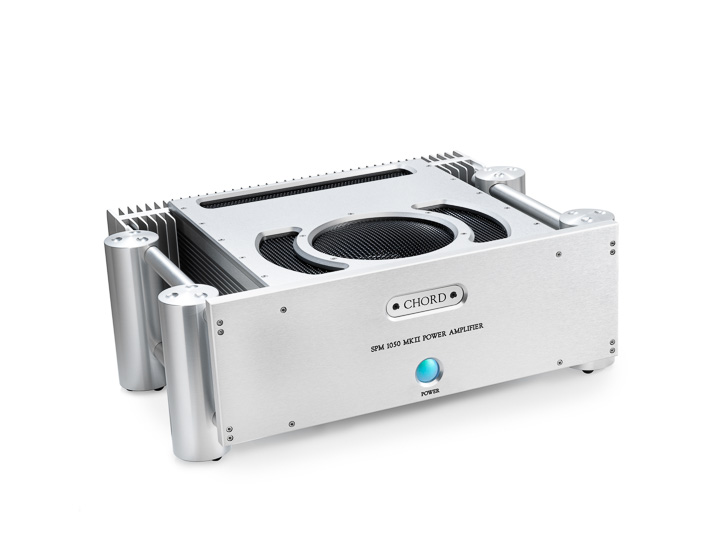
Like other LCD models, the LCD-MX4 uses height-adjustable metal ear cup yokes that allow the ear cups to swivel from side to side and to tilt upward and downward until a comfortable fit is achieved. As another comfort-orientated touch, the MX4s feature Audeze’s bevelled, leather-clad ear cup pads, which are thicker toward the back of the wearer’s head and thinner toward the front (Audeze has used bevelled pads like these on all LCD models from the original LCD-2 forward). In keeping with past LCD practice, the MX4 provides a left/right pair of forward-angled mini-XLR-type signal cable connector jacks. The MX4’s connector housings, however, appear to be a bit smaller and less massive than those found on the earlier LCD headphones (again showing Audeze’s efforts to trim weight where possible).

The headphones ship with a high quality set of braided signal cables with mini-XLR fittings on the headphone end and a 6.35mm headphone plug on the amplifier end. In addition, the headphones come with a short 6.35mm-to-3.5mm mini-plug adapter cable that is handy for users whose headphone amplifiers (or PCs, tablets, or smartphones) only provide 3.5mm mini-jack outputs. Last but not least, the headphones arrive in a large, thickly padded, moulded thermoplastic ‘flight case’ that looks very robust indeed. Audeze’s collateral materials for the LCD-MX4 make it clear that two of the intended applications for this model involve in-studio and/or remote-site monitoring, and the heavy duty case certainly looks like it can stand up to the sort of constant gear shuffling that often occurs in studio environments.


I used the LCD-MX4 in a system comprising a Windows-based Lenovo/jRiver Media Center music server feeding a Chord Hugo 2, which in turn drove a versatile hybrid valve/solid-state iFi Audio Pro iCAN headphone amplifier. Also used in the system were a set of Rega Couple analogue interconnects and a Chord Electronics USB digital cable specifically made for the Hugo 2. Secondarily, I also used the LCD-MX4 with the compact yet superb iFi Audio Nano iDSD Black Label amp/DAC as reviewed in our last issue. Headphones on hand for comparison purposes included the Final D8000 and the MrSpeakers AEON Flow Open (reviewed in this issue on pages 8 and 49 respectively).

From the outset, the MX4 just felt right; it is not a featherweight headphone by any stretch of the imagination, but its overall size, shape, and relatively low mass make it comfortable to wear for hours on end. This isn’t just my impression, by the way; a colleague who never before liked Audeze’s LCD models owing to their bulk and weight said he found the MX4 different, better, and much more to his liking.

Sonically, the LCD-MX4 comes across as ‘son of the LCD-4’ in many respects, in particular showing an energetic, and very revealing midrange that sounds positively luminous and that is highly reminiscent of the sound of Audeze’s top model. Upper midrange and treble articulacy and resolution are very good, too—perhaps not quite matching the performance of the LCD-4, but not far off the mark. Most importantly, the LCD-MX4 offers a well-integrated and all-of-a-piece sonic presentation from the lower midrange right on up to the highest treble frequencies. Thanks to this ‘cut-from-whole-cloth’ sonic quality, the LCD-MX4 encourages listeners to resist dissecting or analysing what they are hearing and instead to relax and simply drink in the music as a whole. In short, the MX4 is less about drawing attention to itself and more about creating a total immersion listening experience.

The MX4’s holistic quality made itself felt on any number of tracks, but one I particularly enjoyed was Agnes Obel’s ‘The Curse’ [Aventine, Pias America, 16/44.1], where Obel’s wispy and reverb-drenched voice stands counterpoised against the song’s measured and almost dance-step-like recurrent cello theme (where the cello’s lines combine a mix of pizzicato and arco playing techniques). There is something about the contrast between Obel’s upward-reaching vocals and the rhythmic, woody voice of the cello anchoring the track that makes it both mesmerising and endlessly fascinating. And there is the appeal of the LCD-MX4 in a nutshell: It invites listeners to set equipment concerns aside to focus on what’s really important—the sound and emotional content of the music at hand.

The LCD-MX4’s bass is deeply extended and appropriately weighted, though perhaps not quite the last word in tautness and definition. Still, the MX4’s low end provides solid foundational underpinnings for any music you might choose to play. A great example would be the track ‘Ghazali’ from Renaud Garcia-Fons’ Oriental Bass[Enja, 16/44.1]. ‘Ghazali’ serves up an uncommonly evocative and tonally inquisitive acoustic bass solo as created by Fons, and the LCD-MX4s responds with rich and wonderfully saturated bass tonal colours that perfectly convey the weight, depth, and scale of the wood-bodied instrument. In fact, the MX4s do a great job of showing how the low strings of the bass generate sounds that seems to bloom and expand, gradually energising the entirety of the recording space.


Finally, the LCD-MX4 proved unexpectedly easy to drive. The headphone is sufficiently revealing to be sensitive to amplifier quality, but can be driven by relatively low-powered amplifiers, such as the little iFi Nano iDSD amp/DAC. This is what sets the LCD-MX4 apart from the LCD-4, which can be finicky about amplification and seems to give of its best when pushed with a generous amount of power.

Audeze’s LCD-MX4 is a different and very satisfying kind of high-end headphone. It offers much of the resolution and finesse of the firm’s top LCD-4, but in a lighter and more comfortable package that is—to a ‘just right’ degree—more tolerant of source and amplification components, as well as of less-than-perfect recordings. Well done!

TECHNICAL SPECIFICATIONS

Type: Open-back, circumaural, planar magnetic headphones

Driver complement: Full-range planar magnetic drivers with 106mm thin-film diaphragms and Double Fluxorpremium-grade Neodymium magnets delivering 1.5 Tesla of magnetic flux

Frequency Response: 5 Hz–20kHz, with useable frequency extension to 50kHz

Sensitivity: 105 dB

Impedance: 20 Ohms

Weight: Not specified, but said to be “significantly lighter than the LCD‑4 model”

Warranty: Not specified.

Price: £2,799, or $2,995 USD

Manufactured by: Audeze Incorporated

URL: audeze.com 

Distributed by: Exertis Unlimited

URL: unlimited.com/cu/home.do 

Tel: +44(0)1279 822 800

Back to reviews

Read more Audeze reviews here