Up to 37% in savings when you subscribe to hi-fi+
hifi-logo-footer

Begin typing your search above and press return to search. Press Esc to cancel.

NEW GERMAN PHYSIKS WEB SITE LAUNCHED

A brand new German Physiks web site has been launched at www.german-physiks.com. It features a much more attractive graphic design and easier navigation.

The texts for the loudspeaker range have been updated, including high quality pictures showing the products in a range of real-life settings.

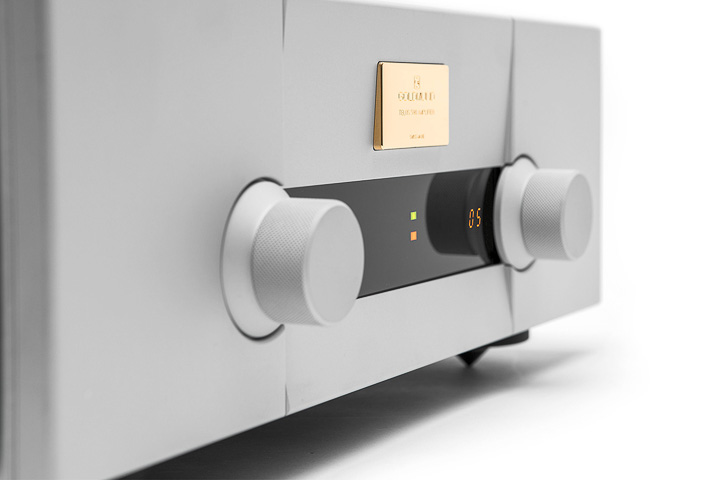
Details of our new Emperor high-end electronics range have also been added. These will be shown at Axpona 2019.

We will shortly add details of our new PION range of cables. 10 years ago we marketed cables under this brand and will bring it back with a range of new designs, starting with a power cable. There will also be power filters.

There are several other new features on the site, including an easier to use library of reviews, online product registration, a newsletter sign-up page and picture and video galleries. Please do take a look.

Interview: Wes Berwise of WBSSmedia

Wes Berwise is a clever man. He has been passionate about his music for as long as he can remember, and was an avid collector from his school days. His love of music in all its guises (but especially soul and R’n’B) led him to an illustrious career as a DJ at Colourful Radio and then Jazz FM (at which point he had three shows per week; two on Jazz FM and one on Colourful Radio), adept at moving across the genres for all the right reasons. 

Gradually, radio changed and became more about the playlist than the music, and this didn’t sit well with a musical curator like Wes Berwise. He made the bold move of changing tracks… moving from DJ to founding WBSS Media in 2013. WBSS has quickly become the go-to website for learning more about black music of all styles and genres, kind of like a cross between Wikipedia, Gracenote, and YouTube rolled into one. 

We spoke to him about his life, his work, and how more people should be involved in music!

AS: Do you remember your first LP?

WB: The first record LP I ever bought was from a guy called Steven Nash, who was my best mate at school. I was about 11 or 12 years old at the time. He was a huge Slade fan (I’m showing my age there) and I didn’t particularly like them. And he said “I’ve bought this album and it’s just rubbish.” So I asked him what it was and he said “It’s some black guy called Johnny Nash.” So I said, “I’ll have it! I’ll buy that!” Bear in mind that I’d never heard of him either – this was the time of either Radio One or Radio Caroline, and people like Johnny Nash just didn’t get airplay. 

Anyway, I bought it from him, and it turned out it was by Jimmy Cliff, not Johnny Nash. It was ‘The Harder They Come’ soundtrack. This was the first reggae soundtrack. Ever! I don’t know why he bought it – he was a white guy and this wasn’t the time when white teenagers bought reggae albums – but I think his parents were quite ‘hip’.

I remember taking this album home, and it was a gatefold. People might not remember this, but at the time a gatefold was a new thing! I was so excited that I was reading the sleeve notes on the bus. It’s still in my collection now. I guess you could say my whole career path in DJing and now music curation started there, even if I didn’t know it at the time.  

Music ran through your family, didin’t it?

Yes. I was brought up listening to a lot of gospel music. And I played the guitar from a very early age in church. I was playing guitar every weekend, or twice a week in church. Nothing was forced; it was unnatural for me to study classical at first, but after two or three weeks I was hooked. But I also listened to everything I could lay my hands on. I started listening to a lot of reggae music too, when I could. It wasn’t easy because it didn’t get any airplay on the radio then. I remember I started getting involved in funk and soul music and I thought ‘this is good! I like this stuff’ 

How did having eclectic tastes in music fit into the music culture of the 1970s?

You weren’t allowed to like different kinds of music; it was your identity. I was listening to reggae, but secretly listening to soul stations. It sounds ridiculous, but it’s true. As a young black guy growing up in the 1970s, you either liked soul music, or you liked reggae music. You were a soul boy, or you were a reggae boy. Which is very different from today, where fathers dress like their sons and sons dress like their fathers. But back in the day, everything was very distinct. If you were a punk, you were a punk. If you were a goth, you were a goth, and so on. You had your own dress code, everything. So it was a really big deal if you were really into reggae, but also liked soul! You couldn’t tell your reggae friends about it because they were in a completely different camp, which is bizarre!

Give me an example of this?

I heard this album, and you had to order them. I went to this shop called Contempo records (behind The 100 Club in Oxford Street). Two weeks later, I picked up my first soul record – the very first by Brass Construction and my first full-priced album – and I got on the bus to go home and met some of my reggae crew and thought “no! no! no! This can’t be happening.” When they saw the album, they started treating me differently for a while. I got away with it because I was a musician and I argued that I needed the record for my music, but that’s just crazy! Two years later… that had all gone! 


You spent many years as a DJ, Why did you give it up? 

The radio industry is changing, and in my opinion not for the better. I was never drive-time, so I didn’t have too many restrictions and wasn’t held to a playlist, but even that started to change. Pretty soon, you realise you have gone from being a passionate voice on the radio, a curator of music, to being yet another ‘that was… this is…’ guy, And I didn’t want that, so I left in 2013 and founded WBSSmedia.com.

What is WBSSmedia?

WBSS is there to feature, promote, and elevate creative and ground-breaking R&B and soul artists worldwide. It features regular informal interviews with artists young and old, hopefully discovering new classics, and letting peoople discover the classics in black music. We focus on artist profiles, and have a daily birthday slot so people can discover artists they might never have heard of otherwise. It’s the complete opposite from the playlist-dominated world of radio and I love it! 

Is that playlist killing music, or has music lost its way? 
 

People dismiss the young as not being able to write good music. That’s rubbish! Someone who spent years training at somewhere like Berklee is extremely talented and often write great, innovative songs… that don’t get onto playlists. So, they write music to get played, and then get accused of not writing good songs. 

Do you still consider yourself a DJ, a musician, or a musical curator?

It sounds old fashioned, but I consider myself in show business. I have a golden opportunity to speak to some of the greatest living musicians, some of whom have been around for a long time. Those guys have taught me a lot. They taught me the meaning of that term. There’s a ‘show’ and then there’s ‘business’. The ones who have made a career in music know the difference, and know when it’s time for ‘show’ and time for ‘business’. The younger ones only know about the ‘show’ and in fact the very young ones in music only know about the ‘business’ not the ‘show’ side. You need both.

What do you think the audio enthusiast can get from WBBSmedia?

I think the big thing to gain is expanding your horizons. Music discovery services like Spotify and Tidal are great, but they are still gearing you toward a playlist. We don’t do that. It’s like being around musicians; they love music in all its colours and shapes, not just the ones we learned to like in our 20s. The site doesn’t tie you down in that way. It lets you discover our music your way. There’s a good and a bad side to all this new technology, and I really want to turn WBBS into a community. It’s very much ‘experts’ at the moment, but it won’t be like that in a year’s time. 

In running a musical site like yours, you must encounter obsessive music collectors?

Yes… we do get people who obsess about everything, the guys who want to know the name of the hat the guy was wearing on the morning of 23rd March 1968, that sort of obsessive. You can’t help but be impressed though – there was this one time, I had put a feature up about an early and quite obscure blues musician. A lot of the early blues musicians had all died off by about 1940. Most of them were lucky to live into their 30s. Anyway, I put the wrong picture in! It was the right surname, but the wrong christian name. Even the family didn’t know it was the wrong image!  Anyway, this guy wrote in who had spotted this… he was so disgusted. I just wanted to know where he got his facts from!

Main Image by Elin Robinson. Additional image by Indre Cukuraite.

wbssmedia.com

Sonus faber Sonetto V floorstanding loudspeaker

A few years ago, Sonus faber made the somewhat bold move of switching some of its production out of Italy. This was a great idea and gave the world speaker lines like the successful Principia, Chameleon, and Venere ranges, all built in China. However, what it also showed to Sonus faber was there was a strong call for a loudspeaker system that combined the elegance of the Italian-built designs with the clean lines of the more affordable ranges, in a package that didn’t cost as much as a Ferrari. It needed to look as ‘now’ as the Venere, but with the quality of fit and finish that only the Italian’s can muster. That range is the Sonetto.

This is a bold move on Sonus faber’s part, as it is a line that comes with a lot of crossover (in terms of sitting between Venere and Olympica… two of the brand’s core ranges) and is ultimately expected to transfer more Sonus faber production back to Italy, so the company has not just invested in the R&D in the line itself, but in a new factory for manufacturing Sonetto, and more attainable Sonus faber lines in the future.

The Sonetto V is perhaps the core product in this new line. While reviewers get excited about elegant two-way standmounts, out there in the real-world, people buy tall, slim towers. Whether for the looks, the better bass response, or simply the concept that you typically buy more speaker for the money when you buy a floorstander, the floorstander has outsold the standmount by a significant margin in every marketplace except the super-budget end.

The Sonetto V is the middle out of three floorstanders in the range, with two standmounts, two centre channels, and a wall-mounted rear loudspeaker for home cinema use. There is no subwoofer in the line, in part because that is expected to be handled by stable-mate brand Sumiko. However, with a total of eight models in the line, Sonetto is the most comprehensive range in the Sonus faber line-up.

Sonus faber could have simply revised the Venere’s geography and have done with it, but instead the company took the longer route and started afresh. There are commonalities of design between old and new – when building a loudspeaker of this quality for this price, the same economies apply regardless of place of manufacture – but what really comes over is the elegance of the design. Sonus faber is practically allergic to poor design, but this is an extremely pretty loudspeaker; retaining the elegant curves and finish properties you might find in any expensive Italian design (loudspeaker, car, or even a good pair of shoes), with a modernity that will make it hugely attractive to more than just music lovers. This is the sort of loudspeaker you can use at home, hire an interior designer, and not end up with someone having a blue fit. Even the contrasting top-plate (a recent design Sonus faber design cue) is both retained and gives the speaker an elegance beyond just a big box of drive units.

The design is always uppermost in discussing Sonus faber loudspeakers, but we should never forget that first and foremost, Sonetto isa loudspeaker, and a very good loudspeaker at that. A three-way floorstanding, vented box loudspeaker, Sonetto V features Sonus faber custom drivers throughout. The tweeter is a 29mm high definition DAD design with a DKM dome diaphragm and visco-elastic baffle decoupling. Meanwhile, the midrange is a 150mm cone driver, with an ultra-free compression basket, and a special custom diaphragm, made with a real time air dried non pressed blend of traditional cellulose pulp and other natural fibers. Then the 2x180mm woofers also use the same ultra-free compression basket but feature aluminium cones unique to the Sonetto design. These are all handled by Sonus faber’s own crossover network – an anti-resonant design, with optimised amplitude/phase response for optimal space/time performance. This also features what the company calls ‘Paracross topology’, a means of impedance compensation at low frequencies making the loudspeaker especially amplifier‑friendly.


We live in a simplified, sound-bite culture today, and although this adds in so many sweeping generalisations as to make the statement only just not fully invalid, effectively the Sonetto is the cabinet and port system of the Venere with the driver units and crossover of the more upmarket Olympica range (albeit with a wholly new bass unit), built from the ground up in Italy. This is a little like saying a Rolls-Royce is the drive train of a BMW 7-Series with a new body and some refinements, but there’s a nugget of truth in both, and in the case of the Sonus faber loudspeakers, this pithy little sound-bite works to the Sonetto’s advantage. The point of listening now is three-fold; does combining the two make the best – or worst – of both worlds, is the resultant Sonetto closer to Olympica or Venere in performance, or has Sonus faber gone after a different sound altogether?

In fact, all three conditions are met in the listening session. The Sonetto V is the best of all worlds, as it does seem to  combine what was good about the Venere – a sense of ‘directness’ and purpose of sound… and the lower price, of course – with the increased refinement and top-end openness of the Olympica models. In addiition, I would put the sound in a new place for Sonus faber in absolute terms, but closer to the Olympica than the Venere in the Sonus faber canon. Disregarding the price point and the place of manufacturer for the moment, its sonic positioning makes it more than just another Sonus faber range. It makes it the sign of a designer moving beyond the company’s comfort zone, to reach a new audience. That’s a bold move.

OK, so the Sonetto V is still very much a Sonus faber design; it’s the first at the price that features the configuration of Damped Apex Dome and natural fibre midranges that the company dubs the ‘Voice of Sonus faber’ more commonly found on the Olympica, Homage, and Reference collections. That gives the Sonetto V a sense of openness, top-end extension, and overall refinement that are characteristics of the ‘Made in Italy’ lines, and shines through here, too. This is especially noticeable on female vocals, such as ‘Seven Joys of Mary’ on Maddy Prior and June Tabor’s Silly Sisters [Chrysalis], where those tight folk harmonies are beatifully rendered without ever sounding hard, harsh, or brash. The influence of the cabinet is minor by comparison to its bigger brothers, and seems centred on slight reductions to image width and depth rather than tonal or timbral changes.

However, where the Sonetto V departs from the Sonus faber norm is in the bass, where this loudspeaker goes for speed over depth. In fairness, it has pretty good bass depth, too, but the Sonetto V is a tauter, faster, more expressive performer. Jaco Pastorius’s fretless bass work on ‘Goodbye Pork Pie Hat’ [Joni Mitchell, Mingus, A&M] is effortlessly expressive here. All 36 of his fingers (how the hell else could he do that?) can be heard plucking away at that poor Jazz Bass as he tortures it into making uncanny sounds no-one else has ever produced. Here, those notes are all about the attack and release, emphasising the percussiveness of his playing rather than simply going for bass depth. This is dynamic, detailed, and above all fast bass, which is something of a departure for Sonus faber, especially for those who still equate the brand with that lush, louche bass sound of the company’s past. To those, who want every loudspeaker to be a homage to the Elector Amator, the Sonetto V will be yet another loudspeaker not to buy. However, for those more rooted in the now and who actually listen to music, this fast, rhythmically adept, and intrinsically enjoyable presentation will likely prove more attractive than the rose-tinted sound of yore.

Perhaps the biggest departure from old is the ‘fun’ element. Sonus fabers have been increasing moving toward a sound that is cleaner and less dark sounding, and the Sonetto continues that tradition, but perhaps more importantly adds in a touch of fun with rock and roll that has sometimes eluded Sonus faber in its quest for musical beauty.


One word that is never uppermost in the Sonus faber lexicon is ‘boogie’. They make a beautiful, full, and dynamic sound, but one of grace and space rather than something a little more down and dirty. The Sonetto V does boogie, however. It has an infectious sense of a beat, and makes ‘Out of the Black’ from Royal Blood’s eponymous first album [Warner] leap at you powerfully. Yes, you know this is just a two piece (like the White Stripes or the Black Keys), but it’s still a full-on metal thrash, and the Sonetto V loves it!

The Sonetto V is at the perfect junction in audio. It draws more than you might think from the Olympica loudspeakers in terms of outright sound quality but does so at a fraction of the cost of a similar Olympica speaker design, and it does all this while carving out its own elegant aesthetic and sonic performance that is extremely entertaining, especially to those who might never fully embrace the ‘live, unamplified music’ ethos of traditional high-end. Perhaps more importantly though, it shows what Sonus faber can do in creating an attainably-priced high-end loudspeaker without having to resort to building the products half a world away.

TECHNICAL SPECIFICATIONS

  •   Type: Three-way floorstanding loudspeaker system. Vented box design
  • Drive units: 29mm high definition DAD tweeter, 150mm cone cellulose pulp midrange driver, 2x 180mm aluminium cone bass drivers
  • Crossover frequencies: 235Hz, 3kHz
  • Frequency response: 38 Hz -25.000 Hz
  • Sensitivity (2.83V/1m): 90dB SPL
  • Nominal impedance: 4 ohms
  • Suggested amplifier power output: 50W – _300W without clipping
  • Long-term max input voltage (IEC-268-5): 22V rms
  • Finishes: Matte white, piano black, wood
  • Total dimensions (H×W×D): 107.2 ×25.8×40.9 cm
  • Weight: 22.6 Kg per loudspeaker
  • Price: £4,250 per pair

Manufactured by: Sonus faber

URL: sonusfaber.com

Distributed in the UK by: Absolute Sounds

URL: absolutesounds.com

Tel: +44(0)208 971 3909

Back to reviews

Read more Sonus faber reviews here 

AURALiC VEGA G2 streaming DAC with LEO GX clock

It can’t be many years since AURALiC’s first cute and curvy ARIES streamer appeared on the market, but since that time the company has created some very interesting digital audio products and last year unveiled its most ambitious range to date, G2. Thus far the range consists of the ARIES G2 network streamer and VEGA G2 streamer/DAC/preamplifier, at launch it looked as though the LEO GX clock would join the G2 range but it has taken the GX suffix. This suggests the LEO moves beyond the G2 series to future G ranges, although there is no backwards compatibility between LEO and the original G1 models.

In an interview with AURALiC CEO Xuanqian Wang published in Issue 162, the Editor asked “Which G series product surprised you by its performance and why?”, Wang sidestepped this in a way by saying that his company has developed mathematical modelling that has been incorporated into their R&D processes in order to avoid any ‘surprises’, but rather to be able to design them in such a way that the outcome is predictable. AURALiC use measurement and “attentive listening” but feel that this is not a solid enough basis for efficient R&D. I suspect that the speed of progress that the company has achieved may well come down to this factor.

The existence of two streamers in the G2 range is unusual but does mean that those who already have a decent DAC need not spend money on another one, although adding an ARIES G2 streaming transport with Lightning Link improves performance further and has an optional internal hard drive for music storage. Nevertheless, if you don’t have a reasonably up to date digital to analogue converter, the one-box streamer/DAC is the best way to go. By eliminating a digital connection you reduce the potential for bringing high frequency noise into the sensitive circuitry of the converter and that has to be a good thing. The VEGA G2 (originally tested in issue 156) inhabits AURALiC’s rather tasty Unity chassis, which is machined from aluminium billet so as to provide a low resonance case that shields the circuits from external interference; it forms all but the base of the box and looks and feels very solid indeed. AURALiC shows that it understands the enemies of high resolution by using springs in the feet of G2 components; this isolates the case from all but the lowest frequencies and if it got the maths right – and ‘getting the maths right’ seems to be an AURALiC speciality – that means down to 2Hz or thereabouts.

AURALiC keeps electrical interference out with galvanic isolation between the processing platform that deals with incoming signals and the DAC. Clocking is provided by dual 72fs femto clocks with their own low noise power supply and a temperature regulated case. The converter itself is a customised version of a Sabre DAC that is good for PCM up to 32-bit/384kHz and DSD512 which, while not the highest numbers claimed, are at the limit of the majority of converters. The higher sample rates can only be accepted via USB and AURALiC’s Lightning Link a proprietary HDMI based connection that joins multiple AURALiC G series components and allows them to work in synchrony. Inputs extend to more familiar digital connections including AES/EBU and both the electrical and optical forms of S/PDIF, so it pretty much caters for all sources except actual HDMI ones like the TV. It can also accept a single analogue input so long as it’s single-ended because, unlike many DACs with a volume control on the chip, there is an actual preamp section on the Vega G2. Here AURALiC has gone to considerable lengths to provide an uncompromising volume control by using coil latched relays which are said to remain passive once volume level has been set. You can change the level with the knob on the box or with the Lightning DS control app. Analogue output connections come in the usual balanced and single-ended flavours.


Lightning DS is one of AURALiC’s USPs; it looks great thanks to clear graphics and decently sized album art and, so long as your iPad isn’t an antique, works really nicely as well. This is where you set up the VEGA G2; you can do pretty much everything you need to, which is handy because there’s slightly more set up required than with a Naim or Linn. The data from your music library needs to be imported into the streamer, which a case of picking the server or NAS that it’s stored on from the list that appears and Lightning DS then goes through the titles so it can display them properly. You can also access Tidal and Qobuz from Lightning DS, the latter being a relatively rare but welcome feature especially if your musical tastes are broader than those catered for by Tidal. The only drawback with Lightning DS is that it’s iOS only; there are third party apps for Android, however.

While everything is shown on the app, a lot of information is also displayed on the four inch high resolution screen, including album artwork, volume level, and track title… but there is no way of pausing playback without the app, unless you use the ‘any remote control’ option with the smart-IR control function in the system menu.

The LEO GX features the same Unity chassis and looks just like the VEGA G2 except for the absence of a control knob and two headphone outputs. It is naturally a bit plainer on the back as well with connections for a network cable, Lightning Link, and the Master Clock output on a threaded coaxial connector. All the interesting stuff resides within the black anodised box where two temperature-controlled rubidium atomic clocks have their own stress compensated, cut crystal oscillators that provide very high signal frequencies for the incoming sample rates. In an effort to minimise noise within the circuit AURALiC use optical isolation between the processor and the clock in much the same way as the control system is galvanically isolated from the signal in the VEGA G2. LEO GX has twin linear power supplies and according to AURALiC is so accurate that traditional measurement methods are unable to detect any errors in its performance, and the company had to resort to Allan deviation, which measures tiny phase shifts to detect clocking errors.

When the LEO GX is connected to a VEGA G2, it takes over all clocking functions within the DAC in what AURALiC calls a ‘direct-to-DAC’ design. It seems a pity to bypass those on-board femto clocks, but the best amount of clocks in any digital audio system is ‘one’. The cable provided for the signal is a military grade device with a 60GHz bandwidth and is supplied with a performance report and a spanner to tighten the tiny connecting nut, so these things must matter.

Used alone as a streamer and a DAC the VEGA G2 is a very nice piece of kit that is extremely revealing of the incoming source thanks in part to the way that the Sabre DAC chip has been engineered to work without PLL (phase lock loop) in the traditional way but rather to operate independently of the source frequency. Its dual femto clocks providing a solid basis for all of the processing and conversion it does. You can choose between various filter settings and I found that ‘smooth’ sounded best; it is pretty well the most relaxed of the bunch, but this is not what you would term a smooth DAC. It is a leave-no-stone unturned searcher after the musical truth! Give it a grungy digital signal and you’ll get a grungy analogue output. Most of the listening was done with the Innuos Zenith SE server, an ATC P2 power amplifier and PMC Fact8 speakers, but I also tried some alternatives including the CAAS and Longdog Audio P6 monoblocks, which both seemed slightly better suited to the VEGA G2. I contrasted its analogue preamplification capabilities with my long-suffering Townshend Allegri TVC which, while slightly more open and timely, revealed the VEGA G2 to be surprisingly capable with good openness and dynamics especially for a multifunction device. It reflects recording quality extremely well; Herbie Hancock’s version of ‘It Ain’t Necessarily So’ [Gershwin’s World, Verve] was smooth and taut with just the right amount of spring in its step. Timing is one of the Vega’s strong-points, so maybe there’s something in bypassing PLL after all. The drumwork on Alfa Mist’s ‘Keep On’ [Antiphon, Pink Bird] seemed just about perfect with lovely snap and just the right amount of leading edge attack and very natural decay. The kick drum on another track [Billy Gibbons and the BFGs, ‘Concord’] was much more juicy, but it also kicked like a mule.

Imaging is also very strong with plenty of depth on a wide variety of recordings, the cymbal work on the Hancock track for instance being placed in the room with great definition and solidity. It’s a lot easier to make low notes sound like they are in the room than higher ones because the room reinforces them, three-dimensional high notes are a sign of a well thought out converter. Most importantly the VEGA G2 is a musically coherent and engaging piece of kit, and with a source of the Zenith SE’s calibre it draws you into the performance regardless of the musical style. I was particularly charmed by Jean-Efflam Bavouzet’s Haydn piano sonatas [Piano Sonatas Vol 1, Chandos], the seeming effortless speed of his spirited playing being entrancing in this converter’s hands.

I didn’t quite know what to expect when adding the LEO GX to the VEGA G2, but it’s price meant that expectations were high. What LEO GX does is not something I’ve encountered with digital audio before: it makes the sound ‘pop’ out of the loudspeakers. Instruments like drums, and tabla in particular, become so vivid and palpable in the room that it’s frankly uncanny. It brings a presence and solidity to everything you play, making it more real and convincing than you have any right to expect with reproduced audio. It also seems to enhance dynamics, not in a loudness sense but with an increase in contrast between loud and quiet notes, so there’s a perceived increase in dynamic range.

It also brings more energy to the presentation, driving rhythmic tracks along with gusto and pushing the music into the room with a rare physicality. With a good recording this is quite a sublime experience. Michael Wollny’s Wartburgalbum [ACT] is superbly reproduced and washes over you much like the live experience. I particularly like the strength of percussive instruments and the muscularity of the double bass. John Lurie’s voice on ‘I’m a Doggy’ [Marvin Pontiac’s Greatest Hits, Northern Spy] is so tactile and the interplay of his musicians feels like it’s happening in front of you. Then there’s the blues harp playing, which is nothing short of brilliant.


This tangibility is partly achieved because backgrounds are so dark, which provides very strong contrast for the instruments and voices. This effect was no less palpable when I switched to Bowers & Wilkins 702 floorstanders; these have more ‘meaty’ bass than the PMCs and home in on the visceral qualities of the material really well as a result. They too reveal the sense that sound pops into the room and creates a strong image with lots of detail. I love the depth and scale it finds in ‘Keep On’, a recording that revels in this degree of transparency thanks no doubt to its analogue roots.

We’ve already covered the AURALiC ARIES G2 at length, but it’s great to have a second opinion confirm the first. Adding the LEO GX, however, puts ARIES G2 in another league, in particular when it comes to imaging. It creates a sense of presence that is very rare with reproduced audio of any kind which, coming as it does from a self-confessed, fully paid up member of the analogue nut club, is high praise indeed.

TECHNICAL SPECIFICATIONS

VEGA G2

  • Type: Solid-state network streamer, DAC, digital preamplifier
  • Analogue Inputs: One (via RCA jacks)
  • Digital Inputs: One coaxial S/PDIF (via RCA jack), one TOSLink, one AES/EBU, one USB B, Lighning Link, RJ45 Gigabit Ethernet
    DAC Resolution/ PCM from 44.1kHz to 384kHz in 32Bit, DSD64, DSD128, DSD256, DSD512
  • Supported Digital Formats: AAC, AIFF, ALAC, APE, DFF, DSF, FLAC, MP3, OGG, WAV, WV and WMA
  • Music services/Wi-Fi inputs: Tidal, Qobuz
  • Analogue Outputs: One stereo balanced (via XLR connectors), one stereo unbalanced (via RCA jacks)
  • Digital Outputs: None
  • Frequency Response: Not specified
  • Distortion (THD + Noise): < 0.00015%, balanced < 0.00012%
  • User Interface: 5inch display (on main unit), Lightning DS application software for iOS
  • Dimensions (H×W×D): 84 ×338 ×300mm
  • Weight: 7.8kg
  • Price: £5,499

LEO GX

  • Type: Temperature-controlled Rubidium atomic clock
  • Supported sample rates:
    PCM: 44.1KHz to 384KHz in 32Bit
    DSD:DSD64(2.8224MHz), DSD128(5.6448MHz), DSD256(11.2896MHz)
  • Frequency: 90.3168MHz (44.1KHz) |98.3040MHz (48KHz)
  • Output Level: 3.3V CMOS (Direct-to-DAC Design)
  • Oscillator: Temperature-controlled SC cut crystal
  • Dimensions (H×W×D): 84 ×338 ×300mm
  • Weight: 8.1kg
  • Price: £7,499

Manufacturer: AURALiC LIMITED

Tel: +1-(302)-314-5555

URL: auralic.com

Distributor: AURALiC Europe

Tel: +44(0) 7590 106105

URL: auralic.com

Back to reviews

Read more AURALiC reviews here 

WIN! Two Shunyata Research 1.5M Delta NR power cords worth £1,540

We have teamed up with the clever guys from Shunyata Research to bring you an exciting competition for a chance to win a pair of 1.5M Delta NR power cords worth £770 each.

Alan Sircom reviewed the Delta NR in HiFi+ Awards issue 166. He said, “The NR suffix of the Shunyata Research Delta NR power cables stands for ‘Noise Reduction’ and it’s the most affordable mains cable in the company’s line to feature the brand’s patented CCI filter system. This is a multi-stage filter designed to limit the cross-contamination of mains from other products in the system or even the home.”

He went on to say, “…what Delta NR does so well is let a product sound like it ought to sound… this isn’t a power cord for those who want to shape the sound of their system, but for those who want to experience their system in true honesty.”

He concluded by saying, “Shunyata Research Delta power cords are possibly the most ‘now’ thing you can use in audio. Thanks to a lot of products with cheap and nasty switch mode power supplies pumping nasties into your local mains, good audio is fighting a losing battle for sound. Delta fights in your corner.”

Competition Question

What does the NR suffix stand for?

A. Natural Resonance

B. Never Rigid

C. Noise Reduction

To answer, please visit Shunyata Research’s dedicated competition page at https://shunyata-uk.com/hifiplus_comp/ 

Alternatively, send your answer on a postcard (including your name, address, and contact details) to Delta NR Competition, PO Box 574, Dorking, RH4 9GW

Competition Rules

The competition will run from January 3rd, 2019 until February 28th, 2019. The competition is open to everyone, but multiple, automated or bulk entries will be disqualified. The winner will be chosen at random from all valid entries, will be contacted via email (where possible) and their name will be published in the magazine. The Editor’s decision is final and no correspondence will be entered into. Absolute Multimedia (UK) Ltd. is compliant with the Data Protection Act and UK laws apply. Our policy is such that we will not pass on your details to any third party without your prior consent.

The Hi-Fi+ Directory of High-End Audio Manufacturers, 2019

We’ve selected and showcased the work of 32 of the finest manufacturers in high-end audio in our exclusive guide. Regardless of price, product type, or brand name, we’ve uncovered the most exciting and innovative companies and their products, in order to discover the products to watch in 2019. We have also included exclusive reviews from Hi-Fi+ and the Ultimate Headphone Guide of some of the best products we have ever heard. 

In short, our Directory of High-End Audio Manufacturers, 2019 is a one-stop shop for discovering the brightest stars in the audio heavens right now, and our exclusive guide can be downloaded here.

Kuzma Stabi R turntable

Kuzma’s nomenclature is slightly off. The baby of the Stabi turntable range is the S and the top of the line is the XL, so you might expect that the two in-between would be (in price ascending order) the Stabi M and Stabi L. The Stabi M exists, but it is one step down from the XL and this new model is called the Stabi R. Worse, because it’s a modular design, it should have been called the Stabi M and the bigger one the Stabi L. The audio industry is full of joined up thinking, said no-one, ever.

Forget the names, the Stabi R was first seen at Munich 2018. It’s a square plinth akin to the transcription turntables used in radio stations up until only a few years ago. And unlike many of the other designs in the Kuzma line-up, features a fully integrated power supply system: the larger Kuzma M features a similar speed control layout – on its front panel – but demands an external power supply to drive it, where the new Stabi R connects to the juice directly by means of an IEC cable.

The platform is inherently modular, with a series of armboards (called ‘arm wings’ by Kuzma) designed to slot into grooves in the side plates of the Kuzma R. It can use just the one arm on an arm wing, or two with a second arm wing, or – with a combination of arm balconies, and outrigger armboards attached to Allen bolts on the corners of the deck, up to six different arms of anything between 9” and 12”. Naturally there are also a wealth of alternative plates, wings, balconies, and the like with Linn, Rega, and SME arm bases alongside the Kuzma, as well as a series of plinths for turning the Kuzma R into a scaled-down Kuzma M, and even the option to paint-match your turntable to the canary yellow of your Lambo, should the desire take you.

We went for the more basic option; just a basic silver plinth, with a single matching silver arm wing made for a 9” Kuzma. We brought the recent 4Point 9 tonearm (reviewed in issue 155 and handed the award for Tonearm of the Year in 2017) taken off a dual arm Kuzma SD and fitted it with a Kuzma CAR 40, as I suspect this will be the starting place for many prospective Kuzma R owners.

But we’re getting ahead of ourselves.  The Kuzma Stabi R is a very compact turntable made from a solid block of aluminium with an internal electronic power supply fed direct from the wall. Drive is provided through a DC motor and a proprietary, non flexible drive belt.

The main platter is a constrained sandwich design consisting of three layers (aluminium – acrylic – aluminium) in order to minimise vibration and maximise the damping effect of the platter itself and that of the LP. The inverted ruby ball bearing minimises friction and noise within the thrust bearing and is supported on a special low noise compound material.

The design may be modular, but it owes a lot to designs like the Kuzma M and Reference models. And like all Kuzma models, it’s simplicity itself to build. Simply lift the deck out of its box, lay it on a flat and level surface (one that is capable of holding its 36kg mass). The four feet are adjustable to fine tune level (place a spirit level on the platter to check when installed). Give the bearing housing a glug of oil, and then lift the large, volcano-shaped inner platter into place, apply the belt, place the outer platter on the inner platter, then mount the arm wing to the right hand side, using the appropriate holes on the side to lock it in place. If this sounds like a complex process, you haven’t tried to install a truly high-end turntable!

One trick to note in installing the Kuzma R is that the turntable platter itself is heavy and when installed runs very low relative to the top plate of the plinth. This means when installing the main platter, hold the relatively heavy design with palms to the sides as you seat it, rather than holding the platter in a regular grip. When it comes to installing your own Kuzma R platter, gripping it will result in skinned knuckles.

Kuzma is increasingly switching from AC to DC motors in its higher-end devices. The R is the cheapest model to date to include a DC motor. This requires one of the tautest belts around, in part in order to preserve speed stability (a squidgy belt will mean the DC motor may hunt for the right frequency). The blue belt is almost indestructible in daily use, so placing it beneath the platter isn’t likely to cause a problem any time soon. The overall build is solid, as the turntable is built from a solid billet of aluminium.


There’s so much Kuzma DNA in here, it’s difficult to sort out precisely what comes from where, but I think a lot of the Kuzma R springs from the success of the Kuzma M. This huge integrated design has its disadvantages – it’s larger than many equipment supports, it’s so heavy that its only sold in black because light cannot escape from its clutches, and it is too expensive for many audiophiles. With its more pared back aesthetic and ethos, the Kuzma R offers much of what the M also offers, but in a more manageable and attainable package.

So, perhaps it might come as no great shock to find the  Kuzma M and R share many common tonal balances. They are not completely tonally identical, however. What is especially good about the R is it’s not simply a stripped-back sounding M, and in many ways might just be a more rounded turntable than its bigger brother, in a manner similar to the way the 4Point 9 is a more rounded, more forgiving design than its bigger brothers. It doesn’t mean the cheaper deck is ‘better’ than the more expensive one, just more forgiving.

Of course, the big thing missing from the Kuzma Stabi M is the elastomer suspension system. That clever system that helps control stray resonance, and yet isn’t a full suspension system like you might find in a Linn or old Pink Triangle. In addition, the Stabi R does feature plastic damping sleeves between the main chassis and each of the feet, and this acts to decouple the turntable from its environment. Nevertheless, the lack of full damped suspension system does make for a less differentiated bass and upper midrange; where the Stabi R can portray a deep bass note, the Stabi M  better defines the shape of that bass note. There’s almost no difference in terms of bass depth, but a wealth of difference between the way that bass is delivered to the listener.

Staying in an all Kuzma context, the tonal balance and the extended treble of both decks are very similar, but I think some of the slight forwardness in the upper mids and low treble has gone away to no small extent. OK so in terms of absolute detail resolution, the Stabi R is inferior to the Stabi M. Not by much, and that inferior performance might make the Stabi R the better option, because it makes the sound a little more inviting than the more ‘reference’ sound of the M.

How this plays out is especially noticeable in choral pieces. Fauré’s Requiem [EMI] or Haydn’s Nelson Mass [Vox Turnabout] for example sound as if you can hear every individual voice within the choir on the Stabi M (this is not the case, but it feels like the voices are distinct), and there is almost a tension as you wait for the one bum note that you know some baritone sang. The Stabi R is not quite so unflinching in its midrange performance and that sense of tension is reduced.

That aside, the Stabi R is not too dissimilar from the Stabi M in performance. OK, so it doesn’t have the absolute pitch stability and the kind of motor that can go from zero to 45rpm in a single turn of the platter, but it’s not far off. The pitch stability is not an audible aspect of the performance, but more about just how much torque goes into the Stabi M, and how the Stabi R is not in the same league, even though it gets very close.

Most importantly, what it shares with its bigger brother is that sense of absolute confidence in its own performance. There’s a sense of order to the sound that only seems to come with a high-mass platter being driven by a DC motor with a lot of reserve in the tank. It toes the right balance between expressive and exuberant, and authoritative and dour. The control of the sound isn’t so overpowering as to make the turntable seem oppressive, and yet isn’t so free as to make it wayward. It’s a clever balance shared to a lesser or greater extent with all Kuzma decks, and in the Stabi R, it’s most definitely ‘greater’.

This is best expressed in its handling of dynamic range, which is little short of superb. Not only in the big expressive swings of a Mahler symphony, but in those quiet microdynamic interplays between musicians and the band that audiophiles love so much. I went badly audiophile retro here for a brief interlude, playing those two Propirus recordings every single hi-fi buff from the late 1970s onwards used to buy: Cantate Dominoand Porn at the Jazz Shop. Sorry, Jazz at the Pawn Shop. They were popular for a reason, but – in the latter case especially – the reason wasn’t a musical one. It’s not enough that you realise you are listening more for the drinks clattering in the background than you are to the ‘music’, it’s that you actually come to enjoy that musically bankrupt piece. I don’t think I could ever bring myself to actually ‘like’ Jazz at the Pawn Shop, but the Stabi R gave me new-found respect for the recording process. Given this was one of the remnants from my hi-fi store days, seemingly know it backwards because I must have played it 1,000 times a year for several years, that the Stabi R is delving deeper into the musical information on the disc, and whatever you might think of that recording, the Stabi R’s influence there is significant. That it meant me dusting off a record I haven’t played in almost 30 years shows just how competant the Stabi R really is.

Beyond the Kuzma comparison, the Stabi R does make an excellent turntable package in and of itself. It’s combination of tonal evenness, with the added bonus of a hugely foot-tapping sound and excellent imaging properties make this a deck for the ages. OK, if you want the etched, forward sound that is taking all the credit today, know that the Stabi R comes from a very different place, one that goes for naturalness of sound, and follows the ethos laid down by the late Harry Pearson decades before Kuzma made its first turntable. You feel drawn to well-recorded, unamplified sounds in a natural acoustic, hence the reaching for those ancient Proprius recordings. The Stabi R has the power to shock, as long as your records are up to the task.

The turntable part of the Kuzma Stabi R is a complete package in and of itself, with no need for upgrades. Kuzma does make a record clamp, but even this is not stressed as a ‘must have’ upgrade. Many will prefer that to the seemingly endless array of upgradable subchassis, top-plates, power supplies, feet, and all the add-on options to help ‘sell up’ the basic turntable package produced by some rival brands. The modularity is in the arm wings, outriggers, balconies, and plinth options. Essentially, once you have your requisite number of arms (and let’s be honest, for most people that’s probably some number that is ever so slightly more than 0.9 and ever so slightly less than 2.1 arms), you are basically done.

The point of the Kuzma Stabi R is to make an extremely flexible transcription turntable package, capable of supporting as many tonearms as any enthusiast might ever want, even though I suspect few will venture much past one arm, fewer still will go much beyond two arms, and few (if any) will go with three arms or more. I also think few will take up the plinth option – although wrapping a transcription deck in a tree was a popular choice back in the early 1970s, it was in part because a Garrard or Thorens of the time didn’t have much more than a handful of standoffs to hold it in place, and a nice box made of teak would fit the bill well. Those times are gone however, and the Stabi R in a dedicated plinth does cut an imposing figure on the equipment stand.


For me, I’m not too bothered by the myriad tonearm options, or the additional plinths and so on. Despite the job, I am more a ‘fit and forget’ guy when it comes to turntables, and the Kuzma Stabi R does that perfectly if you want. As a reviewing platform, the ability to swap a tonearm plate at will to replace an arm or fit a cartridge without tampering with the turntable should be a vital part of any reviewer’s arsenal, and – if the geometry of both arms is set in advance, you could swap arms in less than a minute. From an enlightened self-interest position, that makes for better tonearm and cartridge reviews. Aside from box-swappers who have a penchant for tonearms, that’s a very narrow outlook.

That’s the real joy of the Stabi R; it’s a surprisingly ‘Everyman’ turntable. It appeals as much to someone just wanting the best turntable as it does to the music collector who must have entirely different cartridges for different recordings, and all points in between. While I don’t think this is the rebirth of the transcription turntable, not least because few radio stations are playing records that much today, the Kuzma Stabi R honours the spirit of those transcription turntables, by building a turntable that will just keep running and running, and sounding damn good in the process.

TECHNICAL SPECIFICATIONS

  • Type: Modular turntable system
  • Suspension system: none
  • Drive: DC motor
  • Speeds: 33, 45, (fine speed adjustment)
  • Power supply: internal, electronic
  • Platter material: aluminium and acrylic
  • Platter mass: 8kg
  • Bearing type: inverted (ruby ball)
  • Shaft diameter: 16mm
  • Chassis material: aluminium
  • Armboards: up to three
  • Options: various pre-cut arm boards, RAL finishes, second tonearm wing, small tonearm holder, arm board VTA tower, wooden frame
  • Finishes: black or silver
  • Dimensions (W×D×H, with armboard): 48 ×38 ×15cm
  • Weight: 36 kg
  • Price: From £7,500 (drive chassis with one arm wing)

Manufactured by: Kuzma

URL: kuzma.si

Distributed by: Definitive Audio

URL: definitiveaudio.co.uk

Tel:+44(0)115 9733222

Back to reviews

Read more Kuzma reviews here


Magnepan 30.7 four-panel dipolar planar loudspeaker system – Revisited

In Hi-Fi+157 I wrote a favourable preview of Magnepan’s new flagship loudspeaker, the model 30.7. Now, as the loudspeaker nears full serial production, I wanted to provide a follow-up review to discuss one important change that has been incorporated into the loudspeaker over the last several months as production was still in the early stages. Over that time Magnepan’s head of Sales and Marketing Wendell Diller has been touring many of his firm’s North American dealers, doing more than thirty 30.7 demonstration events for dealers and prospective customers across the US. Along the way, Diller has gathered experiences from setups in 31 different rooms and Magnepan was able to incorporate this change into the first production units.

Earlier this week I had an opportunity to do a private audition of the 30.7 at an event held at Magnepan’s Austin, Texas dealership: Austin Home Systems (formerly Audio Systems). The results were ear opening, to say the least. Before offering observations on the sound of the 30.7, though, let me provide a quick product recap from my original preview.

Like all Magnepans the 30.7’s are tall, wide, thin, and completely ‘boxless’, dipole panel-type speakers that look much like fabric-covered room divider screens with minimalist perimeter frames. In recent years almost all Magnepan loudspeakers have used a single panel for each channel—even though the panels are typically subdivided internally to house multiple planar drivers. The 30.7, however, takes a different approach in that it uses two physically separate panels per channel—a wider panel that handles the bass and midbass workload plus a narrower panel that handles midrange and high frequency duties. As you scan the photo accompanying this review, you will see that a stereo pair of 30.7’s comprises four panels in total, each standing at 6 ½ feet tall. That’s a shade under 2m in Eurometricals.

The 30.7’s large bass/lower-midbass panel measures 79 ×29 ×2.062 inches or 200.7 ×73.7 ×5.2 cm (H×W×D), while the tweeter/midrange panel is the same height and depth, but only 16 inches or 36.8 cm wide. Obviously, this is a big loudspeaker system by any rational standard, though Magnepan’s Diller insists that despite its size the 30.7 system can be made to work extremely well in relatively modestly sized rooms.

Readers of a certain age might notice that the new 30.7 shows a number of conceptual ties to the legendary Tympani IVa; an extremely large multi-panel Magnepan loudspeaker from the 1970’s. For those who have never seen the Tympani IVa system in the flesh, let me mention that it was enormous—so big, in fact, that in many rooms it turned out to be a ‘wall-to-wall’ loudspeaker (and no, that’s not hyperbole, but rather a simple fact). Thanks in part to its sheer size the Tympani IVa could reproduce music—and especially orchestral music—with a combination of authority and realistic scale that was and still is as impressive as it is uncommon.

Listeners who heard the Tympani IVa system back in the day often describe the experience as being musically unforgettable, which is why many have urged Magnepan to create a 21st century version of speaker updated with all the latest materials and technologies. Stated simply, the 30.7 is that long wished-for modern day Tympani, but with two important twists. First, the 30.7 system, big though it is, look considerably smaller than the original Tympani IVa system did. Second, despite the apparent size disparity between the old system and the new, the 30.7 provides fully 22% more driver surface area than the original Tympani IVa did. Paradoxically, this means the 30.7 is at once smaller on the outside yet bigger on the inside than its predecessor.

The 30.7 is a four-way speaker whose driver array comprises, from top to bottom, Magnepan’s famous pure-ribbon linear tweeter, plus four quasi–ribbon type planar drivers: an extremely low-mass midrange driver (featuring a proprietary ultra-lightweight membrane material), a “transitional line-source midbass coupler”, a narrower woofer (that shares a common diaphragm with the midbass coupler but that has its own separate voice coil), and a wider woofer. The tweeter and midrange drivers are housed in the smaller 30.7 panel, while the midbass coupler and the two woofers are located in the larger 30.7 panel. All four of the quasi-ribbon drivers use front and rear opposing magnets, just as in Magnepan’s critically acclaimed 20.7 loudspeaker—a design feature intended to increase efficiency and dynamic range. Phase coherent first order crossover networks are used throughout. Crossover components are divided into two physical sections—one section in the bottom of each of the two 30.7 panel frames.

In my earlier preview I mentioned that the 30.7 features adjustable high frequency and midrange levels—giving a very wide range of set-up options. These adjustment features are not accomplished via control knobs, but rather through selective installation of high quality resistors on the rear of the speaker panels.


During his recent tour of North American dealers, however, Diller discovered that even more adjustability was needed, especially in terms of matching mid-bass output to the requirements of various listening rooms. The most significant change that was incorporated from the first production units onward is a provision for adjusting mid-bass output levels as needed. To appreciate this change, it is important to understand that the 30.7 was designed from the outset to have sufficient low- and mid-bass output to be able to sound properly balanced even in very large rooms. This is all to the good for those who have truly large listening spaces, but it can lead to overblown bass in medium-sized or smaller rooms—a problem Diller wryly describes as being like “listening to a trombone in a phone booth.” Diller further observes that low bass is usually not the problem when moving the speakers from large to mid-size spaces, but that excess mid-bass very much can be a problem—a problem the newly adjustable mid-bass output levels help solve.

The main Austin Home Systems listening room, though certainly not a small space, is considerably more compact than the Magnepan factory listening room where I first heard the 30.7 several months ago. The space lent itself to an arrangement where Diller installed the 30.7 system along the longer wall of the room (marking the first time that I had heard the speaker in such an orientation). Driving the system was a PS Audio DirectStream Memory Player, and a DAC, preamp, and massive solid-state power amplifier from Bryston.

Accompanying me on my listening visit was Tom Martin, owner of Hi‑Fi+,The Absolute Sound, and Ultimate Headphone Guide. Since Tom’s time was limited we gave him first crack at the listening chair and very early on he commented on both the speed and uncommon smoothness of the 30.7’s midrange and high frequencies. I couldn’t agree more; in fact, if I could only point out one of the 30.7’s virtues, the one I’d choose would be the speaker’s midrange. It’s fast, highly transparent, and extremely resolving and yet somehow manages to sound effortless and natural at the same time (it never hammers the listener with the sort of enforced sense of detail that ultimately proves fatiguing over time).

We listened to the ‘Et misericordia’ movement of Kim André Arnesen’s Magnificat[2L, SACD] and marvelled at the achingly beautiful purity of both the voices of Lise Granden Berg (soprano) and of the Nidarosdomens jentekor (Nidaros Cathedral Girl’s Choir), which conveyed a profound sense of reverence as this haunting piece of sacred music was performed. But what also added to the experience was hearing the deep and powerful, but also very well controlled sound of the pipe organ accompanying the vocalists. It was in that moment, where the delicacy of the multi-layered female voices and the depth of the pipe organ notes merged—yet without treading upon or overpowering one another, that the true musical worth of the 30.7 as an accomplished full-range speaker became apparent.

Tracks with potent low- and mid-bass, such as the low percussion heard in the ‘Volcano’ movement of the Hovhaness Mount St. Helens Symphony [Schwarz, Royal Liverpool Philharmonic, Telarc, SAC] also showed how effective the 30.7’s new mid-bass control can be at taming excess mid-bass output in moderately sized rooms (though truth to tell I could have gone for even a smidgeon less mid-bass than the demo exhibited in Austin). But the key point is that the 30.7 now gives its owners the tools necessary to achieve a well-balanced sound in rooms of varying sizes and shapes. In fact, Diller estimates that the 30.7 could now be used in rooms as small as 14 feet ×17 like the demo he performed at the Madison, Wisconsin dealer’s store.


Are there caveats? Well, two would be the speaker’s size and price, both of which may prove daunting to would-be owners. Another involves seating positions relative to the speaker array. Because the 30.7 is very wide, you may find that if you sit too close to the speaker you eventually begin to hear the individual driver panels rather than a seamless, cohesive whole, which of course means that imaging and soundstaging won’t quite snap into focus as they should. So, bear in mind that set-up is partly about fitting the speaker into your room, but part is also about finding an optimal position for you relative to the speaker array. Finally, it pays to remember that this speaker requires powerful but also extremely high-quality amplification (such as permeates this issue – I’m specifically thinking of the Hegel H590 integrated amplifier tested on page 16) to give of its best.

Setting these constraints aside, though the 30.7 strikes me as a remarkable design achievement; it takes everything we have ever liked about the Magnepan sound to a whole different level—a level where both the richness and realism of recorded music are raised to extraordinary levels, all for the considerable yet oh-so-justifiable price of $30,000.

TECHNICAL SPECIFICATIONS

  • Type: Four-way, four-panel, quasi-ribbon/pure-ribbon dipolar planar loudspeaker (each speaker includes a large bass/midbass panel and a smaller midrange/tweeter panel)
  • Driver complement (per speaker): two quasi-ribbon bass drivers, one quasi-ribbon ‘transitional line source mid-bass coupler’, one quasi-ribbon midrange driver with ultra-low-mass diaphragm, and one pure-ribbon high frequency driver.
  • Frequency response: 24Hz–40kHz
  • Impedance: 4 Ohms
  • Sensitivity: Not specified
  • Dimensions (H×W×D): 200.7 ×73.7×5.2 cm
  • Weight: Not specified
  • Finishes:
  • Frame:
    Wood: Natural or black solid oak, dark cherry
    Aluminium: Silver, Black, Red, or Blue
    Fabric: Off-white, black, and dark grey
  • Price: $30,000/pair in the US; UK and EU prices were not yet established as of this writing.

Manufacturer: Magnepan Incorporated

Tel.: 1 (651) 426-1645

URL: magnepan.com

UK Distributor: Decent Audio Sound Distribution

Tel.: +44(0)5602 054669

URL: decentaudio.co.uk

Back to reviews

Read more Magnepan reviews here

Ansuz X Series cables and power conditioner

When it comes to gnomic discussions about cables, Ansuz gets close to winning the prize. Normally, when it comes to discussions about cables, there isn’t  great deal to talk about, but what there is usually settles on the materials used in the conductors, the dielectric, the type of plugs used. Within these fairly limited parameters, things get a bit florid. You might start with ‘copper in a PTFE shield’ but by the end of the proceedings, it’s the finest filigree ductile cuprum, lovingly strand-casted by artisans then wrapped in the most sheer gauze of pure fluropolymer of tetrofluroethylene.

Ansuz doesn’t do that. Its X-Series – the brand’s entry-level cabling “is made of twisted, shielded, silver-plated copper solid-cores in mechanically stable Teflon insulation.” That is all you get from the brand. OK, so beyond this there are discussions about electrical and mechanical grounding and how important it is for an audio system. This includes discussions about why such things are important and upgrade paths to show just what can be done and just what can be made better, but even these discussions border on the descriptive, and are disturbingly free from hyperbole and gushing prose.

However, a lot of the technolgies used inside Ansuz cables that act on electrical grounding apply further up the price list. X-Series cables don’t have acronyms like DGC (Direct Ground Connector) or ‘AARC’ (Ansuz Advanced Resonance Control) because these are more complicated systems applied specifically to the more up-market cables in the Ansuz line-up. While X-Series is designed from scratch taking electrical grounding into consideration, it remains, ultimately, a series of ‘twisted, shielded, silver-plated solid cores in a mechanically stable Teflon insulation.’

We got a fairly standard complete front-to-back system of X-Series cables, comprising a single-wired set of Speakz X loudspeaker cables, two sets of metre-long Signalz X RCA-RCA interconnect cables, a single 2m BNC-BNC Digitalz digital interconnect cable, and three 2m Mainz X power cords. These were fitted with EU plugs, because the package also included a Mainz8 X.TC distribution box (currently only available with EU power sockets, and a 4m Mainz X power cord complete with UK three pin power connector. This not only represents a good complete starter system, but the recommended cable lengths by Ansuz.

The Mainz8 X is a star-earthed distribution block with – as the name suggests – eight power sockets. It is available in two versions: the Mainz8 X and the Mainz8 X.TC. The ‘TC’ part of the name relates to the use of Tesla Coils inside the steel framed MDF chassis. Most people’s experience with Tesla Coils revolves around their production of a high-voltage, low-current, high-frequency  AC current, which makes for excellent light-shows in a Dr Frankenstein’s laboratory manner. However, at less showy voltages, Tesla Coils also work to influence an electromagnetic field, which is very much at the core of what Ansuz is all about.

The cable system arrived burned in by Ansuz, I used it in a number of systems, most notably however with the Hegel Mohican CD player and the matching H90 integrated amplifier. In loudspeaker terms, I used it with a number of designs, but had great success with the Monitor Audio Silver 300. I also used it more contemporaneously (both the H90 and Silver 300 are now back with their respective companies) with the Chartwell LS6/f and the excellent Primare I35 integrated amplifier tested in this issue. Because the Speakz X cables were sent with banana plugs at both ends, they were unable to be used with my benchmark Wilson Duette Series II loudspeakers, but the spread of good and appropriately priced products gives a fine indication of what X-Series can do.

Unlike more esoteric cables in the Ansuz range, these both give up their goodies almost immediately, and then unveiled the real pearls over time. The instant hit is one of extremely good detail and coherence, with an agile, taut bass and a lot of top-end expression. The longer-term performance is one of far greater midrange clarity.

The usual ‘lowers the noise floor’ cliché does apply here, although not quite so markedly as happened with previous encounters with Ansuz cables. However, those ‘previous encounters’ were with cables that cost two orders of magnitude more than X-Series, so relatively speaking a lesser lowering of noise is understandable under the circumstances. In absolute terms, however, it does set the system in a darker place, and that comes through from the outset. Darker is good: it’s more ‘uncannily natural’ than ‘murder ballads’.

More than that, though, the X-Series had a uniformity to it that proved extremely attractive and coherent. There was a lot of detail on tap, and this gave the cable just the right amount of high-frequency energy without the accompanying zing and brashness. This was particularly noticeable when playing my standard issue ‘Chameleon’ by Trentemøller [The Last Resort, Poker Flat]. The track is ostensibly about deep bass (I use it to test ports, to see if they choke up when the music becomes very deep and very fast-paced), but has a lot of sharp high-frequency sounds (like sampled glass smashing). A lot of very good cables can sometimes fall over this, as those jangly sounds can dominate the sound, especially when played through smaller speakers.  The uniformity makes this far more intelligible and, in the process, malevolent.

As the days and weeks progressed, X-Series had a secret up its sleeve. It gave the already intelligible midrange a lift. Not an increase at a given frequency, but an overall increase in clarity and articulation in that all important section. This was a mild improvement, but an improvement all the same. I suspect this came down to the distrbution block, which seems to take some time to take effect.

A good component works to make the music sound harmonious. A good cable family strives to make the whole audio system work in harmony. That is the case with X-Series. It’s more about bringing a consistency to the sound, so that your system has fewer ‘off’ days, so that everything just sings a little bit closer in tune, and makes all the components seem that bit closer. Starting with the power and distribution, X-Series draws your system together.


In outright musical example terms, this ‘tying the system together’ is hard to pin down. It doesn’t affect a particular aspect of the sound, but instead works on the whole. Music played through an X-Series wired system tends to be a lot more clear, a little bit more forward, slightly more detailed and a lot more coherent. Music is tied to this process, but in an almost tangential way: ‘Royals’ by Lorde [Pure Heroine, Universal] is a good example of what happens here. There is a slight emphasis on vocals and the presence region, but otherwise the tonal and timbral qualities of the sound remain effectively unchanged, but there’s a sense of intimacy and focus to the sound, and a coherence that makes the lyric ‘pop’. There is also an element of the music being tied together that doesn’t usually manifest, but works really well here; the rhythmic qualities of the sound. Normally, cables only seem to alter rhythm in all the wrong ways; making the sound seem sluggish in places. A few turn this on its head and make music sound super-fast, with excellent leading edge definition. The Ansuz X-Series toes a middle path, possibly closer to the supernaturally fast then the slothful. However, what Ansuz X-Series does so well is let you hang onto a beat better. Try listening to a piece of music, and muting the sound for a few seconds. Ansuz X-Series lets you keep time!

Ultimately, I think Ansuz X-Series is doing what all good cables are supposed to do; align the system without getting in the way.

I decided to ‘do a Yoko’ and split up the band! It was time to experiment with the Ansuz X-Series to place it in context and then see how it compares to rival designs priced around, above, and below the cables. Swapping out a lone power cord wasn’t a good idea, sonically. It acted like two rights making a wrong, and that whole noise-floor advantage just went away. The closest I got to levelling that particular playing field was inserting a single Crystal Cable cord. Swapping out all the power chain was more equalising, although once again this only seemed to work well with Crystal or Nordost cables, and models from Cardas and Transparent didn’t play well with the rest of the system.

Moving over to the interconnects (having reinserted the Ansuz power cords), this was slightly more robust, allowing changes quite far from the Ansuz ethos without messing up the sound of the system, while the speaker cables were somewhere between the power cords and the interconnects in terms of robustness in the face of cable changes. From this, I suspect that if you are approaching cables piecemeal, the power cords are the first port of call, and the interconnects are probably the best individual link in the whole chain.

Finally (because I can) I swapped out the first length of power cord for one of Ansuz D2 models (at almost 15x more expensive) and the difference was extreme. Whether it was 15x as extreme might depend on the system you use (the one D2 cost more than the whole system) and the depth of your pocket, but it certainly made for a humbling experience in terms of performance upgrades.

The only downside to the X-Series is if people don’t now how to contextualise. X-Series works very well with good equipment that would benefit from a €400 interconnect (for example). That means not using Ansuz X-Series to prop up a clapped-out, dirt-cheap product from long ago, and it also means not using it as a cheapskate way to hook up extremely high-end equipment. Using it with good equipment that is in the same price ball-park, on the other hand, allows Ansuz X-Series to shine in context, and there’s always a chance you’ll want to upgrade some time later.


The top-of-the-tree cables always get the praise (and the flak) because they offer cost-no-object performance for cost-no-object systems.  The trouble is, so many times in audio, if you see the cost… you’ll object! The best isn’t easy to do, but it is a lot harder to climb down from the mountain top and make something that works, and works well in context. That is exactly what X-Series does. It brings a lot of the sound of top Ansuz cable to the distinctly attainable level. What it sacrifices in the process is often no real sacrifice because it will be used in the context of good – but also attainably-priced – audio electronics. That, in a very real way, is a lot harder to do, because there are often more ideosyncrasies in more attainably expensive equipment. X-Series is extremely well balanced for its market.

Price and contact details

Mainz X power cable: €600/1m.

Mainz 8 X.TC Distribution box: €1,500

Signalz X RCA interconnect: €400/1m

Digitalz X BNC interconnect: €240/1m

Speakz X loudspeaker cable: €1,200/2m

Manufactured by: Ansuz Acoustics

URL: ansuz-acoustics.com

Back to reviews 

Read more Ansuz reviews here

Cyrus Audio One HD integrated amplifier

The Cyrus One (tested in Issue 144) was a bold new departure for Cyrus. In a redesigned, more cost-effective half-sized case (not the evergreen traditional cast Cyrus case of the company’s more long-standing range), the One was a bold move for the company because it was app controlled, sported an aptX Bluetooth receiver and used Cyrus’ own Class D amplifier circuits in everything except the headphone amp. Because it was designed for a new generation of buyers, the remote control was moved out of the box, typically meaning users would control the amp from their smartphones.

While the Cyrus One stays in the range, the Cyrus One HD has been developed to meet the demands of a more connected audience, in the process giving Cyrus the opportunity to revisit the original One and improve the circuit slightly. The headline differences are the use of Cyrus’ fourth-generation Class D circuits in place of the third-generation found in the original model, which beef up the power to 110W per channel, and a built-in DAC (with S/PDIF and USB connections). The only other big change is the remote; there is one with the One, whereas the One HD recognises that task is now taken up by the app and the remote handset is now a thing of the past. Otherwise, the two are on-paper identical; both have a great Class AB headphone amp stage, and a built-in MM phono stage, both feed the Class D stages via a linear power supply, and both use a Speaker Impedance Detection system to ensure the frequency response remains flat for different loads.

Cyrus Speaker Impedance Detection works by measuring the high frequency impedance of the connected loudspeaker using a microcontroller. By performing some maths, we then apply an appropriate correction curve to remove the frequency response deviations that would otherwise be present from the Class D reconstruction filter. Unlike other Class D amplifier systems (often off-the-peg modules), the custom-made designs in the One HD are perfectly comfy driving some traditionally off-limits loads for a Class D design.


We decided to keep this review shorter than usual because a lot of what applies to the One HD applied to the One. Relaid circuit and new power amplifier stages aside, much of the functionality and operational action of the original applies to the new (you lose a line input to gain a DAC and the rear panel has had a redesign to accommodate that DAC). Installation is simplicity itself and the accompanying ‘Get Started’ yellow-on-black cheat sheet shows you all you need to do without even the medium of words. There is also an accompanying and more comprehensive manual from Cyrus, and is supplied in tree-saving mode (online). And if you download the Cyrus ONE Remote app, everything is golden. Bluetooth is a click away and although you might find everyone in the family fighting for access, the amplifier behaves itself perfectly from an operational front. Cyrus deliberately went for the ‘KISS’ (Keep It Simple, Stupid) approach to next-generation amp design and – coming barely one step removed from the “press any key to continue… where’s the ‘any’ key?” school of IT smarts, I welcome this rudimentary yet robust approach. It means you can be up and running with the One HD about as quickly as you can be with a conventional analogue amplifier, just with the addition of a USB connection and Bluetooth as 21st Century concessions.

The Cyrus One HD is a very level-headed performer, more in the cut of classic Audiolab products than the zingy excitement of modern-day Naim Audio, or even what we have come to expect from Cyrus Audio’s own ‘singing shoeboxes’. It takes a more cerebral, more mannered approach to musical replay than often heard today. In the write-up of the original version, this is perhaps taken too far, leaving the sound somewhat lacking in rhythmic drive, but here that seems to be less of a concern. I’m not as guided by pace and timing as Jason Kennedy, but neither am I deaf to the notion of ‘keeping good time’: the Cyrus One HD can follow a tune better than its Cyrus One predecessor and, although this is never going to be a strong point with the design, it’s only going to strike a negative tone with those obsessed by this aspect of musical presentation.

One HD’s overall delivery is excellent. It delivers an accurate and honest-top-to-bottom performance, with no editorialising, such as thickening up the bass, or pushing the upper mids forward to add emphasis to the presence region. In fact, it has excellent bass for one so small – really deep powerful bass that helps tympani underpin the sound of an orchestra, and bass guitars underpin the sound of rock. There is some commonality of sound between the One and the One HD, here, and even if the One HD is the superior performer, the perceived gap is small.

In essence, you are paying a premium for an on-board DAC, and its here that the Cyrus plays a strong hand. The DAC is a perfect match for the Cyrus One, and the two harnessed together deliver an extremely detailed and agile sound with outstanding bass. My normal fare of obscure pieces of modern classical music has been set aside for a while, as I’ve been ploughing through old school reggae and especially dub (it’s funny how our tastes ebb and flow). Listening to ‘Banana and Yam Skank’ from Dangerous Dubby King Tubby [VP records on Tidal], the heavy dub vibe has some real force behind it especially on smaller loudspeakers (which sound like they have taken on bigger proportions, suggesting an amplifier with a bit of grip. While this track doesn’t really go anywhere, the cheesy organ intro, the shouty plate reverb, and the guitar parts all sound very enticing. The hi-hat beat is perhaps very slightly loose, but the same could be said for the entire track, and is not something to moan about!

Music here has surprising body and substance, and yet is even-handed, especially if you use the One HD with real-world loudspeakers commensurate with its price. Cyrus makes a matching loudspeaker, but I suspect many retailers will want to partner this with lower cost Monitor Audio, Bowers & Wilkins, and KEF models, and those will work extremely well with the One HD. It’s not a powerhouse, but it can go loud without changing its tonality, and this will win the One HD many friends.


Overall, I like the sound of the Cyrus Audio One HD. It may not be the last word in pace and timing, but it more than makes up for that in precision, accuracy, and bass depth. The Speaker Impedance Detection circuit is a great move, too. Partnered properly (not too difficult, the amp can deliver up to 78A peak current into a loudspeaker, it makes a closer link between amp and speaker, and gets rid of many of those grumblings directed at Class D. At no time did I reach for the remote handset, either. In short, this might be the amp of tomorrow, today.

TECHNICAL SPECIFICATIONS

  • Type: Solid-state, two-channel integrated amplifier
  • Analogue inputs: One MM phono input (via RCA jacks), three single-ended line-level inputs including AV bypass (via RCA jacks)
  • Digital inputs: Asynchronous USB 2.0 input – up to 32/192 signals, and DSD 64 and DSD 128
    Optical Toslink digital input – up to 24/192 signals
  • Coaxial SPDIF digital input: up to 24/192 signals
  • aptX HD compatible Bluetooth audio
  • Analogue outputs: One pre-out pair (via RCA jacks)
  • Input impedance: 47kΩ
  • Output impedance (preamp): 47Ω
  • Headphone Loads: Recommended 32-330Ω)
  • Power Output: 100Wpc @ 6 Ohms
  • Bandwidth: -3dB 6Hz-50kHz
  • Distortion: 1kHz 3rd power 6R <0.01%
  • Signal to Noise Ratio: 96dBA
  • Dimensions (H×W×D): 85 ×220 ×390mm
  • Weight: 5.6kg
  • Price: £999

Manufacturer: Cyrus Audio

Tel: +44(0)1480 435577

URL: cyrusaudio.com

Back to reviews

Read more Cyrus Audio reviews here

Zanden Model 3000mk2 line preamplifier

I had a niggling doubt floating round when reviewing the Zanden Model 9600mk2 power amplifiers. There was something missing; the Zanden Model 3000 line preamplifier had been upgraded to Model 3000mk2 status, completing the full Classic line of phono stage, preamplifier, and mono power amplifiers. This was the older of the two changes, first seen at CES 2017, but in a way discussing one without the other is like talking about Butch without Sundance or tuning in to watch a ‘Hardy’ movie without the ‘Laurel and…’ part. It’s just not done!

The Zanden Model 3000mk2 preamplifier sports three RCA and three XLR line-level inputs and a single set of RCA and XLR outputs to the power amplifier. An all-valve design, the Model 3000mk2 uses a single 5687 double-triode in the input stage and a pair of 6CA4s as line drivers in the output. This gives an 8V output to the power amp, with a low 300Ω output impedance making it ideal for the high 7.5kΩ input impedance for the balanced-only Model 9600mk2 power amps, or long pre/power interconnect cables.

Zanden’s Model 3000mk2 replaces the previous model Model 3000 preamplifier in the Classic Series and includes a number of crucial improvements. The input and output transformers were replaced with amorphous cobalt models (the predecessor used µ-metal on the output transformer). The tube rectified power supply has been completely redesigned. Zanden has also retained the highest quality ALPS analogue potentiometer while successfully implementing a motor drive system to achieve remote volume control. The model Model 3000mk2 also includes a full function remote which controls power, volume, switching of sources, absolute or reverse polarity and a mute function.

The solid excellence of the power amplifiers is echoed in the preamp. The build quality is truly from another world; we sometimes talk about ‘Rolls-Royce’ quality in the best of audio, but this is so sublime Rolls-Royce should be talking about Zanden levels of fit and finish inside its cars. This makes it hellish to photograph; it’s a high key pale gold finish with brushed and shiny chrome, and inset LEDs, and a power supply unit made of the sort of shiny chrome that camera lenses and fingerprints are a continual problem. In use, of course, the preamplifier and power amplifier sit on separate shelves and – aside from the occasional dusting – just look outstanding. Of course the sound is a perfect match, but such is the look and the sound quality, realistically you won’t be using anything else but other amplifier products from the company’s Classic range.


I’m conscious of not going over old ground and effectively re-running the review published in issue 161. So, focussing on the Model 3000mk2, what strikes you is an almost complete absence of background noise. This is expected (but often not delivered) in a solid-state amplifier, but with valve designs there is an understsanding and acceptance that there will be a spot of ‘rushing’ noises from the valves. But there is nothing at all like that. The Zanden Model 3000mk2 is whisper quiet in operation, even with the volume turned up.

The Zanden Model 3000mk2 is perhaps the ultimate expression of audio refinement. Where the power amps brought the beauty and the dynamics, this is all about texture and subtlety. In every angle; from the understated ‘click’ as you change sources, to the styling, and the sound, you can’t help but listen and think of fine jewellery. Not in a ‘bling!’ way, more taking a fine stone and refining it until perfect.

Of course, refinement requires quality. The Zanden Model 3000mk2 does not suffer musical fools gladly. This is a product that demands the best, and delivers the best. Ask any jeweller of note (as in the person who actually works with gems, not just the guy who sold you a watch strap) and they’ll say you can polish any stone to the highest degree and cut facets into that stone that will make it sparkle, but if you have poor quality stones, those facets will never sparkle with the intensity they could deliver. Feed the Model 3000mk2 with extremely well-recorded music and you will be given an excellent response; play something mediocre, and you get highly-polished mediocrity.

In fairness, both preamp and power amplifier conspire to make demands on the musical content, but where the power amplifier reacts to less-than-excellent content by pulling back on the ‘beauteous’ aspect of the performance, the Model 3000mk2’s inherent refinement polishes the right and the wrong edges of music equally. This does not result in an ‘ugly’ sound (I don’t think the Zanden vocabulary includes the word ‘ugly’), but almost too much refinement for the performance.

This refinement aspect shouldn’t be overstated, but neither should it be underplayed. This preamplifier doesn’t omit anything in terms of detail, dynamic range, imaging, transparency, vocal articulation, solidity of image, coherence, micro-dynamics, timbral shading, or any other aspect common to the best of the best in audio, but it does so with an air of sophistication and refinement that is both beguiling and impossible to find elsewhere. This sophistication makes well-recorded music sound like you always wanted it to; shimmeringly beautiful sounds presented in front of you like a hologram, without emphasis or forward tilt, or any kind of excess. And when the music isn’t as perfectly recorded, the Zanden’s ability to sound sublime still shines through, but the limitations of the recording are not papered over in the process. I prefer this approach to the smoothed over interpretation of ‘refinement’ that many amplifiers strive for.

Of all the other attributes associated with audio electronics, I’d say that ‘coherence’ and ‘cohesiveness’ is the key aspect here. It’s not just that the Model 3000mk2 ties the disparate elements of a musical performance together, it’s that it also makes specific instruments within that musical performance sound cohesive.

The key point of the Zanden sound, expressed perfectly in the Model 3000mk2, is that element of unforced sound: not music filtered through the medium of hi-fi, but the sound acoustic music makes in its natural, unamplified, unreproduced raw state. For many, this will be a first-time experience, an antithesis of the hardpedge, forward-tilted, initially impressive sound many audio components produce, even in the top league.

Of course, it’s worth pointing all this out in context, because in context of the Model 9600mk2 power amplifiers, the products work so harmoniously there is little need to look elsewhere. Which means the preamp and power amp should be treated like a single item. Except that I think the Model 3000mk2 is the gateway into the full Zanden experience for those wanting to migrate, but not do so immediately. The character of ‘no character’ that applies to the Model 9600mk2 is built upon the disappearing quality of the Model 3000mk2, and if you applied the Zanden preamp to a regular power amplifier, it’s a more enjoyable intermediary than adding a pre to the Model 9600mk2s.


There is an oft-quoted statement in high-end audio, that good preamps are hard to find. It’s not cliché because it rings true. OK, there are a lot of good preamplifiers, but really great preamplifiers are extremely rare. And the Zanden Model 3000mk2 is one of those really rare, really great preamplifiers. It manages to dig out the refinement in almost any recording, but also plays music like it wasn’t in the system, and its overall tonality makes it exceptionally easy to just sit in front of. Putting it with its partners shows what the Model 3000mk2 is capable of with its wings fully unfurled, but with other amplifiers, the Model 3000mk2’s performance shines through.

Those who define their preamplification by the strong flavours it adds to the system won’t find much to like in the Zanden Model 3000mk2, but many others will listen to this preamplifier and rise to the challenge. Many will hear it, and initially think its fidelity to the source a beguiling, but somewhat academic, exercise. Those willing to go past the first toe of the learning curve, however, will quickly find that they are listening to a preamplifier of rare talent and elegance. It has quicksilver reactions and the kind of dynamic range that few solid-state preamps can match, and has the ability to just get out of the way of the music. That will improve the performance of almost any power amplifier, but when that power amplifier is Zanden’s Model 9600mk2, suddenly your audio system gets moved up into a new league.

TECHNICAL SPECIFICATIONS

Type: valve preamplifier

Tube complement: 1×5687, 2×6CA4s

Inputs: 3×XLR pair, 3×RCA pair

Outputs: 1×XLR pair, 1×RCA pair

Input impedance: 100Ω (XLR/RCA)

Maximum output: 9v

Frequency response: 10Hz–20KHz (-0.5dB)

Dimensions (W×H×D): 39.8 ×10.3 ×25.4cm (main); 17.5×16.5×35.7 (PSU)

Weight: 9.1kg (main), 5.5kg (power)

Price: £24,750

Manufactured by: Zanden Audio Systems Ltd.

URL: zandenaudio.com

Distributed by: Audiofreaks

URL: audiofreaks.co.uk 

Tel: +44(0)208 948 4153

Back to reviews

Read more Zanden Audio Systems reviews here

McIntosh MA7200 integrated amplifier

In McIntosh world, there are things that remain forever unchanging. The planet could be on fire, aliens could be taking over and controlling our every action, but so long as McIntosh has that traditional glass with black livery, green logo, and bright blue VU meters, things will be OK. The McIntosh look is distinctive, slightly old fashioned to some eyes, matches precisely nothing apart from other McIntosh products… and any McIntosh fan would have it no other way.

Into this changeless realm of audio comes the MA7200. Irrespective of the look, this is, in fact, about as forward thinking and as flexible an amplifier you can buy, as it drips analogue, digital, and custom install connections. I kind of like the look of McIntosh equipment. Yes, it’s perhaps the most quintessentially American audio design you can think of, but it brings up dewy-eyed memories of classic audio devices of a bygone age, but with state-of-the-art internals.

Or at least, mostly state-of-the-art internals. The unique part to a McIntosh amp design like the MA7200 is that it  has  a transformer-coupled output stage. With very few early audio exceptions, every solid-state amplifier has more or less fed the output of the power transistors direct to the loudspeaker terminals (often with little more than a Zobel network as protection). Transformer-coupled output stages are the stuff of most valve amplifiers.

There are advantages to this design layout, most notably longevity (those output transistors are playing a less gruelling role) and consistency (you are hearing the sound of the transformers instead of the transistors). But it means that, like a good valve amplifier, you are dependent on the performance of the transformers and they have coil taps for different impedance loudspeakers. McIntosh is a major buyer of output transformers, so quality is a given.

The MA7200 has a bank of five RCA line inputs and a further XLR pair of balanced inputs. For vinyl replay it has separate inputs for MM and MC (in theory, you could have two turntables or two tonearms connected… in reality it’s an either/or thing). However, combine this with the range of digital options (two coax, two TOSlinks, a USB input and what is called MCT for direct connection from one McIntosh digital device to another) and you have an amplifier that simply will not run out of inputs any time soon. It also includes an extensive array of custom-install comms connections for link-ups with home automation systems around the house.


Build quality is… substantial. It’s little wonder that McIntosh ploughs the same furrow as brands like Harley Davidson and SubZero. It has that kind of cachet; American-made products that are built to outlive the original owner. That also makes it damn heavy, and the transformers make it an uneven lift. Fine if there are two of you. Repositioning can reposition bits of you if you try it alone.

Our sample arrived run in… probably. The thing about McIntosh products is this could have been bouncing round in the back of a Jeep for a year and it would still look brand new. The only reason I know it was run in is that I was informed it was run in before the review commenced. There’s a comprehensive manual supplied too, but if you need to refer to a manual, you should probably be stripped of your McIntosh badge. Installation is a breeze, so long as you remember those tapped loudspeaker terminals.

A feature that comes in very handy at the outset is two little red LEDs inset into the middle of the front panel. These indicate muting while the amplifier powers up (they are gone in a couple of seconds), and clipping if you decided to push the amplifier to the limits (with 200W on tap, you really have to push hard). Nevertheless, you’ll find that sometime in the first hour or so of listening, you’ll turn the amp up to ‘see what it can do’ Eventually, you’ll redline the amp, turn it down, only to hear a peculiar banging sound. This comes from your neighbours, who will read you the extract from the Riot Act that includes ‘noise pollution’.

This is a beast and a brute of an amplifier… in all the right ways. It’s the kind of amplifier that drips confidence and control. Not necessarily from a taut grip over the loudspeakers, although that also hits the spot, but from the sense of complete authority it conveys to the music. It’s not total control; in fact, the transformer-coupled output stage allows for some self-determination on the part of the bass cones, in a manner not too dissimilar to that of a good valve amplifier. But in terms of getting music’s house in order, it works extremely well.

The MA7200 has a great deal of finesse to its sound, but with a lot of power to back up that finesse, with a very wide and deep soundstage, but more importantly some of the most embodied and solid images within that soundstage. You get a feeling of real, visceral human beings playing music in a three-dimensional space, but you also get a very good idea of the musical intent behind those musicians.

The MA7200 lends itself toward rock music like the two were made for one another. ‘La Grange’ by ZZ Top [Tres Hombres, London] is the perfect example of this; Billy Gibbons’ swampy guitar licks and his drawl are so in the room that you feel like breaking out the beard oil. You hear all the little string squeaks and Frank Beard’s sophisticated stickwork, and when the whole band steps up a gear, the McIntosh is ready to take it. This is how it should be; loud, bold, and fun.

I’m aware that there could be a dismissal of this amp as ‘brute force and ignorance’ and that it makes a lot of noise and not a lot else. In fact, it’s a more nuanced performer than that. Yes, it has the muscle and sinew to play like a bruiser, but it also has the harmonic structure and refinement to play some more subtle works. Uchida playing Beethoven’s sonatas [Philips] is not perhaps the most nuanced of performances, and anything that played with brute force would make her clean delivery tip over into ‘sterile’, but the amplifier lets her controlled passion take over. Yes, she does sound a little more like she is playing a sewing machine than some of the best of the best, but it remains a great overall presentation.

What I didn’t get in playing the piano pieces was the audiophile richness that sometimes over-exaggerates the performance. Her playing is cool, but some amplifiers make that ‘cold’ while others make it too ‘warm.’ The MA7200 strikes an excellent balance.

Once you get past that initial hurdle of wanting to play the amplifier at full-on levels, what you are left with is a very elegant sounding amplifier with a lot of power in reserve. One of its strongest suits is its ability to play at relatively low listening levels, too. The big amp can sound surprisingly small and quiet when turned down for late night listening.

If I’m going to point to a weakness, it’s possibly in the DAC section. While more than capable, it’s not a match for separate standalone devices. In particular, These deliver greater degrees of resolution and inner detail than the on-board converter of the MA7200. The DAC is no mere add-on afterthought, but in absolute terms, there are better DACs to be had in the after market. It has the same broad tonal balance of the MA7200 proper, a sound that is naturalistic, especially across the midrange. However within that is a great strength, because the headphone amplifier section is a real killer, and the DAC and headphone amp make good sense.


A McIntosh review is almost academic. People know what they want from McIntosh, and the MA7200 is going to deliver on that. But, in a way, McIntosh needs to be reappraised in the light of modern audio. As a complete package, without recourse to any other device (so no visual mis-matches between amp and disc player) the amp stands up as a fine audio option. This is more than some blue VU meters (although familiarity has made me rethink of them as ‘cool’) and a beefy build quality. It is an amplifier that I might not have considered through sheer weight of my own snobbery, and yet I came back from listening feeling very impressed by the MA7200 as the complete package. A hefty amplifier that is capable of great things and a lot more than just brute force, the MA7200 doesn’t just look the part, it sounds the part!

TECHNICAL SPECIFICATIONS

  •  Type: Integrated amplifier
  • Analogue Inputs: 1×MM phono, 1×MC phono, 5× single-ended RCA, 1×XLR balanced
  • Digital inputs: 2×S/PDIF (RCA) 2×Toslink, 1×MCT DIN, 1× USB, 1×Service port
  • Outputs: 2×RCA variable outputs
  • Additional control inputs and outputs: 4×data ports, 2×external control, 4×power control (all minijack connectors)
  • Best digital precision: to 32-bit, 384kHz (PCM), DSD 256, DXD 384kHz (all via USB)
  • Power: 200 watts per channel
  • Frequency Response (+0/-3dB): 10Hz–100kHz
  • Total Harmonic Distortion: 0.005%
  • Sensitivity (balanced/unbalanced): 0.5V/0.25V
  • Signal to Noise Ratio (power amp): 113 dB
  • Damping factor: 45
  • Phase: speaker output is phase correct, sub-woofer output is phase correct
  • Dimensions (W×H×D): 44.5 ×19.4 ×55.9cm
  • Weight: 34.1kg
  • Price: £9,995

Manufacturered by: McIntosh Labs Inc

URL: mcintoshlabs.com

Distributed by: Jordan Acoustics

URL: jordanacoustics.co.uk

Tel: +44(0)1202 911886

Back to reviews

Read more McIntosh reviews here