Classical
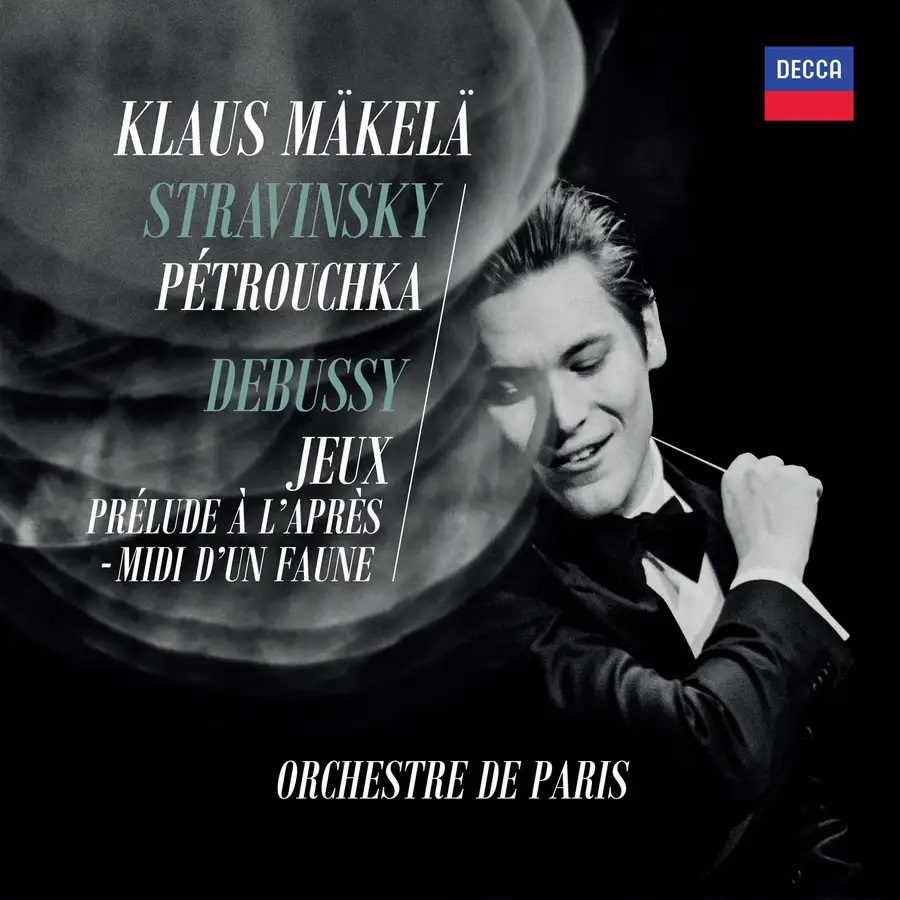
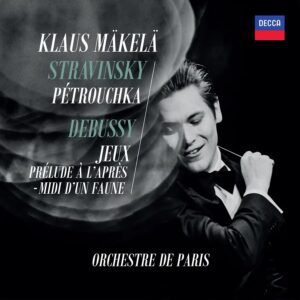
Stravinsky; Pétrouchka - Complete Ballet, 1947 version. Debussy; Jeux and Prélude À L’Après Midi d’un Faune
Klaus Mäkelä, Orchestre de Paris
- Music
- by Jimmy Hughes | Sep 29, 2026


- Music


- Sonics
- A
- A
- A
Three seminal orchestral works from the early 20th century – each commissioned by Diaghilev for his legendary Ballets Russe. Yet, all three have proven far more popular in the concert hall. Petrouchka – longest of the three works – is heard in its revised 1947 orchestration rather than the original 1911 scoring. It’s a challenging work to play. But, there are no awkward hesitant moments or mishaps. The Orchestre de Paris plays superbly for Makela; his account is fluent and totally assured. Tempi feel on the fast side, but the performance takes around 36 minutes, which is slightly slower than average.
Debussy’s Jeux is a rather enigmatic work with a strange storyline. Perhaps as a result, the work is far more popular as an orchestral piece than a ballet. Makela’s performance is atmospheric and nicely paced, with a strong dramatic final climax.
Compared to Haitink’s famous 1980 account, Makela drives the music harder – the Orchestre de Paris play with a steelier edge than the more-relaxed richer-sounding Concertgebouw. But Jeux can seem a trifle aimless if not directed strongly, so Makela’s taut approach is perfectly valid.
Makela’s Prelude A L’Apres Midi d’un Faune is quite broad at 10m 44s. Many rivals come in at well-under the 10m mark. Again, like Petrouchka, the performance doesn’t feel especially slow or languorous, yet it’s actually quite measured.
The music is on a CD lasting around 64m. The entire programme could have been squeezed on to a single LP, but Decca have generously spread the contents over four-sides, with Petrouchka on the first disc and the two Debussy items on the second.
A big positive about Makela’s direction is its lack of fussiness. There are no ‘points’ being made just for the sake of it. He lets the orchestra play, and they reward him with a superbly-coherent cohesive performance that’s characterful and well-played, but not eccentric.
The Orchestre de Paris recorded Petrouchka under Semyon Bychkov back in 1990 for Philips – a very good performance. But with Makela, you get conductor and orchestra thoroughly relishing making music together. The resulting performances are crisp and uncomplicated, involving and enjoyable.
The set is priced equivalent to a single LP, which is great. The LPs are lacquer mastered (rather than DMM) and my pressings were blessedly quiet, save for the odd minor tick now and then. The disc cutting itself is very good, and modulation levels are high without being excessively-hot.
The CD sounds excellent too – clear, refined, and effortlessly dynamic. The recording was made in the Philharmonie de Paris, and offers superb clarity despite plentiful ambience. There’s some nice deep bass too – note the subtle but weighty bass drum in the 2nd Tableaux.
While it’s likely quite a few microphones were used, the result does not sound too obviously multi-miked in terms of instruments being spotlit. The soundstage is coherent in terms of left/right stereo spread and front-to-back placement.
But curiously, while there’s quite a wash of reverberation, I don’t sense a tangible hall acoustic. Everything is impeccably balanced, but it’s as if Decca’s tonmeister has created what we hear from the mixing desk, rather than capturing how the orchestra actually sounded in the hall.
Decca’s last recordings of Petrouchka came in the final months of 1993; a studio recording of the 1947 version by Riccardo Chailly and the Royal Concertgebouw, and a live recording of the 1911 original by Sir Georg Solti and the Chicago Symphony – both released on CD in 1995.
Chailly’s recording has gorgeous richness and depth, with impressive vibrancy and sumptuousness – doubtless due to the fabled acoustics of the Amsterdam Concertgebouw. The new Makela sounds wonderfully polished and refined, yet somehow Chailly’s recording seems more realistic.
More Info
| Media | 2LPs or 487 016 1CD Download/Stream 96kHz/24bit |
|---|---|
| Label | Decca |
| Contributors |




By Jimmy Hughes
More articles from this author
Read Next From Music
Sting: All This Time (Live)
- Sep 08, 2026
Johan Lindvall Trio: End
- Aug 31, 2026
Talk Talk: It’s My Life (40th anniversary)
- Aug 25, 2026
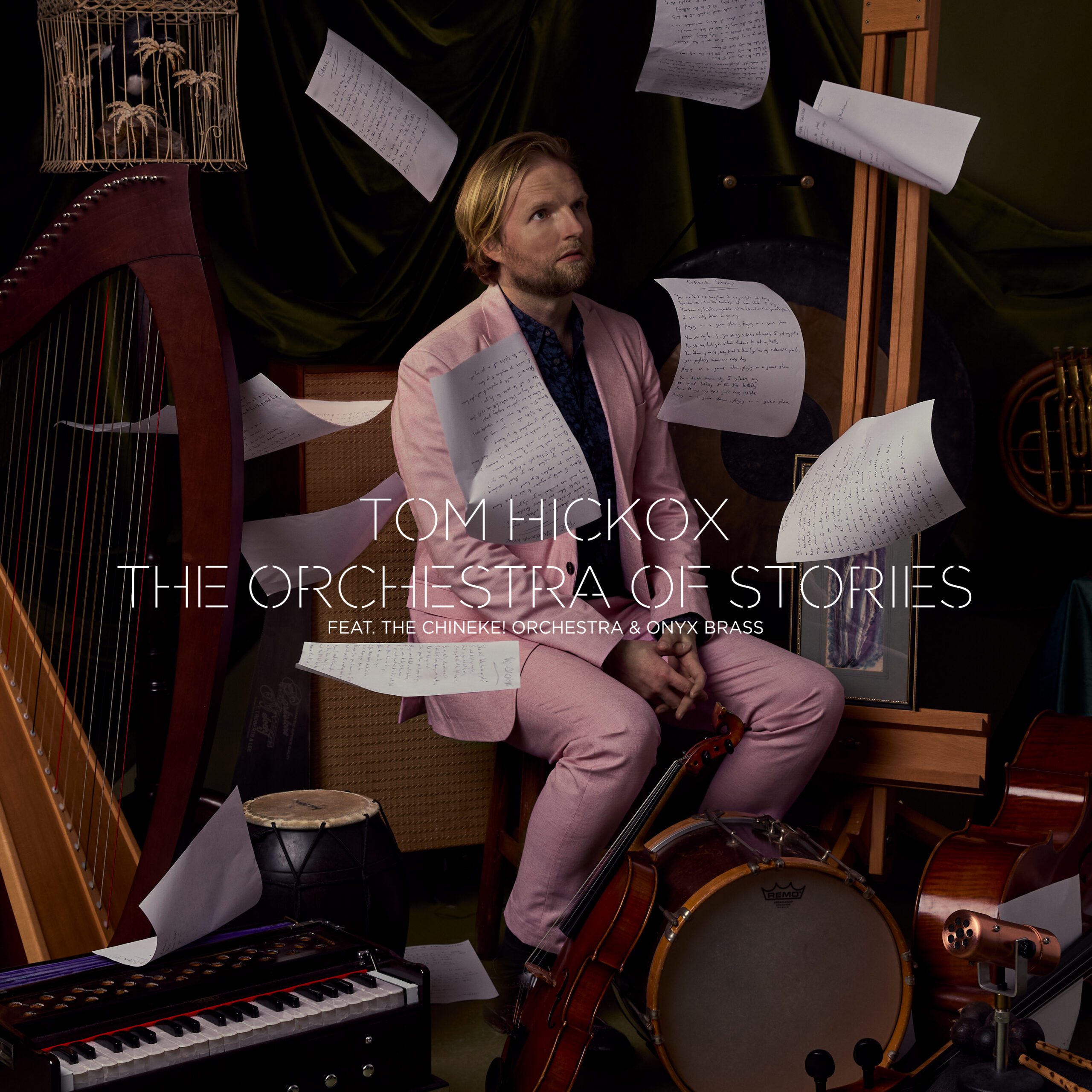
Tom Hickox: The Orchestra of Stories
- Aug 18, 2026