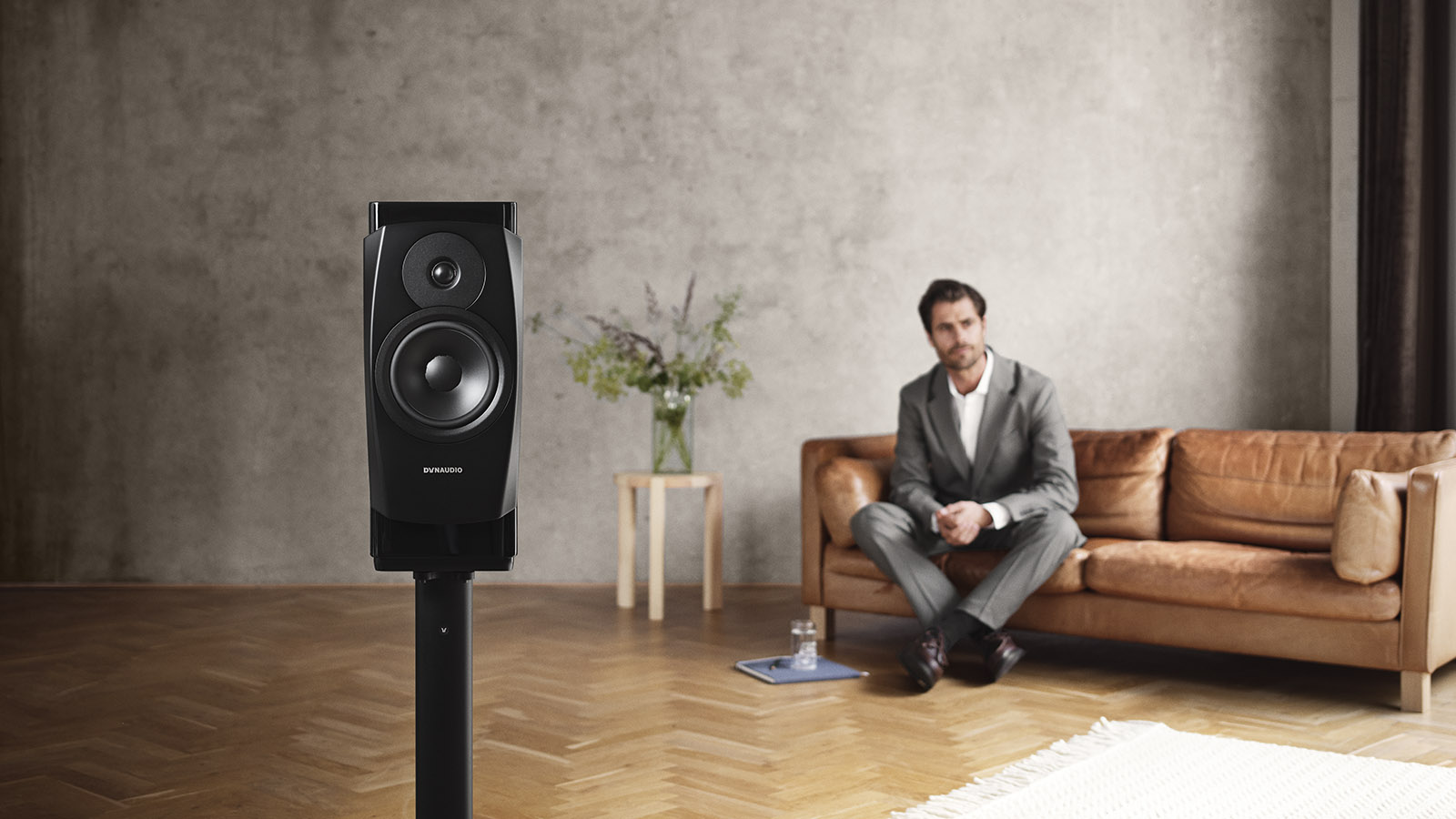
We are experiencing a subtle shift in the typically reserved and conservative audio industry. While active loudspeakers have become standard in studios and PA systems, the scene in home hi-fi is less defined. The Dynaudio Confidence 20A strongly supports active loudspeakers, and the market has never been more receptive.
I understand arguments from both sides. Active supporters highlight the ability to fine-tune the loudspeaker’s presentation to the level of individual drive units. They also eliminate unsightly amplifiers in the listening environment, since they are built into the loudspeaker itself. Conversely, passive loudspeaker enthusiasts point to the wide range of amplifier options available. Their supporters remain unconcerned by the ‘fewer boxes’ argument. In fact, they find miniaturised power amplifiers inside a loudspeaker’s enclosure (or, in this case, stand) distressing. They ultimately dismiss it out of hand.
Arguments aside, there is a growing trend in audio to combine a pair of active loudspeakers with a high-quality streaming preamplifier. This creates a system that delivers superb sound without a room full of boxes. As someone who regularly swaps amplifier units in and out of my listening space, I’m easily convinced by the simplicity argument.
A passive twin
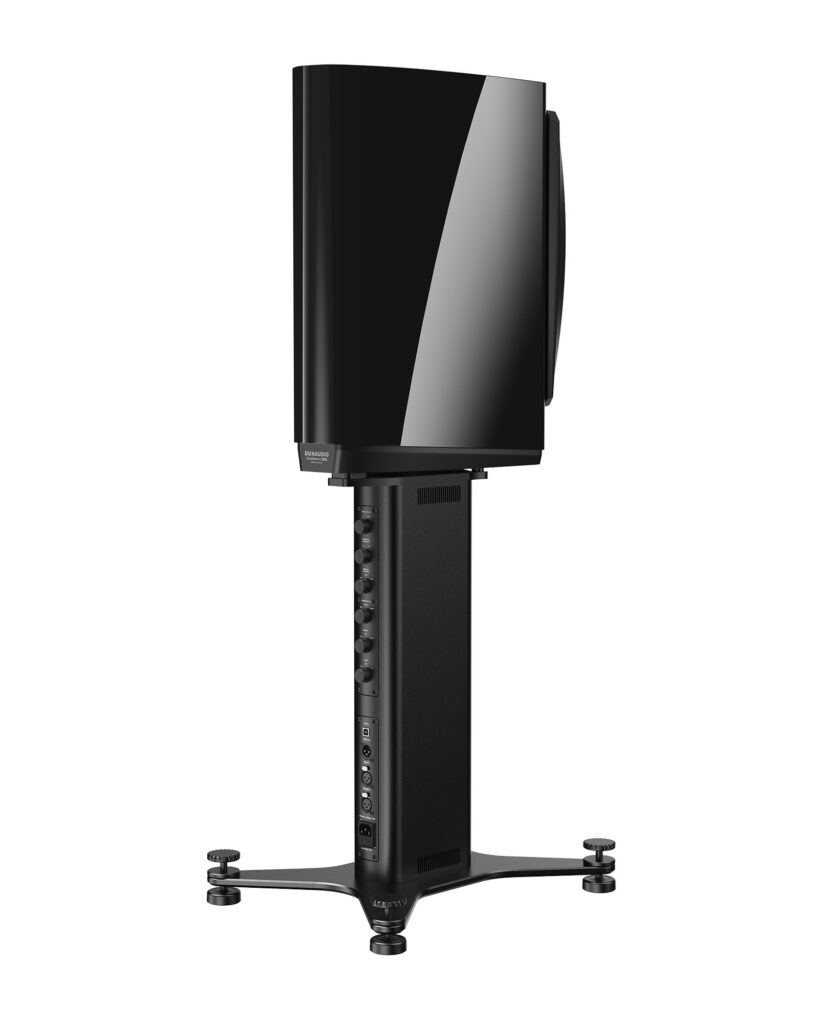
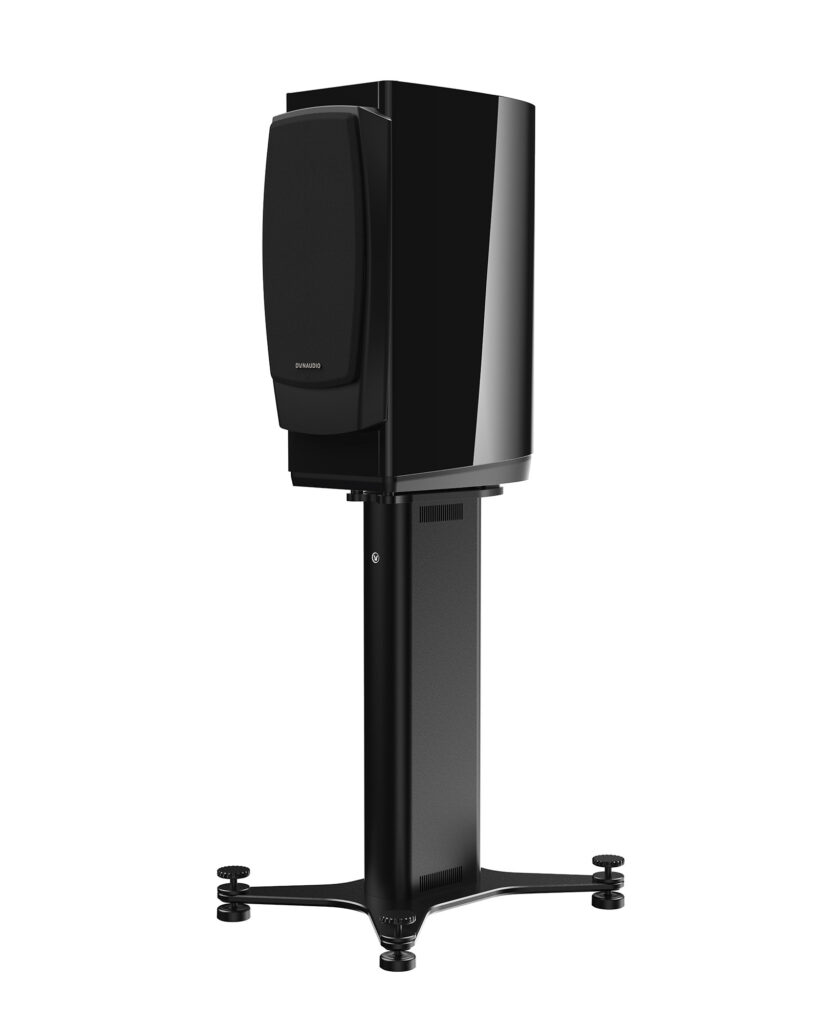
The 20A two-way stand-mount is the first active model in the Confidence series. From a distance, it looks very similar to its passive version. However, in the Confidence 20A, the stand is very different and performs more tasks. It incorporates digital signal processing electronics and controls designed to shape the sound according to the system, room, and position. The speaker also has the digital and analogue connections needed for these loudspeakers to communicate with external devices.
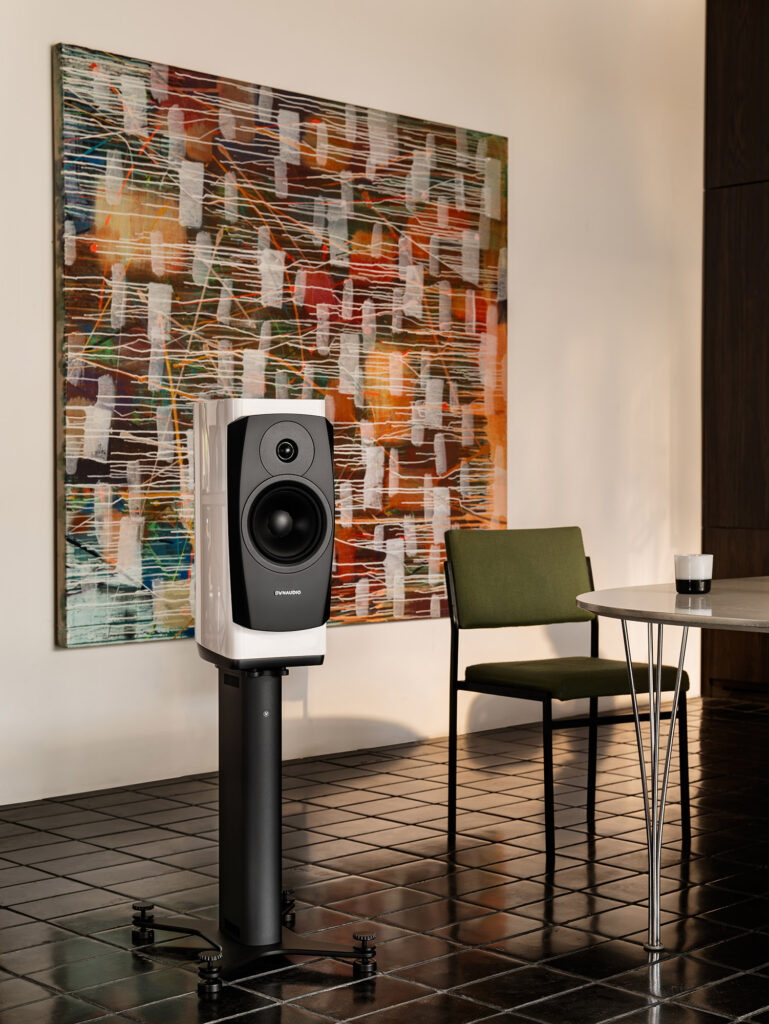
Basing its initial ‘super-serious’ active design on the Confidence 20 is not a bad choice. Both two-way models feature the 28mm Esotar3 soft-dome tweeter, which is widely regarded as one of the best in the business. This is complemented by a 180mm NeoTec MSP (magnesium silicate polymer) mid-woofer. It’s ‘sort of’ the same driver used in both, although the version in the 20A is optimised for active use. The curved enclosure and the front baffle, which stands proud of the cabinet, are very similar to the passive model. Only a side-by-side comparison would reveal the difference. Unless, that is, you prefer a loudspeaker in colours other than gloss black or white; the other, more tree-inspired finishes are exclusive to the Dynaudio Confidence 20.
Inputs are limited to XLR throughout, whether it’s an analogue balanced input or an AES3 connection. Digital inputs are processed in their native resolution. Meanwhile, analogue inputs are immediately subjected to an A-to-D process, the resolution of which is not specified.
Domain dominance?
A streamer can output both in analogue and digital formats, and the Dynaudio Confidence 20A converts analogue to digital at the input. So, is it better to go directly digital into the Confidence 20A? Or should you use a DAC to convert the digital stream into analogue, only to have it converted back to digital? In theory, the all-digital path should be better than switching between analogue and digital in the process. Digital should be the primary domain.
Moreover, as discussed earlier, the Dynaudio Confidence 20A processes a digital file in its native resolution rather than modifying that file to suit the DSP engine through resampling. Consequently, I would have wagered that all-digital sound quality surpasses that of an undisclosed analogue conversion, even if the source is excellent. However, as we shall see (and to quote PG Wodehouse), unseen in the background, Fate was quietly slipping lead into the boxing glove…
Whether that signal is native digital or re-processed analogue, the DSP engine provides precise filtering that guarantees excellent phase alignment at the transition between the tweeter and mid-woofer. The loudspeaker crosses over at a similar 2.5kHz as its passive Confidence 20 counterpart. However, the DSP and active components enable greater accuracy at that crossover point, including improved driver mapping in the crossover slopes.
Look-ahead
My theoretical understanding of what a digitally active speaker does clashes with reality once again in the form of Dynaudio’s ‘look-ahead processor’. The Confidence 20A uses a one-microsecond buffer. This features a limiter that allows transient peaks while protecting the drivers from overheating. My ‘theoretical’ side starts to panic here, as I thought this meant shutting down the loudspeaker when you want to ‘give it some beans’. But that’s not the case.
That’s because this processor keeps its own counsel until you hit peaks of around 119dB. This means the loudspeaker retains its intrinsic dynamic range and transient performance under any real-world conditions. And, if your ‘real-world’ conditions include reenacting the front row of a Mogwai concert and the attendant ‘filling-loosening’ sound pressures, good luck finding any home loudspeaker – active or passive, stand-mount or floorstander – that won’t compress the sound or alter the frequency response.
My natural hesitation to avoid things that intrude on the sound is unfounded. This isn’t a ‘fun filter’; the look-ahead processor is sonically transparent and succeeds at avoiding limiting the peaks and delivering good dynamic range in the process. If anything, it allows you more musical freedom, as you can play at a continuous 103dB SPL without tonal shifts or distortion. And you can do that safely in the knowledge that in the event of significant transient peaks, you aren’t going to damage your speakers.
Tuning the room
You could leave things as they are and simply get a great loudspeaker. However, having DSP available provides more options to explore. One of its best features is its ability to adapt the sound based on the size and placement within the room. This isn’t measurement-based, like the systems used by Anthem, Steinway-Lyngdorf, or Trinnov, nor do you input parameters into an app like Linn’s Space Optimisation system. Instead, it’s adjusted by some deceptively clever knobs located at the rear of the stand. These can be set to modify the Confidence 20A’s output depending on its position in the room (‘Wall’ for near boundary placements, ‘Corner’ for positions within half a metre from the rear and side walls, and ‘Free’ for free-space setup).
You can also customise each loudspeaker differently, for example, if you are listening in an L-shaped room. The other option adjusts between ‘Bright’, ‘Dark’, and ‘Neutral’, depending on the level of damping in your listening environment. Suppose you are dealing with specific and dramatic room-related problems (such as flutter echoes, first reflection problems and uneven bass response). In that case, the Dynaudio Confidence 20A’s adjustments are more ‘help’ than ‘cure’ (you are more likely to need a combination of passive room treatment and active room correction). But in ‘basically OK’ listening rooms, being able to compensate for a relatively lively or dead-sounding room is a good start.
Three schools
There are three schools of thought about partnering streamers with active loudspeakers. One says the streamer is unimportant, suggesting that the cheapest device possible should be chosen. The second view recommends that the streamer should have a performance level comparable to the loudspeakers, so consider selecting something that costs about the same as the active cabinets. Finally, there’s the ‘go for it’ group, who argue that any active loudspeaker setup is only as good as its upstream components, so spend generously on the streamer. I sit somewhere between the second and third; everything is crucial in building a good network. I aim to avoid weak links, but spending too much on the streamer is wasteful.
However, I’m happy to be proved wrong, and listening to the Dynaudio Confidence 20A with a Linn Klimax DSM clearly demonstrated what the speakers are capable of. In other words, the Dynaudios were more than capable of resolving enough to highlight the performance of Linn’s flagship streamer. But whatever way you look at it, this was a pairing so harmonious, you’d be foolish to break it.
Returning to that ‘lead in the boxing glove’ quote, it was here that I found the sound of the re-digitised analogue output of the Linn Klimax DSM to be somewhat better than the all-digital pathway. This was not a pronounced preference for the analogue input, just a gradual yet steady preference for that sonic route. There were no notable tonal differences between the two options. However, I felt the analogue path was slightly more ‘upbeat’ due to its improved phrasing and timing— a subtle but consistent and intriguing difference.
The more things change…
Dynaudio faces a delicate balancing act here. The Confidence 20A must match the performance of the Confidence 20, but it doesn’t need to significantly surpass it to the point of overshadowing the original model, whether active or passive. And Dynaudio have largely achieved this. The sound is more lively and spacious than before, with impressive bass for the size of the speaker. I suspect many will listen to both models and opt for the active version. It’s a notable shift, yet it still retains that distinctive Dynaudio Confidence voice. Clever stuff!
I started with one of my usual tracks: Trentemøller’s ‘Chameleon’ [The Last Resort, Poker Flat]. This piece features a well-controlled yet surprisingly deep bass that is as fluid as it is substantial and ‘chewy.’ The lower octave is well conveyed, given the size of the speaker, but it doesn’t try to defy physics.
Gentle taper
The bass gently tapers off, and those near-sub-bass atavistic noises are reproduced in a way that doesn’t overpower the room for which the speaker is intended. The midrange is also fast and detailed. It responds swiftly and stops accurately; those glitchy synth sounds are difficult to render, but there’s no sense of sluggishness here.
Next up: ‘Blackbird’ by Lady Blackbird [Black Acid Soul, BMG]. This piece is an excellent test of tonal accuracy and vocal articulation. If done incorrectly, she could sound like a Nina Simone impersonator. However, here her voice is entirely her own, and the result is outstanding. It also offers a very good sense of space, solid grounding, and a powerful feeling of the music progressing forward. It’s a challenging track because the lyrical content is both powerful and moving. While its emotional depth can be highlighted by this superb recording, it requires something truly special to keep you captivated, as these loudspeakers can.
Right in the feels
Staying with the ‘right in the feels’ musical content, I played ‘Go’ by Public Service Broadcasting [The Race for Space, Test Card]. The sample, taken from Mission Control during the Apollo 11 landing, is set against a relatively simple and live-sounding percussion, electric guitar, and synth. As the name and the subject matter suggest, all of this is performed in an expansive, wide-of-the-speakers soundstage, which was rendered extremely well through the Confidence 20A.
This track once again demonstrated the speed and depth of the Dynaudios, with live-sounding rimshots and deep bass. The track builds anticipation in the room before the landing, followed by a sense of relieved excitement after ‘The Eagle Has Landed!’ is uttered. It can bring a lump to the throat, and it did just that here.
No matter what I listened to, the results were very consistent. The loudspeaker delivered the tonal accuracy, detail, and soundstaging we associate with Dynaudio loudspeakers, but with a livelier, more energetic presentation than usual and deeper bass than you’d expect from a speaker of this size. In medium-sized rooms (by European standards), what more could you ask for?
Goldilocks
That last sentence carries significant weight. I’ve rarely come across a loudspeaker as ideally suited to its purpose as the Dynaudio Confidence 20A. It plays at both quiet and loud volumes exactly as you’d want in a typical UK or European listening room. It delivers all the bass you need without overstating itself or sounding too lean. The midrange and treble are as clean, detailed, and open as they can be. These are active loudspeakers in their perfect ‘Goldilocks’ zone.
Thanks to Grahams Hi-Fi for their assistance in this review.
Technical specifications
- Type: Two-way active ported stand-mount loudspeaker
- Drive units: 28mm Esotar 3 tweeter, 18cm NeoTec MSP
mid-woofer - Inputs: XLR – balanced (analogue), XLR/AES3 (digital)
- Outputs: XLR
- Crossover type: two-way, DSP based
- Crossover frequency: 2.5kHz
- Amplifier power: 400W+100W
- Frequency Response: 33Hz-25kHz (±3dB @ 85dB SPL)
- Finish: gloss black or white
- Dimensions (WxDxH): 50×20.6×39.6cm
- Weight: 28.5kg
- Price: £17,000, €20,000 per pair including stands
Manufacturer
Dynaudio A/S
UK distributor
Dynaudio UK
+44(0)7852 867661
Tags: ACTIVE STAND-MOUNT LOUDSPEAKER DYNAUDIO CONFIDENCE 20A
Trending Articles
See all
Xavian Unica
- Apr 07, 2026
Online Exclusive: OepPhi Lounge 2
- Jan 20, 2026
Trending Articles

By Alan Sircom
More articles from this author
Read Next From Review
See all
HIFISTAY Sound Wings+
- Sep 16, 2026
Marantz Model 10
- Sep 16, 2026
DeVore Fidelity O/Bronze
- Sep 16, 2026
Network Acoustics Origin
- Sep 16, 2026