Winner: 2026 Awards - Server Under £15k
Innuos ZENith Next-Gen
View Specifications
Highly Commended: 2026 Awards - Server Under £15k
Euphony Summus 2c & 4c
View Specifications
Highly Commended: 2026 Awards - Server Under £15k
HzProject HzCORE
View Specifications
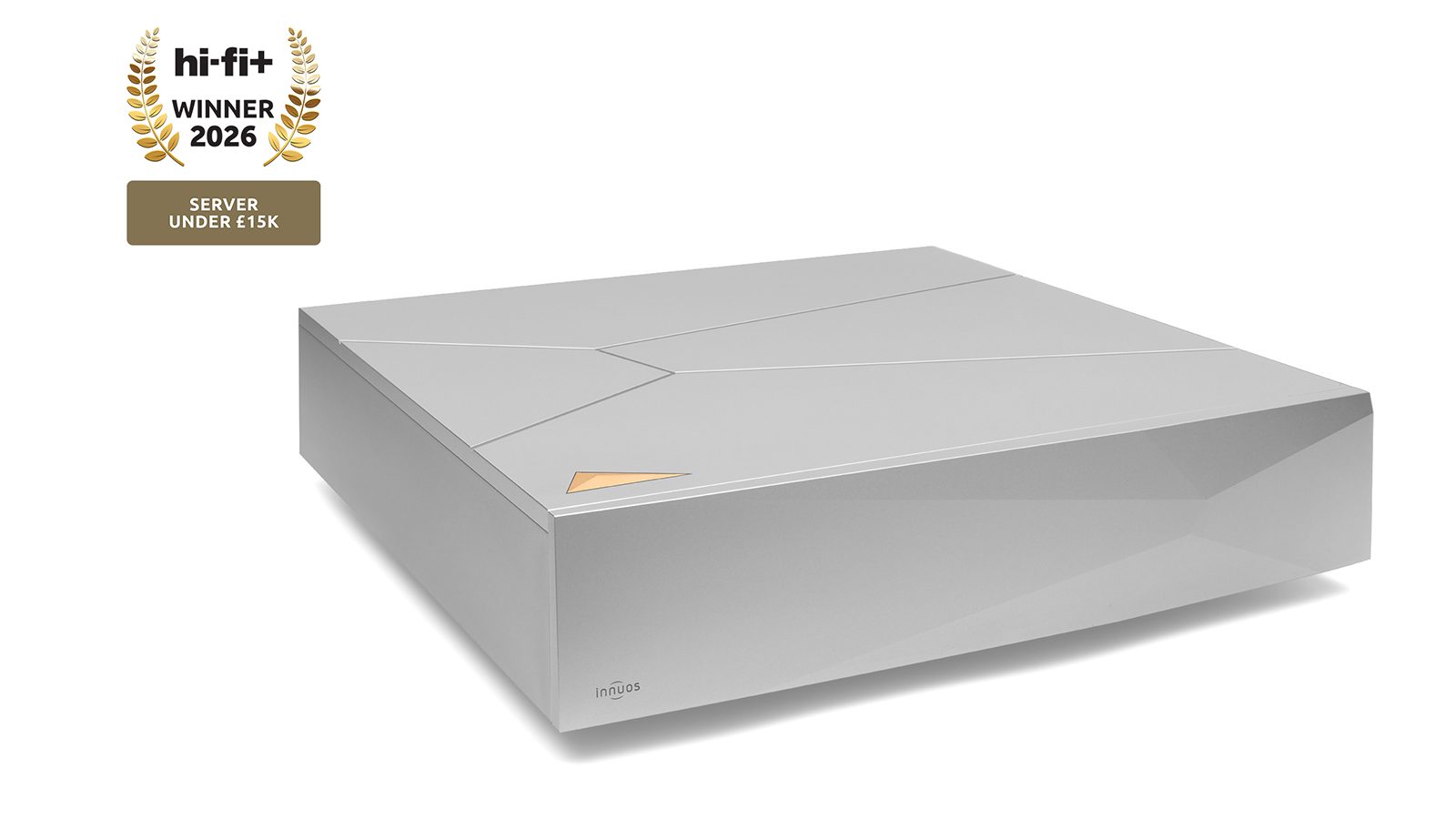
Winner: 2026 Awards - Server Under £15k
Innuos ZENith Next-Gen
Think of the modern music server as a Master of Ceremonies for your system. It makes the transition between locally stored and online music so effortless that you might not know where that music is coming from. Sure, this can be done in software nowadays, but the heavier the lifting the server does, the less other units need to undertake. Naturally, this relies on a robust server architecture, and it’s here where Innuos excels.
The ZENith NG’s Core I7 processor spells some serious powerlifting and is complemented by an independently powered industrial-grade SSD for the Sense 3 operating system, a power supply unit trickled down from Innuous’s flagship Statement server, and an all-new custom server-grade mainboard, which incorporates custom regulators specifically selected to enhance sound quality. Innuos provides 2TB, 4TB or 8TB of onboard storage, with an additional 16TB available via an M.2 storage slot at the bottom of the system. Finally, rather than sacrificing performance by tricking out the unit with every possible digital connection, the company has gone the modular route, with modules including an ‘SPDIF’ board (S/PDIF, coaxial, Toslink and AES), ‘PhoenixUSB’ (USB) and ‘PhoenixI2S’ (I2S over HDMI).
Flexible – and fully satisfying
Completing the deal is fantastic sound quality. “Music races out of its ports at blinding speed and with a remarkably natural presentation,” notes Alarn Sircom’s review. “There’s a sense of space and vivid, visceral human beings playing music on the ZENith NG; something that is generally difficult to replicate on streamed and served music.” Indeed, if he were in the market for a server around the ZENith NG’s asking price, he would buy it “in an eyeblink”.
Innuos • innuos.com
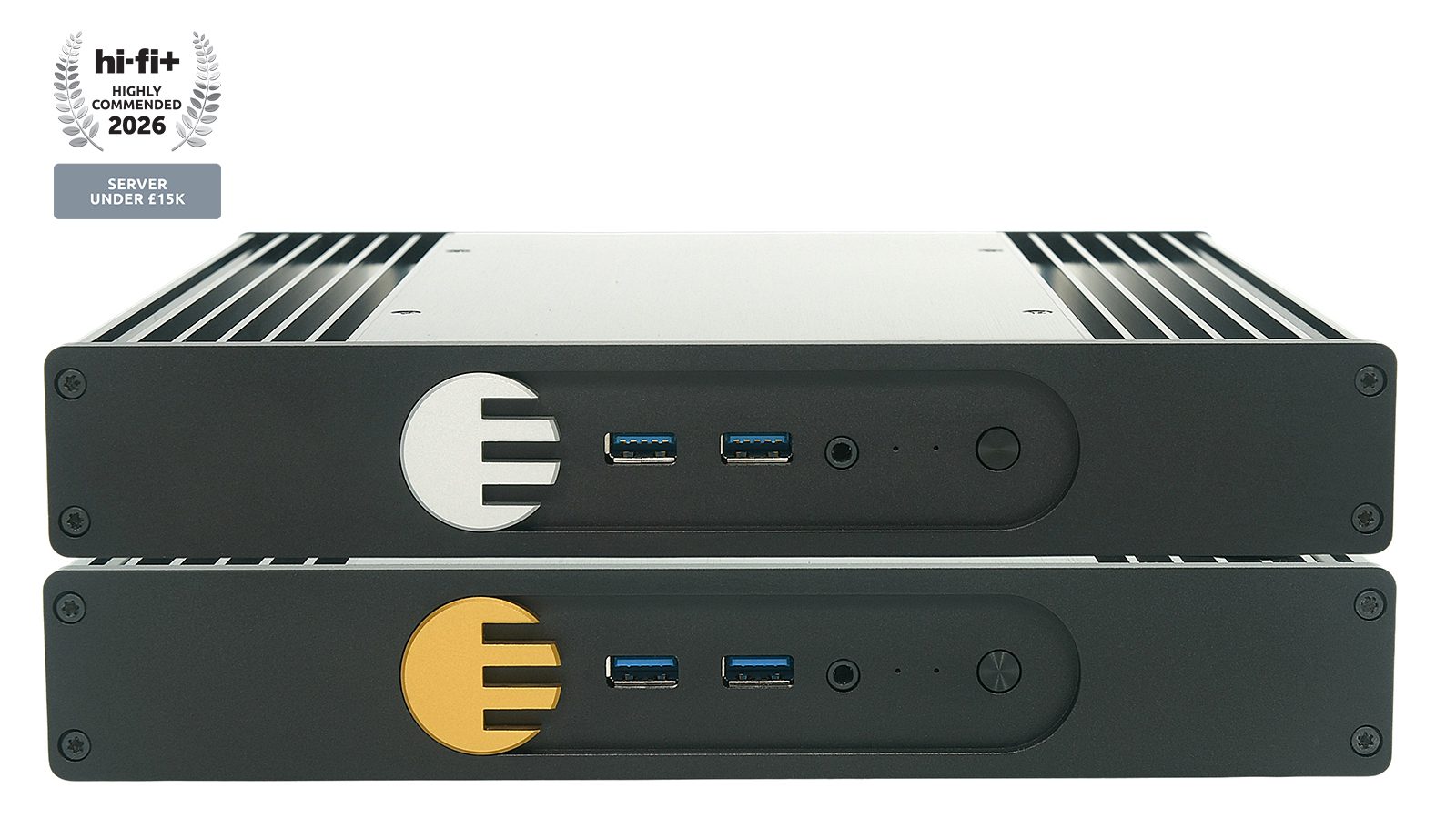
Highly Commended: 2026 Awards - Server Under £15k
Euphony Summus 2c & 4c
Euphony’s Stylus is an alternative music platform to Roon and Audirvana that can be licensed to install on streamers/servers, or used with the Zagreb-based software developer’s server, Summus. It comes with a quality power supply and is available in two guises. The 4c is a four-core i7 device designed to function as a one-box network player, running and then loading both the Stylus application and endpoint into RAM during boot-up. The 2c is a two-core i3 device designed to work in partnership with a 4c in a sound-enhancing dual-server set-up, solely acting as a streamer while the 4c handles the processor-intensive housekeeping. This option comes with a two-year Stylus license (it costs €119/year thereafter).
Software magic
Summus servers sport a £300 external switching power supply, and RAM and SSDs that Euphony regards as the best-sounding, but in most other respects, the servers are plain-Jane mini PCs. Where they primarily address noise – and justify their premium asking price – is through the use of elegantly written software. Robert Devcic has made some very clever choices about what the processors and memory do and when they do it, as well as the speed with which they do it. The Stylus user interface is not as slick, or rich when it comes to metadata utilisation, as some music management platforms, but it – and the Summus – concentrates on extracting the best possible sound quality from music files. Put simply by Kevin Fiske in his review, “at a third of the cost, they outperform network players priced over £20,000… they merit the highest sonic recommendation”.
Euphony Audio • euphony-audio.com
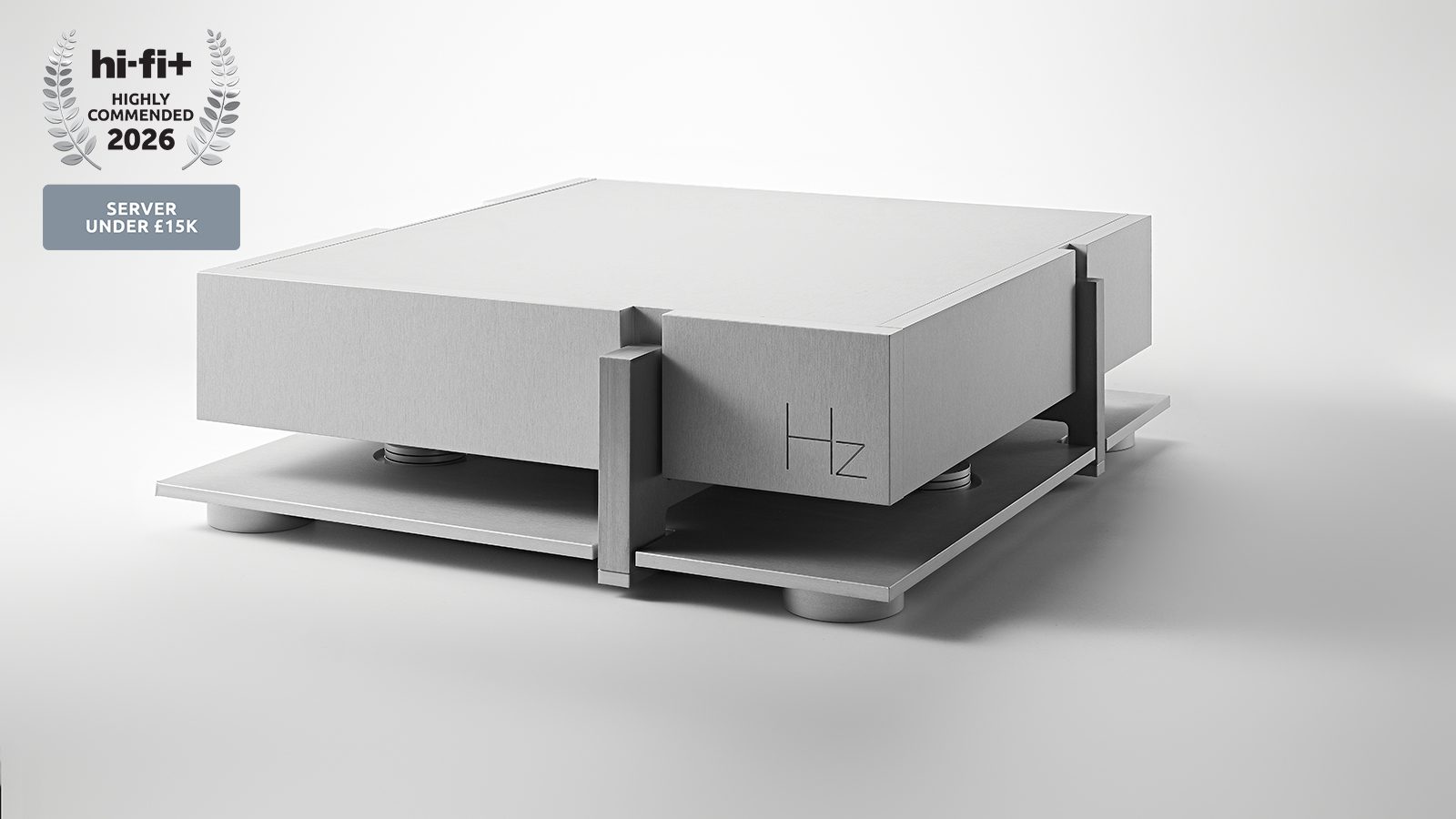
Highly Commended: 2026 Awards - Server Under £15k
HzProject HzCORE
The HzCORE from South Korea’s HzProject is a genuinely formidable piece of overengineering on all counts. The HzCORE has an internal storage of SSD (1TB, 4TB or 8TB) to keep music files, but it’s primarily designed to deliver music via Ethernet in Roon’s RAAT form to Roon Ready devices, or via USB output to a non-Roon Ready DAC. That SSD drive sits within a CNC-machined structure inside the striking-looking, 15mm-thick aluminium chassis for optimal shielding from the other components, and this isolation approach is also evident with the high-quality, oven-controlled crystal oscillator clock (housed within a layered aluminium and wood enclosure) and the two – 5v and 12v – linear power supply units (within aluminium and copper enclosures). There’s power on tap – it’s roughly twice as powerful as the Roon Nucleus – and it runs with an assurance and slickness that can handle whatever is thrown at it. It’s also entirely silent in use.
Palpable improvement
The result of HzProject’s significant efforts here? A genuinely formidable Roon Core that can compete with anything else on the market. It doesn’t alter the basics feeding to the Chord Electronics front-end of reviewer Ed Selley’s system, but it does refine what they’re doing. “The result isn’t a change to the presentation of a set of electronics I’m fond of,” he says. “It’s still my system, but better.”
Roon is excellent, albeit reasonably hardware-intensive, software. However, the extra grunt of the HzCORE makes itself felt, particularly when the extra bells and whistles of Roon are included, but also when used with upsampling (both PCM and with DSD transcoding) and on the headphone DSP options.
HzProject • hzproject.kr



By Editor
More articles from this editor

Read Next From Blog
See all
Tech Talk: Spring Meng of Eversolo
We spoke to Spring Meng, Chief Technology Officer at Eversolo, about his lifelong passion for music and how he helped create one of the year's best digital platforms – the T8.
- by Ed Selley
- Oct 13th, 2026

Tech Talk: Mat Spandl of Acoustic Energy
We speak to the Chief Engineer and Managing Director of Acoustic Energy about 20 years of loudspeaker design and the qualities that make the AE Active a great active loudspeaker.
- by Ed Selley
- Oct 13th, 2026

Tech Talk: Nigel Bell of Reiki Audio
Nigel Bell is no stranger to high-performance network topologies, thanks to his extensive IT background. But he’s also an audio enthusiast… and these two interests intersect perfectly at Reiki Audio.
- by Alan Sircom
- Oct 06th, 2026
Tech Talk: Nicolae Jitariu of Audiobyte
Alan Sircom spoke to Nicolae Jitariu, the digital expert behind both Audiobyte and Rockna about the Audiobyte brand, the SuperVOX DAC and the challenges faced by modern digital audio designers.
- by Alan Sircom
- Oct 06th, 2026